Tag: asia

  • Pandora opens in Chiang Mai, Thailand

    Pandora opens in Chiang Mai, Thailand

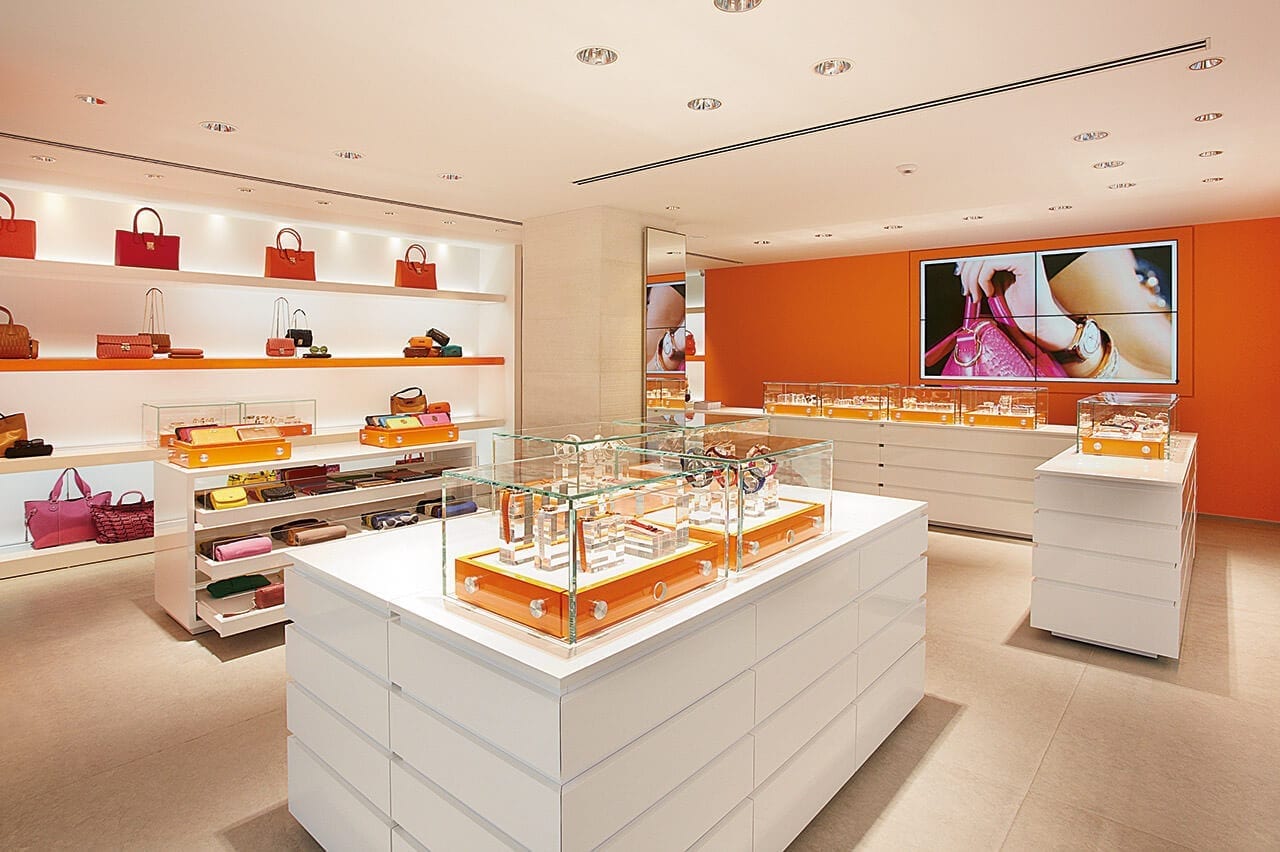
    Spread across 70 square metres, this is the brand’s 28th shop in Thailand and is decked out to resemble an art gallery. The display counters resemble picture frames, with white and pastel pink as the main colours hinting at femininity.

    Pandora encourages women to choose their own accessories to match their lifestyle and individuality. The Facets of Winter series, inspired by stars and snowflakes with colours like sapphire blue, ruby red and emerald green, invites wearers can mix and match the items to create their own style or give them to loved ones to mark any special occasion.

    Pandora also launches a Happy New Year collection to celebrate the Year of Dog. Intricately crafted charms and beautiful tokens of luck are given and received as we say goodbye to the old and welcome the new. Among this year’s novelties is the festive Fortune & Lucky dangle. Inspired by the God of Wealth, it features a man dressed in a traditional outfit holding two 14k gold ingots. Gorgeous on bracelets and necklaces, the dangle brings good fortune to its wearer.

  • Folli Follie To Open 50 New China Stores

    Folli Follie To Open 50 New China Stores

    Greek jewelry- and timepiece-maker Folli Follie plans to open 50 new stores in China next year, showing a renewed faith in a market in which its presence has shrunk in recent years.

    Twenty of the locations will be directly operated by the company, five to seven of which will become its flagship stores in major Chinese cities, including Beijing, Shanghai and Shenzhen, Folli Follie China Director Connie Law told Caixin.

    The other 30 shops will run on a franchise model, Law said.

    The brand recently launched a necklace that includes depictions of dogs ahead of the Chinese year of the dog, the first time the company has launched such a design and a clear attempt to appeal to Chinese consumers.

    Folli Follie became well-known to Chinese fashionistas in 2011 when domestic conglomerate Fosun Group became its second-largest shareholder. The brand had 220 stores in China in 2014, according to a Fosun financial report. This figure has since declined to only 150, Law said.

    An industry insider said that the decline was in part caused by some Folli Follie franchisees switching to rivals such as Austria’s Swarovski.

    Law told Caixin that Chinese consumers are buying entry-level luxury goods at home rather than abroad as the price gap between China and other countries has narrowed.

    As e-commerce continues to rapidly expand in China — online sales grew 32% in the first 11 months of 2017, compared to a 10% increase in total retail spending — Folli Follie has also established stores on online marketplaces, including Alibaba’s Tmall and JD.com.

    But 75% of the company’s spending in China goes to its offline stores, Law said, adding that the company will never abandon its brick-and-mortar business.

  • Fiestamall sells quality Pinoy products via ‘Go Lokal!’

    Fiestamall sells quality Pinoy products via ‘Go Lokal!’

    Quality Filipino products are now being sold at the Duty Free Fiestamall, previously a haven of imported and luxury brands.This developed as the government-owned Duty Free Philippines Corp. (DFPC), in partnership with the Department of Trade and Industry (DTI), last week launched “Go Lokal!,” a retail-concept store  showcasing quality products created by Filipino micro, small and medium enterprises (MSMEs).

    In a news statement, Tourism Secretary Wanda Corazon T. Teo, speaking during the launch of the retail concept store, applauded the DFPC and the Department of Trade and Industry (DTI) for spearheading the promotion of Filipino culture and industry.  “As a government agency, we have a responsibility to promote the best from our local entrepreneurs, and the biggest help we can extend to our MSMEs is by showcasing the talent and skills of the Filipino,” she said. “In this manner, we continue to show the world that Philippine-made products are of high quality, yet reasonably priced.”

    DFPC is a government-owned and -controlled corporation (GOCC)  under the Department of Touristm (DOT). DFPC COO Vicente Pelagio A. Angala underscored the role of Go Lokal! in making Filipino products known in the international market, as well as in helping local start-ups and small businesses.

    “This partnership will help us realize our vision of showcasing the Filipino culture to the world, and contributing in the government’s effort to revitalize the country’s heart [sic],” he added.

    Go Lokal! also helps the DFPC stay true to its objective of being the ultimate top-of-mind destination for pasalubong shopping for both local and foreign visitors, Angala said.

    The Go Lokal! store features products crafted by artisans across the country, ranging from snacks made from local ingredients, to home décor, toys, work-study essentials, such as backpacks, journals, desk organizers made from indigenous materials, to clothing and local textile-based fashion accessories like shawls, stylish purses and shoes.

    “To the men and women who have been involved in this project, and to our local entrepreneurs who will get to showcase their products, may this day mark the beginning of a very successful venture— one that the DOT will support,” Teo said.

    The opening of Go Lokal! was also attended by DTI Undersecretary for Management Services Rowel S. Barba, DTI Undersecretary for Trade and Investments Promotion Nora K. Terrado and DFPC Deputy General Manager for Operations Bernardine   R. Belmonte.

    The DFPC was established through Executive Order  46, which was signed on September 4, 1986. This granted the then-Ministry of Tourism, through the former Philippine Tourism Authority (PTA), the exclusive authority to establish and operate a duty- and tax-free merchandising system in the Philippines, for the purpose of augmenting the service facilities for tourists, and to generate foreign exchange and revenue for the government.

    Under the Tourism Act of 2009, the DFPC was reorganized, and mandated that 50 percent of its net income accrue to the DOT for tourism-related projects. Of this amount, 70 percent is remitted to the Tourism Investment and Enterprise Zone Authority, formerly the PTA, a GOCC under the DOT, as well.

    In 2016 DFPC recorded a net income of P164.21 million, down 16.8 percent from P197.27 in 2015. Audited financial figures for any period in 2017 have not been made available by the corporation.

    Aside from the Fiestamall in Parañaque City, other DFPC stores are at the Ninoy Aquino International Airport terminals in Pasay City; the Mactan International Airport Arrival and Departure Outlets, and Cebu Waterfront Hotel in Cebu; the Davao International Airport Arrival and Visitors Center Outlets in Davao City; the Laoag International Airport in Ilocos Norte; the Newport Mall in Resorts World, Pasay City; the Kalibo International Airport Departure and Arrival Area in Aklan; the Clark International Airport Pre-departure and Arrival Area in Pampanga; the Iloilo International Airport; the Market Mall Store in Palawan; the Laguindingan International Airport in Cagayan de Oro City; and the Bacolod-Silay International Airport in Negros Occidental.

  • aCommerce expects online-shopping market share to double to 5.5 percent

    aCommerce expects online-shopping market share to double to 5.5 percent

    E-commerce in the Philippines is gaining ground, given the expectation that its contribution to the total retail market would double to 5.5 percent, according to Southeast Asia’s retail-solutions provider aCommerce.

    Paul Srivorakul, aCommerce Group CEO, said the improved penetration of the online marketplace in the country will further improve as more and more brands move to Web-based retail to expand their presence.

    “Before, it was enough for brands to simply have a web site. But now, brands are starting to realize the importance of utilizing an omnichannel approach to stay ahead of the retail game,” he said.

    The company said this move is due to the changing behavior of the buying public, as they are now beginning to realize that online purchasing is more practical than visiting the so-called “brick-and-mortar” or physical stores.

    In the Philippines aCommerce currently has 25 brand partners. The number could grow to at least 40 next year as its portfolio encompasses consumer goods, home and living, fashion and electronics.

  • Cashless payments now available at Robinsons retail outlets via PayMaya QR

    Cashless payments now available at Robinsons retail outlets via PayMaya QR

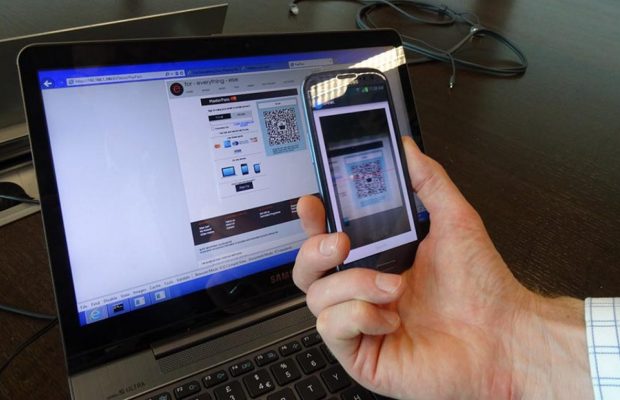
    Robinsons Retail Holdings., in partnership with PayMaya Philippines, is now enabling mall-goers to do quick and seamless digital transactions through PayMaya QR, as Robinsons Galleria in Ortigas is now among the first shopping malls in the country to deploy the cashless payments technology.

    The merchants who are now accepting PayMaya QR payments in Robinsons Galleria include Robinsons Department Store, Robinsons Supermarket, and merchants under Robinsons Specialty Stores. (RSSI)–which include brands such as Topshop, Topman, Dorothy Perkins, Burton Menswear, G2000, benefit, Shiseido, Miss Selfridge, and Warehouse, among others.

    Earlier, PayMaya QR was also successfully deployed in select Ministop branches to provide quick and convenient payments inside convenience stores. The technology will soon be deployed at all Robinsons malls nationwide.

    “We’re looking forward to have our customers experience QR-based payment innovation from PayMaya, especially in time for the holiday shopping season. Aside from convenience, this will bring greater flexibility to our customers in terms of the way they pay for transactions inside our malls,” said Robina Y. Gokongwei-Pe, President and Chief Operating Officer at Robinsons Retail Holdings.

    “We are excited to see customers of Robinsons Retail use our PayMaya QR technology. With this collaboration with trailblazing partners like Robinsons Retail, more Filipinos can now experience digital payments at its most convenient,” said Orlando B. Vea, President and CEO at PayMaya Philippines and Voyager Innovations.

    Payments made via PayMaya QR offer utmost convenience especially for mall-goers since all they would need are their mobile phones and their PayMaya app to make instant payments.

    The technology is initially available in select stores in Robinsons Galleria today, with wider deployment in other merchants and Robinsons malls expected soon.

    Loading up their PayMaya accounts to pay for items in these stores is also made easy because top-ups are easily available at Robinsons Business Centers.

    Through its QR-based payments–the first-of-its-kind implementation in the country for QR code payments–PayMaya is paving the way for mainstream adoption of digital payments for all Filipinos nationwide.

    Robinsons is just the latest to adopt PayMaya’s QR-based payment technology, which recently saw an accelerated rollout across the country, particularly in establishments such as Smart Stores; in communities starting with canteens in partner schools like STI and commercial establishments in cashless cities such as Muntinlupa and Malabon; and in popular merchants within SmartSpots already enabled by WiFi connectivity in key cities such as Baguio, Cebu, and Davao.

    PayMaya Philippines, the country’s pioneer and leader in cashless payments, is the digital financial services arm of PLDT’s Voyager Innovations.

  • Bangkok’s second IKEA branch opens

    Bangkok’s second IKEA branch opens

    No more taking the expressway across town to shop for affordable furniture at IKEA. The Swedish furniture and home accessories purveyor is opening its second branch in Bangkok in March 2018 in Bangyai, next to gigantic shopping center, Central Plaza WestGate.

    Encompassing more than 50,000 square meters of showroom and retail space, this branch promises to spoil shoppers with endless choices of sofas, chairs, tables and those pretty little things you don’t actually need but are too cute to resist. IKEA Bangyai is the first retail store in Thailand to receive the LEED Green Building certification. Plus, the canteen will offer menu items that are exclusive to this branch.

  • E-commerce players feel the heat as bargain hunters call shots

    E-commerce players feel the heat as bargain hunters call shots

    Buyers have become more price sensitive and less loyal to the online platforms in a trend that has prompted an intense “pricing game”, the event heard. Consumers are switching over to the e-commerce operators that offer better promotions and prices.

    The seminar also heard that so-called social commerce (s-commerce) has become another competitor, under a model where sellers and buyers can make shopping transactions directly.

    Pawoot Pongvitayapanu, founder and managing director of Tarad.com, said the platform was launched about 10 years ago as the first e-marketplace in Thailand.

    “Today, we are adjusting the positioning of Tarad.com to cope with more intense competition in the e-marketplace model. Without the new positioning, we would not be able to compete against other marketplaces,” he said.

    Speaking at the e-marketplace forum held on Sunday at Thailand e-Commerce Week 2017, Pawoot said that nowadays competition in the e-marketplace has become more of a pricing game. Consumers have become more price sensitive and have less loyalty as they follow the bargains.

    “Today, the actual competitors in the e-marketplaces are not other e-marketplace players, but s-commerce operators, such as Facebook and Instagram, where sellers and buyers can make their own transactions directly,” said Pawoot.

    Thanida Suiwatana, chief financial officer – Thailand, Lazada Group, said that that Thai consumers have become more confident about online purchases.

    “We spent a lot of money in doing marketing campaigns. both offline and online, to generate traffic,” said Thanida, adding that Lazada is now a top 10 e-marketplace in Thailand in terms of traffic.

    “Having good traffic is one of the most important factors for both bricks and mortar stores and online marketplaces. Any online platforms that can generate good traffic will have more chances to sell products.”

    Nuttawit Pholwattanasuk, managing director and co-founder of LnwShop, said that the platform serves individual vendors, enabling them to have their own website and space. It is similar to the idea of a developer of a market or shophouse allowing individual merchants or retailers to do business within their own retail space.

    Eric Bui, head of operation, Shopee Thailand, said that online marketplaces now go beyond the transactional, with a focus on the engagement between buyers and sellers as part of an ongoing relationship.

    “The way we do our listings and provide services to the sellers, everything is free, with no commissions or listing fees,” he said. “The shipping fee has been subsidised by Shopee. There is no reason why the listings on Shopee should not be the cheapest in the country.”

    Haejin Pyun, general manager, marketing strategy, 11street Thailand, said the company started the Thai operation in February.

    “We consider sellers and buyers alike to be very important. While other e-commerce players care about the buyers only, we care about the sellers sometimes more than the buyers,” said Pyun.

    “In Thailand, more than 50 per cent of the transactions come cash on delivery. At 11street, more than 70 per cent of the transactions come from credit cards. We see a big potential to grow in the Thai e-commerce.

    “However, to grow the e-commerce business in Thailand, the payment method is very important. In South Korea, credit card penetration is more than 90 per cent, compared to only 10 per cent in Thailand. Even though they have credit cards, Thai shoppers are still hesitant to put their credit card numbers on an e-commerce site.”

    Thananan Arunragtichai, assistant director of Ascend Commerce, said that the company has operated the weloveshopping.com for 15 years as a store front. For its website, the e-marketplace model was introduced three to four years ago.

    “Today, Thai consumers have greater expectation for marketplace services, such as cheap prices and high quality, as well as good after-sales service. As an e-marketplace operator, we need to manage their expectations properly,” he said.

  • Thailand Tobacco cries foul on excises

    Thailand Tobacco cries foul on excises

    The overhaul in the excises, implemented in September, had put Thailand Tobacco at disadvantage, as its tax burden had risen disproportionately to that of the foreign producers, Daonoi Suttiniphapunt, Tobacco Monopoly’s managing director, told a press conference yesterday.

    She said the company had to increase its product prices while the big importers had even lowered their prices on some lines.

    She urged the Finance Ministry, which oversees the Excise Development, to review its law enforcement in the sector.

    “The problem concerns two areas – the loophole in related regulations issued by Finance Ministry and the biased law enforcement under the Excise Development,” she said.

    The new taxing structure is based on the suggested retail price of a product, instead of the ex- factory or CIF prices for the local producer and the foreign brands, respectively, that applied previously.

    The rate is 20 per cent for a cigarette pack worth no more than Bt60 and 40 per cent for higher priced packs. They also have to pay Bt 1.20 per each cigarette stick.

    The Excise Department earlier sought to reassure the industry that the new tax system would be fairer for everyone. Moreover, if any company sold cigarettes at cheaper prices to the previous level, without good reason, they would be subject to scrutiny. The department could force them to accept the suggested retail prices, which would result in higher tax payments.

    Daonoi complained that while TTM had followed the rules strictly, some of the biggest brands had failed to do so. They had taken advantage of the loopholes in the system and the lack of law enforcement to ramp up the presence of their products in the Thai market, she said.

    Within a month of the new taxing structure going into force in September, the market share of the Thailand Tobacco had dropped sharply from 80 per cent to 65.9 per cent, she said. The share held by the foreign brands rose to 32.5 per cent, at the expense of Thailand Tobacco, she said.

    Daonoi warned that TTM had started to lose money and it could lead to transfers to government coffers drying up next year. The government may lose revenue of Bt 8 billion for that year, she said.

    The company contributed Bt8.8 billion to the government this year. It also paid Bt68.6 billion in excises.

    The projected reduction in contributions would have a knock-on effect in diminished support for causes such as the Thai Health Promotion Foundation, Thai PBS television and a fund for the elderly, Daonoi warned.

    Looking ahead, the future of the company is bleak as the tax rate will go up to 40 per cent in the next two years.

    “To introduce new products to the market is not easy due to the strict laws and consumers may not welcome them, so the TTM would find it very hard to play the pricing game,” Daonoi said.

    “If the Finance Ministry and Excise Department do not thing, the company will go bankrupt,” she added.

    TTM is a state enterprise under the Finance Ministry’s supervision.

  • Luxury cosmetic brand Giorgio Armani Beauty to Join Tmall

    Luxury cosmetic brand Giorgio Armani Beauty to Join Tmall

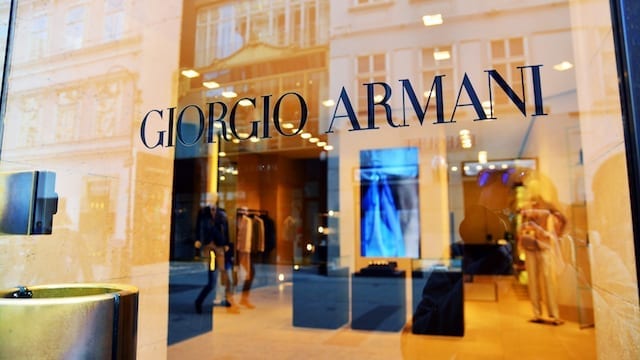
    Giorgio Armani Beauty will launch a flagship store on Alibaba-owned B2C shopping platform Tmall next month as part of the brand’s latest campaign to capture China’s fast growing appetite for high-end beauty products, Alibaba said Monday.

    The luxury beauty and skin care brand, owned by the world leading cosmetic giant L’Oreal, will hold a series of pre-sale events on Tmall for the next three weeks ahead of its official launch on Jan 16. As part of the rev-up, the brand is offering 4,000 cases of its iconic “My Armani To Go” cushion foundation exclusively to be sold on the platform during the period.

    On the day of the launch, the brand will also open a store on the Luxury Pavilion, the invite-only section within the shopping site for premium and luxury brands. Brands including Burberry, Hugo Boss, La Mer, Maserati and Guerlain (LVMH) have joined since the platform was first introduced in August this year.

    China’s beauty product sector has seen a boom in recent years in tandem with the rapid development of the Chinese economy. According to China’s National Bureau of Statistics, retail sales of cosmetic items in the first 11 months of this year notched a 13.5% on-year growth, amounting to RMB $228.5 billion ($34.87 billion).

    Recognizing China’s fast-growing demand for high-quality cosmetic products and Tmall’s expansive reach with its 500 million active users, many top beauty names such as Lancome, La Mer, MAC, Bobbi Brown, Fresh and Kiehl’s have opened up shops on Tmall in recent years.

    In a recent interview with China Daily, Veronique Gautier, global president of Giorgio Armani Fragrances & Beauty, said Armani Beauty has seen stellar growth in China, at twice the speed of the rest of the markets combined.

    On Jan 12, several of the Giorgio Armani Beauty’s high-ranking executives will appear at an event in Beijing to announce the official launch of the flagship store on Tmall. The brand will also introduce a high-tech showcase of its 2018 spring-summer collection.

    As part of tie-up, the brand and Tmall will introduce interactive digital experiences for consumers to book offline make-up sessions with beauty advisors, explore its product offerings — from the latest Ecstasy Shine lipstick crafted specifically for the Asian market to its iconic fragrances and Lip Maestro lip gloss.

    Entertainment and gamification will also play a major role in attracting customers to Giorgio Armani Beauty’s new online store. By using their mobile phones, users can use the AR-powered interactive feature—Unlock Armani Codes—to scan anything that contains any of the six-letters in the word “Armani.” Those who have collected all six letters will have the chance to win sample kits priced at RMB 260 each.

  • Sophisticated investors are staying away from Bitcoin

    Sophisticated investors are staying away from Bitcoin

    Malaysia’s pension fund managers are not putting money into bitcoin, despite the digital currency’s recent stratospheric rise.

    Armed Forces Fund Board or Lembaga Tabung Angkatan Tentera (LTAT) chief executive officer Tan Sri Lodin Wok Kamaruddin told NST Business that bitcoin is a highly speculative investment, where the value does not necessary reflect its fundamentals.

    “We don’t have any intention to invest in bitcoin at all. We would prefer to confine our investment within the country where we can, to some extent, control the risk and investment better,” he said in a telephone interview.

    He said the government statutory body would not take the risk in such kind of investment it has at its disposal.

    “Since Bank Negara Malaysia (BNM) deems it as illegal, we certainly would not want to have anything to do with it. I think it is something that the public should refrain from getting involved with their hard-earned money,” he added.

    Lodin said LTAT is currently managing about RM9 billion worth of armed forces retirement money.

    “We have got quite a fair distribution of our assets in different sectors, especially those which are in line with the government’s economic development programme such as infrastructure, property development, plantation and ship-building as well as retail operations like BH Petrol,” he said.

    Lodin said presently LTAT does not plan to invest abroad.

    “No doubt in some cases, investing abroad may be more attractive but at the same time the risk is higher such as currency and politics. At least, if it is within the country, we could mitigate these risks,” he said, adding that LTAT able to pay on the average of 11 per cent dividend annually to contributors.

    In a separate meeting with the Employees Provident Fund (EPF), its chief executive officer Datuk Shahril Ridza Ridzuan said cryptocurrencies such as bitcoin have no intrinsic value and donot provide any kind of actual asset yield. Therefore, it is very hard to invest in it.

    “Cryptocurrency is effectively buying something with the hope of selling it to someone else for a higher price,” he said.

    Shahril Ridza said the speculative element in the returns profile is too great for a fund like EPF, where it focuses on generating actual returns on assets.

    IQI Global chief economist Shan Saeed concurred, saying bitcoin has no sustainable value and none of the global central banks approved it.

    “Nobody has approved bitcoin as a mode of (payment) instrument. Although people are buying, the price is likely to crash. It is a fancy item with no fundamentals,” he said.

    Shan advised investors in Malaysia to stay away from Bitcoin, saying that the chances of losing money are fairly high.

    “Recently the United Kingdom regulators have warned investors to stay away from bitcoin. I’m not in favour of bitcoin because it is a virtual currency. It’s not even worth looking at,” he said.

    Shan said bitcoin is not secured without regulators’ approval, and it is a perfect example how the bubble could burst.

    “The incredible rise of bitcoin over the last few weeks has all the hallmarks of a major topping action when a speculative asset in the final euphoric stages of a big bubble formation makes some unsustainable huge price jumps,” he said.

    He said bitcoin should soon witness a final blow off with one last giant spike higher on huge volume followed by a major price reversal on the same day.

    The Retirement Fund Inc (KWAP) chief executive officer Datuk Wan Kamaruzaman Wan Ahmad recently said cryptocurrency is not the type of risk it can take.

    “We are not invested in cryptocurrency because we prefer to only take moderate risks. However, we do personally monitor the movement of the Bitcoin’s trends,” he said in a recent interview with BFM.

    He added that KWAP has always aimed for more stable investment, with slightly above a double-digit return to its shareholders.

    Last week, Bank Negara announced that Malaysia had recorded RM75 million transactions monthly from four digital currency exchanges in the country.

    Its deputy governor Abdul Rasheed Ghaffour said digital currency exchanges here providing the services were Luno, CoinHako, XBit Asia and PinkExchange.

    He said Bank Negara would meet cryptocurrency exchanges this week, noting that the global market capitalisation of digital currency stood at US$420 billion.

    He said while digital currencies were not legal tender in Malaysia, the central bank was not stopping their trading because “a ban would curb innovation and creativity.”

    In an AFP report quoting investment firm deVere Group chief executive officer Nigel Green, bitcoin started the year at US$1,000 per unit in January. By mid-December, it had shot to within striking distance of US$20,000, a dizzying climb that stoked fears of a bubble even in financial circles used to speculation and volatility.

    Bitcoin was created in 2009, since then, it has become the world’s decentralised cryptocurrency.

  • Ford Partners With Alibaba to sell Cars In China

    Ford Partners With Alibaba to sell Cars In China

    Online retail giant Alibaba has signed a deal to sell Ford’s electric vehicles in China using gigantic vending machines. Shoppers scan the vehicle they’re interested in  purchasing, using Alibaba’s Taobao app. They then pick a color and other customized options. Next, they snap a selfie that is used to match them with their order. The system then arranges for a test drive of the car, using facial recognition as a way to unlock access to the vending machine.

    The multi-floor vending machine rotates the cars in stock until the one the customer selected is found.  Alibaba customers pay a deposit and are given three days to test the vehicle to determine whether they want to purchase it. Once they decide, they can use the smartphone app to pay for the car or to return it and arrange another test drive.

    Customers are limited to five test periods every two months. They also must qualify as Alibaba Super Members, and have reached a certain level on the company’s credit scoring service.

    Alibaba plans to open two facilities in January 2018 in Shanghai and Nanjing, followed by dozens more across China next year if the concept proves a success.

  • Apple cuts iPhone X margins for Indian retailers

    Apple cuts iPhone X margins for Indian retailers

    Stores in India which sell the iPhone X have complained about the reduction in retail margins by Apple from 6.5% to 4.5%. Large chains and even small-scale operators are accusing the company of wanting to scoop in massive margins while not allowing its retail partners to benefit.

    Some stores, like the Bengaluru-based Sangeetha Mobiles, had stopped taking orders for the iPhone X. This comes as a supply-demand mismatch in India has led to calls for Apple to give the country a higher priority when it comes to providing stock in time. iPhone production has fallen to the extent that it has affected the bottom line of companies like Foxconn which assemble the devices.

    Subhash Chandra, managing director at Sangeetha Mobiles, says: “Apple has cut margins on the iPhone X from 6.5% to 4.5% for large retailers like us, and if a customer pays by card, which is usually the case, the margin reduces to almost 1.5-2%.”

    Sangeetha Mobiles has about 400 stores across India. “Apple gives the least margins… How on earth do they expect the retailer to work for them for free — our overheads are anywhere around 10%,” complained Chandra.

    The margins offered by brands like Samsung and Xiaomi are more than double what Apple does – 12% to 15%. Brands like Oppo and Vivo are giving higher than usual margins in order to compete better in the burgeoning Indian market.

    Quoting an unnamed chief executive of a top retail chain as saying that he would not be stocking the iPhone X at its 300-odd stores due to the reduced margins and because he had no control on retail pricing both offline and online.

    Underling the supply issues, another big handset retailer said he had received only 400 iPhone X units since the launch, much less than what had been promised by Apple.

    Analysts told the newspaper that if Apple did not step up supplies, it may be unable to bridge the gap with Samsung and the numerous Chinese brands that were already ahead in terms of volume sales.

    India has about 350 million smartphone users, a number that is expected to grow to 500 million in the next couple of years. Many new buyers or those looking to upgrade are potential iPhone users.

    One analyst, Neil Shah, the research director at Hong Kong-based Counterpoint Research, told the newspaper: “They (Apple) will have to start now because if they lose a window of opportunity in next two years to be on mind of the growing smartphone user base, it would be somewhat difficult to grow faster in the world’s second largest smartphone market.”

  • Asia’s Most Overworked Country Pushes For Right To Rest

    Asia’s Most Overworked Country Pushes For Right To Rest

    President Moon Jae-in’s drive to give South Koreans their “right to rest” by slashing work hours is making little headway as lawmakers haggle over pay rates for weekends.

    While the long hours were once considered necessary to fuel rapid economic growth, the grind is now seen as the source of the country’s social problems, including low birth rate and productivity. South Koreans work 2,069 hours a year, the second-most among Organisation for Economic Co-operation and Development members after Mexico.

    With the changing societal attitude toward work, Korea’s ruling and opposition party lawmakers reached a tentative agreement in November to cap weekly hours at 52, down from 68, and give an extra 50 percent in pay for weekends. Moon, who pledged to cut hours during his presidential campaign last spring, said the change “is a task that should not be delayed any more.”

    But the agreement failed to reach the plenary session as some lawmakers and labor unions argued for doubling the extra pay for weekend work to 100%. The Korean Confederation of Trade Unions said in a statement that doubling pay for weekend work is necessary to reduce working on weekends, and an appropriate level of compensation for those who must do so.

    If lawmakers fail to revise the labor law by Dec. 23, which seems likely, parliament may not be able to pick it up again until February at the earliest. A prolonged debate could put Moon’s “right to rest” initiative on a permanent holding pattern as was seen with much of former President Park Geun-hye’s legislative agenda.

    Improve Productivity

    As lawmakers argue over weekend wages, some employers say that while they agree with the need to shorten working hours, the changes should be more gradual. Kim Young-vae, vice chairman of the Korea Employers Federation, said at a forum on Dec. 14 that the change should first be applied to bigger companies with more than 1,000 employees, and that a 60-hour cap should be allowed at companies that have reached agreement with their employees.

    “Shorter working hours are necessary for the sake of happiness, but it needs to be discussed along with ways to improve labor productivity,” said Kim Tai-gi, a professor of economics at Dankook University in Jukjeon, South Korea. “Without better productivity, it would have side effects like a decline in income for workers and an increased cost burden for employers.”

    Labor productivity, as measured by total working hours and per capita GDP, was $33 per hour for Korea in 2016, compared with $24 for Chile, $41.5 for Japan, $60 for France, and $63 for the U.S., according to OECD data.

    Not all workers welcome the move toward fewer hours.

    Shinsegae Group, South Korea’s retail giant, has announced it will reduce regular weekday working hours to 35 per week from 40 with no cut in wages from 2018. But some labor unions for Shinsegae’s discount store unit, E-mart, say it will only increase the burden on workers because they will be required to complete the same workload in fewer hours. They said that by 2020, the employees could also be paid less than others who are working longer hours and receiving the minimum 10,000 won per hour promised by President Moon during the campaign.

  • Going cashless no small change

    Going cashless no small change

    After years of creeping at a snail’s pace, the e-payment scene has roared to life, setting 2018 up to be the year that cashless payments could finally become ubiquitous. Once Prime Minister Lee Hsien Loong made a call for a unified e-payment system at the National Day Rally in August, there were many developments, culminating in two significant moves in November.

    The first was an announcement from Education Minister (Higher Education and Skills) Ong Ye Kung, who is a board member of the Monetary Authority of Singapore, to expand the use of PayNow, an instant fund-transfer service, to businesses mid-next year.

    Launched on July 10, PayNow lets individuals transfer money by entering the recipient’s mobile phone or identity card number in any bank’s app. As at last month, more than 600,000 Singaporeans have linked either their mobile numbers or identity card numbers to their bank accounts via PayNow.

    By mid-next year when companies are allowed to link their business registration numbers to their bank accounts, PayNow’s use will be more pervasive, going beyond transfers between friends.

    With PayNow, merchants need not worry about complex system installation and related fees. As PayNow rides on Fast (Fast and Secure Transfers) – the country’s instant interbank funds transfer system – merchants also need not worry about cash-flow issues. Comparatively, credit card and ATM card direct debit transactions take up to two days to settle.

    While PayNow may be useful for owners of pop-up stores, its use at hawker centres may be limited. It is unthinkable that anyone would want to enter a business registration number and the amount owed into a bank app just to pay for a plate of chicken rice.

    Enter a national quick response code payment standard, dubbed SGQR. The release of its specification last month marks the second major breakthrough this year. Its aim is to allow merchants to display just one QR code for scanning by any e-wallet for fuss-free transfers.

    Singtel’s Dash is the first to embrace SGQR, with its QR code sticker displayed at a handful of merchants here.

    E-payment stalwart Nets also said it will change its QR code – rolled out to about 30,000 acceptance points in malls and taxis, and 600 hawker stalls – to one that incorporates the SGQR specification.

    • Since Prime Minister Lee Hsien Loong made a call for a unified e-payment system during his National Day Rally in August, there have been many developments – including two significant moves in November:

      1 Expanding the use of PayNow, an instant fund-transfer service, to businesses mid-next year . Launched on July 10, PayNow lets individuals transfer money by entering the recipient’s mobile phone or identity card number in any bank’s app.

      2 Release of a national quick response code payment standard – dubbed SGQR – specification, whose aim is to allow merchants to display just one QR code for scanning by any e-wallet for fuss-free fund transfers.

    Nets’ QR code system now works with the e-wallets of DBS Bank, OCBC Bank and United Overseas Bank. Next year, customers of Citibank, HSBC, Maybank and Standard Chartered Bank will also be able to scan the Nets QR code to make payments.

    Together, these seven major banks cover about 90 per cent of all retail transactions in Singapore.

    The nation’s effort to unify its e-payment systems may take more than a standardised QR code or enlisting businesses in the peer-to-peer PayNow scheme.

    Payment providers may also need to standardise the way they itemise and describe bills, and how fast they settle payments, to help merchants and hawkers with account reconciliation at the end of the business day.

  • Stop DDoS from ruining your retail Brand’s sales momentum

    Stop DDoS from ruining your retail Brand’s sales momentum

    On 11 November 2017, Alibaba’s Singles’ Day sales hit a new record high with a 39% increase from last year’s sales. The company’s 2017 profits broke world records of Black Friday and Cyber Monday, marking this Asian sales day as one of the highest revenue sales in history.

    With increasing internet-user penetration, consumer behavior is quickly transitioning in Asia today. Shoppers make most of their retail purchases on-the-go, through mobile applications or via websites. In fact, 90% of this year’s Alibaba sales were made through mobile phones.

    Now more than ever, retail businesses in the Asia-Pacific region need to tap onto an omni-channel approach to be aligned with these changing customer demands. Based on the 2016 e-commerce study, Google and Temasek foresee Southeast Asia to be the next region to boom in this market. The predictions indicated that e-commerce will make up 6% of the region’s total retail sales by 2025.

    Beware of business bullies

    While these statistics show a positive growth for the region, businesses going digital must be aware of the lurking threat factors. The physical shoplifters that pained businesses – especially during big sales such as Great Singapore Sale and Black Friday – have now evolved to become cyber criminals. Unlike thieves, businesses are not physically able to discern these criminals, especially since they attack over the network.

    One of the most devastating kinds of cyberattack for e-commerce businesses today is Distributed Denial of Service (DDoS) which aims to bring down websites, therefore, disrupting online services and businesses. DDoS attacks occur when an unusual and unexpected spike in traffic and connection requests overwhelms a website, slows down the network, or in the worst-case scenario, shuts down the entire system.

    A reliable website that guarantees a good user experience is what defines a successful e-commerce business as it is the main platform for acquiring customers and generating revenues. The damage caused by a network failure or a complete site outage will directly and immediately impact business assets. For instance, Alibaba made US$7 billion within the first 30 minutes of the Singles’ Day sale3. Imagine if they had been hit by a DDoS attack; Alibaba would have lost US$233 million per second. Not only would this be a massive loss, the attack would have also caused long term damage to Alibaba’s brand image and customer loyalty. According to KPMG’s annual consumer survey, one fifth of consumers will turn away from a cyber-attacked company4.

    Don’t fall victim

    With the festive period approaching, online retailers can expect an approximately 20% increase in their web traffic5. To make the most out of this sale period, businesses need to ensure that they are ready to protect themselves against DDoS attacks. This includes re-evaluating their network security to assure they are taking the best protective measures.

    Monitor and Detect

    Businesses cannot fight what they do not know. Monitoring network traffic and flow data with DDoS detection alerts security pros to anomalies before they become full-blown catastrophes.

    One way to get a better understanding of what is happening on the network is baselining to know what the traffic looks like during peacetime. This allows organizations to take the appropriate wartime countermeasures when an attack happens. Effective DDoS detection needs to be able to discern the human traffic from the bots.

    Additionally, organizations need a detection solution that can scale given that attacks are increasingly getting larger in size. The best class solution should not only be able to process the data, but also be equipped with the ability to quickly make intelligent decisions with that data.

    Mitigate and Protect

    DDoS protection requires having the right mitigation in place. Businesses should look for a modern DDoS solution that empowers them to automate defenses – from reports to packet captures to mitigation. This can help security pros reduce stress and thwart attacks quickly.

    Communicate

    As with all security procedures, effective DDoS defense involves a human element, as well. It is imperative for businesses to have a communication plan in place in the event of an attack. This includes critical information such as who to notify during, and after an attack. For example, who should be the first to know if the site goes down due to a DDoS attack? Is that the same person notified if a DDoS attack shuts down the online retail site? Who else is notified if an attack happens? Having communications ironed out ahead of time can reduce time to remediation and lower stress levels.

    Make the most of this year’s sale season

    For businesses, these next few months are the time to peak your revenue and customer traffic. It may be a chance to raise brand awareness or even expand the business. Whichever the case, a DDoS attack can be a fatal roadblock to an organization’s goals. Reacting in an efficient manner is key. Online retailers need to ensure they have an emergency response plan that makes good use of anti-DDoS technologies for unforeseeable attacks. For a happy holiday for all, be on the lookout for any dangers and take the right cautionary actions to protect against any potential threats.