Tag: asia

  • Australian state picks Tesla to provide grid-scale battery

    Australian state picks Tesla to provide grid-scale battery

    South Australia has picked Tesla to install the world’s largest grid-scale battery that would be paired with a wind farm provided by France’s Neoen, as the state battles to keep the lights on.

    South Australia has raced ahead of the rest of the country in turning to wind power, triggering a shutdown of coal-fired plants that has led to outages across the eastern part of the nation, driving up energy prices.

    The drawback to South Australia’s heavy reliance on renewables has been an inability to adequately store that energy, leading to vulnerabilities when the wind doesn’t blow.

    Under the terms of the agreement, Tesla must deliver the 10-battery within 100 days of a contract being signed or it’s free, matching a commitment made by Tesla Chief Executive Officer Elon Musk in a Twitter post in March.

    There will be a lot of people that will look at this, ‘did they get it done within 100 days? Did it work?’” Musk told reporters in South Australia’s capital city of Adelaide.

    “We are going to make sure it does.”

    Dozens of companies from 10 countries had expressed interest in the South Australian project, which is viewed as a major test for the reliability of large-scale renewable energy use.

    Tesla said in a statement that upon completion by December 2017, the system would be the largest lithium-ion battery storage project in the world, overtaking an 80 megawatt-hour power station at Mira Loma in Ontario, Calif., also built using Tesla batteries.

  • Xiaomi, Nokia sign alliance and patent de

    Xiaomi, Nokia sign alliance and patent de

    Xiaomi and Nokia have signed new a multi-year business collaboration and a patent cross-licensing agreement covering each vendor’s cellular standard-essential patents.

    As part of the transaction, fast-growing Chinese handset vendor Xiaomi has also purchased patent assets from Nokia.

    Under the business cooperation component, Nokia will meanwhile provide network infrastructure equipment designed to meet the high capacity, low power requirements of large web providers and data center operators.

    The two companies will also work together on optical transport solutions for data center interconnections, IP routing based on Nokia’s new FP4 network processor and a joint data center fabric solution.

    Xiaomi and Nokia will likewise explore opportunities for further collaboration in areas including the internet of things (IoT), augmented and virtual reality as well as artificial intelligence.

    Xiaomi now has a presence in over 30 markets, and is a leading IoT player as well as smartphone vendor.

    “As a company seeking to deliver more exciting technological innovations to the world, we are excited at the opportunity to work more closely with Nokia in future.”Xiaomi is committed to building sustainable, long-term partnerships with global technology leaders,” Xiaomi CEO Lei Jun said.

    “Our collaboration with Nokia will enable us to tap on its leadership in building large, high performance networks and formidable strength in software and services, as we seek to create even more remarkable products and services that deliver the best user experience to our Mi fans worldwide.”

  • Gucci launches China e-tail site

    Gucci launches China e-tail site

    Gucci has launched gucci.cn, its e-tail site for the Chinese market. In the words of the Italian luxury label, it will be Gucci’s only official Chinese website, created to “allow consumers a better access to Gucci products, without the limitations imposed by store location or opening hours. To optimise service speed, goods are shipped from local warehouses, and each transaction is assisted by a China-based customer service team, via live chat or phone.” In addition, payments on gucci.cn can be made using popular providers such as Alipay and WeChat.

    Content-wise, the site offers a wealth of images and a narrative with a strong visual impact, culminating in the ‘Stories’ section, which takes an in-depth look at  the sources of inspiration which influenced Creative Director Alessandro Michele’s collections, offering an exclusive glimpse of the designer’s own world.

    “Combining editorial content with commercial features – said Gucci – is an approach which has already proved effective in North America, Europe, the UAEs and Australia, where the new website was launched back in 2015.”

    As of today, Gucci’s e-tail sites are active in the USA, Japan, South Korea, Australia, Canada, the UK, Italy, Ireland, France, Germany, Spain, Portugal, Switzerland, the Netherlands, Austria, Belgium, Sweden, Norway, Denmark, Finland, the Czech Republic, Poland, Hungary, Romania, Bulgaria, Slovenia, Turkey and the UAEs.

  • Inmarsat’s Fleet Xpress honoured in Digital Technology Award win

    Inmarsat’s Fleet Xpress honoured in Digital Technology Award win

    The Fleet Xpress service from Inmarsat has secured the prestigious Seatrade Award 2017 for Digital Technology, one of the maritime industry’s leading honours, which recognises technical innovation.

    Given to acknowledge the most significant contribution to “moving the maritime industry along the digital technology track”, the Seatrade 2017 Digital Technology Award winner is selected by a special panel of judges, appointed by Seatrade for their knowledge of “Intelligent Shipping”.

    Inmarsat Maritime senior vice president market strategy, Drew Brandy, accepted the Award on June 30th. He said: “This is a reward for our entire Inmarsat team, recognising the extraordinary work behind the development, launch and delivery to market of Fleet Xpress. Setting a new standard in maritime communications, Fleet Xpress constitutes shipping’s real-world digital revolution, bringing unrivalled vessel efficiency and communication benefits to crew, and reinforcing our firm commitment to the future of connectivity at sea. With more than 10,000 ships now committed to Fleet Xpress, this award underpins the success of the service.”

    Fleet Xpress is the ‘first and only’ globally-available, high-speed satellite network owned and managed by a single operator. It is an innovative service platform that is delivering the benefits of continuous connectivity, big data and ‘digital disruption’ to shipping.

    Brandy said that the rapid uptake of Inmarsat Maritime’s Fleet Xpress since its launch in March 2016 demonstrated that shipping can participate fully in the digital revolution, at a time when the term ‘innovation’ is often overused in the maritime industry. The service delivers game-changing maritime connectivity, enabling a powerful combination of vessel efficiency gains and improved business intelligence analytics that changes the way shipping does business, he said.

  • MyRepublic planning IPO by end-201

    MyRepublic planning IPO by end-201

    Singapore-based MyRepublic is gearing up to conduct an IPO by the end of next year, and use the funds to expand its operations to cover at least 10 countries in the next five years.

    In a media briefing, MyRepublic said it is currently exploring listing on the Singapore, Hong Kong and/or Australian stock exchanges.

    MyRepublic is meanwhile planning an entry into the Singapore mobile market in the fourth quarter and expects to subsequently expand its mobile operations to other parts of the region by next year onwards.

    The company is likewise planning to launch TV services in the region, bcoming a quad-play provider.

    MyRepublic currently operates in Singapore, Indonesia, Australia and New Zealand, and is evaluating expanding to Myanmar, Sri Lanka, Vietnam, Myanmar, the Philippines, Thailand, Cambodia and Malaysia. By June, the company reached 200,000 broadband subscribers across the region.

    The company leverages NBN rollouts in the markets with strategic deployment of passive infrastructure to remain infrastructure agnostic and enable rapid expansion at a low cost of market entry.

    MyRepublic said it can enter a new market in 60 days and launch new products in three months. The company has entered a new market every year since 2014 and turns ebitda-positive within two years of entering each new market.

    At the briefing MyRepublic also denied reports that the company is pursuing an acquisition of Singapore’s M1. While the operator has put in a bid, it is not pursuing the acquisition, the company said, noting that while M1 is a traditional telco, MyRepublic is an “internet platform company.”

  • Bouchra Jarrar to leave Lanvin

    Bouchra Jarrar to leave Lanvin

    Bouchra Jarrar is to leave her role as artistic director at Lanvin after just 16 months. Jarrar succeeded Alber Elbaz, who left the brand after 14 years in October 2015 following disagreements with its Taiwan-based Chinese owner, Shaw-Lan Wang.

    Jarrar, a talented couturier who shuttered her namesake house to focus on Lanvin, and was last week made an Officer of the Order of Arts and Letters, one of France’s highest honours, has been unable to single-handedly revive the brand, which has suffered from falling revenues amidst a lack of investment since the days of her predecessor.

    “I have pressure,” she admitted in a March interview with the South China Morning Post. “I wanted to dedicate my whole self to Lanvin, to relaunch the maison and brand, so I shut my own label down… But I need the whole house’s support; alone it’s impossible.”

    Meanwhile, her minimal, tailored aesthetic was a departure from Elbaz’s much-loved draped eveningwear, and a new direction was always going to take time to resonate with consumers in a way that came anything close to what Elbaz achieved in his 14-year tenure. “That personal connection that Alber fostered between the brand and the audiences was deep,” said Caroline Issa, chief executive and fashion director of Tank magazine, in a September interview with BoF.

    Ultimately, initial sell-through has been underwhelming, and in June Lanvin reported a 23 percent fall in revenue for 2016, down to €162 million after a net loss of €18.3 million. By comparison, in 2015 it reported a profit of €6.3 million, and in 2012, at the label’s peak, revenues were reported at €235 million.

    The news of Jarrar’s departure follows a catalogue of issues at Lanvin. The company is said to have appointed advisory firm Long Term Partners to conduct an audit and recommend ways to reduce the company’s costs, prompting rumours of layoffs.

    Founded in 1889, Lanvin is one of France’s last major independent fashion brands. Wang, who became the brand’s controlling shareholder in 2001, has been reluctant to invest in the brand for many years. According to reports, she would not let her associate Swiss investor Ralph Bartel, who owns 25 percent of Lanvin, inject more cash into the business to support the brand as it would dilute her stake.

    “He disagrees with the options chosen by the management and wants an urgent change in strategy,” a source told Reuters of Bartel.

    Updated 7:45pm GMT on 6th July, 2017:

    In a statement issued to press Thursday evening, Lanvin confirmed Bouchra Jarrar’s departure. It read:

    Lanvin and Bouchra Jarrar have mutually decided to put an end to their collaboration. This decision is effective as of today. Madame Wang wishes to thank Bouchra Jarrar who since her arrival brought her talent to serve the company. Bouchra Jarrar thanks Madame Wang for her trust. She wishes most particularly to acknowledge the work of the teams with who she collaborated to express creativity and French know-how. Bouchra Jarrar will now concentrate on new projects.

  • DHL Express looks at introducing StreetScooter in India

    DHL Express looks at introducing StreetScooter in India

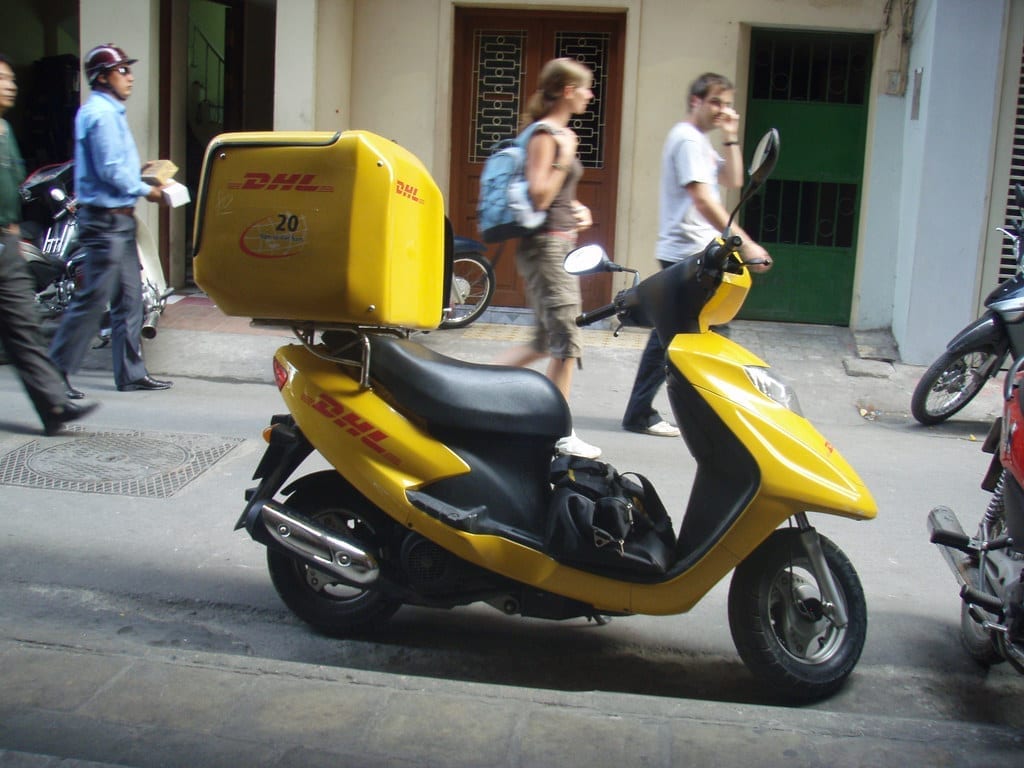
    DHL Express, a group company of Deutsche Post DHL, which saw 8 per cent growth in volume terms in the March quarter, is eyeing India’s 7 per cent economic growth and is also exploring introduction of its electric van, StreetScooter, used for delivery of letters and parcels.

    The company, which plans to double the production capacity of its own e-vehicles from 10,000 to 20,000 by the end of 2017, sees municipal authorities, strategic partners and large fleet customers in Germany and the rest of Europe, in particular, as potential buyers. Ken Lee, CEO, Asia Pacific, and Rs. Subramanian, Senior V-P and Country Manager, DHL Express Asia, spoke to us on the company’s plans.

    Where does India stand in your growth plans?

    Ken Lee: From a growth perspective, India presents itself to us as one of the countries with biggest growth areas. Pakistan could be another growth area, but there could be slight concern from the political security perspective. Hong Kong is slightly saturated, though every country has opportunities and challenges.

    What is your view on the digitisation push in India?

    Lee: The more-developed economies are more transparent, and are slightly more efficient. For developing economies, which are at the start of the digitisation phase, there will be a learning curve. But, eventually they will get there.

    What’s your take on the regulatory environment in different countries?

    Lee: Last year, the Philippines raised their de-minimis. We are expecting the same for Indonesia this year. So, where they are going, depends on various countries. (De-minimis is minimum dollar value of cargo that can be permitted through duty-free channels).

    Would you like the de-minimis to go up?

    At this point, we are all focussed on India’s GST reform. There will be opportunities and we are happy to take a lead to work. A higher de-minimis value smoothens the trade flow, allowing products to be “duty free”.

    And, to be fair to the government, they cannot give you everything for free. They have to collect some tax revenues. We are not there to dictate. But, we want the government to come out with initiatives that only facilitate trade.

    Do you see governments becoming more protectionist?

    Lee: No, I do not. Globalisation versus protectionism has been a hot topic in the past five-six months. But, generally, nobody is opposing globalisation. In the context of inequalities in trade, people have been calling for more fair and sustainable trade agreements.

    Subramanian: The direction is the same – sometimes it is fast and sometimes it is slow. Globalisation cannot go away, the benefits are here.

    Have you felt any impact of the change in the pace of globalisation?

    Lee: If there was any change, it would have impacted our business. First quarter, we are doing extremely well…India is expected to grow at 7 per cent till 2020. China is also expected to grow in single digit, but from a very big base. So, growth is seen in a relative context.

    Are there any new innovations on the cards?

    Lee: We started manufacturing our own StreetScooter. It is not a scooter actually, it is an electric vehicle. We are working with various governments to see how we can work with regulations about registration.

    What’s your take on the recent Petya ransomware impact on business?

    This should not happen to anybody….. One of our big competitors may have gotten impacted. But, whoever gets affected, there is bound to be a cascading effect. Our antenna is up. We had to make sure our systems were not impacted.

    On the positive side, we can be proud that our systems were pretty robust….We have realised one thing, that we cannot take anything for granted. We are watching the cyberspace very carefully.

    The IT systems got impacted and people had to go back to paperwork and start depending on phone calls to get business going…

    …Which is a pretty sad thing, because digitisation is the way forward.

    Not just us, but more and more companies are going to start putting more investments in this area. Even in India, I am really happy that the Prime Minister is driving Digital India, which will take the whole economy to the next level.

  • DB Schenker On-Track in Driving Rail Freight Solutions for Customers across Asia Pacific

    DB Schenker On-Track in Driving Rail Freight Solutions for Customers across Asia Pacific

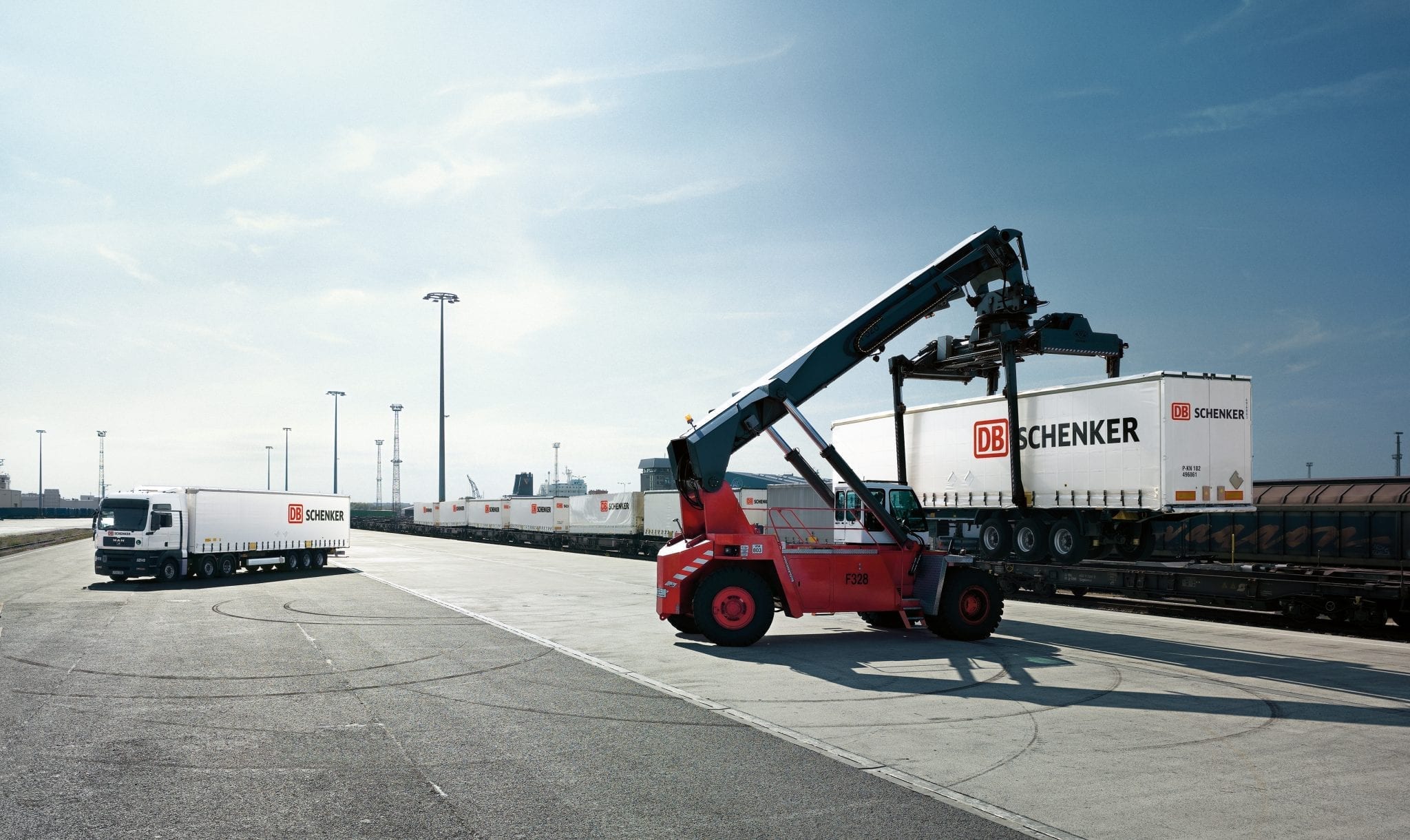
    Since inaugurating the first Beijing – Hamburg rail link in 2008, DB Schenker has since developed an unparalleled portfolio of Euro-Asia Rail door-to-door services, linking China with Germany and the rest of Europe – such as Changsha, Chengdu, Chongqing, Harbin, Hefei, Suzhou, Shenyang, Wuhan, Yiwu, Zhengzhou with Duisburg, Hamburg, Leipzig, Nuremburg, as well as Lodz, London, Lyon, Tilburg, Warsaw, and many others.

    “Having pioneered the rail service between China and Europe some 10 years ago, we are today in a unique position as the market leader for both LCL and FCL. We are proud to be recognized as such and we will continue to drive innovation around our rail products to and from China”, said Mr Thomas Sorensen, CEO for North and Central China.

    Along with the Pan-Australia Rail solutions network (linking Sydney to Melbourne, Adelaide, Brisbane, Darwin and Perth), and the Trans-Java Rail solutions in Indonesia (linking Jakarta with Surabaya and Semarang), DB Schenker offers the gamut of daily/regular Full-Container-Load (FCL), Less-than-Container-Load (LCL), Block-trains, multi-customer, reefer services and so on, to customers in the Automotive, Electronics, Industrial/Chemicals, Consumer Goods, and other sectors.

    At the recent Asian Freight, Logistics and Supply Chain Awards (AFLAS) held on 29th June 2017, DB Schenker was again ranked as the Best Logistics Service Provider – Rail for the second year running. Having won AFLAS awards in all major logistics related categories in the past, including Best Logistics Service Provider – Sea Freight and Air Freight as well as Best Road Haulier, DB Schenker’s heritage and pedigree in Rail offers truly peerless inter-modal solutions for shippers in Asia.

    “Incorporating comprehensive Rail Logistics Services into our suite of solutions unleashes a higher level of robustness, to achieve the optimal balance in calibrating Cost, Lead Time, Risk Mitigation, and Environmental Impact in the supply chain”, added Mr Norman Mummery, SVP Contract Logistics/SCM for Asia Pacific.

    “We are humbled and thankful to win this award for the second year in a row, voted by shippers and peers from the industry.  As a pioneer and first-mover in Rail among Global 3PLs for Asia, we are unrelenting in pushing the limits to strengthen our network and take our customers further”, says Ditlev Blicher, CEO of DB Schenker in Asia Pacific.

  • PLDT expands FTTH services to east Manila

    PLDT expands FTTH services to east Manila

    The Philippines’ PLDT has expanded the reach of its FTTH services to east Metro Manila in the latest phase of its nationwide fiber expansion program.

    The operator has added over 70,000 fiber lines in the area following deployments in south Metro Manila as well as Cebu, General Santos and Naga City.

    With the expansion, PLDT’s fiber networks now passes 3.3 million homes across five cities and three towns. The operator’s fiber rollout drive has seen it add around 500,000 homes passed within around six months, and PLDT has a target of passing 4.4 million homes by the end of the year.

    PLDT is also deploying hybrid fiber technologies including Huawei’s G.fast, which can boost data speeds of current subscribers up to 600-700 Mbps over copper lines.

    In a statement, the operator said it has invested 300 billion pesos ($5.9 billion) over the past 10 years on its fixed and wireless network deployments.

    “PLDT Home continues its efforts to create Fibr-powered PLDT Smart Cities nationwide to enrich the lives of more Filipinos through our innovative digital services and connectivity solutions,” PLDT EVP and home business head Enrico Reyes Jr said.

    “The network rollout in East Metro Manila will provide powerful connections and top-of-the-line services that will benefit both its residents and businesses.”

  • Samsung Electronics expects record-high Q2 profits

    Samsung Electronics expects record-high Q2 profits

    Samsung Electronics said Friday it expects profits to jump 72 percent in the second quarter to a record high, amid soaring memory chip prices and increased demand for smartphones.

    Operating profit is estimated at 14 trillion won ($12.1 billion) in the April-June period, up from 8.14 trillion won a year earlier, the tech giant said.

    It marks the all-time high quarterly operating profit ever posted by Samsung Electronics, surpassing the previous record 10.1 trillion won set in the third quarter of 2013.

    Sales for the April-June period are also expected to surge 17.8 percent on-year to 60 trillion won.

    Samsung witholds sector-by-sector business performance until it releases its final earnings report later this month.

    The earnings forecast surpassed a market consensus of around 13.2 trillion won compiled by FnGuide, a financial information service provider.

  • Biz leader asks airlines to make Davao City hub for international flights

    Biz leader asks airlines to make Davao City hub for international flights

    Davao City Chamber of Commerce and Industry trustee Arturo Milan has asked airline companies to make the Davao International Airport, also known as the F. Bangoy International Aiport, the hub for international flights in Mindanao to decongest traffic at the Ninoy Aquino International Airport (NAIA).

    Milan told a press briefing Friday that NAIA must be devolved of some international flights and distribute these to provincial airports like Cebu and Davao because the congestion in the airport in Manila results in flight delays, causing discomfort to passengers.

    He said it is not practical to place all international flights in NAIA when some destinations are closer to Davao City than Manila, like Australia, Palau, and other member countries of the Association of Southeast Asian Nations (ASEAN).

    SilkAir flies directly to Singapore from Davao City.

    “That’s overdue. Look at the traffic in Metro Manila. Flights are delayed because you cannot just put them in one airport, all (passengers) keep coming. It will certainly affect the flight schedules,” he said.

    Milan believes there is a market for Davao-Australia route because many tourists would want to visit a tropical country like the Philippines during winter season.

    He said Australia is located just below the Philippines on the global map.

    “There should be a flight emanating from Australia that will go to Davao because you are making a route that is attractive to foreigners. Australia by itself has too many tourists,” he said.

    He said Western tourists either go to Bali, Indonesia or Palau in the Micronesia. Both are closer to Davao in terms of proximity.

    He said reviving the Manado-Davao flights would also help sustain the Davao-General Santos- Bitung, Indonesia roll on/roll off (RORO) that was launched in April.

    “For RORO to be sustainable, we should encourage the revival of the flight of Davao to Manado and back because I don’t think if you invest or you trade you don’t wanna see the area,” he said.

    He said the direct flight to Manado will also make transactions between Indonesians and their counterparts from Davao to discuss business deals.

    On June 15, Milan urged the House of Representatives to pass into law House Bill 2002 which seeks to create the Davao International Airport Authority to decentralize management of the airport from the national government to enable a faster implementation of development programs.

    He said the management of the airport cannot implement projects on its own because it is dependent on the national government.

    He said the government can replicate the model of Mactan Cebu International Airport Authority “to make Davao City airport inviting” to both tourists and business executives visiting the city.

    Once approved, he said the “authority,” a body that will take over the management, can immediately plan out development projects and implement them on its own.

    The F. Bangoy International Airport, also known as the Davao International Airport, is currently being managed by the Civil Aviation Authority of the Philippines (CAAP).

    “When it is ‘authority’, the Davao International Airport will have flexibility rather than the current set up where you depend so much on the national (office). It’s really a must now, if we want a more responsive Davao airport,” he said.

    “We need to upgrade our airport because it is where the first contact of the investors is. They need to have a good impression of our region by way of our airport terminal. We are pushing to improve airport. Overall passenger experience has to be improved a lot, in terms of aircon, ventilation, and X-ray machines. They have to work efficiently all the time,” he said.

  • Marketplace for used automobiles Droom to invest upto $10m in acquisitions

    Marketplace for used automobiles Droom to invest upto $10m in acquisitions

    After closing its $20 million Series C round of funding last week, Droom, an online marketplace for used automobiles, plans to announce a few acquisitions by the end of this year, founder Sandeep Aggarwal said.

    “We are planning 2-3 acquisitions this year and will probably spend about $8-10 million. We have been in talks with several companies,” he added.

    Droom will also expand into Indonesia this year, a year later than its earlier planned foray into Southeast Asia. When asked on the deferred timelines, Aggarwal admitted the plan had been ‘delayed’ as the company had stayed focused on its operations in India.

    “We stayed focused on India because if we capture India, then we can capture many other countries. After Diwali (this year), we will expand internationally and Indonesia will be the first country. After that, we will be expanding to Malaysia, the Philippines, Thailand and Singapore,” he said.

    After SEA, Droom will consider Middle East and Western Europe for expansion. It expects international expansion to contribute 10-15 per cent of the total revenues in calendar year 2018. In 2019, overseas revenue could increase to 20-25 per cent, Aggarwal added.

    The company’s recently closed Series C round was lower than than the quantum it had raised as part of its earlier Series B financing.

    At a press briefing announcing the funding last week, Aggarwal had said: “Series C is smaller than Series B in terms of quantum  of money – it is not because we could not get more money – in fact more money was available, but we are still sitting on 70-80 per cent of our Series B. We feel bad that we could have raised the same money now at a much higher valuation now (when compared to Series B), and seen a lesser dilution.”

    The company says it was unable to spend its Series B funding entirely as it had achieved at least three times more its internal target. It also claims to be the first e-commerce company that had achieved low single-digit dilution in Series C.

    Droom will be launching two new services — RTO services and test drive at doorstep in the coming months. By December this year, it aims to cross Rs 5,000 crore in gross revenues and close to Rs 125 crore in net revenues. Droom has 1,79,000 auto dealers and has sold 1,50,000 vehicles since its inception.

    Aggarwal has recently been locked in a bitter spat with the top management of Shopclues, another online marketplace he co-founded.

    He had handed over the reins of Shopclues to his now-estranged wife Radhika Aggarwal in 2013, when he was arrested by the FBI for his alleged involvement in an insider trading case in the US in 2013. In March this year, Aggarwal took to social media to accuse his wife of pushing him out of Shopclues, in collusion with co-founder Sanjay Sethi.

  • Vietnam’s economic growth to out-tiger China by 2018

    Vietnam’s economic growth to out-tiger China by 2018

    Increased foreign investment is putting Vietnam on the right track. Swiss investment bank UBS has forecast that Vietnam will marginally outpace China’s economic growth for the first time in 2018.

    For the past 30 years, China has been the world’s fastest growing major economy, emerging as the star of Asia.

    However, last year China’s economy grew by 6.7 percent compared with 6.9 percent in 2015, according to official data, marking its slowest growth since 1990.

    UBS predicts Vietnam’s economic growth will expand by 6.5 percent in 2017, slightly lower than the 6.7 percent target set by the government, but still above 6 percent for the fourth consecutive year, defying the Asian slowdown.

    Vietnam’s economy expanded by 5.73 percent on-year in the first half of 2017, official data showed, mainly fueled by foreign direct investment (FDI), according to the UBS report.

    Vietnam’s FDI disbursement has grown at a compound annual rate of over 10 percent in the last five years, and actual disbursement reached a record $15.8 billion last year.

    During the first half of 2017, the country also welcomed over $19 billion in investment pledges, leaping 55 percent from a year earlier, mostly from North Asia’s technology powerhouses.

    The increased FDI flowing into Vietnam has resulted in a hike to the average income. The average monthly salary witnessed an increase of 88 percent from 2010-2015, according to UBS.

    By the end of this decade, Vietnamese urbanites are expected to earn an average $714 per month. Vietnam’s emerging consumer class, according to the report, will pave the way for investment growth in the country’s promising retail sector, especially with investment from overseas.

    However, UBS warned of the risk of trade protectionism following U.S. President Trump’s decision to ditch the Trans-Pacific Partnership this year.

    “Vietnam remains largely dependent on foreign capital and foreign technology. An FDI-led economic model is vulnerable and instable,” said Professor Pietro Masina of the University of Naples, who has spent years studying Vietnam’s economy.

  • Vietjet inks strategic aircraft financing agreement with German Operating Aircraft Leasing

    Vietjet inks strategic aircraft financing agreement with German Operating Aircraft Leasing

    Vietjet and German Operating Aircraft Leasing GmbH & Co. KG (GOAL), a joint venture of KGAL GmbH & Co. KG (KGAL) and Deutsche Lufthansa AG, today signed a strategic agreement paving the way for GOAL to finance Vietjet’s acquisition of four brand new A321 aircraft, worth US$464 million, according to the manufacturer’s listed price.

    Vietjet President & CEO Nguyen Thi Phuong Thao, Vietjet Vice President Dinh Viet Phuong, KGAL CEO Gert Waltenbauer and GOAL Managing Director Jochen Baltes represented both parties in signing the contract in the witness of the Vietnamese Prime Minister Nguyen Xuan Phuc and high-ranking dignitaries from Vietnam and Germany.

    The acquisition of the four aircraft is part of the A320 family aircraft contract signed earlier between Vietjet and European aircraft manufacturer Airbus. Vietjet will receive the four aircraft within 2017 to meet expansion plans for the airline’s domestic and international flight network.

    Speaking at the signing ceremony, GOAL Managing Director Jochen Baltes said: “GOAL and KGAL are very excited about the purchase and leaseback of these four aircraft with one of the world’s most dynamic low-cost airlines. Following this agreement, all parties will continue to work and cooperate together on more opportunities in aviation development in the coming time.”

    Vietjet President & CEO Nguyen Thi Phuong Thao commented: “We have received 16 new A321 aircraft from Hamburg, Germany, worth nearly US$2 billion in accordance with the manufacturer’s listed price, including Airbus’ 9,000th A320 aircraft, which created great excitement in Europe. Besides the fact that Germany has provided Vietjet with aircraft, we are truly delighted to work with GOAL, one of Germany’s top aircraft finance and aviation companies. Today’s deal ensures the financing and favorable conditions for Vietjet to further develop its modern fleet, thus helping to enforce the airline’s quality and safety in operations, a key part of our strategy for the long-term development of Vietjet.”

  • China Telecom joins HomeGrid Forum

    China Telecom joins HomeGrid Forum

    China Telecom’s main research arm the China Telecom Shanghai Research Institute has joined the HomeGrid Forum to support the deployment of G.hn technology in Asia.

    The Institute has been working on G.hn related products for more than three years, with China Telecom selecting G.hn as its home networking technology of choice.

    China Telecom Shanghai announced its first public tender request for G.hn devices earlier this year, marking the start of commercial deployments of the technology in China.

    In addition, the Institute has expressed an interest in establishing a HomeGrid Forum Certification facility at its Shanghai labs, adding a third point of call for silicon and system vendors to certify their products in the region after Shenzhen and Taipei.

    “Welcoming China Telecom Shanghai Research Institute as our newest member is fantastic. We look forward to gaining its invaluable insight and perspective into the Chinese and Asian markets as we continue to expand our presence in the region,” HomeGrid Forum president Donna Yasay said.

    “We’ve been championing G.hn technology for many years and support from an organization of this caliber validates our efforts. When combined with other technologies, such as wireless, home mesh networking and Ethernet, G.hn creates an unrivalled hybrid that can extend connectivity further than other products on the market. G.hn is the vital backbone for the kind of seamless connectivity that is now in demand around the world.”

    Chian Telecom will join operators including Chunghwa Telecom and KT as promoting members of the Forum.

    G.hn is the gigagbit home networking technology designed to utilize multiple existing last mile connections including coaxial, copper pairs, powerline and plastic optical fiber.