Tag: asia

  • Cebu Pacific to end flights to Qatar from July 1

    Cebu Pacific to end flights to Qatar from July 1

    The low-cost Philippines carrier Cebu Pacific Air will stop flying to Doha at the beginning of July because the route is no longer financially viable, it said.

    The airline has been flying direct to Qatar for just over two years, and announced that its last return flight from Manila to Doha will be on July 1.

    It will also cease flying to Kuwait from mid-June and the Saudi city of Riyadh in early July.

    Passengers who are already booked on flights after these dates can transfer to another airline offering the same routes (subject to availability), book for an earlier flight with Cebu Pacific (also depending on availability) or get a full refund.

    The airline “strongly advised” all such passengers to contact their travel agents or its hotline to discuss their options.

    Too much competition

    Cebu Pacific is essentially halting the routes due to too much competition, according to Atty JR Mantaring, vice president for Corporate Affairs of Cebu Pacific.

    In a statement this week, Mantaring said:

    “Of late, other carriers have aggressively added more flights, which has resulted in substantial oversupply of seats and fares that are so low, hence making the routes unsustainable…

    At this point, it makes more sense for us to re-deploy the aircraft used for our Riyadh, Doha and Kuwait service to routes where we can further stimulate demand and sustain our low fare offers.”

    Cebu Pacific will continue to fly to Dubai and Sydney and may increase capacity to these cities, the statement added.

    Crowded market

    The airline began direct flights between Manila’s Ninoy Aquino International Airport and Hamad International Airport in Doha in June 2015.

    A 436-seat, all-economy class Airbus A330 flies between the cities twice a week. It was initially popular when the route first started because of its competitive fares.

    While Qatar Airways also flies twice-daily direct flights on the same routes, prices were usually higher.

    The national carrier increased its service to the Philippines’ capital in July 2015. That’s the same month that Cebu started its direct Doha-Manila service.

    National flag carrier Philippine Airlines also began offering the same route earlier this year, in a bid to meet the needs of Qatar’s 260,000-strong Filipino population.

    That carrier operates four times a week, on Monday, Wednesday, Friday and Sunday on A330 aircraft.

    Its daytime departure and arrivals times, and its competitive introductory prices, has attracted many travelers.

    Tickets range from QR885 to QR2,745 in economy, and include WiFi and meal service. Passengers can also check in two pieces of luggage, weighing up to 23kg each.

    A business class option could be rolled out this summer.

  • Central Bank of Vietnam maintains flexible forex regime

    Central Bank of Vietnam maintains flexible forex regime

    According to the National Finance Supervision Committee, the deficit is likely to be 3.5% of exports. The trade deficit with China rose from US$3.7 billion in 2013 to US$28 billion last year. The US Federal Reserve (FED) is expected to increase the interest rate in June and continue to do so through 2019 to take the rate to 3 per cent.

    Analysts said this is causing downward pressure on the value of the đồng against the dollar.

    In mid-May, the US Dollar Index (DXY) rose significantly to 99.60.

    The State Bank of Vietnam (SBV) recently increased the đồng reference rate by VND9 after the greenback appreciated strongly to avoid possible shocks.

    SBV Governor Le Minh Hung said the international markets remain volatile due to the UK vote to leave the EU, US President Donald Trump’s policies and the US rate hikes.

    The volatility has had an impact on the đồng exchange rate and made it harder for the Government to keep things smooth on the forex front. Since the beginning of the year, the central bank has been very cautious. As a result, the đồng has only lost 1.1% against the dollar.

    The National Financial Supervisory Committee (NFSC) officials said the central bank is flexible and keeps a close eye on the exchange rate, regulating it on a daily basis.

    Analysts said Vietnam should not pay too much attention to the US interest rate hikes since they do not always affect the đồng.

    They pointed to the rate hike in March when the dollar actually declined against the đồng.

    One of the reasons for this is that foreign direct investment has been pouring into the country.

    In the first four months of the year, US$10.95 billion flowed in, representing a year-on-year increase of 40.5%.

    Though the big trade deficit with China is a factor in the đồng’s value, the Chinese Government is unlikely to depreciate the renminbi.

    This is because its policy is to develop the economy based on the domestic market in future instead of exports as the case used to be.

    Hung said since the Government would continue to pursue its de-dollarisation policy, the central bank would remain flexible with its exchange rate regulations to ensure exporters, importers, the Government and enterprises borrowing overseas and repaying foreign loans all benefit.

    Many analysts estimate the greenback will rise 2-3% against the đồng this year, saying the economy can easily absorb this.

    Foreign retailers crowd VN market

    Koji Takayanagi, president of Japan’s second largest convenience store chain FamilyMart, said the company is reviewing its loss-making operations in Indonesia, Thailand and Vietnam.

    “If we can get them to rally we will, but we cannot continue to pour in resources,” he told Reuters.

    The Japanese franchise has forecast operating profit to more than double to 1 trillion yen (US$8.79 billion) in four years from 412 billion yen in the current fiscal year.

    But while the business is profitable in China and Taiwan, it is not doing well elsewhere.

    FamilyMart came to Vietnam in 2010 and expected to open 300 stores in collaboration with local distributor Phu Thai Group, according to online newspaper VnExpress.

    But the partnership ended in 2013, with the distributor taking over 42 stores and turning them into B’s Mart in collaboration with Thailand’s Beri Jucker Plc.

    The brand made a comeback in July 2013 and now has 130 stores in HCM City, the nearby resort town of Vung Tau and Binh Duong Province, and aims to expand to 150 by the end of this year.

    Last December, Parkson, owned by Malaysian conglomerate Lion Group, closed its second store in Hanoi after eight years of operations, citing unsatisfactory results.

    The move marks the closure of the last store in Hanoi and third in Vietnam. In May 2016, Parkson Paragon in HCM City’s upscale Phu My Hung urban area closed after five years of operations, and in January 2015, Parkson Landmark 72 in Hanoi closed.

    The management had stuck a notice on the door of the latter store that it would only close for a few days “to take inventory”, but never opened again.

    Parkson’s recent results in the third quarter of 2016-17 showed its business in Vietnam remained mired in difficulties because the retail market was getting “more and more cramped”.

    Market observers offered explanations for the failure of some foreign retailers in Vietnam, with the decisive factor being the growing presence of giant global retailers, which is making competition in the sector fiercer.

    According to a report from the Ministry of Industry and Trade earlier this year, foreign enterprises now hold a 17% market share in the shopping centre and supermarket segment, 70% in convenience stores, 15% in minimarts and around 50% in online, TV and phone shopping.

    The percentages may not be too high but the looming presence of foreign retailers can be seen in many major cities.

    For instance, Thailand’s Central Group has bought the entire stake of France’s Casino Group in Big C Vietnam, while another Thai conglomerate, TCC Holding, has acquired Metro Cash and Carry Vietnam.

    Other foreign groups such as the Republic of Korea’s Lotte and Japan’s Aeon have been steadily expanding, and have plans to double or triple the number of stores in Vietnam in the coming years.

    In terms of growth, Vietnam’s retail market is among the top five in Southeast Asia and 11th globally, according to A.T. Kearney’s 2016 Global Retail Development Index.

    The trade ministry said retail sales of goods and services rose 10.2% to VND3,530 trillion (US$156.7 billion) last year.

    It has projected the market to hit US$179 billion by 2020.

    There is indeed a lot room for the retail sector to grow in Vietnam, where more than half the population of nearly 92 million is young and incomes are rising very fast, it said.

    Business-to-customer transactions are expected to double in value from the US$2.2 billion recorded in 2013.

    The ministry also expects the country to have 1,200-1,300 supermarket outlets by 2020, up 650 from 2011. The number of trade centres and malls are projected to increase to 180 and 175, respectively.

    Thời Báo Kinh Doanh newspaper (Business Times newspaper) quoted Akiihiko Maeda, CEO of Japan’s  Ministop 24-hour convenience store chain in Vietnam as saying competition is now the biggest challenge for his company.

    Ministop would need five to six years to break even, he said.

    But to achieve that, it would have to increase the number of stores by 80-100 a year and reach around 300.

    Analysts pointed out that this means Ministop — and other foreign retailers – would have to bring in lots of money.

    Where do domestic retailers stand?

    The swift expansion of foreign firms has also piled pressure on local retailers. Domestic goods suppliers are feeling the pinch as foreign retailers are developing their own brands for selling through their stores.

    Local retailers, at least many of them, cannot take on their foreign rivals, analysts fear.

    To compete, they need good management in all areas from brand building, ensuring product quality and marketing to human resources, training and establishing distribution networks, they said.

    But most are too weak and need to be immediately restructured, they said.

    Technology is also a problem for many Vietnamese retailers in a sector that is highly technology-intensive, they said.

  • Indian mangoes hit South Korean shelves

    Indian mangoes hit South Korean shelves

    Teams from the GMR Hyderabad Airports Limited, which operates the airport and HMACPL haveworked with the farmer community at Vizianagaram facility for developing a pack-house, creating markets, commissioning this project with requisite approvals from Government and exporting Suvarnarekha variety of mangoes to South Korea.

    With this, RGIA becomes the first airport in India to facilitate export of mangoes to South Korea directly from a farm-based infrastructure. Mangoes being a seasonal fruit of high demand, export volume to South Korea is expected to grow up to 10 tonnes per day for the rest of the season, it said in a statement..

    The Cargo operator has a coordination committee comprising of APEDA, National Plant Protection Organization (NPPO), Korean Delegation and Plant Quarantine to guide the farmers to compete with international export norms..

    The GHIAL & HMACPL are in the process of identifying and enabling similar infrastructure across the catchment areas in Telangana State, Andhra Pradesh, Northern Karnataka and Eastern Maharashtra among others, that can provide the requisite processing facilities to to boost the prospects of India’s Mango exports to South Korea.

    According to Sudhakar, DGM of APEDA, “Telangana and AP are the largest producers of mangoes in India with 25 per cent share, of this Banganapallii, Suvarnarekha, Neelam, Cherukurasam are the most popular varieties. Exports provide attractive rates giving better returns to producers and farmers”:

    The CEO of GHIAL SGK Kishore says so far Hyderabad has been India’s Pharma capital and the airport had garnered a lion’s share of pharma exports. Our effort to diversify into perishables export base has been realised now with the initiative of Mango exports to South Korea.We will establish a dedicated perishables handling facility at the airport soon.

    RGIA has been collaborating with various exporters and regulatory bodies to make this feat possible. Soon Indian mangoes would compete in Mango Festival happening at Seoul with varieties from Pakistan, Vietnam, Thailand and Philippines.

  • Incurring big losses, fast food giants open fewer shops

    Incurring big losses, fast food giants open fewer shops

    The heyday of fast food chains seems to be over in Vietnam. The number of fast food shops has been decreasing in an era when people are trying to ‘live slowly’.

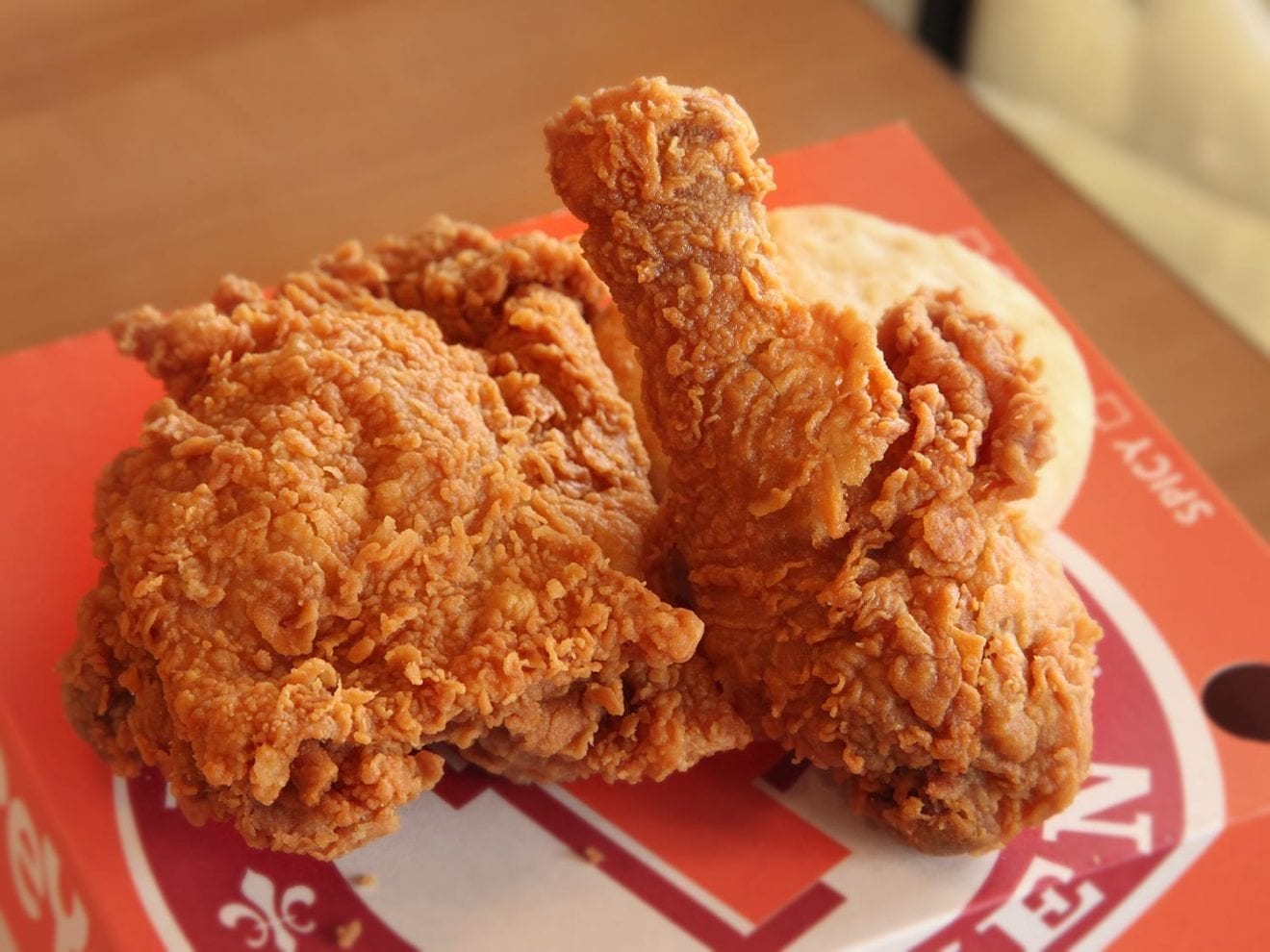
    Ten years ago, Hanoians and Saigonese could easily find fried chicken shops along main streets. At that time, eating fried chicken at fast food shops was in fashion. More and more fast food shops opened, not only in large cities, but also in small cities and provinces.

    In 2012, Burger King, encouraged by the fast growing market of Vietnam, announced a plan to spend $40 million to develop a chain with shops located in advantageous positions in many cities and provinces throughout Vietnam.

    A representative of Burger King once stated that Vietnam was one of its key markets.

    Nguyen Bao Hoang, who brought McDonald’s to Vietnam, said he would open about 100 shops in Vietnam within one decade, and employ hundreds of workers. Lotteria and KFC are believed to be the brands with the highest number of fast food shops in Vietnam.

    Analysts once believed that the potential of the Vietnamese market was great with the Vietnamese income on a rapid rise. Fast food chains targeted the Vietnamese middle class with average household income of $500-1,000.

    MOIT has granted licenses to 148 foreign brands to enter the Vietnamese market in the last eight years.

    This includes 42 fast food, bakery, coffee, beverage and restaurant brands, accounting for 43.7 percent of the total.

    Some fast food shops have shut down quietly after the boom. The number of shops of each fast food chain is on the decrease.

    In mid-February 2016, a Burger King shop at No 1B-1B1 on Cong Hoa street in HCMC announced its closure. One month before, another shop at the Dien Bien Phu – Cao Thang crossroads in district 3 also shut down.

    In 2015, two Burger King shops at No 26-28 Pham Hong Thai street in HCMC and 125 Lo Duc street in Hanoi stopped operation. In mid-2014, a shop closed in Da Nang.

    McDonald’s, a well known brand from the US, has set up several shops in HCMC but still hasn’t opened a restaurant in Hanoi.

    A branding expert commented that food chains can develop only if their products fit locals’ taste.

    This explains why fast food chain development has slowed down, while banh my (Vietnamese sandwich) chains have been prospering.

  • Sulwhasoo to enter French cosmetics market

    Sulwhasoo to enter French cosmetics market

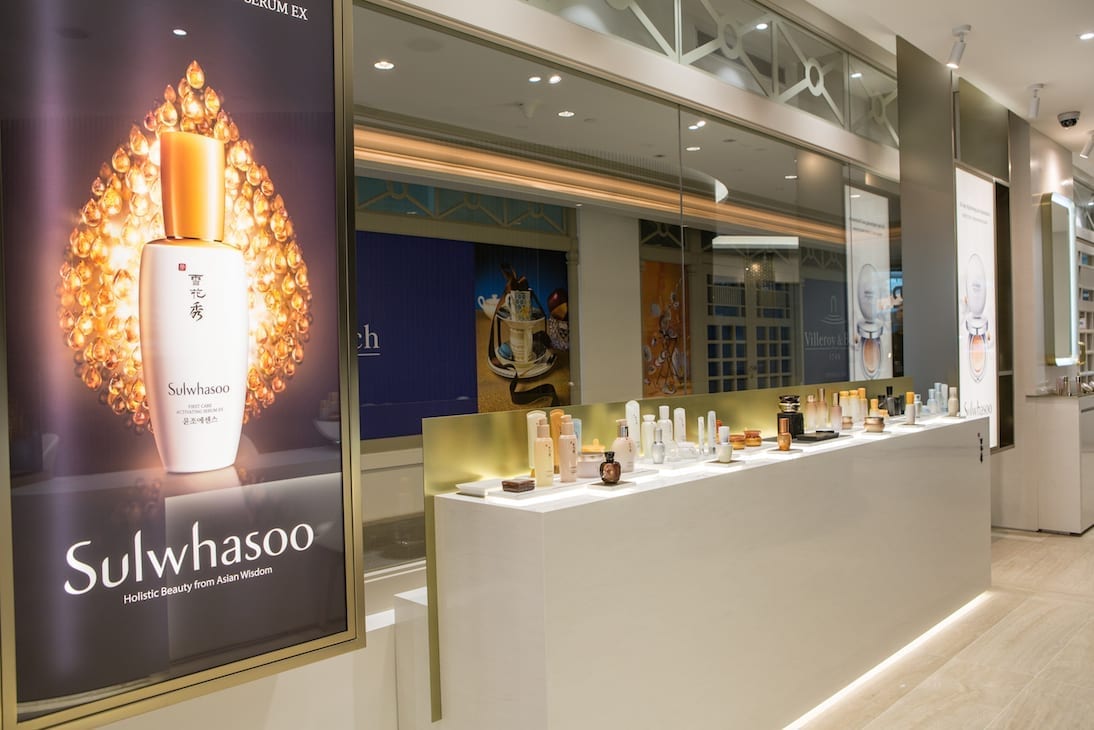
    Amorepacific’s cosmetics brand Sulwhasoo will launch an independent store at France’s largest department store chain Galeries Lafayette this September.

    The French upmarket department store is the largest chain of its kind in the country, and is famous for selling designer labels and luxury beauty brands favored by customers with deep pockets.

    It will offer the brand’s best-selling products, such as its First Care Activating Serum and Concentrated Ginseng Renewing Cream, which are Sulwhasoo’s signature products.

    The store will be designed with oriental herbal medicine motifs, and traditional raw materials such as ginseng displayed, with an aim to attract French customers based on philosophy and authenticity as Korea’s leading cosmetics brand. Sulwhasoo’s products will also be sold on Galeries Lafayette’s online mall.

    The entry into Galeries Lafayette is a meaningful challenge for Amorepacific in that it will target the French market, also known as the birthplace of beauty products. AmorePacific’s first entry into the French market was the export of the “SOON” brand in October 1988.

    In August 1990, AmorePacific established a local corporation in Chartres, produced the Liricos brand and made a discreet foray into France. However, due to the lack of consideration for local customers and the loss of sales rights, the two brands were in a crisis.

    AmorePacific then established a strategy to target the fragrance category in the French cosmetics market. AmorePacific established a factory equipped with ultra-modern facilities in Chartres in April 2004 and took over the luxury brand “Annick Goutal” in August 2011 to strengthen its perfume brand portfolio. The firm is now expanding their perfume business into new overseas markets.

    By entering Galeries Lafayette, Sulwhasoo will continue to strengthen its presence as a true global brand not only in Asia and the Americas but also in the European market, delivering Korean beauty and value throughout the world.

  • Customer traffic dropping fast at Korean online shopping malls

    Customer traffic dropping fast at Korean online shopping malls

    Online shopping malls are fast losing customer traffic, industry data showed , compounding their massive business losses last year. According to the data, the number of unique visitors to the six top online shopping sites totaled 84.86 million last month. This is 9.2 percent less than the same month last year, with each site losing between 2 to 19 percent. For Ticket Monster, the monthly tally for April was 9.91 million, the smallest among the six sites.

    It is the first time that the number fell under the 10-million mark since the latter half of 2014.

    Industry analysts say the market has become overcrowded with both large retailers and smaller competitors all strengthening their online platforms. Customers consequently have scattered in the face of more choices. E-shoppers have also matured, making purchases at select sites best suited for them instead of hopping through different malls.

    A growing number of online customers shop through portals like Naver instead of directly visiting the sites, which is contributing to the decrease in traffic among online malls, analysts said.

    Industry experts estimate that losses by e-shopping sites last year exceeded 1 trillion won (US $892.85 million). Given that most of the companies are making ends meet through monetary increase in transactions, they may be pushed to the brink if the current loss in traffic leads to bigger operational deficits, analysts say.

    “The number of unique visitors is not the absolute indicator,” an industry official said. “However, since it is related to transactions, we are closely watching the situation.”

  • The age of self service data

    The age of self service data

    A recent EY– Forbes Insights research report  clearly shows the value organisations get from the strategic use of data; the most mature respondents of its survey were found to be considerably more likely to enjoy growth in revenues and operating margins of 15% or more, along with significant improvement in their risk profile.  No wonder all areas of the business are looking to data to support their drive for modernisation and transformation.

    A challenge is that across the organisation there are many different requirements being placed on a company’s data – and until now access to analytics was reserved for either the data scientist or business users needed significant IT support, just to get a limited set of standardised set of reports run at set times.

    So how can an enterprise make sure all these demands are met with the right data at the right time and in the right format, giving each department and job function the ability to use data they need – in short, how can we facilitate the age of self service?

    Let’s take two examples of how requirements can differ, and why opening up an organisation’s data to self service should be a priority.

    It is often the Marketing department that is the first to harness data driven technologies and tools.  Those that are the most mature and comprehensive in their use of analytics, as compared to their peers, have been shown to gain a 56% greater return on marketing investments, and 10 times greater year on year increase in annual revenue. Common initiatives focus on seeking cross channel insights, better targeting of customers in real time with the next best offer, improved customer engagement and ultimately demonstrating how their actions contribute to the bottom-line.

    Other areas of the business are also turning to data for help; take HR, for example. Similar to Marketing, companies advanced in employing workforce analytics consistently outperform competition, increasing revenue per employee by up to 26% and being 2.5 times more likely to improve their leadership pipeline. They are looking for analytics to help them identify the employee skills and strengths that will help make an impact on business performance, understand workforce challenges, and better align people strategies with business strategies, so that they can more easily attract, nurture, and retain top talent.

    While the business roles, goals and use of data are different, there are common themes: the need to use multiple data sources, present data visually in a simple and easily understandable way, and demonstrate business impact. To deliver on these business goals, enterprises must empower staff to self service data so that they can be met without the need for expensive, time consuming and sometimes restrictive technical or IT support.

    What does this mean in terms of how data should be handled and distributed in an organisation? How can the age of self service data be made a reality?

    A driving force for democratising data in the workplace is the cloud.  Making enterprise class analytics available to all and from anywhere, quickly and cost-effectively, it is also bringing new and powerful visualisation technologies into the hands of the business user.

    Able to be deployed as a hybrid solution, new cloud-based analytics capabilities can be linked to data sources which can remain either in place, on-premises, in the cloud or a mixture of on-premises and the cloud, giving massive flexibility.  It helps organisations quickly and easily dip a toe in the water and test out the cloud or undertake a managed transition, thereby avoiding a “big bang” approach. Given that most companies have multiple legacy systems at different stages of their lifecycle, it enables them to gain maximum value from past investments.

    Gaining maximum value from these new investments is also key.  With cloud, it can be all too easy for the different departments to go out and buy in a SaaS solution.  This can lead to there being different solutions in place across the company that do not work together and as a result create new data silos.  As the true value of data is gained, when it can be pooled so that everyone can access it and unexpected correlations made, it is essential that IT has a part in the implementation of these new solutions. That way the entire organization’s analytics needs can be catered for and underpinned by a platform for success.

    The age of self service data is a business need today. The key is to look across the business at each job role or line of business and seek to understand their different requirements will evolve for the future, not just today. This approach will also lead IT to be an enabler for an organisation that maximises value from data in unique and impactful ways.

  • Vietnam e-commerce developing quickly

    Vietnam e-commerce developing quickly

    E-commerce in Viet Nam is more developed than some Southeast Asian countries and is poised to expand in coming years, according to a market research company.

    Ashish Kanchan, managing director of Kantar TNS Vietnam, said e-commerce is growing quite positively in Vietnam.

    He classified e-commerce development into three groups — developing customer education for e-commerce, widely prevalent e-commerce, and e-commerce as default purchase channel.

    Currently, Viet Nam is in the fledgling group together with Egypt, Turkey, Thailand, the Philippines, Greece and others. Meanwhile, in some European countries such as the UK, Germany, Demark, Sweden and Norway, and also Singapore, going online and buying online have become a default option.

    Viet Nam is already ahead of some of neighbouring countries like the Philippines, Thailand, and Indonesia and will likely join the next group within the next three years, he said.

    The United States, China, Italy, Hong Kong and Malaysia are among countries in the second group.

    Unlike countries such as Thailand, Indonesia, and India, Viet Nam is not only a mobile phone market, but tablets and laptops are still very prevalent in Viet Nam, he said. Thus, e-commerce companies must develop e-commerce platforms for multiple devices in Viet Nam.

    He urged companies to focus more on brand building as it is extremely important to gain more trust from shoppers.

    Understanding the e-commerce shopper is also very important so that businesses can provide the convenient experience for shoppers.

    Technology changes have ushered in a new era in commerce and digital branding as well as a new set of customer expectations, delegates at a recent Creative Commerce Workshop said.

    Denise Thi, managing director of Isobar Vietnam, said the customer journey has changed a lot over time.

    In the traditional marketing form, the consumer’s buying process was from attention to interest-desire to action. The process now goes from consideration to evaluate, buy, experience, advocate and bond.

    Consumers expect a lot of things, especially memorable experiences.

    To succeed in this new world, the first thing firms need to think of is to repurpose their marketing plan or sale plan to turn any point of contact into a shoppable experience, she said.

    Next, “we need to redesign, not only our campaign engagement but also our brand offerings and points of intervene”.

    The last thing is reposition. “We need to reposition what is the right thing to do first throughout the experience we want to deliver to our customers.”

    Sandipan Roy, chief strategy officer at Isobar in Asia-Pacific region, said: “People will forget what you said, people will forget what you did, but people will never forget how you made them feel.”

    Every shopping moment is an opportunity to tell a story, and every story is an opportunity to sell something, he added.

    It is key for brands to create inspirational stories and experiences through the creative use of digital and technologies, which ultimately lead to a transaction, he said.

  • Google promises to work with Vietnam to remove ‘bad’ content

    Google promises to work with Vietnam to remove ‘bad’ content

    The tech giant has been asked to open a representative office and coordinate with Vietnamese authorities. Prime Minister Nguyen Xuan Phuc has asked that Google open a representative office in Vietnam to better manage its increasingly popular services in Vietnam, including preventing bad content on YouTube, according to a report on the government’s website.

    Phuc said during a meeting with Eric Schmidt, executive chairman of Google’s parent company Alphabet, in Hanoi on Friday that many of Google’s services are widely used by Vietnamese businesses and people.

    He reportedly asked for more cooperation from Google to prevent and remove bad information on its video site YouTube.

    According to the report, Schmidt has pledged to work with Vietnam government to filter its content, and said he will consider opening the Vietnam office.

    Vietnam has the second largest number of YouTube users in the world, he was quoted as saying.

    Major market

    Nearly 49 million people in Vietnam, or more than half of the country’s population, are online.

    A report from Think With Google, the research arm of the tech giant, last month said many Vietnamese spend their summer on searching on Google and watching YouTube.

    Trailers on the site got more than 500 million views in summer 2016, up a staggering 136 percent from previous year.

    Data from the company shows that last summer, YouTube views in Vietnam doubled compared to spring, with more than 60 percent from mobile.

    Every day during that summer, 100 million mobile searches were made on Google – that’s even more than the population.


    ‘Toxic’ content

    In March, Google Europe had to apologize for allowing ads to appear alongside offensive videos on YouTube, after big companies either pulled ads or threatened to do so.

    A month later, Vietnam’s government called on all companies doing business in the country to stop advertising on YouTube, Facebook and other social media until they could find a way to end the publication of “toxic” anti-government information.

    The information ministry in April confirmed that it had asked Google to block and remove 2,200 videos on YouTube that had “defamatory” content against Vietnamese leaders.

    Facebook, the most popular social network in Vietnam, last month also pledged to cooperate with the Vietnamese government to block “bad” and “toxic” content.

    Google CEO Sundar Pichai visited Vietnam in December 2015, joining a talk with Vietnamese businesspeople and startup community.

  • Vietnam to export pork to China amid supply glut

    Vietnam to export pork to China amid supply glut

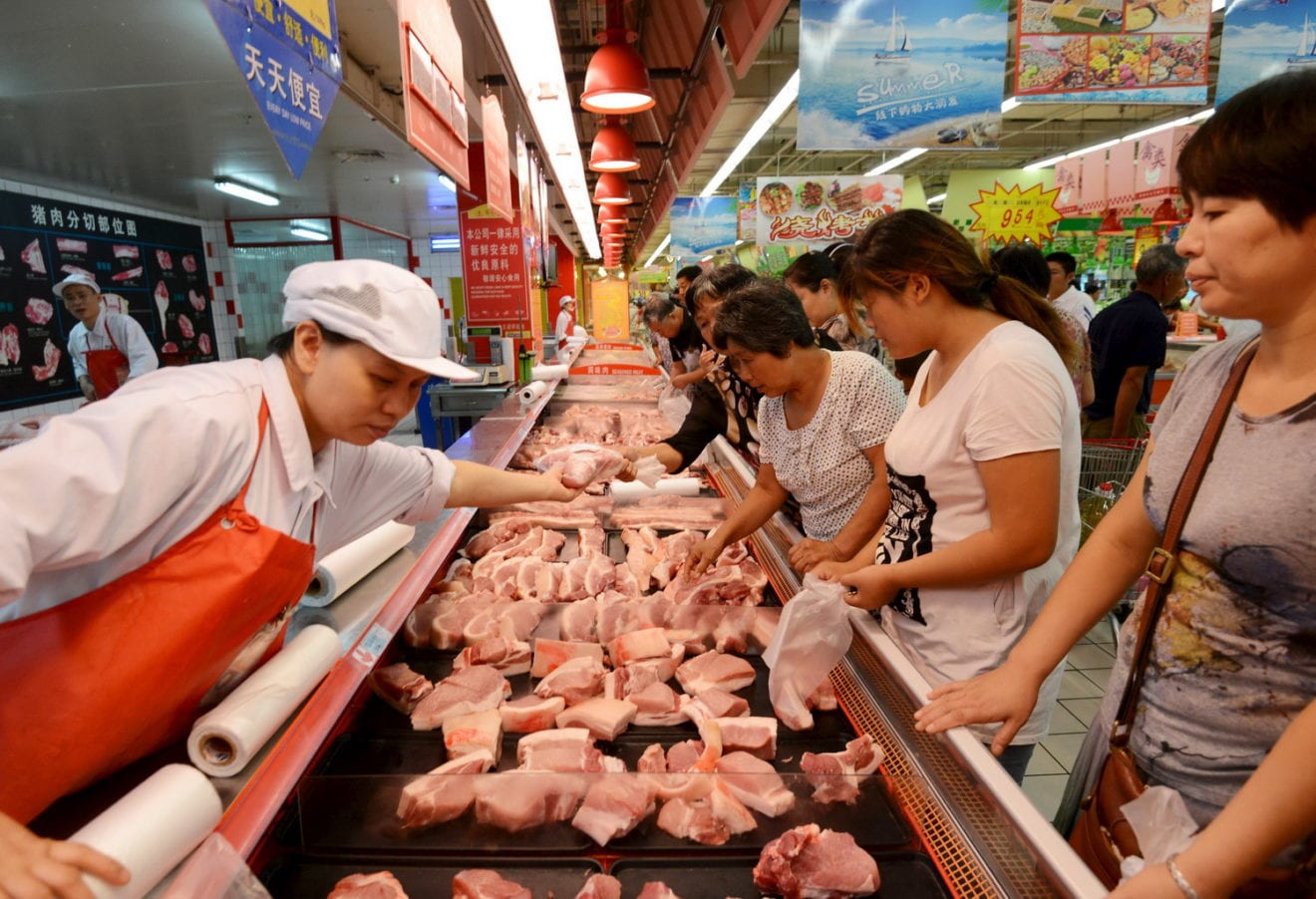
    Local farmers have seen prices fallen sharply as a surplus of 200,000 tons of pork is expected this year. Vietnam is working to export some of its pork to China soon, a deal that could help many farmers stricken by an oversupply and massive price drops.

    Necessary procedures are being finalized and China will only import pork, instead of live pigs, said Nguyen Xuan Duong, deputy head of the husbandry department under the agriculture ministry.

    China, the world’s biggest pork consumer, wanted to officially open its market for Vietnamese pork years ago, but in 2012, the foot-and-mouth disease made headlines in Vietnam, prompting the northern neighbor to halt the plan.

    As for now, China has asked Vietnam’s authorities to control diseases in animal farms and monitor the quality of pork.

    Chinese officials will come to Vietnam to check the production process before working on related procedures, Duong.

    He said China has not decided on how much it will import, but it is likely that Chinese consumers will need around one million tons of Vietnamese pork a year.

    Chinese buyers currently pay VND40,000-42,000 ($1.70-1.80) per kilogram of pork. Prices of pork have fallen sharply in Vietnam this year, currently hovering around VND23,000-25,000 per kilo.

    Vietnamese small traders used to be able to sell live pigs across the border, but China has recently ended this practice.

    In May 2016, the agriculture ministry started warning traders of a possible glut.

    Farmers have been expanding their herds hoping to increase exports to China despite warnings from the ministry, and “this has caused the pork supplies to exceed domestic demand,” the ministry said in a statement on April 28.

    Vietnam’s pig herd expanded by nearly 5 percent to more than 29 million heads last year. By the end of March this year the number had edged up by at least 1.5 percent, according to official data.

    The agriculture ministry estimated that Vietnam will face a surplus of 200,000 tons of pork this year. It is trying to also export live pigs and pork to the Philippines and Singapore.

  • Everex debuts mobile blockchain microcredit platform

    Everex debuts mobile blockchain microcredit platform

    Everex, a developer of applications based on the Ethereum blockchain, is expanding its operations towards global, blockchain-enabled mobile microcredit and fiat remittance services.

    In a blog post announcing the new service, the company stated that it seeks to connect two billion un- and underbanked individuals to the global financial system, by allowing them to access affordable instant micro-credit and global fiat transaction services from mobile devices.

    Everex mobile fiat transactions are based on the company’s already existing Cryptocash service and its mobile Ethereum wallet. Cryptocash is an Ethereum ERC20 token family, pegged to fiat currencies and tradable on the Everex Wallet, as well as on third-party applications and exchanges.

    With the new product launch, Cryptocash will be redeemable against its fiat counterpart at ATMs, currency exchangers, and mobile service providers worldwide, allowing users to instantaneously transfer fiat money anywhere at extremely low costs.

    The Everex remittance system was already tested last year, allowing hundreds of migrant workers to transfer an aggregate amount of 850,000 baht ($25,000) from Myanmar back home to Thailand.

    The new service will also allow users to request micro-loans in any currency from their mobile phones. The credit scores, necessary to assess interest rates, loan periods and risk, will be automatically generated on the spot, based on user behavior, social data, and spending patterns, which Everex collects through the company’s mobile wallet application.

    “Generating credit scores on the basis of mobile data will allow us to serve the microfinancing needs of many un- and underbanked individuals which, due to the often deficient documentation and track records in the developing world, had until now no access to affordable credit, ” Everex CEO and co-founder Alexi Lane said.

    The seed capital to launch Everex’s micro-lending operation will be raised in an Initial Coin Offering (ICO) this summer. The company will use profits, not directly reinvested in growth, to buy its tokens (EVX) back from the market – insuring that the company’s success is shared with token holders.

  • Australia’s Cotton On group top performing eco fashion retailer of 2017

    Australia’s Cotton On group top performing eco fashion retailer of 2017

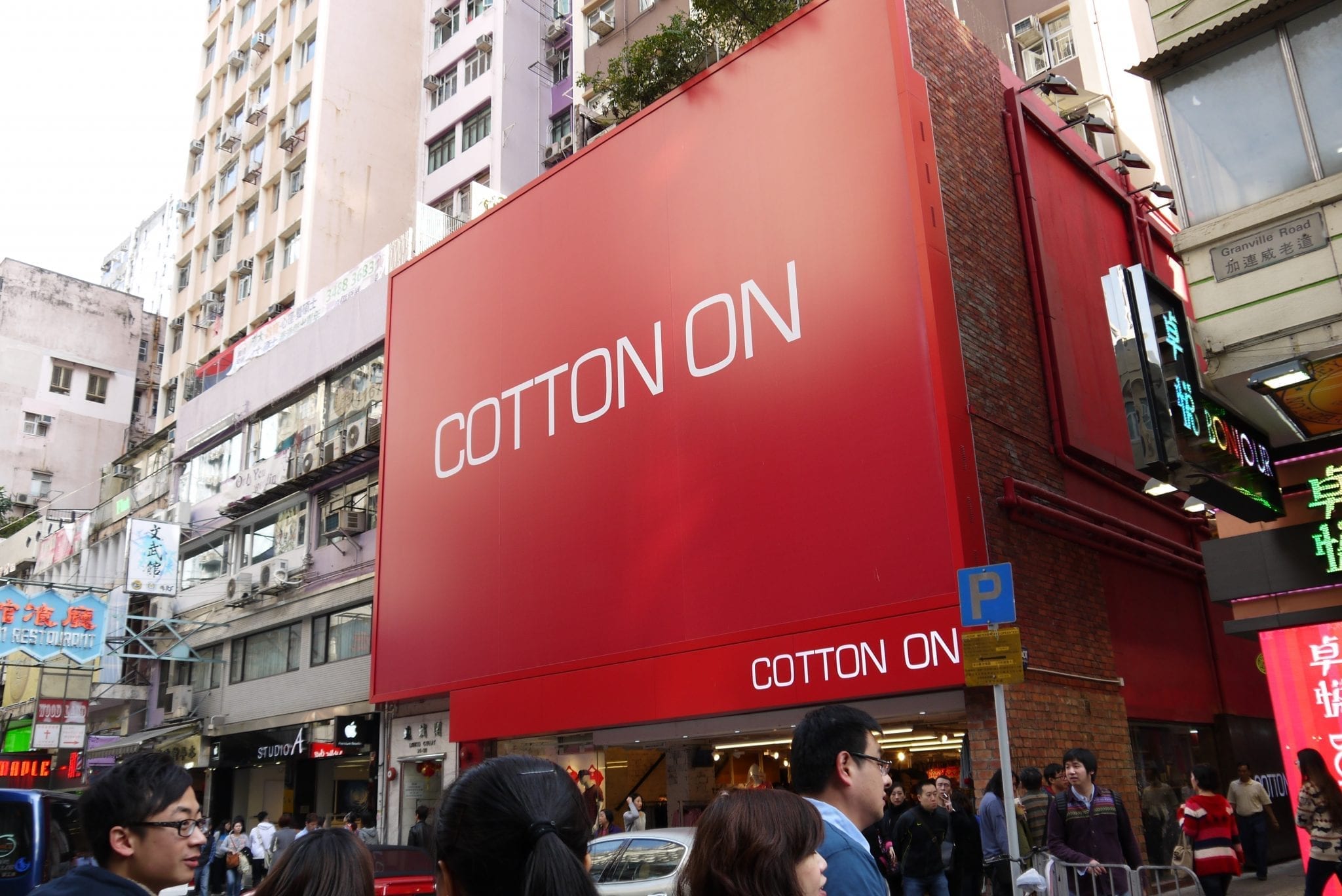
    Cotton On Group has become the top performing fashion retailer of 2017 in Australia, says a fashion report. The recognition solidifies the Group’s commitment to ethical and sustainable retailing, highlighting the steps it takes towards ensuring a safe, fair and sustainable environment in which its products are being sourced and manufactured.

    The Ethical fashion report by Baptist World Aid (BWA) grades companies on the efforts put in for a transparent and eco-friendly working condition. The research team assesses each company’s labour rights management system according to 40 specific criteria. These assessments consider three critical stages of the supply chain as a proxy for the entire supply chain: raw materials, inputs production and final manufacturing.

    “The environment in which our products are made and the materials used to make them form a critical part of our ethical responsibility – it’s just the right way to do business,” Cotton On Group’s ethical sourcing manager David Nesbitt said.

    “Over the last five years, we have worked closely with BWA to build on the strength of our existing ethical sourcing programme, allowing us to sense check and continually enhance our programmes with a focus on end-to-end mapping of our suppliers,” added Nesbitt. “We know we are on a continuous road to improvement and are committed to an ever-better supply chain for the long haul.”

    The Group’s ethical sourcing programme, including its 14 Rules to trade, has been in existence since 2009 and governs the sourcing, manufacturing and supply of products. Adherence to this code of conduct relies on the strength of the relationships the Group holds with its suppliers – some of which have been partners of the business for over 20 years.

  • Ralph & Russo Debuts Pop-Up Shop in Hong Kong Boutique

    Ralph & Russo Debuts Pop-Up Shop in Hong Kong Boutique

    The luxury British fashion label favored by Angelina Jolie, Gwyneth Paltrow and other celebrities is getting its own starring moment in Asia. This week, Ralph & Russo celebrated the debut of a pop-up shop in On Pedder’s New World Tower location in central Hong Kong.

    The space, situated on the mezzanine level of the luxury footwear and accessories boutique, features a curated selection of some of Ralph & Russo’s most decadent shoe designs, including the floral-print satin Eden boots (which retail for $1,650) and the Eden pumps with ornamental filigree.

    The Eden pumps range in price from $1,450 for a simple style with an embellished heel, up to $2,300 for a version with Swarovski crystals.

    Ralph & RussoRalph & Russo’s Eden ankle bootie with embellished heel, $1,650.
    Ralph & RussoRalph & Russo’s Eden pumps with ornamental filigree, $1,900.

    Like its collections, Ralph & Russo designed the pop-up space with sophisticated detailing, such as oversized mirrors and wooden paneling that turn the attention firmly to the product. And a raw wood tabletop in the center of the space offers a striking artistic juxtaposition and adds natural warmth to the tableau.

    Ralph & Russo On Pedder pop-upThe Ralph & Russo pop-up space in On Pedder in Hong Kong.

    The brand’s chairman and CEO, Michael Russo, who co-founded the label in 2007 with Tamara Ralph, said in a statement, “As soon as we visited On Pedder, we knew that there was perfect synergy between our collections and the values that the store represents — both are the epitome of luxury.”

    The pop-up space will be open from now until the end of July.

  • Apple opens flagship Singapore store, its first retail outlet in Southeast Asia

    Apple opens flagship Singapore store, its first retail outlet in Southeast Asia

    Saturday saw the official opening of Apple‘s new retail store in Singapore, also marking the first Apple Store to open in Southeast Asia. Officially known as Apple Orchard Road, the store is the latest of Apple’s next-generation retail stores, feature design elements like a large, all-glass front, open spaces to be used for community-focused events such as Today at Apple, tree planters inside, and custom wood furniture.

    The store’s design and interior were first revealed earlier this week when Apple finally had the barricades removed after months of work. At 10:00 AM on Saturday the store was opened to the public, with a significant crowd waiting outside. Apple’s senior vice president of retail, Angela Ahrendts, was present at the opening to welcome visitors and take part in the celebration with staff.

    After spending almost two years in the planning stages, Apple Orchard Road has come to life as two-story outlet featuring a curved staircase that features design elements borrowed from the new Apple Park headquarters in Cupertino. Upstairs guests will find the Genius Grove and gathering area for Today at Apple sessions, while the bottom floor has plenty of tables showcasing the company’s many products and accessories.

    Part of Apple’s goal with redesigning their stores is to change the public’s perception of the locations as simply places to buy Apple products. Ahrendts has said that they want Apple stores to be viewed more as meeting spots, much like Starbucks, or as places where interesting events take place, with friends wanting to check it out together.

  • Colt optimizes routes between Tokyo, Chicago exchanges

    Colt optimizes routes between Tokyo, Chicago exchanges

    Colt Technology Services has launched newly optimized low-latency network routes linking stock exchanges in Tokyo and the Chicago Mercantile Exchange.

    The enhancements aim to benefit traders in Chicago who require fast connectivity to Tokyo, or exchange venues in Tokyo that require low-latency connectivity to Chicago.

    Connectivity will be provided through the company’s private Ethernet-based Colt IQ Network. Latency between Tokyo and Chicago is expected to reach a mere 121.07ms between each endpoint after network optimization.

    Exchange venues across the globe will be able to utilize Colt’s ultra-low-latency network that links financial markets in Japan and America. Enterprises in other industries that require leased bandwidth, advanced security, and low-latency Ethernet services are also expected to benefit from these optimizations.

    Bandwidth is selectable from a range of 1Mbps to 10Gbps, and offers optional protection and redundancy.

    Colt has also commenced optimization of other key routes in the Asia-Pacific region.

    The company said its network is configured to be fully redundant, from the infrastructure and backbone to the local loop. Point-to-Point, Point-to-Multipoint, and Multipoint-to-Multipoint topology options are available. Colt’s services are based on MEF9 and MEF14.