Tag: asia

  • Tesla Driver In Multi-Car Crash Told Police Self-Driving Software Malfunctioned

    Tesla Driver In Multi-Car Crash Told Police Self-Driving Software Malfunctioned

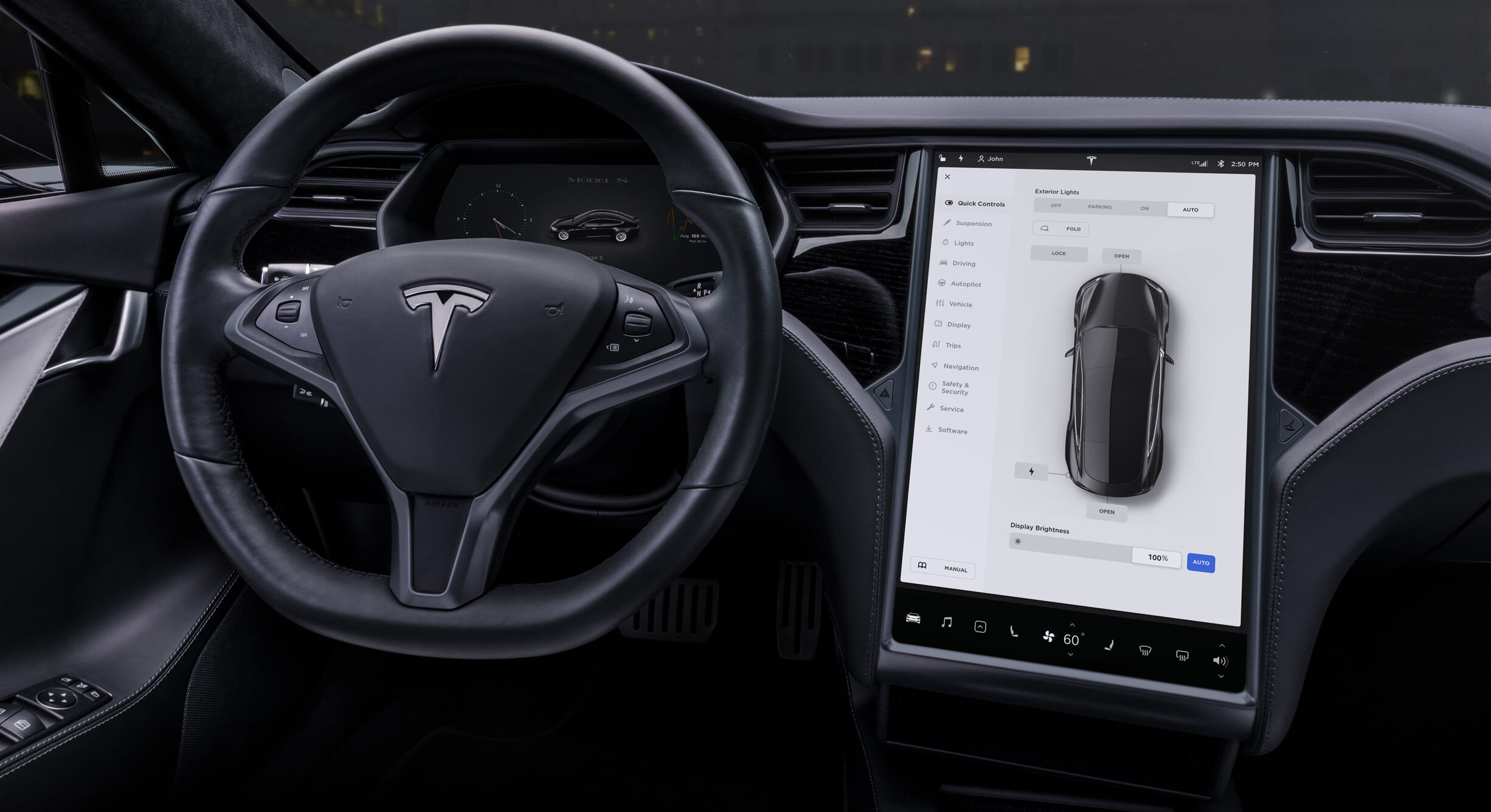
    The driver of a 2021 Tesla Model S involved in an eight-vehicle crash last month on San Francisco’s Bay Bridge told police he was in Full-Self Driving (FSD) mode which had malfunctioned, according to a police report made public Wednesday.

    The Thanksgiving Day crash on Interstate-80 near Treasure Island resulted in two juveniles being transported to a local hospital to treat minor injuries, leading to lengthy delays on the bridge.

    Chief Executive Elon Musk has touted Tesla “Full Self-Driving” software as a potential cash cow for the world’s biggest electric carmaker. But Tesla’s advanced driver assistance systems – and Musk’s claims about them – face growing legal, regulatory and public scrutiny.

    Tesla sells the $15,000 FSD software as an ad-on, enabling its vehicles to change lanes and park autonomously. That complements its standard “Autopilot” feature, which enables cars to steer, accelerate and brake within their lanes without driver intervention.

    The Tesla driver told police the FSD malfunctioned. Still, police were unable to determine if the software was in operation or if his statement was accurate, according to the report, which was made public after a Reuters request.

    The police report said the vehicle made an unsafe lane change and was slowing to a stop, which led to another vehicle hitting the Tesla and a chain reaction of additional crashes.

    The police report said if FSD malfunctioned, the driver should have manually taken control of the vehicle.

    Tesla did not respond to a request for comment.

    The National Highway Traffic Safety Administration (NHTSA), investigating the automaker’s advanced driver assistance systems, did not comment.

    Tesla’s says “Full Self-Driving” gives access to more advanced driver assistance features but emphasizes “all Tesla vehicles require active driver supervision and are not autonomous.”

    National Transportation Safety Board chair Jennifer Homendy has questioned Tesla’s marketing the feature as “full self-driving,” when it is incapable of that and said Tesla must do more to ensure people do not misuse the feature.

  • Indonesia aim to export natural gas to Vietnam in 2026

    Indonesia aim to export natural gas to Vietnam in 2026

    Indonesia aims to export natural gas to Vietnam starting 2026 from the Tuna offshore block located near the Indonesian and Vietnamese maritime border, the country’s energy minister said on Friday.

    Southeast Asia’s biggest economy may deliver 100 to 150 million standard cubic feet per day of gas through a gas pipeline from the Tuna block operated by Harbor Energy, energy minister Arifin Tasrif told reporters.

    The company’s website shows that the Tuna oilfield, with around 100 million barrels of oil equivalent, was discovered in April 2014.

  • Steel sector sees gloomy performance in 11 months

    Steel sector sees gloomy performance in 11 months

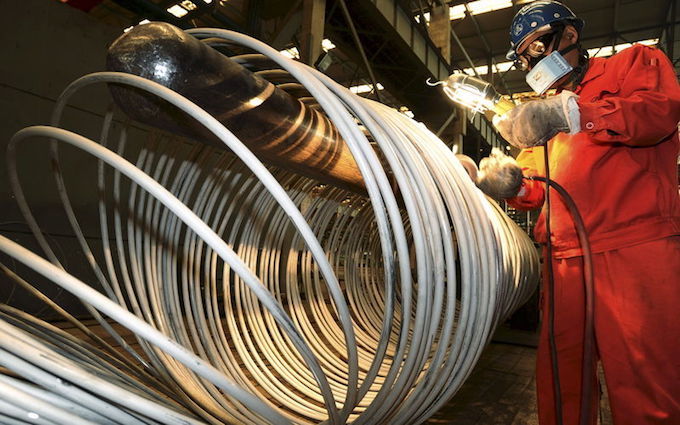
    The local steel market continued to be gloomy, with reductions in production and consumption in the past 11 months, a report published by the Vietnam Steel Association (VSA) this week revealed.

    Finished steel production saw a yearly decline of 11.3% to 27.12 million tonnes between January and November. According to the report, sales of finished steel also plunged 7% year-on-year to 25.1 million tonnes.

    In November alone, finished steel production reached over 1.82 million tonnes, down 11% month-on-month and 37% year-on-year while consumption of all kinds of steel hit above 1.94 million tonnes, up 3% month-on-month but down 16.2% year-on-year.

    In terms of exports, 7.54 million tonnes of steel were shipped abroad in the past 11 months, earning a turnover of $7.4 billion, year-on-year decreases of 38.1% in volume and 32% in value, according to the General Statistics Office. Sluggish consumption and high inventories caused factories to reduce their production capacities or halt production.

    According to the company, the prospect of recovering global steel demand continued to face difficulties when inflation was high. Moreover, the implementation of tight monetary policy in many countries would affect the prospect of world economic recovery in December.

    Meanwhile, the domestic market had not shown any clear signs of recovery and the real estate market faced many challenges. That would have a great influence on the steel consumption.

    All businesses were looking for ways to restore output and improve profit results in the last month of 2022, resulting in fiercer competition among factories and pushing up the selling prices of steel.

    In the recent report on the prospects of the steel industry, RongViet Securities Corp also said that the sector had little chance to recover in 2023 due to weak consumption, the pressure of the exchange rate and interest rate on financial costs.

    In 2023, the Government would foster investment in infrastructure projects with the goal of ensuring economic growth that could support domestic steel demand, especially for construction steel.

    However, the real estate industry which might not recover after a gloomy year could not help domestic steel demand rebound next year, experts have said.

  • New records seen in agro-forestry-fishery exports in 2022

    New records seen in agro-forestry-fishery exports in 2022

    The agro-forestry-fishery sector has made new export records in 2022 thanks to the diversification of markets and products.

    Statistics show that the sector’s export turnover is expected to top $53 billion in the year with a trade surplus of $7.8 billion, up nearly 48% year-on-year.

    Fishery exports would reel in nearly $11 billion, a 20-year high since Vietnam joined the international market. Records have been seen in shrimp, tra fish (pangasius) and tuna exports, with $4.3 billion, $2.4 billion and $1 billion in revenues, respectively.

    Given the 40-year high inflation and currency fluctuations in many markets and surging prices due to the Russia-Ukraine conflict, which have forced importers to consider reducing orders, Vietnamese businesses have flexibly diversified markets and products, according to Director of the Vietnam Association of Seafood Exporters and Producers VASEP’s Trade Promotion and Training Centre Le Hang.

    She held that free trade agreements (FTAs), especially the Comprehensive and Progressive Agreement for Trans-Pacific Partnership (CPTPP), have significantly benefited the domestic fishery industry, explaining that exports to the CPTPP markets expanded by 30% to make up 26-27% of the country’s total fishery export value.

    Trade promotion activities both at home and abroad have also played a role in the hikes, Hang added.

    In the year, rice export is also expected to hit a record of 7 million tonnes, said Do Ha Nam, Vice Chairman of the Vietnam Food Association, noting that rice contracts would be maintained in early 2023 thanks to high prices.

    Deputy Director of the Vietnam Academy of Agricultural Sciences Dao The Anh attributed the outstanding results to agricultural restructuring, which has created a firm foundation for the sector to move ahead.

    Many Vietnamese agricultural products have gained access to new markets, for example durian, sweet potato and bird’s nests winning permit to ship to China, pomelo to the US, longan to Japan, and lemon and pomelo to New Zealand.

    The sector will make greater efforts to reach more markets with diverse products, but the achievements in market opening should be maintained, said Hoang Trung, Director of the Plant Protection Department under the Ministry of Agriculture and Rural Development.

    Hang also suggested that the State should issue specific policies on market, tax and capital to better access foreign markets in the time ahead.

    For his part, Anh stressed the need to continue diversifying markets, including China, and satisfy their requirements in food safety and packaging, expressing his belief that ample room will remain for Vietnam’s agro exports next year.

  • Huawei collected more from patent licensing than it paid out for the second straight year

    Huawei collected more from patent licensing than it paid out for the second straight year

    No matter how hard the U.S. tries to punish Chinese manufacturer Huawei for being a threat to national security, the company keeps fighting back. After losing access to its U.S. supply chain in 2019 and being forced to abandon the Google Mobile Services version of Android, Huawei developed HarmonyOS with version 3.0 of the software running the Mate 50 series. The following year, the U.S. forced chip foundries using American technology to produce chips to stop shipping cutting-edge silicon to Huawei.
    Right now, Huawei can use 4G versions of Qualcomm’s top Snapdragon chips. While China’s largest foundry is unable to match TSMC and Samsung when it comes to producing the most powerful and energy-efficient chipsets, this could eventually change. Huawei has a patent to develop its own Extreme Ultraviolet (EUV) lithography machine. The EUV is used to etch circuitry patterns on wafers and with billions of transistors inside chips these days, these patterns must be a fraction of the width of a human hair.
    The top EUV lithography supplier is a Dutch firm called ASML, and it is not allowed to sell these machines to China. Since the invention of the EUV helped take chips to a 7nm process node and lower, Huawei’s patent could help China’s SMIC eventually compete with TSMC and Samsung Foundry. Right now, SMIC is believed to be able to produce 7nm chips for cryptocurrency mining but is limited to a 14nm process node for smartphone chips.
    Even with Huawei handicapped, the company continues to innovate, and according to Reuters, in 2022 it will generate more patent income from royalties than it pays out to license other firms’ patents. This will be the second consecutive year that Huawei has achieved this. Steven Geiszler, U.S. chief intellectual property counsel, said that Huawei signed or renewed 20 patent licensing deals this year.
    Some of the companies reaching an agreement with Huawei on these deals were non-U.S. automakers seeking to improve the communications capabilities of their cars. These firms include Mercedes-Benz, Audi, Porsche, and BMW. Geiszler pointed out the advantages to Huawei of making these deals when he said, “By getting a return on our R&D investment, it allows us to re-invest and re-invent.”
    This is a cycle that Huawei might be able to ride for some time even with the restrictions placed on it by the U.S. As Geiszler points out, the technology included in the patents that Huawei is licensing isn’t subject to U.S. restrictions. That’s because the technology is publicly disclosed.
    Huawei also agreed to extend its licensing deal with Nokia which collected revenue from Huawei when the deal was first signed in 2017. While Huawei has generated $1.2 billion from patent licensing over the last three years ending in 2021, it still has a long way to go to catch up with a company like Nokia which took in $1.59 billion in patent licensing revenue in 2021 alone. Huawei’s full-year 2022 patent licensing revenue won’t be computed until some time next year.
    The money generated by patent licensing still doesn’t make up for the billions of dollars in sales Huawei lost from the U.S. restrictions. However, the U.S. actions have helped Huawei become more aggressive when licensing its own patents. And with some cross-licensing deals, the company is getting money back from companies on the other side of the deal since Huawei isn’t producing as many devices as it used to.
    Huawei saw plenty of excitement earlier this year when it released the Mate 50 smartphone line using its homegrown Xmage photography system. One of the new features on the Mate 50 Pro is called the Low Battery Emergency Mode. When the phone is down to 1% battery,  it will deliver up to 12 minutes of phone calls or put the phone on standby for up to three hours.
  • Tesla Falls On Growing Angst Over Musk’s Focus On Twitter

    Tesla Falls On Growing Angst Over Musk’s Focus On Twitter

    Shares of Tesla Inc fell nearly 6% on Tuesday after a string of brokerages cut their price targets on the electric-vehicle maker’s stock, citing the risk from Elon Musk’s Twitter distraction.

    Tesla’s shares hit a more than two-year low of $140.86.

    Analysts say investors are worried that Musk may need to sell shares further to fund Twitter and sentiment around the acquisition of the social media firm could hurt the EV maker’s brand.

    Evercore ISI, which slashed its price target on the company’s shares to $200 from $300 said investors fear damage to the Tesla brand.

    Daiwa Capital Markets also cut its price target to $177 from $240, citing a “higher risk profile from the Twitter distraction”.

    Tesla shares, which have lost nearly 60% of their value so far this year, closed down 0.2% on Monday as Twitter users voted decisively in a poll for Musk to step down as chief executive of the social media platform.

    Analysts at Oppenheimer downgraded Tesla’s shares on Monday.

    The price target cuts come ahead of Tesla’s quarterly deliveries report expected in early January amid weakening demand in China.

    Daiwa lowered the company’s delivery estimate by 5% for 2023 and forecast an 8% reduction in revenue per unit year-over-year.

    Musk has said Tesla targets 50% growth in delivery volumes annually, however, the electric-vehicle maker said it will miss the target this year due to logistics issues.

    China’s passenger vehicle sales fell for the first time in six months in November and are expected to stay flat next year, China Passenger Car Association said.

  • Netflix vows to put an end to free password sharing in 2023

    Netflix vows to put an end to free password sharing in 2023

    Netflix has been trying to limit the use of password sharing since 2019 when its researchers informed the higher-ups that this is a major concern for the service’s revenues. However, Netflix’s willingness to stop the problem took a pause when COVID-19 started to spread worldwide.

    Now that the pandemic is over and because Netflix’s market share stalled, the streaming service is actively looking for ways to end password sharing without “alienating” its customers. One of the steps toward achieving this has already been made, as Netflix now offers a much cheaper alternative to those who can’t afford to pay for the basic plan.

    The new $6.99 ad-supported Netflix plan is a solid alternative for those who are currently getting the service for free thanks to password sharing. In the next couple months, however, things will become even more serious.

    According to the report, more than 100 million Netflix viewers currently watch the service via password sharing, which is quite a lot of revenue that the service is not getting. Netflix now revealed plans to end password sharing starting 2023, so those who are now taking advantage of the feature will be asked to pay for the service.

    Since Netflix is able to track down viewers who use password sharing, it will start rolling out changes to the service in the US early this year. One thing that Netflix is worried about is that customers will not like the chances, so it’s probably now trying to find ways to make it worth paying for the service.

    One possible solution would be to gradually pressure customers into dropping password sharing, which should prevent some backlash. However, that would mean offering them something in return for their willingness to start paying for the service.

  • Apple pulls HomeKit software update that brings the Matter protocol on board

    Apple pulls HomeKit software update that brings the Matter protocol on board

    Apple has apparently halted the update that completely revamps the underlying HomeKit architecture and brings the Matter standard to Apple’s smart home solution. The update was brought alongside the iOS 16./iPad OS 16.2 that arrived last week, and was available as soon as you opened the Home app, but the option to do so seems to have been disabled server-side by Apple.
    The reason for the unpleasant situation seem to be some pretty big problems that the transition to the Matter standard could have potentially brought upon HomeKit enthusiasts. Matter, hailed as the next big thing in the smart home space, is a smart home protocol that allows smart home gadgets to be interoperable and seamlessly communicate with one another, as well as be mostly ecosystem-agnostic, meaning that you might use them either with Apple’s HomeKit, Google Home, Amazon Alexa, Samsung SmartThings, or any other.
    If you’ve already jumped the gun and upgraded your HomeKit architecture, the update seems to be intact, though users who missed their chance to grab the software update are currently unable to move to the new architecture. That’s for the good, as there were seemingly more than enough issues to force Apple to pause the rollout.

    Hopefully, HomeKit users wouldn’t have toZwait for too long before the option to upgrade HomeKit pops up once again. Optimistically, we wouldn’t have to wait for iOS 16.3 to do so.

  • Spotify might soon know when your workout calls for a pump-up song

    Spotify might soon know when your workout calls for a pump-up song

    It appears that Spotify is working on an interesting new feature. The music streaming service is currently developing a HealthKit integration for its app. Chris Messina found this in Spotify’s iOS app code.

    For those unfamiliar with HealthKit, it is an iOS API that allows third-party apps to access data from Apple’s Health app. But why is Spotify working on a HealthKit integration? Well, a message found by Messina — a product designer, who constantly keeps his eyes open for upcoming features in Spotify — states that Spotify is developing this feature to be able to “get the right music for your workout.”

    The message further explains that the app will collect data like distance, pace, or speed during your training. The collected information will let Spotify match your training sessions with what you listen to and understand what songs motivate you most.

    Now, we must note that for an app to access your health data, you must first grant it permission. So, Spotify won’t be able to obtain your health information if you don’t want it to.

    However, you will surely agree that a good pump-up song at the right moment can put you in the necessary state of mind and help you break your deadlift or bench press records in the gym. With such a feature, Spotify would know the perfect moment to play that one song that makes your blood pump every time you hear it, thus helping you achieve greater results during your workout.

    Unfortunately, there is no word from Spotify about this new feature, and we don’t know when the music streaming platform plans to release it.

  • Samsung opens its largest regional R&D center in Vietnam

    Samsung opens its largest regional R&D center in Vietnam

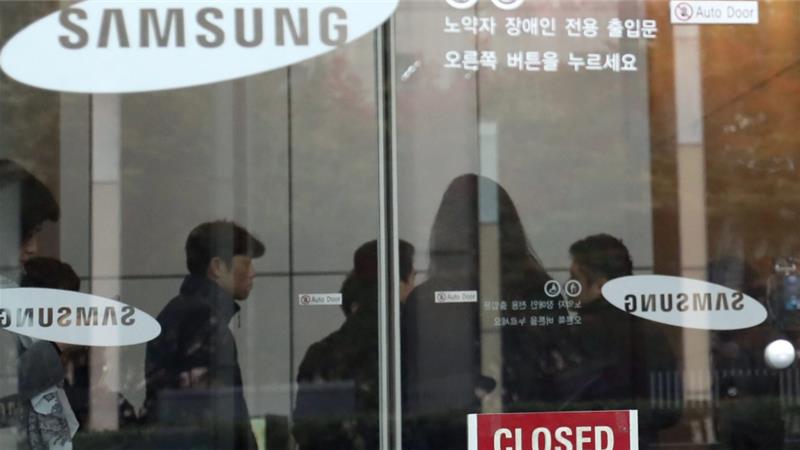
    The US$220-million Samsung R&D Center in Hanoi, the Korean conglomerate’s biggest research facility in Southeast Asia, was inaugurated Friday.

    The company said at the opening ceremony, with the new facility, Vietnam has now gone beyond its role as a global production hub for Samsung and become a strategic base for major research and development.

    Construction of the 16-story facility began in March 2020.

    Prime Minister Pham Minh Chinh said at the event that Samsung’s opening of the R&D Center in Vietnam is a testament to its orientation and commitment to long-term operation in Vietnam.sam

    “Samsung is the largest foreign investor in Vietnam with total registered investment of nearly $20 billion.”

    He added that its effective operation has made important contributions to Vietnam in terms of exports, jobs and taxes.

    Tae-Moon Roh, Samsung Electronics president, hoped the center would nurture the best Vietnamese talent.

    Samsung established its first smartphone factory in Vietnam in 2008 and has invested $18.2 billion so far. The figure could rise to $20 billion by the end of this year.

    Around half of all Samsung smartphones are made in Vietnam.

  • Thailand’s New Year spending to hit $2.9B

    Thailand’s New Year spending to hit $2.9B

    Consumer spending during the New Year holiday is expected to reach 103 billion baht ($2.96 billion), pushed by the country’s continued economic recovery from the pandemic.

    The estimated spending is an expansion of 20.1% from the 85.7 billion baht posted during the previous New Year period, the highest increase since 2007 and the first time in three years consumption exceeds 100 billion baht.

    “Consumer spending is expected to be the most active in three years during the upcoming New Year festive season, boosted in part by the government’s recently approved ‘Shop Dee Mee Khuen’ tax rebate scheme,” said Thanavath Phonvichai, president of the University of the Thai Chamber of Commerce (UTCC). “This will be good for the economy.”

    On Tuesday, the cabinet approved a series of stimulus packages to increase consumer spending during the New Year period, including the Shop Dee Mee Khuen tax rebate scheme, under which consumers can claim up to 40,000 baht in tax deductions for goods and services purchased between Jan 1 and Feb 15.

    The maximum spending eligible for tax deduction is split into two parts: 30,000 baht for products or services for shoppers who receive paper tax invoices, and another 10,000 baht for shoppers who ask for electronic invoices.

    The measure does not cover the purchase of some products and services, including alcoholic beverages, cigarettes, cars, motorcycles, boats, hotel rooms, tour guide fees, utility bills, mobile phone bills, internet service bills and insurance premiums.

    According to Mr Thanavath, the tax rebate scheme is expected to generate about 60 billion baht worth of spending, which would help drive the country’s economic growth in the first quarter of next year by 0.1-1.0 percentage points.

    Saowanee Thairungroj, a member of the UTCC’s advisory board, said most of the spending will be slated for parties, overseas travel and merit- making. Spending on luxury goods and popular New Year gifts is predicted to increase from the previous year, she said.

    Ms Saowanee said average spending is estimated at 33,944 baht per person, up from 30,634 baht in the same period last year.

    Luxury products represent 45.8% of average spending, followed by travel at 18.4%, durable goods at 14.4%, parties at 11.3%, garments and shoes at 3.9%, liquor/wine at 3.5%, merit-making at 2.6%, and others for the remainder.

    The survey found notably higher consumer spending on luxury products, travel, durable goods, liquor/wine and parties, with spending on luxury products increasing to 15,556 baht per person from 14,142 baht last year.

    Spending on travel rose to 6,262 baht from 5,445 baht, durable goods gained to 4,899 baht from 4,082 baht, parties increased to 3,835 baht from 3,335 baht, and liquor/wine rose to 1,173 baht from 656 baht in the previous New Year season.

    In terms of requests from the government, most respondents cited tackling corruption, more consumer spending stimulus measures, a reduced cost of living and higher daily wages.

    For 2023, people also expressed concerns about increased use of drugs, the economic outlook, the high cost of living, unemployment, debt and fresh Covid-19 outbreaks.

  • Netflix to launch Nike Training Hub on December 30

    Netflix to launch Nike Training Hub on December 30

    Netflix would like to help you stick to your fitness-related new year’s resolutions this year. Starting December 30, 30 hours of video content will become available on the platform, through a partnership with NIke.

    Reality check: in recent years, the number of new year’s resolutions related to losing weight are seeing a decline, but that isn’t a cause for celebration, as obesity rates are going up. However, it would be best if you remembere: there is no time like the present.

    While new year’s resolutions may not be the best method for losing weight, having access to content from Nike Training Club on your Netflix app certainly is. It will be released in two bahes, available in multiple languages and to users of all subscription plans, so all that is required of you is to get motivated and give it a shot.

    In case this is the first time you’ve heard about Nike’s training program, it is built around an app that wants you to stick to your decision and help you build healthy habits through fine-tuned training regimens and workout sessions.

    We still don’t know what the second series will include, but we know that it will become available some time in 2023. Until then, batch one will certainly give you enough to sink your sport shoes’ heels in to with:13 episodes of basics of Fitness

    • 7 episodes of core workouts
    • 6 episodes of yoga
    • 14 episodes of strength training
    • 5 episodes of feel-good fitness

    Considering that this is not your typical binge-worthy series, but content that you will actually revisit multiple times — or at least until you’ve gotten a steady workout routine down — it is certainly more than enough to help you get started on that new you.

    The program will also feature videos, suitable for people of all fitness levels, meaning that you will be able to tell the ones that aren’t for you yet, but they will still be available to you when you decide to push things further.

    The videos will be led by certified trainers from Nike’s Training Club solution. And if you like what you see on Netflix, you can also download Nike’s app too for a full experience. Oh, and by the way — the app is completely free, and offers tons more, like additional workouts, goal reminders and expert tips on nutrition and diet.

    As Netflix is stepping up their game regarding, um… well, games on the platform, we can definitely expect them to bring more fitness options too, especially if Nike’s series receives a warm welcome. And you know what? This year might be it, so you should definitely try going for Netflix and Treadmill instead of Netflix and Chill.

  • Hong Kong delivery platform Lalamove doubles growth in Vietnam

    Hong Kong delivery platform Lalamove doubles growth in Vietnam

    Hong Kong delivery platform Lalamove has claimed its year-on-year growth in Vietnam doubled in the first 11 months this year.

    But it has not released figures for either year. Vietnam is a key and positive market, its CEO Paul Loo said during a recent visit to the country, and his company has seen opportunities in long-distance delivery grow.

    It now covers 40 localities.

    “Inter-province delivery still accounts for a small ratio of our revenues but it is growing very fast,” Loo said.

    The e-commerce boom has also contributed to the growth, he said.

    Vietnam’s e-commerce market is estimated at $14 billion this year, up 14% from 2021, and is set to reach $32 billion in 2025, according to a report by Google, Temasek and Bain & Company.

    The report said 85% of urban residents use online delivery services. Lalamove, which operates in over 350 cities in mainland China, has a presence in 11 global markets.

    Since entering Vietnam in 2017 it has signed up over 100,000 drivers and 20,000 business partners.

    Businesses are now reluctant to invest in their own vehicles and drivers due to fear of risks amid an uncertain future, which is why they rely on delivery services to transport their products, Loo said.

    His company is investing in technology to improve the algorithm connecting vehicles and customers, he said.

    With $700 million invested in online private transportation companies in the first half of this year, the sector is believed to have high competition.

    There is great potential to increase market share as long as a company meets the needs of its customers and increases the value of its ecosystem, Loo added.

  • Vietnam remains top global peppercorn exporter

    Vietnam remains top global peppercorn exporter

    The volume of Vietnam’s pepper exports to important markets has decreased this year, but the country has retained its top spot in the global rankings, heard a conference held in Ho Chi Minh City on December 21.

    The Vietnam Pepper Association Chairwoman Hoang Thi Lien said in 2022, the product was at a disadvantage due to inflation and economic recession in many markets, and China’s zero-Covid policy, hence a reduction in export volume.

    Vietnam has shipped about 230,000 tonnes of peppercorns overseas this year for more than $970 million, down 13% in quantity but up 2% in value annually. The export turnover of all spices is forecast to hit $1.5 billion.

    Vietnamese enterprises import pepper from other countries such as Brazil and Indonesia for processing, then re-export for higher value. From the beginning of the year to the end of November, the nation purchased 34,273 tonnes of the product, an increase of 48.9% against the same period in 2021.

    Vietnam has an advantage over other pepper production countries such as Indonesia, Malaysia, India, Sri Lanka and Cambodia thanks to the the EU-Vietnam Free Trade Agreement, Lien said. Under the trade pact, the EU’s import tax on Vietnamese ground pepper has been reduced from 4% to 0%.

    The proportion of processed goods currently accounts for about 30% of its total export turnover, she added.

    The expert suggested the sector work to capitalise on untapped potential in many markets, particularly Eastern Europe.

  • France fines Microsoft $64M over advertising cookies

    France fines Microsoft $64M over advertising cookies

    France’s privacy watchdog said Thursday it has fined US tech giant Microsoft 60 million euros ($64 million) for foisting advertising cookies on users.

    In the largest fine imposed in 2022, the National Commission for Technology and Freedoms (CNIL) said Microsoft’s search engine Bing had not set up a system allowing users to refuse cookies as simply as accepting them.

    The French regulator said that after investigations it found that “when users visited this site, cookies were deposited on their terminal without their consent, while these cookies were used, among others, for advertising purposes.”

    It also “observed that there was no button allowing to refuse the deposit of cookies as easily as accepting it.”

    The CNIL said the fine was justified in part because of the profits the company made from advertising profits indirectly generated from the data collected via cookies — tiny data files that track online browsing.

    Bing offered a button for the user to immediately accept all cookies, but two clicks were need to refuse them, it said.

    The company has been given three months to rectify the issue, with a potential further penalty of 60,000 euros per day overdue.

    The fine was issued to Microsoft Ireland, where the company has its European base.

    In a statement Microsoft said that it had “introduced key changes to our cookie practices even before this investigation started.”

    “We continue to respectfully be concerned with the CNIL’s position on advertising fraud,” it said, adding that it believes the French watchdog’s “position will harm French individuals and businesses.”

    Cookie control

    Cookies are installed on a user’s computer when they visit a website, allowing web browsers to save information about their session.

    They are hugely valuable for tech platforms as ways to personalise advertising — the primary source of revenue for the likes of Facebook and Google.

    But privacy advocates have long pushed back.

    Since the European Union passed a 2018 law on personal data, internet companies have faced stricter rules that oblige them to seek consent from users before installing cookies.

    Last year, the CNIL said it would carry out a year of checks against sites not following the rules on using web cookies.

    Google and Facebook were sanctioned by the French regulator with fines of 150 million and 60 million euros respectively for similar breaches around their use of cookies.

    The two firms also face scrutiny over their practice of sending the personal data of EU residents to servers in the United States.

    And tech giants continue to face a slew of cases across Europe.

    Earlier this month, Europe’s data watchdog imposed binding decisions concerning the treatment of personal data by Meta, the owner of Facebook, Instagram and WhatsApp.

    The European Data Protection Supervisor said in a statement that the rulings concerned Meta’s use of data for targeted advertising, but did not give details of its ruling or recommended fines.

    The latest case follows complaints by privacy campaigning group Noyb that Meta’s three apps fail to meet Europe’s strict rules on data protection.