Tag: asia

  • Apple Closer to India Stores After Government Eases Retail Curbs

    Apple Closer to India Stores After Government Eases Retail Curbs

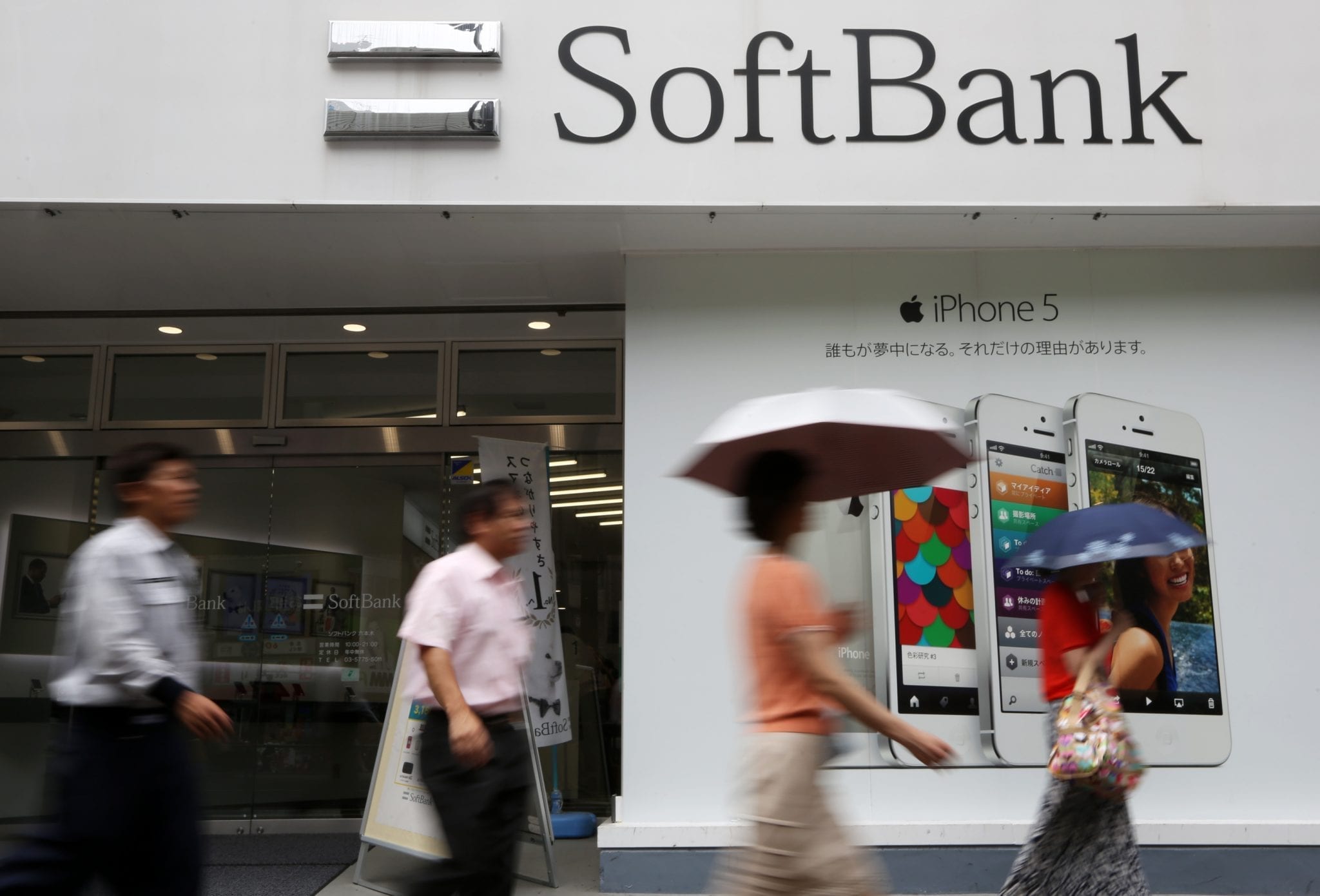
    Apple Inc. may be closer to opening stores in India after the government eased onerous local sourcing requirements on retailers.

    The world’s second-most populous country on Monday announced the easing as part of a raft of measures intended to boost foreign direct investment and expand the leeway afforded multinational corporations. It loosened policies that require retailers to source at least 30 percent of their components locally before they can set up shop.

     Apple is pushing to increase its share of the world’s fastest-growing major smartphone market as device sales slow elsewhere. Chief Executive Officer Tim Cook visited the country for the first time in May and met with Prime Minister Narendra Modi to outline his ambitions for the burgeoning arena.

    Under the new regime unveiled Monday, single-brand retailers have a three-year grace period in which they can operate stores, before they have to comply with the local sourcing requirement. Companies that can show they are selling state of the art or cutting edge technology can benefit from a relaxed local sourcing regime for “another five years.”

    The government hasn’t ruled on whether Apple meets the cutting edge criteria. Apple didn’t respond to an e-mail seeking comment on the government’s decision.

    Apple will now have to apply anew for permission to open its first stores in India, Commerce Minister Nirmala Sitharaman told reporters Monday. The Cupertino, California-based company has used flagship stores in New York, Tokyo and Shanghai to promote its products and boost sales, but in India it sells through partners such as Redington India Ltd. as well as the retail units of Indian conglomerates Tata Group and Reliance Industries Ltd.

     “The relaxed rules give Apple a window to build up a credible brand and gives the company a chance to build up internal capability and familiarity with the supply base,” said Devangshu Dutta, chief executive officer of Third Eyesight. “For branding, a certain consistency is critical and this can be done by having retail control.”

    India is a challenging market because of the iPhone’s premium pricing. It now has less than 2 percent of an Indian market in which four-fifths of phones cost less than $150. The iPhone maker had sought permission to become the first company allowed to import and sell cheaper refurbished phones into the country, but was said to have been rejected.

    Still, Apple’s sales there jumped 56 percent in the March quarter, indicating that demand for the brand is growing. Cook called out the country’s “incredibly exciting” prospects during his last earnings conference and said his company will devote more energy to that market. Apple’s stores have always played a key-role in attempts a convey a unique image and feel for its products.

    “It gives Apple more branding and positioning strength. Having a direct presence will help it gain more mindshare,” said Vishal Tripathi, an analyst at research firm Gartner. “It can help create a well-fashioned brand in the Indian market.”

  • Foreign Investment into Tobacco Industry Banned in China

    Foreign Investment into Tobacco Industry Banned in China

    The Ministry of Industry and Information Technology (MIIT) has recently issued regulations regarding retail of tobacco products in China. The new regulations stipulate that foreign invested commercial enterprises or individual business households are not permitted to engage in tobacco wholesale or retail business, nor engage in trading of tobacco monopoly products in alternative forms such as franchise, absorption of franchise stores or other re-investment, etc. The Measures for Administration of the Tobacco Monopoly License and Measures for Administration of Shipment Permit of Tobacco Monopoly Products will both become effective as of July 20, 2016.

    Shanghai Issues Notice on the List of Automatic Preferential Tax Policies

    Shanghai Municipal State Tax Bureau and Shanghai Municipal Local Tax Bureau has released a notice outlining and clarifying eight preferential tax policy matters which do not require additional materials to apply for. They are as follows:

    • Deduction/reduction of VAT for purchase of special equipment for the VAT control system.
    • Exemption of small sized and micro profit enterprises from VAT.
    • Exemption of ticket income of science halls, natural museums, science & technology education bases and science & technology education activities from VAT.
    • Exemption/reduction of enterprise income tax on qualified small sized and micro profit enterprises.
    • Accelerated depreciation or remuneration for fixed assets or software purchased.
    • Accelerated depreciation or one-off deduction of fixed assets.
    • Preferential stamp tax during the restructuring process of an enterprise.
    • Preferential stamp tax on loan contracts concluded between small sized and micro enterprises.
    State Council Issues the Guiding Opinions on Cutting Overcapacity in the Non-Ferrous Metal Industry

    The General Office of the State Council issued “Guiding Opinions on Creating a Favorable Market Environment to Promote Structural Adjustment, Transformation and Increases in Benefits in the Non-Ferrous Metal Industry (Opinions),” which addresses dealing with overcapacity problems in the non-ferrous metal industry. The Opinions consists of 15 articles, making detailed directives for key tasks and policy assurance, stressing that work should be done to cut overcapacity and disposal of surplus material in accordance with the laws and regulations, and guide the transfer of non-competitive capacity.

    The Opinions states the key tasks as including: strict control of newly-added capacity and investigation and management of newly-built electrolytic aluminum projects in violation of the regulations; quickening of disposal of excess material, dealing with overcapacity in accordance with the laws and regulations and guiding the transfer of non-competitive capacity; stepping up technological innovation, pushing forward intelligent manufacturing and development of refined processing; expanding market applications, enhancing upstream and downstream cooperation and improving relevant product standards; improving reserves systems; actively promoting international cooperation, etc.

  • Singapore Cruise Centre launches duty free tender

    Singapore Cruise Centre launches duty free tender

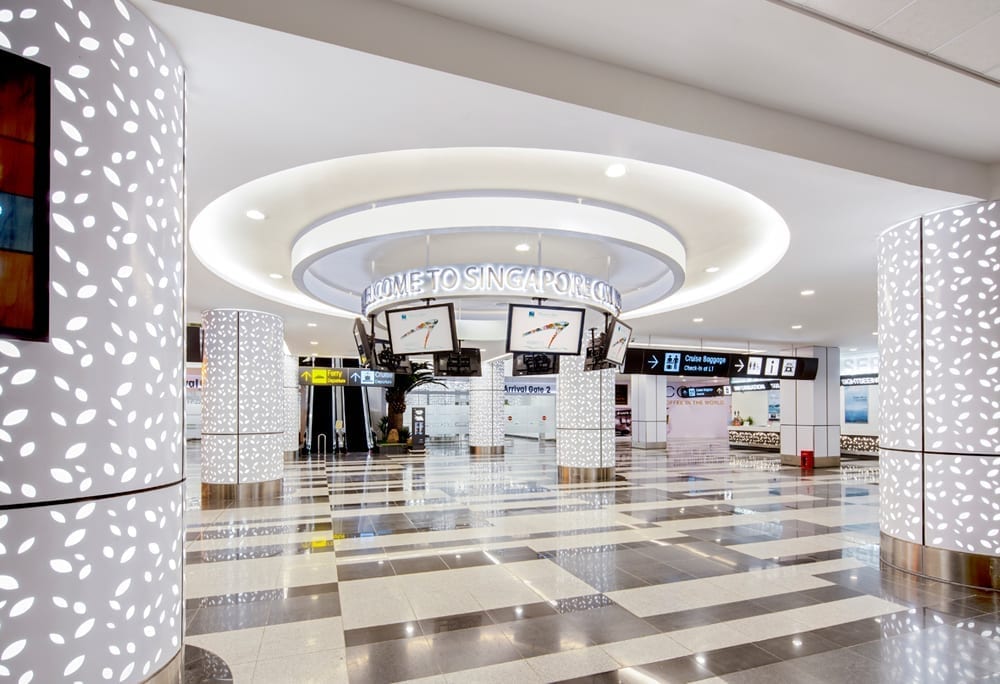
    Singapore Cruise Centre Pte (SCCPL) is inviting interested companies to tender for the development and operation of the duty free and general merchandise concession contract at the Harbourfront and Tanah Merah terminals for a period of five years (with an option to extend for another two years).

    The SCC confirmed that it is investing in the redesign and upgrade of its commercial offer at both terminals, with expansion and reconfiguration of the main retail space in the departures and arrivals areas.

    The new contract up for tender will govern 542sq m of retail space, serving over 6.3m ferry passengers and 560,000 cruise passenger annually.

    The SCC has also decided to consolidate several separate contracts for the existing duty free concessions (including liquor & tobacco, perfumes & cosmetics, fashion & travel accessories and confectionery), into a single contract, to run for five years with a two-year extension option, commencing 1st April 2017.

    The contract will govern 542sq m of retail space, serving over 6.3m ferry passengers and 560,000 cruise passenger annually.

    Singapore-Cruise-Centre-logo

    BULLISH PROSPECTS FOR CRUISE INDUSTRY

    Singapore Cruise Centre CEO Christina Siaw released this statement: “It is an exciting time for SCC as we launch our first public duty free retail tender, amid bullish prospects for the cruise and ferry industry in Asia Pacific.

    “We are committed to driving passenger growth in our terminals and retail is a key contributor to overall passenger satisfaction. We seek an experienced, world-class duty free retail operator to partner us in developing a unique, integrated shopping destination that optimises commercial revenues at our terminals.”

    The tender is open to companies with ‘relevant experience in duty free retailing’ until 30 June, when all RFQs must be submitted.

    One of the incumbents, DFS Singapore currently operates the departure-transit and arrivals transit shops alongside the SCC’s Ocean Duty Free outlets, which are operated by Gebr Heinemann.

    In March earlier this year, the Singapore Tourism Board (STB) reported that the country witnessed encouraged growth in the cruise and business segments as the Singapore Cruise Centre (SCC) was named the number one cruise port in Asia in 2015.

    As previously reported, the latter incumbent operator, Heinemann opened its third (157sq m) Ocean Duty Free store in Singapore’s HarbourFront Ferry Terminal in January 2015.

    This follows the earlier opening of its first two outlets at the Tanah Merah Ferry Terminal in March 2014.

    SCC-HarbourFront-exterior---Cruise

    Heinemann opened its third (157sq m) Ocean Duty Free store in Singapore’s HarbourFront Ferry Terminal in January 2015.

    The deadline for the RFQ submission is Thursday 30 June, 4pm (SGT), deposited into Tender Box A in the reception area at Singapore Cruise Centre Pte Ltd, 1 Maritime Square (Lobby D), #07-01, HarbourFront Centre, Singapore 099253.

    “SCCPL does not bind itself to accept any tender nor the highest bid,” the SCC states on its website.

    In March earlier this year, the Singapore Tourism Board (STB) reported that the country witnessed encouraged growth in the cruise and business segments as the Singapore Cruise Centre (SCC) was named the number one cruise port in Asia in 2015.

    Tanah-Merah-Ferry-Terminal-Singapore

    Heinemann opened two outlets at the Tanah Merah Ferry Terminal in March 2014.

    Interestingly, the cruise industry saw a 14% year-on-year increase in cruise passenger throughput last year to more than one million.

    In addition, the country welcomed a total of 385 cruise ships, including international cruise brands such as TUI cruises, and Royal Caribbean, as well as nine maiden calls – new to Singapore and Southeast Asia.

  • New Hotels Keep Popping Up in Korea’s Most Celebrated Beachfront Community

    New Hotels Keep Popping Up in Korea’s Most Celebrated Beachfront Community

    Busan’s Haeundae district is best known for its beach that attracts millions of visitors each summer. But it’s also a major MICE (meetings, incentives, conferences, and exhibitions) center, with the Busan Exhibition and Convention Center (BEXCO),and hosts major annual events such as the Busan International Film Festival. Under these conditions, competition between hotels is higher than ever.

    In 2019, Haeundae will welcome another global hotel franchise unit, Sheraton, which will be operated by Starwood Hotels & Resorts Worldwide. Starwood currently owns 11 brands including Sheraton and Westin, and operates over 1,300 hotels in some 100 countries. The new 260-room hotel will be located between two major beaches in Busan, Haeundae and Songjeong.

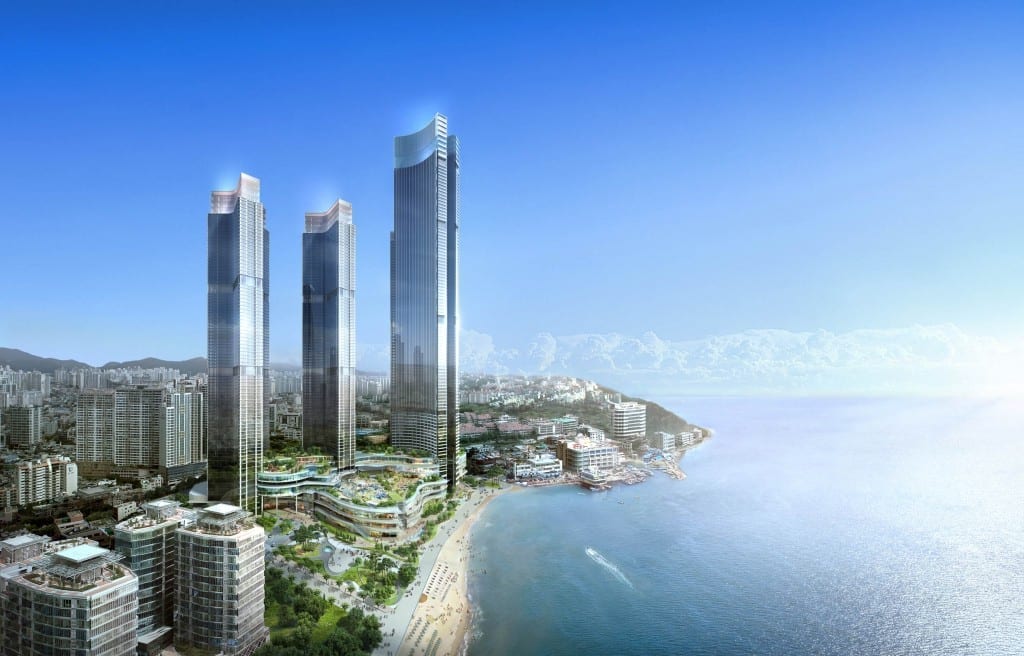
    Lotte Hotel has recently finalized plans to operate a luxury hotel inside the LCT Landmark Tower. The 101-storey tower, which is also located by Haeundae beach, is expected to be completed in 2019.Busan’s Haeundae district is best known for its beach that attracts millions of visitors each summer. (image: Wikimedia)

    Korean retail giant Shinsegae is in the middle of the planning process to build a hotel that offers a somewhat differentiated service by connecting services with shopping. The hotel will be built across from the company’s Centum City store, which is the largest department store in the world. 

    A Japanese company, Sega Sammy Holdings, has also established plans to build a luxury hotel (312 rooms) and a business hotel (470 rooms) on the opposite side of BEXCO. 

    Hotel Shilla, a Samsung subsidiary that operates hotels and duty-free shops, is building a 406-room business hotel, which is expected to open in 2017.

    Lotte Hotel has recently finalized plans to operate a luxury hotel inside the LCT Landmark Tower. The 101-storey tower, which is also located by Haeundae beach, is expected to be completed in 2019. (image: LCT)

    Amid such changes in the area, some businesses welcome the new development plans, while there are those that suffer from the increasing availability of new accommodations. 

    “The hotel market in Haeundae has reached its saturation point, and we have been struggling with our operations,” said an official from one of the hotels in Haeundae. “The government should limit the number of hotel approvals in the area.” 

    “We need a large number of hotels to host large-scale events,” said a MICE industry affiliate. “It’s too early to say that the hotel market in Haeundae is over-saturated. We need more hotels for the continued growth of the MICE industry.”


  • Foreign direct investments rise to RM12.8b in first quarter

    Foreign direct investments rise to RM12.8b in first quarter

    Despite a weaker global environment, Malaysia remains a competitive investment location for foreign investors, with an increase of 28% in this quarter, says minister Mustapa Mohamed.

    In the first quarter (Q1) of 2016, Malaysia recorded RM37.3 billion of approved investments in the services, manufacturing and primary sectors.

    These investments involved 1,271 projects and will create 39,990 employment opportunities.

    “Despite a weaker global environment, Malaysia remains a competitive investment location for foreign investors, with an increase of 28% in this quarter.

    “Year-on-year, FDI (foreign direct investments) increased to RM12.8 billion in Q1 2016 from RM10.0 billion in the corresponding period of 2015.

    “Domestic investments led with RM24.5 billion or 65.7% of total approved investments in Q1 2016,” said International Trade and Industry Minister Mustapa Mohamed today.

    “Taking into account the two lumpy projects approved in last year’s Q1 i.e. PRPC’s project in Johor and LNG9’s project in Sarawak, Q1 2016 showed a decrease from RM69.8 billion in comparison as these two projects alone amounted to RM35.3 billion.

    “ I would like to highlight that without the two big projects, Q1 2016 actually shows an overall increase of 8.1% from RM34.5 billion last year,” the minister added.

    Services sector

    The services sector attracted the largest portion of approved investments in the first three months of 2016, amounting to RM27.6 billion. A total of 1,088 services projects were approved, creating 20,200 employment opportunities, the largest potential employer in the economy.

    “Foreign investment in the services sector surged by 112.1% from RM3.3 billion in Q1 2015 to RM7.0 billion in the same period this year.

    “We are seeing more foreign participation in distributive trade, education services, global establishments, financial services and real estate sub-sectors,” explained Mustapa.

    Distributive trade saw an increase of 992% of foreign participation from RM101.5 million in Q1 last year to RM1,108.7 million in Q1 2016.

    The increased investments from regional and international retailers have boosted Malaysia’s ranking to third position in the 2016 Global Retail Development Index (GRDI) by A T Kearney.

    For the education sub-sector, the increase of 672.7% of foreign investments from RM19.3 million in Q1 2015 to RM149.2 million in Q1 2016 reflects Malaysia’s success in accelerating the process in making the country a regional education hub of excellence.

    The private education sector will complement the government’s efforts in providing access to quality education to the people.

    As to date, there are 501 private higher institutions that offer a wide range of disciplines at every level of education, including short-term and professional courses certificate, diploma, degree and post-graduate degree qualifications.

    Global establishments and end-to-end global supply chain management services are fast becoming important components in the Malaysian economic backbone.

    In Q1 2016, the Malaysian Investment Development Authority (Mida) approved a total of 60 global establishments with investments of RM5.6 billion.

    The lion share of these was from six principal hub projects with total investments worth RM5.5 billion. These investments were in the industries of aerospace, electronic & electrical (E&E), food & beverage as well as resource-based industries.

    The principal hub initiative is among the high value-added services that are currently promoted by Malaysia.

    Manufacturing sector

    Investments in the manufacturing sector for January-March 2016 totalled RM8.9 billion from 170 projects. The approved manufacturing projects are expected to generate about 19,650 employment opportunities.

    “Despite the decrease in investments in this sector for the first quarter of this year, it is noteworthy that Malaysia has attracted significant investments in the transport equipment industry, with a spike of 1,584% from RM40.1 billion in Q1 2015 to RM675.7 billion in Q1 2016.

    Other industries which recorded high growth rates were paper, printing & publishing (944.0%), food (550.0%), leather & leather products (162.3%), chemical & chemical products (159.1%), scientific & measuring equipment (78.8%), and rubber products (57.1%).

    Regardless of a lower investment value in Q1 2016, the E&E industry emerged as the main contributor to the total approved investments in the manufacturing sector compared to the corresponding period last year.
    Most of the high quality projects in E&E are concentrated in solar, fabricated wafers and semiconductor devices.

    Primary sector

    Malaysia continued to register a lower investment in the primary sector due to the challenges in global crude oil prices. Investments in this sector recorded a total of RM874.9 million in Q1 2016.

    The mining subsector led with approved investments of RM692.2 million, mainly from oil and gas exploration activities.

    Approved investments in the plantation and commodities subsector totaled RM129.0 million. In Q1 2016, a total of RM53.7 million investment was approved in the agriculture subsector.

     

  • Father’s Day call for men’s health service

    Father’s Day call for men’s health service

    A legislator has called on the government to set up a men’s health-care service that combines physical and psychological treatment to help middle-aged men with sexual health problems.

    Civic Party lawmaker Kwok Ka-ki, a urology doctor, made the call on Father’s Day.

    Many men aged 30 or above are faced with diseases of the reproductive system, including erectile dysfunction and benign prostatic hyperplasia, Kwok said.

    He noted that there used to be a male health department in Kwong Wah Hospital, a public hospital in Yau Ma Tei, during the 1990s, but the services were withdrawn due to a lack of resources.

    Health-care centers for men are run by the nonprofit Family Planning Association of Hong Kong in Tsuen Wan, Wan Chai and Ma Tau Chung.

    “The male health services provided by the Family Planning Association of Hong Kong are not cheap. A tablet to treat erectile dysfunction could cost up to HK$100. Grassroots citizens may not be able to afford it,” Kwok said.

    While Kwok urged the Hospital Authority to set up male health centers, he also advised the government to integrate counselling services into the men’s health-care services.

    “Most cases of sexual dysfunction in men are caused by psychological problems, such as stress from work and family, and can be treated with sex therapy,” he said.

    Kwok said health clinics with sex therapy services are very common in Europe and America.

    “When men go to see urology doctors in Hong Kong, they can only get assistance on their physical health, but not on their sexual or marriage problems.”

    Kwok suggested the government set up combined clinics, offering, for example, one-stop urology diagnostic services and sex therapies for men.

    Meanwhile, people celebrated the hottest Father’s Day yesterday in 55 years inside air-conditioned malls shopping, boosting retail store sales.

    The Hong Kong Observatory issued the very hot weather warning at around 7am. It recorded a temperature of 34.2 degrees Celsius at around 2pm, making yesterday the hottest Father’s Day since 1961.

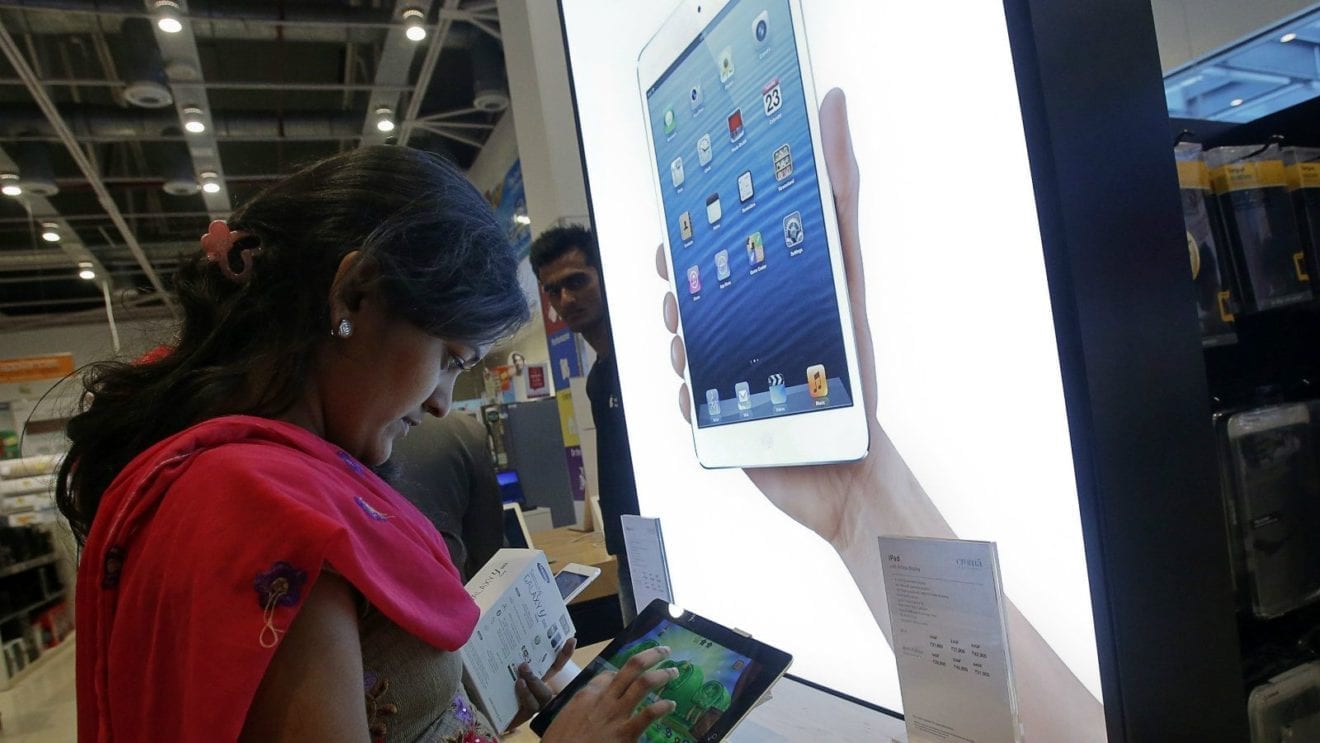
    A salesman at electrical goods chainstore Fortress in Tai Koo Shing said the sales volume has increased by 30 percent this year, with most families purchasing mobile phones in the mid- price-range, HK$2,000 to HK$3,000.

    “Although the increase is pretty similar to that of last year, it is still better than that on Mother’s Day,” he added.

    Catering businesses seemed to be benefiting from the day as well.

    House of Canton, a traditional Chinese restaurant at Cityplaza, said the first round of their tables at 6.30pm had been fully booked, with only a few tables left for the second and third rounds.

  • Myanmar businesses want policies

    Myanmar businesses want policies

    There are concerns the new government, which took office in April, has not yet revealed its economic policies. Businesses are also concerned that if the policies further open up the economy, some companies would not be ready for potentially intense foreign competition.

    At a panel discussion of the Economist Events’ Myanmar Summit 2016, Sai Sam Htun, executive chairman of Loi Hein Co, the No 1 beverage firm in Myanmar and the producers of Alpine drinking water, said local business were showered with optimism and challenges.

    “Currently, local business people are worried,” he said. “We expect the government to come up with the road map, model and vision for the country. We expect that as soon as possible. Otherwise, we are in the dark and do not know where to go, what to do and what will happen in the future.”

    He welcomed the national agenda to achieve reconciliation, but that should not be the single priority.

    “The new government brings us to the road to democracy, but that doesn’t guarantee that everything will be smooth,” he said. “We are expecting our leader Daw Aung San Suu Kyi to say something about the future economy of Myanmar.”

    Kyaw Win, planning and finance minister and chairman of the Myanmar Investment Commission, said the policies should be revealed by the end of this month.

    Win Win Tint, chief executive officer of City Mart Holdings, the nation’s largest retail chain, noted that Myanmar needed to consider whether foreign investment should be allowed in trading, the services industry and retailing.

    Currently, Myanmar’s retail industry is fragmented. Modern trade accounts for only 10 per cent of the retail industry, compared to 45 per cent in Thailand and 25 per cent in Vietnam.

    There is a huge growth potential, but poor infrastructure and low consumption may hold back the potential growth. Suppliers are still unable to support retailers, pushing the ratio of imported products to 80 per cent.

    “One thing we always tell our policy-makers is that local businesses are not on a level-playing field,” Win Win Tint said. “If the MIC allows foreign players in these industries, they will enjoy tax incentives and access to overseas financing.”

    She added that the old foreign investment law did not take local business interests into consideration.

    Sai Sam Htun, however, is not afraid of foreign players. He recalled the situation a few years ago when all businesses fretted about the entry of foreign players.

    “I was quite scared that I would be out of business. But I aggressively worked on the branding aggressively,” he said. “If you are in the market, you just have to be consistent. Then you can compete with any competitor and face any challenge.”

    He noted that foreign and local businesses could have win-win strategies. Foreign companies like Coca-Cola, PepsiCo and multinational beer companies have successfully forged partnership with local players.

    Loi Hein has formed four joint ventures with foreign companies – two each with Japanese and Thai counterparts.

  • Apple previews iOS 10

    Apple previews iOS 10

    Apple has previewed iOS 10, which the company is billing as be “the biggest release” ever of the mobile operating system.

    iOS 10 introduces the ability for Siri to do more by working with both internal apps as well as those from third parties.

    The update also includes redesigned Maps, Photos, Apple Music and News apps, and the Home app, promising to deliver a simple and secure way to manage home automation products in one place.

    “iOS 10 is our biggest release ever, with delightful new ways to express yourself in Messages, a native app for Home automation and beautifully redesigned apps for Music, Maps, and News that are more intuitive and more powerful, making everything you love about your iPhone and iPad even better,” said Craig Federighi, Apple’s SVP of software wngineering.

    “iOS 10 adds Siri intelligence into QuickType and Photos, automates your home with the new Home app and opens up Siri, Maps, Phone and Messages to developers — while increasing security and privacy with powerful technologies like Differential Privacy.”

    The update also includes updates to Messages, the most frequently used iOS app, introducing animated and personalized ways to message friends and family.

    Automatic suggestions make it easy to replace words with emoji, Tapback creates a quick and simple way to respond with just a tap and rich links lets the user see content inline and play media without leaving the conversation.

  • Globe taps Fortumo for enhanced direct carrier billing service

    Globe taps Fortumo for enhanced direct carrier billing service

    Globe Telecom in the Philippines and the mobile payments company Fortumo have sealed a partnership to launch enhanced direct carrier billing in the country.

    With this collaboration, over 52 million Globe customers will be able to use their mobile phones to make payments in various app stores, as well as for digital services and games.

    Direct carrier billing, significantly increases the amount of users who are able to make online payments. In the Philippines, only 3% of Filipinos have access to a credit card while smartphone penetration has reached 40% and is forecasted to grow to 70% during the next two years.

    With Fortumo and Globe, more people will be able to make payments online through carrier billing compared to bank-based payments.

    Dan Horan, Globe senior advisor for consumer business said the continuous rise in smartphone penetration alongside the drastic adoption of the digital lifestyle has made more and more Filipinos dependent on their mobile devices. Customers continue to be on the lookout for a better mobile experience including conveniences such as making payments.

    “With Fortumo, we will be able to provide our customers an improved experience by providing the convenience of making payments on any app store, including the in-app purchases,” said Horan.

    In addition to digital content, Fortumo’s direct carrier billing platform also supports payment processing for financial services, such as topping up virtual credit cards or wallets. This is achieved through token-based, two step charging.

  • Visa, Amex to launch Apple Pay in HK

    Visa, Amex to launch Apple Pay in HK

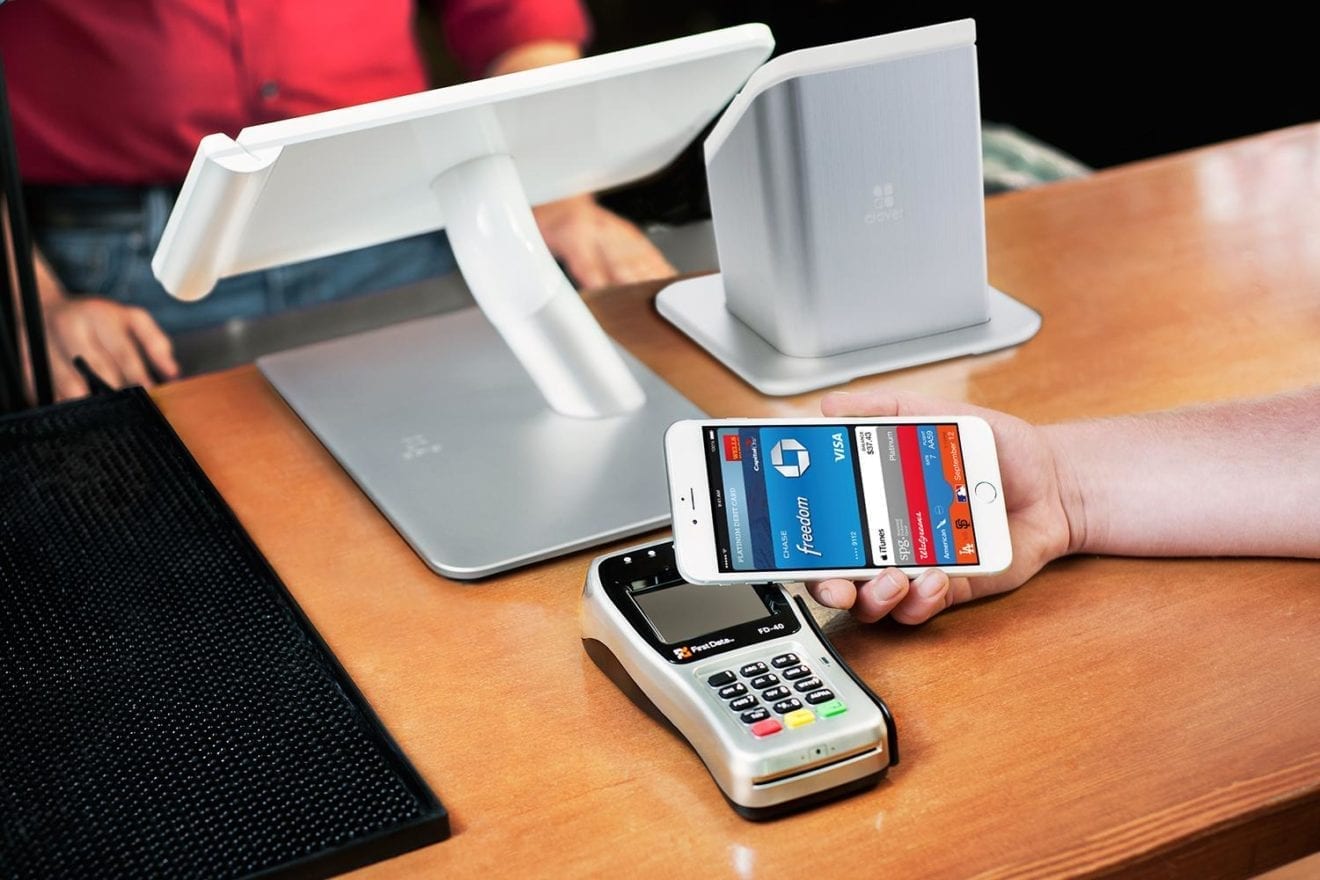
    Visa and American Express have both revealed plans to support mobile payment service Apple Pay in Hong Kong starting this summer.

    Customers in the region with American Express and Visa cards will be able to use Apple Pay to pay for purchases where contactless payments from the credit or charge cards are accepted.

    Apple Pay supports the iPhone 6s, iPhone 6s Plus, iPhone 6, iPhone 6 Plus, iPhone SE and Apple Watch for in-store payments, and these devices plus the iPad Air 2, iPad mini 3, iPad mini 4 and iPad Pro for payments from within apps.

    The platform uses the Visa Token Service to ensure card numbers are not stored on the device or on Apple servers.

    Instead a unique device account number is assigned, encrypted and securely stored in the Secure element on a user’s device device. Each transaction is authorized with a one-time unique dynamic security code. Customers can use Apple’s TouchID fingerprint authentication system to approve payments.

    “Visa is proud to support issuers in Hong Kong who want to launch Apple Pay to bring their customers a more secure and convenient way to pay. In Hong Kong contactless payments have become a necessity for everyday life,” commented Caroline Ada, country manager for Visa Hong Kong and Macau.

    “American Express was the first card issuer to bring Apple Pay to Card Members in the Asia Pacific region. Our customers love the ease and security of Apple Pay in their daily spending, dining and leisure activities,” added American Express VP and general manager for card services for Hong Kong and Taiwan Susanna Lee.

  • Telstra to address rural 4G black spots

    Telstra to address rural 4G black spots

    Australia’s Telstra has revealed plans to roll out 135 small cell 4G base stations in remote communities across the nation as part of the government’s Mobile Black Spot program.

    The operator is also making the investment as part its efforts to expand its 4G footprint to 99% of the Australian population by June next year.

    Telstra has made an A$165 million ($123.1 million) commitment to improve coverage in regional Australia, and will already expand 3G and 4G coverage to 429 other remote communities as part of round one of the black spot program. But the latest small cell roll out will be solely funded by Telstra.

    “When we made our bid under Round One, our core objective was to maximise new coverage to regional communities, which is why we made this additional pledge to further expand mobile data services at our own expense,” Telstra group managing director for networks Mike Wright said.

    “We worked closely with the Federal Government to identify the communities who were eligible for this small cell technology and we are proud to be part of this important initiative which will connect so many more regional communities.”

    While the small cell technology can currently only provide data services, Telstra said it is working on implementing VoLTE technology over the base stations.

  • Mobitel, Dialog Axiata trial 1Gbps+ 4.5G

    Mobitel, Dialog Axiata trial 1Gbps+ 4.5G

    In a South Asia first, Sri Lanka’s Mobitel and Dialog Axiata have each completed successful trials of 4.5G technology capable of speeds of over 1Gbps.

    Mobitel announced it has tested a technology it calls LTE-A Pro at the operator’s test lab.

    The operator partnered with Huawei and ZTE to test LTE-A technology capable of using a combination of up to five-carrier aggregation, 4×4 MIMO and 256 QAM. The company plans a commercial deployment in the near future.

    Dialog meanwhile revealed it has completed capability testing on Huawei’s LTE equipment, demonstrating the ability to deliver throughputs exceeding 1Gbps over the LTE radio interface.

    Mobitel asserts it was the first operator in South Asia to trial LTE technology in 2011, while Dialog Axiata said it was the first in the region to launch commercial LTE services in 2014. Dialog’s LTE network now covers more than 50% of the population.

    Dialog and Mobitel are Sri Lanka’s first and second largest mobile operators by subscribers respectively.

    The ITU has named Sri Lanka as having the lowest broadband tariffs among operators in the Asia-Pacific region.

  • SmarTone debuts Flexi-switch for mobile plans

    SmarTone debuts Flexi-switch for mobile plans

    Hong Kong’s SmarTone has unveiled a new brand campaign which includes introducing the ability for customers to change mobile plans during an initial trial period.

    SmarTone’s new Flexi-switch service will allow customers to trial their mobile plan for a three month period, and change their plans in line with their data usage needs once during this trial period.

    Customers will be able to either upgrade or downgrade their plans based on their experiences during those first months.

    Flexi-switch has been introduced as part of SmarTone’s new “We’re for Smiles” campaign, as a component of the TrueCare series of services designed to address customer needs.

    Other newly-introduced TrueCare services are a free service that allows customers to rent powerbanks from SmarTone stores if their smartphones run out of batteries while on the go, a free screen replace service and the anti-cyberattack software service ST Protect.

    “At SmarTone, we have always focused on understanding our customers’ needs in order to provide them with the most relevant services,”  SmarTone head of marketing and sales Josephine Lim commented.

    “From our recent consumer research, we observed that a lot of Hong Kong consumers prefer quality customer service and flexible service plans.”

  • Alipay to offer cross-border Grab payment

    Alipay to offer cross-border Grab payment

    Ant Financial’s Alipay and ride-hailing company Grab have partnered to allow Chinese travelers to take advantage of cross-border payment when using Grab’s services in Singapore and Thailand.

    Starting today, Alipay users in Singapore and Thailand can pay for their taxi and private-hire car rides booked through the Grab mobile app with their Alipay accounts.

    Previously, Chinese travellers had to pay for their rides either by cash or their dual currency credit card. The Alipay option allows Chinese travelers to pay for their fares in Renminbi, without having to worry about exchange rate fluctuations.

    The deployment will soon be extended to other Southeast Asian markets that Grab currently operates in, such as Malaysia and Indonesia.

    “By collaborating with partners like Grab, we provide Chinese travelers the kind of convenience they are used to in China – no matter where they are in the world,” Ant Financial VP of international business Sabrina Peng said.

    Alipay last month partnered with Uber, Grab’s rival in Southeast Asia, in a similar deal which allows the latter’s passengers worldwide to pay for rides in Renminbi.

    Alipay has been working with local merchants in 69 overseas markets. As of May 2016, Alipay is accepted in more than 70,000 retail stores outside of China, and tax reimbursement via Alipay is supported in 24 countries and regions, including South Korea, Germany and France.

  • SoftBank CEO-elect Nikesh Arora steps down suddenly

    SoftBank CEO-elect Nikesh Arora steps down suddenly

    In a surprise move, SoftBank president and heir apparent Nikesh Arora has stepped down from his role.

    Nikesh announced on Twitter that current SoftBank CEO Masayoshi Son will continue to be CEO for the next 5-10 years, and he has therefore decided to move on from the company.

    Nikesh had been selected last year to be groomed to replace Son, following a $482 million investment in SoftBank that Nikesh had described as “a personal bet on the Softbank Group.” Nikesh had joined SoftBank in 2014 from Google, where he was Chief Business Officer.

    At the time the succession seemed to be a done deal. But in a statement, Son said his plans have changed.

    “Nikesh is a unique leader with unparalleled skills around strategy and execution. He should be CEO of a global business, and I had hoped to hand over the reins of SoftBank to him on my 60th birthday – but I feel my work is not done,” Son said.

    “I want to cement SoftBank 2.0, develop Sprint to its true potential and work on a few more crazy ideas. This will require me to be CEO for at least another five to ten years – this is not a timeframe for me to keep Nikesh waiting for the top job.”

    Son said Nikesh will continue to act in an advisory role for Softbank starting from July 1.

    At the start of this year a US law firm called for an independent investigation into Nikesh, citing unnamed SoftBank investors, accusing him of having a conflict of interest and strongly criticizing his investment strategy on behalf of SoftBank.

    But the day before Nikesh announced his resignation, the SoftBank board had announced that a special committee had found the allegations to be without merit.