Tag: asia

  • Forever 21 To Open Second Hong Kong Store in Hong Kok

    Forever 21 To Open Second Hong Kong Store in Hong Kok

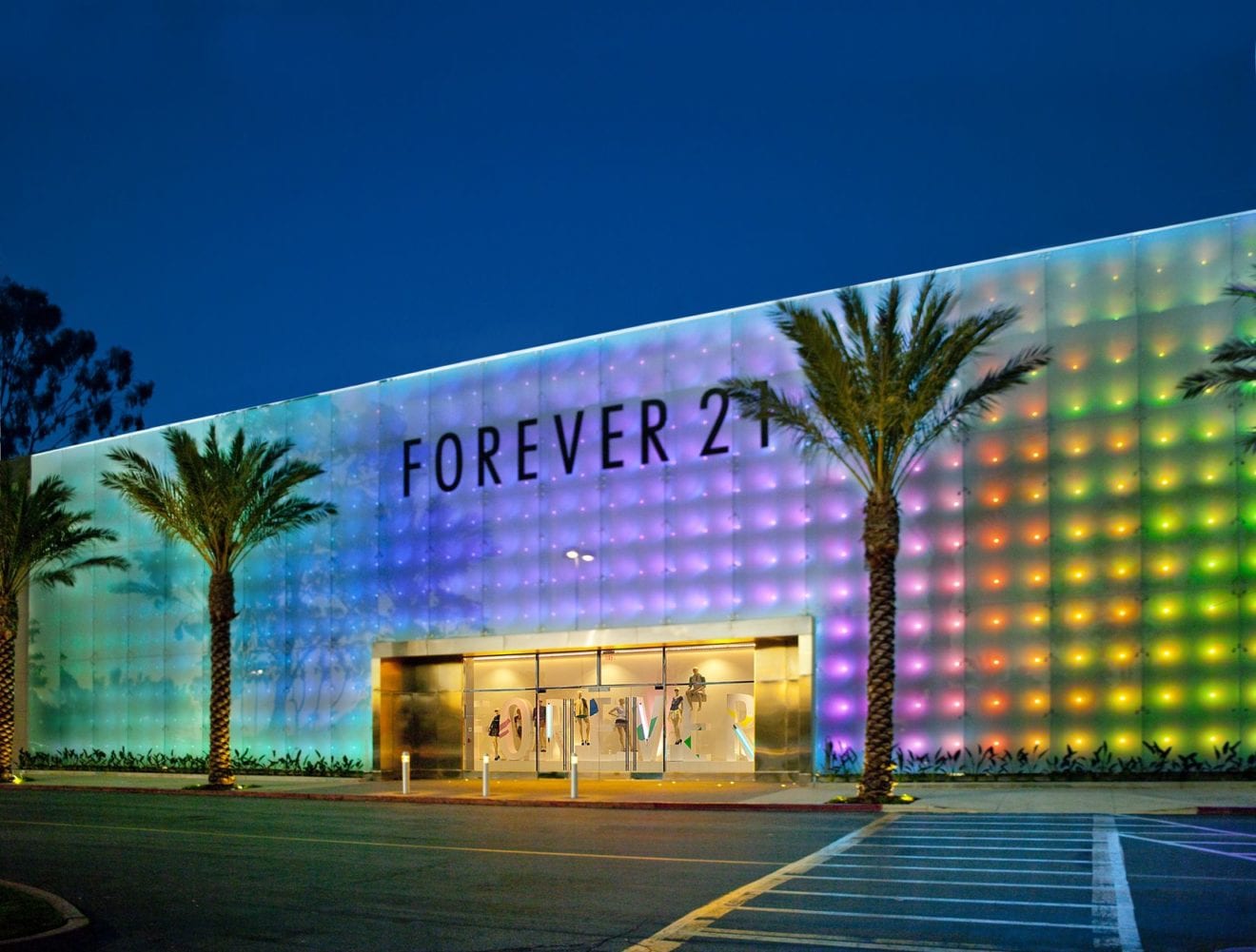
    US fast-fashion retailer Forever 21 will open its second store in Hong Kong this year, capitalising on the shift in consumer demand from luxury to non-luxury products.

    “Due to the demand of our consumers, we have continued our expansion throughout Hong Kong and mainland China. Hong Kong also has a vibrant history of international business and we saw a lot of potential for growth, which is why we wanted to bring a second Forever 21 store to this space,” the fashion retailer said in an email reply to Retail in Asia.

    The new store will be located at Pakpolee Commercial Centre on Mong Kok’s Sai Yeung Choi Street, trading over 18,804 square feet, people familiar with the matter told Retail in Asia.

    “Mong Kok offers a premier shopping experience and we believe it is a good fit for our second store in Hong Kong. We are very selective in choosing a location for any store. We make it a top priority when selecting a new location to ensure that it is accessible to customers and that it can house and properly represent our merchandise, staying true to our brand,” noted Forever 21.

    The fashion chain will pay a monthly rent of HKD2.5 million (USD321,000) to lease the three-story retail space with a ground-floor entrance, according to the source. The first floor and the ground floor were currently taken by cosmetic retailer Sa Sa with a monthly rent of HKD1.25 million. The second and third floors were leased to California Fitness for about HKD1 million per month. The fitness center moved out three years ago.

    The new store is estimated to open in late summer or early fall this year according to Forever 21.

    With a monthly rent of HKD2.5 million for its new store, Forever 21 made the largest retail leasing transaction in the fourth quarter of 2015 in key shopping destinations of Hong Kong, according to data compiled by Retail in Asia. It demonstrates the retailer’s confidence in the market’s potential for cheap chic fashion which also supports CBRE’s prediction that mid-range brands are set to expand in Hong Kong when luxury retailers are struggling with declining sales and leaving core retail locations.

    CBRE believes that Hong Kong will transform from a luxury goods oriented retail market to a mid-range market. “Mid-market retailers will benefit from the change in spending patterns and remain the main demand driver for retail space. Some of them will use this window of opportunity to re-establish themselves in prime locations and/ or expand their retail networks,” the real estate adviser said in its latest report Hong Kong Retail MarketView Q4 2015.

    With Forever 21 opening another store in Hong Kong, more mid-market retailers are expected to ride on the wave and expand their store networks in the city.

    Founded in 1984, Forever 21 now operates more than 730 stores in 48 countries. The brand debuted in Asia in 2008 by launching the first store in Seoul, followed by its second in Japan the next year.

    In 2012, the US retailer entered Hong Kong by unveiling a six-floor flagship store in the in the Capitol Centre of Causeway Bay. It paid a monthly rent of HKD11 million for the 51,188-square-foot space.

    The fashion retailer currently has 16 stores in Greater China which include 12 stores in mainland China, 1 in Hong Kong, 1 in Macau and 2 in Taiwan.

    Aside from Hong Kong, Forever 21 also plans to expand its retail footprint into other markets in Asia although it didn’t disclose the details. “In 2016, we plan on expanding our store presence in Japan, Indonesia, China, and the Philippines,” the fashion retailer told Retail in Asia.

  • Shilla looks ahead to landmark Phuket opening

    Shilla looks ahead to landmark Phuket opening

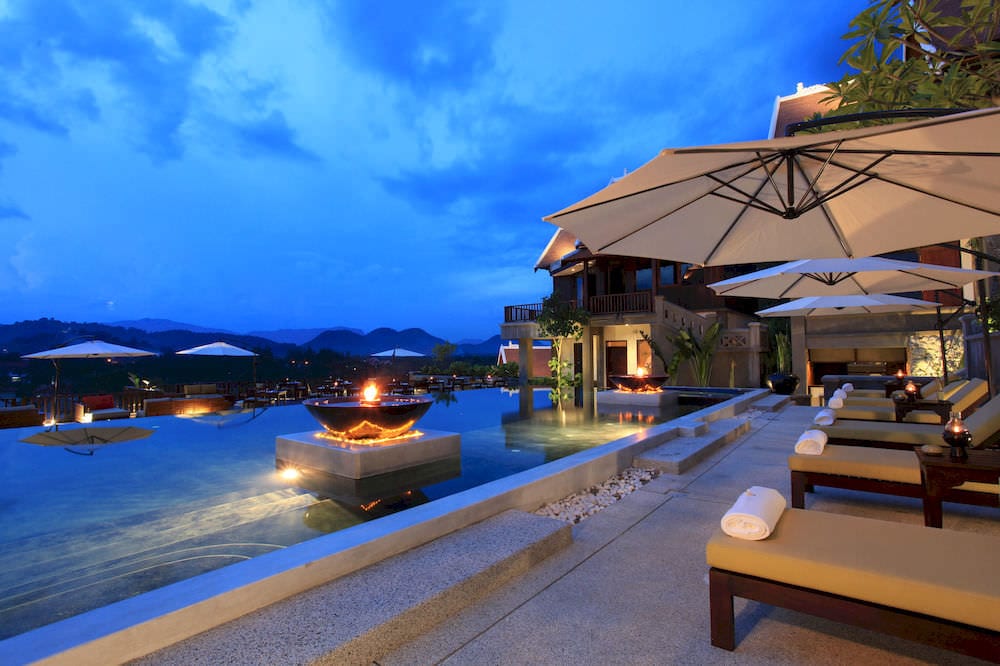
    Hotel Shilla has described Phuket as an eventual “crown jewel” of Thai travel-retail after confirming it is to open its first overseas downtown duty-free shop on the island with a local  partner in the second half of the year.

    While the exact size of the store in Tambon Kathu, Amphoe is unknown, the store will consist of traditional core duty-free products such as liquor and tobacco and a mix of local Thai products.  It will also be equipped with “support facilities” to ensure optimum customer experience.

    A Hotel Shilla spokesman told DFNIonline that preparation is going quite well and the alliance with the local partner looks very promising.

    The spokesman also said Bangkok was an option for the outlet, but the contract between Airports of Thailand (AoT) and King Power (Thailand) made it impossible. He explained: “The Shilla Duty Free chose Phuket, where the pick-up counter is serviced by a common operator which has responsibility to give a service to the duty-free operator.”

    He added: “The temporary pick-up counter in [Phuket] terminal one will be operated by The Shilla Duty Free and permanent pick-up counter in T2 by King Power, which will handle the delivery of Shilla Duty Free products due to the contract between AoT and King Power.”

    Reflecting on Phuket as a destination for the new store, the spokesman said: “Chinese inbound passengers have been showing constant growth in Thailand and Phuket in particular, the second most popular travel destination in Thailand, which is leading the growth.  With The Shilla Duty Free’s accumulated know-how of serving Chinese travel-retail consumers, Phuket is a more than satisfactory destination.”

    In order to attract even more Chinese consumers, the retailer, which secured approval this month for a new themed hotel in central Seoul – the Shilla downtown Seoul outlet will eventually move to the new hotel — will focus on travel agencies in Mainland China and Thailand. “In the case of Chinese travel agencies, The Shilla Duty Fee has a good understanding and good relationships.

    “Apart from Chinese customers, Russians might be the secondary target since Phuket is also a popular choice for Russian travellers looking for somewhere sunny for holidays.”

    Looking ahead, the retailer is expecting the Thai travel-retail market in general to grow significantly and the spokesman admitted it is not as mature as the Korean equivalent. “It is believed to be one the fastest growing markets in global travel-retail and our most important objective is enhancing that growth.”

  • Indonesia promotes Wonderful Indonesia at Portugal tourism fair

    Indonesia promotes Wonderful Indonesia at Portugal tourism fair

    Indonesia promoted the Wonderful Indonesia brand at the biggest tourism exhibition in Portugal, called Bolsa Turismo de Lisboa (BTL), at the Feira Internacional de Lisboa (FIL) Lisbon.

    The event was organized by the Association of Industries of Portugal (AIP) and was opened by the Prime Minister of Portugal, Antonio Costa.

    Indonesian pavilion featured art performances and a seminar titled Dream, Explore and Discover Wonderful Indonesia. The seminar was organized by the Visit Indonesia Tourism Officer (VITO) Paris, a statement from the Indonesian Embassy in Lisbon received by ANTARA said here on Wednesday.

    This exhibition is being held regularly for the last 28. During the March 2 to 6 event, the Indonesian booth entertained about 2,000 visitors.

    Data from the Portugal Ministry of Immigration showed an increase in the number of Portuguese tourists to Indonesia, from 18,312 tourists in 2014 to at least 21,000 in 2015.

    Indonesias target is to attract through the BTL event 25,000 Portuguese tourists during 2016.

    At the BTL, Indonesia introduced 10 new destinations, namely Lake Toba (North Sumatra), Tanjung Kelayang Beach (Belitung), Seribu Islands (Jakarta), Tanjung Lesung Beach (Banten), Borobudur Temple (Central Java), Bromo-Tengger-Semeru (a volcano complex area in East Java), Mandalika (West Nusa Tenggara), Wakatobi (East Nusa Tenggara), Morotai Island (North Maluku), Labuan Bajo (East Nusa Tenggara).

    The Indonesian Ambassador to Portugal, Wirana Mulya, said the bilateral relations between the two countries are becoming ever stronger.

    The Indonesian government extends a visa-free visit policy for 30 days to the citizens of Portugal to visit Indonesia.

    The ambassador called upon stakeholders in the field of tourism to encourage Schengen visa exemption for Indonesian tourists to European countries.

  • How UK Retailers Can Embrace The Chinese Ecommerce Opportunity

    How UK Retailers Can Embrace The Chinese Ecommerce Opportunity

    Within the next two years, China’s e-commerce market will top $1 trillion, making it bigger than the e-commerce markets of the US, UK, Japan, Germany, and France combined. Fuelled by greater internet and smartphone penetration, an expanding middle class with higher disposable income, and greater consumer confidence, over half of Chinese internet users having now made a purchase on the web.

    Surely then, UK retailers should be fighting tooth and nail for the loyalty and spend of these Chinese shoppers?

    Surprisingly, this is not the case. While over half of UK retailers (55%) ship to China, our research – into the international shopping experience offered by the UK’s top 150 online retailers – shows a massive variation in the quality of shopping experiences offered to Chinese shoppers.

    UK e-tailers are failing to accommodate a great number of Chinese shopping preferences and reducing the likelihood of conversions. For example, just over a quarter (26%) of retailers that ship to China offer shoppers the ability to pay in Yuan and present prices in local currency.

    The remainder are leaving shoppers in China to estimate for themselves how much products will cost to buy, which means shoppers could be hit by sudden currency exchange fluctuations or fees from their bank.

    Similarly, only 22% of retailers that ship to China offer shoppers the ability to pay using local payment methods, such as e-wallets and bank transfers like Alipay or Tenpay, which account for more than 80% of ecommerce payments, or Chinese payments cards such as UnionPay.

    Of retailers that do accept Chinese payment methods, 42% offer a single option, barring some prospective customers from making a purchase.

    Added to this, just one in ten (10%) retailers that ship to China offer shoppers a Mandarin-language shopping experience. Since the majority of people living in China don’t speak English fluently, shoppers are likely to feel unconfident about making a purchase if they are expected to use an English-language checkout.

    It’s clear from these customer experience shortcomings that the majority of UK retailers are failing to exploit the burgeoning Chinese ecommerce market fully. This puts them on the back foot when it comes to winning long term loyalty and purchasing preference.

    Retailers simply can’t afford to offer shoppers a second rate experience, especially when failing to localise the online store can make shoppers nervous and can quickly sour a great online experience.

    So, how can retailers rectify this and improve the customer experience to grow sales in China?

    Here are our top tips-

    •       Improve the experience for Chinese shoppers. The first rule of international trade is that, in order to be successful, customers must enjoy the same experience regardless of where they are in the world. Retailers should offer shoppers in China the same, high quality experience that shoppers in the UK and elsewhere expect to receive.

    •       Offer multiple shipping options at reasonable rates. To give Chinese shoppers the confidence to buy, retailers must offer greater choice as well as competitive prices. This is especially critical in China where clearance processes can be very lengthy for non-experienced carriers. Moreover, it’s important to have a simple and transparent returns process in place, so if something goes wrong, shoppers will be confident that it will be resolved quickly and easily.

    •       Display prices in Chinese Yuan. There are few things more off-putting than exchange rate uncertainty when buying from a retailer in another country, and this is particularly disconcerting at times of high currency fluctuation. Retailers should present shoppers in China with prices in the local currency, so that shoppers can feel confident about how much they are paying.

    •       Try to put the customer’s mind at ease. Most shoppers in China expect and prefer to pre-pay customs charges or handling fees when shopping online, so retailers should avoid any potential for nasty surprises, by being upfront about these charges and offering pre-payment.

    With e-commerce sales in China set to exceed $1 trillion next year, retailers must pay more attention to China in the years ahead. However, delivering a localised shopping experience doesn’t have to require a dedicated Chinese website or months spent negotiating with the local supply chain.


  • Indonesia can become ASEAN`s automotive production hub

    Indonesia can become ASEAN`s automotive production hub

    Indonesia has the opportunity to become an automotive production hub for the ASEAN and gradually replace Thailand as a car production base, according to the Ipsos Business Consulting Firm.

    “This is evident from the output trend of vehicle production, policies, and infrastructure, which continue to undergo improvements followed by increasing production capacity, domestic consumption, and export volumes,” Marcus Scherer, head of the Global Automotive Sector of Ipsos Business Consulting, stated here on Wednesday.

    Marcus hoped that the policy makers and stakeholders as well as automotive producers would consider this aspect as it will have a major impact on the supplies of automotive spare parts in the future.

    So far, Thailand has been the largest automotive producer in Southeast Asia, with an annual production of some two million cars as compared to Indonesia, which produced only some 1.1 million units in 2015.

    Indonesia has not yet been able to be at par with Thailand in developing its export market. It exported only some 23 percent of its domestic production in 2015, while Thailand was able to export some 55 percent of its domestic production.

    In 2015, the production gap between the two countries was some 810 thousand units, but in 2020, the gap is expected to narrow to 464 thousand units only.

    In order to take over Thailands position as the number one car production center in the ASEAN, Indonesia should be able to overcome the production gap through various combinations of solutions, Marcus stressed.

    The solutions should encompass increasing the production capacity of factories. In 2015, Indonesia had a production capacity of two million units of which only some 62 percent was utilized. Therefore, Indonesia should increase its follow-up investment to nearly US$2.6 billion for constructing new factories or for increasing the production capacity of the existing factories based on the assumption that utilization would remain unchanged.

    The latest Ipsos report highlighted the fact that although the export performance this time had not been significant, yet Indonesia had high domestic growth potential. This could encourage investors to harbor expectations for solid sales growth once they are able to gain access to the right markets.

    Douglas Cassidy, the Ipsos Business Consulting Indonesia director, stated that the global automotive players who had not yet had significant production bases in Indonesia would question whether they have been placed in the correct position to obtain a market share in the ASEAN whose total population reaches 600 million.

    Moreover, these players would also question whether they could maintain the market segment they already owned as other companies will surely also expand their operations in Indonesia and Asia, in general.

    Chukiat Wongtaveerat, a senior consultant manager at Ipsos Bangkok, concurred with the analysis of Cassidy on the current market situation but opined that Thailand was still able to safeguard its automotive industries.

    Wongtaveerat noted that several leading automotive producers had announced strategic steps to pull out of the Indonesian market, particularly Ford Motor Company and General Motors.

    He remarked that other leading players such as Volkswagen, Hyundai, and Mazda were not yet able to communicate their clear strategies to safeguard their strong and profitable market shares in the two countries, particularly in Indonesia, which needed consistent regulations and sustainable and supporting automotive infrastructure development in the face of the current downward sales trend.

    He pointed out that the business climate in Indonesia had not yet yielded significant benefits to the automotive industries. Based on the World Banks ease of doing business index, Indonesia is ranked 109 among 198 countries, while Thailand comes 49th on the list.

    However, the Indonesian government has set a target to rise in the ranking to reach the 40th position in 2018. Such an improvement, if it has to be achieved, clearly needs constant focus of the policy makers.

    Scherer noted that the current conditions in Indonesia were showing a positive trend, such as the easing of regulations on foreign ownership through its revised negative investment list and simplified licensing procedures.

  • China $1.1T eCommerce Market On Horizon

    China $1.1T eCommerce Market On Horizon

    According to a recent report from Forrester, total eCommerce revenue for China, Japan, South Korea, India and Australia is projected to nearly double in the next five years, from $733 billion in 2014 to $1.4 trillion by 2020. That same report goes on to detail how these five Asian online economies have already outpaced the combined online retail markets in the U.S. and all of Western Europe, with China and India ranking as the two largest and fastest-growing markets worldwide.

    It goes on to point out that the Chinese market already surpassed that of the U.S. in 2015, and China remains the world’s largest eCommerce market, despite seeing its overall economic growth dip below 7 percent for the first time since 2009.

    “While the days of staggering year-over-year eCommerce growth in China are gone,” wrote Lily Varon, lead author of the Forrester report and analyst for eBusiness and channel strategy, “current growth rates are solid and more consistent with other mature markets in the region, like Japan and South Korea.”

    Varon also went on to project that China would continue to lead the region’s market growth, expanding to be nine times larger than Japan’s $122 billion market in 2020 and 17 times larger than South Korea’s $65 billion.

    India is also projected to see online sales expand by five times, fueled by a rapidly increasing number of online shoppers entering the market and per capita online spend continuing to increase. However, in the case of India, Varon noted that the country’s underdeveloped logistics, “challenging” connectivity, as well as a traditionally cash-based culture, would pose significant challenges to online retailers looking to grow the online India market.

    The Forrester report goes on to note an important and defining trend across the region: the dominance of Web-only retailers, such as Rakuten and Amazon in Japan; Taobao, Tmall and Jingdon in China; and Flipkart and Snapdeal in India.

    “Consumers have flocked to online pure-plays rather than their traditional retail counterparts,” Varon wrote. “In very few markets in the region do traditional retailers hold any dominant position or even come close to competing with the Web-only giants.”

    Having noted the significance of Web-only players, Varon shared that omnichannel functionality had not been as robust in Asian markets as it had in the U.S. or U.K. This, though, was starting to shift, as more traditional retailers start to make the move towards eCommerce in Asia. Australian retailers have been forced to play catch-up, with omnichannel offerings, such as click-and-collect, being adopted by global players, like TopShop and Zara, and helping to bring omnichannel services to the local market.

  • China aims for +6.5% growth for 2016 to 2020

    China aims for +6.5% growth for 2016 to 2020

    There will be no ‘hard landing’ for the Chinese economy, despite growth forecast cuts, according to Xu Shaoshi, the Head of China’s state planning agency, commenting on the draft outline of the 13th Five-Year Plan on national economy and social development at the 12th National People’s Congress (NPC).

    This message was delivered loud and clear in the Great Hall of the People in Beijing last Saturday, despite Asia’s leading economic powerhouse missing its growth target of around 7% last year. The economy is said to have grown by 6.9% in 2015 – the lowest level in 25 years – according to the Chinese Government’s official news arm, the Xinhua News Agency.

    At the same time, Chinese Premier Li Keqiang pointed to lower growth expectations in his opening speech and more challenging times. He also announced a lowering of the economic growth target for this year to between 6.5% to 7% – a level most nations and economies around the world would obviously welcome, although this range over five years is much slower than the rates seen over the last 25-30 years.

    However, Xinhua reports that the bottom end of this new target figure is understood to represent the ‘minimum growth required’ for China to attain its stated target of doubling its 2010 GDP and per capita income level within four years by 2020.

    RISING TO NEW ECONOMIC CHALLENGE
    Li Keqiang also announced that China’s GDP is now forecast to be in excess of CY92.7 trillion ($14.2 trillion) in 2020, compared with CY67.7 trillion in 2015, according to the draft, submitted to the National People’s Congress (NPC) annual session, which opened Saturday, for review.

    The new five-year plan contains a number of important new policy measures, including the amazing prediction that China will create more than 50m new urban jobs in the next five years.

    Xinhua also points to the Chinese Premier’s promise to try and help improve the quality of life for poverty-stricken rural residents, as well as reduce the number of heavily polluted days in large cities by 25%. However, this last aim will require a cap on industrial factory output that the country has so far been slow to implement.

    Meanwhile, on the transport front, China is expected to complete its target of 30,000km of high-speed railways to link 80% of big cities nationwide. This is expected to take more pressure off the country’s airports where domestic flights are routinely delayed and many airports suffer from severe congestion.

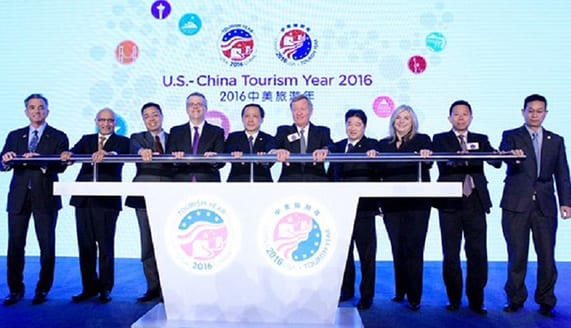
    China-US-Tourism-Year-2016-Opening

    CHINA-US TOURISM YEAR: This year (2016) is China-US Tourism Year, with Chinese President Xi Jinping sending a message of welcome to a high-powered tourism delegation from the US last week. He said: “I hope we’ll take this opportunity to expand personnel exchange, reinforce cultural exchange and foster a more solid social basis for bilateral relations development. American tourists are welcome to China. I wish 2016 China-U.S. Tourism Year a complete success.” US President Barack Obama reciprocated with his message: “Please get ready for more and more Americans are travelling to China. I also look forward to and welcome more Chinese to the United States. I believe that the more we understand each other, the more we can work with each other.”(Photo Credit: China National Tourist Office).

    The recent announcement related to the creation of more duty free arrivals shops in China is also entirely in line with these ‘readjustments’ to the Chinese duty free regulations, as predicted last year and reported last month.

    This follows the Chinese Government’s move to reign in a bigger share of high duty free spending levels by its Chinese nationals abroad, by authorising multiple duty free arrivals shop openings at leading airports and border points.


  • South Korea’s industrial landscape shifts from manufacturing to service

    South Korea’s industrial landscape shifts from manufacturing to service

    South Korea’s industrial landscape has moved from manufacturing to service-driven businesses over the past decade as the shipbuilding and construction sectors have suffered from a prolonged global slump, data showed Monday.

    The top five sectors of the nation’s 100 largest companies by market value in 2015 were in the service, petrochemical, construction, IT and retail industries, according to the data compiled by market researcher CEO Score.

    In 2006, shipbuilding, engineering, construction, tech and petrochemicals were the five pillars of Asia’s fourth-largest economy, they showed.

    Domestic consumption-related industries grew at the fastest pace over the past 10 years as the global economic slowdown has weighed on the country’s key exporters such as shipbuilders and builders.

    The number of service companies doubled to 10 in 2015, and retail companies rose from four in 2006 to seven in 2015.

    In contrast, tech and shipbuilding companies each decreased from eight to seven over the period.

    LG Household & Healthcare Ltd., South Korea’s second-largest cosmetic company, was the top earner among all companies on the back of the growing popularity of its beauty products in China.

    The shift in South Korea, an export-oriented economy, was more drastic than other advanced nations.

    In the United States, medical companies held firm ground with 17 among the top 100 companies over a period of 10 years, while IT and auto companies remained as the key industries in Japan, the researcher said.


  • Mitsubishi Estate to build Myanmar’s ‘Marunouchi’

    Mitsubishi Estate to build Myanmar’s ‘Marunouchi’

    Major real estate firm Mitsubishi Estate Co. is planning to start a roughly 50 billion yen (about $438,616,000) redevelopment project featuring office buildings, apartments and hotels in what is now a run-down district in front of a central train station in Yangon, Myanmar.

    Mitsubishi Estate plans to draw on its experience of developing Tokyo’s Marunouchi into a world-class business district to create a Myanmar version in Yangon. The company is also planning similar projects in other Southeast Asian nations.

    Mitsubishi Estate is looking into a 40,000-square-meter site(about 9 acres) in front of Yangon’s central railway station, which serves as a gateway to Yangon. The district is currently filled with dilapidated offices and other buildings.

    Mitsubishi Estate is working with Mitsubishi Corp. and a local real estate firm in Myanmar for the project, which is now under way, to build multiple high-rise buildings that will house offices, commercial facilities, apartments and hotel accommodations. The total project is estimated to cost about 50 billion yen.

    Myanmar is facing real estate development woes, including office shortages stemming from its rapid economic growth. The landscape of the Marunouchi district in front of Tokyo Station, which was rapidly developed from the Meiji era (1868-1912) through the rapid postwar growth period, has been cited as a good model for the Yangon development project.

    Marunouchi grew into a town that attracts many visitors as a gateway to Japan, home to the offices of leading companies as well as retail stores, restaurants and hotels.

    Mitsubishi Estate is aiming to work on similar development projects in other South Asian countries by promoting its approach to build complex facilities on prime urban real estate.

    “We will export our urban development system,” Mitsubishi Estate President Hirotaka Sugiyama told The Yomiuri Shimbun. “The Yangon project will be an opportunity to introduce our approach.”

    Investment in Myanmar has sharply risen since the country made its transition in 2011 from military rule to a democratic government.

    According to the Japan External Trade Organization, foreign investment in fiscal 2014 stood at $8 billion (about 940 billion yen) – twice as much as the previous fiscal year.

    Japan-affiliated firms have entered into business in Myanmar one after another during its economic expansion period. There are now more than 280 companies belonging to the Japan Chamber of Commerce and Industry, Myanmar.

    Buildings are rapidly sprouting up, concentrated in the Yangon area. There are also more and more businesspeople visiting Myanmar, resulting in expensive rent for office buildings even for Southeast Asia as well as relatively high hotel charges.

  • Resort island of Jeju in Korea is booming

    Resort island of Jeju in Korea is booming

    The southern resort island of Jeju is booming, posting the country’s highest growth rate in private consumption, service industry productivity, employment and exports last year, according to Statistics Korea.

    Major businesses are relocating their headquarters to the island and people are moving there from the mainland.

    In 2004, Daum Communications (now Kakao) moved its headquarters to Jeju, followed by some 50 other companies, mostly IT or game businesses such as NXC and ESTsoft, increasing the populations significantly. Booming tourism, meanwhile, has created more jobs in the service and construction sectors.

    Jeju’s service industry output in 2015 increased 6.1 percent compared to the previous year, which was more than twice the national average of 2.9 percent. As 3,000 to 4,000 people move to the island every year, the real estate sector’s output rose 25 percent to lead overall growth.

    Private spending increased 7.8 percent last year, again more than double the national average of 3.4 percent. That too was due to the huge increase in the number of people arriving on the island each year, either to settle or for a visit.

    Retail sales at shopping centers and duty-free shops rose 9.5 percent in 2015, three times the national average of 3.6 percent. Thanks to tourists renting cars, fuel consumption on the island surged 16.9 percent.

    Jeju Island was also the only region to post double-digit export growth last year with outbound shipments rising 13.8 percent. In contrast, the exports of 12 out of 17 major cities and provinces shrank.

    The main cause of Jeju’s booming economy is the steady increase in tourists and settlers from the mainland. Its population grew from 606,000 in 2014 to 623,000 last year. The number of tourists also rose by 1.4 million over the same period to 13.66 million last year.

    Jeju city official Kim Hyun-cheol said, “Drawn by the pleasant living environment, many celebrities have moved to Jeju, which resulted in a wide range of other people from the mainland coming to run their own businesses here.”

    He added that the island’s international school admits Korean students without the restrictions found in Seoul, which has led to an influx of kids and their parents from elsewhere.

    But with the increasing population, real estate prices on the resort island are skyrocketing. The average real estate price on the island rose 19.35 percent last year, five times the national average. The prices of some apartments are showing signs of overheating.

  • SM Investments Corporation wins two Anvil Awards for its Annual and ESG Reports

    SM Investments Corporation wins two Anvil Awards for its Annual and ESG Reports

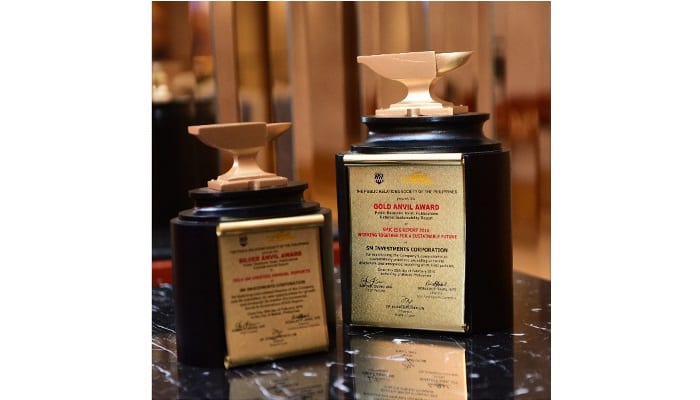
    SM’s first 2014 ESG report with the theme, “Working Together for a Sustainable Future”, earned a Gold Anvil Award for manifesting the company’s commitment to sustainability practices and for providing accurate disclosure and integrated reporting of its ESG policies. It is a group-wide report highlighting good governance, social development and environmental consciousness of SM companies such as SM Retail, SM Prime Holdings, and BDO Unibank. SM recognizes that adhering to ESG global best practices is a journey as global guidelines and the needs of SM’s stakeholders continue to evolve.

    The 2014 Unified Annual Reports bagged a Silver Anvil Award for featuring inter-related themes of the company and its subsidiary on new opportunities for growth.

    The 2014 Unified Annual Reports consist of the Annual Report of SM with the theme, “Pursuing New Opportunities for Growth” and that of SM Prime Holdings, Inc. that carried the theme, “Building New Opportunities for Growth”.

    Dubbed as the “Oscars” of the public relations industry in the Philippines, the Anvil is presented to the outstanding public relations tools and programs that have met the high standards set for each category.  PR practitioners, industry communications specialists, academicians and business persons attended the event.

  • 2016 China Fixed-Asset Investment Growth Target at Around 10.5%

    China’s economic planning agency said Saturday that it aims to realize around 10.5% growth in fixed-asset investment this year.

    Beijing had set a 15% growth target for fixed-asset investment in 2015, but actual growth came in slower at 10% as the world’s second-largest economy lost momentum.

    The National Development and Reform Commission also said it expected retail sales to increase by 11% in 2016, compared with a target of 13% in 2015. Last year, China’s retail sales rose 10.7% from a year earlier.

    China attracted $126.27 billion in foreign direct investment in 2015, up 6.4% from a year earlier, and it reported $ 118.02 billion overseas direct investment last year, up 14.7% year-over-year.

  • An Oasis for Rama IX

    An Oasis for Rama IX

    Thailand’s first retail and entertainment mega-complex on Rama IX Road, recently announced that it has added a 14-rai area to its existing 27-rai project to create an outdoor component to its complex. The new area, the company says, includes facilities for major outdoor stage performances as well as a creative outdoor market.

    Located on prime land in the Jaturatis-Rama IX area, Oasis Outdoor Arena and Creative Market is adjacent to Show DC and officially opened on December 25, when it hosted a major K-pop concert, ahead of Show’s DC indoor component, which is scheduled to launch in June.

    The Oasis Outdoor Arena & Creative Market is spread over 30,000 square metres and aims to be a new hip outdoor venue.

    “Oasis offers a rich mix of retailing and food and beverage with spectacular entertainment facilities. We want to offer visitors a great indoor experience as well as a great outdoor experience. According to our research, the addition of a massive outdoor component adjacent to Show DC is in line with global consumer preferences for outdoor destinations, and grows our total footprint from 27 rai to a massive 41 rai. We have invested an additional Bt1.1 billion in this outdoor component on top of our original Bt9.5 billion investment in Show DC,” says chairman Chayaditt Hutanuwatra, adding that the two venues combined expect to draw more than 100,000 visitors a day.

    The Oasis Outdoor Arena and Creative Market, he says, can “host world-class, outdoor international and local shows and performances. Visitors can shop, eat and enjoy lively street art in the market area”.

    “It will be a best-practice example of ‘eco-social business’ that aims to combine the interests of tenants, entrepreneurs, the developer and the surrounding community by giving an opportunity for all to prosper together from this project,” he says. The Outdoor Arena has 10,000sqm space for up to 30,000 spectators but can easily be scaled down for smaller groups.

    The market is spread over 20,000sqm and uses recycled shipping containers to create 500 outlets, including shops for fashion, food and drinks plus organic fruits and vegetables direct from growers.

    “This is first time in Thailand’s retail industry that a comprehensive and wide range of outdoor and indoor experiences are on offer in a single venue. Oasis will be a hip hangout place for everyone – families, animal lovers, health seekers, shopaholics, foodies, art lovers, concert-goers or show-goers, those who love special performances and those just want a new place to relax.

    We have a complete range of retailers and entertainment facilities at Oasis including Food & Fruit Trucks, shops for organic products, foods and desserts, pets, eco products and spaces for art shows,” he says.

    “And right door, we have Show DC, which meets indoor lifestyle needs with the best experiences in entertainment, shopping and dining and includes the world’s biggest K-Town, the Thai Fantasy Himmapan Avatar spectacular show, an Asian food street, sports arena, entertainment park and performance hall.”

  • Inside SingTel Singapore

    Inside SingTel Singapore

    SingTel Singapore has repositioned itself as a ‘human services brand’ by putting the customer at the core of its retail store design rationale.

    The latest generation store rendition was created by Sydney­-based design agency Public Design Group. Co-­founder and director of retail strategy and business development, Jason Pollard, says the agency is focused on ensuring that SingTel’s store design strategy supports the market opportunity and the business opportunity – with particular focus on recognising the rapid technological change driving the telecommunications sector and business model.

    “It’s not about device sale, the plans or the data,” he explained. “That’s only one-­third of the total revenue that’s going to be made in the future; the other two­ thirds is called the Internet of Things or information and communications technology.”

    Singtel store 2

    Since launching the partnership with SingTel Singapore, Public Design Group has implemented the new design across four additional SingTel stores, with the telco embracing the concept of ‘brand experience’ as opposed to ‘branded space’.

    Pollard explains that taking lifestyle propositions and fully enabling them across a variety of devices with different services represents the fundamental design ethos of the store.

    The approach to designing the store represents a departure from that of other telecommunications retail stores, which often emulate the streamlined devices and technology.

    “We’re not celebrating devices anymore, we’re celebrating what they can do,” said Pollard.

    Singtel store 6

    Customer ­centric design

    The store’s entrance features a digital portal showpiece, identified by Public Design Group as a gateway into the new market of information and communications technology solutions. The portal’s purpose is to emphasise SingTel’s shift in brand focus from product to people. “SingTel as a brand no longer wants to be perceived as a technology organisation,” Pollard said.

    Singtel store

    “They want to be perceived as a service brand, which is mirrored in providing the very latest greatest lifestyle solutions for their customers.”

    Singaporean retailers have widely adopted an electronic queuing system, as part of dealing with high volumes of traffic. Public Design Group saw an opportunity for personalising the customer experience and collaborated with digital agency, Texture, in Singapore to develop a bar code system, which allows waiting customers to explore the store instead of standing in a queue.

    Singtel store 1

    The ‘Q ticket’ is imbued with a barcode that can be scanned on any of the hundreds of micro screens around the store. Each screen is associated with a product or accessory, providing detail and price. Once scanned, the detail is stored in a virtual shopping basket, which is viewed by the store assistant prior to them meeting the customer.

    “That barcode allows you build a virtual shopping basket of things that interest you, so that by the time you go to meet the service staff and do whatever you want to do, you can hand them your virtual shopping basket,” explained Pollard. “Immediately that opens conversations relevant to the customer and empowers the staff to be more relevant to their customer.”

    Singtel store 5

    A customer service lounge, featuring leather wing back chairs, is designed with the purpose of creating an environment that encourages more consultative conversations. Placing the service proposition in the front window of the store as opposed to the back of the store emphasises SingTel’s focus on providing a premium customer experience.

    “One of the key factors of having to deal with a Telco is addressing how well they are going to look after me when it all goes wrong, so that service lounge is a key part of winning market share and making a statement in the market place,” Pollard said. “At SingTel, we’re looking after our customers – even if they’re not buying, we’re solving problems.”

    Singtel store 3

    Pull over push

    As part of the new ‘pull’ sales strategy for SingTel, promotional material in the store is significantly reduced, with statistics showing high value transactions typically come from conversations rather than communications.

    Similarly, new social trends and customer behaviours were studied to showcase lifestyle themed propositions on gesture­ controlled displays.

    Gesture control for the large format screens within the store was employed to allow customers to scroll through the various ‘integrated technology’ stories in the same way as they would on a tablet.

    Singtel store 7

    “People don’t like touching big technology because it’s hot, expensive and it puts them in the spotlight,” argued Pollard.

    “SingTel has put the customer first,” said Pollard. “We have developed a customer centric store and that’s why it’s such a great experience.”

  • RFID system boosts efficiency for Decks Singapore

    RFID system boosts efficiency for Decks Singapore

    Fashion retailer and apparel supplier Decks Singapore has implemented an RFID inventory and stock-taking system that saves time while ensuring greater accuracy.

    Previously, 600 worker-hours were involved in the company’s annual stock-take, with 88 per cent accuracy. With the new system, it can achieve 99.8 per cent accuracy in just five worker-hours.

    To achieve this greater efficiency and accuracy, Decks consulted Tokyo-listed auto-ID technology company Sato, which recommended the inventory system. It involves tagging apparel with RFID labels, with all incoming and outgoing items being scanned.

    “With the retail industry growing more competitive and the rise of eCommerce and mCommerce changing the way consumers shop, retailers have to act fast to keep up and stay ahead in the game,” says Decks MD Kelvyn Chee.

    “Besides stock-taking advantages, the new RFID system also helps us achieve greater inventory data accuracy, enabling us to ensure stock availability.”
    Sato Asia Pacific GM Akihiro Ito says his company will continue working with Decks to implement other retail technology such as Anti-Theft and Self-Checkout.
    Launched 19 years ago, Decks is a fashion apparel supplier for departmental stores in Singapore. It also has several retail boutiques in major Singapore shopping malls and has distribution channels in Southeast Asia.