Tag: asia

  • Korean department stores offer instant tax refunds to tourist

    Korean department stores offer instant tax refunds to tourist

    South Korean department stores will start offering instant tax refund services to foreign customers from this month as part of an effort to boost sales.

    Under the new program, foreigners can buy products without paying the mandatory 10 per cent value-added tax (VAT) if the item costs 30,000-200,000 won (US$25-166), observers said. Each person can be exempt from VAT for up to the first 1 million won in purchases. Products that cost more than 200,000 won require the buyer to pay the VAT and get a refund later on.

    Seoul announced last year that it would implement changes to the way all local tax-free shops operate in 2016 by making it easier for tourists to spend in the country without the need to hold onto purchase receipts that must be shown at departure to get tax refunds.

    Lotte Department Store, South Korea’s No. 1 luxury retailer, said the instant tax refund will be given at its main Sogong-dong flagship store in downtown Seoul.

    Shinsegae Department Store said its main store in Jung-gu will offer the service to customers, while Hyundai Department Store plans to give immediate tax refunds at its main Apgujeong store and its Coex outlet in southern Seoul.

    Department stores said they picked the stores because they are the most frequented by foreign visitors, with more stores to be added later.

    “Foreign shoppers can buy products minus the 10 per cent VAT so there is no need to keep tabs on receipts or show the product they purchased at the airport when they leave the country,” a Lotte official said. “This can greatly reduce the hassle at airports and should fuel sales at our store.”

    In addition, local department stores said they will kick off promotion sales to attract Chinese tourists who are expected to arrive in large numbers during the Chinese Lunar New Year holiday. The traditional holiday runs from February 3 through February 13 this year.

    Lotte said it will give 50,000 won discounts for purchases exceeding 1 million won, with gift cards equal to 5 per cent of the purchase of the total to be given if the total tops 10 million won. Shinsegae said it too will give upwards of 30 per cent discounts and gifts to foreign tourists that buy items at its stores in February. The retailers said that to get the benefits the shopper needs to show his or her passport when making the purchase.

  • Orders soar for iTrueMart parent

    Orders soar for iTrueMart parent

    “Exceptional” growth has been reported by eCommerce provider Ascend Commerce in its latest fourth-quarter, as it seeks to draw on its winning strategy in Thailand to expand into new markets.

    Part of the Ascend Group, it comprises online stores iTrueMart and WeLoveShopping, which reported 65 per cent more orders for the final quarter of last year.

    While seeking to attract new customers through brand partnerships, Ascend Commerce reported an average of 14,000 orders a day, with a peak of 30,000 orders in a single day. There were also repeat sales among as much as 50 per cent of its customer base.

    “With our category-by-category approach proven in Thailand, we are now expanding throughout Southeast Asia,” says Ascend Group CEO Punnamas Vichitkulwongsa. “Based on the strength of the customer response so far, we are confident we will be able to provide access to the same shopping experience that people in urban areas enjoy to improve the standard of living for the millions who live in rural areas.”

    While iTrueMart is a business-to-consumer retailer, WeLoveShopping is an online marketplace for small business, entrepreneurs and consumers. Both businesses originally launched in Thailand.

    Ascend Commerce invested in its own fulfillment centres last year as a way to retain control over the whole process, from purchase to delivery. Punnamas cites this investment as key to giving customers an excellent experience, resulting in repeat purchases.

    At the same time, iTrueMart has been successful in terms of speedy delivery, with 98 per cent of orders being delivered the next day in Bangkok, or within two days for rural addresses.

    During the year, iTrueMart also launched in The Philippines.

    WeLoveShopping’s orders grew nearly 300 per cent in Q4, with the number of new sellers rising by 1300. The outlet also signed agreements with new brands, helping drive new business.

    “In the first days of 2015, we launched with just a few hundred orders per day and we have grown 700 per cent to achieve great results by the end of the year,” says Ascend Commerce GM Seubsakol Sakolsatayadorn.

    “We will continue with our strategy of winning on a category-by-category basis. We will introduce a new category only when we are sure of the strength of the product offering.”

  • Uber strategy that will change retail face

    Uber strategy that will change retail face

    Isn’t it fascinating that the world’s largest accommodation provider doesn’t own a room, or that the world’s largest retailer doesn’t own a shop (for the time being) and here we have the world largest taxi company that doesn’t own a taxi.

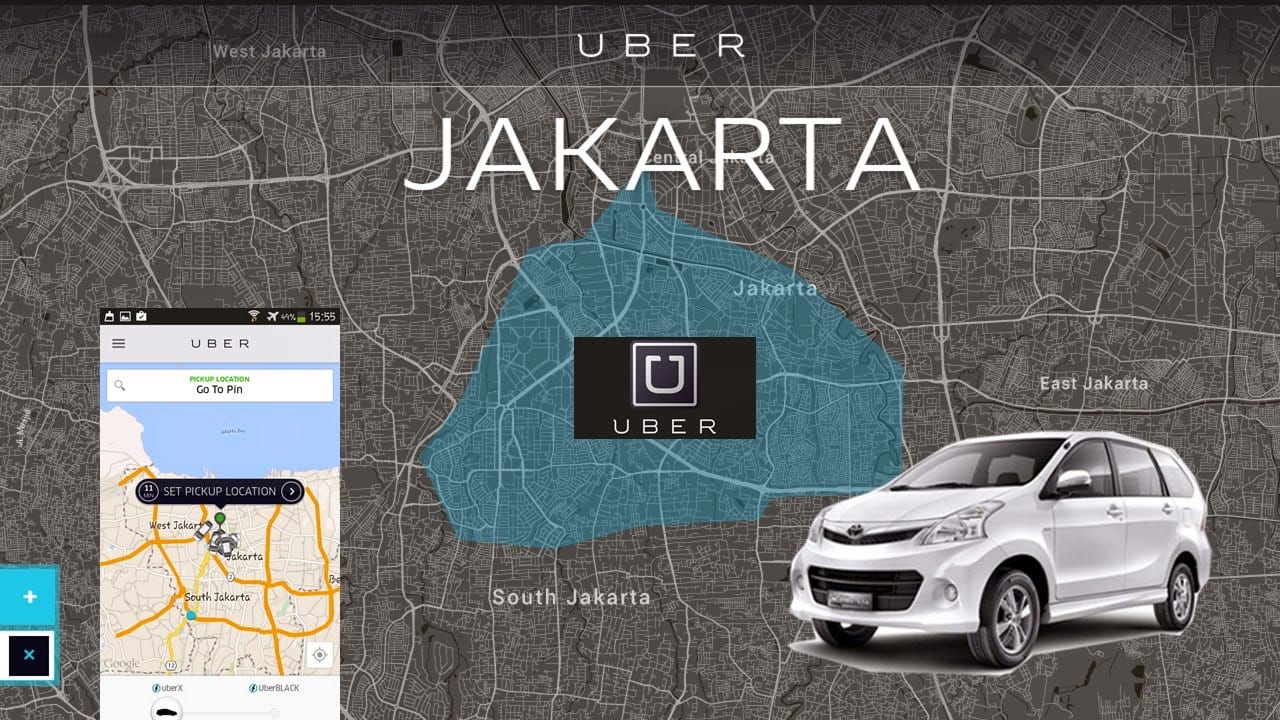
    So what might some of the lessons of Uber show us as retailers? The past five years have seen the logistics and transport app, Uber, grow from a start up with big ambitions based out of San Francisco into a global disruptive business operating in more than 350 cities, 64 countries and over six continents. Such rapid unheralded growth, underpinned by technology disruption and adaptation and above all challenging the normal or established models and just being disruptive, yet focussed on one central competency.

    As a natural-born disruptor of the transport sector, of course Uber has naturally asked how do we build at transporting people? After all, Uber is not narrowly interested in transportation; instead, the company is building a logistics platform that captures and predicts supply & demand so well that it can be applied to many other commercial domains. However at the heart of the Uber offer is one common foundation offer – one great “glue” that transcends and links all their offers globally.

    We live in an on-demand economy, where consumer’s ‘need it now’ tendencies dictate the retail strategies of retailers around the world. Smart or “fit” businesses are partnering their offers in collaborative models as distinct from attempting to “be all things and to simply attempt to acquire”

    The horizontal integration model, in a world increasing without boundaries is becoming yesterday’s approach. Today’s Uber-like approach is to disrupt and collaborate with other specialists enabling global growth and far greater efficiencies in all forms of the business operations.

    So where does Uber sit in the future of the retail sector in Australia and how is partner collaboration showing the way forward?

    Last October Uber launched Uber Rush in Chicago, New York and San Francisco. An on-demand delivery service for retailers, and while it’s launch coincided with partnerships with some big name retailers such as Rent The Runway and Nordstrom, the potential this service offers to small retail businesses is huge.

    Entering this on-demand delivery market aligns Uber alongside logistics giant Amazon.com and in particular Amazon’s program Flex, which pays independent drivers to deliver orders locally.

    However it also aligns independent brick and mortar retailers alongside the big e-commerce giants. While in the past it may have seen like a long lost dream to small independent retailers to be able to compete on the same level as the e-commerce giants who own their own complex logistics models allowing for same day and next day delivery, Uber Rush makes this dream a reality at very little cost. Retailers signed up to Uber Rush are given their own merchant platform to book the cars or bike couriers live as the orders come in, and all they pay for is the trips they use.

    According to Jo Bertram, regional general manager for the UK, Ireland and Nordics at Uber at a WIRED retail conference in London last year, the goal of Uber Rush is to make getting anything in your city more convenient, affordable and reliable than picking it up yourself.

    UberRush is particularly exciting for small independent retailers, allowing them to cater to today’s consumer’s ‘need it now’ tendencies’, boost customer loyalty and satisfaction, and ultimately provide customers with the same cost effective and efficient shopping experience when shopping local that they would get online. This platform also provides the small retailers the opportunity to grow and scale by reaching customers further away than they may have been able to before.

    Research by Uber suggests 60 per cent of customers would pay more to get same day delivery. Add this to today’s consumer journey to a brand or retailer often beginning and ending on mobile, the potential growth and adoption of this service all around the world is huge.

    Retailers who understand this disruptive positioning coupled with smart partnering and who don’t define the market by geography, rather by customer catchments are trailblazing the new frontier of retail.

  • H&M suppliers’ Bangladesh factories ‘unsafe’

    H&M suppliers’ Bangladesh factories ‘unsafe’

    Labour rights groups are calling on H&M to do more to protect garment workers in Bangladesh, after a review of strategic H&M suppliers revealed “severe delays” in urgent building repairs.

    The Clean Clothes Campaign, the International Labor Rights Forum, the Maquila Solidarity Network and the Worker Rights Consortium say the lack of action leaves “tens of thousands of workers at risk of death and injury”.

    The agencies were witness signatories to the Bangladesh Accord on Fire and Building Safety, and have published an update to an initial report into delays in safety repairs at 32 of H&M’s most strategic Bangladesh suppliers. The update, based on a review of publicly-available documentation carried out in January 2016, shows that all but one of H&M’s strategic suppliers remain behind schedule in making repairs and that over 50 per cent of them are still lacking adequate fire exits.

    “More than two and a half years into the process of the Bangladesh Accord every single mandated repair at H&M’s suppliers should have already been completed. However, the sad reality is that hardly any of H&M’s supplier factories in Bangladesh can be called safe,” said Scott Nova of the Worker Rights Consortium.

    The report does demonstrate some progress. Although the overall number of outstanding fire, electrical and structural renovations remains high at 37 per cent, the number of items reported as “behind schedule” at these 32 factories has decreased. However, the authors point out that, while this reflects actual progress in some cases, it is largely the granting of deadline extensions to factories rather than the completion of renovations that explains the improvement.

    “We are pleased that the pressure placed on H&M following our last report has resulted in some recent improvements, but are shocked that so much remains left to do,” said Liana Foxvog of the International Labor Rights Forum.

    “We urge H&M to provide meaningful funding for lifesaving safety renovations in order to put an end to the persisting delays.”

    Furthermore, the renovations required to ensure workers can safely exit a factory in the case of a fire are still subject to some of the most severe delays. In 13 per cent of the factories (compared to 16 per cent in September) lockable doors have not yet been removed; 38 per cent of the factories (compared to 55 per cent in September) still have not removed sliding doors and collapsible gates; and 55 per cent have failed to install fire-rated doors and enclosed stairwells (compared to 61 per cent in September. Any of these hazards could result in garment workers being trapped in a burning building, as has happened repeatedly in Bangladesh, including at H&M supplier, Garib & Garib, where 21 workers died.

    “H&M is able to increase profits in an extremely competitive climate, but yet the company is apparently incapable of getting all of its suppliers to carry out even simple actions such as removing a lock,” said Sam Maher of the Clean Clothes Campaign. “This is totally unacceptable.”

    Further information on the Accord on Fire and Building Safety in Bangladesh can be read here.

  • Lotte launches smartphone app for Chinese tourists

    Lotte launches smartphone app for Chinese tourists

    Lotte Group has launched a smartphone app for Chinese tourists visiting Korea.

    The application is called ‘TianTianLeTian’, and provides visitors with information on shopping, tourism, and other services offered by Lotte companies.

    Department stores and large discount stores have already launched mobile solutions for Chinese tourists, but Lotte Group’s new software marks the first time an app was developed by an entire group.

    In addition to tourism information, TianTianLeTian also provides users with mobile coupons for Lotte Members, Lotte Duty Free Store, Lotte Department Store, and Lotte World.

    The app also provides suggestions for places to dine, popular tourist spots, the latest travel information and content from Hallyu stars. Maps are provided in Chinese, and translation services are also provided.

    In collaboration with Zai Seoul, a startup company specialising in travel information targeting Chinese tourists, the location and information of 1800 small shops are listed.

    Lotte will provide small businesses who subscribe to its service with big data related to keywords frequently used in searches by Chinese tourists, human traffic, and shopping habits, helping companies develop marketing strategies to attract Chinese tourists.

    Lotte’s decision to develop a new app was the result of a change in travel habits for Chinese tourists, and a move towards independent travel instead of group packages.

    According to data from the Korea Tourism Organization, the number of Chinese tourists visiting Korea individually nearly doubled in 2015 to 3.5 million compared to the 1.64 million visitors in 2013. The organisation expects 5.5 million individual Chinese tourists to visit this year.

    To target individual travelers who get most of their information through mobile devices while traveling, Lotte started development of the application in April 2015. The beta version was released on January 6, and the number of downloads has already reached 40,000.

  • MatahariMall.com Embraces Foreign E-Commerce Investment in Indonesia

    MatahariMall.com Embraces Foreign E-Commerce Investment in Indonesia

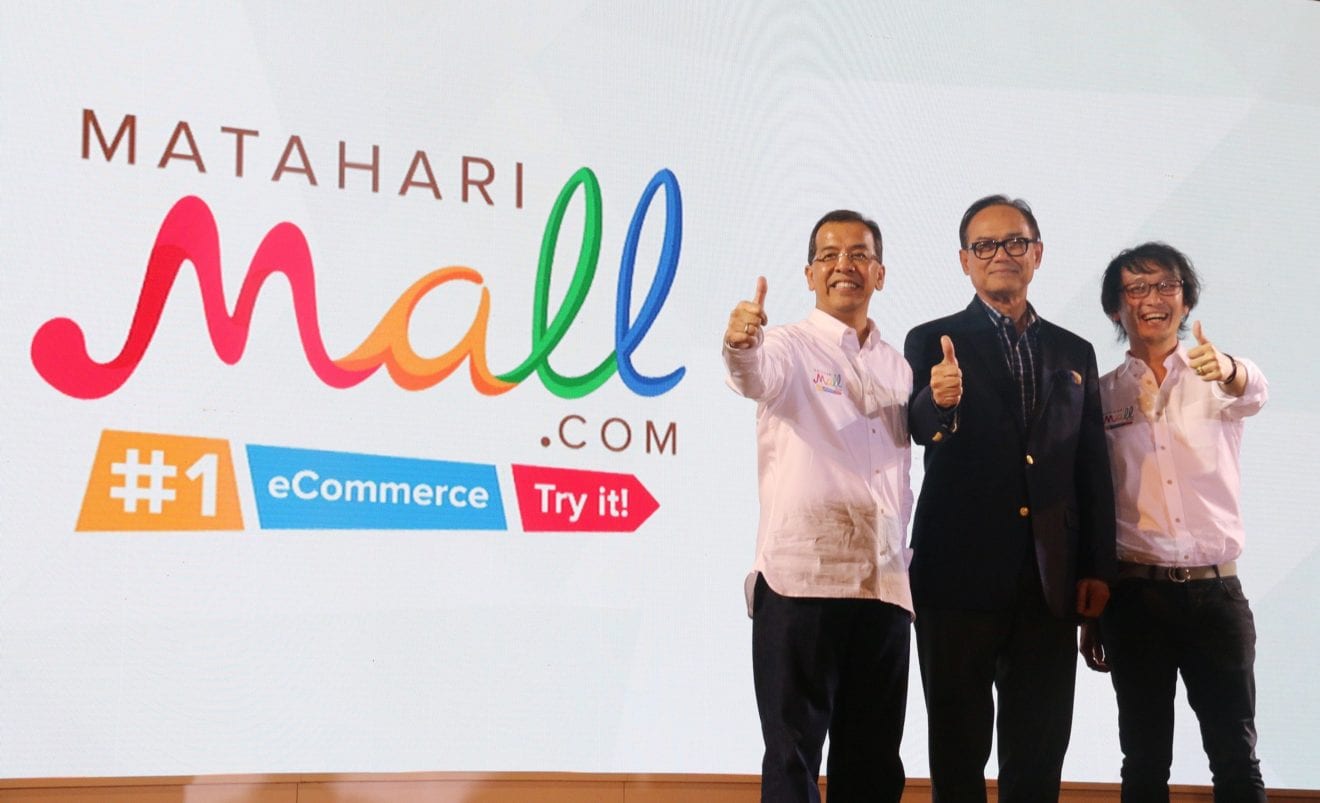
    When asked for his views on the issue, Hadi Wenas, the chief executive officer of MatahariMall.com, told reporters on Wednesday (10/02): “We are very optimistic. It will be business as usual for us, we are not afraid, not shocked or confused.”

    For foreigners, Indonesia is an attractive market for investment, particularly in the e-commerce sector, according to Indonesian E-commerce Association (idEA).

    The association estimated that the number of online shoppers in Indonesia could reach 10 million this year as the country’s middle class continues to grow. The e-commerce business is projected to rake in Rp 20 trillion ($1.49 billion) this year, double from last year’s estimated Rp 10 trillion.

    At the office launch of MatahariMall.com, Wenas noted that the same practice is common in Brazil, Russia, China and India, where local e-commerce firms are able to succeed in the market, supported by global investors, without the companies losing their identity.

    “With the support of Lippo Group, the biggest retail group in Indonesia, and the team we currently have, we are super solid now. Look at our campaign breakthrough. Foreigners won’t match our local taste in our ‘Lu mau apa?’ [(‘What do you want?’)] campaign,” Wenas said, referring to the company’s catch phrase.

    The Jakarta Globe and MatahariMall.com are both affiliated with the Lippo Group.

  • Tweetwars: the social challenge in Twitter ‘capital’, Indonesia

    Tweetwars: the social challenge in Twitter ‘capital’, Indonesia

    Indonesia has long been the Twitter capital of the world, but rival apps and rancorous political debate are driving users away, illustrating the challenges the microblogging service faces even in markets once considered strongholds.

    While Twitter doesn’t break down country figures, Global Web Index data shows Indonesia remains joint first with Mexico in active users among the 34 countries the UK-based metrics company monitors – and significantly ahead in terms of penetration, at 74 per cent of all Internet users.

    But that masks a deeper shift, analysts and users say, as changing tastes, culture and politics push Indonesians to rival services.

    The proportion of active Twitter users in Indonesia has dipped 10 percentage points in the past two years, to about one third of Internet users, the Global Web Index data show.

    “Unless Twitter makes changes or there’s some new exciting things on Twitter that can’t be found on other platforms then I don’t think people are coming back to Twitter,” said Enda Nasution, a blogger and entrepreneur who has nearly 200,000 followers on his Twitter account.

    A Twitter spokesman declined to comment on the data, saying he had not seen it, but said younger people in major markets like Indonesia and India were eager users. He said the company was expanding in Indonesia and working with airlines, banks and celebrities to add services and content.

    He noted Indonesia was one of the top markets for Facebook’s recent acquisition Periscope, which allows users to stream live video.

    Twitter on Wednesday reported its first quarter since going public with no growth in users, and announced changes to its global service.

    Among younger users – active Twitter users in the 16-24 year age range – Indonesia lags Spain, Mexico and the UK. JakPat, an Indonesian survey company, found last month that teenagers were less likely to use Twitter regularly than those aged 26 and above, and were switching to other apps such as Facebook and its photosharing sibling Instagram.

    But there’s also a push factor: Indonesians are leery of Twitter’s core appeal; its default public feed, where everything a user posts is visible to everyone on the network. What was once an attraction in Indonesia’s sociable culture became a liability in 2014’s fractious presidential election.

    FISTICUFFS

    As politicians saw the power of Twitter to mobilise support, the network was flooded by digital armies of volunteers and automated accounts, or bots, spawning what Shafiq Pontoh, chief strategic officer at Jakarta-based social media consultancy Provetic, described as a “tsunami” of “black campaigns, hoaxes, prejudice, racism, spam, harassment, anonymous accounts and political action to frame topics, issues (and) spin doctoring.” “Twitter,” he said, “became an uncomfortable place to be.”

    This antagonism hit rock bottom when two Twitter users took a dispute over government car-making policies offline and slugged it out near a sports stadium. Cellphone footage of their fist-fight was broadcast on TV. “After that it felt like that if you don’t want to get into trouble, people would retreat and find a more comfortable space online,” said Nasution, the entrepreneur.

    Those online spaces include Facebook’s WhatsApp and Messenger apps, South Korean Kakao’s Path, Japan’s Naver Corp’s LINE and BlackBerry’s Messenger.

    Mr Nasution said students he has spoken to use WhatsApp to communicate with their lecturer, and LINE to chat with each other. Or Facebook and Path, says student Jeremiah Mandey, who joined Twitter in 2010. “I used Twitter to interact with friends, but now I use it to get news,” he said.

    MISSING A CULTURAL BEAT

    Government departments, companies and even President Joko Widodo have embraced Twitter as a public announcement service. The Jakarta police traffic feed, alerting commuters to jams, accidents, potholes and protests, has over 5 million followers.

    This provides a service, but is too passive for younger people, says Aulia Masna, an editor. “People are on social media to have fun and be entertained,” he says. “Twitter in Indonesia is better known as the place for news, debate and politics. So it attracts the more serious, older crowd.”

    The company spokesman said Twitter opened a Jakarta office last year and added staff, in part to expand its user base beyond the capital. The recruits included a government relations expert. It was also working with local bank BNI to allow customers to transact via Twitter. “We see great potential in Indonesia, it’s one of the top markets,” he said, adding Mr Joko was due to visit Twitter’s headquarters in San Francisco next week.

    Simon Kemp, regional managing partner of social media marketing agency We Are Social, said Twitter should focus more on understanding how people in places like Indonesia use their service before tweaking things.

    “People are still looking at these things as a technology base,” he said, “while it’s the cultural driver that determines what you use and when you use it.”

  • Indonesia warns messaging apps to drop same-sex emoticons

    Indonesia warns messaging apps to drop same-sex emoticons

    Indonesia’s government has demanded that instant messaging apps remove stickers featuring same-sex couples, in the latest high-profile attempt to discourage visible homosexuality in the socially conservative country.

    The government move comes after a social media backlash against the popular smartphone messaging app Line for having stickers, which are an elaborate type of emoticon, with gay themes in its online store.

    Information and Communication Ministry spokesman Ismail Cawidu said Thursday that social media and messaging platforms should drop stickers expressing support for the LGBT community, a common abbreviation for lesbian, gay, bisexual and transgender.

    “Social media must respect the culture and local wisdom of the country where they have large numbers of users,” he said.

    Homosexuality is not illegal in Indonesia, but is a sensitive issue in the Muslim-majority nation of more than 250 million people. At the same time, most of Indonesian society, which follows a moderate form of Islam, is tolerant, with gay and transsexual entertainers often appearing on television shows.

    Line on Tuesday said it had removed all LGBT-related stickers from its local store after receiving complaints from Indonesian users. Twitter and Facebook had exploded with criticism of Line and its competitor WhatsApp for containing gay content.

    Ismail said the government would tell WhatsApp to do the same as Line.

    Last month, Research, Technology and Higher Education Minister Muhammad Nasir said openly gay students should be banned from the University of Indonesia’s campuses. His statements followed controversy over news a sexuality research center planned to offer counselling services for students.

    Nasir’s statement sparked public controversy in Indonesia for weeks, with objections from human rights groups but support from the Indonesian Ulema Council, an influential board of Muslims clerics.

    Gay rights advocate King Oey urged the government to respect international treaties signed by Indonesia protecting the rights of minorities and women.

    “Gays and lesbians are not illegal in Indonesia,” Oey said. “We urge people who are concerned with human rights to not sit by silently.”

    In 2014, lawmakers in Aceh, a conservative Indonesian province, passed a law that punishes gay sex by public caning and subjects non-Muslims to the region’s strict interpretation of Islamic sharia law.

  • Multi-channel shopping gives malls a shake-up

    Multi-channel shopping gives malls a shake-up

    With the rising trend of consumers buying lower-value goods online, shopping malls are likely to attract higher-priced fashion and beauty brands, while malls that integrate digital-savvy retailers are likely to gain market share, research from property consultancy JLL has shown.

    Ms Regina Lim, national director, Advisory & Research, Capital Markets at JLL, said: “We expect to see more Singapore residents using multiple channels to shop over the next three years. Online purchases of non-experiential goods such as groceries, household and electronic goods are likely to grow exponentially.

    “Suburban malls may cut back on space for these trades while increasing the allocation to clothing/footwear, health/beauty, F&B, and gifts and toys. Well-managed suburban malls could do well in 2016, gaining market share in a challenging market. By pro-actively managing the tenant mix and attracting more higher-priced brands, suburban retail mall rents could remain healthy and grow,” she added.

    As more consumers shopped online, and with more Singaporeans shopping overseas while tourist retail spending dropped, retail sales growth in Singapore has slowed over the last three years, leading to islandwide retail rents falling by 4 per cent in 2015, said JLL.

    About 1.44 million Singapore residents shopped online in 2014, 30 per cent higher than in 2012, the property consultancy cited Infocomm Development Authority data as showing. The sharp increase came from shoppers over 35, as those in this group who used portable devices to access the Internet rose 50 per cent over two years. Over 70 per cent of those under 35 had already shopped online in 2012, showed the data.

    More shoppers buying groceries, computer equipment online

    Other than airline and movie tickets, Singapore residents are increasingly buying clothing, footwear and groceries, as well as household and electronic goods, online, according to the study by JLL. The number of shoppers buying groceries and computer equipment rose about 70 per cent in the last two years, it said.

    Online sales of groceries and electronic goods are expected to grow exponentially in the next three years, said JLL. Over 60 per cent of shoppers already buy some clothing/footwear online, and this seems to have stagnated. Increasingly, shoppers buy lower-value goods online and higher-value goods priced above S$500 in a physical store, it added.

  • J. Cort’s cements Part&Ma tie-up at CDG

    J. Cort’s cements Part&Ma tie-up at CDG

    Cigar house J. Cortès is intensifying its cooperation with commercial animation company, Part&Ma, at Lagardère Travel Retail stores at Paris Charles de Gaulle airport following good growth in 2015.

    This year, the partnership will reach a higher level to support the brands, J.Cortès and Neos, “with monthly reports and immediate interaction assuring that travellers will always find their products on the right spot, labelled with the right price” says Thomas Gryson, J. Cortès Travel Retail Coordinator.

    J.Cortès has invested in product training for Part&Ma staff (pictured) in Belgium where they had intensive and interactive sessions on the brand’s products and sales programmes. Later the group was taken to the cigar factory, Neos in Handzame, to see all aspects of the production of cigars/cigarillos.

    “J.Cortès Cigars is supporting its travel retail business by investing in many areas,” says Gryson. “One of the important is training the staff of airport shops and their partners. J. Cortès strongly believes that knowledge is the start of everything.”

    Last year the house invested in customised product and sales workshop for the staff of WDFG Queen Alia Airport, Jordan and for DFS staff at Changi, Singapore.

  • Coach China leads transformation

    Coach China leads transformation

    Coach Inc says its net sales totalled US$1.27 billion for the second fiscal quarter – up 4 per cent year on year, and up 7 per cent on a constant currency basis.

    China was a primary driver of the increase in the three months to December 26, with sales up in the double digits and Japan also performed well for the New York based luxury accessories and lifestyle brands, which also owns Stuart Weitzman.

    Gross margin slipped from 68.9 per cent to 67.4 per cent, but gross profit rose $18 million to $859 million.

    Total Coach China sales rose 2 per cent in dollars and 5 per cent in constant currency with double-digit growth and positive comparable store sales on the Mainland offset in part by continued weakness in Hong Kong and Macau.

    In Japan, sales rose 2 per cent on a constant currency basis, despite a decrease in square footage and consistent with expectations, while dollar sales declined 3 per cent, reflecting the weaker yen.

    “Sales for the remaining directly operated businesses in Asia grew modestly in constant currency but declined in dollars, while Europe remained very strong, growing at a double digit pace in both total and comparable store sales,” the company said in its earnings statement.

    CEO Victor Luis said the result reflects “the most significant progress to date” on the company’s transformation plan despite the difficult retail environment globally.

    “We drove further sequential improvement in our North America bricks and mortar business – led, as expected, by our retail stores, while our outlet store channel also strengthened against a backdrop of lower tourist traffic and a highly promotional environment.

    “Our international businesses posted strong growth on a constant currency basis, highlighted by double-digit increases in Europe, and Mainland China, as well as sales gains in Japan. Overall, our results continue to give us confidence that the cumulative impact of our actions will result in a return to top line growth this fiscal year and positive North American comps by our fourth quarter.

    “We were also excited about Stuart Weitzman’s results during the quarter, which exceeded expectations. Importantly, we are effectively integrating Stuart Weitzman to Coach Inc while continuing to successfully execute the Coach brand transformation,” said Luis.

    “At points of sale, sales in international wholesale locations increased slightly, driven by strong domestic performance offset in large part by relatively weak tourist location results. Net sales into the channel grew significantly from prior year positively impacted by shipment timing to ensure appropriate inventory positions for Chinese New Year,” the company said.

  • Pernod Ricard reports 3% first half organic growth

    Pernod Ricard reports 3% first half organic growth

    Pernod Ricard has delivered “solid” first half results as the spirits maker saw 3% organic sales growth in the six months to 31 December 2015.

    Sales totalled €4.96bn during the period which represented “gradual improvement” against the same period in 2014.

    Reported sales growth was 7%, boosted by the weakness of the euro compared to dollar and sterling revenues.

    Sales growth in the Americas was 4% compared to 2% growth a year ago and was largely driven by the US (3% up against flat growth last year).

    Europe saw a 1% sales improvement against flat sales in 14/15, with the growth driven by Spain and the UK, though there was decline in France and Russia.

    Results of the world was 5% ahead of last year, with double-digit growth in India, Africa/Middle East and Australia, but China fell by 2% and by 8% if adjusted for the earlier Chinese New Year.

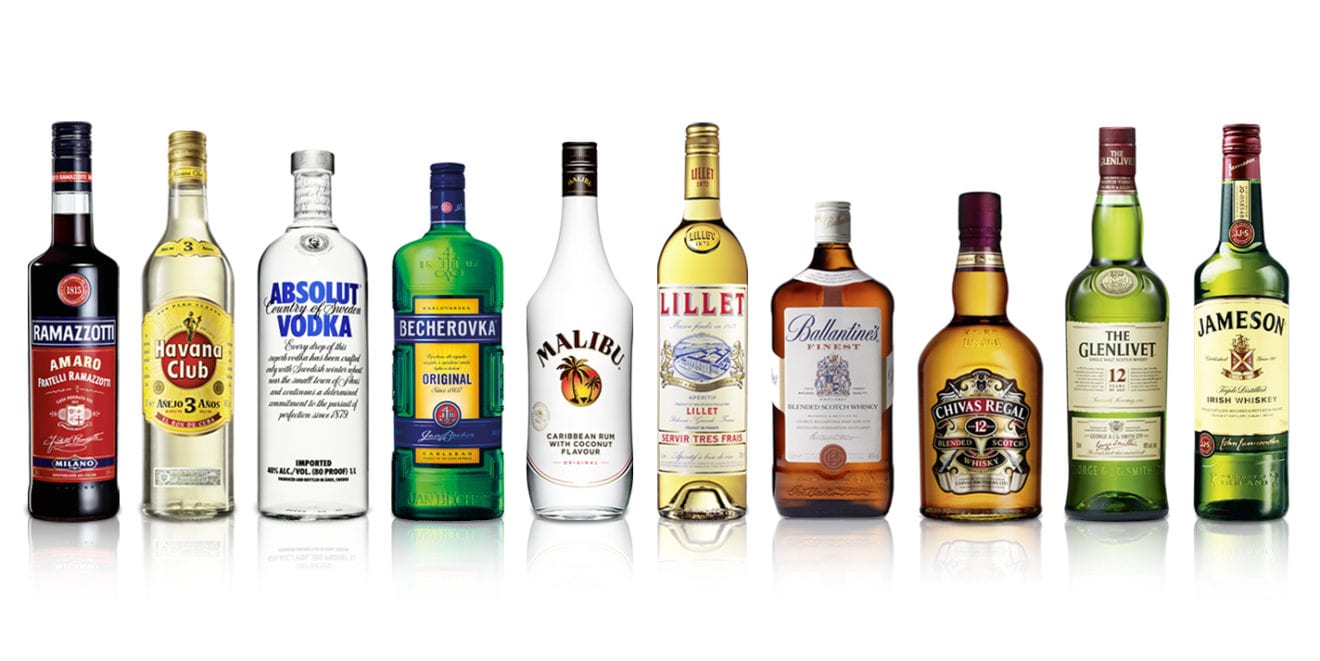
    Pernod Ricard said it saw strong performance from Jameson, Martell, The Glenlivet, Perrier-Jouët, Mumm and Indian whiskies.

    However, performance was weaker for Chivas (due to Asia and travel retail) and Absolut (albeit amid improving underlying trends in the US).

    Alexandre Ricard, chairman and CEO said: “Our half year results are solid, delivering a continued improvement in Sales. Our strategy has remained consistent and is driving results, in particular in terms of innovation.

    “For full year FY15/16, in a still contrasted macroeconomic environment, we plan to continue improving our business performance year-on-year. We will continue to support priority markets, brands and innovations while focusing on operational excellence.”

    The company expects to deliver organic profit growth from recurring operations of between 1%-3%.

    Pernod Ricard shares fell 6.7% today to €92.89 on the continued weakness in China.

    Pernod Ricard has also instigated a number of organisational changes and a raft of job changes in its senior team effective from 1 July 2016.

    Firstly it is to simplify its Americas region to concentrate on its core business: the United States and Canada. Secondly, it will create two new management teams based around the lead countries of Mexico and Brazil in South America, reporting to Pernod Ricard EMEA. Thirdly, it has created the role of CEO, Global Travel Retail, which will be taken by Mohit Lal, currently MD of travel retail Asia.

    Job moves include Paul Duffy, currently chairman & CEO of The Absolut Company who will become CEO of Pernod Ricard North America, and is replaced at Absolut by Anna Malmhake, currently CEO of Irish Distillers.

  • Eu Yan Sang reports 75% plunge in Q2 net profit

    Eu Yan Sang reports 75% plunge in Q2 net profit

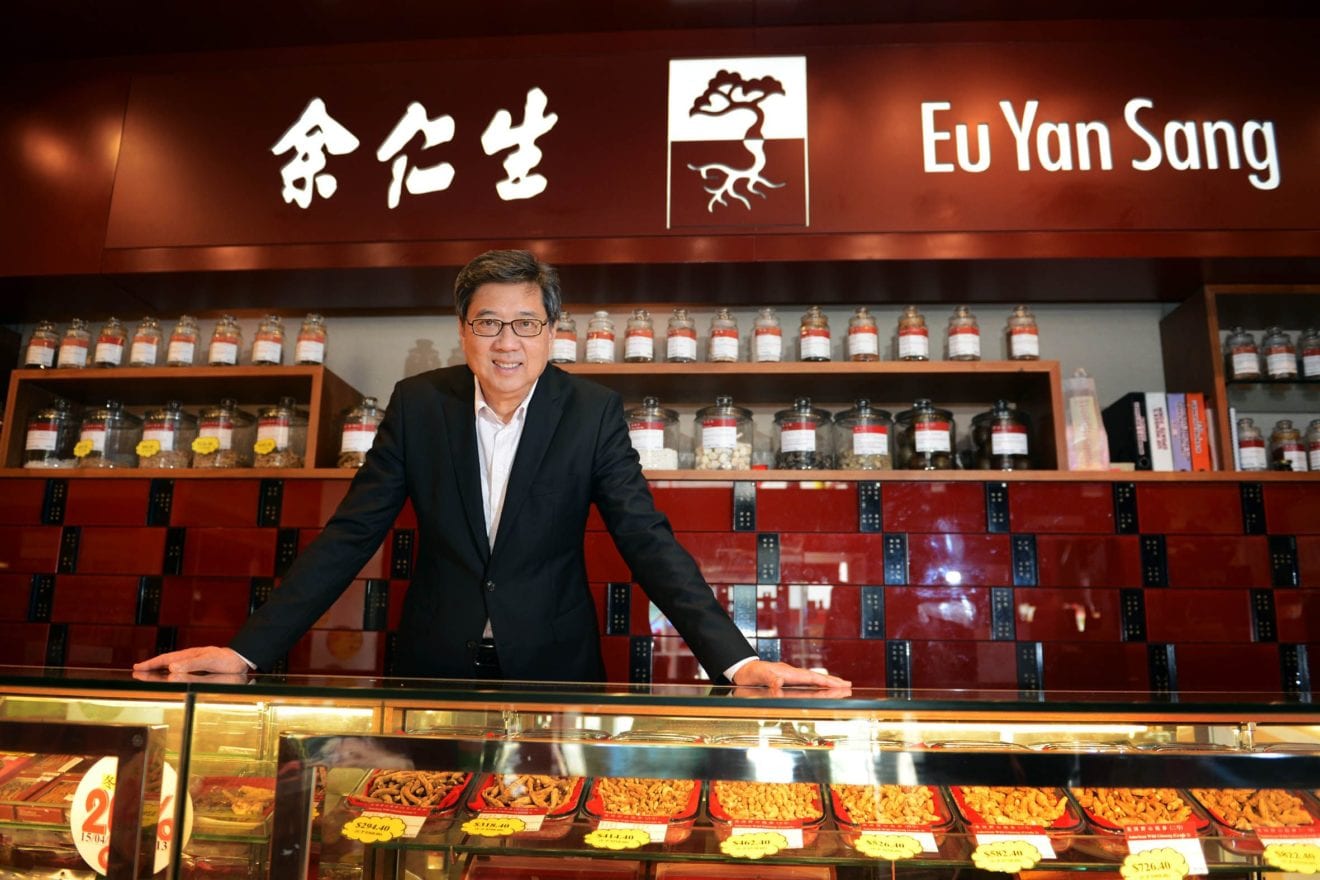
    Mainboard-listed Eu Yan Sang International said on Friday (Feb 12) its net profit for the second quarter plummeted 75 per cent, hurt by a weak Malaysian ringgit and lower revenue from the Hong Kong market.

    Net profit for the three months to Dec 31 was S$498,000, down from S$1.98 million in the same period a year ago.

    Revenue, however, was up 1 per cent at S$85.61 million, compared with S$84.69 million a year ago, mainly due to higher sales from Singapore and Australia.

    Revenue from Hong Kong declined 13 per cent in the quarter, due to a decline in spending by mainland Chinese tourists and the “ongoing challenging retail environment”, the company said. This was partially offset by the strong Hong Kong dollar, which helped to reduce the revenue decline to 5 per cent when translated to Singapore dollars.

    Revenue from Malaysia rose 14 per cent due to higher sales, but as a result of the weak ringgit, was down 8 per cent when translated into Singapore dollars.

    In Australia, revenue rose by 18 per cent due to an increase in the number of outlets and higher sales. However, the appreciation of the Singapore dollar against the Australian currency resulted in only an 8 per cent increment in revenue in Singapore dollars, Eu Yan Sang said.

    Revenue from Singapore improved by 13 per cent during the quarter, due to the launch of new products and promotional campaigns.

    “Despite the challenging business environments in key markets of Hong Kong and Malaysia, we are glad that Hong Kong’s rate of decline is showing signs of moderation and an improvement in Malaysia. Singapore and Australia have continued to show positive growth and added resilience to our Group’s results,” Group CEO Richard Eu said.

    The company plans to expand its retail network in Australia and Malaysia, and will also launch several joint ventures in China to boost its growth in the Chinese market, he added.

    Looking forward, Eu Yan Sang said it remains cautious on its business outlook. The company plans to reduce costs through the “rationalisation” of weak performing retail outlets, while continuing to improve its operational efficiency through technology, it said.

  • LVMH looks to innovation to boost struggling Asia travel retail

    LVMH looks to innovation to boost struggling Asia travel retail

    In its annual report, the luxury giant has said that it came up against a combination of unfavorable political and economic factors in the region, though it enjoyed a boost from Chinese tourist spending in Japan.

    “DFS continues to experience an uncertain environment in Asia as a result of currency and geopolitical changes,” the company stated, noting that its sales growth in the face of this has been due to innovation within its retail spaces.

    DFS drew on its unique expertise and its enormous capacity for innovation to develop its offering.”

    LVMH called out key examples from within its portfolio as evidence of this innovation, including its T Beauty concept: a standalone luxury beauty store which focuses on offering an interactive retail experience, and was launched last year in both Singapore and Hong Kong.

    Interactive luxury

    Through its T Beauty retail concept, the brand says it can offer consumers the “innovative, personalised approach to the beauty shopping experience” which is increasingly demanded by beauty consumers.

    Euromonitor International, a market research firm, recently suggested this demand is being especially fuelled by younger consumer groups, as millennials in particular seek out “a curated but interactive sales environment, whether retail or online.”

    Personalisation and interactivity is important in beauty care for millennials,” Euromonitor asserted, and LVMH’s T Beauty concept meets these consumer demands via two key services: the store’s Beauty Station, and its Beauty Concierge.

    Beauty Station allows customers to sample, mix and match products across a wide range of brands, and its Beauty Concierge service offers a complimentary, personalised retail experience that focuses on an individual customer’s specific preferences.

    DFS’s determination to continue innovating in the retail space will serve it well as it reportedly looks to begin expanding across Europe in the coming months, where retail interactivity is also highly sought-after in the consumer experience.

  • Ford pursues Philippines expansion after record January sales

    Ford pursues Philippines expansion after record January sales

    Automotive firm Ford Philippines is gearing for faster expansion this year to sustain its growth, which has gone to a record level during the month of January.

    A statement showed that the company was able to extend its positive performance up to month of January, recording an all-time high monthly performance after it sold 2,459 car units, a jump of 50 percent compared to the same period last year.

    As a result, Ford Philippines plans to continue the expansion of its nationwide dealer network to support its ongoing growth and fast-growing customer base.

    “Ford plans to continue enhancing its customer and ownership experience across the country this year. This includes the official inauguration of Ford Marilao in Bulacan later this month as it further expands its authorized dealer network to even more key locations across the Philippines,” the company said.

    Ford’s January performance in the Philippines was led by the all-new Everest, which delivered retail sales of 1,144 units, the second highest total ever for the nameplate.

    “It’s a fantastic start to 2016, and we’re extremely proud of how the Ford brand continues to connect with our fast-growing base of Filipino customers,” said Lance Mosley, managing director of Ford Philippines.

    The EcoSport compact SUV continued as one of Ford’s top-selling models in the Philippines with January sales of 551 units.  Built on Ford’s global B-segment platform, the EcoSport continues to delight customers with its combination of small-car practicality and agility of an SUV.

    Strong demand for the class-defining Ranger pickup, the second best-selling pickup truck in the Philippines last year, also helped the company achieve additional retail sales of 543 units.

    Ford Philippines’ lineup of North American SUVs available in the Philippines also contributed to the strong start to the year, including the premium Explorer which delivered sales of 95 units, while the sporty Ford Fiesta delivered sales of 71 units,

    The iconic Mustang, equipped with either a V8 5.0L or EcoBoost 2.3L variants engine, delivered January sales of 10 units.

    Ford Philippines is the local subsidiary of Ford Motor Company, a global automotive and mobility firm based in Dearborn, Michigan.

    With about 199,000 employees and 67 plants worldwide, the company’s core business includes designing, manufacturing, marketing, financing and servicing a full line of Ford cars, trucks, SUVs and electrified vehicles, as well as Lincoln luxury vehicles.