Tag: asia

  • YuuZoo to develop social e-commerce network for China’s JW Lottedi malls

    YuuZoo to develop social e-commerce network for China’s JW Lottedi malls

    Singapore’s YuuZoo Corporation on Friday said it has entered into an exclusive partnership with JW Lottedi Mega Malls in China to develop a social e-commerce network for the malls.

    The network specially developed for Mega Malls will sit within YuuZoo’s social e-commerce virtual shopping mall. JW Lottedi is part of Jingwei Group, which is involved in property management, assets appraisal, real estate development and microfinance services.

    The first of the Mega Malls, which are based on a new Korean-style shopping, entertainment and leisure mall concept, will be completed in August this year. A 120,000-square metre complex, it will have some 600 merchants. They will be able to provide their products to 700 million customers through YuuZoo China’s virtual shopping mall through the latter’s tie-up with Great Sports Media, YuuZoo Corporation said.

  • Sephora thrives in Asia

    Sephora thrives in Asia

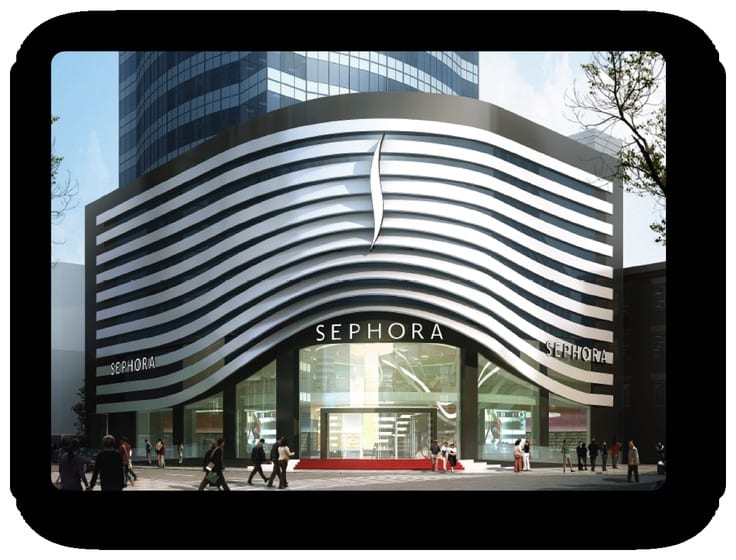
    Louis Vuitton Moet Hennessy says Asia, the Middle East and North America delivered excellent performance for its Sephora, DFS business arm in 2014.

    The world’s largest luxury goods retailer and manufacturer said the business, in its books referred to as its Selective Retailing division, achieved record annual growth revenue of eight per cent.

    Profit from the division’s recurring operations reached €882 million in 2014.

    “Sephora had an exceptional year and continued to gain market share. Performance was excellent especially in North America, the Middle East and Asia. Online sales grew significantly, supported by innovative mobile features,” the company said in its full year announcement.

    “The store network expansion continued: the company established a new presence in Indonesia and Australia while several flagship stores, such as the Champs-Elysées and Dubai Mall, have been renovated. New brands enhanced the product offering, bringing a diversity that never ceases to keep Sephora ahead in beauty innovation.”

    LVMH said that “faced with a complex situation in Asia, particularly relating to currency and geopolitical developments,” its airport retailing business DFS continued to focus on optimising its offer and deploying its loyalty program.

    “Its profitability was equally impacted by the expansion and renovation of several airport concessions.”

    Overall growth

    Despite subdued economies in China, Hong Kong and much of Europe, LVMH achieved a revenue of €30.6 billion in 2014, an increase of six per cent over the previous year. Organic revenue growth was five per cent.

    “Revenue in all business groups increased with the exception of Wines & Spirits which continued to be affected by the destocking of distributors in China.”

    The group maintained strong momentum in the US, while Europe demonstrated good resilience despite the economic environment. Asian countries, it said, displayed mixed trends.

    In the fourth quarter, revenue increased by 10 per cent compared to the same period of 2013, with organic growth five per cent.

    Profit from recurring operations reached €5 715 million, resulting in an operating margin of 19 per cent.

    Chairman and CEO Bernard Arnault said the 2014 results confirm the capacity for LVMH to progress despite economic and currency uncertainty.

    He said the company’s achievement reflected a commitment to excellence, a passion for quality and a capacity to innovate.

    “In 2014, all our Maisons demonstrated outstanding flexibility. By adapting their strategies to global changes and by continuing to evolve, they have shown the creativity and entrepreneurship that drive them forward. In an uncertain economic environment, we can rely on the desirability of our brands and the agility of our teams to further strengthen our leadership in the world of high quality products,” Arnault said.

    The luxury retailer said that despite a climate of economic, currency and geopolitical uncertainties, LVMH is well-equipped to continue its growth momentum across all business groups in 2015.

    “The group will maintain a strategy focused on developing its brands by continuing to build on strong innovation and a constant quest for quality in their products and their distribution.

    “Driven by the agility of its teams, the balance of its different businesses and geographic diversity, LVMH enters 2015 with confidence and has, once again, set an objective of increasing its global leadership position in luxury goods,” the company statement concluded.

  • Marketing boost for Thai malls

    Marketing boost for Thai malls

    Thailand’s Mall Group will invest more than 2 billion baht ($US61 million) this year to stimulate customer spending.

    In an interview with the Bangkok Post newspaper, executive VP Chamnarn Maytaprechakul said the company aims to boost sales to 53 billion baht ($1.6 billion) in 2015.

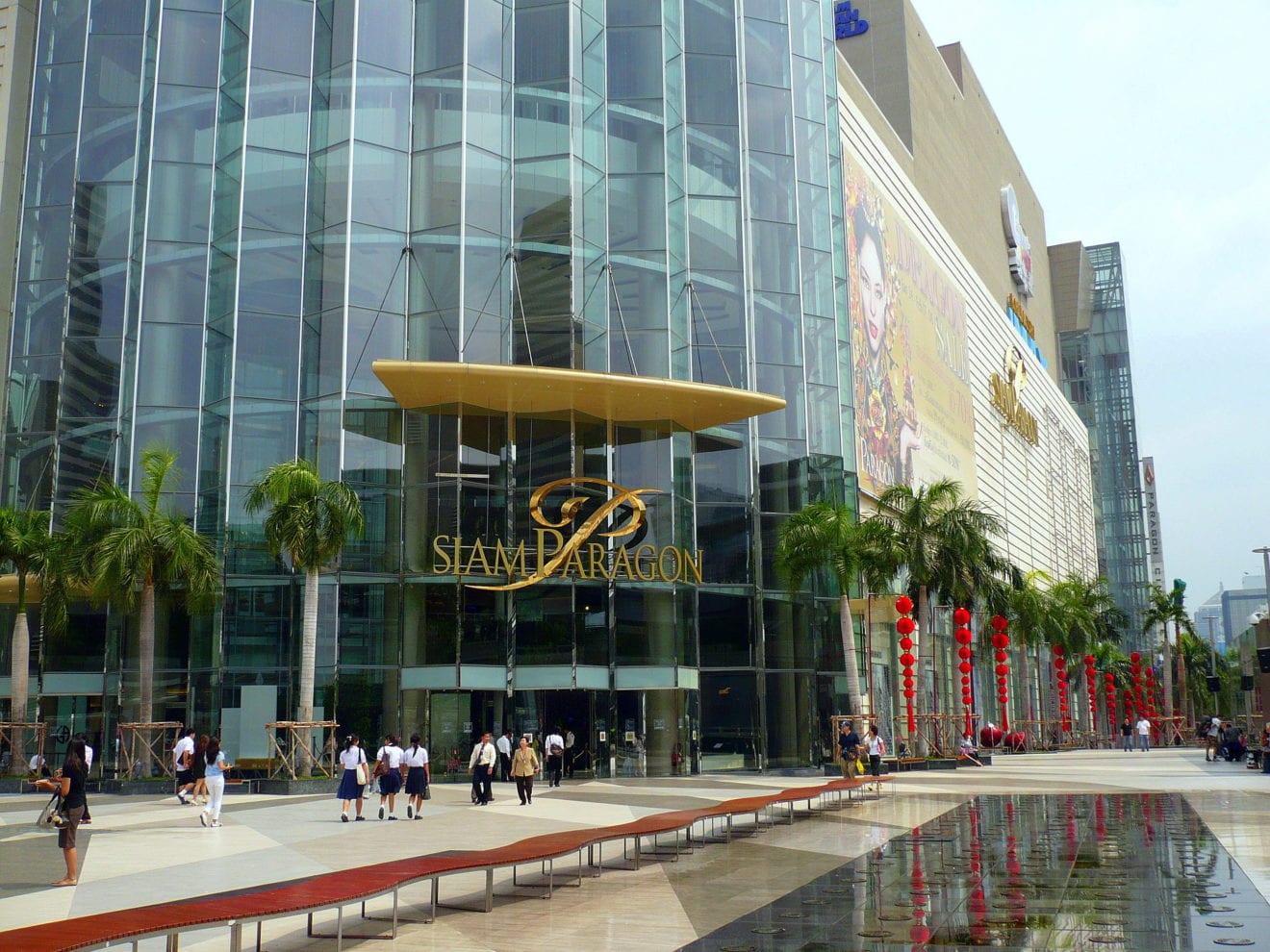
    The Mall Group owns Siam Paragon, the Emporium complex and The Mall, all in Bangkok. Adjacent to the Emporium, two new malls are under construction – EmQuarter and EmSphere, which will open during the next two years.

    Strong sales at Siam Paragon helped the group achieve a six per cent year-on-year sales growth in January, a figure above its monthly average performance in 2014. Group sales grew two per cent last year and the company is targeting six per cent growth this full year.

    Maytaprechakul said Thai consumers are still taking a cautious approach to spending despite the calmer political climate and improved economic outlook.

    “The retail atmosphere so far is similar to the situation during the heavy floods in late 2011. People are not really in the mood to shop even though they have money in their pockets due to the falling oil price,” he said in the interview.

    CEO Phaibul Kanokvatanawan said Siam Paragon’s sales growth was attributable to a resurgence in tourism to Thailand, with foreigners now more comfortable returning to the nation amidst the relative political calm.

    “We hope consumer purchasing power will improve in the second and third quarters of this year after the government starts allocating money for major infrastructure projects,” he said.

  • Burberry teams with Line

    Burberry teams with Line

    Burberry and Line have launched a global partnership beginning with a platform first – the live stream of Burberry’s upcoming Prorsum womenswear show, direct from London.

    Burberry and Line say they will initially be partnering to offer Line users in Japan “unique creative content and real time technology” to take users closer to the luxury British brand.

    It’s the second major retail initiative this week for Japanese-founded Line, following the launch of an online supermarket service in Thailand as the first step in a Southeast Asia-wide grocery store roll-out.

    But the Burberry relationship will not extend to online shopping, rather it is a brand building exercise which in time will expand beyond Japan.

    Burberry chief creative and CEO Christopher Bailey said Burberry has long admired Line for its innovation and creativity.

    “This exciting collaboration will help us share our rich heritage and culture of design by building a very personal relationship with audiences in Japan.”

    Users of Burberry’s Line official account will be able to watch the Burberry Prorsum Autumn/Winter 2015 Womenswear runway show live from London Fashion Week on February 23. Using the mobile live cast functionality Line Live Cast, viewers in Japan will be able to experience the show in real time.

    An exclusive collection of Burberry ‘Cony and Brown’ ‘digital stickers’ will be launched with both characters dressed in iconic Burberry trench coats and cashmere scarves designed for the platform. The stickers will be available exclusively to Line users in Japan from mid-February.

    Line CEO Akira Morikawa said his company was pleased to be recognised as “a powerful and stable platform” by Burberry.

    “This is a huge step for Line as it continues to grow its brand and expand globally. We look forward to working with Burberry to provide users with uniquely enjoyable and revolutionary experiences achieved by connecting an increasingly smartphone-oriented fan base with one-of-a-kind luxury fashion available both in-store and online.”

    Burberry is beginning a new chapter in Japan in 2015. From June, the brand’s licensed products will be replaced with the Burberry global product offering including its British made heritage trench coats and scarves.

    Burberry has 16 stores in Japan, including flagships in Kobe, Ginza Marronnier Dori and Roppongi in Tokyo. Last November it opened a new store in Omotesando, Tokyo.

    Line has expanded its user base globally and now has more than 181 million active monthly users.

    Burberry’s Line official account: LINE ID : @burberry_jp. It is in Japanese only at this stage.

  • Cross-border eCommerce a boon for small retailers

    Cross-border eCommerce a boon for small retailers

    After years of tepid growth, sales at several Australian vitamins, minerals, and supplements companies suddenly shot up by 20, 30, or even 40 per cent in 2015.

    For those who know what happened in China in 2014, the source of this growth probably isn’t a big mystery: Regulators expanded a tax exemption to cross-border eCommerce.

    The resulting growth in trade has been dramatic, and for firms who have long eyed the big Chinese market but are too small to invest in finding a distribution partner or building a physical presence on their own, the boom of 2015 has delivered a revelation: They, too, can access the mainland market.

    eCommerce has of course been big in China for years, and in 2014 online retail sales totalled nearly US$430 billion, accounting for roughly 10 per cent of all retail sales.  (The same figures for the US were US$300 billion and 6.4 per cent, respectively.)  Until recently, however, this activity was nearly all domestic – i.e., goods produced in or already shipped to China being sold to Chinese consumers.

    That makes perfect sense in light of the retail explosion of recent years:  China has more than 300,000 pharmacies, more than 2000 mid-to-high end department stores, and supermarket catchment areas in urban areas are even smaller compared with the US because of smaller formats and the lack of parking (and, until recently, widespread car ownership). Within this rapidly-developing retail landscape, however, some factors are driving consumers to prefer foreign products, whether bought once in China or ordered from abroad.

    Driving demand

    Food scandals are well-known and heavily publicised, from the baby-killing melamine-laced formula scandal of 2008 to the discovery this year of decades-old “vampire” meat.  In September, fake rice made from tiny pieces of rolled-up paper was even uncovered in Guangdong.  In light of such underhanded tactics, it is understandable that consumers might perceive foreign brands as safer and of higher quality.

    Price pressures pushing up consumer prices is another key issue.  Commercial rents, especially in first-tier cities such as Shanghai and Beijing, rival those in developed nations. At the end of 2014, rents in Beijing’s Wangfujing averaged $480 per square foot per year vs $360 for Singapore’s Orchard Rd.  Wages, while still lower compared to western economies, are also rising quickly.

    Finally, Chinese consumers are becoming more sophisticated and better able to differentiate between local brands trying to pass themselves off as foreign and the real thing.  With travel increasing and the transparency in commerce that the internet can bring, tastes in products are becoming more global.

    Historic developments

    By as early as 2005, a Chinese consumer could order an album on Amazon and wait a few weeks for it to arrive—though naturally taxes and shipping often added to the price of the CD itself. But it wasn’t until the fourth quarter of 2014 that cross-border e-commerce really exploded. The impetus was the application of a previously obscure piece of the tax code to cross-border e-commerce, implemented in a number of pilot cities.

    The personal effects tax originally targeted Chinese travellers who had emigrated abroad and were bringing back gifts – such as small appliances – for relatives.  Small items were exempt, but the tax was set at 10 per cent for nearly everything else.  In late 2014, though, the government proclaimed that this personal effects tax also applied to cross-border eCommerce in certain pilot areas.  The effect was dramatic, as can be seen in the price differentials illustrated below.

    Obviously some costs, such as freight and insurance, are incurred whether selling through physical stores or cross-border eCommerce. However, the price differential can be observed in following key areas, demonstrated with VMS products as an example:

    The nuts and bolts

    Business models for cross-border eCommerce can be viewed across two main dimensions: Whether the site serves as a platform that aggregates multiple sellers or sells its own products, and whether delivery to the consumer is made from the source country or from a bonded warehouse.

    Each model has its own quirks (see graphic below), and it is not yet clear whether there is an obvious winner.  It is likely that multiple models will co-exist –for example, a self-run, bonded import model could work for goods with the highest turnover (such as diapers and infant formula), while direct shipment models might better suit the long tail of less-frequently ordered items.

    In terms of product flow, though, the bonded import model has the clear advantage in terms of speed. Consumers can receive product within days – sometimes only one or two – rather than weeks.

    With both models the seller can choose how much to take on internally, and how much to either outsource or hand over to a partner.  Hundreds of cross-border eCommerce companies have already sprung up in China, providing services that run the gamut from simple customs clearance all the way to a full consignment model.

    Local interests

    While eCommerce, including the cross-border variety, is here to stay, the advantages that it has over traditional imports may not last forever, depending on the product category.  In June of 2015, for example, China’s government lowered import duties on skin care products, which harmonised online and offline prices to an extent.  In 2016, import duties on additional products including handbags and suitcases are also slated to be slashed.

    Regulatory vacuums will likely be filled step-by-step as well.  For example, vitamin potency levels are regulated for products registered and sold in China, but currently these rules are not applied for cross-border eCommerce imports.  Local players are crying foul, and regulators will no doubt feel pressured to act.

    For now, though, cross-border eCommerce is helping to level the playing field by allowing smaller-scale companies to profitably access the vast China market while providing a huge boon in the form of savings and product diversity to Chinese consumers as well. Chalk one up for the little guys on both sides of the border.

    Editor: Hudson Lockett.

  • Under Armour CEO is calling out Nike and Adidas

    Under Armour CEO is calling out Nike and Adidas

    Under Armour is creating the world’s largest digital health and fitness community because the more people exercise, the more shirts and shoes they buy, the sports company founder and CEO Kevin Plank told CNBC on Thursday. He also said he wants Nike and Adidas to know what it feels like to be number two and to “get used to that.”

    Instead trying to play in the highly competitive wearables market, Plank said in a “Squawk Box” interview that he sees value in building a community that users can tap into with any device. “[It’s] a place where we weren’t tied to a consumer electronic but where we could be the destination regardless of what the best ‘widget’ on the market was,” he continued. “Whatever you had, it would plug in and we would read and synthesize that information as easy as possible.”

    Under Armour announced late Wednesday a deal to buy for USD475 million the San Francisco-based fitness app MyFitnessPal, a leading resource for healthy living and nutrition with over 80 million registered users. The company also said it completed in early January its USD85 million acquisition of Denmark-based Endomondo, with about 20 million registered users primarily in Europe.

  • Tinder isn’t feeling the love for Gap

    Tinder isn’t feeling the love for Gap

    Tinder just swiped left on Gap’s plan to use its dating app as a new means for promoting the brand.

    In a story posted on AdWeek Wednesday, the apparel retailer said that it intended to run provocative phrases such as “you’re invited to the pants party” on the platform, in what it called a form of guerrilla marketing.

    “We did a little something special on Tinder,” the Gap’s Tricia Nichols told the publication. “You’ll see a profile with clever messaging in the spirit of love and the perfect match. It’s the perfect fit for Tinder.”

  • MBK plans lifestyle mall in Thailand’s Mae Sot to cash in on AEC

    MBK plans lifestyle mall in Thailand’s Mae Sot to cash in on AEC

    MBK Plc, the SET-listed operator of MBK shopping centre in Bangkok, is negotiating with local partners to co-develop a lifestyle shopping complex in Tak province to attract Myanmar shoppers.

    The 20,000-square-metre project will be used as a prototype to develop other malls in border towns to cash in on opportunities arising from the ASEAN Economic Community (AEC), which is set to kick off late this year.

    Sakchai Kengkijkosol, managing director for retail operations, said MBK would start constructing the project in the border town of Mae Sot once the government had a clear policy on infrastructure development in response to the AEC.

  • Singaporean shoppers enthusiastic about Valentine’s Day

    Singaporean shoppers enthusiastic about Valentine’s Day

    Valentine’s Day is a big deal for Indonesians (57 percent), Taiwanese (53 percent) and Singaporeans (45 percent). These three countries top a multi-market poll for being the most expectant to celebrate Valentine’s Day this year.

    In contrast, love is not in the air for Germans (18 percent) and the British (36 percent), who were least likely to celebrate the occasion.

    The Rakuten Shopping Secrets survey was conducted among consumers over seven markets with over 7,000 respondents from United States, United Kingdom, Spain, Germany, Indonesia, Singapore and Taiwan.

    The survey also revealed that the majority of Singaporeans (59 percent) do not expect to receive gifts on Valentine’s Day, but for thosecelebrating the occasion, receiving a hug/kiss (41 percent), a trip or vacation (41 percent), fashion accessories (27 percent), chocolates wine and other food or drink (26 percent) and jewellery (22 percent) ranked highest among what respondents wished to receive.

    And when it comes to choosing shopping as a break-up therapy, Singaporeans came in tops (39 percent), followed closely by their regional counterparts in Indonesia (38 percent) and Taiwan (30 percent).

    For those who hit the stores upon singlehood, fashion and accessories were the items most frequently bought post-breakup.

    More than half of Singaporeans who have gone through a bad breakup or relationship prefer to drown their sorrows by shopping online rather than offline in the one month after a breakup.

    Not feeling like going out and interacting with people (58 percent), wanting more privacy (55 percent and not wanting to let people see that they look depressed (26 percent) were the top three reasons cited.

  • Rakuten begins year-round hiring of engineers

    Rakuten begins year-round hiring of engineers

    Rakuten Inc. recently announced that it would discontinue its new-graduate hiring quota, and will begin to hire new-graduates and mid-career engineers throughout the year.

    Since 2010, the company has been accelerating its global expansion, and by making English the official corporate language, has begun attracting talented engineers from all over the world.

    It has also expanded its autumn hiring of new graduates, building an environment that makes it easier for exchange students and students from overseas to apply.

    To hire engineers that have a diverse set of values, the company believes that limits on the language, age, or experience of applicants, as well as on the time of entry when recruiting are unnecessary.

    Thus, Rakuten decided to change to a year-round hiring system that considers applicants regardless of whether they are new graduates or mid-career.

    The company plans to expand its internship program, so that people who aspire to join the company may get a better feeling for its technological strengths and corporate culture. This year, it said the program will offer over 30 positions in the Development Unit of Rakuten for students from within Japan and overseas.

  • Alibaba wins a battle against China but a war would have a different ending

    Alibaba wins a battle against China but a war would have a different ending

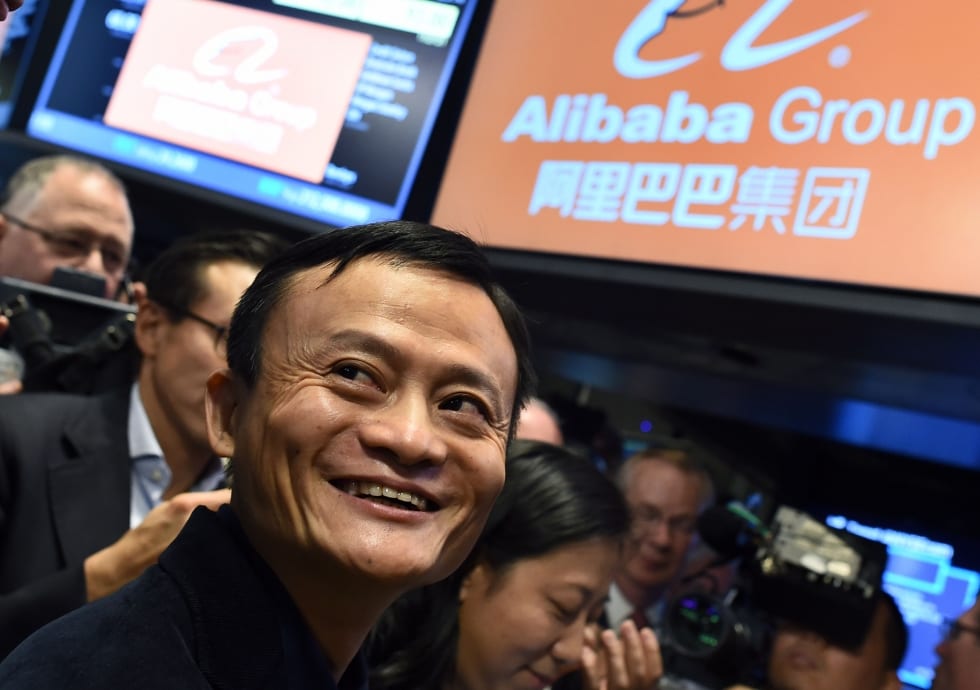
    Jack Ma, 1. China, 0. That seems to be the score in the unusually public tussle between the Alibaba billionaire and Beijing. Rarely does a mainland magnate push back when the Communist Party questions its business practices and ethics, and certainly not in the glare of the global news media.

    But Ma is standing his ground, and the government has toned down its criticism of Alibaba selling fake goods on its e-commerce site.

    This is not a sign that life is generally improving for private business in China, however. Alibaba is unique. Beijing loves a homegrown success story, and there’s none better than Ma’s fabled rise from schoolteacher to Asia’s richest man.

  • Samsung loses pole position in India smartphone market to Micromax

    Samsung loses pole position in India smartphone market to Micromax

    Indian budget smartphone maker Micromax leapfrogged South Korea’s Samsung Electronics Co Ltd to become the leading supplier in India’s booming smartphone market for the first time in the fourth quarter, research firm Canalys said.

    In a report issued on Tuesday, Canalys said Micromax, based near New Delhi, accounted for 22 percent of smartphone sales in India in the October-December quarter, ahead of Samsung’s 20 percent. In total, 21.6 million smartphones were sold in India in the period, a 90 percent surge from a year earlier.

    India, which has the world’s second highest number of mobile phone accounts after China, is the third-biggest market by number of smartphones sold. Low-priced smartphones are the top sellers in a country where many buyers are upgrading from feature phones.

  • Consumer confidence climbs in Indonesia

    Consumer confidence climbs in Indonesia

    Indonesian consumers grew more optimistic about their economic prospects in January, thanks to the recent fuel price cuts, according to surveys from the central bank and a state-controlled research institute.

    Bank Indonesia’s Consumer Confidence Index, which is based on a sample of 4,600 households in 18 major cities in Indonesia, increased by 3.7 points to 120.2 point in January.

    A level of more than 100 points generally means consumers are optimistic about the country’s economy.

  • Alibaba Group sets up HK foundation for young entrepreneurs

    Alibaba Group sets up HK foundation for young entrepreneurs

    The Alibaba Group has established a HKD1-billion (USD128.9 million) not-for-profit Alibaba Hong Kong Young Entrepreneurs Foundation to support young entrepreneurs in Hong Kong.

    The goal is to help young people start and grow businesses on marketplaces and platforms in the Alibaba ecosystem. Entrepreneurs will have access to financial capital, technical assistance and training.

    The selection and funding process will be managed by a team of professional investment managers and operating advisors who will work closely with these young entrepreneurs in their companies’ early stages.

    Profits generated from these venture investments will be returned to the foundation for re-investment.

    “We hope to create life-changing opportunities so that Hong Kong’s young people have an opportunity to build thriving businesses that will serve as a bridge between Hong Kong and mainland China,” said Jack Ma, Executive Chairman of Alibaba Group.

    In addition, the foundation will also select 200 young people each year from Hong Kong universities to intern at Alibaba Group and other businesses within the Alibaba ecosystem. This will give an opportunity to university graduates to gain first-hand experience working in mainland China.


  • Tommy Hilfiger to publish memoir

    Tommy Hilfiger to publish memoir

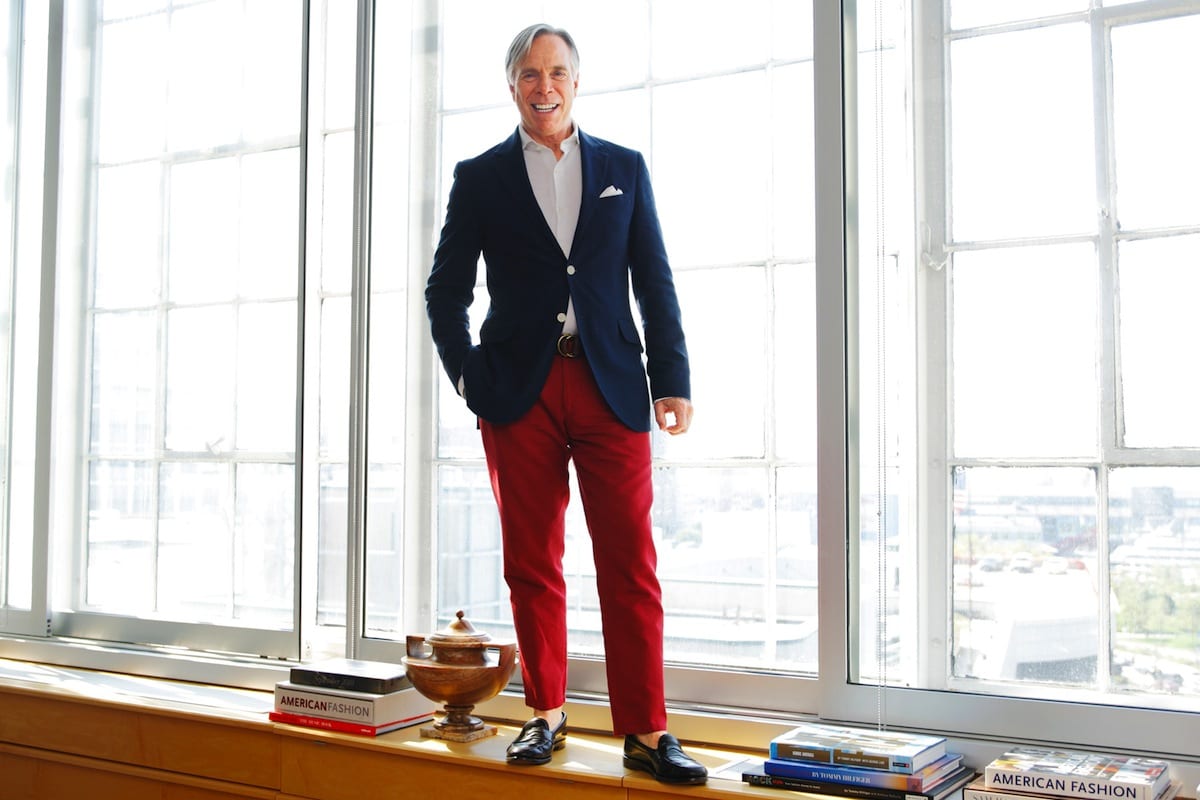
    Tommy Hilfiger announced recently that he will publish a memoir with Ballantine Books, an imprint of which will chronicle personal stories from his early childhood and formative years, his origins in the fashion industry, and the setbacks, triumphs, and sheer determination that drove him to build a multi-billion dollar global lifestyle brand.

    Publication is scheduled for Fall 2015, coinciding with the 30th anniversary of the Tommy Hilfiger brand.

    Hilfiger, 63, is known for classic, all-American style that melds pop culture and the preppy, East Coast lifestyle. Raised in New York, he opened a small chain of clothing stores in 1969 while still in high school. He launched his namesand fashion label in 1985, and the brand quickly expanded to include womenswear, Hilfiger Denim, kidswear, accessories, fragrance, and home, among other categories.

    In the 1990s, he was one of the first designers to blend fashion and celebrity, sponsoring tours for rock legends like The Rolling Stones and featuring musicians such as Lenny Kravitz, David Bowie and Beyoncé in his iconic advertising campaigns. In 2012, the Council of Fashion Designers of America honored him with the Geoffrey Beene Lifetime Achievement Award.

    “Reflecting on my experiences in the fashion industry over the last 30-plus years has been a wild ride, filled with milestone moments that have defined both my career and personal life,” said Hilfiger. “I always believe the best is yet to come, but so far: it’s been the adventure of a lifetime.”