Tag: asia

  • New technology can identify fakes

    New technology can identify fakes

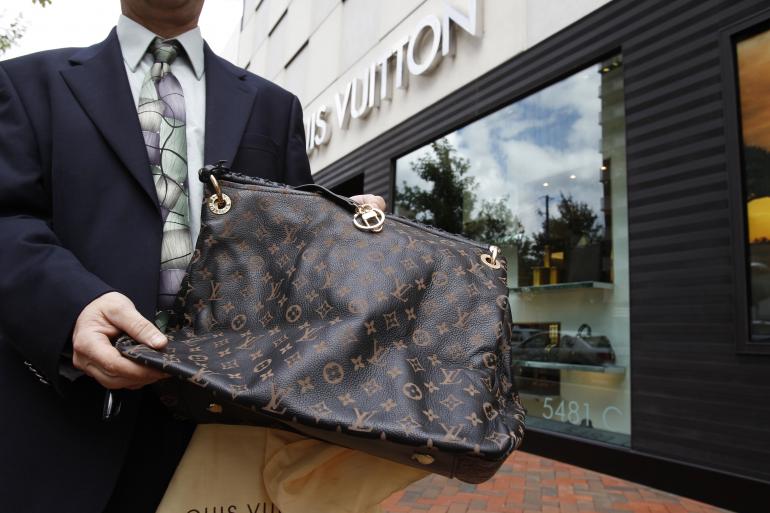
    Luxury brands affected by Asia’s burgeoning multi-billion dollar piracy trade will soon have a new weapon.

    NEC has revealed new technology that can distinguish even the most sophisticated counterfeit products.

    The technology can read microscopic patterns on anything from luxury handbags to mechanical component.

    And it can track the origin of mass-produced items like clothing by examining what it describes as “object fingerprints” – three-dimensional patterns or irregularities found on the surface of items.

    Tohihiko Hiroaki, assistant GM at NEC’s Information and Media Processing Laboratories, says a customers officer at an airport terminal could take a photo of a specific part of an item using a smartphone, which can then be matched with a database supplied by the manufacturer.

    NEC claims its technology can tell the time and place a product was manufactured.

    “You can identify offspring that come from the same parental mould,” said Hiroaki. “If you take a close look, you can tell one child from another.”

    Further testing lies ahead before the technology is released commercially next year.

  • Now consumers can ‘print’ clothes at home…

    Now consumers can ‘print’ clothes at home…

    A European entrepreneur has created a portable device that allows consumers to automatically create custom clothes from a digital file. Even at home.

    Springwise.com reports that the ‘makers movement’ has come to prominence in the past few years as new technologies such as 3D printing and DIY computers have given consumers better tools to create and produce their own designs and gadgets. Even the fashion industry has received a boost from such innovation, and we’ve already seen sneakers made with a 3D printer.

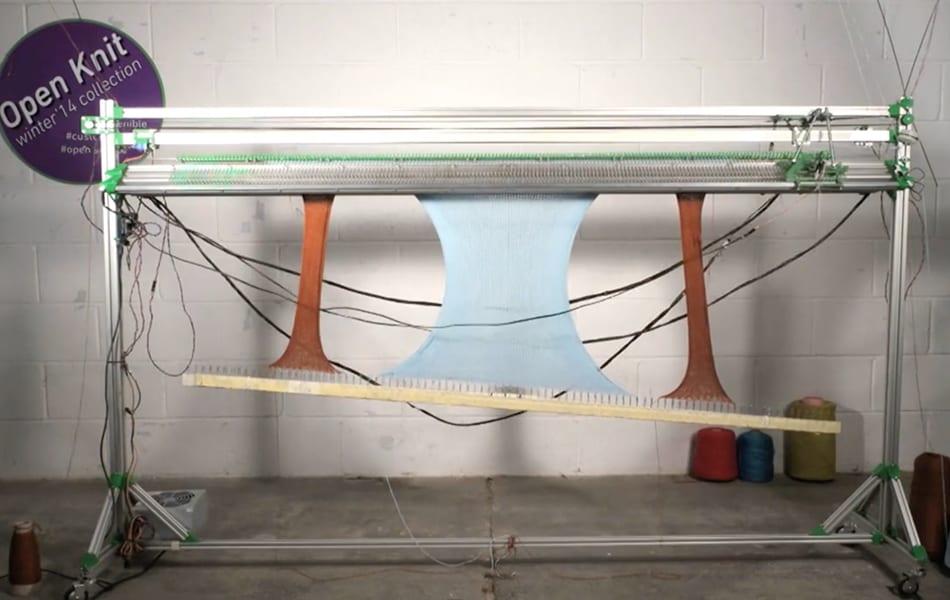
    Now the OpenKnit project has created a device that’s able to automatically create custom clothes from a digital file.

    The machine looks much like a traditional loom, except that it’s hooked up to a robot and computer. Users can either download or create their own design files for printing a garment. After uploading the file to the machine and loading the thread, a carriage moves from side to side to weave the item together using similar technology to a sewing machine.

    A sensor on the top keeps track of the needles and the position of the carriage to ensure the threads don’t get tangled. Using the system, a sweatshirt can be produced on the fly in roughly one hour. The OpenKnit machine is an open source design, and it costs under EUR 550 to build.

    “Since personalization is a key facet of fashion design, it’s easy to see how the possibility of consumers printing their own styles is an enticing one,” explains Springwise.com.

  • Thailand’s RSTA plans to double Ratchaprasong area’s trading value

    Thailand’s RSTA plans to double Ratchaprasong area’s trading value

    Retail, wholesale and hotel operators around Ratchaprasong intersection plan to allocate a combined THB60 billion (USD1.8 million) to make the area an important retail destination in Asean over the next three years.

  • Shanghai Tang flagship launches 360 tour

    Shanghai Tang flagship launches 360 tour

    Two years ago, Richemont-owned luxury fashion brand Shanghai Tang relocated its flagship from the historic Pedder Building into a new location off the usually beaten path of die-hard shoppers.

    The decision was purely financial – the building’s owners ramped up the rental so much, the brand could not justify the overhead; apparently Abercrombie & Fitch considered the investment more palatable.

    The new flagship is located on 1 Duddell St, not far from Pedder St as the crow flies, but a location arguably so obscure most foreigners, as opposed to locals, struggle to find it.

    This week, Shanghai Tang has solved that problem, creating a 360 panoramic online journey through the flagship, accessible online from anywhere in the word.

    The high resolution view  is hosted by Google. Users can use their mouse or trackpad to zoom in on various displays and turn a full circle on each of the store’s three floors.

    “Whether or not you have had the chance to visit us in central Hong Kong, we are proud to introduce our first 360 online virtual tour of our Shanghai Tang Mansion,” the band said in an email to its fan base this week.

  • Parkson in China food foray

    Malaysia’s Parkson has entered into a joint venture to develop a food retailing business in China as it transforms its department store portfolio into lifestyle centres.

    The company’s wholly-owned subsidiary Grand Parkson has teamed with fellow Malaysian company AUM Hospitality (AUMH) which it majority owns, to create Lion Food & Beverage Ventures Limited. Parkson will own 91 per cent of the business, AUMH the balance.

    In a stock exchange announcement, Parkson said the group is undergoing a business transformation in China from a traditional department store model into a lifestyle concept retail business.

    “Our aim is to enhance our customer experience by offering a quality shopping, catering and entertainment experience that encourages repeat customer patronage.

    “F&B is an important component to the shopping experience that the group is offering to its customers. Developing the F&B sector will provide synergies with the group’s existing retail business.”

    The partnership will allow Parkson to leverage AUMH’s expertise and brand resources in the F&B sector.

    “Introducing F&B services will be a major strategic move for the group.”

    AUMH operates restaurant chains in Malaysia under 12 self-owned and franchised brands, including Johnny Rockets, Quiznos and The Library Coffee Bar. It is 60 per cent owned by a subsidiary of Parkson.

    The company has 60 department stores in 36 cities in China.

  • Thailand’s Mangpong turns to attraction of cosmetics

    Thailand’s Mangpong turns to attraction of cosmetics

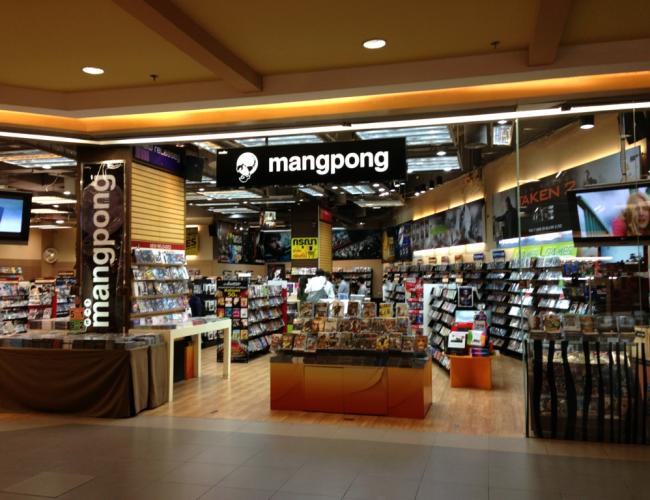
    Thailand’s Mangpong 1989 Plc (MPG) has diversified into the beauty and cosmetics retail chain in a bid to cash in on opportunities from the country’s THB200-billion (USD6.15b) cosmetics market. The company sells and rents home entertainment products.

    It’s looking for new locations to open Stardust beauty shops. It believes the beauty and cosmetics business will generate healthy sales and a good return on investment as Thai women have a modern lifestyle and prefer to be good looking.

    Mangpong has partnered with more than 100 beauty and cosmetics brands to present over 10,000 units from L’Oreal Paris, Anna Sui, Kenzo, Paul Smith and Calvin Klein. The company also plans to launch its own brand in the third quarter this year.

  • Hawaiian coffee concept lands in Seoul

    Hawaiian coffee concept lands in Seoul

    A Hawaiian coffee concept already popular in Tokyo has now made its debut in Korea.

    Lanai Cafe is a Hawaiian Kona Coffee shop serving coffee, pancakes, desserts and drinks.

    Kona is ranked as one of the world’s top three coffee beans alongside Jamaican Blue Mountain and Kenyan Kilimanjaro. It is brewed by pour over for each cup which draws its unique aroma and flavour.

  • Asia Pacific Travel Retail Association launches seminars

    A new schedule of Responsible Retail Training seminars, enhancements to the Duty Free & Travel Retail Database, topical research studies and advocacy support are among the immediate priorities for the Asia Pacific Travel Retail Association (APTRA) this year.

    A wide-ranging research program, conducted for APTRA by M1nd-set, has kicked off this year with a study of the shopping behaviour of Chinese travellers on domestic and international journeys, including their motivations for shopping and not shopping, their product preferences as well as the customer segmentation on selected routes.

    The headline results of this study, which is sponsored by Diageo, will be presented at the TFWA China’s Century Conference, organised in partnership with APTRA, in Shanghai on March 12.

    Future research topics will include the behaviour & attitudes of Asia Pacific (AsPac) travellers (China, Korea, Japan, Thailand, Indonesia, Philippines, Vietnam) in the region; a focus on Russian travellers in Asia Pacific; the behaviour & attitudes of non-AsPac passengers in the region; in-flight shopping – perceptions & the impact of promotions; behaviour & attitudes of AsPac vs non-AsPac passengers in Asia Pacific; evaluation of future in-flight shopping & concepts.

    The Responsible Retail Training Program, which has already been adopted by several major retailers, will be extended to other retailers in the region in order to ensure that there are consistently high standards across the duty free & travel retail spectrum in the Asia Pacific region.

    The APTRA Seminars, aimed at bringing useful insights on successful travel retailing to member companies and at offering networking opportunities to facilitate growth of the industry, will be organised at various locations throughout the year.

    The popular APTRA Duty Free & Travel Retail Database will be populated with the contact details of even more airports, airlines, ferry companies, retailers, distributors and suppliers to facilitate easy access to the right person in the right market.

    Key to the success of duty free & travel retail in the Asia Pacific region is an open dialogue

    between stakeholders and regulatory authorities and in 2015 APTRA will continue its support of this ideal through advocacy.

    APTRA president Jaya Singh said: “These research, training, advocacy and database initiatives are fundamental to the missions of the association, namely safeguarding the interests of all stakeholders and driving industry growth. In the last year we saw our membership grow by 20 per cent and revenues grow by almost 40 per cent as more and more companies recognise the benefits they gain from the work accomplished and the need for a strong regional association.”

    APTRA is the trade association for the duty free and travel retail industry in the Asia Pacific region, serving all members and the industry to help grow the business and protect it when challenges arise. For more information about the work of APTRA visit www.aptra.asia.
     

  • Bang & Olufsen spreads out

    Bang & Olufsen spreads out

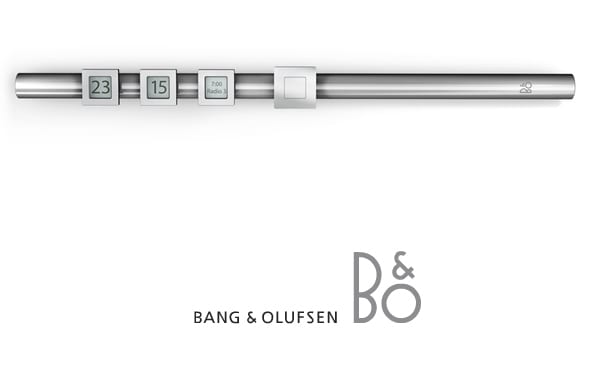
    One of the luxury brands in home and car sound systems, Bang & Olufsen (B&O), has readied its retail foray. Till now, operating mostly in the rarefied world of custom-made audio systems installed in the homes of celebrities and business barons, or pre-installed in luxury marques such as Audi, B&O is finally launching stand-alone stores that will not only afford an experience of its products but also, perhaps, whet the aspirations of those dropping by.

  • Counterfeit appliance business exposed

    Counterfeit appliance business exposed

    Vietnamese authorities have cracked a counterfeit appliance retailing business passing off cheap Chinese appliances as branded European goods.

    Thanh Nien News reports that a company called Romal Vietnam was selling gas ranges, electric stovetops, ovens and blow dryers inside supermarkets, online and at shopping centres in many provinces and cities across the nation.

    A nationwide crackdown has now been launched by teams of inspectors from the National Steering Committee for Combating Smuggling, Commercial Fraud and Counterfeit Goods (also known as Committee 389).

    A Romal Vietnam shop in Hanoi was raided on January 22 and 185 Chinese products bearing Italian and German brand names on labels were seized.

    Another 85 products were seized in the central seaside town of Danang and Ho Chi Minh City police sealed a Romal store after “the manager locked its doors and fled” according to Thanh Nien News.

    The company’s director, Nguyen Thi Ninh, and her husband Nguyen Huy Tho have been summoned by police for questioning. A police source told the newspaper that Ninh, Tho and their employees admitted importing Chinese products from Zhongshan Company in Guangdong since 2008.

    Labelling the goods as European allowed the shop to import the products for between $150 and $200 and sell them for as much as $750 to $800. The fraud had netted the business several hundred thousand dollars annually.

  • EBay to cut 2,400 jobs, spin off or sell enterprise unit

    EBay to cut 2,400 jobs, spin off or sell enterprise unit

    EBay plans to cut 2,400 jobs, or 7 percent of its staff, in the first quarter to simplify its structure and boost profit ahead of a planned separation of its business.

    The job cuts will fall across its marketplaces, PayPal and enterprise businesses.

    They come as the e-commerce company reported on Wednesday that its fourth-quarter net income rose 10 percent on continued strength of its PayPal payments business, which it expects to spin off in the second half of the year.

  • Retailers offer cross-border privileges

    Retailers offer cross-border privileges

    Five retail giants have teamed up with a Thai mall operator to offer a cross-border privileges programme for shoppers.

    Siam Piwat, owner of Siam Paragon, Siam Center, Siam Discovery and Paradise Park, is partnering with South Korea’s Lotte, Hong Kong’s Times Square, Robinsons of Singapore, Sapporo Parco of Japan and Galeries Lafayette of France in the Global Privilege Partnership program.

    Together, the retailers will launch a “massive international campaign”, offering both local and international shoppers “ultimate shopping experiences and above average privileges”. The partnership is the first of its kind in Thailand’s retail sector.

    Mayuree Chaipromprasith, Siam Piwat’s senior vice-president for business promotion, said Siam Piwat is honoured to lead the campaign and to be trusted by the five retailers who selected Siam Piwat as their exclusive partner in the customer relationship management (CRM) programme across the borders to ensure cardholders enjoy maximum benefits.

    “Siam Piwat sees working together in the form of partnership and collaboration as a way to develop a mechanism to stimulate more international consumer spending in Thailand. At present, the majority of visitors to Siam Piwat’s shopping venues are of the B group and higher. They have high purchasing power, love to travel, live a modern lifestyle, are into trendy innovations and expect above average services,” said Chaipromprasith.

    She added that Siam Piwat expects 400,000 visitors a year to participate in the programme, which should generate 6 billion Thai baht annually in consumer spending.

    “The Global Privilege Partnership has the largest number of leading countries working together. Not only will it serve to grow traffic to Siam Paragon, Siam Center and Siam Discovery, but it also offers value for money in terms of benefits and privileges enjoyed by members of the Platinum M Card for shoppers at Siam Paragon and VIZ Card for shoppers at Siam Center, Siam Discovery and Paradise Park.”

    The Global Privilege Partnership programme offers premium privileges to Platinum M Card and VIZ Card members of Siam Piwat as well as holders of membership cards issued by the five international partners. Shoppers enjoy benefits, including five to 50% discounts from more than 2,000 stores in the five popular shopping destinations and the same VIP service as they would have in their home countries.

    Among those services are personal assistants on hand to give members information at the partner shopping venues, welcome gifts worth more than THB 3000 and service at an exclusive lounge.

    Siam Piwat expects to expand the programme to include five more countries next year.

  • Kodak makes comeback

    Kodak makes comeback

    Kodak – the famous photography brand almost killed off by the digital revolution – has made a comeback.

    In a digital form, of course.

    Kodak has unveiled a new smartphone at this week’s CES consumer electronics show in Las Vegas, the product of a joint venture with specialist mobile device maker Bullitt Group.

    Called the Kodak IM5 smartphone it’s a 5″ high definition Android-based smartphone its makers describe as being “as easy to use as it is smart”.

    Not surprisingly, photography is what the phone is touted as doing best, with a 13megapixal auto-focus main camera with unique image management software which lets users quickly edit photographs and either display them on the device, share them on social media or print them using a customised app compatible with home printers as well as future printing and sharing services.

    “This is a phone for consumers who appreciate the value and heritage of the Kodak brand,” said Oliver Schulte, CEO of Bullitt Mobile. “It looks great, is easy to use and offers real value for money.”

    Rochester, New York, based Kodak once dominated the photographic industry, but from the late 1990s – as digital technology took over, it began to struggle, despite having invented some of the core technology behind digital cameras.

    It filed for Chapter 11 bankruptcy protection in 2012 and the following year announced it would cease making digital cameras, pocket video cameras and digital picture frames and focus on the corporate digital imaging market. It emerged from bankruptcy in the latter half of 2013 after selling many of its patents to a group of companies including Facebook, Amazon, Apple, Microsoft, Google and Adobe for some $525 million, paying down debts and liabilities. In November 2014 it announced a $19 million quarterly profit.

    The new IM5 phone is largely the product of a brand licensing initiative by which Kodak receives royalties for products bearing its name. And Kodak is certainly a brand with street cred despite its recent misfortunes. But Kodak does appear to have had an active role in the camera and photographic processing technology inside.

    Eileen Murphy, VP brand licensing at Kodak said in a statement: “Too many memories stay stuck on mobile phones, often because the process for sharing them is too complicated for users; that’s why we’ve partnered on the IM5, the first device in a range of mobile products that takes our heritage and experience in photographic technology and combines it with Bullitt’s expertise in designing high-quality devices for a specific target consumer.”

    For the technically minded, the Kodak IM5 has an octa-core 1.7Ghz processor, 8GB standard ROM and 1GB of RAM, expandable to 32GB via a Micro SD card. It also comes with a dedicated app store (called simply “Apps”) that allows users to access a hand-picked selection of applications suited to their interests as well as full access to Google Play.

    Aimed at consumers who want a smartphone that is easier to use than what they are currently using (or being offered), Kodak and Bullitt believe the IM5 serves a market segment that – to date – has been poorly served by handset manufacturers.

  • Shop Tesco with Google Glasses

    Shop Tesco with Google Glasses

    Tesco has become the first retailer to launch a Google Glass enabled service with a basic version of its shopping app now available for users of the wearable device.

    The Glassware has been developed by Tesco Labs, which experiments with disruptive technologies that have the potential to change the way customers shop. The Tesco Grocery Glassware lets customers browse goods, view nutritional information and add items to their shopping basket hands-free.

    Initially the service is only available in the UK, but it is likely to be rolled out in Thailand, Malaysia or Korea if there is demand, especially given Tesco’s use of its Asian divisions to test new technology, (for example its virtual stores in South Korea subway stations).

    In this, its first foray into providing services for those using wearable technology, Tesco has intentionally kept the functionality of the app simple as it evaluates the consumer response to wearables and the likelihood of increased demand.

    Pablo Coberly, innovation engineer at Tesco Labs commented: “At Tesco we want to ensure we have the means in place to allow customers to shop whenever, however they want which is why we’re testing the possibilities of customers topping up their online basket with Glass”

    The Tesco Grocery Glassware works alongside customers Tesco.com grocery accounts, automatically adding products to the customer’s online basket for them to then review and order by computer, tablet or mobile.”

    Coberly said Tesco does not envisage Glass becoming the new platform for shopping as its functionality is different, and more immediate.

    “Instead, it complements other devices and integrates shopping into everyday life because products can be ordered or added as and when customers realise they need replacing.”

    He says the future of the Tesco Grocery Glassware will be driven by customer needs and demand.

    “We’re keen to see how customers react to shopping with Glassware and welcome feedback or suggestions from customers using Glass.“

    Glass users can install Tesco Grocery Glassware through MyGlass on their mobile device or desktop.

  • Hong Kong mall coated in chocolate

    Hong Kong mall coated in chocolate

    Hong Kong’s Harbour City shopping centre is hosting its sixth annual Chocolate Trail until March 1.

    For five weeks Hong Kong’s largest shopping destination has been transformed into ‘ChocoLand’, offering visitors a unique ‘Bean-To-Bar’ journey to deepen their appreciation of how premium chocolate is produced and how to ‘maximise the tasting pleasure’.

    Chocolate Trail highlights will include an immersive and educational Chocolate Factory installation, chocolate workshops and seminars, live demonstrations by local and visiting chocolate master chefs, and interactive art exhibitions — all set against a backdrop of close to 30 participating Asian and European chocolate brands.

    Harbour City is home to 17 branded chocolate stores – the largest range under one roof in the city – including  Bvlgari Il Cioccolato (Italy), Dalloyau (France), The Library Cafe – Prestat Chocolates (England), Chapon (France) and Frederic Blondeel (Belgium).

    For the promotional period, another 10 pop-up stores have opened from chocolate brands originating in France, Belgium, Japan, Singapore and Hong Kong. Chocolate Trail will also celebrate the Hong Kong launch of The Royal Touch by Carolyn Robb (England) and zChocolat (France).

    The Chocolate Factory will take visitors of all ages on an interactive step-by-step “Bean-to-Bar” journey where they can experience the full chocolate production process – from planting a cocoa tree, fermentation and drying, to roasting, cracking, moulding and packaging. The Chocolate Factory will be in the mall, and will incorporate an interactive Chocolate Experience Gallery as well as a ChocoVan Cafe for visitors to sample a wide range of premium chocolate.

    The chocolate workshops will provide insights on subjects such as chocolate culture, awarded chocolate tasting from The International Chocolate Awards and chocolate and Chinese tea pairing recommendations. Topics include chocolate tea-pairing workshops, fine chocolate tasting, chocolate kids college and a Muji chocolate snacks cooking class.

    And the centre will host an interactive art exhibition From Cocoa to Choco – taking you through the Journey of Love by Belgian artist Ben Heine. With his original ‘Pencil vs Camera’ and ‘Flesh and Acrylic’ art forms, digital artist Heine will show a new series of artwork exclusively created  for the Chocolate Trail.