Retail News CRM

Tag: asia

  • India set to become a big bakery market

    India set to become a big bakery market

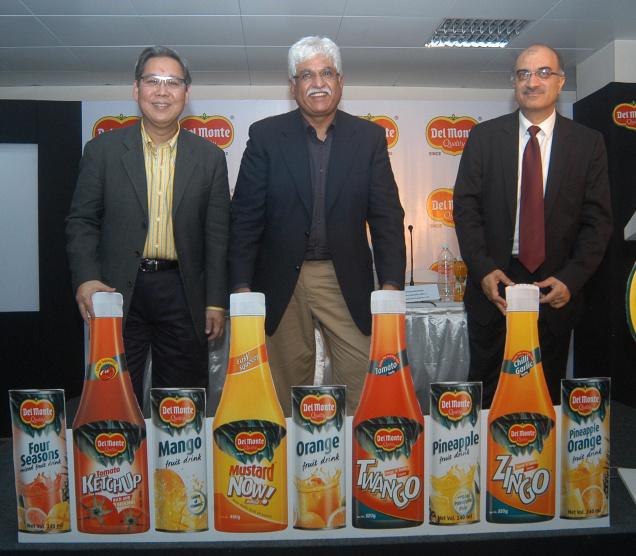
    Fieldfresh Foods, a joint venture between Bharti Enterprises and California-based Del Monte Pacific, says India is becoming a big bakery market. The company, which sells pastas, sauces, is in the process of increasing its brand penetration both in the business-to-business (B2B) and business-to-consumer (B2C) segments.

  • JD.com eyes rural areas to tap huge potential

    JD.com eyes rural areas to tap huge potential

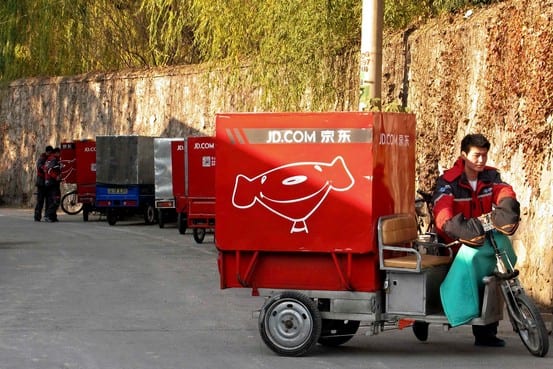
    China’s online retailer JD.com said it plans to open more than 500 county-level service centres this year to boost deliveries to lower-tier cities and inland regions as it bids to boost its market presence.

    The centres will hire local staff and delivery men to expand the firm’s delivery network into regions with few third-party courier companies. The firm will also open up to 1,000 service stores targeting home appliance buyers and help vendors provide one-stop service of installation and repairing of household appliances sold to rural consumers.

    It is hoped that the county-level centres and the planned hiring of promotion staff will help rural consumers become better acquainted with JD.com as well as online purchasing and after-sales service by the end of June.

  • Good, bad, unattractive: retail’s patchy start in Australia

    Good, bad, unattractive: retail’s patchy start in Australia

    A slow but solid festive season for discretionary retailers in Australia has been followed by a spate of downgrades, making sentiment buoyant but patchy.

    Analysts say the key festive season was a good one, albeit at the price of margins. Discounting has been estimated to have added AUD800 million (USD656.9m) to sales, and Citi analyst Craig Woolford has argued cheap-as-chips petrol and big spending on food suggests Australians have the ability to spend when they have the yen.

    Last week, Harvey Norman chairman Gerry Harvey explained a jump in the furniture and homewares company’s share price by reporting a “big surge in sales” during the Christmas and New Year period.

  • Could HK lose its status as a luxury shopping destination to South Korea?

    Could HK lose its status as a luxury shopping destination to South Korea?

    The popularity of South Korean pop culture and products in China shows no signs of abating, as South Korea has seen more Chinese shoppers than ever, but it could come at a cost to Hong Kong. Erwan Rambourg, a consumer goods analyst for HSBC and the author of “The Bling Dynasty,” has seen the surge  in shoppers first hand. He estimated that Chinese shoppers accounted for around 70 percent of South Korea’s duty free sales and accounted for about one third of all luxury purchases in the country, reports The Wall Street Journal.

  • Pizza Hut to sell gluten-free pizza

    Pizza Hut to sell gluten-free pizza

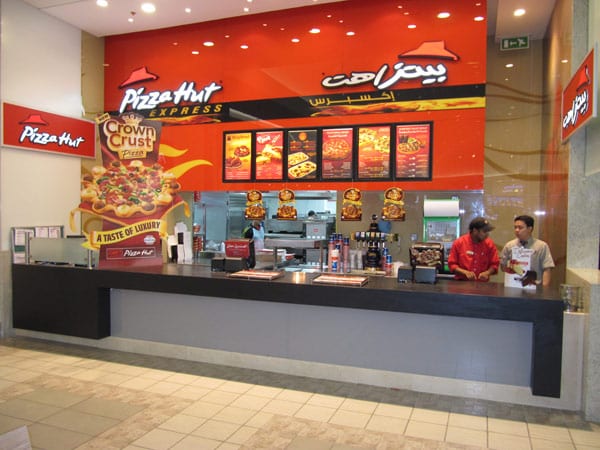
    Beginning Jan. 26, roughly 2,400 of the chain’s 6,300 domestic locations will begin selling gluten-free pizzas. The move comes two years after rival Domino’s rolled out a pizza sold with a gluten-free crust — but not entirely gluten free. Pizza Hut will be the first major pizza chain to sell a pizza that is certified gluten-free.

  • E-retailer Zalora bets big on Southeast Asia

    E-retailer Zalora bets big on Southeast Asia

    Asian fashion e-commerce start-up Zalora aims to become a multi-billion dollar company, and according to managing director Michele Ferrario, Southeast Asia’s burgeoning market holds the key to achieving that goal.

    “Singapore is well-served in terms of online and offline retail, but when you think about smaller towns in Indonesia, the Philippines, Vietnam and Thailand, people there do not have the same access to fashion as people in developed markets,” he told CNBC’s “Managing Asia.”

    Home to more than 600 million consumers, the region’s internet retail market is at an “inflection point,” according to a UBS report published last June. Analysts estimate online spending across Southeast Asia is poised to hit USD35 billion by 2020, on the back of high internet penetration and widespread smartphone usage.

  • M&S boss Marc Bolland faces mounting pressure following Christmas sales fall

    M&S boss Marc Bolland faces mounting pressure following Christmas sales fall

    Pressure was mounting on the chief executive of Marks & Spencer, Marc Bolland, on Monday night as investors digested the retailer’s decline in sales over the crucial Christmas trading period.

    One of the City’s most influential fund managers said questions should be asked about Bolland, who joined M&S in 2010 and last week announced a 5.8% fall in general merchandise sales and a 0.1% rise in like-for-like sales in its food division.

    David Cumming, head of equities at Standard Life Investments, said: “In terms of Marks & Spencer they had another disappointing set of figures and I suppose Marc Bolland has been there for some time, almost five years, so I think the chairman and the senior independent director are probably asking themselves whether his scorecard is acceptable, and they should be asking M&S shareholders the same question.”

    Cumming was also asked on BBC Radio 4’s Today programme about Dalton Philips, who replaced Bolland as boss of Morrisons. The supermarket chain is due to release its Christmas trading figures on Tuesday, amid speculation about potential boardroom change.

    “We’re not particularly large shareholders in Morrisons or Marks & Spencer. I think some might change CEOs, we saw that with Tesco – it’s going to be a difficult process,” Cumming said.

    Tesco replaced insider Philip Clarke with Dave Lewis after issuing a profits warning in July. Lewis unearthed a string of accounting problems at Britain’s biggest supermarket chain.

    Last week he announced moves to restructure the business. They are expected to lead to thousands of job cuts along with the closure of the head office in Cheshunt, Hertfordshire.

    Cumming said profits at M&S had fallen over the five years Bolland had been in charge despite £2.5bn of expenditure. “I think M&S has got a lot of potential but that’s not being demonstrated by results, which is one of the reasons we’re not a major shareholder,” he said.

    M&S declined to comment on the remarks, as did Morrisons – whose trading update is expected to show the continued pressure on the sector as shoppers move to hard discounters such as Lidl and Aldi.

    Analysts at HSBC said that they expected like-for-like sales at Morrisons to be down 4% – which would be a smaller fall than during the same period a year earlier – and that Andrew Higginson, a former Tesco executive, might come in early as chairman, before his planned start dater.

    David McCarthy, an HSBC analyst, said: “He joined the board last year as deputy chairman/chairman-elect and is not due to take over until the summer. But given the state of the industry, changes at Tesco, and Morrison’s sales losses, it might make more sense to see him take the chairman’s role sooner rather than later. 2015 is going to be a year of change for the industry and Morrisons will be part of that.”

    M&S has been meeting its major shareholders since last week’s trading update, which also showed profit margins being maintained despite the fall in sales. This was welcomed by analysts on the day of the trading update.

    Bolland admitted last week that M&S sales had been affected by problems with its online operations, caused by problems at its distribution centre in Castle Donington, Leicestershire. Deliveries of online orders incurred delays in the runup to Christmas.

  • Emu footwear launches localised global websites

    Emu footwear launches localised global websites

    Australian footwear brand Emu has launched a global transactional website to serve key markets including the UK and Europe, New Zealand, China, Canada, the US and Japan.

  • KFC aims to have 500 outlets by year end

    KFC aims to have 500 outlets by year end

    American quick-service restaurant (QSR) brand KFC plans to become the largest QSR chain in the country and expects to have over 500 outlets by end-2015.

    The company has just launched its “Flaming Crunch Chicken,” which has been spiced using the ‘BhutJolokia’ chilli grown in Assam.

    Talking about expansion, Dhruv Kaul, Chief Marketing Officer, KFC India, said: “We have aggressive plans. It’s our ambition to become the number one QSR chain in the country by next year. We target having over 500 outlets by 2015.”

    Kaul said despite softer consumer sentiment, the company is continuing to open new stores, not only in cities where it is already present but also in new cities. KFC India has over 300 restaurants across 81 cities, which are a mix of franchisee and company-run outlets.

    “Last year was challenging for the industry, but we are confident about 2015. We hope to see an uptick in the economic environment and are well-positioned to leverage it,” added Kaul.

    Vegetarian menu

    Last year, the company expanded its vegetarian menu and it has kick-started this year by introducing a spicier version of its chicken offering. Kaul said: “We have seen a new trend emerging, where our consumers prefer a more intense, spicy experience in their food, After scouting for chillies from around the world, we narrowed down on “BhutJolokia” from Assam. We will continue to focus on introducing products that are rooted in consumer insights.”

    This year, the company will also focus on growing its online ordering facility as an incremental channel for sales. “Last year, we scaled up home delivery significantly across our outlets. Also, without any big push, we have seen growth in online ordering. Stores that offer home delivery are seeing over a quarter of orders coming through the online channel. This year, we will give a big thrust to grow the online ordering,” Kaul added.

  • Uniqlo under fire for buying supplies from unsafe factories

    Uniqlo under fire for buying supplies from unsafe factories

    Japanese clothing giant Uniqlo came under fire yesterday for buying supplies from Chinese factories accused of putting workers at risk in unsafe conditions, with sewage on the floor, extremely high temperatures and poor ventilation.

  • External investors to finance Wanda Plazas

    External investors to finance Wanda Plazas

    China’s Dalian Wanda Commercial Properties Co said on Wednesday four investors have agreed to contribute CNY24 billion yuan (USD3.9 billion) over the coming two years as the first tranche of funding to build around 20 shopping malls.

  • Citizen Card to facilitate online shopping in Myanmar

    Citizen Card to facilitate online shopping in Myanmar

    A citizen card launched by payment services provider 2C2P and Myanmar Citizens Bank is expected to support e-commerce in Myanmar.

    The reloadable prepaid card is accepted by MasterCard merchants and comes with an optional smartphone application that allows cardholders to manage transactions in real time.

    “Targeted at the retail, and travel and tourism sectors, Citizen Card will facilitate both physical and online shopping. It will also be of use to Myanmar tourists when they travel overseas, as consumers can enjoy special benefits and privileges at destinations such as Thailand and Singapore, with a number of partner merchants in the airline, food and beverage and hospitality sectors,” said.

    Initially, supply of the Citizen Card will be limited to 5,000 units but plans are underway for options to roll out more within the year.

    According to McKinsey & Co, Myanmar is expected to quadruple the size of its economy from USD45 billion to over USD200 billion by 2030, with per capita GDP rising from USD1,300 in 2010 to USD5,100 by 2030.

    “Building on this momentum, we are pleased to partner with 2C2P and launch MCB’s very first prepaid card, which will help support the imminent growth in Myanmar e-commerce,” said U Myint Win, Managing Director of Myanmar Citizens Bank.

    2C2P has also introduced in Myanmar iACCEPT, a mobile point-of-sales system with Visa, MasterCard, Myanmar Citizens Bank and Myanmar Hotels International. In July, 2C2P partnered with Creative Web Studios, a Yangon-based e-commerce solutions provider, working to drive financial inclusion and develop Myanmar’s contactless payment infrastructure.

  • Richemont Group reports declining sales in Asia-Pacific

    Richemont Group reports declining sales in Asia-Pacific

    World’s second largest luxury conglomerate, Swiss based Richemont Group reports flat sales at constant exchange rates (sales increased at 4 percent at actual rates) in the quarter to 31 December 2014. Growth in Europe/Middle East and the Americas was offset by a significant decline in Asia-Pacific. Overall, third quarter trading was below the first six months of the year.

  • Microsoft partners with Alibaba to enhance IP protection for its products

    Microsoft partners with Alibaba to enhance IP protection for its products

    An agreement between Microsoft (China) and Alibaba Group Holding Limited (Alibaba Group) is expected to enhance the protection of Microsoft’s intellectual property rights (IPR) on the two most popular e-commerce platforms in China operated by Alibaba – Taobao Marketplace and Tmall.com.

    The cooperation is also expected to strengthen anti-counterfeit measures already in place on both platforms.

    Both sides said they will work to raise awareness among consumers about the threats posed by counterfeit and unlicensed software to their information security, privacy and personal data.

    Tim Cranton, Microsoft’s Associate General Counsel and Greater China Region’s Chief Legal Counsel, said legitimate businesses and innovators in China will also benefit from a safer and more robust e-commerce marketplace with safeguards to protect intellectual property rights.

    Under the agreement, Taobao and Tmall will remove product listings suspected of offering counterfeit or unlicensed Microsoft products. Alibaba Group and its associated companies like Alipay will cooperate with relevant parties and provide necessary information to those consumers who mistakenly buy unauthorized software to receive compensation from the sellers according to relevant laws.

    Microsoft’s cooperation with Alibaba Group dates back to April 2007 when Microsoft signed a memorandum of understanding with Alisoft as the two parties joined hands in providing information service for small- and medium-sized businesses.

    In December 2013, Microsoft launched its flagship online store on Tmall.com, the largest e-commerce platform in China with to promote genuine Microsoft software.

  • Burberry warns fall in HK sales could impact its full-year margin

    Burberry warns fall in HK sales could impact its full-year margin

    British luxury brand Burberry warned on Wednesday that a fall in sales in the key market of Hong Kong in the last quarter of 2014 could impact its full-year margin. Pro-democracy protests began choking parts of the Asia financial center in late September, disrupting business in one of the world’s top markets for luxury companies, which accounts for about USD9.7 billion of global luxury sales, or 4 percent of the total, according to estimates by Bernstein Research.