Tag: asia

  • Singapore Firm Partners China’s The9 for Cloud Crypto Mining

    Singapore Firm Partners China’s The9 for Cloud Crypto Mining

    Singapore Myanmar Investco (SMI) will develop a cryptocurrency cloud-mining platform with The9, according to a memorandum of understanding signed by the two sides.

    The mining business is expected to be launched in the fourth quarter of the year, subject to regulatory approval, SMI said in an announcement on Friday.

    Operations will be hosted in a range of facilities across Canada, U.S., Central Asia and the ASEAN region, and will cover a basket of cryptocurrencies inclusive of bitcoin (BTC), filecoin (FIL) and chia (XCH). This move follows SMI’s entering into a subscription agreement with The9 for new shares in SMI, which was announced in June.

    SMI also said it reached an agreement with Chinese cloud mining software-as-a-service company Nhash for technical and support services for five years, as well as an option to purchase up to 4,000 crypto mining machines.

    SGX-listed SMI is an investment and management company focused on Myanmar. In June, it announced its intention to pivot to cryptocurrencies and to diversify its core business to include gaming, digital entertainment and robotics.

    Originally an online gaming firm, Nasdaq-listed The9 pivoted into mining in January and started operations the next month. However, it has been facing regulatory headwinds in China, where it operates. Like other miners, The9 has been looking to shift operations abroad.

  • Nike supplier halts production at three Vietnam plants due to Covid-19

    Nike supplier halts production at three Vietnam plants due to Covid-19

    Changshin Vietnam, a South Korean shoemaker, became the second major Nike supplier to suspend production in Vietnam as it shut three of its factories near HCMC on Thursday due to a coronavirus outbreak.

    The factories in Dong Nai province, which employ nearly 42,000 workers, will remain shut until July 20, the Vietnamese government said in a statement, adding many of the 177 infection cases detected in the province were from the factories.

    Nike did not respond for comment outside U.S. business hours, while calls to Changshin went unanswered.

    On Wednesday, Taiwan’s Pou Chen Corp, which makes footwear for Nike and Adidas, suspended operations at its plant in Ho Chi Minh City. The plant will be closed until July 23 for “health and safety considerations”, the company said, adding it did not expect a major financial impact.

    Vietnam had until recently successfully contained coronavirus outbreaks, with limited disruption to its crucial manufacturing sector. However, since late April, it has seen record cases on many days this month, most of those in the commercial hub Ho Chi Minh City and its neighboring industrial provinces of Dong Nai and Binh Duong.

    The country has recorded 38,200 infections and 138 deaths overall, a vast majority of those since May.

    Almost all of Nike’s footwear is manufactured outside the United States. The company has said contract factories in Vietnam produced about 50 percent of total Nike brand footwear in fiscal 2020, but did not specify the volumes that came from Changshin or Pou Chen.

    The latest resurgence in virus cases could signal another hiccup for the world’s largest sportswear chain in 2021, after container shortages and U.S. port congestion held up Nike’s inventory earlier in the year.

    “Having the factories shut for one or two weeks for Nike is going to cause a massive problem for its supply chain,” China Market Research Group analyst Shaun Rein said, adding the shutdown would lead to price hikes.

    Nike also saw its China sales take a hit after calls to boycott global brands for their comments around forced labor in Xinjiang.

    Eclat Textile Co, a Taiwan-based garment and fabric supplier, has suspended production at its Dong Nai plant until July 17, it told the Taipei stock exchange.

  • Vietnam Airlines plans cargo carrier in Covid-19 response

    Vietnam Airlines plans cargo carrier in Covid-19 response

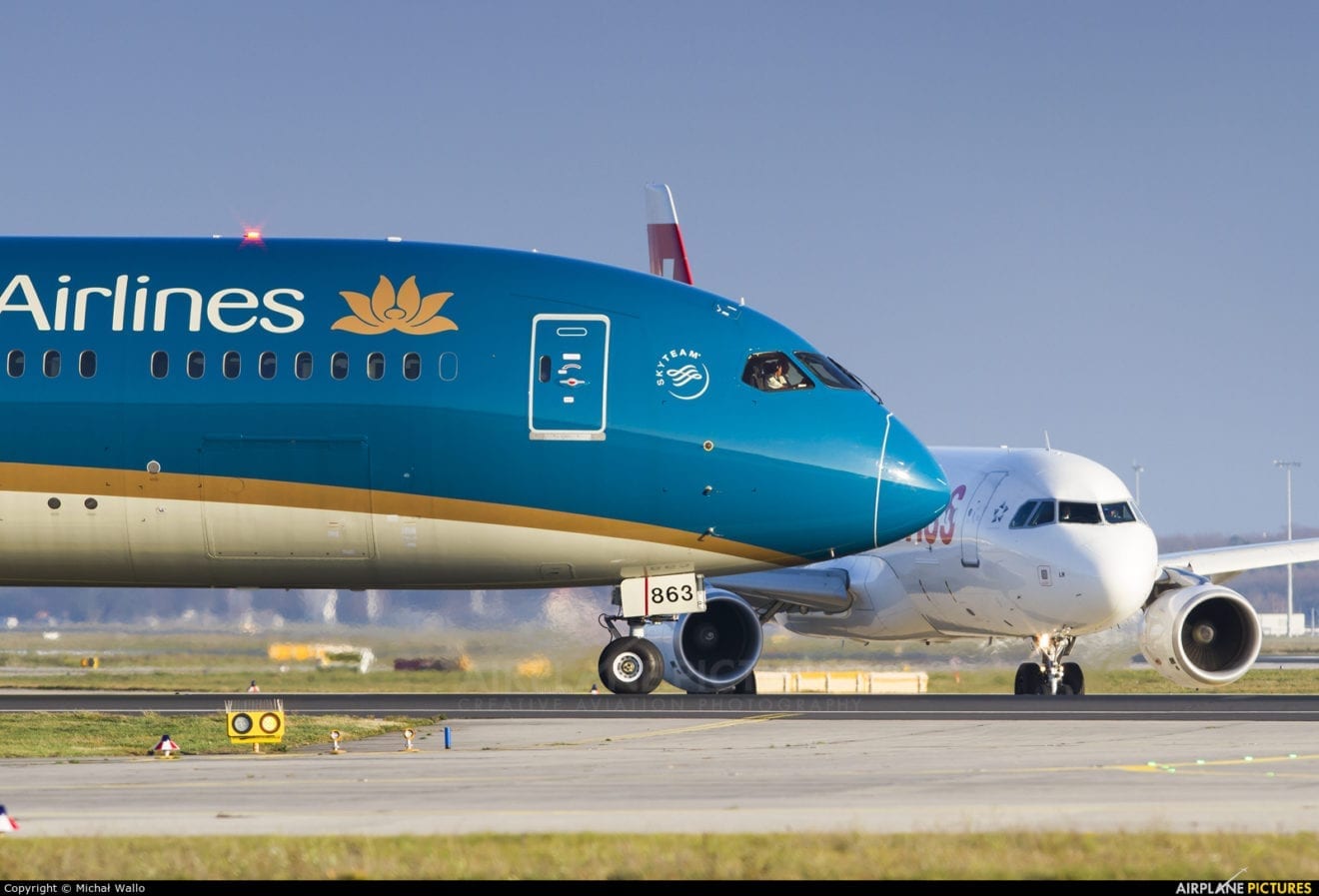
    National flag carrier Vietnam Airlines plans to form a cargo carrier as part of efforts to shore up its business that has been hard hit by Covid-19 outbreaks.

    The carrier has converted seven passenger planes into cargo carriers – five wide-bodied Airbus A350s and two narrow-bodied A321s, Vietnam Airlines chairman Dang Ngoc Hoa said at its annual shareholders’ meeting Wednesday.

    In June, its cargo transport revenue, which normally accounts for 10 percent of the total, surpassed that of passenger transport.

    According to Vietnam Airlines CEO Le Hong Ha, the airlines has considered establishing a cargo carrier for years, but the time was not considered opportune.

    Over the past two years, and especially in recent months, cargo transport has generated bigger revenues, so Vietnam Airlines is considering the plan more seriously, Ha said.

    Chairman of retail company Imex Pan Pacific Group, Johnathan Hanh Nguyen, has asked for permission to establish a cargo airline named IPP Air Cargo with an investment of $100 million, but the national aviation authority has informed the transport ministry that it will not recommend the establishment of any new carrier until 2022, given the pandemic situation.

    Budget airline Vietjet has re-configured 4 Airbus A321s to transport cargo.

    Meanwhile, foreign express delivery giants like DHL and UPS have increased flights and payloads to transport goods to Vietnam by air.

    According to a transport ministry report sent to the government, the proportion of cargo transport in local airlines’ total revenues in one year amid the Covid-19 outbreaks tripled against the pre-pandemic period.

    In the first half of this year, Vietnam Airlines racked up losses of some VND9.823 trillion (nearly $427.1 million). It has estimated consolidated losses of VND14.526 trillion this year, up nearly 30 percent against last year, and consolidated revenues of nearly VND37.4 trillion, down 11.6 percent.

  • Beyond Meat opens JD store, as Chinese remain wary of meat substitutes

    Beyond Meat opens JD store, as Chinese remain wary of meat substitutes

    Beyond Meat has launched an online store in China on e-commerce platform JD, as the plant-based meat maker aims to boost sales in the world’s biggest meat market, where consumer interest in meat alternatives is low.

    US-based Beyond Meat said the JD store will initially help expand the availability of its products in four major cities, including Beijing and Shanghai, and eventually in 300 cities across China.

    Its products are currently mainly available in China through its partnerships with Starbucks Corp, Yum China Holdings and Alibaba Group’s Freshippo markets.

    But expanding into the retail segment by selling on JD will help it reach a wider audience in the country, which is increasingly purchasing fresh food online.

    Online sales in China of fresh food, into which category Beyond Meat’s products fall, are expected to top US$46.4 billion this year, an increase of 18 percent from last year, according to consultancy iiMedia Research.

    Beyond Meat’s direct retail foray follows a similar move by Nestle in December, which launched a range of plant-based burgers, sausages, nuggets, and dishes suited to Chinese cooking.

    The push by global firms comes even as consumers in China are not exactly devouring plant-based meat.

    “Currently it is a solo dance by the manufacturers, the consumers are not joining the tango,” said Zhu Danpeng, an independent food industry analyst.

    A recent poll on Sina Weibo, China’s Twitter-like social media platform, found only 14 percent of 400 participants were willing to try plant-based meat.

    Chinese consumers are deterred by concerns over food safety as well as taste, said Zhu.

    Beyond Meat, which has set up its first manufacturing plant outside of the US in the eastern Chinese city of Jiaxing, near Shanghai, declined to comment on its sales in the market so far.

    A 454gm twin pack of plant-based beef will be sold at $32.50 on the company’s JD store. By comparison, 1kg of good quality domestic beef costs about $21.60 on JD’s fresh food platform.

    Beyond Meat is also adding Beyond Pork to its offering on JD, which has been created for the pork-loving Chinese market.

    It will also sell ingredients that are used in the cooking of local dishes such as stir-fry, dumplings, mapo tofu, zhajiang noodles and lion’s head meatballs to appeal to Chinese consumers.

  • TIDAL launches limited-time 3-month free trial offer

    TIDAL launches limited-time 3-month free trial offer

    One of the many popular music streaming services in the United States, TIDAL has just announced a limited-time 3-month free trial promotion. The offer is only available to new users starting today and through the end of August.

    After the three-month trial, customers will be able to continue their subscription at $9.99 per month for Premium and $19.99 per month for HiFi. TIDAL also offers discounts for students (-50%), military (-40%), first responders (-40%) and families (6 accounts for $14.99 Premium or $29.99 HiFi).

    Both Premium and HiFi services are available across platforms and devices such as Amazon Alexa, Apple TV, Android TV, CarPlay, Plex, Roku, Samsung Wearables, and direct control with Sonos.

    Currently, TIDAL’s Premium and HiFi tiers offer subscribers unlimited access to a massive catalog of over 70 million tracks across all genres, thousands of curated playlists by the service’s editorial team, and endless artist radio stations.

    Additionally, HiFi subscribers benefit from the best quality of sound available, including TIDAL Masters and immersive sound experiences from Dolby Atmos Music and Sony 360 Reality Audio.

  • FedEx’s bot opens possibilities for on-demand, same-day delivery

    FedEx’s bot opens possibilities for on-demand, same-day delivery

    Roxo is an autonomous specialty delivery device, designed to travel on sidewalks and along roadsides, safely delivering smaller shipments to customers’ homes and businesses. Its features include pedestrian-safe technology, multiple cameras and LiDAR allowing the zero-emission, battery-powered bot to be aware of its surroundings. These features are coupled with machine-learning algorithms to detect and avoid obstacles, plot a safe path, and allow the bot to follow road and safety rules. Proprietary technology makes it highly capable, allowing it to navigate unpaved surfaces, curbs, and to even climb deep flights of steps for an extraordinary door-to-door delivery experience.

    Roxo is currently undergoing testing in the U.S. to generate data to ‘train’ the self-driving software and validate safe performance, in compliance with all applicable safety regulations and guidelines. There is significant opportunity in Japan to identify local, case-specific applications to make the best use of the technology to benefit FedEx customers.

    “We are thrilled to have Roxo in Japan, a country that is a global leader in robotics implementation. The FedEx SameDay Bot is truly an innovation opening new possibilities for on-demand, same day, hyper-localized delivery,” said Kawal Preet, president of the Asia Pacific, Middle East, and Africa (AMEA) region at FedEx Express. “As we sit at the intersection of physical and digital networks, Roxo brings a glimpse of the future of logistics, where customers can enjoy same day, contactless delivery services at their doorsteps. With businesses of all kinds embarking on digital transformation, we look forward to collaborating with future-ready companies to advance delivery services in Japan and elsewhere in Asia Pacific.”

    The bot is being developed in collaboration with DEKA Development & Research Corp., a prominent research and development company which also produced the Segway. The bot uses DEKA’s established iBOT electric wheelchair base, capable of negotiating rough terrain, traversing steps, and steep inclines. Its sensors maintain 360-degree awareness of its surroundings and uses artificial intelligence, or AI, to choose the safest path or course of action. With a tall profile it is easy for pedestrians and road users to see. It also uses signals, lights and a signaling screen that clearly communicate its directional intent.

    Roxo was unveiled in February 2019 and has been undergoing tests with major retailers in the U.S. U.S. cities where Roxo has been tested include Memphis, Tennessee; Manchester, New Hampshire; and Plano and Frisco, Texas. It made its first international appearance in Dubai, United Arab Emirates in October 2019 for an experimental project with local businesses including Dubai Airports.

  • Reduced Loan Provisions Boost Citi Profits

    Reduced Loan Provisions Boost Citi Profits

    Citigroup’s profits in the second quarter comfortably beat market estimates in part due to significantly reduced loan provisions driven by an outperforming global economic recovery.

    Citi posted $6.19 billion in net income for the second quarter, according to its latest results, marking a nearly six-fold increase compared to last year.

    Profits in the quarter exceeded the average analyst expectation of $4.26 billion, according to Refinitiv IBES data, though revenues fell 12 percent year-on-year to $17.5 billion.

    This was due in no small part to a $2.4 billion reduction in loan reserves for losses that did not occur. Last year, the bank added $5.9 billion to its loan reserves.

    By segment, the global consumer bank saw revenues shrink 7 percent due to decreased lending through cards resulting in $1.83 billion in income.

    The institutional business saw revenues fall 14 percent to $10.4 billion which led to $3.8 billion of income.

    Corporate and other divisions posted $532 million of income from $267 million of revenue, an 8 percent decrease.

    Within Asia, the consumer bank generated $171 million of income from $1.57 billion of net revenue.

    The investment bank posted $823 million of income from $2.24 billion of revenue.

    The pace of the global recovery is exceeding earlier expectations and with it, consumer and corporate confidence is rising, said Citi’s chief executive Jane Fraser in a statement.

  • NAB in Talks to Buy Citi’s Australia Consumer Unit

    NAB in Talks to Buy Citi’s Australia Consumer Unit

    The National Bank of Australia is the latest to join the hunt for Citi’s retail assets after it announced plans for a major consumer downsizing earlier this year.

    NAB is in talks to potentially but Citi’s consumer business in Australia, according to an exchange filing.

    Discussions are ongoing and no deal has been concluded.

    Numerous banks are eyeing opportunities to purchase consumer businesses from Citi’s 13-market exit.

    In Australia, NAB joins the likes of ANZ, ING Bank, Macquarie, Bank of Queensland and local insurer Suncorp. which have also reportedly expressed interest.

  • Instagram introduces new security feature against hackers

    Instagram introduces new security feature against hackers

    Instagram is taking a powerful new step to combat account hacking and malicious activity on their social media platform. If you yourself haven’t experienced your Instagram account getting compromised, you probably know at least a couple of friends who have. It’s a fairly widespread phenomenon, as unpleasant as it may sound, and it’s about time something is done about it.

    As of Tuesday, Instagram is introducing a new feature on the platform called Security Checkup, which is aimed to maximize account security and facilitate recovery for anyone whose personal account may be at risk.

    No matter whether they have already been compromised or are simply vulnerable in some way, Security Checkup will prompt users to go through all the necessary steps to secure their account, which includes updating necessary profile information and account settings.

    In a recent news post, Instagram announced that “Security Checkup will guide people, whose accounts may have been hacked, through the steps needed to secure them. This includes checking login activity, reviewing profile information, confirming the accounts that share login information and updating account recovery contact information such as phone number or email.”

    Even if you haven’t necessarily been hacked, Security Checkup will prompt you to take all the important measures to ensure there is an infinitesimal chance of that ever happening in the future.

    Instagram already strongly encourages you to have two-factor authentication, which drastically decreases the chances of that and can be easily set up by going to Profile > Settings > Security > Two-factor authentication.

    With 2FA enabled, anytime there is a login attempt from an unrecognized location, you’ll be immediately alerted with the option to approve or deny the request from your personal device. Instagram also keeps track of all devices which have recently logged into your Instagram, and which can be viewed by going to Settings > Security > Login Activity. From there, you can remotely log out of any devices you don’t recognize on the list.

    You should also make sure your e-mail and phone number are the ones you are using currently, as keeping that info up to date will ensure smooth verification should any suspicious activity be detected.

    Instagram also emphasizes that one of the most common ways in which malicious parties gain entry into personal accounts is through impersonating Instagram itself, and sending out DM’s pretending they are working for the platform.

    “They may tell you that your account is at risk of being banned, that you are violating our policies around intellectual property, or that your photos are being shared elsewhere,” the post warns. These are apparently fairly common tactics scammers use in an effort to bully people into sharing their login credentials.

    Instagram stresses that it will never, ever try to contact users of the platform via Direct Messages. This means that if you see such a message claiming it’s from Instagram or asking for any personal info, you should automatically know it is malicious and immediately report the message to Instagram and block the account.

    • To report an Instagram post, tap on the three dots appearing at the top right
    • To report a message, tap and hold on it until a menu appears
    • To report an account, go to the profile and tap on the three dots at the top right

    If Instagram ever needs to contact you for any reason, rather than DM-ing you, they can reach you through an “Emails from Instagram” tab in the app’s settings. That is “the only place you will find direct and authentic communication from Instagram on the app,” the company says.

    Thanks to some new updates to the Support Inbox on Instagram, you can now easily view the status of any and all messages, posts, or accounts you have reported, and find out whether or not Instagram has taken any action. You can also keep track of your own posts’ status, to see if they are breaking any rules—and if they are, you can directly repeal them from there.

  • Uniqlo takes over Superdry’s London flagship

    Uniqlo takes over Superdry’s London flagship

    The parent company of Uniqlo, Fast Retailing Group has signed a letting for the former Superdry store on Regent Street.

    The store is expected to sell a mixture of both Theory and Uniqlo clothing.

    The contemporary fashion brand Theory launched in New York in 1997 and at the end of February 2021, it holds 436 stores worldwide.

    The Japanese fashion retailer’s other brands, including US-based denim brand J Brand, could also be sold in the store, property sources said.

    The store is expected to open later this year although the exact date is not yet known.

    Last month Superdry closed the doors to its Regent Street flagship store, which first opened in 2011.

    The retailer is currently considering several locations in the capital, including Forever 21’s former flagship store on Oxford Street, which was forced to closed last year after the retailer filed for administration in the UK.

  • Naked Wines revenue grows 42 per cent as online booms

    Naked Wines revenue grows 42 per cent as online booms

    Online wine marketplace Naked Wines has seen success in Australia during the last year, as more and more Aussies spending online drove the business’ local sales up 42 percent to $84.2 million.

    Alicia Kennedy, managing director of Naked Wines Australia, said the results grew on an already landmark result the year prior.

    “As we continue to grow our market here in Australia, we also continue to grow and push our mission; to disrupt the wine industry through a strong direct-to-consumer model which is for the benefit of all wine drinkers and winemakers,” Kennedy said.

    “In the past year we’ve experienced first-hand the wave of customers flocking online to buy wine during the Covid-19 crisis.

    “But more importantly we have seen these purchasing behaviours endure post lockdown… we can see [our] strategy producing impressive customer retention figures.”

    According to Naked Wines, customer behaviour has shown a direct move toward supporting local wineries, and a greater understanding of how ‘big bottle’ retail conditions and major market forces impact smaller independent winemakers.

    Looking forward, the business is focusing on growing their customer base with a $10.1 million investment in customer acquisition.

    “Overall, our results show, the challenging environment has our businesses set up for the future, we have a bigger and better business than before, with customer growth and sales of the best independent Australian wine surging” said Kennedy.

  • StanChart Names Global Head of Transaction Banking FX

    StanChart Names Global Head of Transaction Banking FX

    Standard Chartered appoints its global head of transaction banking FX to further collaboration between transaction banking and markets.

    Jocelyn Tan has been named to the Singapore-based role, according to a report by efinancialcareers, which noted that she was an internal appointee though the role was advertised externally.

    Tan will be tasked with driving FX cross-selling by leveraging transaction banking flows across the corporate, commercial and institutional bank (CCIB).

    Tan has been with Standard Chartered since 2017 when she joined as an executive director for e-commerce sales. Previously, she spent over 10 years with Citi where she worked in Asian eFX sales.

  • RangeMe opens 200,000 suppliers to Australasian retailers

    RangeMe opens 200,000 suppliers to Australasian retailers

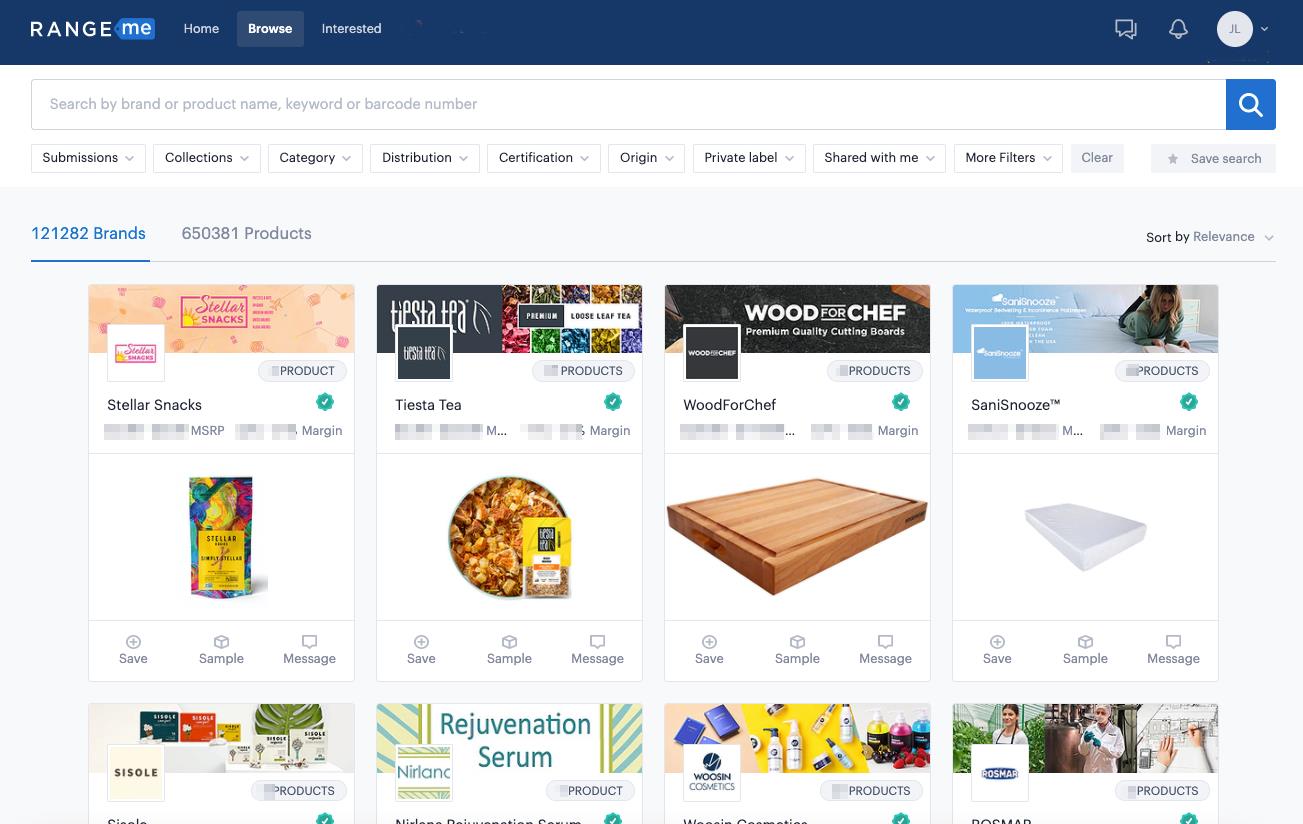
    Product discovery and sourcing platform RangeMe has fully launched its global service to retailers in Australia, New Zealand, and the wider APAC region, allowing businesses to access 200,000 international suppliers.

    A number of businesses are already using the service, such as Blooms the Chemist, Good Price Pharmacy Warehouse, Pet Circle and Pet Culture, and are now able to source new products at a time demand for a wider range of products is growing.

    “This will be a transformative experience for these retailers’ buyers,” said RangeMe chief executive Nicky Jackson.

    “Our mission has always been to empower retailers and suppliers to be productive and successful. The world has become a smaller place, but it remains distant for forging strong cross-border buyer and seller relationships

    “We built RangeMe to connect buyers and suppliers anywhere in the world.”

    RangeMe allows businesses to search and filter for products they want to sell, creating a more specific and intentional supplier relationship. The business is also open for Australian suppliers, which can sign up to be a part of the service and potentially gain new buyers from over 12,000 overseas clients – including Walmart, Sephora, Walgreens and Albertsons.

  • Malaysia’s Industronics to launch online pre-owned watch platform

    Malaysia’s Industronics to launch online pre-owned watch platform

    Industronics Bhd is tapping on the US$17 billion pre-owned luxury watch market through Ecgo International Ltd, its wholly-owned subsidiary in Hong Kong.

    This follows the launch of Industronics’ luxury watch e-commerce platform, watch-exchanges.com.

    Executive director Datuk Chu Boon Tiong said based on data and overall market performance, the pre-owned luxury watch market showed promising growth prospects.

    “We are excited to capitalize on the growing trend with the launch of WatchExchange and aim to pave the way for a streamlined trading platform that will not only revolutionise the transactions of pre-owned luxury watches but drive further growth in this industry,” he said in a statement today.

    WatchExchange aims to be the first luxury watch e-commerce platform that issues authenticity certificates for pre-owned luxury watches in Malaysia and Asia Pacific.

    Some of the leading brands profiled are Audemars Piguet, Hublot, Patek Philippe, Tag Heuer, IWC, Omega, Jaeger LeCoultre, Panerai, Rolex and Breitling.

    Chu said pricing and demand for pre-owned luxury watches had been so strong over the last few years that even high-end watch brands were moving into the pre-owned market themselves.

    “However, the biggest challenge for the pre-owned luxury watch market lies in authenticating the watches.

    “Our role here is to ensure that the shoppers can safely purchase luxury watches on WatchExchange without having to worry about the security and authenticity of the pre-owned luxury watches,” he said.

    Industronics, with its team of professional and experienced watch appraisers, said it wanted to create a professional, safe trading environment that would elevate customers’ experience of purchasing pre-owned luxury watches to a new level.

    The company will set up offices in China, Hong Kong, Japan, Singapore, Malaysia, the United States, Canada and Europe, where sellers worldwide could visit for physical appraisals of their watch collections.

    The success of WatchExchange will depend on excellence in several key areas namely stability, sustainability, search engine optimization (SEO) and new media marketing.

    This will also require extensive funding to carry out both online advertising and offline promotional activities.

    Chu believes the competitive advantage for WatchExchange lies in the company’s ability to build a “unicorn” ecosystem around the region.

    “We do not think that the strength of the platform lies solely in the certification and authentication guarantees.

    “We intend to replicate the business models globally via partnerships with a locally listed company in the respective countries.

    “Among the markets that we are looking into are Malaysia, Singapore, Indonesia, Hong Kong, China and several emerging markets in Europe. Once our ecosystem matures, we will have so much more to offer to our customers, in terms of the variety of brands, models, and other services,” Chu said.

    According to a management consultancy firm Bain & Company, the global pre-owned luxury watch market was valued at US$17 billion in 2018.

    However, less than 20 per cent of that market is in the Asia Pacific region, while only 25 per cent of the total pre-owned luxury watch sales were online transactions.

    Euromonitor International, an independent strategic market research provider, estimates the value of retail sales of timepieces in Malaysia to grow by five per cent per annum between 2019 and 2022, to reach up to RM2.5 billion.

    Industronic is looking to set up a fund in Hong Kong to raise RM250 million from potential investors.

    Proceeds raised will be utilised to purchase different brands of luxury watches for resale on the company’s platform.

    Industronics aims to invest around RM25 million or 10 per cent of the total funding required, together with the Hong Kong Cyberport Fund, which will invest an equivalent amount or at a 1:1 ratio.


  • Thailand’s Tookdee speeding up expansion plan

    Thailand’s Tookdee speeding up expansion plan

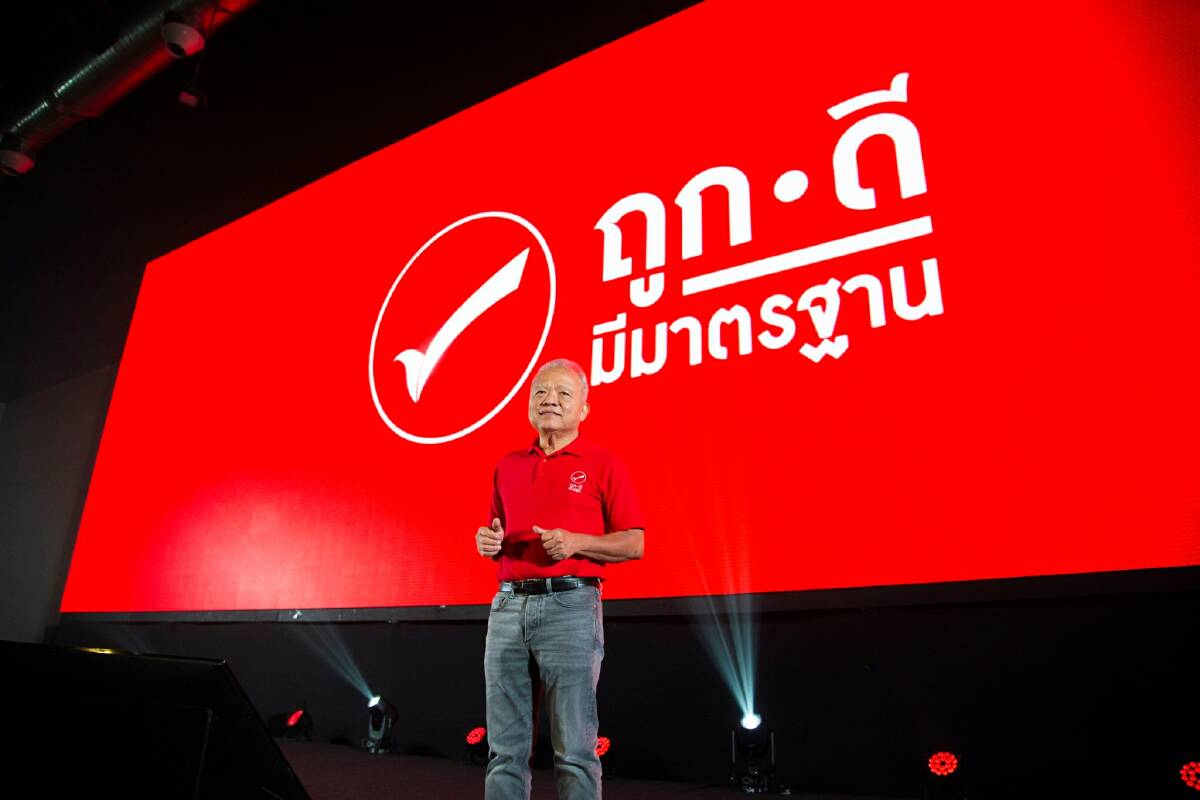
    Mr. Sathien Setthasit, Chairman of TD Tawandang, proprietor of TOOKDEE retail store, reveals that TOOKDEE brand aims to set new standard for convenience stores in local communities that are vital base of grassroots economy in Thailand. With elevated standard, knowledgeable operation and technology-based management, TOOKDEE is set to become the “community store by the community, for the community” that offers modern and friendly service to enhance living condition of the people in the communities.

    TOOKDEE’s business model allows for all benefit. Everyone can become part of the changing process to modernize local-style convenience stores and shake up the Thai retail industry, and ultimately create more business opportunity to local community businesses all over Thailand.

    Owners of local convenience stores and local business partners earn more income from sales. Local entrepreneurs have more distribution channels through TOOKDEE shops, while the consumers in the communities have access to good quality products at affordable prices. Most importantly, TOOKDEE shops created a lot of job opportunities and employment through its branch and warehouse expansion, encouraging purchase and creating economic flow from urban areas to rural communities that better and improve the lives of the local communities. TOOKDEE is another driving force for Thai economy to thrive and recover from the stalling economy caused by the COVID-19 pandemic that devastated the Thai economy, employment rate and citizens’ income. TOOKDEE is expected to elevate local trade and commerce and revitalize the country’s grassroots economy.

    Mr. Sathien states that the firm has developed the concept of TOOKDEE since 2019 with collaboration from convenience store entrepreneurs that contributed variety of products, equipment, know-how and technology to enhance the operation and beautify storefront. The company also works closely with various business partners to launch marketing activations and promotion advertisement at TOOKDEE stores to boost sales, strengthen local business, and create competitive edges to compete with big convenience store brands.

    TOOKDEE was first launched two years ago during the pilot period in Nakhon Pathom, Khon Kaen and Udon Thani, then on to the northern and central regions of Thailand. Immediately after the launch, the feedback was satisfactory. Income of local convenience stores went from 3,000-5,000 THB daily to more than 10,000 THB, allowing store owners to break through economic dead ends and build better lives for themselves. TOOKDEE is growing against the tide of economic trend that has been devasted by the COVID-19 pandemic thanks to the business model that caters specifically to the local demographic that allows TOOKDEE to thrive sustainably alongside business partners and store owners.

    TOOKDEE’s strengths include local ownership that best caters to the specific needs of the local demographic. TOOKDEE also carries local highlight products and indigenous goods of each locale to offer product diversity, boost sales and distinguish itself from other brands.

    Currently there are more than 1,000 TOOKDEE shops nationwide, with plans to expand to 8,000 shops in 2021 and 30,000 shops in 2022. Expansion will ensure accessibility even at the most remote villages, especially those that already have convenience or retail stores in place.

    To accommodate rapid expansion, TOOKDEE has established a provincial center to assist store owners in their new business venture, instill confidence and show readiness to accommodate local convenience store business in Thailand. The center allows potential store owners to immerse in TOOKDEE experience as buyer and seller, try out the equipment, browse through product selections, observe the interior design theme and test the POS system that will modernize and add efficiency to the operation. The center has dedicated TOOKDEE staff to assist and answer all questions to help store owner confidently land their first step in the TOOKDEE venture.

    TD Tawandang is offering business opportunity to store owners and interested partners all over Thailand to join TOOKDEE, the local community convenience store network, to modernize and raise the standard of the Thai retail industry to international level and better the lives of Thai communities.