Tag: asia

  • Li & Fung Partners with JD.com to Accelerate Development of Digital Supply Chain

    Li & Fung Partners with JD.com to Accelerate Development of Digital Supply Chain

    Li & Fung, today announced a strategic investment of US$100 million from JD.com , with newly issued capital to further develop its digital supply chain. The Fung Family will continue to retain control of the Company with 60% of the voting shares.

    Li & Fung has been on a journey to create the Supply Chain of the Future and the strategic cooperation with JD will accelerate this development with a proven digital partner. Li & Fung will also grow its business in China by partnering with JD on private label initiatives for the China domestic market by leveraging its global network and digital supply chain. With the strong partnership between the Fung Family and Singapore-headquartered GLP Pte Ltd., and now the addition of JD, Li & Fung will be able to leverage its scale and digital capabilities to continue its journey of creating the end-to-end digital supply chain.

    As China’s leading technology-driven e-commerce company, JD is transforming to become the leading supply chain-based technology and service provider, which fits well with Li & Fung’s goal of creating the Supply Chain of the Future. JD has been developing proprietary supply chain technologies for many years and has created digital retail and supply chain platforms that are fully integrated to support its omnichannel strategies.

    Amidst the continuing digital disruption to retail and the ongoing global trade tensions, compounded by the dramatic impact of Covid-19, the global retail supply chain has become more and more complex. With the breadth and depth of its global sourcing and production ecosystem, pan-Asia logistics network, and industry-leading digital product development capabilities, Li & Fung is helping global retailers and brands navigate a highly uncertain and ever-changing macro environment.

    Spencer Fung, CEO of Li & Fung, said: “Our goal to create the Supply Chain of the Future and to improve the lives of one billion people in our global supply chain remains more relevant than ever in this turbulent world. The partnership with GLP and the addition of JD will be instrumental in further strengthening Li & Fung.”
  • Cars made in Vietnam cost more than imports

    Cars made in Vietnam cost more than imports

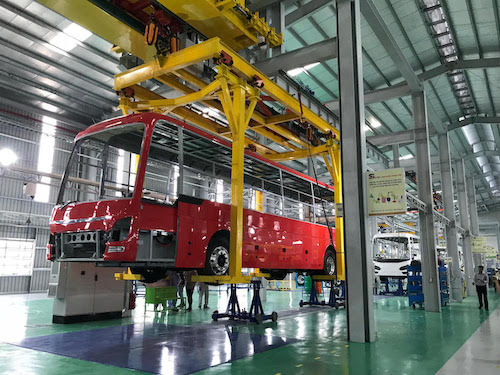
    Cars assembled in Vietnam cost more than imported ones, belying consumers’ expectations, and hampering the growth of the auto industry. Earlier this month, Honda unveiled its compact SUV CR-V assembled in the northern province of Vinh Phuc. The car costs VND1.2 billion ($51,700), VND25 million ($1,080) more than the imported version.

    The assembled-in-Vietnam Toyota Fortuner, another SUV, costs VND7 million ($302) higher than the imported version, while the locally-assembled Mitsubishi Xpander AT, an MPV, has the same price as its imported version from Indonesia.

    Many buyers expect locally assembled cars to cost lower than imported ones, but several factors don’t allow this to happen. This situation could blur the government’s vision for developing the domestic car industry.

    The costs of importing parts to assemble a car in Vietnam is higher than importing a completely-built unit, and this is the main reason why the former costs more, said a spokesperson for a Japanese auto brand who wished to remain anonymous.

    Car parts have an import tax of 7-9 percent, while completely-built units imported from Thailand and Indonesia are tax-free under the ASEAN Trade in Goods Agreement (ATIGA) that took effect in 2018.

    Auto brands have to import parts because local suppliers are not capable of making complicated parts. Vietnam had targeted to reach a 60 percent localization rate for passenger cars in 2010, but until now it remains at 7-10 percent, compared to the ASEAN average of 55-60 percent.

    The inability of suppliers in Vietnam to make parts more complicated than tires, seats, and wires require the domestic industry to import about $2 billion worth of car parts each year, mostly components like the breaking and steering system, from countries like Japan, China, and South Korea, according to a report by the Ministry of Industry and Trade.

    Importing in large numbers can lower the prices of these parts, but Vietnam’s market is too small for auto brands to expand their production scale, industry insiders have said.

    Car sales in Vietnam reached 385,600 units last year, but the size of the Indonesia and Thailand market was 2.6 times bigger and that of Malaysia, 1.6 times.

    “Producing a car in Vietnam costs 15-20 percent more than in other countries,” said the strategic and planning head of another Japanese auto brand who also wished not to be named. For example, the production scale of the same car model in Thailand could be two or three times bigger than in Vietnam, making prices lower, he said.

    For now, locally assembled luxury cars are the only ones that cost lower than their imported peers, because the import tax for this vehicle segment is around 70 percent as they are usually imported from Europe and Japan.

    However, this advantage will not last as the import tax on cars from the E.U. will gradually fall and be cut within the next 10 years under the EU-Vietnam Free Trade Agreement that takes effect next month.

  • Suning shutting half of its Laox store footprint in Japan

    Suning shutting half of its Laox store footprint in Japan

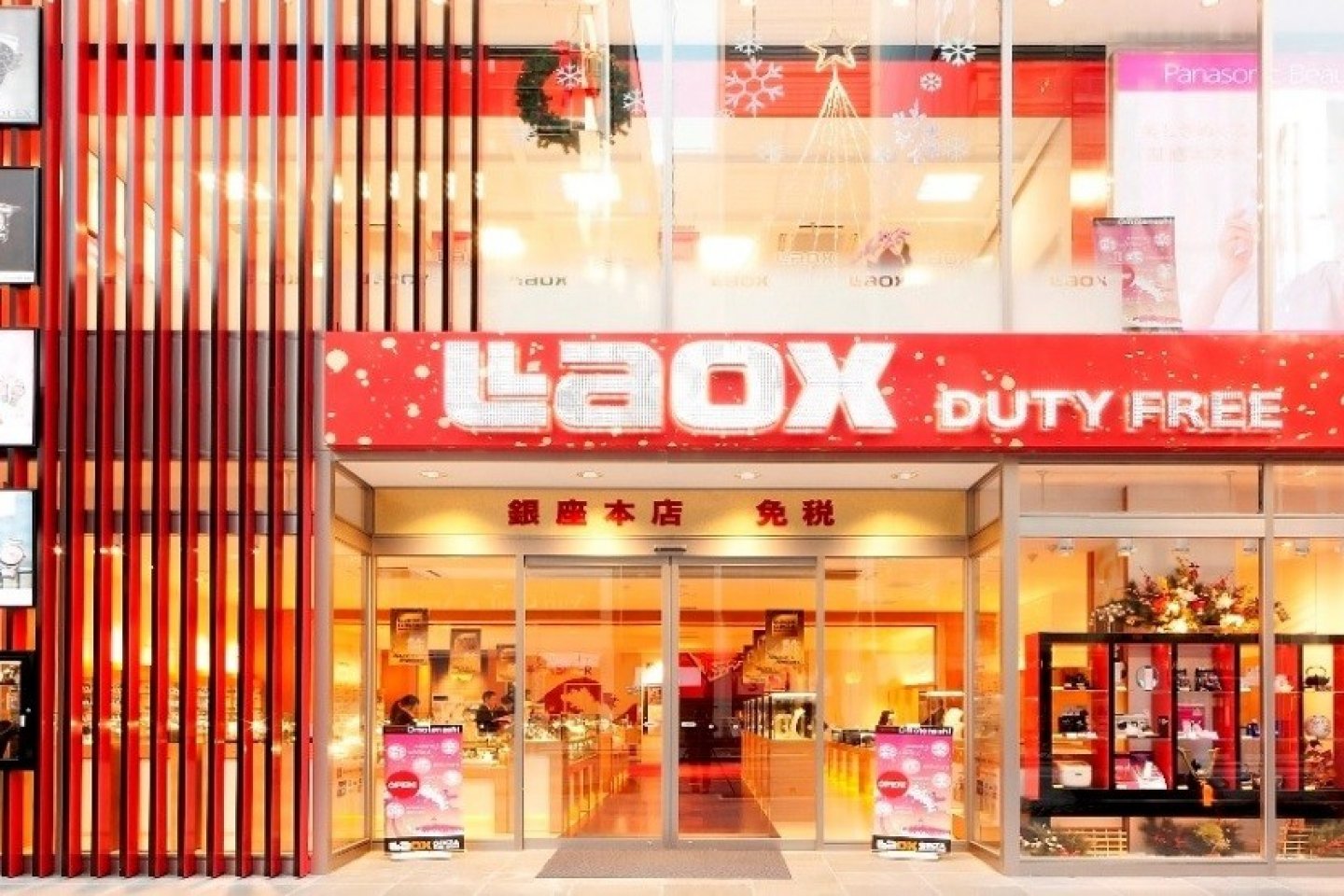
    Japanese electronics retailer Laox is to shut half of its stores in Japan as its customer base dried up due to Covid-19 social-distancing.

    Laox is managed by Chinese electronics giant Suning and the duty-free stores had been a popular location for Chinese tourists looking for Japanese appliances.

    The significant drop in the number of foreign tourists, especially those from China, has forced the company to close 12 outlets in the country to cut costs and improve cash flow.

    The 12 stores will include locations in Hokkaido, Kyushu, Tokyo and Okinawa.

    Since February, the company has twice called on staff to apply for voluntary retirement to restructure due to the financial impact of the pandemic. Laox recorded a net loss of US$18.1 billion for the March quarter.

  • Hong Kong’s Swindon Book Store closes after 100 years in Business

    Hong Kong’s Swindon Book Store closes after 100 years in Business

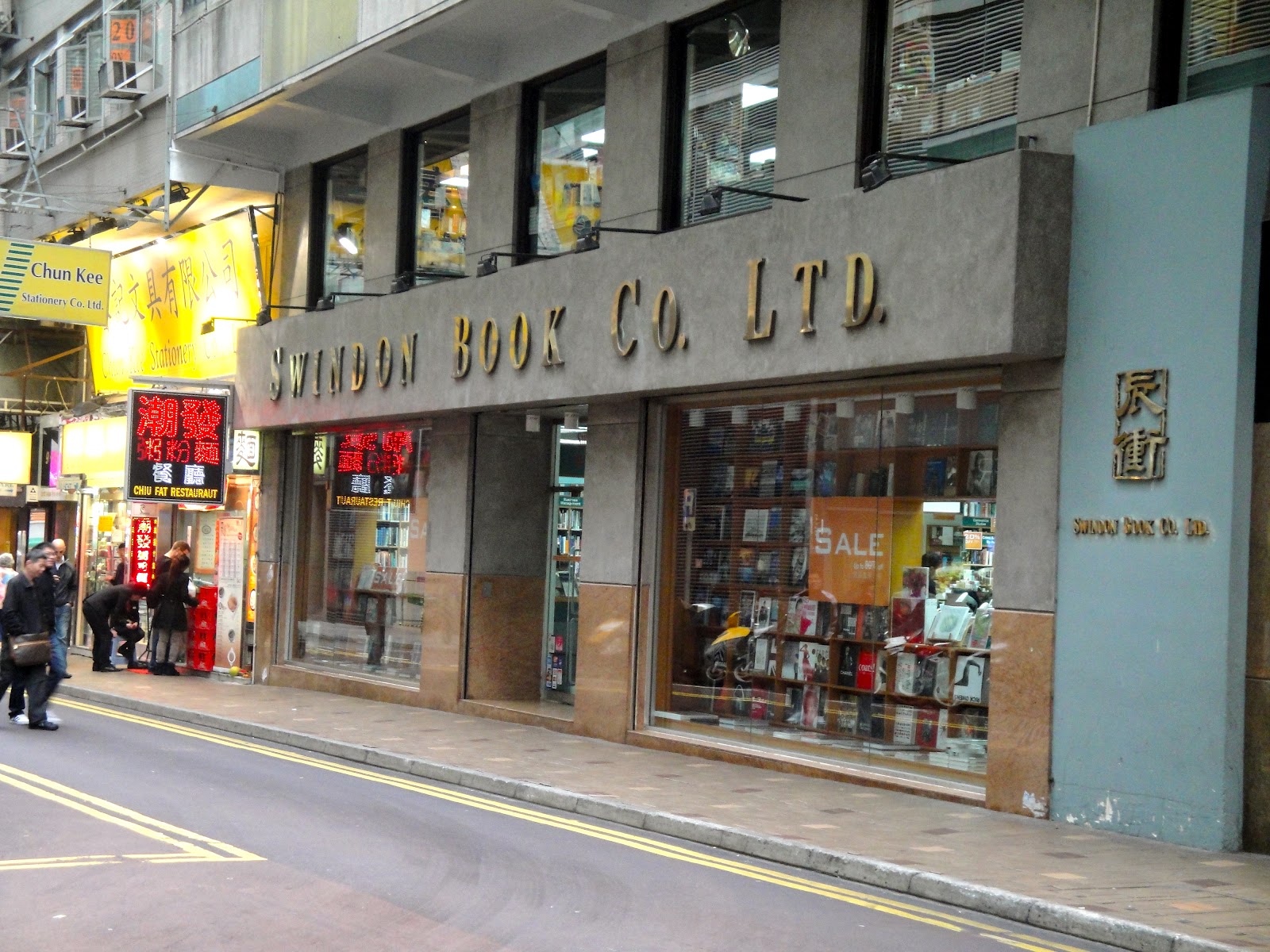
    Swindon Book Co, one of the oldest bookstores in Hong Kong, will permanently close at the end of this month.

    The 5000sqft Tim Sha Tsui venue, with its distinctive vintage storefront on Lock Road, has operated for more than a century. Its closure comes as several other major booksellers exit the Hong Kong market, including all 16 branches of Popular Bookstore, which traded for 40 years in the territory prior to closing in March. Chain stores Dymocks and Page One both departed Hong Kong during the past five years.

    Reports have blamed high rentals and online competitors for the closures.

    A Facebook message posted by the store on Tuesday announced a new chapter in the brand’s journey with a move online, while subsidiary stores Hong Kong Book Centre and Kelly & Walsh will remain open.

    “We deeply appreciate all your support over the years and we are truly honored to have spent time with you at retail,” read the post.

    Swindon Book Co, which distributes school textbooks in Hong Kong, partnered with e-book firm Kobo several years ago as an authorized seller of the device in order to keep up with the times.

  • HSBC Promotes Investment Duo at Private Bank

    HSBC Promotes Investment Duo at Private Bank

    HSBC Private Banking promotes two executives in its investment and product solutions unit in Asia, effective immediately.

    The bank appoints Jeffrey Yap as head of investment services and product solutions (ISPS) for Southeast Asia after his last role as regional head of fixed income, currencies and commodities (FICC) Asia Pacific, according to a statement. Adam Lau has also been appointed to the newly created role of regional head of market solutions, Asia Pacific.

    Yap joined HSBC in 2017 from Alliance Group (PAG), where he was managing director responsible for the firm’s public fixed-income investments. Lau is a 20-year financial veteran who joined HSBC in 2018 from Natixis where he was its Greater China head of equity solution sales. He was also previously with Deutsche Bank as its Greater China head of private banking and retail sales and J.P. Morgan as a structured product marketer.

    Yap reports to Philip Kunz, head of Southeast Asia at HSBC Private Banking and Abdel Ben Tkhayet, APAC head of ISPS while Lau will continue to report to the latter.

    In addition to developing talent internally, the bank also highlighted Singapore as a key market for its wealth business and underlined specific client segments that bank in the booking center.

    As a leading international wealth center, Singapore is one of our key wealth markets, where we serve a significant group of international clients from Southeast Asia, Greater China and other parts of the world, Kunz.

    Under the leadership of [Yap] and [Lau], I’m confident that HSBC Private Banking will build on our strong momentum and expand and enhance our range of products and services to distinctly meet our clients’ wealth needs.

  • E-wallets seek to grab opportunity as pandemic keeps people shopping online

    E-wallets seek to grab opportunity as pandemic keeps people shopping online

    Businesses are pushing cashless payment services amid demand triggered by social distancing measures imposed to curb Covid-19. MoMo announced on Tuesday that it plans to tie up with ride-hailing company Be Group to offer its popular e-wallet services to the latter’s customers. SmartPay earlier this month signed a deal with Viet Capital Bank to allow the lender’s customers to open saving accounts using its e-wallet.

    The company, which entered the market in May last year, targets big in Vietnam’s increasingly crowded e-payment market. It seeks to increase the number of users from 1.7 million to 4 million in the near future.

    Another player, AirPay, which has been partnering with online shopping platform Shopee for months, is offering gifts worth hundreds of thousands of dong to attract customers.

    Shopee said its cashless transactions, through credit cards and AirPay, have been rising rapidly in number since Vietnam reported the first Covid-19 case early in the first quarter. Eighty percent of cashless transactions in Hanoi, Da Nang, and central Thua Thien Thue Province are done by users aged 18-34, Shopee said.

    Industry insiders said fintech companies and banks are seeking to boost cashless payment as people refrain from going to physical stores amid pandemic fears.

    “Banks have been increasing partnerships with fintech companies during the pandemic for payment and other types of financial services,” Do Thanh Nam, director of Viet Capital Bank’s digibanking department, said.

    His bank saw online savings increase six-fold year-on-year in the first half, he revealed. An estimated 10.6 percent of the population aged above 15 use e-wallets, compared to 10.7 percent in Thailand, 17.1 percent in Singapore, and 35.2 percent in China, according to global consulting firm Boston Consulting Group.

    The government has been seeking to promote cashless payments for transactions like payment of electricity bills and tuition.

  • Aston Martin Has Posted A Loss Of $293 Million In First-Half Of 2020

    Aston Martin Has Posted A Loss Of $293 Million In First-Half Of 2020

    Carmaker Aston Martin, which has changed its boss and brought in a billionaire investor this year, posted a deeper first-half loss of 227 million pounds ($293 million) on Wednesday amid a slump in sales. Its main factory, which closed during the lockdown, is not due to reopen until the end of August as the firm focused on resuming production at a new site in Wales, where its first sport-utility vehicle, the DBX, rolled off the line this month.

    Renowned as James Bond’s carmaker of choice, the firm has had a difficult time since floating in 2018 as it failed to meet expectations and burnt through cash, prompting it to give a stake to a consortium led by billionaire Lawrence Stroll.

    Aston Martin is now focused on resuming production at a new site in Wales, where its SUV, Aston Martin DBX will be manufactured.

    Since then, it has announced job cuts, reduced inventories, and picked a new chief executive among a series of changes, while it is also responding to the pandemic, which contributed to a 41% drop in sales.

    “It has been a challenging period with our dealers and factories closed due to COVID-19, in addition to aligning our sales with inventory with the associated impact on financial performance as we reposition for future success,” Stroll said.

    The firm’s half-year pre-tax loss of 227 million pounds compares to a loss of 80 million pounds in the same period last year. Revenue fell by nearly two thirds to 146 million pounds.

    The Aston Martin DBX SUV has embarked on a testing program that will see it put to its performance limits while ensuring it functions as an off-roader.

    The company said it had identified an accounting error in its U.S. region, meaning the firm’s loss was slightly more profound in 2019 with a reduction in earnings before interest and tax of 15.3 million pounds.

    Aston’s first 4×4 is central to its turnaround plans as it enters a lucrative segment of the market in a bid to widen its appeal, including to more female buyers.

    “We’re pleased with how it’s developing,” finance chief Ken Gregor said.

  • AirAsia aiming to launch Muslim-friendly services including packages to perform Haj and Umrah

    AirAsia aiming to launch Muslim-friendly services including packages to perform Haj and Umrah

    AirAsia Group Bhd is aiming to launch Muslim-friendly services including packages to perform the Haj and Umrah.

    In the low-cost carrier’s management discussion and analysis in its Annual & Corporate Governance Report 2019 released July 29, AirAsia co-founder and group CEO Tan Sri Tony Fernandes said the airline was actively assessing the prospects of a number of products that cater to niche travel.

    “For example, we aim to launch Muslim-friendly services including packages to perform the Haj and Umrah.

    “We are also looking to enter the medical tourism space, a rapidly growing segment where we would be able to provide the full complement of visas, travel, accommodation, and insurance,” he said.

    He said the idea was to provide complete end-to-end services and experiences for travelers, who only need to search and click for what they want on their mobiles or laptops.

    Fernandes said while AirAsia adhered to its low-cost model to be able to grow our network and offer an ever-increasing range of exciting destinations for guests, it was not able to fully cushion itself from the vagaries of the operating environment.

    “Natural disasters, viral outbreaks, economic downturns, geopolitical upheavals – all of these can, and do impact travel,” he said.

  • Yum China committed to fuel network growth despite Covid-19’s impact on profit

    Yum China committed to fuel network growth despite Covid-19’s impact on profit

    Not even a deadly pandemic is slowing Yum China’s rapid expansion program, with the company on track to open 850 stores this year.

    Yum China this month marked its 10,000-store milestone, opening a KFC in Bo’ao, Hainan province, and CEO Joey Wat says Covid-19 won’t impact this year’s store rollout plan.

    “With our innovation capabilities, strong digital strategy, and resilient business model, I believe we will emerge from this pandemic stronger than ever, and ready to capture the exciting long-term market opportunity in China.”

    Wat’s comments accompanied the release of second-quarter results showing Yum China sales recovered from the lockdown-hit first quarter. However, while 99 percent of stores had reopened by the end of June, sales and profit were “trending unevenly”. Sequential sales growth in April and May, was followed by softening revenues in June, impacted by reduced foot traffic at transportation and tourist locations.

    “These factors and the lingering effect of Covid-19 continue to impact operations in July,” the company said.

    Total sales fell 11 percent year on year to US$1.9 billion, or by 7 percent excluding the effect of exchange rates.

    Total system sales declined 4 percent year on year, falling 6 percent at KFC and 12 percent at Pizza Hut, while same-store sales fell by 11 percent: 10 percent at KFC and 12 percent at Pizza Hut.

    Yum China used digital channels to drive sales during the quarter as a means of adapting to a changing retail environment under the shadow of Covid-19. Delivery and takeaway sales grew strongly over the previous year and now account for more than half of all sales. Purchases by members of Yum China’s loyalty programs grew at a double-digit rate and now account for 60 percent of turnover. About 80 percent of orders were completed digitally.

    What is positive about the company’s prospects despite the pandemic concerns.

    “Our business model is resilient and adaptable. We quickly adjusted our operations and marketing campaigns to meet evolving consumer preferences and market limitations. Rapid innovation, our leading digital infrastructure, and our membership program supported product launches and value offers that were necessary to drive traffic. We protected margins through the flexible cost structure we have developed and optimized over the years. These, along with our other core capabilities such as supply chain and operations, make me confident in our ability to navigate the challenges ahead.”

    Yum Brands entered China in 1987 with a single KFC store in Beijing, later launching Pizza Hut and Taco Bell. The company also operates the East Dawning, Little Sheep, Huang Ji Huang and Coffii & Joy brands, with stores in more than 1400 cities and towns across Mainland China.

  • Starbucks sales under pressure by Covid-19

    Starbucks sales under pressure by Covid-19

    Third-quarter results for coffee giant Starbucks show a drop in sales globally as the firm continues to battle a business climate heavily impacted by the coronavirus pandemic.

    Global store sales were down 40 percent on pre-pandemic projections, driven by a 51-per-cent decrease in comparable transactions, partially offset by a 23-per-cent increase in average ticket.

    Starbucks’ performance in China compared favorably to global figures while still following identical trends. Within the market, comparable-store sales were down 19 percent, with transactions down 27 percent, although there was a 10-per-cent increase in the average ticket.

    The American market, hardest hit by the pandemic, was a significant drag on global figures, which covered a 13-week period to June 28.

    “Since the beginning of the Covid-19 outbreak in January, we have taken a principled approach to navigate the crisis, true to our mission and values,” said Starbucks President and CEO Kevin Johnson. “We are pleased to share that the vast majority of Starbucks stores around the world have reopened and our global business is steadily recovering, demonstrating the relevance of the Starbucks brand and the trust we have built with our customers.

    “As we continue to drive the recovery, we are also building resilience for the future by accelerating the transformation of our business in ways that will elevate the customer and partner experience and drive long-term growth.  We firmly believe that we are well-positioned to regain the positive business momentum we had before the pandemic began and look forward to reigniting our ‘Growth at Scale’ agenda.”

  • Loft launches in Shanghai

    Loft launches in Shanghai

    Japanese lifestyle specialty store Loft has opened its first directly owned overseas store, ‘Xujiahui Loft’ in Shanghai.

    Located at Metro City, the Xujiahui Loft Shanghai occupies a 1046sqm area. It features more than 12,000 products including Loft’s exclusive lines as well as limited-edition items commemorating the store’s grand opening and pre-sale goods.

    The Xujiahui Loft features ‘Loft Apartment’ where 18 Chinese independent designers will offer their originality in items such as stationary, mobile phone cases, and bags. Participating creators include Caro.Ni, eve.yin, Zengxiaoe, SummerBee and Square Studio.

    Moreover, there will be exclusive collaborative products based on Chinese cheese-tea brand Heytea’s popular drink “Mango Cheezo (mango cheese tea)” and Loft’s image colors, as well as a photo spot, according to the company.

    Loft in Shanghai will also house a pop-up pottery market “Hasami Porcelain Market,” displaying a wide selection of pottery items centering on Hasami porcelain from Nagasaki Prefecture, and “I’be one” pop-up store featuring Japanese characters themed products.

  • Uniqlo goes local for Singapore’s National Day

    Uniqlo goes local for Singapore’s National Day

    Uniqlo Singapore has collaborated with local artists to celebrate the country’s 55th National Day on August 9. The Japanese apparel retailer has teamed with Singaporean embroidery patch designers, Pew Pew Patches, to give customers free iron-on transfers as a gift. Three designs featuring Sanrio’s characters will be exclusively launched by Uniqlo Singapore.

    The Sanrio patches giveaway promotion coincides with the launch of Uniqlo’s FW 2020 Sanrio characters UT Collection for women and girls, which starts on August 3.

    According to the company, one patch is redeemable per customer, with a minimum purchase of two original-priced UTs from the Sanrio character collections and US$44 spend.

    Tying in with the Singapore Food Festival, Uniqlo has also collaborated with the Singapore Tourism Board and local artist Mandy Kew to launch new food designs for its UTme! T-shirts.

    Mandy Kew has created eight designs featured on UTme! shirts, which will be included in the festival’s media packs. Themed ‘Food, With Passion’, the designs of local famous dishes consist of Laksa, Kaya Toast and Kopi, Kueh Salat, Mee Siam, Kueh Tutu, Roti Prata, Chicken Rice, and Nasi Lemak.

    “Mandy Kew carved out her niche by tapping into her passion for food to draw realistic (and yummy-looking) food using watercolors, resulting in a nostalgic look that will leave you craving for food,” the company said in a statement. “With her passion and in-depth knowledge of local food, and her unique realistic drawing style, she is a good and apt choice for this collaboration.”

    The UTme! booth is exclusively at the Uniqlo Orchard Central Flagship Store.

  • Hidden code reveals Chat Heads for Google Assistant

    Hidden code reveals Chat Heads for Google Assistant

    One of the new features coming to Android 11 is “Bubbles.” This feature allows you to multitask from anywhere on the phone. Similar to the Chat Heads feature found in the Facebook Messenger app, with “Bubbles” you can continue to engage in a chat while looking at another app without having to switch back and forth between the Messages app and, for argument’s sake, a sports app.

    For example, let’s say that you are texting your girlfriend but at the same time you’re following your favorite team on ESPN. Instead of having to move from app to app, a floating avatar will appear on ESPN. It shows the image of your girlfriend, the icon of the Messages app, and a preview of her message. The message turns into a blue dot on the “Bubble.” Tap on it and it expands to give the user the full capabilities of the Messages app. That means that the user can access video, photos, emoji, Assistant suggestions, and other Messages feature.

    Version 11.21 of the Google app includes two new strings of code. One string name that cites a “Chat Head” tutorial goes on to say, “Tap to talk to your Assistant.\nDrag to move or dismiss.” The second string of code says, “Assistant Chat Head dismissal area.” 9to5Google enabled the Assistant Chat Head on the aforementioned version of the Google beta app. It is the current Assistant logo against a white background.

    Now you might be curious as to why on earth would you need a Chat Head for Google Assistant. Messages, you can understand, but a digital assistant, well that’s another story. But if you are using Google Assistant, the conversation that you’re having is with the digital assistant and you might want to ask a follow-up question to a response you’ve received from it. Instead of switching from another app to do so, with Chat Heads, you can remain on the other app while Google Assistant’s Chat Head responds to your inquiry.

    Right now, tapping on the Assistant’s Chat Head merely reveals the current Google Assistant panel at the bottom of the screen. When the final version of Android 11 drops, we’d expect to see the Chat Head expand as it does for Messages with a full-sized page sporting an optimized UI.

  • CapitaLand still eyeing mall opportunities in Mainland China

    CapitaLand still eyeing mall opportunities in Mainland China

    China’s nationwide lockdown to combat Covid-19 and provisions for tenant relief saw CapitaLand Retail China Trust’s net property income slip in the June half-year. The trust’s manager, CapitaLand Retail China Trust Management has reported an NPI of US$47 million, down 17.9 percent on the same period a year earlier.

    The figure also reflected the absence of a contribution from CapitaMall Erqi after its master lease ended last December and its subsequent sale in May. New contributions from CapitaMall Yuhuating, CapitaMall Xuefu, and CapitaMall Aidemengdun, purchased last August, offset some of that reduction.

    CRCTML CEO Tan Tze Wooi said the trust’s enlarged portfolio recorded a 25.9-per-cent quarter-on-quarter improvement in shopper traffic for the three months to June, with tenants’ sales up by 23.7 percent over the same period.

    After a 6.8-per-cent contraction in China’s GDP in the March quarter, the government stepped up economic stimulus measures in the second leading to a 3.2-per-cent increase.

    “China’s policy focus to support businesses and boost domestic consumption has bode well for the retail sector’s recovery.”

    Meanwhile, the trust’s Yuquan Mall, currently undergoing fit-out, is on track to open at the end of this year, with about 70 percent of space leased already.

    The CEO said the trust was continuing to look for acquisitions to boost the Mainland China portfolio.

  • Jaguar Land Rover Appoints Thierry Bollore As New Chief Executive Officer

    Jaguar Land Rover Appoints Thierry Bollore As New Chief Executive Officer

    British automaker Jaguar Land Rover has appointed Thierry Bollore as its new Chief Executive Officer (CEO), the company has announced. The former Renault executive succeeds Ralf Speth at JLR and will assume office from September 10, 2020. Speth has moved to the position of Non-Executive Vice Chairman at Jaguar Land Rover plc, as previously announced, after serving as the CEO since 2010. Bollore joins the Tata Group company during one of its turbulent times as the British marque is looking at possible solutions to sustain the dynamically changing global automotive landscape.

    Speaking on the appointment, N Chandrasekaran, Chairman, Tata Sons said, “I am delighted to welcome Thierry to Jaguar Land Rover. An established global business leader with a proven track record of implementing complex transformations, Thierry will bring a wealth of experience to one of the most revered positions in the industry.  I want to thank Ralf for a decade of outstanding vision and leadership for Jaguar Land Rover and welcome him to his new Non-Executive position in addition to his existing role on the board of Tata Sons.”

    Commenting on his appointment, Thierry Bollore said, “Jaguar Land Rover is known around the world for its peerless brand heritage, exquisite design and deep engineering integrity. It will be my privilege to lead this fantastic company through what continues to be the most testing time of our generation. Renowned for their passion and spirit, the people of Jaguar Land Rover are the driving force behind its success. I couldn’t be more excited to join the team continuing to shape the future of this iconic company.”

    Thierry Bollore has extensive expertise in the automotive sector and has previously served as the CEO of Groupe Renault, as well as in senior positions at global automotive supplier Faurecia. During his stint with the different firms, Bollore has gained extensive experience in conceptualizing and developing a customer focussed strategy, optimizing operations, improving quality control, and more.

    These experiences will be important as JLR looks for a transformative strategy. The automaker that produces about 500,000 vehicles per year is looking at optimizing operations to improve productivity and profitability. It has also been working on new technologies including electric mobility, autonomous tech, and shared mobility.