Tag: asia

  • Durian exports rise by 45% in first half

    Durian exports rise by 45% in first half

    Vietnam exported US$1.32 billion worth of durian in the first six months of 2024, up 45% year-on-year, according to customs data.

    It accounted for 65% of all fruit exports during the period and is growing increasingly popular in many key markets.

    China was the largest importer, accounting for over 92% of Vietnam’s durian exports.

    Its imports increased by 46% from the same period last year.

    Thailand was the second largest market for Vietnamese durian, with shipments increasing by 90.5% to $47 million.

    Exports to Japan doubled from a year ago to $2.6 million. Cambodia bought $1.6 million worth of the fruit from Vietnam, a 23-fold increase.

    Currently the monthong variety is the most favored for its taste, aroma, small seeds, firm texture, and longer shelf life.

    Dang Phuc Nguyen, general secretary of the Vietnam Fruit and Vegetable Association, expected durian exports to skyrocket in the second half, fueled by the harvest of the fruit in the Central Highlands from July to October.

    Furthermore, Vietnam and China have wrapped up negotiations and will soon sign a protocol for the export of frozen durian.

    With all this in the works, Nguyen expected exports for the year to hit $3 billion.

    But there are challenges, he said, with some shipments to China recently being flagged for containing banned substances.

    Vietnamese authorities have been discussing the issue with their Chinese counterparts and investigating the cause.

    Inspections have indicated that the contamination did not occur at orchards, and so traders, packaging facilities and exporters have been urged to strictly comply with quality control regulations.
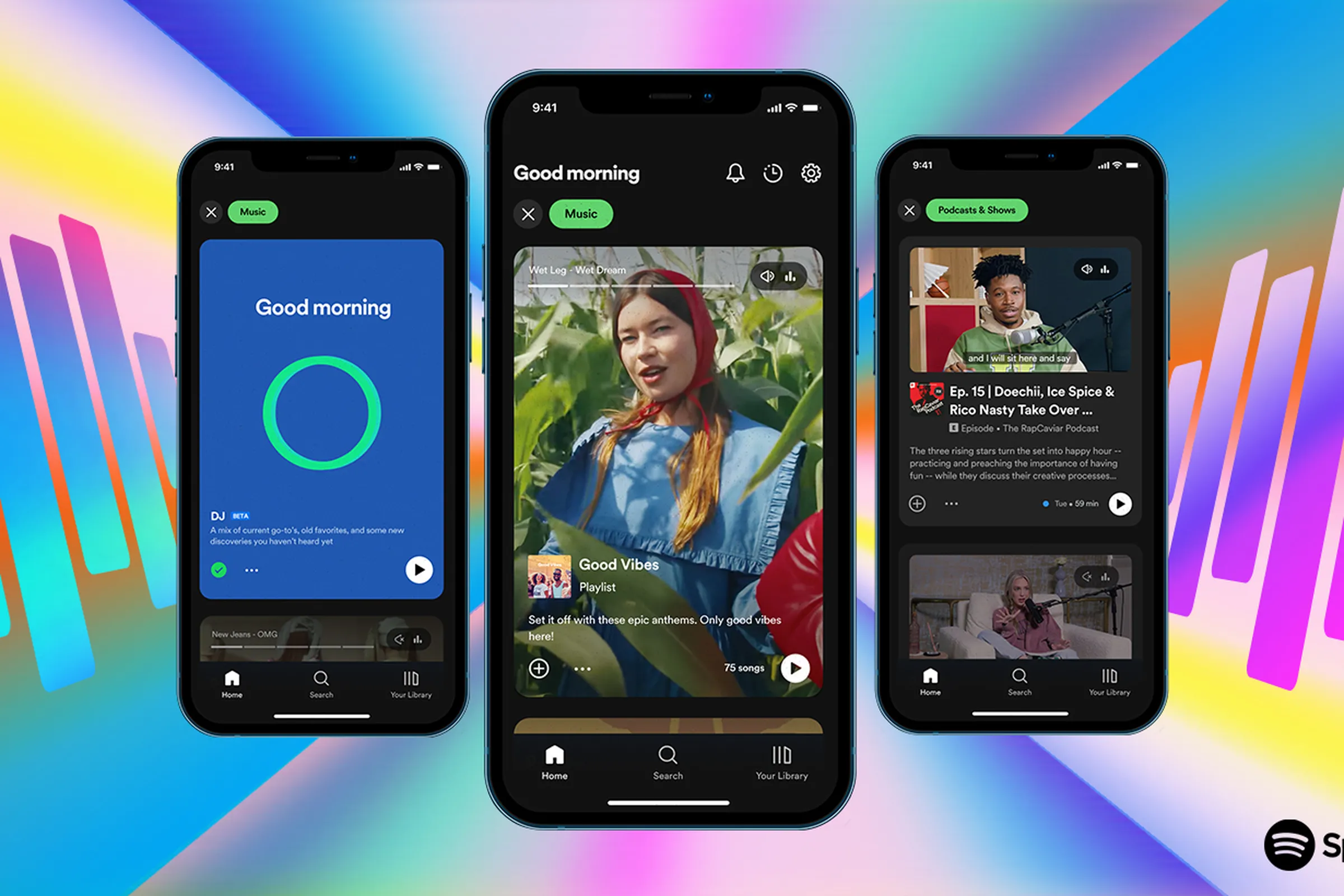
  • Here’s how Spotify will help to prevent self-harm

    Here’s how Spotify will help to prevent self-harm

    Spotify is aiming to create a safer online environment for young people, the popular streaing service announced.

    There’s a recent blog piece by Marcelina Slota (Head of Spotify’s Platform Integrity) that states so.

    With safety being a “top priority” for Spotify, the company aims to make it easier for young people and parents to understand and navigate the digital world. That’s why Spotify announced a new Parental Guide to assist in this effort and joined the Tech Coalition to share best practices within the industry for upholding youth safety.

    The Tech Coalition is an organization that unites the global tech industry to foster a safer online environment for young people by preventing and combating online child sexual exploitation and abuse.

    This partnership expands Spotify’s network of trusted third-party experts who help advise its teams on launching policies and products with safety by design.

    In addition to partnering with global experts, Spotify works to craft a safe and enjoyable experience for young people in several ways, including:

    • Establishing a zero-tolerance policy against content that exploits children and Platform Rules that ban illegal and/or abusive behaviors that could harm children;
    • Leveraging machine learning signals and establishing user reporting mechanisms to detect potential policy and/or legal violations;
    • Staffing teams around the clock to review and promptly remove potentially violating or explicit content; and
    • Connecting potentially vulnerable users to mental health resources when they search for content related to suicide, self-harm, and disordered eating content.

    The aforementioned mental health resources include the US’ National Suicide Prevention Lifeline, the TREVOR Project, National Eating Disorders services, and more.

    So, if you or someone you know is struggling or thinking about self-harm, there are ways to get help. If you’re concerned about self-harm, drug or alcohol usage, or depression, please talk to someone or reach out to one of the organizations listed below for professional support.

  • Spotify official confirms a more premium tier is coming soon

    Spotify official confirms a more premium tier is coming soon

    Spotify’s long-rumored Hi-Fi tier is about to go official. The music streaming service recently confirmed a deluxe version of Spotify that offers a bunch of enhancements is in the works and should be released very soon.

    After adding a basic ad-free plan in June specifically aimed at those who don’t listen to audiobooks, Spotify is ready for the next step. The launch of an even more premium tier will allow the audio giant to tap into a new audience, one that’s looking for excellence.

    On the company’s earnings call, Spotify CEO Daniel Ek said that the upcoming deluxe tier could cost $5 more than the current premium tier pricing. Although the deluxe plan is still in “early days,” Spotify is determined to eventually give it the greenlight since it’s convinced that it caters to a certain type of consumers.

    According to Ek, the even more premium tier of Spotify is going to be “around $17 or $18 price point, but sort of a deluxe version of Spotify that has all the benefits that this normal Spotify version has, but a lot more control, a lot higher quality across the board.”

    The star of this deluxe version of Spotify is the lossless audio feature, which includes listening support for up to 24-bit/44.1kHz that’s going to be available for “limited songs” via the FLAC audio format.

    In addition, the upgraded tier is rumored to include the ability to generate custom playlists based on specific dates, events, activities, but the algorithm will also try to predict user preferences and create playlists accordingly.

    Currently, only three music streaming services offer lossless audio to their subscribers: Amazon Music, Apple Music, and TIDAL. It’s surprising that Spotify hasn’t added this perk to its offering yet, but there’s probably a reason behind this strategy that we’re not aware of.

  • YouTube’s weaker than expected Q2 performance hurts Google parent Alphabet

    YouTube’s weaker than expected Q2 performance hurts Google parent Alphabet

    A 13% year-over-year increase in revenue from YouTube ads during the second quarter of 2024 and a 13.8% annual increase in revenue from Google Search ads helped lead Alphabet subsidiary Google to report an 11% annual gain in advertising for Q2 of 2024. Google Search ad revenue rose from $42.63 billion to $48.51 billion year-over-year and YouTube ad revenue amounted to $8.66 billion up from the $7.67 billion that was generated during the same quarter last year.
    Google said that for the three months ended in June 2024, total Google advertising revenue came to $64.62 billion compared to the $58.14 billion in advertising revenue that came into Google’s coffers during the second quarter of 2023. Traffic acquisition costs rose 6.8% to $13.39 billion which was well worth it to Google thanks to the aforementioned 11% annual hike in Q2 advertising revenue.
    The business unit which includes Pixel devices, Google subscriptions, platforms, and devices, saw top-line growth of 14.4% to $9.31 billion from $8.14 billion. That could indicate growing demand for Pixel phones, tablets, smartwatches, and earbuds. Google’s Cloud business was very strong with the top-line rising 28.8% to $10.35 billion compared to the $8.03 billion that this business generated during the same quarter last year. This was the first time that Google’s Cloud business topped $10 billion in revenue and $1 billion in operating profit during a single quarter.
    Alphabet’s total revenue of $84.74 billion during the second quarter was up from the $74.60 billion reported during the 2023 second quarter. This was a 13.6% increase and helped Alphabet report a 28.6% gain in net income to $23.62 billion for the second quarter of 2024. During the same quarter last year, Alphabet had net income of $18.37 billion. Diluted earnings per share, which assumes the conversion to equity of all convertible debt, was reported by Alphabet to be $1.89 for  Q2 of 2024, up 31.3% from the $1.44 reported for the same quarter in 2023.
    The report did not sit well with Alphabet investors; the shares rose 12 cents during the regular trading session to $181.79 but plunged $3.96 or 2.18% to $177.83 in after-hours trading after the earnings were released. While Alphabet’s earnings and revenue were higher than expected, YouTube’s performance disappointed investors, explaining the subsequent stock sell-off during the extra trading session.
  • Korean Air to order up to 50 widebody Boeing aircraft

    Korean Air to order up to 50 widebody Boeing aircraft

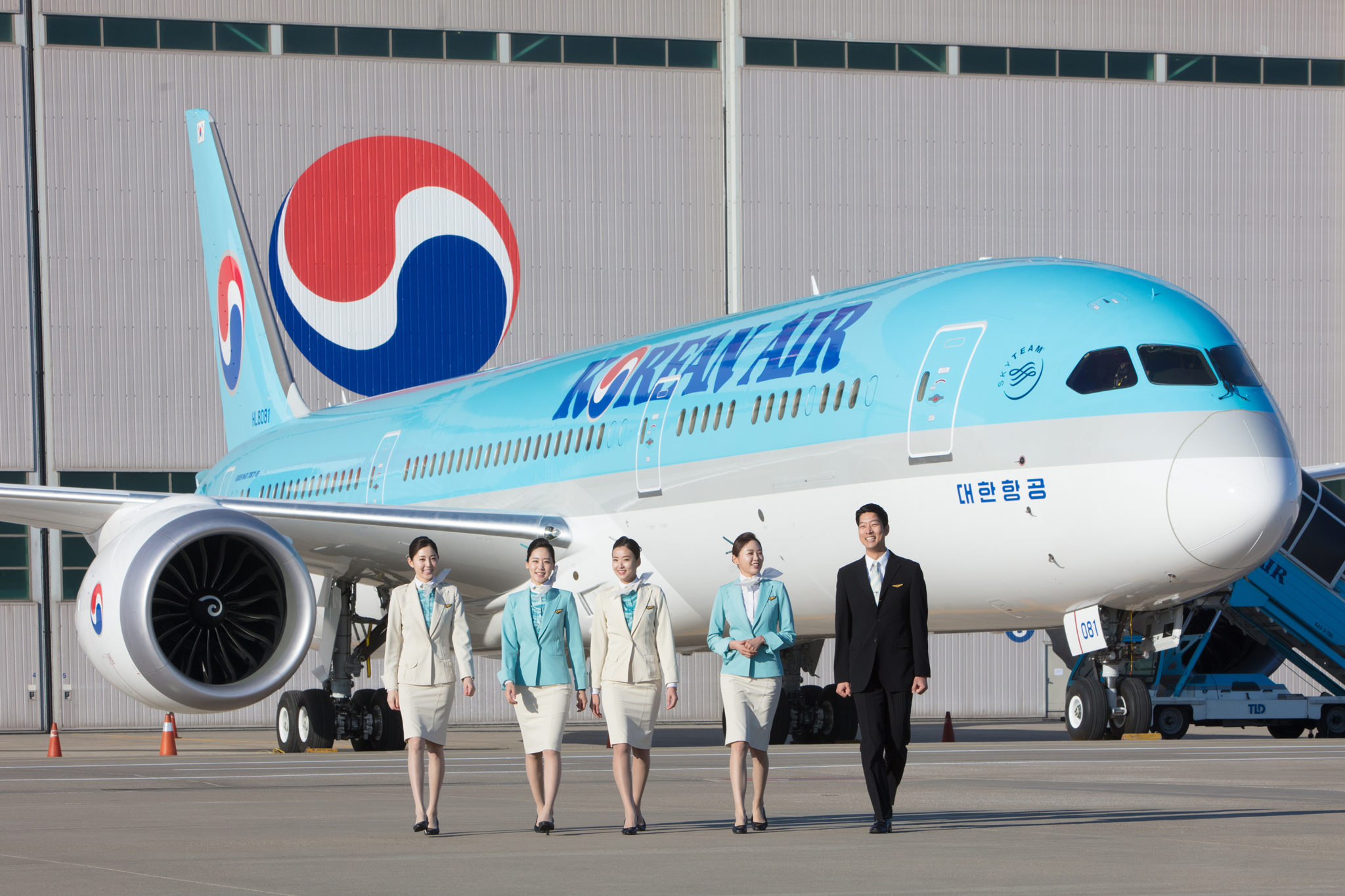
    Korean Air signed a Memorandum of Understanding with Boeing on July 22 at the Farnborough International Airshow to upgrade and expand its widebody fleet. The airline has announced its intent to procure 20 Boeing 777-9s and 20 Boeing 787-10s with options for 10 more of the largest 787 Dreamliner variant.

    The signing ceremony was attended by Walter Cho, Chairman and CEO of Korean Air, and Stephanie Pope, President and CEO of Boeing Commercial Airplanes.

    The 777-9s and 787-10s, with their capability of long-haul flights to regions such as North America and Europe, are expected to play an important role after Korean Air’s merger with Asiana Airlines.

    The 777-9 is known as the most reliable and efficient airplane in the 777 series. The new carbon-fiber composite wings are longer than the previous 777 family airplanes, enabling the airline to achieve an improved fuel efficiency of more than 10%. With a range of over 13,000 kilometers, the 777-9 can provide direct services to all U.S. destinations from Incheon International Airport. The 777-9 has the longest fuselage in the 777 series, with a typical seating capacity of 400 to 420 seats.

    The 787-10 is the largest variant in the 787 family, capable of carrying 15 percent more passengers and cargo than the 787-9 currently in service. It is also more fuel efficient compared to similar-sized aircraft with reduced carbon emissions of over 20%.

    “The addition of the Boeing 777-9 and 787-10 aircraft marks a significant milestone in our strategic objective to expand and upgrade our fleet,” said Walter Cho, Chairman and CEO of Korean Air. “This investment underscores our commitment to providing a best-in-class flying experience. These new airplanes will elevate passenger comfort and enhance operational efficiency, while significantly reducing carbon emissions, supporting our long-term commitment to sustainable aviation.”

    “We are honored Korean Air has selected two of our largest, most efficient widebody airplanes to add capacity to their global network,” said Stephanie Pope, president and CEO of Boeing Commercial Airplanes. “Boeing airplanes have played an integral role in the growth of Korean Air over the past 50 years, and we are confident the 777X and 787 Dreamliner will support the airline’s long-term sustainability goals and continued growth.”

    With the addition of the Boeing 777-9s and 787-10s, Korean Air plans to have a total of 203 next-generation, eco-friendly aircraft in its fleet by 2034, including 33 A350s, 50 A321neos and 20 Boeing 787-9s.

  • Google Wallet now supports even more banks and credit unions in the U.S.

    Google Wallet now supports even more banks and credit unions in the U.S.

    Google Wallet has recently expanded its reach in the financial sector by adding support for 26 new banks and credit unions across the United States. This brings the total number of supported institutions to over 4,700, making Google Wallet a more accessible and versatile payment option for many users.

    The newly added institutions span a wide range of states, including California, Colorado, Illinois, Indiana, Kansas, Michigan, Mississippi, New York, Ohio, Pennsylvania, Texas, Washington, and Wisconsin. Several other banks without a specific home state have also been included in this expansion.

    Some notable additions include:

    • Achieva Health Savings
    • Blackhawk Engagement Solutions
    • Casey State Bank (IL)
    • Citizens State Bank (Lena, IL)
    • Commercial Bank and Trust of PA (PA)
    • Conway Bank (KS)
    • Direct Express
    • Elektra Go
    • Equals Money
    • Farmers State Bank of Calhan (CO)
    • First Family Federal Credit Union
    • HealthPlus Federal Credit Union (MS)
    • Hendricks County Bank and Trust Company (IN)
    • International Bank of Amherst (WI)
    • Ixonia Bank (WI)
    • Kaw Valley State Bank & Trust Company (KS)
    • LoadPay
    • Northwest Plus Credit Union (WA)
    • Paymentus
    • Pine River State Bank (MN)
    • Savannah Bank, NA (NY)
    • Settlers Federal Credit Union (MI)
    • Spentra/AAA
    • The Farmers and Merchants Bank (OH)
    • The First State Bank (TX)
    • The Southern Bank Company (CA)
    This latest expansion marks another milestone in Google Wallet’s journey towards becoming a ubiquitous payment platform. By partnering with over 4,700 banks and credit unions, Google Wallet is not only making digital payments more accessible but also contributing to the broader trend of financial inclusion.
    Furthermore, Google Wallet integrates with other Google services, such as Gmail and Google Maps, making it easier for users to track their spending, manage their finances, and discover new places to shop and dine.
    As Google Wallet continues to expand its network of supported institutions, it is poised to become an even more integral part of the digital payment landscape. With its user-friendly interface, robust security features, and growing list of partners, Google Wallet is a viable alternative to traditional payment methods for many consumers.
  • WhatsApp could add AirDrop-like file sharing feature to its iOS app

    WhatsApp could add AirDrop-like file sharing feature to its iOS app

    WhatsApp has been working on bringing a file-sharing feature to Android users for a few months now. The first proof that WhatsApp plans to introduce this functionality dates from April, but only the Android platform was mentioned in relation to this specific feature.

    Due to the limitations of the iOS ecosystem, bringing the same file-sharing feature to Apple fans would have required a slightly different strategy. Thankfully, WhatsApp seems to have found the right formula to allow users to share files through its app, similar to what AirDrop allows users to do.

    The folks at WABetaInfo discovered in the latest WhatsApp beta for iOS 24.15.10.70 update from the TestFlight app that the same file sharing feature tested on Android is likely to be added to the iOS app too.

    With the new feature iOS users will be able to share files with people nearby using WhatsApp’s iOS app. However, the feature works slightly differently on iOS, as users are required to scan a QR code in order to start receiving the shared files, whereas Android is using a nearby device detection method that doesn’t involve any extra steps to share files.

    The file-sharing feature is expected to work across different platforms no matter what type of phone/tablet users have. If the implementation of the feature remains the same as in the beta version of WhatsApp, iOS users will have to follow one or more extra steps to start sharing files

    According to the report, the AirDrop-like file sharing feature is still in the early stages of development, so WhatsApp can still significantly change its implementation approach.

    Obviously, there’s a slim chance that WhatsApp won’t add the ability to share files with nearby people at all, or at least not in the near future. We’ll be keeping an eye on this one since it seems to be one of the more important features that WhatsApp is still missing.

  • DHL and Envision team up for sustainable innovations in logistics and energy

    DHL and Envision team up for sustainable innovations in logistics and energy

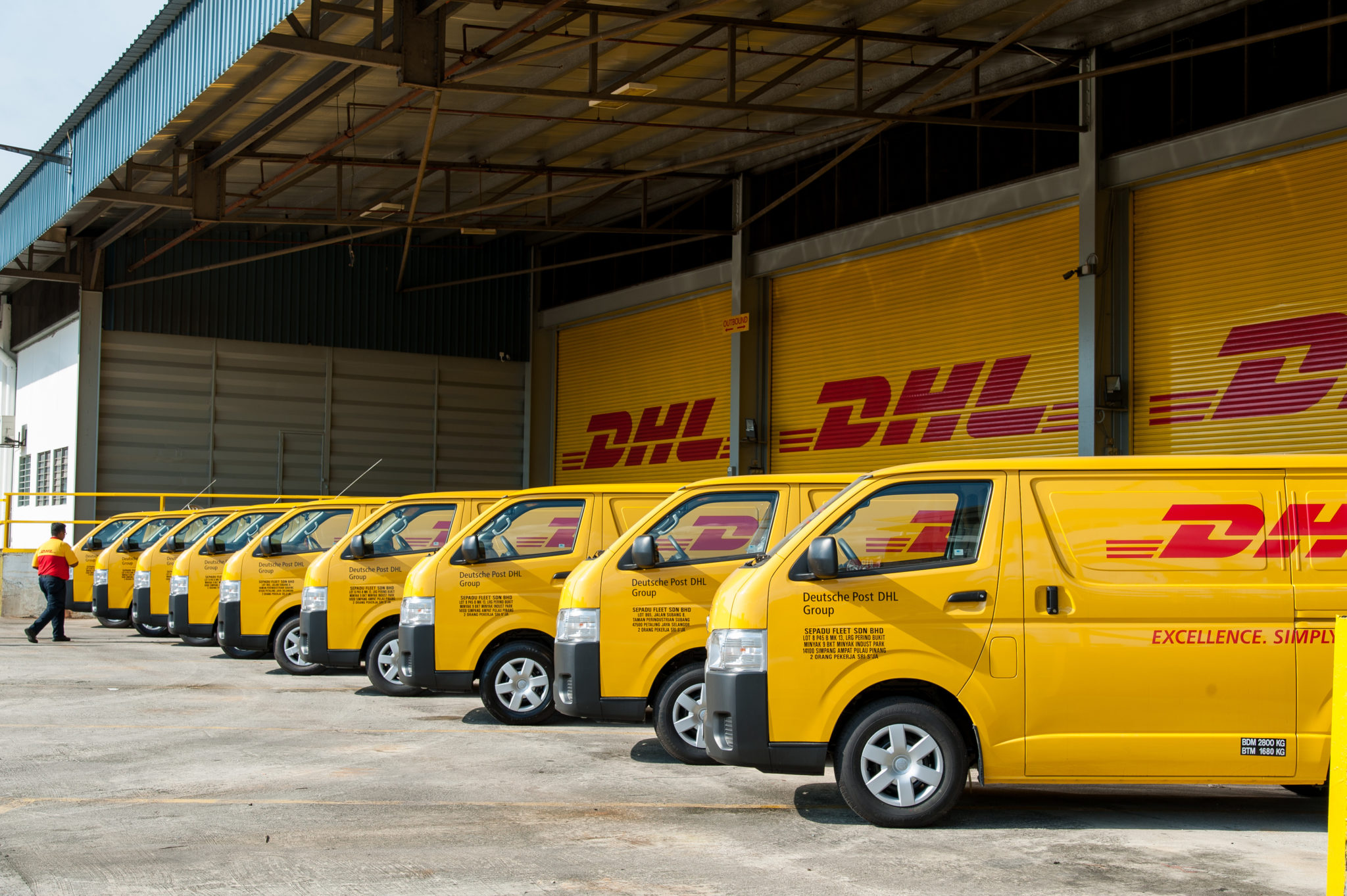
    Envision Group, a leading global green technology company, and DHL Group, the world’s leading logistics company, signed a Strategic Partnership Agreement to foster a comprehensive cooperation in logistics solutions and mutually accelerate the progress of sustainability targets. The partnership covers four main areas: logistics solutions, Sustainable Aviation Fuel (SAF), green energy, and the joint development of a “Net Zero Industrial & Logistic Park”. The partnership will combine DHL Group’s extensive logistics expertise with Envision’s knowledge of renewable energy solutions, aiming to accelerate the advancement of environmental energy initiatives. Both companies are committed to sustainability with targets to reach net-zero emissions.

    SAF is a key focus area in the scope of this partnership. Both companies recognize SAF as a critical component in reducing carbon emissions in air transportation and advancing the decarbonization of the aviation industry, with DHL aiming to increase the SAF mix to 30% by 2030. In this strategic collaboration, Envision will provide SAF for DHL, supporting the logistics company’s goals of reducing carbon emissions while securing global supply. Envision will also explore renewable feedstock sources and technology routes to continuously advance decarbonization in the air transportation sector.

    Zhang Lei, Chairman of Envision Group, said, “The transportation sector, mainly sustainable fuel, represents a critical frontier in the transition to zero-carbon emissions but is currently trailing targets largely due to high costs associated with green hydrocarbons and their derivatives. Envision aims to address this cost barrier through systematic technological innovation, revolutionizing the production of SAF products, and facilitating the large-scale industrial development of this “new oil” to support global efforts towards carbon neutrality.”

    Additionally, Envision will provide comprehensive green energy transition solutions, including electricity, to support DHL’s renewable energy goals through focused green power procurements.

    The agreement establishes DHL as a key strategic partner for Envision’s development plans, leveraging DHL’s extensive network across over 220 countries and territories to support Envision’s goals in entering new markets for renewable energy. As Envision’s preferred logistics partner, DHL will deploy fully integrated logistics solutions to improve efficiency and quality, ensuring seamless global supply chain management, and comprehensive support in navigating regulatory requirements and operational challenges.

    “The partnership framework with Envision represents a further step towards global sustainability leadership for DHL Group. By leveraging our unparalleled logistics expertise and unique global network, we are committed to supporting Envision in their international expansion and logistical challenges.” said Tobias Meyer, Chief Executive Officer at DHL Group. “Together, we will lead the change in integrating green technologies and optimizing supply chains, setting new benchmarks for sustainable innovation and global environmental impact through the energy transition.”

    Envision and DHL will also explore opportunities for the joint development and construction of a “Net Zero Industrial & Logistic Park” across various industry sectors. The “Net Zero Industrial Park” is a new class of industrial parks that are fully powered by a comprehensive clean energy solution and integrates the supply chains of several industries, such as electric vehicle and battery manufacturing. The Park aims to advance new electric power systems models and foster green industrial ecosystems, while ultimately expediting the global green transition for customers. Initially launched in China by Envision, it is now expanding to Europe, the Middle East, and beyond, with the support of DHL, providing innovative solutions for global zero-carbon transformation.

  • Dollar rises against dong

    Dollar rises against dong

    The U.S. dollar strengthened against the Vietnamese dong Monday morning.

    Vietcombank sold the dollar at VND25,474, up 0.06% from the weekend. The greenback is sold at VND25,740 on the black market, down 0.04%.

    The State Bank of Vietnam (SBV)’s reference rate rose 0.06% to VND24,261.

    The dollar has increased against the dong by 4.32% since the beginning of the year.

    Globally, the dollar eased on Monday in the initial reaction to U.S. President Joe Biden’s decision to end his reelection campaign, clearing the way for another Democrat to challenge Donald Trump.

    The U.S. currency slipped 0.08% to 157.38 yen early in the Asian day, while the euro gained 0.11% to $1.0895.

    Biden announced he was exiting the race on Sunday, and endorsed Vice President Kamala Harris to replace him as the Democratic candidate in the November election.

    Commonwealth Bank of Australia strategist Joseph Capurso warned it was too early to read too much in the dollar’s reaction.

    “The bottom line is what the polls show this week,” Capurso said, explaining that a decline in odds for a Trump win should see the dollar weaken, and vice versa.

  • Export permit hurdles for Malaysia’s fresh durian shipment to China

    Export permit hurdles for Malaysia’s fresh durian shipment to China

    Malaysia is preparing to deliver its first shipment of fresh durians to China, but obtaining approved permits might be difficult for exporters and farmers.

    Malaysia was granted permission to export fresh durians to China under a phytosanitary protocol signed on June 19 during Chinese Premier Li Qiang’s visit to the country.

    However, while the protocol gave the country the green light to export fresh durians, the actual export date was not confirmed, according to Malaysia’s national news agency. Earlier this month, Malaysia’s Agriculture Department director general, Nor Sam Alwi, noted the country is preparing to deliver the first 1,000 tons of fresh premium durians to China, but the export agreement has yet to be finalized.

    “We expect (it exported in) October but everything depends on the speed and approval from the General Administration of Customs of the People’s Republic of China (GACC)

    While Malaysian farmers are eager to capitalize on the durian market, they must wait until September for their applications for approved permits to be reviewed by China’s customs.

    But getting a permit is not just about waiting, as farmers and exporters must also meet the strict requirements set by China.

    “China requires a certain quantity and quality before accepting the fruits,” Food Security and Cooperative Development Committee chairman Fahmi Zainol said. “There needs to be enough quantity of the same ‘brand’ (type) of the fruit, but Penang farmers who have a mixed variety of durian species face difficulties in fulfilling this (requirement).”

    Durian farmer Tan Chee Keat, who has been exporting fresh durians to China for eight years under a special approval, added that they must also adhere to GACC’s many protocols and fulfill hazard analysis and critical control point procedures for food safety management.

    “It is not easy and not many farms here can do so.”

    Malaysian durian expert Lim Chin Khee said that the country’s current production of fresh durians is sufficient to export to China, but maintaining the fruit’s quality, especially during transport, might be a challenge.

    “Ensuring the freshness of durians during transport requires robust cold chain logistics infrastructure, which may necessitate significant investment and coordination,” he noted.

    Abdul Rashid Bahri, director general of Malaysia’s Federal Agricultural Marketing Authority, said that approximately 70 packing centers across the nation are currently under review by the Agriculture and Food Security Ministry.

    Additionally, over 200 durian farms that meet national agricultural standards are seeking to undergo the auditing process to become eligible for export, he added.

    Before the signing of the protocol, Malaysia had been selling durians as pulp, paste, and frozen whole fruit to China.

    Last year, it exported RM1.19 billion (US$252.2 million) worth of durian to China, making the country its key market.

  • Singapore’s ride-hailing platform Tada sets sight on Hong Kong

    Singapore’s ride-hailing platform Tada sets sight on Hong Kong

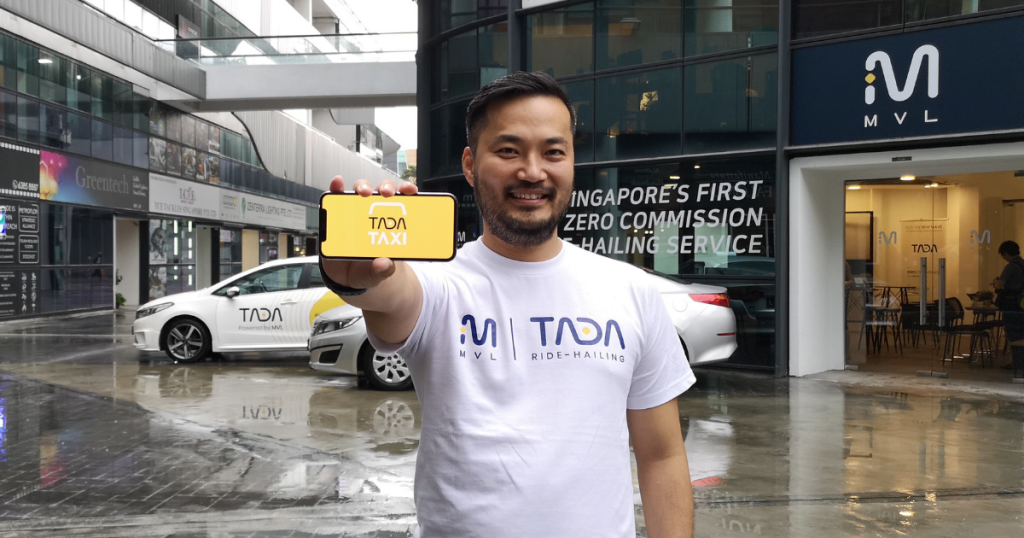
    Singapore-based ride-hailing company Tada will expand to Hong Kong in November with up to 4,000 vehicles as part of a collaboration with local taxi firms.

    “Singapore and Hong Kong share many similarities, which allows us to bring what we have learnt from our success in Singapore over to Hong Kong,” Tada’s chief executive officer Sean Kim said.

    As Hong Kong does not allow drivers to operate transport services without a taxi or car-hire permit, ride-hailing firms such as Uber have been focusing on partnering with taxi drivers.

    Tada charges a fixed platform fee per ride instead of a flexible commission as other ride-hailing apps.

    This policy appeals to drivers as it allows them to keep more of their earnings and will result in better service, Kim said.

    Tada was established in 2018 and is one of five ride-hailing platforms licensed in Singapore.

    Hong Kong has three services currently operating in the city, including U.S.-based Uber, Beijing-based Didi.

  • Google Messages might finally support sending high quality photos over RCS

    Google Messages might finally support sending high quality photos over RCS

    Google Messages and RCS (Rich Communication Services), the next step in SMS messaging (a greatly enhanced step, if you ask me), is going to get even better with Google’s future improvement

    The enhancement has to do with the way Google Messages handles images sent through the app – people have been complaining for a while now that the pictures are getting excessively compressed.

    For example, users are reporting that Google Messages over RCS shrunk a 50MP/6MB image down to just a 1.9MP/147kB shadow of its former self. That’s a lot of data lost, which equates to a worse quality. Not fun!

    That’s a pity, since RCS makes the default messaging app into a social media-like experience similar to WhatsApp, allowing users not only to send photos, videos, GIFs, and various other files, but RCS also supports end-to-end encryption, read receipts, and typing indicators.

    A change is going to come rather sooner than later, though: Google is apparently going to address the issue. According to the report, Google is finally going to increase the image compression limit.

    The analysis discovered code strings suggesting that users could soon send images up to 8,192 pixels wide and tall with JPEG quality set to 100. If the “Send Photos Faster” option is enabled, images will be compressed to 2,408 pixels with JPEG quality reduced to 90. Currently, this option compresses images to 1,600 pixels, significantly affecting their quality.

    This issue isn’t inherent to RCS, as other apps like Samsung Messages also use RCS without such limitations. The problem lies with Google, and if the company implements this change, users will notice a significant improvement in image quality sent through Google Messages. This change might be influenced by Apple’s decision to support RCS in its Messages app with iOS 18, as Google has frequently urged Apple to adopt RCS.

  • Dollar gains on black market

    Dollar gains on black market

    The U.S. dollar rose against the Vietnamese dong on the black market Friday afternoon.

    Unofficial exchange points sold the greenback at VND25,750, up 0.53% from Thursday.

    The State Bank of Vietnam kept its rate unchanged at VND24,246.

    The dollar has risen 5.36% to VND25,750 against the dong this year.

    Globally the dollar was poised to snap a two-week losing streak on Friday, as traders pondered the U.S. rates outlook, while the yen was steady after inflation in Japan accelerated for a second month, keeping the prospect of a rate hike there on the table.

    The U.S. dollar was on the front foot in Asian hours after a stormy week that saw the yen, euro and sterling make significant gains against the greenback as investors fully price in a rate cut from the Federal Reserve as soon as September.

    The yen was at 157.72 per dollar after touching a six-week high of 155.375 on Thursday, according to Bank of Japan data. This was in the wake of Tokyo’s suspected interventions last week that could total nearly 6 trillion yen ($38.14 billion).

  • VinFast VF 5 Vietnam’s most popular car by wide margin

    VinFast VF 5 Vietnam’s most popular car by wide margin

    VinFast sold 13,000 units of its VF 5 electric car in Vietnam in the first half of the year, making it the top seller in the market.

    A person familiar with the matter said that 20,000 VF 5s were sold globally.

    Mitsubishi Xpander was the second most popular car in Vietnam with 7,773 units, followed by the Ford Ranger, which sold almost exactly the same number.

    But analysts said it is still early to decide if VinFast has won over Vietnamese consumers with the crossover VF 5 as a large number were bought to be used as taxis and ride-hailing vehicles.

    “Eventually all car manufacturers want to sell to retailers, not taxi companies,” an analyst who asked not to be identified said.

    We are making efforts to convince retail consumers to buy the VF 5 by offering personalized color choices and other incentives.

    Many ride-hailing drivers buy the VF 5 for its affordable price and the fact that electricity is cheaper than gasoline.

    Overall, 154,265 cars were sold in the first six months, down 7% year-on-year, according to data from the Vietnam Automobile Manufacturers Association and Hyundai Thanh Cong, which sells Hyundai cars.

    VinFast does not release data by market but said it delivered 21,800 units globally, down 8% year-on-year.

  • Dollar weakens on black market

    Dollar weakens on black market

    The U.S. dollar fell against the Vietnamese dong on the black market Tuesday morning. Unofficial exchange points sold the greenback at VND25,690, down 0.35% from Wednesday.

    Vietcombank kept its rate unchanged at VND25,457. The State Bank of Vietnam’s reference rate was stable at VND24,245.

    The dollar has risen over the dong by 4.16% since the beginning of the year.

    Globally, the dollar hung around five-week lows on Tuesday as comments from Federal Reserve Chair Jerome Powell bolstered the case for a rate cut in September, while cryptocurrencies gained on rising odds of former President Donald Trump getting reelected.

    Powell said on Monday that the three U.S. inflation readings over the second quarter of this year “add somewhat to confidence” that the pace of price increases is returning to the Fed’s target sustainably.

    The euro was a shade lower at $1.0893, while sterling last fetched $1.2967. The dollar index, which measures the U.S. unit versus six peers, was at 104.3, not far from the one month low of 104 it touched on Monday.