Tag: asia

  • HSBC Grants Extra Day Off in Hong Kong

    HSBC Grants Extra Day Off in Hong Kong

    Due to «unprecedented circumstances» British lender, HSBC is giving its Hong Kong employees an extra day off in 2020. The bank employs about 21,000 people in the city.

    In a gesture of encouragement as six months of continuing street protests have roiled the financial hub, British bank HSBC is giving its Hong Kong employees an extra day off next year. The decision was announced in an internal memo on Monday by Diana Cesar, the bank’s local chief executive. The memo was confirmed by a bank spokeswoman.

    Thanks to your perseverance and dedication, HSBC has been able to sustain our operation and stand by our customers in these unprecedented circumstances, Cesar said in the memo. HSBC employs about 21,000 people in the city and makes around 90 percent of its profit in Asia.

  • Cebu Pacific profit surges by 143%

    Cebu Pacific profit surges by 143%

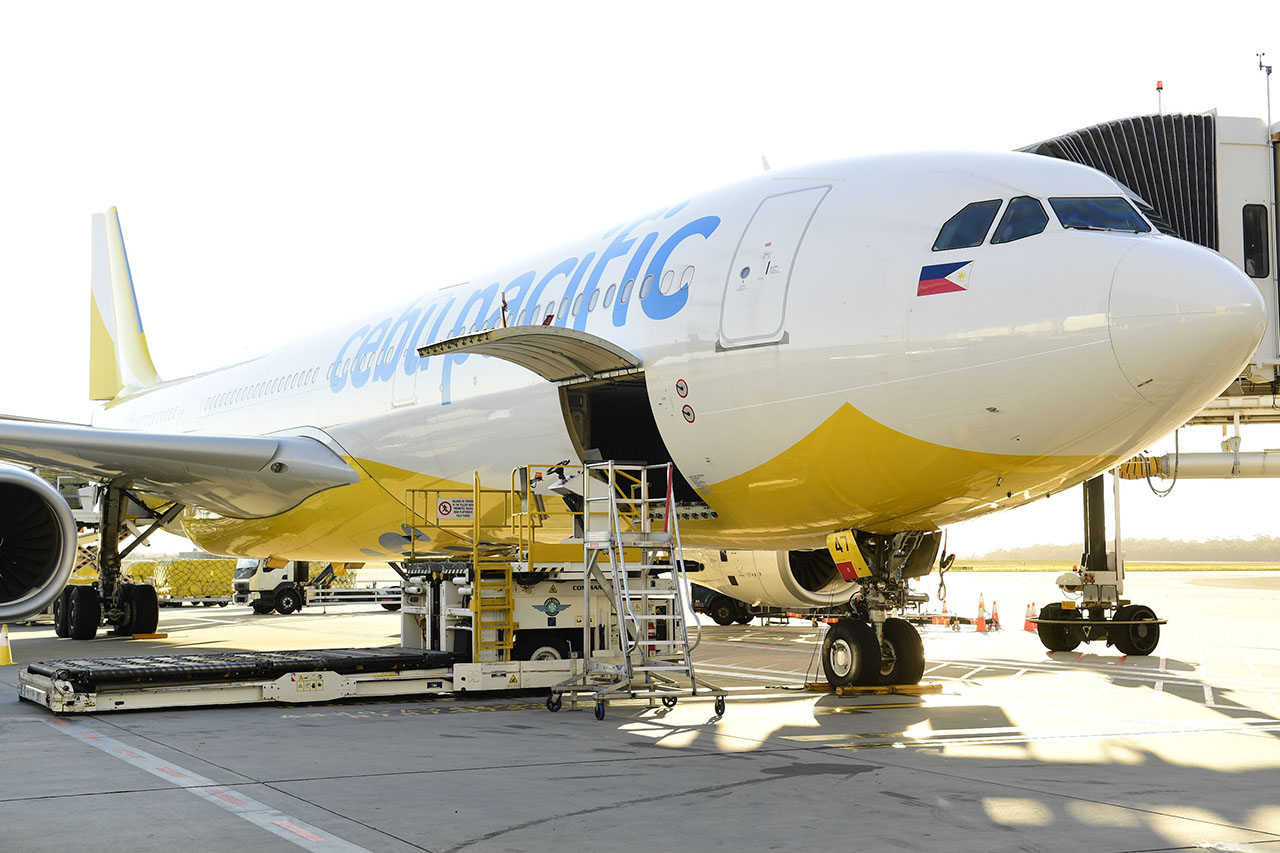
    The operator of budget airline Cebu Pacific saw its net income surge by 143 percent in the first nine months of the year as earnings were lifted by strong passenger bookings and stable costs.

    Cebu Air Inc., a subsidiary of the Gokongwei family’s JG Summit Holdings, said on Tuesday that net income from January to September hit P6.75 billion versus P2.78 billion during the same period last year.

    Cebu Air has been ramping up capacity to meet the rising demand for air travel. Passenger revenue during the nine-month period went up 17.9 percent to P46.6 billion. Some 16.7 million flyers used Cebu Air during the period, representing a growth of 10.4 percent.

    Moreover, average fares went up 6.7 percent to P2,794, the budget airline said. Other revenue sources such as cargo and ancillary also went up 5.3 percent and 22.2 percent, respectively.

    Overall, Cebu Air’s revenue increased by 17.7 percent to P63.62 billion.

    Cebu Air said expenses were mostly kept in check during the period. Operating expenses increased 7.8 percent to P53.81 billion, in line with expanded operations.

    Flying operations alone went up 2.5 percent to P22.56 billion. Cebu Air said this was mainly due to pilot training costs as it took delivery of new planes. Fuel expenses also dropped 1.4 percent or P260.67 million during the period.

    For the third quarter alone, Cebu Air posted a net loss of P384.3 million, narrower than the previous year’s loss of P518.43 million. Revenue of P18.92 billion, up 16.7 percent, alongside stable operating costs helped lower losses during the third quarter of 2019.

    Cebu Air ended September with 72 planes. Its fleet was comprised of 31 Airbus A320, seven Airbus A321 CEO, three Airbus A320 NEO, two Airbus A321 NEO, eight Airbus A330, eight ATR 72-500 and 13 ATR 72-600.

    Its network spanned 80 domestic routes and 41 international routes with a total of 2,727 scheduled weekly flights.

  • KitchenAid India launches its first brand-new Experience Store in India

    KitchenAid India launches its first brand-new Experience Store in India

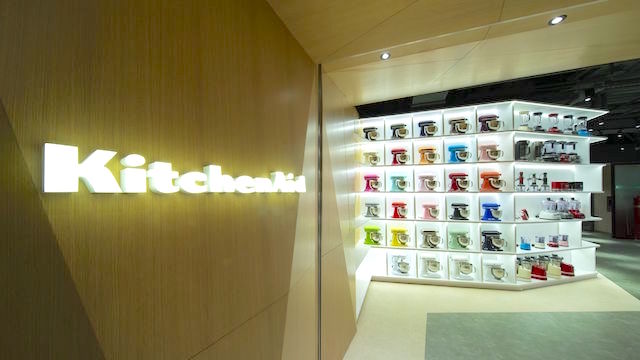
    KitchenAid India, An International Premium Home Appliances Brand has launched its first & exclusive Experience Store in Ghitorni, New Delhi. They organized an event, “Where Makers Unite” to celebrate the inauguration of the store.

    Passionate makers from different locations of Delhi NCR came to Ghitorni to explore the design & performance of KitchenAid’s premium appliances, LIVE. The demonstration of each product was discovered through a special recipe cooked by MasterChef Ashish Singh. He immersed the audience with his innovative flavors that included mulled wine green tea, mushroom walnut Galouti, and various other delicacies. They also hosted an expert mixologist, Gaurav Chauhan on the floor, who was seen crafting fresh & enticing drinks with the powerful performance of the KitchenAid Blender. His recipes included plum pudding, salted caramel shake, and many more mouth-watering drinks.

    With their Experience Store, people had the opportunity to explore the design of every product and delve into the specific features from the iconic collection of Stand Mixers, Blenders, Food Processors, Toasters, Hand Blender and various other premium appliance. All the appliances showcased at the store are designed with ease and ergonomics in mind, KitchenAid’s chic and sturdy metal structures come in a wide range of signature colors, known for their placid and versatile performance – the Stand Mixer has its unique ‘planetary’ motion and the powerful 10-speed motor. With this inauguration, KitchenAid gave them an opportunity to learn new cooking tips & recipes with their wonderful range.

    Vivek Chaudhary, Country Head, KitchenAid, shared a few words about the store & the launch – “It was a delight to see such passionate people at the event. The Experience Store is a space to unearth the beauty of each appliance & learn about their performance. KitchenAid Appliances are known for their elegant features of exceptional craftsmanship, durability, quality of material and robustness.”

    “We aspire to bring an incredible experience to the makers with a complete range of premium countertop kitchen appliances. With this attempt we aim to expand our reach and become the number one choice for not just chefs but also passionate makers”, he added.

  • Vietjet Announces New Routes to Seoul to Celebrate 30th Anniversary of ASIAN – South Korea Relations

    Vietjet Announces New Routes to Seoul to Celebrate 30th Anniversary of ASIAN – South Korea Relations

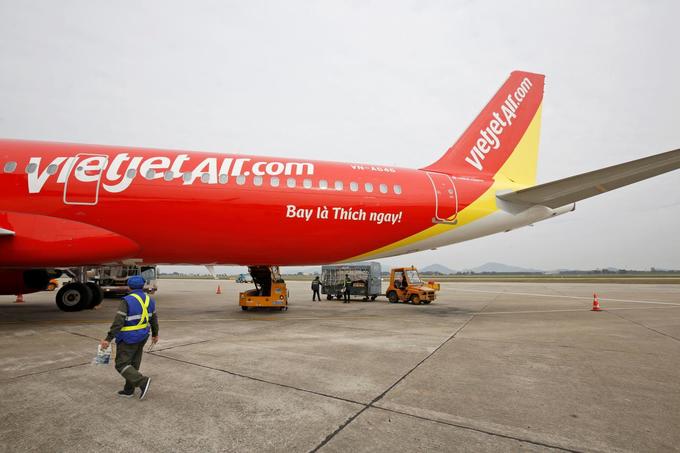
    To celebrate the 30th anniversary of the relations between the Association of Southeast Asian Nations (ASEAN) and South Korea, as well as the recent Mekong – South Korea summit, new-age carrier Vietjet has announced plans for new routes that will connect some of Vietnam’s largest and fast-growing tourist destinations, such as Da Lat, Can Tho, Nha Trang and Phu Quoc with Seoul.

    The announcement ceremony took place during the Vietnam – South Korea Business Forum on 28 November 2019 in Seoul, South Korea, and was attended by Prime Minister of Vietnam Nguyen Xuan Phuc, Deputy Prime Minister of South Korea Hong Nam-Ki and senior leaders from both the South Korean and Vietnamese governments.

    Connecting Seoul, the dynamic capital of South Korea, with Dalat in Vietnam’s Central Highlands, Can Tho in Southwest Vietnam’s Mekong Delta, Nha Trang on the south-central coast of Vietnam and Phu Quoc, also known as Vietnam’s “Pearl Island”, means that Vietjet’s new routes will boost tourism and trade in the two regions. It will also boost cultural exchanges between the two countries while forging closer ties between South Korea and ASEAN, one of the world’s fastest-growing economic blocks.

    Starting from January 2020, the new Seoul (Incheon) – Can Tho route is planned to operate three return flights per week, while the new Seoul (Incheon) – Da Lat route will fly four return flights per week, each with a flight time of more than five hours per leg. The two current routes linking Seoul (Incheon) to Nha Trang and Phu Quoc will also increase frequencies to meet the increasing passenger demands.

    Speaking at the ceremony announcing the launch of the new routes, Vice Chairman of Vietjet Nguyen Thanh Hung thanked the governments of Vietnam and South Korea for creating opportunities for business investment and cooperation between the countries. He also pledged that the airline will continue its mission to offer more flights with new upcoming routes with Vietjet’s modern fleet. He added that all Vietjet passengers can look forward to being served by a team of dedicated and friendly cabin crew, pointing out Vietjet’s stellar standards for safety and technical reliability.

    Mr. Nguyen Thanh Hung also expects that the close relations between Vietnam, the rest of ASEAN and South Korea will contribute to the expansion of the regional aviation sector around the globe.

    With the two new routes, Vietjet operates the most number flights connecting Vietnam and South Korea with a total of 11 routes and up to 480 flights per month. The airline’s growing network has helped to boost bilateral ties and improve strategic cooperation between the two nations, creating a positive impact on the relations between ASEAN and South Korea.

  • Startup launches liquor delivery service in Christchurch

    Startup launches liquor delivery service in Christchurch

    Delivery startup Give Me Bread has added liquor delivery in Christchurch along with its restaurant food delivery services.

    To order, the Give Me Bread app allows customers to tap a photograph of what he or she wants and place an order in which the drivers will then deliver directly to the customer’s doorstep in 30 minutes. Orders can also be placed on the retailer’s site.

    Liquor orders can be made with or without meals.

    “Our customers love how easy it is to order their favorite drink in seconds,” said Abhay Pratap, Give Me Bread marketing manager. “We have repeat orders every week from busy professionals who want the simplicity of their favorite beverage arriving at the door – perfect for when visitors arrive unexpectedly.”

    Pratap started the business with Chandhi Jain, the company’s operations manager, in 2017

    “Many people are so busy that some days they just don’t want to spend half an hour making dinner, or another half an hour doing the dishes. That’s where we come in,” Jain said.

    Give Me Bread have dedicated drivers who deliver the liquor and meals all over the city.

  • Frozen-themed cafes pop up in Japan

    Frozen-themed cafes pop up in Japan

    Frozen-themed cafes are popping up in Japan, marking the release of the Disney animated film Frozen 2.

    A Frozen-themed cafe has opened as a time-limited pop-up at Oh My Cafe at Tokyu Plaza in Harajuku. The themed pop-up will remain open until January 13. A second Frozen pop-up cafe is planned to open at Gelato Pique Cafe in Tamagawa Takashimaya today, running through to January 26.

    The cafes offer dishes themed and stylized according to characters from the movie, particularly loved in the Japanese market since the screening of the original film in 2014. They also sell merchandise related to the Frozen franchise.

    Additional Frozen-themed cafes are set to launch in Fukuoka, Nagoya, Osaka, Hokkaido, and Kyoto.

  • UK stationery brand Paperchase launches in Malaysia and Singapore

    UK stationery brand Paperchase launches in Malaysia and Singapore

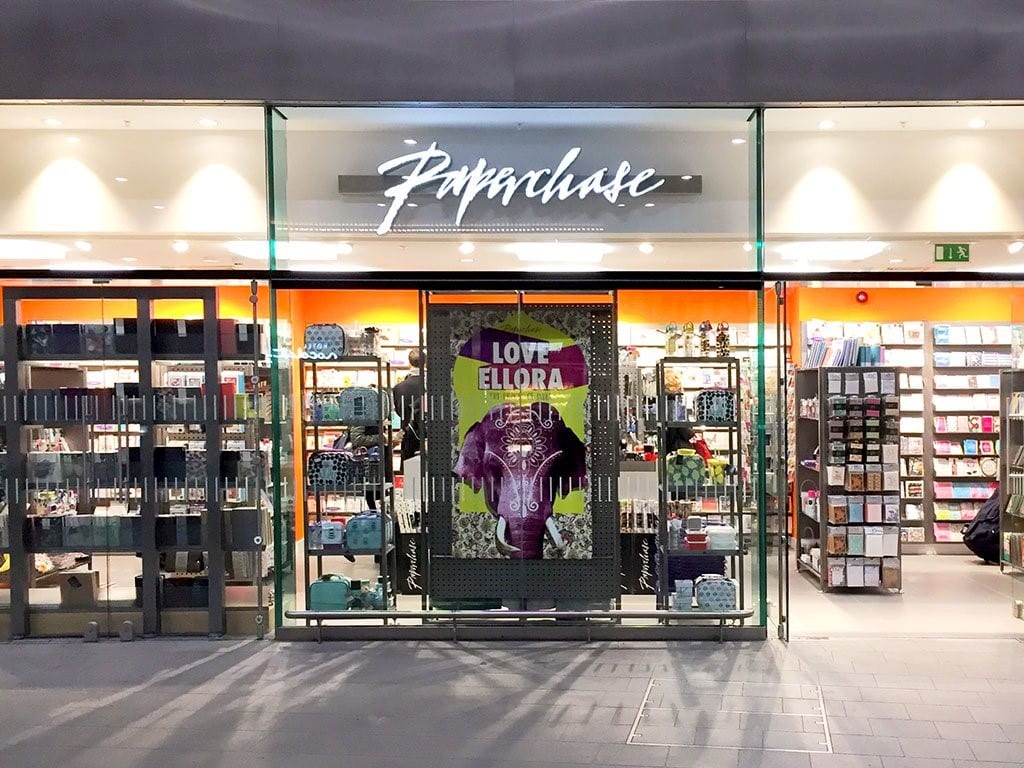
    British stationery brand Paperchase is now selling in Malaysia at selected MPH bookstores.

    According to a Malaysian Reserve report, the London-based firm – one of the largest gifts and stationery retailers in the UK – is joining brands such as Typo and Smiggle in planning their Asia expansion, with selling in Malaysia and Singapore the first step. It is currently seeking further retail partners in various countries.

    “Being the exclusive partner of Paperchase in Malaysia and Singapore, it is our aim to introduce new and interesting merchandise by reputable brands and make it available to our customers,” said MPH GM of business and strategic development Ivy Tan.

    “Having these unique offerings in our store also helps us differentiate our offerings and stand out from other players in the market.”

    Paperchase operates more than 200 stores internationally.

  • Filipino ice-cream Carmen’s Best opening in Singapore

    Filipino ice-cream Carmen’s Best opening in Singapore

    Premium Filipino ice-cream chain Carmen’s Best has opened its first overseas store in Singapore.

    The store, which held its soft opening on Monday at Capitol Singapore, offers fresh milk-based ice creams in flavors such as milk chocolate, butter pecan, and Sicilian-sourced pistachio. The brand is launching a Singapore-exclusive cheese flavored ice cream that contains chunks of cheese.

    Owner and founder Paco Magsaysay have stated a goal to become a “Filipino-made, world-class ice-cream brand.”

    The brand began as a dairy farm serving a growing number of stores and partners before launching its ice-cream products.

  • Japan retail sales tumble as tax rise takes effect

    Japan retail sales tumble as tax rise takes effect

    Japan retail sales fell by 7.1 percent in October – the greatest single monthly fall in almost five years.

    The reason: the implementation of a sales-tax increase from 8 percent to 10 percent on October 1, aimed at helping reduce the country’s public debt, which is running at twice the size of its GDP.

    The headline figure was driven by a significant reduction in sales of big-ticket items such as motor vehicles and appliances. But department stores and apparel retailers also bore the brunt.

    Japan retail sales fell by 14.4 percent month on month, higher than the 13.7-per-cent month-on-month decline which followed previous sales-tax increases 1997 and 2014.

    Some analysts, however, have suggested the October decline may have been worsened by weather during the month, which included severe typhoons in the central and eastern parts of the country. There was also likely to be an element of extra spending in September as consumers tried to mitigate the tax effect.

  • Starbucks China staff benefits programme offers education, health and pet care

    Starbucks China staff benefits programme offers education, health and pet care

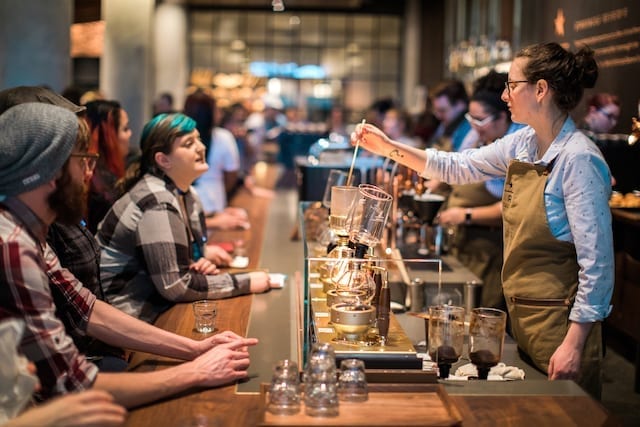
    A new Starbucks China staff benefits program has been launched, with a range of support options for employees who have served two years.

    From January 1, qualifying partners (employees) will each be given credits they can use to select from a range of benefits. Each benefit has been designed to meet the needs and aspirations of different partners in the increasingly diverse Starbucks China Family.

    With an estimated 18,500 partners eligible for the Starbucks China staff benefits program, dubbed Flex Star Benefits, the initiative constitutes a significant investment for the company.

    To support partners’ physical and mental well-being, Starbucks encourages them to use their credits to learn a new skill, or take up a hobby that relaxes the mind and body amid the hustle and bustle of everyday life. Partners may also simply apply for a five- or 10-day mini ‘coffee break’ to recharge their batteries.

    Protecting partners’ health is another area the new program covers. Partners may use credits for HPV vaccinations that protect against diseases like cervical cancer. The benefit can be extended to partners’ female family members and even friends, a first for Starbucks. In addition, the credits can be used to upgrade partners’ current benefits such as annual health checkups.

    The Starbucks China staff benefits program also supports partners in taking care of those who matter most to them. For partners working away from their hometowns, the program allows up to three additional days of paid leave so that they can spend more time with their families on their home visits. They also have the option to use their credits for discounted travel tickets, to allay any financial concerns should they need to return home in the event of a family emergency.

    In addition, Flex Star Benefits expand Starbucks existing schemes to cover ‘life partners’ beyond the immediate family – regardless of status or gender. Another inclusion is ‘paternal care’ benefits for pets. Under the new program, pet-owning partners may enroll their pets into an insurance scheme or claim reimbursement for their pets’ medical expenses. Partners who adopt pets will be granted an additional day of annual leave.

    Finally, Starbucks encourages partners to contribute to local communities, allowing them to earn additional credits by participating in social impact activities. They can also donate their credits to the Starbucks China Cup Fund, to help fellow partners in urgent need of financial assistance.

    “Starbucks success in China is down to the passion and dedication our partners bring to work every day – in every cup of coffee they brew, and every customer connection they make,” said Starbucks China chairman and CEO Belinda Wong.

    “Since entering China 20 years ago, Starbucks has always strived to be a different kind of company. We want to share our success with all partners, in a timely and thoughtful manner that recognizes their individual needs – because each of our 55,000 partners is special.”

    Over the years, Starbucks has introduced benefits such as comprehensive insurance for spouses and children of all partners, and critical illness insurance for parents. Housing subsidies are provided to 26,000 partners who work away from their hometowns, while partners may also apply to return to work in newly-opened Starbucks stores in their hometowns under the Coming Home program.

    In addition, Starbucks China also offers partners opportunities to expand their horizons through a talent exchange program, which has helped more than 100 partners complete short-term work experience in other cities across China and overseas. And, under its global Bean Stock initiative, Starbucks granted US$21 million worth of its shares to partners across China last year.

    Partners can access the Starbucks China staff benefits program through the China Green Apron partner mobile app.
  • Luk Fook sales down with  20 percent

    Luk Fook sales down with 20 percent

    Hong Kong-listed jeweler Luk Fook sales slumped 19.8 percent in the September half as protests, the trade war, and the Renminbi’s value kept mainland tourists away, and the high gold price muted demand.

    The company reported sales of HK$6.3 billion (US$804.86 million) and profit attributable to shareholders of $496 million, down by 25.4 percent.

    Same-store sales in Hong Kong fell by 24.9 percent during the half-year and in Macau by 15.7 percent.

    Luk Fook ended the half with a net addition of 129 stores, taking its global network to 1957 stores.

    Chairman and CEO Wai Sheung Wong said that given the impact of protests on Hong Kong sales, the high gold prices and the impact of the Sino-US trade war on consumer confidence, the group does not expect trading conditions to improve during the second half. He projected a double-digit drop in annual revenue and profit.

    “The group will reduce the number of shops in areas which are considerably impacted by the social incidents in Hong Kong, and search for opportunities for opening new shops in Macau market. [We] expect to have three net shop additions in Hong Kong and Macau,” he said. Luk Fook will also be looking abroad for opportunities, including on the mainland.

    “In view of the anticipated considerable growth of the middle-class population in Mainland China, the group remains optimistic about the mid- to long-term business prospects, and looks forward to bringing its business to a new height in the near future.”

  • AirAsia boosts third-quarter profit 5% amid strong revenue rise

    AirAsia boosts third-quarter profit 5% amid strong revenue rise

    AirAsia Group‘s third-quarter profit rose 4.6% to more than MYR264 million ($63.3 million) as revenue and passenger numbers increased.

    Revenue for the quarter ended 30 September was up 18% at MYR3.07 billion. Group-wide traffic likewise grew 18%, slightly lower than the 19% increase in capacity. This resulted in a two-point load-factor decline, to 84%.

    Expenses related to staff, maintenance and user charges rose amid expansion. Depreciation costs meanwhile grew, reflecting the adoption of a new accounting standard on leases.

    AirAsia made a net loss of MYR67.5 million as it took hits from foreign exchange and fair-value losses on derivatives. The previous year, it had made a MYR804 million net profit in the third quarter.

    On a nine-month basis, AirAsia‘s operating profit halved to MYR707 million, despite a 17% lift in revenue to MYR9.09 billion. Net profit shrunk 96% to MYR99.5 million.

    Across the airline operations, third-quarter EBITDA more than doubled to MYR662 million. The group’s overseas units in Indonesia, Philippines and Thailand all improved their performance, while the one in India narrowed its losses.

    Thai AirAsia‘s EBITDAR rose 20.5% to Bt1.32 billion ($43.7 million), while revenue grew 5.3% to Bt9.42 billion. The airline attributes a Bt761 million loss after tax to exchange-rate effects and notes that unit revenue is under pressure as a result of competitors’ low pricing.

    Indonesia AirAsia‘s third-quarter EBITDA was narrowly positive at Rp415 million ($29,000); revenue swelled 72% to Rp1.83 trillion. Net profit came in at Rp61.2 billion, reversing a Rp214 billion net loss in the same period last year.

    Philippines AirAsia‘s EBITDA came in at nearly Ps1 billion ($19.7 million), reversing a Ps1.32 billion loss in the same quarter of 2018. Revenue jumped 40% to Ps6.23 billion, and the operation’s net loss narrowed to Ps367 million.

    AirAsia India narrowed its EBITDA loss to Rs1.2 billion ($16.8 million), as revenue climbed 58% to Rs7.24 billion. Loss after tax was flat at Rs3.1 billion. AirAsia says the unit’s costs grew in line with capacity increases.

    Meanwhile, AirAsia Japan made a net loss of Y3.71 billion ($33.9 million).

    As of 30 September, the AirAsia Group had MYR2.18 billion in cash and cash equivalents – some MYR4.43 billion less than it had on the same date last year.

    AirAsia Group says newly delivered Airbus A321neos will be deployed on routes with high demand and constrained infrastructure, in an effort to reduce unit cost.

    In 2020, the group will make a net addition of 12 aircraft to its fleet. Malaysia AirAsia will not take any aircraft, while Thai AirAsia will remove three jets. Indonesia AirAsia and AirAsia Japan will each receive three jets, and Philippines AirAsia two. The bulk of the growth will be at AirAsia India, which will add seven aircraft.

    The airline group foresees a “positive… core performance” during the fourth quarter. It says: “As the group repositions the business to adapt to the evolving business environment along with new accounting treatment and restructured aircraft ownership, we look forward to a better year in 2020.”

  • HSBC Private Bank Makes Key Appointments

    HSBC Private Bank Makes Key Appointments

    The bank has made two appointments that support its growth ambitions in Asia Pacific. HSBC Private Bank has appointed Jackie Mau as regional head of UHNW, Asia Pacific and Abdel Ben Tkhayet as head of investment services and product solutions (ISPS), Asia Pacific, the firm announced in a press release on Thursday.

    Mau was most recently co-head of ISPS, Asia Pacific for HSBC Private Banking. He joined HSBC in 2003 and has held senior client-facing roles across Investment Banking and Private Banking in both Hong Kong and Thailand.

    In his new role, Mau will be responsible for leading UHNW business in Asia, ensuring that coverage and propositions for clients with sophisticated wealth needs are met. He will report to Asia Pacific head of private banking Siew Meng Tan.

    Ben Tkhayet will be responsible for leading the products and investment counselor teams in Asia and will continue to develop products and investment solutions for clients in the region, the announcement said.

    He joined HSBC in 1997 and has held senior roles in the Private Bank and Global Banking and Markets divisions. He was most recently the private bank’s head of FICC and Equities, Asia Pacific. Ben Tkhayet will continue to report to chief investment officer Stuart Parkinson and to Asia Pacific head of private banking Tan.

    Since renewing our strategic focus on the UHNW segment, clients are already seeing the benefits of a new coverage model, new solutions specialists and segment management teams, and an enhanced product set for sophisticated needs, Tan said.

    HSBC said it is hiring for 700 roles over five years to the end of 2022 and investing $100 million in digital and technology over 2019 and 2020 to grow its Asian private banking business.

    In September, it announced a slew of appointments to strengthen the bank’s investment counseling coverage for Taiwan and mainland China.

  • CITIC Launches Robo-Advisor in Hong Kong

    CITIC Launches Robo-Advisor in Hong Kong

    China CITI Bank International launches its robo-advisory offering in Hong Kong which was co-developed with fintech firm Quantifeed.

    The new goals-based advisory offering, «Robo 360» is a goal-based advisory service made available through CITIC’s mobile banking app, «inMotion». Investors will be able to access 8-20 portfolios with a minimum investment amount as low as $100 and fees of just 1 percent. The portfolios are constructed with up to eight funds each by leveraging smart analytics and quantitative research capabilities.

    The launch makes CITIC the first bank in Hong Kong to offer a goals-based robo-investment advisory solution.

    We believe this will revolutionize wealth management in Hong Kong by ensuring that professionally managed investment products, previously only available to a limited wealth segment, are now available to retail customers, said Alex Ypsilanti, CEO, and co-founder of Quantifeed.

    Quantifeed has successfully developed scalable and highly customizable digital wealth and robo-advisory solutions for banks, brokers, insurers and wealth planners across Asia.

    These include DBS’s ‘digiPortfolio’ platform in Singapore, Cathay United Bank’s ‘CathayRobo’ service in Taiwan and Everbright Sun Hung Kai’s ‘EBSHK Direct AI-Portfolio Investing’ system in Hong Kong. The firm has a strong footprint in the region, with offices in Hong Kong, Singapore, and Sydney, and has recently expanded its services into Japan.

  • Swedish brand H&M opens first Da Nang store

    Swedish brand H&M opens first Da Nang store

    Swedish fashion brand Hennes & Mauritz (H&M) opened its first store in Da Nang and eighth in the country on Thursday.

    The 1,600 square meter outlet is located in the Vincom Ngo Quyen mall in downtown Da Nang. Starting from VND99,000 ($4.27), the story aims to offer reasonably priced products for men, women, and children.

    Fredrik Famm, the brand’s Southeast Asia manager, said popular travel hotspot Da Nang was a market with good potential and they could open even more outlets in the central city.

    H&M was keeping its prices reasonable in order to develop sustainably in Vietnam, Famm said.

    With three outlets in Hanoi and four in Ho Chi Minh City, H&M is now established in all three regions of the country, while its Spanish competitor Zara has only two in Hanoi and HCMC.

    The expansion of H&M comes as major international brands set up shop in Vietnam to tap a rapidly growing fashion market.

    Australian brand Cotton On opened its first store in HCMC earlier this month, while Japanese casual wear retailer Uniqlo announced it would open its first store in the country on December 6, also in HCMC.

    The fashion garments industry, estimated at $5 billion in 2018, is expected to reach $7 billion by 2023.