Tag: asia

  • Starbucks Japan lets customers pay with a pen

    Starbucks Japan lets customers pay with a pen

    Starbucks Japan has launched a new pen-shaped digital wallet called “Starbucks Touch The Pen” allowing customers to buy their coffee without taking out their wallets.

    The pen’s design resembles a drip coffee machine and comes in three colours – black, silver, and white. The new cashless-payment device is run by NFC (near-field communications) technology through FeliCa chip and contains “coffee brown” gel ink, meaning it works as a digital wallet and has the same function as a normal pen.

    Starbucks’ Touch The Pen will cost ¥4000 (US$37) including ¥1000 preloaded credit when it is available to purchase online next week.

    Before The Pen, the cafe chain had three other digital payment models including The Drip (a key fob), The Cup (a phone case) and The Hug (a keyring handbag).

  • New Tumi retail concept opens at K11 Musea

    New Tumi retail concept opens at K11 Musea

    A new Tumi retail concept was unveiled this week, located in K11 Musea at Kowloon.

    Designed in partnership with Hong Kong-based design house Studio Cassells, the focal point of the store is a custom kinetic wall made from 45 sculptures, each resembling a suitcase inspired by Tumi’s 19 Degree Collection. The traditional storefront window is moved to the back, maximising the visual impact of the feature wall.

    The dynamic wall resembles a canvas with artwork projected onto it, which will change during different artist collaborations, mimicking the concept of an exhibition. A luxurious marble interior highlights products like artworks and is an expression of the evolution of Tumi, showcasing innovation and art together, as shared by Victor Sanz, the brand’s creative director.

    Adam Hershman, GM of Tumi Greater China, APAC distribution and travel retail, describes the new Tumi retail concept as “an amazing story-telling opportunity for us where we get to talk about Tumi’s brand values and combine them with the inspiration of this [mall], which is very much art inspired”.

    The Tumi store features a curated selection of its best collections with products it says represent a fusion of the new generation and the legacy of the brand.

    Hershman told Inside Retail Asia that the Tumi shopper at K11 Musea is looking to be seen exploring uniqueness which can be found through its innovative products.

    To celebrate the new store opening, Tumi collaborated with Hong Kong artist Bao Ho (@simplebao) on an exclusive capsule collection that showcases the store’s art-influenced roots. Characterised by a robot in a signature “Bao blue”, the street art-inspired illustrations inject a fun and dynamic energy into the Tumi x Bao capsule collection.

  • Starbucks Singapore releases mobile program at selected stores

    Starbucks Singapore releases mobile program at selected stores

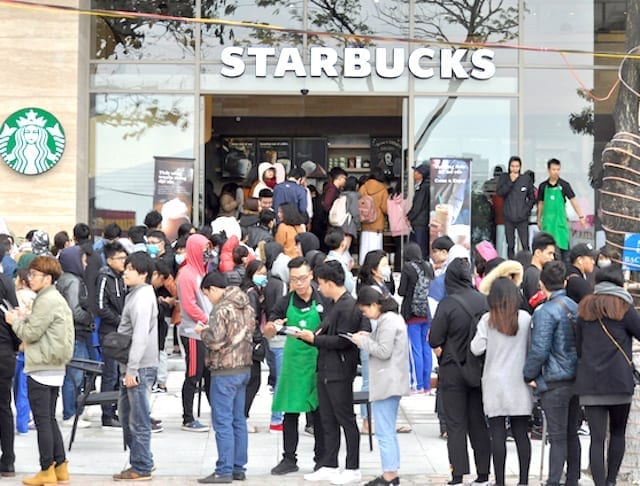
    Starbucks has launched its mobile order & pay (MO&P) service at 32 selected Singapore outlets ahead of a city-wide launch by March next year.

    MO&P allows customers to order in advance and pick up at their chosen Starbucks store. The new feature is also compatible with the company’s loyalty program through the Starbucks mobile app.

    “Innovation has always been a key ingredient of Starbucks’ culture and we are ready to take on the challenge of introducing new technologies and tools, like Mobile Order & Pay, to help make our customers’ experience at Starbucks even more enjoyable,” said Patrick Kwok, GM at Starbucks Singapore.

    “We are consistently on the lookout for new ways to enhance our retail offerings and experience for our local customers, meeting their needs and wants,” he added.

    Starbucks Singapore has marked this year as its “Year of Innovation” after the launch of its flagship store at Jewel Changi Airport. The company also plans to bring on board more partners to diversify its products.

    The Starbucks Singapore mobile application was launched in Singapore in 2012. With the mobile app, its customers can customise their drink, collect stars for their loyalty program and pay for in-store orders.

  • French Connection sales fail to inspire customers

    French Connection sales fail to inspire customers

    The latest French Connection sales figures will do little to inspire prospective bidders as the company searches for a white knight.

    Pippa Stephens, retail analyst at GlobalData, says that despite the French Connection sale process being extended by three months in June, the ailing retailer has prolonged this further, as it continues talks with “several interested parties”.

    Group sales for the first half were down £7.1 million – by 12.2 per cent – to £51 million, and underlying profit remains in the red.

    “Its performance is doing little to assure prospective buyers of its future potential, however new ownership should allow for an essential revamp of its ranges and store estate to try to regain appeal among shoppers,” says Stephens.

    “French Connection’s product offer lacks originality and direction, with limited newness across seasons, lagging behind other premium competitors like Whistles and Reiss, so a fresh perspective from its design team is crucial to reignite shopper interest.”

    Although group sales are still declining due to store closures and a shift in wholesale orders into the second half of the year, the retailer’s UK/Europe like-for-like sales show an improvement having shuttered nine underperforming locations in the first half, including two off-price outlets.

    “French Connection must continue to review its remaining estate and carefully plan to transition customers to its online platform to avoid shopper desertion – especially its department store concession customers,” says Stephens.

    “Its new concept store in London, which opened in July, has shown reassuring results, with exclusive products, a large homewares offer and a coffee shop supporting footfall. If successful, this should be rolled out to a handful of its large regional stores to help reinvigorate the brand and improve shopper perception.”

    French Connection sales online have continued to decline, down £600,000, or 9.6 per cent, during the first half, despite the UK online clothing market forecast to grow by 7.4 per cent this year.

    “With a greater focus previously put on third party operations, such as Next and Asos, French Connection must ensure that this does not cannibalise its own sales. It needs to invest in its own website, with shorter delivery lead times, and enhanced style inspiration to increase engagement,” concludes Stephens.

  • DBS Announces Integrated Wealth Management

    DBS Announces Integrated Wealth Management

    The bank hopes to serve the country’s growing high net worth demographic with its one-bank proposition, which provides access to offerings across wealth management, retail, investment and corporate banking.

    DBS Private Bank and DBS Vickers Securities (Thailand) have announced a partnership to provide a «one-stop» onshore and offshore wealth proposition in Thailand, allowing the country’s growing high net worth demographic to access offerings across wealth management, retail, investment and corporate banking from a single point of contact.

    To support this push, the bank aims to double its number of relationship managers in Thailand by 2023, and also hopes to double its assets under management to S$8 billion ($5.82 billion) during this period, DBS said in a statement published on Wednesday.

    We believe the Thai wealth market holds immense potential, having witnessed Thai investors’ growing sophistication and receptiveness to investment ideas, and the Bank of Thailand’s encouraging regulatory stance towards offshore investments, Sim S Lim, wealth management and consumer banking group head, said in the statement.

    Family-owned businesses drive much of the country’s economy, accounting for 80 percent of Thailand’s GDP and over one-third of listed firms on the Stock Exchange of Thailand, DBS said, citing PwC research.

  • Tony Fernandes steps down from all posts except Airasia, Airasia X

    Tony Fernandes steps down from all posts except Airasia, Airasia X

    AirAsia Group Bhd chief executive Tan Sri Tony Fernandes said today he is stepping down from all official board positions except AirAsia Group and AirAsia X Berhad to pave the way for new leaders to move up the company’s ranks.

    On Twitter, Fernandes he made the first decision to step down as the first step in stepping back.

    “As the first step of stepping back and moving the next generation of @airasia leaders into the forefront I will be stepping down of all boards except @airasia group and airasia X,” the tweet reads.

    AirAsia X Berhad, operating as AirAsia X, is a long-haul budget airline based in Malaysia and a sister company of AirAsia.

    Fernandes is listed as a non-independent non-executive director on the board of AirAsia X.

    Last month, Fernandes was appointed as the chief executive of airasia.com, the low-cost airline’s travel and lifestyle e-commerce platform.

  • Singapore’s Asset Under Management Growth Slows

    Singapore’s Asset Under Management Growth Slows

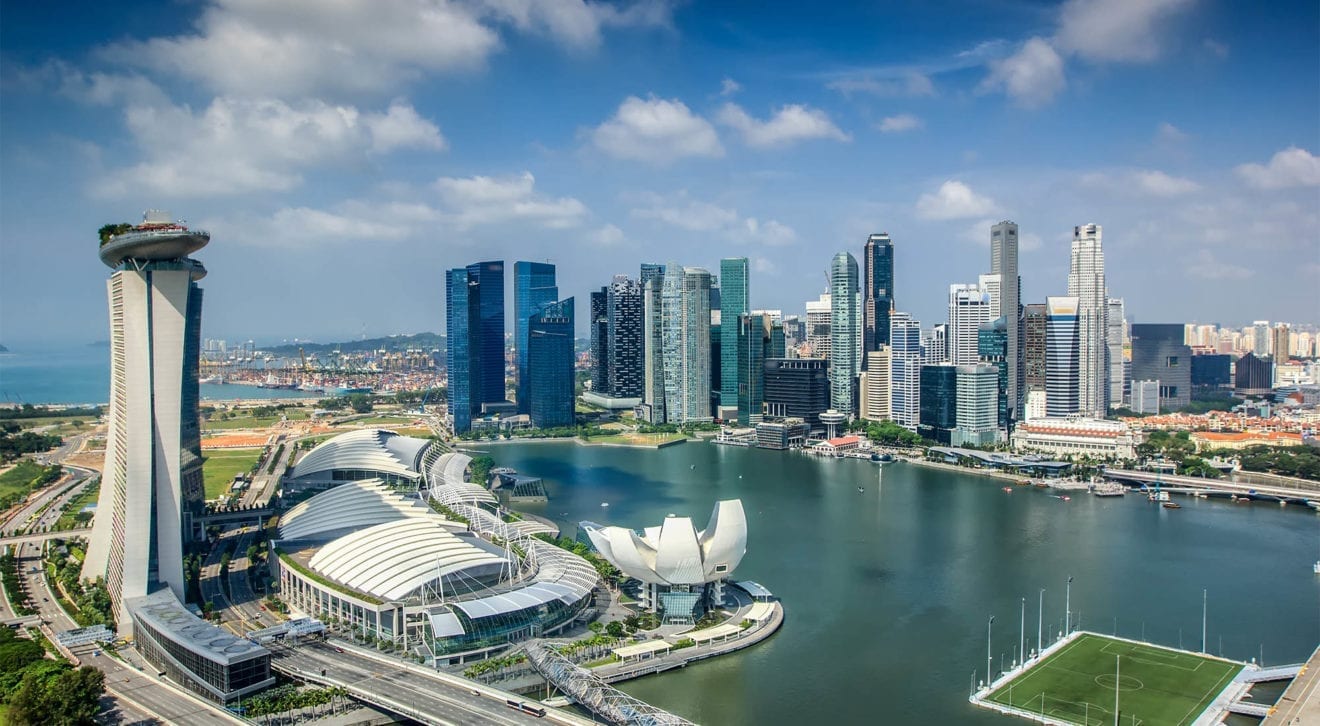
    Singapore’s assets under management increased at a slower pace of 5.4 percent year-on-year in 2018, with growth driven by inflows and valuation gains across private market asset classes.

    Despite a challenging year in the global financial markets, Singapore’s assets under management (AUM) increased by 5.4 percent to S$3.44 trillion in 2018, according to an annual poll by the Monetary Authority of Singapore (MAS). The year before, Singapore’s AUM had surged almost 19 percent to S$3.26 trillion.

    Singapore continues to serve as the Global-Asia gateway for asset managers and investors to tap the region’s growth opportunities, with 75 percent of AUM sourced from outside of Singapore in 2018. 67 percent of total AUM was invested in the Asia Pacific, of which more than a third of Asia Pacific AUM were investments into ASEAN countries, MAS said in its survey report.

    The survey found that growth was uneven across the traditional and alternative asset management sectors. Last year’s growth was mostly due to a 15 percent surge in alternative assets to S$646 billion, which was supported by strong inflows and continued valuation gains across private market asset classes including private equity (PE) and venture capital (VC).

    Inflows were strong in traditional sector strategies managed or advised out of Singapore, but these were more than offset by weaker valuations across major asset markets, in line with global trends. As a result, traditional AUM was sluggish and shrank 7 percent in 2018.

    However, the alternatives sector continued to register robust growth, expanding by 15 percent to S$646 billion last year. In particular, PE, VC and real estate saw strong inflows and continued valuation gains as investors increased their exposures to private assets, to enhance returns and diversify portfolios.

    Singapore, as a leading private markets hub, is an attractive location for investment managers and an increasing number of global public investors, including sovereign wealth funds and pension funds, MAS added in its survey report.

    MAS conducts an annual study of the Singapore asset management industry, surveying financial institutions including banks, finance, and treasury centers, capital markets services licensees including real estate investment trust (Reit) managers, financial advisers, and insurance firms.

    More than 800 respondents participated in the latest survey, which excludes direct investments by government-related entities.

  • UOB Boosts Property Valuation Speed

    UOB co-launched a one-stop commercial property solution that includes instant valuation capabilities that can improve speeds by over 10,000 times compared to traditional means.

    The digital solution «RealCommerical», co-launched with property tech firm SoReal Prop, allows users to acquire a bank-backed valuation in less than one minute. This is a more than 10,000 times improvement compared to conventional processes which can take up to seven days.

    In addition, the new solution also allows SME users to see the immediate loan amount their firm qualifies for based on average monthly cash flow or affordability.

    From our experience in helping SMEs purchase their ideal commercial property, we know they want certainty and speed in the process, said Mervyn Koh, Singapore country head of business banking at UOB.

    This means not having mismatched expectations in the property’s valuation or the loan quantum, both of which could lead to the SME not being able to secure their desired property.

    According to the bank, one in two SMEs plan to invest in fixed assets including buildings and factory premises. But momentum has been building as of late with regards to fintech developments in property-related areas.

    In addition to commercial property, UOB launched a digital loan solution for homebuyers in August 2018 that reduced application duration from two and a half days to just 15 minutes. Singaporean rival DBS also recently launched a tech-enabled solution linked with payments for property management fees in Hong Kong with a subsidiary of real estate giant Sun Hung Kai.

  • AIA Group Joins Big Boys to Fuel Gojek

    AIA Group Joins Big Boys to Fuel Gojek

    AIA Group joins a club of high-profile investors to participate in the ride-hailing and payments company’s latest funding round.

    The Indonesian unit of AIA Group, AIA Financial, has invested in Indonesia’s Gojek as part of the latter’s Series F fundraising round. There was no mention of how much money AIA was investing in Gojek or how big a stake it would acquire.

    AIA Financial will work with Gojek to provide life and health insurance services and wellness propositions to its users, drivers, and merchants across Indonesia, the insurer said in a statement on Wednesday.

    According to Crunchbase, Gojek has raised a total of $3.1 billion in funding over 12 rounds. High profile investors in the company include Tencent Holdings and Temasek Holdings.

    Launched in 2011, Gojek has evolved from ride-sharing to allowing its customers to make online payments and order everything from food to groceries and massage services.

  • Chinese Netizens Call for Boycott of BNP Paribas

    Chinese Netizens Call for Boycott of BNP Paribas

    Some internet users in China are calling for a boycott of BNP Paribas following the actions of one of its employees in Hong Kong. This could slow the lender’s expansion plans.

    Last week, Chinese messaging service Weibo was filled with accusations that an unidentified employee of the French bank had posted messages on Facebook calling for independence for Hong Kong. Although the bank has since issued a statement expressing apologies, some of China’s internet users are still not placated.

    Since the bank that is making money from China and did not take any further action, we have to boycott it, posted one user of Weibo, who was quoted. The post had generated more than 4,000 likes on Wednesday evening.

    Other netizens are upset that the French bank refers to Hong Kong and Taiwan as «independent countries» on its website. Last month, several other companies, including Swarovski, Versace, Coach, and Givenchy apologized for doing the same.

    In a statement issued last Friday, BNP apologized for «the offense caused by a social media post that was expressed on one of our employees’ personal accounts» and added that the views expressed in the post do not reflect the views of BNP Paribas.

    BNP is seeking to expand its China operations to include brokerage, futures trading, and wealth management ventures. Just last month, it was granted approval to underwrite all types of company notes in the interbank bond market.

  • Uber now uses smartphones to detect possible car crashes in the US

    Uber now uses smartphones to detect possible car crashes in the US

    Uber started testing an interesting safety feature last year that would allow its team to detect unexpected long stops or possible crashes using a smartphone’s GPS and other sensors like gyroscope and accelerometer.

    One year after it debuted the beta test, Uber announced RideCheck is now live in the United States. The new feature is available for all Uber riders and drivers in the US, but the company has plans to expand it to more countries in the future.

    Since every trip is on the map, Uber knows where and when you’re riding and who’s driving you to your destination. Using this particular data and other sensors in drivers’ smartphones, Uber’s technology can detect possible crashes or if a trip goes unusually off course.

    Also, when a RideCheck is initiated, both a rider and driver will receive a notification asking if everything is alright. Through the app, either of the two can inform Uber that all is well, or take other actions like using the emergency button or reporting the issue to the Safety Line.

    Uber says that in the event of a crash, it can also help expedite the insurance claims process. Also, the company promises improvements to the current technology through additional scenarios to RideCheck.

  • AirAsia reveals exclusive route from Kuala Lumpur to Da Lat

    AirAsia reveals exclusive route from Kuala Lumpur to Da Lat

    Air asia has launched an exclusive route to Da Lat from Kuala Lumpur, further expanding its footprint in Vietnam.

    The four times weekly service to Da Lat, capital of Lam Dong province in the Central Highlands, will commence on Dec 20.

    Da Lat, known as the City of Eternal Spring for its pleasant weather, was developed as a leisure town by the French in the early 1900s, and boasts some fine examples of colonial architecture, such as Da Lat Railway Station and Lycée Yersin. Da Lat is also home to three mansions owned by Emperor Bao Dai, the last emperor of Vietnam.

    Other attractions include Xuan Huong Lake, a popular icon of Da Lat located in the city centre, and Linh Phuoc Pagoda, which is covered in colourful mosaic made from pieces of pottery and glass. For nature lovers, Robin Hill offers a panoramic view of the city and its natural surroundings, including Tuyen Lam Lake and Lang Biang Mountain, while trekking to the top of Mount Samson allows visitors to get a highland view of Da Lat.

    AirAsia Malaysia CEO Riad Asmat said, “We are proud to expand our fast-growing network with the introduction of this new and unique route to Da Lat, Vietnam. As the first international airline to fly to Da Lat, visitors from Malaysia no longer need to drive three hours from Nha Trang or five hours from Ho Chi Minh City to get to this picturesque city. This new route will strengthen economic ties for the people of southern Vietnam, while enhancing connectivity into other parts of Asean and beyond.”

    To celebrate the new route, AirAsia is offering all-in members fare for Kuala Lumpur-Da Lat from as low as RM99 from now until Sept 29 for travel from Dec 20 until March 27, 2020, only on airasia.com and the AirAsia mobile app.

    Da Lat is AirAsia’s seventh destination in Vietnam after Hanoi, Ho Chi Minh City, Da Nang, Nha Trang, Can Tho and Phu Quoc.

  • Wirecard Forms Strategic Partnership With UnionPay

    Wirecard Forms Strategic Partnership With UnionPay

    Wirecard, a global financial technology company, has signed a Memorandum of Understanding with UnionPay, the world’s largest card scheme, to form a global strategic partnership.

    The agreement will support UnionPay’s ongoing international expansion and Wirecard’s growth in China and with Chinese businesses, both companies said in a media statement.

    As the world’s largest card scheme in terms of card issuance, UnionPay will be one of our key alliances in Asia, said Georg von Waldenfels, EVP Group Business Development at Wirecard.

    As a major tourist and business destination, China receives hundreds of millions of travelers every year, which means that the scope of our solutions will also address non-Chinese nationals and enable them to pay with UnionPay nationwide, added Waldenfels.

    Union Pay has 7.59 billion cards issued under its brand, amounting to 57.6 percent of the world’s payment cards in circulation according to the Nilson Report. It is also an association for China’s banking card industry.

    Larry Wang, Vice President at UnionPay International said that the cooperation between Wirecard and UnionPay will focus on expanding the global acceptance of UnionPay as a digital payment method across all channels.

    In addition, the partnership will also launch a number of issuing projects, including corporate solutions such as payout products and SCP (Supplier and Commission Payments), and consumer-oriented products in the form of digital wallets for incoming tourists to China.

    The initial stage of the partnership will focus on launching additional projects in Asia-Pacific, Europe, and the U.S., where both partners already work together for several years. Additionally, a consumer solution for the upcoming 2022 Winter Olympics in Beijing is being planned to take advantage of the large number of tourists who will visit the country.

  • Online payments for digital and physical goods hits record

    Online payments for digital and physical goods hits record

    New research shows the total transaction value of online remote payments for digital and physical goods will exceed US$6 trillion by 2024.

    The new findings are based on data from Juniper Research that predict the growth of 53 percent in the transaction values from this year’s figures. An analysis of the data is now published in the firm’s report Mobile & Online Remote Payments for Digital and Physical Goods: Opportunities, Pain Points & Competition 2019-2024.

    The report reveals that online sales will be dominated by physical goods, forecast to account for almost 80 percent of online retail purchases by 2024. It urges traditional retailers to provide omnichannel offerings to ensure services align with ever-increasing consumer expectations.

    According to the report, online remote payments for digital and physical goods will be driven by purchases made via mobile devices, with the number of smartphone buyers increasing by nearly 60 per cent between 2019 and 2024. Consequently, just 21 per cent of purchases will be made using PCs, laptops and connected TVs globally by 2024.

    The shift to mobile has impacted purchasing behaviour, with the average value of transactions expected to decline by 2024. Underpinning this growth, and the change in average transaction values, is the adoption of mobile ticketing – which is becoming increasingly remote and cashless..

    Juniper Research assessed the digital strategies of 25 leading brick-and-mortar retailers according to their levels of agility and innovation. The Home Depot ranked first, owing to its proactive e-commerce strategies and engagement with new technologies, such as augmented reality and analytics, to improve online consumer experiences.

    The Home Depot’s retail services are built on an omnichannel strategy; offering customers a comprehensive network of physical stores alongside robust online shopping experiences. Analytics is leveraged to adapt to evolving customer behaviours and AR technology to enable customers to visualise virtual products in the real world via their smartphones.“Brick-and-mortar retailers have to go beyond simple e-commerce to become digital-first companies,” said research author Morgane Kimmich. “Retailers must fundamentally embrace the digital era by optimizing data analytics and embracing new technologies; enabled by radical internal organisational change.”

  • Kayak Travel Comparison opens Hong Kong Headquarter

    Kayak Travel Comparison opens Hong Kong Headquarter

    Online travel-services comparison site Kayak has established its regional headquarters in Hong Kong.

    The move was made in recognition of Hongkongers’ penchant for bargain holidays and straightforward booking arrangements, according to an email from the firm.

    “Hong Kong is a global city with great accessibility to so many other places,” said Kayak’s senior regional manager APAC Matthew Wong. “[The city] also serves as a gateway for visitors from North America and Europe into Asia, and vice versa. In fact, our 2018 travel-search data showed that Hong Kong is ranked in the top three of the most-frequented stopover cities among North Americans and Europeans traveling to other destinations in Asia-Pacific.”

    Wong added that travelers are becoming more flexible in what they want, citing data showing that multi-city, open-jaw and one-way flight searches are constantly increasing. Also, besides popular destinations such as Tokyo and Taipei, Kayak has seen an increase of interest in the more under-the-radar cities from its users in Hong Kong and Mainland China.

    “Second-tier cities are showing 150- to 300-per-cent year-on-year increase in travel searches, proving an intense uptick in interest,” said Wong.

    Kayak was founded in 2004 by CEO Steve Hafner and CTO Paul English, and now operates in 60 countries and territories using more than 30 languages.