Tag: Auto

  • Tesla Weighs Reset For China Retail Strategy Even As Sales Boom

    Tesla Weighs Reset For China Retail Strategy Even As Sales Boom

    Tesla is reevaluating the way it sells electric cars in China, its second-largest market, and considering closing some showrooms in flashy malls in cities like Beijing where traffic plunged during COVID restrictions, two people with knowledge of the plans said.

    The shift would put more emphasis on stores in less-costly suburban locations that can also provide repairs as the company works to meet Elon Musk’s goal of improving service for existing customers, many of whom have complained of long delays, they said.

    As part of that push, Tesla is looking to ramp up hiring of technicians and other staff for service jobs in China, one of the people said. Tesla’s China recruitment website showed more than 300 openings for service jobs as of Thursday.

    Musk said last week on Twitter, in response to a Tesla owner in Texas who complained that he had been waiting a month to get his vehicle fixed, that he had made “advancing Tesla service to make it awesome” a top priority.

    Unlike mainstream automakers, Tesla owns all of its own stores, rather than relying on dealers. It also sells its cars online. That has allowed it more leeway to adjust a retail strategy that had been initially modeled on Apple’s stores.

    Tesla didn’t immediately response to a request for comment.

    The U.S. automaker sold 400,000 China-made Model 3 and Model Y cars in the first eight months of the year, with 60% of them sold locally, according to the China Passenger Car Association. That was 67% more than a year ago.

    The change in Tesla’s approach in China, where it has become the second-largest EV brand behind BYD , would reflect a recognition that it has to build customer loyalty now that it has established its brand in the world’s largest car market, one analyst said.

    “It’s not necessary to open showrooms in expensive shopping malls, especially when the repair business has become lucrative,” said Yale Zhang, managing director at Shanghai-based consultancy Automotive Foresight.

    “It makes better sense to keep only one or two showrooms downtown to keep the brand positioning but move more to suburbs.”

    Tesla opened its first store in central Beijing in 2013 and now has over 200 outlets across the country that display models and arrange test drives for potential buyers.

    More than half of the stores, however, do not offer maintenance service since they are in high-rent locations where space is limited. That includes Tesla’s first store in Beijing and its first store in Shanghai.

    More than half of Tesla’s showrooms in seven of China’s biggest cities, including Shenzhen and Chengdu, are now in downtown areas, according to a Reuters count based on Tesla’s China website.

    Like other companies, Tesla has seen traffic in its stores heavily disrupted by China’s tough approach to containing COVID-19, which has involved lockdowns of varying scope and duration, including in Shanghai where it has a factory.

    Reuters could not determine how many urban showrooms Tesla was considering closing, how many new locations in fast-growing suburbs could be opened or what the cost of that shift would be.

    The carmaker has been the target of a series of customer complaints and lawsuits in China, including a well-known case last year which saw an unhappy owner clamber atop a Tesla at the Shanghai auto show to protest the company’s handling of her complaints about malfunctioning brakes.

    The incident received significant attention in China and prompted state media outlets to criticise the company.

    Tesla later apologised to Chinese consumers for not addressing the complaints in a timely manner and pledged to review its service operations.

    Tesla’s EV rivals in China have taken a mixed approach to retail distribution. Apart from self-run stores, BYD and Xpeng also rely on third-party dealers.

    Nio, like Tesla, has a network of high profile urban stores in China. It has also invested in door-to-door service, dispatching workers, many of whom were hired from the hotel industry, to pick up cars for repairs and drop them off when work is complete.
  • Tesla Weighs Reset For China Retail Strategy Even As Sales Boom

    Tesla Weighs Reset For China Retail Strategy Even As Sales Boom

    Tesla is reevaluating the way it sells electric cars in China, its second-largest market, and considering closing some showrooms in flashy malls in cities like Beijing where traffic plunged during COVID restrictions, two people with knowledge of the plans said.

    The shift would put more emphasis on stores in less-costly suburban locations that can also provide repairs as the company works to meet Elon Musk’s goal of improving service for existing customers, many of whom have complained of long delays, they said.

    As part of that push, Tesla is looking to ramp up hiring of technicians and other staff for service jobs in China, one of the people said. Tesla’s China recruitment website showed more than 300 openings for service jobs as of Thursday.

    Musk said last week on Twitter, in response to a Tesla owner in Texas who complained that he had been waiting a month to get his vehicle fixed, that he had made “advancing Tesla service to make it awesome” a top priority.

    Unlike mainstream automakers, Tesla owns all of its own stores, rather than relying on dealers. It also sells its cars online. That has allowed it more leeway to adjust a retail strategy that had been initially modeled on Apple’s stores.

    Tesla didn’t immediately response to a request for comment.

    The U.S. automaker sold 400,000 China-made Model 3 and Model Y cars in the first eight months of the year, with 60% of them sold locally, according to the China Passenger Car Association. That was 67% more than a year ago.

    The change in Tesla’s approach in China, where it has become the second-largest EV brand behind BYD , would reflect a recognition that it has to build customer loyalty now that it has established its brand in the world’s largest car market, one analyst said.

    “It’s not necessary to open showrooms in expensive shopping malls, especially when the repair business has become lucrative,” said Yale Zhang, managing director at Shanghai-based consultancy Automotive Foresight.

    “It makes better sense to keep only one or two showrooms downtown to keep the brand positioning but move more to suburbs.”

    Tesla opened its first store in central Beijing in 2013 and now has over 200 outlets across the country that display models and arrange test drives for potential buyers.

    More than half of the stores, however, do not offer maintenance service since they are in high-rent locations where space is limited. That includes Tesla’s first store in Beijing and its first store in Shanghai.

    More than half of Tesla’s showrooms in seven of China’s biggest cities, including Shenzhen and Chengdu, are now in downtown areas, according to a Reuters count based on Tesla’s China website.

    Like other companies, Tesla has seen traffic in its stores heavily disrupted by China’s tough approach to containing COVID-19, which has involved lockdowns of varying scope and duration, including in Shanghai where it has a factory.

    Reuters could not determine how many urban showrooms Tesla was considering closing, how many new locations in fast-growing suburbs could be opened or what the cost of that shift would be.

    The carmaker has been the target of a series of customer complaints and lawsuits in China, including a well-known case last year which saw an unhappy owner clamber atop a Tesla at the Shanghai auto show to protest the company’s handling of her complaints about malfunctioning brakes.

    The incident received significant attention in China and prompted state media outlets to criticise the company.

    Tesla later apologised to Chinese consumers for not addressing the complaints in a timely manner and pledged to review its service operations.

    Tesla’s EV rivals in China have taken a mixed approach to retail distribution. Apart from self-run stores, BYD and Xpeng also rely on third-party dealers.

    Nio, like Tesla, has a network of high profile urban stores in China. It has also invested in door-to-door service, dispatching workers, many of whom were hired from the hotel industry, to pick up cars for repairs and drop them off when work is complete.
  • Mercedes-Benz India To Consider Accelerating Localisation And Launch Plans Of EVs

    Mercedes-Benz India To Consider Accelerating Localisation And Launch Plans Of EVs

    On August 25, Mercedes-Benz India recorded 2,46,000 views on its Twitter handle for the Mercedes-AMG EQS 4 MATIC+ launch live stream. And ever since it stepped in the Indian luxury EV space with the EQC electric SUV, the brand has observed a steady rise in interest around its electric models through its customer-engaging activities. Now that is confidence-inspiring for the German brand to expedite its plans for launching new electric vehicles in India and considering their local production. It is planning to introduce them as completely knocked down (CKD) products in a bid to keep their ex-showroom prices in check.

    The response that the EQS got shows that the public in ready to be interested in the vehicle and it shows that there is potential in the market. Not every one of the 2,46,000 viewers on Twitter that we had during our live launch will purchase the car, but it shows that the time is right. It’s ready to move into the electric vehicle space, and it gives us a lot of confidence going forward, also with the locally produced car which we’re launching now. The story of EVs is a story of accelerations and deceleration not only in India, but it has also happened globally. We think that things will happen in a couple of years, but they will happen faster than the original plans were. In that sense, I am very confident based on the pipeline Mercedes has built globally. And we’ll also relook on what to do in India based on based on the feedback we’re getting. The EQC gave us good feedback and the EQS is a very strong local product, the EQB which will come later in the year will also see a very different segment. From what we see, what will happen in the next six months will certainly influence our outlook in terms of localization and in terms of products.”

    The next Mercedes-Benz launch in the Indian EV space will be the locally manufactured EQS electric sedan which will roll out of the Chakan plant on September 30. By the end of this year, the German carmaker will also introduce the EQB electric SUV in our market, which is likely to take the CKD route as well. So by 2023 Mercedes will already have four electric offerings in our market across multiple segments. We also know that models like the Vision EQXX and G-Wagon based EQG electric concepts are under development at the Stuttgart headquarters. So if the company continues to observe a growing interest in its electric offerings, it is likely that it will consider introducing these models sooner and as locally manufactured products.

    Well, the overall luxury car market is still roughly around 1.8 per cent in India with EVs having an even miniscule share. But according to a Mordor Intelligence study, the Indian luxury car market is expected to reach a value of over $ 1.54 billion from $ 1.06 billion by 2027 with a CAGR of more than 6.4 per cent during the forecast period 2022-2027. The study further states that with majority luxury car brands aggressively balancing their line-up with EV models, the electric segment is likely to dominate the luxury car space which is reassuring.

  • Inside Tesla’s Drive To Keep Musk’s Battery Promise

    Inside Tesla’s Drive To Keep Musk’s Battery Promise

    The secret behind Elon Musk’s goal of selling 20 million Tesla’s a year by 2030 lies in its pioneering battery technology.

    The good news is that by using bigger cells and a new process to dry-coat electrodes, Tesla could halve the cost of a Model Y battery, saving more than 8% of the car’s U.S. starting price, battery experts with ties to the company said.

    The bad news is that it’s only halfway there, according to 12 experts close to Tesla or familiar with its new technology.

    That’s because the dry-coating technique used to produce the bigger cells in Tesla’s 4680 battery is so new and unproven the company is having trouble scaling up manufacturing to the point where the big cost savings kick in, the experts told Reuters.

    “They just aren’t ready for mass production,” said one of the experts close to Tesla.

    Still, the gains Tesla has already made in cutting battery production costs in the past two years could help boost profits and extend its lead over most electric vehicle (EV) rivals.

    Musk’s promised improvements in battery cost and performance are seen by investors as critical to Tesla’s quest to usher in an era where it can sell a $25,000 EV for a profit – and stand a better chance of hitting its 2030 targets.

    Battery systems are the most expensive single element in most EVs, so making lower-cost, high-performance packs is key to producing affordable electric cars that can go toe to toe with combustion-engine rivals on sticker prices.

    Tesla is one of only a handful of major automakers that produce their own EV batteries and by manufacturing Model Y cells at U.S. plants, the SUV will remain eligible for U.S. tax credits when many rival EVs may no longer qualify.

    Among the 12 battery experts Reuters spoke with, nine have close ties to Tesla and three of the nine have examined Tesla’s new and old battery technology inside and out through teardowns.

    Tesla did not respond to requests for comment.

    ‘HE WILL SOLVE IT’

    The sources predict that Tesla will find it difficult to fully implement the new dry-coating manufacturing process before the end of this year, and perhaps not until 2023.

    Stan Whittingham, a co-inventor of lithium-ion batteries and a 2019 Nobel laureate, believes Tesla Chief Executive Elon Musk has been overly optimistic on the time frame for commercializing the new technique.

    “I think he will solve it, but it won’t be as quick as he likes. It’s going to take some time to really test it,” he said.

    In August, Musk told shareholders Tesla would be producing high volumes of 4680 batteries by the end of 2022.

    According to the experts, Tesla has only been able to cut the Model Y’s battery cost by between $2,000 and $3,000 so far, about half the savings Tesla had planned for the 4680 battery, which it unveiled two years ago.

    But those savings have come mainly from the design of the new 4680 cells, which are bigger than those in Tesla’s current 2170 battery, they said.

    But the heart of the drive to push down costs is the dry-coating technology, which Musk has described as revolutionary but difficult to execute.

    According to the sources, it should deliver as much as half of the $5,500 cost savings Tesla hopes to achieve, by slashing manufacturing costs and one-time capital spending.

    Tesla acquired the know-how in 2019 when it paid over $200 million for Maxwell Technologies, a company in San Diego making ultracapacitors, which store energy for devices that need quick bursts of electricity, such as camera flashes.

    Building on Maxwell’s technology, Tesla began making 4680 dry cells this year, first in a pilot near its Fremont, California plant and more recently at its new global headquarters in Austin, Texas.

    ‘BEST IN CLASS’

    The technology allows Tesla to ditch the older, more complex and costly wet-coating process. It’s expensive because it needs a substantial amount of electricity, machinery, factory space, time, and a large labour force.

    To coat electrodes in the wet process, battery producers mix the materials with toxic binder solvents. Once coated, the electrodes are dried in massive ovens, with the toxic solvents that evaporate in the process being recovered, treated and recycled – all adding to the cost.

    With the new technology, electrodes are coated using different binders with little use of liquids, so they don’t need to be dried. That means it’s cheaper, faster and also less environmentally damaging.

    Because of its simplicity, the process allows Tesla to cut capital spending by a third and slash both the footprint of a factory and its energy consumption to a 10th of what would be needed for the wet process, Tesla has said.

    But the company has had trouble commercializing the process, the sources said.

    Maxwell developed its dry-coat process for ultracapacitors, but the challenge with coating electrodes for EV batteries is that they are much larger and thicker, which makes it hard to coat them with consistent quality at mass-production speeds.

    “They can produce in small volume, but when they started big volume production, Tesla ended up with many rejects, too many,” one of the sources with ties to Tesla told Reuters.

    Production yields were so low that all the anticipated cost savings from the new process were lost, the source said.

    If all the potential efficiencies from dry-coating and the bigger cells are realised, the manufacturing cost for the Model Y’s 4680 battery pack should fall to $5,000 to $5,500 – roughly half the cost of the 2170 pack, according to the sources.

    The rising cost of battery materials and energy pose a risk to those forecasts, however, and Tesla has not yet been able to significantly improve the new battery’s energy density or the amount of power it packs, as Musk has promised.

    Still, despite those factors, the savings Tesla is expected to achieve will end up making the 4680 battery the industry’s “best in class” for the foreseeable future, one source said.

    BULKING UP

    Much of the $2,000 to $3,000 cost savings achieved with the 4680 battery so far has come from other improvements, and using bigger cells has proven particularly potent, the experts said.

    The 4680 cells are 5.5 times the size of the 2170 cells by volume. The older cylindrical cells measure 21mm in diameter and 70mm in height, hence the name. The 4680 cells have a 46mm diameter and are 80mm high.

    With the older technology, Tesla needs about 4,400 cells to power the Model Y and there are 17,600 points that need to be welded – four per cell – to create a pack that can be integrated into the car, the sources said.

    The 4680 battery pack only needs 830 cells and Tesla has changed the design so that there are only two weld points per cell, slashing the welding to 1,660 points and leading to significant cost savings.

    The simpler design also means there are fewer connectors and other components, which has allowed Tesla to save further on labour costs and machine time.

    Another source of efficiency has been the larger cell’s far sturdier outer case. Tesla can now bond the cells together with adhesive into a rigid honeycomb-like pack which is then connected directly to the inner body structure of the Model Y.

    This eliminates the intermediate step of bundling cells into larger modules which are then installed in a traditional battery pack, the sources said.

    By shifting to this “cell to vehicle” design, Tesla can reduce the weight of a traditional 1,200-pound battery pack by 55 pounds or more – saving about $500 to $600 per pack, one of the sources said.

    But mastering the dry-coating technique remains the holy grail.

    “Bulking up the battery cell helped a lot in boosting efficiency, but pushing for 50% cost savings for the cell as a whole is another matter,” one source said.

    “That will depend on whether Tesla can deploy the dry-coating process successfully in a factory.”

  • Auto sales rise 3rd month in a row

    Auto sales rise 3rd month in a row

    Auto sales in Vietnam went up for the third month in a row with 30,846 units sold in August, up 247% from the low base in the same month last year. Sales were highest since May when over 43,800 units were sold, according to data from Vietnam Automobile Manufacturers Association (VAMA).

    But it rose only 2% month-on-month, against 20% in July.

    The most popular car sold in August was the MPV Mitsubishi Xpander at 2,842 units.

    For the first eight months, 262,940 cars were sold in Vietnam, up 49.9% year-on-year.

    Truong Hai Auto Corporation (Thaco) led in sales in the period at 93,347 units, up 54% year-on-year.

    The three following brands, Toyota, Mitsubishi and Honda, all posted double-digit growth in sales.

    Ford ranked fifth with a sales decline of 6.7%.

  • Tesla Considering Lithium Refinery In Texas, Seeks Tax Relief

    Tesla Considering Lithium Refinery In Texas, Seeks Tax Relief

    Tesla Inc is considering setting up a lithium refinery on the gulf coast of Texas, as it looks to secure supply of the key component used in batteries amid surging demand for electric vehicles.

    The potential battery-grade lithium hydroxide refining facility, which Tesla touted as the first of its kind in North America, will process “raw ore material into a usable state for battery production”, the company said in an application filed with the Texas Comptroller’s Office.

    A decision to invest in Texas will also be based on the ability to obtain relief on local property taxes, Tesla said.

    Chief Executive Officer Elon Musk has previously said that Tesla may have to enter the mining and refining industry directly at scale as lithium prices surge.

    Musk has also been vocal about the need for more players in the lithium refining industry. “You can’t lose. It’s licensed to print money,” he had said at the company’s second-quarter earnings call.

    Securing a steady supply of battery components is seen critical for Tesla as it faces fierce competition in the fast-growing market for electric cars.

    If approved, construction could begin in the fourth quarter of 2022 and would reach commercial production by the end of 2024, Tesla said in the application dated Aug. 22.

    Under the plan, Tesla will ship the final product from the refinery by trucks and rail to various Tesla battery manufacturing sites supporting the supply chain for large-scale and electric vehicle batteries.

    Tesla, whose shares rose 1.4% in premarket trading, also said it would use less hazardous reagents and create usable byproducts, compared with the conventional process.

    Lithium prices have skyrocketed this year due to surging demand from the auto sector. China remains the world’s largest lithium processor, though proposed rival projects in the United States and European Union have faced a range of setbacks.

    If Tesla’s plan goes ahead, the carmaker could become the first in the sector to invest directly in lithium refining as automakers scramble to stitch up deals with miners and refiners.

    “Car-makers are trying to ensure they have control over the supply of lithium, hedging for any geopolitical situation that might arise in future where the supply is disrupted,” said Arpit Agarwal, director at venture capital firm Blume Ventures, which has backed EV startups such as Euler Motors and Yulu.

    Tesla also stands to gain from lower logistics costs as well as incentives it may get from the U.S. government, he added.

    Battery makers are also looking to increase production in the United States, where a shift toward EVs could increase as the country implements stricter regulation and tightens tax credit eligibility.

    Tesla itself signed a five-year supply deal with Australia’s Liontown Resources earlier this year, while rival EV makers Stellantis and Byd have invested in miners around the world.

    CATL, the world’s biggest battery maker, has also taken stakes in lithium miners.

  • Chinese automaker Chery plans to set up plant in Vietnam

    Chinese automaker Chery plans to set up plant in Vietnam

    China’s state-owned Chery Automobile has said it wants to sell its first made-in-Vietnam car by next year.

    “We want to build a factory in Vietnam as we don’t want to merely import and sell cars,” Chery Vietnam director Tocy Tang told VnExpress.

    The plant would allow Chery to “build vehicles that are localized for Vietnamese and optimize its potential,” while enhancing the branding of Chinese cars in Vietnam, he said.

    Several Chinese auto brands like BAIC, Hongqi and Brilliance are present in Vietnam, but they are imported by a dealer in Hai Phong.

    Founded in 1997, Chery is the ninth largest car manufacturer and top exporter in China. It also produces Jaguar and Land Rover in China under a 50:50 joint venture with the UK-based luxury carmaker.

  • Ford India Makes Final Settlement Offer To Chennai Factory Workers

    Ford India Makes Final Settlement Offer To Chennai Factory Workers

    Ford India has made the ‘final’ settlement offer to the workers of its Chennai plant, offering a deadline of September 23, 2022 to accept it. The American carmaker, who announced its plan to stop manufacturing vehicles in India last year, has continuously been in failed negotiations with the Chennai Ford Employees Union (CFEU) regarding the severance package for the factory employees. Now, Ford has presented its final severance package to the Chennai car factory Union and the company has said that it will be valid from September 5, 2022, to September 23, 2022.

    In its official statement, Ford India said, “The Company has always cared for its employees and has taken steps to help them to the extent possible. Unfortunately, the Company’s attempts to negotiate a fair severance package have not yielded results because of the Union’s unreasonable demands (of an average of 215 equivalent days of wages per completed year of service). Union also failed to recognize that no company which has decided to stop production because of significant accumulated losses and no sustainable path forward can meet such demands.”

    Alternatively, Ford has been trying to find a suitable buyer for the plant, however, as that hasn’t happened yet, the carmaker has decided to roll out the final severance settlement offer to employees. Ford India says that on average, the settlement is equivalent to 130 days of gross wages per completed year of service. The severance packages will range from a minimum amount of Rs. 33 lakh to a maximum cap of Rs. 85 lakh, which is a cumulative average severance of Rs. 41 lakh per employee.

    Ford says, “The final severance settlement offer translates to an average of about 4.6 years or 56-month salary for each employee (from a minimum of 3.5 years i.e., 43 months to a maximum of 8 years i.e., 100 months), thus assuring employees with adequate financial cushion and adequate time to decide their next action. The Company strongly encourages employees to accept and sign-up for the final severance settlement offer, valid from September 5, 2022, to September 23, 2022, for their own and their family’s future. Further, employees who take the final severance settlement offer will be paid wages until September 30, 2022.”

    Post the deadline, Ford says that if the Company were to retrench employees and pay the statutory compensation, the employees will only be entitled to severance pay of 15 days of every completed year of service.

    Earlier in August 2022, Ford India signed a Unit Transfer Agreement (UTA) with Tata Passenger Electric Mobility Limited (TPEML) for the acquisition of the former’s manufacturing plant in Sanand, Gujarat. The agreement includes entire land and buildings, the vehicle manufacturing facility as well as the machinery and equipment inside. It also includes the transfer of all eligible employees of Ford India working at the Sanand plant to Tata Motors. The Indian auto giant acquired the facility from Ford for a sum of Rs. 725.7 crore exclusive of taxes, the company said in a statement. Both companies signed a tripartite MoU on May 30, 2022.

  • Amazon Signs Green Hydrogen Supply Deal With Plug Power

    Amazon Signs Green Hydrogen Supply Deal With Plug Power

    Plug Power Inc has signed a deal with Amazon.com Inc to supply liquid green hydrogen, the companies said on Thursday, sending the hydrogen fuel cell maker’s shares up over 12% in early trade.

    Green hydrogen is often touted as the future of energy, as the flexible and zero-emission fuel can be used for transportation and electricity generation.

    Amazon said Plug Power will supply 10,950 tons of green hydrogen every year starting 2025 that it will use to replace grey hydrogen, diesel, and other fossil fuels. The companies, however, did not divulge the supply pricing specifics.

    Grey hydrogen is made from natural gas, without the carbon sequestration, and makes up the bulk of the 90 million tonnes of hydrogen produced globally every year.

    The green hydrogen deal will provide enough annual power for 30,000 forklifts or 800 heavy-duty trucks, Amazon said.

    The world’s largest online retailer said that it uses hydrogen to power over 15,000 fuel-cell propelled forklifts, and plans to increase that number to 20,000 units in three years.

    The company also has an order for 100,000 electric delivery vehicles with Rivian Automotive Inc, in which it is the largest shareholder, according to Refinitiv.

    Plug said the Amazon deal will help the company grow towards its goal of $3 billion in revenue in 2025.

    It also said it has granted Amazon a warrant to buy up to 16 million of its shares at an exercise price of $22.9841 a unit for the first 9 million shares.

    Amazon would vest the warrant in full if it spends $2.1 billion over the seven-year term of the warrant across Plug products, it added.

  • Tesla Shares Close Lower After 3-1 Stock Split

    Tesla Shares Close Lower After 3-1 Stock Split

    Tesla’s shares closed 2% lower on Thursday as a three-for-one stock split announced by the world’s most valuable automaker to woo retail investors came into effect.

    The stock opened at $302 and closed at $296.07 as the split allowed investors to get two additional shares for each they owned as of Aug. 17. It had closed at $891.29 before the split on Wednesday.

    This is the second stock split by Tesla in as many years and follows similar moves by high-growth companies such as Amazon.com and Google-parent Alphabet to address the growing need to diversify investor base.

    Stock splits “certainly have a higher appeal to retail investors and makes their options more affordable as well,” said Art Hogan, chief market strategist at B. Riley.

    “Retail investors are a very important cohort for Tesla and today’s stock split is an acknowledgment of that fact.”

    Austin-based Tesla debuted in 2010 at $17 and in a decade surged to a peak price of $2,000, becoming one of the highest priced shares on Wall Street and making it difficult for small investors to bet on the high-growth stock.

    The company decided to split its stock on a five-for-one basis in August 2020 and breached $1 trillion in market capitalization in 2021.

    The EV maker is the sixth company in the S&P 500 index to split its shares this year, according to Howard Silverblatt, senior index analyst for S&P and Dow Jones indices.

    Tesla’s ticker was trending on social media stocktwits.com, indicating increased chatter among individual investors. The shares have lost about 11% of their value since March when the company announced plans to increase its number of shares.

    “In typical buy-the-rumor, sell-the-news style, investors tend to drastically scale back purchases of splitting stocks in the weeks ensuing the effective split date, causing price momentum to slow,” analysts at Vanda Research said in a note.

    A stock split does not affect the fundamentals of a company, but makes it easier for individual investors to do small trades. The benefits of such splits, however, are becoming less clear as brokerages let customers buy parts of a company’s share.

    Tesla’s shares have fallen about 16% so far this year amid a selloff in high-growth stocks due to worries over aggressive interest rate hikes and geopolitical uncertainties.

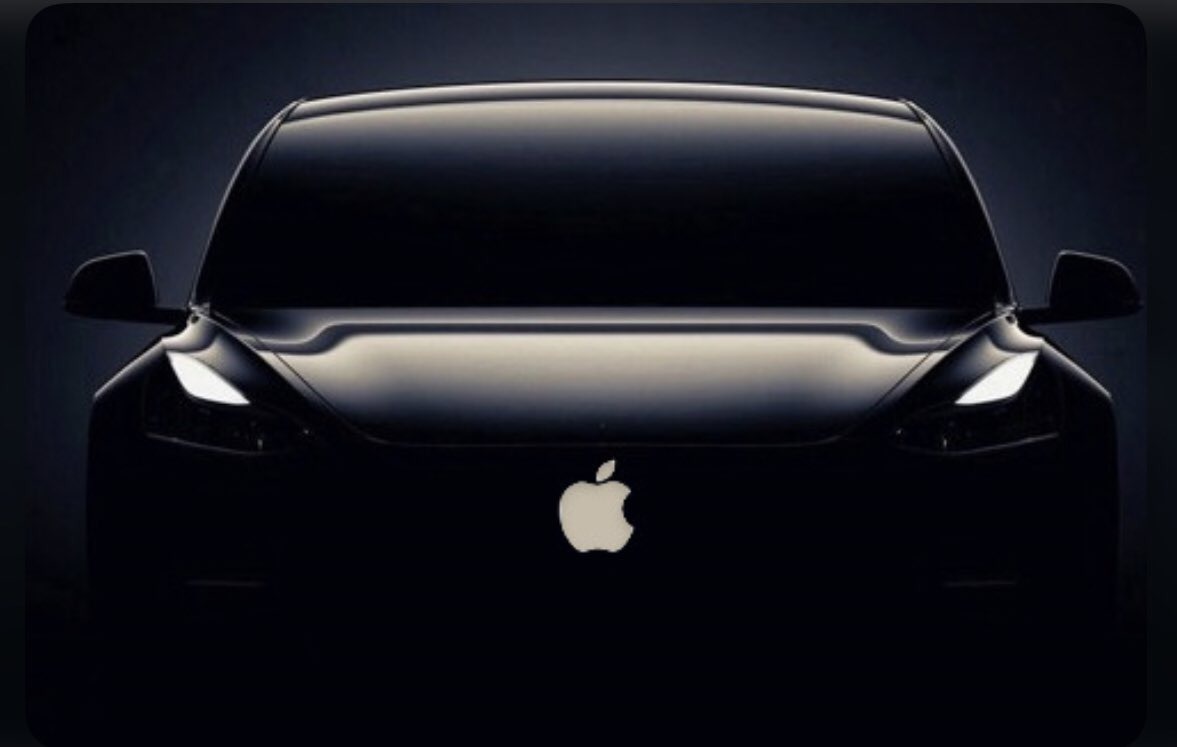
  • Ex-Apple engineer pleads guilty to stealing documentation about the Apple Car

    Ex-Apple engineer pleads guilty to stealing documentation about the Apple Car

    A former Apple employee by the name of Xiaolang Zhang, who was arrested by federal agents in July 2018 just as he was about to board a flight from San Jose to China, pleaded guilty yesterday in federal court in San Jose. Zhang was charged with stealing computer files that contained secrets about Apple’s hush-hush car division. Zhang faces a sentence of up to 10 years in prison and a $250,000 fine.
    The sentencing is scheduled to take place on November 14th. Apple claimed that Zhang downloaded an internal 25-page document that contained engineering schematics of a circuit board for a self-driving vehicle. He is alleged to have taken reference manuals and PDFs that featured descriptions of Apple’s automotive prototypes and prototype requirements. He had worked for Apple from 2015 to the time of his arrest and his last position with the company was as a hardware engineer on the team developing Apple’s self-driving car.
    Even after four years have gone by since Zhang was busted at San Jose airport, Apple has remained tight-lipped about the division developing its autonomous electric car. In the charging documents created by the FBI back in 2018, it says that 5,000 Apple employees knew about the project at the time, and that 2,700 had access to project materials and databases.
    Internal software used by Apple helps the company keep track of the employees who know about a certain project and they are forced to take in-person secrecy training according to the complaint filed with the court.

    Zhang originally took paternity leave and traveled to China, but Apple started to smell a rat when he returned from the country and quit. He said that he needed to return to China to take care of his mother. Zhang did tell Apple that he was going to work for Chinese electric vehicle company Xmotors and a suspicious Apple immediately blocked his access to Apple’s network.

    But Apple made this move after Zhang had accessed company databases to download documents and information. He was also caught red-handed (no pun intended) by Apple’s closed-circuit television system removing circuit boards and a Linux server from the lab.
    Zhang isn’t the only former Apple employee who tried to peddle secrets from Apple’s car division. Jizhong Chen is accused of stealing trade secrets from Apple’s car division in early 2019. A U.S. citizen, Chen was also planning on traveling to China. While he is represented by the same attorney defending Zhang, unlike the latter, Chen has yet to plead guilty and a trial date has not been scheduled.
    While things seem a bit slow at Apple’s car division, you know, with the new iPhone 14 series just a couple of weeks away from being announced, last month there was some news. With rumors circulating that Apple had decided to give up on the project, the company reportedly hired 20-year industry veteran Luigi Taraborrelli to lead the team designing the vehicle.
    At Lamborghini, Taraborrelli was in charge of chassis and vehicle dynamics working on such models as the Urus, Huracan, Aventador, and the off-road Huracan Sterrato. He also did some work on the Asterion concept car. Earlier this year, there was speculation that Apple is developing an operating system designed just for the Apple Car that would control important functions such as navigation and lane control, Apple Music integration, and air conditioning.
  • Auto association wants tax cuts for hybrid vehicles

    Auto association wants tax cuts for hybrid vehicles

    The Vietnam Automobile Manufacturers Association has sought cuts in excise tax and registration fees for hybrid electric vehicles.

    This would stimulate demand and encourage businesses to invest in power generation and charging systems, it said.

    Incentives for electric and hybrid vehicles should gradually decrease, and there would be no need for them by 2050 once these vehicles establish themselves in the market, it said.

    VAMA also called on the Government to soon finalize the development strategy and incentives for the auto industry to help achieve Vietnam’s goal of carbon neutrality by 2050.

    Earlier this year the National Assembly cut excise tax for electric vehicles to 3% from 15% for five years and to 11% from 2027.

    But hybrid cars are not eligible for the incentives, meaning buyers have to pay excise tax of 15% and registration fee of 10-12%.

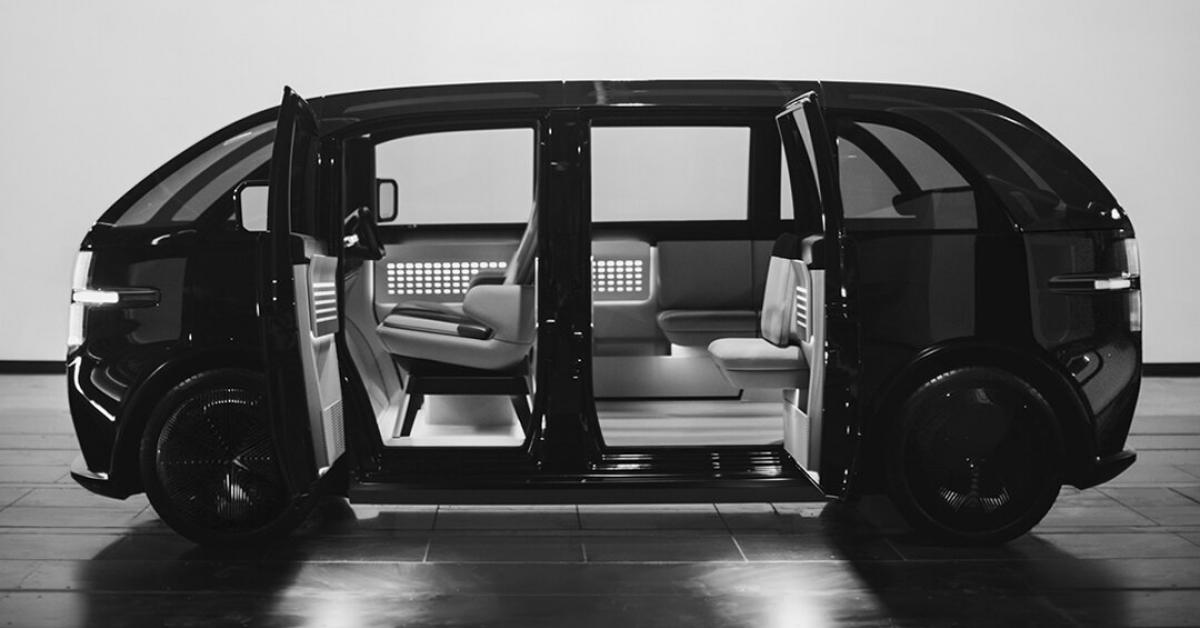
  • Canoo Outsource Production Of Electric Vans For Walmart

    Canoo Outsource Production Of Electric Vans For Walmart

    Canoo has outsourced the production of its electric vans which it has been developing for Walmart. It announced this in its Q2 financial results filing. Its CEO Tony Aquila announced that it didn’t have the immediate capability to manufacture the vans itself so in the meanwhile an unspecific contractor till the end of the year. Originally, it said it will be shifting production facility in Bentonville where Walmart is also situated. Canoo has an order of 4,500 electric vans from the retail giant.

    Walmart also has an option of ordering up to 10,000 cars. Canoo already had a contract manufacturing deal with Dutch company VDL Nedcar but it backed out of the deal in late 2021 as it believed it could start production of the LifeStyle car.

    Aquila says that deliveries to Walmart are on track to begin in the first quarter of 2023. Canoo’s success is predicated on the completion of this agreement.

    “We have entered into an agreement with Walmart Inc. for the purchase of electric vehicles and expect that, at least initially, Walmart Inc. will be our largest customer. If we are unable to maintain this relationship, or if Walmart purchases significantly fewer vehicles than we currently anticipate or none at all, our business, prospects, financial condition, results of operations, and cash flows could be materially and adversely affected,” said Tony Aquila.

    Canoo is burning through its cash reserves quite rapidly. It has posted a net loss of $164.4 million for this quarter. It posted $289.8 million in the first half of the year.

  • Mercedes-AMG Project One Enters Production

    Mercedes-AMG Project One Enters Production

    Mercedes-AMG had taken the wraps off the Project One F1-engined hypercar five years ago at the Frankfurt Motor Show and it’s been a long time coming since then. Destined to be the fastest road car ever by Mercedes, it was delayed due to development hurdles with making the turbocharged 1.6-liter V6 petrol engine meet emission standards and noise regulations. Well! It’s through all that and the car is on the assembly line now. Mercedes-AMG will only manufacture 275 units of the Project one.

    The cars are being put together by hand at AMG’s Coventry facility in UK while the hybrid powertrain with its four electric motors is made by the Mercedes AMG High Performance Powertrains division in Brixworth. The same division was also responsible for developing and producing the heart of its F1 car. To start production of the One, AMG teamed up with Multimatic to set up a bespoke production facility. The company claims that each and every vehicle has to go through 16 assembly and testing stations and Mercedes-AMG describes the process as resembling the production of luxury watches. Over 50 people are involved in the production of a One hypercar. Once the car is assembled, it undergoes a roll-out at an adjacent proving ground where a factory test driver gives it the proverbial green light.

    The engine is tuned to churn out 1034 bhp and is covered in protective wrap and transported in a closed truck to Affalterbach in Germany at AMG’s headquarters. This is where the owners finally get their hands on the hypercar and also receive a technical vehicle briefing by AMG One experts. The Mercedes-AMG Project One can can do 200 km/h in less than 6 seconds and has a top speed of 350 km/h. It has also run purely on electric power with a range of 25 km and its internal combustion engine will need to be rebuilt after 50,000 km something that is quite common for an F1 engine

  • Auto sales rise 20% in July

    Auto sales rise 20% in July

    Auto sales resumed in July with 30,254 units sold, up 20% from June, showing signs of recovery.

    The increase came after June sales plunged to a three-month low as the government’s decree to cut registration fee by 50% ended in May.

    The multi-utility vehicle Mitsubishi Xpander was the best selling model in July at 2,711 units, followed by Hyundai Accent, 1,423, and Toyota Veloz, 1,395.

    In the first seven months, 232,094 units were sold, up 39% year-on-year.

    Truong Hai Auto Corporation (THACO) led with 83,201 units sold, up 46% year-on-year.

    It was followed by Toyota with 48,650 units and Mitsubishi, with 22,361 units.

    Honda and Ford made up the rest of the top five.

    Last year, auto sales dropped 3% from 2020 to 383,444 units.