Tag: Auto

  • Toyota Domestic Sales Down By 22%

    Toyota Domestic Sales Down By 22%

    Toyota Kirloskar Motor sold a total of 10,112 units in the domestic market. The domestic sales saw a drop of 22 per cent which is a big drop compared to March 2019 which showed a growth of 7 per cent. The company exported 1301 units of the Etios series this month thus clocking a total of 11,413 units. Toyota Kirloskar Motor sold a total of 13037 units in the domestic market this month of April 2018. The company exported 834 units of the Etios series this month thus clocking a total of 13871 units.

    Toyota had even in March talked about the slow pace of the market and also the soaring prices of input costs and even the high insurance costs. Commenting on the sales performance, Mr. N. Raja, Deputy Managing Director, Toyota Kirloskar Motor said, “The industry is currently experiencing a slowdown due to uncertainty of upcoming general elections that looms over the market and this slow pace is expected to continue until the new government is formed. Consumer sentiments has currently dampened due to several factors like tight liquidity, high insurance, high costs.We hope the sales growth momentum to pick up in the upcoming months post election results are out.”

    Things are about to change though as the company is all set to launch the new Glanza Hatchback as also the rebadged version of the Vitara Brezza which will mark the company’s entry into the subcompact SUV segment. The company does say that the sales are likely to pick up post election results

  • Indian Consumers Face Post-Election Fuel Price Shock

    Indian Consumers Face Post-Election Fuel Price Shock

    Surging global oil prices will pose a first big challenge to India’s new government, whoever wins an election now under way, especially as domestic prices have been allowed to lag, meaning consumers are in for a painful surge as they catch up.

    For oil-import dependent India, higher global prices could lead to a weaker rupee, higher inflation, the ruling out of interest rate cuts and could further weigh on twin current account and budget deficits, economists warned.

    But compounding the future pain, state-run fuel suppliers and retailers have held off passing on to consumers the higher prices during a staggered general election, which began on April 11 and ends on May 23, according to sources familiar with the situation.

    That delay is expected to be unwound once the election is over. And there could be additional price increases to make up for losses or profits missed during the period of delayed increases, the sources said.

    In some major Asian countries, such as Japan and South Korea, pump prices are adjusted periodically so they move largely in tandem with international crude prices.

    That was what was supposed to happen in India but the election means there have been many days when pump prices have been unchanged.

    In New Delhi, for example, while crude oil prices have gone up by nearly $9 a barrel, or about 12 percent, in the past six weeks, gasoline prices have only risen by 0.47 rupees a litre, or 0.6 percent.

    State-controlled fuel suppliers and retailers declined to say why they had delayed price increases, or discuss whether there has been any pressure from the government of Prime Minister Narendra Modi.

    A government spokesman declined to comment.

    The opposition Congress party said Modi’s government was violating its own policy of daily price revision by advising the state oil companies to hold prices steady.

    “The government should cut fuel taxes otherwise consumers will have to pay much higher oil prices once the elections are over,” said Akhilesh Pratap Singh, a senior leader of the Congress party.

    Nitin Goyal, treasurer at the All India Petroleum Dealers Association, representing fuel stations in 25 states, said prices were similarly held down for 19 days in the southern state of Karnataka last year, when it held state assembly elections. Only for them to surge after the vote.

    “Consumers should be ready for a rude shock of a massive jump in retail prices, similar to the level we have seen in the Karnataka state election,” Goyal said.

    Sri Paravaikkarasu, director for Asia oil at Singapore-based consultancy FGE, said retail prices of gasoline and gasoil prices would have been up to 6 percent, or about 4 rupee, higher if they had been allowed to rise in line with global prices.

    “Indian pump prices have failed to keep up with the recent uptrend in crude prices,” Paravaikkarasu said.

    “With the country’s general elections underway, the incumbent government has been keeping pump prices relatively unchanged.”

    India had switched to a daily price revision in June 2017 from a revision every two weeks, as the government allowed retailers to set prices.

    But the government faced protests last October when retailers raised prices by up to 10 rupees a litre after the crude oil price went above $80 a barrel, forcing it to cut fuel taxes.

    Global prices rose to their highest level in 2019 on Thursday, days after the United States announced all Iran sanction waivers would end by May, pressuring importers including India to stop buying Tehran’s oil. [O/R]

    Higher oil prices will mean Asia’s third largest economy is likely to see growth of less than 7 percent rate this fiscal year, economists said. Growth slowed to 6.6 percent in the October-December quarter, the slowest in five quarters.

    Rating agency CARE has warned that a 10 percent rise in global oil prices could increase demand for dollars, putting pressure on the rupee and widening the current account deficit.

    India’s oil import bill rose by nearly one-third in the fiscal year ending March 31 to $140.5 billion, against $108 billion the previous year.

    “The increase in international oil prices is a credit negative for the Indian economy,” ICRA, the Indian arm of the Fitch rating agency, said in a note.

    “Every $10/ bbl increase in crude oil prices increases the fiscal deficit by about 0.1 percent of GDP.”

    Any big price rise would also build a case for the central bank to keep rates steady, or even raise them.

    The Reserve Bank of India’s Monetary Policy Committee, which cut the benchmark policy repo rate by 25 basis points this month, warned that rising oil and food prices could push up inflation.

    Policymakers are worried that a sustained increase in the oil price in the range of $70-75/barrel or higher can move the rupee down by 3-4 percent on an annual basis.

    The rupee has depreciated by 1.24 percent against the dollar since a year high in mid-March.
  • Hyundai Introduces Smartphone Based EV Performance Control Technology

    Hyundai Introduces Smartphone Based EV Performance Control Technology

    Hyundai Motor Group has announced the development of ‘smartphone-electric vehicle pairing based performance adjustment technology,’ which allows users to customise primary functions through a smartphone app. The company says that it is in fact an industry first innovation. Drivers can use this technology to adjust seven performance features including the maximum torque output of the motor, ignition, acceleration and deceleration abilities, regenerative braking capacity, maximum speed limit, responsiveness, and energy use on climate control.

    As electric vehicles continually expand their market share, especially in rental or car-sharing industries, the new technology will allow drivers to use their custom settings in whichever electric vehicle they drive by downloading their profile from the server. The application provides optimised settings for a designated destination by analysing the remaining distance and electric energy requirement. It can also accommodate sportier driving by recommending tailored performance settings.

    The application provides optimised settings for a designated destination by analysing the remaining distance and electric energy requirement

    Beyond the driver’s seat, users can share their customisation settings online as well as try out other users’ custom settings. Customers can also apply recommended settings by Hyundai based on the condition of roads, from country roads to the city centre or mountain ranges. Hyundai Motor Group will utilise blockchain technology to prevent security issues while users upload and share their custom sittings on the server.

    In the process of uploading and sharing custom settings, the system encrypts major performance parameters in a blockchain network by creating new data blocks and stores them in the distributed data storage system to block unauthorised manipulation.

  • Porsche Celebrates 10 Years Of The Panamera

    Porsche Celebrates 10 Years Of The Panamera

    The Porsche Panamera celebrates 10 years today and it was in April 2009 that the company first presented this Gran Turismo to the world. While Porsche initially planned production of 20,000 units per year, the Panamera clearly exceeded those expectations. More than 2.35 lakh cars have been delivered to date worldwide and the demand is clearly increasing. Put it was a tough battle to get this car on the production line. Porsche engineers kept coming back to this idea.

    In the 1950s, they developed a comfortable four-seater based on the 356. The Type 530 had a lengthened wheelbase, larger doors and a raised roof at the rear. Others followed, including a four-door prototype based on the 911 and, in the 1980s, lengthened variants of the 928. Ferry Porsche used one of these as his private car. In 1988, Porsche made a new attempt with the Type 989: the four-door coupe offered space for two full seats in the rear. The drive power was provided by a V8 front engine. Design elements from the 989 were later incorporated into the 911 of the 993 generation. Like all similar concepts before it, however, the 989 remained a prototype. For economic reasons, development was discontinued at the start of 1992.

    Then in the early 2000’s, Porsche conducted market studies, analysed the competition and decided to develop a four-door hatchback saloon and that saw the emergence of the Panamera. The Panamera’s first official appearance was on April 19, 2009 in Shanghai. The first model, internally known as G1, set standards in its class thanks to the wide spread between sportiness and comfort. It was packed with innovations: for the first time, a luxury class production model was offered with a transmission and start-stop system. The top model Panamera Turbo also introduced air suspension with additional air volume on demand, as well as an adjustable, multi-dimensionally extendable rear spoiler. The Gran Turismo also set the course for all other Porsche model lines with its new display and operating concept.

    The model range grew rapidly and sustainably, culminating in an engine range covering power output from 250 to 550 horsepower with petrol, diesel and hybrid drives as well as rear-wheel and all-wheel drive. In the beginning, the naturally aspirated V6 and V8 engines were available with a six-speed manual transmission. Most customers opted for the seven-speed Porsche dual clutch transmission PDK. Diesel and hybrid drives were available in combination with an eight-stage automatic transmission.

    Of course, there was a second generation to be made that it made its world debut on June 28, 2016. The development involved multiple streams: in addition to the Gran Turismo with a standard and extended wheelbase, a third variant was developed on the same platform: the Sport Turismo. From 2017, its avant-garde design and body concept brought more versatility to the luxury vehicle class.

    Thanks to chassis systems like the three-chamber air suspension, rear-axle steering and the PDCC Sport electromechanical roll stabilisation system, the Panamera was as at home on the streets as it was on the track. This was underpinned by a lap time of 7:38 minutes on the Nurburgring-Nordschleife – set by Porsche works driver Lars Kern in a standard Panamera Turbo. The engine range was consistently optimised, while the power output values were increased: new engines were introduced across the range, and the transmission was now an eight-speed PDK. The power output spectrum started at 330 hp, today the top model is a 680 hp plug-in hybrid.

    Now, for Porsche, it’s all going to be about electric mobility solutions and of course, the Panamera too has already gone that way. It’s just the beginning for the decade old Panamera and wait to see what more comes from this very capable luxury saloon.

  • France and Germany To Support Battery Cell Consortium

    France and Germany To Support Battery Cell Consortium

    France and Germany have asked the European Commission to approve state subsidies for a cross-border battery cell consortium including carmaker PSA with its German subsidiary Opel and French battery maker Saft, a German official said on Monday. The two countries have earmarked 1.7 billion euros ($1.9 billion) to support company alliances to help reduce European carmakers’ dependence on Asian suppliers and protect jobs at risk from the shift away from combustion engines.

    The economy ministries of both countries sent a letter of intent to the European Union’s executive body asking it to give a provisional go-ahead, a German economy ministry spokeswoman said, without giving a sum for the planned state funding.

    “We’re now waiting for Brussels to give us the green light,” the spokeswoman said.

    German Economy Minister Peter Altmaier will meet French counterpart Bruno Le Maire in Paris on Thursday to discuss the matter, aiming to make progress with forging further battery alliances. The FAZ report said that the PSA/Saft alliance was planning to convert an Opel factory in the western city of Kaiserslautern close to the French border into a battery cell production site.

    Among the more than 30 companies that applied for state funding at the German Economy Ministry are carmakers Volkswagen and BMW, as well as German battery maker Varta and Swedish battery manufacturing startup Northvolt. Saft, a 100-year old French company owned by energy company Total, produces a range of batteries for industrial applications.

    It has joined forces with German industrial group Siemens, electronic components specialist Manz, Belgian chemicals group Solvay and Belgian material group Umicore to develop a new generation of batteries for electric vehicles.

  • Next Generation Mercedes-Benz S-Class Interior Leaked

    Next Generation Mercedes-Benz S-Class Interior Leaked

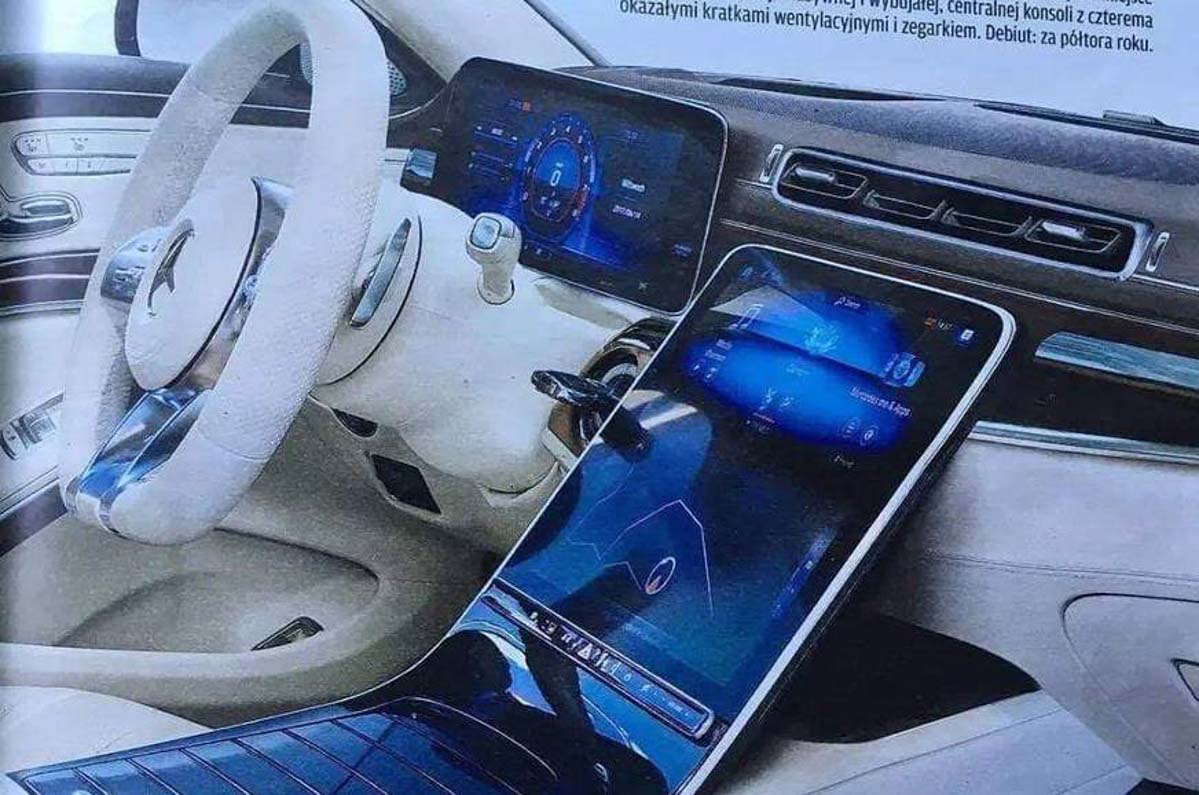
    Mercedes-Benz is readying the next generation of its flagship S-Class sedan and while we’ve seen test mules in the past, a leaked image of the interior have now made its online. The next generation Mercedes-Benz S-Class due to make its debut sometime in 2020 and going by the leaked image, the car appears future ready. Confirmed by earlier spy shots, the W223 S-Class replaced the dual infotainment screen with single unit for the instrument console and a massive vertically-stacked display for all other controls. The Tesla like touchscreen system replaces a tonne of switches on dashboard that gets a clutter-free appearance with sleek looking air-con vents and a new steering wheel. The leaked image also reveals the dual-tone treatment to the cabin in pristine while and black shades.

    The new generation Mercedes-Benz S-Class will be based on the automaker’s MRA platform and will come with a range of six and eight cylinder petrol and diesel engines. There will also be an electrified version called – the EQ S – and will be based on the company’s new Modular Electric Architecture (MEA). The new electrified version is expected to sport a range of 500 km on a single charge, as the automaker’s new top-of-the-line electric saloon. Not to forget, there will be the Affalterbach versions too with the AMG-tuned S-Class drawing power from the 4.0-litre V8 bi-turbo motor that is likely to go hybrid.

    In addition, the new Mercedes-Benz S-Class is expected to be offered in only the long-wheelbase guise globally. That said, do expect the Pullman and Maybach versions to follow suit packing in tech and comfort over the current W222 S-Class. It needs to be seen if Mercedes will continue with the Coupe and Convertible versions on the next generation. With respect to new tech, expect improved autonomous driving capability possibly up to Level 3; a new and updated version of the Airmatic suspension and more segment-first creature comforts on the offering.

    In terms of design, the new S-Class is likely to get an evolutionary styling along lines of the new A-Class, CLS and the likes. The current version is one of the most gorgeous looking saloons out there, which really sets the benchmark for the new version. It is also likely to serve as the design inspiration for the next C-Class and E-Class models, when its time for their respective new life cycles.

    More details on the new S-Class will be available in the months to come. A global debut will happen next year while sales globally should commence by 2021 or 2022, depending on the market. The W222 S-Class is assembled in India, and given the sheer demand for the flagship Mercedes, expect the new model to be locally assembled as well.

  • Microsoft, BMW team up to drive industrial IoT adoption

    Microsoft, BMW team up to drive industrial IoT adoption

    Microsoft and BMW have teamed up on a new initiative that they say will speed up the adoption of industrial IoT solutions.

    The two announced  at Hannover Messe earlier this month that they plan to develop an Open Manufacturing Platform (OMP) aimed at enabling faster and more cost-effective innovation in the manufacturing sector.

    In manufacturing today, production and profitability can be hindered by complex, proprietary systems that create data silos and slow productivity.

    The OMP is designed to break down these barriers with the creation of an open technology framework and cross-industry community, the companies said in a joint statement.

    It is expected that the initiative will support the development of smart factory solutions that will be shared by OMP participants across the automotive and broader manufacturing sectors.

    The goal is to significantly accelerate future industrial IoT developments, shorten time to value and drive production efficiencies while addressing common industrial challenges, the companies said.

    The OMP will be built on the Microsoft Azure industrial IoT cloud platform. BMW already manages more than 3,000 machines, robots and autonomous transport systems on Azure cloud, IoT and AI. The company said it will provide use cases to other manufacturers who sign up to the platform.

    Microsoft and BMW said they aim to bring in more manufacturers and suppliers and the goal is to have between four and six partners with them, working on 15 use cases by the end of the year.

    According to the companies, members will have access to reference architecture with open source components to integrate their own systems and a repository of data models to apply machine learning solutions.

    The platform meets the interoperability standards established by OPC.

    “The use of open international industry standards such as OPC UA in the OMP community enables manufacturers, machine builders and suppliers to integrate their existing equipment and systems efficiently and securely,” said Stefan Hoppe, president and CEO of the OPC Foundation. For a long time, companies have promoted proprietary, closed ecosystems — the OMP commitment to open development will shape tomorrow’s manufacturing.”

  • Bugatti Divo Undergoes Comprehensive Testing in Dessert

    Bugatti Divo Undergoes Comprehensive Testing in Dessert

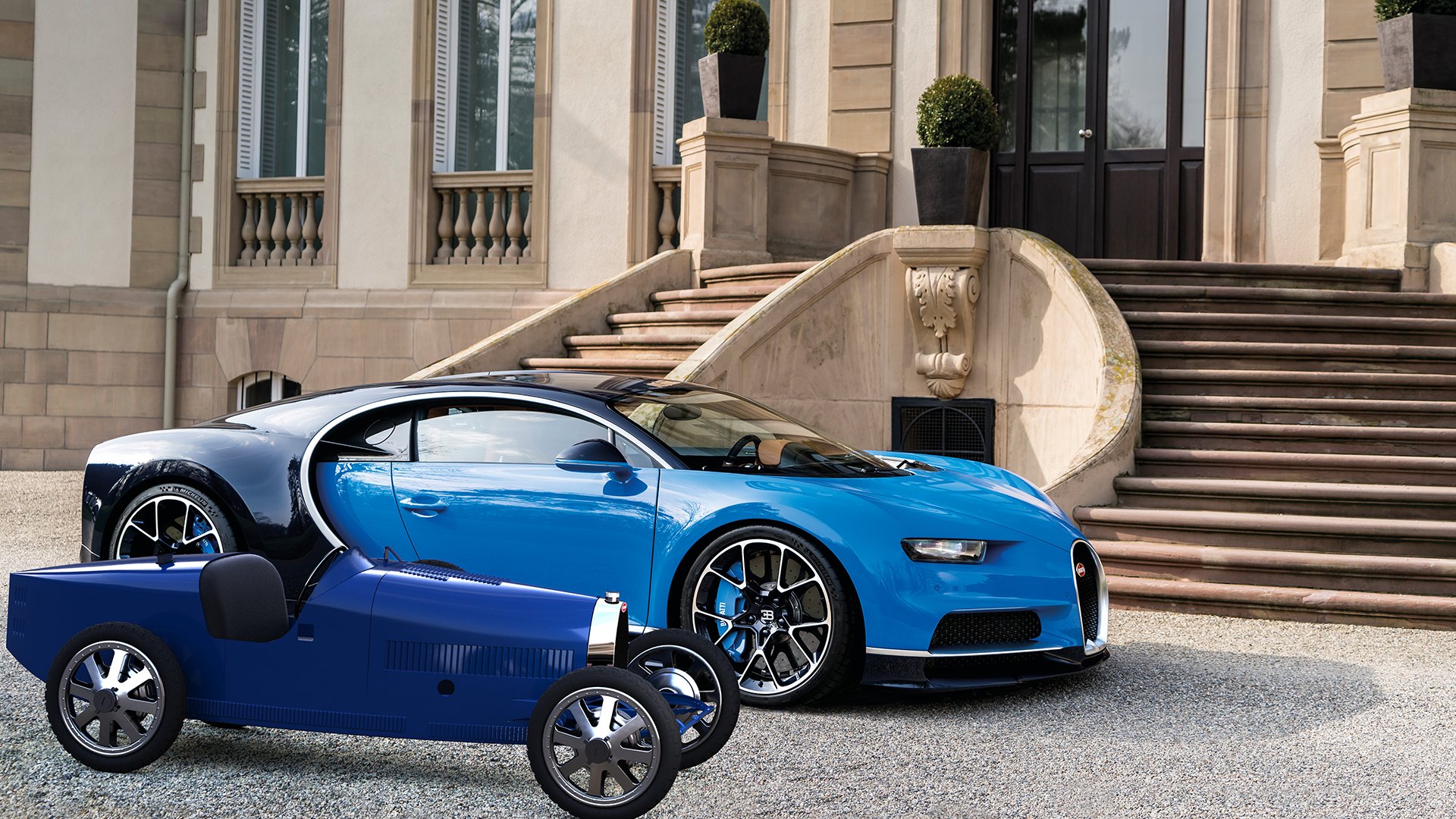
    After months of anticipations, the Bugatti Divo was unveiled last year at the Pebble Beach Concours. It is a rather beautiful car and only 40 units of it will be made. Bugatti wants to make sure that the Divo endures all weather conditions and is conducting a thorough test. In a Facebook post it shared pictures of the Divo undergoing summer testing in the scorching desert where the temperatures were beyond 40 degree Celsius and the Bugatti Divo was tested at 250 kmph.

    Now that may not be something that Divo owners are looking forward to, but it’s a customary thing for Bugatti and it wants to make sure that the Divo can sustain such high temperatures and the engine delivers the same performance. Under its fancy skin, the Divo is technically a Chiron. It is powered by the same 8.0-litre quad-turbo W16 engine which churns out a mental 1479 bhp which can propel it to triple digit speed in just 2.4 seconds.

    What adds to its mightiness is the advanced aerodynamics which complements the handling to tackle the manic speed it can take. It gets a massive 1.8-metre hydraulic wing, a sharp and wide chin spoiler up front and a huge diffuser. Altogether, the Bugatti Divo makes 456 kg of downforce at its top speed which is a good 90 kg more than the Chiron. However, the aerodynamics put a lot of downforce which at 380 kmph make it a bit slower when compared to the Chiron and even the Veyron.

    The Bugatti Divo is a product of the Nardo test track which makes it more track-focused. It’s quicker, lighter and even sharper at corners. It’s been named after the legendary French racing driver, Alberto Divo who was a two time winner of the Targa Florio race back in the 1920s.

  • Aston Martin Shows Off DBS Superleggera Volante

    Aston Martin Shows Off DBS Superleggera Volante

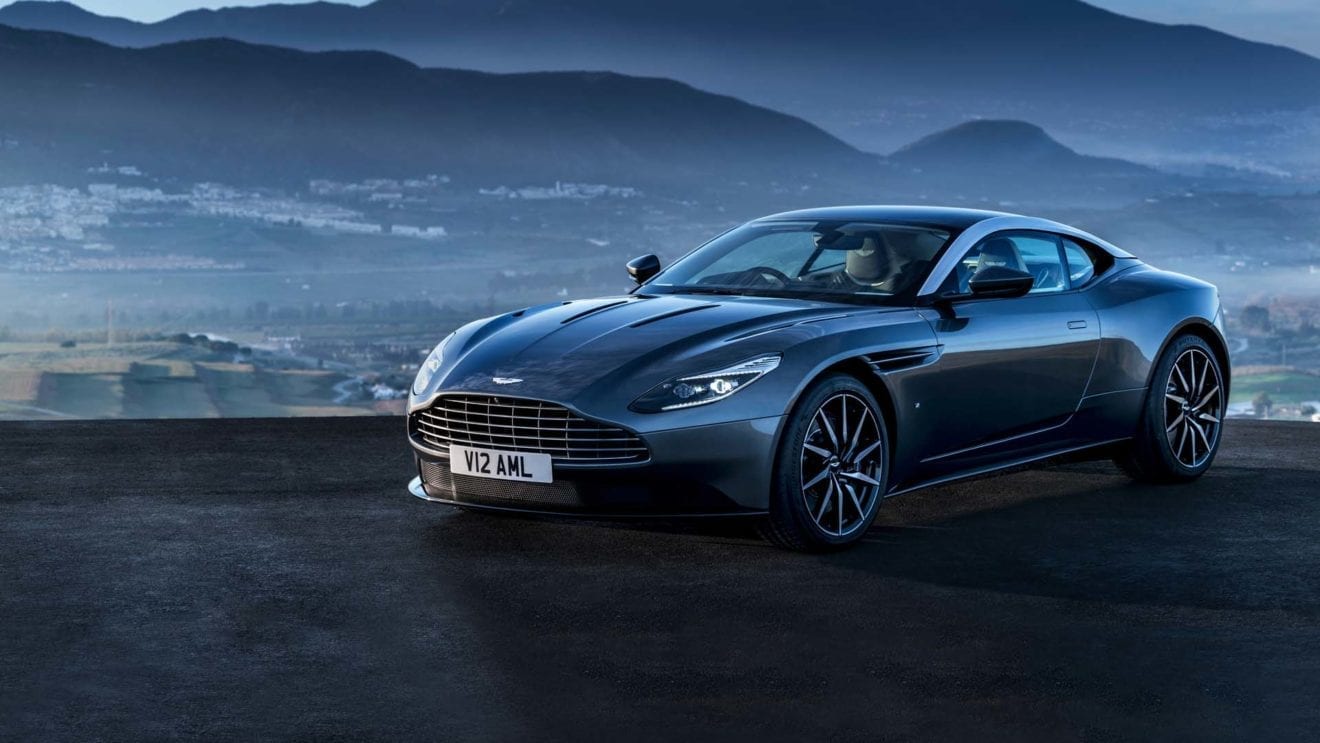
    Aston Martin has opened the roof on the new DBS Superleggera Volante. This is the second Aston Martin to carry the Volante name following the introduction of the company’s Second Century Plan. The DBS Superleggera Volante has been designed in-house under the guidance of Executive Vice President & Chief Creative Officer Marek Reichman. Aston Martin’s primary mission has also been to retain the coupe’s powerful dynamics, aggressive poise and astonishing performance.

    Powered by Aston Martin’s own 5.2-litre twin-turbo V12, producing 715 bhp and 900 Nm of torque, the top speed of the DBS Superleggera Volante stands at 340 kmph. 0-100 kmph is done in just 3.6 seconds and it’s not just the power and torque that makes the difference but also the car’s aerodynamic credentials which help in commanding and exploiting the surface airflow to maximum effect. Up front, the car’s splitter and airdam work in unison, accelerating airflow underneath the front of the car to deliver true downforce and assist cooling by feeding air to the front brakes. The new deeper side strake draws more air from the front wheel arch to reduce lift and aid high-speed stability.

    Executive Vice President & Chief Creative Officer Marek Reichman said: “DBS Superleggera produces a spectacular and relentless level of performance and so for the Volante, we focussed on bringing that extra level of sensory overload that only an open-top Super GT can deliver inside the cabin. With the unique dynamics, beautiful yet brutish design and the unmistakable harmonics of Aston Martin’s 5.2-litre V12 engine, we believe we have delivered a unique and unforgettable driving experience that is synonymous with the traditions of the Volante name.”

    Behind the front wheels, the ‘curlicue’ allows air to escape and flow smoothly along the car’s flanks, while the double diffuser at the rear allows air to exit cleanly and neutralise lift as efficiently as possible. A revised iteration – to accommodate the Volante’s clothed roofline – of the revolutionary Aeroblade ll system continues to deliver additional downforce at the car’s rear. At VMAX, the DBS Superleggera Volante produces 177kg of downforce, just 3kg less than the coupe, an impressive feat when considering the car’s fundamental aerodynamic changes.

    The 900Nm of torque is fed via a carbon-fibre prop shaft to a new ZF 8-speed automatic transmission mounted at the back of the car. Specially developed adaptive software gauges the conditions the car is operating in, along with the driver’s demands, to ensure the car is in exactly the right gear at the right time.

    Aston Martin’s engineers have worked hard to ensure the best possible roof and rear package is achieved, while still delivering conflicting targets of styling and durability. The roof operation takes 14 seconds to open and 16 seconds to close and can be operated from inside or, for added convenience, from the remote key within a two-metre radius of the car.

  • Ford Invests $500 Million In Rivian, a Battery Supplier

    Ford Invests $500 Million In Rivian, a Battery Supplier

    Rivian announced an equity investment of $500 million from Ford Motor Company. In addition to the investment, the companies have agreed to work together to develop an all-new, next-generation battery electric vehicle for Ford’s growing EV portfolio using Rivian’s skateboard platform. Rivian already has developed two clean-sheet vehicles with adventurers at the core of every design and engineering decision. The company’s launch products – the five-passenger R1T pickup and seven-passenger R1S SUV – will deliver up to 644 kilometres of range and provide an unmatched combination of performance, off-road capability and utility, starting in late 2020.

    RJ Scaringe, Rivian founder and CEO said, “Ford has a long-standing commitment to sustainability, with Bill Ford being one of the industry’s earliest advocates, and we are excited to use our technology to get more electric vehicles on the road.”

    Ford intends to develop a new vehicle using Rivian’s flexible skateboard platform. This is in addition to Ford’s existing plans to develop a portfolio of battery electric vehicles. As part of its previously announced $11 billion EV investment, Ford already has confirmed two key fully electric vehicles: a Mustang-inspired crossover coming in 2020 and a zero-emissions version of the best-selling F-150 pickup.

    Rivian remains an independent company. The investment is subject to customary regulatory approval. Following Ford’s investment, Joe Hinrichs, Ford’s president of Automotive, will join Rivian’s seven-member board.

    Bill Ford, Ford’s executive chairman said, “We are excited to invest in and partner with Rivian. I have gotten to know and respect RJ, and we share a common goal to create a sustainable future for our industry through innovation.”

  • Tesla Reports $702 Million Loss In The Last Quarter

    Tesla Reports $702 Million Loss In The Last Quarter

    Tesla said on Wednesday it would return to profit in the third quarter of 2019 after racking up two consecutive losses in the first half of the year, as it struggled to deliver cars to customers and launched a cheaper version of its Model 3 sedan. The company, which Wall Street suspects may soon have to raise more cash, said it ended the quarter with just $2.2 billion in cash, after paying off a $920 million convertible bond obligation in March.

    Tesla affirmed its outlook of delivering 360,000 to 400,000 vehicles in 2019 and said it may produce as many as 500,000 vehicles in the year if its Gigafactory in Shanghai reaches volume production in the fourth quarter. Tesla reported net loss attributable to common shareholders of $702.1 million, or $4.10 per share, in the first quarter ended March 31, compared with $709.6 million, or $4.19 per share, a year earlier.

    “As the impact of higher deliveries and cost reduction take full effect, we expect to return to profitability in Q3 and significantly reduce our loss in Q2,” Chief Executive Officer Elon Musk said in a letter to investors.

    The Silicon Valley company has weathered a challenging few months, marked by a sharp drop in the number of vehicles delivered to global customers during the quarter and a public spat between Musk and financial regulators.

  • BMW To Buy Cobalt Directly from Australia

    BMW To Buy Cobalt Directly from Australia

    German carmaker BMW will buy cobalt, a key component for electric vehicle (EV) batteries, directly from mines in Australia and Morocco to ensure they are not produced by child labor, an executive said on Tuesday.The announcement came as the London Metal Exchange (LME) launched an initiative under which it could ban or delist brands that are not responsibly sourced by 2022 to help root out metal tainted by child labor or corruption.

    Andreas Wendt, BMW board member responsible for procurement, told a briefing in Paris that the new supply of cobalt would be used in the carmaker’s next generation of EVs in 2020.

    The world’s largest known reserves of cobalt are found in the Democratic Republic of Congo, where the raw ingredient is often mined by small, artisanal operations and supply chains are not strictly monitored.

    BMW said last year it was exploring ways to improve working conditions for mining cobalt in Congo through a pilot project.

  • Toyota Establishes Research Institute In China To Study Hydrogen

    Toyota Establishes Research Institute In China To Study Hydrogen

    Japan’s Toyota Motor said on Sunday it was setting up a research institute in Beijing in partnership with Tsinghua University to study car technology using hydrogen power and other green technologies that could ease environmental problems in China. The initiative, outlined by Toyota’s President and Chief Executive Akio Toyoda in a speech at Tsinghua University, is part of the Japanese carmaker’s efforts to share more technology with China as it seeks to expand its business in the country by beefing up manufacturing capacity and distribution channels, a source close to Toyota said.

    The Tsinghua-Toyota Joint Research Institute will conduct research into cars and new technology to solve environmental problems in China, including reducing traffic accidents, Toyota said in a statement.The institute will “cooperate in research not only related to cars for Chinese consumers, but also in research related to active utilization of hydrogen energy that can help solve China’s energy problems,” the company said.

    The move dovetails with Toyota’s announcement this month that it would offer carmakers and suppliers around the world free access to nearly 24,000 patents for electric vehicle technologies.

    Executive Vice President Shigeki Terashi told Reuters earlier this month that the automaker intended to become a tier 2 supplier of hybrid systems and that it had already received enquiries from more than 50 companies.

    Later on Monday, Toyota said that it had started to supply fuel cell vehicle parts to Chinese commercial vehicle maker Foton and SinoHytec, without giving financial details of the deal. The company said in a statement that it hopes to cooperate with more companies in China to promote fuel cell vehicle penetration in China.

  • Mercedes-AMG Cars Will Be Electrified From 2021

    Mercedes-AMG Cars Will Be Electrified From 2021

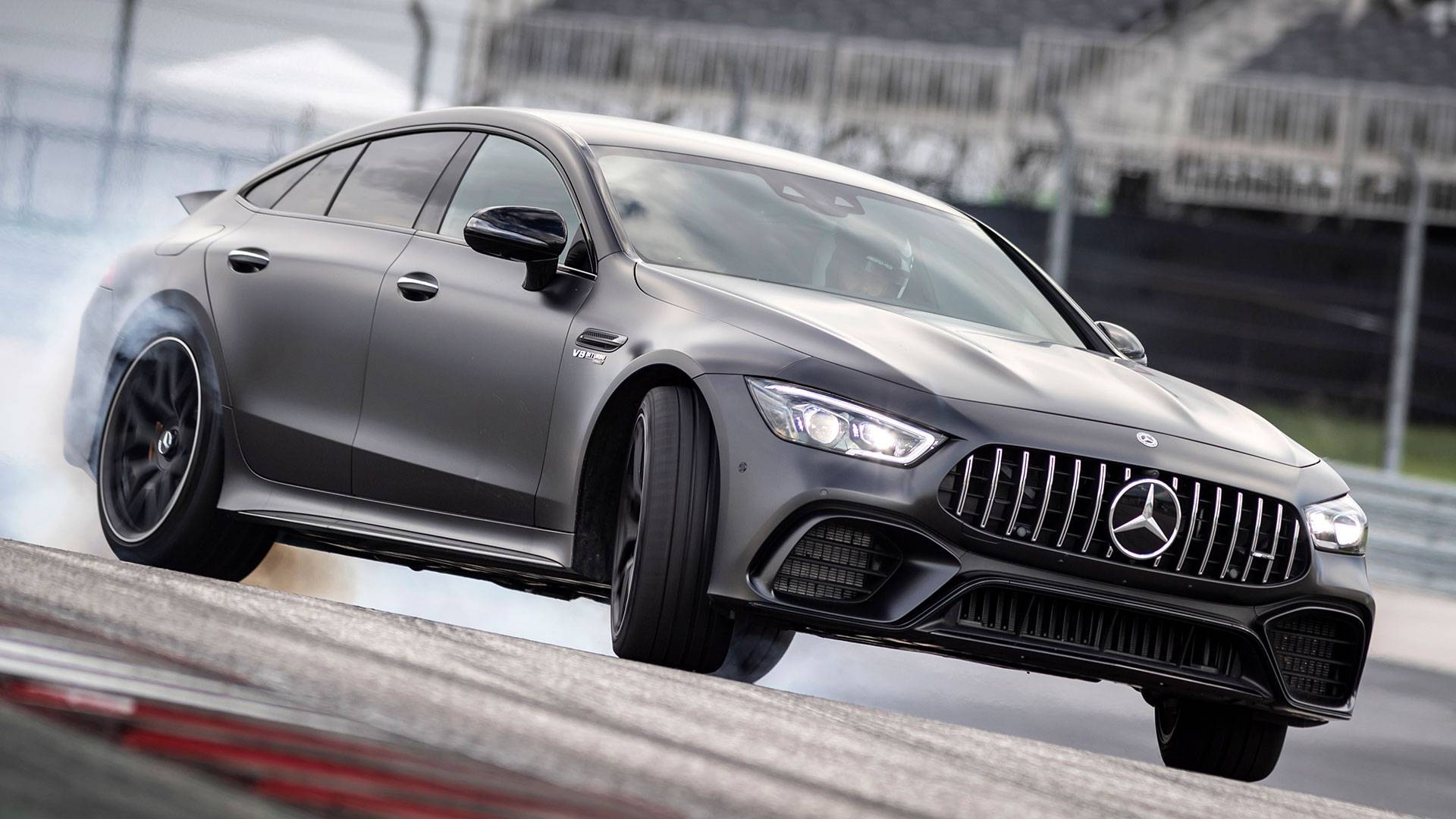
    Electric performance car is not an alien concept anymore. In fact, prominent carmakers like Automobili Pininfarina and Rimac are into the business of making only electric supercars. Electric Mobility is also believed to be the future of automobiles and this stands true even when we talk about performance cars. Mercedes is also thinking in this direction and has said that all its AMG cars will be electrified 2021 onwards.

    According to news reports, Tobias Moers, Head – Mercedes-AMG said that Mercedes-AMG models will be using an electrified V8 drivetrain in the future. The 4.0-litre V8 engine which powers a range of Mercedes-AMG cars will be coupled with a 48-volt electric motor which has been developed indigenously by the team. Initially, Mercedes was planning to use the new powertrain in the 63 engine only in the GLE and GLS SUVs. However, it will play a major role in the future as from 2021 all AMG cars will be launched with an electrified powertrain. Mercedes also believes that the share of electrified powertrains will be higher in the performance segments in 2025.

    We already know that AMG is also working on a high-performance hybrid system for its upcoming hypercar. The Mercedes-AMG One hypercar will use an electric motor driving its front wheels just like the AMG GT four-door concept. Moers also said that the setup will be offered in the 65 series AMG models and will replace the 6.0-litre V12 engine. However, the 2.0-litre, four-cylinder, turbocharged AMG engine won’t be converted into a hybrid system.

  • Aston Martin DBS 59 Pays Tribute To Its 1959 Le Mans Victory

    Aston Martin DBS 59 Pays Tribute To Its 1959 Le Mans Victory

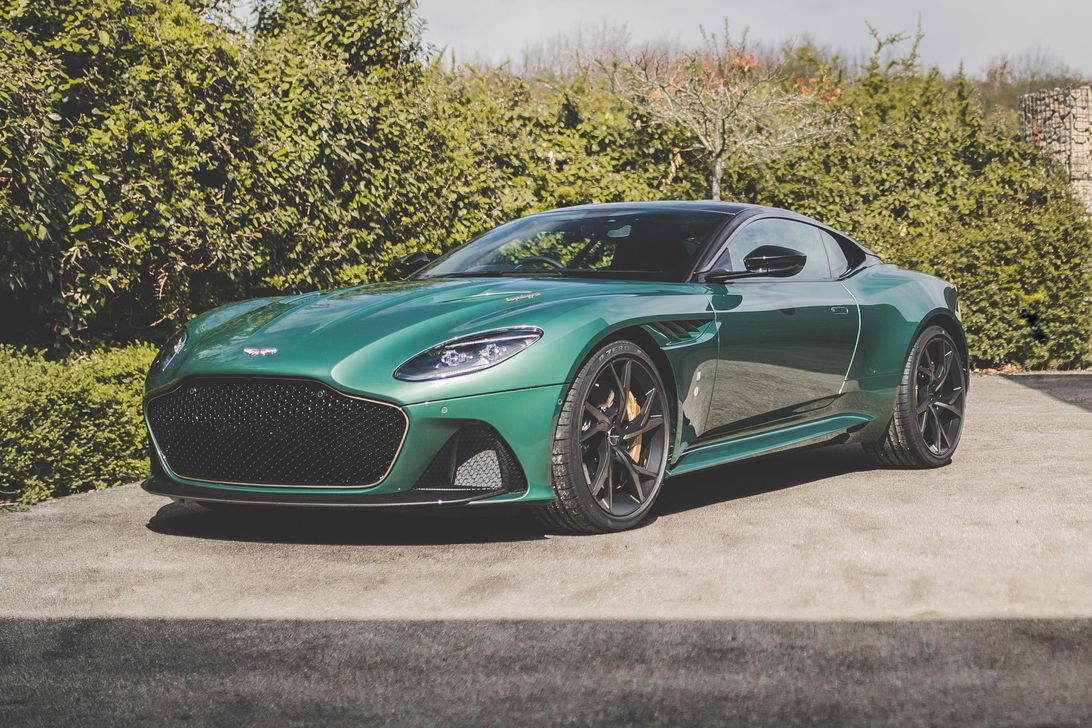
    It was in 1959 that Aston Martin put up a spectacular show at Le Mans, which is one of the toughest endurance races in the world and managed a one-two finish that year. 60 years later, Aston Martin has designed a Special Edition DBS Superleggera to celebrate its 1959 Le Mans victory and will be calling it the DBS 59. The DBS 59 will be a limited edition model and Aston Martin will manufacture only 24 units which will represent each hour of the race.

    The Aston Martin DBS 59 has been developed by the Q division of the company that carefully studied the DBR 1 race car which took the victory. Boffins at the Q by Aston Martin division have tried to mimic the race cars’ Racing Green paint scheme. In a bid to make the limited edition model look modern and contemporary, they have added new elements to it like the gloss finish carbon fibre roof panel, bespoke front grille, new brake callipers, 21-inch forged Y spoke satin dual-tone wheels and bronze finish on the Superleggera badging on the hood.

    The cabin of the special edition DBS 59 is finished with the same weave design used in the DBR1 and the company has aesthetically used Bronze even on the inside. The paddle shifters are finished in Bronze along with the 59 edition logo on the seatbacks.  The entire cabin is finished Obsidian Black and Chestnut Tan Leather and the sun visor is embossed with the exact date on which the race took place.

    The new DBS 59 Special Edition model celebrates the 323 laps which the Aston Martin race cars completed in the 24 hours of Le Mans in 1959. Aston Martin chose the Superleggera to design the DBS 59 model since it’s the fastest car in its stable.