Tag: automotive

  • Volvo shifts its safety strategy for self-driving world

    Volvo shifts its safety strategy for self-driving world

    In Swedish, “safety” translates to “säkerhet,” but for employees of one of Sweden’s biggest employers, it might as well translate to “Volvo.”

    The automaker, owned by Zhejiang Geely Holding Group of China, is fiercely protective of its reputation in safety. But in an age of autonomous driving and advanced sensor technology, Volvo’s top safety experts are increasingly navigating a blurry line between driving safely and being driven.

    “We’re very focused that you as a driver know that you’re in charge, [and] not giving you so much support that you question who’s in charge,” said Malin Ekholm, director of the Car Safety Center at Volvo Cars headquarters in Gothenburg, Sweden. “It’s nudging rather than giving the feeling of taking over.”

    With a bevy of new tools to ensure passenger safety, the automaker’s safety strategy is shifting from passenger protection to accident prediction and avoidance, Ekholm said.

    New technology, tools

    Volvo has a well-developed apparatus in safety research.

    Its safety center, created in the 1970s, runs crash tests and shares information with Swedish road authorities to document accidents and crashes, so that engineers can better understand scenarios they must guard against.

    But the rise of autonomous and connected-vehicle technology, as well as digital simulation technology used to pioneer self-driving vehicles, have augmented researchers’ approach to safety. Now, for instance, in addition to crash tests, vehicle safety systems run through nearly 30,000 accident simulations.

    Volvo’s increasing investment in autonomous r&d — including a recently expanded Silicon Valley operation — also increases the capabilities of its advanced safety team. Volvo’s City Safety package, for instance, incorporates a front-facing camera to recognize pedestrians, bicyclists and oncoming vehicles and deploy automatic emergency braking to avoid collisions.

    The “sensors and cameras were there, so we could use it,” Ekholm said.

    Avoiding accidents

    Increasing use of advanced technology is shifting Volvo safety researchers’ approach from mitigating accidents through restraint devices to predicting and preventing accidents.

    “More and more, we need to help you avoid the crash,” Ekholm said. Researchers, she said, are asking how automakers can support drivers so the motorists never encounter critical situations.

    Part of the solution is supplying more information on potential hazards through the use of connected technology. In Sweden, the carmaker uses vehicle-to-vehicle technology to send warnings about low-friction roads or hazard-light detection to oncoming traffic.

    But a larger focus is on human behavior, often in response to semi-autonomous technology that lulls drivers into a false sense of security.

    The automaker’s semi-autonomous Pilot Assist system, for instance, is intended to reduce fatigue on long trips, but can be abused if drivers fail to keep their attention on the road. Ekholm has responded by expanding the company’s safety team to include human behavior and biomechanical researchers.

    As vehicles become increasingly automated, Volvo’s researchers will need to pick and choose where the technology can enhance the company’s safety standards.

    “Autonomous has so many aspects to it,” Ekholm said. “What we focus on is the safety research.”

  • BMW expands recall on fire risk to 1.6 million diesel vehicles

    BMW expands recall on fire risk to 1.6 million diesel vehicles

    BMW is recalling about 1.6 million diesel cars to fix a potential fire hazard in their engines, expanding repairs from just under half a million vehicles in Europe and Asia. The voluntary service action follows a BMW investigation that found coolant could leak from the car’s exhaust recirculation unit. The defect can lead to sparks while driving and cause fires in “in extreme cases,” the automaker said Tuesday in a statement.

    South Korea’s government, after reports of 40 fires this year, asked drivers to keep vehicles off roads until undergoing checks. Police also raided the automaker’s office in Seoul to probe the safety issue, after videos of cars engulfed by fire went viral.

    The vehicles affected — diesels with four- and six-cylinder engines — were produced between 2010 and 2017, BMW said.

    After the initial recall announced in August, BMW’s internal investigation found more vehicles with similar technical setups. The company said it will replace the components as necessary.

    BMW last month cut its profit forecast, blaming an increase in warranty provisions alongside trade tensions and pricing pressure.

  • GM Korea votes to spin off R&D unit

    GM Korea votes to spin off R&D unit

    A GM Korea shareholders’ meeting Friday decided to spin off its R&D and design department, reigniting conflict with its labor union and the state-owned Korea Development Bank (KDB), the automaker’s second-largest stakeholder.  “The plan to establish a dedicated engineering unit, GM Technical Center Korea, was approved during the shareholders meeting,” GM Korea said in a statement.

    However, the decision is guaranteed to be controversial since KDB, which owns 17-percent of GM Korea, intended to vote against the spinning off of R&D and design unit from production but missed the shareholders’ meeting.

    “We received notification of the shareholders’ meeting, but the decision was made in our absence,” an official at the KDB bank said. “We were not able to exercise our veto rights since we weren’t there.”

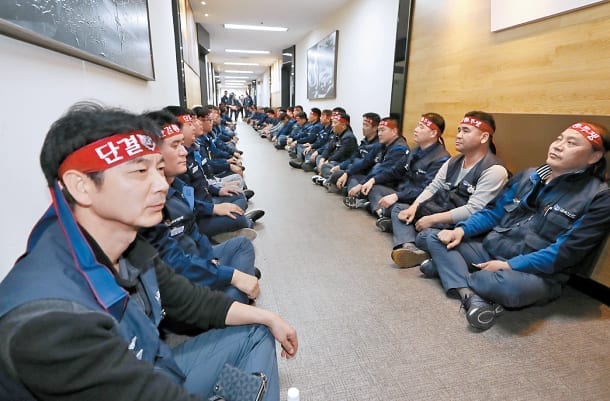
    GM Korea’s unionized workers occupy the hallway leading to the GM Korea chief executive’s office at the company’s headquarters in Bupyeong District, Incheon, on Friday in an effort to stop a shareholders’ meeting from taking place

    It’s not clear why KDB representatives didn’t attend. KDB said it will be looking into the legality of the meeting.

    On Thursday, KDB released a statement saying it would ask GM Korea’s management to explain fully its decision to spin off the R&D and design center and decide whether to exercise its veto rights.

    The statement was released after a court in Incheon rejected KDB’s request for an injunction to stop the shareholders’ meeting.

    “Although we respect the judgment of the Incheon court, we have deep concerns about GM Korea’s push to spin off [R&D and design] without sufficient explanation or agreement from the interested parties during the shareholders’ meeting,” the bank said in the statement.

    GM Korea’s union claims the spin-off is the first step in a long-term plan to completely halt domestic production.

    KDB has the right to nullify any GM Korea decision to sell more than 20 percent of its total assets, which is supposed to prevent the U.S. automaker from pulling out of Korea or restructuring without the consent of the bank.

    That right, which expired in October 2017, was reinstated after GM and the Korean government reached an agreement in April.

    However, it’s not clear whether that veto right can be applied to spinning off units within GM Korea. There’s even arguments that the newly forming center may not account for 20 percent of the automaker’s total assets.

    The union tried to stop the shareholders’ meeting by occupying a hall leading to GM Korea CEO Kaher Kazem’s office in Bupyeong District, Incheon. The union earlier this week voted in favor of a walkout that will likely take place next week.

    A crisis that led to the shutdown of one of GM Korea’s four plants in Korea in May seemed to have been solved when GM and the Korean government reached an agreement after long negotiations to inject $7.15 billion into the struggling automaker. GM agreed on covering $6.4 billion while KDB put up $750 million. GM agreed to keep the local unit going for at least 10 years.

    But in July, GM Korea announced the spinning off of its R&D center, which will turn Korea into its global strategic development and design center for next generation models.

    Meanwhile, production of compact vehicles will end in 2022 and factories will concentrate on SUVs.

    “The establishment of a dedicated GM Korea Technical Center is an important development in continuing our organization,” said GM Korea CEO Kazem in a letter sent to employees on Monday, adding that the new center would help to “more effectively respond to and secure and execute global engineering projects.”

  • Samsung Launches New Chipsets To Make Cars Smarter

    Samsung Launches New Chipsets To Make Cars Smarter

    Samsung Electronics, a part of the Samsung Group, has announced the introduction of two new chipsets or processors for the automotive segment for connected cars technology. Christened the Samsung Exynos Auto and Samsung ISOCELL Auto, the new chipsets claim to offer cutting-edge application processor and image sensor technology solutions to the road.  While the former Exynos will help manufacturers develop in-car apps for infotainment, advanced driving assistance systems, and telematics, the ISOCELL Auto is targeted at developing in-vehicle infotainment systems and telematics solutions.

    Talking about the two new chipsets, Kenny Han, vice president of Samsung’s Device Solutions Division said, “Samsung’s new automotive brand solutions, Exynos Auto and ISOCELL Auto, bring Samsung’s market-proven technologies to automotive applications with enhanced features and durability required by the market. With fast telecommunication, accurate sensing and powerful processing capabilities, Samsung’s Auto-branded solutions will enable new driving experiences to next-generation smart vehicles.”

    Processors from Exynos Auto range come in three sub-categories: Exynos Auto V series for advanced in-vehicle infotainment (IVI) systems, Exynos Auto A series for ADAS, and Exynos Auto T series for telematics solutions. On the other hand, Samsung’s ISOCELL image sensors are built on the company’s innovative pixel isolation technology, which provides greater visibility of the road and surroundings even in low-light environments, while enabling more precise identification of objects. The sensors also allow vehicles to perceive road conditions or potential hazards even when driving through tunnels or other high-contrast environments.

  • BMW plans to take control of China joint ventures

    BMW plans to take control of China joint ventures

    German luxury carmaker BMW announced a plan to take control of its China joint-venture, the first foreign automaker to take advantage of Beijing’s new ownership rules for the sector. BMW will acquire a further 25 per cent stake in the venture with Brilliance China Automotive for €3.6 billion (US$4.2 billion), the company said, bringing its stake to 75 per cent by 2022.

    Foreign automakers have long been restricted to holding no more than a 50 per cent stake in their China operations, but Beijing decided to relax the ownership caps this year.

    The reforms are part of Beijing’s plan to further open its economy to foreign business, after years of facing pressure from the United States and Europe.

    But US and European business groups say the reforms have still not gone far enough, and have pushed for further opening.

    To force the issue, and to hit back at China for alleged theft of American intellectual property, US President Donald Trump has slapped tariffs on roughly half of the imports from China.

    The joint-venture “is the cornerstone of the BMW brand’s sustained success in its largest single market,” said Harald Kruger, BMW’s chairman.

    “BMW Group and Brilliance continue to set a good example of successful cooperation in China,” he said.

    TRADE WAR EFFECT

    The changes in ownership rules are a boon for foreign automakers which will gain a greater share of control and profits from their China operations, but hurt prospects for their Chinese partners.

    Brilliance China’s shares in Hong Kong have plummeted this year, and were suspended from trading on Thursday.

    The two companies had extended their joint venture contract until 2040 and announced a plan to pump €3 billion (US$3.5 billion) into expanding their auto plants in northeast Liaoning province – ramping up production capacity to 650,000 cars early next decade while creating 5,000 new jobs.

    BMW has been hit particularly hard by the US-China trade war with many of its SUVs imported from the US facing new 25 per cent taxes, while cars imported from other countries have benefited from China’s tariff cut for vehicles from 25 per cent to 15 percent.

    With the new production capacity, the China joint-venture will start to produce BMW vehicles like fully-electric BMW iX3 for export globally from 2020, BMW said.

    China’s auto market, the world’s largest, has faced headwinds this year as the economy slows.

    In August, China’s new vehicle sales continued to fall, following a drop in July.

  • Vietnam to revise automobile industry laws

    Vietnam to revise automobile industry laws

    The Ministry of Industry and Trade (MoIT) has asked the Ministry of Finance to remove the special consumption tax for locally-manufactured auto parts.

    This is part of a recommendation document that MoIT sent to the finance ministry in order to revitalise domestic automobile industry in the future and reduce the import of autos.

    The MoIT said that it is needed to have more measures to help local automakers cut production cost and accelerate the product’s competition capacity as well as revising policies on tax and fees.

    The ministry wanted the finance ministry to exempt the import tax on materials for part and components manufacturers who invest in Việt Nam, which should be in association with their commitment on long-term investment, volume of products, technology transfer and use of local labour force.

    The MoIT also recommends the application of a tax payment guarantee for a period of eight months instead of the current 30 days.

    The MoIT expected the finance ministry to study to amend and supplement a number of the above contents, which were proposed by Thành Công Group, with regard to laws on value-added tax, special consumption tax, and corporate income tax, in addition to personal income tax and natural resources protection tax.

    Earlier, at the review conference of the industry and trade sector held in Hà Nội on January 15, General Director of Hyundai Thành Công Lê Ngọc Đức proposed that the MoIT, in co-ordination with the finance ministry, consider several recommendations as those mentioned above.

    According to Đức, in order to achieve the goal of developing the automobile industry in Việt Nam, the Government has issued decrees such as Decree 116 on conditions for production, assembly, import and business of warranty service, car maintenance, and Decree 125 that regulates the roadmap for import duty exemptions of parts and components for manufacturers who meet conditions such as emission standards, engine displacement capacity for the car with nine seats and less, passenger car and truck.

    However, he said such privileges were not strong enough to be of significant priority for locally-assembled autos to help them compete with complete built-up units imported from ASEAN.

    Under the ASEAN Free Trade Agreement (AFTA) commitments, a zero per cent tax has been applied on cars imported from the bloc with a localisation rate of 40 per cent or more in the country of origin from January 1.

    A MoIT report showed that the price of an automobile in Việt Nam is currently high in the region but its quality is lower than an imported one.

    “Locally-assembled autos in Việt Nam have a similar price doubling as those seen in regional countries and much higher than other countries which have a stable automobile industry such as Japan and the United States,” said the report.

    “The domestic automobile industry has not yet reached the standards of the real automobile industry because most are at the level of simple assembly; the production line mainly consists of four key stages including welding, painting, assembly and inspection. There is no co-operation, linkage and specialisation between automakers and assemblers and part suppliers. There is no such system used by material suppliers and large-scale parts and components makers.

    “The localisation rate of new autos is only between 7 per cent and 10 per cent on average (compared to the target of 40 per cent in 2005 and 60 per cent in 2010). Currently, locally-produced products with very low technological content are tubes, tires, chairs, mirrors, cables, plastic products and batteries,” the report pointed out.

    MoIT has on numerous occasions warned that if such privileges and incentives were not approved, the domestic automobile industry would find it difficult to compete with imported cars.


  • Peugeot launches joint venture to build cars in Algeria

    Peugeot launches joint venture to build cars in Algeria

    Peugeot maker PSA Group signed a joint venture agreement with three Algerian partners on Sunday to build cars in the North African country.

    The French carmaker said it would invest around 100 million euros ($117 million), equalling 49 pct of the joint venture’s capital.

    The joint venture will set up a plant in the western Algerian city of Oran, where French automaker Renault opened a plant in 2014.

    The Algerian partners are Condor Electronics, Palpa Pro and Entreprise Nationale de Production de Machines-Outils (PMO), PSA said in a statement.

    The plant will start some production next year and be fully operational in 2019, PSA said.

    The agreement was signed in Algiers as part of the France-Algeria joint economic committee (COMEFA), in the presence of French Foreign Minister Jean-Yves Le Drian and French Economy, Finance and Industry Minister Bruno Le Maire.

    They said France was seeking to boost investment in its former colony after losing ground to countries including China, Turkey and Italy.

    French firms including Renault, Alstom, and Sanofi were expected to sign deals in Algeria in the near future, Le Maire said.

    Algerian ministers present at the signing also said they hoped France would boost its investment in the North African country.

    “We need to point out the weakness of the partnership in our economic relations, including FDI (foreign direct investment),” Algerian Foreign Minister Abdelkader Messahel said.

    The agreement will enable PSA to achieve its goal of selling 700,000 vehicles in the Middle East and Africa region by 2021, PSA Executive Vice President, Africa-Middle East, Jean-Christophe Quemard said in the statement.

    Groupe PSA said it sold 383,504 vehicles in the region in 2016.

  • BMW says shortage of parts from Bosch hampers production

    BMW says shortage of parts from Bosch hampers production

    German carmaker BMW said a shortage of steering gears supplied by Robert Bosch slowed production of several of its compact and mid-sized models and caused stoppages at its plants in South Africa and China.

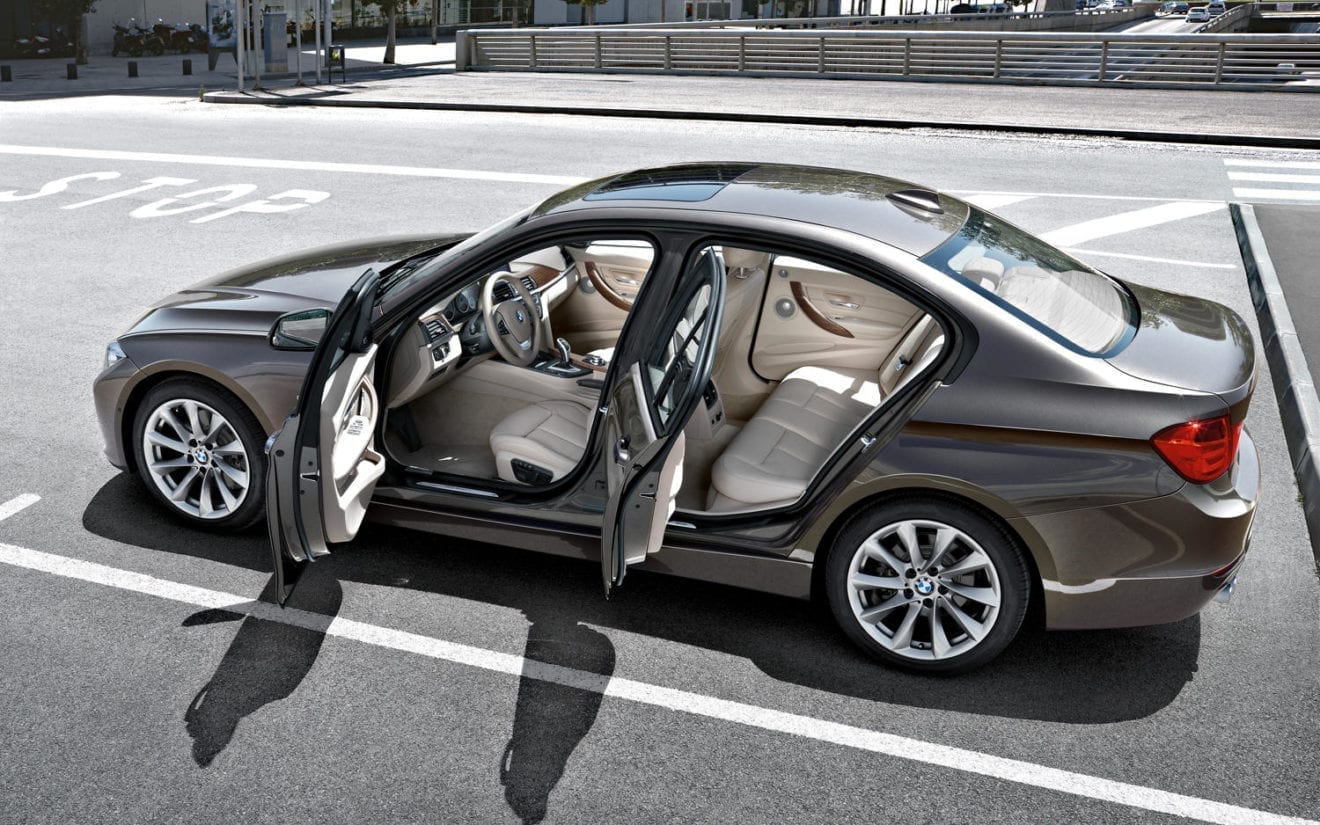
    “Our supplier Bosch is not currently able to provide us with a sufficient number of steering gears for the BMW 1 Series, 2 Series, 3 Series and 4 Series,” BMW said in a statement on Monday.

    BMW plants in Tiexi, China and Rosslyn, South Africa have extended or pulled forward planned interruptions to production, the carmaker said.

    “We are taking advantage of the flexibility of our processes to minimize economic damage. We expect that Bosch, as the responsible supplier, will compensate for damages,” BMW said.

    Bosch meanwhile blamed the problem on a sub-supplier in Italy, which it did not name.

    “One main component of the steering system is the housing; which Bosch procures from a sub-supplier in Italy. We are currently experiencing delivery problems with this supplier,” it said in an e-mailed statement.

    It said Bosch, BMW and the sub-supplier were doing all they could to resolve the delivery bottlenecks.

  • Thai electric car rolls out

    Thai electric car rolls out

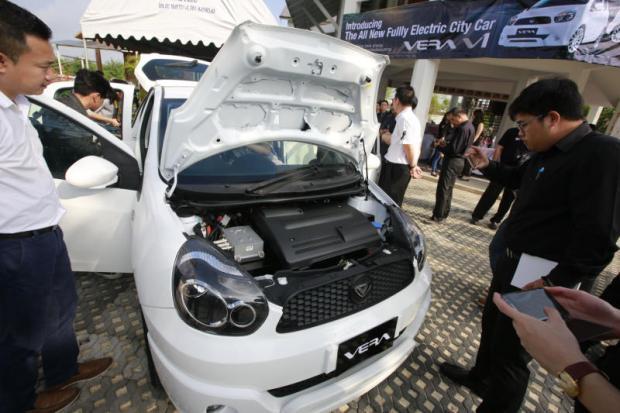
    Thailand’s first electric car brand has made its debut amid scepticism from an industry expert about its commercial viability. Vera Automotive, founded on Oct 7, 2015 by five Thai engineers from King Mongkut’s Institute of Technology Ladkrabang (KMITL), yesterday introduced the Vera V1 battery electric vehicle (BEV), powered with a battery capacity of 22 kilowatts per hour, which can be registered with the Land Transport Department as a passenger car.

    The maximum speed of the Vera V1 is up to 105 kilometres an hour. It can run up to 180km per charge, which takes six hours to complete.

    Co-founder Wanchai Meesiri said all Vera cars are designed by Thai engineers under the Thai brand, but the company has hired the Chinese carmaker Geely Automotive to produce the BEVs. The company imports the cars as completely built-up (CBU) vehicles to Thailand.

    Vera V1 is subject to all related taxes similar to other imported vehicles, including an 80% import duty, a 10% excise tax for all types of electric vehicles, a 10% interior tax and a 7% value-added tax.

    Yossapong Laoonual, chairman of the Electric Vehicle Association of Thailand (Evat), said it’s a good sign for the country to create its own electric vehicles, even if the vehicles are made by foreign firms.

    A retail price below 1 million baht is affordable for Thai customers, he said.

    But Asst Prof Yossapong warned that any startup that is selling electric vehicles has to plan its marketing strategy carefully, as the Thai car market has many dimensions for consumers to consider, including brand, service and trust.

    “Electric vehicles for Thailand remain very new, and they’re unlikely to become popular or proliferate in the short term,” he said. “If you are a new company or brand, the best solution is to sell electric vehicles as a fleet to other agencies, which are easier to provide after-sales services for.”

    Mr Wanchai said the primary purpose for establishing Vera Automotive is to make Thai BEVs for the local market.

    Managing director and co-founder Werachet Khan-ngern said Vera vehicles aim to capture only a niche market.

    He expects to sell about 100 units of Vera this year.

    “We hope in the foreseeable future the government will come up with clearer policies and supporting measures once the number of electric vehicles increases,” Mr Werachet said.

    He said the firm will provide after-sales services at its head office on Ladprakao Road.

  • All Nippon Airways’ cargo arm is taking aim at the Asia-US and automotive markets

    All Nippon Airways’ cargo arm is taking aim at the Asia-US and automotive markets

    All Nippon Airways’ cargo arm is taking aim at the Asia-US and automotive markets as a way to differentiate itself and to strengthen its overall competitiveness.

    “The market situation is not so easy right now,” says Toshiaki Toyama, president of ANA Cargo. “In order to maintain profitability or minimize loss, we need to adjust our freighter capacity in accordance with the market situation. As a combination carrier, we handle a lot of transit cargo between Europe or the US and Asia. We’re looking carefully at the role of each freighter flight and we’re planning to reduce some capacity for the winter season.”

    Transit traffic between Asia and the US will increasingly be a major focus of ANA Cargo’s strategy going forward. This was given a large boost in July 2016, when the carrier launched its trans-Pacific joint venture with United Cargo.

    “Frankly, we’ve been a little bit surprised because the response has been even better than we expected,” Toyama says. “In particular, we have a lot of manufacturer customers in Kyushu connecting to United’s San Francisco flight at Haneda and they seem to be very satisfied with the shorter lead times.”

    The first phase of the joint venture began on July 5, covering eastbound cargo from Japan to Canada and the US.

    “From the number of cross bookings between UA and us, we can see that the customers are very supportive of this programme,” says Toyama. “We’re preparing for the next phase for westbound traffic, which is scheduled to be early next year. Phase three will include the rest of Asia.”

    Another opportunity exists in the expanded slot arrangement at Haneda Airport. In February 2016, the Japanese and US authorities agreed to give the two countries five day-time slot pairs and one evening slot pair each at Haneda, as opposed to the four evening slot pairs each country used to have. As a result, ANA has already decided to shift a New York and a Chicago flight from Narita to Haneda from late October 2016.

    “From Japan to New York and Chicago, more than 50% of the total volume is transit cargo,” says Toyama. “The timing of the two flights enables morning connections at Haneda of about four hours from Shanghai, Singapore, Bangkok, Jakarta, Seoul, Taipei and Hong Kong.”

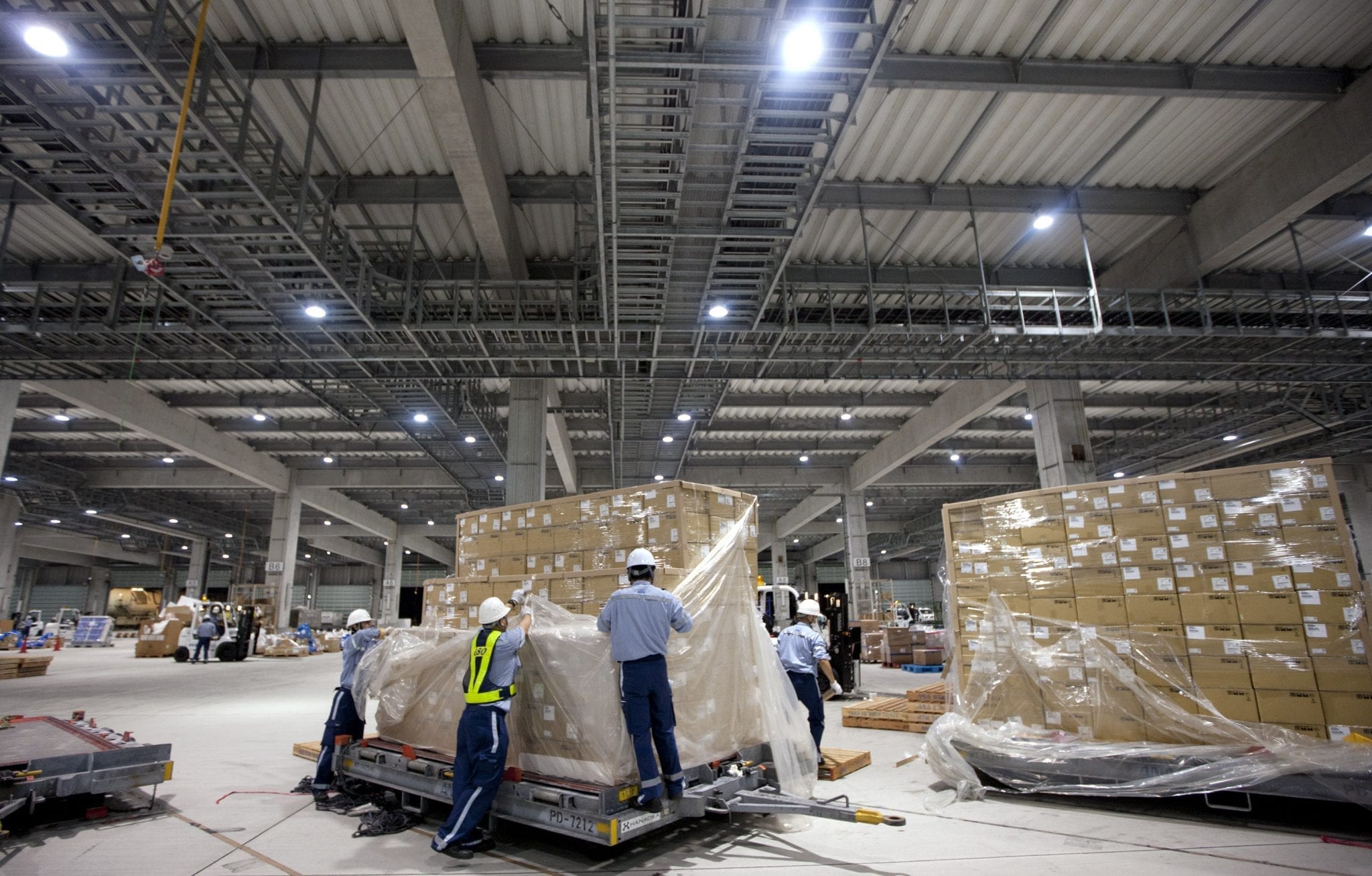
    ANA is the only airline to operate its own cargo facility at Haneda, with an 8,800-square-metre warehouse next to the larger Tokyo International Air Cargo Terminal.

    “We actually use TIACT too,” Toyama says. “I think it’s sufficient for now, because there’s a lot of vacant space at TIACT. We also want to minimize costs – Haneda is incredibly expensive and probably one of the most expensive [airports] in the world.”

    He adds that ANA is in discussions with Japan Airlines and Nippon Cargo Airlines to jointly develop an e-cargo programme, and that he hopes that project to be at 100% by 2020.

    Network expansion on the passenger side will also contribute positively to the cargo business. The airline launched Wuhan in April 2016, Phnom Penh this month, and is due to launch Mexico City in February 2017.

    “These destinations are very attractive for the cargo business too,” says Toyama. “Mexico is an automobile manufacturing centre and Japanese manufacturers like Nissan and Honda have factories there. The supply chain doesn’t just include Japan but also major Asian points such as Tianjin, Guangzhou and Bangkok. We still have a few months until the launch but we’ve already received a lot of enquiries from automobile companies and forwarders.”

    According to Toyama, Wuhan is an important target area for the carrier because of the Chinese government’s decision to shift development from the coast to inland areas.

    “I think it’s a reasonable base but I’m not satisfied yet,” he says. “I expect we’ll be able to gradually increase our load to and from Wuhan. Nissan and a lot of semiconductor companies are there, so we’re talking with them and with forwarders about utilizing our network.”

    Not wanting to lose out on growing e-commerce demand to mainland China, ANA Holdings invested in a young Japanese IT company called ACD in June to provide total logistics solutions including special customs clearance services into China. The service started in September. The first phase of the service is targeted at Japanese retailers and began in September, with plans to expand that to Taiwan, Korea and the US.

    ANA Cargo’s fleet consists of 12 Boeing 767 freighters, which Toyama says is enough for now.

    “In our mid-term strategy, we have plans in place to increase the fleet to 13 or 14 if we need to, depending on the market situation,” he says. “The advantage of the 767 is it allows us to access smaller and medium-sized markets such as Cambodia and Myanmar. Wuhan is also a candidate for the 767F, but it’s not yet at a level that requires a regular freighter. Our 767F network is designed around automobile-related demand. That’s why we’re operating it to Tianjin, Shanghai, Guangzhou, Jakarta and Bangkok.”

    The range of the 767F restricts it predominantly to Asia. According to Toyama, ANA is looking carefully at the possibility of operating larger and longer-range freighters, particularly to the US.

    “The passenger side is planning network expansion but they’re more aggressive on Asian routes,” Toyama says. “In order to achieve network balance in terms of cargo demand, we need more capacity to and from the US. The JV with United is one of the solutions, but if we can’t cover all the demand we will need to think about trans-Pacific freighters.”

    One shouldn’t expect to see ANA Cargo’s blue and white livery on a 747-8F or 777F anytime soon though. And even if the carrier decides to go down the trans-Pacific road, it wouldn’t necessarily have to acquire and operate its own aircraft, with options such as charters or ACMI available.

    “Of course, having a large-sized freighter is a dream for us,” says. “But I think we need to be realistic.”

  • Daimler Trucks to increase its sales activities in core market Indonesia

    Daimler Trucks to increase its sales activities in core market Indonesia

    Daimler Trucks, the world’s leading truck manufacturer with a strong foothold in Asia, is enhancing its position in commercial vehicles in its core market Indonesia. The Daimler Trucks subsidiary FUSO (Mitsubishi Fuso Truck and Bus Corporation, MFTBC), Mitsubishi Corporation (MC), Mitsubishi Motors Corporation (MMC), and the Indonesian company PT Krama Yudha (KY) have signed a respective framework agreement. As part of this agreement, the Indonesian trade and sales partner PT Krama Yudha Tiga Berlian Motors (KTB) will focus exclusively on selling FUSO brand commercial vehicles. KTB’s passenger car business will be transferred to an independent legal entity. At the same time, FUSO will increase its stake in the newly structured company KTB from 18 to 30 percent.

    Dr. Wolfgang Bernhard, Member of the Board of Management of Daimler AG for Daimler Trucks & Buses: “By increasing our stake in our partner KTB, we are underlining the importance of the Indonesian market and can be even more active locally. Concentrating our sales activities completely on the commercial vehicle market fits perfectly into our Daimler Trucks strategy of consistently focusing on the needs of our customers. With this shift, we as market leader are positioning ourselves in order to continue to tap market potential in Indonesia in the best way possible.”

    Marc Llistosella, President and CEO of Mitsubishi Fuso Truck and Bus Corporation and Head of Daimler Trucks Asia: “With our FUSO brand we have been the clear market leader in Indonesia for over 40 years. By increasing our stake in KTB, we can expand on our position even further.”

    With a current market share of about 47 percent, FUSO has been leading the Indonesian market for 46 years in a row since 1970. The country is the largest export market for the FUSO brand. The light duty truck Fuso Canter, which is sold under the name FUSO Colt Diesel, is the absolute top-seller in Indonesia.

    The current restructuring of KTB results in the following shareholder composition: FUSO (MFTBC) holds 30 percent, Krama Yudha (KY) 40 percent and Mitsubishi Corporation (MC) 30 percent. The overall transaction is subject to customary conditions precedent including merger control clearances.

    KTB will serve as dedicated wholesaler and distributor of FUSO vehicles in the Indonesian market and will continue to hold its stake in the related production business, which is responsible for vehicle assembly in Indonesia.

    For Daimler Trucks, this transaction is another important step forward in implementing its strategy of global and consistent orientation towards the requirements of commercial vehicle customers. To this end, Daimler Trucks is partially repositioning its sales and service organizations around the world with a clear focus on the commercial vehicle business. Daimler Trucks is thereby putting regional and national customer orientation at the center of its operations.

    Indonesia has a population of about 250 million people, of which 70 percent are under the age of 40. In 2016, the annual GDP growth rate is at 5.1 percent. The middle class is forecasted to expand to more than 140 million people by the year 2020. Indonesia is the world’s fourth most populous country with growth prospects, which are expected to be supported by a large number of infrastructure projects in the near future. It can be assumed that the infrastructure sector will expand further and result in an increasing demand for commercial vehicles.

  • Japan’s Murata aims to boost automotive revenue with Sony battery buy

    Japan’s Murata aims to boost automotive revenue with Sony battery buy

    Japanese electronics components supplier Murata Manufacturing Co Ltd wants its enlarged battery business to help double automotive-related revenue when the years of rapid expansion in the smartphone market have passed, its chief executive said.

    Murata is adding to its small battery operations after agreeing in July to buy most of Sony Corp’s battery division by the end of March 2017 for an undisclosed amount. In the business year through March 2016, that division generated sales of about 160 billion yen ($1.56 billion).

    “We want to enter the automotive battery business through the acquisition,” Tsuneo Murata said in an interview on Tuesday.

    Components makers have seen profits soar in recent years due to the rise of smartphones. Murata, which earns about 60 percent of revenue from smartphone parts, expects operating profit to have grown six times over the four years through March, helped by business from customers such as smartphone leaders Apple Inc and Samsung Electronics Co Ltd.

    The company is currently benefiting from a trend toward higher-performance smartphones that use more of its components, such as capacitors and frequency filters. But to guard against any future slump, it aims to boost other sources of income.

    “I believe batteries will be a powerful weapon,” said Murata, one of the sons of the founder of the Kyoto-based firm.

    The CEO said he wants batteries to help the automotive proportion of revenue to reach 20 to 30 percent in about 10 years, from 13 percent in the year ended March.

    In the Sony deal, Murata has bought the division responsible for selling the world’s first lithium-ion battery in 1991, but which Sony said in a July earnings briefing was losing money partly because it could not supply a major smartphone maker.

    Murata intends to apply Sony’s battery technology to automobiles, the CEO said.

    “South Korean battery makers may look dominant in the market right now,” Murata said. “But there are many purposes in the automotive industry alone and I think various battery makers will grow by focusing.”

  • Apollo Tyres expands operations to Malaysia, targets big share of the replacement tyre market

    Apollo Tyres expands operations to Malaysia, targets big share of the replacement tyre market

    After making its presence felt in Thailand and Indonesia, Apollo Tyres announced the setting-up of its office in the third largest automotive market in the ASEAN region, Malaysia. Satish Sharma, President, Asia Pacific, Middle East & Africa (APMEA region), Apollo Tyres Ltd inaugurated the company’s Malaysian office in the presence of select Business Partners and company officials.

    Apollo-Tyres-inaugurates-Malaysia-office-1

    Subsequent to setting-up its sales and distribution hub in Bangkok for the ASEAN region, Apollo Tyres has been increasingly focusing on expanding its footprint in South East Asia. The company is targeting a bigger share of the pie in the Malaysian replacement tyre market, which has an annual capacity of 580,000 truck-bus radials and 9.5 million passenger car tyres.


    Malaysia has above 90% radialisation levels in the commercial vehicle segment. Apollo Tyres, with its Apollo Endurace range of truck-bus radials, has already received high acceptance from Malaysian customers. The tyre maker is keen to further establish the Apollo brand at the top tier of the truck-bus radials market. Similarly, Apollo’s passenger car tyres portfolio is capable of servicing nearly 90% of the Malaysian car tyre market, which is currently, one of the largest in the ASEAN region.Apollo Tyres inaugurates Malaysia office (2)

    Satish Sharma, President, Asia Pacific, Middle East & Africa, Apollo Tyres said that over the past two-three years, Apollo Tyres has been making steady inroads into the Malaysian market as this is a pivotal market for the company’s growth in the region. The product range fits well with the Malaysian consumer requirements and with the support of its key distribution and retail partners in Malaysia, Apollo Tyres has been able to penetrate most of the key replacement tyre market segments.

  • Porsche launches digital business division for premium segment

    Porsche launches digital business division for premium segment

    Porsche AG, the sportscar unit of Volkswagen, launched Porsche Digital GmbH, a division dedicated to developing digital services for the premium segment.

    Porsche Digital GmbH will become a competence centre and an incubator to help find ideas which can be turned into businesses and services, the company said on Friday.

    The division will be based in Ludwigsburg near Stuttgart, and have offices in Berlin, Silicon Valley and China.

    It will be headed by Thilo Koslowski, a former digital mobility analyst at consulting firm Gartner.

  • Mercedes puts up fight in China

    Mercedes puts up fight in China


    BMW and Mercedes — China’s No. 2 and No. 3 luxury brands — were virtually dead-even in that market last month, selling roughly 35,000 vehicles apiece.

    But Mercedes sales jumped 32 percent year on year, while BMW deliveries fell more than 7 percent. Audi, China’s top-selling luxury brand, boosted sales 9 percent to 49,576 vehicles.

    Mercedes has been on a tear in China since 2013, when it shook up management and consolidated its two warring distribution channels.

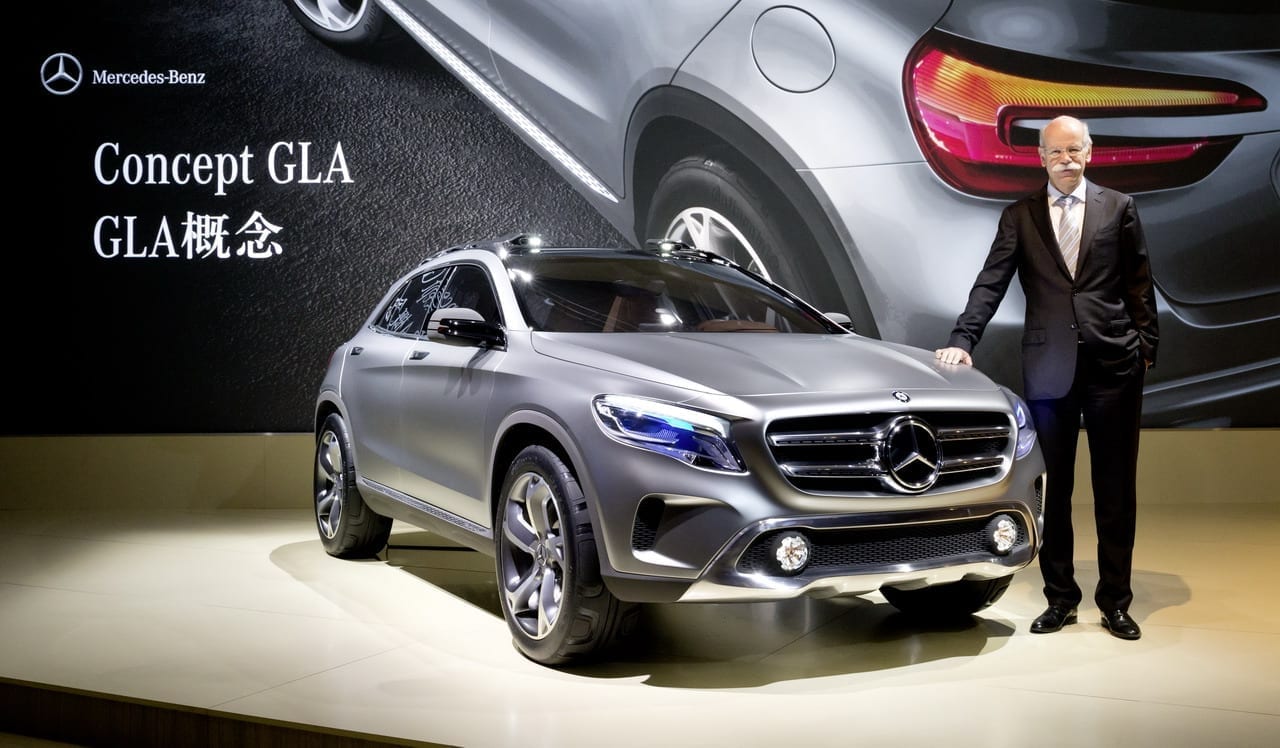
    BMW is feeling the heat. In April, the company replaced its China sales chief, and now it’s hustling to introduce new models. BMW is introducing a long-wheelbase X1 in China to compete with the Audi Q3 and Mercedes GLA.

    Those three models are battling for share in China’s red-hot market for compact crossovers.

    For the first four months, Audi remained on top, with sales of 189,611 vehicles, while BMW delivered 162,221 units. Mercedes is still No. 3, with sales of 142,266, but it is steadily closing the gap.

    We suspect BMW realizes that objects in its rearview mirror are closer than they appear.