Tag: bali

  • Bali to intensify tourism promotion in Saudi Arabia

    Bali to intensify tourism promotion in Saudi Arabia

    The Bali provincial administration will intensify tourism promotion in Saudi Arabia following a vacation of King Salman bin Abdulazis al-Saudi on the island.

    “Logically, when their King came here, his people would also like to visit. Moreover, the royal family seemed to very much enjoy their vacation in Bali,” Cokorda Bagus Pemayun, secretary of the Bali tourism office, said here, Sunday.

    The Kings visit was fresh air for Balis tourism because there had been a difficulty in attracting Middle Eastern tourists to Bali so far, he said.

    He believed the Kings visit has changed a perception of the Saudi people about Bali, and therefore it would be a golden opportunity for Bali to explore the Saudi market.

    The fact that the King and his family decided to extend their visit to Bali showed that King Salman al-Saud and his family felt happy with their vacation in Bali, he added.

    King Salman bin Abdulaziz al-Saud left Bali for Japan on Sunday at 11:15 a.m. local time after enjoying an eight-day holiday on the island.

    The Saudi King was holidaying in Bali from March 4 to 12, after paying a state visit to Jakarta on March 1-3, which is considered to be historical as a Saudi king had lasted visited Indonesia 47 years ago.

    The Bali tourism official has seen the Kings visit as a major tourism promotion for Bali.

    Middle Eastern tourists are in general high spender, with an average spending of US$ 1,800 per person per visit, compared to US$1,2000 per visit by other foreign tourists.

    The Arabs usually spend 10.08 days per visit, which is also much longer than other foreign tourists.

    “They usually come during Hajj pilgrimage season and summer,” he noted.

    Over the last five years, the number of Middle Eastern tourists visiting Bali, has increased by an average of 38.7 percent a year, he remarked.

  • Indonesia, China cooperate to boost tourist arrivals

    Indonesia, China cooperate to boost tourist arrivals

    The Tourism Ministry, in cooperation with Chinese provincial tourism administrations, aims to raise the number of tourist arrivals from China by 50 percent to 2.1 million in 2017 from 1.4 million last year.

    The ministry’s director for Asia-Pacific tourism promotion, Vinsensius Jemadu, said that this year’s increase would be part of Indonesia’s target to attract 10 million Chinese visitors by 2019.

    “China is our strategic partner and main market for tourism. Therefore in the Tourism Ministry, China gets more than 50 percent of its budget for promotion,” he said in a meeting with Hubei tourism administration in Jakarta on Friday.

    Vinsensius further said that aside from cooperation with the Hubei tourism administration, the ministry had also established cooperation with China’s Hainan tourism administration.

    “Next month, Hainan Airlines and Capital Airlines can fly to Jakarta three times a week,” he said.

    Citilink, a subsidiary of national flag carrier Garuda Indonesia, was expected to fly to 17 cities in China from Tanjung Pinang in Riau Islands and Manado in North Sulawesi, based on the memorandum of understanding (MoU) signed by the Indonesian tourism minister in Beijing last year, Vincensius said.

    The ministry offers an incentive of US$15 (Rp200,895) or $20 per passenger to airlines and wholesalers bringing visitors to Indonesian destinations outside of Bali and Jakarta. In addition, the Transportation Ministry will provide licenses of direct flights and offer free parking and landing to aircraft from Chinese airlines.

  • How Indonesia Increases Number of Tourists from Scandinavian Countries

    How Indonesia Increases Number of Tourists from Scandinavian Countries

    The Indonesian Embassy in Copenhagen, Denmark, participated in the Danish Travel Show 2017 in Herning city, Denmark, from Feb 24 to 26, 2017.

    A statement from the Indonesian Embassy in Copenhagen received by Antara here on Monday stated that Indonesia’s participation in the Travel Show is part of its efforts to promote the country in non-traditional markets, which is expected to increase the number of tourists from Denmark and other Scandinavian countries to Indonesia.

    Currently, the number of Danish tourists visiting Indonesia is about 30 thousand. Meanwhile, about 120 thousand people from Northern Europe visit Bali, Lombok (West Nusa Tenggara), Java, and Sumatra.

    At the exhibition, the Indonesian Embassy promoted Indonesian dishes that have been widely known in the world, such as fried rice (nasi goreng), fried noodles, rendang (spicy beef made using various spices, including coconut milk), and Indonesian coffee. The embassy also presented several Indonesian chefs to demonstrate the cooking to a number of businessmen and importers, who are engaged in business in Denmark.

    The involvement of businesses in the travel show is expected to improve business-to-businesses deals, increase travel packages sales, and expand the network of cooperation between Indonesian and Danish businessmen.

    Danish Travel Show is the largest annual travel exhibition in Northern Europe participated by about 1 thousand participants from 42 countries and attended by more than 65 thousand visitors from Denmark and other European countries. In 2016, the event was attended by some 4 thousand tourism businessmen, 1,196 exhibitors from 51 countries, 11 airlines, and 80 travel agencies.

  • Citilink’s first new Airbus A320neo arrives in Indonesia

    Citilink’s first new Airbus A320neo arrives in Indonesia

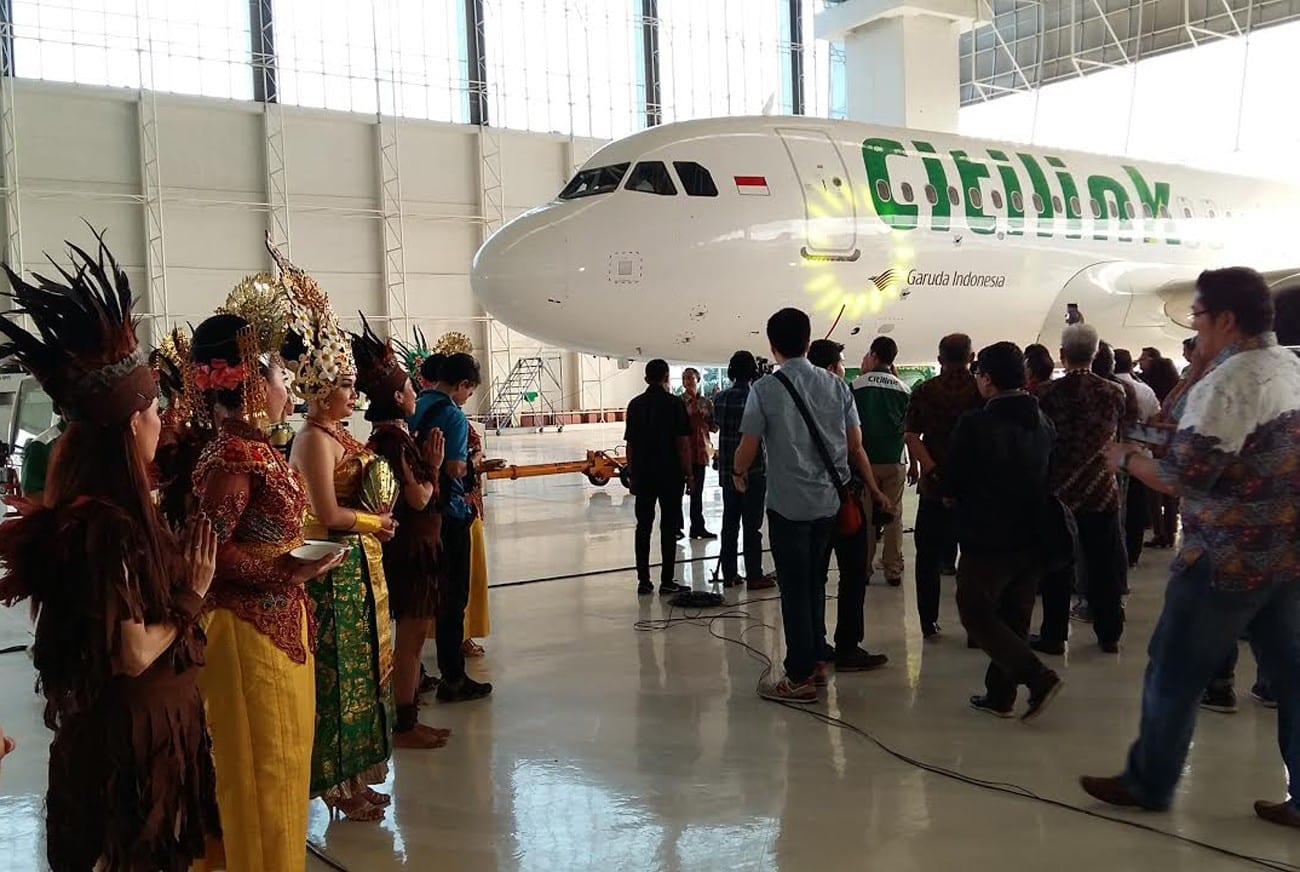
    Garuda Indonesia’s low-cost subsidiary, Citilink, has begun welcoming a new fleet of Airbus A320 new engine option (neo) aircraft from the Airbus factory in Toulouse, France.

    Citilink has ordered 35 aircraft from the European manufacturer since it developed the new version in 2012. The 180-passenger capacity A320neo will join 45 aircraft of the previous model, the A320 current engine option (ceo), which Citilink already owns.

    The delivery will be completed by 2021. This year, Citilink will receive five aircraft.

    “We will use them for medium-length routes like to Eastern Indonesia, to Jeddah, Saudi Arabia, and to Shanghai,” Citilink acting president director and finance director Mega Satria said during the welcome ceremony at the Garuda Maintenance Facility (GMF) AeroAsia Workshop in Cengkareng, Banten, on Friday.

    According to Airbus data, the A320neo features two engine options, Pratt & Whitney’s PurePower PW1100G-JM and CFM International’s LEAP-1A. Citilink’s aircraft use the latter. Along with improvements to airframe and winglets, fuel efficiency has been increased by 15 percent compared to the A320ceo.

    As of January, Airbus had received 5,069 orders of the new aircraft since it began production in January 2016. German airline Lufthansa was the first to receive one on Jan. 20 last year.

  • Indonesia to attend International Yoga Festival in India

    Indonesia to attend International Yoga Festival in India

    Through its Wonderful Indonesia brand, Indonesia will promote its vast tourism potential at the annual International Yoga Festival, due to be held in the Indian city of Rishikesh on March 1-7, 2017.

    To this end, the Indonesian Tourism Ministrys Deputy for International Marketing I Gde Pitana will be sent to head a delegation attending the event, the ministry noted in a press statement here on Tuesday.

    Pitana said promoting the archipelagos tourism sector in this “City of the Divine” of India is a strategic move, as Indonesia also has several interesting destinations for practicing the art of yoga, and India is a potential market, which has yet to be tapped optimally.

    At present, with its growing number of outbound tourists, India has become an important contributor of foreign visitors to Indonesia, he pointed out.

    Several factors that may have attracted them to visit Indonesia are related to the two nations cultural similarities and the archipelagos diverse tourist destinations. The increasing trend of Indian travelers visiting the archipelago is also driven by Garuda Indonesias Mumbai-Jakarta flight.

    With its diverse tourist destinations, Indonesia has plenty to offer to Indian travelers. Hence, it is necessary to implement various promotional strategies to attract more outbound tourists from the country, Pitana stated.

    “One of our efforts is promoting the Wonderful Indonesia brand in India,” he revealed.

    For the International Yoga Festival, Indonesia is sending a delegation, setting up a pavilion, as well as displaying and distributing the Wonderful Indonesia promotional materials, Pitana remarked.

    The Tourism Ministry is offering support to singer Ayu Laksmi from Balis Svara Semesta (Sound of the Universe) to perform at the worlds largest yoga festival in which yoga lovers from 110 countries are expected to participate.

    Laksmi and Semesta will perform at the opening and closing sessions of this annual event. During the festival, Indra Udayana, an artist and envoy of peace, and yoga instructor Anjasmara will also join the performers.

    “This event is expected to help boost the image of Indonesias tourism industry to offer greater exposure in India. This is indeed a good opportunity to attract more outbound tourists from India and other countries,” he noted.

    Meanwhile, the Tourism Ministrys Deputy Assistant of the Asia Pacific Market Development Vinsensius Jemadu stated that an awareness campaign package of the Wonderful Indonesia brand will be prepared for Indias electronic media.

    “We shall also dispatch a Wonderful Indonesia team and prepare attractive souvenirs for the visitors at the Indonesia Pavilion,” he noted.

    Bali will be highlighted at the event, as it is the main destination offered to Indians who have known the resort island as a popular place for yoga and spas.

    Promoting the Wonderful Indonesia brand in India is expected to strengthen the positive image of the archipelagos tourism sector and to attract more Indian travelers to visit Indonesia, Jemadu remarked.

    The Indonesian Tourism Ministry has noted that the biggest contributors of foreign tourists to Indonesia in 2015 were Singapore, with 1,571,982 visitors; Malaysia, with 1,247,270; China, with 1,141,330; Australia, with 1,051,141; Japan, with 528,465; South Korea, with 359,468; India, with 293,415; the UK, with 280,198; the US, with 263,429; and Taiwan, with 211,528.

    Referring to the countries of origin and number of foreign tourist arrivals during the period between January and October 2016, the five main contributors were Singapore, with 1,177,695 visitors; China, with 1,221,422; Australia, with 1,011,077; Malaysia, with 989,739; and Japan, with 434,352.

    As one of the largest economies of the G-20, India is regarded as a huge potential source of foreign tourists.

    The Ministry of Tourism is targeting 15 million international tourist arrivals in 2017.

  • Indonesia Uses Big Data Digital Technology To Boost Tourism Performance

    Indonesia Uses Big Data Digital Technology To Boost Tourism Performance

    Indonesia is now using big data Mobile Positioning Data (MPD) digital system in a bid to boost up performance of the nation’s core business sector, tourism, China’s Xinhua news agency reported.

    The MPD to support the tourism activities is operated by Indonesia’s central statistic agency of BPS by detecting the cellular phones used by visitors entering Indonesian territory from several gates, including from land borders with neighboring countries.

    Besides in big cities’ airports, the system is also applied in 19 regencies and 46 subdistricts which host Indonesia’s border areas to neighboring countries as well.

    The MPD digital system have been operated since October last year and is scheduled to serve until 2019.

    Indonesian marketing guru from University of Indonesia (UI) Rhenald Kasali said that option to ultimately use the MDP digital system is a correct move to respond the ongoing digital lifestyle adhered by people globally with smart phone.

    “The official data provided by the BPS would not only be useful in analyzing tour markets and outlining policies in the sector. The data is also essential for those indulging in tourism business to expand their businesses,” Kasali said.

    The tourism ministry would breaking the data down into more specific information about the visitors, including their length of stay, frequency of their visits, spending and even their tour activity preferences during their holiday in Indonesia.

    Head of ASITA (Association of Indonesian Tours & Travel Agencies) Asnawi Bahar said that with processed information resulted from data, travel agents and hotels would be able to prepare resources and proper accommodations for the visitors.

    “It would be very useful for us as we can digitally learn plans of the visitors’ movements since their departures,” Bahar said recently.

    He added that most of foreign visitors have now booked their travel packages in Indonesia through digital applications in advance, including the payments, through their gadgets.

    Indonesia has been taking herculean efforts to develop its tourism sector, replacing the previous oil and gas, coal and palm oil sectors.

    The current government expects to see 20 million foreign visitors with earnings gained from the sector at over US$24 billion the time its service term ends in 2019.

  • Indonesian Tourism Industries Support Visa-free Policy

    Indonesian Tourism Industries Support Visa-free Policy

    Indonesian tourism industries have expressed support to the adoption of visa-free policy by the government so far, citing positive impact on the tourism sector.

    The general chairman of the Association of Indonesian Tourism Industries (GIPI), Didien Junaedy, said here on Saturday (Feb. 4) that the adoption of the policy is essential to boost tourism in the country.

    He said that the policy has been proven to significantly increase the arrival of foreign tourists in their countries.

    Through Presidential Regulation Number 21, 2016, the Indonesian government has provided visa-free facility to visitors from 169 countries for a short visit.

    The regulation was produced in March 2, 2016, and so it is not yet a year old. According to me, the evaluation should be done after two years of its implementation,” he said, adding that it would take several months to familiarize.

    Junaedy added that tourism industrialists grouped in GIPI have seen and felt the positive impacts of the policy.

    He stated that consistency in the implementation of the policy would be needed with regard to building public trust in foreign countries.

    Supervision on the other hand, however, is also needed to minimize possible violations of the regulation, he noted.

    “GIPI has planned to gather tourism industrialists eight times in the first semester this year to strengthen its support for the implementation of the Presidential Regulation Number 21,” he asserted.

    Junaedy admitted that there had also been negative excesses coming from the policy, such as visa overstay problem and illegal worker problems.

    “Their number however is relatively small compared to millions of foreign tourists visiting Indonesia legally, like in other countries that implement the same policy,” he added.

    He also said that the negative impacts of the policy must be overcome, and solution to the problems must be found through joint efforts.

    “We must not blame each other over trivial problems but must cooperate to overcome them,” he stated.

    He said that the visa-free policy has so far been one of the strong factors that has played a major role in meeting the target of foreign tourist arrivals, which was set at 15 million this year and 20 million by 2019.

  • Trump’s 6-Star Bali Hotel Project Meets Resistance

    Trump’s 6-Star Bali Hotel Project Meets Resistance

    The lands and waters we now know as Indonesia used to be under the influence of Hindu empires (prior to the expansion of Islam in the Archipelago after the 1200s). However, on most Indonesian islands this Hindu chapter has been erased, either by time or conquest, from the Archipelago’s history. The only exception being the island of Bali. Until today most inhabitants on this resort island (known as ‘island of the Gods’) practice Balinese Hinduism (and its rituals and art also form reasons for foreign tourists to visit this island).

    In Balinese Hinduism the worshiping of gods plays a central role. Not only the traditional Hindu gods (Brahma, Vishnu and Shiva) are worshiped but also a range of other deities. These gods need to be respected fully (like in monotheistic religions). One of the local rules is that buildings are not allowed to be taller than the highest (nearby) coconut tree. If this rule is ignored, then it would anger the gods. This is one of the key issues surrounding the Trump Organization’s new 6-star hotel project in Bali’s Tabanan regency.

    The Trump Organization and its Indonesian partner business tycoon (MNC Group founder) Hary Tanoesoedibjo acquired an existing hotel (the 20-year-old Pan Pacific Nirwana Bali Resort) about two years ago. This resort is located nearby the Pura Tanah Lot temple. The structure of the existing property is, in line with local beliefs, not taller than the surrounding coconut trees. However, the Trump Organization “thinks big” and wants to expand the existing structure by building a tower with ocean view and an upgraded golf course.

    Besides the height, another issue is the additional land that is required. The MNC Group said the project requires about 34 hectares of additional land. Surrounding the existing property there is only farmland, implying local farmers need to sell it to the developers. However, based on information in local media few farmers want to sell their land. Moreover, according to local beliefs land nearby temples cannot be used for the purpose of leisure (such as a golf course). On the eastern side of the existing golf course there stands a small temple and therefore local people do not want to see an upgraded (expanded) golf course.

    Land acquisition is always a costly and time-consuming affair in Indonesia. The property, which will be named the Trump International Hotel and Tower Bali, would become the most luxurious resort on Bali. Construction is planned to start in early 2018.

    Meanwhile, I Gusti Ngurah Sudiana, Chief of Parisada Hindu Dharma Indonesia (Indonesia’s largest Hindu organization), is against any property development that would impact on the 16th century Hindu pilgrimage temple Pura Tanah Lot, a UNESCO-listed World Heritage Site.

    Hary Tanoesoedibjo’s MNC Group, however, said the height of the planned property on Bali is not yet determined.

  • Bali expected to lure 40% of 2017 tourist arrivals

    Bali expected to lure 40% of 2017 tourist arrivals

    Bali is expected to attract 40 percent of the total target of 15 million foreign tourists to Indonesia in 2017.

    The province has been given a bigger portion than other regions because it still remains the prime destination for foreign tourists, according to the Assistant Deputy for Tourism Human Resource Development, Wisnu Bawa Tarunajaya, on Saturday (Jan. 21).

    “Bali is still number one compared to the other regions in Indonesia,” he said.

    The capital Jakarta is expected to attract 30 percent, while Batam in the Sumatran province of Riau Islands is expected to get 20 percent. All other regions of the country are expected to get the remaining 10 percent.

    The three major regions will play important roles in meeting the targets for attracting foreign tourism in Indonesia, added Tarunajaya.

    In order for the other regions to compete, the Ministry of Tourism is also planning to develop new tourist destinations. These include Toba Lake in North Sumatra, Tanjung Klayang in Bangka-Belitung province, Thousand Islands in Jakarta and Tanjung Lesung in Banten province, West Java. Mandalika in Lombok in West Nusa Tenggara, Labuhan Bajo in East Nusa Tenggara, Wakatobi in Southeast Sulawesi and Morotai in North Maluku are also listed for potential development.

    Through careful planning and sustainable development, the Ministry of Tourism is hoping to boost the promotion of new tourist destinations to attract more foreign visitors, said Tarunajaya.

    He also mentioned that most of the foreign tourists that are expected to visit this year are likely to come from China and other ASEAN countries, as well as Australia.

  • Ministry terminates Australia`s Tiger Air charter flight operations

    Ministry terminates Australia`s Tiger Air charter flight operations

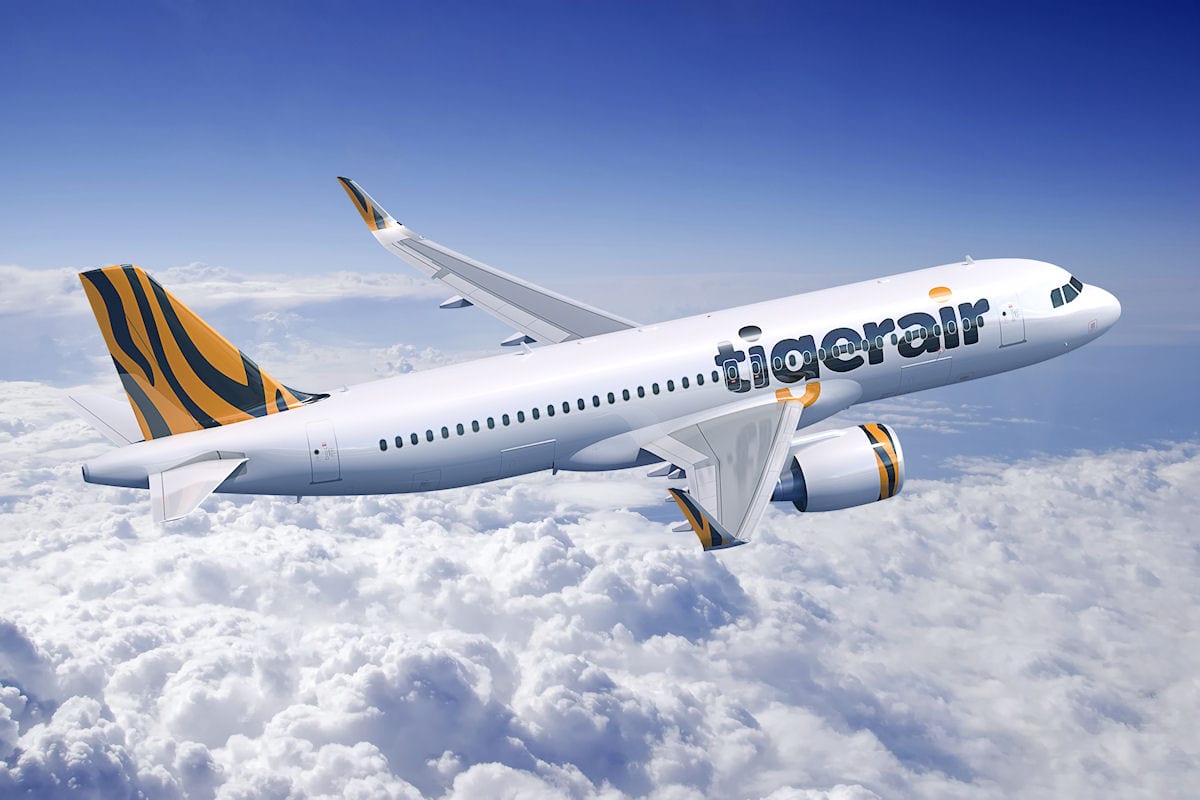
    The Airport Authority of the Transportation Ministry has terminated the operations of the Tiger Air charter flight from Bali to Australia for failure to abide by regulations.

    The decision to terminate the Tiger Air charter flight from Bali to Australia was made by the Airport Authority (OBU), Region VI of the Directorate General of Air Transportation, Wednesday, January 11, 2017.

    Spokesman of the Directorate General of Air Transportation Agoes Soebagio, in a written statement in Jakarta, Wednesday, said the OBU Region IV had also terminated, as of Wednesday (January 11), the operations of charter flights of the Tiger Airways Australia from Melbourne, Perth and Adelaide in Australia to Denpasar, Bali.

    The examinations by the OBU Region IV revealed that Tiger Airways Australia (TT) did not abide by the regulations contained in the charter flight permit provided by the Directorate General of Air Transportation.

    The Tiger Airways Australia did not comply with regulations as contained in the KM 25/2008 and PM 66/2015, which has been amended to PM 109/2016.

  • Chinese tourists visiting Bali up 41.28 percent in number

    Chinese tourists visiting Bali up 41.28 percent in number

    The number of visits by Chinese tourists to Bali rose 41.28 percent to 907,028 in the first 11 months of 2016 from 642,000 in the same period in 2015.

    “Most of them flew directly to Bali via the Denpasar International Airport of Ngurah Rai with only 886 of the visits by sea as passengers of tourist boats, head of the Provincial Central Bureau of Statistics (BPS) Adi Nugroho said here on Thursday.

    He said Chinese made up 20.22 percent of the total number of 4.48 million visits by foreign tourists to Bali in the January-November period of 2016.

    China is now the second largest country of origin of foreign tourists to Bali after Australia.

    Adi Nugroho said the number of visits by Australian tourists to Bali in the same period totaled 1.04 million, up 19.46 percent from 876,748 visits in the same period in the previous year.

    Australia accounted for 23.35 percent of the total number of visits by foreign tourists to Bali topping other countries, he added.

    Meanwhile, tourism observer Tjokorda Gde Agung said Chinese, who had come in throngs for holidaying in Bali could soon overtake Australians in number.

    “It is very likely especially with the growing number of direct flights between Denpasar and Chinese cities,” Tjokorda said.

    The nations flag carrier Garuda Indonesia itself already served regular flights directly between Bali and China, he said.

    “The direct flights would certainly contribute greatly to growing number of Chinese tourists to Bali,” he said.

    The 41.28 percent increase was the second highest after a 60.59 percent increase recorded in the number of Indian visitors to Bali in the same period.

    The number of visits from 10 largest countries of origin all increased excepting from Malaysia and South Korea.

    With the trend , the target of 5.5 million visitors to Bali set for 2017 is expected to be easily reached.

    Indonesia hopes to draw more Chinese tourists to meet its target of 20 million visits by foreign tourists in 2019 from the target of 12 million in 2016.

    China has become a potential tourism market. A record high of 133 million Chinese tourists were estimated to make outbound trips by the end of 2016, according to the report released by the China Tourism Academy and the financial services company UnionPay International.

    The figure would mark an 11.5 per cent rise from 2015.

    Hong Kong, Macau and Taiwan remain the top choices for mainland tourists, according to a report.

    Chinese tourists are increasingly getting involved in leisure activities and learning about local lifestyles when traveling overseas rather than just shopping, according to the report.

    Chinese tourists spent US$104.5 billion overseas in 2015, up 16.6 per cent from 2014, and a growing number of foreign countries including Indonesia are relaxing their visa requirements for Chinese tourists to tap their purchasing power.

    Tourists from China along with many other countries are offered visa free travel by Indonesia.

  • Over 4.48 million tourists visit Bali

    Over 4.48 million tourists visit Bali

    More than 4.48 million foreign tourists visited Bali via the resort islands Ngurah Rai Airport from January to November 2016, up 23.52 percent from 3.63 million in the same period last year.

    Some 4.48 million tourists traveled to Bali by air, and 70,449 others by sea, Chief of the Central Statistics Agency (BPS) Office in Bali, Adi Nugroho said here Tuesday.

    The number of foreign tourists visiting the resort island from January to November 2016 exceeded the target of tourist arrivals for all of 2016 at 4.2 million, he said.

    Bali has set the target of tourist arrivals for 2017 at 5.5 million.

    In November 2016 alone, the number of tourist arrivals in Bali reached 413,232 consisting of 396,150 who traveled to the island by air and 17,082 by sea.

    The figure increased 52.52 percent compared to the same month a year earlier but declined 4.39 percent compared to the previous month.

    The number of tourists from eight out of top ten sources of tourist arrivals in Bali increased significantly, Nugroho said.

    The eight countries were Australia, China, Japan, Britain, India, France, the United States, and Germany, while the number of tourists from Malaysia and South Korea declined.

  • Trump’s Indonesia projects proceed despite potential conflicts of interest

    Trump’s Indonesia projects proceed despite potential conflicts of interest

    One resort, planned as the largest in Bali, will overlook a spectacular Hindu temple. The other, in the verdant hills of West Java, will adjoin a theme park. The properties will be so luxurious, the Trump Organisation says, that even an impressive five-star rating will not do them justice. So it will give them six stars instead.

    Even as President-elect Donald Trump promises to end foreign business deals that could pose conflicts of interest — there will be “no new deals” while he is in office, he has said — his company is moving ahead with two Indonesian projects that illustrate how tricky that pledge might be.

    None of the construction work to build or renovate structures at the Indonesian resorts has even begun, but Mr Trump has forged relationships with powerful political figures in Indonesia, where such connections are crucial to pushing through big projects.

    That tangle of relationships includes an Indonesian business partner who aspires to high office; a powerful politician accused of trying to extort billions of dollars from a United States mining company; and Mr Trump’s new adviser on regulatory issues, Mr Carl C Icahn, a top shareholder in the mining company.

    The resort projects, which a Trump spokeswoman said last week were “binding contracts”, have created a grey area of conflicting interests that could be hard to separate from an array of issues facing the US and Indonesia, including trade and contested claims over the South China Sea.

    Mr Trump’s local partner on the resorts, Mr Hary Tanoesoedibjo, is a billionaire media mogul with his own political ambitions. He ran for vice-president of Indonesia in 2014 and is organising a political party for another possible run at national office in 2019. If Mr Tanoesoedibjo or his party wins a major role in government, the potential conflicts could escalate significantly.

    “You could have two world leaders that are business partners,” said Professor Richard W Painter, who served as a White House ethics lawyer during the George W Bush administration. “It makes it almost impossible to conduct diplomacy in an even-handed manner. That does not work.”

    Through the partnership with Mr Tanoesoedibjo, Mr Trump has gained access to some of Indonesia’s top political figures, including Mr Setya Novanto, Speaker of the House of Representatives, who was temporarily forced to surrender his leadership post because of corruption allegations in 2015. Mr Novanto was heard on an audio recording seeking a US$4 billion (S$5.8 billion) payment from the US mining giant Freeport-McMoRan.

    Months before the recording came out in December 2015, Mr Trump met Mr Novanto during the presidential campaign at Trump Tower. After their lunch, Mr Trump pulled Mr Novanto before the cameras at a news conference and called him “a great man”, adding, “We will do great things for the United States.”

    The knot of potential conflicts includes Mr Icahn, the billionaire investor who will serve as a special adviser to Mr Trump. He is one of the largest shareholders in Freeport, which does so much business in Indonesia that it is the country’s largest taxpayer and has been seeking to extend its mining contract with the Indonesian government.

    “This stuff is so murky,” said Ms Karen Hobert Flynn, president of Common Cause, a nonprofit group that has called for Mr Trump to sell off his businesses to avert conflicts of interest. “It is not going to be clean moving forward. There are going to be complications as these projects move forward.”

    Mr Trump has provided little clarity about what he means by “no new deals”, a vow made in a Twitter post he sent out in mid-December. His aides suggested in interviews last week that even if construction had not started on a project, the Trump Organisation would move ahead if it had a binding agreement.

    For Mr Trump, the Indonesian deals are licensing and management agreements in which he provides the use of his name and his company manages the resorts.

    Even though no structures were built, Mr Trump secured a considerable payout on the two deals, according to a financial disclosure report that listed payments ranging from US$1 million to US$5 million for each of the projects between January 2015 through May 2016. That is far more than the US$400,000 salary paid to the President, which Mr Trump has said he will decline.

    Mr Trump created the corporations that manage these projects — including DT Bali Hotel Manager and DT Lido Hotel Manager — in late June 2015, just a week after he declared his intention to run for President.

    His companies have operations in at least 20 countries, including the Philippines, India, Turkey and Britain, but the full extent of his foreign financial ties is unclear because he has refused to release his tax returns or disclose the identity of his lenders.

    In addition to the no-new-deals pledge, Mr Trump has said that his sons, Eric and Donald Jr, along with other executives, will manage the family’s global real estate business.

    The Trump Organisation has recently moved to resolve potential controversies, in part by closing family foundations. It has also dropped a number of its proposed projects, including Trump Office Buenos Aires in Argentina; Trump Towers Rio and Trump Hotel Rio de Janeiro, both in Brazil; Trump International Hotel & Tower Baku in Azerbaijan; Trump Tower Batumi in Georgia; and Trump Riverwalk in Pune, India, representatives from the Trump Organisation have said last week, in response to questions.

    But other projects — including some on which construction has not started or is not well underway — are moving ahead, including Trump Tower Mumbai and a Trump tower in Gurgaon, both in India; Trump Tower Punta del Este in Uruguay; Trump International Golf Club, Dubai, and Trump World Golf Club, Dubai, both in the United Arab Emirates; and Trump International Hotel & Tower Vancouver, in Canada, the Trump Organisation confirmed.

    Ms Amanda Miller, the Trump Organisation spokeswoman, said of the two Indonesian projects: “Construction is well underway and will proceed as planned.”

    In fact, construction has started only on a golf course and toll road as part of the Lido Lakes resort in West Java. Separating the enterprise from politics may also be difficult because Mr Tanoesoedibjo’s MNC Group is building the road to the site as part of a government highway project.

    No new structures have been built at Lido Lakes or at the resort near the stunning Tanah Lot temple in Bali. A 20-year-old hotel, the Pan Pacific Nirwana Bali Resort, stands on the Bali property and could be renovated to create a Trump hotel, but that work has not begun.

    The two resorts will give the Trump brand a high profile in Indonesia — which has the world’s largest Muslim population — with the Trump name adorning two luxury hotels and premier golf courses as well as high-end villas and condominiums. Yet the US President’s name on the projects could also make them potential targets. During the campaign, Mr Trump made statements about Muslims widely viewed as inflammatory. US hotels in Jakarta have been attacked by terrorists several times.

    On Wednesday, Mr Trump accused the news media of exaggerating any potential conflicts presented by his business holdings. “It’s not a big deal; you people are making it a big deal, the business,” Mr Trump said on the steps of his Mar-a-Lago resort in Florida, where he was spending the holidays. “They all knew I had big business all over the place.”

  • Bali`s economy  grows faster than national average

    Bali`s economy grows faster than national average

    Balis economy grew 6.17 percent in the third quarter of this year, exceeding the national average growth of 5.02 percent year-on-year in the third quarter of this year.

    “The growth, however, was slowed than 6.54 percent in the previous quarter,” head of the Bali representative office of Bank Indonesia Causa Iman Karana said here on Saturday.

    Iman Karana attributed the slower growth in the third quarter of this year to poor performance in government, non profit agency and household consumption, and investment, as well as in construction and in mining sector.

    Decline was also recorded in the procurement of electricity, gas and water, in whole sale and retail trade, in information , communication , financial and health services, he said.

    Iman Karana predicted that in the fourth quarter of this year Balis economy would grow 6.06-6.46 percent.

    The tourism sector is expected to grow in the last quarter of this year especially toward the end of the year.

    Winter in Europe would cause more holiday makers from that continent to visit Bali.

  • Foreign tourist arrivals in Bali reach 4.07 mln

    Foreign tourist arrivals in Bali reach 4.07 mln

    The tourist resort province of Bali, which had received 4.07 million foreign tourist arrivals up to October, is expected to have attracted more than 4.4 million more tourists by the end of the year.

    “Foreign tourist arrivals account for 40 percent of the national target of about 15 million tourists,” said the Head of the Bali Provincial Tourism Office, A.A. Yuniartha Gede Putra, here on Friday.

    He added that the foreign tourist arrivals in Bali are expected to go up to 5.5 million in 2017.

    Putra said foreign tourists in Bali mainly came from ten countries, namely Australia, China, Japan, Britain, France, India, Malaysia, the United States, Germany and South Korea.

    “Given the uniqueness of Balinese art and culture, it attracts tourists from various countries around the world,” Putra noted.

    He noted that he promoted the region in various countries to lure more travelers to Bali. The Ministry of Tourism also made similar efforts.

    Besides, steps were taken to improve cultural tourism as Bali has a regional identity.

    He urged everyone to ensure that the local tourism department works well so that tourists in Bali feel safe and comfortable as they enjoy their holidays.

    Referring to Australian governments travel advisory, tourism observer Putu Gede Perma claimed it will not affect tourist visits to Bali.

    “Based on our observations and the results of the academic studies on the impact of this travel advisory, we have deduced that the advisory did not have any impact on the number of Australian tourists visiting Bali,” Putu Gede Perma informed here on Thursday.

    Australian tourists were of the view that bomb attacks can happen anywhere in the world and were not unique to Bali, he stated.

    “They will not delay or cancel their planned trips to Bali,” remarked Gede.

    Gede, who is also an academician at the Ganesha Education University, hoped that Australian tourists would not blindly follow their governments recommendation.

    “We found that Australian tourists had continued to come to Bali, irrespective of how serious the advisory was,” he recalled, adding that the situation was unlike what had happened more than a decade ago when Bali was crippled by bomb attacks.

    “Yes, it did affect tourism. After the Bali 1 and Bali 2 bombings, a travel advisory had significantly reduced the influx of Australian tourists,” he conceded.

    He called upon the police and military officers to remain alert to terror threats, particularly after the arrest of terrorists in South Tangerang, Banten, by the polices anti-terror squad, Densus 88, on Wednesday (Dec 21).

    “Bali will always remain a target. Security officers and the people should, therefore, continue to maintain security and order. We should be watchful of suspicious visitors,” the tourism observer stressed.