Tag: bali

  • Ethiopian Airlines to enter Indonesian aviation market in 2017

    Ethiopian Airlines to enter Indonesian aviation market in 2017

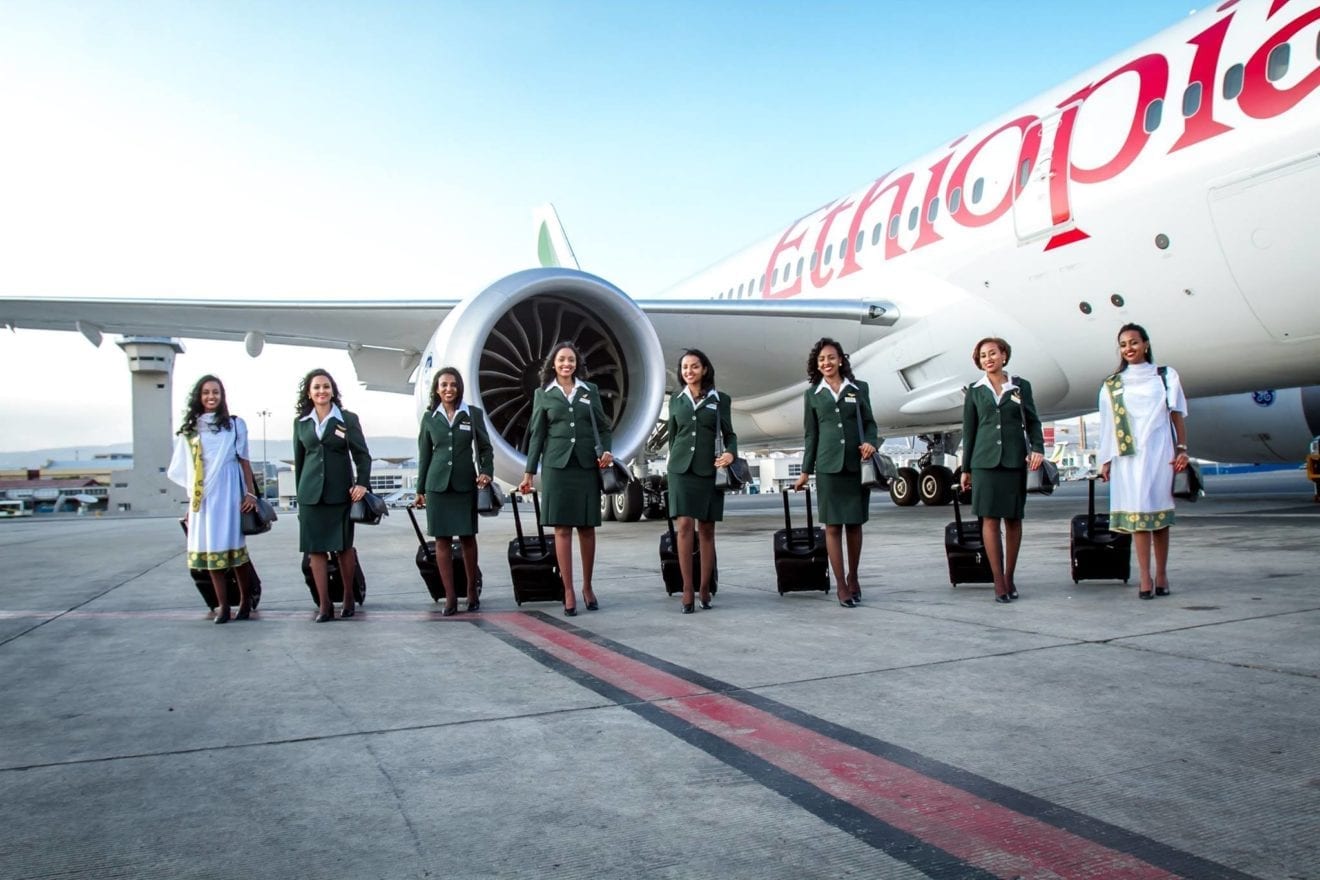
    Africa’s largest airline group, Ethiopian Airlines, on Wednesday announced its plans start scheduled flight services to Jakarta, the Indonesian, in June 2017. According to a statement released on behalf of Ethiopian Airlines by Jedidah Promotions, a travel consulting group, the African aviation giant, will be using the ultra-modern Boeing 787-800 to link up its numerous customers with Jakarta, which is Indonesia’s economic, cultural and political center.
    Indonesia, which is made up over more than 13,000 islands is the 4th most populous country in the world and, with this new service, Ethiopian Airlines will be rendering service to all five of the most populous countries on earth. Ethiopian is a multi-award winning airline, registering an average growth of 25 percent in the past seven years.
     “As the fastest growing airline in Africa, Ethiopian is pleased to offer the opportunity to business people as well as tourists to explore Jakarta’s potential both for investment and leisure. This move will further increase our presence in Asia, connecting Africa to the Asia region and in turn strengthening the tourism and trade ties between the peoples of Africa and Asia,” said Tewolde GebreMariam, who is the Group CEO of Ethiopian Airlines.
    According to him, Ethiopian Airlines is working very hard to connect Africa with the major trading centers of the world and Jakarta, Indonesia is one of them. “Moreover, pilgrims and the West African community residing in Indonesia will be enjoying hassle-free connections to Ethiopian’s vast African network via its hub at Addis Ababa,” said GebreMariam.
    Ethiopian is touted by its management as a global carrier that operates the youngest and the most modern fleet on the African continent, with an average aircraft age of less than 5 years, serving more than 90 international destinations across 5 continents through over 240 daily departures.

    The company is the fastest growing Airline in Africa and, in its seven decades of operation, Ethiopian has become one of the continent’s leading carriers, unrivalled in efficiency and operational success.

    Ethiopian commands the lion’s share of the pan-African passenger and cargo network, operating the youngest and most modern fleet to 95 international destinations across five continents. 
    Its fleet includes ultra-modern and environmentally friendly aircraft such as Airbus A350, Boeing 787, Boeing 777-300ER, Boeing 777-200LR, Boeing 777-200 Freighter and Bombardier Q-400 double cabin. It is also the first airline in Africa to own and operate these categories of aircraft.
    Ethiopian is currently implementing a 15-year strategic plan called Vision 2025, which it projects to see it become the leading aviation group in Africa with seven business centers, including the Ethiopian Domestic and Regional Airline, the Ethiopian International Passenger Airline, Ethiopian Cargo and the Ethiopian MRO.
    Others are the Ethiopian In-flight Catering Services, and the Ethiopian Aviation Academy and the Ethiopian Ground Service.
  • Tourism Investment Grow 23 Percent

    Tourism Investment Grow 23 Percent

    Tourism Minister Arief Yahya said that investment realization in tourism sector during January to September 2016 reached US$1,094 billion (Rp14.7 trillion), a 23 percent increase year-on-year. “The highest [percentage of] investment was made in star hotel development,” Arief said yesterday as quoted from the Tourism Ministry website.

    Tourism investment realization comprised of foreign investment (PMA) of US$594.59 million and domestic investment (PMDN) of US$139.06 million. Foreign investment in star hotel development made up 56 percent of total investment. The rest consisted of management consulting (27 percent) and restaurant (7 percent). Domestic investment comprised star hotel development (65 percent), water tourism (21 percent) and amusement parks (4 percent). Some 51 percent were Singapore-based investors.

    On tourist arrivals, Arief said that the number of foreign tourist arrivals from January to October 2016 was 9,403,641 or grew 9.54 percent year-on-year. He expects that until late December, the target of 12 million foreign tourist arrivals will be exceeded, with an estimated 1.3 million arrivals in November and 1.5 million arrivals in December. “I’m optimistic that it will be surpassed as the said months are the peak periods,” he said.

    To attract tourists in 2017, Arief will roll out three priority programs: digital tourism, homestay and air connectivity. According to him, digital tourism is a strategy to win global markets, particularly that of 26 countries. Digital tourism program will kick off with the launch of ITX (Indonesia Tourism Exchange), which will bring together travel agencies, accommodation operators and attractions to facilitate transactions.

    Earlier, President Joko Widodo had instructed his subordinates to bring in up to Rp670 trillion worth of investment. According to Jokowi, investment proposals in tourism sector can help the government to achieve the target. “We must simply establish the product support, positioning, packaging and promotion.”

    The Investment Coordinating Board (BKPM) chairman Thomas Lembong said that several Chinese investors are interested to develop national tourism industry. He named Fosun International and HNA Group as prospective investors. Fosun International is a company actively investing in tourism and fashion industries. The HNA Group is China’s first airline company.

  • Lippo Investment Trust to Acquire Lippo Mall Kuta in Bali

    Lippo Investment Trust to Acquire Lippo Mall Kuta in Bali

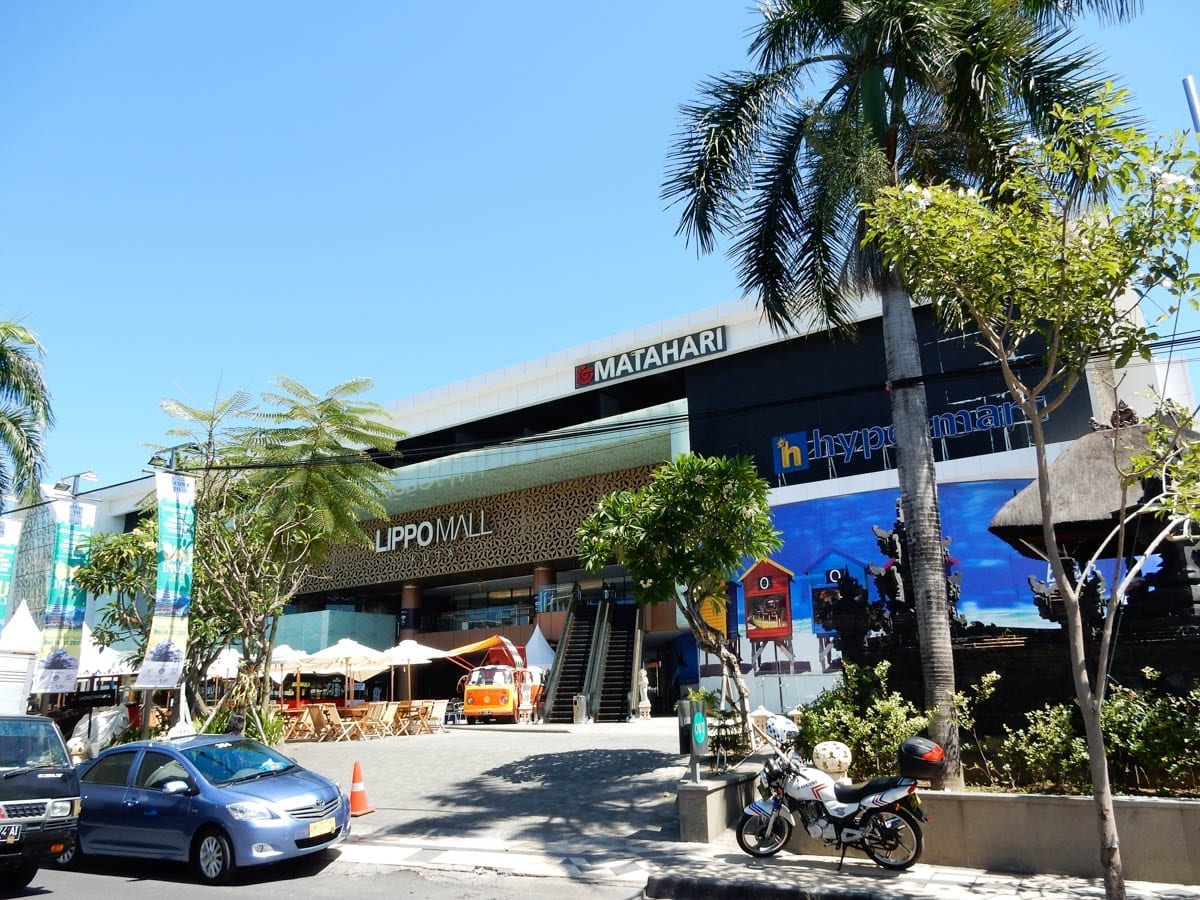
    Opened in 2013, Lippo Mall Kuta is a three-floor mall that offers 21,132 square meters to international and local tenants, such as Nike, Bata, Quicksilver, Planet Sports, Amazing Kuta, Matahari Department Store and Cinemaxx.

    Lippo Karawaci president director Ketut Budi Wijaya said the acquisition is part of “light assets program,” by which the property developer expects to increase its revenue and reduce operating cost.

    LMIRT has been listed on Singapore Stock Exchange since 2007. Its diversified portfolio of income-producing real estate in Indonesia includes 19 retail malls and seven retail spaces.

    The company had $760 million in market capitalization as of November.


  • Alibaba eyes young, savvy Indonesia market

    Alibaba eyes young, savvy Indonesia market

    Chinese e-commerce giant Alibaba Group sees “huge potential” in the Indonesian market as the government, through a recent e-commerce road map, pushes efforts in developing the sector to make the country the biggest digital economy in Southeast Asia by 2020.

    Alibaba Group vice chairman Joseph Tsai said the diversified company — which has assets in e-commerce, technology, payment systems and logistics — saw “huge potential in Indonesia” for two reasons: The young population and a mobile phone savvy public.

    “We acquired (Southeast Asia e-commerce platform) Lazada so that we could be in Indonesia as well as five other Southeast Asian countries — Malaysia, the Philippines, Singapore, Thailand and Vietnam, with Indonesia obviously being the largest market,” Tsai told a press briefing on the sidelines of the 11.11 Global Shopping Festival on Nov. 11. The 11.11 Alibaba Group Global Shopping Festival, more commonly known as Singles’ Day, is the world’s largest shopping event.

    Alibaba Group acquired Lazada for US$1 billion earlier this year, its largest international investment ever. Lazada, which operates its own logistics and networks, is currently one of the fastest growing online shopping platforms in Indonesia.

    “We see that consumers in Indonesia are even younger than consumers in China. Indonesia is very much a “mobile first” e-commerce environment. People are enthusiastic about mobile phone use,” Tsai said.

    A survey of smartphone owners in Indonesia, who account for 43 percent of the population, showed that up to 57 percent of online shopping in the country is done on mobile phones, with average time spent on smartphones reaching more than two hours (136 minutes) per day, according to recent Google research.

    “They’re skipping computers and instead using mobile phones as their premier technology device. That growth is extremely fast, and we’re extremely excited about that,” Tsai said of the Indonesian market.

    Emerging Middle Class

    Indonesia’s e-commerce transactions are expected to reach US$24.6 billion this year, three times the US$8 billion recorded in 2013, thanks to emerging numbers of internet users and middle class Indonesians.

    The government even expects e-commerce transactions to reach US$130 billion in 2020 as it introduced the 14th economic stimulus package on an e-commerce roadmap covering support for funding, human resources training, logistics and telecommunication infrastructure, among other elements.

    In tapping into the growth potential in Indonesia, Alibaba Group aims to localize its operations to make them relevant in serving domestic consumption, which accounts for more than half of the country’s gross domestic product (GDP).

    “We want to be as local as possible to understand consumers locally through the Lazada platform,” Tsai said.

    In doing so, Alibaba Group may introduce the 11.11 Global Shopping Festival in local platforms to capture more transactions from Southeast Asia.

    “The service will also roll out to other markets, such as Southeast Asia, leveraging Alibaba Group’s investment in Southeast Asia e-commerce site Lazada, and markets that have a sizeable Chinese community,” the company’s press statement explained.

  • MPPA opens its premium supermarket format in Denpasar, Bali

    MPPA opens its premium supermarket format in Denpasar, Bali

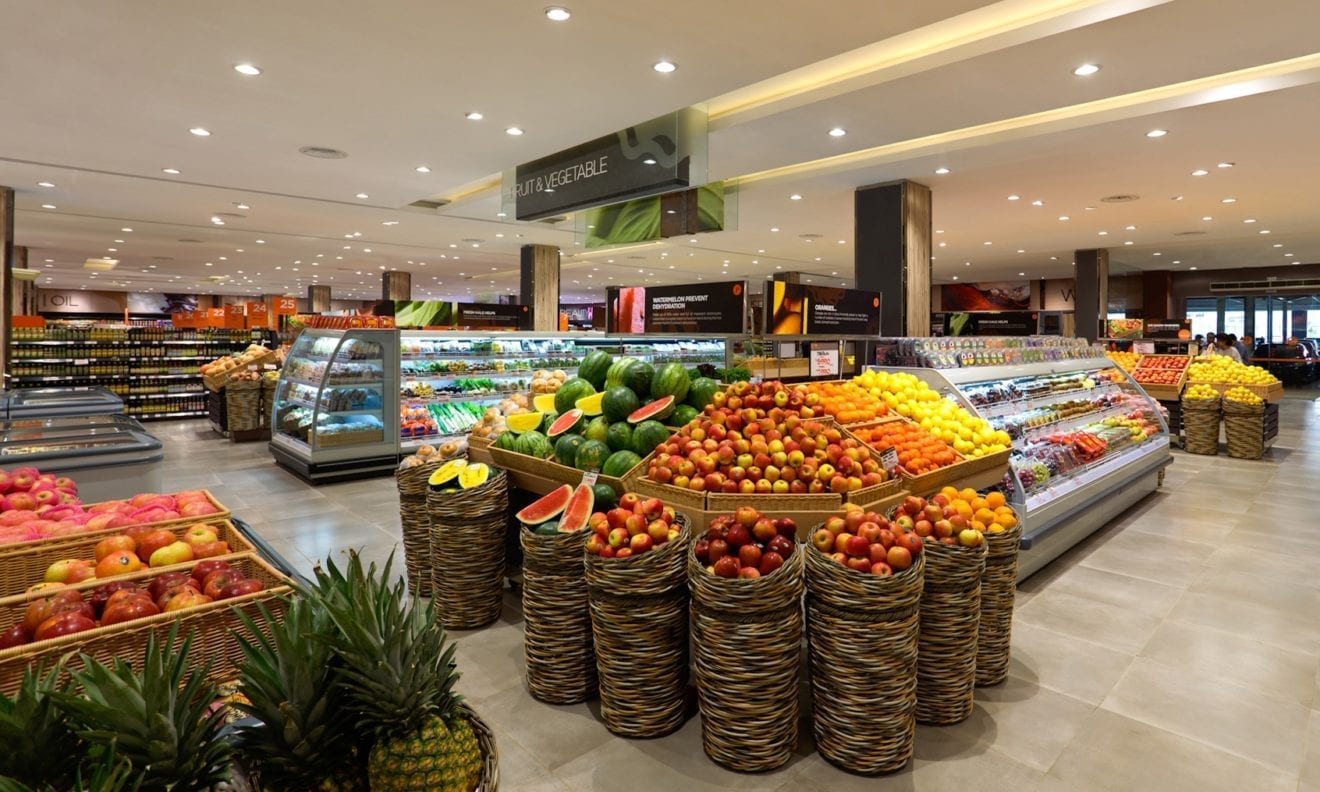
    The Foodmart Primo is a professionally designed upmarket supermarket with a café, “boutique” bakery and restaurant, offering a high level of local and imported goods in a pleasant ambience for a more enjoyable shopping experience.

    Director of Foodmart Operations, Dave Rao stated “Level 21 Mall is a life-style mall. Our presence is to provide a “one-stop” experience for the customers, whereby they can enjoy shopping at the various outlets as well as eat, drink and get their complete daily/weekly groceries at Foodmart Primo – all under one roof. Our assortment also includes handicrafts, souvenirs, aromatherapy, local snacks and more to cater to the large tourists precence in Bali.”

    ”To date, the Company had already established a presence in the Kuta area and has been looking for an opportunity to venture further into the residential parts of Bali. So when a location in the Level 21 lifestyle mall in Denpasar became available, MPPA took the opportunity to open another Foodmart Primo there.” he added.

  • PT Telkom has added a number of new wifi hotspots in Bali

    PT Telkom has added a number of new wifi hotspots in Bali

    The hotspots are under the network’s “Wifi.id.corner” program, which has users register for accounts and choose from a variety of packages that Telkom touts as affordable. 

    The new Wifi.id.corner spots are split between the island’s capital city, Denpasar, and north Bali city, Singaraja. 

    “In Bali, the fixed broadband services through Wifi.id.corner are spread across 200 locations. 170 of them are in Denpasar and 30 others in Singaraja, Buleleng,” quoted Nusra Suparwiyanto, executive vice president of PT Telkom Region 5 (East Java/Bali), as saying. 

    Suparwiyanto says Telkom is responding to the growing needs of Bali netizens with these 200 hotspots, which can be found in public spaces such as schools, universities, housing complexes, ports, and also city parks.

    Here’s the impressive part though—this wifi is supposed to be pretty darn fast. According to Suparwiyanto, the network is boasting speeds above 100 mbps—a speed we’re sure most of us aren’t familiar with in Bali. 

  • Adonara Hotel Group to Open 20 New Hotels

    Adonara Hotel Group to Open 20 New Hotels

    Amor added the Adonara Group will open the 20 new hotels in Bali, Makassar (Sulawesi), Yogyakarta, Bangka (administratively part of Sumatra) and Solo (Central Java). These locations were selected as local demand for hostelry is considered high enough. Moreover, the central government of Indonesia has high hopes for the tourism sector. By expanding the tourism sector the government seeks to reduce the economy’s reliance on exports of raw commodities. By 2019 the government targets to attract 20 million visitors (per year), more than double 9.73 million foreign visitor arrivals in 2015.

    With regard to the exact location Adonara aims for provincial capital cities, located nearby airports or industrial estates. Amor said it requires approximately IDR 30 billion (approx. USD $2.3 million) to develop a budget hotel or two-star hotel (with around 100 rooms) in Indonesia. The return of investment (ROI) is estimated at 6 – 7 years. The ROI for four-star hotels is estimated at 8 – 10 years.

    E-commerce is becoming an increasingly important part of Adonara’s business. Currently, approximately 30 percent of total room reservations are done online. To support its hotel business the group acquired the Room Today Asia platform.

    Up to this year’s 3rd quarter Indonesia’s hotel industry has been bleak. However, Amor sees a rebounding hotel industry in 2017 as Indonesia’s economic growth accelerates, while inflation is expected to remain low, thus boosting domestic investors’ purchasing power.

    On its website Adonara describes itself as a hotel operator that manages unique three – five star hotels as well as budget hotels in various locations across Indonesia (Sumatra, Java, Bali, Kalimantan, Sulawesi and Papua).

  • Australia leads top ten sources of tourist arrivals in Bali

    Australia leads top ten sources of tourist arrivals in Bali

    Australia led the ten top sources of tourist arrivals in the resort island of Bali in the January-September 2016 period, an official said.

    “The number of Australian tourists visiting Bali in the first nine months of this year reached 850,326, up 16.85 percent from 727,678 in the same period last year,” chief of the Central Statistics Agency (BPS) Office in Bali, Adi Nugroho said here on Sunday.

    Most of the Australian tourists traveled to Bali by direct flights. Only 18,554 of them went to the island by cruise liner.

    More and more Australians visited Bali as they regarded it as their “second home”, he said.

    Australia contributed 23.36 percent of the overall tourist arrivals in Bali at 3.63 million over the period, up 21.69 percent compared to the same period last year when the figure was recorded at 2.99 million.

    Adi Nugroho said nine of the ten top sources of tourist arrivals in bali saw a significant increase in the number of tourist arrivals in Bali. Only the number of Malaysian tourists fell 6.64 percent to 138,203 from 138,203.

    Meanwhile, China occupied the second place with 35.84 percent of the total budget fund.

  • Indonesia expects 250,000 Taiwanese tourists

    Indonesia expects 250,000 Taiwanese tourists

    Indonesian Economic and Trade Office to Taipei (KDEI) is expecting more than 250 thousand tourist arrivals from Taiwan to Indonesia by the end of 2016.

    “In 2015, the number of Taiwanese tourists visiting Indonesia was 211 thousand. Hopefully, by the end of this year, this number will increase as we are also actively promoting tourism under the Wonderful Indonesia brand,” KDEIs Tourism and Transportation Director Agung Sepande said here on Monday.

    He noted that about 70 percent of Taiwanese tourists travel to Bali as the island is perceived as an attractive place and has various sites of tourist interest.

    To attract more Taiwanese tourists, the KDEI is promoting tourist sites in other areas, too.

    “We are inviting Taiwanese journalists to support this promotional exercise. We will take them to Bali and Lombok. Next year, journalists will visit Jakarta and Yogyakarta,” Agung pointed out.

    He noted that Taiwanese tourists in Indonesia want to dive and surf because the countrys beaches are very scenic and conducive to these activities.

    At the Asia Pacific Culture Day 2016 held by Taiwan some time ago, Indonesia had promoted culture and maritime tourism to thousands of visitors from more than 20 countries.

    Taiwan itself is a tourist destination with a variety of sites that accentuate cultural, culinary, shopping, romantic and ecological aspects.

    In Taiwan, travel guides divide the country into North, South, Central, East and the part outside the Formosa Island.

  • Number of Chinese tourists to Bali shoots up 36%

    Number of Chinese tourists to Bali shoots up 36%

    The number of visits by Chinese tourists to Bali shot up 35.84 percent to 741.740 in the first nine months of this year from 546,035 visits in the same period last year.

    “The number of visits by holiday makers from China is now the second largest after those from Australia, which has continued to top the list of 10 largest countries of origin of foreign visitors to Bali,” head of the regional branch of the Central Bureau of Statistics (BPS) Adi Nugroho said here on Saturday.

    Adi said currently China accounts for 20.38 percent of the number of visits by foreign tourists to Bali.

    There were 3.63 million of visits by foreign tourists to Bali in the January-September period this year or an increase of 21.69 percent from 2.99 million in the same period last year.

    Adi Nugroho Australia contributed 23.36 percent to the total; number of foreign visits to Bali. Japan was the third place contributing 4.94% followed by Britain accounting for 4.52 percent, India for 3.57 percent, France for 3.56 percent, Malaysia 3.55 percent, the United States 3.44 percent, South Korea 3.04 percent, and Germany for 3.22 percent.

    He said the increase in the number of tourists from China was attributable to improved economic condition of the worlds most populous country and second largest economy.

    In addition, the countrys flag carrier Garuda Indonesia has provided direct flight between Bali and a number of cities in China such as Shanghai, Baijing and Guangzhou since 2015.

    China has become a target for market expansion by Garuda Indonesia for its international services.

    More than 100 Chinese travel abroad every year making that country the most potential tourist market which would benefit airlines.

    Chinese Consul General in Denpasar, Bali, Hu Yinquan, asked the government to provide sufficient interpreters for Mandarin to facilitate Chinese visitors, who could not speak in English.

    Hu Yinquan also asked that Mandarin also included in signposts as he believed more Chinese tourist would visit Bali in the coming years.

    In Manado, North Sulawesi, Chinese made up around 50 percent of foreign visitors in the third quarter of this year.

    “Chinese guests contributed 50 percent to the occupancy rate of the Lion Hotel and Plaza Manado,” says Sales Marketing Manager of Lion Hotel and Plaza Manado Anatje Pingkan Pinaria.

    Indonesia, however, is still far lagging behind Thailand in attracting Chinese holiday makers.

    Altogether, Indonesia recorded 8.36 million visits by foreign tourist until September this year or an increase of 8.5 percent year-on-year.

    Tourism Minister Arief Yahya said earlier this week, the increase gave greater optimism that the target of 12 million visits by foreign tourists to the country this year would be achieved.

    “In three consecutive months – July-August and September, the number of visits by foreign tourists exceeded one million. We hope that the number would be larger in October, November and December,” the minister said.

    In September, there were 1,006,653 foreign tourist visits or an increase of 9.40 percent year-on-year from 920,128 in the same month last year, he said in a statement.

    Based on data from the Central Bureau of Statistics (BPS) and the Tourism Ministry, the number of foreign tourist visits in the first nine months of the year was 8,362,963 or 8.51 percent higher than 7,707,034 visits in the same period last year.

  • Business council expects 100 thousand Russian tourists to Indonesia

    Business council expects 100 thousand Russian tourists to Indonesia

    Russia-Indonesia Business Council expects an increase in the number of Indonesian tourists to Russia and vice versa in 2016 and the coming years, in order to strengthen relations and economic cooperation between the two countries.

    A statement from the Russia-Indonesia Business Council received by ANTARA here on Thursday said that tourism was a topic of particular concern at the annual Business Forum held on October 31 in Jakarta.

    Mikhail Kuritsyn, the CEO of Russia-Indonesia Business Council, expected 100 thousand Russian tourists to visit Indonesia in the coming years, and 18 thousand Indonesian tourists to visit Russia in 2016.

    He also called for the diversification of tourism in Indonesia, so that Russian tourists would not only visit Bali Island but also other tourist destinations, which are spread across various islands in the country.

    Direct flights from Jakarta to Moscow will be the first step in enhancing the tourism cooperation.

    The national flight carrier, Garuda Indonesia, is expected to become the operator for Indonesia – Moscow flight before the second quarter of 2017.

    The Russia-Indonesia Business Forum was attended by the Russian Federation Minister of Industry and Trade, Denis Manturov; the Indonesian Minister of Maritime Affairs and Fisheries, Susi Pudjiastuti; the Indonesian Coordinating Minister for Economic Affairs, Darmin Nasution; and the Russian Federation Ambassador Extraordinary and Plenipotentiary to Indonesia, Mikhail Galuzin.

    The forum was participated by 150 delegates from Indonesian companies and 100 representatives from Russian companies, including Russian Railways, United Shipbuilding Corporation, Rosneft, Rusal, Rusnano and Rostech.

    The Russia-Indonesia Business Council is a non-governmental organization which was established to bring together Russian and Indonesian businesses.

    Its main mission was to develop a mutually beneficial business relationship in order to strengthen and expand economic trade, investment and scientific cooperation between the two countries.

  • Ride-hailing app Grab brings GrabBike services to Bali

    Ride-hailing app Grab brings GrabBike services to Bali

    Watch out Gojek, competitor GrabBike has come to Bali. Ride-hailing app Grab has announced that it launched both GrabBike and GrabExpress services in Bali, as of Oct. 22. 

    Like Gojek, GrabBike allows you to order motorbike taxis, while GrabExpress is Grab’s courier service. Also in common with Gojek, the app’s drivers use black and green colors.

    Similar to Uber, the app has provided its GrabCar driver services in some time in Bali (they launched in 2015)—to the frustration of competing taxi and other drivers operating on the island. 

    As with GrabCar, the GrabBike and GrabExpress options will be most available in Badung and Denpasar. 

    Grab started in Malaysia but has quickly spread throughout the region, with notable success in Jakarta, its first Indonesian city. 

    “Bali is dominant in growth and tourism potential, so we saw an opportunity to improve the quality of daily trips in Denpasar and Badung. The launching of two-wheel services in Bali will complement GrabCar, which previously launched in 2015.

  • Opportunity Grows in Indonesia as Tourism Sector Blooms

    Opportunity Grows in Indonesia as Tourism Sector Blooms

    The government’s ‘Wonderful Indonesia’ campaign (which began in 2011) has transformed Indonesian tourism into a vibrant, lucrative, and rapidly growing industry. Alongside national ‘gems’ like the ancient Borobudur Temple, the divers’ haven of Raja Ampat, and the Komodo National Park, a host of new destinations are becoming established – among them Bintan, Maluku, and Lombok.

    Tourism is responsible for creating close to 10 million jobs, and last year the government allocated a further Rp.1.3 trillion (US$98.4 million) to promote tourism. That year it contributed 9.6% of total GDP – behind Indonesia’s top earners of oil, gas, coal, and palm oil.

    Minister of Tourism Arief Yahya announced that in 2019, tourism would be Indonesia’s biggest foreign exchange earner. By that time, he wants tourism’s contribution to national GDP to have doubled, bringing in US$24 billion annually.

    The objective to reach 20 million tourists by 2019 is equally ambitious. This year’s target is 12 million; the total last year was 9.73 million. To support these targets, the Asian Development Bank agreed to lend Indonesia US$10 billion over the next five years.

    Business tourism lags behind leisure tourism: in 2014, total business tourists (3.16 million) were half that of leisure tourists (6.27 million). Events like the 39th PATA (Pacific Asia Travel Association) Travel Mart, recently hosted in Greater Jakarta, reflect the potential for business tourism. That event attracted 1358 delegates from 63 countries, and the tourism ministry must work with businesses to bring more events like this to Indonesia in the future.

    Business tourism could facilitate the expansion of the hospitality industries, particularly high-class hotels and restaurants (and other venues suitable for conferences and exhibitions). The government recently altered its ‘Negative Investment List’ such that foreign investors have greater access to (and ownership of) strategic businesses – including in the tourism and hospitality industries. Substantial cash injections should boost economic growth, creating more jobs and facilitating more creative enterprise, to ensure Indonesia remains globally competitive.

    Travel outside of Bali remains challenging, and the infrastructure is in need of a significant revamp. The government has responded to this increased demand by announcing plans to expand current airports as well as construct new ones. This is an essential strategy: after the upgrade of Labuan Bajo airport, Komodo Island, home of the endangered Komodo dragon, is able to accommodate 1.5 million tourists annually (before, the number was 150,000).

    Potential hotspots: Bintan and Maluku

    Bintan, the largest island in the Riau Archipelago, is known for its natural beauty, boasting long stretches of pristine, white-sand coastline. It is near Singapore and the Malaysian state of Johor, and is primarily marketed at people living in, or visiting, Singapore. Bintan thus profits from the international traffic running through Singapore’s world-class Changi airport.

    Julia Suryakusuma notes that development of Bintan has been slow, and a substantial cash injection is needed to transform Bintan to the level at which it is able to compete with Bali. So as not to appear hollow, sterile and just ‘another’ island resort, she recommends that Bintan markets itself as an ecotourism destination, based around the indigenous community of Orang Laut, in Tanjung Berakit (to the northeast of the island). After all, the incorporation of local culture is what lies behind Bali’s success. Ecotourism is a growing sector in the tourist industry with huge business potential, although difficulty is sometimes faced in getting the locals to participate. It is increasingly popular with American tourists, an important market which has long eluded Indonesia.

    The far-flung region of Maluku, albeit a popular diving destination, is being promoted in a broader capacity as a key tourism site for eastern Indonesia. With this it has the potential to open up the regional economy, for the more remote islands of eastern Indonesia are relatively undeveloped in comparison to the western regions. Within Maluku, the Buru regency has been spotlighted as one of Indonesia’s ‘tourist icons’. Here, the Ministry of Tourism recently launched the Bupolo tour festival, where various cultural events were showcased, in a bid to attract more tourism.

    Lombok and Halal tourism

    Lombok, in West Nusa Tenggara, is also in the midst of a significant transformation. Mandalika Resort in Lombok is a vast complex being developed by the Indonesia Tourism Development Corporation (ITDC), the state-owned company responsible for the Nusa Dua complex in Bali.

    The government has allocated Rp.1.8 trillion (US$138.57 million) to develop Mandalika. Mandalika is now a special economic zone (SEZ), which means investors will be granted tax and fiscal incentives, as well as other business-related benefits; a factor which will undoubtedly encourage the proliferation of hotels, restaurants and bars over the next few years, as well as better and stronger infrastructure. According to the ITDC, it will be ready by 2018.

    However, Lombok is becoming known for a different reason. At the 2015 World Halal Travel Summit and Exhibition in Abu Dhabi, Lombok was recognised as the World’s Best Halal Tourism Destination and Halal Honeymoon Destination.

    Halal tourism is a growing sector, given the increasing number of Muslim tourists, and as the world’s most populous Muslim country Indonesia is strongly positioned to exploit that industry. The government has officially listed West Nusa Tenggara, West Sumatra and Aceh as Halal tourism destinations.

    The government announced it would be targeting more Arab tourists, particularly from Saudi Arabia. Saudi Arabia is the largest tourism contributor to Indonesia from the Middle East, with 147,074 visits in 2014. It was recently added to the list of countries for which visa entry is no longer required. The government also signed agreements with key Gulf airlines, including Qatar Airways and Emirates Airlines, to increase the frequency of direct flights to the archipelago.

    Given Indonesia’s determined promotion of tourism, economic opportunity is rife and investors should be aware.

  • Hotel occupancy rates increase in Bali

    Hotel occupancy rates increase in Bali

    The occupancy rates of star rated hotels in Bali averaged 72.40 percent in August or an increase of 1.76 percentage points from 70.62 percent in the previous month.

    “The occupancy rate was quite encouraging when visits by foreign tourists shrank 9.52 percent in Bali compared with the previous month,” head of the Bali branch of the Central Bureau of Statistics (BPS) Adi Nugroho said here on Wednesday.

    Adi said the occupancy rates would boost hotel operators as an occupancy rate of 50 percent is enough to cover operating cost including salaries of employees.

    In August, 2016, Bali recorded 438,135 visits by foreign tourists including 437,929 arrivals recorded by the Ngurah Rai airport and 206 arrivals at seaport.

    The number of arrivals dropped 9.52 percent in August from July but an increase of 44.3 percent year-on-year, Adi said.

    Adi said most foreign tourists stayed at star rate hotels in six of nine regencies in the province.

    The highest occupancy rate was recorded by hotels in the regency of Badung averaging 75.38 percent or up from July, followed by hotels in the city of Denpasar averaging 66.34 percent though declining from the previous month.

    Hotels in the regency of Gianyar followed in the third place with occupancy rate averaging 60.01 percent , down from 66.84 percent in July , the regency of Buleleng recorded an occupancy rate of 57.69 percent up from 52.23 percent and the regency of Karangasem 47.45 percent, down from 50.92 percent.

    Three other regencies – Jembrana, Bangli and Klungkung – have no star rated hotels . They have only inns or non standard hotels.

    Four star hotels recorded the highest occupancy rate averaging 78.16 percent, followed by five start hotels averaging 77.31 percent, one start hotels 64.96 percent , three start hotels 58.55 percent and two star hotels with occupancy rates averaging 56.31 percent.

    Adi Nugroho said despite the significant increase in the occupancy rate. the increase was recorded only in the regencies of Badung and Buleleng.

    In three other regencies, hotel occupancy rates declined including in the city of Denpasar, regencies of Gianyar and Karangasem, Adi Nugroho said.

  • Healthy spread sought in tourism investment

    Healthy spread sought in tourism investment

    The government will likely need to review its strategy in promoting its priority tourist destinations, as data shows that recent tourism investment mainly headed to just two popular regions.

    During the first six months of this year, the country has seen investment worth US$858.7 million coming into the tourist sector. The tourism Ministry’s deputy for destination and tourism industry development Dadang Rizki Ratman, however, said most of the investment only went to Jakarta and Bali, the country’s two main international gateways.

    “This is our challenge — to encourage investors to invest outside those two places,” he said recently.

    Dadang highlighted the importance of infrastructure development and upgrades in many other tourist destinations as it would become a key factor to attract investors to put their money to the industry.

    The government is targeting the arrival of 20 million foreign tourists in 2019. This year, 12 million foreign tourist arrivals has been targeted, with almost half achieved in the first semester.

    To level out the popularity of other places with that of Bali, the country’s most popular resort island, the government has selected 10 destinations to develop to 2019.

    They include Lake Toba in North Sumatra, Mount Bromo in East Java, Mandalika resort area in West Nusa Tenggara, Labuan Bajo in East Nusa Tenggara, Wakatobi in Southeast Sulawesi, Cape Kelayang in Bangka Belitung, Cape Lesung in Banten and Morotai in Maluku.

    Dadang said infrastructure, such as roads, airports and power plants were in the works to support tourism activities and attract more investors. The Kualanamu-Tebing Tinggi toll road, for example, was in progress and scheduled for completion next year. The road would give more access to Lake Toba, the world’s largest volcanic lake.

    Besides accessibility, intensive promotion was also necessary, said Babar Suharso, the head of regional Investment Coordinating Board (BKPMD) of Banten province.

    “People can access Cape Lesung wthin only three hours but we still haven’t got any investors so we’ve asked Kadin [Indonesia Chamber of Commerce and Industry] to introduce us to their network,” he said.

    BKPMD Banten said a number of South Korean investors had expressed their interests to invest in the location, but none have further approached the regional administration. Investors from Kuwait will visit the cape in November for a potential deal, Babar said.

    Meanwhile, Indonesian Tour and Travel Agencies Association (Asita) chairman Asnawi Bahar emphasized accessibility as an important point to attract more investors.

    “It is understandable that investment is still concentrated in Bali and Jakarta because the two have international airports with many international routes. One thing for sure to attract more investors is accessibility,” Asnawi told The Jakarta Post over the phone.

    Recently, the government announced a $300 million loan from the World Bank to expedite infrastructure development in and around Borobudur Temple, Mandalika and Lake Toba.

    Nevertheless, the natural beauty of sites in Indonesia has inevitably swayed a group of businesspeople in Perth, Australia to invest in Manado, North Sulawesi, whose Bunaken island is famous for its diving spots.

    “[The investment plan in] Manado is a very large ambition. It is a big tourism area so this group of companies running different businesses plan to turn it into a new destination,” said Debnath Guharoy, president of Australian Indonesian Business Council (AIBC) said via phone.

    The group will present its detailed plan to North Sulawesi administration in the next few weeks. They are planning to build hotels, power plants and a waste management system, as well as a conservation area for Bunaken underwater park.

    Indonesia boasts 17,000 islands blessed with beautiful coastline and inland potential, plus a big market of more than 259 million people. To propel its tourism industry, the country has also offered free visas to 169 countries and simplified yacht and cruise arrival rules.