Tag: bamboo airways

  • Bamboo Airways Amplifies Fleet Post-FLC Acquisition, Aims to Elevate Flight Frequency and Launch New Routes

    Bamboo Airways Amplifies Fleet Post-FLC Acquisition, Aims to Elevate Flight Frequency and Launch New Routes

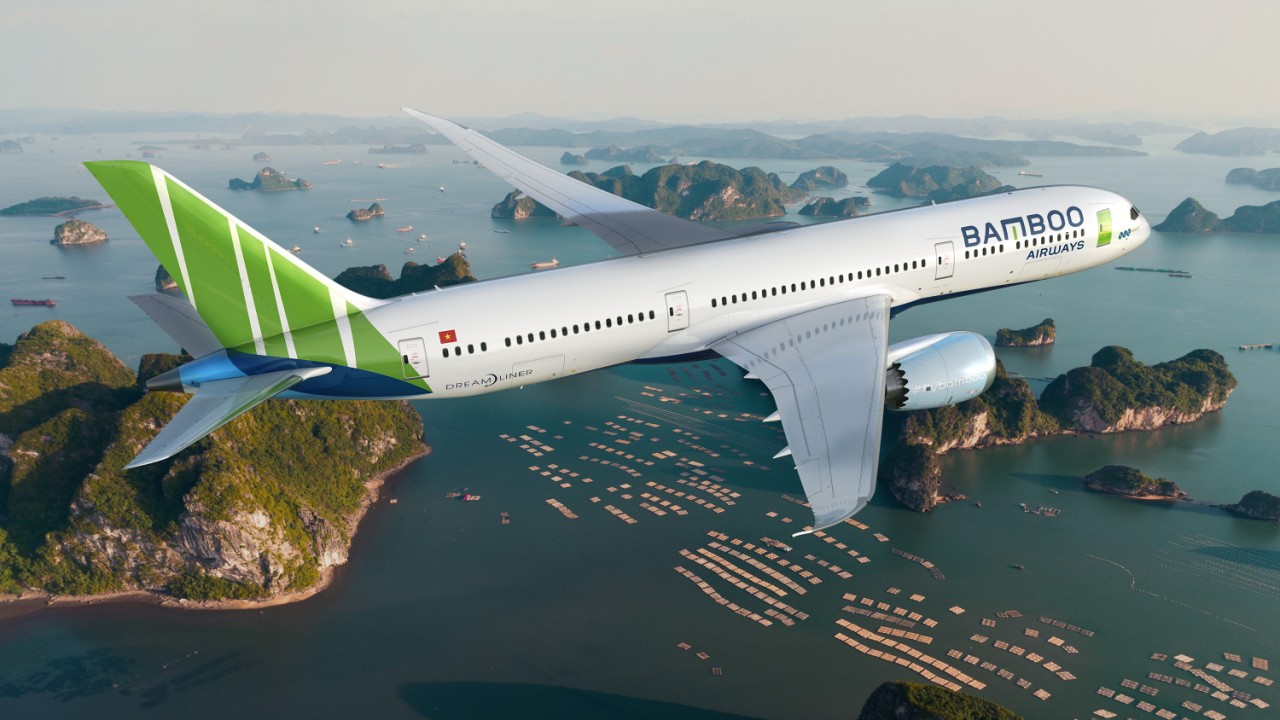
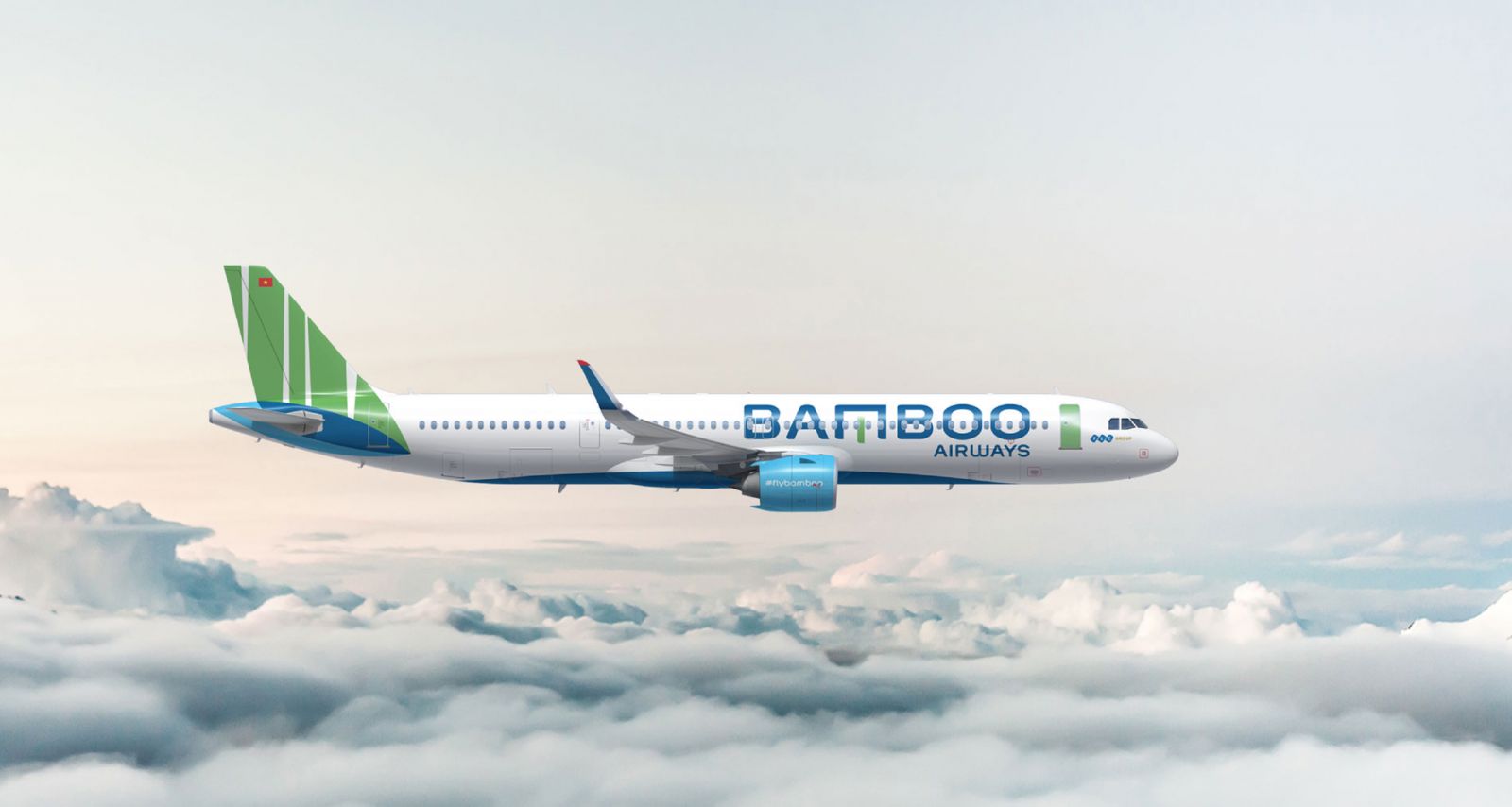
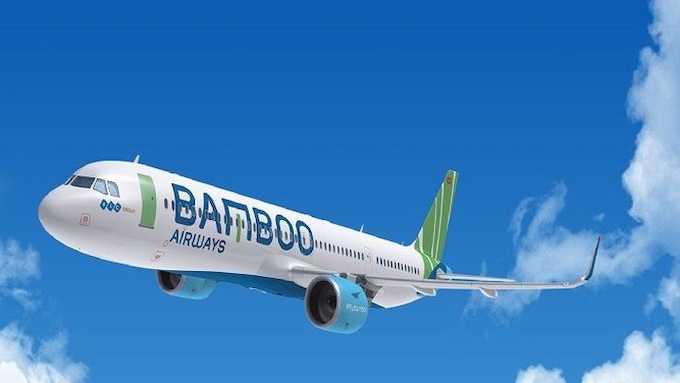
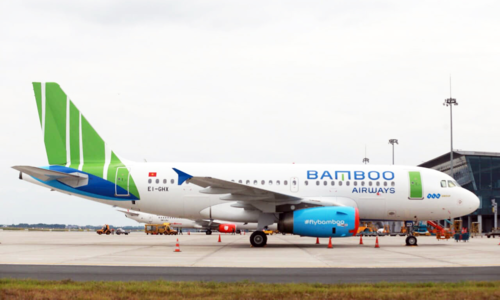
    Bamboo Airways has recently expanded its fleet with the addition of an Airbus A320 aircraft, taking its total count to eight. This move comes as part of an augmentation strategy laid out by the airline, which was recently re-acquired by property developer FLC.

    Expansion and Frequency

    Bamboo Airways’ CEO, Truong Phuong Thanh, regards this fleet expansion as a crucial foundation for increasing flight frequencies and initiating new routes. The airline has an ambitious goal of adding eight to ten aircraft annually which includes wide-body aircraft for long-haul flights, with the aim of expanding its fleet to 30. As of now, the airline only operates narrow-body jets.

    Increased Capacity and Route Resumption

    In light of the new aircraft acquisition, Bamboo Airways anticipates a 16% increase in seat capacity during the Lunar New Year holidays in early February. Additionally, the airline plans to recommence services on several routes that had been previously put on hold.

    Capital for Expansion

    In November, FLC CEO Bui Hai Huyen disclosed that the company was in discussions with various partners to secure funding for the fleet expansion and other related tasks. The property developer had re-purchased Bamboo Airways in September from a consortium of investors, two years after it had initially divested its ownership.

    Expansion among Vietnamese Airlines

    Bamboo Airways is not the only Vietnamese airline in an expansion phase. Vietjet has acquired seven Airbus and two Comac aircraft, while Sun PhuQuoc Airways has added a fifth plane to its fleet.

    Questions & Answers

    What is the goal of Bamboo Airways in terms of fleet expansion?
    Bamboo Airways aims to add eight to ten aircraft annually with the objective of expanding its fleet to 30.

    How does Bamboo Airways plan to increase its flight frequency and capacity?
    The airline plans to increase its flight frequency and capacity by adding to its fleet and increasing the number of seats available with the help of new aircraft.

    How are other Vietnamese airlines expanding their fleet?
    Other Vietnamese airlines such as Vietjet and Sun PhuQuoc Airways are also expanding their fleet by acquiring new aircraft.

  • Bamboo Airways Shuffles Top Management: Vice Chairman Bui Quang Dung Promoted to Helm

    Bamboo Airways Shuffles Top Management: Vice Chairman Bui Quang Dung Promoted to Helm

    Bui Quang Dung has been appointed as the new chairman of Bamboo Airways, replacing Le Thai Sam. The announcement was made on Thursday, confirming that the change would take effect from the preceding Wednesday. Dung simultaneously holds the position of deputy CEO at property development firm FLC Group, which is also the parent company of Bamboo Airways.

    A Wealth of Experience

    Dung brings with him a wealth of experience from several senior management roles at various firms including the investment management firm Colliers International, the multi-industry BIM Group, and property developer Empire Group. He is a proud alumnus of Southern Columbia University in the U.S., where he earned a master’s degree in business administration. With more than 15 years of experience in real estate investment management, Dung is set to contribute significantly to the airline’s growth. The airline confirmed that Sam, the outgoing chairman, would continue to serve as a member of the board.

    The History of Bamboo Airways

    Bamboo Airways was founded by FLC Group in 2017 and commenced operations in early 2019. It changed hands in May 2023 when it was fully sold to Sam, only to be repurchased by FLC Group in September of the same year.

    The recent reshuffle at the helm is part of a wider board restructuring initiated after the airline was reintegrated into the FLC Group. The company has witnessed several leadership changes, with Dung being the seventh chairman since 2022. The frequent changes were precipitated by the financial challenges faced by FLC Group.

    Plans for the Future

    Bamboo Airways has ambitious plans for the future, aiming to restructure its operations and expand its fleet and route network over the next five years. The airline has plans to add a new aircraft ahead of the peak travel season at the end of the year and another one before the Lunar New Year holidays in February 2026.

    At an extraordinary shareholders’ meeting held on Tuesday, Bui Hai Huyen, FLC’s CEO, announced that the company is currently in discussions with several local and international partners. The prospective collaborations would involve experience in aircraft leasing, purchasing, and financing.

    Questions & Answers

    Who is the new chairman of Bamboo Airways?
    Bui Quang Dung has been named as the new chairman of Bamboo Airways.

    What previous experience does Bui Quang Dung bring to his new role at Bamboo Airways?
    Dung has held senior management roles at several firms including Colliers International and the BIM Group. He also possesses over 15 years of experience in real estate investment management.

    What are Bamboo Airways’ plans for the future?
    Bamboo Airways intends to restructure its operations and expand its fleet and route network within the next five years. It also plans to add new aircraft to its fleet in the near future.

  • Bamboo Airways Welcomes Back Former Chairman and Appoints Dynamic New CEO to Lead Future Growth

    Bamboo Airways Welcomes Back Former Chairman and Appoints Dynamic New CEO to Lead Future Growth

    Bamboo Airways is making significant leadership changes as it continues to reshape its operational strategy. In a bold move, Bamboo Airways has announced the return of Le Thai Sam as chairman, taking the reins from Luong Hoai Nam, who stepped down for personal reasons. The decision was revealed on Wednesday, marking a notable chapter in the airline’s restructuring process.

    Le Thai Sam, who emerged as the largest shareholder of Bamboo Airways in 2022, previously served in the chairman role from July 2023 until February 2024. Since then, he has held the position of deputy chairman, actively participating in the airline’s management during its tumultuous transition after being sold by property developer FLC.

    The reshuffle also brings Truong Phuong Thanh, a seasoned professional with three decades in the aviation sector, to the forefront as the new CEO, stepping in for Luong Hoai Nam. Thanh’s background includes various leadership roles within major aviation enterprises, playing a crucial part in operational oversight.

    Having previously served as deputy CEO of Bamboo Airways from 2019 to 2024, Thanh oversaw key areas such as ground operations, which are vital for customer satisfaction and the airline’s overall punctuality. Though he briefly left the airline, his recent return in June signals his commitment to steering Bamboo Airways toward a more stable future.

    As Bamboo Airways navigates these changes, industry watchers will be keenly observing how these leadership shifts impact the airline’s trajectory amidst an ever-evolving aviation landscape. Who knows? Perhaps this is the beginning of a new era characterized by soaring heights.

    Questions & Answers

    What prompted the leadership changes at Bamboo Airways?
    The changes were driven by the resignation of Luong Hoai Nam, who stepped down for personal reasons, leading to the appointment of Le Thai Sam as chairman and Truong Phuong Thanh as the new CEO.

    What is Truong Phuong Thanh’s background in aviation?
    Truong Phuong Thanh brings a wealth of experience with 30 years in the industry. He previously served as deputy CEO at Bamboo Airways, overseeing critical operations and ensuring customer satisfaction.

    How might these leadership changes affect Bamboo Airways?
    These leadership shifts are expected to play a significant role in the airline’s ongoing restructuring efforts, impacting operational efficiency and potentially enhancing customer experience as the airline moves forward.

  • Bamboo Airways Chairman Steps Down: What’s Next for the Airline’s Future?

    Bamboo Airways Chairman Steps Down: What’s Next for the Airline’s Future?

    Bamboo Airways is set for a leadership transition as chairman Phan Dinh Tue has submitted his resignation, pending shareholder approval at an extraordinary general meeting scheduled for July 5.

    New Leadership on the Horizon

    The airline announced that a new director will be elected to succeed Tue, who has been at the helm since February 2024 after joining the company as a director in June 2023. The board currently consists of five directors, including Tue.

    With an extensive background in finance and banking spanning four decades, Tue previously served as a deputy general director at Sacombank starting in 2012. During his tenure at Bamboo Airways, he played a critical role in the airline’s restructuring efforts, shaping its business model, fleet structure, and financial strategies to ensure viability in a competitive market.

    This year, Bamboo Airways has reported promising results, particularly on significant routes and popular tourist destinations. The airline achieved a remarkable flight load factor of 90% in June, showcasing its recovery and operational efficiency. Its fleet, which includes Airbus A320 and A321 aircraft, has recently expanded with the addition of a leased Boeing 737-900E.

    With changes on the board, the question now is how Bamboo Airways will navigate the skies of Asian aviation—and whether the new leadership will continue to steer the airline toward success. After all, in the ever-evolving airline industry, change is the only constant, and sometimes that change can fly by faster than a jet engine!

    Questions & Answers

    Why did Phan Dinh Tue resign?
    Phan Dinh Tue has resigned as chairman of Bamboo Airways, with the resignation awaiting approval from shareholders at a meeting on July 5.

    What role did Tue play in the airline’s development?
    Tue was instrumental in spearheading the airline’s restructuring, contributing to its business model and financial capabilities.

    How has Bamboo Airways performed this year?
    Bamboo Airways has reported a successful operational performance, particularly with a flight load factor of 90% in June, indicating strong demand for its services.

  • Bamboo Airways set to downsize fleet

    Bamboo Airways set to downsize fleet

    After restructuring its flight network, Bamboo Airways has said it will also reduce the number of aircraft to lower costs.

    An executive at the airline said the restructuring in the past two months included discontinuing unprofitable routes.

    The airline has not yet announced the number or type of aircraft that will be grounded.

    According to German civil aviation database Planespotters, Bamboo Airways currently operates 23 aircraft, seven fewer than last year.

    It plans to seek approval from regulatory authorities to increase the size of its fleet to over 30 in future, though again, no concrete plans have been announced.

    In a recent report to the Ministry of Transport, the Civil Aviation Authority of Vietnam said it supports the expansion plan but added the airline needs to ensure it has the financial capacity, human resources, and aviation infrastructure.

    By flying three different aircraft – Airbus, Boeing, and Embraer – that do not allow interoperability, Bamboo Airways has additional costs in terms of hiring pilots, technicians, and training instructors for each of them.

    Many other Vietnamese carriers, such as Vietjet, Pacific Airlines, and Vietravel Airlines, only fly Airbus aircraft.

    All of Vietnam Airlines’ narrow-body aircraft are from Airbus, while its wide-body ones are a mix of Airbus and Boeing.

  • Lender Sacombank eyes Bamboo Airways investment

    Lender Sacombank eyes Bamboo Airways investment

    Sacombank, a major creditor of Bamboo Airways, is seeking approval from economic regulators to invest in the local carrier.< Phan Dinh Tue, a Bamboo Airways board member, said at an unusual meeting on Friday that acombank is a credit institution supporting Bamboo Airways with capital. Hence, Sacombank is genuinely interested in the restructuring process of the airline and is expecting it to grow. Tue said Sacombank had expressed interest in providing more capital for Bamboo Airways. But being a credit institution, Sacombank’s move considered an outside-industry investment. That is why the bank is speeding up the processes to have regulators’ consent before the investment is possible. Bamboo Airways approved items related to the board’s new structure and changes to the company’s charter and the board’s operating regulations. The company also issued management regulations and directions to select strategic shareholders. Bamboo Airways’ general meeting of shareholders also agreed with Board Chairman Le Thai Sam’s recommendation on helping the board organize and review the company’s capital holdings, raise-reduced charter capital to serve the airline’s restructuring goal and mobilize capital from strategic shareholders. The goal is to expand the company’s flight network, and the quality of services. Bamboo Airways’ board now has five members: Le Thai Sam, Le Ba Nguyen, Nguyen Ngoc Trong, Phan Dinh Tue and Le Thi Truc Quynh. After dismissing three members, Bamboo Airways' supervisory board also elected three new people: Nguyen Thi Hong Cam, Pham Van Phung and Nguyen Dang Khoa. The number of company’s legal representatives was also reduced from three to two, including the board’s chairman and the director.

  • Prime minister asks ministries to support Bamboo Airways

    Prime minister asks ministries to support Bamboo Airways

    Prime Minister Pham Minh Chinh has asked relevant ministries to find solutions to Bamboo Airways’ issues on capital, transfer of shares to new investors, and its fleet expansion.

    The airline has recently faced many difficulties, especially in finance.

    In mid-July, it was rumored Bamboo Airways asked the government for bankruptcy protection, but the private airline denied this.

    In early July, Bamboo Airways sent the prime minister a report on its operation and difficulties.

    Chinh assigned the Ministry of Transport to maintain the airline’s operating conditions to ensure security and safety in civil aviation transport, and the Ministry of Finance to remove difficulties in transferring its shares to new investors.

    He also asked the Ministry of Planning and Investment to quickly appraise a proposal allowing Bamboo Airways to increase its fleet to more than 30 aircraft, because the lengthy process would slow down the airline’s recovery and development as well as reduce its business opportunities.

    In addition, he proposed the State Bank of Vietnam work with the airline to remove financial difficulties, facilitating commercial banks’ contribution of capital to the airline.

    The prime minister requested the ministries and the central bank to report the results of their troubleshooting before September 15.

    Vietnam’s aviation industry has been recovering domestically but is still struggling to reclaim its share of the global market.

    In the first six months, the domestic market increased by 8% compared to pre-pandemic levels, but the international market remained 40% lower.

  • Bamboo Airways CEO resigns after two months

    Bamboo Airways CEO resigns after two months

    CEO of Bamboo Airways Nguyen Minh Hai has resigned less than two months after assuming the position.

    Following his resignation announced by the carrier on Tuesday, deputy chairman Nguyen Ngoc Trong will be the airline’s acting CEO.

    Hai was named Bamboo Airways’ CEO in late May, replacing Nguyen Manh Quan.

    Hai, 51, has a bachelor’s degree in tourism business management from Vietnam National Economics University and 25 years’ experience in the airline industry. He was deputy general director of Vietnam Airlines between April 2015 and January 2019.

    In a meeting last month, Hai informed the carrier’s shareholders the company would be restructuring under a new investor, the Him Lam Corporation. He said making Bamboo Airways profitable to satisfy investor demands was a top priority.

    And then also last month, Bamboo Airways accepted the resignation of four members: chairman Oshima Hideki, standing deputy chairman Nguyen Ngoc Trong, and two deputy chairmen Doan Huu Doan and Phan Dinh Tue.

    The new chairman of Bamboo Airways is Le Thai Sam, who now holds over 50% of the airlines’ shares. The company has said the changes in personnel are part of its restructuring.

  • Bamboo Airways plans to soar under new management

    Bamboo Airways plans to soar under new management

    Property developer Him Lam, the new owner of Bamboo Airways, plans to build an aviation ecosystem centered around the latter while expanding its presence in Asia.

    Bamboo Airways began flying in 2019 and became the first private carrier to operate wide-body aircraft.

    It quickly expanded its fleet to nearly 30 by the end of 2021 when it held a 20% share of the domestic market and also flew on some international routes.

    But the arrest of its key leaders, including chairman Trinh Van Quyet, for alleged stock market manipulation came as a death blow.

    Him Lam, a south-based developer of condos and a hotel management service provider, took over Bamboo this year.

    A new leadership has been appointed this week to hopefully begin a new chapter.

    “The last five years have been a journey of establishing a brand for the airline,” deputy chairman Nguyen Ngoc Trong said at the company’s annual general meeting on June 21.

    “In the next five years Bamboo Airways will focus on developing efficiency and professionalism.”

    CEO Nguyen Minh Hai said the company seeks to achieve breakeven by next year to turn profitable by 2025.

    Expanding its services to increase revenues is therefore one of its main focuses.

    Revenues soared by 3.3 times last year to over VND11.7 trillion, but the airline still could not break even.

    Hai said a larger fleet is imperative for doing this. The current fleet of 30 aircraft needs to be expanded by eight to 10 a year until 2026, and each aircraft needs to operate more than the current 10 hours a day, he explained.

    Reducing costs is another key task.

  • Bamboo Airways’ accumulated loss bigger than Vietnam Airlines, Vietjet

    Bamboo Airways’ accumulated loss bigger than Vietnam Airlines, Vietjet

    Bamboo Airways posted an accumulated loss of VND3.2 trillion ($136 million) last year, higher than that of Vietnam Airlines and Vietjet.

    Although the company saw revenue tripling to VND11.73 trillion, costs still exceeded that figure due to difficulties in the Northeast Asia market and the Russia-Ukraine conflicts, which drove up fuel expenses, according to the company’s financial disclosure.

    Other airlines also posted accumulated loses last year. Vietnam Airlines lost VND2.64 trillion, an improvement from VND10 trillion recorded in 2021, thanks to revenues recovering to 70% of pre-pandemic levels.

    Vietjet posted an accumulated loss of VND1.99 trillion last year. Bamboo Airways leaders, however, are optimistic about the future of the company.

    Chairman Nguyen Ngoc Trong said that the airline nearly reached its breakeven point in the first quarter as its fleet of 30 aircraft operated at full capacity.

    Bamboo Airways is set to post profit in 2025, he added. The airline targets a growth rate of 15-20% this year. It is considering plans to expand its fleet and routes and increase occupancy.

    New routes are being considered to Europe, Northeast Asia, Southeast Asia and Australia.

    The airline is seeking the government’s permission to increase its fleet size to more than 30.

    Bamboo Airways is set to select a new board of directors for the 2023-2028 period on June 21.

    The five directors of Bamboo Airways have asked to resign, and the airline will select a new board of seven directors at the upcoming general meeting.

  • Bamboo Airways names Vietnam Airlines ex-deputy general director as CEO

    Bamboo Airways names Vietnam Airlines ex-deputy general director as CEO

    Bamboo Airways has appointed Nguyen Minh Hai as CEO to replace Nguyen Manh Quan with effect from May 24.

    The carrier said Quan had asked to step down from the position he had held since July 2022.

    Under his leadership, Bamboo earned record revenues in the second half of 2022 through innovative business initiatives.

    As of the end of the first quarter this year its fleet utilization rate had risen close to 100%.

    Hai, 51, has a bachelor’s degree in tourism business management from the National Economics University and 25 years’ experience in the airline industry.

    He was deputy general director of Vietnam Airlines between April 2015 and January 2019.

    Bamboo Airways had said last week there will be some changes in the board of directors and management.

    Hideki Oshima, a former director of international relations and airline alliance at Japan Airlines, is set to join the board of directors and executive board, while Masaru Onishi, a former president of Japan Airlines, will become senior advisor to the board of directors.

  • Bamboo Airways owes director $329M

    Bamboo Airways owes director $329M

    Bamboo Airways owes one of its directors, Le Thai Sam, almost VND7.73 trillion ($329.50 million) as of April 10, according to a meeting on Tuesday.

    Sam, who became a board member in July last year, will soon receive a 21.7% stake from FLC, which has been operating the airline since the beginning, according to a document made public at the Bamboo Airway’s extraordinary shareholders’ meeting.

    As he already owns a 12.5% stake in the airline, the transfer from FLC will increase his ownership to more than one-third of the carrier.

    Since last year he has been lending the company cash at zero or low-interest rates and required no collateral to ensure the company could continue its operations despite many difficulties after its founder Trinh Van Quyet was arrested on stock manipulation charges.

    Sam, 59, has 30 years of experience in property, finance and banking. He used to be one of the directors of Development Investment Construction (DIC).

    Shareholders of Bamboo Airways on Tuesday approved the company’s proposal to issue more shares to increase its charter capital by 62% to VND30 trillion.

    The company will look to sell the shares to strategic investors with deep pockets who are willing to lend the company at least VND1 trillion.

  • Lender NCB wants to sell 11% stake in Bamboo Airways pledged as collateral

    Lender NCB wants to sell 11% stake in Bamboo Airways pledged as collateral

    National Citizen Commercial Bank plans to seek shareholders’ permission this month to sell 203 million shares, equivalent to a 11% stake, of Bamboo Airways.

    Property developer FLC pledged some of the shares as collateral for loans.

    FLC and its disgraced former chairman, Trinh Van Quyet, who is in custody for alleged stock market manipulation, had also used Bamboo Airways shares for borrowing from OCB and Sacombank.

    The carrier last month sought shareholders’ approval to increase its capital by VND9.57 trillion ($408.15 million) to deal with debts, but failed to get it.

    It plans to convene another extraordinary general meeting this month to raise the issue again.

  • Bamboo Airways shareholders shoot down capital increase plan

    Bamboo Airways shareholders shoot down capital increase plan

    Shareholders of Bamboo Airways, at an extraordinary general meeting on Monday, rejected plans for a private placement of shares to increase charter capital.

    The proposal for a VND9.57-trillion ($405.5 million) issue to increase the capital to VND28 trillion, restructure loans and swap debts for shares based on agreements with creditors was rejected by 56.4% of shareholders.

    Bamboo Airways chairman Nguyen Ngoc Trong said he would hold discussions with major shareholders and submit a plan for increasing the charter capital at the next annual general meeting.

    Trong said that in the first quarter of this year, with its fleet operating at full capacity, the airline would almost break even.

    It is expected to get delivery of six to eight aircraft this year and 10 more in 2024-25, he said.

    “Bamboo Airways will become profitable by 2025.”

    He said 2026 or 2027 would be an optimal time for it to make an IPO.

    The carrier now flies to 21 out of 22 airports in Vietnam, and in April would add Ca Mau to its destinations.

    Internationally, it has been resuming services to Europe and Australia post-Covid.

  • Bamboo Airways to raise $425M through rights issue

    Bamboo Airways to raise $425M through rights issue

    Bamboo Airways plans to make a rights issue of shares to increase its capital by 54%, or nearly VND10 trillion (US$425.44 million), to fund operations and pay off debts.

    It will offer 35 new shares for every 100 held and the issuance will be made this year.

    It currently has a charter capital of VND18.5 trillion.

    The proposal will be presented to shareholders at an extraordinary general meeting on Apr. 10.

    The airline has said it has found a buyer to take it over.

    Former chairman Trinh Van Quyet, arrested last year for alleged stock manipulation, owns a 55.5% stake in it.

    The buyer, whose identity has not been revealed, has agreed to take over the entire debts and provide Quyet with the money he might have to pay as fines and indemnification for the stock manipulation that led to his arrest.