Tag: bangkok

  • More Headwinds for Bangkok’s Already Hollowing Condos

    More Headwinds for Bangkok’s Already Hollowing Condos

    There are an estimated 100,00 vacant condominiums in and around Thailand’s capital as a plunge in Chinese demand hits the property sector.

    Foreign buyers accounted for one-fifth of the Bangkok’s real estate purchases two years ago, according to estimate from local consultancy Agency for Real Estate Affairs, but the ongoing coronavirus outbreak is set to cut the figure in half. This is especially due to the fact that the majority of foreign demand is from Chinese buyers who are being hindered by travel curbs in addition to economic risks at home.

    The projections if materialized will further exacerbate damage being felt in Bangkok’s real estate market especially in the condominium segment where the consultancy estimates up there are up to 100,000 vacant units.

    In addition to the real estate sector, Thailand’s broader economy was already feeling the pressure in 2019 from a strengthening baht and an ongoing U.S.-China trade war. Gross domestic product growth is projected to grow as little as 1.5 percent in 2020 – a six-year low – according to the government.

    Local authorities are already rolling out measures to support the property market including loosened mortgage lending rules from the Bank of Thailand to encourage domestic purchases. Still, the outlook remains gloomy and a report citing an estimate by global real estate consultant Collier places the number of newly developed condo units at 6,000 in the first quarter of 2020, a 40 percent year-on-year drop.

    To date, the coronavirus outbreak has infected nearly 80,000 individuals with a kill count of 2,495.

  • Global franchise operators eye Thai growth

    Global franchise operators eye Thai growth

    Franchise brands from the US, France and China are eyeing opportunities in Thailand which has become a strong drawcard for offshore companies, according to consultants.

    Southeast Asian specialist VF Franchise Consulting is holding a franchise-business matching event in Bangkok next week, with local partner Gnosis which has drawn businesses keen to establish a presence in Thailand.

    Among the companies participating who are seeking local partners are retailers Ace Hardware, Delifrance and Little Caesars. Others include technology-focused language education company Qooco and Scholastic World of English.

    “Thailand continues to be of strong interest from our clients,” said Sean T Ngo, CEO of VF Franchise Consulting. “Whether it is food and beverage, education, retail, fashion or services, all of these sectors are attractive in the Thai market.”

    Ngo says the key to succeeding in Thailand’s ultra-competitive market is offering clear and sustainable value and differentiation.

    “We believe the brands that we are taking to Thailand fit that extremely well as they are all leaders in their respective franchise segments.”

    On February 25 in Bangkok, some of the franchisor executives from the brands will meet one-on-one with invited franchisees and investors.

    US-based Little Caesars Pizza is the world’s third-largest pizza franchise and now operates in 26 countries, including Singapore and the Philippines.

    Delifrance is the world’s largest French bakery and cafe chain and has more than 400 stores serving millions of customers in 15 countries across the globe.

    Ace Hardware is the largest home-improvement franchise in the world with more than 5300 stores worldwide, including more than 200 stores in the Philippines and nearly 200 stores in Indonesia.

  • Great Wall Motor To Purchase GM’s Thailand Manufacturing Plant

    Great Wall Motor To Purchase GM’s Thailand Manufacturing Plant

    Great Wall Motor announced that it has signed an agreement for the purchase of General Motors’ manufacturing facility in Rayong, Thailand. This announcement is subject to government and regulatory approvals. Under a signed binding term sheet, GM Thailand and GM Powertrain Thailand legal entities, which include the Rayong vehicle assembly and powertrain facilities, will transfer to GWM. GM and GWM are targeting the end of 2020 to close the deal and hand over the site.

    The acquisition of GM’s Thai Rayong plant will help the business development of Great Wall Motor in Thailand and the ASEAN market. Great Wall Motor will expand through the entire ASEAN region with Thailand as the center, and export its products to other ASEAN countries as well as Australia. Great Wall Motors’ investment will create more jobs in the local area, including direct and indirect employment and further enhance skill development in the automotive industry. GWM will also promote the development of the local supply chain, R&D and related industries, plus contribute more to the exchequer of both the local Rayong and Thailand governments.

    Parker Shi, Vice President, GWM India said, “This agreement marks an important milestone in the overall scheme of things for Great Wall Motor in the ASEAN Region and is a testimony of our global expansion strategy that is now focused on South East Asia including India.”

  • Bangkok’s Chatuchak mall opens in Singapore

    Bangkok’s Chatuchak mall opens in Singapore

    Bangkok’s world-famous Chatuchak Market has launched a satellite site in Singapore.

    A 40,000sqft pop-up market located at The Grandstand on Turf Club Road, it marks the first time Chatuchak has been convened outside of Thailand.

    The market opened this week and will remain trading until May 3.

    More than 400 vendors are trading at the market, some rotated in from the original open-air market in Thailand.

    While Bangkok’s market is only open during weekends, Chatuchak Singapore will trade from 4.30 pm to 10.30 pm every day except Monday.

    Thai street food is being sold at the market for visitors seeking an authentic Chatuchak experience – while apparel, accessories and jewelry are among the goods on offer at stalls.

  • NokScoot soars to new heights for punctuality

    NokScoot soars to new heights for punctuality

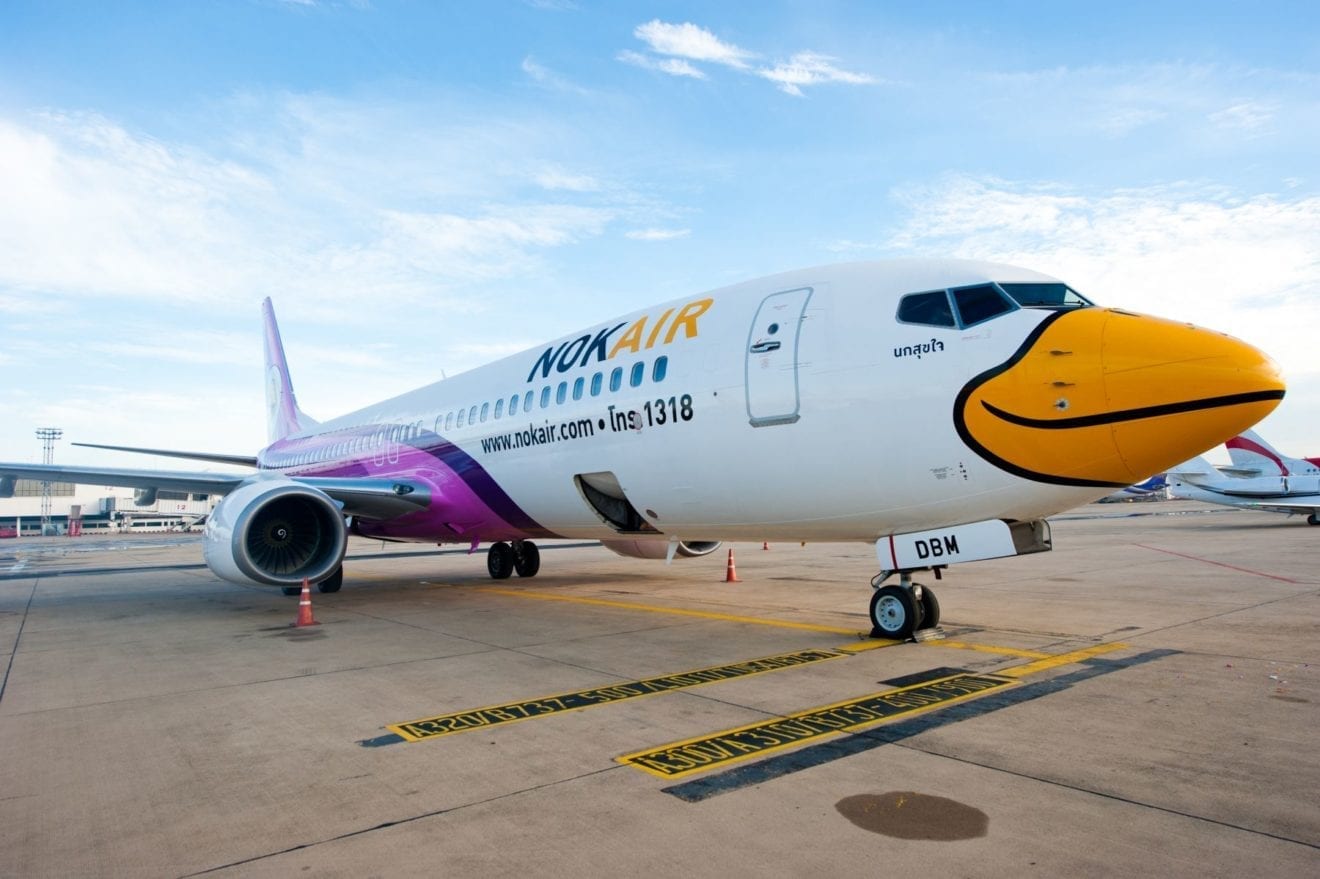
    NokScoot, the joint venture low-cost carrier of Thailand’s Nok Air and Singapore’s Scoot, achieved its best-ever annual on-time performance (OTP) since the start of operation with an average of 86.55% in 2019.

    The airline’s 2019 punctuality report revealed that the airline obtained its highest OTP on record even though the flights flown increased by 30% or 1,162 flights. Last year alone, it operated 4,951 flights, an increased from 3,789 flights flown in 2018. During the busiest month of 2019 in December, it earned a perfect 100% OTP for both, Tokyo Narita International Airport in Japan and Qingdao International Airport in China.

    “At NokScoot, we always work hard in order to offer the best services and provide an enjoyable flying experience to our passengers.” said Yodchai Sudhidhanakul, CEO of NokScoot. “OTP is crucial and has always been one of our five core values, ‘Consistently Deliver’. We are committed to maintain and enhance the highest standard in every aspect, including punctuality, safety and convenience.”

    The carrier currently flies from Bangkok to nine destinations in East Asia and India, including Nanjing, Qingdao, Shenyang, Tianjin, Taipei, Tokyo, Sapporo, Osaka, and New Delhi.

  • Nok Air suspends Guwahati-Bangkok flights from January 20

    Nok Air suspends Guwahati-Bangkok flights from January 20

    As per reports, Nok Air is expected to resume its operations from April 12, 2020.

    The airline has cited ‘operational reasons’ behind its decision to suspend the flights.

    Nok Air, which is a subsidiary of Thai Airways International, had operated its flights in the Guwahati-Bangkok route twice a week.

    It may be mentioned that Nok Air, which had started its flight operations from Guwahati to Bangkok in September last year, had suspended its operations just four months after airline SpiceJet has suspended the Guwahati-Dhaka direct flight service.

    The reason behind the suspension of the ambitious Guwahati-Dhaka flight service was due to not getting the desired number of passengers.

    Due to poor business operations of the flight service, SpiceJet had first reduced the frequency of the flight service from daily to twice a week.

    However, the new outcome of the flight service still being poor, SpiceJet had finally decided to suspend its operations.

    At present, only two international flights would remain operational from the Guwahati airport and that is Druk Airlines’ flights from Guwahati to Singapore and Guwahati to Paro.

  • Analysts Downgrade Thailand’s Oldest Banks

    Analysts Downgrade Thailand’s Oldest Banks

    Siam Commercial Bank, one of Southeast Asia’s largest lenders, has prompted cuts from analysts on concerns of its loan book.

    After the bank reported its fourth-quarter results, nearly a third of the analysts who cover the Thai bank cut their recommendations the past week, wiping out nearly $2 billion from its market value. Asia Plus, Credit Suisse and J.P. Morgan Chase were among the brokerages that cut ratings.

    Thailand’s economy in 2020 is still surrounded by negative factors. Asset quality is still at risk and needs to be watched closely. said Therdsak Thaveeteeratham, an analyst at Asia Plus Securities.

    Siam Commercial and other Thai lenders have closed branches while increasing digital banking in an effort to boost earnings. However, a struggling economy has increased bad loans at the bank, which is more than a century old and counts King Maha Vajiralongkorn as its biggest shareholder.

    Siam Commercial’s shares posted their biggest one-day decline since 2008 on January 20, the first trading day after the fourth-quarter earnings report showed a jump in bad-loan provisions.

    Still, the downgrades and reaction may be overdone as Siam Commercial raised loan-loss provisions in 2019, according to Diksha Gera, a Bloomberg Intelligence analyst. The bank may consider boosting the net interest margin and cut costs to counter weak revenue, she said.

    The bigger risk we see is potential M&A following recent moves of other local competitors such as Bangkok Bank to make acquisitions, she notes.

    Bangkok Bank last month announced that it would acquire a controlling stake in Indonesia’s PT Bank Permata for about $2.7 billion to expand its presence in Southeast Asia’s biggest economy.a

  • Bangkok’s Thaniya Plaza to be refurbished for the first time in 30 years

    Bangkok’s Thaniya Plaza to be refurbished for the first time in 30 years

    Thai developer Thaniya Group plans to invest more than THB1 billion (US$33 million) on renovating Thaniya Plaza, its first major makeover project in 30 years.

    The project will cover the refurbishment of its exterior and interior design as well as the transformation of Thaniya Road, the company said in a statement.

    Located in the heart of the tourist precinct of Silom, Thaniya Plaza is a major drawcard for golfers, especially visitors from Japan and South Korea.

    “Thaniya Plaza will further strengthen our position as the well-known landmark on Silom Road and fulfill needs of people in the Silom area,” said Tasnawat Sombuntham, MD of Thaniya Group. “We are confident that we can cater to a need for business operators in terms of the customer traffic and the prime location in Bangkok’s CBD. We have also improved our space-rental services to align with today’s business landscape.”

    Thaniya Group chose a design concept emphasizing modern and green, based on public feedback suggesting there was a need for more green spaces in the Silom area. The 12,000sqm retail space spans four floors in two buildings connected by bridges. The landscape on the ground floor will be transformed to increase more green area and create a link between the two buildings.

    The first phase of the renovation will start in April with the work expected to be completed by early next year. During the renovation, the mall will continue to trade.

  • UOB Invests in Thai Fintech

    UOB Invests in Thai Fintech

    The funds will be invested into the Stellar Network, the blockchain technology underlying Lightnet’s platform, as well as to build a «next-generation financial mobility network.»

    Bangkok-based fintech Lightnet has raised $31.2 million in a Series A funding round led by UOB Venture Management, the private equity unit of UOB, the firm announced in a statement on Friday.

    Other backers include Seven Bank, Uni-President Asset Holdings, HashKey Capital, Hopeshine Ventures, Signum Capital, Du Capital and Hanwha Investment and Securities.

    According to its website, the company aims to disrupt the global remittance market by using smart contracts and distributed ledgers to replace the SWIFT system and underground banking. It is currently focusing on the millions of unbanked migrant workers in Southeast Asia, which rely on costly, slow, and fragmented services for cross-border remittances.

    Lightnet was co-founded by Chatchaval Jiaravanon – a family member of the Charoen Pokphand Group in Thailand – and tech entrepreneur and former investment banker Tridbodi Arunanondchai.

    «We project that within three years, Lightnet will facilitate over $50 billion worth of annual transactions through our industry-leading partner network,» Arunanondchai said.

  • Thailand Cannot Push Digital Banking with Central Bank Alone

    Thailand Cannot Push Digital Banking with Central Bank Alone

    Thailand hopes to match the rapidly rising global standards in digital banking but Bank of Thailand’s governor notes that it will take more than just the efforts of the central bank.

    Veerathai Santiprabhob said the central bank will look to launch electronic lending and other financial services this year through a collaboration with various parties. Though he did not disclose details, the BoT governor stressed that collaboration between government agencies is critical, according to a report.

    It cannot be the central bank alone, he said.

    Digital banking in Thailand is feeling the tailwinds, despite the lack of independent virtual lenders seen emerging in neighboring financial hubs. UOB was the latest reported entrant into the country with the launch last year of its first mobile-only bank, TMRW. Local lenders, too, are making digitalization inroads with one player reportedly reaping the success of applying gamification in its business.

    Although Thailand has digital banking ambitions, Veerathai is cognizant of the gap between its market and other rival players in Asia. He highlighted data from non-financial sources, an electronic identification system and a suitable regulatory framework as three key pillars required to build virtual banks.

    At this stage, Thailand might not have the ecosystem ready like in Singapore or Hong Kong, where the digital banking system is in better shape, he said.

    When we talk about digital banking licenses, we want to have a new financial services provider that can serve the currently underserved, meaning that you have to be able to meet the needs of people on the street, people from far, far away, Veerathai said.

    Whilst access to the unbanked market is undoubtedly an attractive proposition, Veerathai acknowledged the challenges required to evaluate borrowers’ creditworthiness due to insufficient data available.

    This can come from when customers use mobile phones, the way they conduct their business using the digital footprint ecosystem, he added.

  • Thailand’s Central Retail Group confirms IPO launch

    Thailand’s Central Retail Group confirms IPO launch

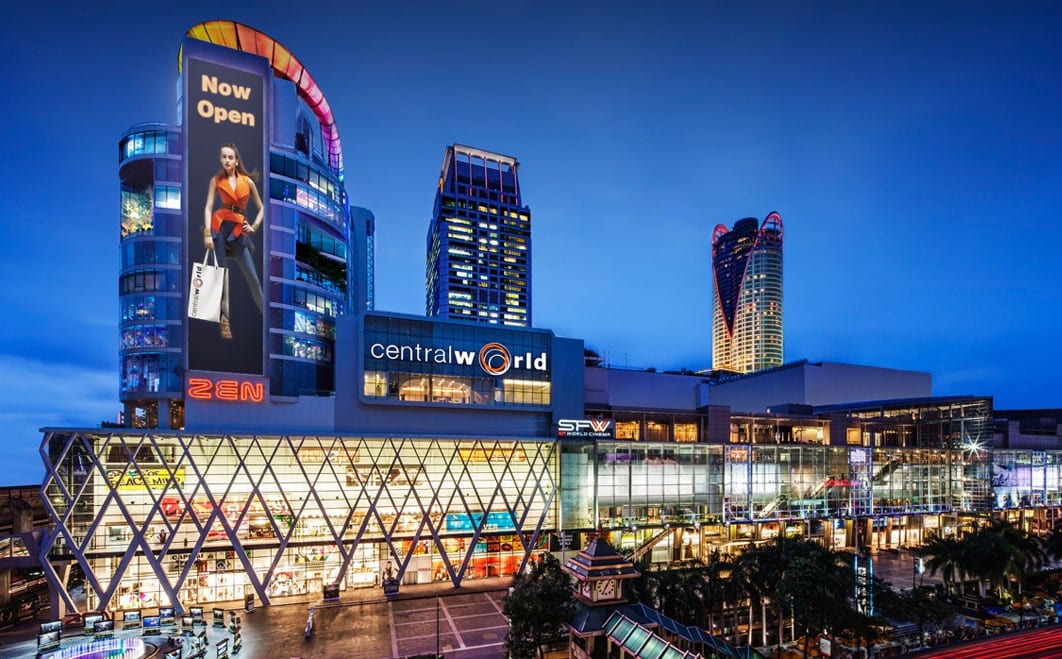
    Central Group subsidiary Central Retail Corporation, aims to raise up to THB81.1 billion (US$2.7 billion) in an initial public offering (IPO), which will be Thailand’s largest yet.

    Central Retail’s IPO price will range between THB40 to 48 per share. The company will sell up to 22.1 per cent of its stock or 1.69 billion shares with an overallotment option of 169 million shares. Investors can subscribe from February 6.

    Central Retail’s planned offering would be Thailand’s largest on record ahead of the BTS Rail Mass Transit Growth Fund, which raised US$2.1 billion in 2013.

    Funds raised will be used to expand its domestic and international businesses and to pay off debt, according to a spokesperson.

    As part of its listing plans, Central Group will delist its retail subsidiary Robinson PCL and offer a share swap to Robinson’s existing shareholders with no cash alternatives. The share swap will start in late January.

    Central Retail achieved sales of $3.46 billion in the six months to June. Some 43 per cent of that came via its food business, 34 per cent from fashion and the remainder from hardware.

  • Thai AirAsia X flies to Tbilisi

    Thai AirAsia X flies to Tbilisi

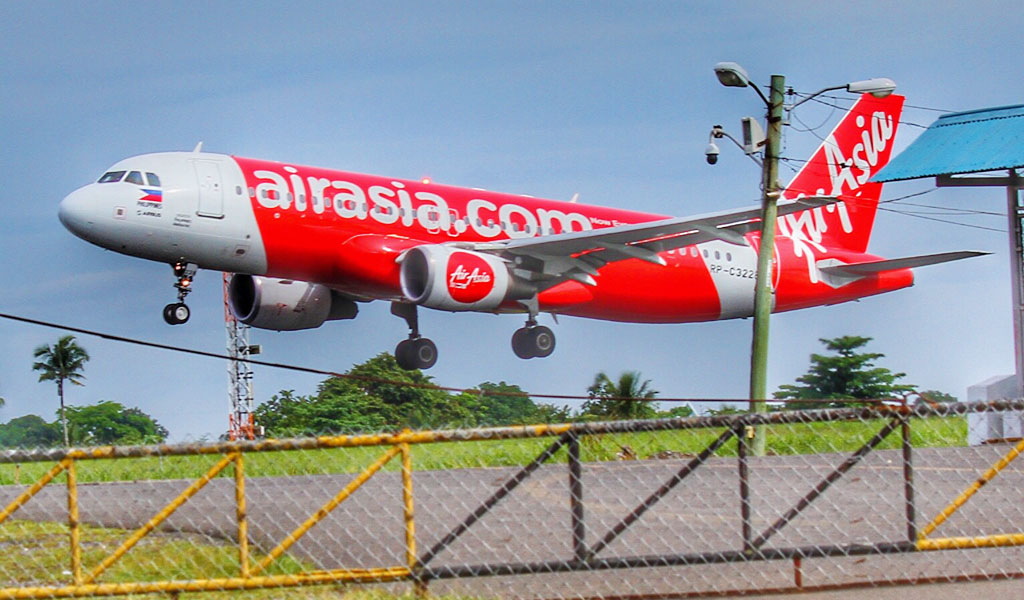
    Thai AirAsia X will operate six Christmas and New Year scheduled charter flights to Tbilisi Georgia from its home base Bangkok Don Mueang airport.

    Bookings are mainly generated by Thai outbound travel agents promoting tour packages to Georgia for the festive season. Flights will use an Airbus A330-300 with 377 seats.

    Based on Airlineroute timetable information, the first flight will take off 25 December from Don Mueang Airport at 1455 arriving in Tbilisi at 2040.

    The remaining five flights depart from 28 December to 6 January.

    According to a report in GT Georgia Today news service, Thai AirAsia X carried out two test flights in October before it was awarded a permit by Georgia’s  Ministry of Economy and Sustainable Development  on 27 November 27

    Wikipedia describes “Tbilisi the capital of the country of Georgia as a cobblestoned old town that reflects a long, complicated history, with periods under Persian and Russian rule. Its diverse architecture encompasses Eastern Orthodox churches, ornate art nouveau buildings and Soviet Modernist structures. Looming over it all are Narikala, a reconstructed 4th-century fortress, and Kartlis Deda, an iconic statue of the “Mother of Georgia.”

  • Thailand’s Nok Air seeks to raise $73.5mn from shareholders

    Thailand’s Nok Air seeks to raise $73.5mn from shareholders

    Nok Air is seeking to raise THB2.22 billion bahts (USD73.5 million) from existing shareholders through a new share issuance, the Thai low-cost carrier said in a stock market filing.

    The Thai carrier’s Board of Directors proposed issuing 888,147,358 new shares nominally valued at THB1 (USD0.03) each. If the proposal is approved by an Extraordinary General Meeting on January 14, existing shareholders will be offered purchase rights to buy one new share per 3.5 existing shares. The purchase price has been set at THB2.5 (USD0.08) per share.

    The offering period will run from February 3 to February 7, 2020.

    Nok Air said it will allocate shares not taken up in the first round to any oversubscribing shareholders but it does not foresee allocating any shares to investors who are not shareholders at the moment.

    Simultaneously, the Board of Directors proposed decreasing the number of shares in circulation by 99,030,527 shares which were not sold during previous equity increases. This will result in a decrease of the total number of shares, equivalent to the registered capital, to 3,309,019,273 prior to the new issuance planned for early February.

    Nok Air is currently controlled by the Jurangkool family, with three of its family members controlling a combined 67.4% stake in the airline. Thai Airways International owns a 15.9% stake with the remainder held by small shareholders with less than 0.5% each.

  • Thai Union Group Increases stake in Thammachart Retail

    Thai Union Group Increases stake in Thammachart Retail

    Food business Thai Union Group has increased its shareholding in Thammachart Seafood Retail to 65 per cent in a move to capture a greater portion of the seafood industry in Thailand.

    The firm purchased its initial 25.1-per-cent shareholding in Thammachart last year to build on its existing strength in frozen seafood and food services.

    “Thammachart Seafood provides professional management services to leading Thai retailers for their seafood counters, handling fresh and frozen products at 190 locations throughout Thailand,” Thammachart Seafood Retail CEO Julian G Davies told The Nation.

    “This includes four food-and-beverage concepts at 18 locations, The Dock Seafood Bar, The Lobster Lab, Seafood Mahanakorn as well as management of the Ocean Bar. We opened our third business unit earlier this year, the seafood-focused food service business, and this currently supplies top-end hotels and restaurants including several Michelin-star restaurants in Bangkok,” said Davies.

    “Having Thai Union on board will help us realise our mission to be the customers’ first choice in seafood.”

    Thai Union is expected to cross over into the Laotian, Cambodian and Chinese markets following its domestic expansion phase.

  • Bangkok Bank Snaps Up Bank Permata

    Bangkok Bank Snaps Up Bank Permata

    Bangkok Bank emerges as the buyer of PT Bank Permata after Singapore’s DBS and OCBC reportedly backed out from bidding. Thailand’s second-largest lender Bangkok Bank bought Permata for about $2.7 billion to obtain a near 90 percent stake from Standard Chartered and PT Astra. The deal, which was advised by Morgan Stanley, was valued at 1.77 times Permata’s book value.

    According to a Bangkok Bank release, it found the acquisition attractive due to Permata’s «leading retail deposit franchise and best-in-class digital capabilities» with more than 300 branches in 60 cities in Indonesia.

    According to a filing, the acquisition is part of Bangkok Bank’s strategic transformation to become a regional lender, describing Indonesia as a «highly attractive and fast-growing market”.

    International expansion is our key strategy,» said Piti Sithi-Amnuai, chairman of Bangkok Bank. «Indonesia, in particular, is a key focus for us, as it is one of the fastest-growing major economies in Asia with highly attractive macroeconomic fundamentals, favorable demographics, and increasing ASEAN regional integration.

    Standard Chartered had signaled its intention to dispose of the stake in February, as it was no longer core to its strategy, and the funds raised from the sales could be used to further its share repurchase program which has already returned $1 billion.