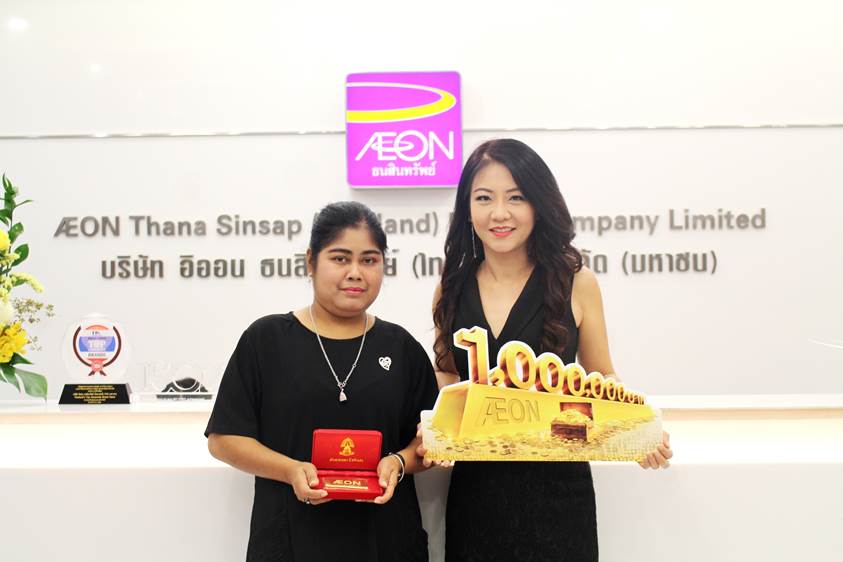
Ms.Saranya Pipoppinyo (right), Vice President Marketing of AEON Thana Sinsap (Thailand) Public Company Limited, awarded a gold bar, valued at 1 million baht, to Ms. Jirarat Khunthong, a lucky winner from Trang province, as part of “Win Gold Worth THB1 Million with AEON”. The campaign was eligible for AEON Your Cash customers who withdrew cash or transferred Your Cash loan at least 1,000 baht from 1 January – 28 February 2017.
Tag: bangkok
-

Mercedes-Benz ditches E220d in favour of E350e in Thailand
Sales of the diesel-powered executive saloon cease as the German automaker wants plug-in hybrids to account for 30% of total annual sales.
Mercedes-Benz (Thailand) has launched its fourth plug-in hybrid vehicle: the E350e which follows the C350e, S500e and GLE500e.
Like the C350e, the E350e uses a 2.0-litre petrol-turbo engine in conjunction with an electric motor, whose power from the lithium-ion battery can also be revitalised from the wall socket. The S500e and GLE500e employ a bigger 3.0-litre V6 petrol motor.
Combined outputs in the E350e are rated at 286hp and 550Nm, while the maximum all-electric driving range is claimed at 33km. As the E350e spews out 44g/km of CO2 on the combined cycle, it is eligible for the new 5% excise tax imposed on locally made plug-in hybrids producing no more than 50g/km.
There are three trims for the E350e: Avantgarde 3.49 million baht, Exclusive 3.79 million baht and AMG Dynamic 4.09 million baht.
The similarly priced E220d has been dropped from the Thai E-class model lineup as Mercedes-Benz wants to promote plug-in hybrids in the country.
Mercedes-Benz hopes that plug-in hybrids will account for 30% of total annual sales which is why diesel versions and other pure petrol derivatives aren’t available anymore. The same has happened in the C, S and GLE model ranges.
BMW, meanwhile, is gearing up to launch the 530e in Thailand at the end of this year to rival the E350e. Volvo is also said to be preparing the introduction of the S90 T8.
Unlike Mercedes-Benz, BMW is still selling diesel versions of the X5, 3 and 7-series as it wants to offer Thai customers with two distinct types of propulsion. BMW hopes that plug-in hybrids will account for 15% of annual sales this year.
-

TOT ready to take over True’s fixed operations
Thai state-owned operator TOT is ready to take over concessionaire True Corporation’s fixed line operations upon the expiry of the concession agreement in October.
TOT has spent months preparing the operational procedures that will be needed to take over the provision of services to around 1.2 million customers.
As part of Thailand’s transition to a licensing regime, the 25-year build-operate transfer concession agreement will be allowed to expire on October 26. True had been paying 18% of its total revenue to TOT under this concession.
Once the concession expires True will transfer its fixed line network assets and customers to TOT.
The operator will lose fixed line service revenue of around 2 billion baht ($57.7 million) per year, while TOT expects to be able to realise revenues of 2.8 billion baht per year from the assets.
TOT plans to start writing to True customers in July informing them of the scheduled takeover of the fixed line operations. The state operator already has its own fixed line business, with around 3.4 million subscribers nationwide.
According to the report, TOT meanwhile plans to spend around 400 million baht this year on fixed line maintenance and repair.
-

Duolingo Launches in Thailand With a Free English Language Course for Thai Speakers
Duolingo, the most popular language-learning platform and most downloadededucation app in the world, announced today its launch in Thailand with a free English language course for Thaispeakers. Using Duolingo, Thai speakers can learn to read, write and speak English through fun, game-like lessons. Duolingo is available now as a free app on the App Store and Google Play, and on the web at Duolingo.com.
With more than 170 million users worldwide, Duolingo stands out for its free learning content, game-like approach to teaching, and bite-sized lessons that can be done in five to ten minutes per day. This appeals to anyone in Thailand who lacks time and resources to sign up for expensive language classes.
“Of the 1.2 billion people worldwide who are learning a foreign language, 800 million are learning English in order to improve their job prospects and gain access to better life opportunities,” said Luis von Ahn, CEO and co-founder of Duolingo. “We started Duolingo to make language education free and accessible to everyone, and are excited to now offer the first free online English language course for Thai speakers. We hope the course will help open up new educational and job opportunities for Thais, while providing a fun learning experience.”
The Duolingo English course for Thai speakers is the first free language-learning program of its kind in Thailand. Like most of Duolingo’s courses, this one was created by a team of bilingual volunteers. The team behind this course includes Songphon Klabwong, chief technology officer of a Bangkok-based software company, who was previously a lecturer of Computer Science at Rajamangala University of Technology.
“During the time I was teaching, I noticed that the language barrier among my students was one of the biggest challenges to their learning experience and encouraged my students to start learning English,” said Klabwong. “When I found out that Duolingo was developing an English course for Thai speakers, I was inspired by the company’s mission and decided to contribute to the course. I am hopeful that it will encourage more Thais to develop their English skills.”
For Thais who already read, write and speak English, Duolingo currently offers 22 language courses, with plans to add Japanese, Korean and even Klingon, the extra-terrestrial lingo from Star Trek, this year, too.
Based in Pittsburgh, Pennsylvania in the United States, Duolingo has raised USD $83.3 million in venture capital from investors including Google Capital, Union Square Ventures, New Enterprise Associates, Kleiner Perkins, Hollywood actor Ashton Kutcher and internationally renowned author Tim Ferriss. While all learning content on Duolingo is free, the company monetizes through optional in-app purchases, ads at the end of lessons and a relatively low-cost English language certification test that is widely accepted at universities and organizations around the world.
Duolingo is available on Android, iOS, Windows devices and the Web with seamless switching between platforms.
-
Standardized payment QR code to launch in Thailand
Top payment card companies Mastercard, UnionPay International and Visa have jointly introduced a standardized QR code for mobile payments in Thailand.
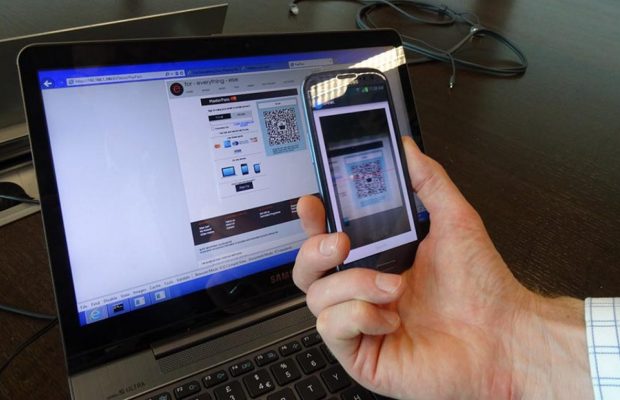
The new standardized code allows merchants to easily accept electronic payments without the need to invest in physical point-of-sale machines. They need only have a piece of paper with their unique QR code for consumers to scan.
Customers with a Mastercard, UnionPay, or Visa card can use a mobile application to scan the code using both smartphones and feature phones with a camera function.
In future, the standards are intended to be globally interoperable and useable anywhere they have been expected.
The standardized code is expected to be implemented by banks and merchants across Thailand by the third quarter.
The initiative also meshes with the Thai financial sector’s Electronic Data Capture (EDC) expansion initiatives under the government’s National e-Payment Roadmap, which aims to support the nation’s transition to a cashless society.
The launch of the Standardized QR Code signals exciting times for Thailand as consumers move quickly to adopt new payments technology,” Mastercard country manager for Thailand Donald Ong said.
“Our own research, for example, shows that 50% of young consumers across South East Asia would use the QR code straightaway, and we believe this reflects the demand in Thailand.”
-

Mastercard, UnionPay International and Visa Make E-Payments in Thailand Easier
Mastercard, UnionPay International and Visa today introduced a Standardized Quick Response (QR) Code for payments, accelerating Thailand’s transition to a cashless society.
The Standardized QR Code supports the Bank of Thailand’s cashless agenda to drive innovation, interoperability, and security in payments.
In order to pay, consumers holding a Mastercard, UnionPay, or Visa card can simply use a mobile application with Standardized QR Code support to scan the merchant-presented QR code. QR Code works on both smart phones and feature phones with camera function.
By establishing standard specifications for QR code payments, consumers and merchants in Thailand now have more options to pay electronically without compromising on security and convenience. The Standard QR Code is simple to set up and use and provides three key benefits.
First, consumers will not need to scan different QR codes to make payments with Mastercard, UnionPay and Visa. Merchants will only need to display one QR code at the storefront or through the acquiring bank’s mobile application.
Second, by routing the transactions through global-standard processing networks, consumers can enjoy a fast, convenient and secure payment experience.
Third, the standards are intended to be globally interoperable and with the right mobile application consumers will be able to use the same standard QR code to make payments everywhere the standards have been adopted.
The Standardized QR Code is intended to be implemented by banks and merchants across Thailand by the third quarter of 2017 and will contribute to the financial sector’s Electronic Data Capture (EDC) expansion initiatives under the National e-Payment Roadmap introduced by Ministry of Finance.
A readily accessible and secure payment processing option for all stakeholders, the Standardized QR Code for payments will contribute to the growth and speed of electronic payment adoption across the country, lowering the cost for accepting electronic payments.
In the future, Thai consumers will benefit from being able to make QR code based payments when traveling outside of Thailand.
Mr. Donald Ong, Country Manager, Thailand and Myanmar, Mastercard, said, “The launch of the Standardized QR Code signals exciting times for Thailand as consumers move quickly to adopt new payments technology. Our own research, for example, shows that 50% of young consumers across South East Asia would use the QR code straightaway, and we believe this reflects the demand in Thailand. This demand will grow further as the technology is rolled out at small shops across the country, and includes bill payments and cash on delivery as well. Developed in line with global standards, this QR code solution means Mastercard users have even more peace of mind, as well as extra convenience when paying for goods and services. This is yet another strong offering as Mastercard supports Thailand’s evolution towards a cashless society.”
Mr. Wenhui Yang, General Manager for UnionPay International Southeast Asia, said, “UnionPay now chairs an international workgroup with other payment networks to develop a global QR Code Standard for payments. As an international payment network, UnionPay aims to provide payment solutions that are tailored to the needs of the local market, to enable choice and ease of payment for consumers and businesses alike. The Standardized QR Code is an innovative step forward in the right direction for Thailand’s payment industry. By enabling consumers and merchants to pay and process QR codes easily and securely, this will accelerate the development of the local payments industry, as we continue to work with the Bank of Thailand on payment solutions that will benefit the people of Thailand. We believe the Standardized QR Code has the potential to support and strengthen the Thai economy and help Thailand become a truly cashless society.”
Mr. Suripong Tantiyanon, Visa Country Manager, Thailand, said, “Visa is proud to have contributed to the development of Standardized QR Code in Thailand as we believe it has the potential to significantly accelerate the growth of electronic payments acceptance in the country. This is especially true for consumers as well as small merchants, as it lowers cost and is easy to implement, eliminating the need for traditional POS hardware. The success of mVisa worldwide has proven a QR code solution to be scalable, secure and easy to use. Increased use of electronic payments has contributed to meaningful economic growth, with more than USD 3.18 billion or about THB 113 billion added to Thailand’s GDP from 2011 to 2015. We look forward to continuing to partner with our clients, merchants and the government to innovate and expand access to digital payments in Thailand, driving inclusive growth for everyone, everywhere.”
-
Siam Piwat reinforces its position as ‘the Icon of Innovative lifestyle’ with another success
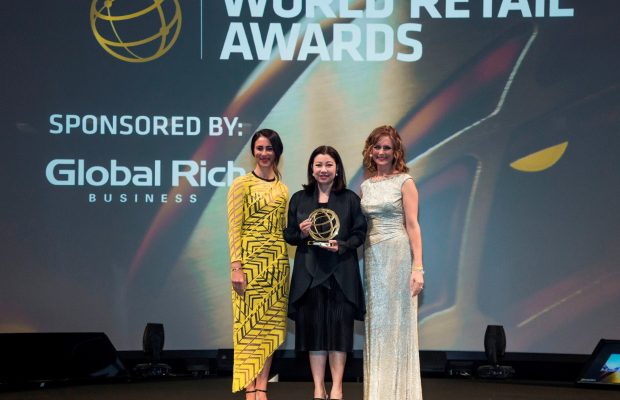
Siam Piwat, owner and operator of the world-renowned retail destinations such as Siam Paragon, Siam Center, and Siam Discovery as well as main partner and owner of ICONSIAM, the iconic landmark of Thailand’s prosperity by the Chao Phraya River, has further cemented its position as ‘the Icon of Innovative lifestyle’ in the retail and real estate business after Thailand’s only hybrid retail store Siam Discovery – The Exploratorium has won the World Retail Award for Store Design of the Year — another testament to the company’s success in retail business expansion, ushering in new chapter in the history of Thailand’s retail industry by becoming the first and only corporate from Thailand to receive such accolade from this prestigious award show.
In winning the World Retail Award for Store Design of the Year, Siam Discovery – The Exploratorium not only beat its world-class competitors but was also the only Asian mall to rank in the top ten for the Best Experience Initiative category.
Chadatip Chutrakul, Chief Executive Officer of Siam Piwat Co., Ltd., stated, “After having launched our five-year policy and investment plan in 2014, Siam Piwat has consolidated its position as the ‘thought-leader’ and aims to incorporate ‘novel experiences that meet the customers’ needs’ in its every core business. We have invested in new businesses, especially retail businesses, and introduced new ideas to expand the success of the retailers and our business allies, so that we can always offer fresh and exciting experiences.
Following the core investment plan, Siam Piwat has written a new phenomenal chapter in Thailand’s retail history by relaunching Siam Discovery as the country’s largest lifestyle specialty store. Siam Discovery – The Exploratorium is a conceptual twist on medium-size retail business by incorporating innovative ideas, a proof of Siam Piwat’s much-coveted success in making a difference in retail industry.
“We understand that the life cycle of retail business has been shortened considerably: some product categories/ brands achieve huge popularity for only a limited period of time due to consumers’ continuous search for newness as well as the rise of e-commerce and online shopping. Siam Piwat puts each and every detail into consideration for each and every project. All the projects that have been developed during the past 3 years follow 4 key strategic rules to ensure long-term success: 1) To innovate and stay ahead of others 2) Being customer-centric 3) The Creation of Shared Values and 4) Building Partnerships,” added Chadatip.
To Innovate and Stay Ahead of Others
Creating innovations and offering different, exhilarating experience has been the core of Siam Piwat’s development projects. Each and every project comes with a new, unique modern lifestyle concept that belongs to a class of its own and at times, is the first of its kind in Thailand or even in the world.
Being Customer-Centric
Technology has brought a dramatic change in consumer behaviors, most notably higher competition as a result of fast connectivity and accessibility and long-term consumer behavior has become much more difficult to predict. Siam Piwat has readied our operation in preparation for those rapid changes and an understanding of consumer group and their diverse needs is essential for our business development.
The Creation of Shared Values
Siam Piwat has set a goal in creating brand value for not just Siam Piwat’s own business, but also brands and products of tenants and partners by revolutionizing the marketing plan. Transforming “shared values” into “commercial values” is the heart and soul of successful brand management, hence the utmost need to create bond and loyalty among customers by making it relevant to their fast-changing everyday life.
Building Partnerships
Siam Piwat believes that through partnership and collaboration with stakeholders, we will create a long-term engagement that leads to healthy growth of business. If we do it in the right way, it can bring about business sustainability.
-
Korean-themed mall opens in Bangkok
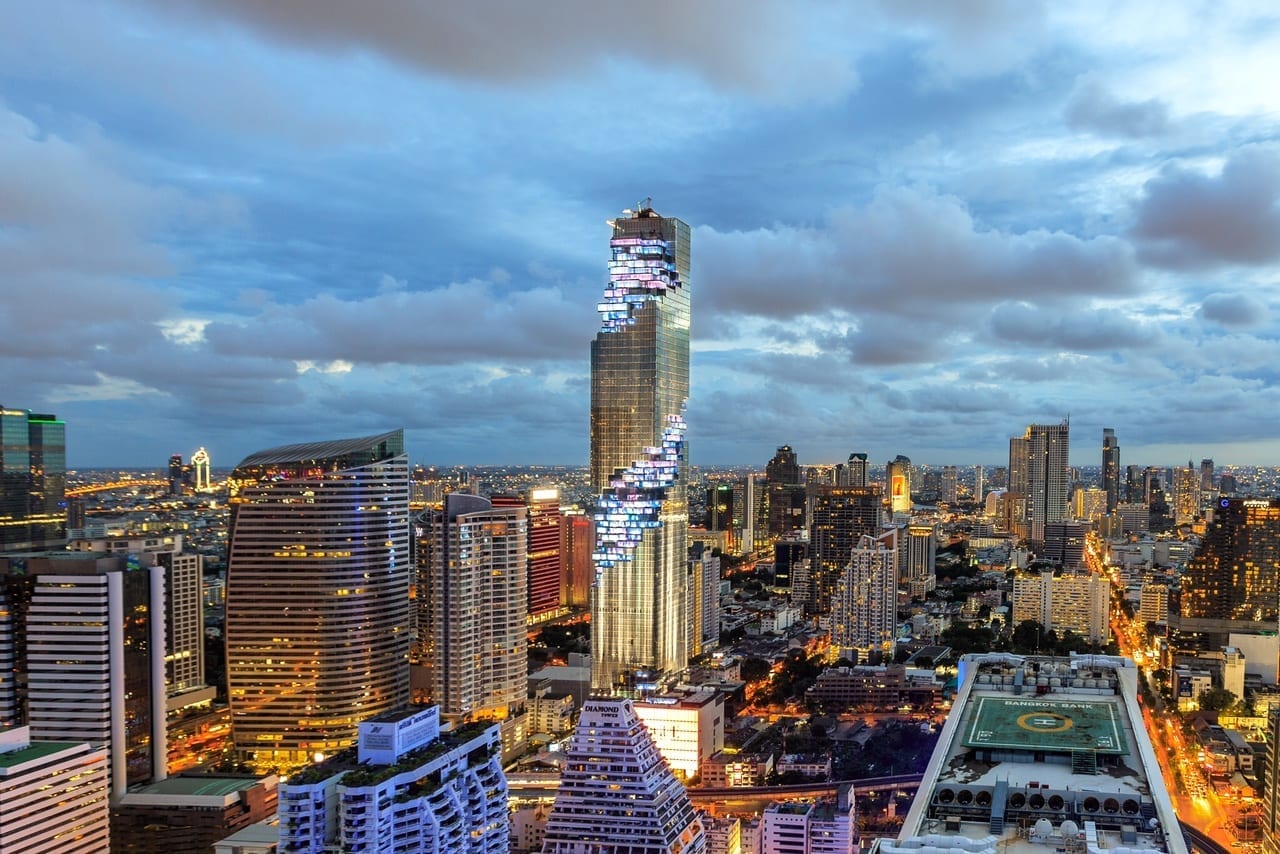
Hoping to capitalise on growing regional interest in South Korean pop culture, a Thai company opened a $275-million Korean-themed shopping mall and entertainment complex in Bangkok on Monday.
The 180,000 square metre (1.9 million square feet) building targets both Thai fans of K-Culture and foreign visitors. It hopes to get 10 million visitors a year and become a major attraction in what was the world’s most visited city last year.
“A lot of Asian people are fans of Korea,” said Chayaditt Hutanuwatra, chairman of privately-owned SHOW D.C. Corp Ltd. “Thailand is the place where people can just fly in.”
The mall has stores with clothing, cosmetics and restaurants from Korean brands and K-pop artists. It has statues and palm prints of Korean stars and plans to bring Korean performers in to the floor it has dedicated as a concert hall.
South Korea’s Lotte Group is among the companies that will open a store there, the mall said.
Around a third of the more than 34 million tourists forecast to visit Thailand this year are from China – where interest in K-Culture has been driven underground by a recent row over Seoul’s deployment of a missile defence system.
-
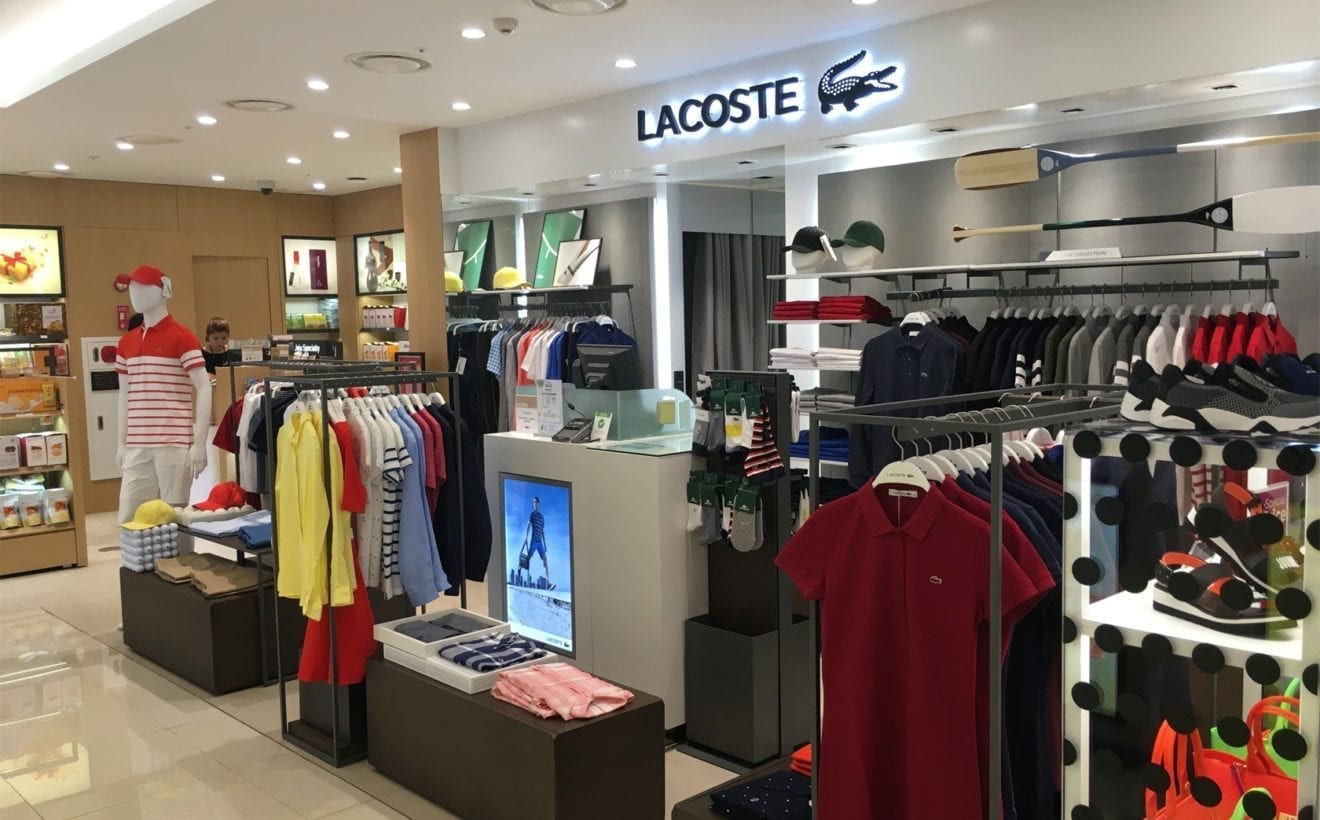
Lacoste unveils expanded retail space at Don Mueang International Airport
Lacoste has opened its revamped Sport corner at Don Mueang International Airport Terminal 1.
Lacoste kicks off its new Sport concept at Don Mueang Airport.
The space has been enlarged and upgraded to feature Lacoste’s new Sport concept. It now offers additional options for customers alongside the brand’s signature polo shirts and leathergoods ranges.
Don Mueang International Airport, Asia’s oldest international airport, recorded 35 million passengers in 2016.
-
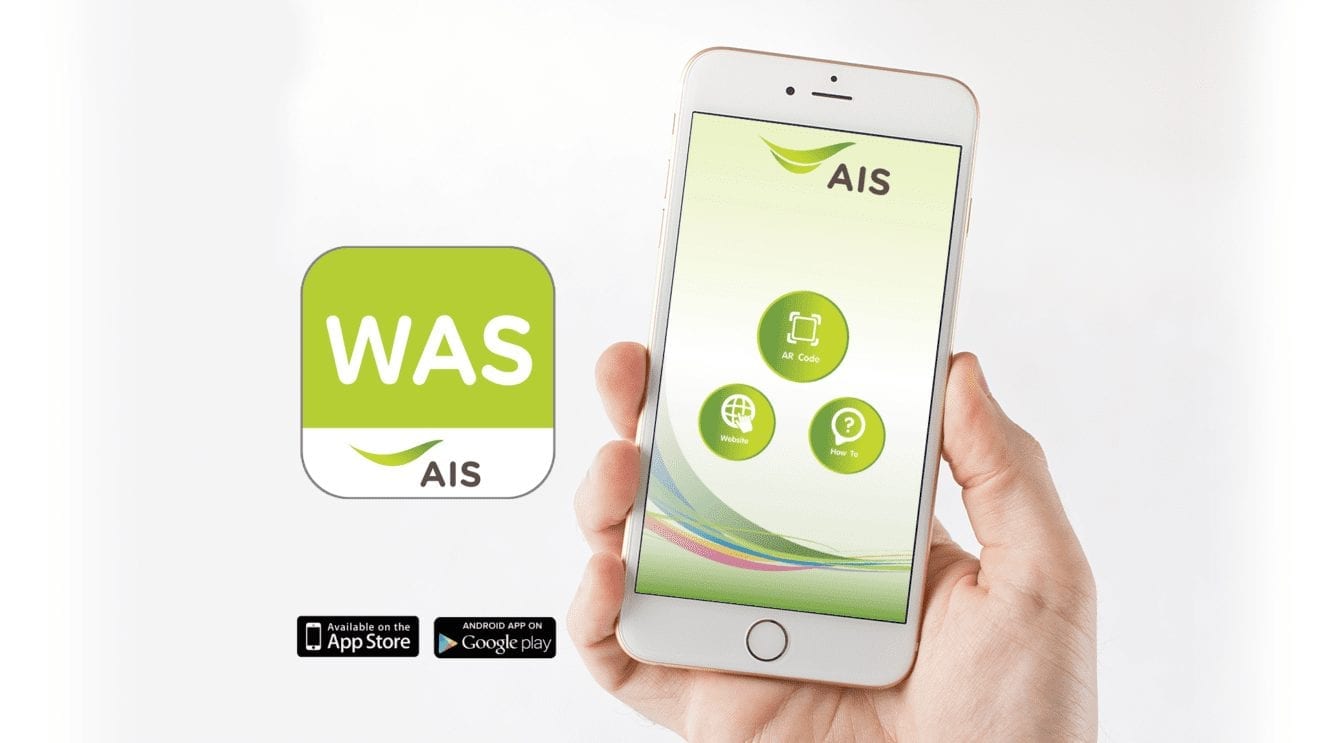
AIS moves to enable VoLTE peering
Thailand’s AIS has deployed technology to enable it to offer VoLTE peering between the company and other operators in the region.
AIS has extended its deployment of Metaswitch’s Perimeta session border controllers from its 3G to its 4G network.
The operator has also deployed the Metaview Service Assurance Server (SAS) to support improved service delivery to its more than 40 million subscribers.
SAS is designed to facilitate troubleshooting and remediation to resolve problems in service delivery and help ensure that SLAs are being met even in virtualized enivornments.
“VoLTE peering offered by our own network and others will enable rapid proliferation of VoLTE services in the SEA region,” AIS CTO Kriengsak Wanichnatee commented.
“Perimeta’s high performance, unsurpassed stability and seamless interoperability with third-party products made our decision to deploy it on our 4G VoLTE network extremely easy. This extension of Perimeta’s role in our network confirms that the platform gives us the confidence and capabilities to rapidly deploy new services and scale quickly as our subscriber base grows.”
-

2017 Mercedes-Benz S-Class facelift includes new engines
Flagship saloon receives mandatory mid-life design tweaks and new inline-six and eight-cylinder engines. The Mercedes-Benz S-class you see here in official pictures is a mid-life refresh of the current generation that’s currently making its debut at the Shanghai motor show.
Stuttgart’s flagship saloon gets a more prominent face thanks to more accentuated air vents in the bumper. The interior has also been updated with new materials and sportier-looking steering wheel for AMG-trimmed models.
Mercedes-Benz usually showcases its latest technologies in the S-class before letting them filter down into other models. And while the S-class can already do many things in a semi-autonomous manners, it has raised the bar of its so-called Distronic Active Proximity Control and Active Steering Assist systems.
Apart from being able to automatically accelerate and brake within speed limits, the S-class can also self-steer for half-a-minute. These features are probably the most advanced driver-assist technologies available so far in a production-ready vehicle.
After using V6 engines for many years, Mercedes-Benz has returned with a straight-six petrol and diesel engines. These 3.0-litre motors are said to be developments of the existing 2.0-litre four-pot motors and are hooked up to 48V electrical motor and compressor systems and lithium-ion batteries to help enhance performance, as well as reducing fuel consumption and CO2 emissions.
There are two outputs for the diesel head including 286hp for the S350d and 340hp for S400d. The petrol version gets plug-in ability to allow for 50km of pure electric driving. This particular model is called S560e and replaces the S500e, which had 3.0-litre V6 petrol-electric hybrid.
On the high performance front, the 455hp 5.5-litre twin-turbo V8 seen in the S500 has been superseded by a smaller 468hp 4.0-litre bi-turbo V8, now called S560.
As the Thai government is now trying to lure carmakers in bringing EV technology to Thailand, Mercedes-Benz (Thailand) will continue to focus purely on plug-in hybrid for the revised S-class when sales start toward the end of this year.
As reported earlier, this particular hybrid drivetrain will also appear in a performance-oriented version of the E-class Coupe. The rumoured Mercedes-AMG E50 is said to develop over 400hp when petrol power is combined with electricity.
-

Jaguar F-Type gets four-pot turbo power
New entry-level sports car may not match the performance credentials of the Porsche Cayman on paper but is set to be significantly cheaper in price in Thai showrooms.
The Jaguar F-Type Coupe you see here in official pictures is the new entry-level model powered by a 2.0-litre four-cylinder petrol-turbo engine. This new motor is also available in the Convertible version.
For the sake of differentiation, this particular F-Type gets a single exhaust pipe mounted centrally behind where you can also find a new diffuser design. The 3.0 V6 models get two tailpipes, while the 5.0 V8 receives four of them.
And since the F-Type is now three years old in its current generation, Jaguar has given new mag wheels and slightly massaged the front end with new LED lights and bumper.
What’s the power like?
Jaguar has taken its new Ingenium four-pot engine from other models and tuned it to 300hp – between 50-100hp more than in other applications. Maximum torque is rated at 400Nm attained at 1,500rpm. Drive in this F-Type goes via eight-speed automatic to just the rear wheels.
Jaguar claims a 0-100kph time of 5.7sec – 0.4sec slower than the F-Type fitted with 340hp 3.0-litre supercharged V6. However, the four-potter is said to be 16% more fuel efficient while spewing out 163g/km of CO2; the V6 emits 199g/km.
Although the acceleration time may by slightly slower, the four-pot F-Type may have the chance of being more agile to drive because Jaguar says it is 52kg lighter than the V6. But what also remains to be seen is whether the engine noise would be as tuneful as the V6.
How does it fare against the Cayman?
The Porsche Cayman comes with 300hp 2.0-litre flat-four turbo-petrol engine, seven-speed dual-clutch automatic and a quicker 4.9sec (4.7sec with launch control) acceleration time.
But the Cayman already costs one million baht more than the 7.99 million baht F-Type V6. This means than the F-Type in 300hp suit should be priced even lower than that level when sales start later this year, although punters must be content with the inferior on-paper performance figures the front-engined Jag concedes to the mid-engined Porsche.
-
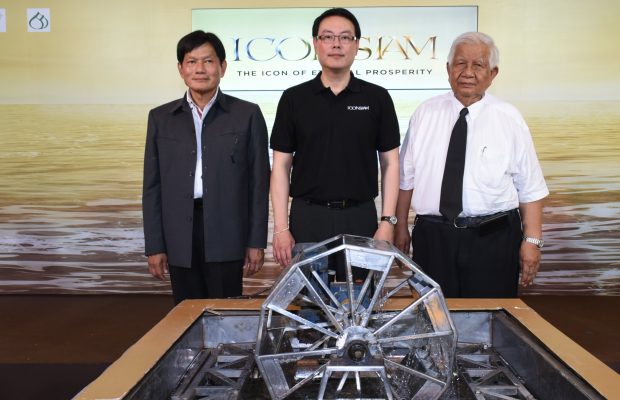
ICONSIAM together with the Chaipattana Foundation and Allied Organizations
ICONSIAM together with the Chaipattana Foundation and Allied Organizations kicked off “Preserving and Improving Chao Phraya River with a Sustainable Water Management” Project. The objectives of the project are to proceed on the late King’s Philosophy related to wastewater management, and to engage and raise awareness of local people living along the Chao Phraya River for reviving and conserving natural resources and the environment, leading to sustainable living.
Supoj Chaiwatsirikul, Managing Director of ICONSIAM Company Limited, stated that “ICONSIAM’s policy is stressed on taking corporate responsibility and being one driving force towards the positive impact on the society, environment and culture.
We also focus on the sustainable socio-economic development, assuring the local communities along the Chao Phraya River can live harmoniously and proudly with nature. Constantly, we are committed to carry on our three key pillars: to support the communities nearby, to inherit Thai cultures and traditions, and to take care of the environment of the waterfront communities along the Chao Phraya River.Recently, ICONSIAM, the Chaipattana Foundation and our alliances have launched the “Preserving and Improving Chao Phraya River with a Sustainable Water Management” project with an aim to preserve natural resources and environment of the Chao Phraya River by targeting on seven canals in three Bangkok districts – Klong San, Taling Chan and Bangkok
Prof. Dr. Kasem Chankaew, an Environmental Specialist of the Chaipattana Foundation and Director of the Royally-initiated Laem Phak Bia Environmental Research and Development Project, explained that the Chaipattana Foundation has carried on the Late King Bhumibol Adulyadej’s initiative on wastewater treatment as said on his royal speech that “…the nature-supporting-nature process, the simple, affordable & practical technology that people can easily adapt, low-cost mechanical devices..” in every project the Chaipattana Foundation has developed including this one. There are 2 types of natural and simple wastewater treatment techniques which are 1) Oxidation Pond Treatment System; the digestion of organic matter through the use of microorganisms and 2) Grass Filtration System; contaminants are trapped through the grass that absorbs toxins back into the system.
The aforementioned project has already commenced its first initiative in Klong San district from early March 2017 at Wat Thong Phleng canal and Somdej Chao Phraya canal as the 2nd one. Following the role model project are the other 5 canals which are Wat Suwan canal and San canal in Klong San district, Wat Thong canal in Bangkok Noi district, Lad Mayom canal and Mahasawat canal in Taling Chan district to explore the physical characteristics of each area in order to properly plan for the most suitable wastewater treatment method of those areas. All of these projects are expected to be completed by 2017 with the objectives to improve the water quality, conserve and enhance the balance of the ecosystem. Additionally, the project focuses on engaging local people living along the Chao Phraya River’s awareness of reviving and conserving natural resources and the environment as well as serves as a pioneering role model aiming at developing sustainable environment in the Chao Phraya River communities in other areas.
-
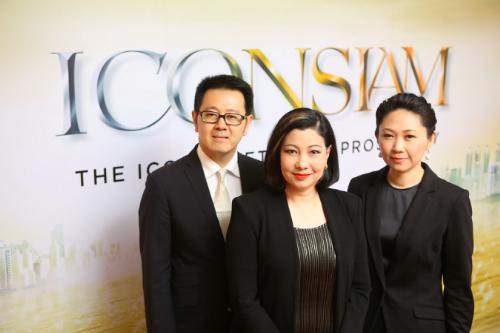
Siam Piwat lays out strategies for keeping shopping centres
Chief executive officer Chadatip Chutrakul said that globally, retailers had been disrupted by e-commerce, the increasing number of people shopping online, and the impacts of globalisation. In Thailand, despite the growing trend of e-commerce, it is still considered to be in the trial stage.
Nevertheless, Siam Piwat cannot remain the same, as Thai retailers are not immune to the global digital evolutions.
“We have changed our aim, that we wouldn’t just create [shopping] destinations, but would make the destinations truly exciting, with ever-changing experiences so that people enjoy their time and want to keep coming back,” she said.
“We must make our destinations constantly fresh, innovative and exciting all the time, places where people want to go for the fulfilment of needs that are much more than going online.”
Chadatip received the Store Design of the Year Award for the Siam Discovery shopping centre at the World Retail Congress held early this month in Dubai. The event gathered 2,000 retailers from 65 countries and 140 speakers. These industry leaders and experts shared their ideas on global retail trends and concepts.
She said shoppers had a perception of benefiting from lower prices when buying products online because of lower operational costs compared with physical stores. Therefore, price promotions were no longer sufficient to lure customers back to the shopping centres.
“In developing Siam Discovery, we understood that in the new millennial era, shoppers have realised the importance of a brand’s story. They want to make the brand’s story part of their own story.
“Good storytelling strategies by particular brands will become a significant selling point and crucial factor in adding positive value to the brand. That is why we chose to overturn completely the past retailing practice of presenting products by brand and by category.
“Instead, multiple brands and complementary merchandise are brought together and unified with underlying stories, presented by type, by function, and by customer interest,” Chadatip said.
She said at the reopening of Siam Center about three years ago that “retailing is no longer about shopping. It is [about] providing ever-changing experiences to individual shoppers.”
Siam Center had been closed for six months. The shopping centre spent about a year gathering ideas for a new retail concept that aimed at attracting not only Thais but also shoppers from around the world.
Chadatip said that over the past three years since the reopening, the 42-year-old Siam Center had proved successful by being voted by Thailand.com as being at the top of mind for shoppers.
The shopping centre has also earned 12 different awards over the period, including for best marketing position and best renovation project. “Since the renovation, Siam Center has enjoyed a 12-per-cent increase every year in terms of both sales and traffic,” she said.
“At Siam Piwat, we do not manage ordinary merchandise any more, but [promote the] emotional benefits of our valued customers. We have also turned [some] of them into our peers, to learn and initiate tailor-made campaigns and marketing activities based on their specific interests. This is what we have made successful with Siam Discovery and what earned us the World Retail Award this year.”
Chadatip said the company’s four key strategies were the following.
1 Be a leader in creativity and advance innovations that are ahead of competitors.
2 Win the customer’s heart with good accessibility and understanding and by being “customer-centric”.
3 Create good value through the storytelling strategies of particular brands.
4 Work collectively with all business partners towards real win-win achievements.
Siam Piwat owns and operates Siam Center, Siam Discovery, Siam Paragon, Paradise Park and IconSiam.
-
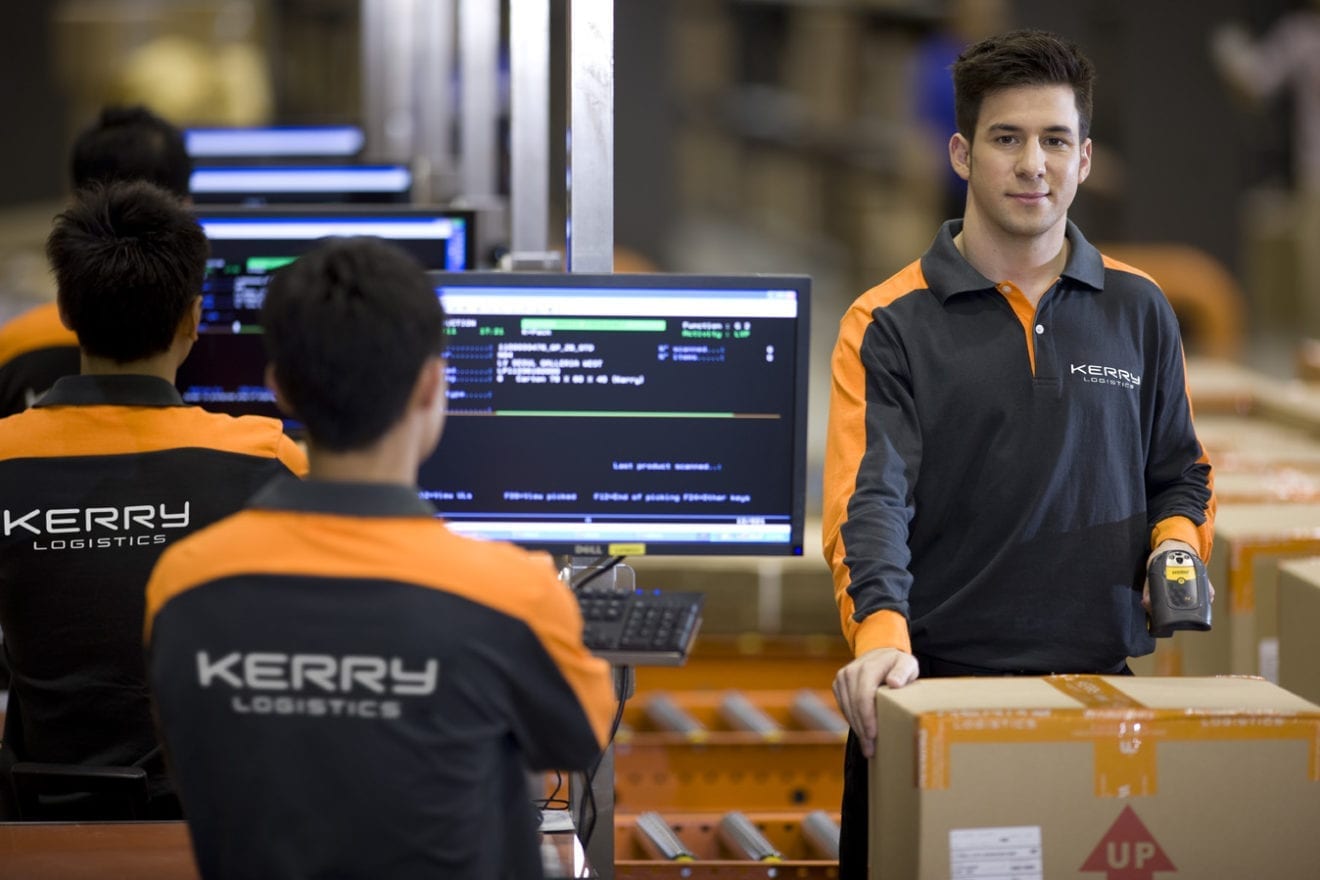
Kerry Logistics starts UK-China rail service
Kerry Logistics Network participated in the commencement ceremony of the first eastbound freight train from London to Yiwu with the support of a long-standing customer for this service. The project is not only a significant step forward in the Group’s development strategy in line with the ‘One Belt One Road’ Initiative, but also a strategic move advancing the Group’s further expansion into the rail freight and multimodal services.
The train, which departed on 10 April 2017 from London, is scheduled to arrive eastern China’s Yiwu in around 18 days. The 7,500-mile journey will pass through nine countries, including France, Belgium, Germany, Poland, Belarus, Russia and Kazakhstan. The freight cost is lower than that of air and ocean freight, while it is twice as fast as ocean transport.
In August 2016, Kerry Logistics delivered a rail freight shipment of over 80 containers from Yiwu to Madrid, Spain, passing through eight countries in 19 days.
London is the 15th European city and the latest destination added to the China-Europe rail network under the Belt and Road Initiative. The first freight train from Yiwu to London launched on 1 January 2017 took 18 days. It was mainly for carrying clothes, shoes and other consumer goods made in China.
William Ma, group managing director of Kerry Logistics, said, “We are extremely excited to be the first Asia-based global 3PL to move eastbound freight from Europe along the One Belt One Road trade route, turning part of the roadmap into reality. We are committed to developing an overland transportation network for road, rail and multimodal freight services in China to Central Asia and Europe. We will leverage our global international freight forwarding network to provide end-to-end and cost-effective logistics solutions to connect China with Europe and Asia via air, road, rail and sea.”
Kerry Logistics will continue to develop under the Belt and Road Initiative to create new form of transportation models, offering more options to customers across various industry segments.