Tag: bank

  • HDBank Targets $813M Profit by 2025 Amidst Rising Consumer Demand

    HDBank Targets $813M Profit by 2025 Amidst Rising Consumer Demand

    HDBank celebrated its 35th anniversary during its Annual General Meeting of Shareholders on April 24 at the Galaxy Innovation Hub, attracting hundreds of attendees both in-person and online. In this pivotal event, company leaders reflected on the bank’s impressive performance in 2024 and shared future growth strategies.

    Resilience in the Face of Economic Challenges

    Chairman Kim Byoung Ho highlighted HDBank’s remarkable achievements amid ongoing global economic pressures. The bank reported a consolidated pre-tax profit of VND 16.73 trillion (approximately $642.8 million), marking a 28.5% increase year-over-year and surpassing its target by an impressive 105.5%. The return on equity (ROE) stood at 25.7%, with a return on assets (ROA) of 2.04%, placing HDBank among the top performers in the retail banking sector.

    Credit Growth Outpaces Industry

    HDBank’s total outstanding credit surged by 23.8% to VND 437.7 trillion, significantly outpacing the industry average. Additionally, the bank’s total mobilization reached VND 621.1 trillion, an increase of 16% compared to the previous year. This robust performance reflects the bank’s commitment to ensuring ample liquidity while effectively aligning credit growth with capital mobilization.

    Promoting Financial Inclusion

    Fernanda Lima from Leapfrog Investments commended HDBank for its strides in promoting financial inclusion and enhancing environmental and social practices. In 2024, the bank disbursed approximately VND 4.4 trillion (about $180 million) to support businesses facing challenges in accessing credit within the domestic market.

    Junjie Tong, CEO of Affinity Equity Partners, echoed the sentiment regarding HDBank’s growth potential, comparing its current phase to the early development of bamboo. He expressed optimism for continued financial performance in the next 12-14 months.

    Setting Sights on 2025

    Looking ahead, HDBank is set to officially launch the HDBank Financial Group in 2025, fostering synergies among its subsidiaries—including Vikki Digital Bank and HD Securities. The ambitious targets for 2025 include total assets of VND 890.4 trillion, mobilized capital of VND 792.8 trillion, and outstanding loans of VND 597.9 trillion.

    Commitment to Sustainable Growth

    During the meeting, Vice Chairwoman Dr. Nguyen Thi Phuong Thao acknowledged the unwavering support from investors and partners that has helped the bank flourish over its 35-year journey. Underlining the bank’s commitment to innovative technology and corporate governance, she noted that shareholder value has nearly quadrupled since the IPO.

    Concluding the congress, HDBank signed cooperation agreements with key partners, signaling the start of a new growth phase.

    As HDBank positions itself for further expansion and innovation, these developments not only bolster the bank’s standing in retail news but also highlight evolving consumer trends and the potential for enhanced service offerings in the financial sector.


  • Wolfsberg Group’s Ambitious Quest for Integrity in Banking

    Wolfsberg Group’s Ambitious Quest for Integrity in Banking

    The Wolfsberg estate, a pivotal site in the history of Swiss banking, stands as a testament to a visionary approach towards merging education with the elevated standards of banking excellence. Established amidst social upheaval in the 1970s, this historical estate has evolved into a sophisticated center for financial education and dialogue.

    A Storied History

    From Farm to Financial Institution

    Originally constructed in 1576 as a farm by Wolf Walter von Gryffenberg, the Wolfsberg estate has undergone a series of transformations over the centuries. In 1732, the estate was remodeled into a summer residence by Johannes Zollikofer von Altenklingen and later served as the first guesthouse in Thurgau, adding layers of cultural significance to its legacy.

    By the mid-20th century, the estate fell into disrepair before Swiss banking giant SBG, now UBS, acquired it in 1970, thanks in large part to Robert Holzach, a visionary at SBG who saw the potential for greatness in the estate.

    Pioneering the Banker’s Philosophy

    Under Holzach’s direction, Wolfsberg was envisioned as more than just a training facility; it became a crucible for developing a new breed of banker—one imbued with nobility of mind and spirit. Holzach’s belief in the necessity of a refined banking culture sought to instill high standards in a rapidly evolving financial landscape.

    Transformative Education and Training

    A Banker’s Monastery

    Widely referred to as a “banker’s monastery,” Wolfsberg was meticulously designed to foster rigorous training for emerging banking leaders. The estate was thoughtfully renovated to include classrooms, an auditorium, and living quarters, highlighting a commitment to discipline and excellence.

    The official opening in 1975 set the stage for what would become an elite training ground for those seeking a prominent place in the banking world, emphasizing both specialist skills and comprehensive education in economics, politics, and culture.

    Shaping Future Leaders

    Wolfsberg not only hosted lectures by top-tier global leaders like Mikhail Gorbachev and Helmut Schmidt but also integrated unique training methods, including simulations and role-play, to prepare participants for real-world challenges. The emphasis on pressure-based learning ensured that future executives could effectively navigate the complexities of modern finance.

    Modernization and Global Outreach

    An Evolving Mission

    As the global economic landscape shifted in the 1990s, SBG adapted the Wolfsberg model to align with the new realities of globalization and the Americanization of finance. Significant renovations were implemented between 2005 and 2008, enhancing the facilities while shifting focus from insular training to a broader, international approach.

    Today, the Wolfsberg estate serves as the UBS Center for Education and Dialogue, hosting a variety of events that facilitate networking and thought leadership among clients and organizations. With roughly 30 annual events under the Wolfsberg Dialogue Program, the center emphasizes themes of economics, politics, and passion, providing exclusive opportunities for idea exchange.

    Conclusion: The Broader Implication for Retail and Banking

    As Wolfsberg adapts to the changing tides of the banking industry, its legacy continues to influence how financial institutions approach training, leadership, and innovation. This evolution highlights a pivotal moment for brands striving to maintain relevance in an increasingly dynamic market.

    Questions & Answers:

    1. What is the historical significance of Wolfsberg? Wolfsberg has evolved from a 16th-century farm into an essential training center for bankers, reflecting the changing landscape of the financial industry.

    2. How did Robert Holzach influence the creation of Wolfsberg? Holzach spearheaded the acquisition and transformation of Wolfsberg into a training ground aimed at fostering a new standard of excellence in banking through rigorous education.

    3. What is the current focus of the UBS Center for Education and Dialogue? The center primarily hosts dialogues and events that cater to global clients, shifting from in-house training to a more inclusive platform for networking and idea exchange in economics and politics.

    In this dynamic era of retail and finance, Wolfsberg serves as a poignant reminder of the importance of continuous evolution and the cultivation of elite standards to thrive amidst consumer trends and market demands.

  • Banque Cramer Reduces Operations Amidst Shifting Retail Landscape

    Banque Cramer Reduces Operations Amidst Shifting Retail Landscape

    In a landscape marked by fluctuating market conditions, Banque Cramer, the Geneva-based private bank, reports a decline in net profit for the fiscal year 2024, even as it sees a notable increase in assets under management. Under the leadership of new CEO Thomas Müller, the bank is poised to undertake modernization efforts to streamline its operations.

    Growth in Assets, Downturn in Profit

    The bank’s assets under management grew by an impressive 15%, reaching 3.7 billion Swiss francs. However, this positive development contrasts sharply with the bank’s declining bottom-line results. According to the annual report released this Wednesday, net profit slid from 9.1 million francs the previous year to 7.2 million francs. Additionally, operating profit saw a significant drop from 14.8 million francs to 10.4 million francs.

    Key Factors Behind Profit Dip

    Two primary factors contributed to the downturn: a decrease in income from trading activities, which fell by 3.7 million francs, and a reduction in net interest income of 3.6 million francs. On a brighter note, the bank experienced growth in commission and service income, which increased from 20.6 million francs to 22.3 million francs.

    Despite these challenges, Banque Cramer successfully attracted net new money amounting to 158.2 million francs; however, this is substantially lower than the 398.2 million francs garnered in the previous fiscal year. The bank also effectively managed to reduce operating costs by 1.3 million francs, bringing them down to 32.9 million francs.

    Strong Financial Foundation

    Banque Cramer maintains a robust equity base, with a total equity of 93.4 million francs at the end of 2024. The bank’s Tier 1 capital ratio stood at a strong 31.9%, while the Liquidity Coverage Ratio (LCR) reached an impressive 363.4%.

    As Banque Cramer initiates modernization strategies under its new CEO, the future could signal increased resilience in an evolving financial landscape. The developments at the bank not only reflect current consumer trends but may also influence broader dynamics in the retail banking sector. This strategic pivot could enhance the bank’s competitiveness, benefiting both its clients and the overall market.

  • UBS Highlights Global Crisis as Potential Threat to Retail Sales Growth

    UBS Highlights Global Crisis as Potential Threat to Retail Sales Growth

    Swiss Banking Giant Highlights Potential for Global Crisis

    In its latest earnings report for the first quarter, UBS has underscored the growing uncertainties in the macroeconomic landscape, particularly as tensions escalate in the ongoing trade war. The bank has re-evaluated its economic scenarios, introducing a new global crisis scenario to better account for potential risks.

    Revised Economic Scenarios Reflect Rising Geopolitical Tensions

    UBS’s decision to modify its expected credit loss (ECL) models comes amid significant political and economic turbulence. “As of March 31, 2025, the geopolitical and macroeconomic environment appeared increasingly complex and uncertain,” the bank noted, emphasizing the potential impact of future tariff implementations by the U.S. government.

    With tariffs introduced in April 2025, UBS conducted its assessment based on prevailing uncertainties at the time of reporting, indicating a meticulous approach in navigating these challenges.

    New Risk Assessments Signal Caution

    The updated forecasts reflect a notable shift in UBS’s outlook. The bank has replaced its previous “stagflationary geopolitical crisis scenario” with a more broad-ranging “global crisis scenario,” now pegged at a 15% likelihood. This scenario accounts for risks such as sovereign defaults and potential strain in emerging markets, while also introducing a “mild stagflation crisis scenario” at a 30% probability.

    In contrast, the bank has scaled back the likelihood of stable economic conditions, reducing its baseline scenario to a 50% chance from 60% previously, highlighting a cautious stance as global conditions evolve.

    Ongoing Market Monitoring

    UBS is committed to closely tracking the ever-changing market landscape and has indicated that it may revisit these economic narratives and weightings in the second quarter of 2025 to ensure they remain relevant amid potential developments.

    Impact on Retail Sector and Consumer Trends

    UBS’s revised outlook is likely to reverberate through the retail sector, where businesses are already adapting to shifting consumer trends and economic pressures. As brands navigate this uncertain environment, an emphasis on monitoring consumer demand and adjusting strategies will be vital for sustaining growth and resilience in the face of potential economic challenges.

  • Consumer Demand: Unveiling Innovators in Swiss Finance Sector

    Consumer Demand: Unveiling Innovators in Swiss Finance Sector

    As the financial landscape evolves, recognizing the innovators at the forefront of change has never been more crucial. The AssetAwards 2025 is here to celebrate the leaders driving advancements across three distinct categories: alternative investments, digital assets, and traditional asset classes.

    Honoring Trailblazers in Finance

    “Noëlle Dettwyler, the organizer of AssetRush, emphasizes that ‘assetization—the democratization of all assets—is fundamentally transforming the financial world. Real and digital values are being reimagined, restructured, and made investable. With the AssetRush Awards, we want to honor those individuals who are not just following this development but actively shaping it.’”

    Category I: Alternatives

    The nominees for the Alternatives category are a testament to the innovation taking place in this space:

    • Steffen Meister, Executive Chairman of the Board, Partners Group
    • Fatmire Bekiri, Head of Tokenization, Sygnum
    • Marco Bizzozero, Head of International & Member of the Executive Committee, iCapital
    • Pascal Schneidinger, Founder & CEO, Partasio
    • Jaime Silio, Head Transformation & Innovation, Securities Services, SIX

    These leaders have harnessed their expertise to not only adapt to change but also to drive the future of alternative investments.

    Stay tuned for the next page where we will reveal the nominees for the Digital Assets category, allowing you to participate in deciding who takes home the coveted awards!

    The AssetAwards 2025 promises to shine a spotlight on the pivotal figures in the financial industry. With the surge in consumer demand for innovative financial products, recognizing outstanding leaders can significantly impact the retail sector and consumer experiences alike. Don’t miss your chance to make your voice heard!

  • UBS Adds Global Crisis as Possible Downside Scenario

    UBS Adds Global Crisis as Possible Downside Scenario

    Wary of the potential for the escalating trade war to materially destabilize the macro environment, UBS has revised its assessment of possible downside scenarios, including the risk of a global crisis.

    In the first quarter earnings report of UBS, the Swiss banking giant revised its list of expected credit loss (ECL) models, economic scenarios that could play out as well as their weightings. This was due to prevailing economic and political conditions, most notably from the rapid escalation of the trade war under US President Donald Trump.

    As of 31 March 2025, there was a high degree of geopolitical and macroeconomic uncertainty, including uncertainty relating to tariffs that could be introduced by the US government after that date and the economic consequences thereof, the bank said.

    The actual announcing of the tariffs in April 2025 was subsequent to the reporting date. UBS has assessed the situation based on the uncertainties that existed on the reporting date and has exercised judgment.

    Adjusted Predictions

    As a result, UBS has adjusted its forecasts with the replacement of the stagflationary geopolitical crisis scenario with a «global crisis scenario» (15 percent chance) which targets risks such as sovereign defaults, low interest rates and significant emerging market stress. The «mild debt crisis scenario» has also been replaced with a mild stagflation crisis scenario (30 percent chance) with assumptions of rising rates alongside declines in GDP and equities.

    It applies a 50 percent chance to its baseline scenario of relatively stable economic conditions, down from 60 percent at the end of 2024.

    UBS is closely monitoring the current market situation, and it will carefully assess developments, potentially revisiting the narratives and weightings in the second quarter of 2025, the bank added.

  • HSBC Scores Above other Banks

    HSBC Scores Above other Banks

    The British-Asian bank HSBC, which is also active in Switzerland, delivered a good operating result in the first quarter. Investment banking, asset management and International Wealth and Premier Banking performed particularly well. However, net profit was lower following the Group’s reorganization.

    In the first quarter of 2025, HSBC increased pre-tax profit adjusted for one-off effects such as divestments and currency effects by 11 percent to 9.8 billion dollars. Adjusted revenues increased by seven percent to 17.7 billion dollars, as was reported in a press release on Tuesday.

    The bank points to growth in the wealth management business in the IWPB and Hong Kong business segments. This was supported by higher client activity in the foreign exchange, bond and equity market business due to high market volatility.

    On balance, however, the London-based bank earned less. Following extraordinary income of 3.7 billion dollars from divestments in Canada and Argentina last year, net profit fell by 3.2 billion or 32 percent to 6.93 billion dollars.

    New Share Buyback Program

    The announcement of a new share buyback program with a volume of USD 3 billion should please shareholders. A 2 billion program was completed last year.

    Our strong results this quarter demonstrate the momentum of our earnings, the discipline in executing our strategy and the confidence in our ability to achieve our goals, sayd CEO Georges Elhedery.

    Elhedery took over the management of the bank last September and undertook a far-reaching restructuring. HSBC has merged its commercial and investment banking activities and intends to concentrate on its strengths such as the private client business in the UK and Hong Kong. This also includes cost savings of 1.8 billion dollars over the next two years.

    HSBC generates the majority of its income in Asia and, as one of the world’s largest commercial banks, would be exposed to major risks in the event of a trade dispute between the USA and China. The management asserts that a conservative approach to credit risk means it is well-positioned to overcome the challenges ahead. In a scenario with significantly higher tariffs, the bank expects a direct impact on earnings in the low single-digit percentage range and credit losses of around 500 million dollars.

  • Revolut Continues Its Unstoppable Growth

    Revolut Continues Its Unstoppable Growth

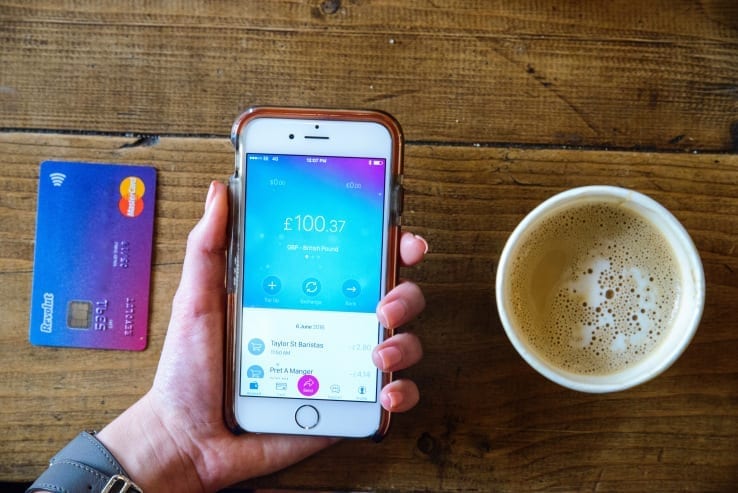
    The British fintech company, now active in around 30 countries, continued its rapid growth last year. Revenue rose by 72 percent to £3,1 billion, according to the annual report published on Thursday. That equates to approximately 3,41 billion francs.

    Pre-tax profit increased by an impressive 149 percent to £1,09 billion, while net profit rose by 130 percent to £790 million.

    By the end of 2024, Revolut’s global customer base had grown by 38 percent to 52,5 million. In comparison, HSBC, the UK’s largest bank, recently reported 41 million customers.

    The total transaction volume amounted to approximately £1 trillion, with 940 million transactions processed in December alone.

    Broader Range of Services

    We not only accelerated our customer growth and added almost 15 million new users globally, but also achieved deeper customer engagement, as our clients increasingly used a broader range of our services—both in the retail space and through Revolut Business, said CEO and co-founder Nik Storonsky.

    The company had already presented ambitious growth plans for the current year. We are making great progress towards our goal of 100 million daily active customers in 100 countries, Storonsky said.

    Expansion into Mexico, License for India

    In the coming months, Revolut will launch its Mexican bank, and it recently received its license for prepaid payment instruments (PPI) from the Reserve Bank of India. Ten additional license applications are currently pending worldwide.

    Usage of Revolut has grown not only in the UK and Ireland but across Europe, including Southern Europe and the Nordic countries. The company also plans to expand in the Asia-Pacific region and the Middle East.

    Costs Rise, Workforce Expands

    Costs rose by 50 percent in 2024 to £1,4 billion, with personnel expenses increasing by 60 percent to £794 million. The number of employees reached 10,133 by year-end, up from 8,152 previously.

    Swiss Ambitions

    In Switzerland, Revolut’s growth reached 29 percent among private customers and 41 percent among business clients last year. Swiss customers made nearly 70 million card and ATM transactions, a 30 percent increase from 2023. Domestic transactions rose by 29 percent.

    In early April, Switzerland head Julian Biegmann said that since March, Revolut has served over 1 million private customers in Switzerland. The neobank is represented in Zurich and Geneva with a total of 10 employees.

    In the UK, the privately held company, which claims a valuation of $45 billion, operates with a restricted banking license. Its EU operations are based on a full license in Lithuania. In Switzerland, Revolut recently enabled services such as QR code payments via a «virtual» Swiss IBAN.

  • Globe, GoTyme Bank Partner to Strengthen Anti-Scam Measures

    Globe, GoTyme Bank Partner to Strengthen Anti-Scam Measures

    This collaboration will comply with the Data Privacy Act and streamline the process of investigating suspected scammers by eliminating the need for warrants or subpoenas to access their information.

    Globe’s Chief Privacy Officer, Irish Salandanan-Almeida, emphasized, “This partnership reflects our ongoing commitment to championing cybersecurity and protecting our customers from the growing threats in the digital world. Through collaborations, we can combine our expertise and resources to better safeguard the financial sector and our customers from cybercrime.”

    In the first half of last year, Globe blocked 2.7 million bank-related spam and scam messages, investing around USD 20 million in scam detection and prevention systems to protect consumers from deceptive messages. A study by Kaspersky revealed that Filipinos encountered 14.1 million web threats last year, a decrease from 26.6 million in 2023.

    Yeo Siang Tiong, Kaspersky’s General Manager for Southeast Asia, suggested that this decline in cyber threats could be due to improved detection and prevention methods. However, Tiong cautioned that hackers might be targeting specific high-value individuals rather than launching widespread cyberattacks.

  • Vietcombank Remittance named best remittance company in Vietnam

    Vietcombank Remittance named best remittance company in Vietnam

    Vietcombank Remittance was honored as “Remittance Company of the Year – Vietnam” for the third consecutive time by Asian Banking & Finance on Dec. 24.

    This achievement affirms the quality of services and the growth of Vietcombank Remittance, recognizing the company’s efforts and demonstrating its position in both the domestic and international remittance markets.

    Vietcombank Remittance is the only remittance company in Vietnam to organize the Client Conference for three consecutive years successfully. This year’s event featured participation from strategic partners in Taiwan, South Korea, the United States, and several other countries, highlighting the company’s role in fostering international cooperation and collaboration.

    The company consistently supports government agencies in developing policies to enhance remittance resources. Vietcombank Remittance actively participates in programs organized by the Overseas Vietnamese Committee of Ho Chi Minh City to promote collaboration among stakeholders and increase the efficiency of remittance flows. The company has also significantly contributed to Ho Chi Minh City People’s Committee’s project on “Optimizing the Effectiveness of Remittance Resources.”

    Vietcombank Remittance is committed to collaborating with the Ho Chi Minh City People’s Committee to implement specific initiatives such as supporting the improvement of policy mechanisms and facilitating convenient conditions for overseas Vietnamese to send money home. It collaborates closely with regulatory agencies to create clear legal frameworks and facilitate the use of technology in remittance operations.

    The company is leading initial efforts to establish the Vietnam Remittance Association to elevate the industry’s position on the international stage. This association is expected to serve as a bridge between the government, businesses, and the overseas Vietnamese community, ensuring policies are geared toward sustainable development.

  • UBS Sees Uninterrupted Client Momentum

    UBS Sees Uninterrupted Client Momentum

    Switzerland’s largest bank reports strong transactional activity in its core business and expects to achieve its objective of $100 billion in net new assets by the end of the year.

    UBS is turning the upheavals and drama of 2023, and its fraught government-prompted takeover of Credit Suisse, into a dim national memory receding in the rearview mirror of Swiss business history.

    In its third-quarter ad hoc announcement released on Wednesday, the bank reported an underlying pre-tax profit of $2.4 billion, which it said was an ample indication of the strength of its client franchises.

    Overall, group revenues were up 5 percent year-on-year but gained 9 percent on an underlying basis, with the aforementioned transactional activity recurring fee income more than offsetting the expected headwinds impacting net interest income after key central banks started cutting interest rates in the quarter.

    Invested assets were up 15 percent at $6.2 trillion as it experienced «continued client momentum» with $25 billion in net new assets in its core global wealth management business, putting it on «on track» to deliver its ambition of bringing in $100 billion in net new assets for the whole of 2024.

    Overall, the market environment remained constructive in the third quarter but also showed «signs of dislocation and volatility».

    UBS generated $15 billion in net new fee-generating assets and saw strong discretionary mandate sales in all regions despite continued pricing discipline.

    It also recorded strong transactional activity in global wealth management and the investment bank, with the former’s revenues up almost a fifth (19 percent) with the latter gaining by practically a third (31 percent).

    The high levels of transactional activity came from both private and institutional clients, with global wealth management seeing strong momentum in all regions led by the Americans and the Asia Pacific (APAC).

    In its investment bank, the global markets business saw gains also coming from all regions, but «particularly» in the Americas. The global banking business experienced strong M&A performances in Asia and the US. In UBS’s Swiss home market, it granted or renewed around 35 billion francs in loans.

    Beyond that, it indicated that many facets of its integration with Credit Suisse, the country’s erstwhile second-largest bank, remained on track. It completed the first wave of client migrations in Luxembourg and Hong Kong this month. Singapore and Japan are expected to be finalized by the end of the year, with Switzerland up in 2025.

    It is on target to reach the expected $7.5 billion in cost cuts this year after it managed to realize an additional $800 million in savings in the third quarter, with a further $5 billion in risk-weighted asset reductions in non-core and legacy ahead of plans.

    As a result, it expects to be in a position to save about $13 billion (gross) by the end of 2026.

    It also maintained that it would complete $1 billion in share repurchases in the fourth quarter and it intends to keep making them in 2025 although that will depend on the country’s review of its capital regime requirements.

    It also announced several AI initiatives to benefit clients and employees, including a new proprietary AI assistant for 20,000 employees in Switzerland, Hong Kong, and Singapore with «easy» access to product information and investment research.

    In the investment bank, it is piloting a proprietary AI algorithm that researches and compiles M&A buy-side targets.

    UBS indicated that it expects a continuation of the current market trends in the fourth quarter given expectations for a soft landing in the US economy despite macroeconomic conditions remaining clouded elsewhere in the world.

    In the fourth quarter, we anticipate a mid-single digit decline in net interest income in Global Wealth Management and a low single-digit decline in Personal & Corporate Banking. Non-core and legacy is expected to generate a quarterly pre-tax loss in line with our earlier guidance, the bank indicated.

  • Saxo Bank Partners with Zurich Fintech Leonteq

    Saxo Bank is enhancing its structured investment product offerings through a strategic collaboration with Leonteq.

    Leonteq and Saxo Bank have initiated a partnership focused on the development and distribution of structured products, as announced by both companies on Tuesday. Under this agreement, Saxo Bank will take on the role of a sponsor within a standardized white-label issuance model developed by Leonteq while also managing the distribution of these financial products.

    Moreover, Leonteq has secured an international distribution mandate from Saxo Bank, granting the firm access to Saxo’s global distribution network. The first structured products, backed by Saxo Bank, are expected to be available on the Leonteq platform by 2025, subject to regulatory approval.

    Focus on the Swiss market

    Leonteq also intends to feature Saxo Bank-backed structured products on its digital investment platform.

    «The partnership with Leonteq marks a significant step for Saxo Bank in expanding our structured investment product offerings, particularly for our rapidly growing Swiss client base. This collaboration represents a genuine win-win situation,» stated Kim Fournais, CEO of Saxo Bank.

  • UBS Gets Business Back on Track

    UBS Gets Business Back on Track

    Switzerland’s largest bank indicated that profitability in the second quarter returned to the levels it saw before being forced to rescue Credit Suisse.

    UBS indicated that profit before taxes in the second quarter was $1.5 billion, a media release sent by the group on Tuesday (year-earlier figures are not directly comparable given the first-time integration of Credit Suisse).

    The bank nevertheless said it experienced continued client momentum, with its core wealth management business seeing net new assets of $27 billion.

    Of the net new assets, UBS said $16 billion were fee-generating assets. In the first half, net new assets totaled $54 billion, it indicated.

    Beyond that, UBS’s investment bank saw strong transactional activity, with the Global Markets business, where revenues were up 18 percent, experiencing its best second-quarter performance since 2013.

    Overall, the bank maintained that it had returned to the levels of profitability it had before being forced to rescue its former peer and competitor, Credit Suisse.

    We are now entering the next phase of our integration, which will be critical to realize further substantial cost, capital, funding and tax benefits, the media release stated.

    It realized additional cost savings of $0.9 billion in the second quarter, which corresponds to 45 percent of the cuts it is targeting by the end of 2026.

    By the end of this year, it expects to be in a position to realize 55 percent, or more than half, of its final target.

    The bank also managed to reduce risk-weighted assets in its non-core and legacy business by 42 percent year-on-year while its CET1 capital ratio was at 14.9 percent and its CET leverage ratio at 4.9 percent.

    It also restarted its share buyback program with the total amount of shares bought back at $467 million as of 9 August.

    The outlook for the remainder of the year continues to be «clouded by ongoing conflicts, other geopolitical tensions and the upcoming US elections.

    Entering the third quarter, we are seeing positive investor sentiment and continued momentum in client and transactional activity,» the bank maintained.

  • Techcombank named Vietnam’s Best Bank again

    Techcombank named Vietnam’s Best Bank again

    Techcombank has been named Vietnam’s Best Bank as well as Best Bank for Corporates at this year’s Euromoney Awards for Excellence.

    Techcombank has been named Best Bank in Vietnam 2024 by three international finance publications: Euromoney, Finance Asia, and Global Finance, becoming the only Vietnamese bank to ever win all three prestigious awards in the same year.

    In June, the bank was also named Number 1 Bank in Vietnam in the World’s Best Banks 2024 rankings by Forbes Magazine, based on an extensive survey of customer opinion.

    Jens Lottner, CEO of Techcombank, said that this is an unprecedented achievement.

    “These awards are testament to the success of the bank’s customer-centric strategy, the quality of its advanced data capabilities and digital infrastructure, and the unwavering commitment to excellence throughout the organization,” Lottner said. “Together, these pillars have firmly established Techcombank as one of the strongest banking platforms in Asia.”

    The Euromoney Awards for Excellence are widely considered to be one of the most prestigious accreditations in the banking industry and a strong and independent endorsement of excellence and achievement.

    Banks from over 100 countries entered the Awards for Excellence in 2024, and the best banks in each market were carefully selected by Euromoney’s independent team of editors and analysts.

    Techcombank has now won the Euromoney award for Vietnam’s Best Bank for an unprecedented fifth time, more than any other lender in Vietnam.

    This year’s award recognized Techcombank for its strong financial performance and profitability in 2023, achieved despite economic headwinds and proving the resilience of Techcombank’s business model.

    “Techcombank further solidified its leadership in Vietnam’s banking sector in 2023,” acknowledged Lousie Bowman, Euromoney Editor.

    Techcombank’s sustained profitability, robust asset quality, and balance sheet strength have enabled it to pay a cash dividend of VND1,500 per share to its shareholders in Q2 2024, one of the highest cash dividends in the industry.

    The award also acknowledged the bank’s focus on customer-centricity and its role as an industry pioneer through the launch of innovative digital and data-led solutions for individual, business, and corporate customers.

    For example, its new auto-earning solution enables individual customers to generate profit from their idle cash; Techcombank Merchant is a holistic solution designed to empower Vietnam’s many merchants to run and grow their businesses; and the new C-Cash solution helps Vietnam’s largest corporations uplift their treasury management to a world-class level.

    The quality of Techcombank’s suite of payments and collections, cash and treasury management, and FX solutions for SME and corporate customers was given special recognition with the Best Bank for Corporates honor in 2024.

    Techcombank has broadly applied data analysis and AI across the bank, and most major systems have been transitioned to the cloud.

    This was acknowledged by the Euromoney Best Bank in Vietnam award to put Techcombank years ahead of its competitors in Vietnam and to enable the bank to leverage its best-in-market digital platforms and data and AI capabilities to create more meaningful and more personalized experiences for customers than ever.

    “The bank’s key differentiator is its digital capability. Techcombank’s apps have received the market’s highest customer rating,” said Bowman of Euromoney.

    This rating is due to the smooth and personalized experiences that customers can enjoy when using the Techcombank Mobile app.

    For example, the bank is helping customers improve their financial awareness by providing personalized financial management advice and insights via the app, which enable them to enjoy their money and save for the future.

    Techcombank has already delivered over 52 million personalized pieces of financial advice to more than 4 million customers since the experience was launched.

    Another example is Techcombank’s new loyalty ecosystem, available through the app, and offering rewards and experiences tailored to individual customer preferences and lifestyles.

    It is already one of the largest and most diverse loyalty programs in the Vietnamese banking industry, encompassing over 19,000 points of sale with over 300 brands, where customers can earn reward points.

    The bank’s commitment to ESG excellence and to making a positive social and environmental contribution to Vietnam was also noted by Euromoney.

    In 2023, it provided more green credit to sustainability projects in Vietnam than ever before, while also supporting social initiatives with donations reaching VND148 billion (US$5.84 million) and promoting healthy living and physical fitness through support for the Hanoi and HCMC Techcombank marathons.

    “We are proud and humble to have been named Best Bank in Vietnam by Euromoney for a record fifth time,” Lottner said.

    “But this achievement is just the beginning of a new period of growth. We are now ready to accelerate and to leverage our digital platforms and data and AI capabilities to create more meaningful experiences for our customers and grow our business faster and more profitably than any other bank in Vietnam.”

  • China asks Visa, Mastercard to cut transaction fees

    China asks Visa, Mastercard to cut transaction fees

    China is pushing for Visa and Mastercard to lower their bank card transaction fees in the country, as part of an effort to facilitate payments for foreign visitors, Bloomberg News reported, citing a person familiar with the matter.

    According to a report published on Friday, the Payment & Clearing Association of China is negotiating with global card issuers, including Visa and Mastercard, to lower fees charged on foreign card transactions.

    The association proposed trimming the fee to 1.5 percent from 2-3 percent, the report added.

    Mastercard told Bloomberg that it had received the proposal from the industry association and said it would work with partners to lower costs for local merchants accepting foreign bank cards.

    Visa and Mastercard did not immediately reply to Reuters’ requests for comment.

    According to a statement posted on its website on Tuesday, the industry group issued a proposal earlier this week to global card issuers on the fee cut without disclosing details of the price cut.