Tag: bank

  • Barclays Popping Up in Verbier

    Barclays Popping Up in Verbier

    British Bank Barclays is the latest private bank moving to Verbier to catch a crowd of international holidaymakers.

    Barclays Private bank is opening a temporary office in Verbier for the 2022/2023 ski season, it said in an emailed statement Wednesday.

    The new pop-up office aims to cater to clients’ needs during their holidays and is a sign of the bank’s growing focus on the region, it said.

    Switzerland is one of the world’s number one destinations for global wealth, with many of our clients choosing to set up residence here to benefit from its many qualities, either permanently or for leisure, Rahim Daya, CEO of Barclays Private Bank Switzerland and head of Middle East, said.

    Other private banks in town, include Lombard Odier, Credit Suisse, UBS, and Julius Baer.

  • Nam A Bank gets new chairman

    Nam A Bank gets new chairman

    Nam A Bank on Friday named standing vice chairman Tran Ngo Phuc Vu as the new chairman.

    Vu, 50, has run Nam A Bank’s board of directors since 2019 after chairman Nguyen Quoc Toan resigned to focus on resolving family disputes over ownership of the bank.

    He was earlier the CEO.

    Vu has worked at various financial institutions for nearly 30 years.

  • Alpian Will Use AI to Sniff Out Financial Crime

    Alpian Will Use AI to Sniff Out Financial Crime

    Switzerland’s first digital private bank has found a partner for end-to-end risk management. The solution makes use of artificial intelligence.

    Digital private bank Alpian plans to use intelligent compliance to monitor the risk profiles of all its clients and investigate potential financial crimes, partnering with global compliance solutions provider Napier to do so, the bank said Tuesday.

    According to the statement, Napier Continuum brings together core anti-money laundering (AML) measures such as transaction monitoring, customer and transaction screening, advanced risk assessment tools, ongoing AI-powered reviews, and intuitive reporting capabilities.

    By using the most advanced compliance technology, the often very strict regulatory requirements can be met and reliable service can be delivered to bank customers, Schuyler Weiss, Alpian CEO, and co-founder said.

    Alpian combines everyday banking with personalized investment services via a mobile app for the mass affluent customer segment. Prior to its official launch in October 2022, Alpian had raised 19 million Swiss francs ($20.3 million) in its B+ funding round and recently announced a partnership with Visa.

  • Dollar plunges at banks

    Dollar plunges at banks

    The U.S. dollar plunges at commercial banks Monday morning, with Techcombank selling it at VND24,135 ($0.99), down 0.64% from the previous weekend.

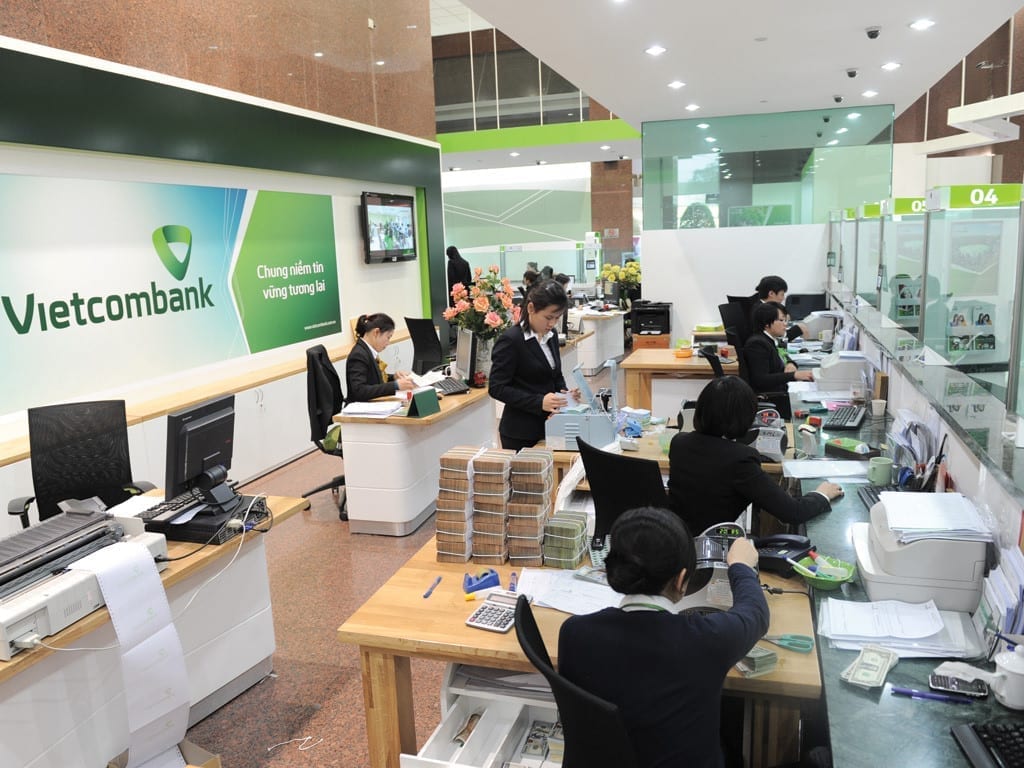
    Vietcombank sold the greenback 0.41% lower at VND24,140. Eximbank let the dollar slide 0.33% to VND24,250.

    The State Bank of Vietnam (SBV) set its exchange rate at VND23,658, down 0.008%.

    The greenback was sold VND24,615 on the black market, the same as the previous weekend.

    The dollar struggled to gain a foothold on Monday and was languishing at five-month lows as traders looked past stronger than anticipated U.S. jobs data, while growing hopes of China reopening boosted risk sentiment.

    The dollar index, which measures the currency against six major peers, including the yen and euro, was down 0.18% at 104.28, its lowest since June 28. The index fell 1.4% last week.

  • Eximbank profits triple in Q3

    Eximbank profits triple in Q3

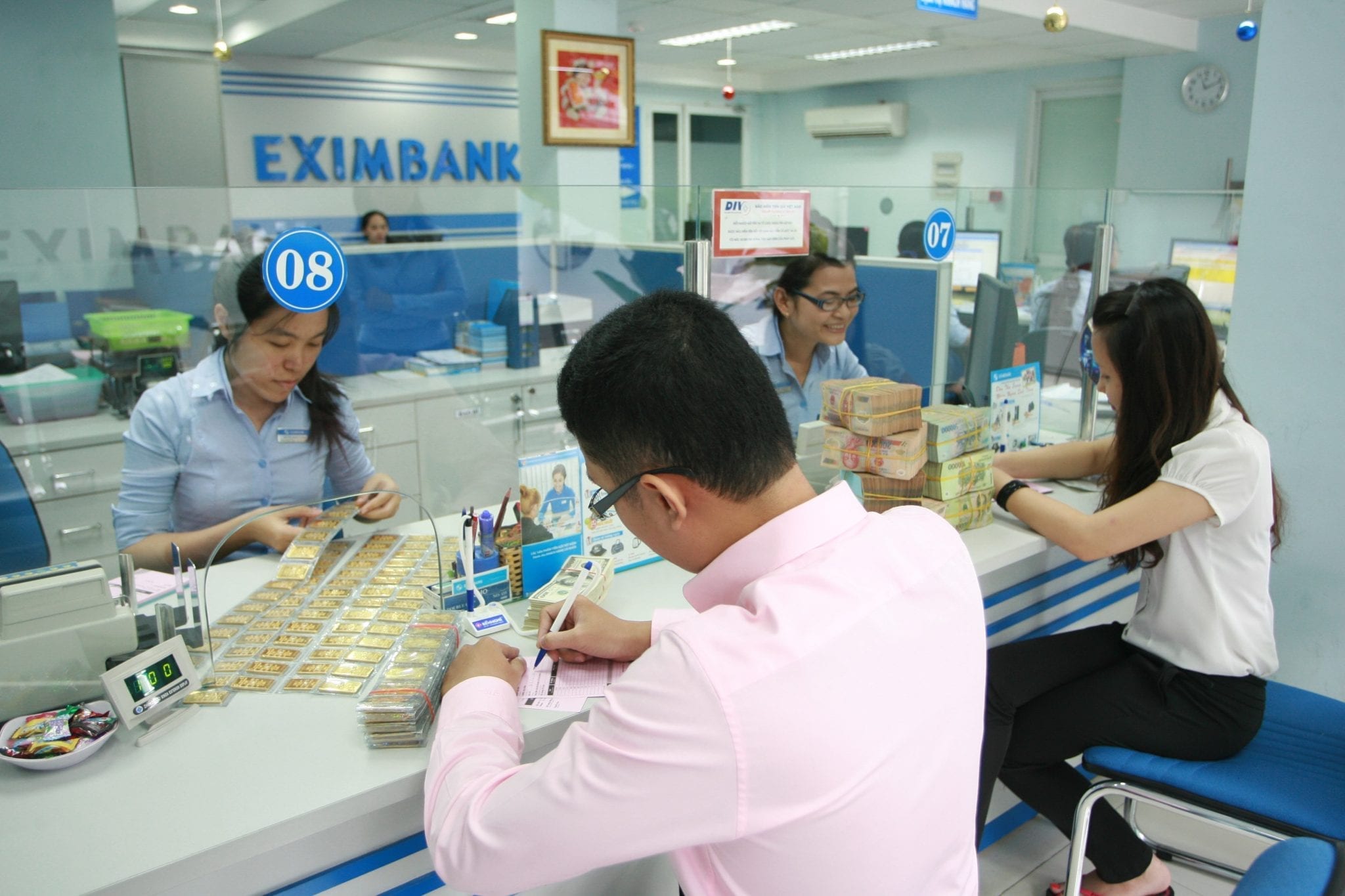
    Lender Eximbank has tripled profits year-on-year for the third quarter to over VND1.278 ($51.5 million).

    Its net interest income doubled, and non-interest income from services and foreign exchange businesses grew in double digits.

    Its profits for the first nine months topped VND3.18 trillion, an increase of 3.3 times and well above the target of VND2.5 trillion.

    The bank estimates its pre-tax profits for the full year at VND3.5 trillion and targets VND5 trillion next year.

    It also eyes total assets of VND210 trillion for next year, up 14%, and an on-balance sheet bad debt ratio of 1.6% or less, down from 1.7% or less estimated for this year.

  • Bank deposit interest rates surpass 10%

    Bank deposit interest rates surpass 10%

    Some banks have hiked deposit interest rates to 10-10.35% amid low liquidity in the system. NCB is paying the highest interest rate of 10.35% for 12-month deposits of VND1 billion (US$40,300) downwards made online. For six-month deposits, it is offering 10%. Over the past month, lenders have increased deposit interest rates frequently, even weekly in some cases.

    At least ten banks are now offering more than 9% deposit interest rates. Most have also launched promotions offering higher rates than officially listed to attract depositors. MSB is offering 9.9% to new clients if they place a deposit of at least VND1 million.

    Many, including Kienlongbank, GPBank, BaoVietBank, PGBank, OCB, VPBank, VietBank, Sacombank, and SeABank, are paying over 9% for 12-month deposits. Public banks are offering around 8% for 12 months.

    For periods of below six months most banks are paying around 6%. Banks lack liquidity and so have had to sharply hike the rates to meet the needs of business borrowers, Nguyen Quoc Hung, general secretary of the Vietnam Banks Association, said.

    The director of a large bank said the tightened bond and property markets mean some lenders have to increase deposit interest rates to ensure liquidity steeply.

    In the last two months, interest rates on deposits of six months or more have increased by 1.5-2.5 percentage points, leading to higher lending interest rates. Floating interest rates are predicted to soon surge to 15% yearly for individual borrowers and 11-12% for businesses.

    Now they are around 13% and 9%.

  • Sole bond issuance recorded in October

    Sole bond issuance recorded in October

    Only one private bond issuance was recorded in October, indicating that companies remain reluctant to mobilize cash using this channel after recent arrests of alleged fraudsters.

    Nui Phao Mining Company under the Masan Group was the only corporate bond issuer last month with a batch of VND210 billion ($8.45 million) with a five-year maturity.

    This is very unusual as banks and property developers have been the biggest bond issuers in Vietnam for several years now.

    Financial data provider FiinRatings said in a report that the rising interest rates, tightened bond regulations and recent violations in the market have restrained companies from mobilizing cash through bonds.

    The alleged violations of An Dong Investment Group and other companies like property developer Tan Hoang Minh, as well as the arrests of their leaders, have raised red flags for businesses.

    They are now buying back the bonds they have issued. Last month, VND5.8 trillion worth of bonds was bought back.

    Banks accounted for 53% of the buyback value, followed by property developers at nearly 22%.

    The buyback has helped ease payment pressure on companies this year as they only have VND21.85 trillion worth of bonds set to mature after November 15.

    But next year, the value of bonds set to mature will be high, at VND119.05 trillion, and in 2024 it will be VND111.81 trillion.

    FiinRatings analysts expect more debt restructuring moves to be carried out soon. Some of the methods being used are an extension of debt payment with new coupon rates, converting the bonds to long-term loan contracts with new interest rates, or converting them into property units.

    “This is a positive signal for the current liquidity issues on the market as it helps reduce the payment burden in the short term for bond issuers,” they say.

    With mobilizing capital domestically proving very difficult, companies are seeking international loans.

    Ten major loans have been recorded recently with a total value of $1.92 billion, including that of the Masan Group ($600 million), VPBank ($500 million) and SeABank ($200 million).

  • UBS Launches New Tool for Wealthy US Clients

    UBS Launches New Tool for Wealthy US Clients

    UBS launches a new tool providing ultra-high-net-worth clients in the US with a consolidated real-time overview of their entire portfolio.

    A new wealth analysis and reporting platform in collaboration with IT companies Addepar and Mirador is the latest fintech offering from UBS. The new tool provides a streamlined, real-time summary of clients’ entire portfolios of various asset classes, Switzerland’s largest bank said in a statement.

    The tool also gives UBS financial advisors access to analytics enabling them to efficiently monitor their clients’ investment results, cash flows, and value. An added benefit is they will also be able to examine the outlook and risks in their client’s portfolios.

    In announcing the new offering John Mathews, head of private wealth management at UBS, said we recognize that our advisors need an intuitive, visual, and modern offering that will provide a complete picture of their clients’ full portfolio – from stocks and bonds to alternative investments and their private art collections.

    As part of Addepar’s partner ecosystem, Mirador’s financial data technology experts will support UBS’s advisors with data management, custom visualization, and tailored reporting, as well as operations and system maintenance.

    In October, UBS launched a new digital wealth management service platform to tap into the Chinese wealth management sector. The mobile app, WE.UBS offers financial planning built on Big Data and views from the bank’s chief investment office.

    In the US, however, the big bank backed out of buying digital wealth manager Wealthfront last September. Following the collapse of the deal, UBS said it would pursue an organic approach to bringing the next generation of wealth management clients into the UBS fold.

    We are back to our organic plans,» UBS Group chief financial officer (CFO) Sarah M Youngwood told an audience at the Barclays Global Financial Services Conference, according to a report on the advisorhub portal.

  • UBP Reshuffles Asia Leadership

    UBP Reshuffles Asia Leadership

    UBP has reshuffled its top leadership in the region with new appointments to lead the North and South Asia business.

    UBP appoints Ivan Wong as its new regional head of North Asia and Hong Kong branch chief executive, according to an internal memo, effective November 14 and subject to regulatory approval.

    Wong is a 35-year wealth management veteran and most recently worked at HSBC Private Banking as its co-head of North Asia.

    Wong will replace the current North Asia head Eric Morin who will relocate to Singapore to become the bank’s regional head of Southeast Asia and the branch CEO for the city-state, subject to regulatory approval.

    Morin succeeds Ranjit Khanna who will step down after more than six years in the role. According to the memo, Khanna will assist with transitioning his responsibilities and UBP will also «work with him to explore new opportunities for him within the bank’s wider network».

    When contacted, a spokesperson for the bank confirmed the contents of the memo.

  • SCB holds meeting with An Dong bond buyers

    SCB holds meeting with An Dong bond buyers

    The Saigon Commercial Bank has held a meeting with investors who bought bonds from An Dong Investment Group, a company it endorsed but which has allegedly committed fraud.

    The meeting in Ho Chi Minh City Monday came on city authorities’ instructions. Many investors said at the meeting that SCB employees had persuaded them to buy the An Dong bonds with a lack of honesty.Some of them had withdrawn money at the bank when employees exhorted them to invest it in a “new type of product.”

    They never saw any papers that indicated they were buying bonds, and were merely told to sign a payment order. They received the bonds 10 days later.

    Hoang Minh Hoan, deputy standing director of SCB, said the bank never told its employees to be “dishonest” with customers. But the bank is concerned and would cooperate with Tan Viet Securities, the bond issuer, and government agencies to assist the customers, he said.

    Around 40,000 people bought An Dong bonds through SCB, according to Tan Viet Securities.

  • UBS Names New Member to Executive Board

    UBS Names New Member to Executive Board

    UBS names Damian Vogel to its executive board and becomes chief risk officer, replacing the current CRO who is stepping down to focus on academia and photography.

    Damian Vogel succeeds Christian Bluhm as chief risk officer at UBS and will join the executive board effective the beginning of May, according to a statement from UBS Tuesday. The two will work closely together to ensure a smooth transition, UBS went on to say.

    Vogel currently serves as chief risk officer for the global wealth management (GWM) business and joined UBS in 2010, having services in several risk-related leadership roles in GWM, personal and corporate banking, and the Swiss business.

    Generally, when such announcements of executive changes are made, there tends to be a comment about «spending more time with family» or something equally banal. In the case of Bluhm, he is stepping down to focus (no pun intended) on his photography business. In addition, he is looking into opportunities in academia.

    Bluhm was the Group’s CFO since 2016 and pushed the department to embrace advanced analytics, digitalization, and AI.

    The re-making of the twelve-member group executive board under CEO Ralph Hamers continues to progress. Sarah Youngwood was appointed chief financial officer in May and Barbara Levi chief legal officer last November.

    Appointed under Hamers’ predecessor Sergio Ermotti are investment bank chief Robert Karofsky, asset management head Suni Harford, GWM chief Iqbal Khan, compliance officer Markus Ronner and Asia Pacific head, Edmund Koh.

  • At UBS A Machine Knows What Clients Want

    At UBS A Machine Knows What Clients Want

    UBS is launching one online service after another in Switzerland, with a system discreetly analyzing customer behavior in the background. Now, its digital efforts are themselves under scrutiny.

    New digital offerings every quarter is what Sabine Magri, chief operating officer (COO) of UBS’s Swiss business, promised in May when UBS launched its purely digital product line Key4. Since then, it has been rolling out new offerings in its home country. After pension and corporate client product launches, an investment solution went live this month.

    With UBS expanding its digital offerings to clients, their behavior is registered on the new channels as inputs for a system working behind the scenes. This approach analyzes customer behavior and turns it into recommendations. Advisors receive tailored suggestions as to which products they can offer their customers.

    Next Best Action» has been operating in UBS Switzerland’s wealth management business for about a year and is now being used in the retail business with private clients. In many cases, the tool is based on classic data analyses following simple rules not requiring a complex model. Nevertheless, it makes use of machine learning. The longer the system runs and the more data it can tap and make tailored recommendations.

    These opportunities are then brought to client advisors through the bank’s internal interface. For now, this is a thought exercise, which the bankers can use if they think it appropriate. Notably, recommendations do not appear on the customer’s smartphone app but take a detour via the advisors.

    In an environment where bank customers are generally reluctant to make transactions, the machine’s suggestions could soon gain influence. This means walking a tightrope not only for UBS but also for all other Swiss banks that specifically evaluate customer engagement.

    This is not only because the huge amounts of data have only just begun to be made usable for business. Unlike search engines and social media platforms, which use highly sophisticated algorithms to spy on user behavior and send out targeted advertising, banks are subject to special rules, both from a regulatory perspective and because of the special relationship of trust.

    Former UBS Chairman Axel Weber, warned in 2017 that customers should not feel like they are being spied on. Otherwise, there would be a rapid loss of trust.

    His successor Colm Kelleher is now having his say on the digital strategy. It was rumored he was the one who pushed for pulling the plug on the acquisition of American robo-advisor Wealthfront in September. Through Wealthfront, UBS CEO Ralph Hamers wanted to reach the mass of wealthy customers in the United States.

    That makes Switzerland all the more important as a test bench for the group’s digital transformation. Over the past nine months, UBS spent over 1.7 billion francs on operations, the lion’s share going toward upgrading technology. The bank cut back staff and real estate after closing 44 branches over the last year, another measure of the success of the digital transformation.

    It seems to be working. Over 74 percent of UBS clients in Switzerland were active on the bank’s digital channels at the end of September, with nearly 58 percent using smartphones. It is no coincidence the bank highlights these figures every quarter. The bank’s progress with digitalization plays a key role in its stock market valuation. Having a machine that knows what customers want could be decisive.

  • Central Bank Buying Boosts Gold Demand

    Central Bank Buying Boosts Gold Demand

    Central Bank buying and increased consumer demand lifted gold demand to pre-Covid levels.

    With inflation rising sharply, it comes as no surprise that gold demand in the third quarter was 28 percent higher than a year ago. A year-to-date comparison shows an 18 percent increase, returning demand to pre-pandemic levels, according to the latest report from the World Gold Council on Tuesday.

    Overall demand for gold was 1,181 tons in the third quarter, with central banks accumulating an estimated 400 tons, which is a record. The Swiss National Bank (SNB) was not among the central banks adding to its gold hoard. While it said it had a valuation loss of 1.1 billion Swiss francs on its gold holdings in the third quarter, the volume was unchanged.

    The total supply of gold increased by 1,215 tons, up a marginal 1 percent. Although mining output increased for a sixth consecutive quarter, growth in the current quarter was partly tempered by lower levels of recycling for the period.

    There were countervailing forces for investors as retail investors purchased gold as an inflation hedge, while ETF investors reduced holdings on rising interest rates. Overall investment demand was 47 percent lower in the third quarter than a year ago. While retail investors increased bar and coin investment by 36 percent, ETFs unloaded 227 tons, according to the report.

    Despite a slowing global economy, jewelry consumption rose 10 percent to 523 tons. On the flip side, demand for electronics fell, leading to an 8 percent drop in the need for gold in the technology sector.

    India was behind much of the demand for jewelry, as «urban consumers were the engine of Indian demand,» with economic activity returning to pre-COVID levels. In China, retail demand firmed as lockdown restrictions were eased in major cities.

  • UBS Widens Affluent Net in China

    UBS Widens Affluent Net in China

    UBS continues to expand its ambitions in the region’s affluent market by launching a new digital wealth management platform in mainland China.

    UBS has launched a digital-led wealth management platform for affluent clients in mainland China through its wholly-owned onshore entity UBS Fund Distribution (Shenzhen) Company Limited.

    The mobile app, WE.UBS, provides financial planning based on big data and views from the bank’s chief investment office. The product shelf includes local and global investment solutions in collaboration with other international asset managers in mainland China including UBS SDIC Fund Management, Invesco Great Wall Fund Management, and HSBC Jintrust Fund Management.

    A notable feature of the offering is the ability for clients to complete onboarding in as fast as seven minutes with just an ID card, a selfie and a couple of clicks.

    According to APAC co-head of wealth management Amy Lo, the new offering targets individuals in mainland China with a net worth of $150,000 to $1 million – a significantly lower minimum level for the Swiss private bank, which has been traditionally focused on millionaires and beyond.

    In August, the bank also introduced a new private clients team dedicated to individuals in Greater China with $1 million to $5 million. It aims to double the number of clients in the segment over the next three years.

    As a global wealth manager, we know that one size does not fit all. We have the critical size and scale to specialize and tailor-make different product platforms for different types of clients.

    Based in Shenzhen, UBS FS will initially focus on acquiring affluent clients in the broader 11-city Greater Bay Area megalopolis with over 86 million residents and a GDP of 12.6 trillion yuan ($1.7 trillion).

    Demand for professional wealth management services delivered digitally is growing exponentially in China. Following our launch in Shenzhen, we will focus on clients in the GBA before broadening out to other cities,» said Iqbal Khan, president of global wealth management at UBS.

    China is leading the way in wealth creation and digital transformation globally. As the world’s largest wealth manager, our goal is to be the leading global wealth manager and the #1 digital-first wealth advisor for our targeted clients in China, added APAC president Edmund Koh.

  • UBS Strategy Defies Second Major Crisis

    UBS Strategy Defies Second Major Crisis

    At UBS, the focus on wealth management was born out of necessity during the financial crisis. One global crisis later, that strategy is helping it leave global competitors behind.

    Lower profits, less money invested by clients money, and fewer bonuses for advisors. At first blush, the third quarter has not been very promising for UBS’s core wealth management business. But according to reports from within the bank, the team around Iqbal Khan, the sole head of the Global Wealth Management (GWM) division since the beginning of October, is patting itself on the back.

    It delivered a pre-tax profit of $1.453 billion, a scant 4 percent below the previous year’s quarter, and 14 percent better than the analyst consensus. The division contributed the lion’s share of the group’s pre-tax profit of $2.323 billion.

    By contrast, Wall Street banks suffered from an investment banking slump in the third quarter, hamstrung by higher interest rates, the war in Ukraine, and soaring energy prices. Only now are JP Morgan, Citigroup, and Goldman Sachs turning their attention to asset management and the steady returns that this business promises.

    In wealth management, UBS has emerged from adversity to become the world’s largest provider of such services. After horrendous investment banking losses from bets on toxic credit securities and a government bailout in 2008, then Chairman Axel Weber and former CEO Sergio Ermotti undertook the task of trimming the institution entirely to private banking for the world’s rich starting in 2011.

    The next leadership generation is managing this strategic legacy quite skillfully. UBS’s pretax profit has never fallen below $2 billion in the past nine quarters.

    The GWM division’s relationship managers demonstrated they could keep their wealthy clientele in line, an important consideration in times of turmoil to stay the course. While clients were de-leveraging and liquidating loans on assets, as in Asia, the bank was able to attract deposits and new money which generated fees. Absent that, like in Switzerland, UBS was able to increase cash deposits and loans, an indication clients did not leave the bank, but rather took advantage of other services.

    To be sure, not all is peaches and cream and there are still some downsides. The GWM division is not generating enough profit, with the bank’s management setting the pre-tax profit target growth between 10 to 15 percent. The result so far this year is a 7 percent decline. Likewise, the decline in fee-generating assets is not good news. After all, a private bank that functions as a mere vault for the cash of the super-rich is of little interest from the point of view of investors. Moreover, the ambition of increasingly serving smaller- to mid-sized assets was dealt a blow with the exit from the Wealthfront deal in the US.

    That is a cautionary development that UBS management should not bask in its achievements, a lurking danger. The success of the GWM division is fueling speculation that division head Khan is already set as the next UBS boss. A recent detailed story suggested palace intrigues at Switzerland’s largest bank, with Group CEO Ralph Hamers seen as a victim, although it is not least thanks to his refraining from major interventions on the operational side of the business that it is running at full speed.

    At the same time, the bank can by no means afford to slow down in its digitization efforts, the pet project of Hamers. UBS’s rise to become the world’s largest private bank is largely due to the effective cooperation of the «Webermotti» team. The new leadership in the form of Chairman Colm Kelleher, CEO Hamers, and GWM division head Khan might be well advised to emulate their predecessors in this respect.