Tag: bank

  • UBS Strategy Defies Second Major Crisis

    UBS Strategy Defies Second Major Crisis

    At UBS, the focus on wealth management was born out of necessity during the financial crisis. One global crisis later, that strategy is helping it leave global competitors behind.

    Lower profits, less money invested by clients money, and fewer bonuses for advisors. At first blush, the third quarter has not been very promising for UBS’s core wealth management business. But according to reports from within the bank, the team around Iqbal Khan, the sole head of the Global Wealth Management (GWM) division since the beginning of October, is patting itself on the back.

    It delivered a pre-tax profit of $1.453 billion, a scant 4 percent below the previous year’s quarter, and 14 percent better than the analyst consensus. The division contributed the lion’s share of the group’s pre-tax profit of $2.323 billion.

    By contrast, Wall Street banks suffered from an investment banking slump in the third quarter, hamstrung by higher interest rates, the war in Ukraine, and soaring energy prices. Only now are JP Morgan, Citigroup, and Goldman Sachs turning their attention to asset management and the steady returns that this business promises.

    In wealth management, UBS has emerged from adversity to become the world’s largest provider of such services. After horrendous investment banking losses from bets on toxic credit securities and a government bailout in 2008, then Chairman Axel Weber and former CEO Sergio Ermotti undertook the task of trimming the institution entirely to private banking for the world’s rich starting in 2011.

    The next leadership generation is managing this strategic legacy quite skillfully. UBS’s pretax profit has never fallen below $2 billion in the past nine quarters.

    The GWM division’s relationship managers demonstrated they could keep their wealthy clientele in line, an important consideration in times of turmoil to stay the course. While clients were de-leveraging and liquidating loans on assets, as in Asia, the bank was able to attract deposits and new money which generated fees. Absent that, like in Switzerland, UBS was able to increase cash deposits and loans, an indication clients did not leave the bank, but rather took advantage of other services.

    To be sure, not all is peaches and cream and there are still some downsides. The GWM division is not generating enough profit, with the bank’s management setting the pre-tax profit target growth between 10 to 15 percent. The result so far this year is a 7 percent decline. Likewise, the decline in fee-generating assets is not good news. After all, a private bank that functions as a mere vault for the cash of the super-rich is of little interest from the point of view of investors. Moreover, the ambition of increasingly serving smaller- to mid-sized assets was dealt a blow with the exit from the Wealthfront deal in the US.

    That is a cautionary development that UBS management should not bask in its achievements, a lurking danger. The success of the GWM division is fueling speculation that division head Khan is already set as the next UBS boss. A recent detailed story suggested palace intrigues at Switzerland’s largest bank, with Group CEO Ralph Hamers seen as a victim, although it is not least thanks to his refraining from major interventions on the operational side of the business that it is running at full speed.

    At the same time, the bank can by no means afford to slow down in its digitization efforts, the pet project of Hamers. UBS’s rise to become the world’s largest private bank is largely due to the effective cooperation of the «Webermotti» team. The new leadership in the form of Chairman Colm Kelleher, CEO Hamers, and GWM division head Khan might be well advised to emulate their predecessors in this respect.
  • UBS Profits Lower on All Fronts

    UBS Profits Lower on All Fronts

    Faced with a variety of challenges, UBS saw profits contract in all of its major units. Switzerland’s largest bank booked a net profit of $1.733 billion in the third quarter, helped by rising interest rates around the globe and expense controls contributing to the solid performance in the third quarter. Nevertheless, profits are 24 percent lower than in the same period a year ago, UBS said in a statement.

    Although pre-tax profit fell 19 percent from a year ago to $2.3 billion, it was the ninth consecutive quarter they were above $2 billion.

    The macroeconomic and geopolitical environment has become increasingly complex. Clients remain concerned about persistently high inflation, elevated energy prices, the war in Ukraine, and (the) residual effects of the pandemic. In Switzerland, many of our retail and small business clients will also be impacted by disruptions across the rest of Europe,» said UBS CEO Ralph Hamers.

    On a diluted basis, earnings per share were $0.52 in the third quarter after $0.61 in the second and $0.63 in the third quarter of 2021.

    Pre-tax profits in Global Wealth Management (GWM) were $1.5 billion, down 4 percent from the same year-ago period, while falling 7 percent during the first nine months of the year. The results are well below UBS guidance of 10-to-15 percent for the cycle

    Despite the challenges, the world’s largest wealth manager could still attract net new money. In the third quarter, the GWM unit took in $17.1 billion of net new money, bringing the total to  $36.9 billion for the first nine months of the year.

    Fee-generating assets fell to $1,182 trillion in the third quarter, marking a 5 percent contraction from the $1.244 trillion in the second quarter and a drop of 16 percent from the $1.412 trillion a year ago.

    GWM revenues fell 4 percent compared to a year ago to $4.8 billion, which included a $133 million gain from the domestic wealth management business in Spain and $86 million from the disposal of UBS Swiss Financial Advisors. There was also a $100 million gain from the sale of its domestic wealth management business in Austria.

    Central banks raising their interest rates helped the unit as well which saw net interest income increase 23 percent, even though overall deposits decreased, driven by higher deposit revenues, the result of rising interest rates.

    In the Asset Management unit, net new money was $17.9 billion.

    The bank bought back $1.0 billion of its shares during the third quarter, bringing the year-to-date total to $4.3 billion, with a total buyback of $5.5 billion planned for 2022.

    UBS reported a Tier 1 capital ratio of 14.4 for the third quarter, down from 14.9 a year ago, although slightly higher than the 14.2 in the second quarter. It had a CET 1 leverage ratio of 4.51 percent, with both third-quarter figures exceeding guidance of around 13 percent and above 3.7 percent respectively.

    The bank’s return on CET 1 capital was 15.5 percent in the quarter and 17.8 percent through the first nine months of the year, within the guidance range of 15 to 18 percent.

    The number of full-time employees (FTEs) stood at 72,009 at the end of the third quarter, up from 71,294 in the second quarter, and higher than the same quarter a year ago when the number of FTEs was 71,427.

    Despite the higher headcount, personnel costs fell by $282 million to $4.2 billion, driven by lower compensation for financial advisors.

    UBS expects that the muted private client sentiment in activity evident in the third quarter may continue in the fourth quarter in the face of myriad economic and geopolitical challenges.

    Lower asset values will hurt UBS’s recurring net fee income, while the weak client sentiment may affect net new assets in the asset-gathering business. On the other hand, higher interest rates are expected to positively impact net interest income.

  • Swiss Banks Face a Tense Future in China

    Swiss Banks Face a Tense Future in China

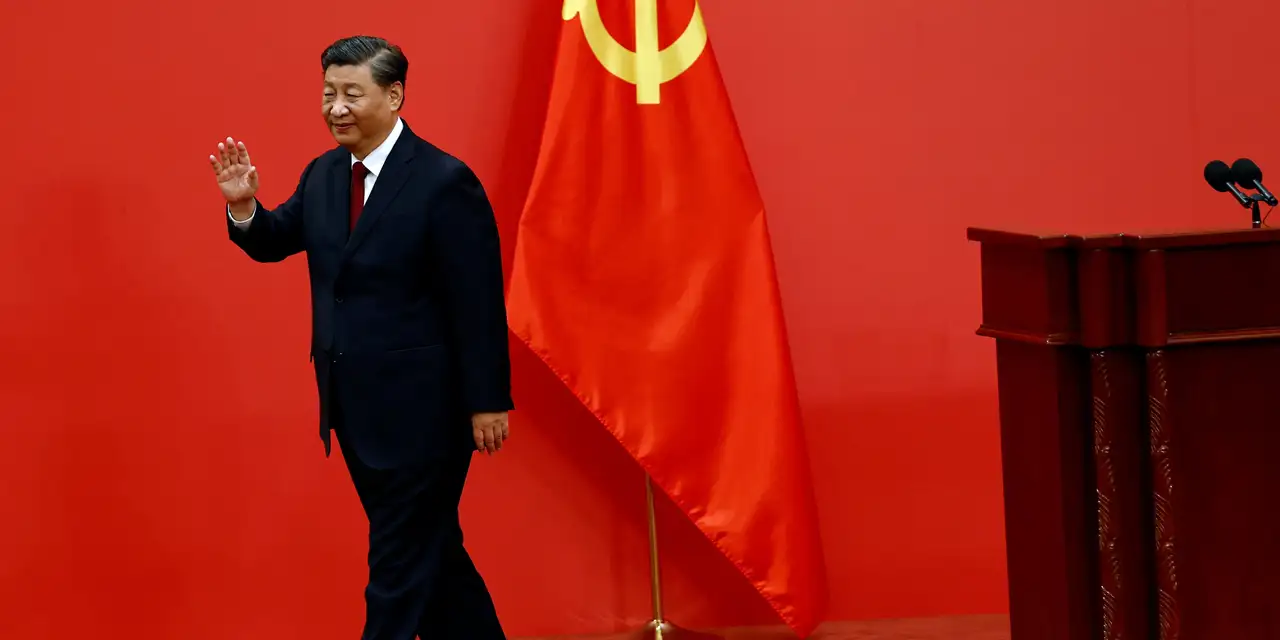
    President Xi Jinping’s report to the 20th Communist Party congress hints at more tax and regulatory measures aimed at reducing wealth disparities.

    In the last two decades, the Swiss wealth management sector has been forced to directly confront and contend with the vagaries of the world’s two largest economies in the world – China and the US.

    In the case of the US, it has been anything but a delicate balancing act. Most of the wealth management industry has been manhandled into coughing up material fines for abetting tax evasion attempts by American citizens.

    China has been different. The wealth management sector has seen the country as the greatest new market of our time. For decades, bankers have returned wide-eyed from trips to Beijing and Shanghai, effusively spouting about this wide-open, boundless future full of promise. Many have been able to benefit copiously, from the unheard-of growth rates that country has experienced since the turn of the millennium.

    The two major Swiss banks have built onshore presences. And the smaller private banks and wealth managers that haven’t can still catch any passing outflows from the wealthy Chinese with their booking centers in the proximate cities of Hong Kong and Singapore.

    Although the political and economic differences between the US and China are indescribably wide, there is one striking similarity. They both tax citizens on their worldwide income. In China, almost all nationals are defined as being domiciled in China unless they live in Hong Kong, Macau, or Taiwan.

    That similarity could be a very significant inflection point for private banks and wealth management. And that looks likely to continue unhindered, at least according to President Xi Jinping’s report to the 2022 party congress on Sunday. In a translated transcript published by Nikkei Asia that was provided to journalists covering the event, he indicated:

    We will enhance the roles of taxation, social security, and transfer payments in regulating income distribution. We will improve the personal income tax system and keep income distribution and the means of accumulating wealth well-regulated. We will protect lawful income, adjust excessive income, and prohibit illicit income.

    That message has already been made very clear to China’s celebrities and influencers who were fined late last year for tax evasion.

    It is going to be very tough going for anyone trying to bank what many would consider the core target client base for a wealth manager or a private bank.

    That view seems to be borne out more generally, with Hong Kong’s daily English newspaper, the South China Morning Post , writing on Thursday that the wealthy Chinese could face a rocky road ahead.

    All of this, taken together, puts wealth managers in a double bind. Not only are they going to have to parse carefully and regularly review and re-review their client base for possible tax discrepancies, but they are going to have to go to pains to make sure that they are not making anyone excessively wealthy, at least not in the eyes of the Chinese government.

    What that means in practice is anyone’s guess. But for an industry traditionally known for privacy and discretion, it is a very big ask.

  • Signs of Slowing at UBS

    Signs of Slowing at UBS

    Over the past two weeks, the balance sheets of major US banks have provided clear indicators of where international banking is headed. It is unlikely that UBS will be able to escape the global market trend.

    Rising interest rates and the continued weakness of financial markets will have shaped the course of business at UBS in the third quarter. Yet, the developments are partly contradictory.

    While in global wealth management, the higher interest margin is expected to have a positive impact, weakening asset valuations might weigh on total assets under management.

    As recently as September, wealth management head Iqbal Khan spoke of positive development in net new money inflows in the third quarter. He referred to the slowdown in the second quarter as an “anomaly.” The bank set a target of increasing net inflows of fee-generating assets by more than five percent over the cycle.

    The slump in mergers and acquisitions and significantly lower issuance activity are also likely to have weighed on investment banking at UBS. ZKB analyst Michael Klien expects profits to slump by around 60 percent in this area.

    Profits in asset management and personal & corporate banking are also likely to be significantly lower than in the same period last year, although the latter is expected to show the smallest drop. Provisions for credit risks, which have grown due to the economic trend and rising interest rates, are still variable.

    It will be interesting to see how new offerings such as Key4 or the Circle One platform launched in Asia are received by customers.

    At the bank’s half-year results, CEO Ralph Hamers confirmed its outlook, saying that the growing uncertainty caused by the Ukraine war, energy prices, inflation and rising interest rates would likely affect customer activity.

    The bank is likely to stick to its strategy of reducing costs and digitalization. Technology is needed to improve both the interaction with customers and the bank’s own way of working.

  • Goldman Sachs Names Leaders for Newly Merged Units

    Goldman Sachs Names Leaders for Newly Merged Units

    Goldman Sachs has named the leadership for its newly consolidated global business which has been divided into three core units.

    Goldman Sachs appoints Marc Nachmann as head of asset and wealth management, Ashok Varadhan, Dan Dees and Jim Esposito as global co-heads of global banking and markets, and Stephanie Cohen as head of platform solutions.

    Earlier this week, reports indicated that Goldman would unveil a newly consolidated structure that would combine asset and wealth management into one division as well as investment banking and trading into another one. The third division oversees transaction banking alongside Goldman’s portfolio of fintech platforms.

    In its latest third-quarter results, the bank registered a 44 percent drop in profits and underlined plans to pull back on some of its consumer banking ambitions, with investments such as Marcus and fintech lender GreenSky which have been structured under the expanded wealth unit and the platform solutions unit, respectively.

    We are making it clear that we’re pulling back on some of that now,” said Goldman Sachs chief executive David Solomon during an analyst briefing. I think one of the big learnings over the last few years is that we’re better to play to our strengths.

  • Banking is Still About Branches and ATMs

    Banking is Still About Branches and ATMs

    A McKinsey Report reveals that retail banking makes up almost half of all financial sector profit worldwide.

    All that talk about structured products, discretionary investment mandates, M&A – even crypto – may have confused everyone about what banking is. Even now, according to McKinsey & Company, the humble local bank branch – and the ubiquitous convenience store ATM – reign supreme.

    At least that is what an October report on the future of retail banking by the consultancy’s financial services practice states unequivocally. In it, they claim retail banking makes up 48 percent or almost half of the global banking pool of profit, which they estimate at $680 billion.

    They believe the segment, by itself, is larger than entire industries, among them pharmaceuticals, telecommunications, and food manufacturing. In other words, those branches and ATMs count for more than an army of Nestles, Vodafones, Novartises, and Roches.

    Retail also appears to have avoided much of the convulsions, restructuring, and redundancies seen in many other parts of banking, with the 10-year average annual return on equity being a veritable beacon of relative stability at 8.9 percent. Indeed, it has even trended noticeably higher this year as the industry continues to recover from the pandemic. But, beyond that, there are some divergent trends as the picture gets more granular.

    The McKinsey report looked at revenue by product per individual client and came up with some surprising idiosyncrasies. In the US and Western Europe, retail banks tend to lose money with basic products such as credit cards and unsecured loans while they barely break even with them in China and Emerging Asia. In Latin America or the Middle East and North Africa, the latter being treated as one region, it manages to eke out significant profits.

    When it comes to more complex lending products such as mortgages and car loans, all regions are profitable except for the Middle East and Africa, which barely breaks even. All regions make money when it comes to providing top-tier retail services for wealth accumulation, insurance, and pensions even though, somewhat surprisingly, the least profitable part of the world for such products is in China.

    The emerging markets of Asia and China are also unique in that they are the first in the world where so-called digital-first models have reached maturity.

    It has allowed them to shrink an already thin branch network by a third over five years and is a key reason why they have been able to keep basic products on the threshold of profitability.

    However, profit pools for complex lending and wealth and protection services are low by global standards, and challenges to incumbent banks remain as innovative Big Tech and fintech organizations continue growing in terms of consumer adoption and product diversification.

    But such a wide-ranging report would not be replete without repeated suggestions of some impending, imminent threat about to strike the industry down, instilling fear into the hearts and minds of industry employees and executives, likely prompting the latter to find succor by summoning reams of available, well-prepared consultants.

    That fear appears to be big tech. According to McKinsey, digitalization has not only lowered the general barriers to entry but the IT budgets of the largest retail banks pale in comparison to that of big tech.

    They, and the fintech sector, already capture about 45 percent of the gross revenues in payments while digital investment apps manage a quarter of assets in the mass-affluent segment and are growing at twice the rate of traditional providers.

    But banks do have some trump cards left. According to McKinsey, when it comes to customer engagement, just over half, or 52 percent, of clients engage with their bank every week. On Amazon, however, only 22 percent of them buy that often.

    But they still haven’t learned how to use the information on clients that they already have.

    They should act fast while the window of opportunity is still open. The stakes could not be higher, the report stated.

  • Crypto.com Establishes European Headquarters

    Crypto.com Establishes European Headquarters

    Singapore-based Crypto.com chooses Paris as the location for its regional headquarters after getting regulatory approval in a number of countries.

    Digital asset platform Crypto.com has selected Paris as its base in Europe. It expects to invest 150 million euros ($145 million) in France to establish operations and hire staff for its compliance, business development, and product functions, according to a statement issued Wednesday.

    In September, Crypto.com received regulatory approval to offer products and services to French customers after being green-lighted by regulators in the UK and Italy earlier this year. The platform is also accelerating its expansion regionally after it acquired South Korea’s payment service provider PnLink and virtual asset exchange OK-BIT in August.

    According to its website, the group was founded in Singapore in 2016 and it now claims 50 million customers worldwide.

  • Switzerland’s First Private Digital Bank is Open for Business

    Switzerland’s First Private Digital Bank is Open for Business

    Swiss digital bank Alpian received its banking license from Finma in April. The launch of its private banking app marks the start of business operations.

    Alpian bills itself as the first Finma-licensed digital private bank in Switzerland. The app, through which the bank exclusively offers its services, is now available for download in the Apple and Google Play Stores, according to a statement on Tuesday.

    The bank’s digital service geared toward mobile devices, combines everyday services and private banking, bringing a new combination of banking and investment services to the market. The hybrid concept combines a secure, state-of-the-art banking platform with the support and advice of experienced wealth advisors, it said.

    The offering is designed to give affluent clients access to services otherwise reserved for the clientele of traditional private banks. It offers professional and highly personalized services at a management fee of 0.75 percent which Alpian calls «competitive».

    A unique selling point compared to other neo-banks is a video call function that can be used to contact advisors from within the app. Personal contact with advisors is an indispensable part of the offering, according to Alpian.

    The digital bank, originally launched by the Geneva-based Reyl Group, received its banking license from Finma in the spring after a two-year lead time. According to the information previously provided, it intends to offer its services exclusively to Swiss customers. The target group is between 100,000 and one million Swiss francs of assets.

  • UBS Hit with Another US Fine

    UBS Hit with Another US Fine

    Switzerland’s largest bank gets fined in the US for violating short-selling regulations. The Financial Industry Regulatory Authority (FINRA), which regulates US-based brokerages, is fining UBS Securities $2.5 million for violating short-selling regulations over nine years, it said in a statement issued Monday.

    FINRA, which is overseen by the Securities Exchange Commission, found that UBS did not close out at least 5,300 positions in a timely enough fashion between 2009 and 2018, routing or executing more than 73,000 security short sales without first borrowing or arranging to borrow the shares. That meant that the regulator’s close-out requirements were not satisfied.

    Although UBS conducted annual reviews of its systems, it failed to identify the improper treatment of shares associated with long-selling activities by clients.

    Switzerland’s largest bank also failed to detect red flags present in its books and records that should have indicated systems failures that showed certain buy-in orders as limit orders, according to the regulator.

    UBS consented to the entry of FINRA’s findings without admitting or denying the charges.

  • HSBC Mulls Sale of Canada Unit

    HSBC Mulls Sale of Canada Unit

    HSBC continues to explore ways to improve profitability via market exits, this time with the potential sale of its Canada business. HSBC is reviewing strategic options for its Canada business, according to a statement from the bank.

    A review of the business is in its early stages, and one of the options would be the sale of HSBC’s 100 percent stake in the Canada unit, according to a report by British media outlet Sky News citing unnamed sources. HSBC is working with JPMorgan to sound out prospective buyers for the business, and the deal could be valued at an estimated $7 billion though no final decision has been made.

    If successful, the sale of the Canada unit would mark yet another market departure to improve profitability and another move to defend Ping An’s campaign to push for the bank to break up by spinning off its Asia arm.

    Last year, HSBC rejigged its retail business with the announcement of a US exit and the sale of its France unit. And over the weekend, HSBC started briefing a group of fund manager investors on the potential listing of its Indonesia business, according to a report citing unnamed sources.

  • UBP Appoints New Chief Investment Officer

    UBP Appoints New Chief Investment Officer

    The interest rate hike in emerging markets has started much earlier than in the OECD area. Switzerland’s Union Bancaire Privee is responding to this with two appointments.

    Sergio Trigo Paz has been appointed Chief Investment Officer at Union Bancaire Privée (UBP), according to a media release.

    Paz was head of emerging markets at Blackrock for 10 years until March of this year. He is based in London and heads a team of nine, which are spread across London, Zurich, and Hong Kong.

    UPB also appointed Soledad Rocio Acoroni as a portfolio manager who will join the firm in Zurich, coming from Larrain Vial AM in Chile.

    There, as portfolio manager, she handled strategies in Latin American corporate securities, ESG strategies in sovereign and corporate bonds issued in the region with low carbon footprints, and strategies in Argentine government and corporate bonds.

  • UBS Brings Key4 to Pensions and Retirement

    UBS Brings Key4 to Pensions and Retirement

    Switzerland’s largest bank is expanding its digital offering.

    UBS is making its UBS key4 available to clients saving in 3a retirement accounts or retirement custody accounts, it said in a statement Thursday.

    The offer, which clients can access on their phones, is part of the bank’s range of UBS key4 products. It is available to all users and not exclusively to UBS key4 clients, the statement said.

    It’s never too early to start saving for your retirement. With our fully digital offering for private pension planning, we can give young people in particular access to a very important financial topic. In just a few minutes, they can start paving the way for their future on their smartphones, chief operating officer of UBS Switzerland Sabine Magri, said in the statement.

  • UBS Partners With a US Investment Network

    UBS Partners With a US Investment Network

    UBS is teaming up with a network of alternative investment firms in the US that manages more than $300 billion in institutional assets.

    The US National Association of Investment Companies (NAIC), the nation’s largest network of diversely owned alternative investment firms, has signed up UBS as a partner. UBS will become a platinum sponsor of the Washington-domiciled NAIC to support its inclusive investing offering.

    Founded in 1971, the association counts more than 170 alternative investment firms that collectively manage more than $300 billion in institutional assets. NAIC member firms invest in more than 1028 portfolio companies worldwide, according to the association. As part of the sponsorship, UBS will support and participate in the NAIC’s virtual and in-person events and programs with NAIC member firms, partners, and investment plan and institutional decision makers.

    At UBS, we’re focused on driving more capital and investment to support diversity, equity, and inclusion, said Tom Naratil, president of UBS Americas and co-president of global wealth management at the firm. UBS and NAIC seek to build long-standing relationships with member firms, including high-performing diverse-owned alternative investment managers, the statement added.

    NAIC will introduce UBS to its member firms through virtual and in-person roadshows that will support UBS’ recently launched Inclusive Investing offering.

    Naratil will soon be ending his long career at the bank, retiring from UBS on October 3, when Iqbal Khan will take over as sole head of UBS’ flagship Global Wealth Management unit.

  • UBS’s Latest Gift to Shareholders

    UBS’s Latest Gift to Shareholders

    In good news for shareholders, Switzerland’s largest bank boosts its dividend and is on track to exceed buyback goals.

    UBS said that it will increase its dividend by 10 percent to $0.55 on ordinary dividends from $0.51 for 2022, with the board intending to propose the dividend for approval at the annual general meeting in 2023, the bank said in a statement Tuesday.

    In addition, UBS expects share repurchases to exceed its $5 billion goal for 2022, and as of 9 September 2022, the bank has bought back $4.1 billion of shares.

    UBS will guide next year’s capital return in its fourth-quarter earnings presentation and expect to continue to have share repurchases and a progressive dividend.

  • UBS Call Center Rings New Management

    UBS Call Center Rings New Management

    Digitalization in banking is placing new demands on telephone advice. UBS is restructuring its Swiss call centers under new management.

    UBS Switzerland is realigning its Swiss contact center (CCS), according to an internal letter to employees, as the bank responds to the strong increase of remote services in the banking business.

    According to the memo, UBS’s internal bank call centers in Zurich, Basel, French-speaking Switzerland, and Ticino will adopt agile working methods geared even more closely to customer needs. As the memo suggests, the focus is expanding beyond traditional retail customers to include corporate customers. The credit card business operates its own contact points.

    Work is only just beginning, according to sources close to Switzerland’s largest bank. While it appears no job cuts are planned, there will be a change at the top of the CCS unit, which employs more than 400 people throughout Switzerland.

    Alfons Livers, the current head of the unit, will hand over responsibility for the CCS unit to Kaja Bertoli on October 1. She will drive a new direction. Livers will help Bertoli with the transition phase and will take on a new role within UBS starting in 2023.

    In her new role, Bertoli, reports to Simone Westerfeld, head of UBS Private Clients, as well as to operational Switzerland head (COO) Sabine Magri. She will also be in close communication with Alain Conte, co-head of the Swiss corporate banking business, with reporting lines also reflecting the broader focus of UBS’s call centers.

    In addition, Stephan Schwyter becomes the new operational head of CCS, reporting to Bertoli.

    The latter most recently worked as head of strategy & business development (S&BD) at UBS Switzerland, having joined the bank in 2012. Her previous post is still open. Like Bertoli, Schwyter has worked in S&BD in an eleven-year career at the bank.