Tag: bank

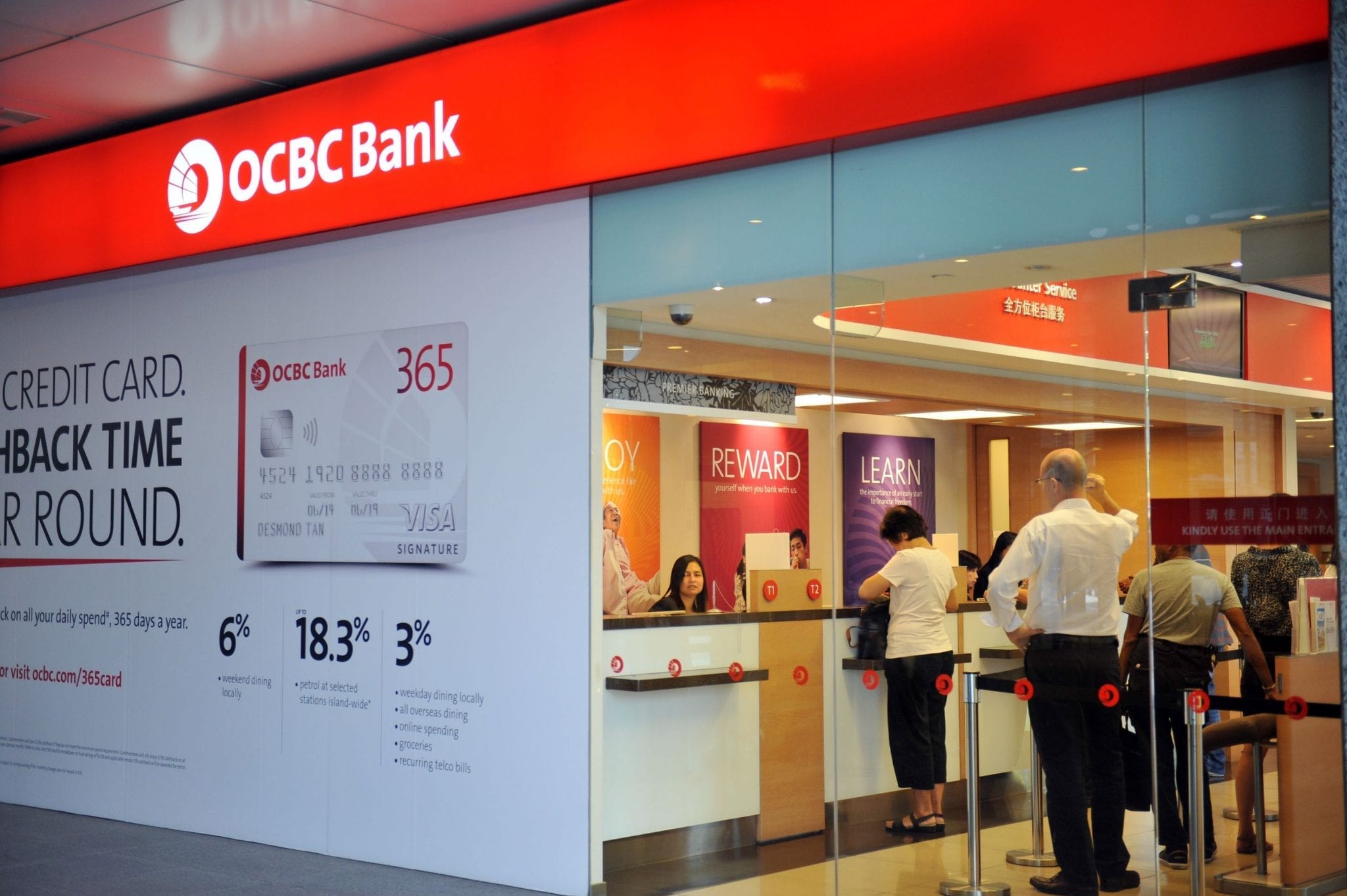
  • OCBC Profits Plunge in Q2

    OCBC Profits Plunge in Q2

    The bank recorded a decline that was steeper than predicted by analysts, owing to soaring provisions for loan losses and shrinking lending income during the Covid-19 pandemic.

    OCBC’s net profit for the second quarter of 2020 was S$730 million ($533 million), up 5 percent from the previous quarter and 40 percent lower compared to a year ago, the bank said in its quarterly earnings report published on Friday.

    Provisions for credit losses stood at $750 million in Q2, higher than the previous quarter’s $657 million, and $111 million a year ago.

    Net interest income fell 9 percent to S$1.48 billion, which the bank said was largely from a 16 basis points decline in NIM as asset pricing adjusted to the significant cuts in interest rates faster than the reduction in customer deposit funding costs

    The bank recommended an interim dividend of 15.9 cents per share for the first half of 2020. This represents half of the maximum 31.8 cents dividend per share that OCBC can declare in FY20, as MAS has recommended locally incorporated banks headquartered in Singapore to cap dividends at 60 percent of FY19. A scrimp dividend is also offered, which gives shareholders the option to receive the dividend in the form of shares, with the issue price of the shares set at a 10 percent discount.

    This decline is steeper than expected – a Refinitiv poll among analysts expected net income to fall 31.7 percent to S$835 million during the quarter, with earnings per share to fall 24.1 percent year-on-year to S$0.218 per share.

    OCBC group CEO Samuel Tsien said the bank has been defensively shoring up its balance sheet and preparing for a slow recovery.

    We protected our customer franchise, managed our expenses in line with income expectations, increased our allowance coverage, preserved our capital and raised our capital efficiency to position for the future post-pandemic. We will continue to contain all discretionary expenditures, including management compensation,» Tsien said in a statement.

    Singapore’s two other listed banks reported their earnings yesterday – DBS reported a 22 percent year-on-year drop in Q2 net profit for the first quarter to S$1.25 billion, while UOB reported a 40 percent decline.

  • DBS Private Bank Names Fund Selection Head

    DBS Private Bank Names Fund Selection Head

    DBS Private Bank has appointed a successor to Piere DeGagne, the former head of fund selection and advisory who is leaving the bank.

    John Ng was appointed as DBS Private bank’s new head of fund selection and advisory last month to replace DeGagne, who is returning to Canada this month for personal and family reasons, according to a report from Fund Selector Asia, after seven years with the bank.

    Ng joined the bank in 2017 as its head of portfolio counseling and product strategy, then a newly created role focused on providing strategic portfolio advice and building model portfolios to cater to different market segments.

    Prior to joining DBS, Ng was with Bank of Singapore for eight years where he was responsible for the cash equity, bond, fund, and private equity research teams alongside product marketing.

  • DBS First-Half Profits Tumble

    DBS First-Half Profits Tumble

    A five-fold surge in allowances primarily focused on coronavirus-linked risks drove net profits at DBS to tumble 26 percent in the first half.

    DBS Group posted a net profit of S$2.41 billion ($1.76 billion) in the first half of 2020, a 26 percent year-on-year drop, according to a statement. This was driven largely by a five-fold increase of total allowances which reached S$1.94 billion of which S$1.26 billion has been «conservatively set aside to fortify the balance sheet against risks arising» from the ongoing pandemic.

    Singapore bank’s ex-allowance profits increased 12 percent and reached a record S$4.71 billion driven in part by a 7 percent income rise to S$7.75 billion.

    Our solid balance sheet was further fortified by a significant increase in allowance reserves, strong liquidity inflows and healthy earnings, said DBS CEO Piyush Gupta. «Notwithstanding the uncertainties, we are in a good position to continue supporting customers and the community through the difficult months ahead of us.»

  • HSBC Ramps Up China Hiring Despite Tensions

    HSBC Ramps Up China Hiring Despite Tensions

    HSBC stay on course with its China ambitions with the latest target to hire 2,000 to 3,000 wealth planners over the next four years for its mainland business. HSBC’s will seek to broadly expand its count of wealth planners in Asia with much of the growing focus placed on China where it could hire up to 3,000 by 2024. The bank is already housing its first 100 digitally-enabled wealth planners in its Guangzhou and Shanghai offices.

    Our new venture in mainland China, signals not only our commitment but our progress in increasing investments in people, technology, and wealth capabilities over the next few years, said Greg Hingston, HSBC’s APAC head of wealth and personal banking, in a statement.

    This will be central to our ambitions to become the leading wealth manager in Asia.

    While accelerating its global overhaul which includes 35,000 job cuts, the bank continues to hire in the region, most notably for its China business.

    Since 2017, the bank hired 800 people for its wealth management business and opened six Jade Centers – its affluent segment – since the start of 2019. Earlier this year, the bank also reportedly said it had also planned to add another 500 to its private banking and wealth management business by 2022 with a focus on Hong Kong and Singapore.

    HSBC maintains its expansion plans for its newly merged retail and private banking unit despite increasing political uncertainty including, most notably, the British bank’s involvement in the Huawei scandal and its public support for the controversial national security law in Hong Kong.

    On the former, HSBC faces increasingly intense pressures in the mainland over its involvement which most recently included allegations that it feigned ignorance about Huawei’s dealings and even suggested that it took unnecessary risks that resulted in U.S. detection. State-backed media Global Times claimed last month that the bank’s resumption of planned job cuts may mark the beginning of the end for the embattled British bank in China, citing an unnamed Beijing observer that suggested it could be pushed out of the mainland market over the legal scandal.

    In the first half, pre-tax profits at HSBC plunged 65 percent to reach $4.32 billion missing analyst estimates of $5.67 billion. Although its China business posted $1.5 billion of pre-tax profits, the wealth and personal banking business in the country registered a $26 million loss.

  • StanChart’s Asia Human Capital Rejig

    StanChart’s Asia Human Capital Rejig

    Standard Chartered in Asia has been rejigging its mix of employees in recent years with a focus on upping headcount in certain markets while increasing digital penetration in others. Since 2018, Standard Chartered has steadily increased its number of employees in Singapore by 1,200 to reach 10,000 while maintaining its global headcount relatively stable at around 85,000 (85,389 as of June 30 this year).

    And the bank could be set to further expand its physical presence after it was awarded by the Monetary Authority of Singapore (MAS) earlier today with the city-state’s first Significantly Rooted Foreign Bank» (SRFB) status which qualifies it for additional privileges.

    Under the SRFB status, Standard Chartered will now be allowed to set up to 50 place of businesses (POBs), of which up to 35 can be branches, according to a statement. The MAS will also enhance the SRFB framework so that future businesses that substantially exceed the criteria for significant rootedness in Singapore will be allowed additional privileges including the ability to establish a separate subsidiary to develop alternative business models.

    We are honored to be awarded the SRFB status by the MAS, said Standard Chartered Singapore CEO Patrick Lee in a separate statement. We see Singapore as a key market and are fully committed to future investments. We are also aligned with the government’s and the MAS’s strategy to grow Singapore’s stature as a global financial services hub, with leading and differentiated value-added areas of expertise.

    The bank noted that it was a «key employer» in Singapore’s financial industry and quantity aside, it highlighted a qualitative focus and commitment to growing «future-ready talent.

    Of the new jobs added, more than 1,200 roles are allocated to future growth areas including digital banking, international banking, cloud technology, artificial intelligence (AI) architect, and API development.

    The bank will also invest another S$5 million to boost talent development and reselling efforts to support employees as the job market continues to undergo disruption in addition to ongoing participation in industry initiatives.

    Standard Chartered’s roots in Singapore trace back over 160 years when it set up its first branch in 1859 under its former name, Chartered Bank of India, Australia and China.

    Since then, it has steadily built its presence in before becoming the first and only global bank to incorporate all its businesses in the city-state and adopt it as its global operational and innovation headquarters. It is also home to a significant portion of its management team and an $80 billion balance sheet backed by $6 billion of capital – also the largest amongst any foreign banking subsidiary.

    In contrast, Standard Chartered has maintained a relatively stable headcount of 600 in Hong Kong, according to its chief executive for the city, Mary Huen Wai-yi. Hong Kong has been faced with political uncertainty, further intensified by the recent enactment of the national security law which Standard Chartered, alongside HSBC, has publicly supported as means to inspire calm and stability.

    We are convinced that more collaboration – not less – is the best way to find a sustainable equilibrium in these complex situations, but we do not expect an easy or quick resolution, said Standard Chartered group chairman José Viñals in a statement from its first-half results, which saw global profits sink 33 percent.

    We do believe, however, that Hong Kong will continue to play a key role as an international financial hub and we are fully committed to contributing to its continued success,” he added.

    Within the Greater China business, Standard Chartered is set to significantly rejig its regional mix of employees with Hong Kong again set to make up an even smaller share. The bank recently announced its intention to set up a Greater Bay Area center, ready for operations this quarter, in Guangzhou with $40 million in investments and plans to grow headcount to 1,600 by the end of 2023.

    The Greater Bay Area is a core area of focus for Standard Chartered, and we’re using our talent, technology and deep client knowledge to develop innovative new products and services to support the GBA initiative, Standard Chartered CEO Bill Winters said earlier this month.

    The launch of our new Greater Bay Area Center is a shining example of us bringing together our strength and expertise in the Belt & Road initiative, yuan internationalization and wealth management, to provide seamless cross-boundary banking services for individuals and corporate clients in the region.

    Although Hong Kong employees’ share of regional or global headcount could be set to fall, the bank has other plans to strategically cover the market without adding bodies.

    The bank is readying for an official launch of its licensed virtual bank in the city – jointly owned by telecom firms PCCW and Hong Kong Telecom, and online travel agency trip.com – as one of eight players approved to enter the digital lending market. It is now undergoing a trial to obtain feedback from select customers before rolling out to the wider public.

    Interestingly, Hong Kong and Singapore were previously both suggested as potential headquarters for Standard Chartered which is based in London but generates nearly all of its profits from emerging markets.
  • HSBC’s First-Half Profit Dive Misses Analyst Forecasts

    HSBC’s First-Half Profit Dive Misses Analyst Forecasts

    HSBC’s pre-tax profits plummeted in the first half by 65 percent year-on-year as the Asia-focused lender further boosted loan loss provisions to ready for more headwinds. HSBC registered $4.32 billion in pre-tax profits compared to $12.41 billion in the same period last year and analyst forecasts of $5.67 billion, according to compilations made by the bank.

    Given the current high degree of uncertainty, we are continuing to monitor closely the implications on our business plan and medium-term financial targets, while also undertaking a review of our future dividend policy, HSBC’s chief executive Noel Quinn said in a statement.

    The bank also expected total credit impairment provisions for the year to reach between $8 billion and $13 billion, higher than previous forecasts. Provisions reached $6.9 billion in the first half after the bank said aside $3 billion in the first quarter, compared to just $1 billion in the first half of 2019.

    The bank also warned of expected damage to its core capital ratio as worsening credit ratings impact its risk-weighted asset ratio.

    Financial and economic headwinds aside, HSBC also highlighted the risk of rising U.S.-China tensions heightened by the national security law and the Hong Kong Autonomy Act.

    Like our clients, HSBC has to operate in a difficult geopolitical environment. Current tensions between China and the US inevitably create challenging situations for an organization with HSBC’s footprint, Quin added.

    However, the need for a bank capable of bridging the economies of east and west is acute, and we are well placed to fulfill this role. We will face any political challenges that arise with a focus on the long-term needs of our customers and the best interests of our investors.

  • UOB Launches Finance Academy

    UOB Launches Finance Academy

    United Overseas Bank launched the UOB Finance Academy, a training and development program in Singapore focused on equipping all employees in the bank’s finance function with the soft and technical skills required to become future leaders in their field.

    The UOB Finance Academy, which was designed in-house, builds on Better U, the bank’s group-wide learning and development program accredited by the Institute of Banking and Finance Singapore (IBF), according to a media release sent on Monday.

    Better U helps UOB employees build five core competencies which the bank has identified as essential for its people to remain relevant in the digital future. These competencies are having a growth mindset and complex problem-solving skills, as well as skills in the areas of digital innovation, human-centered design and data storytelling.

    Once members of the bank’s finance team have completed Better U, they are then able to progress through the UOB Finance Academy’s structured three-month learning program which is designed to equip them with the skillsets and tools to help them advance in their careers.

    As with so many jobs, the role of a finance professional is changing as digital innovation impacts more areas of work. The UOB Finance Academy charts clear and achievable milestones for our people in UOB’s finance function to develop the necessary knowledge, mindset and skillsets to progress towards leadership roles in the finance industry, Lee Wai Fai, Group Chief Financial Officer, UOB, said.

    Participants will also sharpen their financial acumen through modules that encourage an analytical approach to evaluate strategies and risks, as well as accounting and bank financial analysis. Through the UOB Finance Academy, participants can also choose to develop specialized skills in areas such as asset and liability management and project management

  • StanChart First-Half Profits Plunge

    StanChart First-Half Profits Plunge

    Standard Chartered’s profits plunge 33 percent in the first half as the pandemic forces the British lender to significantly up credit impairments by six-fold.

    Pre-tax profits fell to $1.63 billion in the first half compared to $2.41 billion in the first half of last year, according to a statement, exceeding the $1.53 billion analyst estimates compiled by the bank.

    The bank will also scrap dividends for time being, as per the request from the U.K.’s Prudential Regulation Authority, adding that it hoped to resume payments «as soon as prudently possible».

    Although the bank said it was confident in April that its main markets – Asia, Africa and the Middle East – would lead the recovery as early as later this year, the latest result announcement was accompanied by a reversal with expectations for even lower income in the second half.

    Credit impairments also shot up six-fold to $1.58 billion in the first half from $254 million a year ago, the statement added.

    Just today, the bank was reportedly looking to shave costs by axing hundreds of jobs it described as redundant roles and not related to any coronavirus-linked impact.

  • HSBC Promotes Investment Duo at Private Bank

    HSBC Promotes Investment Duo at Private Bank

    HSBC Private Banking promotes two executives in its investment and product solutions unit in Asia, effective immediately.

    The bank appoints Jeffrey Yap as head of investment services and product solutions (ISPS) for Southeast Asia after his last role as regional head of fixed income, currencies and commodities (FICC) Asia Pacific, according to a statement. Adam Lau has also been appointed to the newly created role of regional head of market solutions, Asia Pacific.

    Yap joined HSBC in 2017 from Alliance Group (PAG), where he was managing director responsible for the firm’s public fixed-income investments. Lau is a 20-year financial veteran who joined HSBC in 2018 from Natixis where he was its Greater China head of equity solution sales. He was also previously with Deutsche Bank as its Greater China head of private banking and retail sales and J.P. Morgan as a structured product marketer.

    Yap reports to Philip Kunz, head of Southeast Asia at HSBC Private Banking and Abdel Ben Tkhayet, APAC head of ISPS while Lau will continue to report to the latter.

    In addition to developing talent internally, the bank also highlighted Singapore as a key market for its wealth business and underlined specific client segments that bank in the booking center.

    As a leading international wealth center, Singapore is one of our key wealth markets, where we serve a significant group of international clients from Southeast Asia, Greater China and other parts of the world, Kunz.

    Under the leadership of [Yap] and [Lau], I’m confident that HSBC Private Banking will build on our strong momentum and expand and enhance our range of products and services to distinctly meet our clients’ wealth needs.

  • StanChart Axes Several Hundred Jobs

    StanChart Axes Several Hundred Jobs

    Standard Chartered will kick off a fresh round of job cuts, joining rivals that have resumed reductions amid an economically crippling coronavirus pandemic.

    The London-headquartered lender will cut several hundred jobs globally, according to a report citing unnamed sources without additional details.

    A small number of roles are being made redundant in line with our commitment to transforming the bank and ensuring its future competitiveness, according to a statement from the bank which houses around 85,000 employees.

    In March, many top players in the industry made a concerted move to pause job cuts to support households that have been undoubtedly feeling the strains from the pandemic.

    Standard Chartered said it also did not «intend to make any layoffs because of the pandemic» and that workers who have lost their jobs will be paid until the end of the year in addition to a severance payment.

    The recent round of job cuts is not the result of any impact from the COVID-19 pandemic, the bank added.

    Standard Chartered is not alone in accelerating cost-cutting efforts following an industry-wide pause in March.

    Deutsche Bank was the first major bank to restart after abruptly ended a hiatus on staff dismissals in May to resume plans to ax 18,000 jobs or 20 percent of its workforce. Also in May, British rival HSBC not only resumed its overhaul, which originally included plans to slash 35,000 job but also deepened cuts due to increasing market and economic headwinds.

  • With Offices Closed, Students Turn to Virtual Work Experience

    With Offices Closed, Students Turn to Virtual Work Experience

    Citi Asia Pacific’s work experience program, covering careers in Investment Banking and Markets and Securities Services, has proven popular among undergraduates.

    Since its launch earlier in July, the bank said that close to 500 students from universities across Singapore have already enrolled in its Asia Pacific’s virtual work experience program, which is designed to provide students with insights into life as an analyst while helping them build the skills and confidence to pursue a career at Citi or in banking.

    As part of the program, students will get a taste of on-the-job tasks to better understand what a banking career can offer them, while developing valuable skills for employability, Citi said.

    In each module, students work on case studies designed by the bank, and submit their solutions to business problems. Students with submissions that stand out may be contacted for permanent roles at Citi or summer internship opportunities next summer.

    The bank developed the program when it noticed the challenges that students were facing in securing internships in the current Covid-19 environment, according to Joel Fastenberg, head of human resources for Citi Singapore and ASEAN. An added benefit of an online program is that it does not have a cap on the number of students, and is open to any Singaporean student regardless of where they are located.

    «Importantly, this program also supports Citi’s campus recruitment efforts enabling us to identify our future talent early on. Students who stand out may be contacted for summer internship opportunities or permanent roles in the bank,» Fastenberg said.

    The bank previously allayed fears that virtual internships amid the Covid-19 pandemic would make it more difficult for candidates to secure a job after completing the program, by promising to offer all 76 students of its incoming batch of interns a full-time analyst role if they meet the minimum requirements of the program.

  • UOB Asset Management Brings Robo-Adviser to Retail Clients

    UOB Asset Management Brings Robo-Adviser to Retail Clients

    Its UOBAM Invest service, previously available to corporate clients, is being launched in the form of a mobile app for individuals.

    UOB Asset Management, a wholly-owned subsidiary of UOB, has rolled out a retail version of its UOBAM Invest online portal, which was first launched in 2018 for corporate investors in Singapore.

    The platform offers retail investors in Singapore personalized, dynamic investment portfolios based on their risk profile, aggregate financial goals, and investment horizon. It also automates the shift in retail investors’ portfolio allocation from higher-risk assets to safer ones systematically and gradually, particularly towards the end of their investment period, balancing their need for long-term growth with their capacity for risk, the announcement said.

    The portfolio planer also incorporates risk-profiling and goal-setting tools so that the proposed investment portfolios offer the maximum possible returns to suit the needs of retail investors.

    UOBAM acknowledged the popularity of robo-advisors as a simpler and easier way to manage investments and hopes to leverage its brand name and track record to alleviate concerns about credibility, security and long-term viability users might have about such platforms.

    UOBAM is the first regional asset management firm to offer a robo-adviser with personalized portfolios for retail investors. We have an established track record in managing risks actively while optimizing returns, Thio Boon Kiat, CEO of UOBAM, said.

    Given the current market volatility from the impact of the COVID-19 pandemic, we want to bring the benefits of our risk-based approach – one that is trusted by institutional investors – to more retail investors through UOBAM Invest, Thio added.

    Robo-advisors promising retail investors low-cost, diversified, passive investing have proliferated in recent years. According to Statista, assets under management among robo-advisors in Singapore reached $4.5 billion in 2020 (49.2 percent growth year-on-year), with 265,000 users (39.6 percent growth year-on-year).

    However, competition in the digital investment advisory space is intense and has already resulted in Smartly, one of Singapore’s oldest and most well-established platforms shutting down earlier this year.

    Traditional banks have also joined the fray, with OCBC launching Roboinvest in 2018, and DBS rolling out its digiportfolio in 2019 for retail clients.

  • Gold prices hit new peak

    Gold prices hit new peak

    Vietnam’s gold prices continued their ascent Thursday to reach a new peak as global rates rose, driven by the latest escalation in U.S.-China tensions.

    State-owned Saigon Jewelry Company sold its popular SJC gold at VND54.2 million ($2,341) per tael of 37.5 grams (1.2 ounces), up 1.3 percent from Wednesday. The country’s largest jewelry company, DOJI, sold at VND53.7 million ($2,319), up 1.6 percent.

    Global rates went up by 0.3 percent to $1,873.97 on Thursday, the highest in nearly nine years, after the U.S. gave China 72 hours to close its consulate in Houston amid accusations of spying. China has vowed to retaliate.

    The fear of missing out “is driving a flood of speculative money into gold, piling on top of January-June’s heavy physical demand,” Bloomberg quoted Adrian Ash, director of research at BullionVault, as saying.

  • BNP Paribas AM Names New APAC Chief

    BNP Paribas AM Names New APAC Chief

    The financial services industry veteran, who joins from rival J.P. Morgan Asset Management, brings a wealth of experience in the investment management industry and deep knowledge of key client segments in the region.

    BNP Paribas Asset Management on Wednesday announced the appointment of Steven Billiet as head of Asia Pacific, with effect from 8 August 2020. He succeeds Ligia Torres, who is retiring from the firm and will return to Europe in August.

    Based in Hong Kong, Billet will be responsible for further accelerating the strategic expansion of BNPP AM’s Asia Pacific business, and will facilitate a more integrated approach to driving growth in the region, the announcement said.

    Billet joined the firm in March as its Asia Pacific head of distribution and will retain these responsibilities alongside his new role. He reports to Sandro Pierri, BNPP AM global head of client group, and locally to Eric Raynaud, head of BNP Paribas in Asia Pacific.

    Billiet was previously chief executive officer for J.P. Morgan Asset Management (Singapore), responsible for overseeing all aspects of the firm’s asset management business in Singapore as well as in South and Southeast Asia and Korea.

    Before joining the firm in January 2014, Billiet spent 19 years with ING, 12 of which in Asia where he held a number of senior roles such as, CEO of Investment Management Asia Pacific (Singapore), CEO of Investment Management Australia, CEO of Investment Management Taiwan and India Country Head of Private Banking and Wealth Management.

    Billiet’s predecessor Torres retired after more than 23 years with BNP Paribas, including seven with BNP Paribas Asset Management.

    During her tenure at the firm, she contributed to significant growth in the region, and played a particularly important role in upholding the firm’s sustainability strategy and enhancing our external visibility on the sustainable investment agenda with our clients, Frédéric Janbon, BNPP AM chief executive officer, said.

  • DBS Inks Digital Trade Financing Partnership

    DBS Inks Digital Trade Financing Partnership

    The bank will work with industry cloud software provider Infor to integrate digital trade financing capabilities into global supply chains.

    Under the partnership, the two sides will use innovative supplier financing tools, as well as Infor’s rich physical and financial supply chain data to bring new opportunities to fund suppliers and help reduce supply chain risk and friction, DBS said in a statement on Thursday.

    The first program under the partnership provides a faster and more cost-efficient digital trade financing to suppliers in an apparel company’s supply chain ecosystem, which comprises mostly small-to-medium-sized enterprises (SMEs). The next program, planned for late 2020, aims to improve the pre-shipment finance by using supply chain data as the primary conduit to assess risk and creditworthiness.

    Infor’s Nexus platform has more than 68,000 businesses, including market leaders in aerospace, healthcare delivery, automotive suppliers, industrial distributors, as well as global banks, retailers, hotel brands, luxury brands, and more.

    Our collaboration with Infor enables greater transparency into complex supply chains and provides insights into the transaction patterns between an anchor and its ecosystem of suppliers, DBS’ Sriram Muthukrishnan said about the partnership.

    The bank’s group head of trade product management noted that quicker and more cost-efficient financing to suppliers provided earlier in the cycle, as compared to conventional post-shipment supplier financing programs, is especially relevant today, given the environment characterized by prolonged trade disruptions and tighter credit lines, where optimal working capital management is key to survival.