Tag: bank

  • Apple Card users are getting a major iPhone-related perk

    Apple Card users are getting a major iPhone-related perk

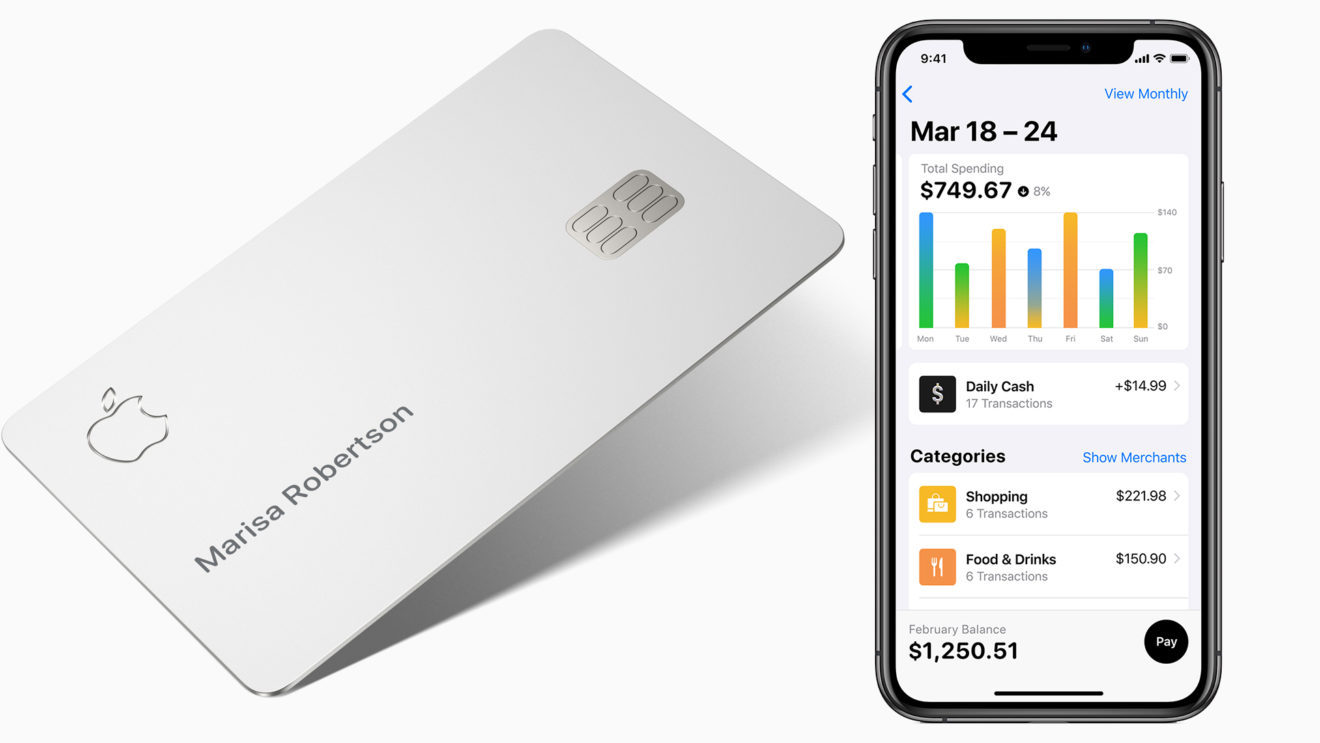
    Apple announced earlier today that’s it’s adding another benefit to the Apple Card starting this week, which is aimed to appeal to iPhone users. During its earnings call, Apple revealed a new program for Apple Card users that will allow them to buy or upgrade to a new iPhone much easier.

    Thanks to the new program, Apple Card owners will receive interest-free, 24-month financing on iPhone purchases. The new perk can be combined with the three percent cashback Apple Card users are getting on purchases from the company’s stores.

    The same offer is available through the iPhone Upgrade Program, so if you don’t have an Apple Card, that’s where you should look if you want to buy a new iPhone without having to pay for it upfront.

    The third option for Apple fans who just want to upgrade to a new iPhone is to take advantage of the company’s trade-in program, which will allow them to pay a lot less for a brand new model. And it looks like this is one of the options that many customers are taking advantage of, as CFO Luca Maestri said on the call. The number of iPhone trade-ins is more than five times higher than last year.

    The move is most likely another important step that brings Apple closer to the launch of the so-called “iPhone subscription,” which has been speculated for many years now. Tim Cook’s most recent comments certainly confirm Apple is considering such a service:

    We’re cognizant that there are lots of users out there that want a sort of a recurring payment like that and the receipt of new products on some sort of standard kind of basis, and we’re committed to make that easier to do than perhaps it is today.

    Although an “Apple Prime” doesn’t exist yet, Tim Cook’s statements suggest that if enough people are willing to pay every month for the privilege of having the latest iPhone, such a subscription service will eventually be made available.

  • Maybank Kim Eng, PhillipCapital Among DDoS Targets

    Maybank Kim Eng, PhillipCapital Among DDoS Targets

    Disruptions caused by the cyberattack on the trading houses lasted from 30 minutes to the whole morning session on October 24.

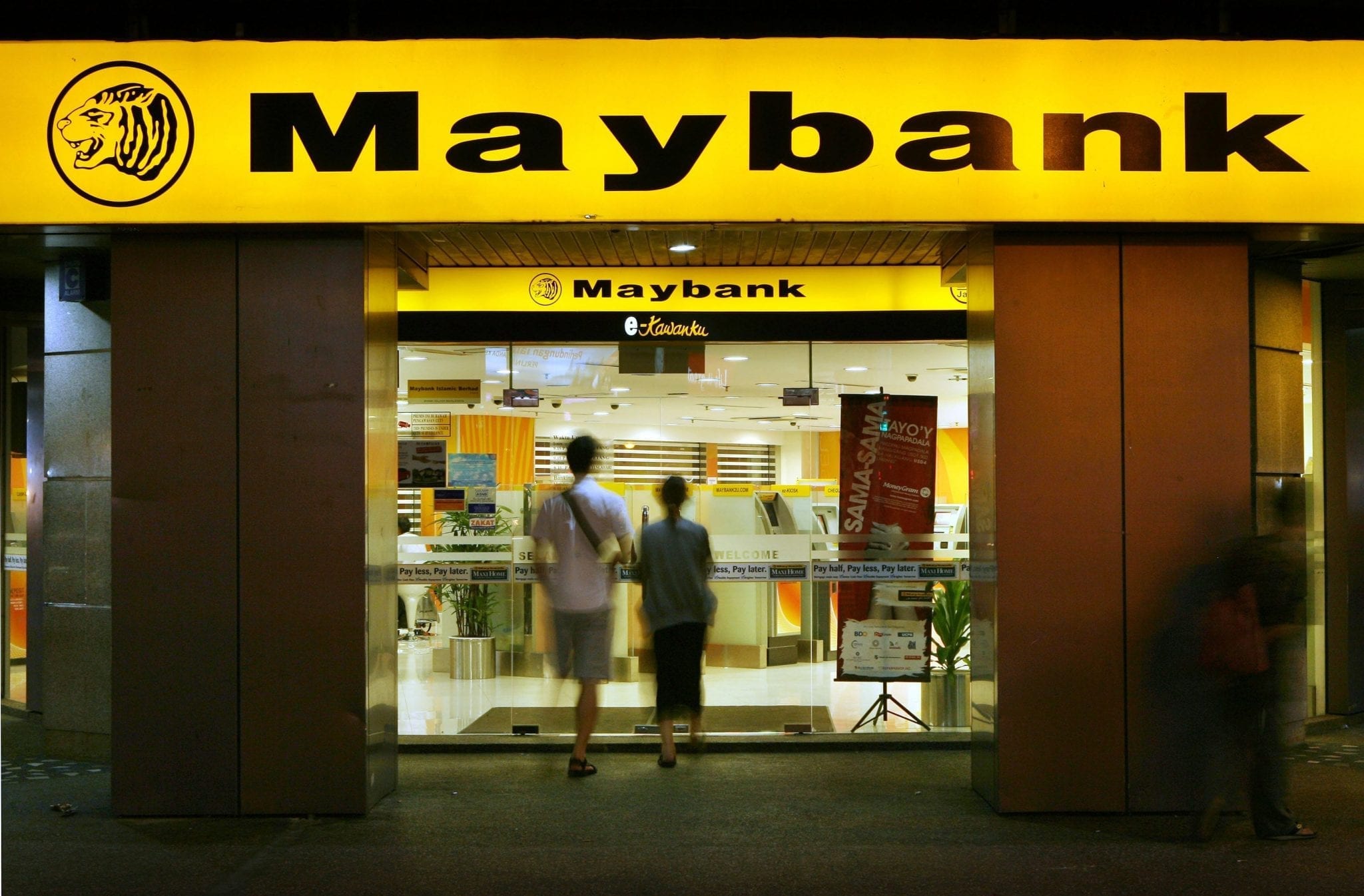
    Maybank Kim Eng and PhillipCapital spokespersons have confirmed their brokerages were among those that faced disruptions last Thursday, when up to five trading houses were hit by distributed denial-of-service (DDoS) attacks.

    The impact was minimal as we swiftly mitigated the attack. At no point was the security of our clients’ information, online trading or Web services compromised, a Maybank Kim Eng representative said.

    PhillipCapital also confirmed that Phillip Securities and Phillip Futures were affected, but it took «immediate and appropriate actions» to limit the impact.

    The newspaper cited unnamed sources saying that RHB Securities, which operated the RHBInvest platform, was also affected. The firm declined to comment.

    A DDoS attack happens when the bandwidth or resources of a targeted system is flooded with unwanted traffic, making an online service or website unavailable.

    The Monetary Authority of Singapore (MAS) issued an advisory to financial institutions following the attacks to alert them of the increased risk of DDoS activities.

  • StanChart Beats Third Quarter Consensus Estimates

    StanChart Beats Third Quarter Consensus Estimates

    Standard Chartered posted a pre-tax profit of $1.11 billion, beating consensus estimates of $1 billion and resiliently reaping the rewards of its multi-year cost-cutting exercises.

    The bank recorded a net profit of $727 million in the three months ended September 30, up from $752 million in the same period last year. By region, Europe and the Americas led the pack with 19 percent income growth followed by ASEAN and South Asia at 13 percent. Despite ongoing unrest in Hong Kong, its Greater China and North Asia business defied the odds and registered 2 percent year-on-year income growth for the quarter.

    Our strategy of the last few years has progressively created a stronger and more resilient business,» said Bill Winters, Standard Chartered chief executive, in a statement. The continuing execution of that strategy remains our priority, enabling us to face the more challenging external environment confidently.

    Winters joined the bank in 2015 and has since then focused on restructuring by cutting management layers and thousands of jobs. After two years of losses, the bank returned to profit in 2017. In addition to profitability, the efforts aim to meet the target return on tangible equity of at least 10 percent by 2021, the bank noted.

    Still, there are growing headwinds from the combination of continuing geopolitical tensions and expectations of declining near-term global growth and interest, the bank warned.

  • HSBC Posts 24 Percent Profit Drop

    HSBC Posts 24 Percent Profit Drop

    HSBC posted a 24 percent drop in third-quarter profits despite a «resilient» Hong Kong business that managed to offset the city’s technical recession.

    The bank reported profits of $2.97 billion in the three months ended September 30, compared to $3.89 billion in the same period last year. HSBC’s pre-tax profits reached $4.84 billion, down 18 percent and below consensus estimates of $5.29 billion.

    In addition to a 2.9 percent decrease in revenue, primarily driven by lower global market activities, the bank also accounted for a number of provisions and one-off costs including a customer redress provision of $606 million, severance costs totalling $120 million and an expected credit loss provision of $400 million, mainly for unsecured retail lending and higher charges in its U.K. and Hong Kong commercial banking business.

    Despite the global results, the bank reportedly remained «resilient» in Hong Kong despite the headwinds. HSBC’s Hong Kong business registered a 1.3 percent uptick in adjusted pre-tax profits to reach $3.02 billion and push Asia’s pre-tax profits up 4 percent to $4.7 billion.

    Parts of our business, especially Asia, held up well in a challenging environment in the third quarter, said HSBC’s interim CEO, Noel Quinn.

    However, Quinn called performance elsewhere «not acceptable» underlining business activities within continental Europe and the non-ring-fenced bank in the U.K. and the U.S.

    Our previous plans are no longer sufficient to improve performance for these businesses, given the softer outlook for revenue growth. We are, therefore, accelerating plans to remodel them, and move capital into higher growth and return opportunities, he said, adding that the bank would not longer reach its return on tangible equity target of more than 11 percent in 2020.

  • Philippines Central Bank Issues Islamic Finance Rules

    Philippines Central Bank Issues Islamic Finance Rules

    Bangko Sentral ng Pilipinas aims to issue new implementation rules regarding Islamic finance before the end of the year and potentially allow banks to establish separate subsidiaries for the new business line.

    The BSP is pushing for an open approach where conventional banks can operate Islamic banking windows or establish subsidiary Islamic banks, BSP deputy governor Chuchi Fonacier said in a report, adding that she wants to issue implementation rules before the end of the year.

    Fonacier’s statement was made close on the heels of the Filipino government’s enactment of a law to promote Islamic finance which was signed by President Rodrigo Duterte in late August.

    BSP governor Benjamin E. Diokno said the law would «unlock the full potential of Islamic financing in fostering inclusive economic growth» highlighting the opportunity to access the banking system for Muslim Filipinos, particularly in the southern autonomous Bangsamoro Region. Fonacier echoed the sentiments adding that foreign Shariah-compliant banks would also be allowed to operate in the Philippines.

    Islamic banking in the Philippines is promising, she said.

    Despite a sizeable ten percent minority of Filipinos being Muslims, banking services catered to the segment’s needs remain limited. Of the country’s 45 universal and commercial bank groups only one – the Al-Amanah Islamic Investment Bank of the Philippines – operations in compliance with Shariah principles.

  • DBS Leverages Allfunds Platform

    DBS Leverages Allfunds Platform

    DBS inks an agreement with Allfunds to leverage its fund distribution capabilities and boost penetration in Asia.

    DBS’s retail banking and wealth management arm will look to leverage from the partnership «access to a broad range of investment funds and utilize the asset servicing services which Allfunds provides in Asia, and globally,» according to a statement.

    According to Allfunds’ Asia regional manager David Perez de Albeniz, the partnership marks a common goal towards increasing mutual funds penetration in Asia, highlighting potential synergies between DBS’s «innovative digital offering» and Allfunds’ open-architecture platform. Marc Lansonneur, head of managed solutions, balance sheet products and investment governance at DBS Wealth, echoed the sentiments and underlined the comprehensiveness of the Allfunds platform.

    Allfunds presents a one-stop solution for our distribution needs – access to an extensive fund eco-system, leading technology proposition, and a full suite of servicing capabilities – which we seek to leverage to achieve greater convenience, efficiency, and productivity moving forward, Lansonneur said.

  • HSBC advises to avoid a Lehman Crisis in China

    HSBC advises to avoid a Lehman Crisis in China

    More easing is required in the industry not only to improve ease of business, said a senior HSBC executive, but to prevent risks similar to the Lehman crisis.

    Peter Wong, deputy chairman, and Asia Pacific chief executive of HSBC, commented at a Shanghai financial summit on the need to improve corporate governance and investor protection in China in order to manage major systematic risks akin to the trigger of the last global financial crisis. We really don’t want to have another situation similar to the Lehman crisis in China, Wong said, according to a report.

    Whilst it has suggested greater stringency in certain facets, it also lauded regulatory easing, such as the recently relaxed foreign ownership rules, and urged for more similar moves. Wong proposed more easing in the insurance industry, such as ease of expansion into new cities and provinces, and in the banking industry, including the acquiring of deposits.

    It’s very difficult for foreign banks to get deposits in China, Wong said, adding that the country should «figure out a way» to address the issue, he said. We’ve been trying for a number of years. Now we’re developing, we’re increasing our share, but the journey is not easy.

  • China Accelerates Blockchain Growth

    China Accelerates Blockchain Growth

    China’s national parliament has passed a new law on cryptography aimed to facilitate development concurrently with the country’s central banking efforts to launch its own digital currency.

    The newly adopted law, effective as of January 1, 2020, «was necessary for regulating the utilization and management of cryptography, facilitating the development of the cryptography business and ensuring the security of cyberspace and information», the National People’s Congress Constitution and Law Committee.

    The new law distinguishes cryptography into three classifications: core, common and commercial. Core and common cryptography will be strictly managed by Chinese authorities and used to protect confidential national information.

    If cryptography is deemed as commercial, which assumes no risk to state security or the public interest, cryptography management departments and other relevant personnel are unable to ask for disclosure of «exclusive information related to the cryptography such as source codes and must keep the business secrets and privacy they get in their duties strictly confidential.

    The new law marks a further acceleration of China’s blockchain-related policy which is likely to pave the way to various initiatives including the nation’s efforts to launch its own digital currency which its central bank claims is almost ready.

    The law was also enacted one day after President Xi Jinping called for more research and investments into blockchain technology, stressing competition from other major countries and the need for China to obtain first-mover to increase «influence and rule-making power in the global arena».

  • Standard Chartered and IFC Offer Trade Finance Facility

    Standard Chartered and IFC Offer Trade Finance Facility

    It will be used to help sustain trade flows in developing countries and narrow the gap in global trade finance.

    Standard Chartered and the International Finance Corporation (IFC), a member of the World Bank Group, are partnering on a $1 billion facility to boost trade financing in emerging markets the two parties announced in a press release on Wednesday.

    This arrangement will allow the two partners to equally share the risk of trade flows of a portfolio of small and medium-sized enterprises and is expected to enable $4 billion in trade finance in Asia, the Middle East and Africa in the next three years.

    The announcement noted the $1.5 trillion global trade finance gap and said the facility will bring trade finance to local and regional companies, some of which are credit-constrained and rely on bank trade facilities to manage cash flows and purchase raw inputs.

    Paulo de Bolle, senior director of IFC’s Financial Institutions Group called the facility a «unique partnership that can help counter de-risking trends in developing countries and support real-sector demand for trade finance.»

  • OCBC Bank named World’s Best Consumer Bank byGlobal Finance

    OCBC Bank named World’s Best Consumer Bank byGlobal Finance

    OCBC Bank has been named the World’s Best Consumer Bank by international financial publication Global Finance. This comes on top of the ‘Best Bank in Asia-Pacific’ title that Global Finance awarded to OCBC Bank in April 2019. Mr Raymond Chee, General Manager of OCBC Bank’s New York Agency, was at the 20th World’s Best Bank Awards ceremony in Washington D.C. to receive the latest honour.

    Mr Ching Wei Hong, Chief Operating Officer of OCBC Bank, said: “We are honoured to be recognised as a global leader in consumer banking. This award is a testament to our unceasing obsession with customer-centricity. Competition is a constant in the consumer banking industry and consumers are constantly on the lookout for innovative products and services that blend seamlessly into the rest of our daily lives.

    “As we drive deeper customer engagements through our digital transformation, we will continue to maximise the value we offer to each customer by placing his or her needs, aspirations and ideals at the centre of our every product, service, process and policy.”

    Mr Joseph Giarraputo, President and Editorial Director, said: “Singapore consumers are benefiting from OCBC Bank’s early adoption of digital channels, with instant approvals for key banking products. By making use of the national data repository, MyInfo, as well as its own systems, OCBC is able to authenticate customers in real time and to pre-fill application forms with personal details. The bank has eliminated pain points for clients and is leading the way in frictionless banking. OCBC’s strong presence in Asian countries other than Singapore enables it to offer the same model in the rest of the continent.”

    Global Finance winners were selected based on performance over the past year and other criteria including reputation and management excellence. Global Finance made the selections after extensive consultations with corporate financial executives, analysts and bankers throughout the world.

    Most recently, OCBC Bank was the first in Singapore to enable customers to use their voice to perform banking transactions and access services, and the first in Singapore to enable cash withdrawals at ATMs using QR codes.

    OCBC Bank was the first bank in Southeast Asia to launch a robo-investment service that enabled customers to start investing and growing their wealth in a simple and self-directed way.

    OCBC Bank was the first bank in Singapore to allow customers to instantly open and use a new bank account, leveraging MyInfo and OCBC Bank’s digital KYC process; digital applications and instant approvals of OCBC’s most popular savings account, the OCBC 360 Account, have since grown three-fold. Also available is instant approval of online applications for products like personal loans and credit cards.

    OCBC Bank has earmarked $14M to roll out its new-age ATMs and digital service kiosks at 35 branches by 2020. This will enable customers to get their banking done without having to queue. Fifteen per cent of over-the-counter branch transactions have since been migrated from the teller counter to these machines.

    OCBC Bank was first bank in Singapore to offer a free online will writing service to help Singapore citizens and residents prepare their own wills within 10 minutes.

    The FRANK by OCBC banking programme created in 2011 remains the only programme in Singapore to provide millennials with banking products and solutions designed for them as they go from being students in tertiary education to entering the workforce as young professionals. FRANK by OCBC offers millennials deposit accounts, credit and debit cards, insurance, investment products and study loans.

    OCBC Bank has had the highest number of winners across the financial industry for four consecutive years at the Association of Banks in Singapore (ABS) Excellent Service Awards, and were also honoured with the Highest in Retail Banking Customer Satisfaction by J.D. Power’s 2018 Singapore Retail Banking Satisfaction Study. This year, the bank also won top honours for ‘Best ATM Innovation’ and ‘Best Self-Service Banking’ at The Digital Bankers Global Retail Banking Innovation Awards 2019.
     

  • Singapore’s Multi-Currency War Heats Up With Revolut Launch

    Singapore’s Multi-Currency War Heats Up With Revolut Launch

    After amassing more than 8 million customers, the tech unicorn has landed in Singapore, its second market outside Europe.

    After much anticipation, U.K. challenger bank Revolut has rolled out its services in Singapore. Customers can now open an account from their mobile phones and start spending worldwide in over 150 currencies at the real exchange rate without hidden fees.

    The digital-only bank had already been beta-testing its services over the past year and amassed 30,000 customers on its waiting list when it launched in the city-state on Wednesday.

    Revolut’s introduction promises to heat up the already competitive multi-currency war, which includes competitors YouTrip and in the near future, InstaReM and TransferWise.

    Revolut account holders get a multi-currency travel debit card and an account that supports the Singapore dollar and 13 other currencies, with another 14 more including, Indian rupees, Malaysian ringgit and Philippine pesos, to be added in the coming months, a press release said.

    Customers also get free worldwide ATM withdrawals, peer-to-peer money transfers, and foreign exchange, and its app integrates budgeting and savings management functionalities. Accounts are free, but the Premium account ($9.99 per month) and Metal account ($19.99) offer additional features and limits.

    At its launch event on Wednesday, the firm said it is working on bringing features that are already available in other markets, like cryptocurrency trading and commission-free stock market trading, to customers in Singapore.

    Revolut was founded by former Credit Suisse trader Nik Storonsky and former Deutsche Bank systems engineer Vlad Yatsenko in London in 2015 as a digital alternative to traditional banks. It has raised more than $336 million in funding from venture capital firms, and is valued at $1.7 billion.

    The firm opened its Asia-Pacific hub in Singapore office in 2018, where it employs 20 people. It plans to triple its headcount in the coming months.

    It plans to launch in the U.S. and Canada later this year.

  • UBS Reveals Client Overcharging Claims in Asia

    UBS Reveals Client Overcharging Claims in Asia

    Wealth management clients in Hong Kong and Singapore may have been overcharged, UBS said, adding that it is working with authorities and intends to reimburse affected customers.

    UBS claimed that it had identified and reported instances in which its global wealth management clients in Hong Kong and Singapore «may have been charged inappropriate spreads for bond transactions between 2008 and 2015.

    UBS intends to reimburse affected customers on a basis agreed with the relevant authorities,» the bank said in its third quarter report. UBS expects the relevant authorities will subject UBS to reprimands and fines as a result of their investigations.

    Despite the regulatory worries, Asia continues to be a primary growth driver for the bank, as evidenced by the latest figures. UBS’s global wealth management business posted net new asset of $10.9 billion in Asia, boosting the region’s total invested assets to $420 billion.

  • HSBC Setting Up Malaysian Asset Management Arm?

    HSBC Setting Up Malaysian Asset Management Arm?

    HSBC is reportedly setting up an asset management business in Malaysia in the midst of a major job-axing exercise.

    It is in the midst of setting up its team, looking to hire a CEO, CIO, and so on, according to a report from Malaysian media , citing an anonymous source.

    The process is such that you need to have a basic set-up and concurrently apply for a license from the Securities Commission Malaysia. A Malaysia-based spokesperson for HSBC declined to comment, according to the report.

    Assets under management (AUM) in Malaysia’s asset management market posted single-digit growth in four out of the last five years, according to a report by Nomura Institute of Capital Markets Research, with a contraction in 2018. This is a stark contrast with the 23.5 percent CAGR (compound annual growth rate) from 1999 to 2007. As of 2018-end, the industry’s AUM totaled around 744 billion Malaysian ringgits ($178 billion).

    Concurrently, Bank of Singapore agreed to acquire local asset manager Pacific Mutual Fund for $8.5 million in June, pending regulatory approval. Synergies from the acquisition are expected to result in more than just expanded distribution.

  • UBS Seeks Full Ownership of China Onshore Securities Firm by 2020

    UBS Seeks Full Ownership of China Onshore Securities Firm by 2020

    UBS continues to act as a pioneering foreign bank in mainland China taking full advantage of the accelerated timeline for foreign ownership cap removals by seeking full control of its securities joint venture by 2020.

    The accelerated removal of the ownership caps for securities companies means that UBS is expected to be permitted to increase its stake in UBS Securities China from the current level of 51 percent to 100 percent by 2020, the bank said during its quarterly result announcement this week. The exact effective date remains to be clarified.

    In July, Chinese authorities announced the removal of foreign ownership limits for securities, insurance and fund management companies next year, introduced a year earlier than planned.

    Others have also been actively taking advantage of Chinese liberalization including Citi which is reportedly setting up a wholly-owned onshore securities business.

  • CIMB Wants A Bigger Bite Of Singapore SME Banking Share

    CIMB Wants A Bigger Bite Of Singapore SME Banking Share

    CIMB Bank plans to double its market share from 3 percent to 6 percent by 2021 for its small- and medium-sized enterprise (SME) banking business in Singapore.

    One of the lender’s efforts to do so is the launch of its Asean-China Halal Corridor initiative last year, which is a trade network linking halal businesses across China and the region. The initiative – which encompasses agribusiness, cosmetics, food and beverage, fashion and pharmaceuticals – has seen a growing interest among SMEs here, with strong participation in a recent CIMB halal corridor workshop.

    Among the segments that we see (venturing abroad), a lot of cross-border SME regional flows are manufacturing and trade, F&B (food and beverage) including the halal market, and the agricultural commodity sector, said Yong Jiunn Run, head of CIMB commercial banking.

    China’s halal sector is expected to reach $1.9 trillion by 2021, and there is a potential customer base of 266 million in ASEAN and China. Along the process of aiding F&B companies to obtain halal certification, the bank found that this group of SMEs usually proceeds to obtain Islamic financing to tap potential Muslim investors, giving a lift to its SME banking segment.

    Since 2014, the Malaysia-headquartered bank has seen a take-up rate among SMEs for Islamic financing grow by more than 48 percent per annum in the past five years.

    Besides tapping on Islamic finance, the bank recently refreshed its current account offering for businesses, also known as CIMB BusinessGo (BizGo), to provide a unique offering.

    First launched in January 2017, the new bundle aims to address SMEs’ needs in the market that are not being met by the current incumbents, said Ian Chan, CIMB Bank Singapore’s co-head of transaction banking and regional head of digital banking.

    New features include free FAST (Fast And Secure Transfers) transactions, best forex rates guaranteed for transfers to Malaysia, and interest rates of up to 1.88 percent per annum, amongst the most competitive in the market. It’s a product we revamped for two reasons – first and foremost, it’s CIMB’s 10-year anniversary in Singapore, Chan said.

    Secondly, we also want to shout out to the market that we want to grow our SME segment and help our clients to expand their businesses into ASEAN.

    While CIMB is evaluating an application for the digital banking licenses that are up for grabs in Singapore, Yong is against the idea of pursuing the license just for the sake of it.

    If you want to go into the digital bank arena, what customer pain points are you trying to solve? That’s very key as it goes back to basics. If those basics can be achieved without going digital, then what do you really want to achieve? he asked.