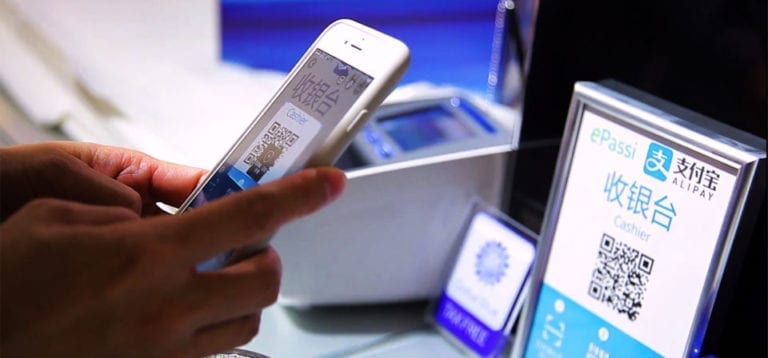
Ant International is making inroads into the traditional banking industry in Asia, with Hang Seng Bank being the first to partner with the payment network in Hong Kong. This collaboration will enable customers to make cross-border QR payments directly from the bank’s mobile app.
Users of the Hang Seng Mobile App are now able to scan QR codes to facilitate payments in mainland China and overseas. This is made possible through the Alipay+ network, which boasts access to over 100 million merchants across 55 countries and regions. This marks a significant milestone in the integration of traditional banking apps with the fast-growing digital wallet and QR-based payment network ecosystem in Asia.
Banking Sector Taps Into Expansion of Cross-Border Payments
Banks are finding that integrating with Alipay+ allows them to enhance their cross-border payment capabilities without the necessity of establishing separate connections with merchants and payment networks in individual markets.
Alipay+, which serves as Ant International’s unified wallet gateway, is connected to more than 50 digital wallets and financial institutions. It is accepted across more than 220 markets globally and has forged partnerships with over ten national QR payment systems including Malaysia’s DuitNow and Thailand’s PromptPay.
With the demand for cross-border payments originating from Asia-Pacific predicted to grow faster than the global average, this presents banks with a prime opportunity. The expectation is that outbound consumer-to-consumer and consumer-to-business cross-border payment volumes from the region could hit $3.7 trillion by 2032, almost twice the level recorded in 2024. This trend enables banks to retain customers within their own digital ecosystems, even when they travel or carry out international transactions.
Alipay+ Builds Banking Network Across Asia
Hang Seng Bank joins an increasing number of Asian banks that are connecting their mobile banking customers to Alipay+. Existing banking partners include OCBC in Singapore, Public Bank in Malaysia, Bank of the Philippine Islands, Asia United Bank in the Philippines, Kasikorn Bank and Siam Commercial Bank in Thailand, as well as Vietcombank in Vietnam.
This model enables customers to continue using their familiar banking app while gaining access to a much larger international merchant network. In addition to payments, banks can utilise the Alipay+ Super App Platform to integrate additional services through mini-programs and plug-in solutions, which include travel-related services and other digital features.
Ant International is not only positioning itself as a payments provider but increasingly as a technology and infrastructure partner to banks. Alongside Alipay+, the company is developing AI-based foreign-exchange technology and blockchain-powered infrastructure for cross-border liquidity management. Ant International already collaborates with global financial institutions such as Citi, Barclays, Standard Chartered and HSBC across various technology initiatives.
For traditional banks, the rise of networks like Alipay+ signifies a broader strategic shift in Asian payments. Banks are increasingly connecting their own apps to external payment ecosystems rather than competing with digital wallets solely through proprietary solutions. The partnership with Hang Seng brings this model to Hong Kong, one of Asia’s primary banking and cross-border financial hubs.
Questions & Answers
What does the partnership between Hang Seng Bank and Ant International entail?
This partnership allows Hang Seng Bank’s customers to make cross-border QR payments directly through the bank’s mobile app via the Alipay+ network.
How is Alipay+ influencing the cross-border payment landscape in the Asia-Pacific region?
Alipay+ is helping banks expand their cross-border payment capabilities without the need for separate connections with merchants and payment networks in individual markets.
What is the broader strategic shift in Asian payments?
There is a strategic shift in favor of banks connecting their own apps to external payment ecosystems, rather than competing with digital wallets solely through proprietary solutions.