Tag: Banking

  • New UBS Chair Under Pressure to Deliver

    New UBS Chair Under Pressure to Deliver

    Shareholders of UBS voted incoming chairman Colm Kelleher into office with overwhelming support. Now he must meet their expectations.

    With UBS’s record results last year it is no surprise there was no shareholder rebellion at today’s annual general meeting and that shareholders voted overwhelmingly in support of new and existing board members. Incoming chairman Irishman Colm Kelleher garnered 97.7 percent of the votes in favor, the bank said at today’s annual general meeting (AGM).

    Kelleher worked for Morgan Stanley for three decades, last serving as president of the investment bank from which he retired in 2019. He was somewhat of a surprise selection to take over from Axel Weber who is stepping aside because of a 10-year term limit.

    UBS’s new chairman won the post over candidates such as Roche’s overseer Christoph Franz, Swiss ex-central banker Philipp Hildebrand, and ex-Unicredit boss Jean-Pierre Mustier.

    Perhaps because Kelleher is not Swiss, the candidate for the vice-chair was Lukas Gaehwiler, elected today with an approval rating of 96.9 percent, thus adding «Swissness» to the board. Gaehwiler is the chairman of UBS Switzerland since 2017 and was a member of the UBS Group Executive Board from 2010 to 2016. Before that, he was at rival Credit Suisse for 20 years. part of Gaehwiler’s job will be to represent UBS in Switzerland’s powerful industry associations and the corridors of political power.

    The following were elected to an additional one-year term:

    • Jeremy Anderson (98.46%)
    • Claudia Boeckstiegel (98.70%)
    • William C. Dudley (99.10%)
    • Patrick Firmenich (99.11%)
    • Fred Hu (95.83%)
    • Mark Hughes (99.12%)
    • Nathalie Rachou (99.12%)
    • Julie G. Richardson (97.79%)
    • Dieter Wemmer (98.59%)
    • Jeanette Wong (98.40%)

    The shareholders approved the discharge of the members of the board of directors and the group executive board from legal matters for the 2021 financial year by 93.15 percent, but that excludes all issues related to a cross-border tax dispute with France.

  • UBS Loses a Top IT Talent to Consulting Firm

    UBS Loses a Top IT Talent to Consulting Firm

    The man who kept the heart of the core banking system at UBS beating is moving to a Big Four consulting firm.

    Prafull Sharma, who joined UBS in 2019 and served as managing director and head of core banking systems, is moving on to PricewaterhouseCoopers (PwC), the consulting and auditing firm announced Friday.

    Sharma has also appointed a partner in the financial services consulting division, and becomes the new head of CIO Advisory at PwC, focusing on technology, strategy and cloud transformation,

    Prior to his stint at UBS where he was also chief data officer for personal and corporate banking under multichannel chief Andreas Kubli, Sharma was at PwC competitor KPMG Switzerland.

  • UBS Announces Share Repurchase

    UBS Announces Share Repurchase

    Switzerland’s largest bank announced it will commence a new share buyback program starting March 31.

    UBS announced it is moving ahead with plans to purchase up to $6 billion of its shares over the next two years starting tomorrow, the bank said in a statement released today.

    In conjunction with a share buyback program launched in February 2021, UBS intends to purchase up to $5 billion by the end of this year.

    As part of the 2021 repurchase program, UBS bought back over 240 million of its shares, representing 6.5 percent of current registered capital at the time. The value of the transaction was 3.8 billion Swiss francs of which 1.5 billion francs ($1.6 billion) took place in 2022, the bank said.

  • Raiffeisen Planning Digital Services Expansion

    Raiffeisen Planning Digital Services Expansion

    The Swiss cooperative bank plans to spend a significant portion of its 500 million Swiss franc strategy budget on digitization by 2025.

    Over the past several years, Raiffeisen Switzerland was replacing outdated banking systems which had taken up numerous resources. With that project now completed, the bank can proceed with its digitalization plans.

    Raiffeisen has attached great strategic importance to digitalization even before the group strategy. Our digital channels, especially our e-banking, have enormous significance. However, we want to position our digital solutions more broadly and continue to drive digitization as a complement to our physical branches, interim CIO Robert Schleich said in an interview with inside-it.ch

    With the foundation now in place for implementing digital products, Raiffeisen has reached a comfortable starting position from which digital services can be expanded, Schleich said.

    But the bank is not starting completely from scratch. Its mobile e-banking app has over one million users and, according to Schleich, is gaining ground among competitors. He admitted the bank was lagging behind competitors, but now that the core banking system has been renewed it can be built upon.

    Process efficiency is also an important element, Schleich said. For the core mortgage lending business, it’s not just about digitizing the existing process, but also improving it. That means the ability to conveniently apply for mortgages online and to be able to check the application more quickly.

    We’re spending 500 million francs on the entire group strategy by 2025. There’s more to it than digitization. For example, new customer business or the diversification of income. However, a significant portion of the overall budget is reserved for digitization itself, Schleich said.

    Schleich will be handing the CIO reins to Niklaus Mannhart in September 2022 at the latest, but cannot discuss issues with him since he is still under contract at his current employer.

    For now «I’m concentrating fully on the interim management of IT at Raiffeisen Switzerland. We are currently discussing what will happen after that. There are more than enough exciting tasks at Raiffeisen,» he said.

  • UBS Named as Bank for Shell Company of Roger Ng’s Wife

    UBS Named as Bank for Shell Company of Roger Ng’s Wife

    In the latest of Roger Ng’s 1MDB trial, an FBI agent claims that his wife played a major role in creating a shell company to open an account with Swiss financial giant UBS.

    Roger Ng’s wife, Hwee Bin Lim, played a central and crucial role» in helping her husband launder illicit payments from the 1MDB bond deals.

    Prosecutors claim that Low and his associates siphoned at least $500 million from the first $1.75 billion bond transactions called «Project Magnolia» with ex-Goldman colleague Tim Leissner testifying that he had received more than $60 million from Low into accounts controlled by his then-wife Judy Chan Leissner before using those accounts to send $35.1 million to Ng through an entity set up by Lim.

    In the latest development, FBI special agent Sean Fern took the stand and testified about Lim’s role in setting the shell entity using a raft of emails as proof.

    According to Fern, Lim inquired about creating a shell entity one day before the first 1DMB bond deal closed. The shell company – first named «Silken Waters» before later being renamed «Victoria Square» – was opened along with a bank account at UBS.

    Although Lim’s mother, Tan Kim Chin, was listed as the beneficial owner, Fern said he traced emails showing that bankers communicated directly with Lim about Victoria Square and the UBS account.

    Ng has argued that the money sent from Leissner’s wife to Lim, who has not been charged, was for an unrelated business transaction.

  • VietinBank Securities eyes another record year

    VietinBank Securities eyes another record year

    VietinBank Securities eyes record profits again this year through the stock market itself is likely to be down.

    Its board has approved a profit target of VND505 billion ($22 million), 5 percent up from last year.

    Last year pre-tax profits tripled to VND480 billion on revenues of VND1.06 trillion.

    Tran Phuc Vinh, its chairman, said though the stock market is no longer booming like last year and growth is likely to be slower this year, he expected the number of new retail investors to keep rising.

    “We need to invest in technology, and increase salaries, bonuses, and commissions to attract more brokers and collaborators”.

    The brokerage is also set to enter corporate bond consultancy and distribution and step up financial activities by raising its margin rate to 200 percent of shares owned.

  • UBS Discloses Russian Exposure

    UBS Discloses Russian Exposure

    Switzerland’s biggest bank warns about ongoing effects on markets and the global economy from measures caused by Russia’s attack on Ukraine.

    Out of UBS’ total emerging market exposure of $20.9 billion at the end of last year, $634 million was attributable to exposure in Russia, the bank said in its annual report for 2021 Monday.

    This amount, which has been reduced since, does not include assets totaling $51 million held in the bank’s Russian subsidiary. Nor does it account for unexpected increases in exposures due to settlement risk on certain open transactions with Russian banks and non-bank counterparties or Russian underlying due to sanctions, it said. As of March 3, the bank identified a «small number» of global wealth management clients subject to the recently introduced sanctions, who had outstanding loans below $10 million.

    As of the same date, UBS’ market risk exposure to Russia was limited while direct country risk exposures to Ukraine and Belarus as of December 31 were insignificant. Furthermore, the bank does not hold any material reliance on Ukrainian or Belarusian collateral within its Lombard portfolio, it said.

  • UBS Bankers in Spain Jumping Ship

    UBS Bankers in Spain Jumping Ship

    UBS sees bankers and managers depart from its Spanish unit prior to its sale to a local competitor. A decision by UBS last year to sell its Spanish unit to Singular bank appears to have led to an exodus of at least eight private bankers and managers, Bloomberg reported Wednesday.

    Two of the departing bankers are said to handle very wealthy clients, while another investment manager with over 16 years experience is joining them.

    The departures add to those who left since UBS announced the sale in October. They include Jose Maria Abril Taboada, who joined Spain’s Bankinter in February, and Jose Maria Gil de Santivanes who in January left for Credit Suisse, the report adds.

    UBS’s European bank led by manager Christine Novakovic, is selling its Spanish branch to Singular Bank, which specializes in digital solutions. Investment banking and fund sales activities in the country are not part of the sale, however.

    The sale, which is expected to be concluded in the third quarter of this year, was to include all client assets and the UBS team in Madrid. In that respect, some new calculations might be due.

  • HSBC More Than Doubles Profit

    HSBC More Than Doubles Profit

    HSBC more than doubled its profit in 2021, despite flat revenues and costs, driven by a significant improvement in expected credit losses. HSBC reported $14.7 billion in profit after tax for 2021, according to its latest results, marking a 141 percent increase compared to 2020. Revenue ($49.6 billion, down 2 percent) and operating expenses ($32.1 billion, up 1 percent) stayed flat but the bank saw a significant improvement in expected credit losses (ECL) with a net release of $900 million compared to an $8.8 billion charge last year.

    The global economic recovery supported our 2021 financial performance, as the release of expected credit losses resulted in an improvement in the profitability of the Group and all global businesses, said HSBC group chief executive Noel Quinn.

    Our interest-rate sensitive business lines continued to be adversely impacted by low-interest rates, but our net interest margin remained broadly stable during 2021 and the outlook is now significantly more positive.

    In addition to better ECLs, the bank also highlighted a higher share of profit from its associates as a key driver of the positive results in 2021, increasing 11 percent to $29.5 billion. HSBC’s principal associates include Bank of Communications and the Saudi British Bank.

    The bank was profitable across all regions, most notably in Europe where its U.K. business posted a pre-tax profit of $3.5 billion compared to a $4.2 billion loss in the previous year.

    But pre-tax profit in Asia dipped 5 percent to $12.2 billion with a material decrease in Hong Kong from $8.2 billion in 2020 to $5.9 billion in 2021.

    While the bank observes «good business momentum» coming into 2022 in most areas, with expectations of mid-single-digit lending growth, Asia may continue to see headwinds.

    The bank expects weaker performance for Asia in the first quarter, specifically within the region’s wealth unit.

  • UBS Fintech Pioneer Joins Digitization Initiative

    UBS Fintech Pioneer Joins Digitization Initiative

    The Open Wealth Association is taking a big step toward a standardized digital interface for wealth managers by appointing a top UBS executive to its board.

    Switzerland’s largest bank is the seventh member of the Open Wealth Association, whose mission is to strengthen Switzerland as a financial hub and innovation center.

    It aims to connect financial institutions, WealthTechs and other service providers, and setting the Open API standard for the global wealth management community.

    To help in these efforts, UBS is delegating its head of multichannel, Andreas Kubli, to the association’s board, Open Wealth announced Thursday. He is considered one of UBS’s digitalization pioneers and has an excellent network. UBS is expected to contribute in particular to the development of an API standard for international wealth management.

    The Open Wealth Association is the result of an initiative between the St. Galler Kantonalbank (SGKB) and the consulting firm Synpulse

    We are proud that after just one year we are already working with seven major custodian banks and more than 30 wealth techs and service providers in the association, Zurich-based Open Wealth Association and Synpulse partner, Raphael Bianchi said.

  • Switzerland and Singapore to Teamup on Fintech

    Switzerland and Singapore to Teamup on Fintech

    Switzerland and Singapore, the often called Switzerland of Asia, are looking towards financial sector digitalization. A conference slated for June in Zurich seeks to do just that.

    The Point Zero Forum» intends to bring public sector leaders together with top private sector counterparts in businesses and finance, from June 21 to 23 in Zurich, Switzerland’s State Secretariat for International Financial Matters (SIF) announced on Monday.

    The event will feature a high-caliber lineup, including Swiss Federal Councillor Ueli Maurer and Singapore’s Deputy Prime Minister Heng Swee Keat, who will open the event. The President of the Swiss National Bank (SNB), Thomas Jordan , and UBS Group CEO Ralph Hamers, will also be in attendance, according to the program from the website.

    The directors of the respective financial supervisory authorities, Ravi Menon from the Monetary Authority of Singapore (MAS) and Urban Angehrn from the Swiss Financial Market Supervisory Authority (Finma) will also join the conference.

    Deputy Prime Minister Heng Swee Keat, who also serves as Coordinating Minister for Economic Policy,  sums up the need for such an endeavor.

    Digital technology has enormous potential to change the world for the better, especially through finance. To unleash the potential, we need to seek new ways of working together, address key global challenges in partnership, and seize the new opportunities.

  • Private Banking Drops its Traditional Restraint

    Private Banking Drops its Traditional Restraint

    New money is flooding private banks although it is not necessarily from millionaires. The catchphrase is potential. Last year was a record one for Swiss private banking, as one institute after another reported a historic high. There is a key metric that sticks out, and one that the sector had difficulty with until recently.

    Invested assets, or assets under management, are clearly growing again as 2021’s buoyant equity markets drove double-digit gains at UBS, Julius Baer and Geneva-based private bank Pictet.

    It should be a triumph for the sector, the mainstay of Swiss finance. But looking more closely, one thing does stand out – private bankers have become far less choosy.

    The unwritten $1 million US dollar barrier to entry no longer seems to apply when it comes to so-called net new money, net new assets, or even UBS’s mouthful for the term, net new fee-generating assets – all of which can be generalized as expressions of new client investment mandates and assets isolated of exchange rate and market movements.

    Swiss private banks have become more flexible that way, confirms Andreas Arni in an interview with finews.com. We are not a retail bank. In that way, there is an entry threshold. But we don’t have a strict minimum. We look at the potential of the client. You can say that, generally, we welcome younger people who have established their own company.

    Julius Baer, which is seeing new momentum in its Swiss business, has also been swayed by modest fortunes. A spokesperson confirmed that there is no fixed minimum for the bank in its home market. We can lend our hand even with a relatively moderate level of assets for clients who have a long-term perspective related to the growth of their wealth.

    The million seems to have been replaced by the promise of future millions. Although it is by no means a safe bet, it is a trend that digitalization has made possible.

    The trend towards internet-based advisory models has been propelled forward by the pandemic, turning numerous young entrepreneurs into millionaires. And the spread of crypto-investments, and their fluctuating prices, has made some of them very wealthy practically overnight.

    Traditional private banking is a geriatric business. In Switzerland, wealth is concentrated in the hands of retirees. More than out of five households where the male spouse is more than 65 years old has taxable assets of more than $1 million, Zurich statisticians have calculated.

    But private banks can now use digital channels to efficiently serve smaller piles of client assets. A clear example of that is market leader UBS, which bought robo-advisor Wealthfront in the U.S. for $1.4 billion. It did that in the hope of acquiring a more youthful clientele while in the domestic market, Vontobel offers up its Volt app, which gives users active asset management advice. The minimum assets required – about $10,000.

    Practice shows, however, that it is best to invest a medium-sized six digit figure if a client wants to fully benefit from Vontobel’s investment expertise, a company spokesperson maintained.

    And there are, of course, exceptions that only serve to confirm the rule. Pictet says it welcomes clients if they have about $2 million to invest although they do not officially confirm the figure. Although the sector may not be showing as much restraint as before, it still seems to adhere to another well-practiced characteristic. Silence.

  • HSBC Cuts Over 100 Swiss Jobs in Geneva

    HSBC Cuts Over 100 Swiss Jobs in Geneva

    A year ago, HSBC’s Swiss private bank was still considering Geneva as a growth market. Now it is cutting jobs and reducing its office space in Geneva.

    After a bad year for Swiss private bank HSBC in which wealthy clients withdrew a net $1 billion, it is cutting 110 jobs in Switzerland and reducing office space in Geneva, British newspaper Financial Times reported Monday.

    Employees at the Quai des Bergues office in Geneva’s city center were informed last Monday that two floors of the building would be closed and more workers would have to share their desks.

    The move is part of the bank’s plan to reduce the costs of its office space in the city by around 20 percent over the next few years, making a significant contribution to improving the company’s profitability in Switzerland, according to an internal memo seen by the FT.

    The cuts in Switzerland come just a year after HSBC Group said the country was a market it wanted to invest in to grow its wealth management business.

    Many of the back- and middle-office functions will be moved to lower-cost locations, such as Poland and Mumbai, according to further reports. The reduction of office space is part of the British HSBC Group’s strategy to radically cut costs; at its headquarters in London, these costs are to be reduced by as much as 40 percent, as finews.ch also reported earlier.

    The measures taken in Geneva illustrate the pressure on HSBC’s Swiss private bank, which saw net new money outflows of around $1 billion last year.

    The FT suggests the decline was due to some very large clients withdrawing their assets, rather than a decline in the overall number of clients. HSBC will present its 2021 financial statements on February 22, 2022.

    HSBC’s spokesman said the job cuts in Geneva would have no impact on the front office, adding the bank plans to continue hiring relationship managers and investment advisors in the coming years.

    We remain fully committed to Switzerland,» he told the British newspaper. The Swiss bank will grow its business with clients from Europe, the Middle East and Asia, expand its offering to ultra-high-net-worth clients and continue to hire talent.

  • Are Bankers Ready To Become Gamers

    Are Bankers Ready To Become Gamers

    Play-to-Earn games where participants convert digital credits into real-world money are gaining in popularity and are the gaming industry’s next big thing. Blockchain-based technology is upending the gaming industry. Until recently, regular games didn’t offer monetary compensation to gamers. Instead, proceeds flowed to game platforms.

    These new types of play-to-earn games are an early iteration of what many see as the promise of Web3,» Alexander Braun, an executive director at Capco responsible for digital strategy and innovation.

    In the early web, referred to as web1, users consumed content in a way best described as read-only.

    Technological advances gave way to Web2, giving users read-write access, and enabling them to load content onto platforms such as YouTube and Facebook.  These platforms went on to monetize the shared content.

    Introducing non-fungible tokens (NFTs) allows players to earn and own digital assets, which they can convert into money and use outside the game. This decentralization of economic ownership is a key component of Web3.

    In this sense, these games have become virtual economies. The hype around NFTs and the metaverse are closely connected to this development, Braun says.

    The global video gaming market is estimated to reach $268 billion by 2025. This sum should be setting off alarm bells at banks.

    The NFTs earned in such games are manifold and include virtual characters, decorative items, and pieces of land, which players can earn and transfer into real-world money.

    Microsoft’s $70 billion planned acquisition of game developer Activision Blizzard last month, and Walmart’s filing of patents last year related to creating and selling virtual goods show the importance businesses are assigning to games and the metaverse.

    Some go as far as to say the paradigm shift in gaming could serve as a blueprint for the start of a new economy, based on a self-governing financial system. One in which the way people interact with traditional financial institutions and with governments will fundamentally change.

    This expectation is certainly the driving force behind the billions of dollars invested in blockchain-related projects, Braun says.

    Banks can enter the trend in different ways beyond the short-term gain of improving efficiencies and streamlining outdated processes. It is also a massive opportunity for them to generate new business, Braun says.

    Yet the discussion is currently dominated by the banks’ fear their role as an intermediary will be made redundant by blockchain technology, he adds.

    However, if banks learn the costly lessons from the software industry, which was afraid of being disintermediated by open-source-software in the late 1990’s, initially fighting it and almost going extinct in the process, only to later embrace it becoming all the more profitable as a result, they will have an important and very prosperous role to play in the future, Braun says.

    Or is the real question: will gamers become bankers before bankers become gamers?

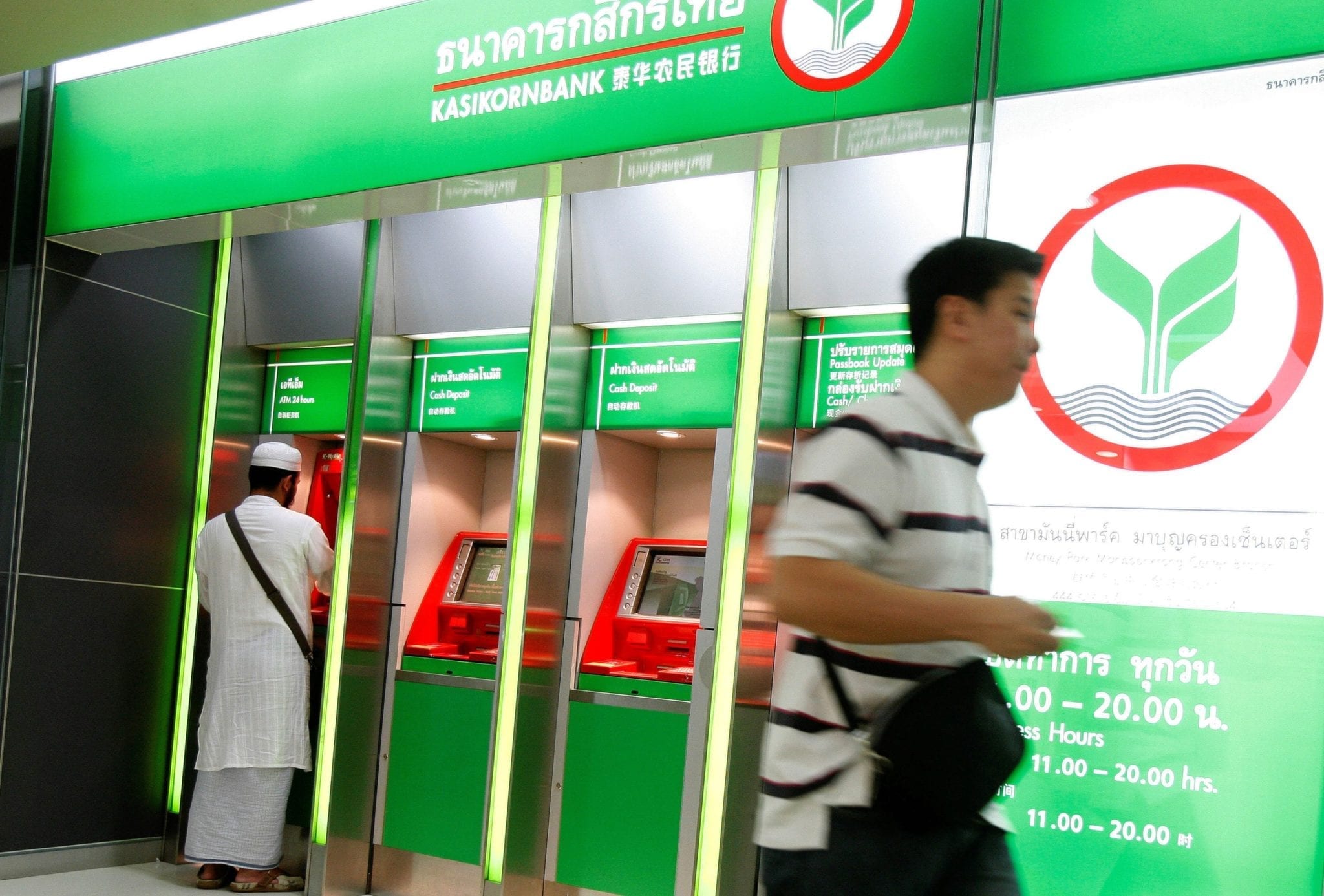
  • KBank earns S&P Global Sustainability Award with Gold Class distinction

    KBank earns S&P Global Sustainability Award with Gold Class distinction

    Kasikornbank (KBank) has risen to the forefront as a world-class Bank of Sustainability after it was awarded the prestigious S&P Global Sustainability Award with Gold Class distinction in recognition of its distinctive performance that has harmoniously integrated environment, social and economic/governance (ESG) aspects into its operations. The Bank has also demonstrated its commitment to developing its work in response to challenges and opportunities balanced across all dimensions.

    Ms. Kattiya Indaravijaya, KBank Chief Executive Officer, said that with our belief in the principles of a Bank of Sustainability under good corporate governance, appropriate risk and effective cost management, KBank has focused on a balance in our business operations across all three dimensions, i.e., the economy, society and environment. We are committed to elevating our standards of sustainable operations, as evidenced by our participation in both national and international assessments.

    KBank is the first and only Thai bank to be selected for inclusion in the Dow Jones Sustainability Indices(DJSI) for the sixth consecutive year. In the latest development, the Bank has won an S&P Global Sustainability Award, earning the prestigious S&P Global ESG Score with Gold Class distinction – the highest level in the global banking industry.S&P Global has assessed 7,554 leading companies worldwide which are members of the Dow Jones Sustainability Indices (DJSI). Of this number, 71 banks have been selected to be included in the Sustainability Yearbook 2022, with 3 banks earning Gold Class distinction; 14 banks, Silver Class; and 9 banks, Bronze Class.

    In considering the award, S&P Global has assessed KBank’s operations in three dimensions, as follows:

    In terms of the economy/corporate governance, S&P Global has assessed KBank’s operations, with the weight given to economic operations at 55 percent. The assessment shows that KBank has sound corporate governance operations, plus the best crisis and risk management, as well as anti-financial crime policies and measures compared to related operations of other banks worldwide. Additionally, KBank has created value from the efficient use of numerous resources, including financial data and technologies, while also collaborating with its business partners in various ecosystems with the aim of developing innovations and services to generate sustainable returns and meet the customers’ lifestyle and business needs during both the COVID-19 crisis and ‘new normal’ period in a sustainable manner.

    In terms of the society, S&P Global has assessed KBank’s operations, with the weight given to social contributions at 32 percent. The assessment shows that KBank has the best human rights operations, plus management of CSR activity, occupational health and safety, financial inclusion, and disclosure of social data compared to related operations of other banks worldwide. Moreover, KBank has promoted sustainable society by developing platforms for the provision of financial literacy and various skills to meet the lifestyle needs of the new era. Notable endeavors include the launch of Klasssi and AFTERKLASS platforms, and other CSR activities that are intended to maintain and foster cordial relations with communities under the ‘Tham Di Tham Dai’ (Employee Volunteer Hours) project.

    In terms of the environment, S&P Global has assessed KBank’s operations, with the weight given to environmental operations at 13 percent. The assessment shows that KBank has the best reporting system for environmental data compared to related operations of other banks globally. Under its environmental operations, KBank has announced its Net Zero Commitment.  

    Along with this, the Bank has developed its climate change strategies by making necessary adjustments to the Bank’s operations in order to reduce greenhouse gas (GHG) emissions and promote awareness of climate change among customers, businesses and the society as a whole. Such strategies should enable shifts in consumer behaviors, improvement of production processes, reduced energy consumption, and creation of real changes in alignment with this urgent agenda of the global community.

    Ms. Kattiya said in closing that with our belief in the principles of a Bank of Sustainability, KBank focuses on elevating our work standards, accounting for the environment, society and governance. This can be achieved through the development of environmentally friendly financial products and services in order to support our customers on their decarbonization journeys, and aid the Thai society in the transition to a net zero economy. Furthermore, the Bank aims to provide retail customers improved access to financial services in order to generate sustainable value for all stakeholders, and pass a sustainable world on to future generations.