Tag: Banking

  • DBS has Strong Interest in Cryptocurrencies

    DBS has Strong Interest in Cryptocurrencies

    The bank is seeing more traction for its crypto assets business, which provides cryptocurrency trading and digital custody for accredited investors.

    Daily trading value on DBS’ digital exchange has grown tenfold since its launch to reach $30-40 million, with an investor base of 120 accredited investors and some S$80 million in digital assets under custody, DBS chief Piyush Gupta said at a media briefing last week as it announced its first-quarter results.

    I do think given the amount of interest in all the four cryptos that we trade now, that interest is quite high. And therefore, I do think it will pick up. But whether it picks up to tens of millions, or hundreds of millions of income over the next few years, it’s hard to say. So my thinking is, we should get in there, figure it out and grow and then we’ll get a better sense for how big this could be in time,» Gupta said, adding that the bank has a pipeline of hundreds of customers.

    The DBS Digital Exchange offers exchange services between SGD, USD, HKD, JPY, and four of the most established cryptocurrencies: bitcoin, ether, bitcoin cash, and XRP. Gupta said the bank would be scaling the business in subsequent quarters by issuing security tokens and extending the exchange’s trading hours, which currently works during Asian trading hours, to round-the-clock.

    Earlier this month, the bank also announced the development of Partior – an open industry platform with Temasek and J.P. Morgan that aims to reimagine and accelerate value movements for payments, trade, and foreign exchange settlement.
  • Vietnam stock market daily trading value closes in on Singapore

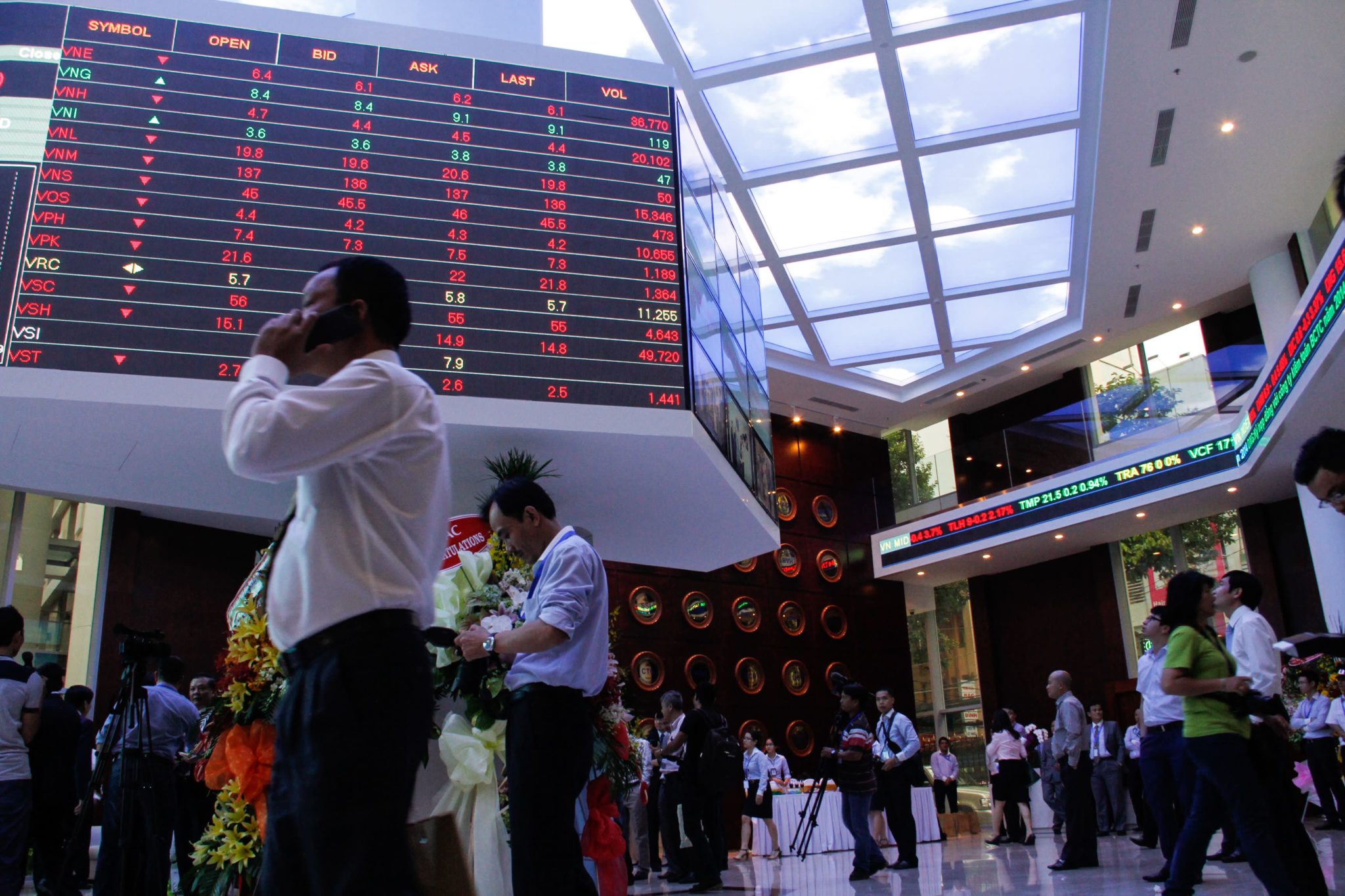
    Vietnam stock market daily trading value closes in on Singapore

    The average daily securities trading value surged 5.6 times year-on-year in April to $725 million, nearly equivalent to that of Singapore, according to HSBC.

    The lender said in a recent report that the figure, which far exceeds those of Malaysia and Indonesia, was due to the increase in new investors and recovery of the economy.

    In March, the number of new trading accounts hit a record 113,900, taking the total to over 3.02 million.

    The economic recovery is underpinned by strong FDI flows, improvements in the manufacturing segment, and increased consumption, the report said.

    The benchmark VN-Index has risen 12.9 percent in the year-to-date compared to 4.2 percent for Asia ex-Japan.

    The index has repeatedly scaled new peaks this year after surpassing the psychological barrier of 1,204 points first reached in 2018.

    HSBC expected the market to continue to rise in the absence of alternative asset classes and bank deposit rates in decline.

    Though foreign investors have been pulling out of the stock market, HSBC said they would not be able to ignore Vietnam for much longer since it has proved to be one of the most resilient growth economies and 24 out of the 30 blue chips have still not reached the foreign cap.

    Besides, despite rising to record levels, the VN-Index remains 5 percent lower than its five-year average level with a price-to-earnings ratio of 15.1.

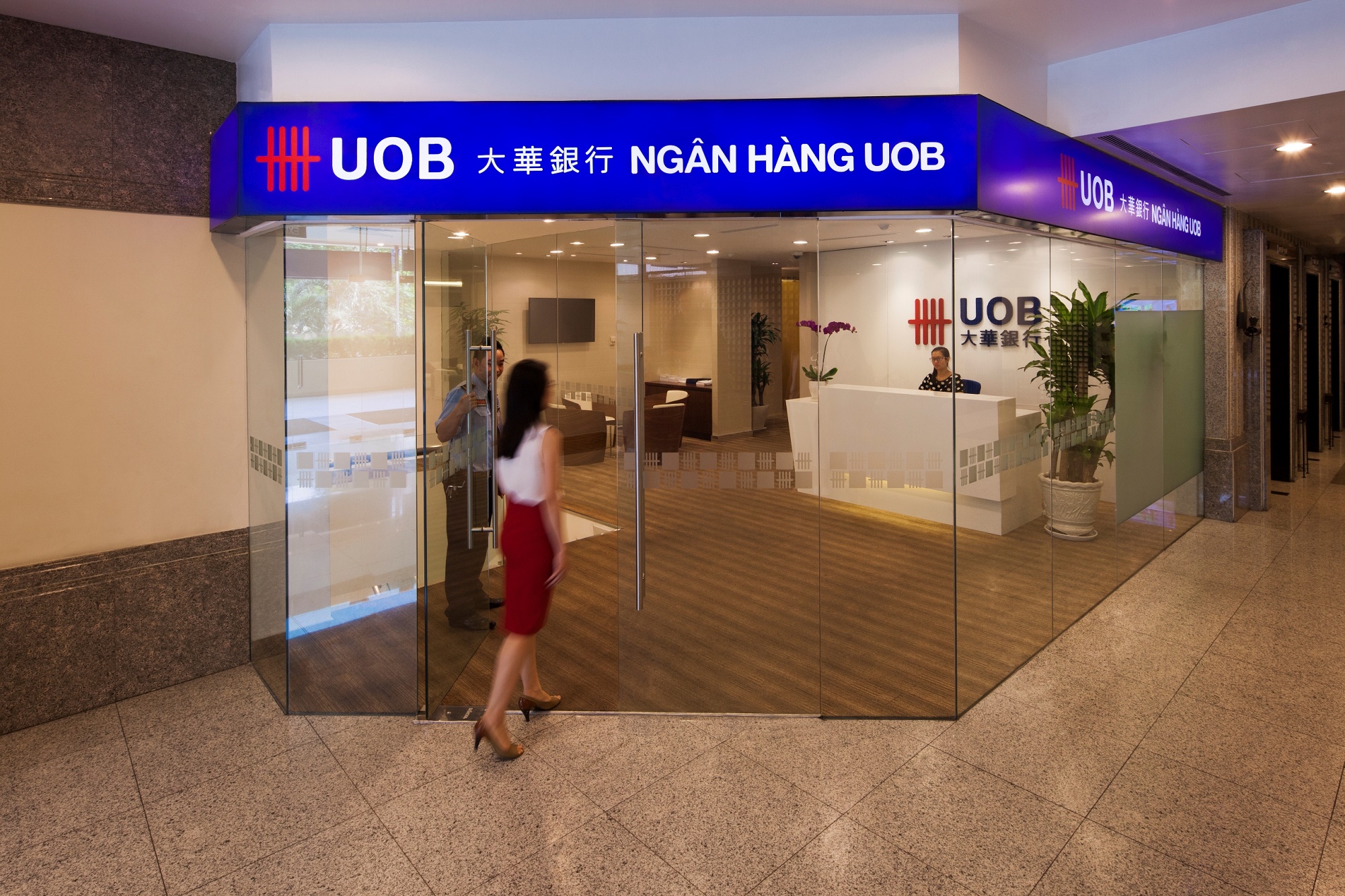
  • Net Profits Rebound at UOB

    Net Profits Rebound at UOB

    The bank’s quarterly earnings surged on the back of strong fees, trading, and investment income as business momentum improved.

    UOB’s earnings grew to S$1 billion ($750 million) in the first quarter of 2021 – up 46 percent from the previous quarter’s S$688 million and up 18 percent from the same period last year, according to financial results posted on Thursday.

    Income grew 11 percent to reach pre-Covid levels at S$2.5 billion, while fee income reached a new high to reach S$638 million (+22 percent), led by wealth management fees from investments and bancassurance. The bank also saw stronger activity in loans and investment banking, as well as treasury income. Its wealth management assets grew 10 percent to S$136 billion, of which 60 percent was from customers abroad.

    The bank highlighted growth across its key markets in Singapore, North Asia, and its Asean franchise. It expressed optimism as sentiment and business activities pick up and trade flows resume between Asean and Greater China.

    Across our key markets, we are seeing robust credit demand from our large corporate and institutional clients, Wee Ee Cheong, UOB deputy chairman, and CEO, said.

    Sustainability was a key theme for UOB, as total sustainable financing reached $12 billion during the quarter. During this period, the bank also issued Singapore’s first sustainability bond and global first dual-tranche sustainability bond.

    The bank’s AUM in ESG-focused investments also reached S$2.2 billion at the end of the quarter.

    DBS, which announced its first-quarter results last week, also experienced a strong quarter, doubling its income from the quarter before to reach S$2.01 billion and posting record wealth management fees.

    OCBC is due to release its quarterly results tomorrow, but its insurance arm Great Eastern has already reported a twelvefold increase in profits this quarter.

  • HSBC AM Names Asia Head of Credit Research

    HSBC AM Names Asia Head of Credit Research

    HSBC’s asset management arm appoints a new head of credit research in Asia amid an ongoing expansion across its product range and distribution capabilities in the region.

    HSBC Asset Management appoints Seok Poh Yeoh as head of credit research for Asia, according to a statement, effective immediately.

    In her Hong Kong-based role, Yeoh reports locally to head of Asian fixed income Elizabeth Allen as well as Paris-based global head of credit research Tina Radovic.

    Yeoh has 16 years of industry experience and was most recently a financial and corporate credit research analyst at Credit Suisse. She rejoins HSBC Asset Management after first joining in 2012 as a financial analyst.

    The latest hire follows announced ambitions by HSBC Asset Management to enhance its platform in mainland China, India, and Southeast Asia, most notably for the high net worth product range across alternatives, sustainability, and thematic equities.

    According to the bank, HSBC Asset Management has Asian fixed income assets under management totaling nearly $73 billion as of March 31 this year.

  • HSBC AM Names Asia Head of Credit Research

    HSBC AM Names Asia Head of Credit Research

    HSBC’s asset management arm appoints a new head of credit research in Asia amid an ongoing expansion across its product range and distribution capabilities in the region.

    HSBC Asset Management appoints Seok Poh Yeoh as head of credit research for Asia, according to a statement, effective immediately.

    In her Hong Kong-based role, Yeoh reports locally to head of Asian fixed income Elizabeth Allen as well as Paris-based global head of credit research Tina Radovic.

    Yeoh has 16 years of industry experience and was most recently a financial and corporate credit research analyst at Credit Suisse. She rejoins HSBC Asset Management after first joining in 2012 as a financial analyst.

    The latest hire follows announced ambitions by HSBC Asset Management to enhance its platform in mainland China, India, and Southeast Asia, most notably for the high net worth product range across alternatives, sustainability, and thematic equities.

    According to the bank, HSBC Asset Management has Asian fixed income assets under management totaling nearly $73 billion as of March 31 this year.

  • Citi Registers Stellar Growth in Asia

    Citi Registers Stellar Growth in Asia

    Citigroup CEO Jane Fraser’s first-quarter debut featured strong earnings worldwide and in Asia where the American lender is eyeing growth opportunities, particularly from private wealth in the region.

    Citi’s consumer banking unit in Asia saw $5.2 billion in net new money in the first quarter of 2021 – a 13 percent year-on-year increase – according to a memo seen.

    Investment sales, investment revenue and invested assets all saw decent growth at 48 percent, 22 percent and 29 percent, respectively.

    Citi’s private banking arm delivered its best quarter ever with a 2 percent increase, driven in part by growth in managed investments.

    Citi also posted strong growth from its investment banking business in Asia which saw an 84 percent increase in revenues from continued momentum in equity capital markets.

    Looking ahead, we have excellent momentum, a crisp strategy and tremendous opportunity across our region, said Citi’s APAC chief executive Peter Babej in the memo. The coming months and years will be defining for Citi.

    Overall, the bank posted $4.1 billion of revenue and $1.3 billion of net income in the region which contributed to 21 percent of global revenues, according to its latest published results.

  • Singapore and Thailand Link National Payment Infrastructures

    Singapore and Thailand Link National Payment Infrastructures

    In a world-first, the two countries have established a link between Singapore’s PayNow and Thailand’s equivalent PromptPay.

    Customers in Singapore with DBS, OCBC, and UOB accounts, and customers of Bangkok Bank, Kasikorn Bank, Krung Thai Bank, and Siam Commercial Bank in Thailand will be able to securely perform cross-border peer-to-peer transactions of up to S$1,000 or THB25,000 using just their mobile numbers.

    The transactions will take place at the near real-time speed at a fee that is competitive to remittance services. Over time, participating banks and use cases will be scaled up and expanded, the Association of Banks in Singapore said in an announcement on Thursday.

    Monetary Authority of Singapore (MAS) and the Bank of Thailand first mooted the possibility of a link between their respective countries’ networks in 2017.  The announcement said the two sides spent the past few years working to align their target operating model, business rules, technical connectivity as well as legal framework.

    Wee Ee Cheong, ABS chairman, deputy chairman and CEO of UOB, said the initiative is also «an important step to connecting payment systems across ASEAN at scale in the future.

    MAS managing director Ravi Menon previously said MAS is keen to help other central banks in the region to expand the linkage, so that more people across Southeast Asia can benefit.

  • StanChart Beats Forecasts with Improved Impairments

    StanChart Beats Forecasts with Improved Impairments

    Credit impairments fell sharply at Standard Chartered, enabling the growth market-focused lender to beat analyst estimates and deliver profitability in the first quarter.

    Standard Chartered posted pre-tax profits of $1.4 billion, according to its latest results, marking an 18 percent increase compared with $1.2 billion last year.

    It also beat compiled analyst forecasts of $1.08 billion.

    Amongst the most notable improvements was from credit impairment charges which fell sharply from $354 million in the previous quarter to just $20 million.

    The bank also registered strong performance from its wealth management businesses which saw a record quarter with a 21 percent increase in income from strong sales of foreign exchange and equity-related products.

    In Asia, it boosted its pre-tax profits by 21 percent to $1.23 billion.

    In line with its continued pursuit to cut office space – in Singapore and Hong Kong, for example – and permanently adopt flexible working conditions, the bank will also significantly reduce its branch network.

    Standard Chartered will cut the number of branches by half to around 400 after having as many as 1,200 worldwide in 2014.

  • HSBC AM Names Asia Head of Credit Research

    HSBC AM Names Asia Head of Credit Research

    HSBC’s asset management arm appoints a new head of credit research in Asia amid an ongoing expansion across its product range and distribution capabilities in the region.

    HSBC Asset Management appoints Seok Poh Yeoh as head of credit research for Asia, according to a statement, effective immediately.

    In her Hong Kong-based role, Yeoh reports locally to head of Asian fixed income Elizabeth Allen as well as Paris-based global head of credit research Tina Radovic.

    Yeoh has 16 years of industry experience and was most recently a financial and corporate credit research analyst at Credit Suisse. She rejoins HSBC Asset Management after first joining in 2012 as a financial analyst.

    The latest hire follows announced ambitions by HSBC Asset Management to enhance its platform in mainland China, India, and Southeast Asia, most notably for the high net worth product range across alternatives, sustainability, and thematic equities.

    According to the bank, HSBC Asset Management has Asian fixed income assets under management totaling nearly $73 billion as of March 31 this year.

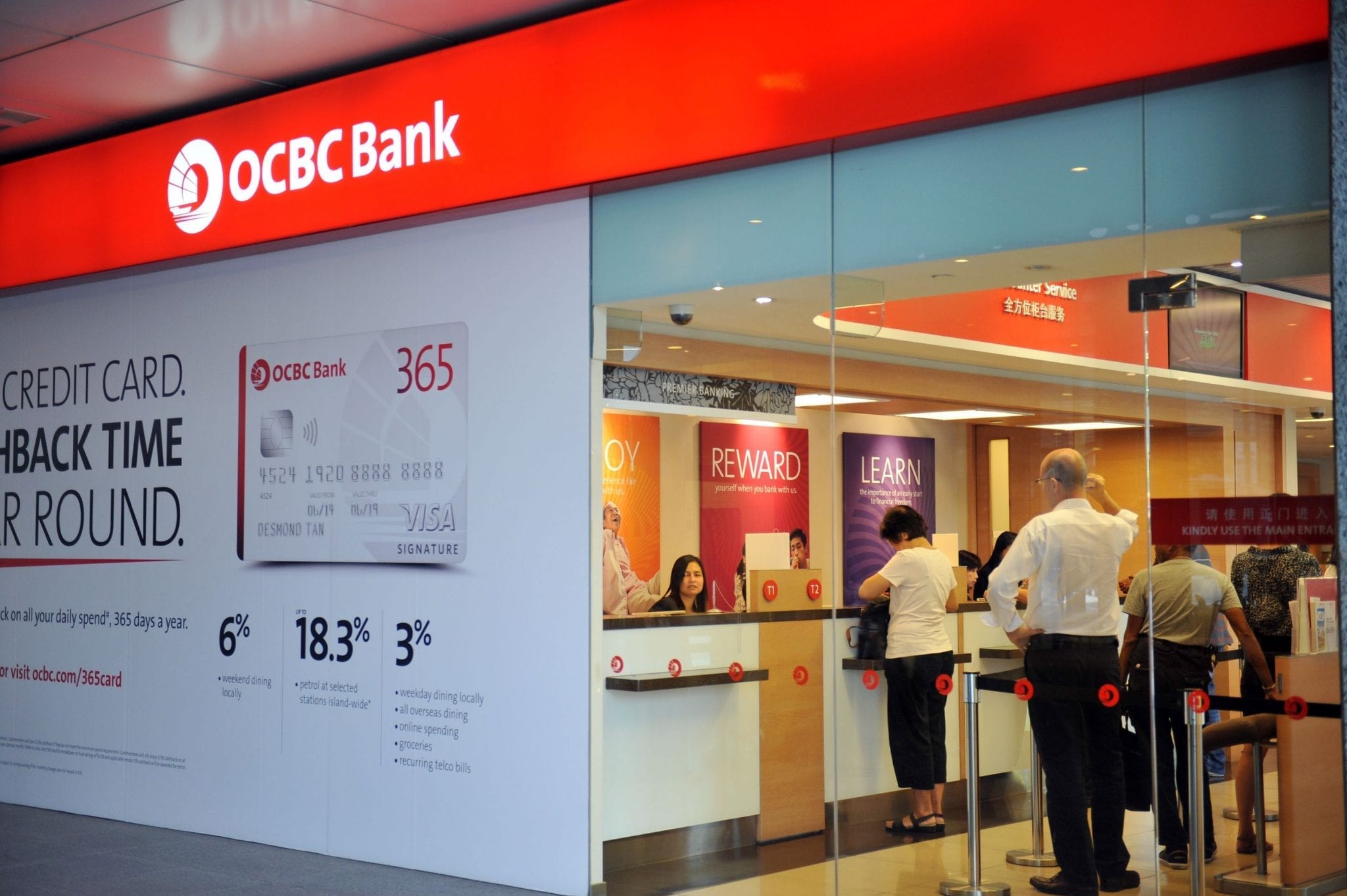
  • OCBC to Review Office Space Needs

    OCBC to Review Office Space Needs

    The bank is considering reducing the number of branches and office space as it moves towards a hybrid work model.

    We may not need so many branches servicing our customers, so certainly I think there will be a review in terms of our office requirements as we move forward,» chairman Ooi Sang Kuang said at the bank’s virtual annual shareholder meeting on Thursday.

    Last year, former OCBC chairman Samuel Tsien said the bank expects fewer physical branches and offices being open in the future, as a surge in the adoption of digital banking services prompted OCBC to rethink its branch network strategy, and Covid-19 prompted a shift towards hybrid working from home and the office.

    Other banks that have permanently reduced their physical footprint in Singapore include DBS, which will give up 75,000 square feet of space – about two and a half floors out of the more than a dozen floors it occupies at Tower 3 of the Marina Bay Financial Centre; Citi, which is offloading three floors; and Mizuho, which is cutting less than one floor of office space.

    During the meeting, Helen Wong, OCBC’s new chief executive, said the bank would focus on deepening its reach into Asean markets and to capitalize on the growing Asean-Greater China flows, expanding its wealth management franchise, accelerating digitalization and building a regional sustainable bank.

  • OCB shares ‘undervalued,’ says bank chairman

    OCB shares ‘undervalued,’ says bank chairman

    Shares of OCB are undervalued by 25 percent, its chairman Trinh Van Tuan said at the private lender’s annual general meeting Wednesday.

    He said his assertion was backed by many stock brokerages that have suggested a price of VND30,000 ($1.31) for the OCB ticker, currently trading on the Ho Chi Minh Stock Exchange (HoSE) at VND24,000.

    A private bank usually has a price to earnings (P/E) ratio of 11, while that of OCB is less than 7, he said. The P/E ratio reflects how much investors are willing to pay today for future growth expectations.

    OCB listed on the HoSE on January 28 when the market plunged, pulling it down by 20 percent in the first session. The ticker has since recovered by 27 percent.

    The bank plans to pay dividends by shares with each shareholder allowed to buy 20-25 more shares for every 100 shares owned.

    It also wants to issue 70 million shares via private placements and five million shares to its employees. Several foreign investors have expressed interest in the bank since last year, Tuan said.

    The bank’s charter capital is set to rise by 32 percent this year to VND14.45 trillion ($627 million).

    Last year, the bank’s pre-tax profit surged 37 percent year on year to VND4.42 trillion. It targets a 25 percent credit growth this year, pending approval from the central bank.

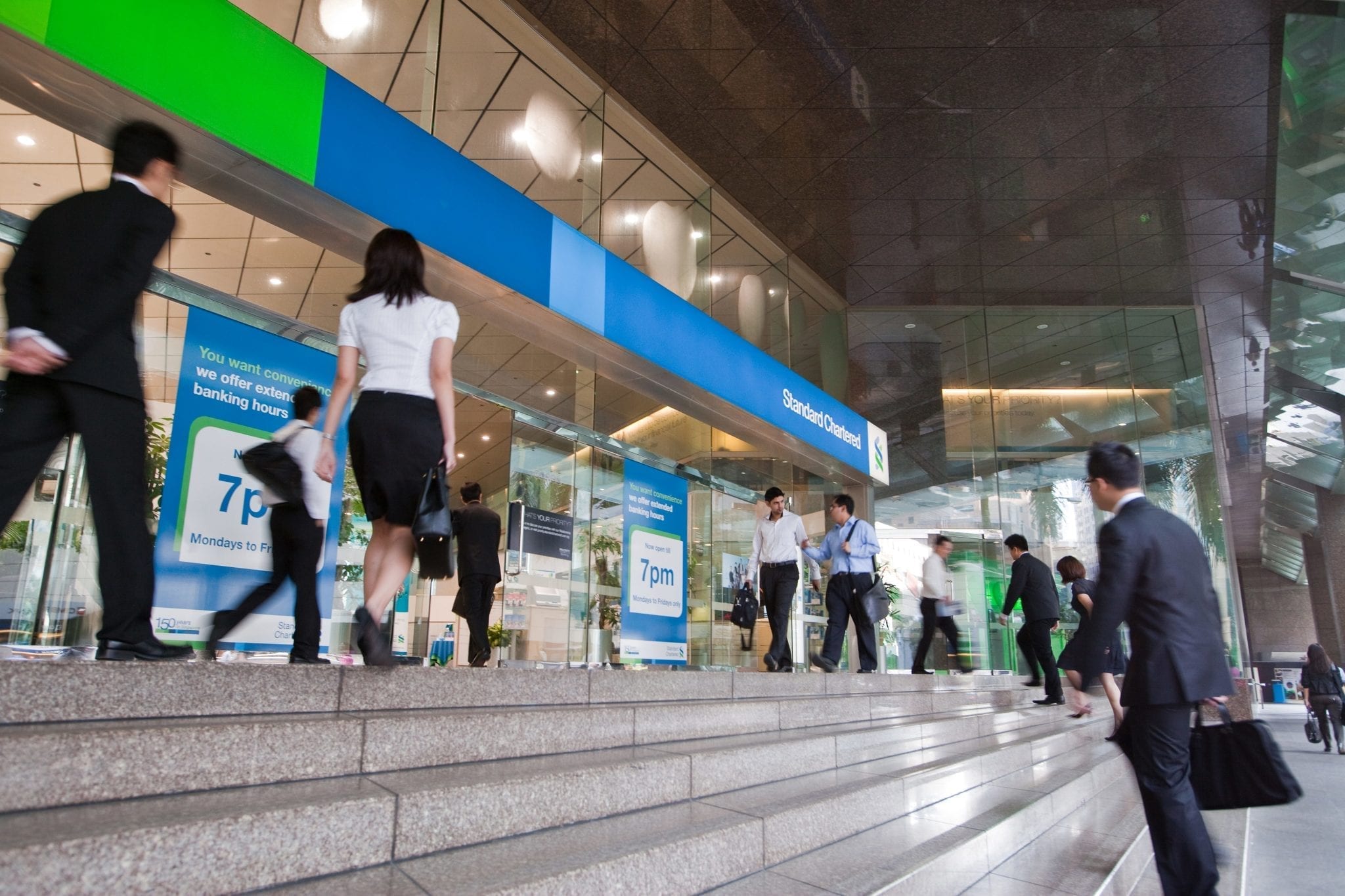
  • Standard Chartered to Offload Office Space in Singapore

    Standard Chartered to Offload Office Space in Singapore

    Standard Chartered bank is reportedly considering slashing office space in the Singapore business district, where it occupies 21 floors at Marina Bay Financial Centre Tower 1.

    While plans are under discussion and subject to change, sources told «Bloomberg» that the bank is weighing several options, including cutting 80,000 square feet, or four floors of offices.

    Another option is to shed half of the 420,000 square feet it currently occupies or retaining just four floors – the minimum required for the bank to keep its logo on the building’s facade, the report said.

    The downsizing follows similar moves in Hong Kong, where it is giving up the lease on eight floors of its Standard Chartered Bank Building in the central business district, and renting out three floors it owns from its offices in the industrial district of Kwun Tong.

    The move also falls in line with the bank’s plans to permanently offer flexible work options to around 90 percent of its 85,000 employees around the world by 2023. Some 80 percent of its employees in Singapore currently work from home, the bank said.

    Standard Chartered is planning to optimize the use of its office space by and cater to the wellness of its staff by providing amenities such as gyms, according to the report. A large number of staff also work out of a facility at Changi Business Park, where it opened a learning hub in December 2020 to boost its workforce.

    Other banks that have permanently shed space in Singapore include DBS, which will give up 75,000 square feet of space – about two and a half floors out of the more than a dozen floors it occupies at Tower 3 of the Marina Bay Financial Centre; Citi, which is offloading three floors; and Mizuho, which is cutting less than one floor of office space.

  • UBS Quietly Reactivates Covid-Paused Cuts

    UBS Quietly Reactivates Covid-Paused Cuts

    The bank’s digitization plans will cost thousands of jobs in the coming months. UBS CEO Ralph Hamers is set to reactivate a series of cuts it had paused when Covid-19 broke out.

    Digitization always costs jobs, Ralph Hamers said in October of 2016 when ING disclosed it would eliminate 7,000 of them. The Dutch bank wanted to act from a position of strength, he said, noting the move was less about saving 900 million euros ($1.1 billion) than about making targeted investments in renewal.

    Nearly five years later, Hamers is applying a similar play to UBS: he wants to save $1 billion by 2023 in order to re-invest in the U.S. and Asia, where the Swiss bank wants to grow. For UBS’ 72,000 employees, it is clear that the cost-cutting goal will primarily be reached by cutting jobs.

    Of course, the 54-year-old Dutch CEO wasn’t that explicit on Tuesday, when he fleshed out UBS’ new slogan Reimagining the power of investing. Connecting people for a better world. Under Hamers, UBS will become more focused on clients, digital, and agile, he said.

    That means streamlining the Swiss lender’s famously bureaucratic processes, including through robotics. The principal aim is to whip UBS into a technology-leading bank with digital services that stand out from competitors like Spotify or Netflix do in the media industry.

    People familiar with Hamers’ thinking are flagging job cuts across most areas of the bank, and especially where UBS can make existing technology and applications more efficient. The bank plans to keep moving some jobs into lower-cost locations like Poland and India.

    It is also looking to leave activities where it isn’t satisfied with financial results; it abandoned Austria onshore in December and is reportedly looking to get out of Spain. The disposals also lower UBS’ headcount, normally without «costing» jobs.

    How many jobs Hamers plans to cut isn’t clear, but a simple equation based on the $1 billion target, a lower-than-average salary in Switzerland’s financial sector, and the assumption that 70 percent of spending is on people would indicate as many as 3,000 jobs are on the block in the next 18 months.

    The job cuts are likely to be Hamers’ first major measure at UBS – and they are being closely watched by the bank’s board. Effectively, he needs to make himself indispensable to UBS in their view; Hamers is weakened by a Dutch criminal probe reignited after he joined the Swiss bank last fall.

    The aim of the digitization and transformation Hamers was hired for is saving money, not raising the overall cost base. UBS’ cost-income ratio edging higher in the first quarter  – to 73.8 percent – underscores the import of more efficiency versus U.S. competitors who are operating leaner.

    A $300 million restructuring charge in the coming quarter also indicates the cuts to come. This represents a revival of UBS’ plans paused last March under former CEO Sergio Ermotti.

  • TPBank posts 41 percent surge in profits

    TPBank posts 41 percent surge in profits

    The bank said a surge in net interest income and a cut in operational expenses has boosted its Q1 performance.

    Its net interest income grew 30 percent in the period, while operational expenses dropped 10 percent, according to the bank’s financial statement.

    It said that its pre-tax profit growth was average compared to other lenders’ growth rates of 50 percent or even over 100 percent during the same period.

    For example, the increase in Q1 pre-tax profit was 135 and 110 percent respectively for the state-owned VietinBank and Military Commercial Bank (MBBank). Private lender ACB, meanwhile, saw a 61 percent increase in its Q1 pre-tax profit.

    TPBank’s Q1 revenue was up 15.2 percent year-on-year to VND2.78 trillion.

    By March end, both its outstanding loans and capital mobilization increased 4 percent to VND124.3 trillion and VND120 trillion, respectively. Non-performing loans were at 1.19 percent.

    The bank has set a target of VND5.5 trillion in pre-tax profit for 2021, a year-on-year increase of 25 percent.

  • Citi Elevates Senior Hong Kong Investment Banker

    Citi Elevates Senior Hong Kong Investment Banker

    Citi has expanded the role of its regional head of corporate finance with greater responsibilities for the Hong Kong investment banking business.

    Alex Schrantz has been named head of banking, capital markets and advisory (BCMA) for Hong Kong, according to a statement, effective immediately. Schrantz reports to APAC head of BCMA Jan Metzger alongside Hong Kong and Macau chief executive Angel Ng.

    Schrantz will retain his existing role as APAC head of corporate finance.

    Schrantz has nearly 30 years of global banking experience of which over two decades were based in Hong Kong. He first joined Citi in 2012 and has been responsible for overseeing capital amerces execution in Asia Pacific. Previously, he was also a member of the listing committee for the local stock exchange from 2006 to 2010.