Tag: Banking

  • BNP Announces Key Appointments

    BNP Announces Key Appointments

    BNP Paribas on Wednesday appointed new co-CEOs in its Asia Pacific Wealth Management division, replacing Pierre Vrielinck.

    Andy Chai, currently head of Wealth Management for Greater China, and Arnaud Tellier, head of Wealth Management Singapore and Southeast Asia, have been appointed as co-CEOs for Wealth Management in Asia Pacific, BNP Paribas said in a media statement on Wednesday. They will replace Pierre Vrielinck, who has held the position of CEO Asia Pacific previously.

    Both will report hierarchically to co-CEO of BNP Paribas Wealth Management, Vincent Lecomte, and functionally to CEO Asia Pacific of BNP Paribas Group, Eric Raynaud.

    «Our Wealth Management franchise is a cornerstone of our “One Bank” approach, enabling us to meet both the personal and professional financial needs of high net worth clients across Asia. With the rich experience of Andy and Arnaud, spanning both corporate and institutional banking as well as private banking, I look forward to the strong and sustainable growth of our Wealth Management platform for years to come,» said Raynaud.

    Chai and Tellier will assume joint responsibility for the strategic direction and operations of BNP Paribas’ Wealth Management business in the region, effective on Wednesday. Chai will have oversight of the Greater China markets including mainland China, Hong Kong SAR, and Taiwan and lead the strategic client segment across Asia.

    Tellier will cover Southeast Asia, India, and International markets while investment services and key support functions will report to him. David Lim, a market head for Southeast Asia, is appointed Head of Wealth Management Singapore and Southeast Asia, reporting to Tellier.

    Pierre Vrielinck, who has held the position of CEO Asia Pacific since 2017 and has grown the franchise, will return in December to a senior leadership role within BNP Paribas Wealth Management in France. Meanwhile, veteran BNP Paribas banker Mignonne Cheng will retain her role as Asia chairman for Wealth Management and continue to bring her strategic vision and client knowledge to the franchise.

    The French bank has been under pressure in Greater China recently due to a controversial post on Facebook by a previous staff in Hong Kong. The bank has since issued a statement of apology.
  • KBank issues USD denominated subordinated notes worth800 million USD, with oversubscription rate at 4.4x

    KBank issues USD denominated subordinated notes worth800 million USD, with oversubscription rate at 4.4x

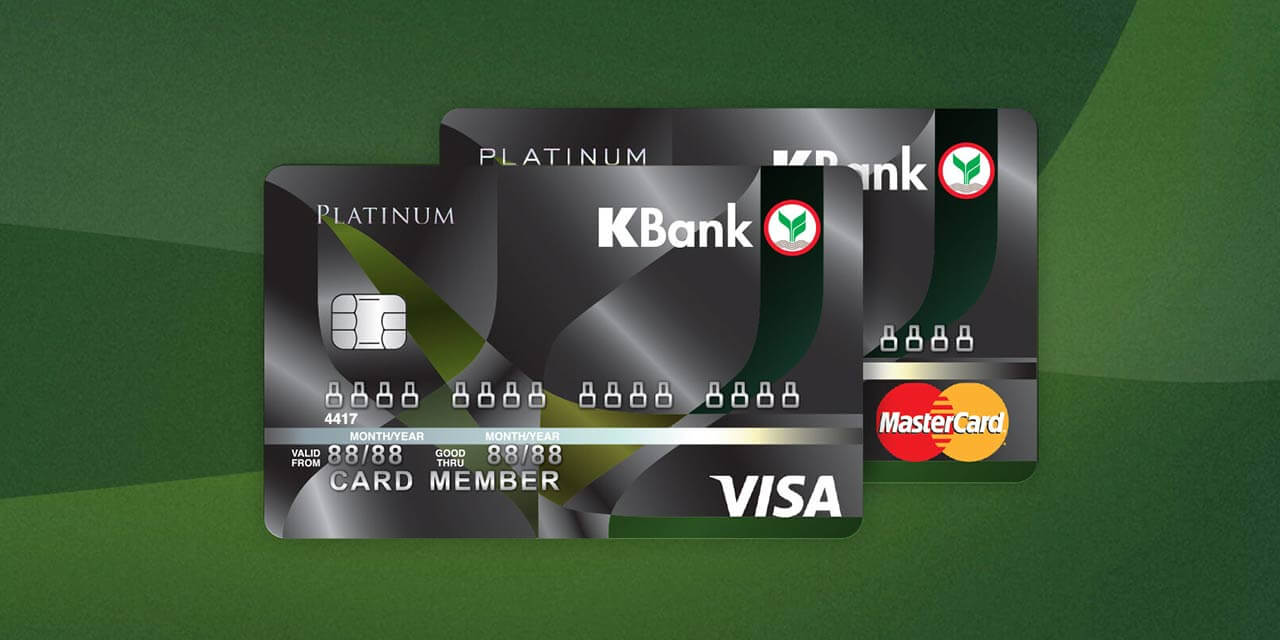
    KBank has announced its successful issuance of USD denominated subordinated notes (the “Notes”) with a USD800 million offering that were oversubscribed four times. Such high oversubscription rate reflects the international investors’ confidence in KBank. It is the largest South-East Asia Reg-S-Only Tier-2 note issue in more than five years, and also the first USD-denominated 12NC7 Basel-III Tier-2 tenor from Asia (excluding Japan) in nine years.

    Mr. Predee Daochai, KBank President, said that KBank issued USD denominated subordinated notes worth 800 million USD with a 12-year tenor which will be due in 2031 and can be called in their 7-years (12NC7), offering at a fixed rate of 3.343 percent per annum. The objective of the issuance of the Notes which can be counted as KBank’s Tier 2 capital is to support KBank’s foreign operations. KBank also aims to strengthen funding position for suitable long-term funding cost.

    The Notes were issued through KBank’s Hong Kong branch on October 2, 2019 and were rated Baa3 by Moody’s, and BBB by Fitch Ratings, and were listed on SGX. The notes were offered to institutional investors and they were fully subscribed quickly. Of the total investors, 81 percent were in Asia and 19 percent were in Europe. Given the rarity of a Thai bank issuance, the Notes were deliverable to high quality investors with 80 percent being taken up by funds/asset management companies, with pensions/insurers and sovereign wealth funds buying up to 8 percent. Bank treasuries accounted for 3 percent of the orderbook, with the remaining 9 percent being taken up by other institution types. BNP Paribas, Citigroup, and Standard Chartered Bank acted as joint book-runners and joint lead managers.

    The issuance of KBank subordinated notes succeeds in several aspects. For example, the total books reached USD3.5 billion, representing 4.4 times of the value of the subordinated notes offered by KBank. Such high oversubscription rate reflects the international investors’ confidence in KBank and the Thai economy. This is because it is the largest South-East Asia Reg-S-Only Tier-2 note issue in more than 5 years and longest dated Basel III Tier 2 in Reg S Only format from Asia (excluding Japan).

    Moreover, the Notes have the lowest coupon as well as spread for a South-East Asia Tier-2 note issue in more than two years. The issuance is also the first USD-denominated 12NC7 Basel-III Tier-2 tenor from Asia (excluding Japan) in 9 years and the first ever 12NC7 from Thailand.

  • Standard Chartered Hires Southeast Asia Private Banking

    Standard Chartered Hires Southeast Asia Private Banking

    Following the exit of Srinivas Siripurapu from Standard Chartered, the private bank has swiftly hired a replacement.

    Cedric Lizin joins the bank as its South and Southeast Asia private banking head, following his most recent stint as the Dubai-based head of wealth management at UBS. Andrew Ho, south and southeast Asia market head at the private bank will take on interim responsibilities until Lizin joins later this year.

    The bank has been facing a flurry of regulatory hiccups including the most recent news that it was reviewing roughy 8,000 client accounts from its Dubai arm due after regulators exposed a severe lack of «know-your-client» data ranging from wealth source to even current address or phone numbers.

    In addition to regulatory challenges, the private bank also faces a high level of staff dissatisfaction, according an internal survey.  When asked if they would recommend others to work for Standard Chartered’s private banking business, the internal metric scored negatively, a report noted.

    And possibly as a means of improving morale, senior manages in the region recently delivered handwritten «thank you» cards to staff. The bank subsequently furthered the exercise by asking employees to write letters praising each other during a team bonding session.

  • Standard Chartered Hires Southeast Asia Private Banking

    Standard Chartered Hires Southeast Asia Private Banking

    Following the exit of Srinivas Siripurapu from Standard Chartered, the private bank has swiftly hired a replacement.

    Cedric Lizin joins the bank as its South and Southeast Asia private banking head, following his most recent stint as the Dubai-based head of wealth management at UBS. Andrew Ho, south and southeast Asia market head at the private bank will take on interim responsibilities until Lizin joins later this year.

    The bank has been facing a flurry of regulatory hiccups including the most recent news that it was reviewing roughy 8,000 client accounts from its Dubai arm due after regulators exposed a severe lack of know-your-client data ranging from wealth source to even current address or phone numbers.

    In addition to regulatory challenges, the private bank also faces a high level of staff dissatisfaction, according an internal survey.  When asked if they would recommend others to work for Standard Chartered’s private banking business, the internal metric scored negatively, a Bloomberg report noted.

    And possibly as a means of improving morale, senior manages in the region recently delivered handwritten thank you cards to staff. The bank subsequently furthered the exercise by asking employees to write letters praising each other during a team bonding session.

  • UOB Malaysia Announces Firms for Digital Accelerator Program

    UOB Malaysia Announces Firms for Digital Accelerator Program

    The program, now in its third edition, aims to help startups, SMEs and businesses adopt digital technology to drive productivity and growth.

    Sixteen Malaysian SMEs have been selected to take part in UOB’s three-month-long digital accelerator program, the bank announced in a press release on Tuesday. The firms taking part in the «Jom Transform» program, whittled down from more than 900 applications, are from diverse sectors, including food and beverage, healthcare, consulting, logistics, manufacturing and more.

    As part of the program, these businesses will be paired with mentors, which include the Chinese Chamber of Commerce & Industry of Kuala Lumpur & Selangor, Malaysian Association of Tour and Travel Agents, Maxis, Malaysia Digital Economy Corporation and SME Corporation Malaysia, who will advise them on how to optimize workflow processes and inventory, distribution and human resource management systems.  They will also be paired with technology partners to pilot and assess digital solutions.

    «As family-owned businesses transition from the first- to second-generation leadership, we see an accelerated use of technology in their business. Yet many business leaders lack the skills to implement digital solutions successfully and effectively,» Wong Kim Choong, UOB Malaysia CEO, said about the opportunities and challenges SMEs in Malaysia face.

    Jom Transform is run by UOB and Singapore-based innovation accelerator The Finlab. It was announced in June in Malaysia, following successful editions held in Singapore (2018) and Thailand (2019).

  • HSBC Announces Key Senior Appointments

    HSBC Announces Key Senior Appointments

    HSBC Private Banking has announced the expanded role of Cynthia Lee, appointed as Regional Head of Private Wealth Solutions (PWS), Asia Pacific, and the appointment of Steven Weekes as Head of Private Wealth Solutions (PWS), South East Asia.

    Cynthia Lee  is the new Regional Head of Private Wealth Solutions, Asia Pacific at HSBC Private Bank. In order to build on Private Wealth Solutions’ comprehensive regional support for a growing number of HSBC Group-connected clients, Cynthia Lee takes on an expanded role to cover Asia Pacific. The change means PWS’ structure will mirror that of Private Banking, the largest contributor of referrals for the business. Cynthia will continue to report to Alan Beattie, Global Head of Private Wealth Solutions.

    As we look to strengthen our position in Asia, a region where we continue to see an immense opportunity, Cynthia and Steven’s wealth of experience and deep expertise will help us bring the best of PWS to our Asian clients,” said Alan Beattie, Global Head of Private Wealth Solutions. Cynthia has over 20 years of wealth advisory experience, focusing on private clients and families. She joined HSBC as Head of PWS, North Asia, in January 2019. She was formerly at JP Morgan where she was most recently Head of Wealth Advisory for Asia.

    Steven Weekes has joined HSBC as head of private wealth solutions, South East Asia from Citi Private Bank, where he worked for 23 years. Most recently, Steven was Head of International Fiduciary Services based in Zurich, Switzerland, leading a global team of professionals with responsibility for International Trust companies in the Bahamas, the Cayman Islands, Jersey, Singapore and Switzerland.

    Prior to this, Steven was the Regional Trust Head for Asia, responsible for the delivery of wealth planning to Private Banking clients in Asia with a strong focus on Next Gen and Wealth Transfer Planning. Steven has also held other Trust, Private Banking and business advisory roles at Citi and KPMG in Switzerland and Australia.

    Weekes will be based in Singapore, reporting to Cynthia Lee, Regional head of Private Wealth Solutions, Asia Pacific. He takes over from Michelle Lau, who has been appointed to a new role within HSBC Private Banking as Managing Director, Ultra High Net Worth and Family Office Strategic Services, South East Asia. In her new position, Michelle will drive further development in South East Asia of HSBC Private Banking’s UHNW proposition, services for Family Offices, and global connectivity.

    HSBC is aiming to significantly expand its Asian Private Banking business over the next five years, including Private Wealth Solutions, with a key focus on Greater China and the ASEAN region.

  • DBS Expands Transaction Banking

    DBS Expands Transaction Banking

    As trade flows around Asia are reconfigured amid an ongoing trade war, the bank is seeing brisk business in growth markets, and plans to grow its global transaction services business there.

    DBS is on track to achieve its five-year target of quadrupling its cash management business by 2020, one year ahead of time, said John Laurens, the bank’s group head of global transaction services (GTS) said.

    According to Laurens, China’s slowing economic growth and falling commodity prices have resulted in trade finance having a lower share of trade finance revenues – going from 70 percent to 30 percent in the past five years. However, cash management has conversely become the business’ main growth driver, now contributing to 70 percent of revenue, with a compound annual growth rate (CAGR) of 39 percent from 2015 to 2018.

    Overall, revenue for DBS’ global transaction banking business grew from S$1.59 billion ($1.16 billion) to S$2.45 billion during the same period, a CAGR of 15 percent.

    Laurens said the bank has plans to grow its GTS revenue in Vietnam and the Greater Bay Area by 30 percent and 55 percent respectively over the next five years, and will also ramp up its digital capabilities by tripling its tech investments in cash management solutions in Vietnam.

    Transaction banking will become one of the most fast-moving, technologically advanced aspect of banking – this is a good place to be, he said.

  • ANZ Appoints International Head of Sustainable Finance

    ANZ Appoints International Head of Sustainable Finance

    Australia and New Zealand Banking Group appointed a new international head of sustainable finance, as demand for ESG-related funding continues to grow especially in Asia.

    Stella Saris was appointed to the Singapore-based role reporting to Nick Halkas, head of infrastructure, export and sustainable finance – international in the city-state; and to Katherine Tapley, head of sustainable finance in Sydney.

    Saris was most recently a director of resources, energy and infrastructure at the ANZ, where she first joined in 2004. Saris boasts a wealth experience in private-public partnerships in the Asia Pacific region including in Australia, Singapore, Indonesia and Papua New Guinea in both advisory and lending capacity.

    Sustainable finance continues to grow as investors build greater awareness about ESG-related risks, such as climate change. According to global ESG research firm Sustainalytics, social and sustainability bond issuances totaled nearly $59 billion in 2018, highlighting Asia as a growth driver for social assets due to greater flexibility for decision making amongst treasurers in the region.

  • DBS Vickers Remisiers to Move to UOB Kay Hian

    DBS Vickers Remisiers to Move to UOB Kay Hian

    Following months of discussions between the two banks over the transfer of the trading representatives, about 100 remisiers from DBS Vickers will join UOB Kay Hian.

    DBS Vickers has agreed to transfer its offline retail securities brokerage business to UOB Kay Hian by October 28, 2019, following months-long negotiations. With the move, over 100 remisiers will move to UOB Kay Hian, making it the largest securities brokerage in Singapore, with over 800 dealers and remisiers.

    This allows us to scale and do a lot of business. With this acquisition, we will have 25 percent of the retail market share in Singapore. Now, we are 20-21 percent,» UOB Kay Hian senior executive director Esmond Choo said.

    DBS had searched for a buyer that would take its remisiers as a group. UOB Kay Hian was chosen as it was «the most sincere and best suited to adopt the group,» the newspaper said, with Choo pointing out that the remisier base advisory model to the firm, and the fact that it had grown through mergers and acquisitions since early 2000.

    Not all remisiers will move to UOB – some are taking the chance to retire, while others have joined other brokerages. A few have taken on new roles like relationship managers and investment counselors at DBS.

    We previously reported that UOB Kay Hian was in talks with DBS to hire about 15o remisiers and retail equity trading representatives from DBS Vickers, the bank’s broking arm, who were affected by its revamp to better focus on institutional clients. RHB, CGS CIMB and PhillipCapital were also said to be interested in hiring the affected individuals.

    This followed plans by DBS to merge its retail equity trading under DBS Vickers with the bank amid falling trade volumes from retail participants and downward pressure on brokerage commissions.

  • Philippines Approved for Yuan Clearing Service

    Philippines Approved for Yuan Clearing Service

    The People’s Bank of China authorized the Bank of China Manila branch for yuan clearing, making the Philippines the latest market to join the path towards the internationalization of the renminbi.

    BOC’s Manila branch has established the yuan clearance system and already helped the local government issue and bonds in China’s interbank market with a total value of nearly $4 billion.

    The Philippines joins other yuan clearing centers including Hong Kong, Macau, Taiwan, U.S., Japan, South Africa and more.

    The yuan is currently the eighth most traded currency with a turnover of $284 billion in April, according to a Bank of International Settlement report, and ranks top amongst emerging market currencies.

  • UOB Opens Bank Branch in Zhongshan City

    UOB Opens Bank Branch in Zhongshan City

    UOB has opened a branch in China’s Zhongshan City, furthering its commitment to the Greater Bay Area. It is one of the first foreign banks to do so.

    UOB (China) became the first foreign bank to open a branch in Guangdong’s Zhongshan City on Thursday, signaling the bank’s commitment to China and confidence in Greater Bay Area(GBA)’s development plan, the lender said in a media statement on Thursday.

    The new branch adds to six other branches that the bank already has in the GBA. «It strengthens our presence in South China and enables us to expand services to the west of the Greater Bay Area,» said Peter Foo, CEO of UOB (China).

    Following the announcement of China’s GBA Blueprint in February to create an IT-led powerhouse in Southern China, UOB made plans to deepen its presence in the region. The GBA region includes Hong Kong, Macau and nine cities in Guangdong province.

    Christine Ip, CEO of UOB Greater China, said that the new branch is an «important addition» to its GBA network, as the bank continues to enhance connectivity between Greater China and Southeast Asia.

    The UOB Shenzhen branch – UOB (China)’s flagship branch in the GBA – moved to bigger premises in October as it plans to add more professionals to the team. UOB also opened a Commercial Banking Centre in Hong Kong’s central business district of Causeway Bay in April to better serve the needs of its clients in the GBA.

  • DBS Announces Integrated Wealth Management

    DBS Announces Integrated Wealth Management

    The bank hopes to serve the country’s growing high net worth demographic with its one-bank proposition, which provides access to offerings across wealth management, retail, investment and corporate banking.

    DBS Private Bank and DBS Vickers Securities (Thailand) have announced a partnership to provide a «one-stop» onshore and offshore wealth proposition in Thailand, allowing the country’s growing high net worth demographic to access offerings across wealth management, retail, investment and corporate banking from a single point of contact.

    To support this push, the bank aims to double its number of relationship managers in Thailand by 2023, and also hopes to double its assets under management to S$8 billion ($5.82 billion) during this period, DBS said in a statement published on Wednesday.

    We believe the Thai wealth market holds immense potential, having witnessed Thai investors’ growing sophistication and receptiveness to investment ideas, and the Bank of Thailand’s encouraging regulatory stance towards offshore investments, Sim S Lim, wealth management and consumer banking group head, said in the statement.

    Family-owned businesses drive much of the country’s economy, accounting for 80 percent of Thailand’s GDP and over one-third of listed firms on the Stock Exchange of Thailand, DBS said, citing PwC research.

  • SoftBank Doubles Stake in Brazilian Zero-Fee Digital Lender

    SoftBank Doubles Stake in Brazilian Zero-Fee Digital Lender

    SoftBank has reportedly agreed to double its stake in Brazilian online lender Banco Inter in the midst of the Japanese giant’s ongoing buying spree in Latin America.

    The deal will include acquiring stakes from controlling family members of the bank, unnamed sources said, adding that Banco Inter CEO Joao Vitor Menin, who owns 5.4 percent, isn’t among the sellers.

    In July, SoftBank bought an 8.1 percent stake in Banco Inter valued at around $186 million.

    Banco Inter aside, Tokyo-based SoftBank has been in the midst of an ongoing buying spree in Latin America with about 300 targets in the region. SoftBank launched a fund in March to back tech firms in the region and has already spent more than $1 billion of its $5 billion of capital.

  • Hong Kong Millennials Drive Digital Banking Delays

    Hong Kong Millennials Drive Digital Banking Delays

    While most new recipients of Hong Kong digital banking licenses were planning to begin operations by 2019-end, higher priorities are in play for the city’s millennials – the key demographic for the sector – causing lenders to delay their launches.

    Some players were believed to be launching brand and marketing campaigns as early as this month before formally launching their services. The Hong Kong Monetary Authority previously said that digital banking launches could be expected in the fourth quarter of 2019 at the earliest.

    This form of banking service is mainly aimed at the youth, millennials, and many of them are out on the street these days joining the protests, citing an unnamed source with direct knowledge. It will be difficult to launch a brand campaign around them and attract their interest when their priority is clearly not having another bank account. The source added that the digital banks will now instead launch in early 2020.

  • Singapore Among World’s Worst in Workplace Diversity

    Singapore Among World’s Worst in Workplace Diversity

    While Singapore might be the world’s most competitive economy, its workplaces have a long way to go, ranking close to bottom in terms of diversity and inclusion, and a quarter of employees reporting bullying, according to surveys by Refinitiv and Kantar.

    While Asia-Pacific counted 23 firms on the 2019 Diversity and Inclusion Index published by financial markets data provider Refinitiv, the only representative from Singapore was Singtel.

    The survey, published Tuesday, ranks over 7,000 companies globally and identifies the top 100 publicly traded companies on 24 separate metrics across four key pillars: diversity, inclusion, people development, and controversies.

    The increasing transparency in the reporting of social metrics will offer opportunities for investors to better integrate ESG principles into the investment and strategy decision-making process, Refinitiv chief revenue officer Debra Walton said.

    Singtel came in 79th on the list. Australia led the region, with nine companies in the top 100, followed by Japan with five.

    Singapore’s workplaces were ranked second-last in terms of diversity and inclusion practices by data, consulting and insights firm Kantar in its latest Inclusion Index, released Tuesday.

    According to the survey, which polled 18,000 people in 14 countries across 24 industries, Singapore was identified with the highest level of workplace bullying, along with Brazil and Mexico.

    Compared to the global peers, Singapore workers are the most likely to «feel uncomfortable» by their employers, and 44 percent said they experience «stress and anxiety» at work, compared to 39 percent globally, according to the survey.

    If you are serious about inclusion and diversity in your business, you need to get serious about measuring it. Diversity is the fact, while inclusion is the act, and until now inclusion has been much harder to measure, Mandy Rico, global director of Kantar’s Inclusion Index, said about the findings.