Retail News CRM

Tag: beer

  • Masan Group solidifies strategic partnership with Singha

    Masan Group solidifies strategic partnership with Singha

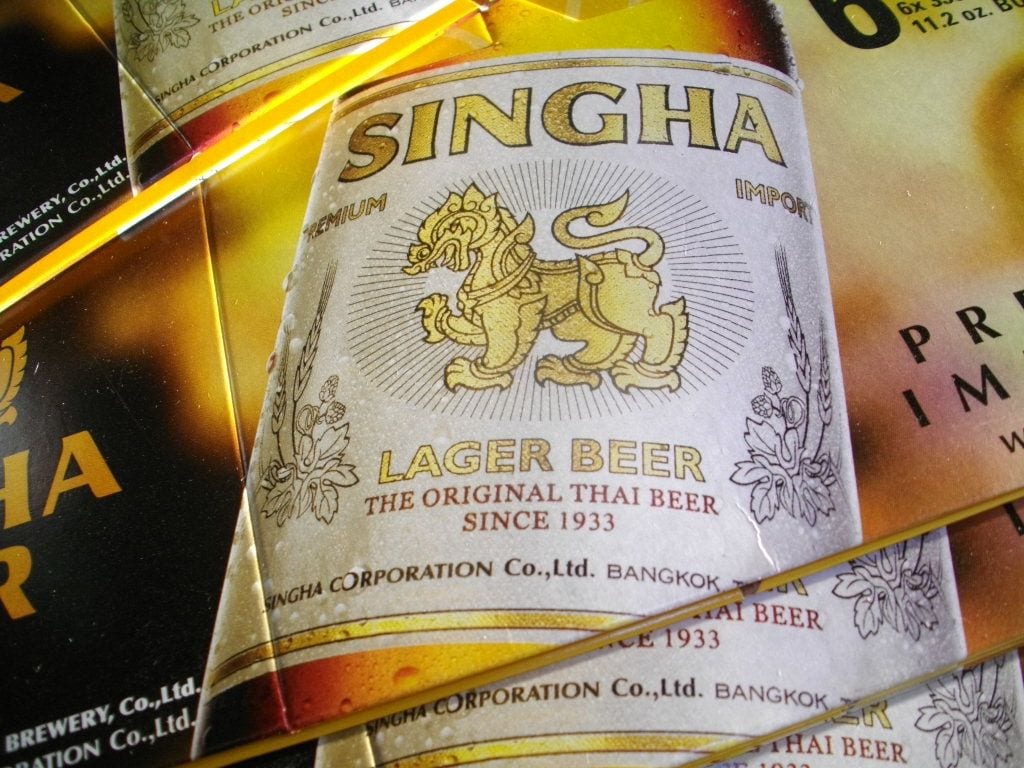
    Masan Group Corporation closed the first round of funding of its strategic partnership with Singha Asia Holding last month.

    Singha contributed US$650 million (Bt23.2 billion), comprising $50 million for a 33.3-per-cent equity interest in Masan Brewery and $600 million for a 14.3-per-cent equity interest in Masan Consumer Holdings.

    Proceeds of the $600-million into Masan Consumer Holdings facilitated the purchase of additional shares in Masan Consumer, the non-alcoholic branded food and beverage platform of Masan.

    As a result, Masan Consumer Holdings’ direct ownership in Masan Consumer increased from 77.8 per cent to 96.7 per cent.

    The first closing is a strong validation of Masan’s strategic value, platform and growth potential as the company further develops its business not only in Vietnam but inland Asean alongside Singha.

    Closing of the remaining $450-million increase in Singha’s equity interests in Masan Consumer Holdings to 25 per cent is subject to customary regulatory and corporate approvals. 

  • Asia Pacific Breweries Singapore to axe exclusivity practice after probe

    Asia Pacific Breweries Singapore to axe exclusivity practice after probe

    Asia Pacific Breweries Singapore has agreed to stop supplying draught beer to retail outlets on an exclusive basis after it was investigated by the Competition Commission of Singapore (CCS).

    The CCS said in a statement on Wednesday that it had acted on complaints, adding: “The outlet-exclusivity practice had prevented retail outlets from selling draught beers from competing suppliers and restricted the choices of draught beers available to retailers and consumers.”

    Under competition laws here, a dominant firm is prohibited from preventing or impeding its competitors from competing effectively through exclusive business practices.

    In its investigation, the CCS obtained information on the beer market in Singapore from retailers and beer suppliers.

    Asia Pacific Breweries Singapore(APBS) has since provided the CCS with a voluntary commitment to cease its outlet exclusivity practice.

    The change in the company’s business practices will be applicable to all draught beer contracts entered into with retailers on and after Dec 28 2015, including new and renewal contracts. APBS will also be required to provide CCS with documents to show that these changes have taken effect.

    The CCS will continue to monitor market practices

    CCS chief executive Toh Han Li said: “The removal of these exclusive business practices will allow retailers to stock a greater variety of draught beers, leading to a more vibrant market with more choices for consumers, as well as opportunities for existing suppliers and new entrants including microbreweries and craft beer suppliers.”

    He added that in general, exclusive agreements made by a dominant firm that harm competition may be illegal under the Competition Act.


  • Asia Pacific Breweries ends exclusive beer sales practice in Singapore

    Asia Pacific Breweries ends exclusive beer sales practice in Singapore

    The company has given CCS a voluntary commitment to cease its outlet exclusivity practice.

    Going forward, APBS will not impose outlet-exclusivity conditions in its supply of draught beer contracts to retailers.

    The change in APBS’s business practices will be applicable to all draught beer contracts entered into with retailers on and after December 28, including new and renewal contracts. APBS will also be required to provide CCS with documents to show that these changes have taken effect.

    “The removal of these exclusive business practices will allow beer suppliers to compete on merit in offering their draught beers to retail outlets,” CCA chief executive Toh Han Li said.

    “This will allow retailers to stock a greater variety of draught beers, leading to a more vibrant market with more choices for consumers, as well as opportunities for existing suppliers and new entrants including microbreweries and craft beer suppliers.”

    Acting on complaints, CCS had investigated APBS in relation to its practice of supplying draught beer to retail outlets solely on an exclusive basis.

    Under the competition law in Singapore, a dominant firm is prohibited from preventing or impeding its competitors from competing effectively through exclusive business practices.

    CCS says APBS’s outlet-exclusivity practice had prevented retail outlets from selling draught beers from competing suppliers and restricted the choices of draught beers available to retailers and consumers.

    Under the probe, CCS obtained information on the beer market in Singapore from retailers and beer suppliers. CCS also commissioned a market survey to gather information on market practices.

    CCS has ceased its investigation but will continue to monitor market practices.

  • InBev-SABMiller tie-up would include China’s biggest beer

    InBev-SABMiller tie-up would include China’s biggest beer

    A potential prize for AB InBev in its bid for SABMiller is a Chinese beer that is the world’s biggest seller. But any deal will face Chinese regulators who have barred the two brewing giants in the past from cooperating.

    China already drinks one-quarter of the world’s beer and is the focus of intense foreign interest because even with its economy cooling, demand is growing while Western markets are flat or declining.

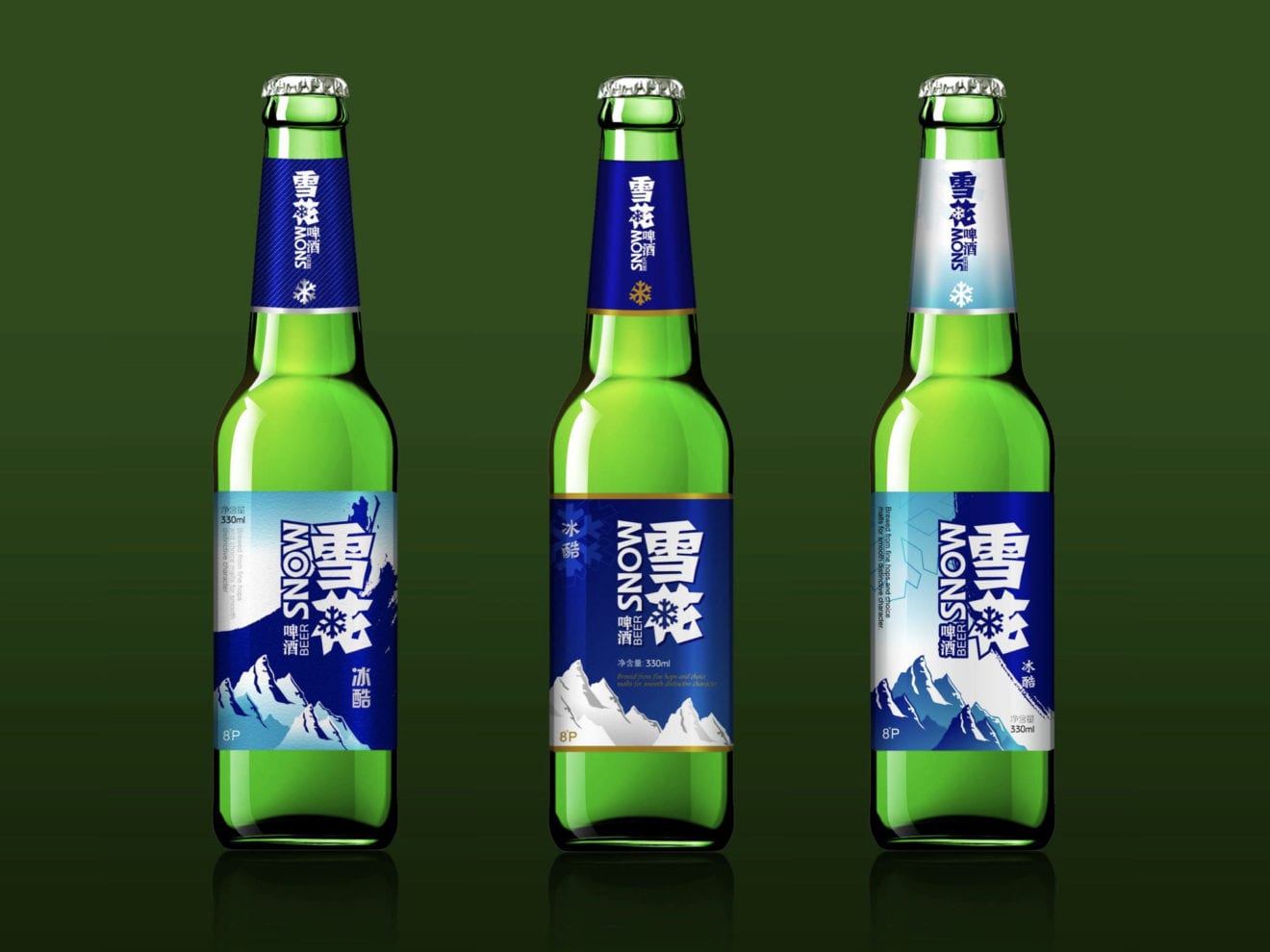
    SABMiller has a leading position with a 49 percent stake in Snow, a joint venture with a state-owned partner that sold 11.8 billion liters (3 billion gallons) of suds last year, or more than one out of every 20 glasses drunk worldwide. That could dramatically expand InBev’s Chinese footprint, which already includes Budweiser, Beck’s and Stella Artois.

    “No one outside China knows what Snow is, but it is the biggest brand in the world,” said industry analyst Spiros Malandrakis of Euromonitor.

    Total Chinese beer sales are expected to rise 2.6 per cent this year to 52.2 billion liters (13.6 billion gallons), or more than double the global forecast of 1 per cent growth, according to Euromonitor.

    Competition in China’s crowded beer market is intense, which keeps prices low and profits slim.

    Despite that, global brewers are buying or launching mass-market brands. Some hope to attract Chinese drinkers who might trade up to more expensive versions as incomes rise.

    In China since 1984, InBev’s Anheuser-Busch unit, brewer of Budweiser, has 39 beverage plants and 26,000 employees.

    SABMiller launched Snow with China Resources Enterprise, Ltd. in 1994. Today, it has 98 breweries and says it accounts for more than one in every five cans or bottles of beer sold in China.

    Other competitors include Heineken and Carlsberg, Japan’s Kirin and Asahi and Chinese brands Tsingtao and Yanjing.

    In a reflection of competitive pressure, it was only last year that SABMiller said it collected its first half-year dividend of $228 million from the Snow partnership.

    If Belgian-based AB InBev wants to keep that business, it needs to win over Chinese anti-monopoly regulators who have singled out both companies for curbs on their activities to preserve competition.

    As a condition of Chinese approval for its 2008 purchase of Anheuser-Busch, InBev was barred from linking its brands with SABMiller. Those also include domestic beers Harbin, Sedrin and Double Deer.

    Both also are prohibited from buying any more Chinese breweries.

    A merged company would control more than 40 per cent of China’s beer market, according to Song Tao, an analyst for Guotai Jun’an International, a Chinese brokerage.

    “That may trigger an anti-monopoly investigation,” said Song. “If the deal fails to get passed, InBev has to sell its holdings in CRE. Then CRE will face competition from InBev, and their future will become unclear.”

    Mergers between rivals in China run counter to the ruling Communist Party’s desire to make the economy more productive by promoting competition.

    China didn’t enact its first anti-monopoly law until 2007 but regulators have enforced it aggressively.

    In 2009, they blocked Coca-Cola Co. from buying a Chinese fruit juice maker, Huiyuan. Regulators said even though Coke had no fruit juice brand, adding Huiyuan to its popular carbonated drinks might hurt competition in beverages overall.

    Companies that want to merge are required to notify regulators if their combined annual revenue would exceed 2 billion yuan ($310 million) and each did more than 400 million yuan ($64 million) in business the previous year, according to Song Ying, an anti-monopoly specialist for the Anjie Law Firm in Beijing.

    “The Ministry of Commerce will consult with some of the main stakeholders in this industry and maybe the relevant industrial associations to ensure that the potential merger deal will not put restrictions on market competition or raise the barriers to entry,” said Song.

    At the same time, brewers are scrambling to adapt as Chinese drinkers join their Western counterparts in migrating to craft beers.

    Already, specialty brews including Stella, Hoegaarden and Belgium’s Chimay and Duvel priced at up to 37 yuan ($6) a bottle are sold in supermarkets in major Chinese cities.

    “This highlights the speed of the sophistication of the Chinese palate,” said Malandrakis of Euromonitor.

    For a global brewer, he said, that means taking over a popular but low-profit brand such as Snow would be part of a strategy to guide Chinese drinkers to more expensive varieties.

    “Essentially the consumers would drink Snow for a couple of years,” he said. “And then when they move into the middle class, they would switch, the company hopes, to imported beers from its brands.”
  • ThaiBev consolidates all beers into Chang Classic to shake up market

    ThaiBev consolidates all beers into Chang Classic to shake up market

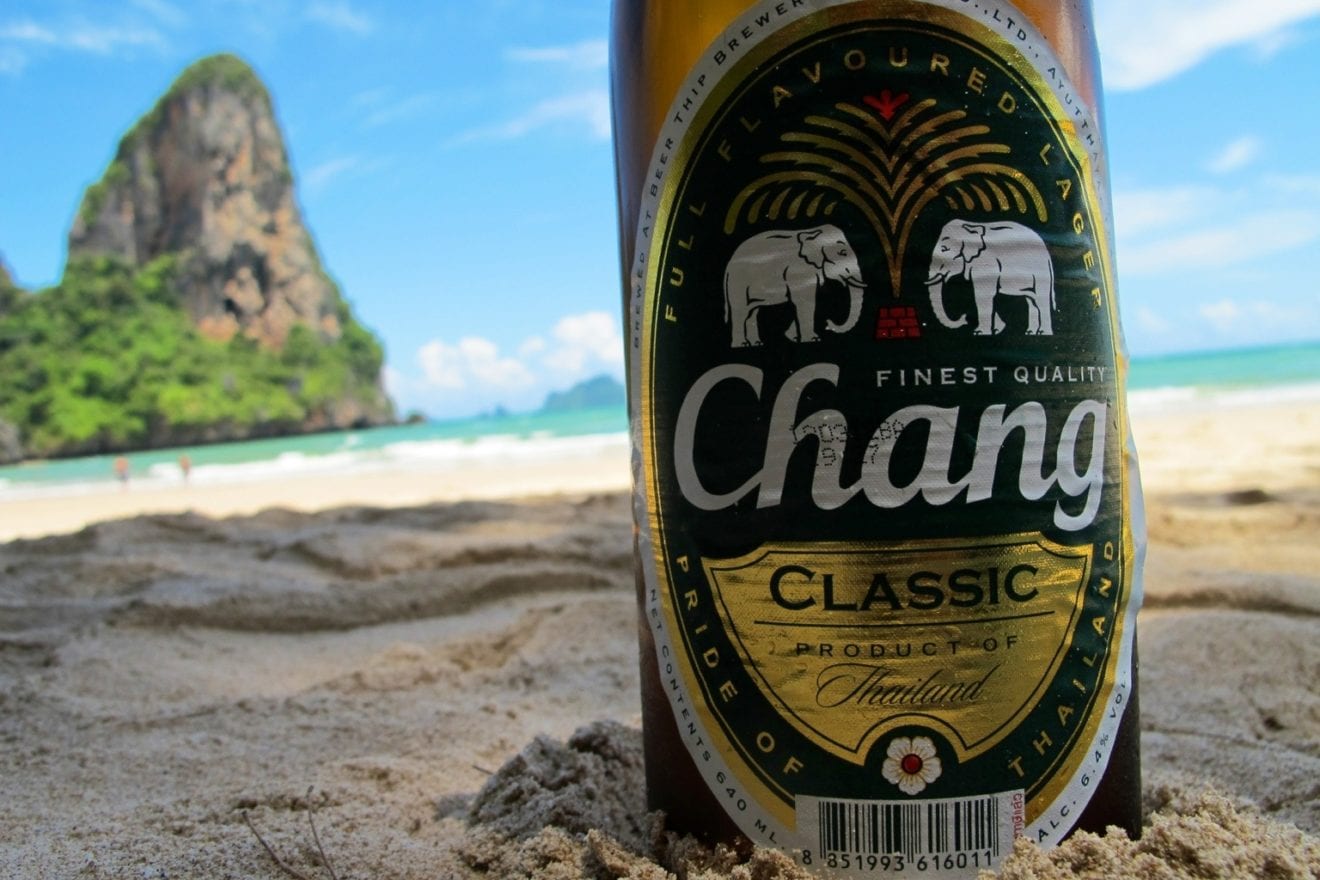
    Thai Beverage (ThaiBev) has consolidated all its beers under the Chang Classic brand in line with its vision to become a “sustainable leader” in the beer and non-alcoholic beverages market in Asean by 2020.

    “We are able to make a perfect liquid for consumers. So, we would like to contribute a single-minded focus actually on one single brand,” Edmond Neo Kim Soon, chief executive officer for beer in Thailand at Chang International Co, said late Wednesday.

    As part of the group’s 2020 vision presented by Thapana Sirivadhan-abhakdi, president and CEO of ThaiBev, to more than 2,000 Chang dealers on Wednesday evening on the occasion of the twentieth anniversary of Chang beer in Thailand, the company aims to increase Chang’s share of the local beer market from about 30 per cent to 45-50 per cent, making it the market leader.

    The company has already given up the distribution of several beer products – Chang Light, Chang Export and Chang Draught.

    The Chang Classic brand will be used for both the domestic market and export markets around the world.

    “We have also launched the new look Chang Classic bottle, with a more elegant and very nice contour and good hand-feel. The new Chang Classic will be easy to drink with only a 5.5-degree alcohol level, down from 6 degrees previously.

    “The new beer is in line with the company’s strategy to deliver products that meet customer needs,” Soon said. The bottle’s colour has also been changed from amber to green to attract more premium and younger drinkers of 20-35 years of age, down from 25-44 previously. The new Chang Classic bottles come in two sizes – 320cc and 620cc – at prices of about Bt34-Bt37 and Bt53-Bt55, depending on the retail outlet.

    Thailand’s beer market is looking to expand 3-4 per cent to about 18 million hectolitres this year after dropping sharply by about 5 per cent last year.

    “We want to grow faster than the overall beer market in Thailand,” he said, adding that the companyhas launched new marketing activities and have been able to increase market share substantially in the past six months. Our market share is as high as 30 per cent currently.

    Thailand is one of the very important markets for Chang. The company will focus on various issues, including those involving image and products, to strengthen its core business.

    “We have a significant presence in many markets in Asean, comprising Thailand, Myanmar, Singapore and Malaysia. We are launching our Chang beer in Cambodia and also looking at the rest of Asean,” he said.

    Vichate Tantiwanich, senior vice president for corporate affairs at ThaiBev, said the company was fully prepared to expand its presence in Asean. The company’s largest brewery in Kamphaeng Phet province is now running at only 50 per cent of capacity.