Retail News CRM

Tag: beer

  • Singha Beer Heiress Withdraws Ungrateful Child Suit Amidst Family Scandal

    Singha Beer Heiress Withdraws Ungrateful Child Suit Amidst Family Scandal

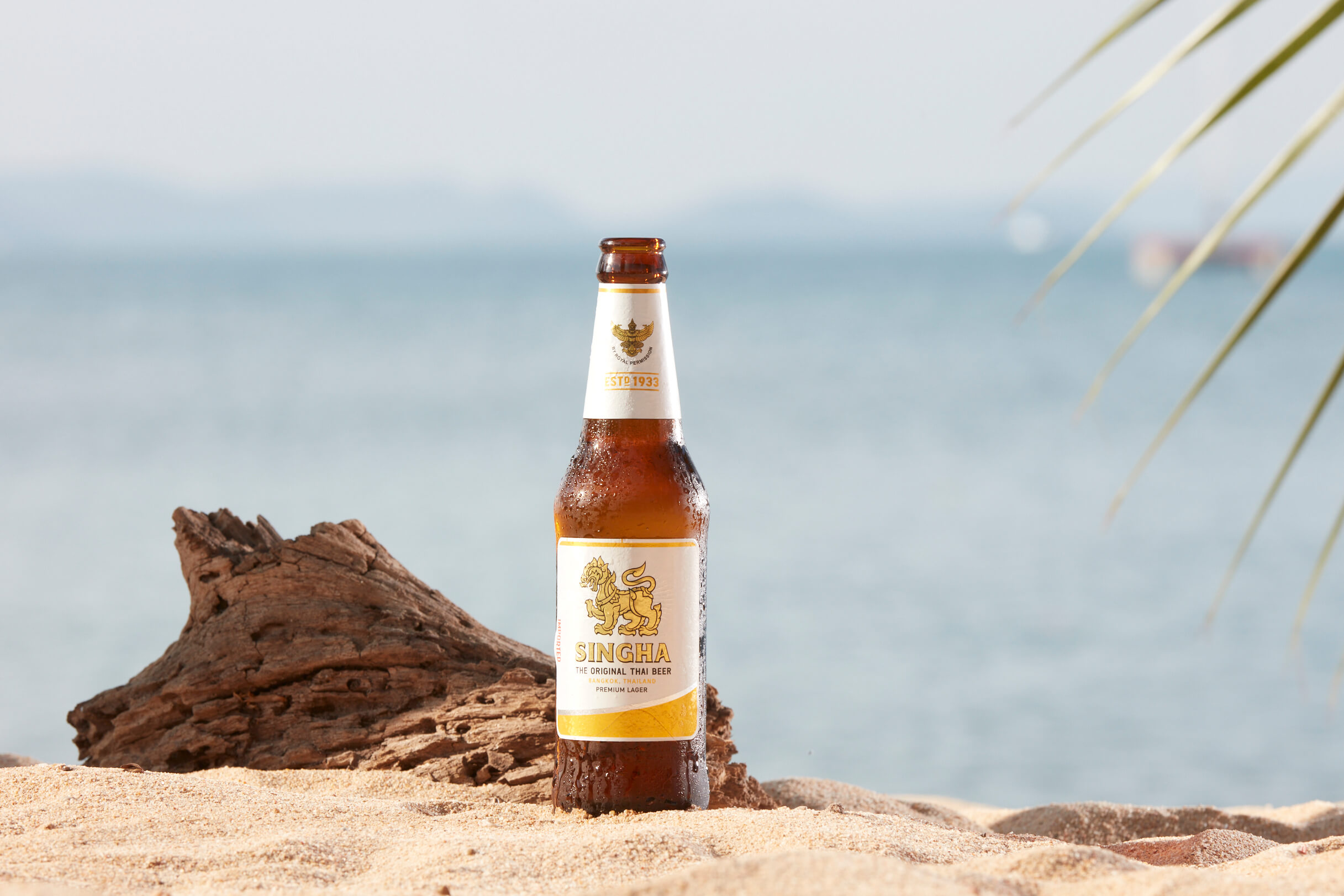
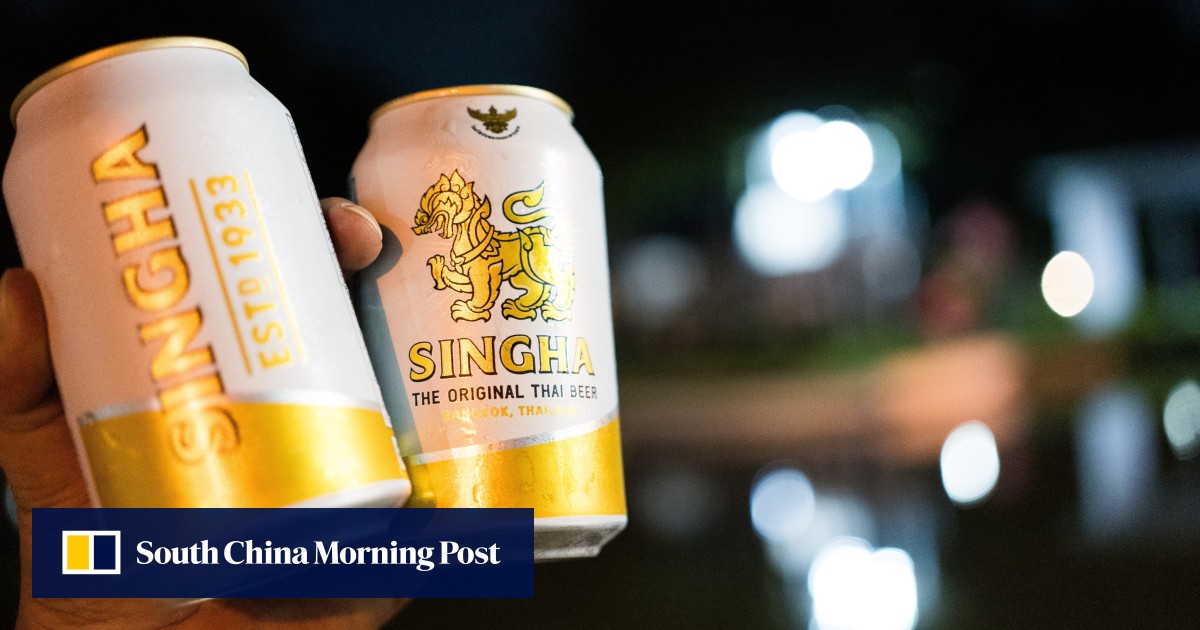
    On Wednesday, a mother from one of Thailand’s wealthiest families officially withdrew the lawsuit she lodged against her son under the “ungrateful child law.” The litigation stemmed from accusations her son, Siranudh “Psi” Scott, made against his older brother of sexual abuse. The mother, Jeeranuch Bhirombhakdi, is part of the billionaire family that founded Thailand’s Singha beer empire.

    The Ungrateful Child Law and Its Implications

    The “ungrateful child law,” invoked by Jeeranuch in February, provides parents the right to revoke gifts if their children are deemed ungrateful, abusive, neglectful in their later years or if they cause significant reputational damage. Triggered by the lawsuit, Siranudh disclosed in May that he had suffered sexual abuse at the hands of his elder brother, Sunit, and his babysitter.

    Jeeranuch contended that Siranudh’s accusations tarnished the family’s reputation. As a result, she sought to reclaim land valued in the millions that his late grandfather had bequeathed him. Despite the case withdrawal, Siranudh reported to journalists outside the courtroom, “Even though they withdrew the case, my life is still shattered.”

    Family Dispute Publicized

    Approximately 20 of Siranudh’s advocates assembled near the court, bearing paper flowers and photographs of him. Siranudh expressed that he could not consider the lawsuit withdrawal a victory, as the case should never have been initiated. He insisted, “I’ve never been ungrateful to anyone.”

    Parnthep Pourpongpan, Siranudh’s representative, informed reporters that Jeeranuch’s filing suggested resolution within the family due to the dispute’s familial nature. In a Friday-dated statement, Jeeranuch declared her willingness to converse, provided it was conducted with “love and genuine goodwill.” Jeeranuch also indicated her readiness to “respect and accept” the judicial process concerning the issue between her sons. She expressed her hope that “the truth will come to light and fairness will be served to both of my children.”

    Denying the allegations against him, Sunit admitted to roughhousing between the siblings. Singha’s parent company, Boonrawd Brewery, terminated Sunit’s executive role in May. According to Forbes, the Bhirombhakdi family ranks as Thailand’s 15th richest, with a net worth of approximately US$1.75 billion.

    Questions & Answers

    What is the “ungrateful child law”?
    The “ungrateful child law” is a measure that allows parents to revoke gifts to their children if they are deemed ungrateful, physically abusive, neglectful in old age, or responsible for serious reputational harm.

    Why did Jeeranuch Bhirombhakdi file a lawsuit against her son, Siranudh?
    Jeeranuch filed the lawsuit under the “ungrateful child law” after Siranudh accused his older brother of sexual abuse, which she claimed had damaged the family’s reputation.

    What happened to Sunit, the elder brother accused of sexual abuse?
    Sunit denied the allegations against him and was subsequently dismissed from his executive role at the family’s business, Boonrawd Brewery.
  • Heinz and Heineken Unveil Limited-Edition Combo: Beer Meets Ketchup in Epic 150-Year Brand Collaboration

    Heinz and Heineken Unveil Limited-Edition Combo: Beer Meets Ketchup in Epic 150-Year Brand Collaboration

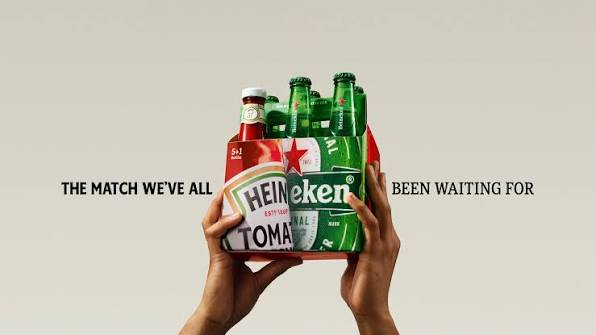
    Iconic brands Heinz and Heineken have teamed up to release a unique, limited-edition six-pack that combines their popular ketchup and beer products. This creative collaboration is not introducing a new consumption trend, but rather capitalizes on an already established pattern of consumer behaviour.

    Long-standing Consumer Habits Inspire Collaboration

    The pairing of these two beloved products acknowledges how they are often consumed together at various social settings. Be it a casual gathering, a sporting event, a barbecue, or simply during a burger meal, the consumption of Heinz ketchup and Heineken beer is a common occurrence.

    Dana Katz, Director of Integrated Communications at Heineken, stated that this brand pairing has been 150 years in the making. She emphasized that instead of creating a novel habit, this collaboration is a testament to what consumers have been doing for decades.

    The unique concept behind the partnership, according to Katz, emerged from an already existing link between the two brands. She mentioned that the idea didn’t feel like a new creation, but more of a discovery of something which had been hidden in plain sight, going even as far as the similarity in the brand names.

    Rolling Out in Select International Markets

    The exclusive Heinz x Heineken six-pack is set to hit the shelves in a number of selected international markets. These include the United Kingdom, Ireland, and Canada.

    Questions & Answers

    What is the unique selling proposition of the Heinz x Heineken six-pack?
    The unique selling point of this product is it combines two popular items that are often consumed together, Heinz ketchup and Heineken beer, into one convenient pack.

    Where will the Heinz x Heineken pack be available?
    The pack will be available in selected international markets, including the UK, Ireland, and Canada.

    What inspired the collaboration between Heinz and Heineken?
    The concept emerged from an already existing link between the two brands, recognizing that their products are often consumed together in various social settings.

  • New Leadership Horizons: Nigel Parsons Takes Reins as Asahi’s Europe and International Division CEO

    New Leadership Horizons: Nigel Parsons Takes Reins as Asahi’s Europe and International Division CEO

    Nigel Parsons has been announced as the new CEO of Asahi’s Europe and International (AEI) segment, succeeding Dragos Constantinescu who is set to leave his position at the end of June. Parsons is slated to officially take over during the latter part of this year. In the interim period, Andrew Bailey, AEI’s CFO, will fulfill the CEO responsibilities.

    Parsons’ appointment has been attributed to his vast leadership skills spanning human resources, commercial, and multi-category operations within the organization and the wider Fast-Moving Consumer Goods (FMCG) industry. His tenure with Asahi Beverages began in 2021 when he took up the CEO position in the lifestyle beverages division. Most recently, Parsons held the Chief Commercial Officer (CCO) role for Oceania, where he supervised commercial operations in Australia and New Zealand.

    Atsushi Katsuki, the President and Group CEO of Asahi Group Holdings, has lauded Parsons for his proven capability in driving sustainable growth. Katsuki expressed his confidence that under Parsons’ guidance, AEI would progress its strategic objectives in complete harmony with the group’s medium to long-term management policies, thereby enhancing value creation across their business portfolio.

    Questions & Answers

    Who has been appointed as the new CEO of Asahi’s Europe and International division?
    Nigel Parsons has been appointed the new CEO of Asahi’s Europe and International division.

    Who will serve as acting CEO during the transition period?
    Andrew Bailey, the CFO of AEI, will serve as acting CEO during the transition period.

    What roles has Nigel Parsons held within the Asahi Group?
    Nigel Parsons joined Asahi Beverages in 2021 as CEO of its lifestyle beverages division, and most recently served as the Chief Commercial Officer for Oceania, overseeing operations in Australia and New Zealand.

  • Thai Beer Tycoon Dismisses Family Exec Following Brothers Abuse Claims

    Thai Beer Tycoon Dismisses Family Exec Following Brothers Abuse Claims

    A prominent member of Thailand’s Bhirombhakdi family, known for their control of Singha Beer, was dismissed from the family’s business empire due to allegations of sexual abuse. The dismissal followed several days of public controversy ignited by the allegations.

    A Family Rift

    Siranudh Scott, an environmental activist from the Bhirombhakdi family, accused his elder brother of sexually abusing him during his teenage years. Scott announced these allegations in an emotional video posted on his Facebook page. He claimed that his family was aware of the abuse, citing a taped confession as proof, but took no action against it.

    Scott expressed his disillusionment with his family, stating his unwillingness to be identified as a Singha heir and his desire to distance himself from a family that he felt lacked empathy for him. Scott, a marine conservationist known for his work with his group Sea You Strong in southern Thailand, is the son of a Scottish father.

    Company Response

    Following the allegations, the family’s business conglomerate, Boonrawd Brewery Company, announced the dismissal of Sunit, Scott’s brother, from all his positions within the company. In a statement, the company expressed regret for Scott’s experiences and declared their cooperation with authorities in ongoing investigations.

    The statement was given by the company’s CEO, Bhurit Bhirombhakdi, who is also a cousin of the two men. Bhurit additionally shared a letter from Sunit, in which the accused resigned from all his duties until the matter could be thoroughly investigated and resolved. Although Sunit has denied the allegations of sexual abuse, he admitted to instances of rough play between boys.

    The Bhirombhakdi family, who are identified as Thailand’s fifteenth wealthiest family by Forbes, with an estimated net worth of $1.75 billion, have interests extending beyond Singha Beer. They are also engaged in food manufacturing, hotel operations, power, and property.

    Questions & Answers

    What led to the dismissal of a member from the Bhirombhakdi family’s business empire?
    The dismissal occurred following allegations of sexual abuse made by Siranudh Scott against his elder brother, Sunit, which stirred public controversy.

    Who announced the dismissal from the family’s business empire?
    CEO Bhurit Bhirombhakdi, the cousin of the two men, announced the dismissal in a statement.

    What are the other business interests of the Bhirombhakdi family?
    Apart from Singha Beer, the family’s business interests include food manufacturing, hotels, power, and property.

  • Australian Spirits Industry Outraged as Tax Relief Measures Favor Beer Over Liquor

    Australian Spirits Industry Outraged as Tax Relief Measures Favor Beer Over Liquor

    In Australia, the spirits industry is set to miss out on tax relief measures currently extended to the beer industry, following a failed debate on alcohol taxation in the Senate.

    The Failed Amendment

    An amendment proposed to extend the excise freeze, currently applied to draught beer, to tap spirits was voted down by the Labor and Greens parties. In addition to this, the amendment suggested a review of the alcohol tax system. The proposed changes, which received support from the opposition and several independent senators, would have served as a cost-of-living measure for patrons of pubs and clubs if approved.

    Steven Fanner, executive director of Spirits & Cocktails Australia, expressed disappointment at the outcome, stating that the amendment had the backing of consumers and also encouraged a review of alcohol taxation in the country.

    He was quoted as saying, “To see the amendment voted down without its supporters even being provided the opportunity to debate it in the Senate is disappointing.” He found it perplexing that the Greens opposed a review of the alcohol tax, considering that tax reform has been part of their policy platform for years.

    Call for Tax System Review

    Industry representatives continue to advocate for a reevaluation of the tax system, highlighting the stark contrast in taxation between different types of alcohol. For instance, a consumer purchasing a gin and tonic is taxed almost three times more than a beer drinker, and up to eight times more than a wine drinker. Fanner believes this system reflects outdated consumption patterns and fails to align with the current market conditions.

    Spirits are increasingly becoming a significant part of the product mix offered in bars, clubs, and smaller venues. The excise on spirits is adjusted bi-annually, and after the most recent adjustment in February, the tax collected on a standard 700ml bottle of gin or whisky stands at about $32.

    During the promotion of the draught beer excise freeze, Government MPs stated that the policy was intended to alleviate cost-of-living pressures and support hospitality businesses. According to Fanner, however, the current measure is only applicable to beer, not all alcohol categories.

    Questions & Answers

    What was the proposed amendment to alcohol taxation in Australia?
    The amendment proposed to extend the excise freeze currently on draught beer to tap spirits. It also called for a review of the alcohol tax system.

    What was the outcome of the debate on the amendment?
    The amendment was voted down in the Senate, with the Labor and Greens parties opposing it.

    What is the current state of alcohol taxation in Australia?
    Currently, the excise freeze is applied only to beer. A gin and tonic consumer pays nearly three times the tax a beer drinker pays, and up to eight times more than a wine drinker. The excise on spirits, which is adjusted twice a year, currently stands at $32 on a standard 700ml bottle of gin or whisky. Industry representatives are calling for a review of this system.

  • Better Beer Unveils ‘Halfy’: A Low-Calorie, Low-Alcohol Lager Answering the Call for Moderation

    Better Beer Unveils ‘Halfy’: A Low-Calorie, Low-Alcohol Lager Answering the Call for Moderation

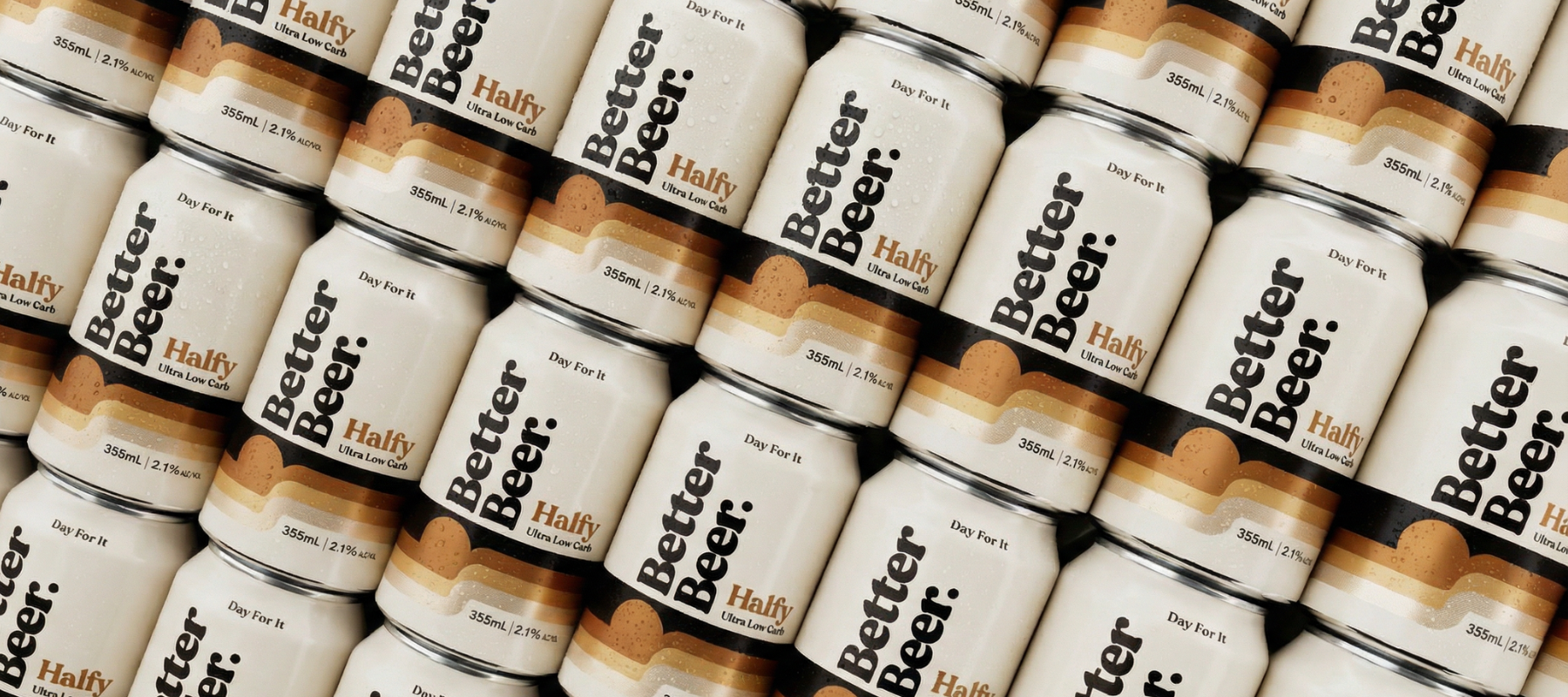
    Better Beer, a leading brewery company, has introduced Halfy, an ultra-low-carbohydrate lager that contains half the alcoholic content of its flagship product, the zero-carb Better Beer.

    New Addition to the Product Range

    The newly launched Halfy joins Better Beer’s extensive range of low or non-alcoholic beverages. The company’s current offerings include the zero-carb lager, an ultra-low-carb mid-strength beer known as Middy, a low-sugar, gluten-free ginger beer, and Better Cider.

    The Halfy lager is presented in a 355ml can and features an alcohol by volume (ABV) of 2.1 per cent, making it a light beverage option. In addition to its low alcohol content, Halfy also boasts just 57 calories per can. Moreover, the hop profile remains consistent with the original Better Beer, delivering a light and clean finish to satisfy beer connoisseurs.

    Meeting the Demand for Moderate Consumption

    Nick Cogger, CEO and co-founder of Better Beer, sees the launch of Halfy as the company’s answer to an increasing consumer demand for moderate alcohol consumption. Cogger explains that Halfy is designed for genuine Australian drinking experiences, allowing consumers to enjoy the full beer experience without fear of overindulging.

    Cogger notes a significant trend towards moderation, with an increasing focus on wellness and balance, particularly in the world of alcoholic beverages. Halfy is crafted to meet this demand, providing the taste of a conventional beer, but with reduced alcohol content and lower caloric intake.

    Availability and Pricing

    The Better Beer Halfy is currently available for purchase across Australia at Dan Murphy’s and BWS stores. The recommended retail price is $48 for a pack of 24 cans.

    Questions & Answers

    What is the ABV and calorie count for Halfy?
    Halfy has an ABV of 2.1% and contains 57 calories per 355ml can.

    What is the purpose of launching Halfy?
    The launch of Halfy is Better Beer’s response to the growing consumer demand for beer with lower alcohol content and a healthier profile, allowing consumers to enjoy the taste of beer without overindulging.

    Where can consumers purchase Better Beer Halfy?
    Better Beer Halfy is available for purchase nationwide at Dan Murphy’s and BWS stores.

  • “Savor Summer with Aldi’s Exclusive Tropicaldi XPA: Hawke’s Brewing Co’s Craft Beer Now Supermarket-Chic!”

    “Savor Summer with Aldi’s Exclusive Tropicaldi XPA: Hawke’s Brewing Co’s Craft Beer Now Supermarket-Chic!”

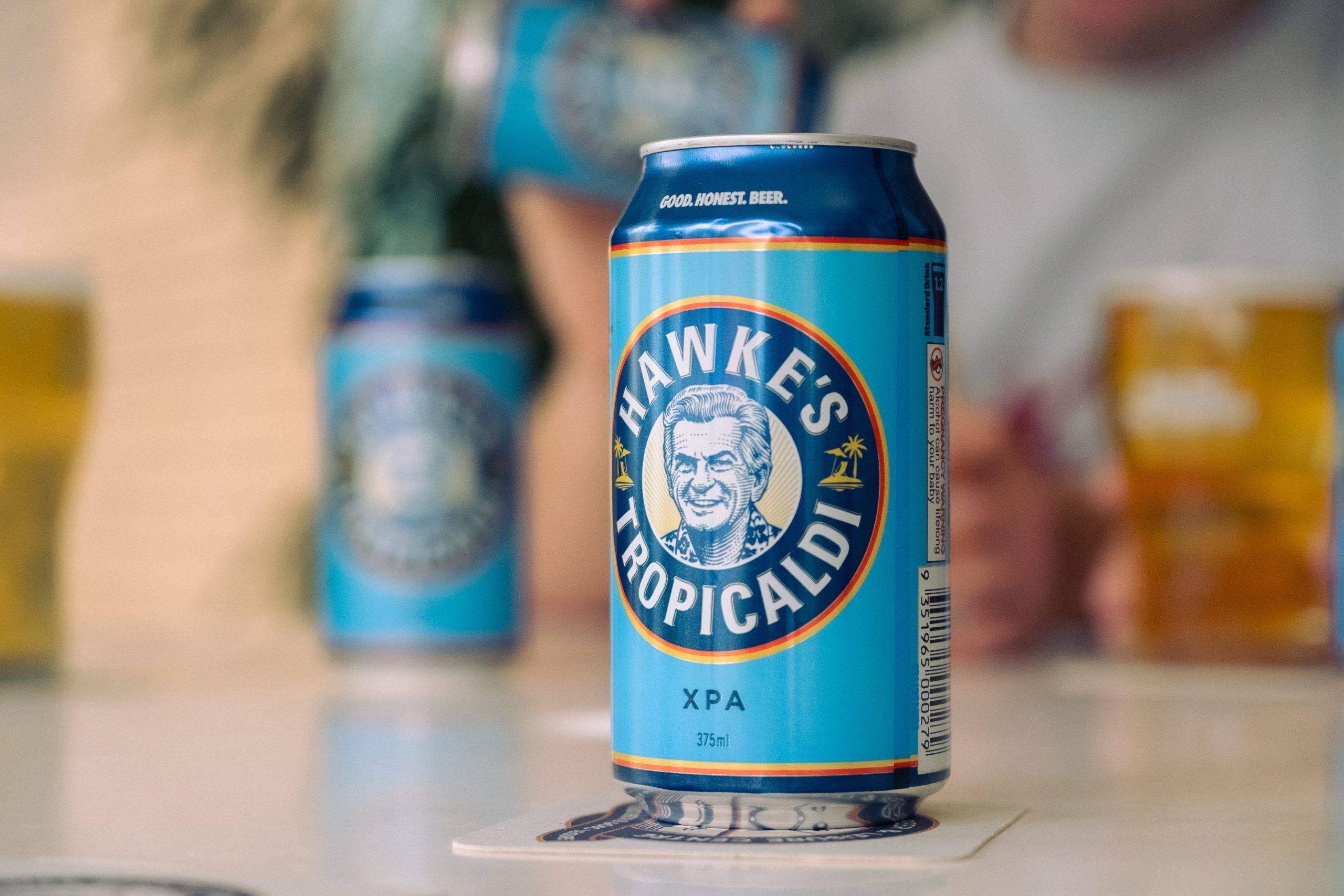
    Hawke’s Brewing Co. has embarked on a unique collaboration with Aldi to introduce Tropicaldi XPA, marking the brewery’s first venture alongside a supermarket.

    Dan Warner, Aldi’s buying director, expressed that the primary objective behind the launch is to heighten the accessibility and affordability of craft-style beer.

    “Previously, Hawke’s XPA was only obtainable through tap,” he revealed.

    “With its exclusive availability in cans at Aldi, Tropicaldi attests to Aldi’s reputation as a go-to retailer for quality, value-for-money summer beverages,” he added.

    The XPA, brewed in Marrickville, possesses a 4 percent ABV. It exhibits tantalizing aromas of pear, orange, and stone fruit and concludes with a crisp, easy-to-drink profile, making it a perfect choice for warm weather.

    Nathan Lennon, co-founder of Hawke’s Brewing Co, remarked that this collaboration aligns squarely with the company’s goal of maintaining the accessibility of craft beer.

    “Much like Aldi, we are committed to demonstrating that high quality does not necessitate a steep price tag,” he added.

    Tropicaldi XPA is available at Aldi stores across the nation for a restricted period. The product is priced at $13.99 for a six-pack of 457ml cans.

    Questions & Answers

    What is the collaboration between Hawke’s Brewing Co. and Aldi?
    The collaboration is about the launch of Tropicaldi XPA, the brewery’s first supermarket-based venture.

    What is the aim of the Tropicaldi XPA launch?
    The aim is to make craft-style beer more accessible to consumers at a more affordable price.

    What is the price and availability of Tropicaldi XPA?
    Tropicaldi XPA is priced at $13.99 for a six-pack of 457ml cans and is available nationwide at Aldi for a limited period.

  • Coopers Brewery Defies Downturn: Annual Beer Sales Soar Despite National Decline

    Coopers Brewery Defies Downturn: Annual Beer Sales Soar Despite National Decline

    Coopers Brewery, a family-owned independent brewing company, has experienced a slight rise in its annual beer sales, outperforming the overall market that has seen a downturn.

    Annual Sales Report

    In the 2024-25 fiscal year, Coopers Brewery reported total beer sales of 80.6 million litres, marking a growth of 2.4% compared to the preceding year. This contrasts the 0.9% contraction witnessed within the national beer market during the same period.

    Growth in Keg and Packaged Beer Sales

    Sales of kegs, which account for approximately 12.4% of Coopers’ total beer sales, saw a substantial increase of 5.9%. Additionally, the sales of packaged beers also saw a modest uptick of 1.8%.

    Product-Specific Sales Performance

    Sales of malted barley and wheat saw an increase of 3.4%. However, there was a 17% drop in DIY brewing product volumes, a result of reduced consumer demand and restricted space on supermarket shelves.

    Statement from the Managing Director

    Michael Shearer, the Managing Director of the brewery, noted that the figures indicate a resilient performance throughout their beer portfolio. He highlighted considerable consumer demand for Dry 3.5 and Australian Lager, both relative newcomers to their range. Traditional ale products also continued their growth trajectory at 1.2%, while Stout saw a resurgence with a 3.3% rise compared to the previous year.

    Shearer admitted that cost-of-living pressures have made consumers more selective in their purchasing decisions. However, he was optimistic about achieving another year of solid sales growth in a challenging market, expressing it as a testament to the team and their craft.

    Regional Growth and Profit

    Over the course of the year, the company saw sales growth across all states and territories. SA emerged as the largest market in terms of sales volume, while Queensland experienced the most substantial growth at 4.8%.

    International beer exports, excluding New Zealand, which make up around 1% of total sales, fell by 22.3%. Conversely, sales to New Zealand grew by 2.6%.

    In terms of profitability, Coopers Brewery witnessed a decrease in pre-tax profits, which fell from $32.8 million in the previous year to $22.5 million. This shift reflects the investment in a new $70 million visitor center and its associated costs.

    The Visitor Center

    The company described the visitor centre as a generational investment and an integral part of its long-term strategy. In addition to housing a restaurant, the facility also includes a microbrewery and a whisky distillery. Since its inauguration in August of the previous year, the centre has welcomed approximately 60,000 visitors.

    Questions & Answers

    What contributed to the decrease in Coopers Brewery’s pre-tax profits?
    The pre-tax profit decrease reflected the brewery’s investment in a new $70 million visitor centre and its associated costs.

    What sales growth was seen across different product ranges at Coopers Brewery?
    Keg sales rose by 5.9% and packaged beer sales increased by 1.8%. Malted barley and wheat sales grew by 3.4%, but DIY brewing product volumes fell by 17%.

    Which areas experienced the most growth in terms of beer sales for Coopers Brewery?
    In terms of sales volume, SA was the largest market. However, Queensland recorded the highest growth rate at 4.8%.

  • Savour the Crunch: Bundaberg and Kettle Reintroduce Ginger Beer Flavoured Crisps

    Savour the Crunch: Bundaberg and Kettle Reintroduce Ginger Beer Flavoured Crisps

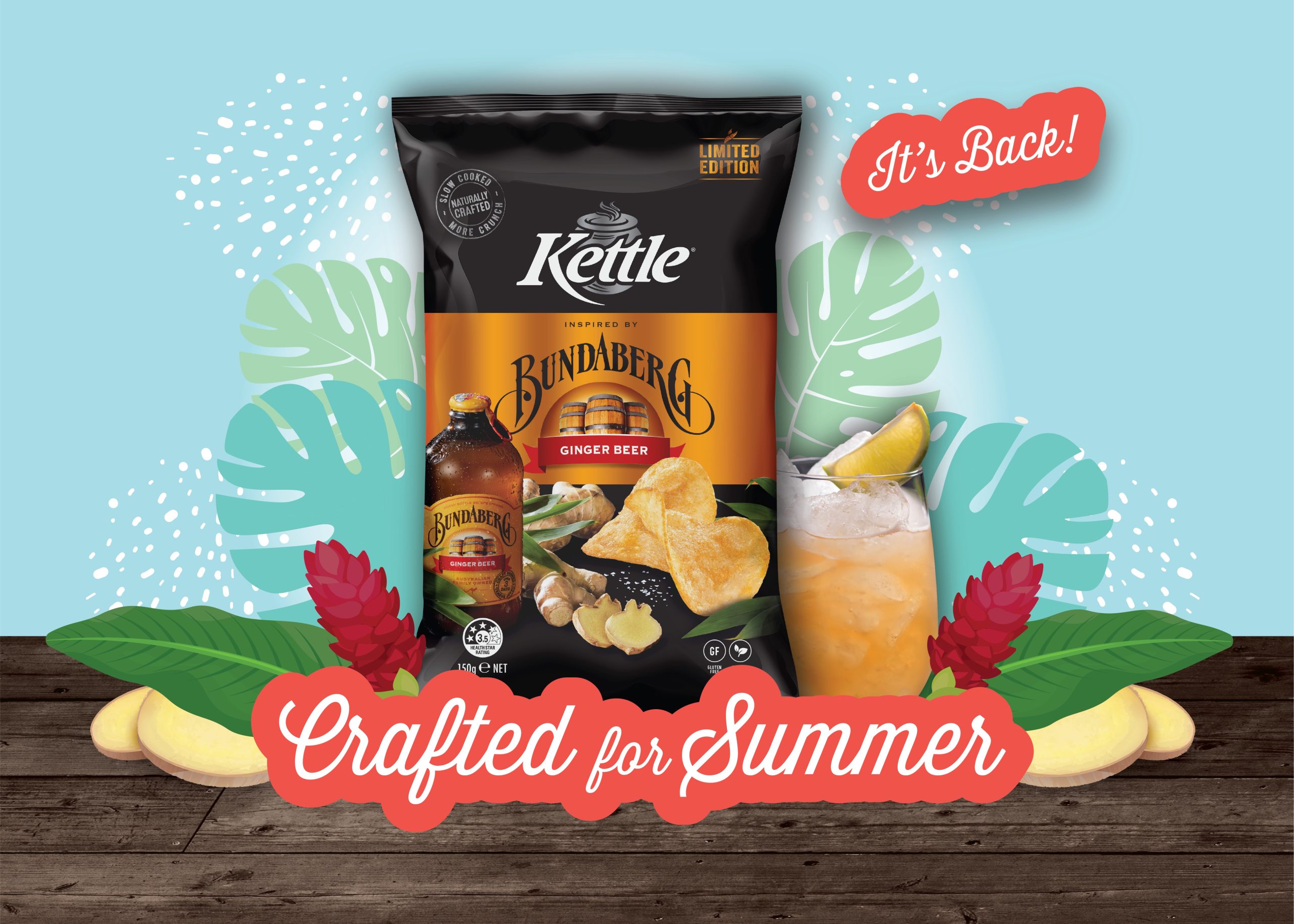
    Bundaberg, a renowned brewed beverage firm, has joined forces with Snackbrands Australia’s Kettle Chips to reintroduce a limited-edition flavored snack, intriguingly referred to as Ginger Beer chips.

    Meeting the Tastes of Australians

    The collaboration aims to meet the distinctive taste preferences of Australians, combining the crunch and caramel nuances of Kettle with a flavor inspired by the ‘spicy-sweet’ taste profile of Bundaberg’s famed ginger beer.

    John McLean, Bundaberg’s CEO, expressed satisfaction with the partnership and the response it garnered from the Australian audience. He further revealed the company’s anticipation to reintroduce Kettle’s Ginger Beer Chip this summer season.

    “At the core of our operations lies the principle of taste,” McLean said. “Consequently, partnering with a company that shares our commitment to quality and flavorful products is an exciting venture for us.”

    Ginger Beer Chip Availability

    The Kettle Bundaberg Ginger Beer Chips will be available for purchase next month in 90g and 150g bags. Independent supermarkets and convenience stores across the country will stock the product.

    James Deysel, the Managing Director of Snackbrands Australia, reflected on the successful reception of the product back in 2023. He stated, “The response was magnificent. It was evident that Australians were not yet ready to part with this product. This collaboration champions bold, unique, summer tastes and the type of innovation that sparks conversation.”

    Questions & Answers

    What is the collaboration between Bundaberg and Kettle Chips?
    The collaboration involves the reintroduction of Kettle Bundaberg Ginger Beer Chips, a limited-edition flavored snack inspired by the ‘spicy-sweet’ taste profile of Bundaberg’s ginger beer.

    Who will stock the Ginger Beer Chips?
    The Kettle Bundaberg Ginger Beer Chips will be available for purchase in independent supermarkets and convenience stores across Australia.

    What sizes will the Ginger Beer Chips be available in?
    The Ginger Beer Chips will be sold in 90g and 150g bags.

  • Heineken Unveils Resource-efficient Five-year Strategy Amidst Industry Challenges

    Heineken Unveils Resource-efficient Five-year Strategy Amidst Industry Challenges

    Heineken, the Dutch brewing giant, has announced an ambitious five-year strategy that aims at utilizing fewer resources to generate more growth. The strategy will concentrate on specific markets and brands to maximize organic net revenue growth. The company anticipates seeing mid-single-digit growth each year leading up to 2030.

    Changing Course Amid Uncertain Times

    In response to a rapidly evolving global landscape, Heineken is looking to fortify its future operations. The company plans to establish a more robust operating model, optimize efficiency, and enhance its adoption of artificial intelligence. This new direction comes in the wake of a series of challenges for Heineken, including the economic impact of the Covid-19 pandemic, rising inflation, and recent tensions arising from US trade policies.

    At an investor event, CEO Dolf van den Brink admitted that the company’s performance has been inconsistent. He expressed dissatisfaction with the current state of affairs and emphasized the company’s aspiration to improve and grow.

    Refocusing on Key Markets and Brands

    Heineken has identified 17 key markets, including Mexico, Malaysia, Spain, and the UK, where it aims to expand its presence. The company will target these markets for potential acquisitions and will focus on five global brands and 25 strong local labels. The markets, along with brands such as Heineken, Tiger, Amstel, Desperados, and Birra Moretti, will receive enhanced resources.

    Investors have suggested that Heineken has been lagging behind competitors, notably Anheuser-Busch InBev, which is recognized for its efficient operations. While Heineken’s shares have seen a modest increase of around 3% this year, its competitors’ shares have seen more substantial growth.

    The brewing company expects organic operating profit to outpace revenues under its revised strategy. It also anticipates earnings per share to grow commensurately or exceed that rate, and aims for over 90% free-cash conversion. The company’s profits will be bolstered by a pre-existing target of achieving up to 500 million euros (US$583 million) in annual gross savings by 2025.

    Industry-Wide Challenges and Adaptation

    Heineken shares experienced a minor slump recently, dropping almost 2% before recovering slightly. This comes after a warning from the company about a potential decrease in beer sales in 2025, following weak third-quarter sales in Brazil and Europe.

    Broadly, the brewing industry is grappling with challenging economic conditions and weak consumer confidence. Additionally, longer-term issues such as increasing health warnings, emerging competitors, and changing consumer preferences pose significant challenges.

    To adapt to evolving consumer demands, Heineken plans to expand its low- and no-alcohol offerings. The company recognizes that some consumers are reducing alcohol consumption due to health concerns and the rise of weight-loss drugs, and is taking proactive steps to accommodate this trend.

    Questions & Answers

    What is the key focus of Heineken’s new strategy?
    The primary focus of Heineken’s updated strategy is to generate more growth while utilizing fewer resources, focusing on specific brands and markets.

    How does Heineken plan to adapt to changing consumer trends?
    In response to changing consumer preferences, Heineken plans to expand its range of low- and no-alcohol products.

    What are some challenges Heineken anticipates in the brewing industry?
    Heineken expects to grapple with difficult economic conditions, weak consumer confidence, health warnings, and changes in consumer behavior, along with new entrants in the market.

  • Survey Reveals Japan’s Gen Z Shifting Drinking Culture with Dramatically Low Alcohol Consumption Rates

    Survey Reveals Japan’s Gen Z Shifting Drinking Culture with Dramatically Low Alcohol Consumption Rates

    In a striking revelation about Japan’s changing cultural landscape, a recent survey by Tokyo-based marketing firm Mery Co. reveals that 44% of Japanese in their twenties abstain from alcohol entirely, while an additional 16% drink less than once a month. When asked about their infrequent drinking habits, 33.7% cited “no particular reason” as their response. This seemingly laid-back attitude toward alcohol is followed by reasons such as “poor tolerance for alcohol,” “can have fun without drinking,” and “do not like the taste.”

    As the country grapples with shifting norms, a significant portion of young adults, approximately 60%, view alcohol negatively in terms of fostering workplace camaraderie or enhancing communication. This perspective coincides with troubling reports from major brewers indicating that beer consumption dropped by 9% year-on-year in August, marking the fifth consecutive month of decline. Traditionally, one might expect beer sales to peak during Japan’s sweltering summers, where refreshing brews are a staple.

    Analysts attribute this downturn to a confluence of pandemic-era lifestyle transformations, rising living costs, and evolving perceptions regarding social interactions, particularly among younger generations. “I think the pandemic fundamentally altered Japan’s drinking culture, not just for the youth but for older demographics as well,” remarked Sumie Kawakami, a social sciences lecturer at Yamanashi Gakuin University, in her insights shared with the South China Morning Post.

    The pandemic’s restrictions disrupted habitual social drinking, and many simply lost the inclination to engage in post-work drinking rituals with colleagues. For youth, university often serves as a backdrop for drinking parties, which also ceased during the pandemic. Kawakami noted, “Those individuals have graduated and entered the workforce without developing a taste for drinking.”

    Financial pressures are undoubtedly influencing these trends, but Kawakami posits that a deeper issue lies in the growing disconnect between generations in the workplace. “Many people today are focused on simply getting through their workday and pursuing their own interests afterward—be it spending time at home, socializing with friends, or indulging in hobbies. This desire for a better work-life balance may appear unusual to older generations, yet it’s a sentiment increasingly embraced by them as well.”

    Questions & Answers

    What is the current drinking culture among young Japanese adults?
    The drinking culture among young Japanese adults has shifted significantly, with 44% abstaining from alcohol and many not drinking often, influenced by changing social norms and habits developed during the pandemic.

    How has the pandemic affected social drinking habits in Japan?
    The pandemic disrupted regular social drinking patterns, leading many to lose the habit of after-work drinking and university parties, which has contributed to lower alcohol consumption rates among younger generations.

    What factors are contributing to the decline in beer sales in Japan?
    The decline in beer sales can be attributed to pandemic-induced lifestyle changes, rising living costs, and a growing generational shift in how individuals perceive alcohol’s role in socializing and workplace interactions.

  • Carlsberg Vietnam Transforms Workplace Culture into Vibrant Music Video Celebration

    Carlsberg Vietnam Transforms Workplace Culture into Vibrant Music Video Celebration

    Carlsberg Vietnam recently embarked on a unique creative venture, pondering the question: “If our corporate culture were a song, what would it sound like?” This thought initiated an imaginative endeavor, infusing workplace values with catchy lyrics and inviting participation from both leaders and employees.

    Drawing inspiration from pop sensation Hoa Minzy’s hit “Bac Bling,” the company reworked the song with lively lyrics, infectious rhythms, and vibrant choreography. Everyday locations—from the Phu Bai brewery in Hue to bustling offices in Hanoi and Ho Chi Minh City—transformed into stages where colleagues became singers, rappers, and dancers, bringing their company values to life in a lively and unforgettable way.

    One of the video’s most powerful highlights features Carlsberg Vietnam’s leadership performing side by side with employees, blurring the lines between titles and hierarchies. Here, the only thing that matters is the collective rhythm they share on stage.

    “At Carlsberg Vietnam, every role is significant, and everyone moves to the same beat. When leaders join their teams on the front lines, the divide diminishes,” a company spokesperson shared.

    The music video also illustrates the company’s Growth Culture, a philosophy that shapes daily operations. Semper Ardens, which translates to “always burning with passion,” fuels every performance, while a wave of positive energy traverses generations and functions. Employees take immense pride in their brands, upholding speed and excellence evident in the project’s quick rollout. By empowering their workforce, Carlsberg ensures each individual has a chance to shine.

    Emphasizing its commitment to Diversity, Equity & Inclusion (DEI), the video showcases employees from various backgrounds and roles—from brewers to office staff—uniting in harmonious celebration. This dedication extends to gender representation, with over 40% of senior leadership roles currently held by women, illustrating that diversity isn’t merely acknowledged but actively valued as a source of strength.

    Carlsberg Vietnam recently fortified its reputation as a leading employer by being named one of the Best Companies to Work for in Asia by the HR Asia Awards for the third consecutive year in 2025.

    This year’s theme, “Multi-Generation Synergy,” is beautifully illustrated in the music video: Gen Z injects energy, millennials add adaptability, and Gen X provides stability.

    For Carlsberg Vietnam, culture is not confined to slogans or manuals; it flourishes through daily interactions—within offices, breweries, and the genuine connections made. “This music video is just one chapter in our story. Ultimately, it underscores that culture thrives when we live it together: in harmony, unity, and the shared mission of brewing significant moments for consumers, communities, and a sustainable future,” the spokesperson stated.

    Questions & Answers

    How did Carlsberg Vietnam create its music video?
    The idea began with the question: “If our culture were a song, what would it sound like?” This inspired them to reinterpret the hit “Bac Bling” with playful lyrics and dynamic choreography, inviting participation from leaders and staff alike.

    What themes does the video highlight about Carlsberg Vietnam’s workplace culture?
    The video highlights the company’s Growth Culture, the importance of teamwork, and a commitment to Diversity, Equity & Inclusion, showcasing a workplace where every voice matters and different generations contribute to its success.

    What recognition has Carlsberg Vietnam received for its workplace environment?
    Carlsberg Vietnam was named one of the Best Companies to Work for in Asia by the HR Asia Awards in 2025, marking the third consecutive year it has received this accolade, reflecting its dedication to fostering a positive work environment.

  • Carlsberg Vietnam Boosts Phu Bai Brewery Capacity for a Greener, Sustainable Future

    Carlsberg Vietnam Boosts Phu Bai Brewery Capacity for a Greener, Sustainable Future

    The recent inauguration of Carlsberg Vietnam’s expanded brewery marks a significant leap in the region’s brewing landscape. Andrew Khan, Managing Director of Carlsberg Vietnam, emphasizes that this expansion transcends mere scale; it is a multifaceted endeavor focused on innovation, sustainability, and community impact, fully aligned with Carlsberg’s global Accelerate SAIL strategy.

    What does this expansion signify for your company?

    Khan highlights that the new facility in Phu Bai is now Carlsberg’s largest beer production site in Asia and among the most productive within the Carlsberg Group. Leveraging advanced technology and automation, this site is engineered not only to boost output but also to ensure sustainable growth by enhancing product quality and fortifying the supply chain. “Ultimately, we’re not just increasing volume; we’re creating lasting value for our consumers and the communities we serve,” he explains. The commitment to quality is evident in the accolades won by local brands Huda and Halida, which were awarded Gold Quality Awards from Monde Selection in 2024.

    This expanded facility is well-positioned to satisfy the demand for Carlsberg’s diverse portfolio, which ranges from global premium labels like Carlsberg and 1664 Blanc to beloved local favorites Halida and Huda, the latter of which has been a regional staple for over 35 years.

    What do you hope this expansion will achieve for your business and the community?

    Khan believes this expansion empowers Carlsberg Vietnam to meet the increasing demands of the market while executing their commercial growth strategy with enhanced efficiency and flexibility. More than just a business milestone, he envisions it as a transformative moment—an opportunity to operate with increased innovation and stronger commitments to sustainability and community engagement. “We will measure success not just in production volumes, but in how we lead, engage, and uphold our values,” he asserts.

    What are your next steps for Carlsberg Vietnam in light of this expansion?

    “While the expanded capacity is a significant advantage, what matters most is how we leverage it,” Khan says. Priorities include operating with distinction, maintaining close ties with consumers, and pursuing sustainable, community-oriented growth. This philosophy underlines their mission to “brew for a better today and tomorrow.”

    How does the Phu Bai expansion reflect Carlsberg Vietnam’s environmental commitments?

    Khan emphasizes that sustainability is woven into the very fabric of this new site. The Phu Bai Brewery runs entirely on iREC-certified renewable electricity and utilizes a biomass steam system, effectively eliminating carbon emissions from production. The facility has also implemented state-of-the-art water conservation technologies, achieving a remarkable water usage rate of just 2.09 hl/hl by 2024—one of the lowest in Vietnam. Looking forward, Carlsberg Vietnam aims for zero waste to landfill by 2025, a reduction of water usage to 2.0 hl/hl by 2026, and to achieve net-zero carbon emissions in production by 2028, thus supporting Vietnam’s ambition of net-zero emissions by 2050.

    What role does innovation play in this expansion, beyond the technological aspect?

    Khan asserts that innovation is not confined to tech; it’s about cultivating a mindset that empowers staff. The brewery boasts Vietnam’s fastest packaging lines, enhanced by real-time analytics that boost efficiency. Beyond automated advancements, the new brewing line also conserves water and energy by 20% and 15% respectively. “But the true essence of innovation lies not just in machines; it’s in how people interact with them,” he notes.

    How does Carlsberg ensure that innovation is inclusive and considerate of all staff?

    Khan believes in co-creating the future by engaging employees in the transformation journey early on. Innovations like AI-enabled forklifts and redesigned traffic systems have been developed with input from those directly on the floor. “Our investment in training and health ensures everyone has the support they need to adapt,” he explains.

    How has the expansion enhanced on-site safety and working conditions?

    “Safety has always been our prime directive,” Khan states. With the expansion, new facilities were constructed, complete with modern locker rooms and canteens, while traffic patterns have been redesigned for better pedestrian safety. Their fleet of forklifts is now electric and equipped with AI systems to monitor safety risks in real-time. The commitment to safety is not just regulatory; it’s a cultural mindset, with over 1.4 million recorded safe working hours during construction.

    How do you envision Carlsberg Vietnam’s role in the local economy and community going forward?

    Khan is optimistic about the future, asserting that commercial growth will boost contributions to state revenues and support local socio-economic development. “We aim to grow alongside Vietnam—not just in market share, but by creating shared value with our communities,” he states, highlighting initiatives like the Fresh Water for Beloved Central program that has provided clean water access to thousands over the past seven years.

    As a leader, what does this achievement mean to you personally?

    Reflecting on this milestone, Khan notes a profound sense of pride—not merely for the scale of the achievement, but for how it was accomplished: safely, sustainably, and with a dedicated local workforce at its core. “This journey reminds me that when we lead with purpose and trust our people, extraordinary outcomes become possible,” he concludes.

    Questions & Answers

    What key aspects distinguish Carlsberg Vietnam’s Phu Bai expansion?
    The expansion focuses not only on increasing production capacity but also on fostering sustainable practices, enhancing product quality, and contributing meaningfully to local communities.

    How does the new brewery contribute to environmental sustainability?
    Phu Bai Brewery operates on renewable energy, employs innovative water-saving technologies, and aims for net-zero carbon emissions in production by 2028, underscoring the commitment to environmental stewardship.

    What is the overarching vision for Carlsberg Vietnam post-expansion?
    The company aims to leverage the new facility to enhance operational excellence, strengthen consumer connections, and grow in a way that prioritizes sustainability and community impact.

  • Stone & Wood Brewing Innovates With Refreshing Citrus Radler Beer Blend

    Stone & Wood Brewing Innovates With Refreshing Citrus Radler Beer Blend

    Stone & Wood Brewing Company has introduced a new beer blend, Citrus Radler, targeting customers who prefer lighter, more refreshing beverages. This innovative blend combines beer with citrus elements, providing a flavorful twist to traditional beer.

    A New Favorite: Citrus Radler

    The Citrus Radler is described as a light, invigorating beverage with a zestful aroma and taste, characterized by notes of orange, grapefruit, and lemon. Radlers are typically a combination of beer and citrus components, such as lemon soda, lemonade, or freshly squeezed juice.

    Stone & Wood’s unique spin on the Radler is light-bodied and designed for easy consumption. The product is free of added preservatives and is brewed exclusively using Australian malts and hops. Each 300ml can contain a moderate alcohol content of 4 per cent ABV.

    The company describes the Citrus Radler as a “bright and sessionable salute to the Australian golden hour.” It is a carefully crafted blend of Australian pale malts, Galaxy hops, and real Australian lemons, providing a refreshing experience to beer enthusiasts.

    Availability and Pricing

    The Citrus Radler is now available for purchase online and at select retail locations, including BWS and Dan Murphy’s stores. The product is priced at $17 for a pack of four and $60 for a pack of sixteen, providing customers with a range of options that cater to their unique preferences and consumption habits.

    Questions & Answers

    What is the Citrus Radler?
    Citrus Radler is a new beer blend introduced by Stone & Wood Brewing Company, featuring a refreshing blend of beer and citrus elements.

    What are the key characteristics of the Citrus Radler?
    It’s a light-bodied, zesty beverage with notes of orange, grapefruit, and lemon. It’s made using Australian malts and hops and contains no added preservatives.

    Where can the Citrus Radler be purchased and how much does it cost?
    Customers can buy Citrus Radler online or at select BWS and Dan Murphy’s stores. The price is $17 for a four-pack and $60 for a sixteen-pack.

  • Coopers Brewery Taps Into ‘nolo’ Trend With Full-flavoured Non-alcoholic Beer Launch

    Coopers Brewery Taps Into ‘nolo’ Trend With Full-flavoured Non-alcoholic Beer Launch

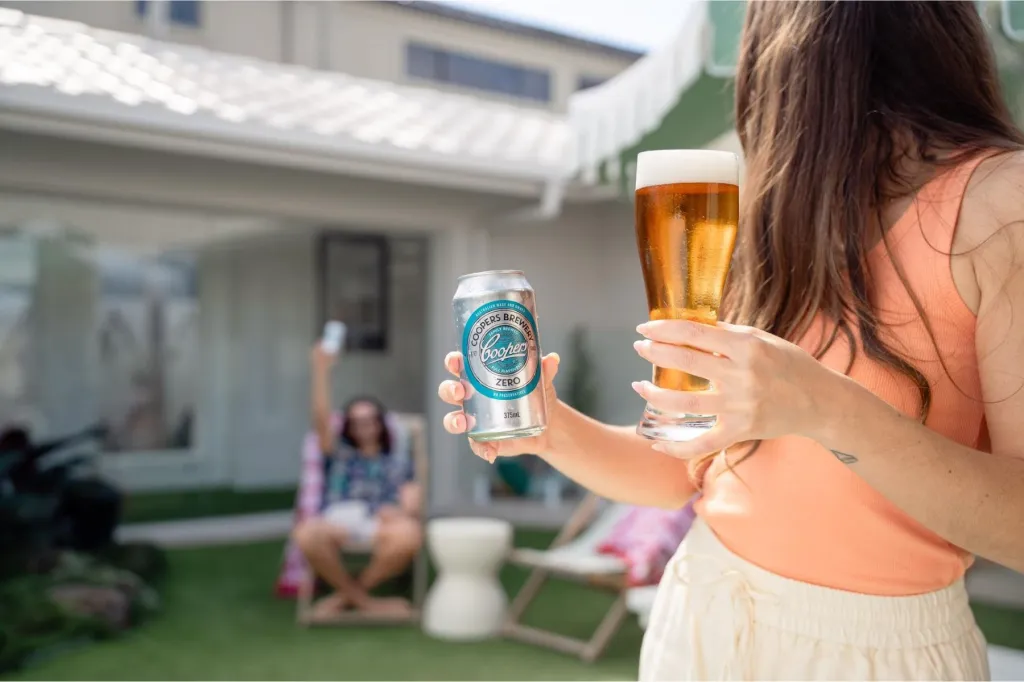
    Coopers Brewery, a family-owned Australian enterprise, has expanded its product offerings to include a non-alcohol beer. The move is in response to increasing consumer demand for beverages commonly referred to as ‘Nolo’, shorthand for ‘no or low alcohol’ beers.

    With an alcohol by volume (ABV) content of less than 0.5 percent, Coopers Zero delivers the robust flavor of a full-strength beer. This new product aligns with the results of the company’s research on evolving lifestyle trends. It was found that young Australians are twice as likely to opt for Nolo beverages.

    A Full-Flavoured Non-Alcoholic Brew

    According to Michael Shearer, Managing Director of Coopers, the new product was specifically developed for those aiming to reduce their alcohol consumption or diversify their drinking habits. “We aimed to create an exceptional, full-flavoured beer to accommodate Australians looking to moderate their alcohol intake or vary their drinking preferences,” he stated.

    Coopers’ healthier alternative is brewed from pale and crystal malts, as well as malted wheat. Each 375ml can contains 49 calories. The beer, characterized by its subtle aroma and moderate bitterness, will be available across Australia starting this month.

    Only last month, the brewery launched a fresh edition of its Vintage Ale.

    Questions & Answers

    What is the alcohol content of Coopers Zero?
    Coopers Zero has an alcohol by volume (ABV) content of less than 0.5 percent.

    What is the calorie content of Coopers Zero?
    Each 375ml can of Coopers Zero contains 49 calories.

    What are the primary ingredients used in the brewing process of Coopers Zero?
    Coopers Zero is brewed from pale and crystal malts, as well as malted wheat.