Tag: Beijing

  • Alibaba to focus on China’s biggest cities

    Alibaba to focus on China’s biggest cities

    Alibaba Group CEO Daniel Zhang has laid out the eCommerce giant’s strategic direction for 2016, saying Alibaba will be looking to grow its already large operations in China’s biggest cities.

    That change of focus follows a year in which it made global expansion and greater penetration of China’s underserved rural markets priorities during 2015.

    “We are going to consolidate and expand our current market, particularly by enhancing reputation, optimising user experience and increasing our market share in first-tier cities,” Zhang told employees at the company’s campus in Hangzhou.

    Although he provided few details, this refocusing on the country’s wealthy mega-cities was foreshadowed in September when Alibaba announced it would add China’s capital, Beijing, as a second headquarters.

    The company has been bolstering its Beijing operations in areas such as the online sale of groceries and consumer electronics, and plans to use the city as a gateway to better serve some 400 million people in northern China, where penetration and support infrastructure is less developed than it is in the country’s southeastern provinces.

    Outlining a three-prong expansion strategy that he stopped short of calling “Alibaba everywhere,” Zhang said in addition to targeting first-tier Chinese cities, the company in 2016 would continue to promote eCommerce among rural Chinese residents and globally through its international eCommerce websites.

    “Global import, rural eCommerce, and top-tier cities are the three key battlefields for Alibaba in 2016,” he said.

    Zhang last year said the globalisation of Alibaba’s mostly Chinese operations was a top priority. The company hired former top Goldman Sachs executive Michael Evans to oversee international expansion, boosted its presence in Europe and made cross-border online shopping a highlight of its annual 11.11 Shopping Festival.

    This year, Zhang said, the company will continue to build up channels that allow international brands and merchants to sell online to Chinese consumers.

    The focus of this effort will be Alibaba’s Tmall Global, a cross-border shopping solution that provides Western merchants with a simplified channel for selling online in China, and g.taobao.com, a niche channel within the company’s giant Taobao Marketplace that helps consumers discover quality products sourced from around the world.

    “We are going to build our businesses around the two brands, in order to raise their awareness among customers and offer optimal user experience,” Zhang said.

    Meanwhile, the company plans to invest in operations that not only allow to retailers tap the growing purchasing power of rural Chinese consumers, but also in platforms that help farmers in the hinterlands sell and deliver agricultural products to online shoppers in the country’s big cities.

    “In 2016, we are going to ramp up our efforts to bring quality goods to rural buyers, and deliver local produce to urban customers,” Zhang said, “so the rural market can be connected to the whole country and even the whole world.”

    Alibaba has built more than 10,000 village-level service centers that promote eCommerce and provide delivery services in more than 20 provinces.

    Zhang added that Alibaba this year would continue to drive innovation in omnichannel retailing and build up its on-demand services offerings.

  • Young, rich, e-savvy will transform Chinese economy

    Young, rich, e-savvy will transform Chinese economy

    China has been one of the world’s fastest-growing consumer markets in recent decades and there’s no sign that is going to change anytime soon, slowing economy or not, US management advisory firm Boston Consulting Group says in a new report.

    However, the profile of Chinese consumers and the products they buy will change over the coming five years, according to BCG’s report, The New China Playbook: Young, Affluent, E-savvy Consumers Will Fuel Growth, which predicts three trends to watch in the country’s consumer market through 2020: upward mobility, a new generation of consumers and the continued rise of eCommerce.

    BCG expects China’s upper middle class and affluent households to overtake the emerging middle class as the main drivers of consumption growth. At the same time, a younger generation of sophisticated consumers will rise in prominence, and eCommerce through online marketplaces such as Alibaba Group’s Taobao and Tmall.com will play an increasingly important role in the Chinese economy.

    “The growing role of richer, younger, Internet-savvy consumers will boost demand for different kinds of products purchased through different kinds of retail channels,” BCG said in the report. “Indeed, this emerging consumer class will transform the structure of China’s economy.”

    This transformation is already underway as Chinese consumers increasingly go online to make purchases via desktop computers and smartphones, according to BCG. In 2010, eCommerce made up just three per cent of total private consumption, but that number will reach 20 per cent five years from now, generating $1.6 trillion in sales. In the US, eCommerce accounted for 7.4 per cent of total consumption in the third quarter of this year, according to the US Department of Commerce. Also, within this category, 15 per cent of Chinese eCommerce transactions will be cross-border, another burgeoning sales channel as the Chinese government takes steps to make the import and export of goods via eCommerce easier for both consumers and retailers.

    The report, which was carried out in partnership with AliResearch, the research arm of Alibaba Group, arrives as investors across the globe watch growth targets for China’s gross domestic product decline in the face of decreased exports, once the backbone of the economy. But Chinese consumers are unfazed, BCG said.

    The consultancy predicted that even if China’s economic growth slows to 5.5 per cent – well below the 6.5 per cent target – the country’s consumer economy will expand by about half to $6.5 trillion by 2020 from $4.2 trillion now. The $2.3 trillion differential over those five years is still 1.3 times larger than Germany’s entire $1.8 trillion consumer market.

    Rising incomes will help to fuel that growth. The number of upper middle class and affluent households – those with more than $24,000 and $46,000 in annual disposable income, respectively – will double to 100 million by 2020, and they’ll account for 81 per cent of total consumption growth during that period.

    Increasing affluence will also help to push shopping trends in new directions and to new locales. Where consumer goods such as personal care products once dominated sales, the next five years will see the demand for services take over, especially in areas such as healthy foods, education and travel, BCG researchers wrote. Moreover, merchants that want to reach this growing demographic will have to move beyond major cities such as Beijing, Shanghai and Guangzhou. BCG said that about half of the 46 million new upper middle class and affluent households expected by 2020 will be located in fourth-tier cities or lower, or those outside China’s top 100 cities.

    eCommerce sites such as Taobao have made moves to capture this growth in services. The report pointed to Taobao’s lifestyle service channel, which had customers in 300 cities only six months after launch. And most of those customers were 35 or younger and they were making online arrangements for home-based services such as house cleaning, with as many as 2600 maids booked in a single day at one point.

    Omnichannel retailing, where consumers are driven from online promotions to offline services accessed via smartphones, will be another key area of growth, BCG said. eCommerce purchases made on mobile devices currently generate 51 per cent of all online sales in the country – well above the global average of 35 per cent. Mobile transactions will account for nearly three out of every four online purchases by 2020, BCG predicted, as Chinese consumers increasingly rely on the internet to obtain local services and purchase products, such as organic foods, that they can’t find in local brick-and-mortar stores.

    An ability to attract a younger demographic, those born in the 1980s, ’90s and the first decade of the 2000s, will increasingly spell success or failure for companies selling into China, BCG said. The country’s up-and-coming crop of college-educated shoppers under the age of 35 are sophisticated and brand conscious in ways the previous generation was not. Their consumption is growing at 14 per cent annually, double that of consumers over 35, and they spend more than their elders – as much as 40 per cent more in many product categories. By 2020, BCG said the young generation’s share of total consumption is projected to reach 53 per cent in 2020 from 45 per cent.

    Companies that wish to remain competitive in China – or those entering for the first time – will need to adjust their strategies to fit in with these shifting demographics, BCG said, as the days of ubiquitous and insatiable Chinese demand across all product categories are over.

    “Even though overall consumption will continue to boom in China over the medium term, targeting the wrong income segment, playing in the wrong categories, and being underrepresented in the fast-growing online channels will be a formula for slow growth,” the report said.

  • Dior China opens largest flagship yet

    Dior China opens largest flagship yet

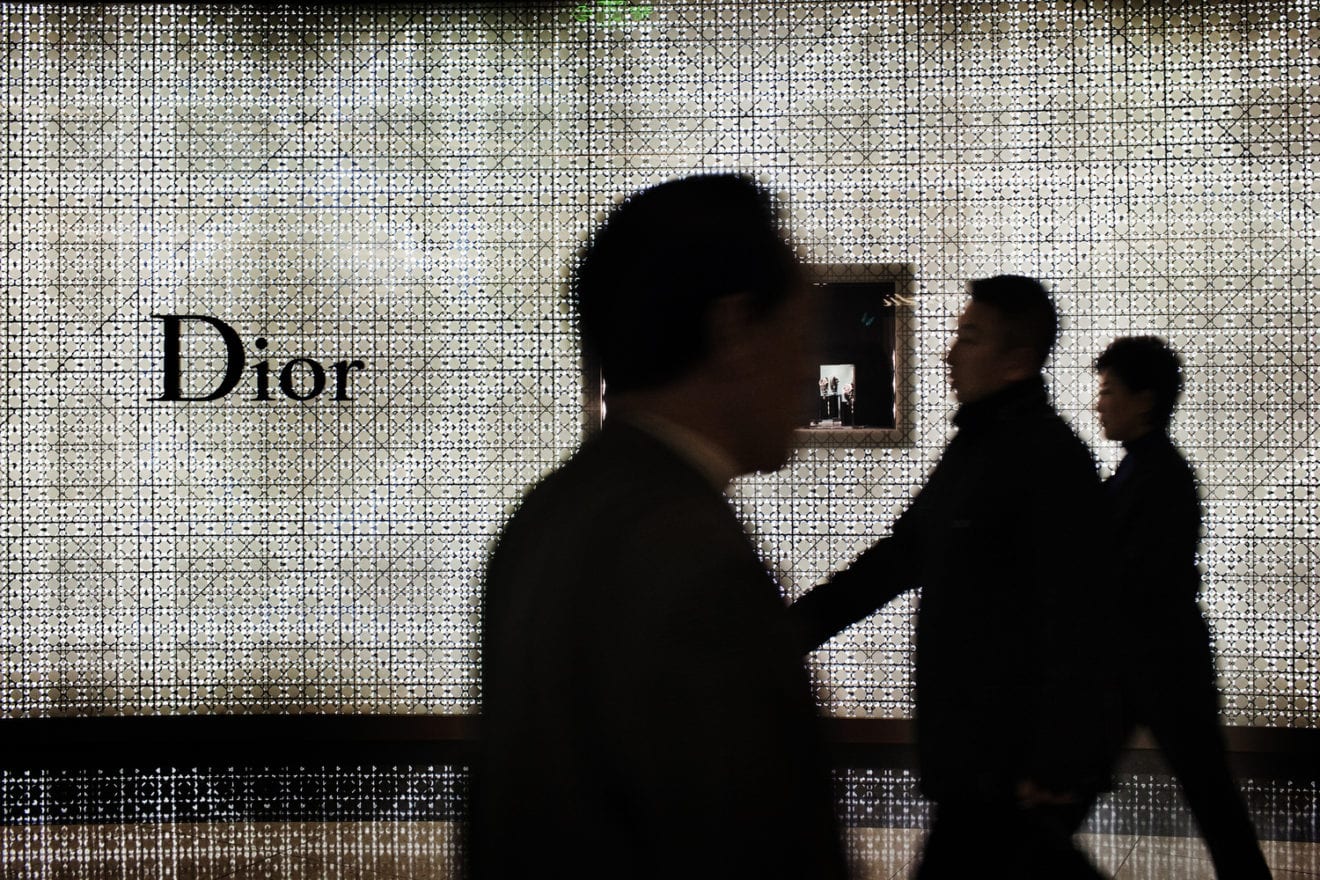
    Dior’s new Beijing China World boutique is the French luxury label’s largest flagship store in China.

    Dior China opened the store this week in conjunction with its re-staged Spring/Summer 2016 presentation. The retail space is split across two levels, featuring a floor-to-ceiling, double layer glass facade that emulates the fine feminine fabric in the fashion house’s Cannage print.

    Dior Beijing China 1

    Designed by Peter Marino, the interior is inspired by Dior’s Paris flagship and dotted with a carefully curated group of artworks by contemporary artists. Each of the 10 pieces, which include a bench by Terence Main and a video art wall by Yorame, reflect the codes of the house.

    There is also a sculpture Siamese Metal 5 from British artist Richard Deacon, the work Waterwall, Roselyn by Gregory Ryan and table lamps by Veronique Rivemale are also displayed in the store.

    On the second floor, the footwear section is adorned by a Gaia Imprint Low Table, designed by Vincent Dubour.

    Dior Beijing China 2

    Classic furniture pieces from Guillaume Piechaud, Paolo Giordano and Timothy Horn have been placed strategically throughout the space, and the store features a private VIP salon decorated with two Mineral Commodes designed by Juan & Paloma.

    The new Dior China flagship is located in Beijing’s Chaoyang district.

    dior beijing

  • First Marks & Spencer Beijing store opens

    First Marks & Spencer Beijing store opens

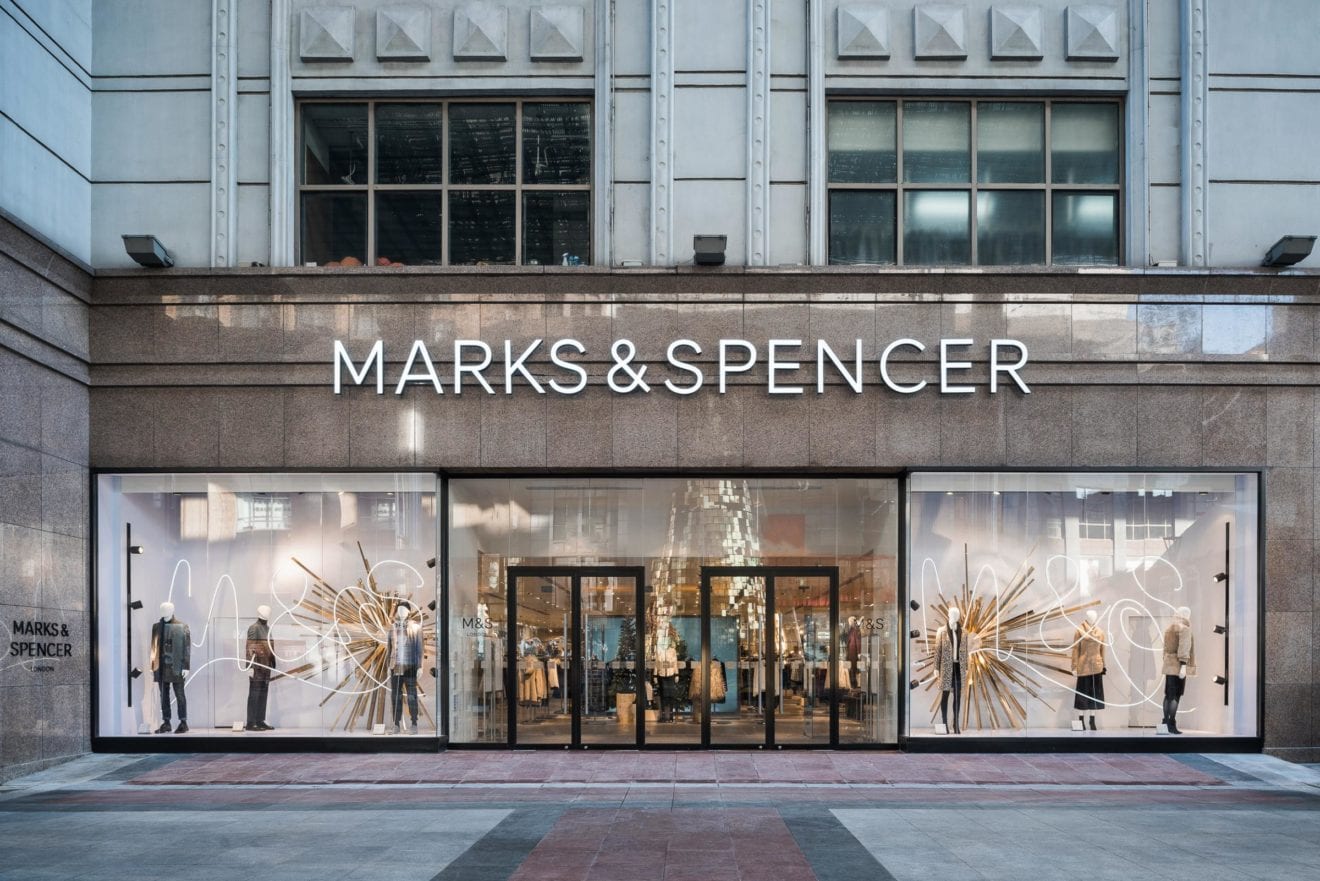
    UK department store operator Marks and Spencer has opened its first store in Beijing.

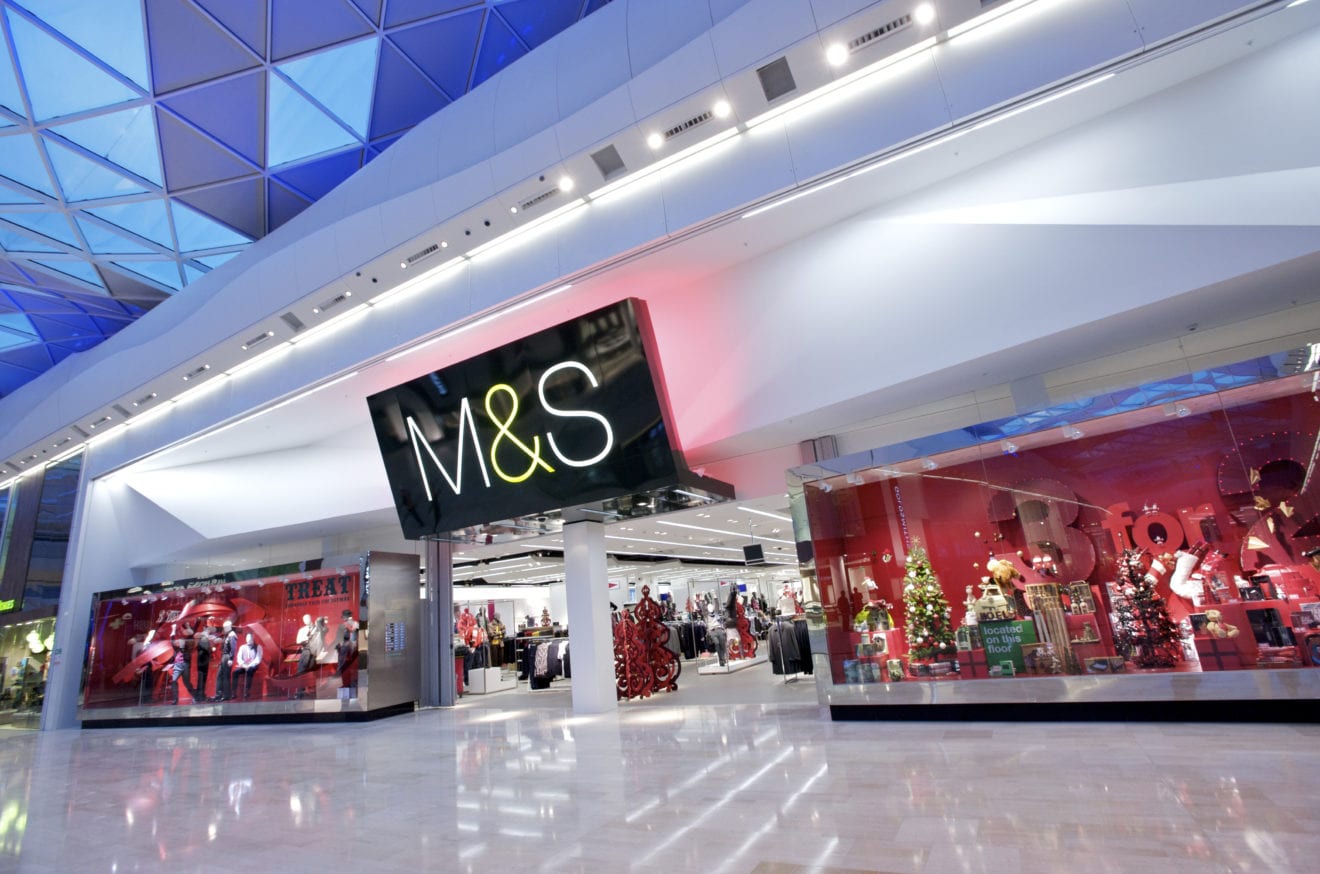
    The new 1500 sqm M&S Beijing store has opened in The Place shopping centre, selling clothing and food.

    M&S operates 10 stores in Shanghai and the move to Beijing is in line with a strategy to gradually expand in China’s tier 1 cities, albeit at a slower pace than originally forecast.

    “We’re looking at places which are very much ‘tier 1’… where you have an upper middle class consumer base… where we will do well even in the context of a slowdown in the economy,” executive director of marketing & international, Patrick Bousquet-Chavanne said last September.

    M&S has closed some smaller stores in China and is now focusing on larger stores in major cities.

    It has 20 in Hong Kong.

  • Carrefour has opened its biggest store in Asia

    Carrefour has opened its biggest store in Asia

    Carrefour SA, a French retailer, as of late opened its biggest store in Asia in the Chinese capital, Beijing. The divulging comes as the firm plans to capitalize on the expanding interest for imported sustenance from medium-and top of the line customers.

    The two-story hypermarket is situated on the North Fourth Ring Road, adjoining the sprawling office of Swedish outfitting retailer Ikea. It houses more than 80 stores, including Uniqlo, Decathlon and the first-ever Baidu Concept Store.

    The Carrefour Beijing outlet, which is spread over a territory of 71,380 square meters, offers more than 40,000 items, 15 percent of which are foreign things.

    Serving as the French retailer’s twentieth store in the city, the hypermarket likewise has 800 free parking spots, 15 electric charging stations for transport transports, and five underground charging stations for electric autos.

    “We are concentrating on imported nourishment items as there has been an ocean change in the sustenance inclinations of Chinese purchaser,” Laurent Olszewski, local chief for the North-West China district at Carrefour, said. “It is very unique in relation to what I saw when I first came to China in 1995.”

    “Chinese buyers need to take a stab at everything,” he included, refering to imported French salt and Australian meat as samples. Olszewski additionally shared that Carrefour is growing its e-trade business in 2016. The firm will concentrate on its Web-based administrations by January one year from now in the wake of completing their work on their Tianjin-based logistics focus.

    As per specialists, this move of Carrefour is an approach to acquire shoppers fitting in with the high-pay class.

  • Apple’s Fifth Retail Store in Beijing Opens November 28

    Apple’s Fifth Retail Store in Beijing Opens November 28

    Apple has announced that its fifth retail store in Beijing, and 27th in China, opens Saturday, November 28 at 10 AM local time. The store will be located in the new Chaoyang Joy City shopping mall at 101 Chaoyang North Road in Beijing’s city proper Chaoyang District.

    The new store will be open 10 AM-10 PM local time everyday and offer traditional Apple Store services, including the Genius Bar, Workshops, JointVenture, events and seminars. Apple’s four other retail stores in Beijing are located at China Central Mall, Sanlitun, Wangfujing and Xidan Joy City.

    Apple has opened more than seven new retail stores in China this year, including locations in Chongqing, Dalian, Hangzhou, Hong Kong, Nanjing and Tianjin. The company is committed to expanding its footprint in China, an increasingly important market, under the leadership of retail chief Angela Ahrendts.

  • CapitaLand Retail China reports bumper quarter

    CapitaLand Retail China reports bumper quarter

    CapitaLand Retail China Trust has had a bumper quarter to September, its distributable income rising 14.2 per cent year on year.

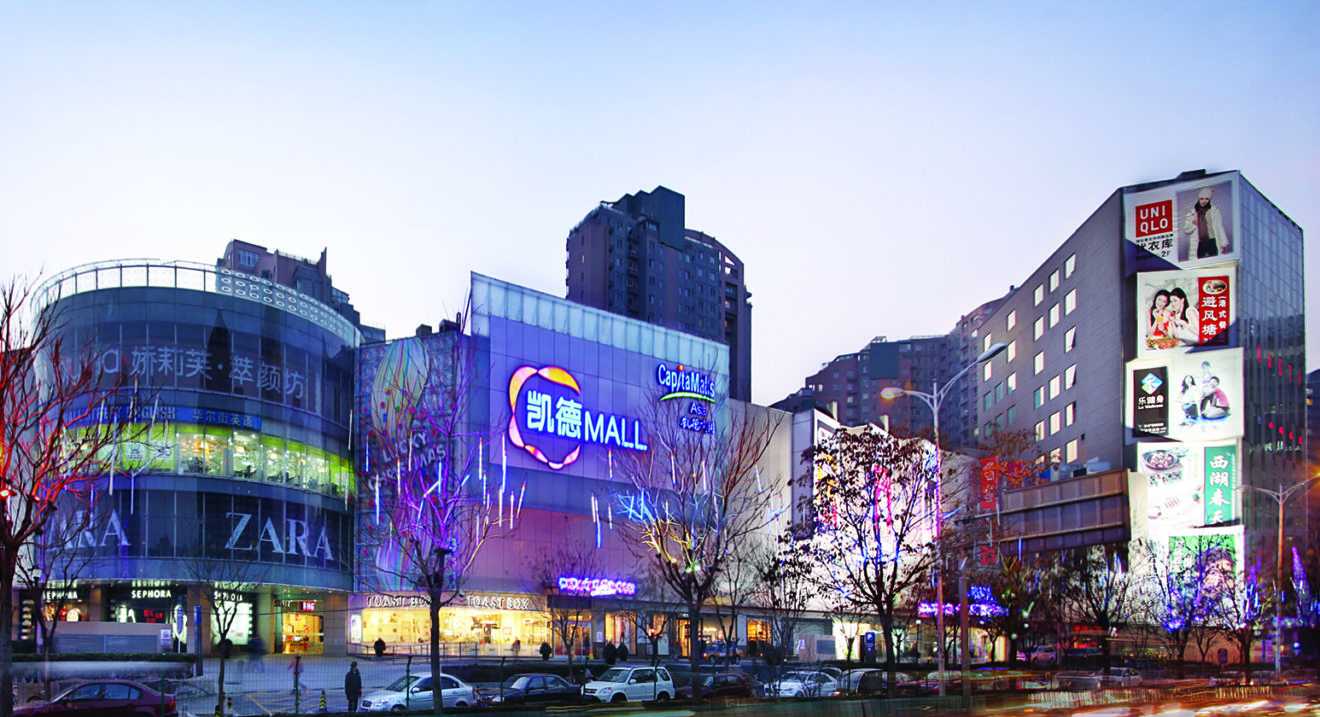
    CRCT is the only China shopping mall Real Estate Investment Trust (REIT) based in Singapore, with a portfolio of 10 shopping malls located in Mainland China.

    CapitaLand Retail China Trust Management, which manages CRCT, says it achieved a distributable income of S$22.3 million for the period. Distribution per unit (DPU) was 2.64 cents, an increase of 12.3 per cent over a year ago.

    Chairman Victor Liew said China’s economy expanded 6.9 per cent year on year in both the third quarter and the first nine months of 2015, while retail sales in the first nine months of 2015 increased 10.5 per cent to RMB21.6 trillion.

    “With the Chinese government reiterating its commitment to rebalance its economy by driving domestic consumption, CRCT remains upbeat about China’s retail growth prospects.”

    CEO Tony Tan, CEO of CRCTML, said that during the quarter, the trust’s portfolio of malls registered 9.1 per cent growth in net property income as it benefitted from a favourable exchange rate.

    “Rental reversion for the quarter continued to be strong at 10.9 per cent, with the majority of our malls registering double digit growth. Portfolio occupancy as at 30 September 2015 was 94.8 per cent, while tenants’ sales and shopper traffic for the quarter increased 12.7 per cent and 2.4 per cent respectively year-on year.”

    The trust’s malls are CapitaMall Xizhimen, CapitaMall Wangjing, CapitaMall Grand Canyon, CapitaMall Shuangjing and CapitaMall Anzhen in Beijing; CapitaMall Qibao in Shanghai; CapitaMall Erqi in Zhengzhou, Henan Province; CapitaMall Saihan in Huhhot, Inner Mongolia; CapitaMall Wuhu in Wuhu, Anhui Province; and CapitaMall Minzhongleyuan in Wuhan, Hubei Province.

    “We continue to refresh and improve the trade mix within our multi-tenanted malls,” said Tan.

    “CapitaMall Xizhimen is adding more children-related products and services to cater to growing demand from young families with children. A section of the mall’s Level 3 will be reconfigured into a vibrant kids’ zone and new tenants catering to the varied needs of children, such as apparel stores and enrichment schools, will be added.

    “On the asset enhancement front, CapitaMall Wangjing will be commencing upgrading works to its façade in the coming months, and CapitaMall Grand Canyon is currently undertaking renovation works to improve its common amenities. All these initiatives will further enhance the overall appeal and shopping experience at our malls.”

  • Beijing retail sales rise

    Beijing has reported a rise in retail sales during the week-long National Day holiday that began last Thursday.

    Chinese government news agency Xinhua reports both locals and tourists have “spent heavily” on consumer goods.

    During the first six days of October, Beijing’s 100 leading retailers reported a total sales revenue of 5.3 billion yuan (about US$833.7 million), up 6.2 per cent on the same period of last year, according to figures released by Beijing Municipal Commission of Commerce.

    The figures were collected from Beijing’s major retail outlets including shops, supermarkets and restaurants, it said in a press release.

    Many avid shoppers took advantage of the National Day promotions offered by most retailers to buy winter clothing and the latest models of smartphones and other digital products.

    While housewives flooded supermarkets to buy food for their family feasts, many others chose to dine at some of the city’s most famous restaurants.

    A surge of customers from locals and sightseers has brought an average 10 percent increase in revenue at these restaurants, according to the municipal commission of commerce.

    It said the Golden Week has witnessed a 20 per cent surge in gold and jewellery sales, as the holiday week is also a prime time for weddings.

  • Marks & Spencer to slow China expansion

    Marks & Spencer to slow China expansion

    UK department store chain Marks & Spencer says it will slow its expansion plans in Greater China due to the economic and political turmoil in the two markets.

    The British retailer currently has 20 stores in Hong Kong and 10 in China and had been planning significantly more.

    Back in 2014, CEO Marc Bolland set a target of opening 250 new overseas stores within three years – an ambitious goal even in favourable economic climate.

    This week, M&S’s executive director of marketing & international Patrick Bousquet-Chavanne told news agency Reuters in an interview that while the company remained committed to both markets, the 2014 targets were unreachable.

    “The world has shifted, is a different place… The Syrian situation was very different from what it is today… Putin had not invaded Ukraine and China was growing at close to nine per cent,” he said.

    “It’s reasonable in that context that you would expect a different outlook on the next three years for the company.”

    Last March M&S said it would close five underperforming stores in China to focus on flagship stores and online – and expanding its food offer in Hong Kong.

    He told Reuters M&S still planned a Beijing flagship store during the 2015-16 financial year and that it still planned to open in the cities of Guangzhou and Dalian, but gave no timetable.

    He said the company had seen a softening in its store sales in China as the economy slowed, but no dramatic effect.

    “The sectors in which we trade are not luxury, so we haven’t seen the same dramatic slowdown as some might have,” Bousquet-Chavanne said.

  • Tmall.com launches massive grocery campaign

    Tmall.com launches massive grocery campaign

    Tmall.com has launched a RMB 1 billion (US$161 million) online grocery promotional campaign targeted at Beijing users.

    The Alibaba eCommerce subsidiary has teamed up with Cainiao, the logistics affiliate of Alibaba Group, to offer same-day delivery services to Beijing city residents.

    Online grocery shopping is a rapidly growing eCommerce segment and a strategic area of interest for Alibaba Group. The convenience of online grocery shopping has already drawn in millions of users. According to Kantar Worldpanel, China’s FMCG (fast moving consumer goods) eCommerce penetration rate was 36 per cent in 2014, while McKinsey says 40 percent of Chinese consumers have bought food online.

    Tmall Supermarket will run its promotion three times a day, allowing Beijing-based Internet users a chance to win ‘red packets’ that subsidise their grocery purchases. The promotion will end on July 31.

    Beijing residents who order from Tmall’s supermarket before 11 am will be eligible for same-day delivery service. In the future, Tmall Supermarket and Cainiao plan to roll-out same-day delivery services to Shanghai and other Chinese cities.

    Jeff Zhang, president of Alibaba Group’s China Retail Marketplaces, said Tmall Supermarket will draw on Alibaba Group’s complete eCommerce ecosystem – including Alibaba’s advantage in logistics, strength in online payments, big data and cloud computing, to bring consumers the most convenient and secure online shopping experience for quality products.

    Tmall Supermarket was established in 2012 and provides a one-stop shopping solution for Chinese users looking to purchase authentic food products, cosmetics, beverages, snacks and imported items. In the past year, Tmall Supermarket’s Beijing area GMV soared more than 700 per cent with 90 per cent of consumers shopping on their mobile phones.

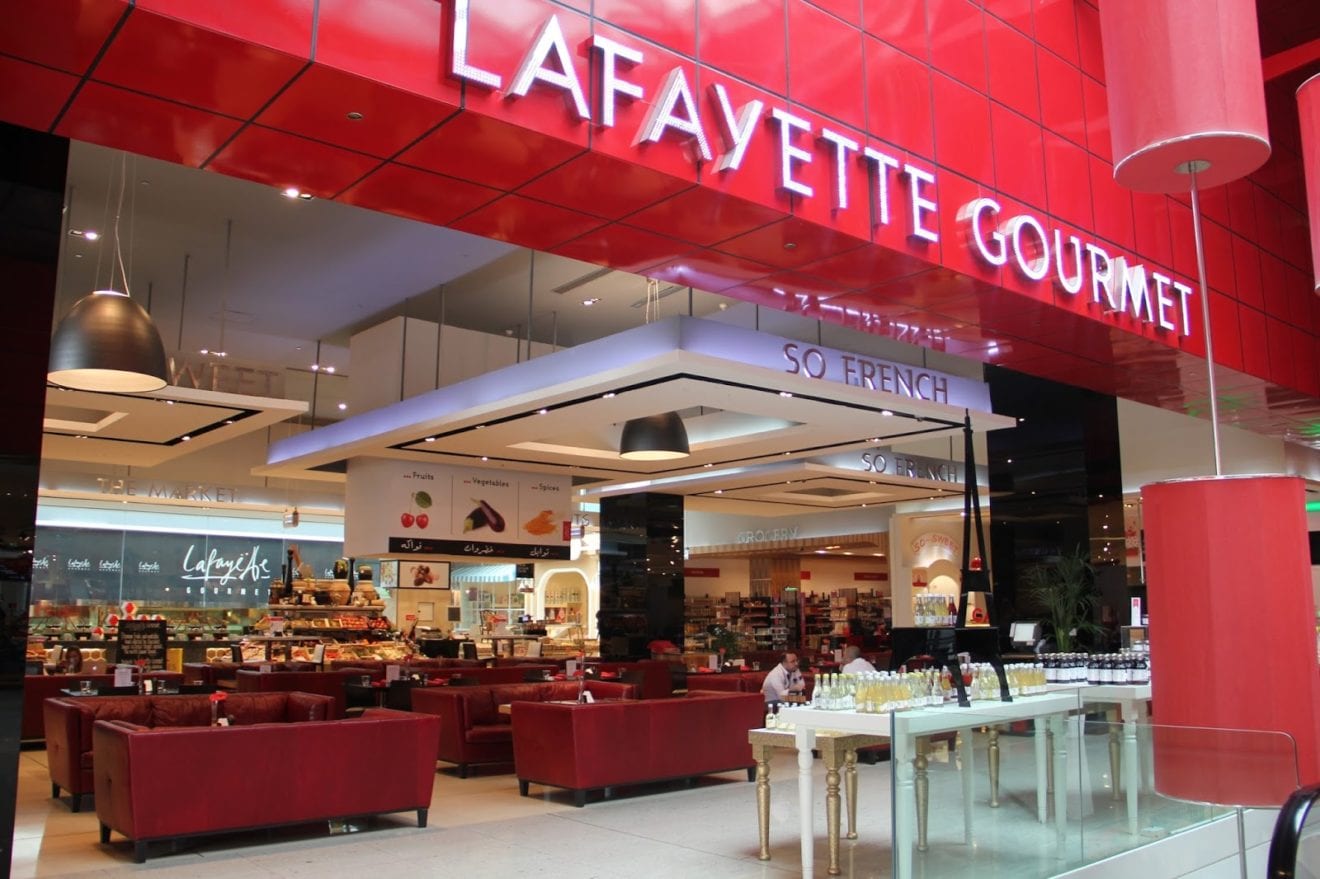
  • Lafayette Gourmand China opens first flagship

    Lafayette Gourmand China opens first flagship

    French division retailer retailer Galeries Lafayette has opened its first Lafayette Gourmand China meals retailer – in Beijing.

    Lafayette Gourmand is actually a luxurious meals corridor serving meals to eat on website or take house.

    The flagship has a grocery store stocked with French gourmand meals and a 7000 sqm eating space that includes greater than 10 eating places serving worldwide cuisines. An estimated 80 per cent of the meals bought on website is imported from France.

    The shop is situated on the fifth flooring of the Galeries Lafayette division retailer, the corporate’s excessive profile debut property in China.

    Lafayette Group division retailer division government president Nicolas Houze just lately hosted a gap ceremony for the brand new foodie vacation spot.

    Based on China Retail News, the brand new gourmand retailer is the most important French imported meals specialty retailer within the Chinese language capital.