Tag: Beijing

  • Laopu Gold Targets Global Expansion as Sales Growth Moderates

    Laopu Gold Targets Global Expansion as Sales Growth Moderates

    Laopu Gold is pushing ahead with overseas expansion plans to secure new sales channels as top-line retail growth cools across its core Chinese market.

    The Beijing-based luxury heritage gold brand reported a moderating pace of domestic expansion while confirming plans to establish footprints in key international shopping hubs.

    Slowing Domestic Demand

    Consumer appetite for pure gold jewellery in China faced pressure after a prolonged run of sharp price gains. Shoppers who drove previous surges in heritage gold sales have pulled back on discretionary luxury purchases, forcing premium jewellers to adjust their operational expectations.

    Laopu Gold built its brand equity on handcrafted traditional gold ornaments sold at significant premiums through boutique locations. As domestic store productivity normalises, management is looking beyond mainland shopping centres to sustain revenue momentum.

    Pushing Into Global Retail

    International luxury corridors represent the next commercial frontier for the brand. Establishing outposts in regional financial hubs and tourist destinations allows the jeweller to capture affluent Chinese travellers as well as international high-net-worth consumers.

    Rival jewellers across Hong Kong and mainland China have made similar shifts into Southeast Asia and the Middle East over the past two years. For Laopu Gold, competing on international high streets requires convincing foreign consumers to pay luxury design markups on traditional Chinese craftsmanship rather than treating items purely as gold weight assets.

    Execution details on specific international leases and overseas opening schedules will determine whether foreign revenue can counterbalance cooling domestic retail volumes.

  • Trump Signals US Dollar Bans on Chinese Banks over Iran Trade

    Trump Signals US Dollar Bans on Chinese Banks over Iran Trade

    US President Donald Trump signaled plans to bar Chinese banks from the US dollar system over their commercial transactions with Iran. The warning follows the blacklisting of 60 international entities, including firms in mainland China and Hong Kong, under an enforcement push labeled Economic D-Day.

    Treasury Secretary Scott Bessent announced the initial sanctions package earlier in the week, demanding an immediate halt to commercial dealings with Tehran. The measures aim to intensify economic pressure after six months of regional conflict and disruptions in the Strait of Hormuz failed to resolve through military action or negotiations.

    Dollar clearing and secondary sanctions

    Bessent stated that any institution facilitating transactions on behalf of Iranian entities faces removal from the US dollar network. The mechanism targets secondary intermediaries, putting Chinese state-owned and commercial lenders at direct risk of losing correspondent banking access in New York.

    For corporate treasuries and supply chain operators across Asia, exclusion from greenback settlement creates immediate operational friction. Trade finance across the region relies heavily on dollar-denominated letters of credit, even when settlement involves third-party energy and commodity flows originating in the Middle East.

    Pre-summit pressure on Beijing

    Commercial lenders in Beijing and Hong Kong have maintained trade settlement channels with trading partners across the Gulf. Cutting those conduits would force corporate clients to route settlement through alternative clearing channels or drop counterparties entirely to protect broader international banking books.

    The next test arrives with the scheduled bilateral summit between Trump and Chinese President Xi Jinping in Washington, where trade enforcement and financial sector access sit at the center of negotiations.

  • China Orders Year-Long Auto Safety Review as EV Deliveries Fall 12.5 per Cent

    China Orders Year-Long Auto Safety Review as EV Deliveries Fall 12.5 per Cent

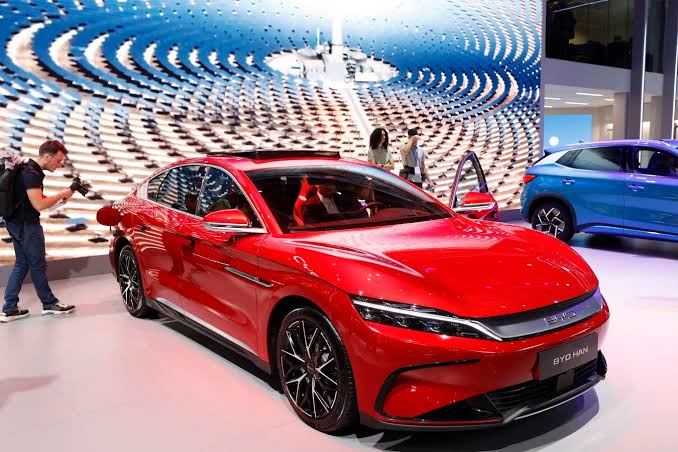
    China’s industry ministry has launched a nationwide quality inspection campaign across the auto sector. The decision follows a 12.5 per cent drop in domestic electric vehicle deliveries in the first seven months of 2026.

    Roughly 100 domestic manufacturers fall under the one-year regulatory review. Officials are targeting smart driving features, vehicle design standards and battery hardware. Vice-Minister of Industry and Information Technology Xin Guobin told a Beijing press conference that authorities will bar new auto technologies from the market if they fail stricter verification protocols.

    Stricter rules for driver assistance

    Regulators stepped in following fatal crashes and a rise in complaints over software malfunctions and battery defects. In central China’s Anhui province, three people died when a Xiaomi SU7 crashed into a barrier under driver-assistance software. The system alerted the driver only two seconds before impact. State media also reported an increase in formal battery quality complaints filed with public inspection bodies this year.

    Automakers must now redirect capital toward core manufacturing controls instead of racing to roll out experimental software. For years, domestic brands used rapid updates to autonomous driving and digital cockpits to stand out in crowded showrooms. Stricter approvals will slow product rollouts across the board. That gives established global marques breathing room while putting cash-strapped local startups under immediate strain.

    Price wars and dropping sales

    Showroom traffic is contracting sharply as the checks begin. Data from the China Passenger Car Association showed overall passenger vehicle deliveries fell 20.9 per cent year on year in July to 1.46 million units. Electric vehicle deliveries dropped 3.9 per cent to make up 65.1 per cent of that total. It was the seventh straight month of declining volume.

    Price cuts have failed to revive foot traffic as consumer subsidies taper off. Domestic manufacturers delivered 5.67 million electric vehicles between January and July, down from the same period a year earlier. RetailNews Asia will track whether the ministry’s inspection guidelines, scheduled to take effect within weeks, trigger formal product recalls or delayed model launches in the fourth quarter.

  • TikTok Shop Nears €500 Million in European GMV Led by Creator Affiliates

    TikTok Shop Nears €500 Million in European GMV Led by Creator Affiliates

    TikTok Shop generated €498.78 million in gross merchandise value across Germany, France, Spain, and Italy during the second quarter. Independent content creators drove nearly all of that volume.

    Affiliate creators accounted for 69.9 per cent of total sales across the four European markets, according to estimates compiled by Lengow and Kalodata. Direct brand storefronts generated the remainder.

    Shoppable Video Dominates Live Streams

    Short video clips with embedded product links drove 63.8 per cent of all transactions. Live shopping streams generated just 17.2 per cent. The breakdown reveals that European shoppers prefer on-demand video over scheduled shopping broadcasts.

    That pattern contrasts sharply with Southeast Asia, where ByteDance built TikTok Shop through marathon livestreams. Live broadcasts remain the core revenue engine for merchants competing against Shopee and Lazada in Indonesia, Thailand, and Vietnam.

    European Merchant Model Shifts to Creator Networks

    European sellers are moving marketing budgets out of standalone brand accounts and into creator commissions. Instead of managing internal production studios, merchants rely on third-party influencers to post reviews and tutorials linked directly to checkout.

    This model allows ByteDance to scale product listings without holding inventory or funding local customer acquisition campaigns. Brands fulfill orders directly. Creators collect automatic commissions on every item sold through their feeds.

    ByteDance now faces the challenge of sustaining creator-led conversion rates as it expands TikTok Shop into more European Union markets and navigates tighter regulatory scrutiny over platform e-commerce.

  • China Halts Cooperation with EU Regulators over JD.com Ceconomy Bid

    China Halts Cooperation with EU Regulators over JD.com Ceconomy Bid

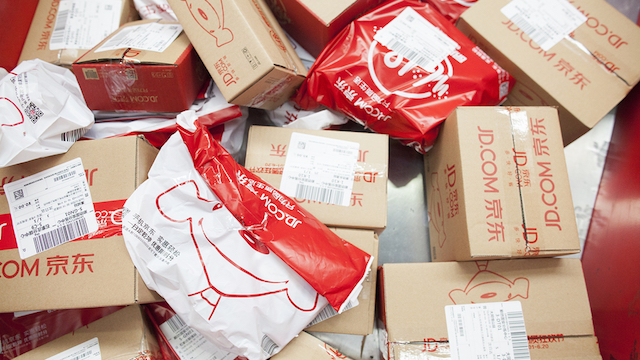
    Chinese authorities have halted regulatory cooperation with the European Commission over its antitrust investigation into JD.com’s proposed investment in German electronics retailer Ceconomy. The standoff complicates the Beijing-based e-commerce giant’s biggest push yet into Western Europe’s brick-and-mortar retail sector.

    European officials are scrutinising whether JD.com benefits from state-backed subsidies that distort competition under the bloc’s Foreign Subsidies Regulation. Without data from Chinese ministries, Brussels must rely on publicly available market disclosures and submissions from competing European merchants.

    Regulatory Standoff over State Subsidies

    JD.com targeted Ceconomy, the parent group of MediaMarkt and Saturn, to secure a vast logistics and physical retail footprint across Germany, Austria and southern Europe. The transaction requires regulatory clearance in Brussels before any formal share transfer or operational integration can proceed.

    Ministry officials in Beijing refused requests from European investigators seeking internal financial records, citing national data security rules and sovereignty limits. The resistance marks a sharp turn in cross-border corporate oversight, leaving transaction counsel to navigate conflicting legal mandates in both jurisdictions.

    European Ambitions Meet Cross-Border Friction

    For Chinese e-commerce operators, European expansion has shifted from direct cross-border parcel delivery to acquiring established logistics networks and physical storefronts. Alibaba pursued logistics hubs in Belgium and Spain, while PDD Holdings focused purely on discount marketplace app Temu. JD.com chose physical retail scale through Ceconomy, betting that owning store networks would shield it from rising import scrutiny.

    The European Commission will decide in its preliminary review whether to open an in-depth phase-two investigation or demand asset sales before approving the transaction.

  • China Targets 80 Brain Tech Standards by 2030 to Rival Neuralink

    China Targets 80 Brain Tech Standards by 2030 to Rival Neuralink

    China will draft or revise more than 40 brain-computer interface standards by 2028, according to draft guidelines issued by the Ministry of Industry and Information Technology.

    The roadmap aims to expand that framework to over 80 standards by 2030, pushing at least 100 domestic companies to adopt uniform technical rules for medical, industrial and consumer hardware.

    Under the ministry plan, Beijing also wants to lead or join the creation of more than 10 international standards. The directive aligns with China’s 15th five-year plan, which designates neural interface technology as one of six priority industries of the future.

    Domestic hardware and commercial trials

    Brain-computer systems decode electrical signals from the brain to control external devices directly. In China, several startups have progressed beyond laboratory testing into working hardware. Neuracle secured regulatory clearance for an implant that restores hand movement in paralysed patients, while BrainCo produces non-invasive headbands and brain-guided prosthetic limbs.

    Other domestic players, including StairMed and NeuroXess, develop invasive signal recording arrays and neural decoding software. These developers compete against Elon Musk’s Neuralink, which leads global headlines in commercial neural trials.

    Setting global rules for neural devices

    Drafting domestic standards early allows Chinese hardware makers to establish component specifications before foreign competitors dominate international supply chains. While American ventures focus predominantly on surgical clinical implants, Chinese developers are dividing capital between medical therapies and high-volume consumer gadgets.

    Regulators will now collect industry feedback on the MIIT draft, with the initial batch of 40 national standards scheduled for completion by 2028.

  • Chinese Restaurant Chains Target US Market as Domestic Growth Slows

    Chinese Restaurant Chains Target US Market as Domestic Growth Slows

    Chinese restaurant chains are expanding across the United States to offset slowing growth at home, betting American diners are finally ready to embrace authentic regional menus.

    The push enters a market that already counts more Chinese dining spots than individual locations of almost any major American fast-food chain. For decades, those menus relied heavily on Westernised adaptations like chop suey and fortune cookies, both created in the United States rather than mainland China. Traditional fare struggled to gain traction during the twentieth century as immigrant chefs navigated widespread consumer resistance and discrimination.

    Shifting from takeout staples to authentic menus

    Domestic headwinds across China’s dining sector are now accelerating the overseas push. Operators face tighter consumer spending and intense margin pressure in their home cities, making international expansion an urgent priority rather than a long-term experiment.

    Instead of modifying dishes to suit Western palates, newer entrants are bringing specialized formats straight from the mainland. Concepts range from high-end Michelin-starred Peking duck houses to regional hotpot and noodle formats. The shift reflects growing diner familiarity with authentic Chinese culinary traditions, moving the market away from generic takeout boxes toward distinct regional identities.

    Navigating saturated overseas markets

    Breaking into the American market presents operational hurdles despite the historical presence of Chinese food. Mainland chains must manage higher labor expenses, complex local supply chains, and entrenched domestic competitors while maintaining recipe authenticity.

    The test for Chinese operators is whether authentic regional concepts can capture mainstream suburban foot traffic or remain confined to dense urban centers with established Asian diaspora populations.

  • Asia-Pacific Delivery Drone Market to Expand 33.7% Annually Through 2031

    Asia-Pacific Delivery Drone Market to Expand 33.7% Annually Through 2031

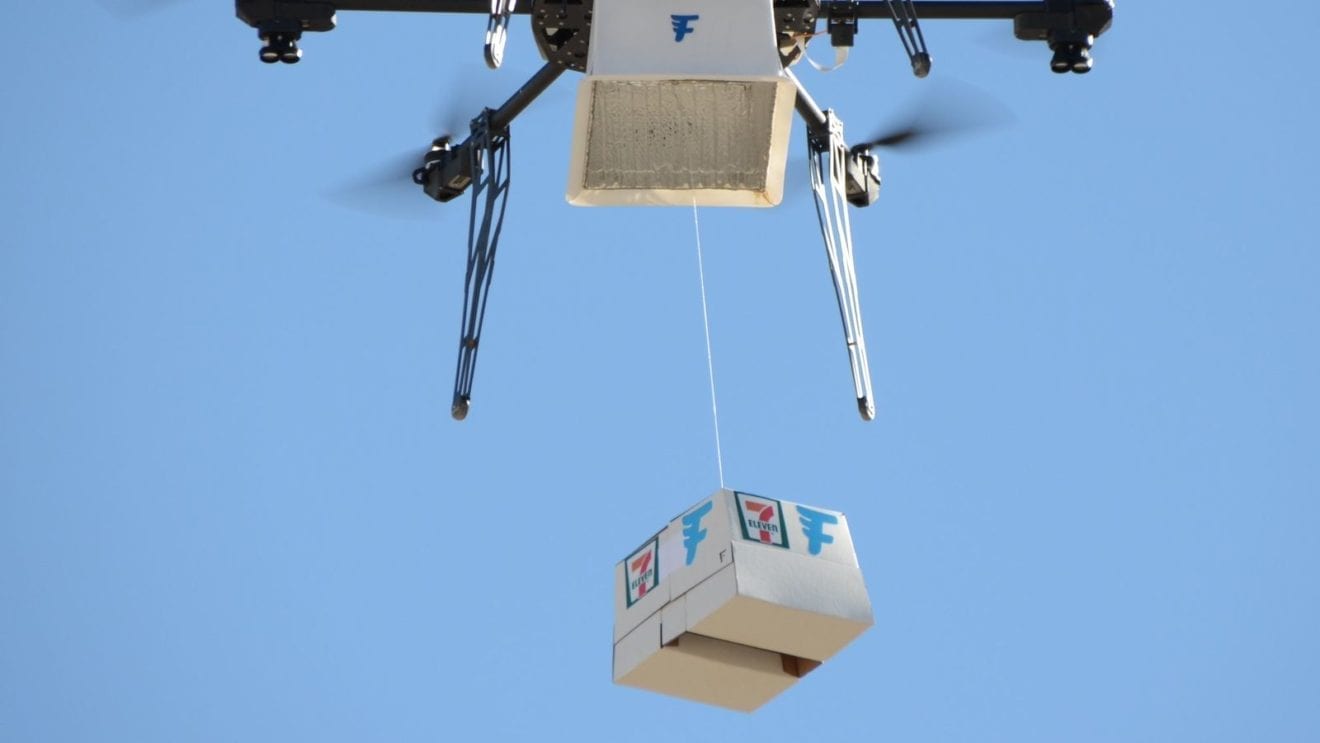
    The Asia-Pacific delivery drone market will expand at a compound annual rate of 33.68 per cent through 2031 as retailers and carriers shift from pilot trials to commercial flight networks.

    Global market revenue reached 1.47 billion dollars in 2026 and is projected to hit 6.74 billion dollars by 2031. The expansion relies heavily on dense urban on-demand delivery alongside rural distribution corridors across Asia.

    Economics and Airspace Pressures

    Operating costs explain the push into commercial airspace. At sufficient route density, autonomous drone delivery can drop to approximately 2 dollars per parcel, compared with roughly 13.50 dollars for traditional truck-based last-mile transport. That cost gap is accelerating investments from e-commerce platforms seeking two-hour order fulfillment from urban micro-hubs.

    Technical hurdles continue to cap immediate capacity. Rotary-wing aircraft captured 72.56 per cent of shipments in 2025 because they can hover and access tight landing spots in crowded cities. However, payloads under 5 kilograms made up 65.71 per cent of all deliveries, limiting most operations to prepared meals, pharmaceuticals, and small consumer packages.

    Unmanned traffic management systems around metropolitan airports also remain incomplete. Regulators require geofencing and collision-avoidance systems, yet aviation authorities still lack the digital infrastructure needed to coordinate thousands of simultaneous commercial flights over dense residential blocks.

    Payload Limits and Regional Flight Paths

    Asian operators are tackling geography by deploying different airframes for different terrains. In China, JD Logistics now flies fixed-wing drones across approximately 200 rural routes, using the platform’s longer range to bridge transport gaps where road links add hours to delivery times.

    Government policy is shaping fleet deployment across the rest of the region. India has carved out dedicated corridors for medical supplies under its Drone Rules while offering incentives for domestic airframe manufacturing. Japan has cleared multi-prefecture autonomous flight operations, and logistics providers in Indonesia and the Philippines are testing island-to-island freight runs.

    For retailers across the region, aerial logistics is ceasing to be an experimental marketing exercise. While western operators like Walmart and Wing Aviation scale across suburban markets in the United States, Asian carriers are building high-frequency routes where physical geography makes ground transport uncompetitive.

    The next metric to track is the commercial rollout of hybrid vertical-takeoff aircraft and 5-to-10-kilogram payload capacity, which operators plan to clear with regional civil aviation bodies before 2028.

  • China Proposes Automakers Take Blame for Autonomous Driving Violations

    China Proposes Automakers Take Blame for Autonomous Driving Violations

    China wants automakers and importers to take legal blame for traffic violations committed by fully autonomous vehicles. The policy shifts legal exposure directly onto manufacturers.

    A draft revision to the Road Traffic Safety Law went before the Standing Committee of the National People’s Congress for an initial review on Tuesday.

    Spanning nine chapters and 170 articles, the legislation adds a dedicated section for autonomous vehicles. It establishes operating rules for public roads, insurance terms, and infraction processing. The rule applies strictly to fully automated mode. It does not automatically transfer liability for collision compensation to the manufacturer.

    Drawing the Line at Assisted Driving

    Standard traffic laws still apply when autonomous systems are off, and across all assisted-driving models. Drivers using Level 2 assistance remain personally responsible for any violations.

    Enforcement hinges on telematics data. Regulators have not detailed how authorities will pull telemetry or resolve disputes over whether autonomous systems were active during an incident.

    Adoption is surging across Chinese cities. Level 2 driver assistance penetration reached 70.5 per cent this year, while navigation on autopilot hit 34.2 per cent. China granted its first Level 3 passenger vehicle approvals in December 2025 to BAIC Group’s Arcfox and Changan Automobile’s Deepal brand. By targeting only fully autonomous mode, the proposal shields mass-market carmakers from immediate liability while setting rules for commercial scale.

    Safety Deadlines and Stricter Driver Rules

    Ministry of Industry and Information Technology baselines will guide the rollout. Systems must match the safety of an attentive human driver, with mandatory technical standards taking effect on July 1, 2027.

    Conventional motorists face tighter restrictions under the broader bill. Drivers cannot use handheld phones or watch video screens behind the wheel.

    Lawmakers will continue reviewing the text ahead of a final vote by the Standing Committee.

  • FAW Toyota Launches Updated bZ5 Electric SUV in China

    FAW Toyota Launches Updated bZ5 Electric SUV in China

    FAW Toyota will release the updated 2027 bZ5 electric coupe SUV in China on August 26, rolling out its first annual refresh for the battery-powered crossover.

    The outgoing model, which arrived in showrooms in June 2025, sells across six trim levels priced between 129,800 yuan ($19,130) and 199,800 yuan.

    Driver assist and battery specs

    Toyota kept the vehicle’s exterior proportions and styling intact. The bZ5 measures 4,780 mm in length with a 2,880 mm wheelbase, keeping the closed front grille, light bars, and 15.6-inch dashboard display from the initial release.

    Engineering changes center on software and battery management. The existing version uses front-mounted 200 kW electric motors and lithium iron phosphate Blade batteries from BYD, offering capacities of 65.28 kWh and 73.98 kWh for CLTC driving ranges of 550 km and 630 km. For intelligent driving, the crossover runs the Toyota Pilot suite, combining Momenta 5.0 software with Toyota Safety Sense hardware to handle urban navigation and automated parking.

    Japanese brands lean on local tech

    Foreign automakers in China increasingly rely on domestic tech suppliers to defend market share against aggressive local pure-play EV brands. Toyota split its approach across its Chinese joint ventures, equipping this FAW-built bZ5 with Momenta software and BYD batteries while turning to Huawei systems for the larger GAC Toyota bZ7 sedan that launched in March 2026 at 147,800 yuan.

    FAW Toyota has not yet released final trim pricing or updated range ratings, which will be confirmed when order books open on August 26.

  • China August NEV Retail Sales Hit 1.04 Million as Market Share Reaches 65.8%

    China August NEV Retail Sales Hit 1.04 Million as Market Share Reaches 65.8%

    China’s passenger new energy vehicle retail sales will reach approximately 1.04 million units in August, rising 9.4 per cent from July, the China Passenger Car Association said on Friday.

    The projected rebound lifts new energy vehicle retail penetration to a record 65.8 per cent, up from 65.1 per cent the previous month. Total passenger vehicle retail deliveries are expected to reach 1.58 million units for the month, an 8.1 per cent month-on-month rise that still represents a 21.7 per cent drop compared with August 2025.

    Chengdu Auto Show Drives Volume

    Extreme weather and planned summer plant maintenance slowed showroom traffic in early August, pulling average daily retail volume down to 35,000 units during the first week. Deliveries recovered as typhoons cleared coastal provinces and carmakers rolled out new product campaigns ahead of the Chengdu Auto Show. Daily transactions are projected to reach 77,000 units in the final week of August.

    The divergent performance between powertrains widened through the summer. Retail sales of petrol-powered passenger vehicles fell 40.5 per cent year on year in July to 510,000 units, while electrified models fell 3.9 per cent to 951,000 units over the same period.

    Big-Ticket Spending Faces Drag

    Automotive retail remains the heaviest drag on Chinese consumer spending. Total retail sales of consumer goods across China rose 2.6 per cent year on year during the first seven months of 2026, yet automotive retail revenue shrank 13.2 per cent over the same period.

    For retailers and dealership groups across the region, these numbers confirm that volume growth is now entirely hostage to electrification and replacement subsidies. Pure internal combustion inventory has become a liability on dealer balance sheets, forcing legacy showroom networks into aggressive discounting or outright closure as floor space pivots toward plug-in hybrids and battery-electric models.

    Automakers now face the September-October peak buying season with fresh order books opened at Chengdu, where full-month delivery tallies will show whether state trade-in incentives can offset persistent consumer caution.

  • Pop Mart Overseas Revenue Falls 11% as Labubu Toy Craze Cools

    Pop Mart Overseas Revenue Falls 11% as Labubu Toy Craze Cools

    Pop Mart International Group posted an 11.1 per cent decline in overseas revenue to RMB4.97 billion for the first half, hit by cooling international sales for its signature Labubu character.

    Shares in the Beijing-based toy maker fell more than 4 per cent in Hong Kong following the release, even as strong domestic sales lifted total group revenue 23.8 per cent to RMB17.17 billion ($2.55 billion). Profit attributable to shareholders rose 10.1 per cent to RMB5.04 billion, while operating profit gained 11.3 per cent. Revenue from Greater China jumped 47.3 per cent to RMB12.20 billion, now generating 71 per cent of group sales compared with 59.7 per cent a year earlier.

    Online sales slump outside China

    The international drop was sharpest across digital channels. Online sales fell 45.6 per cent in the Americas, 39.8 per cent in Asia Pacific excluding Greater China, and 59 per cent in Europe. The company’s own app and website sales in the Americas dropped 44.6 per cent.

    Physical stores showed resilience abroad. Offline sales grew 19.5 per cent in the Americas, 16.2 per cent in Asia Pacific, and 49.8 per cent in Europe. Yet store expansion failed to offset the online drop in the Americas, where regional sales fell 16.5 per cent despite the local store count jumping from 41 to 86 locations over the twelve-month period.

    Plush toys replaced vinyl figurines as Pop Mart’s primary sales driver, surging 60 per cent to RMB9.82 billion to account for 57.2 per cent of total turnover. Figurine sales remained flat with 0.3 per cent growth. Revenue from The Monsters series, which includes Labubu, contracted 7.5 per cent to RMB4.45 billion, marking its first recorded drop and shrinking its revenue share to 26 per cent. Twinkle Twinkle rose 580.6 per cent to RMB2.65 billion to become the second-largest intellectual property, while Crybaby, Dimoo, Skullpanda, and Hirono each surpassed the RMB1 billion mark.

    Rivals step up domestic pressure

    Domestic retail chains across Asia are accelerating their push into collectible toys to capitalize on the same customer demographic. Miniso has refiled to list its Top Toy business in Hong Kong, while rivals Kayou and 52Toys expand store networks across tier-one and tier-two Chinese cities. Frost & Sullivan projects China’s collectible toy market will reach RMB110 billion this year.

    Pop Mart is diversifying into location-based entertainment and hospitality through its Pop Land theme park, Pop Bakery food outlets, and a live-action Labubu feature film developed with Sony Pictures. Chief executive Wang Ning stated the company may fall short of its full-year 20 per cent revenue growth target as management executes operational adjustments across international distribution networks.

  • Chinese AI and Chip Makers Hand Millions in Stock to Lock Down Staff

    Chinese AI and Chip Makers Hand Millions in Stock to Lock Down Staff

    Chinese artificial intelligence and semiconductor firms are granting stock awards worth millions of dollars to staff across entire workforces to halt talent poaching.

    Chip designer Cambricon Technologies unlocked nearly 600,000 shares for 124 core staff, delivering an average payout of 5.57 million yuan (US$828,000) per employee. The Shanghai-listed company also launched a 5 million share scheme covering 944 workers through 2028, representing 85.3 per cent of its total payroll.

    Hardware Giants Expand Workforce Coverage

    Zhongji InnoLight, which makes optical transceivers for AI data centres, allocated 2.48 million shares across 99 key personnel in its latest vesting cycle. Based on April market pricing, that distribution yielded an average of more than 26 million yuan per recipient.

    Equipment manufacturer Advanced Micro-Fabrication Equipment China widened access further. Its March restricted share programme enrolled more than 97 per cent of its workforce. GPU maker Moore Threads followed in April by assigning 1,080 employees, roughly 85 per cent of its headcount, into its equity pool. At memory producer ChangXin Memory Technologies, founder Zhu Yiming pledged 768 million shares, half his partnership stake, to fund a decade-long employee pool while excluding himself from payouts.

    Zero Targets and Pre-IPO Payouts

    AI model developers are structuring payouts with fewer performance hurdles. Hong Kong-listed MiniMax issued 1.16 million zero-cost shares in June to core personnel, tying vesting schedules solely to tenure rather than operational benchmarks. Rival developer Zhipu AI allocated a 9.8 per cent post-listing stake across 426 staff through an internal platform, yielding an average holding value exceeding HK$100 million per person.

    Big Tech platforms are stepping up their own programmes to match startup offers. Tencent Holdings granted more than 38.6 million shares under its employee scheme, representing 0.42 per cent of its issued equity, as Alibaba Group Holding, Baidu, Meituan and Xiaomi rework compensation packages.

    The scale of these handouts reflects how quickly technical headcount costs have risen across mainland China. Where earlier stock plans favoured senior directors, current programmes distribute equity down to floor engineers to insulate operations from overseas recruitment drives and venture-backed rivals.

    Market watchers are now monitoring upcoming interim financial filings to track the share dilution costs from these multi-year vesting programmes.

  • China Recalls Seven Million Electric Vehicles over Door Handle Safety Flaws

    China Recalls Seven Million Electric Vehicles over Door Handle Safety Flaws

    Chinese market regulators ordered the recall of more than seven million vehicles on Friday across automakers including Tesla, Xiaomi, Xpeng and Geely over emergency door release hazards. The joint filing stands as the single largest automotive recall round in the country’s history.

    State Administration for Market Regulation officials identified interior emergency mechanical door releases designed in colors matching adjacent trim, leaving occupants unable to locate or operate the latches quickly during severe collisions that disable vehicle low-voltage electronics.

    Tesla Accounts for Majority of Notices

    Tesla represents the largest share of the campaign, filing two separate notices covering 5,716,552 vehicles. The company is recalling 2,975,910 cars for the door release defect starting September 25, 2026, comprising 973,156 locally built Model 3 sedans, 1,956,713 Shanghai-made Model Y crossovers, and 46,041 imported Model 3, Model S and Model X units. Tesla will apply warning labels at no cost and push over-the-air software updates to lower windows automatically after an impact.

    A parallel Tesla recall covers 2,740,642 domestic Model 3 and Model Y units to fix driver attention monitoring systems. The regulator determined existing steering torque sensors failed to catch drivers looking away from the road, prompting Tesla to activate in-cabin camera monitoring immediately through software.

    Domestic manufacturers submitted simultaneous plans for their electric lineups. Xiaomi is recalling 390,435 units of its SU7 sedan to add labels and update central console unlocking code, while Leapmotor called back 371,200 vehicles across its C11 and C01 ranges. Xpeng recalled 264,842 units, Geely’s Zeekr brand listed 92,658 models, Chery recalled 68,488 vehicles, Dongfeng took in 53,452, and BAIC BluePark Magna recalled 46,850 Arcfox Koala cars.

    New Door Hardware Standards Loom

    The regulatory action follows repeated consumer complaints and crash investigations where electronic flush handles failed to deploy after battery failure. China’s auto sector previously prioritized flush exterior handles and hidden interior buttons to improve aerodynamics and interior styling, but safety authorities have pushed back firmly against purely electronic latches.

    Automakers in China must now prepare for mandatory national standard GB 48001-2026, issued in February. The rule requires physical, mechanical releases on all passenger doors for newly certified models starting January 1, 2027, with previously approved models required to comply by January 2029.

  • China Tests Humanoid Robots for Warehouse and Factory Work in Beijing

    China Tests Humanoid Robots for Warehouse and Factory Work in Beijing

    Chinese robotics developers put humanoid machines through 51 competitive trials in Beijing on Saturday to test their readiness for commercial warehouse and assembly tasks.

    The five-day World Humanoid Robot Games feature 21 scenario-based industrial contests alongside 30 athletic events. More than 40 per cent of the trials require machines to navigate environments without human controllers, according to technology partner Huawei.

    Speed versus dexterity on the floor

    Sprint demonstrations proved the raw power of the hardware. Two robots finished the 100-metre sprint faster than Usain Bolt’s 9.58-second world record, improving on the 20-second winning time recorded in 2025. Another unit ran 400 metres in 39.7 seconds. Stopping remained difficult, with sprinters crashing into protective mats placed behind the finish line.

    Industrial tests evaluate fine motor control rather than pure velocity. Machines must insert delicate cables, load materials, handle restaurant trays, charge electric vehicles and manipulate shifting packages. These setups examine whether computer vision and force feedback can manage minor physical discrepancies such as misaligned wires or dropped items.

    The barrier between trials and commercial deployment

    Supply chain operators across Asia are testing automation to offset rising factory wages and labor shortages, but humanoid units remain largely experimental while rigid industrial arms handle routine floor work. Lumos Robotics Chief Executive Yu Chao said hardware shows matter only if the machines solve real operational problems in final deployment scenarios.

    Autonomous software remains the primary bottleneck for wide commercial adoption. Startups such as Beijing-based Galbot are demonstrating perception systems through autonomous racket sports, while Zeroth is tracking how units handle mechanical errors after sale.

    Competitors will complete the remaining logistics and dexterity trials this week before several participating manufacturers begin scheduled field evaluations in regional assembly hubs later this year.