Tag: Beijing

  • Pentagon Blacklist of Nearly 200 Chinese Companies Threatens Trump and Xi Talks

    Pentagon Blacklist of Nearly 200 Chinese Companies Threatens Trump and Xi Talks

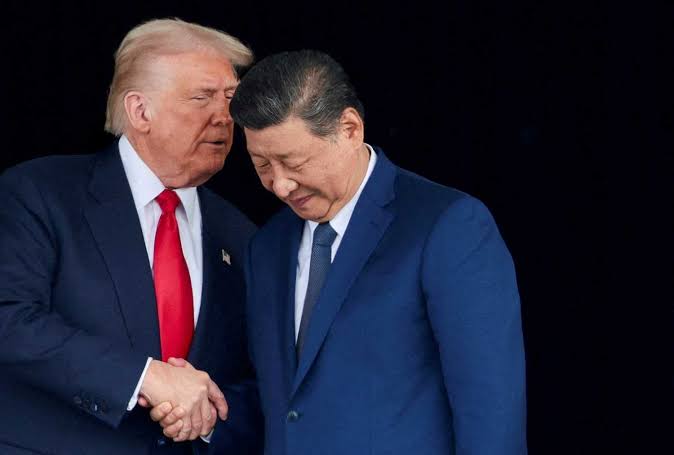
    President Donald Trump and Chinese counterpart Xi Jinping will address the Pentagon’s 1260H blacklist this week after the roster expanded to nearly 200 Chinese corporate champions.

    The register now includes e-commerce group Alibaba, search provider Baidu, and electric vehicle maker BYD, creating friction across consumer technology and automotive supply chains.

    Mandated by the US Congress, the 1260H designation penalizes companies accused of assisting the Chinese military. The listing restricts designated firms from securing US government contracts and cuts off access to Washington lobbying firms under rules that took effect on June 30. Companies on the list face heightened scrutiny from international supply chain partners, institutional shareholders, and trade compliance desks.

    Court Challenges and Boardroom Pushback

    Corporate targets are fighting the designations in federal court rather than waiting for diplomatic resolutions. Alibaba, autonomous driving sensor producer Hesai Group, biotechnology contractor WuXi AppTec, and drone maker DJI have secured interim procedural victories in US district courts over evidentiary standards used by defense officials. The legal wins provide temporary relief, though federal judges traditionally defer to executive discretion on national defense matters.

    Beijing retaliated following the June blacklist updates by enforcing export curbs and procurement reviews against selected American suppliers. Chinese trade officials are now including executives from designated companies, including battery giant Contemporary Amperex Technology and optical transceiver manufacturer Zhongji Innolight, in summit delegations to force direct negotiations.

    Supply Chain Exposure Across Asia

    For consumer tech and automotive operators across the Asia-Pacific region, the expansion of 1260H creates direct commercial risk. Suppliers integrating components from BYD or Hesai must navigate secondary compliance questions when selling assembled goods into North American distribution networks. Cloud software developers utilizing AI tools from Alibaba or Baidu face parallel questions regarding data provenance, as Washington claims Chinese platforms extracted training data from US labs.

    Asian retail and hardware brands cannot treat 1260H as a symbolic naming list. Institutional investors often mirror federal defense rosters in their internal risk matrices, constraining equity valuations and raising borrowing costs across Hong Kong and mainland bourses. The practical consequence is a sharp division in enterprise software and mobility hardware: vendors must either ring-fence their Western operations or absorb complete exclusion from public sector contracts.

    I would not be surprised if Beijing raises 1260H around the summit, particularly because several prominent Chinese companies now on the list are also being discussed as part of Xi’s business delegation.

    Legislative Escalation in Washington

    The latest dispute follows a nine-year diplomatic gap that paused when Trump visited Beijing in May. The Pentagon updated the blacklist weeks after that meeting, prompting the China Daily newspaper to publish a June 14 editorial arguing the enforcement contradicted efforts to stabilize bilateral commerce. Treasury Secretary Scott Bessent attempted to calm tensions on Sunday in New York during trade talks with Vice Premier He Lifeng, establishing a bilateral artificial intelligence working group.

    Capitol Hill is pushing in the opposite direction, with lawmakers introducing 64 separate bills referencing 1260H since last year. Proposals under review in the draft National Defense Authorization Act would widen the designation criteria to target any enterprise where the Chinese state holds even a single publicly traded share.

  • Nio Delivers 150,000 Third-Generation ES8 SUVs in First Year

    Nio Delivers 150,000 Third-Generation ES8 SUVs in First Year

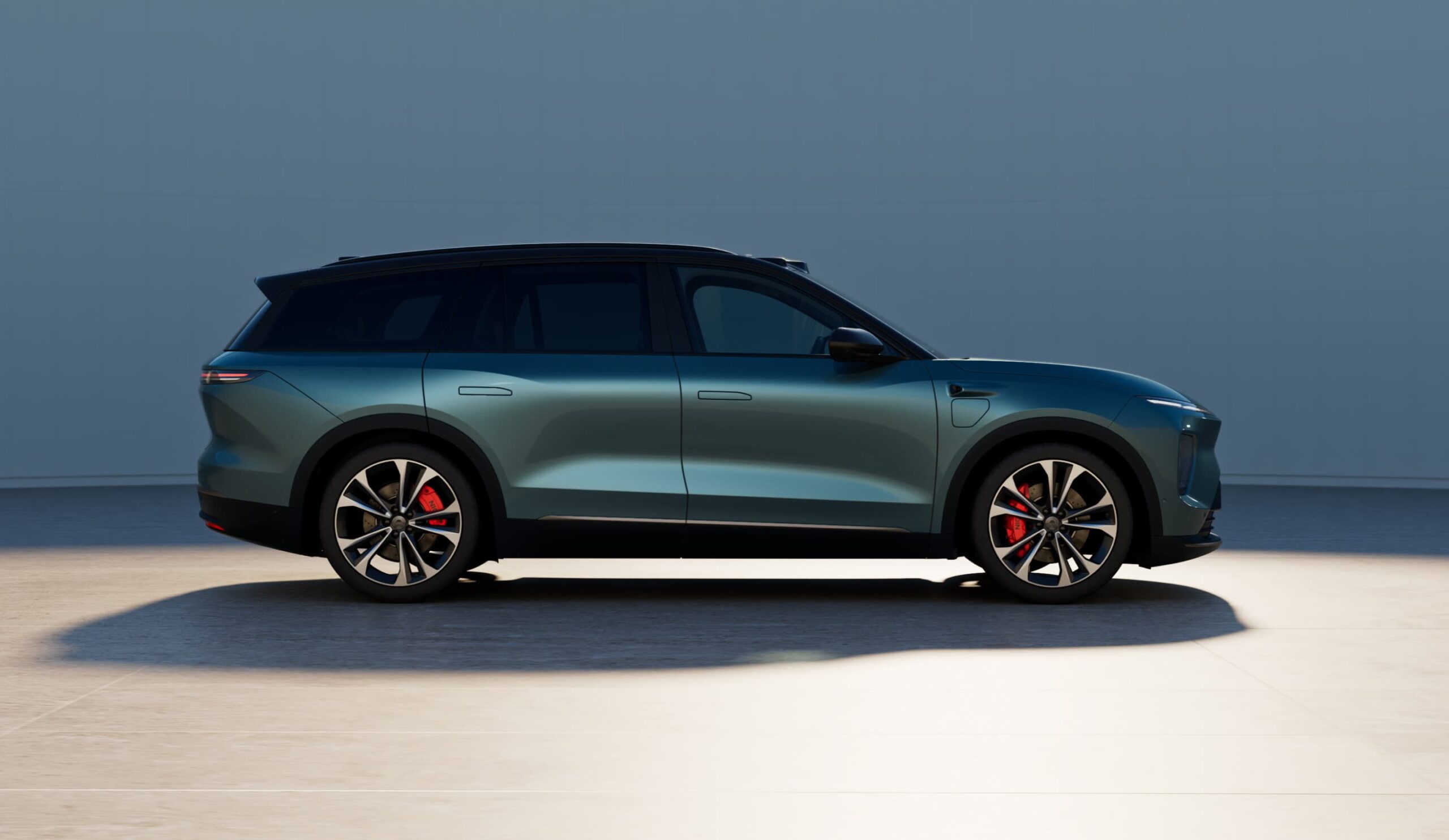
    Nio delivered its 150,000th third-generation ES8 in Beijing on Sunday. The handover reached that volume milestone exactly one year after the large electric SUV launched.

    Customer Tang Limei took delivery of the milestone vehicle. Nio built and delivered the final 10,000 units of that run in just 30 days.

    Qin Lihong, co-founder and president, attended the Beijing event. Sales began on September 20, 2025, and deliveries started the next day. The ES8 is the fastest vehicle in Nio’s lineup to hit this operating scale. China Passenger Car Association data shows the model logged 99,948 deliveries in the first eight months of 2026. That accounted for 62.21 per cent of the core Nio brand’s volume, and 38.02 per cent of deliveries across all Nio Inc operations.

    Volume Concentration at the Top End

    Showroom traffic for the premium brand now leans heavily on the ES8. Together with the larger ES9, the two SUVs delivered 17,480 units in August. That represented 82.55 per cent of all Nio-branded deliveries that month. The concentration reflects a deliberate pivot toward high-margin family and executive vehicles. Mass-market buyers are left to the company’s sub-brands.

    Component suppliers and battery exchange operators benefit from this heavy mix in the 400,000 yuan bracket, which generates steady cash flow and higher revenue per car. But it exposes the automaker to risk if luxury spending softens in top-tier Chinese cities. Nio leads the 400,000 yuan bracket across all powertrains, defending sales against plug-in hybrid and pure electric rivals. Keeping that volume requires constant retail incentives.

    Expanding Through Layout and Pricing Adjustments

    Broader configuration choices helped drive showroom momentum over the summer. On July 9, Nio launched a five-seat ES8 alongside its existing six- and seven-seat versions. Deliveries began the next day.

    Pricing for the five-seat version started at 382,800 yuan with the battery pack, a 5.9 per cent drop from three-row models. Buyers using the battery-as-a-service subscription saw the upfront vehicle price fall to 274,800 yuan. The lower entry price helped lift monthly ES8 deliveries to 10,288 units in July and 11,001 in August, a sequential gain of 6.93 per cent.

    The Trajectory from Launch to Scale

    Delivery numbers climbed quickly after initial factory ramps in late 2025. Nio delivered 2,812 units in September 2025 before volume surged past 22,000 in December. Monthly numbers dipped during the broader auto slowdown in early 2026, but the model held above 10,000 units for most of the year.

    At the Chengdu Auto Show on August 21, the carmaker handed over its 140,000th ES8. Reaching the next 10,000 cars in 30 days proved supply chains and assembly plants maintained steady output into the third quarter.

    Production Schedules Ahead of Model Cycle Shifts

    Management is now focusing capacity on this product core while conserving capital for future launches. Chief executive William Li told staff earlier this month to focus resources on the main premium lineup and core regional markets over the next three years.

    All eyes are on the final stretch of the year. Nio must now prove the ES8 can hold monthly deliveries above 11,000 units through the fourth-quarter rush, before major platform updates arrive in 2027.

  • China Targets 25% Share of Global First-in-Class Drugs Market by 2030

    China Targets 25% Share of Global First-in-Class Drugs Market by 2030

    China has set its sights on capturing at least a quarter of the world’s first-in-class drugs market by 2030 under a new five-year plan to become a global biomedicine powerhouse.

    The plan requires large pharmaceutical enterprises to generate a combined revenue of no less than 3.5 trillion yuan (US$522 billion) driven by technological breakthroughs across critical fields.

    As authorities seek to build scale beyond market leaders like Sinopharm, which generated 575 billion yuan last year, the policy outlines 10 measurable targets, including producing at least 50 drugmakers with annual revenue exceeding 10 billion yuan each.

    Revenue Targets for Top Drugmakers

    Meeting the top-line target requires faster consolidation across state-backed and private drugmakers. Sinopharm, the country’s largest pharmaceutical distributor, generated 575 billion yuan in revenue last year. State planners want to replicate that scale across the manufacturing base.

    Reaching 3.5 trillion yuan across leading firms means turning mid-tier developers into commercial powerhouses. These firms must fund long clinical trials. Capital must also shift away from low-margin generics into novel compounds.

    Building Scale Across the Supply Chain

    Healthcare operators, hospital networks and procurement platforms will see supplier negotiations change. State purchasing programs have spent years cutting generic drug prices. That compressed distribution margins while freeing hospital budgets for innovative therapies.

    Institutional investors face a different risk profile across the sector. Backing early-stage discovery brings higher clinical failure rates than reformulating existing drugs. Capital will concentrate around the 50 major players capable of clearing the 10 billion yuan threshold.

    Shifting from Generics to Innovation

    Commercial drug distribution historically relied on large volumes of off-patent medications to support national healthcare coverage. Domestic intellectual property stayed tied to fast-follower treatments rather than novel biologics.

    Recent regulatory reforms sped up drug approvals and aligned domestic clinical trial standards with international norms. The new five-year plan builds directly on that operational base.

    The 2030 Benchmarks

    Execution hinges on domestic developers clearing late-stage international trials and licensing compounds overseas. Dealmakers are tracking the pace of mergers and pipeline acquisitions needed to build 50 ten-billion-yuan producers before 2030.

  • China Rejects EU Push to Cap Hybrid Vehicle Exports

    China Rejects EU Push to Cap Hybrid Vehicle Exports

    China’s commerce ministry has rejected European Union proposals to voluntarily restrict hybrid vehicle exports, stating that such measures seriously violate World Trade Organization rules.

    The ministry issued a statement on Friday in response to reports that the EU wants Beijing to limit hybrid shipments or face higher tariffs.

    EU hybrid imports from China surged from 3,800 vehicles in October 2024 to 50,000 in July 2026 as average prices fell over the same period.

    The Tariff Shift That Triggered Hybrid Volumes

    European policymakers created this opening in October 2024 by imposing countervailing duties on battery electric vehicles. Tariffs reached 45 per cent on pure electrics while hybrids remained taxed at 10 per cent. Chinese carmakers responded by redirecting production lines toward plug-in and traditional hybrids. Pure battery models met heavy import friction. Hybrid passenger cars moved freely through European ports at lower retail prices.

    Pricing pressure hit legacy European carmakers immediately. European producers idled assembly lines and cut jobs across plants in Germany, France and Italy. Trade officials in Brussels argue that uncurbed hybrid volumes threaten domestic manufacturing employment. They now seek an informal ceiling before considering a formal duty hike.

    Domestic Cooling Forces Carmakers Abroad

    Auto manufacturers in China must defend access to foreign dealerships. Domestic sales of new energy vehicles in China fell 4.6 per cent year on year in August. Assembly lines hold excess stock that local buyers cannot absorb. Export channels supply the volume needed to keep factories running profitably.

    Total vehicle exports from China jumped 65.3 per cent year on year to 1.01 million units in August, according to data from the China Association of Automobile Manufacturers. New energy vehicles accounted for 526,000 of those shipments. That represented a 130 per cent increase compared to the same month a year earlier. Overseas shipments made up 52.1 per cent of all Chinese vehicle exports in August.

    Legal Friction Replaces Bilateral Compromise

    Beijing is setting a rigid legal perimeter rather than offering commercial concessions by framing the dispute around WTO compliance. Voluntary export restraints fell out of favour under multilateral trade treaties in the 1990s. Chinese negotiators are using that status to box in European regulators. A unilateral tariff increase by the European Commission will likely trigger immediate dispute filings in Geneva alongside targeted retaliatory duties on European goods.

    Retail networks and franchise dealers in Europe face immediate supply chain uncertainty. Showrooms that added Chinese hybrid brands to offer affordable entry-level models risk sudden inventory price adjustments if the bloc implements provisional tariffs. Component suppliers also face disruptions if Chinese brands freeze showroom rollouts across secondary European markets.

    Factory Investments and the Next Regulatory Deadlines

    European officials hoped tariff pressure would force Chinese automakers into building local factories or signing joint ventures with struggling European plants. Several Chinese brands have evaluated production sites across Central and Eastern Europe. Greenfield automotive projects take three to four years before producing finished cars at scale. An export cap would starve local retail networks long before domestic European assembly begins.

    Envoys from Brussels and Beijing will meet in October 2026 for high-level bilateral trade discussions. The key figure to monitor is whether Chinese hybrid imports hold above the 50,000-unit monthly mark when third-quarter shipment data is compiled.

  • Dongfeng Nissan Updates N7 Electric Sedan After China Sales Slump

    Dongfeng Nissan Updates N7 Electric Sedan After China Sales Slump

    Dongfeng Nissan will launch an updated version of its N7 electric sedan on September 22 in China. The refresh follows a steep drop in monthly deliveries.

    Retail volume for the battery-electric model slumped to 928 units in August 2026 from an all-time high of 10,148 units in August 2025. The figures come from China Passenger Car Association data compiled by industry monitors.

    Configuration Revisions Follow Sales Drop

    The joint venture between Nissan Motor and Dongfeng Motor plans to adjust equipment specifications across the lineup to regain showroom traction. Dealers aggressively cleared stock over the summer. Wholesale shipments dropped to 619 units in August 2026.

    Priced between 119,900 yuan ($17,760) and 158,900 yuan across nine variants, the original N7 debuted in late April 2025. That entry price matched Xpeng’s Mona M03 sedan. It was one of the sharpest pricing counteroffensives by a foreign joint venture brand in China.

    Local Software And Hardware Engineering

    Developed entirely by a domestic engineering team, the sedan is the first Dongfeng Nissan model to use the group’s proprietary Tianyan vehicle architecture. Its smart cockpit integrates artificial intelligence models including DeepSeek-R1. Driver assistance software comes from Chinese autonomous driving startup Momenta.

    Buyers can choose between two single-motor electric powertrains producing 160 kW or 200 kW. Driving range spans 510 kilometers to 635 kilometers under the China Light-Duty Vehicle Test Cycle standard.

    Pressure Mounts On Legacy Joint Ventures

    Joint venture automakers in China face shortening product life cycles and unforgiving price competition from domestic EV builders. Market shifts happen fast. A model that led its category twelve months ago can lose over ninety per cent of its volume once rivals offer faster chips and larger battery packs at the same price.

    For dealership networks and component suppliers, the collapse of N7 deliveries exposes the risk of relying on single-motor sedans in a crowded market. Automakers now refresh vehicle trims within 18 months to protect showroom footfall. That replaces the traditional four-year mid-cycle schedule.

    Broader N Series Rollout

    Dongfeng Nissan has built an entire sub-brand around the badge since the initial N7 release. The automaker rolled out the N6 plug-in hybrid sedan in December 2025 at an introductory price of 91,900 yuan to compete against BYD’s Qin L DM-i. It followed with the NX8 extended-range electric vehicle in April 2026, which collected 8,423 orders in its first 30 minutes on sale.

    Total production across the N series crossed 100,000 units in June 2026, roughly 14 months after the initial model hit the market.

    Regulatory filings in August cleared the NX7 plug-in hybrid SUV for market entry. The approval leaves Dongfeng Nissan with two new utility models scheduled to reach dealerships before year-end.

  • China Crude Oil Imports Climb to 7.84 Million Barrels Daily as Stockpiles Fall

    China Crude Oil Imports Climb to 7.84 Million Barrels Daily as Stockpiles Fall

    China increased crude oil imports to 7.84 million barrels per day in September, up from 7.25 million in August as refiners slowed stock drawdowns.

    The intake marks the highest buying level in four months, reversing an aggressive inventory clearance that had sheltered domestic transport fleets from global price volatility.

    Customs figures show August imports rose 6.2 per cent month-on-month to 37.9 million tonnes. Buying remains more than 23 per cent below year-earlier volumes, when imports ran at 9.76 million barrels daily. Sourcing patterns shifted sharply this month: shipments from Iraq jumped past 1 million barrels per day from 177,000 in August, while deliveries from Saudi Arabia and Iran dropped.

    Refiners face margin squeeze under state price caps

    Commercial and state stockpiles shrank from 1.25 billion barrels in April to 1.14 billion barrels in September, according to trade intelligence firm Kpler. For five months, Chinese refiners met domestic fuel demand by burning through reserves rather than purchasing expensive seaborne cargoes, muting inflationary pressure across freight networks.

    That buffer is now wearing thin. With stockpiles down by 110 million barrels since spring, processors must step up spot purchases even as international benchmarks hover near 100 dollars a barrel. For freight operators and consumer goods distributors across mainland logistics corridors, higher landing costs for crude will filter directly into road haulage rates and plastic packaging feedstock.

    State retail pricing rules cap fuel price adjustments once international crude tops 80 dollars a barrel. When global prices trade higher, refiners absorb the difference directly on their balance sheets, squeezing operating cash flow at major petrochemical complexes.

    Higher crude prices are now eroding Chinese refining margins, as domestic product prices are regulated above US$80 per barrel.

    Electric fleets limit domestic fuel demand rebound

    Between April and August, Chinese crude purchases trailed 2025 volumes by roughly 3.2 million barrels daily. Beyond inventory drawdowns, structural consumption shifted: new-energy vehicles took more than 65 per cent of total passenger car sales over the summer, permanently removing a slice of urban petrol demand.

    Downstream transport operators in regional logistics hubs will see little relief on diesel prices despite the passenger transition. Beijing holds roughly four to six months of total oil cover across strategic and commercial sites, giving authorities room to restrict refined-product export quotas to protect domestic fuel supply.

    Supply disruptions force shifts to Iraqi crude

    The import pickup coincides with export disruptions across key trade corridors, including strikes on Saudi Arabia’s East-West pipeline and terminal damage at Russia’s Novorossiysk facility. These bottlenecks forced Chinese trading desks to secure alternate supplies quickly, driving the sudden surge in Iraqi crude fixtures.

    Refiners are now balancing fourth-quarter crude intake targets against quarterly product export quotas, with domestic processing runs expected to stay below pre-crisis highs through October.

  • China Tech Boom Fuels August Factory Output as Domestic Spending Stalls

    China Tech Boom Fuels August Factory Output as Domestic Spending Stalls

    China’s industrial sector showed renewed strength in August as an AI-driven tech boom fuelled factory output, according to data reported by Reuters this week.

    The readings highlighted deepening imbalances in the world’s second-largest economy, where resilient manufacturing and exports are sustaining growth even as sluggish consumption and a worsening investment slump weigh on domestic demand.

    Factory gains split from retail demand

    Industrial production accelerated through August on higher orders for computing equipment, semiconductors, and automated factory machinery. Tech supply chains absorbed high component volumes, keeping coastal industrial belts busy throughout the month.

    Consumer-facing businesses saw none of that momentum. Retail cash registers recorded sluggish turnover across apparel, home furnishings, and department stores, extending a pattern where consumers withhold discretionary spending while property values slide.

    Property drag hits consumer sentiment

    Household wealth remains tied up in residential real estate, where falling prices continue to deter family spending on non-essential goods. Shoppers in major metropolitan areas have shifted budgets toward essentials and discounted product lines rather than big-ticket purchases.

    For retail landlords and store operators across tier-one and tier-two cities, this split complicates leasing and store expansion plans. Brand owners face rising warehouse inventories because finished goods leave assembly lines faster than domestic retail networks can clear them.

    The export reliance risk

    The gap between manufacturing capability and domestic retail absorption leaves consumer goods makers dependent on overseas shipments to balance their books. That trade balance face headwinds if external import demand slows or overseas tariffs tighten on Chinese-made goods.

    Retailers across the country now look to third-quarter national retail sales totals and upcoming autumn trade figures to gauge whether household demand will stabilize before the year-end shopping season.

  • China Accounts for 97% of Global Humanoid Robot Shipments

    China Accounts for 97% of Global Humanoid Robot Shipments

    Chinese manufacturers now account for 97 per cent of global humanoid robot shipments, establishing near-total supply chain dominance over the emerging hardware category.

    The concentration reflects rapid assembly scaling across mainland manufacturing hubs after Beijing designated humanoid robotics an official priority sector in late 2023, even as commercial deployment remains heavily concentrated in domestic test environments and state-backed pilot facilities.

    Where the Hardware Goes

    Domestic electronics assembly plants, automotive factories, and automated fulfillment warehouses absorb the vast majority of current production. Factory operators deploy the bipedal units for repetitive handling, parts transfer, and precision testing tasks where fixed automation arms cannot easily maneuver.

    Hardware pricing runs from 15,000 to 50,000 dollars per unit depending on sensor arrays and dexterity capabilities. Chinese assemblers maintain a structural cost edge through local sourcing of actuators, harmonic reducers, and lithium power packs.

    Western competitors face higher component costs and longer assembly timelines. That gap mirrors earlier hardware buildouts in consumer drones and commercial service bots, where Chinese component density squeezed foreign assemblers out of entry-level price tiers.

    The Deployment Bottleneck

    Supply chain supremacy does not instantly create sustainable commercial demand. Most delivered units operate in controlled trial environments rather than fully automated commercial workflows.

    Retailers, logistics operators, and facility managers hesitate to replace standard wheeled automated guided vehicles with expensive bipedal robots. Wheeled units cost a fraction of the price and execute warehouse transport without balancing risks.

    Earlier Manufacturing Milestones

    Beijing designated humanoid robotics an official priority sector in late 2023, setting targets for mass production and supply chain independence by 2025. That policy push directed subsidies and venture capital into domestic component makers, accelerating prototype development into commercial runs.

    Commercial viability now depends on software reliability and real-world task completion rates rather than shipment volumes. Factory trials scheduled across Chinese automotive plants throughout the final quarter will determine whether large-scale enterprise purchase orders materialize.

  • China August Exports Surge 25% as Real Estate and Retail Slump

    China August Exports Surge 25% as Real Estate and Retail Slump

    Slower consumption and a sharper fall in property investment in August 2026 pushed the Chinese economy deeper into difficulty, showing pressure on policymakers to deliver more stimulus.

    The twin drag from sluggish domestic retail demand and falling real estate outlays left the country dependent on foreign shipments, where outbound trade surged 25 per cent during the month.

    Property Slump Weighs on Household Demand

    Unfinished housing developments in Hebei province, documented by Reuters, illustrate how the property downturn continues to suppress asset values and prompt households to curb discretionary spending.

    Retail operators face a challenging operating environment as domestic shoppers hold back purchases. Brands that expanded floor space across secondary and tertiary cities now confront weaker footfall, leaving store networks with higher inventory overheads and compressed operating margins.

    Export Strength Offsets Domestic Drag

    External trade provided the single major counterweight to weakening internal activity. China’s trade surplus topped $800 billion for the year following the August export surge, keeping industrial assembly lines active even as domestic order books thinned.

    Relying on overseas demand presents clear operational risks for manufacturers and retail suppliers. Export strength cannot replace broad-based retail consumption across China’s tier-one and tier-two metropolitan centers, where commercial landlords and department stores remain exposed to cautious tenant leasing.

    Policy Measures Under Scrutiny

    State planners have approached broad monetary easing with caution, preferring targeted injections rather than wide-scale consumer subsidies. State bank and insurer shares retreated after a proposed $54 billion capital injection plan failed to revive wider market confidence.

    RetailNews Asia sees consumer-facing businesses adjusting expansion budgets across the mainland while monitoring national retail sales prints and property start data scheduled for release in October.

  • China Migrant Worker Reforms Could Unlock US$95 Billion in Spending

    China Migrant Worker Reforms Could Unlock US$95 Billion in Spending

    Improving living conditions for China’s 131 million urban migrant workers could release US$95 billion annually in consumer spending, according to research released on Thursday by HSBC. That spending lift equals roughly 0.5 per cent of China’s gross domestic product.

    The bank found that the country’s broader consumption revival rests far less on high-income earners and more on easing the financial strain on urban migrant families. Mainland cities housed 130.9 million migrant workers last year, a number that expands to roughly 170 million when including dependents.

    The Savings Gap

    Precautionary financial habits keep those households from spending. Migrant workers in Chinese cities save an average of 54 per cent of their income, compared with a 36 per cent savings rate among registered urban residents. High healthcare costs, housing instability, and limited access to public services drive that defensive cash accumulation.

    Similar patterns constrain younger demographics. New workforce entrants, including recent university graduates, display elevated savings rates that restrict discretionary retail sales and leisure outlays across metropolitan centers.

    Asia Drives Consumer Expansion

    The demographic rebalancing forms part of a wider regional transformation. HSBC projects the global economy will add 1.2 billion middle- and high-income consumers by 2050. Asia will generate 77 per cent of that expansion.

    India will deliver almost half of the total regional increase. China and neighboring Asian markets will account for the remainder, cementing Asia’s position as the primary driver of worldwide consumer demand over the next two decades.

    The Shift for Retailers

    For brands and retail operators across mainland China, the findings point toward a necessary realignment. Growth will depend on mass-market volume and entry-level household goods rather than premium luxury lines that cater to top-tier wealth.

    Previous policy measures focused on subsidies and targeted tax relief for established urban households, which produced modest gains in discretionary spending. Broadening social safety nets and residency access would direct liquidity straight to essential retail categories, daily groceries, and consumer durables.

    Mainland provincial governments are now setting updated targets for municipal residency access and basic medical coverage transfers through the end of the year.

  • Trump Says Chinese Automakers Can Build in US Despite 100% Tariffs

    Trump Says Chinese Automakers Can Build in US Despite 100% Tariffs

    Donald Trump has stated that his administration would not block Chinese automakers from building electric vehicles in the United States, even as imports face 100 per cent tariffs.

    Speaking in September 2026, Trump indicated that Chinese manufacturers could establish assembly plants in states such as Tennessee or Alabama, despite warnings from the domestic automotive sector that local Chinese production could threaten traditional US carmakers.

    While fully built electric cars from China remain virtually barred under the existing 100 per cent tariff wall, industry analysts note that manufacturers cannot easily replicate China’s integrated parts ecosystem and low-cost supply chain in the American South.

    Supply Chain Realities in the US Market

    RetailNews Asia notes that Chinese electric vehicle brands are directing capital toward markets with clearer regulatory frameworks. Automakers such as BYD and XPENG are opening assembly hubs and distribution networks across Southeast Asia, Europe, Australia, Latin America and Africa. Those regions offer established trade corridors, predictable import policies and faster adoption rates than the North American retail market.

    For Asian parts suppliers and battery vendors, building factories in North America brings heightened political exposure. Shifts in US federal policy make long-term factory payback calculations unreliable. Expanding in ASEAN, South America and Central Europe allows Chinese automotive groups to utilize their domestic supply networks while building local retail presence near high-demand consumer clusters.

    Regional Diversification Beyond North America

    American automotive retail conditions remain difficult for foreign pure-play electric vehicle brands. Charging network rollouts in the US lag behind China and Western Europe, while consumer demand for battery-electric passenger cars has softened relative to hybrid options. Chinese original equipment manufacturers achieve better factory utilization rates by serving emerging markets across Asia and South America, where entry-level city cars face minimal competition from legacy American brands.

    Legacy US car companies have used the 100 per cent import tariff to protect sales of high-margin petrol sport utility vehicles and pickup trucks. If Chinese manufacturers establish US assembly operations, domestic producers will face direct price pressure on their home turf. That outcome would force domestic brands to accelerate their own electric platform cost reductions or surrender market share in entry-level passenger car segments.

    Tariff Walls and Industrial Strategy

    Washington escalated tariffs on Chinese electric cars to 100 per cent to shelter domestic producers from lower-cost imports. That defensive trade posture accelerated the construction of Chinese automotive plants in Thailand, Brazil and Hungary rather than drawing assembly capital into North America.

    Chinese automotive executives are tracking whether the US federal government establishes formal foreign investment security rules for automotive production sites before submitting any state-level factory applications.

  • China Aims for $8.94 Trillion in Retail Sales as Price Wars Persist

    China Aims for $8.94 Trillion in Retail Sales as Price Wars Persist

    China’s physical retailers are retooling floor space into leisure and entertainment hubs to counter entrenched price competition as Beijing targets $8.94 trillion in annual consumer sales by 2030.

    First-half retail sales reached $3.7 trillion, but Bain & Company partner Weiwen Han warns the market will stay muted over the next three years as discounting continues to squeeze operating margins across shopping centres and supermarket chains.

    Experience Costs and Margin Pressures

    Official policy guidelines urge store operators to blend standard shopping with immersive dining, social spaces, and entertainment. The strategy shifts the industry away from chasing raw foot traffic toward extracting higher margins from shoppers who do enter. Transforming selling space into experience zones raises the fixed cost per square metre, penalising operators whose foot traffic fails to convert at the cash register.

    The policy combines experience-led flagships in commercial districts and transit hubs with neighbourhood infrastructure upgrades dubbed 15-minute life circles. These local clusters focus on daily essentials through convenience stores, supermarkets, and wet markets.

    Digital Convergence and Supply Chains

    Pure physical retail has ceased to exist in the Chinese market. With online sales of physical goods rising 4.8 per cent year to date compared to 1.3 per cent growth for total retail sales, shoppers routinely compare shelf prices against live e-commerce listings on their phones within seconds.

    Instead of trying to defeat digital platforms on pricing, operators are adopting automated inventory systems, drone delivery, and private-label merchandise. Developing proprietary private-label lines allows chains to offer price value directly without slashing headline gross margins on national brands.

    “They are asking stores to be worth visiting for reasons beyond price,” said Jotham Lim, head of global marketing at Beijing Taomi Technology Co. Ltd.

    Winners and Structural Consolidation

    Mid-sized domestic grocery, convenience, and food and beverage operators stand to gain the most from planned regional deregulation, which removes long-standing barriers preventing chain retailers from expanding across provincial borders. Independent single-store merchants face steep hurdles absorbing the capital expenditure required for digital traceability and store fit-outs, accelerating industry consolidation into regional chains.

    Financing rules now allow qualifying retail operators to raise capital through asset-backed securities and commercial real estate investment trusts, alongside interest subsidies from commercial banks. Landlords and property-owning retailers can tap these vehicles to fund store refits without burning operating cash flow.

    The retail sector entered this transition carrying heavy overcapacity in commercial floor space following decades of rapid mall construction across second- and third-tier cities. Moojing Market Intelligence recorded a steady increase in consumer discussions regarding in-store price checking against e-commerce platforms between the first half of 2024 and the first half of 2026.

    Market operators now face the rollout of regional licensing reforms and the government target to lift retail sales from ¥24.87 trillion to ¥60 trillion over the next four years.

  • Malbon Golf Expands in China with Stores in Shanghai and Beijing

    Malbon Golf Expands in China with Stores in Shanghai and Beijing

    US golf lifestyle brand Malbon Golf is expanding its retail presence in China with locations in Shanghai and Beijing as part of its broader market expansion strategy.

    Founded in Los Angeles in 2017, the company has partnered with TKG Lifestyle to support its rollout, with Hangzhou and Shenzhen among the next markets in its pipeline.

    Tier-one footprint and localized store designs

    Earlier this year, the brand opened its first Mainland China flagship at Shanghai’s Jing’an Kerry Centre, followed by a second location in the West Bund and a store at Beijing’s Taikoo Li Sanlitun.

    Its Shanghai stores combine golf and streetwear aesthetics with references to local culture, with the West Bund site incorporating vintage imagery, creative elements, and interactive golf features. The Taikoo Li Sanlitun store in Beijing features localized design elements alongside city-specific apparel and lifestyle collections.

    The streetwear crossover in Chinese sports retail

    China-exclusive products form part of the company’s local strategy, with city-specific collections developed alongside its core golf apparel and accessories. Malbon’s partnership with TKG Lifestyle also extends to other regional markets, including Vietnam and the Philippines.

    Earlier expansion steps

    Malbon operates at the intersection of golf and lifestyle fashion, with collections and collaborations spanning apparel, accessories, and cultural partnerships since its founding in 2017. The planned expansion into Hangzhou and Shenzhen will further extend the label’s footprint across major Chinese cities.

  • Global Finance Names Winners of 19Th Annual Stars of China Awards

    Global Finance Names Winners of 19Th Annual Stars of China Awards

    Global Finance revealed the winners of its 19th annual Stars of China Awards on Thursday. The program recognizes commercial banks, fintech providers, and asset management firms across the mainland.

    The annual index benchmarks institutions navigating domestic economic adjustments. It measures operational strength, capital stability, and credit deployment to key industrial sectors.

    Lending Shifts Toward Industry and Tech

    State-owned lenders and regional commercial banks have redirected credit lines away from traditional real estate developers. Capital now flows toward high-end manufacturing, small businesses, and technology ventures. This shift mirrors policy directives from Beijing aimed at stabilizing production while consumer spending recovers at an uneven pace.

    Retail and consumer brands operating in China find their working capital tied directly to these institutional priorities. Supply chain operators, logistics networks, and hardware developers continue to secure competitive borrowing terms. Purely consumer-facing discretionary merchants face tighter credit underwriting from regional lenders.

    China’s resilient economy continues to face challenges from weak domestic demand and the property sector, but policy support, steady industrial activity, and efforts to stimulate lending provide reasons for cautious optimism. The country’s largest banks remain well capitalized and are expanding lending to manufacturing, technology, and small businesses.

    Balancing Property Drag and Small Business Credit

    Asset managers and commercial banks operate amid subdued domestic demand and persistent liquidity stresses in commercial real estate. Even with those pressures, core tier-one capital ratios at China’s top commercial institutions remained steady throughout the year.

    Evaluators assessed cross-border capabilities alongside domestic performance, tracking how Chinese firms handle outbound trade and currency settlement across the Asia-Pacific region. Trade corridors linking mainland suppliers with Southeast Asian retail networks serve as a primary growth driver for trade finance desks.

    Full Report Slated for November Release

    Global Finance founded the China-focused evaluation 19 years ago to track performance inside the world’s second-largest economy. The publication reaches 50,000 corporate and financial decision-makers across 196 countries.

    Full winner lists and the ranking of the Safest Banks in China will run in the November print and digital editions, ahead of an in-person awards ceremony in Beijing later this autumn.

  • Latin America Attracts Nearly USD 300 Billion in Chinese Exports

    Latin America Attracts Nearly USD 300 Billion in Chinese Exports

    Chinese exports to Latin America have reached nearly USD 300 billion, driven by sustained shipments of consumer products, industrial equipment, and electric vehicles across Pacific trade routes.

    The export tally, compiled by market research provider Euromonitor International, now establishes the region among the fastest-expanding destinations for Chinese manufactured goods.

    Shifting Trade Corridors

    Exporters in mainland China have accelerated shipments to major Latin American hubs including Brazil, Mexico, Chile, and Colombia. Consumer electronics, automobiles, household appliances, and value-focused apparel make up a major share of the cargo filling outbound container lines.

    Cross-border e-commerce platforms and mainland automotive brands have widened their local distribution networks to support this volume. Direct fulfillment models and localized warehousing now allow manufacturers in Guangdong, Zhejiang, and Jiangsu to sell straight to Latin American retail buyers with shorter lead times.

    Pressure on Regional Ports

    For operators and logistics providers across Asia, this export volume alters established route economics. Shipping carriers have diverted vessels and added direct service loops connecting southern Chinese ports directly with Pacific terminals in South America.

    The swift expansion puts sustained pressure on destination port infrastructure. Congestion at regional terminals and rising local customs scrutiny present immediate operational bottlenecks for suppliers relying on predictable transit windows.

    Tariff and Competition Risks

    Commercial friction remains an active risk for Asian manufacturers targeting Latin America. Domestic industrial groups in key regional economies have lobbied local authorities to adjust import duties on steel, textiles, and electric vehicles to protect local production.

    Previous trade cycles saw Chinese suppliers rely primarily on North American and European demand to absorb factory capacity. With trade restrictions tightening in traditional Western destinations, South American and Central American markets have absorbed a growing portion of China’s industrial output.

    Trade agencies and supply chain operators now monitor whether destination governments will introduce broader protective tariffs before the next major shipping quarter begins.