Tag: boost

  • Dollar Hits Two-Week High Against Dong Amid Retail Boost

    Dollar Hits Two-Week High Against Dong Amid Retail Boost

    U.S. Dollar Steady at Two-Week High Against Vietnamese Dong

    In a notable development on Thursday morning, the U.S. dollar has maintained its position at a two-week high against the Vietnamese dong, reflecting ongoing shifts in global financial markets. The exchange rate dynamics highlight the evolving landscape of currency value amidst fluctuating economic indicators.

    Exchange Rates Shift

    Vietcombank has set the selling rate for the dollar at VND26,174, marking a 0.13% increase from the previous day. In a complementary move, the State Bank of Vietnam has raised its reference rate by 0.12% to VND24,928, signaling a proactive stance in managing currency stability.

    On the black market, the dollar’s price eased slightly to VND26,450, down 0.11%. Since the start of 2023, the dollar has appreciated against the dong by approximately 2.44%, underscoring a trend of strengthening demand for the U.S. currency in the Vietnamese market.

    Global Context

    The dollar’s global performance has softened as it takes a breather after recent fluctuations. Following President Donald Trump’s unexpected decision to ease tensions regarding Federal Reserve chair Jerome Powell’s position, the dollar has rebounded from significant lows, now hovering around 143.25 yen, after briefly dipping below 140 yen earlier this week.

    Francesco Pesole, a currency strategist at ING, opines that while the dollar faces potential downhill risks in the near term, a notable decline similar to recent trends is not anticipated. Observations suggest that the EUR/USD exchange rate continues to be influenced predominantly by U.S. dollar movements, with potential for an upward shift above $1.15 if concerns surrounding the Fed’s independence resurface.

    Conclusion: Implications for the Retail Sector

    The recent fluctuations in the dollar’s value against the Vietnamese dong highlight key consumer trends and potential impacts on retail dynamics. As the dollar strengthens, imported goods might become more expensive, potentially affecting consumer purchasing decisions and purchasing power in Vietnam. Conversely, a strong dollar can enhance feelings of economic confidence in consumers looking to invest overseas.

    Questions & Answers

    1. What was the recent exchange rate for the U.S. dollar against the Vietnamese dong? As of Thursday morning, the U.S. dollar is selling at VND26,174 through Vietcombank, reflecting a slight increase.
    2. How has the dollar performed against the dong this year? The U.S. dollar has appreciated by approximately 2.44% against the Vietnamese dong since the beginning of 2023.
    3. What external factors influenced the dollar’s recent performance? The dollar’s performance was influenced by President Trump’s easing of tensions regarding the Federal Reserve chair, contributing to a stronger dollar amidst shifts in global market sentiment.
  • Fintech Revolution Boosts Efficiency in Financial Services Sector

    Fintech Revolution Boosts Efficiency in Financial Services Sector

    Thriving Even in Economic Uncertainty: XYZ Company Announces Expansive Growth Strategy

    In a surprising revelation that has energized market watchers and retail news observers alike, XYZ Company recently announced a robust expansion plan which promises to dramatically increase its market footprint. The strategy, comprised of both physical and digital growth metrics, reflects a powerful response to the burgeoning consumer demand within the retail sector.

    Strategic Expansion Amidst Rising Consumer Demand

    XYZ Company, renowned for its innovative approach in the retail industry, has unveiled plans that include opening new stores in key high-traffic areas while also enhancing their online presence to capture a broader digital audience. This dual focus aims to leverage the growing trend where consumers increasingly embrace both in-person and online shopping experiences.

    Boosting Digital and Physical Footprints

    In the digital realm, XYZ is set to launch an upgraded e-commerce platform. Enhanced user interfaces and streamlined shopping processes are expected to improve customer satisfaction and drive online sales. Simultaneously, the new physical stores will not only broaden XYZ’s geographical reach but are also designed to provide unique, immersive shopping experiences, setting them apart from competitors.

    Employment Opportunities and Economic Impact

    With the expansion, XYZ Company anticipates the creation of multiple new jobs across various sectors of the economy: from retail associates and customer service representatives to logistics and supply chain experts. This growth is not only a boon for employment but also likely to spur economic activity in newly targeted regions.

    Implications for the Retail Sector and Consumers

    XYZ Company’s expansion strategy underlines a critical evolution in the retail industry, highlighting how businesses can thrive by blending innovative digital strategies with traditional brick-and-mortar strengths. For consumers, this expansion means more choices, improved shopping experiences, and enhanced accessibility to products and services. The retail sector might well take a leaf out of XYZ’s book, pushing towards a more integrated and consumer-centric future.

    By strategically positioning themselves in this manner, XYZ Company is not only expanding its brand presence but also setting new standards for consumer engagement and market growth in the retail domain.

  • China boosts Uniqlo parent

    China boosts Uniqlo parent

    Uniqlo owner Fast Retailing’s healthy online sales and strong performance in overseas markets, particularly in China, have helped boost its third quarter results.

    The Japanese retailer said its online sales saw a 16.1 per cent year-on-year increase in the three months to May 31 to ¥19.0 billion (US$176.1 million), increasing their proportion of total sales from 7.8 per cent to 9.1 per cent.

    For the three months from March to May 2019, Uniqlo’s international segment reported strong results, with revenue expanding 15.3 per cent year-on-year and operating profit expanding 14.9 per cent year-on-year over that period.

    Uniqlo continued to achieve significant year-on-year growth in both revenue and profit in Mainland China, and achieved double-digit growth in both revenue and profit in Southeast Asia and Oceania on the back of strong sales of its summer range.

    But Fast Retailing’s less-than-stellar domestic sales have overshadowed the company’s strong performance in its e-commerce and international segments, indicating that Japan’s market still has a huge influence on the retailer’s results.

    The company’s domestic sales saw a 0.5 per cent decline brought about by shifting a sales event to June.

    On the profit front, the retailer’s operating profit declined by 7.5 per cent year-on-year on the back of a higher selling, general and administrative expense ratio, and a lower gross profit margin, which was dampened by its decision to bring forward discounting of leftover Spring Summer inventory.

    China continues to be one of the main engines driving overseas expansion, with sales in the country rising in the double digits.

    The retailer said Uniqlo so far hasn’t been hurt by the trade war between the US and China, and sales there were strong even in the face of a weaker yuan.

    Uniqlo Europe reported a decline in profit caused by unseasonal weather patterns and political uncertainty. However, within that region, Russia continued to perform strongly and report expanding revenue and profit.

    In terms of new-store activity, Uniqlo opened its first store in the Netherlands in Amsterdam in September 2018, as well as its biggest Southeast Asian global flagship store in Manila, Philippines in October 2018, and its first store in Denmark in Copenhagen in April 2019.

    Fast Retailing said it is planning to focus its efforts on expanding its global e-commerce operation and its Uniqlo international and GU casual fashion brands to meet its medium-term vision to become the world’s number one apparel retailer.

  • China boosts Uniqlo parent

    China boosts Uniqlo parent

    Uniqlo owner Fast Retailing’s healthy online sales and strong performance in overseas markets, particularly in China, have helped boost its third quarter results.

    The Japanese retailer said its online sales saw a 16.1 per cent year-on-year increase in the three months to May 31 to ¥19.0 billion (US$176.1 million), increasing their proportion of total sales from 7.8 per cent to 9.1 per cent.

    For the three months from March to May 2019, Uniqlo’s international segment reported strong results, with revenue expanding 15.3 per cent year-on-year and operating profit expanding 14.9 per cent year-on-year over that period.

    Uniqlo continued to achieve significant year-on-year growth in both revenue and profit in Mainland China, and achieved double-digit growth in both revenue and profit in Southeast Asia and Oceania on the back of strong sales of its summer range.

    But Fast Retailing’s less-than-stellar domestic sales have overshadowed the company’s strong performance in its e-commerce and international segments, indicating that Japan’s market still has a huge influence on the retailer’s results.

    The company’s domestic sales saw a 0.5 per cent decline brought about by shifting a sales event to June.

    On the profit front, the retailer’s operating profit declined by 7.5 per cent year-on-year on the back of a higher selling, general and administrative expense ratio, and a lower gross profit margin, which was dampened by its decision to bring forward discounting of leftover Spring Summer inventory.

    China continues to be one of the main engines driving overseas expansion, with sales in the country rising in the double digits.

    The retailer said Uniqlo so far hasn’t been hurt by the trade war between the US and China, and sales there were strong even in the face of a weaker yuan.

    Uniqlo Europe reported a decline in profit caused by unseasonal weather patterns and political uncertainty. However, within that region, Russia continued to perform strongly and report expanding revenue and profit.

    In terms of new-store activity, Uniqlo opened its first store in the Netherlands in Amsterdam in September 2018, as well as its biggest Southeast Asian global flagship store in Manila, Philippines in October 2018, and its first store in Denmark in Copenhagen in April 2019.

    Fast Retailing said it is planning to focus its efforts on expanding its global e-commerce operation and its Uniqlo international and GU casual fashion brands to meet its medium-term vision to become the world’s number one apparel retailer.

  • Nvidia Boosts Self-Driving AI Business With Volvo Trucks Deal

    Nvidia Boosts Self-Driving AI Business With Volvo Trucks Deal

    Sweden’s AB Volvo is joining forces with Nvidia to develop artificial intelligence used in self-driving trucks, in a boost for the U.S. chipmaker that was ditched by Tesla last year. The agreement announced on Tuesday by Nvidia and Volvo, the world’s second-biggest truckmaker after Daimler, is a long-term partnership spanning several years. Work will begin immediately in Gothenburg, Sweden and Santa Clara, California. Volvo, which demonstrated its first autonomous truck last year, said the partnership would develop a flexible, scalable self-driving system, which is planned to be used first in pilot schemes before commercial deployment.

    “The resulting system is designed to safely handle fully autonomous driving on public roads and highways,” Volvo said in a statement. Nvidia, known for its powerful gaming graphics chips, has been aggressively expanding into the automotive sphere, where trucks – with their regular routes that are easier to automate than cars navigating traffic – may lead the way in self-driving.

    Potential demand is strong in the United States in particular, where a shortage of truck drivers has been pushing up freight costs. Together with Intel, Nvidia dominates the fast-growing AI chip market.Nvidia, which has previously announced technology partnerships with automakers including Volkswagen, Mercedez-Benz and Toyota, said it was thrilled to team up with Volvo.

    “The latest breakthroughs in AI and robotics bring a new level of intelligence and automation to address the transportation challenges we face,” said Nvidia Chief Executive Jensen Huang.

    Volvo said last week its self-driving truck, “Vera”, would begin transporting goods from a logistics center to a port terminal in Gothenburg in collaboration with logistics firm DFDS, in a first step toward operations on public roads here.Nvidia’s so-called Drive Constellation chips often power the machine learning used to refine self-driving car software algorithms inside data centers, and the company has also been working to build its Drive chips into cars. Automotive chips accounted for $641 million of Nvidia’s $11.7 billion in revenue in its most recent fiscal year.

  • Lancôme uses Alibaba Cloud Technology for Chinese New Year promotion

    Lancôme uses Alibaba Cloud Technology for Chinese New Year promotion

    Lancôme has teamed up with Alibaba Cloud, the cloud computing arm of Alibaba Group, to launch its Chinese New Year campaign in Hong Kong. The partnership leverages Alibaba Cloud’s cutting-edge technologies and Lancôme’s bestin-class beauty offerings to bring consumers the warmest festive wishes with fun and engaging experiences.

    As a leader of the beauty industry and a pioneer in adopting technology-enabled customerengagement, Lancôme has worked with Alibaba Cloud to create an augmented reality (AR) game for customers.

    The game, alongside a Lancôme pop-up store in Harbour City, Hong Kong, enable customers to engage with an online and offline brand experience during the Chinese New Year anywhere in the city, at any time. Lucky consumers will be able to bring home limited edition Lancôme products and special gifts.

    “Lancôme is glad to partner with Alibaba Cloud to engage with our consumers in Hong Kong using the most advanced data technologies. One of the brand’s priority is to build ‘Beauty-tech’ leveraging the latest innovations to transform our campaign and offering our customers better interactive experiences. We are excited to see these technological advancements helping us to create a modern Chinese New Year with better understanding of the consumer behavior and eventually with great business uplift with high conversion,” said Lee Sue Jong, Brand General Manager, Lancôme Hong Kong.

    “We are excited to partner with Lancôme to foster the digital transformation of Hong Kong’s retail industry. Our technologies not only offer innovative ways of engaging consumers, but also help Lancôme better understand customers’ needs using data analytic tools,” said Leo Liu, General Manager of Alibaba Cloud Hong Kong, Macau and Korea.

    Lancôme will spread joy and good wishes across the city for the coming Year of the Pig with thehelp of Alibaba Cloud’s image search technology and cloud services. Consumers can participate in a Lancôme-branded AR game on their smartphones. Those who find and capture augmented reality images of Lancôme’s signature beauty product Genifiques on their smartphone will be invited to send their seasonal wishes for a chance to win a selection of prizes.

    Alibaba Cloud Image Search is an intelligent service based on machine and deep learning. It enables end-users to take a screenshot or upload an image to search for desired products and fulfill other search requests.

    Alibaba Cloud’s cloud-based technology is part of the Alibaba Operating System, a holistic onestop solution to accelerate the digital transformation for corporations. With strong cloud-computing capabilities, the infrastructure is able to deliver insights and analytics instrumental to better satisfying customer needs and growing their business. New Retail, a strategy that drives innovation around online and offline solutions, is a key interface through which businesses can tap into the Alibaba Operating System.

    The latest collaboration on Lancôme’s Chinese New Year campaign follows L’Oréal Group’s longstanding working relationship with Alibaba businesses across multiple platforms. The beauty company has continuously deepened its use of Alibaba’s ecosystem to meet and create new aspirations from consumers. In terms of grasping the benefits of New Retail, L’Oréal Group was an early adopter of merging online and offline during the 2018 11.11 Global Shopping Festival.

  • CIMB to accept payments from six mobile wallets

    CIMB to accept payments from six mobile wallets

    CIMB Bank Bhd will be accepting Quick Response (QR) Payment from six major mobile wallets at its terminals, enabling it to tap into an estimated customer base of about 4.5 million in Malaysia and 520 million registered mainland Chinese.

    This is the first in the market QR payment acceptance for six mobile wallet systems are accepted on a single terminal. The six mobile wallet partners are Alipay, Touch & Go Digital, Boost, KiplePay, Mcash, and Vcash.

    CIMB has partnered with GHL Systems Bhd, a leading payments company in Malaysia and Asean, to introduce the CIMB’s multi-QR terminal acceptance points for both merchants and customers.

    CIMB Group Consumer Banking CEO Samir Gupta said that this move will not only fulfil its customers and merchants’ needs, but also help develop the cashless payment ecosystem in Malaysia, in support of Bank Negara’s vision in promoting a cashless society.

    “We are delighted to enable CIMB merchants to process multiple QR codes via GHL’s unique single payment facility/gateway. Our multi-channel model is not just convenient but also cost-saving to CIMB’s merchants as multiple QR settlements are streamlined into a single payments provider,” said GHL Group CEO Danny Leong.

    The payment method is already available at certain outlets of House of Leather, NSK and Super Seven.

  • Indonesia Uses Big Data Digital Technology To Boost Tourism Performance

    Indonesia Uses Big Data Digital Technology To Boost Tourism Performance

    Indonesia is now using big data Mobile Positioning Data (MPD) digital system in a bid to boost up performance of the nation’s core business sector, tourism, China’s Xinhua news agency reported.

    The MPD to support the tourism activities is operated by Indonesia’s central statistic agency of BPS by detecting the cellular phones used by visitors entering Indonesian territory from several gates, including from land borders with neighboring countries.

    Besides in big cities’ airports, the system is also applied in 19 regencies and 46 subdistricts which host Indonesia’s border areas to neighboring countries as well.

    The MPD digital system have been operated since October last year and is scheduled to serve until 2019.

    Indonesian marketing guru from University of Indonesia (UI) Rhenald Kasali said that option to ultimately use the MDP digital system is a correct move to respond the ongoing digital lifestyle adhered by people globally with smart phone.

    “The official data provided by the BPS would not only be useful in analyzing tour markets and outlining policies in the sector. The data is also essential for those indulging in tourism business to expand their businesses,” Kasali said.

    The tourism ministry would breaking the data down into more specific information about the visitors, including their length of stay, frequency of their visits, spending and even their tour activity preferences during their holiday in Indonesia.

    Head of ASITA (Association of Indonesian Tours & Travel Agencies) Asnawi Bahar said that with processed information resulted from data, travel agents and hotels would be able to prepare resources and proper accommodations for the visitors.

    “It would be very useful for us as we can digitally learn plans of the visitors’ movements since their departures,” Bahar said recently.

    He added that most of foreign visitors have now booked their travel packages in Indonesia through digital applications in advance, including the payments, through their gadgets.

    Indonesia has been taking herculean efforts to develop its tourism sector, replacing the previous oil and gas, coal and palm oil sectors.

    The current government expects to see 20 million foreign visitors with earnings gained from the sector at over US$24 billion the time its service term ends in 2019.

  • Use underground space to boost retail in Singapore

    Use underground space to boost retail in Singapore

    In land-scarce Singapore, land optimisation is a strategic thrust that is achieved by reclaiming land, intensifying land use upwards, and building downwards.

    However, there are limits to land reclamation and building upwards due to maritime and aviation constraints respectively.

    Therefore, unlocking underground space and synergising below and above-ground land use is the next frontier for Singapore.

    To facilitate the growth of an extensive underground pedestrian network, the Urban Redevelopment Authority (URA) developed an Underground Master Plan to guide the construction of underground walkways in the Central Area.

    INCENTIVE SCHEME

    While the government has the ability to finance public underground development, the commercial viability of an underpass is a significant consideration for building owners and developers.

    Consequently, URA implemented an incentive scheme in 2004 to co-fund the construction of strategic underground links in the Central Region, in particular Orchard Road.

    However, no developer on Orchard Road has voluntarily capitalised on the URA incentive scheme to construct underground connections.

    This provided the key impetus for this study, which focuses on the integration of underground walkways with existing buildings on Orchard Road.

    It evaluates the feasibility of an underpass from the perspective of developers, retailers, and the public.

    PERSPECTIVES OF DEVELOPERS, RETAILERS AND THE PUBLIC

    From a developer’s perspective, there are two motivations for an underpass.

    First, an underground walkway provides a seamless, all-weather retail experience.

    Second, an underpass enhances underground connectivity which could generate higher foot traffic, resulting in higher rents for landlords.

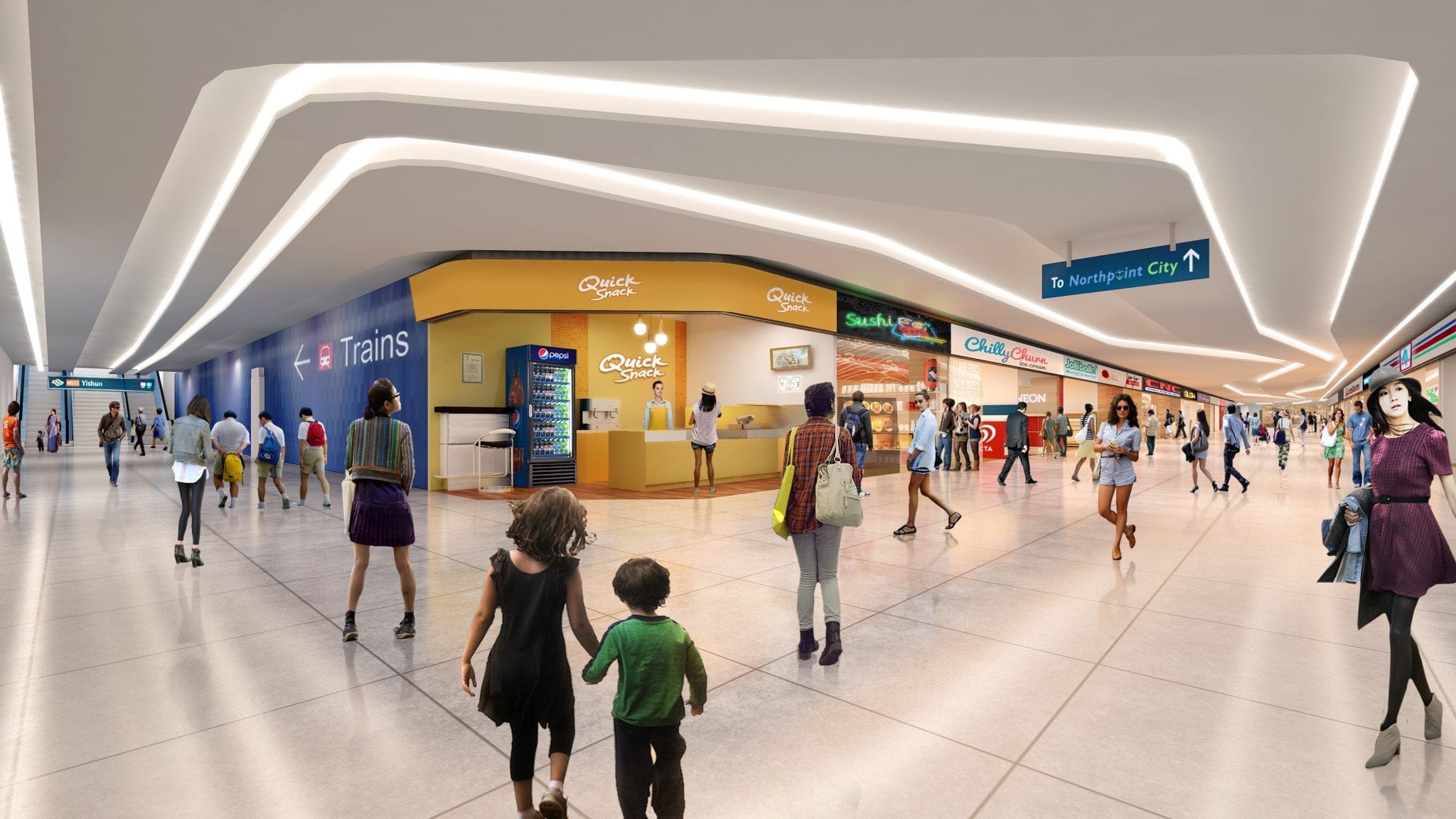
    Furthermore, we found that there are two tiers of underpass in terms of connectivity efficiency, whereby a primary underground linkway provides a direct connection between an MRT station and shopping mall, while a secondary underpass connects two adjacent shopping malls.

    However, there are six barriers to the development of an underground walkway, namely:

    • (a) high construction cost;
    • (b) subterranean land premium;
    • (c) extensive underground infrastructure beneath public roads;
    • (d) structural building limitations;
    • (e) loss of rental revenue during construction period; and (f) diversion of pedestrian traffic to competitors’ shopping malls.

    Consequently, the total development cost – comprising high construction cost and subterranean land premium – renders an underpass commercially infeasible.

    A robust tenant mix is central to the success of an underpass, and the demand for retail space along the link depends on the rent and trade mix.

    Generally, retail rent is contingent upon the location within a shopping mall, shop size, and the building’s proximity to transportation nodes.

    The rents are highest on the ground-level retail spaces fronting Orchard Road, while rentals in the basement levels are typically lower than those of levels one through three, except in cases with direct connectivity to an MRT station.

    Our study found that the suitable tenant mix for an underground walkway includes fashion, convenience, pharmacy and healthcare, food and beverage, and accessories.

    Furthermore, the tenant mix within an underpass is distinguished from those in the basement levels of a shopping mall.

    From a shopper’s perspective, one may use an underpass to commute, shop, or do both.

    It is dependent on the visibility and connectivity efficiency of an underpass.

    For instance, the primary underpass between Orchard MRT Station and Tangs Plaza is heavily utilised because it is not only highly visible, but it also serves as an efficient linear connection between the two shopping malls.

    Conversely, the secondary underpass between Orchard Central and The Centrepoint was previously underutilised due to a lack of both visibility and awareness of its existence.

    However, the completion of Orchard Gateway provided a more seamless underground connection between Somerset MRT Station and Orchard Central, generating higher traffic flow to The Centrepoint.

    RECOMMENDATIONS

    Our study proposes four recommendations to encourage the development of new underpasses:

    First, the government could undertake the construction of an underground linkway and sell the retail spaces to investors.

    The precedent was set by the sale of Tangs Underpass, connecting ION Orchard and Tangs Plaza, to joint-venture partners CapitaLand and Sun Hung Kai Properties.

    Today, the Tangs Underpass is lined with retail spaces on both sides of the walkway.

    Second, our study proposes further enhancement to the subsidy on public pedestrian walkways and an introduction of a subsidy for retail space under the URA incentive scheme.

    These refinements significantly reduce the construction cost of an underpass, thereby making it commercially viable for building owners and developers.

    Third, the government may consider the provision of feasibility studies and infrastructure support under the URA incentive scheme, which would benefit both the state and the market.

    From the state’s perspective, this would develop the underground database to aid future planning of subterranean space.

    Furthermore, it would provide the market with clarity on the physical conditions encompassing land parcels and technical requirements of an underpass.

    Additionally, infrastructure support could be offered in the form of cash subsidies to partially offset the high construction costs of underground tunnels on Orchard Road.

    Fourth, an increase in plot ratio could incentivise developers to undertake redevelopment or major addition and alteration works, leading to the construction of an underpass which is mandated by URA.

    The 2014 URA Master Plan allows up to a 15 per cent bonus in base plot ratio for land sites above 10,000 square metres in the Orchard Planning Area.

    Furthermore, there is a variety of space and design incentive schemes to maximise a site’s development potential.

    The upcoming Orchard Boulevard MRT Station in 2021 may motivate building owners to amalgamate land parcels in West Orchard and carry out redevelopment or major addition and alteration works, giving rise to the creation of new underground walkways.

    In conclusion, an effective incentive scheme entails a delicate balance between the objectives of the state in enhancing underground connectivity and the market, where profit matters.

    Ultimately, the exploitation of underground space has limitless potential in expanding Singapore’s physical space boundary vertically downwards and optimising land use through the seamless integration of below and above-ground activities.


  • Tech boost for Asia’s rice sector

    Tech boost for Asia’s rice sector

    A new initiative to provide rice breeders across the Asia Pacific region with advanced technologies is expected to help improve crop yields, sustainability and profitability in the vital agricultural sector.

    ‘Rice Action Agenda,’ introduced by the The International Rice Research Institute (IRRI) for the 16-member countries of the Council for Partnership on Rice Research in Asia, calls on parties to share germplasm, collaborate on investments, and exchange rice-breeding techniques.

    Bruce Tolentino, deputy director-general of the Philippine-based IRRI, says the new agenda is “crucial to developing the rice sectors” of the participating countries. He says the new agenda was a response to concerns about diminishing rice stocks in India and Thailand — the two top global exporters.

    IRRI noted in February that the combined rice stocks of India and Thailand were set to decline by almost three-quarters by the third quarter of 2016 as compared to 2013 numbers, mostly due to environmental reasons such as droughts.

    “Fears of another rice crisis early this year was the impetus for the Rice Action Agenda,” Tolentino said.

    Under a 10-point action plan the agenda will introduce superior, higher yield rice varieties; upgrade rice research and breeding pipelines; increase research into global rice varieties; invest in rice education and increase the sustainability of rice cultivation systems.

    The plan also calls for reducing crop losses using mechanised technologies; reforming policies to increase production efficiency; increasing investments in agricultural infrastructure; strengthening food security for consumers and working to implement the ASEAN Rice Breeding Initiative.

    IRRI proposes that participants take advantage of three programmes — the CGIAR Research Programme on Rice, the Sustainable Rice Platform, and the ASEAN+3 Rice Genetics and Breeding Platform. The last includes a suite of tools for fast-tracking germplasm development, including genotyping and molecular markers, high-throughput phenotyping, and breeding informatics.

    Tolentino notes that participating countries are expected to carry out the new Rice Action Agenda using internal funding sources. “The goal is for each of the member countries to adopt the recommendations into each of their own national rice-sector strategies and fund implementation from their own fiscal budgets.”

    Rajeev Varshney, a geneticist at the International Crops Research Institute for the Semi-Arid Tropics, Patancheru, India, tells SciDev.Net that rice is the “most important crop for food as well as nutrition security in Asian countries.”

    According to Varshney, the agenda is a “great opportunity to bring the entire value chain of actors together.” By combining the various programmes proposed in the plan, participants should be able to “make the rice sector stronger.”

  • ‘Wonderful Indonesia’ campaign boosts tourism industry

    ‘Wonderful Indonesia’ campaign boosts tourism industry

    The government’s efforts to promote tourism in the archipelago with its Wonderful Indonesia campaign have had a positive impact, the president director of tour and travel company Panorama Sentrawisata said on Tuesday.

    Budi Tirtawisata said that in the first six months of this year, his company booked a 19 percent increase in gross revenue to Rp 2.38 trillion, from Rp 1.99 trillion in the same period last year, as more foreigners were drawn to Indonesia.

    “The government’s free visa policy is also contributing to growth in the tourism sector,” Budi told reporters at a press conference in Jakarta.

    Budi was upbeat the company’s business volume would increase, and possibly double, in the second half of 2016, compared to the first half, because more tourism activities were expected to take place in the period.

    “The peak season for tourist visits to Indonesia is during the summer, which occurs in the second half of the year,” Budi said, adding that more tourists would also visit the country during the Christmas holidays in December.

  • Indonesia to boost investment through easy, fast licensing service

    Indonesia to boost investment through easy, fast licensing service

    The Indonesian government held a closed-door meeting to discuss efforts to boost investment and business through the implementation of an easy and fast licensing service.

    “We should improve all aspects of licensing in relation to issuing building and environmental permits as well as authorization,” President Joko Widodo stated during the opening of the meeting here on Tuesday.

    The president remarked that the government should improve the licensing process as part of the efforts to improve the business climate in Indonesia.

    In the 2016 Ease of Doing Business 2016 survey, the World Bank ranked Indonesia 109th out of 189 countries. Singapore topped the list, with Malaysia ranking 18th, Thailand 49th, Brunei 84th, and Vietnam 90th.

    The president also called for the integrated management of the business licensing and registration process to improve efficiency and boost the business climate.

    The meeting was attended by Coordinating Minister for Economic Affairs Darmin Nasution, Coordinating Human Development and Culture Minister Puan Maharani, Coordinating Political, Legal and Security Affairs Minister Luhut Binsar Pandjaitan, Public Works and Public Housing Minister Basuki Hadimuljono, Agrarian and Spatial Planning Minister Ferry Mursyidan Baldan, as well as Justice and Human Rights Minister Yasonna Laoly.

    Earlier, the Indonesian government had decided to prepare guidelines and revise various regulations that will make it easier to do business as part of the efforts to facilitate investors who want to start a business in Indonesia.

    “These guidelines should be formulated soon and will be tabled in a cabinet meeting,” Coordinating Minister for Economic Affairs Darmin Nasution remarked after a coordination meeting here on Thursday.

    The 10 indicators, which are being assessed, include the ease of starting a business, building permits, registration of ownership, payment of taxes, access to credit, and a cooperation agreement.

    Other indicators are the ease in getting an electricity connection, cross-border trade, problem-solving for bankruptcy, and protection for Micro, Small and Medium Enterprises (SMEs).

    One of the rules that has been fixed is the basic capital for the establishment of a Limited Liability Company (PT).

    The government will then revise Trade Regulation No. 90 of 2014 concerning the organization and development of warehouses. As a result, a warehouse registration certificate can be obtained in just a single day.

    However, a warehouse, with an area of less than 98 square meters, will not require a warehouse registration certificate.

    The Ministry of Public Works and Public Housing (PUPR) will also revise Ministerial Regulation No.24 of 2007 on Technical Guidelines for Building Permits (IMB). The IMB will be processed in seven days, and the costs will be reduced by half.

    “We will disseminate information on all regulations in relation to the ease of doing business. The dissemination will be conducted by ministries and other institutions,” the minister affirmed.

    Meanwhile, state-owned electricity company PLN will improve its procedures for granting an electricity connection. The procedures will be divided into four stages. Obtaining a new connection will take 22 days.(*)

  • China’s Monkey Week Boost Demand as Retail Sales Increased

    China’s Monkey Week Boost Demand as Retail Sales Increased

    The gloomy Chinese economy has shown a sign of stabilization during “Monkey,” the lunar New Year celebrations as retail sales have surged, suggesting an improvement in domestic demand.

    During spring festival last week, China’s retail sales recorded 11.2% year-over-year (YoY) growth, fueled by cinemas, according to the Chinese Ministry of Commerce on Saturday. The retail and restaurant sales surged to $115 billion (754 billion yuan), showing a strong potential of the food industry in the world’s most-populated country.

    The Chinese economy last year grew 6.9%, slowest GDP growth rate since 1990, owing to the soft domestic demand in the country. The Chinese authority to uplift domestic demand undertook several measures. Despite the initiatives by Beijing, the Chinese economy is still on a bumpy ride as depicted by recent gloomy economic indicators.

    However, the jump in retail sales during spring festival last week depicts that policymaker’s efforts have started paying off. From January, the People’s Bank of China (PBOC) performed massive open market operations to keep the market liquid. In January, it injected net liquidity worth about $188 billion (1.235 trillion yuan), to meet the cash demand during spring festival.

    The massive liquidity injections raised concerns among economists, who believe that this week would lead to tightening liquidity as the Chinese central bank has to mop liquidity from the economy. They also believe that increase in retail sales during the spring festival, which started on February 8-13, suggesting demand is picking up pace.

    Food demand remained strong during celebrations and medium-sized food retailers saw 10.6% YoY growth as Chinese families preferred to eat food from restaurants. Tourism also recorded modest demand during week-long holidays and nearly 1.62 million foreign tourists visited China in a week-long holiday. Mass catering services also posted record boom as Chinese families hosted reunion dinners.

    Analysts believe that the modest growth in demand shows the potential of Chinese consumers. However, they believe that the demand is seasonal and Beijing needs to devise an effective strategy to spur and sustain domestic demand in an attempt to streamline the world’s second largest economy.

  • Australia, Indonesia boosting tourism and economic growth

    Australia, Indonesia boosting tourism and economic growth

    Australia is expanding efforts to encourage two-way tourism between Australia and Indonesia as a key driver of shared economic growth and more knowledge of each others country.

    Australian Ambassador to Indonesia Paul Grigson said tourism powers economies and supports communities.

    “We want to increase tourism in both directions. The Indonesian Government has already recognised the potential economic boost a strong tourism industry can deliver,” the ambassador was quoted as saying by the Australian Embassy here on its website.

    According to the ambassador, Australian tourism can help Indonesia realise that vision. More than a million Australians visit Indonesia every year. Australian tourists contribute 18 trillion IDR (AUD$1.8 billion) a year to the Indonesian economy, Ambassador Grigson said on Tuesday.

    He said as Indonesia seeks to develop its tourism industry beyond Bali, ease of travel is integral to its success. Indonesia has already experienced a 19 per cent increase in tourists from countries which were granted visa free access in 2015.

    “A quarter of all tourists to Bali are Australian. We want to see more Australians come to Indonesia and experience sunrise at Mount Bromo, taste the spices of Padang and watch the sunset at Borobudur,” Grigson told Indonesian tourism industry representatives in a speech in Jakarta.

    Beyond these economic benefits, tourism builds links between people. It challenges stereotypes. It opens up new worlds and greater understanding.

    “I want more Indonesians to visit Australia.We have world class cuisine, galleries and unique experiences. With famous wildlife, fabulous wine and fantastic weather, Australia beats any other destination,” he said.

    Australia was the tenth most popular destination for Indonesian tourists in 2014 with a total of 149,800 visitors, up 7.6 per cent from 2013.

    More Indonesians travelling to Australia will make expanded flight routes between Australia and Indonesia more viable in the long-term, bringing benefits to both our economies.

    “Indonesian investors may also be missing out on opportunities to capitalise on some of the major tourism infrastructure projects currently underway in Australia. In 2014 alone, investment in the Australian tourism industry was valued at $53.7 billion,” he said.

    He added that the more Australians and Indonesians experience each others countries, the deeper their connections become.

    “The tourism industry is integral to the prosperity of both our countries. Now is the time for us to reach out to each other as neighbours and shape our futures together,” Grigson said.

  • Thailand Plans to Boost Northeastern Economy

    Thailand Plans to Boost Northeastern Economy

    Thailand’s northeastern economy, among the poorest in the country, is looking to expand trade with neighboring Laos and business in the Greater Mekong Subregion (GMS) as it recovers from a two-year recession.

    The downturn was triggered by an end of populist programs heralded by the former government of Yingluck Shinawatra. The May 2014 coup ended her almost three year administration and brought an end to programs led by a rice price pledging scheme.

    Under the program, farmers were paid at rates some 50 percent above the global market before the effort collapsed, costing Thai taxpayers more than $14 billion and leaving farmers across the region deeply in debt.

    While the good times lasted, funds triggered a boom in retail and commercial investment and spending. Major department stores sprang up in towns such as Ubon Ratchathani and Udon Thani.

    A rice farmer collects snails and cleans the rice field near Udon Thani, Thailand, Sep. 15, 2015.

    A rice farmer collects snails and cleans the rice field near Udon Thani, Thailand, Sep. 15, 2015.

    But now retailers report sluggish sales and the Thai central bank warns of growing indebtedness among farmers as rice prices fall to their lowest in six years.

    Agriculture accounts for some 20 percent of the region’s economy, followed by trade. Household incomes in the Northeast are the lowest in Thailand, at close to $550 a month, well short of the nearly $1,200 earned per month in the Bangkok region.

    Border trade

    But Athikarn Ringcharoen, president of the Chamber of Commerce in Amnat Charoen province, bordering Laos, said the local economy was starting to pick up although still below levels of two years ago.

    Athikarn said government policy support and increased cross border trade with Laos, was helping the recovery. He added that despite the poor state of the global economy, the provincial outlook was “OK”.

    Infrastructure spending is also set to come to the aid of the region.

    Athikarn said plans to upgrade a Royal Thai Airforce airstrip to a regional airport less than 30 kilometers from Amnat Charoen town were also welcome.

    Long term infrastructure set to benefit the region includes the $10 billion China-Thai 870 kilometer rail-line from Nong Khai, bordering with Laos, to Bangkok. On the horizon is the Japan-Thailand rail-line from Tak province, bordering Myanmar, to Mukdahan, bordering Laos.

    Ubon Ratchathani University political scientist, Titipol Phakdeewanich, said cross border trade ties have helped eased the downturn.

    “Many businesses are now more open to customers from Laos. If you go to different malls – they have signs in Lao [language] and when the market is more connected – to some extent – it helps to provide a cushion to the local economy. So the local economy in the area I don’t think it’s entirely dependent on the global market,” said Phakdeewanich.

    Government spending

    The military government’s economic czar, Deputy Prime Minister Somkid Jatusripitak, has announced spending of over $970 million in projects directed to 70,000 villages nationwide.

    Analysts say the program mirrors similar initiatives under previous governments of so-called “village funds” to boost rural consumption.

    The Federation of Thai Industries, while welcoming the programs, say more measures are needed to ensure growth is sustained.

    The Federation warns the rural sector remains vulnerable to falling commodity prices that may impact some 30 million people in the farm sector – almost half the national population.