Tag: burberry

  • European Luxury Houses See China Rebound as Burberry Sales Climb 9%

    European Luxury Houses See China Rebound as Burberry Sales Climb 9%

    European luxury groups are tracking a tentative rebound across mainland China, led by high-net-worth spending and demand for premium beauty and apparel.

    July retail sales across the country’s top 25 luxury labels dropped more than 10 percent under tighter scrutiny on offshore wealth, but corporate earnings forecasts point to an autumn turnaround. Household spending on cosmetics has begun to stabilize, while quarterly reports from fashion houses reveal pockets of early momentum.

    Divergence Across Brands

    Burberry Group posted a 9 percent increase in Greater China retail sales during its latest quarter, helped by younger shoppers and localized campaigns. The British fashion house partnered with Chinese National Geography magazine on documentary marketing to lift brand engagement among Gen Z consumers.

    Gucci parent Kering expects sales in the region to return to positive growth by the fourth quarter of 2026. Chief Executive Luca de Meo called the country a strategic priority as trading conditions improved steadily through the latest reporting period.

    LVMH reported steadying demand in mainland stores, citing improving figures for its Sephora retail chain and cognac labels. Swiss group Richemont captured higher tourist spending across Hong Kong and Macau, while Moncler gained ground in market niches.

    Uneven Recovery Profile

    The rebound remains concentrated among high-net-worth buyers rather than broad middle-income households. That divide keeps the pace uneven across retail categories and price points.

    Hermes continues to accelerate sales in the region, while Danish jeweler Pandora is seeing sales declines narrow. For retail operators across Asia, the test will be whether luxury spending broadens beyond top-tier VIP clients before fourth-quarter results land.

  • Burberry Sees Remarkable Christmas Sales Boost, Thanks to Chinese Market Surge

    Burberry Sees Remarkable Christmas Sales Boost, Thanks to Chinese Market Surge

    Burberry, the iconic British luxury brand, surpassed its holiday season sales forecasts, with the most significant surge being noted in its Chinese market.

    4th Quarter Financial Overview

    According to the latest fiscal report of the quarter ending December 27, Burberry witnessed a 3% annual increase in comparable store sales, leading to a revenue of £665 million. Of particular note was the growth in Greater China, which saw a 6% rise in store sales. The Asia Pacific (APAC) region also reported a sales increment of 5%. Unfortunately, no sales growth was observed in Europe and the Middle East during this period.

    Joshua Schulman, the CEO of Burberry, attributed these promising figures to the brand’s successful implementation of their Burberry Forward strategy. He cited an improved sales growth rate and enhanced revenue quality across different retail channels and geographical locations.

    Key to Success

    Burberry’s win in Greater China and APAC was primarily fuelled by a considerable uptick in Gen Z customers, who contributed to double-digit growth.

    Schulman commented on the positive customer response to Burberry’s immersive Timeless British Luxury campaigns and experiences. The brand’s core outerwear category continued to demonstrate resilience, with rising customer interests now also observed in accessories and ready-to-wear collections.

    “As we step into the 170th year of Burberry, these results substantiate the enduring strength of our iconic brand and instill confidence in the journey ahead,” Schulman added.

    Questions & Answers

    What was Burberry’s sales performance during the recent Christmas quarter?
    Burberry experienced a 3% year-on-year increase in comparable store sales during the Christmas quarter, achieving a revenue of £665 million.

    Which markets showed the strongest growth for Burberry?
    Greater China and the Asia Pacific (APAC) region were the strongest growth markets for Burberry, with sales rising by 6% and 5% respectively.

    What factors attributed to Burberry’s strong sales performance?
    The successful implementation of the Burberry Forward strategy, compelling Timeless British Luxury campaigns and experiences, and the consistent popularity of their core outerwear category are some factors that contributed to Burberry’s strong sales performance.

  • Christopher Bailey to depart Burberry after 17 amazing years

    Christopher Bailey to depart Burberry after 17 amazing years

    Christopher Bailey is to depart from Burberry after 17 years as its creative head. In a statement issued overnight, Burberry said Bailey, 46, will remain in his dual roles of president and chief creative officer until March 31, when he will also resign from the board.

    He will design the Spring/Summer 2018 collection and exit the business in December after a period of transition.

    “Burberry has undergone an incredible transformation since 2001 and Christopher has been instrumental to the company’s success in that period,” said Burberry CEO Marco Gobbetti.

    Bailey described his tenure at the UK-headquartered luxury fashion brand as “the great privilege of my working life”.

    “I am excited to pursue new creative projects but remain fully committed to the future success of this magnificent brand and to ensuring a smooth transition.”

    Replacement tipped

    Some analysts are already picking Bailey’s replacement: Phoebe Philo, who worked with Gobbetti at Celine, has been identified as a frontrunner.

    “For now, Philo remains in her role at Celine” But LVMH is interviewing designers to replace Philo and rebuild Celine’s design team in preparation for her eventual departure. The conglomerate vehemently denied that Philo’s departure was “imminent” without denying that interviews for her replacement were taking place.”

    “Phoebe used to work with Marco Gobbetti and they know each other well,” Mario Ortelli, head of the luxury goods sector at Sanford C Bernstein. “She is a big name, and in terms of brand elevation she can be one of the possible candidates for the role. In our view Phoebe Philo could move across to Burberry and recreate the powerful CEO-creative director combination Gobbetti and Philo experienced at Celine.”

    Thomas Chauvet, head of luxury goods equity research with Citigroup, concurred in a note issued after the Bailey announcement.

    “Early feedback from investors suggests that the successful partnership she previously had with Mr Gobbetti makes her a suitable potential candidate.”

    Pascal Martin, partner with OC&C Strategy Consultants in Hong Kong, said 17 years at the helm of a luxury brand’s design team is a long tenure – longer than most design directors in global luxury houses, with the exception of very rare cases like Chanel’s Lagerfeld.

    “In his time, Bailey had completely revived the brand and had the genius to re-invent the trench, Burberry’s iconic product, and make it trendy and aspirational. He has also led Burberry’s charge into the digital world, ahead of the entire luxury sector, making the brand “cool” to the millennials generation when other luxury brands were still very hesitant and protective.”

    Rivals catching up

    But Martin said Burberry’s designs and stores have lost a bit of their innovativeness lately, while many luxury brands have caught-up with Burberry on the digital front.

    “Looking ahead, creating new excitement around the brand – through product design and store design – is going to be one of the major challenges for the new design director.”

    Charlotte Pearce, a retail analyst with GlobalData, said since Bailey became creative director in 2004, he has contributed to total revenue growth of £2 billion and has helped to regenerate the brand, turning it back into the aspirational, iconic label that it once was.

    “With just over a year until Bailey leaves, there is plenty of time for Marco Gobbetti, who took over as CEO in July, to find the right candidate to fill Bailey’s shoes. It is crucial that Burberry finds someone with respect for the brand’s British heritage but is able to further evolve the label creatively and bring it into a new era,” said Pearce.

    Gobbetti said Burberry has “a clear vision for the next chapter” to accelerate the growth and success of the brand.

    “I am excited about the opportunity ahead for our teams, our partners and our shareholders.”
  • Burberry held back by China lockdowns and US weakness

    Burberry held back by China lockdowns and US weakness

    Luxury brand Burberry was hurt by lockdowns in its biggest market China and an abrupt reversal in fortunes in the Americas, limiting its first-quarter sales rise to 1 per cent.

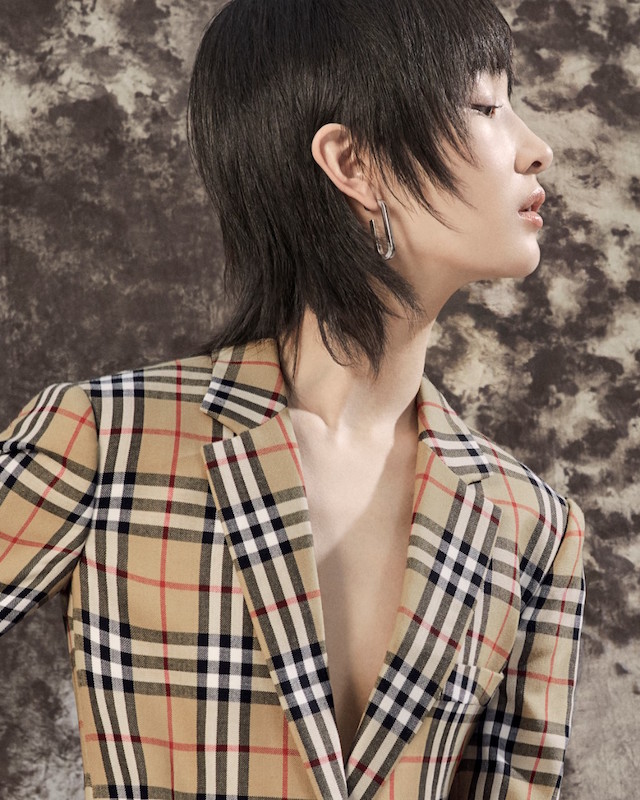
    The British brand, known for its red, black and camel check and TB monogram, saw comparable sales in mainland China plunge 35 per cent as Covid-19 lockdowns disrupted stores and distribution.

    All its stores were open by the end of June, Chief Financial Officer Julie Brown said, and the company was “encouraged” by how they were performing, but testing requirements were holding back the return of some shoppers.

    Luxury rival Richemont also felt the shortfall in mainland China, where its sales were 37 per cent lower for the quarter.

    Outside China, Burberry reported a 16 per cent rise in comparable store sales, with Europe up 47 per cent, helped by store ranges tailored to local demand rather than to still absent tourists from Asia.

    But the Americas, Burberry’s best performing region last year, went into reverse, with comparable store sales down 4 per cent.

    Brown said leather bags and outerwear were selling well, but “sneakers and slides – the shoe business – and the small leather goods category (were) somewhat weaker.”

    “I think this is largely because people have changed from staying in and wearing casual wear to be going out a lot more now than they were before,” she said.

    Shares in Burberry, which are down 20 per cent over the last 12 months, fell 7 per cent in early deals on Friday.

    Brown said Burberry was facing increases in transportation, commodity and labour costs, but it was managing them by focusing on procurement efficiencies.

    “We’re also very conscious of the pressure on the people and communities,” she said. “But in terms of business overall, we’ve not seen a major pressure on younger consumers at this point in time.”

    Burberry said its medium-term target of high-single digit revenue growth and 20% margins was unchanged.

  • Burberry closes prominent Hong Kong flagship

    Burberry closes prominent Hong Kong flagship

    British luxury fashion house Burberry is the latest luxury brand to withdraw from Hong Kong’s famous shopping street Canton Road.

    The closure of the three-storey store came after Burberry shut its prominent Russell Street flagship last year, highlighting its struggles in a market still heavily impacted by Covid-19 restrictions.

    Canton Road is known as a hub for luxury brands and is home to the giant Harbour City shopping mall. The street was a common destination for Mainland tourists before the advent of Covid-19 and the closure of the border with the mainland. The Burberry Canton Road flagship opened in 2011 and was reported by WWD to have a monthly rent of US$1.12 million.

    The luxury retailer currently has 10 stores across the territory.

    Prior to Burberry, several luxury brands shut stores along the Canton Road retail strip due to the lack of tourists including Valentino, Tiffany & Co, and Coach. Earlier this year, Hong Kong introduced its strictest Covid-19 measures due to the spread of the Omicron variant, resulting in widespread retail and foodservice closures.

  • Burberry opens new French flagship store

    Burberry opens new French flagship store

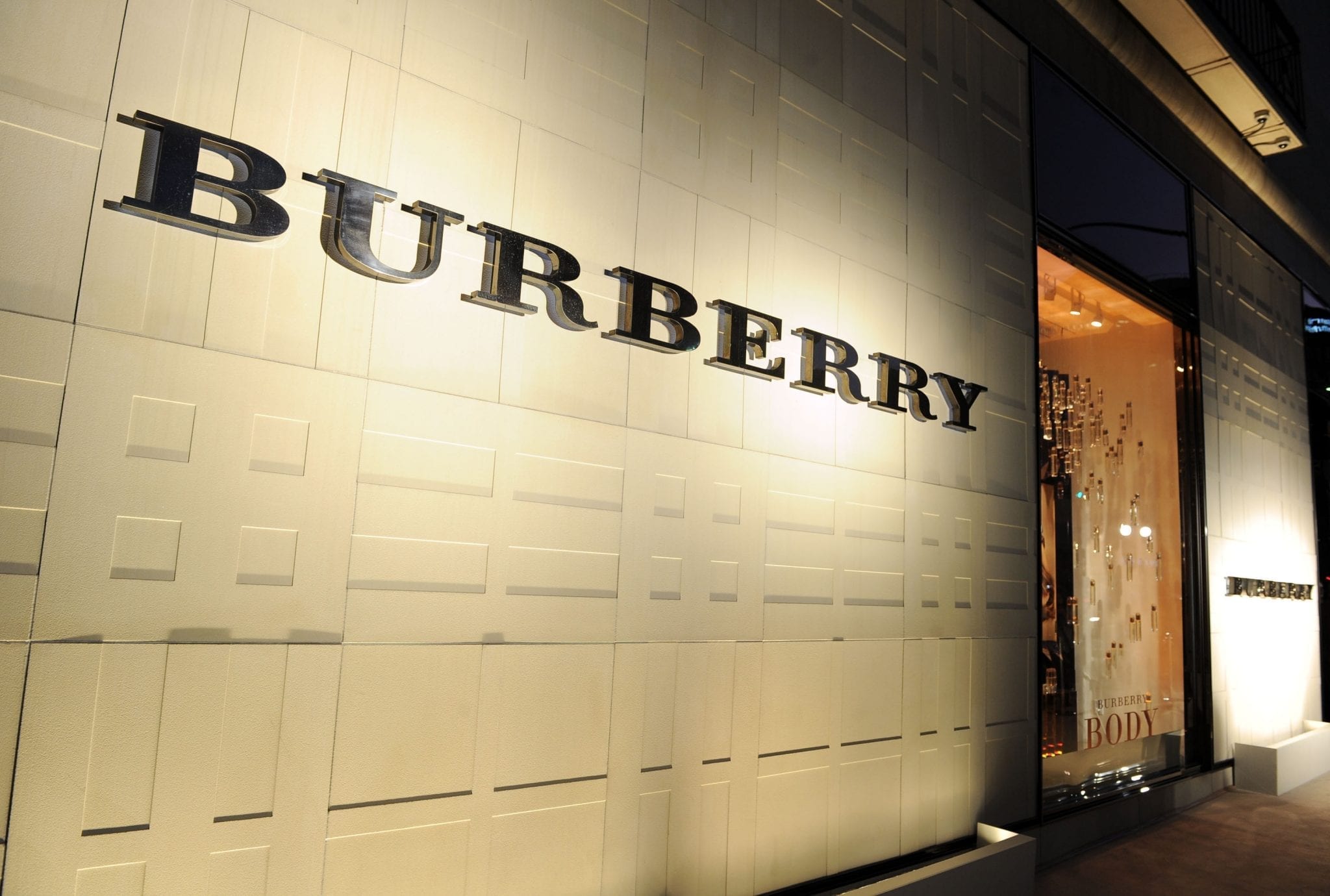
    British luxury brand Burberry has unveiled its new French flagship store on Rue Saint-Honore, designed by architect Vincenzo de Cotiis.

    Located in the heart of Paris, the flagship features the brand’s new global design concept and offers customers what Burberry describes as a chance to experience a space that connects Burberry’s past, present and future.

    “The store represents all that we stand for as a brand – being authentic, bold and creative – and we look forward to inspiring our customers with a truly elevated British luxury experience in this iconic setting,” said Gianluca Flore, chief commercial officer at Burberry.

    The store has three floors. Its design features Burberry’s famous check concept with the main colours of beige, black, white and red. Burberry says it has achieved modernity and openness by using mirrored ceilings with intersecting metallic grids and chequerboard-style tiled floors.

    On the ground floor a hand-painted, recycled fibreglass sculpture by Vincenzo de Cotiis stands at the entrance. The first floor houses menswear.

    The second floor features the brand’s womenswear range. The space is designed with traditional French doors with Haussmann-era glazing, white terrazzo and mirrored elements. A women’s shoe room integrates seating and fixtures into the windowsills that emphasise the view into the city of Paris.

    The third and final floor houses an apartment space, the largest private area of any of Burberry’s stores worldwide, offering a bespoke and elevated in-house experience for VIP customers who prefer to browse goods in privacy.

    “This Paris opening writes a new chapter of Burberry’s timeless story.” said architect Vincenzo De Cotiis.

  • China and South Korea boost Burberry sales

    China and South Korea boost Burberry sales

    Double-digit sales growth in China, South Korea, and the Americas underpinned a 37-per-cent lift in first-half sales for luxury fashion group Burberry to US$1.63 billion.

    The lift reflected a recovery in-store sales as Covid-related lockdowns and trading restrictions eased in the six months to September 25, compared with the same period a year earlier when a swathe of stores was closed across key markets.

    “We have made strong progress in the half,” said Burberry chair Gerry Murphy in a statement.

    “Full-price sales are growing at a double-digit percentage, driving margin expansion and strong free cash generation. We are seeing an acceleration in performance in countries less impacted by travel restrictions and we remain confident of achieving our medium-term goals.”

    The company reported an adjusted operating profit of $263 million, up 16.2 percent year on year.

    While the Americas, Korea, and China buoyed sales, the company said other regions continued to be impacted by reduced tourist levels.

    The company said its new store format – of which 15 are now complete with a target of 50 by the end of next March – was drawing higher-spending customers through the doors. Online sales were performing well with sales of goods at a full price almost doubling year on year.

    During the six months, Burberry announced its CEO Marco Gobbetti was to stand down early next year, to be replaced by Jonathan Akeroyd in April.

    Murphy paid tribute to Gobbetti’s “vision and leadership” during Burberry’s transformation and said the board expects Akeroyd will build on the strong foundations to accelerate growth and deliver further value for shareholders.

  • Burberry opens new London flagship

    Burberry opens new London flagship

    Change is afoot at Burberry. Since 2018, the British heritage brand’s Chief Creative Officer Riccardo Tisci has been reimagining the label with the goal of finessing its high-end luxury status. Working closely with CEO Marco Gobbetti, who recently announced he’ll be stepping down from his role at the end of the year, Tisci has revamped Burberry’s aesthetic image. From a logo rebrand by Peter Saville to a CGI campaign with Nick Knight and Tom Wandrag, Tisci’s collections have modernized house codes and staples such as the trench coat, whilst also setting a more conceptual agenda, as seen in the S/S 22 menswear collection. Now, Burberry debuts its new flagship store at No.1 Sloane Street, London, inviting the world to experience the Burberry universe afresh.

    Despite the digital race towards virtual living and surge in online shopping during the pandemic, placing a focus on real-life stores remains a priority for luxury big dogs like Burberry. In 2020, the brand opened a hybrid physical-digital store in Shenzhen, China, to cater to local shoppers as the country slowly reopened ahead of the West. As stores worldwide begin inviting shoppers back in, brands must be mindful of where they’re placing their bets on consumers making a physical trip to the store after months of placing orders online. The new Burberry flagship offers a unique shopping experience, telling the stories behind the brand’s latest collections and drops such as the signature Olympia and TB bags to entice visitors back to the physical.

    Designed with the renowned architect Vincenzo De Cotiis, the store merges Burberry’s past, present and future. Architecture references British classicism and brutalism, whilst the Burberry house check can be found throughout the space, such as on mirrored lighting grids in the ceiling. A dedicated area on the ground floor spotlights the trench coat made from gabardine, which the brand’s founder Thomas Burberry invented in 1879. Head upstairs to womenswear and menswear, and you’ll find sculptural furniture, seating and fixtures, in a space that offers the ultimate luxury experience.

  • Burberry CEO resigns to lead rival luxury retailer

    Burberry CEO resigns to lead rival luxury retailer

    Marco Gobbetti is to give up his role as CEO of Burberry after leading the brand and business for almost five years.

    According to a report, Gobbetti will return home to Italy to lead rival luxury goods group Ferragamo.

    Gobbetti will stay with Burberry until the end of this year while the company searches for a successor, and to ensure an orderly transition.

    “Gobbetti has had a transformative impact and established a clearly defined purpose and strategy, an outstanding team, and strong brand momentum,” said Gerry Murphy, chairman of Burberry. “The board and I are naturally disappointed by Marco’s decision but we understand and fully respect his desire to return to Italy after nearly 20 years abroad”.

    Gobbetti became CEO and joined Burberry’s board in 2017, succeeding Christopher Bailey who left the group the following year. Prior to Burberry, Gobbetti was chief executive of Moschino and Givenchy before holding executive positions at French brand Celine in 2008.

    “With Burberry re-energised and firmly set on a path to strong growth, I feel that now is the right time for me to step down,” said Gobbetti. “I would like to thank my colleagues as well as Gerry and the board for their partnership.

    “I am fully committed to supporting them through the transition and I have every confidence that the creativity and strong values that define Burberry will continue to drive the company’s future success.”

  • Burberry – the first luxury brand to suffer Chinese backlash over Xinjiang

    Burberry – the first luxury brand to suffer Chinese backlash over Xinjiang

    British designer Burberry is the first luxury brand to be targeted in China in a backlash against western sanctions imposed over alleged human rights abuses in the Xinjiang region, following on from retailers including H&M and Nike that were boycotted by Chinese shoppers this week after they voiced concerns about cotton sourced from the Chinese region, one of the world’s top cotton producers.

  • Burberry Japan opening a virtual showroom in partnership with Elle

    Burberry Japan opening a virtual showroom in partnership with Elle

    The virtual and interactive experience will replicate the brand’s flapship Ginza store and will serve as a space to present its Spring/Summer 2021 collection. Customers will be able to purchase items from the collection by selecting the digital items in store for one month, beginning from March 19. The experience will live exclusively on Elle Japan and Ellegirl Digital Japan’s websites.

    Burberry is among the leading luxury players to have invested in digital innovation to merge digital and physical store spaces, with Louis Vuitton and Gucci also joining the market. As part of the new experience, Burberry has also collaborated with actress Elaiza Ikeda to create five styling videos that will appear throughout the virtual store and assist customer’s shopping experience.

  • Burberry delivers growth in APAC, most coming from E-commerce

    Burberry delivers growth in APAC, most coming from E-commerce

    Global luxury fashion brand Burberry saw comparable retail sales decline 9 percent during its third-quarter period, as tourist traffic slowed amid the continuing Covid-19 pandemic.

    However, full-price sales jumped due to a decline in markdowns, and the business performed well in Asia-Pacific with comparable sales up 11 percent from strong growth in Mainland China and Korea.

    Japan and the South Asia Pacific, however, continue to be affected by limited tourist traffic and store closures.

    Full-priced sales increased by “double digits” in China, Korea, and the Americas, driven by Christmas and Lunar New Year campaigns, as well as a bigger focus on online pop-ups and activations supporting a 50 percent increase in full-priced sales in Burberry’s digital channel.

    Europe, the Middle East, India, and Africa saw comparable sales fall 37 percent, due to falling tourist numbers, while the Americas fell 8 percent.

    “The brand is pushing full-steam ahead with a full-price strategy to strengthen its gross margins as it continues to focus on driving online demand, particularly from new, younger customers,” said GlobalData’s Gemma Boothroyd.

    “Burberry’s online capabilities will prove vital for its ability to navigate the uncertainty of Covid-19.”

    And, with 15 percent of the business’ stores closed and 36 percent operating with reduced hours or restrictions, the business warned that uncertainty is leading to an uncertain trajectory moving into the fourth quarter.

    “We expect trading will remain susceptible to regional disruptions as we close the financial year,” Burberry said.

    “Notwithstanding any incremental lockdowns, we expect gross margins to benefit from positive full-price, regional and channel mix and lower stock provisions.”

    According to Boothroyd, Burberry’s digital focus has set the standard for other players in the luxury industry, due to the introduction of features such as AR shopping and virtual try-on capabilities.

    “The brand is also harnessing digital platforms to drive engagement through influencer partnerships,” Boothroyd said.

    “Such initiatives will continue to be crucial in Burberry’s attempts to strengthen its appeal amongst a younger demographic.”

  • Burberry launches global Animal Kingdom popups

    Burberry launches global Animal Kingdom popups

    Luxury fashion house Burberry is launching Animal Kingdom popups globally to celebrate its signature bags and accessories.

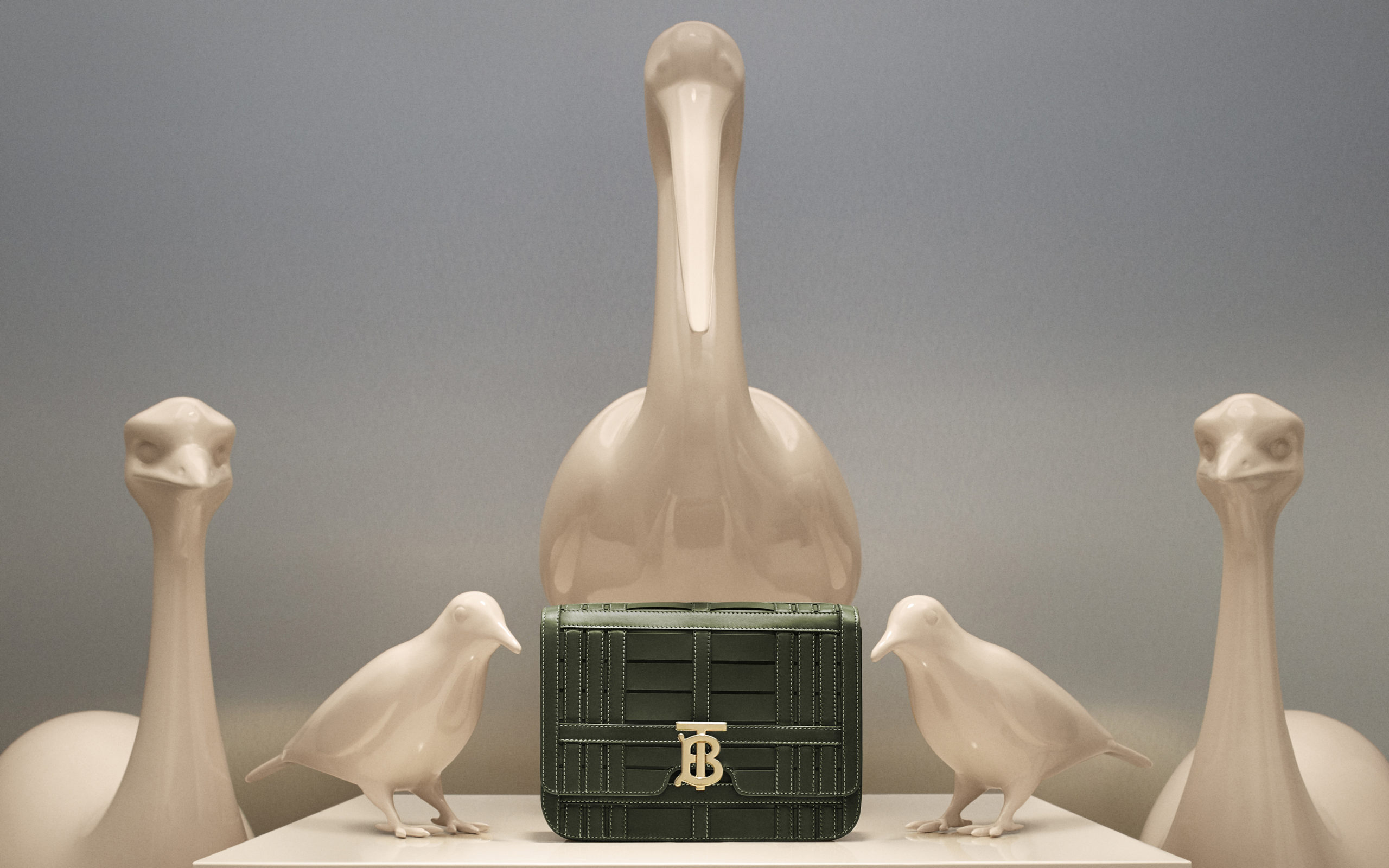
    The pop-ups will feature large-scale sculptures of monkeys, gorillas, and birds of paradise inspired by “the power and symbolism of animals” according to the label’s chief creative officer Riccardo Tisci.

    The product range features exclusive editions of signature Burberry leather goods, including the Pocket Bag and the TB Bag with a distinctive clasp featuring his initials. The exclusive pieces also include silk scarves, card cases, and jewelry.

    To celebrate the launch, Burberry has teamed with Snapchat to introduce an in-store gamified experience. Users will experience Burberry’s Animal Kingdom world by scanning the Snapcodes embedded in the pop-ups.

    Burberry has also partnered with Wildlife Works to make the pop-ups carbon neutral.

    “Aligned with UN Sustainable Development Goals, the initiative focuses on agroforestry, sustainable farming, and conservation techniques to relieve deforestation,” the company said in a statement.

  • Burberry teams with Tencent to launch world-first social-retail store

    Burberry teams with Tencent to launch world-first social-retail store

    Luxury fashion label Burberry has teamed with technology giant Tencent to launch its first social retail store in Shenzhen, China. Located in the new Shenzhen Bay MixC development, the Burberry social store features a unique design with a variety of materials and textures ranging from plywood to mirror and high-gloss finishes. Occupying a 539sqm area, the storehouses 10 different rooms.

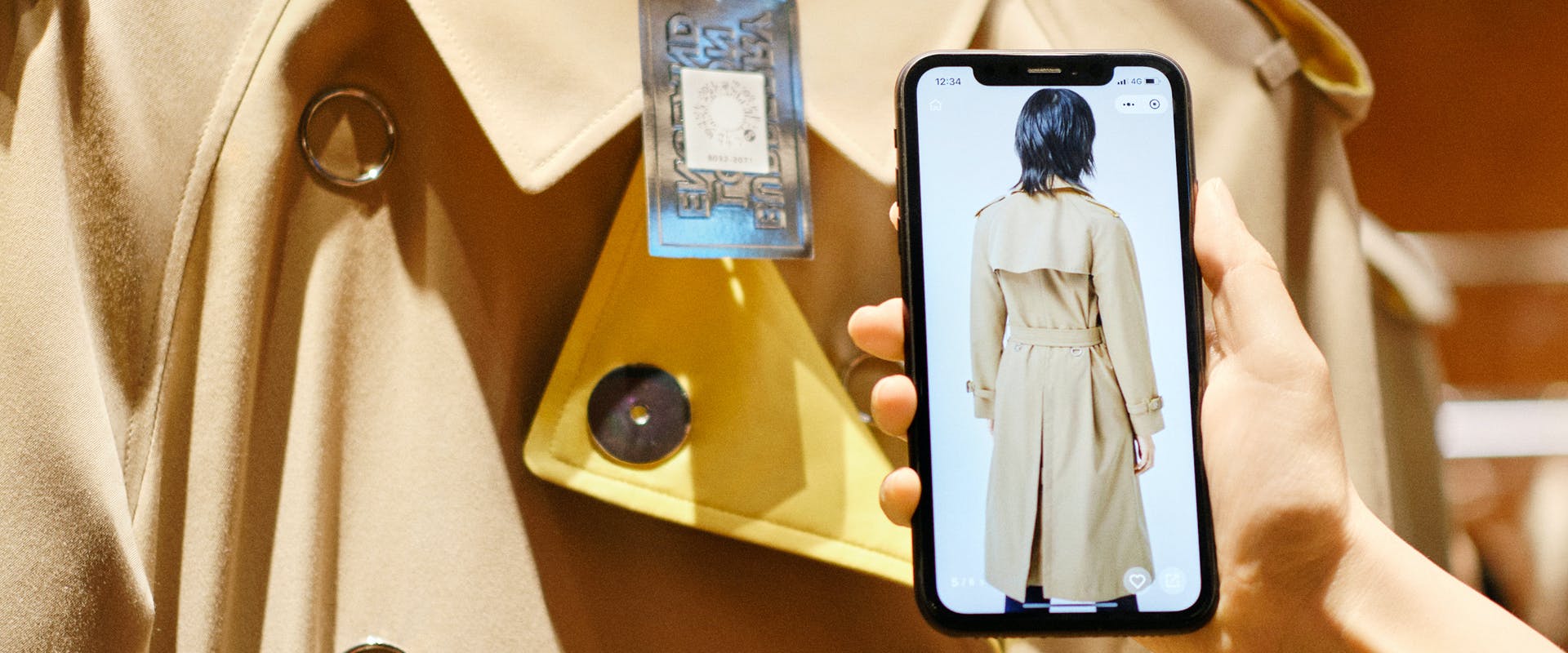
    The Burberry social store offers a wide range of items including the brand’s latest collections and pieces exclusive to the Shenzhen store. All the stock is labeled with QR codes which when scanned show information on the customer’s digital screen. This is the brand’s first store to have QR codes on product swing tags.

    When entering the store, customers are welcomed by an interactive window. Inspired by the brand’s mirrored runway, the window illustrates the visitors’ shape and response to body movement. The window changes through the seasons to reflect the latest collections and house codes.

    Burberry’s fitting rooms feature three different concepts reflecting the label’s house codes – the Burberry Animal Kingdom, Reflections, and the Thomas Burberry Monogram.

    Named after the fashion house’s founder, Thomas’s Cafe features a modern yet elegant design with high-gloss tones of beige, curtains, and chamfered mirroring. The cafe can be converted into a community space for social events such as workshops, exhibitions, and live performances.

    The social store also houses a Trench Experience space, designed with digital technology to “bring Burberry’s heritage of exploration to life and creating unique and personal content for the customer to share on social media”.

    “This store explores this relationship, blending the digital and the physical realms in an exciting new concept,” said Riccardo Tisci, chief creative officer at Burberry.

    “I wanted to bring this love of the outdoors to life through all the elements of the store, which can be seen in the Burberry Animal Kingdom prints in the cafe as well as in the fully immersive Trench Experience and even in the small details of the design materials. I really wanted to draw upon these familiar house codes to bring our community together in an interactive journey of discovery,” Tisci said.

    “When it came to innovating around social and retail, China was the obvious place to go to, as home to some of the most digitally savvy luxury customers,” said Marco Gobbetti, CEO at Burberry.

    The Burberry social retail store offers an interactive experience through Tencent’s WeChat mini program which allows customers to unlock exclusive content and personalized experiences.

    “… Burberry’s social retail store in Shenzhen is a place of discovery that connects and rewards customers as they explore online and in-store. It marks a shift in how we engage with our customers and we can’t wait to share this innovative experience with the world,” Gobbetti said.

    The mini-program also provides a platform where customers can explore the store and product, book in-store appointments, and reserve events or tables in the Thomas cafe and community space.

    The WeChat mini program also features a rewards program called “social currency” where customers are allocated characters and can engage with others. Customers can unlock exclusive content and personalized experiences by building their social currency. Rewards range from cafe menu items to mini-program content.

    The Burberry social retail store is a unique space to test and learn, and to trial innovation that can be expanded to the rest of the Burberry network in China, the company said in a statement.

    Burberry signed an exclusive partnership agreement with Tencent last year to develop social retail in China. The Shenzhen social store is the first step in the partnership, taking interactions from social media into a physical retail environment.

  • Burberry bullish on Asian prospects as China and Korea slowly recover

    Burberry bullish on Asian prospects as China and Korea slowly recover

    Fashion label Burberry is optimistic about a post-Covid-19 recovery as sales began to return to normal in Asia during the June quarter.

    While same-store sales were down by 45 percent across the three months, June’s decline was 20 percent and the brand reported growth in both Mainland China and South Korea which was ahead of pre-Covid-19 levels, “albeit with some benefit from the repatriation of sales given travel restrictions,” the company said in a statement.

    Across Asia Pacific, sales were down 10 percent overall for the quarter but returned to growth in the month of June.

    “We expect it will take time to return to pre-crisis levels with the resumption of overseas travel,” said CEO Marco Gobbetti. “We are encouraged by the improving trends in all regions and the promising exit rate for June. We saw an excellent response to new product launches in recovering economies as well as online.”

    He said demand for leather goods was particularly strong in Mainland China and South Korea, bringing new, younger luxury customers to the brand, pushing full-price sales up at double-digit rates.

    In April, Burberry launched a campaign in China to promote its leather goods range, using a series of sustainable pop-up stores and using an augmented reality experience and releasing a limited-edition Pocket bag through fashion blogger Mr Bags’ WeChat account,

    “The reaction was exceptional with the limited edition bag selling out within a minute of becoming available and Pocket Bag styles overall selling out within three weeks of the campaign going live,” the company reported.

    Broader online sales at full price grew by a double-digit rate and the company is now planning a ‘social-retail store’ with Tencent which will open in Shenzhen this summer. The concept store will allow luxury customers to connect their social and online lives to their physical environments using Tencent technology.

    Gobbetti said the company believes it is “crucially important” to invest in the brand during the pandemic.

    “We will continue to embed flexibility into our plans to allow for investment into consumer-facing activities to drive growth where opportunities present.”

    At the end of June, the label had a network of 215 retail stores, 148 concessions, 54 outlets, and 45 franchise stores, excluding pop up stores.

    ‘Wise’ move to focus on Asia

    Emily Salter, retail analyst at GlobalData, said Burberry was wise to focus on rebounding economies like China, South Korea, and Japan, with the 10-per-cent drop in Asia-Pacific sales significantly less than the 75 percent in Europe, Middle East, and Africa. The latter region, she said, would likely be the most affected in the long term as tourist spending will take a long time to recover, and consumers will be less willing to buy luxury items.

    In the Americas, sales fell by 70 percent and while they improved in June, that trend is unlikely to hold as Covid-19 cases rise rapidly and state pause their reopening plans.

    Salter also praised Burberry’s digital proposition which outshone its rival luxury brands.

    “The retailer excels at using social media to engage with consumers, boosting loyalty among its young shoppers.

    “Though the future of experiential retail remains in doubt due to the impacts of Covid-19, the experience is likely to remain important among luxury shoppers, and will help cement brand identity and loyalty.”