Tag: burberry

  • Burberry Bespoke launches first counter at Takashimaya

    Burberry Bespoke launches first counter at Takashimaya

    Burberry Bespoke has launched its first standalone counter at Takashimaya.

    Located on Level 1 of the shopping mall, the counter is designed in the style of ‘an English bar set in a gentleman’s club’, with green-colored marble top and brass fixtures.

    There is a collection of nine fragrances created by renowned perfumer Francis Kurkdjian. Inspired by British landscapes, each perfume comes with varying concentrations.

    “For each fragrance, the concentration has been carefully chosen to offer customers the perfect blend possible. It allows the same fragrance to tell us a different translation of a story,” Francis said.

    Each bottle can be personalized with up to three monogrammed initials at the counter, and the buyer can also choose from 16 shades of leather ribbon.

  • Riccardo Tisci makes magic at Burberry

    Riccardo Tisci makes magic at Burberry

    Burberry is hailing the success of new creative director Riccardo Tisci as its June-quarter same-store sales grew by 4 per cent.

    Sales growth in China was up by the mid-teens, with Asia Pacific overall nudging 10 per cent.

    “This was a good quarter in our multi-year journey to transform Burberry,” said CEO Marco Gobbetti. “We increased the availability of products designed by Riccardo, while continuing to shift consumer perceptions of our brand and align our network to our new creative vision. The consumer response was very promising, delivering strong growth in our new collections.”

    The company described the response to Tisci’s designs as “excellent”, his collections delivering strong double-digit percentage growth compared to prior-year equivalent collections, and in line with Burberry’s expectations.

    The proportion of new product increased to around 50 per cent of the brand’s offer in mainline stores by the end of June.

    ‘‘Burberry’s transformation plan under new CEO Marco Gobbetti is starting to pay off,” observed Chloe Collins, senior retail analyst at GlobalData.

    She said much credit is due to Tisci, whose collections “offer a fresh and edgy revamp of the brand’s classic and neutral designs”.

    Burberry’s adept use of social media was also a factor in the recovery, with celebrity influencers such as Rihanna and Irina Shayk continuing to expand the brand’s reach and drive engagement with consumers.

    “Burberry must continue to invest in its social platforms to fight off other luxury players such as Gucci and Louis Vuitton, which are focusing on the channel to target younger shoppers. Burberry should more heavily promote its Instagram checkout feature to drive sales, as well as increasing brand engagement via marketing events.”

    Meanwhile, Burberry’s review of its retail network has seen 23 stores reconfigured to the new creative vision and led to a 2 per cent reduction in selling space, through the closure of non-strategic sites. Of 38 smaller stores selected for closure, nine have now been shuttered and in the wholesale space, Burberry is continuing to rationalise space in non-luxury US resellers.

  • Riccardo Tisci makes magic at Burberry

    Riccardo Tisci makes magic at Burberry

    Burberry is hailing the success of new creative director Riccardo Tisci as its June-quarter same-store sales grew by 4 per cent.

    Sales growth in China was up by the mid-teens, with Asia Pacific overall nudging 10 per cent.

    “This was a good quarter in our multi-year journey to transform Burberry,” said CEO Marco Gobbetti. “We increased the availability of products designed by Riccardo, while continuing to shift consumer perceptions of our brand and align our network to our new creative vision. The consumer response was very promising, delivering strong growth in our new collections.”

    The company described the response to Tisci’s designs as “excellent”, his collections delivering strong double-digit percentage growth compared to prior-year equivalent collections, and in line with Burberry’s expectations.

    The proportion of new product increased to around 50 per cent of the brand’s offer in mainline stores by the end of June.

    ‘‘Burberry’s transformation plan under new CEO Marco Gobbetti is starting to pay off,” observed Chloe Collins, senior retail analyst at GlobalData.

    She said much credit is due to Tisci, whose collections “offer a fresh and edgy revamp of the brand’s classic and neutral designs”.

    Burberry’s adept use of social media was also a factor in the recovery, with celebrity influencers such as Rihanna and Irina Shayk continuing to expand the brand’s reach and drive engagement with consumers.

    “Burberry must continue to invest in its social platforms to fight off other luxury players such as Gucci and Louis Vuitton, which are focusing on the channel to target younger shoppers. Burberry should more heavily promote its Instagram checkout feature to drive sales, as well as increasing brand engagement via marketing events.”

    Meanwhile, Burberry’s review of its retail network has seen 23 stores reconfigured to the new creative vision and led to a 2 per cent reduction in selling space, through the closure of non-strategic sites. Of 38 smaller stores selected for closure, nine have now been shuttered and in the wholesale space, Burberry is continuing to rationalise space in non-luxury US resellers.

  • Burberry’s new creative director already showing positive impact

    Burberry’s new creative director already showing positive impact

    New creative director already making a difference says analyst after stable sales reported. The high-profile appointment of Burberry’s new creative director Ricardo Tisci appears to be paying off after the company reported comparable revenue up by 2.3 percent for the last financial year.

    That figure excludes a decline in the wholesale beauty business which transferred to a licensing model last year with the inclusive sales figure down 1 percent. Total sales were £2.72 billion.

    “The buzz surrounding Ricardo’s appointment has paid off,” observed Chloe Collins, senior retail analyst at GlobalData.

    “With his first collections, which started dropping into stores in February, receiving widespread praise and achieving double-digit percentage growth on the year, it has given the brand a much-needed refresh as it ran the risk of becoming outdated and repetitive,” she said.

    “His dark grungy styles previously seen at Givenchy have provided a welcome update to Burberry’s classic tailoring and neutral tones, with the brand also given a new modernized monogram logo, however, it must be careful to not lose the traditional British heritage it is famous for.”

    In Asia, the Americas, Europe, the Middle East and Africa, sales rose in the low single digits, making the company’s UK home market the star performer in the mid-single digit percentage range, largely due to increased tourist spending.

    Burberry CEO Marco Gobbetti said sales would have been higher had the company had more product in stores at the end of the financial year.

    “We need to get the products in the stores to start to see the reaction of customers,” he said.

    In the year ahead, the company plans to refurbish about 80 of its flagship stores and close about 38 smaller boutiques in secondary locations.

    The company reported a 6 percent decline in operating profit to £438 million pounds, largely caused by foreign exchange movements and investment in new products.

    Meanwhile, the brand’s digital offer has improved through increased reach through social media, and greater use of influencers among other factors, said Collins.

    “Burberry must continue to invest in technology and marketing to build its online sales further, and find a way to import these innovations into its store portfolio,” she said.

  • Burberry Shanghai Closes Flagship Store

    Burberry Shanghai Closes Flagship Store

    he Burberry Shanghai flagship store has been shuttered as the British luxury-goods retailer looks to reduce costs.

    It is the fourth Burberry location within Mainland China to be shuttered within the last eight months as part of a global restructuring effort, representing a conspicuous and somewhat puzzling drawing back from a key luxury market.

    The closure of the 1000sqm flagship means that half of Shanghai’s Burberry outlets have now vanished, after the brand’s K11 mall store disappeared last August and its Westgate Mall and Hongqiao airport halted operations a month ago.

    The closures were prompted by poor demand for Burberry products in Asian markets, and are part of the firm’s global strategy to cut back on underperforming retail locations.

    Representatives of the brand have pushed back on speculation that the closures signal an all-out withdrawal from China.

    “China is a hugely important market for Burberry and we are fully committed to growing our business there. We are making some of our biggest investments in Shanghai where we recently refreshed our flagship store at Kerry Centre and we will open two new stores at IFC Mall and IAPM Mall in the coming months. This strengthens our presence in Shanghai, a key luxury shopping destination, and we are excited to welcome our customers to these new locations.” said a company spokesperson.

    “Burberry is not so much closing down as relocating to new stores,” said JLL’s head of retail for China Ellen Wei, noting that Burberry plans to open two more strategically located stores in Shanghai shortly.

    Burberry bought out its Chinese franchises in 2010 for £70 million (US$91.4 million at current rates) in response to the country’s burgeoning taste for luxury products.

    The Burberry Shanghai flagship was located in the L’Avenue shopping centre in Gubei.

  • Instagram users can now buy items from ads inside the App

    Instagram users can now buy items from ads inside the App

    Instagram is taking its Shopping ads one step further by making it possible for people to buy the products in the ads without leaving the app.

    The feature, called Checkout on Instagram, is currently being tested in a closed beta program by nearly two dozen businesses and is only available to users in the US.

    Retail News has asked for details about if and when the feature will be available outside the US but had not received a reply at the time of this writing.

    Adidas, Burberry, Dior, H&M, Michael Kors, Nike, Outdoor Voices, Uniqlo and Zara are among the 23 fashion, beauty and accessories brands now rolling out the feature. Others will be added in future, according to Instagram, which is owned by Facebook.

    When users tap on a product in a Shopping ad from one of these businesses, they now see a “Checkout on Instagram” button. By tapping the button, they can select the size and colour of the item they want and enter their payment and shipping details to purchase.

    Users receive notifications about shipment and delivery within the Instagram app, and the platform saves all their information for future purchases.

    In the past, if users wanted to purchase a product linked to a Shopping ad, they were redirected to the brand’s website. The new feature removes this step and – crucially for Instagram – keeps consumers in the app.

    “Social selling is really taking shape both in Australia and globally and it’s great to see Instagram leading the way through the next stage of the social selling journey. Giving consumers the option to complete a purchase right then and there in the app will simplify the shopping process and allow brands to connect more easily with shoppers,” said Jordan Sim, group product manager at BigCommerce, an e-commerce platform that has been active in offering integrations with Shopping on Instagram to its users.

    “We’ve seen our merchants both globally and locally in Australia have a great deal of success using BigCommerce’s integration with Shopping on Instagram and are looking forward to unlocking the power of this new integration for our Aussie retailers in the near future. We know the value of simplifying the checkout process to drive sales and this new function on Instagram will facilitate just that.”

    Many brands have said that Shopping ads drive sales, but there’s a trade-off: visibility and control over their customer data. As Instagram continues to make the purchasing process more seamless – that is, takes control of the process – some businesses will undoubtedly question whether the trade-off is worth it.

    It is unclear whether the Checkout feature applies to Shopping posts in Instagram Stories, or only to posts in the feed. Last June, Instagram revealed that of the 500 million people using Instagram every day, 300 million use Stories every day.
  • Where will Apple retail chief go after resigning?

    Where will Apple retail chief go after resigning?

    Within hours of the announcement that Apple retail chief Angela Ahrendts was to leave the role in April, speculation was rife as to where she is headed. Ahrendts, who led the fine-tuning of Apple’s retail business for five years after turning around British fashion house Burberry, has a stellar career in the luxury business. Several fashion industry sources have speculated she may be headed to take the helm of Ralph Lauren.

    In a statement announcing the Apple retail chief’s departure, the company said she is leaving the company “for new personal and professional pursuits”. CEO Tim Cook described her departure as “bittersweet”.

    During her time with Apple, Ahrendts – who was once tipped to take over Cook’s role in the future – has subtly redefined the Apple stores from high-end tech shops into community hubs. She took the renowned Apple Store concept created by predecessor Ron Johnson, dropped the “store” from its title and expanded the network to 506 physical stores and another 35 online.

    “Her vision includes stores as gathering spaces and hubs for creativity,” observed Daphne Howard of Retail Dive.

    “While Johnson is credited with initiating the brick-and-mortar strategy that has been the backbone of Apple’s hardware sales, including minimalist spaces conducive to product demos and customer education, Ahrendts has taken that [a step further].”

    Apple’s retail business will now be overseen by Deirdre O’Brien, the company’s senior VP of people, who will add retail to an already long list of responsibilities including talent development, Apple University, recruiting, employee relations, business partnerships, benefits, compensation and inclusion, and diversity.

    Some might see that as a sign Apple is reducing its focus on its retail business, although O’Brien might be considered something of an Apple acolyte, having been with the company for 30 years.

  • Burberry sales saved by Mainland China

    Burberry sales saved by Mainland China

    A mid-single-digit rise in Burberry sales in Mainland China in the third quarter helped produce a solid result for the luxury fashion retailer. The strong China performance helped mitigate reduced footfall in the Americas and a subdued European market where tourist spending showed only a small improvement. Global same-store sales rose just 1 per cent.

    However, CEO Marco Gobbetti said the company was buoyed by improvements and ongoing customer excitement ahead of new product delivery – the launch of new creative director Tisci Riccardo’s first runway collection which will hit stores next month.

    “I am pleased with our progress in the quarter as we continued to build brand heat around our new creative vision and shift consumer perception of Burberry. Excitement is growing ahead of next month’s launch of Riccardo’s debut collection,” said Gobbetti.

    “We will continue to manage the business dynamically as we reposition the brand. We confirm our outlook for the full year.”

    He said the company was seeing a continued shift in consumer perceptions of the brand, driving increases in digital engagement and drawing endorsements from key influencers. Increased Burberry sales can only follow.

  • Burberry and Louis Vuitton lose counterfeiting appeal in Singapore

    Burberry and Louis Vuitton lose counterfeiting appeal in Singapore

    Burberry and Louis Vuitton have lost their appeal in a trademark dispute against local transport company Megastar Shipping. The luxury brands alleged that Megastar Shipping had handled counterfeit goods in Singapore that were headed for Indonesia, citing the Trade Marks Act that states a trademark is infringed by any person found to import or export goods using that mark without the proprietor’s consent.

    The upper division of the Singapore Supreme Court found this week that Megastar was not the importer of counterfeit goods shipped from China that were seized in March 2013, and was only intended to handle the goods in transit to their final destination in Indonesia. Megastar Shipping had been listed on seaway bills and arrival notices as the consignee of the goods.

    The appeals court ruled that the protection of IP rights had to be balanced against extending liability for infringement to “honest commercial persons who happened to be tangentially involved” in the shipping of counterfeit goods.

  • Burberry unveils first-ever Chinese New Year campaign

    Burberry unveils first-ever Chinese New Year campaign

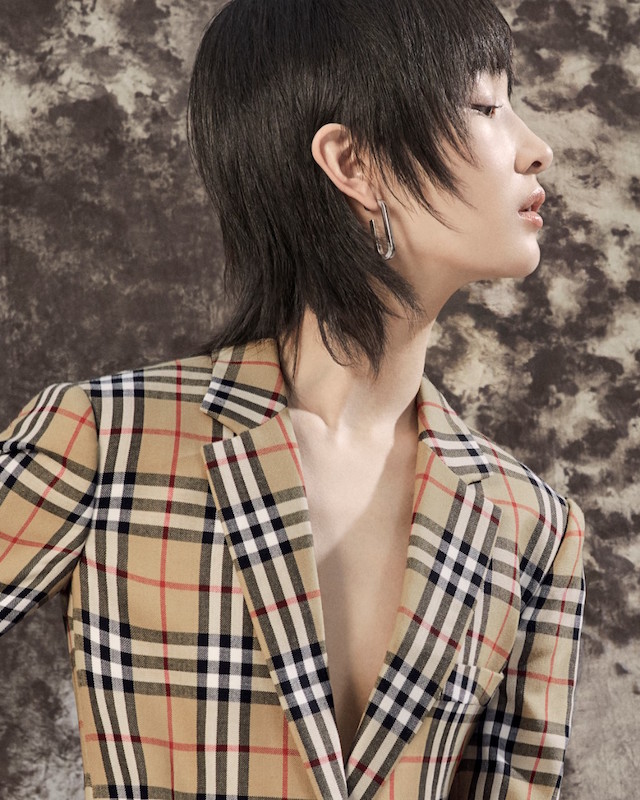
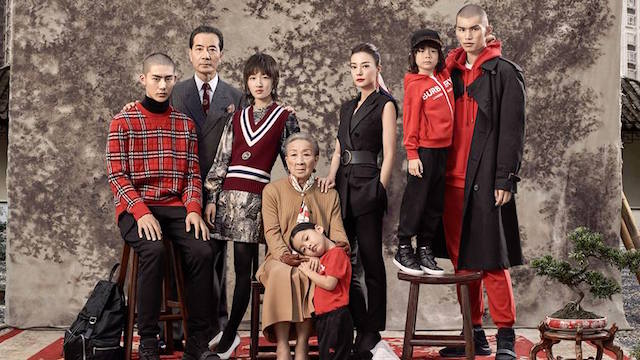
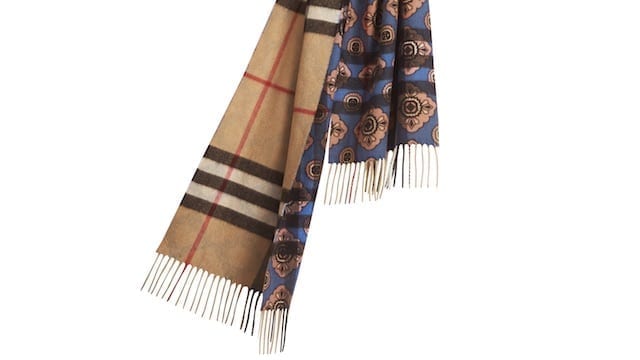
    British luxury fashion house Burberry has unveiled its first Chinese New Year campaign, celebrating family traditions and togetherness. The commercials, shot and directed by photographer Ethan James Green, star Chinese actresses and Burberry brand ambassadors Zhao Wei and Zhou Dongyu, who make their Burberry campaign debut. Inspired by classic portraiture, the campaign has been reimagined in an informal urban environment, and features classic Burberry pieces including archive-print scarves, the trench coat and tailoring, contrasting with urban staples including hoodies, t-shirts and joggers, all of which are now available globally online and in-store.

    “The campaign draws on the concept of families reuniting for the most important holiday of the year, and represents a sense of belonging, but in a very fresh way,” explains Zhao Wei. “It was great fun being back on set with Zhou Dongyu – I enjoyed it very much!”

    Gallery of the campaign (4 images) :

    Zhou Dongyu added: “A family portrait is a very simple concept, but the ceremonial sense behind it holds so much more. For me, being able to go home once a year to spend quality time with my family is something I value above all else, and I wouldn’t trade it for anything.”

    For the campaign, Zhao Wei wore a sleeveless keyhole detail top, reissued Society-print silk scarf and gold plated link drop earrings. Zhou Dongyu wore a vintage check wool jacket with palladium plated link drop earrings.

  • Esprit appointed new chief product and brand officer

    Esprit appointed new chief product and brand officer

    Struggling fashion retailer Esprit has tapped a former Burberry and Tommy Hilfiger executive to become its chief product and brand officer. Mia Ouakim will take up the new role – a crucial post in the brand’s turnaround plan – in February, reporting to the group CEO.  She will be responsible for managing the product creation and design of all product divisions, as well as the consistent execution of the brand strategy across all product divisions and consumer touch points, according to Esprit in a stock exchange filing.

    Ouakim’s experience spans corporate strategy, product design, merchandising, planning and development, brand and communication, and distribution gained from luxury and premium fashion brands. Her most recent role was senior VP of Tommy Hilfiger menswear and tailored, overseeing the brand’s menswear division globally. Prior to that, she served as VP at Tommy Jeans, formerly known as Hilfiger Denim (Women & Men) between 2014 and

    2017 where she had full business responsibility of the denim division globally.

    Before joining Tommy Hilfiger, Ouakim held various roles with Burberry, working in product, merchandising and design roles for childrenswear between 2006 and 2014. Before that, she was with Children Worldwide Fashion in the UK, responsible for brand, communication and public relations of various luxury and premium brands, including Burberry, Timberland, Kenzo, Nike, Elle and DKNY childrenswear.

  • Burberry to stop burning unsold items after green criticism

    Burberry to stop burning unsold items after green criticism

    Luxury retailer Burberry on Thursday said it will no longer destroy unsold goods, but rather expand existing efforts to reuse, repair, donate or recycle items. The retailer will also stop using real fur and angora in products.

    The move comes after Burberry revealed in a presentation to investors in July that it had destroyed £28.6 million ($51.4 million) worth of unsold product in the previous year.

    The admission created a PR nightmare for Burberry, which suddenly became the poster child for the controversial yet fairly common practice among luxury retailers of destroying unsold goods, rather than allowing discounted items to diminish brand value.

    Burberry’s decision to end the practice is in keeping with steps other retailers have taken to operate more responsibly – whether that relates to the environment, use of low-wage labour, or internal diversity – in response to consumer pressure.

    Burberry CEO Marco Gobbetti said this is the new reality for brands today.

    “Modern luxury means being socially and environmentally responsible. This belief is core to us at Burberry and key to our long-term success,” he said.

    Five-year agenda

    Last year, the retailer launched a five-year responsibility agenda that focuses on three goals: driving positive change through 100 per cent of Burberry’s products, becoming carbon neutral and revaluing waste and positively impacting one million people.

    Since then, Burberry has become a core partner of the Make Fashion Circular Initiative and partnered with sustainable luxury company Elvis & Kresse to transform 120 tonnes of leather offcuts into new products over the next five years.

    The retailer also established the Burberry Material Futures Research Group with the Royal College of Art to invent new sustainable materials.

    Animal rights

    Alongside its decision to stop destroying unsold goods, Burberry announced on Thursday that it will no longer use real fur, which had been restricted for many years to rabbit, fox, mink and Asiatic racoon.

    The company said it will ban these materials as well as angora from future Burberry collections.

    Fashion retailers Asos and Gorman stopped using mohair this year, following pressure from animal-rights groups.

  • Burberry is launching ‘See Now, Buy Now’

    Burberry is launching ‘See Now, Buy Now’

    British luxury fashion house Burberry is releasing a see-now, buy-now collection exclusively on Instagram and WeChat.

    Limited-edition pieces from the collection, the first released under the Burberry label by designer Riccardo Tisci, will be made available through 24-hour product releases on the two platforms. The inclusion of WeChat on the see-now, buy-now program illustrates the importance of the Chinese market for the brand.

    A physical sale for the collection will be held in the Regent Street, London flagship store at 5.30 pm on September 17, immediately after Tisci’s runway presentation at London Fashion Week. The store will be visually transformed under a Tisci-designed concept for the 24-hour sale.

  • Riccardo Tisci revealed Burberry’s new identity

    Riccardo Tisci revealed Burberry’s new identity

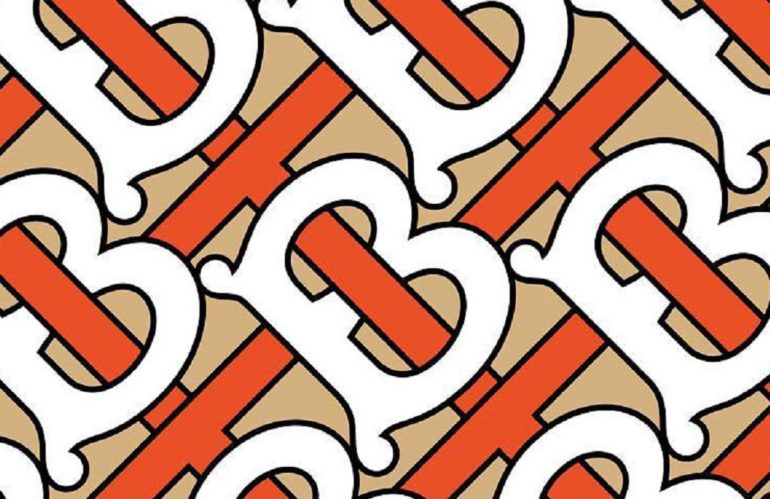
    Burberry has a new graphic identity. The British megabrand’s chief creative officer Riccardo Tisci took to his personal Instagram Stories to unveil a new logo — stark capital letters saying “Burberry London England,” replacing the previously softer, rounder font — and monogram — the founder Thomas Burberry’s initials “TB” interlocked across a honeyed background — on Thursday.

    It marks the first time the brand has changed its logo in almost 20 years (the previous logo, which saw Burberry drop the “S” from its name, was designed by Fabien Baron in 1999).

    Developed in collaboration with the renowned British art director and graphic designer Peter Saville — best known for his New Order and Joy Division record sleeves, and more recently, his work for Calvin Klein under Raf Simons — the brand’s new logo was inspired by Tisci’s visit to the house’s archive, “especially a logo from 1908 and a Thomas Burberry monogram,” according to an email correspondence between the two creatives, which Tisci shared on social media.

    The logo and monogram print will appear across all Burberry channels and in a new advertising campaign.

    The new visual identity comes five months after Tisci took the creative helm at Burberry, replacing Christopher Bailey. Chief executive Marco Gobbetti, who joined the company in July 2017, is nine months into his 5-year plan to reposition Burberry as a genuine luxury player and re-energise a brand whose sales growth has significantly lagged rivals LVMH and Kering. Core to the strategy is a renewed focus on leather goods, which currently account for less than 40 percent of revenue, and will presumably leverage the new monogram.

    After the 2008 financial crisis, fashion that so conspicuously screamed commercialism and consumption fell out of favour. Even Louis Vuitton changed tack, reserving its signature stamp for only limited-edition goods. After all, decreasing availability means increasing exclusivity — and for luxury brands, this means increasing demand.

    But now, luxury brands are returning to logos. As part of his maximalist revolution, Gucci creative director Alessandro Michele resurrected the brand’s interlocking G motif from its ’90s heyday, reinterpreting it for a younger, modern audience by adorning it with flowers or pairing it with playful motifs. Dior’s Maria Grazia Chiuri reintroduced the house’s logo print on handbags for her first ready-to-wear show. Fendi, too, has been reviving its black and brown double ‘F’ logo print across its clothing and accessories.

    Tisci previously revealed on social media the news that Burberry and Vivienne Westwood would be collaborating on a limited-edition collection, launching in December 2018.

    Tisci will show his first full collection for Burberry in September 2018.

  • Chinese tourists help boost Burberry sales

    Chinese tourists help boost Burberry sales

    Rising ranks of Chinese tourists helped luxury brand Burberry achieve modest first-quarter sales growth despite soft demand in other regions.

    Burberry sales in Mainland China grew “and Hong Kong, Korea and Japan all benefited from Chinese spend shifting more to Asian tourist destinations within the region”. Precise sales data was not released by region, but globally, Burberry sales rose 3 per cent on a comparable basis. The company said only that Asian sales rose “in the mid-single digits”.

    While Asia and the US performed strongly, Burberry said sales in Europe, Middle East and Africa declined by a low single-digit percentage due to softer tourist demand in the UK, Continental Europe and Middle East. Total retail revenue was flat at £479 million.

    “We are pleased with our progress in the quarter,” said CEO Marco Gobbetti. “The team has embraced (incoming creative head) Riccardo Tisci’s vision and is working well together as we prepare for his debut collection in September, the next step in our journey.  While we know it will take time to achieve our ambitions, our progress to-date and the energy in and around the company give me confidence for the future.”

    Highlights for the quarter included opening pop-up stores showcasing new handbags in Beijing, Seoul, Dubai and New York, and a collaboration with Farfetch which is outperforming expectations.