Tag: burger

  • Burger King’s Vietnam Retreat: High-End Competition Forces Fast-Food Giant to Scale Back Operations

    Burger King’s Vietnam Retreat: High-End Competition Forces Fast-Food Giant to Scale Back Operations

    Burger King, the renowned American fast food titan, has shuttered all its outlets in Hanoi, marking the end of over a decade-long presence in the city and simultaneously narrowing its footprint in Ho Chi Minh City.

    Shutting Down Operations

    Imex Pan Pacific Group (IPPG), the operating partner of Burger King and a local conglomerate that owns a multitude of rival retail brands, acknowledged the cessation of the brand’s operations in all Hanoi outlets roughly two months ago. The process of shutting down varied between one to two months, contingent on the particular outlet. Previously, the city had three Burger King outlets in operation.

    Presently, in Hanoi, the brand’s offerings are solely accessible through an outlet located within the city’s airport. Concurrently, operations in Ho Chi Minh City have been restrained, leaving only three outlets beyond the airport, one of which is conveniently situated in the backpacker haven of Phạm Ngũ Lão.

    The Burger King Journey

    Burger King, established in the United States in 1954, entered the Vietnamese market in 2012 via a franchise contract with IPPG. The grand opening was met with ambitious projections, with plans to establish 60 outlets within a span of five years. However, by 2016, the fast-food chain could only boast of 16 operating outlets, inclusive of one at Ho Chi Minh City’s airport.

    The expansion of Burger King in Vietnam has noticeably contracted over time, an issue some market analysts attribute to cost structures and business performance. The franchise model, based on universally accepted standards encompassing inputs, processes, and quality control, often incurs substantial operating costs. Consequently, when revenue and customer numbers fail to meet expectations, sustaining operations poses a formidable challenge.

    IPPG’s Franchise Strategy

    IPPG, from a franchise standpoint, lays emphasis on diversifying its portfolio, concentrating on the luxury retail sector, apparel, and businesses related to travel. The company, which operates over 1000 stores and collaborates with 138 brands, is progressively expanding its presence in airports, border checkpoints, and shopping centers.

    Johnathan Hanh Nguyen, the founder and chairman of IPPG, in 2019, emphasized the role of site selection in franchise operations. He identified store location, design, and service standards as key factors influencing brand visibility and overall business performance.

    Alternative Business Models

    While certain distributors prioritize scale and coverage, emerging operators such as The Kho Group (TKG) focus on lifestyle positioning, carefully curating brand selection and customer experience. Instead of a broad launch, projects are selectively implemented in cities like Ho Chi Minh City, Hanoi, Da Nang, and Phu Quoc.

    Innovative projects like Malbon are designed as lifestyle spaces with dual-level layouts and integrated community functions. This points to TKG’s strategy of scrutinizing consumption patterns and behavior prior to project launch and gauging success based on brand engagement and repeat visits rather than pure revenue.

    This varied approach highlights the different strategies towards licensing and franchising in Vietnam’s retail sector. While some prioritize network scale and foot traffic, others invest in a curated and unique offering, focusing on store design and brand experience.

    Questions & Answers

    Why did Burger King close its outlets in Hanoi?
    The closure of Burger King’s outlets in Hanoi was attributed to numerous factors including cost structures, business performance, and revenue falling short of expectations.

    What is the current state of Burger King’s operations in Vietnam?
    Burger King has scaled down its operations in Vietnam. As of now, there is only one outlet in Hanoi, located at the city’s airport. In Ho Chi Minh City, only three outlets remain.

    How do new distributors like The Kho Group (TKG) differ in their approach?
    New distributors like TKG emphasize lifestyle positioning. They focus on a careful selection of brand and customer experience, launching projects selectively in certain cities, and gauging success through brand engagement and repeat visits as opposed to pure revenue.

  • Woolworths NZ Kick-starts Innovative Drive-Thru Home Burger Trial: A Fresh Take on Convenient Dining

    Woolworths NZ Kick-starts Innovative Drive-Thru Home Burger Trial: A Fresh Take on Convenient Dining

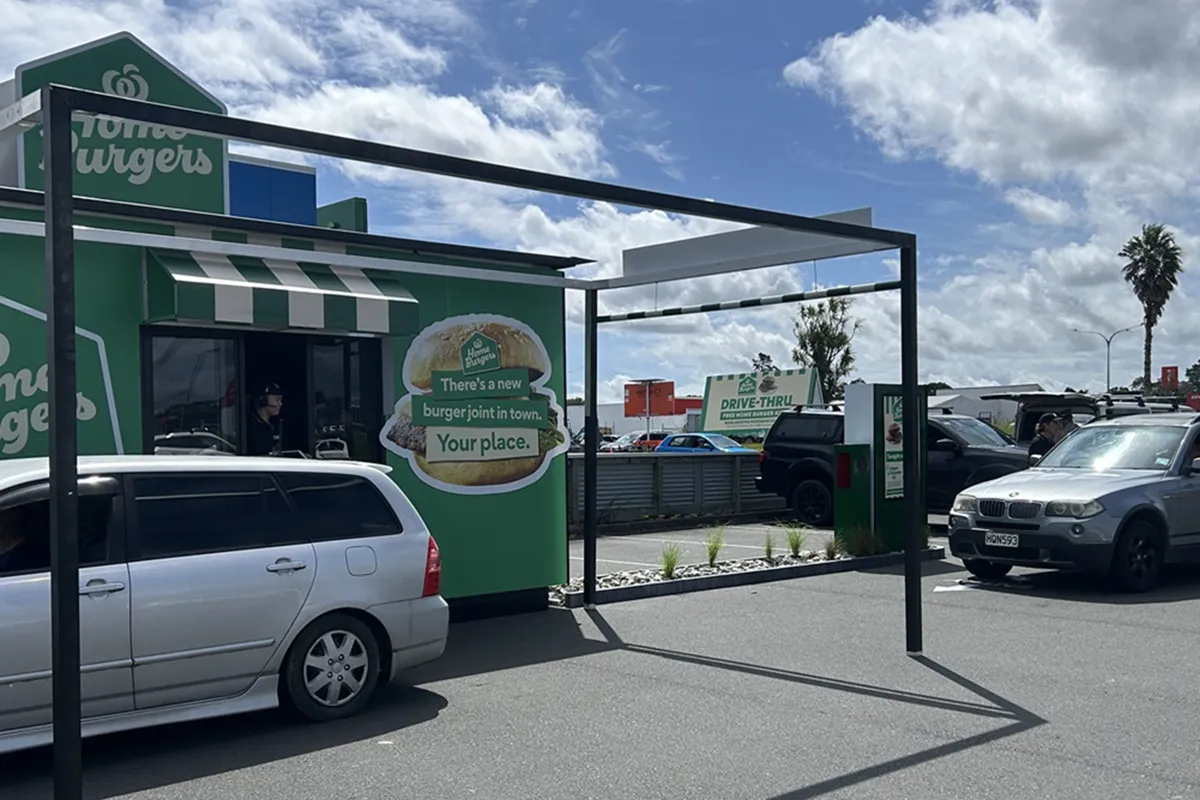
    Woolworths New Zealand recently conducted a drive-thru experiment in a supermarket parking lot to promote its new line of beef burger patties. The event, which occurred from January 26 to 28 at Woolworths Pukekohe South, underscored the importance of own-brand products during the busy summer season.

    Drive-Thru Experiment

    Approximately 4,500 Home Burger kits were handed out free of charge during the trial. With queues of vehicles observed throughout the event and stocks depleted each night, the results pointed towards a strong consumer demand for home-cooked meals that mimic the convenience of takeaways.

    Conrad Webber, Woolworths NZ’s marketing manager for fresh food and own brand, spoke about the innovative drive-thru concept. He explained that it offered a platform to showcase restaurant-style meals intended for home cooking, while also experimenting with a novel customer engagement strategy.

    “The drive-thru allowed us to translate a typical dining-out experience into a retail environment,” said Webber. He further added that “the positive reception over the three nights reaffirmed our belief that New Zealanders appreciate restaurant-quality cuisine they can easily replicate at home, and confirmed that own-brand products can deliver on flavor, quality, and convenience in a manner that resonates with our customers’ lifestyles.”

    Home Burger Kits

    Customers participating in the trial drove through the store’s parking lot to collect a Home Burger kit. The kits, which featured Woolworths Own Brand products including beef patties, brioche buns, sliced cheese, salad ingredients, and condiments, were packaged in reusable Woolworths bags complete with preparation instructions for home use.

    The drive-thru event was part of Woolworths’ more extensive Home Burgers launch. It positioned the beef burger patty range as a viable alternative to takeaway-style burgers.

    The initiative catered to households seeking quick and familiar meal solutions, particularly in light of ongoing cost-sensitivity. The campaign’s focus was on providing bundled meal solutions rather than individual item purchases.

    Questions & Answers

    What was the purpose of the Woolworths drive-thru experiment?
    The Woolworths drive-thru experiment was designed to promote its new line of beef burger patties, with a focus on demonstrating the convenience and quality of own-brand products.

    What did the Home Burger kits include?
    The Home Burger kits featured Woolworths Own Brand products including beef patties, brioche buns, sliced cheese, salad ingredients, and condiments. They were packaged in reusable Woolworths bags, with home preparation instructions included.

    What was the primary target audience for this initiative?
    The primary target audience for this initiative was households seeking quick, familiar, and cost-effective meal solutions that could easily be prepared at home.

  • Everstone Capital Sells $57M Stake in Burger King’s India, Indonesia Franchisee, Ajanta Pharma Founders to Invest

    Everstone Capital Sells $57M Stake in Burger King’s India, Indonesia Franchisee, Ajanta Pharma Founders to Invest

    Private equity firm Everstone is set to sell its entire stake, amounting to 11.26 per cent, in Restaurant Brands Asia, a franchisee operating in India and Indonesia for fast-food giant Burger King. Those familiar with the matter have confirmed that the deal will be announced soon.

    Equity Stake Valuation

    Everstone Capital’s stake, held via its investment arm QSR Asia Pte Ltd, is presently valued at USD 57 million, based on Refinitiv data. Meanwhile, the market capitalisation of Restaurant Brands Asia stands at USD 437 million in Mumbai.

    New Strategic Investor

    As part of the agreement, a new strategic investor will be introduced to Restaurant Brands Asia. The identity of this investor remains confidential at this point.

    Despite repeated attempts, both Everstone and Restaurant Brands Asia have opted to not comment on the matter.

    Pharma Founders as Potential Investors

    The family office of the founding members of Ajanta Pharma, an Indian pharmaceutical company, is reportedly taking a keen interest in this deal. The family office, which also operates in the restaurant business, is projected to invest up to INR 8 billion (equivalent to USD 88 million) into the company.

    No comment could be obtained from the representatives of the family office either.

    Although it’s unclear what percentage of the company Ajanta would acquire, it’s speculated that they may become the majority stakeholder over time as other shareholders divest their stakes.

    In a recent communication with Indian stock exchanges, Restaurant Brands Asia announced upcoming board meeting plans to discuss and evaluate possible fundraising options, although no further information was provided.

    Questions & Answers

    What is the current stake of Everstone in Restaurant Brands Asia?
    Everstone presently holds an 11.26 per cent stake in Restaurant Brands Asia.

    Who is speculated to be the new strategic investor?
    The family office of the founders of Ajanta Pharma is speculated to be the new strategic investor.

    How much is the family office of Ajanta Pharma expected to invest?
    They are expected to invest up to INR 8 billion (USD 88 million) into the company.

  • Yum China Breaks into Burger Business with V Burger: A Fresh Spin on Fast Food Amidst Rising Market Competition

    Yum China Breaks into Burger Business with V Burger: A Fresh Spin on Fast Food Amidst Rising Market Competition

    Yum China, recognized as the chief operator of Pizza Hut on the Chinese mainland, has recently launched two independent V Burger locations in Futian and Longhua districts in Shenzhen. This move establishes the brand’s inaugural foray into the dedicated burger restaurant sector within the nation.

    The V Burger approach leans towards a Western-style concept and mainly caters to individual eaters and small groups of diners. The newly implemented menu features a variety of around ten different freshly made chicken and beef burgers. Prices for these items range from 23 to 42 yuan (equivalent to US$3.29 to US$6.01), resulting in an average expenditure of 32.5 yuan per diner.

    This new venture aligns with Yum China’s wider strategy of multi-brand expansion. This strategy has been evidenced by recent introductions of brands like KCoffee, Kpro, and the KFC Fried Chicken Brothers concept.

    Industry insiders have revealed that the company’s entry into the burger market has been in the planning stages for a considerable duration. Since December 2023, Pizza Hut has initiated a testing phase for a “pizza burger” series in selected cities. This series has comprised of four different types of burgers which were priced between 20 and 30 yuan each.

    The introduction of V Burger is timely as both international and domestic fast-food chains are currently vying intensely for a greater share of the Chinese consumer market. A report by Daxue Consulting suggests that China’s fast-food market was worth RMB1.28 trillion in 2023 and forecasts further growth, powered by increased demand from smaller, lower-tier cities.

    Competition within the sector is becoming increasingly fierce. As an indication of this, Burger King divested its controlling stake in China in November, opting to establish a joint venture instead. The company also announced its strategy to double its outlet numbers within half a decade, with the goal of having more than 4000 outlets by 2035.

    Questions & Answers

    What is Yum China’s latest venture in the Chinese market?
    Yum China has recently opened two standalone V Burger outlets in Shenzhen’s Futian and Longhua districts. This is the brand’s first dedicated foray into the burger restaurant sector within the country.

    Who is the target market for V Burger?
    The V Burger concept primarily caters to solo diners and small groups, offering a variety of freshly prepared chicken and beef burgers.

    What is the significance of the V Burger launch?
    The rollout of V Burger comes at a time when international and domestic fast-food chains are fiercely competing for Chinese consumers. It is a part of Yum China’s broader multi-brand expansion strategy which includes brands like KCoffee, Kpro, and the KFC Fried Chicken Brothers concept.

  • Street Burger Invasion: Gordon Ramsay’s Iconic UK Brand Launches First Thai Outlet

    Street Burger Invasion: Gordon Ramsay’s Iconic UK Brand Launches First Thai Outlet

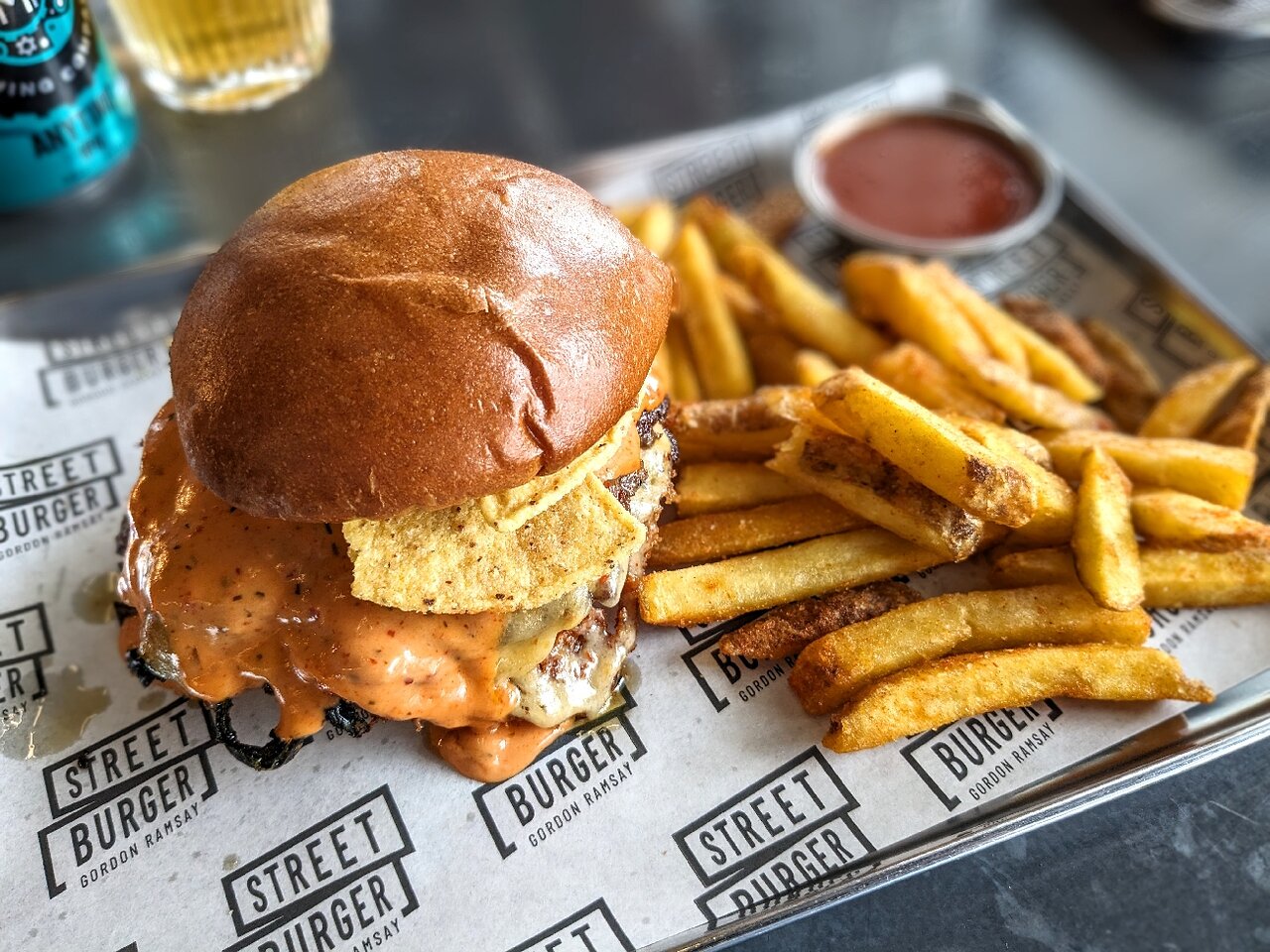
    Gordon Ramsay, the renowned chef, has introduced his popular street burger concept in Thailand, with the first outlet opening at Nextopia in Siam Paragon. This venture is in collaboration with Tanachira Group.

    Ramsay’s Casual Street-Dining Concept

    The newly opened eatery adheres to the brand’s casual street-dining concept that was originally cultivated in the UK. The menu is designed around Ramsay’s signature burgers, priced reasonably to attract a broad range of customers and offer them an authentic international dining experience.

    Minimalist Aesthetic and Eco-Friendly Practices

    The eatery’s interior adopts a minimalist design, adorned with neutral-toned furniture and complemented by London-inspired graffiti. The venue also hosts a Pac-Man arcade game, adding a touch of nostalgia. In line with environmental concerns, biodegradable and eco-friendly packaging materials are used across the outlet.

    Culinary Highlights

    Among the menu specials are the Original Gordon Ramsay Burger, which includes premium beef and smoked cheese, and the Gordon Fried Chicken Burger, served with kimchi-marinated fried chicken and a hash brown. Exclusive to Thailand, patrons can also enjoy the Chicken Satay Burger.

    Earlier in the year, Ramsay’s other restaurant franchise, Bread Street Kitchen, launched its flagship location at IconSiam in Thailand, marking the second outlet in the country.

    Questions & Answers

    What is the concept of Gordon Ramsay’s new restaurant in Thailand?
    The concept is based on casual street-dining developed in the UK, with a focus on signature burgers at affordable prices.

    What design aesthetics are present in the new restaurant?
    The restaurant features a minimalist design with neutral-toned furnishings and London-inspired graffiti. It also houses a retro Pac-Man arcade game.

    What are the signature dishes of the new outlet?
    The Original Gordon Ramsay Burger and the Gordon Fried Chicken Burger are the main highlights. Additionally, a Chicken Satay Burger has been introduced, exclusively for Thailand.

  • Popeyes Singapore Halts Fish Burger Sales Amid Mold Scare: An Investigation Underway

    Popeyes Singapore Halts Fish Burger Sales Amid Mold Scare: An Investigation Underway

    Popeyes Singapore recently halted the sale of its limited-edition Poppy Fish Burger throughout all its branches following an incident where a customer found mold on her burger bun at the Orchard Xchange outlet. This occurrence has led to a comprehensive investigation.

    The fast-food chain’s decision to suspend the sale of the burger is a precautionary measure while the inquiry is ongoing. In a statement, they expressed sincere apologies for the incident and emphasized their commitment to food safety, stating that it is their topmost concern and they take such matters very seriously.

    Popeyes also revealed that the Singapore Food Agency (SFA) had already inspected the Orchard Xchange outlet and found their food-safety controls to be satisfactory. Currently, Popeyes is collaborating with the SFA, its suppliers, and its operations team to identify the root cause of the mold incident and avert any similar issues in the future.

    The customer, identified as Teng, shared that she had consumed most of the Poppy Fish Burger before noticing the mold on the bun. She explained that she did not see it sooner because she had been focused on her computer while eating. Upon discovering the mold, Teng discarded the remaining burger and lodged complaints with both Popeyes and the SFA.

    The SFA confirmed its inspection of the Orchard Xchange outlet and stated it had sternly cautioned the management to improve their procedures. The agency assured that it would continue to monitor the outlet for compliance.

    Popeyes, on its part, pledged to scrutinize its internal processes to understand the cause of the mold incident. It has already performed a thorough inspection of all food items, required suppliers to confirm the integrity of the shelf-life of their products and reinforced food-safety checks across all its locations. Furthermore, recommendations from the SFA have been received, which the fast-food chain promised to implement immediately.

    Questions & Answers

    What action was taken by Popeyes Singapore following the discovery of mold on a burger bun?
    Popeyes Singapore suspended the sale of its limited-edition Poppy Fish Burger at all its locations as a precautionary measure and initiated a thorough investigation into the incident.

    How is Popeyes Singapore addressing the issue to prevent a repeat occurrence?
    Popeyes Singapore is reviewing its internal processes, performing comprehensive inspections of all food items, asking suppliers to verify their product shelf-life, and reinforcing food-safety checks at all outlets. The chain is also implementing recommendations from the Singapore Food Agency.

    What role has the Singapore Food Agency (SFA) played in this incident?
    The SFA inspected the implicated Popeyes outlet, found its food-safety controls satisfactory, issued a stern warning to the management to improve their procedures, and committed to ongoing monitoring for compliance. The agency also provided recommendations to Popeyes Singapore which the chain has pledged to implement immediately.

  • Goldman Sachs in Exclusive Talks for $452M Acquisition of Burger King Japan

    Goldman Sachs in Exclusive Talks for $452M Acquisition of Burger King Japan

    Goldman Sachs is reportedly in exclusive negotiations to acquire the Japan operations of Burger King from Hong Kong-based private equity firm, Affinity Equity Partners.

    The transaction is speculated to be worth around 70 billion yen (approximately US$452 million). Goldman Sachs is allegedly preparing to acquire BK Japan Holdings. The latter entity currently operates approximately 310 Burger King locations throughout Japan.

    BK Japan has ambitious plans to expand its footprint. By the end of 2028, the company aims to have established a total of 600 Burger King branches within the country. This represents a substantial growth, considering that the company had only 77 stores in 2019.

    Burger King’s journey in Japan has seen its fair share of highs and lows. The brand initially penetrated the market in the 1990s, only to withdraw in 2001 due to poor performance. However, it made a comeback in 2007 via a franchise partnership led by South Korea’s Lotte Group and Japan’s Revamp. The operations were subsequently handed over to Lotteria, a subsidiary of Lotte, in 2010.

    Questions & Answers

    What is the reported value of the acquisition deal between Goldman Sachs and Burger King’s Japan operations?
    The deal is reportedly worth around 70 billion yen (approximately US$452 million).

    How many Burger King outlets does BK Japan Holdings currently operate?
    BK Japan Holdings currently operates approximately 310 Burger King locations throughout Japan.

    What are BK Japan’s expansion plans?
    BK Japan aims to establish a total of 600 Burger King branches within the country by the end of 2028.

  • Burger King China’s Explosive Expansion: $350M Investment Fuels Rise to 4000 Outlets by 2035

    Burger King China’s Explosive Expansion: $350M Investment Fuels Rise to 4000 Outlets by 2035

    Restaurant Brands International (RBI) has recently confirmed a $350 million investment deal toward their Burger King China operation via a newly formed partnership with Chinese alternative asset manager, CPE. With a well-established reputation for scaling consumer brands within the Chinese markets, CPE’s primary investment will facilitate expansion, marketing, menu innovation, and operations for Burger King’s restaurants across China.

    Joint Venture Objectives

    This joint venture is targeting to more than triple the current Burger King presence in China, from approximately 1250 restaurants to a projected 4000 by the year 2035. Joshua Kobza, CEO of RBI, highlighted the significance of this partnership, recognizing China as “one of the most exciting long-term opportunities for Burger King globally.” The recent investments and newly formed joint venture underscore their confidence in the Chinese market.

    Additionally, Kobza emphasized the potential benefits of this partnership, noting how combining the iconic Burger King brand and RBI’s global scaling abilities with CPE’s local market knowledge and operational expertise can unlock the business’s full potential in China.

    Ownership and Development Agreement

    The completion of this transaction, which is anticipated for the first quarter of next year, will result in CPE owning approximately 83% of Burger King China, leaving RBI with an ownership stake of approximately 17%.

    Further to the partnership, a wholly-owned affiliate of Burger King China will sign a 20-year master development agreement. This will grant the affiliate exclusive rights to develop the Burger King brand within the Chinese market.

    Strategic Alignment and Previous Investments

    This joint venture aligns with RBI’s broader strategy of pairing with experienced local operators and investors to drive profitable growth. This approach, while maintaining a primarily franchised business model globally, is aiming for a net restaurant growth of 5% or more by the end of the 2024-2028 outlook period.

    This recent partnership follows an earlier transaction in February, where RBI purchased stakes in Burger King China from its local franchisee for an estimated $158 million.

    Questions & Answers

    What is the purpose of the joint venture between RBI and CPE?
    The joint venture aims at expanding Burger King’s presence in China from about 1250 to over 4000 restaurants by 2035.

    What will be the ownership split of Burger King China after the transaction?
    Once the transaction is completed, CPE will own approximately 83% of Burger King China, while RBI will hold an estimated 17%.

    What are the terms of the development agreement?
    A wholly-owned affiliate of Burger King China will sign a 20-year master development agreement, which grants the affiliate exclusive rights to develop the Burger King brand in China.

  • Youtube Sensation Mrbeast Burger Makes Singapore Debut In Partnership With Dignity Kitchen

    MrBeast Burger, a unique restaurant brand that operates solely through delivery services and was born out of a YouTube sensation, has made its debut in Singapore.

    The Debut

    The restaurant’s inaugural virtual spot in Singapore is launched in collaboration with Dignity Kitchen, a well-regarded food court renowned for its commitment to supporting and employing individuals with disabilities. The menu on offer includes their well-loved signature crinkle-cut fries along with various types of smashed burgers, all of which are available for island-wide delivery through platforms like Foodpanda, Grab, and the MrBeast Burger’s own website.

    Speaking about the partnership, Koh Seng Choon, founder and executive director of Dignity Kitchen, expressed pride in being the first to introduce MrBeast Burger in Singapore. Seng Choon also praised the brand’s unique blending of entertainment and social responsibility.

    The Partnership

    The restaurant’s successful entry into the Singaporean market was facilitated by its collaboration with Xolutions, a business that specializes in fostering connections within the food industry by aiding market entry and franchise development.

    Nichol Ng, CEO of Xolutions, spoke highly of the brand, stating that it represents more than just a burger joint. Ng described it as a smart, scalable opportunity for local kitchens to expand their operations while simultaneously delivering delicious, highly-desirable food to a younger demographic of food enthusiasts.

    The Origin

    MrBeast Burger was first introduced in 2020 by renowned American YouTuber Jimmy Donaldson, also known by his online alias MrBeast. His initiative, in conjunction with Virtual Dining Concepts (VDC), has successfully expanded to over 300 locations throughout the United States.

    In light of its successful launch, the brand has plans to establish more virtual restaurants in Singapore, with the aim of achieving this goal by the fourth quarter of this year.

    Questions & Answers

    What is MrBeast Burger?
    MrBeast Burger is a delivery-only restaurant brand that was created by popular YouTuber Jimmy Donaldson, also known as MrBeast.

    Where is MrBeast Burger’s first location in Singapore?
    The first virtual location for MrBeast Burger in Singapore is launched in association with Dignity Kitchen, a food court known for employing and supporting individuals with disabilities.

    What are MrBeast Burger’s future plans in Singapore?
    Following its successful launch, MrBeast Burger plans to continue its expansion in Singapore by opening more virtual restaurants across the country by the end of this year.

  • Hanwha Group Mulls Sale Of Fg Korea, Operator Of Five Guys Franchise In South Korea

    Hanwha Group Mulls Sale Of Fg Korea, Operator Of Five Guys Franchise In South Korea

    The South Korea-based conglomerate, Hanwha Group, is reported to be contemplating the sale of FG Korea, the operator of the American burger franchise Five Guys in South Korea.

    FG Korea and Hanwha Group

    FG Korea functions as a fully-owned subsidiary of Hanwha Galleria, which is the retail division of Hanwha Group. The company recently disseminated documents to private equity firms via a local accounting firm, Samil PwC. This action is seen as an indicator of a possible sale. It is anticipated that if a sale does occur, it would likely result in the complete transfer of ownership of the company.

    FG Korea’s Expansion

    FG Korea was instrumental in introducing Five Guys to the South Korean market in 2023, with the inaugural restaurant opening in the Gangnam district of Seoul. Since then, the chain has grown to include seven branches, with plans for an eighth location to open later this month in Yongsan, central Seoul.

    In the previous year, FG Korea had entered into an agreement with Five Guys International to spearhead the brand’s expansion into Japan, with an ambitious goal of establishing more than 20 outlets within the span of seven years.

    FG Korea’s Financial Performance

    In the past fiscal year, FG Korea reported significant sales of 46.5 billion won (approximately US$33.4 million) and a net income of 2 billion won.

    This potential sale is understood to be part of Hanwha Galleria’s attempts to optimize its portfolio and reduce expenses.

    Questions & Answers

    What is the relationship between FG Korea and Hanwha Group?
    FG Korea is a wholly-owned subsidiary of Hanwha Galleria, which is the retail branch of Hanwha Group.

    What has been FG Korea’s role in the expansion of Five Guys?
    FG Korea brought Five Guys to South Korea in 2023 and has since helped the brand grow to seven locations. Furthermore, they have also signed a memorandum of understanding with Five Guys International to lead the brand’s expansion into Japan.

    What is the financial performance of FG Korea in the past fiscal year?
    FG Korea reported 46.5 billion won (approximately US$33.4 million) in sales and a net income of 2 billion won in the last fiscal year.

  • Burger King parent Restaurant Brands takes full control of China business

    Burger King parent Restaurant Brands takes full control of China business

    Restaurant Brands International said on Tuesday it has bought stakes in Burger King China from its local franchisee for about US$158 million, giving it nearly total ownership of the business.

    The fast food chain operator said it would engage its advisors to work on identifying a new local partner to invest into the business.

    The company has been working on its China strategy for its Burger King business which faced softening demand in the second biggest market, amid a pressured consumer spending and stiff competition.

    Restaurant Brands acquired the stakes in Burger King China from a holding company TFI Asia Holdings BV and a blank-check firm Pangaea Two Acquisition Holdings XXIII.

    Restaurant Brands had 1,474 Burger King restaurants in China, as of December 31, 2024.

  • Japanese burger chain Niku Niku Oh! Kome debuts in Hong Kong

    Japanese burger chain Niku Niku Oh! Kome debuts in Hong Kong

    Japanese-style burger chain Niku Niku Oh! Kome – owned by Japanese restaurant chain operator Monogatari Corporation – has launched its first outlet in Hong Kong as part of its broader expansion across Asia.

    Located in Sha Tin, the restaurant has 40 bar seats surrounding an open kitchen. It specialises in freshly handmade wagyu burgers seated on hot plates or served on rice with egg yolk for a “classic Japanese experience”.

    The wagyu hamburgers are crafted from a blend of Kyushu black wagyu beef and US beef, while the rice served is Niji No Kirameki, sourced from Japan’s Tohoku region.

    Makoto Hori, senior executive officer, Monotogari Corporation, said that Hong Kong, being an international city close to the mainland, offers the company an opportunity to raise brand awareness in the Asian region.

    “We have already opened 16 restaurants in Mainland China since November 2022, and local customers have well received our food,” he added.

    Established in 1949, Monogatari Corporation has more than 700 restaurants in Japan and overseas, with 15 restaurant brands serving various Japanese foods, including yakiniku, ramen, okonomiyaki, sushi and shabu-shabu.

  • Wendy’s Philippines sold to new owner as Dennis Uy exits food retail

    Wendy’s Philippines sold to new owner as Dennis Uy exits food retail

    Wendy’s Philippines and Conti’s Bakeshop, run by Filippino businessman Dennis Uy, have been sold to a local entrepreneur.

    Uy has decided to sell his Eight8Ate Holdings company, which operates the two chains, to Crystal Jacinto. The sale comes after the multibillion-peso food retailing business bundle has been on the market for almost two years.

    Jacinto, who runs European Wellness Villa Medica Manila – a health and wellness centre specialising in anti-aging and disease management solutions, will take full control of the company, according to the news agency’s sources. She is also reportedly backed by her husband and Malaysian businessman Jaya Sudhir.

    Wendy’s, which had 70 stores as of June, and Conti’s, which had 74 stores, were acquired by Uy in 2019, shortly before the pandemic.

    Conti’s is considered the more profitable of the two brands, which led to the bundling of Wendy’s in the deal.

    The sale also includes the remaining shares of Conti’s founding sisters – Cecille Conti Maranon, Carole Conti Sumulong, and Angela Conti Martinez – who have agreed to sell their residual stake directly to Jacinto, cites the news agency.

    Neither Uy nor Jacinto has yet to comment on the transaction at the time of writing.

    Apart from Eight8Ate Holdings, Uy is also the founder of Udenna, a conglomerate involved in petroleum, oil and gas, shipping, logistics, real estate, education, and gaming.

  • South Korean burger chain Mom’s Touch enters Japan

    South Korean burger chain Mom’s Touch enters Japan

    Korean burger and chicken fast food chain Mom’s Touch is set to open its first directly managed Japanese store in Shibuya, Tokyo.

    Scheduled to open on April 16, the new 418 sqm Shibuya store will sit in a location that used to be occupied by McDonald’s and have a seating capacity of 200 people. According to local media, the new store will be adjacent to Shibuya Scramble Square where the daily floating population reaches about 3 million people.

    “We believe this is an important first step for Mom’s Touch to make the leap to become a global brand and make full-fledged overseas expansion,” the company said in a statement.

    As part of the expansion plan, Mom’s Touch has participated in the Tokyo Franchise Show as it seeks to further expand internationally and promote its Korean burger in the country, which has a burger market estimated at US$5.3 billion.

    The company launched a pop-up store in Shibuya last October, luring about 33,000 visitors. As of February, Mom’s Touch operates 1420 stores in its home market.

    The Japan expansion follows the chain’s launch into Mongolia last year.

  • Hong Kong burger chain Honbo launches in Singapore

    Hong Kong burger chain Honbo launches in Singapore

    Anew hipster burger joint is coming to Singapore at the end of July 2023. Called Honbo, it was founded in 2017 by former doctor Michael Chan, who named his eatery after the Cantonese name for hamburgers (‘hon bo bao’). The brand has since expanded to six outlets in its native Hong Kong.

    It specialises in gourmet American-style smashed burgers, with handmade patties and potato milk buns made with a recipe developed in collaboration with famed French baker Eric Kayser.

    The opening date for Honbo’s Singapore outlet is still unconfirmed, though its rep tells 8days.sg that it is estimated to be end-July. The dine-in eatery is located at Chijmes.

    Honbo boasts brisket-and-chuck burger patties made with USDA prime-grade beef from Holstein and Angus cattle reared in Wisconsin. Both breeds are known for their marbling; prime beef has the highest marbling score and is more flavourful compared to beef with a lower USDA grade.

    The patties are ground in-house daily and, upon order, smashed on hot griddles and cooked to medium-rare doneness.

    The patties are then wedged between pillowy potato milk buns made with hand-mashed potatoes. The proprietary Eric Kayser-developed bun is unique to Honbo, who patented the recipe in Hong Kong.

    The burgers are garnished with “sustainably sourced greens, pickles cured in-house from Japanese cucumber and specialty sauces hand-crafted in its very own kitchen, using a closely guarded secret recipe created by the team”.

    The local menu has not been finalised, though Honbu is expected to serve its signatures including the Honbo Burger, modelled after an “old-school fast food-style” cheeseburger. Two beef patties, each weighing about 56g, are layered with two slices of cheddar.

    “The Honbu Burger is paired with our house sauce, a lot of raw onions, pickles, and no lettuce. The raw onions and pickles help cut through the greasiness, and you can really taste the crust and the meatiness. It gives the burger double the crust and double the beef grease, but it is still less juicy than the Cheese Burger, ” says founder Michael Chan (interestingly, the man was a doctor before he became an F&B entrepreneur).

    For big eaters, this burger comes in variations like Honbo 1.5 (three patties) and Honbo 2.0 (four patties), plus a Gold Standard burger with two 113g beef patties, two slices of cheese, a hash of bacon and pickles, onions and lettuce drizzled with house-made sauce.

    Prices start from S$18 for an a la carte burger, with sides offered like fries, sweet potato fries and buffalo wings.

    Beefless options are available too, like a Grilled Chicken Burger with teriyaki sauce-glazed sous vide organic chicken, a Scallop Burger with “extra-large sashimi-grade Hokkaido scallops” and wasabi pico de gallo. There is also a Soft Shell Crab Burger, with a whole fried soft shell crab coated in vodka-infused batter and served with ginger coleslaw. Wash down your burger with beverages like classic lemonade and Apple Pie Iced Tea, described as “apple pie in a glass”.