Retail News CRM

Tag: burger

  • South Korean burger chain Mom’s Touch to expand into Mongolia

    South Korean burger chain Mom’s Touch to expand into Mongolia

    South Korean chicken burger chain Mom’s Touch&Co. said Tuesday it inked a master franchise agreement with Mongolia’s Foodville Farm LLC, in its first steps to enter the central Asian country.

    Foodville Farm is an independent company established by the local franchise operator Monbakery LLC to expand the Mom’s Touch brand in Mongolia. The company operates the South Korean coffee franchise Caffe Bene and bakery chain Tous les Jours in the Asian country.

    The South Korean chicken burger franchise said it has decided to enter Mongolia due to the country’s rapid economic growth, a relatively young population and a growing interest among Mongolians in Korean food, and products from K-pop and the broader Korean Wave.

    Experts said the Korean Wave generated by K-pop and TV dramas could turn fans in foreign countries into active consumers of South Korean products.

    Mom’s Touch’s first Mongolian restaurant is set to open in the first half of this year. The company plans to add more than five stores by the end of the year, it said.

  • Wendy’s burgers are coming to Australia

    Wendy’s burgers are coming to Australia

    The US Wendy’s burgers brand is heading to Australia and is on the hunt for a master franchisee.

    The iconic brand is reportedly the world’s third largest quick service restaurant burger chain, with about 7000 outlets worldwide.

    Founder Dave Thomas opened the first Wendy’s restaurant in 1969. His mission was to serve well-priced, good quality food in a comfortable environment. The unique square burger has since become a mainstay of the Wendy’s menu.

    Now the chain is readying to hit the market Down Under, with consultancy firm DC Strategy tasked with recruiting master franchisees. You’ll also receive messages on behalf of our partners. You can opt-out at any time.

    The appointed master franchisee will need to have franchise and operations experience and a proven track record for growing brands in Australia.

    There is no set agenda for the first store location, nor a pre-determined number of outlets. These will be determined by the master franchisee, DC Strategy confirmed.

    Wendy’s burgers will be vying for customers within a highly competitive market. There are the familiar giants of burger business in Australia — McDonald’s and Hungry Jacks.

    US chains testing the waters in Australia include Five Guys, operated by franchisee Seagrass Hospitality. And Hollywood star Mark Wahlberg’s famed burger chain Wahlburgers unveiled its first Australian store in Circular Quay, Sydney late last year.

    American brand Carl’s Jr. has already made its mark along the east coast. Globally this brand has over 4000 restaurants; 35 outlets operate in Australia with a goal of 160 by 2032.

    And then there are local brands such as Pattysmiths Burgers offering a premium alternative to the traditional fast food options. There are now 29 outlets in the chain, under the umbrella of multi-brand franchisor, Concept Eight. Restaurants operate throughout Victoria, Queensland, Western Australia and the ACT.

  • Maxim’s to launch Shake Shack in Thailand

    Maxim’s to launch Shake Shack in Thailand

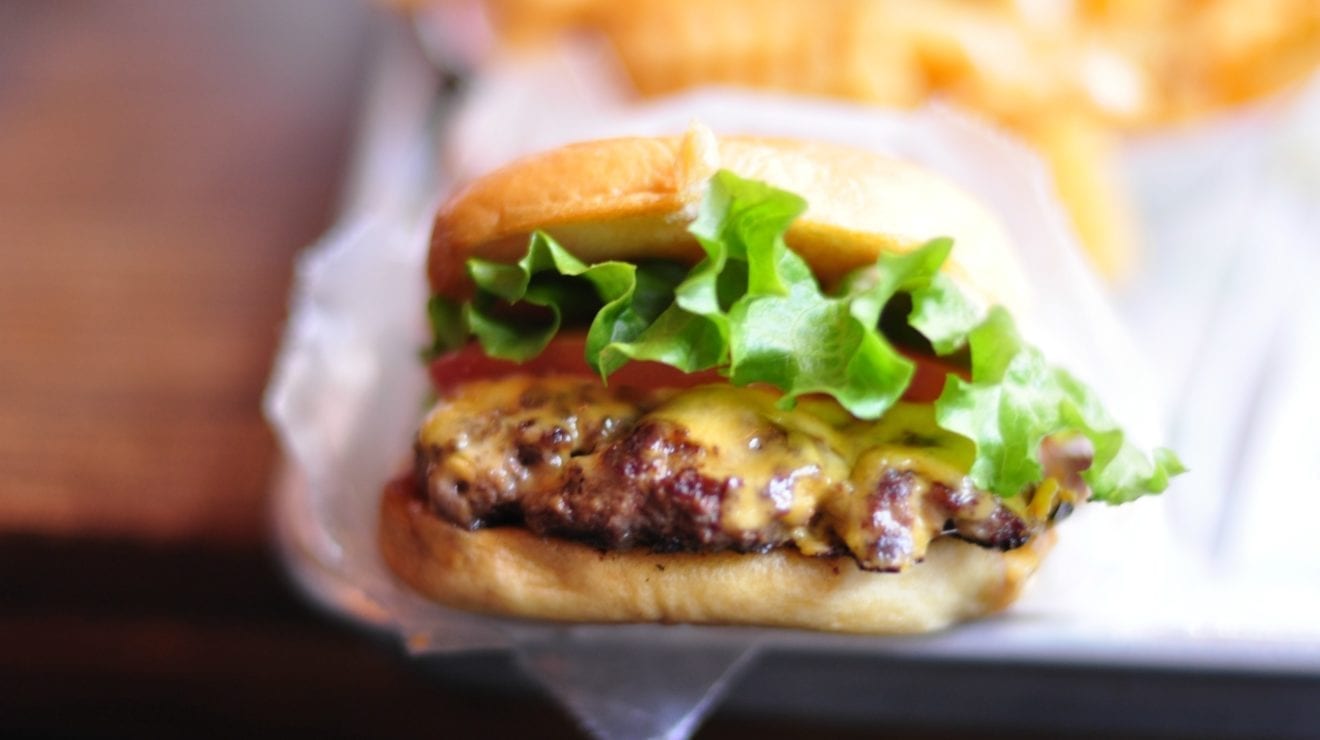
    US burger chain Shake Shack is ramping up its Southeast Asia expansion with its upcoming Thai debut in partnership with Hong Kong-based licensee, Maxim’s Caterers.

    Thailand’s first Shake Shack location, which will also be a flagship store, is expected to open in Bangkok next year, followed by 15 more stores across the country by 2032. Maxim’s, also the licencing partner of Shake Shack in Greater China, currently operates 24 Shacks across the region.

    “Shake Shack was born in New York, and Bangkok is another fantastic city with vibrant energy, friendly people and rich culinary traditions,” said Michael Kark, chief global licensing officer at Shake Shack.

    The Shake Shack Thailand menu will feature the chain’s signature items, such as ShackBurger, Chicken Shack and Chicken Bites. The burger chain said it will also work alongside local producers, purveyors and artists to support the Thai community.

    Meanwhile, Maxim’s will open its seventh Shake Shack outlet in Hong Kong on May 9, at the Citygate Outlets in Tung Chung.

    Maxim’s operated F&B businesses for more than 60 years, including licences for brands including Starbucks, Genki Sushi and Ippudo Ramen, The Cheesecake Factory and Shake Shack. The company operates more than 1800 outlets in Hong Kong, Macau, Mainland China, Vietnam, Cambodia, Thailand, Singapore and Malaysia.

  • Hong Kong fund to sell Japan, South Korea Burger King business

    Hong Kong fund to sell Japan, South Korea Burger King business

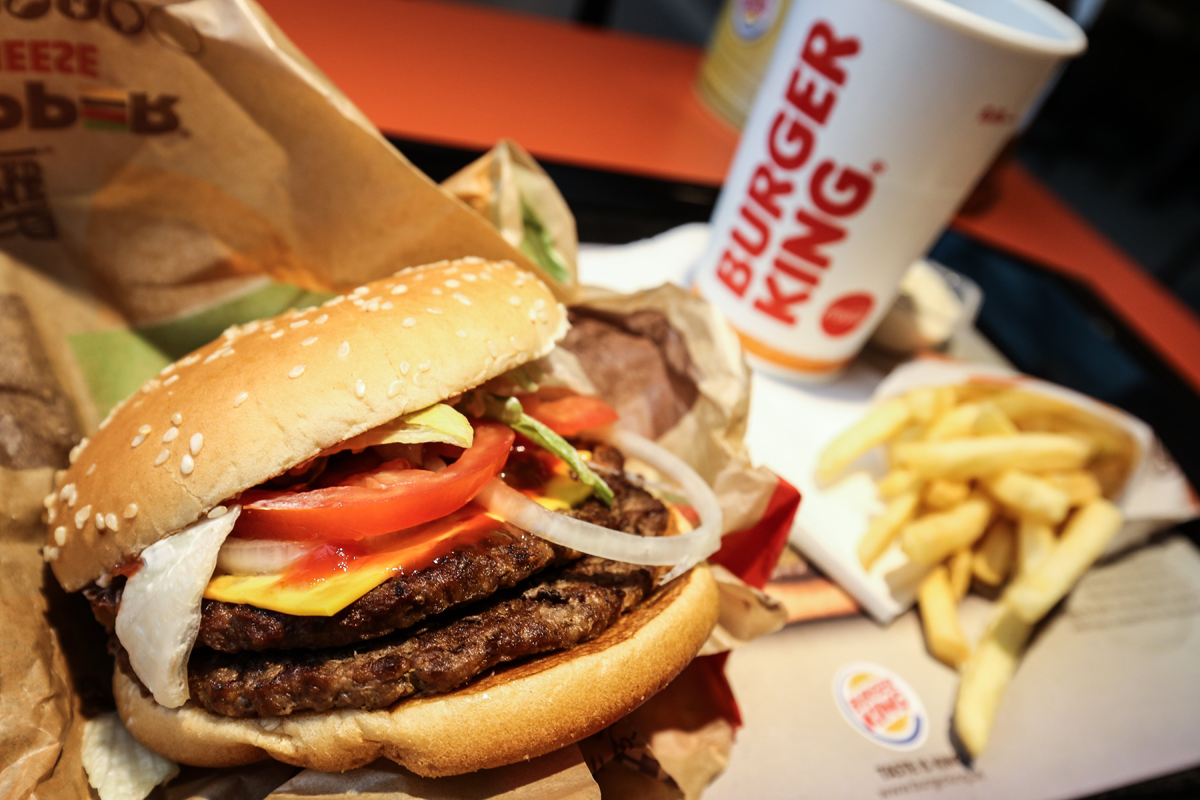
    Private equity firm Affinity Equity Partners is this week launching the sale of its Burger King fast-food businesses in South Korea and Japan, in a deal that could fetch more than US$1 billion, a person with knowledge of the matter told Reuters.

    Hong Kong-based Affinity has appointed Goldman Sachs to run the sale, which is targeting both private equity investors and strategic buyers, said the person, who declined to be identified as the information is confidential.

    The bank declined to comment.

    Affinity bought full control of Burger King South Korea in 2016 for about US$170 million and a year later acquired the American fast-food brand’s Japan franchise.

    The South Korean business reported 680 billion won (US$572 million) in revenue in 2021, with adjusted earnings before interest, taxes, depreciation, and amortisation (EBITDA) at 80 billion won, said the person, adding its adjusted EBITDA in 2022 is expected to reach 100 billion won.

    Burger King Japan’s adjusted EBITDA in 2021 was 700 million yen (US$6 million), the person said.

    Global fast-food chains such as McDonald’s and Yum! Brands are trading at 20 to 30 times their EBITDA, Refinitiv Eikon data showed. Burger King India is trading at about 25 times of its EBITDA.

    Affinity and Burger King Japan did not immediately respond to a request for comment.

    An official at BKR Corporation, the operator of Burger King in South Korea, declined to comment.

    The Nikkei business daily first reported the sale on Monday (Jan 17).

    It comes as the consumer and retail sector faces tremendous challenges and disruption caused by the coronavirus pandemic.

    In South Korea, businesses have adapted by relying more on deliveries, which has prompted exponential growth for its food delivery apps.

    Burger King Korea said on Monday the number of monthly active users on its mobile app in December exceeded 1.4 million, the highest since the app was launched in May 2016.

    Since Affinity’s acquisition, Burger King has been in an expansion mode in South Korea and Japan.

    Burger King runs 440 outlets in South Korea, more than its rival McDonald’s.

    The Japan franchise said on Monday it would open three new outlets in January, bringing the total there to 149, with plans to open more “aggressively” in 2022.

  • Beyond Meat opens JD store, as Chinese remain wary of meat substitutes

    Beyond Meat opens JD store, as Chinese remain wary of meat substitutes

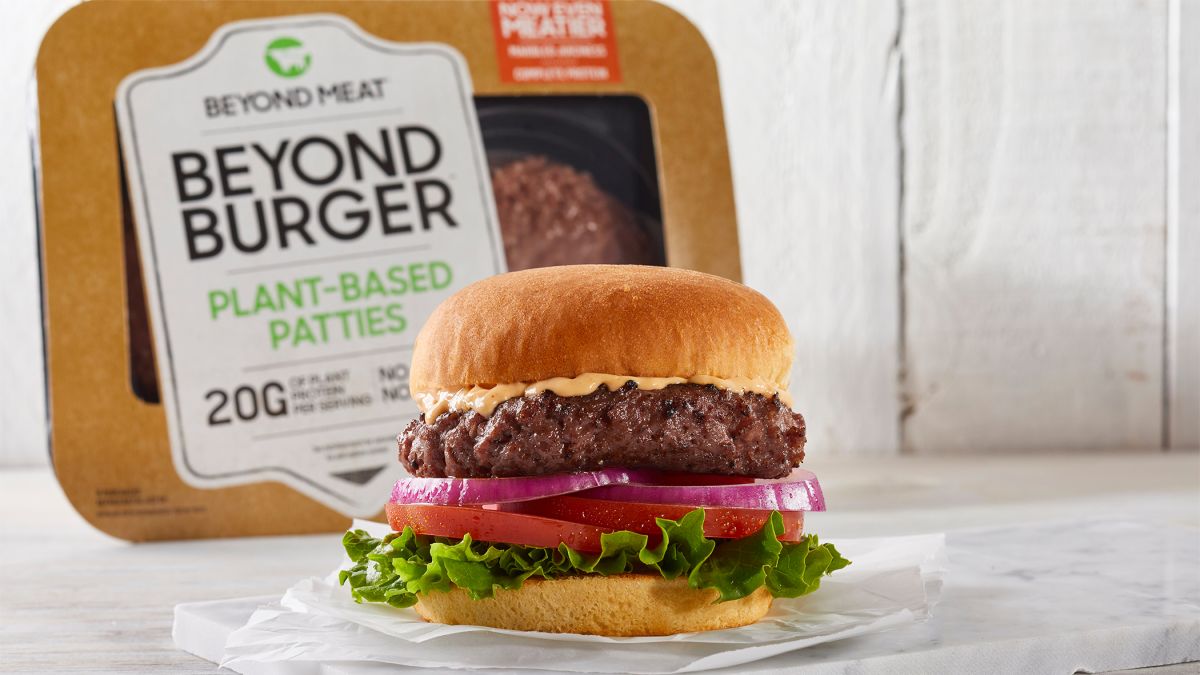
    Beyond Meat has launched an online store in China on e-commerce platform JD, as the plant-based meat maker aims to boost sales in the world’s biggest meat market, where consumer interest in meat alternatives is low.

    US-based Beyond Meat said the JD store will initially help expand the availability of its products in four major cities, including Beijing and Shanghai, and eventually in 300 cities across China.

    Its products are currently mainly available in China through its partnerships with Starbucks Corp, Yum China Holdings and Alibaba Group’s Freshippo markets.

    But expanding into the retail segment by selling on JD will help it reach a wider audience in the country, which is increasingly purchasing fresh food online.

    Online sales in China of fresh food, into which category Beyond Meat’s products fall, are expected to top US$46.4 billion this year, an increase of 18 percent from last year, according to consultancy iiMedia Research.

    Beyond Meat’s direct retail foray follows a similar move by Nestle in December, which launched a range of plant-based burgers, sausages, nuggets, and dishes suited to Chinese cooking.

    The push by global firms comes even as consumers in China are not exactly devouring plant-based meat.

    “Currently it is a solo dance by the manufacturers, the consumers are not joining the tango,” said Zhu Danpeng, an independent food industry analyst.

    A recent poll on Sina Weibo, China’s Twitter-like social media platform, found only 14 percent of 400 participants were willing to try plant-based meat.

    Chinese consumers are deterred by concerns over food safety as well as taste, said Zhu.

    Beyond Meat, which has set up its first manufacturing plant outside of the US in the eastern Chinese city of Jiaxing, near Shanghai, declined to comment on its sales in the market so far.

    A 454gm twin pack of plant-based beef will be sold at $32.50 on the company’s JD store. By comparison, 1kg of good quality domestic beef costs about $21.60 on JD’s fresh food platform.

    Beyond Meat is also adding Beyond Pork to its offering on JD, which has been created for the pork-loving Chinese market.

    It will also sell ingredients that are used in the cooking of local dishes such as stir-fry, dumplings, mapo tofu, zhajiang noodles and lion’s head meatballs to appeal to Chinese consumers.
  • Popeyes may immediately stop all operations in South Korea

    Popeyes may immediately stop all operations in South Korea

    American fast-food chain Popeyes said it is to withdraw business from South Korea, however, the local franchisee TS Corporation has denied the report.

    According to The Korea Times, reports of the exit began when a memo was written by a Popeyes’ employee headed “Popeyes brand will no longer pursue business in Korea as of November” went viral on social media. The employee’s memo went into detail, to the point of stating that the chain’s Gwangjin-gu branch would be the last to close before the brand ceases its operations in South Korea.

    A spokesperson from TS Corporation confirmed that some of the restaurants will shut down – but not all of them. The person didn’t share any further information except to state that the company will continue to operate the brand there.

    The struggling fast-food chain has been attempting to turn its fortunes around for two years, however, the process has not gone smoothly.

    Having entered South Korea with TS Food & System in 1993, the company recorded an impaired equity ratio of 40 percent, and last year it was in negative equity.

    Local media said Popeyes has recently been in negotiations with another operator to increase the brand’s value. That company is believed to be SPC Group, which operates Shake Shack and Eggslut in the country, but that has not been confirmed.

  • Burger King unveils ‘touchless’ hamburger ordering concept

    Burger King unveils ‘touchless’ hamburger ordering concept

    Burger King has unveiled a new ‘touchless’ concept store, designed to meet the challenges of business during a pandemic and adapt to the future “new normal”.

    The US store features physically contactless experiences such as mobile ordering and curbside pick-up areas and drive-in and walk-up order areas.

    “In March our in-house design and tech team accelerated new restaurant design plans and pushed the limits of what a Burger King restaurant could be,” said Josh Kobza, COO at Restaurant Brands International.

    “We took into consideration how consumer behaviors are changing and how our guests will want to interact with our restaurants. The result is a new design concept that is attractive to guests and will allow our franchisees to maximize their return.”

    Designed in-house, the store is expected to provide multiple ordering and delivery modes and highlight a physical footprint 60-per-cent smaller than a traditional Burger King restaurant.

    A ‘drive-in’ service allows customers to park under canopies doubling as solar power harvesting panels and place orders by scanning a QR code from the Burger King app. For mobile and delivery orders, customers can pick up their orders at coded food lockers.

    To reduce its physical footprint, the store features a “suspended” kitchen and dining room located above the drive-thru lanes. Orders will be delivered from the suspended kitchen by a conveyor belt system, and each lane has its own pick-up spot.

    “The designs we’ve created completely integrate restaurant functionality and technology, said Rapha Abreu, global head of design at Restaurant Brands International. “We designed the interior and exterior spaces like we had a blank sheet of paper, designing without preconceived notions of how a Burger King restaurant should look.”

    Burger King’s first new design stores will be built next year in Miami, Latin America and the Caribbean.

  • Destination Group launching Boom Boom Burger

    Destination Group launching Boom Boom Burger

    Destination Group is to introduce a new burger joint Boom Boom Burger, as part of a broader expansion plan in Thailand. Located at Sukhumvit Bangkok, the first Boom Boom Burger store is scheduled to open on Tuesday (September 1).

    Besides the burger, Destination Group also has plans to launch a pizza chain soon. Earlier this year, Destination brought the US burger brand Big Boy into Thailand, the brand’s first destination in Southeast Asia. Launching with a delivery service only, it will roll out food trucks and kiosks in Bangkok from October.

    The group aims to open Thailand’s first full-scale Big Boy outlet early next year and then expand to 20 to 25 branches during the next three years, Gary Murray, founder, and CEO of Destination told the Bangkok Post newspaper.

    The expansion plan in Asia will cost Destination about US$25 million, according to the company.

    Destination said it is also finalizing a licensing agreement with a Mexican casual-dining brand.

  • Fatburger to buy Johnny Rockets

    Fatburger to buy Johnny Rockets

    Fatburger’s parent, Fat Brands, is to acquire the US restaurant chain Johnny Rockets. The acquisition, worth about US$25 million, is expected to be completed this September.

    Founded in 1986, Johnny Rockets is known for its 1950s diner-style decor, serving hamburgers, sandwiches, hand-spun shakes and malts. The restaurant chain operates more than 325 locations across more than 25 countries.

    “Similar to Fatburger, Johnny Rockets got its start in Los Angeles, and we couldn’t be more pleased to add another true staple in our home city to our portfolio,” said Andy Wiederhorn, president and CEO at Fat Brands. “This acquisition is a transformative event for Fat Brands in terms of scale and brand awareness. We see a lot of synergy with Johnny Rockets and our current restaurant concepts and we are eager to take the brand to new heights.”

    The acquisition of Johnny Rockets will increase the number of Fat Brands’ franchised and company-owned restaurants to more than 700 with annual system-wide sales exceeding US$700 million, according to the company.

    Fat Brands currently owns eight restaurant chains, including Fatburger, Buffalo’s Cafe, Hurricane Grill & Wings, Elevation Burger, and Bonanza Steakhouses, and franchises more than 375 units worldwide.

  • KFC Thailand for sale

    KFC Thailand for sale

    A slice of KFC Thailand is being considered for sale by franchise owner Restaurants Development in a deal that could net $200 million.

    Sourcing people with knowledge of the matter, the firm is taking advice on a potential sale of the operation – which involves roughly 200 locations and 4000 staff. There is no certainty a sale will proceed and the source said discussions remained at an early stage with no formal bid yet tabled.

    Restaurants Development is backed by investors throughout Asia and operates KFC Thailand alongside Central Group (running 275 stores) and Thai Beverage – which purchased more than 240 KFC restaurants three years ago for roughly $361 million.

    Yum Restaurants International (Thailand) transformed itself into a 100-per-cent franchisor business in 2018 in an effort to yield optimal efficiency across the entire business operation.

  • Maxim set to open 15 Shake Shacks in Southern China

    Maxim set to open 15 Shake Shacks in Southern China

    American fast-casual restaurant chain Shake Shack is planning to open at least 15 new venues in South China by 2030.

    The chain, working through local licensee Maxim’s Caterers, a company controlled by Hong Kong’s Dairy Farm Group, will open restaurants in cities including Shenzhen, Guangzhou, Fuzhou, and Xiamen, with a goal of 55 Shake Shacks nationwide by 2030.

    Maxim’s currently operates Shake Shacks in Shanghai and Hong Kong, with Beijing and Macau under development and due to open later this year.

    “We remain humbled by our fans in China and continue to be encouraged by the performance of our Chinese business through this recovery,” said Shake Shack chief global licensing officer Michael Kark.

    “It’s a great time to deepen our roots in this market.”

    “Maxim’s partnership with Shake Shack has taken the brand on an exciting journey to Hong Kong in 2018 and Shanghai in 2019, with Beijing and Macau on the horizon,” said Maxim’s Caterers chairman and MD Michael Wu.

    “We look forward to bringing our boundless hospitality to more guests across South China in 2021 with our new expansion plans.”

  • McDonald’s sales figures show marked improvement as Covid-19 lockdowns eased

    McDonald’s sales figures show marked improvement as Covid-19 lockdowns eased

    Newly released McDonald’s sales figures have shown a marked global improvement for the business sequentially from late March through May despite the continuing impact of the coronavirus pandemic.

    The information released ahead of the firm’s second-quarter earnings announcement, showed sales steadily improving throughout the period however they still remain negative compared to last year’s figures.

    Comparable McDonald’s sales figures across international markets for both April and May were heavily impacted by temporary restaurant closures in the UK and France, and to a lesser extent Italy and Spain. The firm saw strong drive-thru performance in Australia, and negative comparable sales in Germany, Canada and Russia.

    Sales in international licensed markets were primarily impacted by temporary restaurant closures across nearly all regions, most notably in Latin America. The results reflected continued negative comparable sales in China and positive comparable sales in Japan.

    The vast majority of markets are operating with drive-thru and delivery with limited menus and hours.

    A breakdown of figures for international licensed markets was not provided by the firm.

    “Our strong foundation and the unique advantages of the McDonald’s System, including a high percentage of drive-thru restaurants and investments in delivery and digital, have enabled us to adapt to the changing landscape presented by the Covid-19 outbreak,” said McDonald’s president and CEO Chris Kempczinski.

    “The steps we are taking in response to the pandemic and to accelerate recovery while continuing to serve the great and familiar taste of a meal from McDonald’s, will position us well for the next phase of this crisis.”

    The report shows 95 percent of McDonald’s restaurants around the world are currently open to serve customers.

  • Yum China Lifts Off Beyond Burger in KFC, Pizza Hut, Taco Bell

    Yum China Lifts Off Beyond Burger in KFC, Pizza Hut, Taco Bell

    Yum China has entered into a partnership with plant-based meat manufacturer Beyond Meat to trial a burger at selected KFC, Pizza Hut, and Taco Bell locations within the country.

    The agreement marks the introduction of Beyond Meat’s Beyond Burger in Mainland China.

    “We see great potential for the plant-based meat market in China,” said Yum China CEO Joey Wat. “This latest introduction … is expected to capture valuable consumer feedback across different regions in China. It will enable us to optimize flavors and processes and help assess the potential for larger-scale rollouts in the future.”

    Beyond Meat founder and CEO Ethan Brown said Chinese consumers are seeking out the nutritional and environmental benefits of plant-based meats.

    The burger will be available at five KFC locations in Beijing, Chengdu, Hangzhou and Shanghai. The Pizza Hut offering will launch at six Shanghai locations and will constitute part of the brand’s first-ever burger offering. Taco Bell will offer a taco made with the plant-based Beyond Burger patty at three stores in Shanghai.

    All Beyond Burger promotions will be sold as a three-day limited offer.

    The move follows Starbucks China launching a range of foods using plant-based meat alternatives, including two pasta dishes and a wrap featuring Beyond Meat and another dish using OmniPork.

  • Burger chain Eggslut set to open in Korea and Singapore

    Burger chain Eggslut set to open in Korea and Singapore

    SPC Group, operator of Shake Shack in South Korea, is bringing Eggslut, the California-based egg sandwich chain, to Seoul.

    The group has acquired the rights to exclusively operate in South Korea and Singapore. The first Korean Eggslut store will be launched at the Starfield Coex Mall in Seoul in June.

    Details of a Singapore launch have yet to be revealed.

    “We are pleased to show Korean guests the special taste of Eggslut, which means someone who loves eggs,” said Jeff Vales, co-founder of Eggslut.

    “SPC Samlip has the standout production and supply chain of eggs, meat processing, vegetables, sauces, etc. based on baking technology. Therefore SPC Samlip is the best partner to maintain the high quality of the Eggslut menus,” he added.

    Founded by chef Alvin Cailan in 2011, Eggslut is famous for its egg sandwich made with a brioche bun, coddled egg and sriracha mayo sauce. The chain now operates stores in four countries including the UK and Japan.

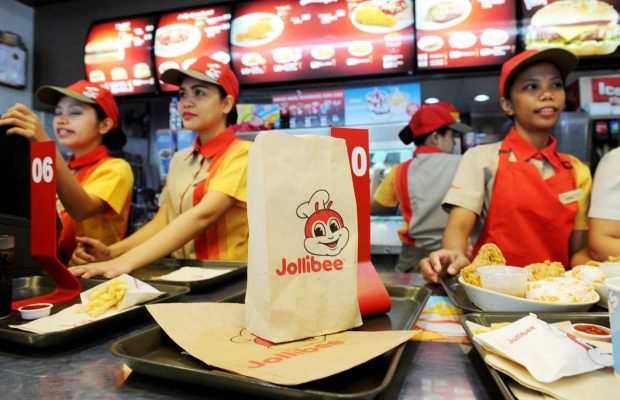
  • Jollibee Singapore fined for flouting social-distancing rules

    Jollibee Singapore fined for flouting social-distancing rules

    A Jollibee Singapore outlet is among several businesses fined SG$1000 for breaches of the government’s social distancing mandate.

    Official enforcement measures found the franchise’s Woodlands MRT branch had neglected to ensure queueing customers and food delivery workers maintained one-meter spacing between them, despite issuing previous warnings.

    “The infringements included failure to implement a crowd management system and allowing customers and delivery personnel to crowd together without one-meter spacing between one another,” read a statement by the Singapore Tourism Board and Enterprise Singapore. “If these stores continue to flout the rules, they will face higher fines and can be charged in court.”

    In an official apology, Jollibee explained that a staff member on duty had been unable to control the queue due to “a strong surge in delivery orders and a corresponding increase in third-party delivery riders in the store.”

    The one-meter distance requirement, as well as mandatory wearing of face masks, has been in effect since April 12. Members of the Singapore public are encouraged to report infringements by email to [email protected].