Tag: cafe

  • Online move limits damage to Cafe de Coral Group’s sales

    Online move limits damage to Cafe de Coral Group’s sales

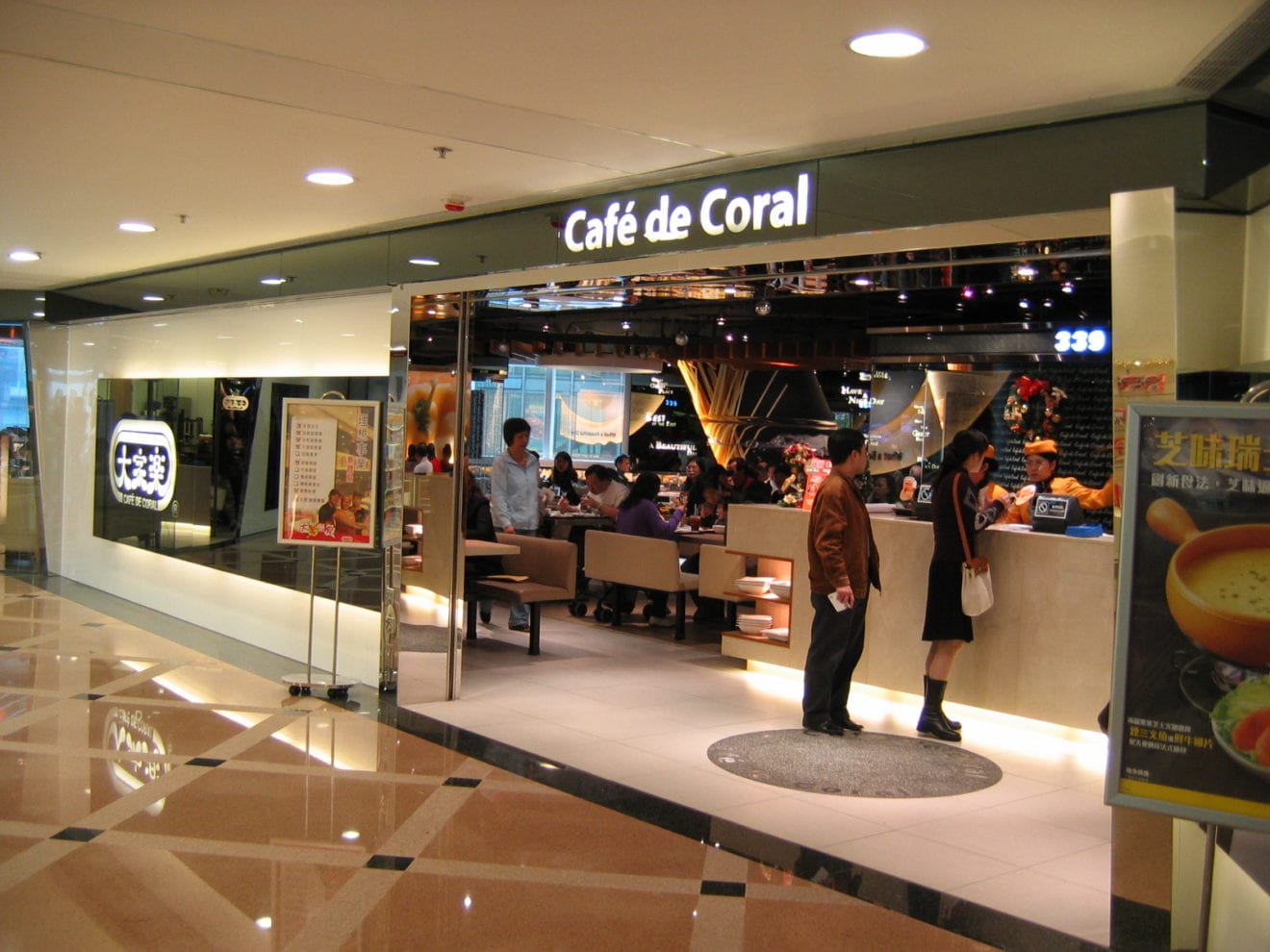
    Listed Hong Kong restaurant and catering operator Cafe de Coral Group managed to minimize the impact on sales during Covid-19 social-distancing restrictions by expanding its online and delivery operations.

    The company operates the Cafe de Coral fast food and Super Super Congee & Noodles QSR chains, along with the casual-dining restaurant’s Shanghai Lao Lao, Mixian Sense (pictured above),The Spaghetti House and Oliver’s Super Sandwiches.

    Sales for the year to March 31 decreased by a modest 6.2 percent to US$1.03 billion, with the Hong Kong casual-dining business taking the biggest hit, down 14 per cent. Overall Hong Kong sales fell by 6.4 percent and Mainland China sales by 6.2 percent.

    Profit attributable to shareholders for the year plunged 87.1 percent $9.5 million.

    Chairman Sunny Lo Hoi Kwong says the coronavirus outbreak will force a re-shuffle of the way businesses to operate as they adapt to the new market landscape.

    “Once the pandemic is under control, I believe Hong Kong – and the world as a whole – will need to adapt to a new business paradigm.”

    Cafe de Coral Group addressed some of the decline in dine-in sales by measures such as introducing self-service ordering kiosks in stores and increasing its emphasis on online ordering and home-delivery services.

    “At the same time, we are making internal adjustments to our operations by fine-tuning dishes and updating menus to optimize meals for delivery. Anticipating a shift from in-restaurant dining to a broader mix of in-store and delivery options, our focus on technology, efficiency and cost-effectiveness will only intensify going forward,” he said. The company also partnered with home-delivery apps.

    Cafe de Coral Group has also been reviewing lease agreements with landlords to reduce overheads. “With the group’s strong, 50-year reputation and our position as one of Hong Kong’s leading listed catering groups, landlords have been quite willing to work with us,” he said.
  • Tea WG opens fourth Hong Kong store

    Tea WG opens fourth Hong Kong store

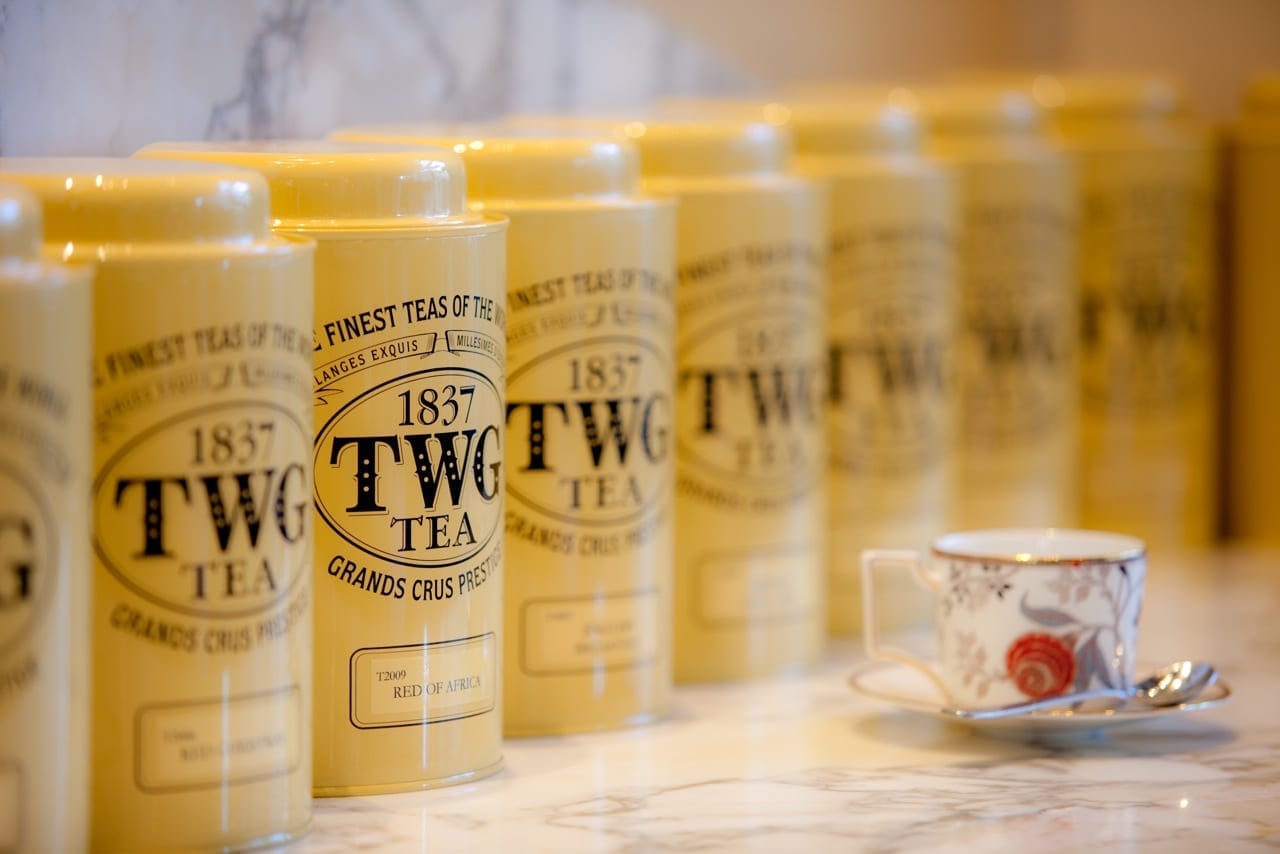
    Singaporean luxury tea brand Tea WG has expanded its Hong Kong footprint, adding a fourth boutique at Sha Tin’s New Town Plaza, its first in the New Territories.

    The retailer, which trades as TWG Tea in other markets, opened two boutiques in Festival Walk and Elements last year following its growing popularity in the territory.

    The teahouse was founded in 2008 by Taha Bouqdib, Maranda Barnes and Rith Aum-Stievenard who conceptualized luxury tea rooms with over 800 types of tea and inspired gastronomy, loved by both locals and tourists in more than 20 countries. Starting out in Singapore, the artisanal tea trend in Asia found success in the luxury market for the modern-day aspirational customer.

    The brand developed a sommelier-training facility to help its staff build an extensive knowledge through tea-tastings, training and exams to better serve customers.

    Although Tea WG’s clientele is mainly women enjoying their afternoon tea set over a cup of the company’s ‘Silver Moon’ green-tea blend, each global boutique serves different types of customers. From “tai tai’s” (wealthy ladies of the house) to Instagramming millennials, the brand is seeing a surprising increase in the number of affluent men splurging on upscale tea accessories and gold tea cups. Tea appreciation workshops (similar to wine tastings) are also held for its VIPs, offering a ‘fine-tea’ experience.

    Tea WG has built a luxury reputation that has drawn five-star establishments from Marriott Hotels to Singapore Airlines to serve the brand – even creating exclusive blends for their own clientele.

    From a Singapore brand to more than 70 locations in the world, including Paris, Tokyo, Dubai, the brand has even won over British and Chinese nationals with its exquisite blends.

    After opening a London salon and boutique flagship, Tea WG aims to expand to the US and Australia – but in the meantime, customers there can buy packaged tea through the brand’s mobile app and online store.

  • Chinese tea chain Heytea leaving Hong Kong

    Chinese tea chain Heytea leaving Hong Kong

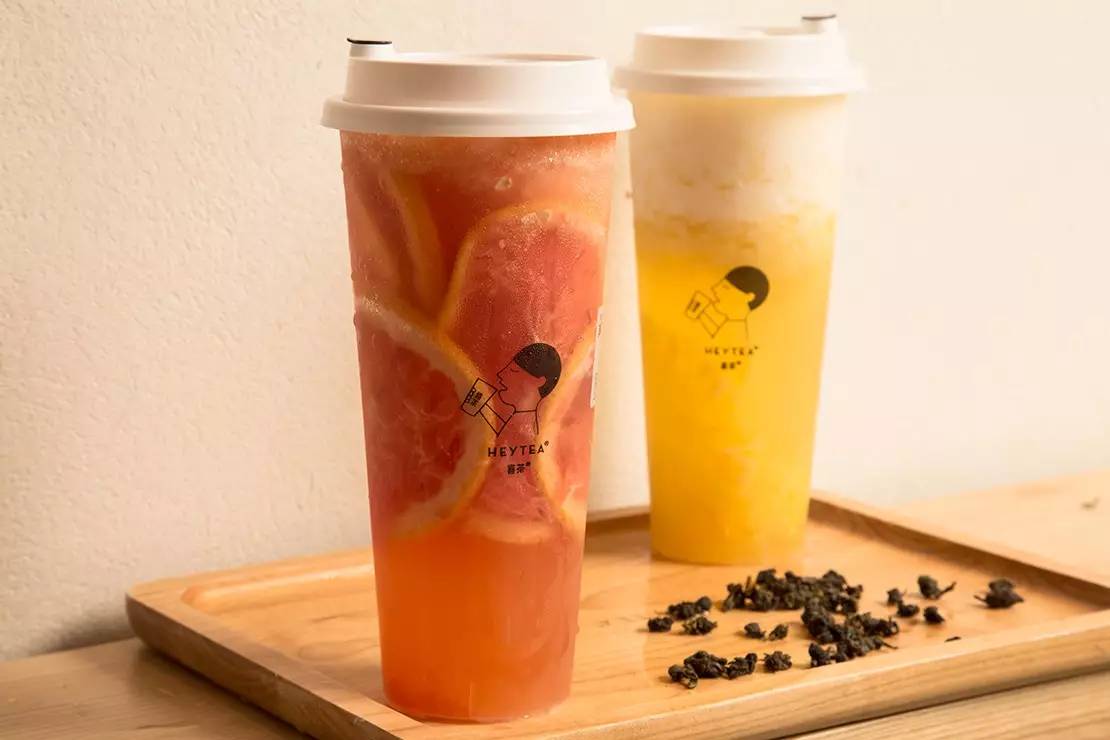
    Chinese tea chain Heytea has closed three-quarters of its Hong Kong network, leaving just two stores operating, at Causeway Bay’s Times Square and Sha Tin’s New Town Plaza.

    Three of Heytea’s outlets in Tsim Tsa Tsui – at The Sun Arcade and New World Development’s two K11 malls – have been boarded up. A K11 representative shared with Apple Daily that Heytea had rescinded its tenancy at the end of April. The tea chain had entered K11 Art Mall and K11 Musea in March and September last year, respectively. The K11 Musea flagship dubbed the ‘Heytea Lab’ spanned 4000sqft, offering patrons views overlooking Victoria Harbor and featuring the brand’s first tea-cocktail bar. It lasted less than one year.

    Heytea entered Hong Kong in late 2018, with customers queueing for up to four hours at the opening of the inaugural store at New Town Plaza. However, since the protests from June last year, many pro-democratic locals had boycotted the once-hyped tea brand due to its mainland Chinese origins.

    With Hong Kong now divided along political lines, locals initiated their own ‘Hong Kong 5.1 Golden Week’ protest action over the recent long weekend, a reference to the “Five Demands, Not One Less” slogan at the core of last year’s protests. The protest actively supported ‘yellow economy’ businesses that openly support Hong Kong protestors.

    More than 300 Heytea stores continue to operate in Mainland China and the brand made its first international foray into Singapore in 2018. The company sourced its initial funding from He Boquan, an angel investor from IDG Capital, and has just completed another round of financing led by Hillhouse Capital and Coatue Management, valuing the business at RMB16 billion (US$2.3 billion) post-investment.

  • US cafe chain Blue Bottle lifting off in Hong Kong

    US cafe chain Blue Bottle lifting off in Hong Kong

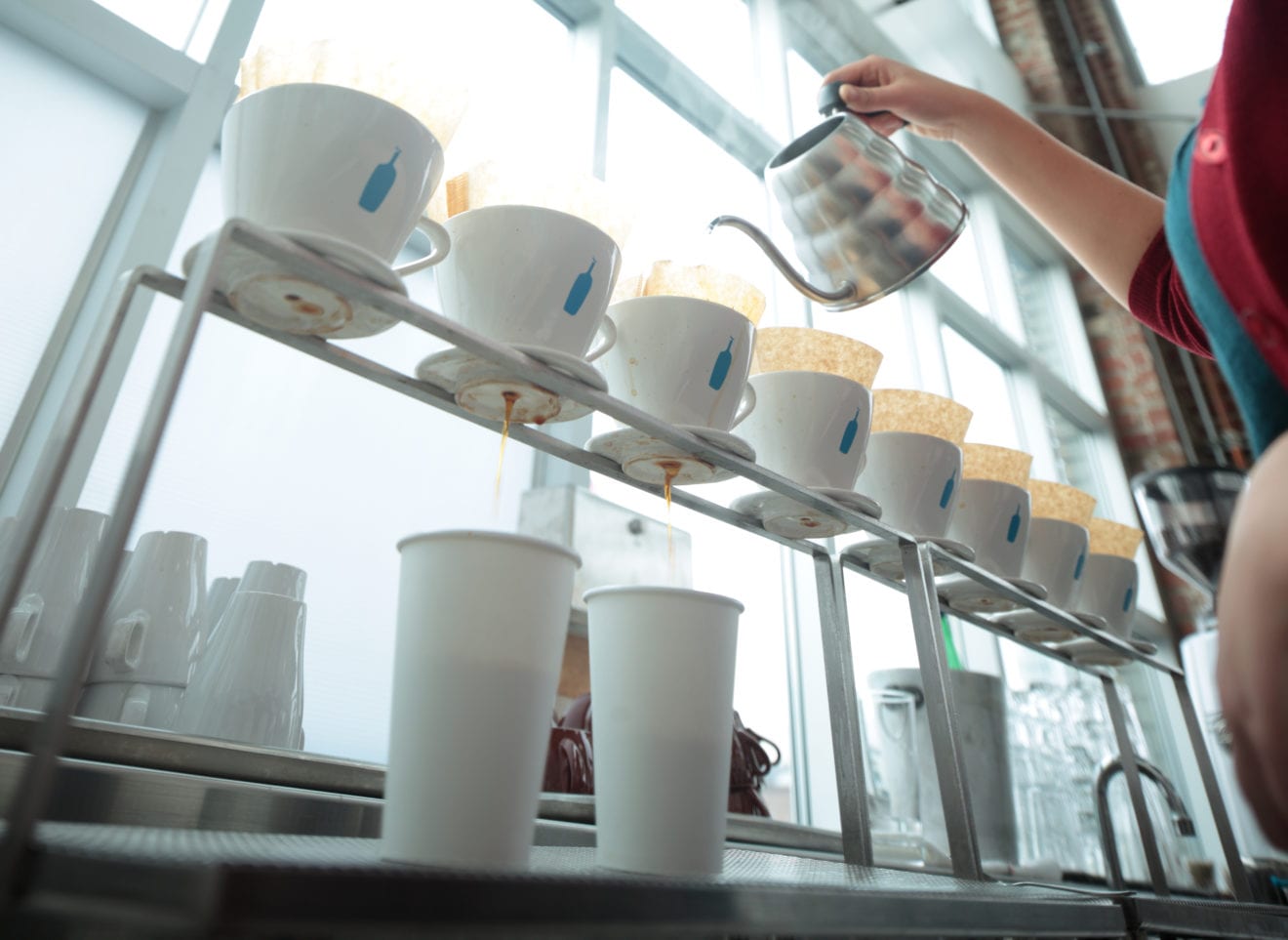
    After months of speculation, US coffee chain Blue Bottle has launched in Hong Kong.

    The modern coffee roaster is currently serving only takeaway coffee from its location in Lyndhurst Terrace due to restrictions on restaurant trading during the coronavirus pandemic.

    The store, expected to open for dine-in services when social-distancing restrictions are eased, features “an industrial medley of timber work surfaces [and] exposed support beams” design, according to LifestyleAsia.

    The store is Blue Bottle’s 22nd venue in Asia. It currently has more than 50 cafes in the US, and recently debuted in Japan and South Korea.

    The brand is known for its single-origin beans and cold-brew coffee which prompted consumer-goods giant Nestle to acquire a 68-per-cent stake for US$425 million back in 2017.

  • Starbucks Japan launches Smart Lounge railway station concept

    Starbucks Japan launches Smart Lounge railway station concept

    Starbucks Japan has launched a new concept store in collaboration with railway operator JR East.

    The “Starbucks Coffee Takanawa Gateway Station” opened yesterday, introducing its Smart Lounge concept – a store space focused on business use. The store features numerous semi-private and single-seat seats to meet the needs of using a cafe for work purposes as well as a large table used for meetings with multiple people.

    Two fully-private booth-style share offices are provided within the store. Power outlets are available for all seats, and the store also operates a mobile battery sharing service. Wifi is available throughout the premises.

    The cafe also specializes in speedy cashless payment via Starbucks Card and Suica, among other e-payment platforms. Via a dedicated app, it allows customers to settle orders in advance and receive products smoothly at stores, designed to allow more effective use of time and reduction of waiting time at cash registers.

    “Starbucks has more than 1500 stores nationwide and connects with 800,000 customers a day,” said Starbucks Japan head of store development Kazuhiro Ishihara. “Each store has its own personality and expression that reflects the locality and needs of each individual.

    “At the Takanawa Gateway Station, we provide a smart and comfortable experience that suits its location and purpose, and integrates with people’s lives to create a future city that no one has yet seen. We aim to be a store and base that can be created with people.”

    Takanawa Gateway Station is situated in Shinagawa town, a new urban area under development that aims to be a new gateway to Tokyo.

    JR East aims to operate 30 shared office spaces by the end of the financial year.

  • Starbucks China to open Coffee Innovation Park

    Starbucks China to open Coffee Innovation Park

    Starbucks China will invest US$130 million in a new roasting facility in 2022 as part of its upcoming Coffee Innovation Park in Kunshan.
    The park will be Starbucks’ largest manufacturing investment outside of the US and its first in Asia, incorporating a roasting plant, warehouse and distribution centre. The firm has committed to strengthening the specialty coffee industry in China, aiming to operate 6000 stores in China within two years.

    “Starbucks has spent the past 20 years sharing its passion for coffee across China and helping to build a leading industry that makes us all proud,” said Starbucks China chairman and CEO Belinda Wong.

    “The roasting facilities at the Coffee Innovation Park will set a blueprint for the future of coffee roasting and supply chain management, and further elevate China’s coffee industry, while supporting Starbucks’ growth in China.”

    The Coffee Innovation Park will incorporate advancements in sustainable manufacturing, smart supply chain innovation, and technology to help deliver the most energy- and water-efficient roasting operations for Starbucks in the world, while minimizing waste.

    Starbucks opened its Yunnan Farmer Support Centre eight years ago to provide open-source agronomy resources to coffee farmers throughout the region. Its new Coffee Innovation Park will source coffees from China and around the world directly from the origin for processing, roasting, packaging and distribution, for the first time in China.

  • DC Super Heroes Cafe in Manila closes for good

    DC Super Heroes Cafe in Manila closes for good

    DC Super Heroes Cafe in Manila permanently closed on Thursday, announcing the move on Facebook.

    In the post, management thanked customers of the SM Megamall store who had been fans of the superheroes-themed cafe since it opened in 2018.

    “To say that it was our pleasure to serve you is an extreme understatement. Our goal was to create a place where every superhero fan can enjoy good food and feel at home. Seeing your faces when you walk into our store, when you talk excitedly with our team about how you enjoy all the small details when you acknowledge the service and food makes it all worth it”.

    The DC Super Heroes Cafe in Manila, managed by Edric Chua. was known for its DC-inspired food and drinks. It also offered DC superhero merchandise collections for characters including Batman, Superman and Wonder Woman. Even though closing, the shop promised customers it will still continue to sell merchandise through its Facebook account.

    “We would have loved to extend our stay, but these are trying times. The most important thing to remember now is to stay properly informed, and to stay safe,” the company concluded.

    In the end, DC Super Heroes Cafe in Manila described its customers as “the true heroes”.

  • First Starbucks Reserve store in Penang opens at Gurney Plaza

    First Starbucks Reserve store in Penang opens at Gurney Plaza

    Starbucks has opened its first Reserve store in Penang, Malaysia.

    The new store, located in Gurney Plaza, is the 12th Starbucks Reserve Store in Malaysia and features an interactive coffee bar equipped with a variety of brewing equipment.

    Starbucks Reserve Gurney Plaza has two bars, the main one serving core Starbucks products as well as a coffee bar that highlights rare, small-lot coffees from around the world.

    “The opening of Penang’s first Starbucks Reserve further reinforces our coffee leadership here in Malaysia,” said Starbucks Malaysia & Brunei MD Sydney Quays, “while also committing to fostering coffee education and moments of connections between our Starbucks partners [employees] and our customers.”

    The materials and patterns used in designing the store highlights the main stage where the Reserve bar sits, and is a nod to locally sourced textiles. The store’s ceiling element is inspired by the patterns and textures of the mountains where many Arabica coffee cherries are grown, and is featured throughout the store.

    Customers can enjoy the classic Starbucks menu in addition to specialty beverages inspired by the six Starbucks Reserve Roasteries around the world, including Shanghai, Milan and Tokyo.

  • Reliance to open Armani Cafe in India

    Reliance to open Armani Cafe in India

    Indian conglomerate Reliance Industries is launching a Michelin-star restaurant in Mumbai in partnership with Italian luxury firm Emporio Armani.

    The first Armani Cafe venue is set to open in the firm’s upcoming luxury Bandra Kurla mall, the Jio World Centre.

    Armani restaurants have opened in several major cities among 20 international locations.

    Reliance is the luxury brand’s master franchisee in the Indian territory, and already operates Emporio Armani, Giorgio Armani and Armani Exchange outlets nationwide. It is expected to roll out Armani’s sportswear brand EA7 in March.

  • Louis Vuitton cafe and restaurant opens in Osaka

    Louis Vuitton cafe and restaurant opens in Osaka

    The world’s first Louis Vuitton cafe and restaurant have opened inside the stunning new Louis Vuitton Maison Osaka Midosuji in Japan.

    In cooperation with renowned chef Yosuke Suga, the first Louis Vuitton cafe, Le Cafe V is located on the top floor, featuring a Cocoon Room, with a terrace and a bar.

    A speakeasy-style door connects the Louis Vuitton cafe, dubbed Le Cafe V, with the brand’s restaurant Sugalabo V where an open kitchen is set up. Design details are similar to the original, connecting to the central theme of the building’s design, according to DesignBoom.

    The Louis Vuitton Maison Osaka Midosuji is the result of a close partnership between Jun Aoki and New York designer Peter Marino, reflecting Osaka’s heritage as Japan’s most important port.

    Inspired by sailing vessels, the store’s facade, designed by Aoki, resembles a floating ship with a light and airy white structure. To create a floating effect, Marino creates wooden floors, wood-clad pillars, and metal ceilings.

    The launch of a Louis Vuitton cafe and restaurant follows similar forays into f&b by other luxury brands, including Tiffany & Co’s Blue Box Cafe, Armani Cafes and Ralph Lauren eateries.

  • Cafe chain Gloria Jean’s heading to India

    Cafe chain Gloria Jean’s heading to India

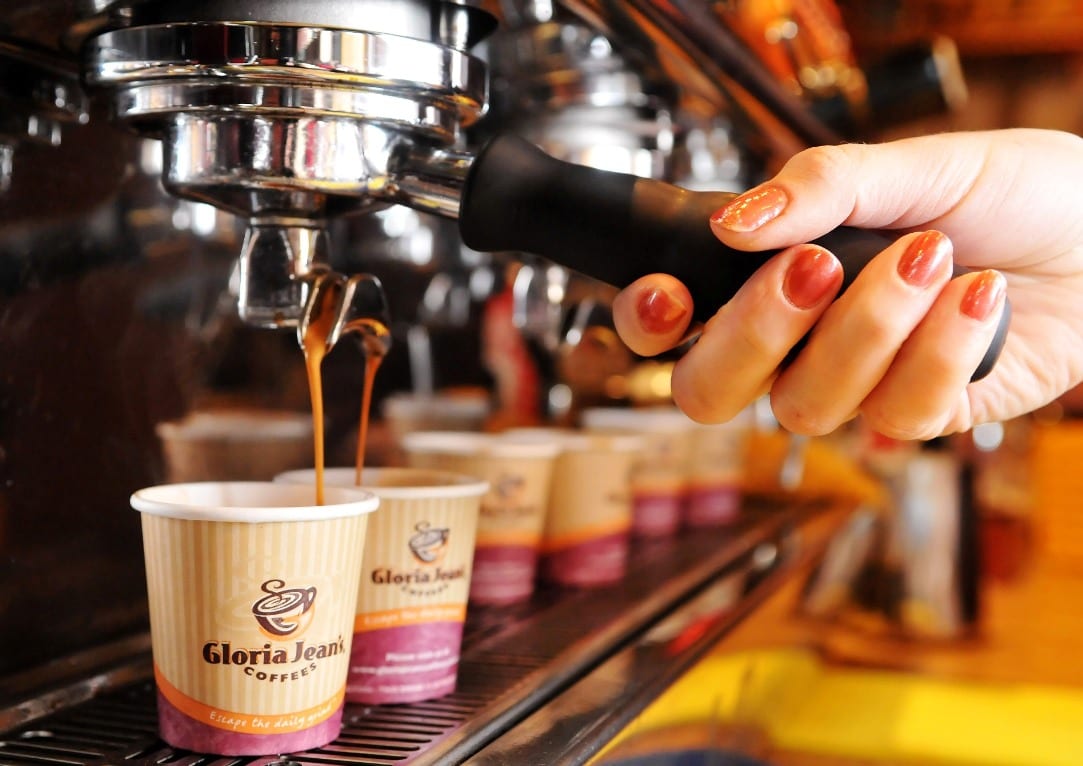
    Australian retail coffeehouse Gloria Jean’s is set to launch in India with its first outlet in Bengaluru.

    The franchise is being taken to India by recently-appointed CEO of Jay Jay Capital & Investments Rohit Malhotra. Jay Jay is planning multiple investments in launching brands new to India in the cafes, bars, restaurants, hotels and resorts, fashion, retail and entertainment sectors.

    Jay Jay subsidiary GJC Hospitality is the master franchise holder for Gloria Jean’s Coffees in India.

    The company has not said how many stores it is planning, but the first will act as a test of the concept enabling the company to finetune its offer for the local market.

    Malhotra says the company will be focusing on quality.

    “At Gloria Jean’s, we take our coffee very seriously, so not only does it taste great, but we also make sure we buy from suppliers that look after both their workers and the environment,” said Malhotra.

    “Our coffee beans are sourced from all over the world and from many different farms of all types and sizes – large plantations, co-operative groups and tiny family farms. This means that there is no one size fits all approach to buying responsibly, but we are focused on promoting sustainable farming and a better outcome for all”.

    Originating in the US but now Australian owned, Gloria Jean’s Coffees has about 760 coffee houses in more than 55 countries.

  • The world’s first Coke cafe in a cinema opens in Malaysia

    The world’s first Coke cafe in a cinema opens in Malaysia

    The first Coke cafe in a cinema complex has opened at the new Toppen Shopping Centre in Tebrau, southern Malaysia.

    It forms part of the local TGV Cinemas flagship complex on the rooftop of the centre.

    Inspired by 1950s-style American diners, the Coke cafe, dubbed Coke Zone, has an interior divided into several areas, and uses Coca Cola’s famous red as its primary theme colour.

    After entering the store, accessible from the mall area and the cinema complex, movie-goers will see a bar with “Coca Cola” sign above it where they can order fresh Coke and snacks like popcorn or confectionery. For the opening, in November, a Christmas-themed area has been created adjacent to the bar with an artificial fireplace and a Christmas tree displayed along with Coca Cola’s artwork, creating an Instagrammable spot.

    Large sofas in the central area of Coke Zone provide a space for customers to relax and wait for their movie session. The store also features free high-speed WiFi and charging stations for mobile devices.

  • Frozen-themed cafes pop up in Japan

    Frozen-themed cafes pop up in Japan

    Frozen-themed cafes are popping up in Japan, marking the release of the Disney animated film Frozen 2.

    A Frozen-themed cafe has opened as a time-limited pop-up at Oh My Cafe at Tokyu Plaza in Harajuku. The themed pop-up will remain open until January 13. A second Frozen pop-up cafe is planned to open at Gelato Pique Cafe in Tamagawa Takashimaya today, running through to January 26.

    The cafes offer dishes themed and stylized according to characters from the movie, particularly loved in the Japanese market since the screening of the original film in 2014. They also sell merchandise related to the Frozen franchise.

    Additional Frozen-themed cafes are set to launch in Fukuoka, Nagoya, Osaka, Hokkaido, and Kyoto.

  • Hollys Coffee out-rates Starbucks in Korean poll shock

    Hollys Coffee out-rates Starbucks in Korean poll shock

    Homegrown South Korean chain Hollys Coffee has replaced Starbucks as the country’s most-loved coffee brand.

    The Korea Consumer Agency conducted a survey of 1031 consumers between September 4 and 16 who had frequented six major coffee brands in South Korea, in which Hollys Coffee received the highest score of 3.95/5 in overall consumer satisfaction.

    Starbucks, the most successful coffee brand in South Korea, received 3.93 points, ranking second.

    In terms of quality satisfaction, which includes facility management and consumer engagement, however, Starbucks received the highest score of 4.12 points.

    Hollys Coffee received the highest score of 3.99 for accessibility and convenience, and Ediya Coffee, a local low-cost franchise operator, was most acclaimed for pricing and special offers (3.62 points).

    However, roughly half of all respondents said they frequent a certain coffee brand primarily because of geographical proximity.

    Consumers believed 3055 won (US$2.60) was the ideal price for a cup of Americano.

    The data also showed that 23.2 per cent of the consumers, however, spent an average of 5000 won for a cup of coffee, suggesting that many consumers think coffee is overpriced.

  • Cafe de Coral sacrifices margin for profit in tough half year

    Cafe de Coral sacrifices margin for profit in tough half year

    Cafe de Coral Group sacrificed margin to maintain sales in the first half of this year, resulting in a 34.5-per-cent decline in profit attributable to shareholders.

    Group sales remained relatively stable in the six months to September, up 1.6 percent to HK$4.264 billion with profit down from $228.7 million to $149.7 million.

    Chairman Sunny Lo Hoi Kwong said weak consumer sentiment impacted the company’s quick-service restaurant network and casual-dining business in Hong Kong, resulting in declining sales.

    “In order to maintain sales and protect market share, the group launched more value meals and promotions, which affected margins in the short term. On the other hand, operating costs including labor and rent have been rising, resulting in a decline in profit during the period under review,” he said.

    The Cafe de Coral chain itself reported flat growth for the half-year. After consolidation of stores last year, the company opened seven new ones in the first half, ending the period with 165 – three more than at the end of March.

    More new stores are planned for the rest of the financial year, mainly in community areas with high potential and better returns, and the brand will launch on Foodpanda and mobile apps in the current quarter.

    The Super Super Congee & Noodles chain opened three new stores taking its network to 48, but same-store sales fell by 1 percent year on year.

    The company’s Chinese-cuisine brands, Shanghai Lao Lao and Mixian Sense, ended the period with 13 and 20 shops respectively (up from 12 and 17 in March). Kwong said the brands are expected to deliver a more solid contribution to the group’s casual dining portfolio in the future.

    Non-Chinese brands The Spaghetti House and Oliver’s Super Sandwiches, now have eight and 14 shops respectively (up from seven and 13 in March) and despite the periodic closure of some key shops during the half, The Spaghetti House’s repositioning as a family restaurant and its 40th-anniversary promotions generated a positive market response.

    Meanwhile, revenue from Mainland China increased by 3.6 percent to $611.9 million, despite a 4.5-per-cent decrease in the value of the Renminbi against the Hong Kong dollar.

    “Our Southern China fast-food business carried the strong momentum of the previous financial year into the first half of FY2019/20, achieving a 9.6-per-cent increase in revenue to RMB516 million, with same-store sales growth of 6 percent as existing outlets maintained healthy growth and new shops performed well,” said Lo.

    Five new shops opened in strategic city locations including Guangzhou, Shenzhen, and Zhuhai – taking the network to 107 as at September 30 – a net increase of 10 stores since March.

    An additional 16 shops are planned to open during the second half of the fiscal year and the group has established strategic alliances with eight real-estate developers operating in the Greater Bay Area to jointly collaborate on network expansion.