Tag: car

  • Toyota Sees Smaller-Than-Expected Profit Rise This Year

    Toyota Sees Smaller-Than-Expected Profit Rise This Year

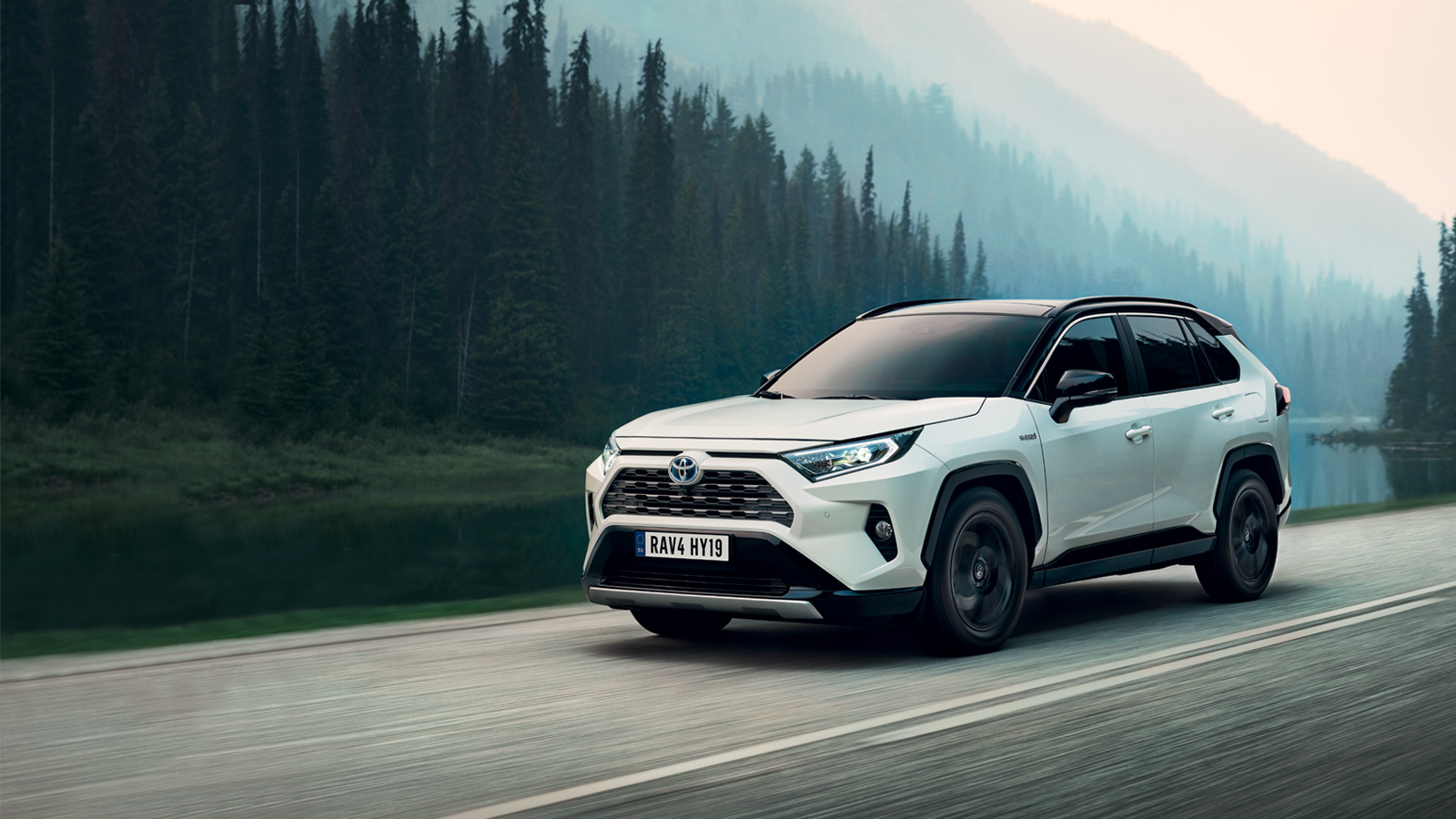
    Toyota Motor forecast on Wednesday a 3.3 percent rise in operating profit for the current year due to cost reduction measures and changes to its depreciation methods.

    Japan’s largest automaker expects profit to rise to 2.55 trillion yen ($23.20 billion) in the year to March 2020, slightly lower than the 2.61 trillion yen average of 23 analyst estimates compiled by Refinitiv.

    Operating profit was 2.47 trillion yen for the year ended March, below the average 2.51 trillion yen estimate of analysts.

    The automaker also forecasts global group retail sales of 10.74 million vehicles for the current year, compared with 10.6 million in the previous year.

    Toyota’s profit forecast is based on the assumption that the yen will trade around 110 to the U.S. dollar in the current financial year, compared with 111 yen in the year just ended.

  • BMW 8 Series Gran Coupe Teased Getting Ready for June

    BMW 8 Series Gran Coupe Teased Getting Ready for June

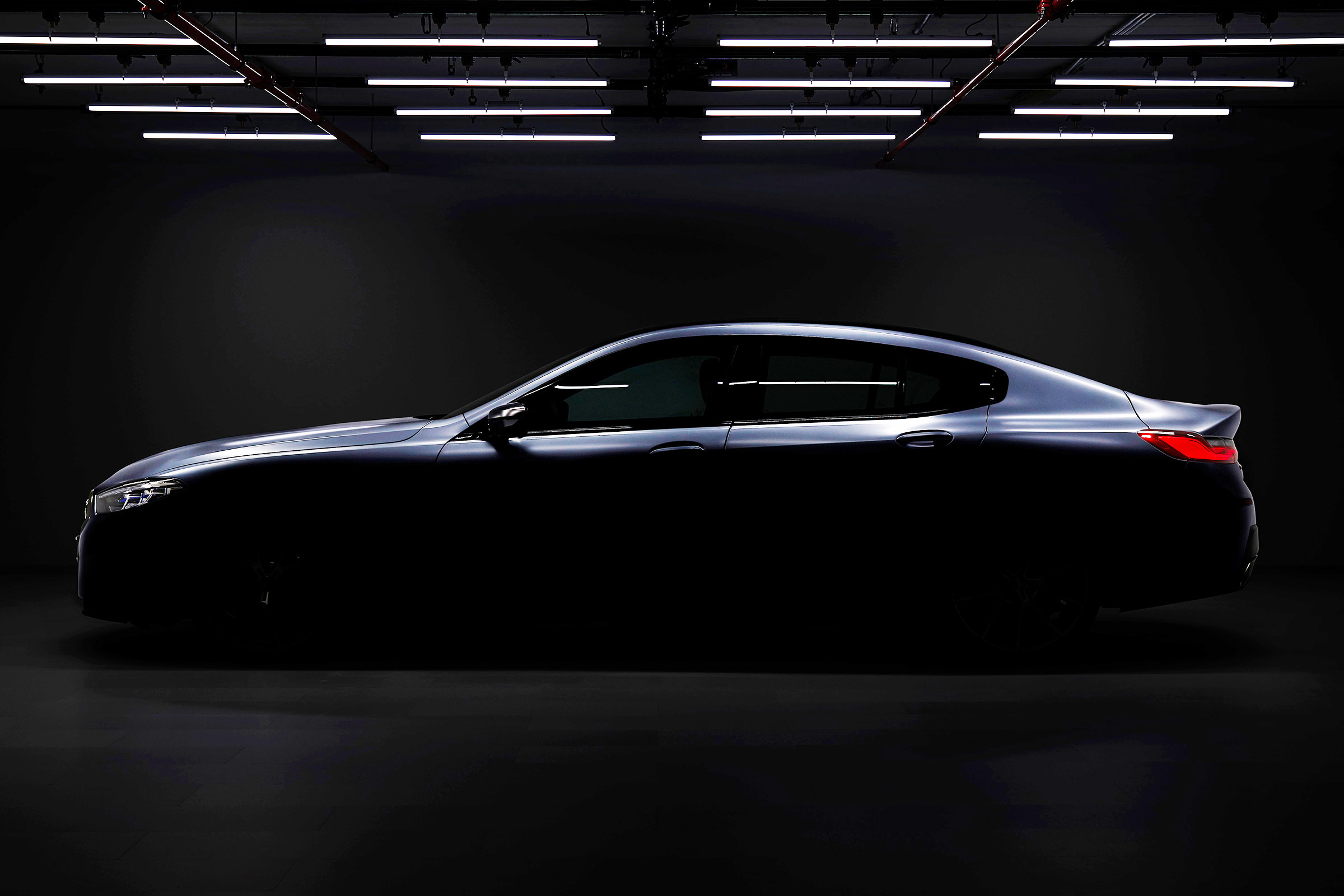
    We’ve gone gaga over the 8 Series Coupe when BMW first teased it. It looks jaw-dropping gorgeous but it left us wondering if the new flagship will be limited to two-doors. Sooner rather than later, the spy pictures of the four-door Gran Coupe surfaced online and we just couldn’t wait to see the car. Finally, the Bavarian carmaker has teased the 8 Series Gran Coupe and has confirmed that the wraps will be pulled off this year in June in Munich.

    BMW came up with a rather interesting strategy to reveal the 8 Series range. Two of the best looking models of the line-up- the two-door coupe and convertible were shown first and they just blew our mind. And finally the four-door Gran Coupe has followed. Though the teaser image reveals the side of the Gran Coupe which looks gracious and sumptuous, the front and rear are expected to be identical to its two-door counterpart. However, the wheelbase will be larger than the Coupe version, given that it will seat four. The sharp flowing character lines build upon the aesthetics and the rising shoulder line looks strong throughout its length. The low slung stance further keeps the sporty quotient intact.

    BMW will launch the 8 Series Gran Coupe in September this year which is when we would get to know more about it including the engine line up. We expect it to share engines with the latest-generation 7 Series sedan. So the 3.0-liter, inline six-cylinder petrol, and diesel engines are expected under the hood.

  • Elon Musk Owes $507 Million To Banks Helping Tesla Raise Capital

    Elon Musk Owes $507 Million To Banks Helping Tesla Raise Capital

    Tesla Chief Executive Elon Musk personally owes $507 million to Wall Street banks involved in Tesla’s stock and debt sale, backed by his stake in the electric car maker, a company filing showed on Thursday.

    The lending was disclosed in Tesla’s prospectus on Thursday to raise up to $2.3 billion with new shares and convertible debt, and it was $117 million less than the personal loans to Musk disclosed in Tesla’s previous prospectus in 2017.

    Still, Tesla said that if the price of its stock falls and the banks force Musk to sell some of his shares, that could create additional pressure on the stock.

    Tesla jumped over 4% after Tesla disclosed capital raising plans, which soothed investors’ recent concerns about the Palo Alto, California company and pulled its stock up from two-year lows.

    Musk, who owns 20% of Tesla, has taken personal loans from Wall Street banks for years. A Tesla 2017 prospectus showed $624 million in loans to Musk.

    The filing on Thursday showed Musk owed money to three banks working on the capital increase.

    Goldman Sachs Group Inc has $213 million in loans outstanding to Musk, while he owes Morgan Stanley $209 million, and another $85 million to Bank of America Corp . Goldman was not mentioned as a personal lender to Musk in the 2017 filing.

    Those loans are backed by Musk’s shares in Tesla, currently worth a total of around $8 billion. If Tesla’s stock declines, then Musk could be forced to sell some of those shares under terms of the loan, according to the Tesla filing.

    Mark Williams, a professor of finance at Boston University, said that investment banks can run into conflicts of interest with their deals with companies, their founders and CEOs, testing their rules to keep different businesses separate.

    “This is particularly true in the case of Tesla where you have an aggressive and vocal CEO who is prone to pushing the legal limits and gain terms that might run counter to Goldman’s conflict of interest policies,” Williams said.

    Goldman and Citigroup Inc, the top-line book runners in Thursday’s capital raise, both have “sell” ratings on Tesla’s stock, which is unusual but not exceptional on Wall Street.

    At the end of 2018, Musk and his trust had 13.4 million Tesla shares pledged as collateral for personal debts, according to another filing. That is down from 13.8 million shares at the end of 2017.

    Tesla, Morgan Stanley and Goldman Sachs declined to talk about the loans. Tesla has a policy that caps executives’ borrowings at a quarter of the value of the shares pledged as collateral.

    With Tesla repeatedly pushing back forecasts for turning a profit, its stock has dropped 27% year to date.

    Musk plans to buy another $10 million worth of shares as part of the sale announced on Thursday.

  • Hyundai Venue Bags Over 2000 Bookings In Just One Day

    Hyundai Venue Bags Over 2000 Bookings In Just One Day

    The soon-to-be-launched Hyundai Venue SUV has garnered over 2000 bookings in India in just one day. It was just yesterday, on May 2, that the company announced opening pre-bookings for the new subcompact SUV in India. Slated to be launched on May 21, 2019, the new Hyundai Venue is the first subcompact SUV from the South Korean carmaker, and it will rival the likes of Maruti Suzuki Vitara Brezza, Mahindra XUV300, Ford Ecosport, and Tata Nexon. Customers can book the new Venue online on the company’s website or at Hyundai dealerships across India, for a token of ₹ 21,000. Few Hyundai dealers have been accepting bookings for the Venue from mid-April itself.

    The new Hyundai Venue will be offered in four variants and three engine options. While the variant details are still unknown, the SUV will come powered by an all-new 1.0-litre Turbo petrol engine, along with the tried and tested 1.2-litre naturally-aspirated petrol and the 1.4-litre diesel engine. The new 1.0-litre, three-cylinder Turbocharged engine will also get the option of a 7-speed dual-clutch transmission, while the 1.2 petrol and 1.4 diesel will come with a 5-speed and 6-speed manual gearbox, respectively.

    Visually, the Hyundai Venue comes with new design and styling, more in line with the company’s international SUV like the new Santa Fe and Palisade. The features list includes – a cascading grille with chrome detailing, projector headlamps with LED DRLs, high mounted indicators, and projector foglamps. The SUV also gets a set of new sporty 16-inch alloys, roof rails, and LED taillamps with Z cluster patterns. Hyundai will offer the SUV in 7 exterior colour options- Denim Blue, Lava Orange and Deep Forest along with three Dual Tone options.

    The Venue gets a new, fresh-looking all-black cabin with a new steering wheel, a well-laid-out dashboard, and nice fit and finish. For your comfort and convenience, the SUV also gets remote engine start/stop, remote climate control, voice recognition, vehicle relationship management, electric sunroof, cruise control, automatic climate control, rear AC vents, cornering lamps, and a cooled glovebox. This is in addition to an 8-inch floating touchscreen display, loaded with Apple Carplay, Android Auto, navigation and more.

    The new Hyundai Venue is the first connected car in its segment thanks to the BlueLink connectivity system. The system offers 10 India-only features with a total of 33 connectivity features including geo-fencing, speed alerts, SOS, panic notifications, destination sharing, and road-side assistance and so on.

  • Hyundai Venue Pre-Launch Bookings Open

    Hyundai Venue Pre-Launch Bookings Open

    The all-new Hyundai Venue will be launched in India on May 21 and the Korean carmaker has finally started accepting bookings. Pre-launch bookings for the Venue start today for an amount of ₹ 21,000 online on the company’s website as well as dealerships across India. The Hyundai Venue will be offered in India in four variants and seven exterior colour options- Denim Blue, Lava Orange and Deep Forest along with three Dual Tone options.

    Hyundai will offer the Venue in India with two petrol and one diesel engine options. The latest of all is the 1.0-litre, three-cylinder Turbocharged engine which puts out 118 bhp and 172 Nm of peak torque and gets a seven-speed dual-clutch transmission as an option. It also gets the i20 sourced 1.2-litre, four-cylinder kappa engine which develops 82 bhp and 114 Nm of peak torque and is mated to a five-speed manual gearbox and a 1.4-litre, four-cylinder CRDi engine which churns out 89 bhp and 220 Nm of peak torque and is mated to a six-speed manual gearbox.

    The Venue will be India’s first connected car with 33 connected features out of which 10 will be India specific. It will come equipped with an electric sunroof, cruise control, rear AC vents, Projector headlamps, cornering lamps and a cooled glovebox. The long feature list is expected to add strength to the Venue and help it compete against the competition. In India, the Hyundai Venue will rival the likes of the Maruti Suzuki Vitara Brezza, Mahindra XUV300, Ford Ecosport and Tata Nexon.

  • JK Tyre Launches Blaze Rydr For Premium Indian Motorcycles

    JK Tyre Launches Blaze Rydr For Premium Indian Motorcycles

    JK Tyre has announced the launch of the new ‘Blaze Rydr BR43′ tyre for premium motorcycles in India. These are new radial tubeless tyre and the company will be offering them in size 140/70-17 and will be targeted towards performance-oriented riders. The Blaze Rydr tyre comes with rigid shoulder design for better grip, cornering stability and a specialized tread pattern for better traction and smart water channelling. The company says that the tyre is best-suited for customers who are riding in the cities and highways.

    Vikram Malhotra, Marketing Director, JK Tyre & Industries said, “We develop products that enhance our customers’ driving and riding experience. We have entered the two-wheeler tyre segment recently and the response from the market has been very encouraging. The Blaze Rydr BR43 is another addition to fulfill the requirements of higher CC motorbike riders and we are confident that it will further improve the riding experience of customers. This further reinstates our commitment to meet the emerging needs of the market and introduce tyres that help to maintain pace with changing market requirements.”

    The new tyre comes with advanced cross over groove pattern for enhanced performance and is developed with superior tread rubber. Furthermore, the new Blaze Rydr tyres have been tested in rigorous condition to check for superior ride and handling, and it’s 100 per cent run-out tested against vibration and wobbling as well. The company says that the tyres were even tested on the race tracks by professional riders to determine speed, precision and consistency, and claims that they will allow the riders to experience a comfortable ride with total control.

    JK Tyres has also announced that the complete Blaze two-wheeler range of tyre range comes with a lifetime warranty against manufacturing and non-manufacturing defect under terms and conditions.

  • Honda Car India’s Sales Grow By 23% In April

    Honda Car India’s Sales Grow By 23% In April

    Honda Cars India registered monthly domestic sales of 11,272 units in April 2019 as against 9,143 units in April 2018 registering a growth of 23 per cent. The company has seen a strong sales growth thanks to the new-gen Amaze as also the WR-V. The company even exported 220 units in April 2019.

    Rajesh Goel, Senior Vice President and Director, Sales and Marketing, Honda Cars India Ltd said, “HCIL’s April sales growth is primarily due to lower base effect, as there was no Amaze in corresponding month last year during model runout. The ongoing elections and overall subdued market sentiment continues to affect the sales momentum. Going forward, the industry is heading towards a tougher year impacting sales due to volatility in fuel prices, increase in car prices owing to new regulations and stricter inventory control for smooth switchover to BS6 regime by year end.”

    The company plans to bring more cars to India in 2019. In fact the company had already announced that there would be 6 new models in three years starting 2018. The company has already launched 3 new models in the country in the form of the new-gen Amaze, CR-V and even the Civic. We wait to see what more the company brings to the table.

  • Toyota Domestic Sales Down By 22%

    Toyota Domestic Sales Down By 22%

    Toyota Kirloskar Motor sold a total of 10,112 units in the domestic market. The domestic sales saw a drop of 22 per cent which is a big drop compared to March 2019 which showed a growth of 7 per cent. The company exported 1301 units of the Etios series this month thus clocking a total of 11,413 units. Toyota Kirloskar Motor sold a total of 13037 units in the domestic market this month of April 2018. The company exported 834 units of the Etios series this month thus clocking a total of 13871 units.

    Toyota had even in March talked about the slow pace of the market and also the soaring prices of input costs and even the high insurance costs. Commenting on the sales performance, Mr. N. Raja, Deputy Managing Director, Toyota Kirloskar Motor said, “The industry is currently experiencing a slowdown due to uncertainty of upcoming general elections that looms over the market and this slow pace is expected to continue until the new government is formed. Consumer sentiments has currently dampened due to several factors like tight liquidity, high insurance, high costs.We hope the sales growth momentum to pick up in the upcoming months post election results are out.”

    Things are about to change though as the company is all set to launch the new Glanza Hatchback as also the rebadged version of the Vitara Brezza which will mark the company’s entry into the subcompact SUV segment. The company does say that the sales are likely to pick up post election results

  • Indian Consumers Face Post-Election Fuel Price Shock

    Indian Consumers Face Post-Election Fuel Price Shock

    Surging global oil prices will pose a first big challenge to India’s new government, whoever wins an election now under way, especially as domestic prices have been allowed to lag, meaning consumers are in for a painful surge as they catch up.

    For oil-import dependent India, higher global prices could lead to a weaker rupee, higher inflation, the ruling out of interest rate cuts and could further weigh on twin current account and budget deficits, economists warned.

    But compounding the future pain, state-run fuel suppliers and retailers have held off passing on to consumers the higher prices during a staggered general election, which began on April 11 and ends on May 23, according to sources familiar with the situation.

    That delay is expected to be unwound once the election is over. And there could be additional price increases to make up for losses or profits missed during the period of delayed increases, the sources said.

    In some major Asian countries, such as Japan and South Korea, pump prices are adjusted periodically so they move largely in tandem with international crude prices.

    That was what was supposed to happen in India but the election means there have been many days when pump prices have been unchanged.

    In New Delhi, for example, while crude oil prices have gone up by nearly $9 a barrel, or about 12 percent, in the past six weeks, gasoline prices have only risen by 0.47 rupees a litre, or 0.6 percent.

    State-controlled fuel suppliers and retailers declined to say why they had delayed price increases, or discuss whether there has been any pressure from the government of Prime Minister Narendra Modi.

    A government spokesman declined to comment.

    The opposition Congress party said Modi’s government was violating its own policy of daily price revision by advising the state oil companies to hold prices steady.

    “The government should cut fuel taxes otherwise consumers will have to pay much higher oil prices once the elections are over,” said Akhilesh Pratap Singh, a senior leader of the Congress party.

    Nitin Goyal, treasurer at the All India Petroleum Dealers Association, representing fuel stations in 25 states, said prices were similarly held down for 19 days in the southern state of Karnataka last year, when it held state assembly elections. Only for them to surge after the vote.

    “Consumers should be ready for a rude shock of a massive jump in retail prices, similar to the level we have seen in the Karnataka state election,” Goyal said.

    Sri Paravaikkarasu, director for Asia oil at Singapore-based consultancy FGE, said retail prices of gasoline and gasoil prices would have been up to 6 percent, or about 4 rupee, higher if they had been allowed to rise in line with global prices.

    “Indian pump prices have failed to keep up with the recent uptrend in crude prices,” Paravaikkarasu said.

    “With the country’s general elections underway, the incumbent government has been keeping pump prices relatively unchanged.”

    India had switched to a daily price revision in June 2017 from a revision every two weeks, as the government allowed retailers to set prices.

    But the government faced protests last October when retailers raised prices by up to 10 rupees a litre after the crude oil price went above $80 a barrel, forcing it to cut fuel taxes.

    Global prices rose to their highest level in 2019 on Thursday, days after the United States announced all Iran sanction waivers would end by May, pressuring importers including India to stop buying Tehran’s oil. [O/R]

    Higher oil prices will mean Asia’s third largest economy is likely to see growth of less than 7 percent rate this fiscal year, economists said. Growth slowed to 6.6 percent in the October-December quarter, the slowest in five quarters.

    Rating agency CARE has warned that a 10 percent rise in global oil prices could increase demand for dollars, putting pressure on the rupee and widening the current account deficit.

    India’s oil import bill rose by nearly one-third in the fiscal year ending March 31 to $140.5 billion, against $108 billion the previous year.

    “The increase in international oil prices is a credit negative for the Indian economy,” ICRA, the Indian arm of the Fitch rating agency, said in a note.

    “Every $10/ bbl increase in crude oil prices increases the fiscal deficit by about 0.1 percent of GDP.”

    Any big price rise would also build a case for the central bank to keep rates steady, or even raise them.

    The Reserve Bank of India’s Monetary Policy Committee, which cut the benchmark policy repo rate by 25 basis points this month, warned that rising oil and food prices could push up inflation.

    Policymakers are worried that a sustained increase in the oil price in the range of $70-75/barrel or higher can move the rupee down by 3-4 percent on an annual basis.

    The rupee has depreciated by 1.24 percent against the dollar since a year high in mid-March.
  • Hyundai Introduces Smartphone Based EV Performance Control Technology

    Hyundai Introduces Smartphone Based EV Performance Control Technology

    Hyundai Motor Group has announced the development of ‘smartphone-electric vehicle pairing based performance adjustment technology,’ which allows users to customise primary functions through a smartphone app. The company says that it is in fact an industry first innovation. Drivers can use this technology to adjust seven performance features including the maximum torque output of the motor, ignition, acceleration and deceleration abilities, regenerative braking capacity, maximum speed limit, responsiveness, and energy use on climate control.

    As electric vehicles continually expand their market share, especially in rental or car-sharing industries, the new technology will allow drivers to use their custom settings in whichever electric vehicle they drive by downloading their profile from the server. The application provides optimised settings for a designated destination by analysing the remaining distance and electric energy requirement. It can also accommodate sportier driving by recommending tailored performance settings.

    The application provides optimised settings for a designated destination by analysing the remaining distance and electric energy requirement

    Beyond the driver’s seat, users can share their customisation settings online as well as try out other users’ custom settings. Customers can also apply recommended settings by Hyundai based on the condition of roads, from country roads to the city centre or mountain ranges. Hyundai Motor Group will utilise blockchain technology to prevent security issues while users upload and share their custom sittings on the server.

    In the process of uploading and sharing custom settings, the system encrypts major performance parameters in a blockchain network by creating new data blocks and stores them in the distributed data storage system to block unauthorised manipulation.

  • Porsche Celebrates 10 Years Of The Panamera

    Porsche Celebrates 10 Years Of The Panamera

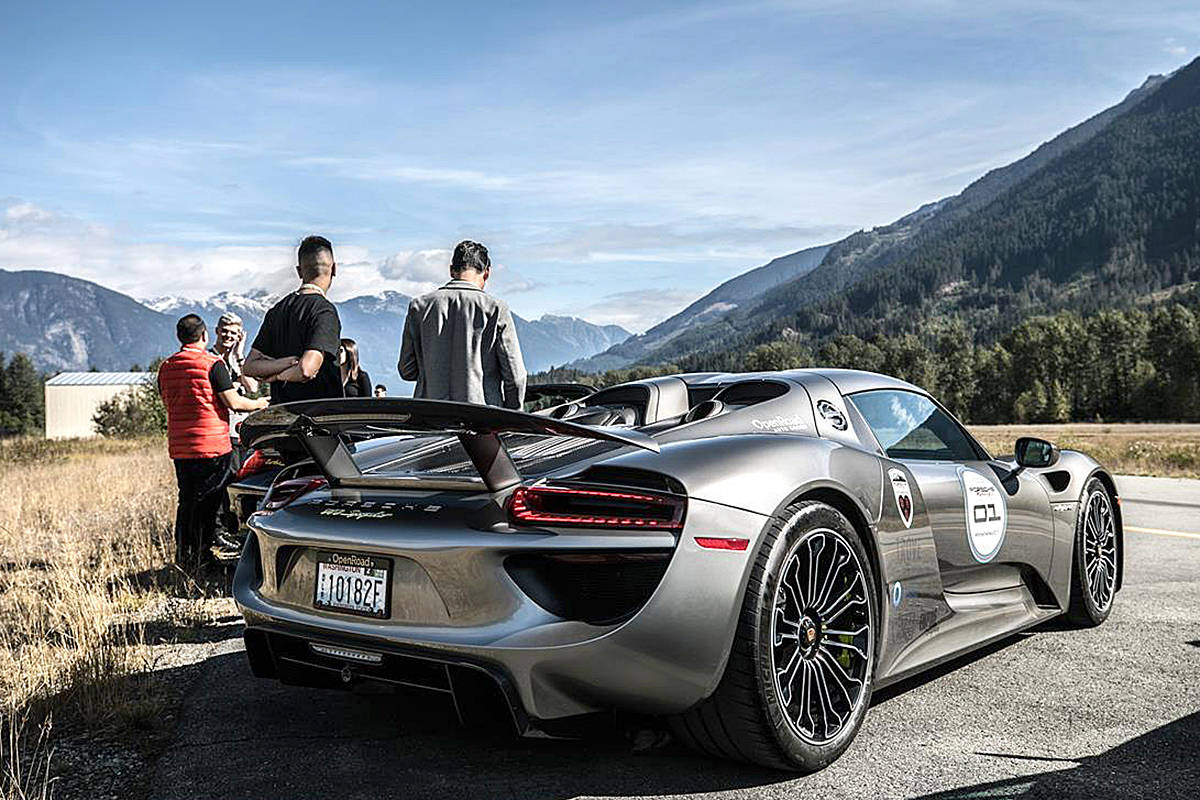
    The Porsche Panamera celebrates 10 years today and it was in April 2009 that the company first presented this Gran Turismo to the world. While Porsche initially planned production of 20,000 units per year, the Panamera clearly exceeded those expectations. More than 2.35 lakh cars have been delivered to date worldwide and the demand is clearly increasing. Put it was a tough battle to get this car on the production line. Porsche engineers kept coming back to this idea.

    In the 1950s, they developed a comfortable four-seater based on the 356. The Type 530 had a lengthened wheelbase, larger doors and a raised roof at the rear. Others followed, including a four-door prototype based on the 911 and, in the 1980s, lengthened variants of the 928. Ferry Porsche used one of these as his private car. In 1988, Porsche made a new attempt with the Type 989: the four-door coupe offered space for two full seats in the rear. The drive power was provided by a V8 front engine. Design elements from the 989 were later incorporated into the 911 of the 993 generation. Like all similar concepts before it, however, the 989 remained a prototype. For economic reasons, development was discontinued at the start of 1992.

    Then in the early 2000’s, Porsche conducted market studies, analysed the competition and decided to develop a four-door hatchback saloon and that saw the emergence of the Panamera. The Panamera’s first official appearance was on April 19, 2009 in Shanghai. The first model, internally known as G1, set standards in its class thanks to the wide spread between sportiness and comfort. It was packed with innovations: for the first time, a luxury class production model was offered with a transmission and start-stop system. The top model Panamera Turbo also introduced air suspension with additional air volume on demand, as well as an adjustable, multi-dimensionally extendable rear spoiler. The Gran Turismo also set the course for all other Porsche model lines with its new display and operating concept.

    The model range grew rapidly and sustainably, culminating in an engine range covering power output from 250 to 550 horsepower with petrol, diesel and hybrid drives as well as rear-wheel and all-wheel drive. In the beginning, the naturally aspirated V6 and V8 engines were available with a six-speed manual transmission. Most customers opted for the seven-speed Porsche dual clutch transmission PDK. Diesel and hybrid drives were available in combination with an eight-stage automatic transmission.

    Of course, there was a second generation to be made that it made its world debut on June 28, 2016. The development involved multiple streams: in addition to the Gran Turismo with a standard and extended wheelbase, a third variant was developed on the same platform: the Sport Turismo. From 2017, its avant-garde design and body concept brought more versatility to the luxury vehicle class.

    Thanks to chassis systems like the three-chamber air suspension, rear-axle steering and the PDCC Sport electromechanical roll stabilisation system, the Panamera was as at home on the streets as it was on the track. This was underpinned by a lap time of 7:38 minutes on the Nurburgring-Nordschleife – set by Porsche works driver Lars Kern in a standard Panamera Turbo. The engine range was consistently optimised, while the power output values were increased: new engines were introduced across the range, and the transmission was now an eight-speed PDK. The power output spectrum started at 330 hp, today the top model is a 680 hp plug-in hybrid.

    Now, for Porsche, it’s all going to be about electric mobility solutions and of course, the Panamera too has already gone that way. It’s just the beginning for the decade old Panamera and wait to see what more comes from this very capable luxury saloon.

  • Honda BR-V Facelift Unveiled In Indonesia

    Honda BR-V Facelift Unveiled In Indonesia

    Honda has revealed the updated BR-V at the 2019 Indonesia International Motor Show. The BR-V has not been doing great in terms of sales in India. The company has been selling close to 500 cars on an average and a facelift might just help in lifting those sales figures. However, we don’t yet know if this facelift will make to India yet as there’s no confirmation from the company. The BR-V does look prettier than before and the revised front grille and even the new bumper add to the design of the car. It looks bolder and the chrome that’s spread around the fog lamps, and even the slat on the front grille, adds to the premiumness of the BR-V.

    There’s a trapezoidal air dam and a silver scuff plate too. From what we can see, the facelift of the BR-V gets projector headlamps with L-shaped daytime running lights. The company has also tweaked the rear bumper slightly, so the BR-V still has the muscles and the character lines make sure that the car still oozes that SUV-ness. The BR-V facelift also gets 16-inch dual tone alloy wheels.

    There aren’t many changes made to the cabin of the BR-V as it retains the all-black dashboard and the touchscreen infotainment system. While the car launched the Indonesia is a 1.5-litre petrol, the one available in India is a 1.5-litre diesel as also a 1.5-litre petrol. With the new regulations coming into the country, carmakers are making sure that the line-up it brings to the market will be sustainable as also will boost its sales in the market. We wait to see what the company retains for the Indian market

  • Maruti Suzuki Ertiga Launched With The New 1.5-Litre Diesel

    Maruti Suzuki Ertiga Launched With The New 1.5-Litre Diesel

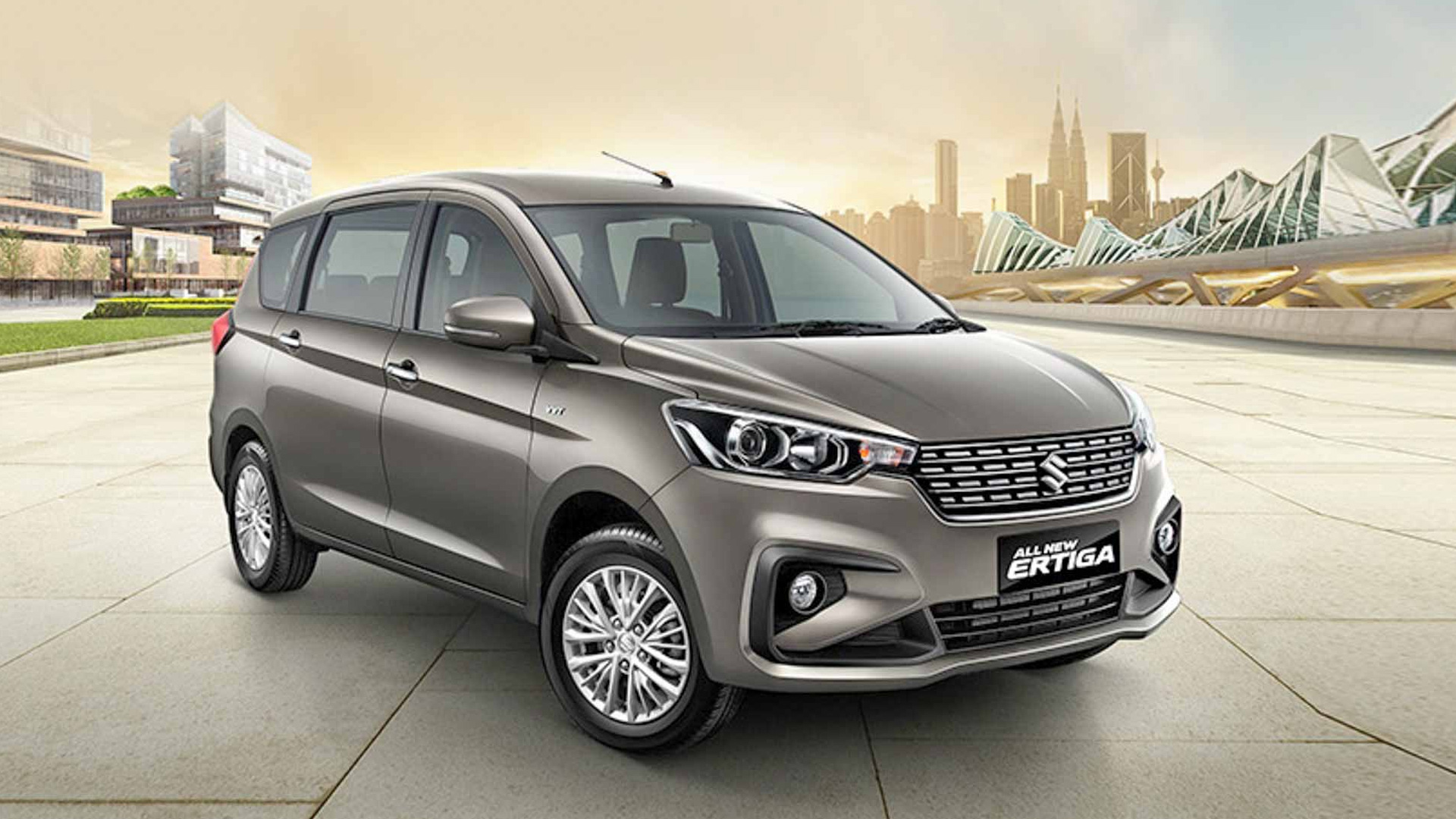
    Just days after announcing phasing out of diesel engines within a year, Maruti Suzuki has launched the 2019 Ertiga with its in-house developed 1.5-litre, DDiS 225 diesel engine. Maruti is offering the Ertiga 1.5 in three variants- VDI, ZDI and ZDI+ with prices starting at ₹ 9.86 lakh for the base trim and going up to ₹ 11.20 lakh for the top-end variant, all prices ex-showroom, Delhi. The DDiS 225 which will eventually replace the Fiat-sourced 1.3-litre DDiS 200 made its debut in the Maruti Suzuki Ciaz. At present, the 1.3-litre DDiS 200 engine will be offered alongside the new engine.

    It’s a 1498 cc, four-cylinder, turbocharged engine which churns out 94 bhp at 4000 rpm and 225 Nm of peak torque at 1500 – 2500 rpm. In fact, the DDiS 225 nomenclature alludes to the maximum torque the new engine puts out. Maruti has used Dual-Mass flywheel as a linkage between the engine and the transmission which helps to channelize the torque evenly, in-turn adding to the refinement. This engine in the Ertiga is mated only to a six-speed manual gearbox as standard and an automatic transmission is not on option as of now.

    The Maruti Suzuki Ertiga is India’s best-selling MPV and commands a market share of 39 per cent in its segment.

    The second-generation Maruti Suzuki Ertiga was launched last year in November and has been India’s best-selling MPV since then. It commands a market share of 39 per cent in the segment and Maruti Suzuki has sold over 40,000 units since its launch which is a year-on-year growth of a whopping 150 per cent in the November-April period.

    Maruti Suzuki in its last quarter financial result announcement had said that it will phase-out all its diesel models by April 2020 when the BS6 norms will kick-in, pertaining to the high transition cost. However, the company’s Chairman R C Bhargava did mention that the 1.5-litre engine may have future in bigger models if the market demand is there. After the Ertiga, we also expect the DDiS 225 engine to make its way in the S-Cross which is Maruti’s only model above four metres, yet to get the new 1.5-litre DDiS 225 diesel engine.

  • Pininfarina Battista Launched In The Middle East

    Pininfarina Battista Launched In The Middle East

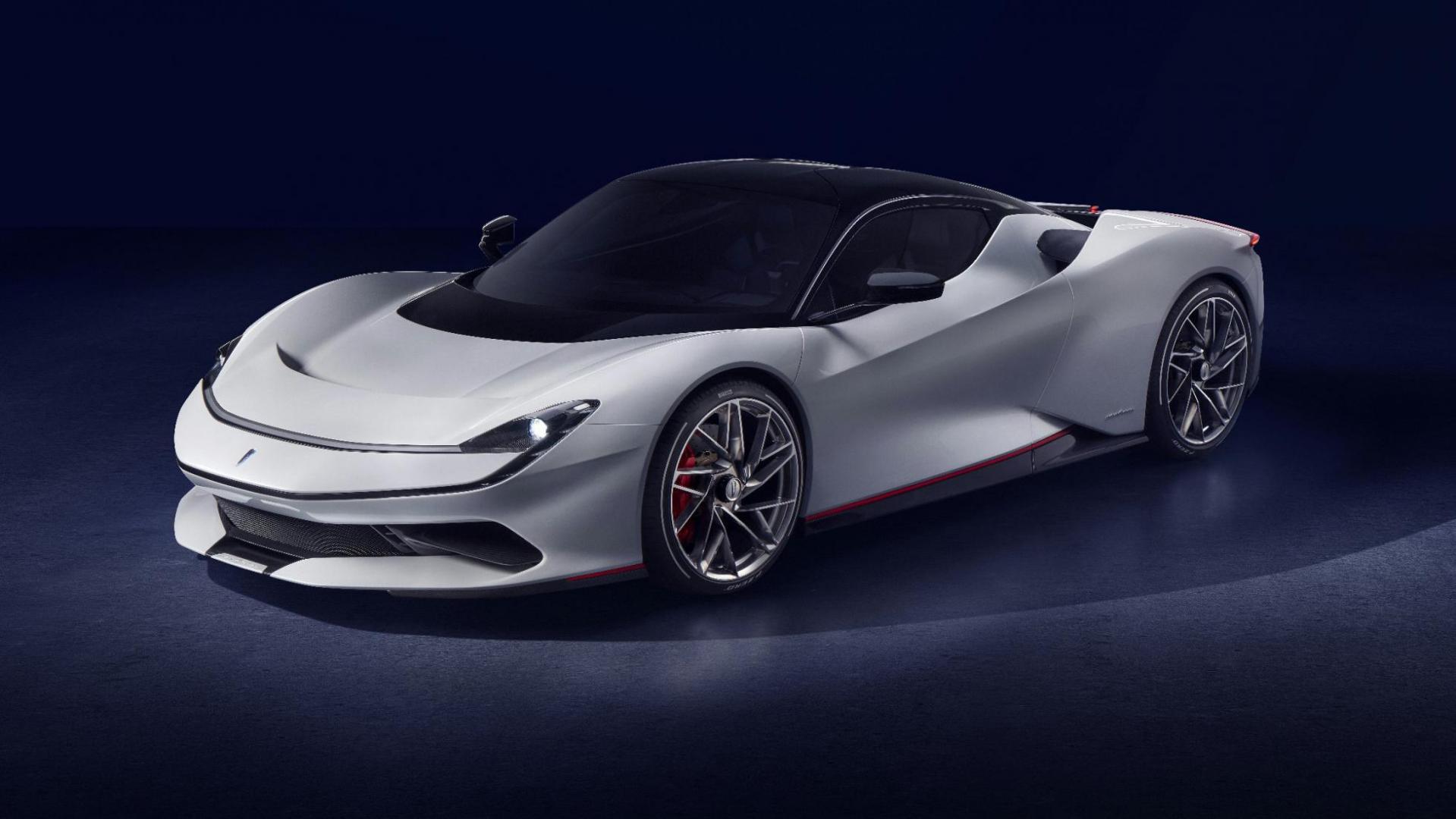
    Automobili Pininfarina has announced the introduction of its fully-electric hypercar, Pininfarina Battista, in the Middle East market. Expected to be priced around $2 million ( ₹ 13.95 crore approx.), the Italian marque’s zero-emission electric hypercar was launched in Dubai, at specialist luxury car retailer Adamas Motors showroom. The new Battista electric hypercar is slated to enter production in the second half of 2020 at Pininfarina’s Cambiano facility in Italy. Initially, the carmaker will be producing a maximum of 150 units, out of which only 50 are anticipated to be available to cover the Middle East and Asia markets, so the company expects the demands to be exceptionally high.

    Talking about the Luca Borgogno, Design Director, Automobili Pininfarina, said, “We are proud to be in Dubai for the Battista’s Middle East debut. Just a few weeks after it was launched at the Geneva International Motor Show, where it received an amazing reception, we have arrived in one of the world’s most discerning countries for supercars and luxury cars. The Battista’s classic hypercar proportions combined with cutting-edge technology that delivers 1,900 hp and zero emissions will be a new experience for its owners in the UAE, and we believe will make them fall in love with ultra-high-performance electric vehicles.”

    In addition to Adamas Motors as the brand’s retail partner for the UAE, Pininfarina will soon announce a second retail partner for the Middle East, which will cover the important Saudi Arabia market. Meanwhile, potential customers are invited to apply to own a Battista using an online service within the company’s website.

    The Pininfarina Battista will be the first of the Italian marque’s pure-electric luxury cars, and it comes with a 120-kWh battery providing power to four electric motors – one for each wheel – offering a combined output close 1,900 horses while developing 2,300 Nm of peak torque. Pininfarina claims that the Battista electric hypercar is faster than a current Formula 1 race car. While 0-100 kmph is achieved in under two seconds, 0-300 kmph takes less than 12 seconds and it can reach a top speed of 350 kmph. As for the range, the company claims that the Battista has a potential zero-emissions range of up to 450 kilometres.

    The Battista comes with the classic Pininfarina design, using the same principle of form and function coming together, as seen in classic Pininfarina cars reaching back to the Cisitalia 202 of 1947 and through more than 100 Ferraris. The car also comes with a futuristic-looking cabin with a completely driver-oriented dashboard with two displays positioned behind the steering wheel offering a host of information. The hypercar features dual tone black and brown interior using high-quality leather. Plans are in place for the opportunity to fully personalise each car at Pininfarina SpA’s Cambiano headquarters.

  • Next Generation Mercedes-Benz S-Class Interior Leaked

    Next Generation Mercedes-Benz S-Class Interior Leaked

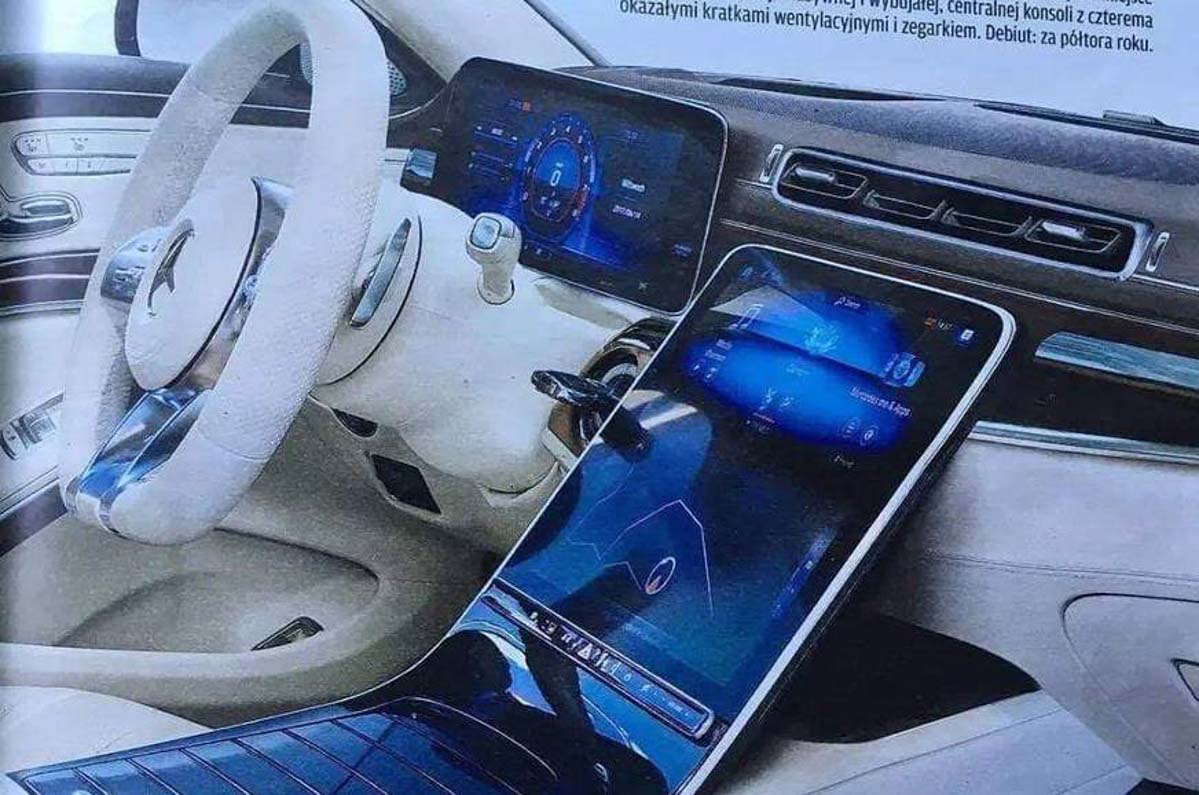
    Mercedes-Benz is readying the next generation of its flagship S-Class sedan and while we’ve seen test mules in the past, a leaked image of the interior have now made its online. The next generation Mercedes-Benz S-Class due to make its debut sometime in 2020 and going by the leaked image, the car appears future ready. Confirmed by earlier spy shots, the W223 S-Class replaced the dual infotainment screen with single unit for the instrument console and a massive vertically-stacked display for all other controls. The Tesla like touchscreen system replaces a tonne of switches on dashboard that gets a clutter-free appearance with sleek looking air-con vents and a new steering wheel. The leaked image also reveals the dual-tone treatment to the cabin in pristine while and black shades.

    The new generation Mercedes-Benz S-Class will be based on the automaker’s MRA platform and will come with a range of six and eight cylinder petrol and diesel engines. There will also be an electrified version called – the EQ S – and will be based on the company’s new Modular Electric Architecture (MEA). The new electrified version is expected to sport a range of 500 km on a single charge, as the automaker’s new top-of-the-line electric saloon. Not to forget, there will be the Affalterbach versions too with the AMG-tuned S-Class drawing power from the 4.0-litre V8 bi-turbo motor that is likely to go hybrid.

    In addition, the new Mercedes-Benz S-Class is expected to be offered in only the long-wheelbase guise globally. That said, do expect the Pullman and Maybach versions to follow suit packing in tech and comfort over the current W222 S-Class. It needs to be seen if Mercedes will continue with the Coupe and Convertible versions on the next generation. With respect to new tech, expect improved autonomous driving capability possibly up to Level 3; a new and updated version of the Airmatic suspension and more segment-first creature comforts on the offering.

    In terms of design, the new S-Class is likely to get an evolutionary styling along lines of the new A-Class, CLS and the likes. The current version is one of the most gorgeous looking saloons out there, which really sets the benchmark for the new version. It is also likely to serve as the design inspiration for the next C-Class and E-Class models, when its time for their respective new life cycles.

    More details on the new S-Class will be available in the months to come. A global debut will happen next year while sales globally should commence by 2021 or 2022, depending on the market. The W222 S-Class is assembled in India, and given the sheer demand for the flagship Mercedes, expect the new model to be locally assembled as well.