Tag: car

  • Honda eyes efficiency with new assembly line format in Thailand

    Honda eyes efficiency with new assembly line format in Thailand

    Honda Motor has installed a new type of production line that is about 10% more efficient at an automobile plant in Thailand, the company said Thursday.

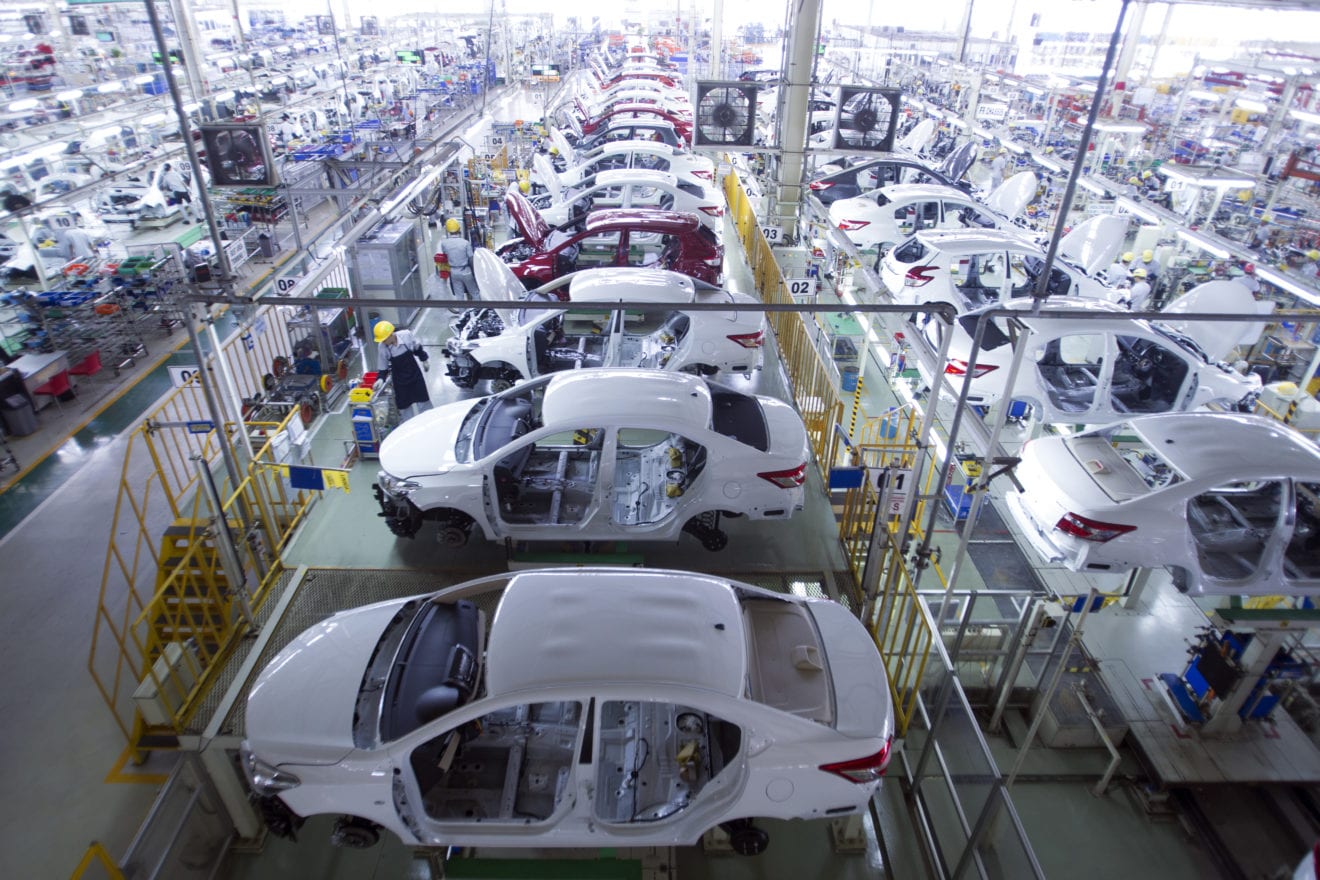
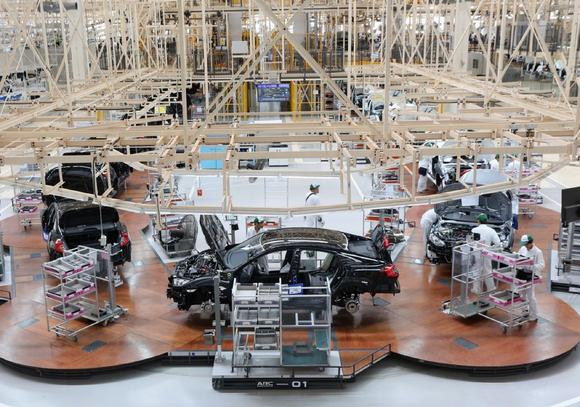
    Until now, each worker was typically responsible for adding one type of part to a vehicle, and had to walk between the conveyor and the parts shelf whenever work on one vehicle was completed. With the new system, four workers ride a unit that moves on a conveyor, with boxes of parts at the ready, allowing them to continuously install multiple parts. This reduces walking to get parts.

    Known as an ARC line, the new format was introduced at a plant in the eastern Thai province of Prachinburi that began turning out finished autos in March and makes some 60,000 Civic sedans annually. It is being applied to about 20% of total assembly procedures, including the attaching of wiring and interior parts after the body has been painted.
    Layout changes for conventional production lines required considerable time and investment, whereas with the new method the conveyor that moves the line can be flexibly lengthened or shortened as needed. Production is easily raised or lowered by adjusting the number of units, and a smaller investment is required when adding vehicle models or changing production volumes.
    After monitoring performance under the new approach, Honda will consider expanding its use.
  • Hyundai restyles 2017 Elantra to look like a luxury vehicle

    Hyundai restyles 2017 Elantra to look like a luxury vehicle

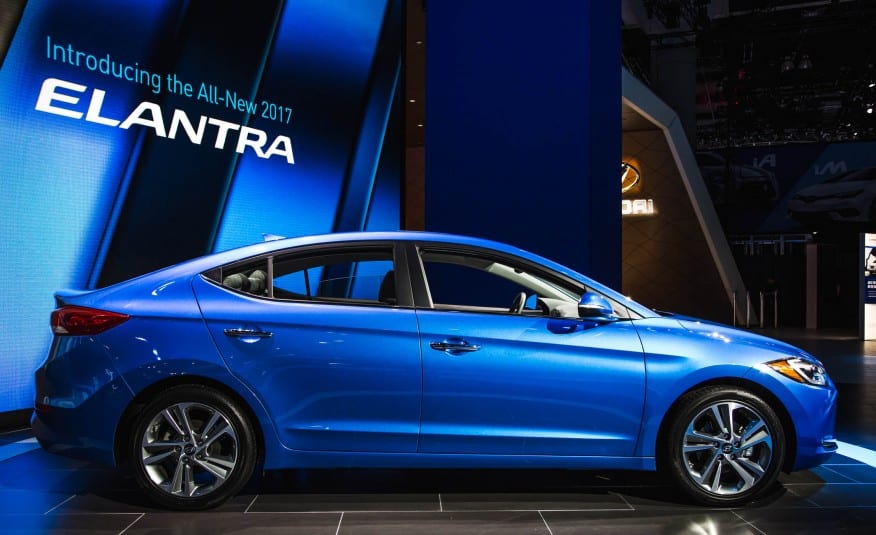
    Hyundai’s top-selling car in the United States, the Elantra, has been nicely restyled and upgraded to the point that its 2017 model could pass for a higher-priced luxury car.

    The new Elantra, which is already at dealerships, has a surprisingly refined ride and can be stocked with features like heated rear seats, driver-seat memory settings, automatic emergency braking with pedestrian detection and headlights that swivel to the side to illuminate roads during turns. The 2017 Elantra even has a hands-free trunk that opens on its own when a driver, perhaps laden with grocery bags, has the car’s proximity key fob in his or her pocket or purse and stands within 3 feet of the back of the vehicle for at least 3 seconds.

    It also comes with something that no luxury car has: Hyundai’s 10 years/100,000-mile warranty of coverage on the car’s powertrain and five years/unlimited miles of free roadside assistance.

    Starting manufacturer’s suggested retail price, including destination charge, is $17,985 for the base 2017 Elantra SE with six-speed manual and $18,985 with six-speed automatic — some $100 less than the starting retail prices for the base 2016 Elantras. The top 2017 Elantra — the Limited— has a starting retail price of $23,185, and prices can approach $28,000 when all luxury features are added.

    The Elantras have a new 147-horsepower, four-cylinder engine that generates 132 foot-pounds of torque at 4,500 rpm. It’s also lighter than its predecssors, even a loaded Elantra Limited weighs less than 3,000 pounds, according to Hyundai. As a result, the Elantra Limited test vehicle performed capably.

    The test vehicle impressed with its virtually vibration-free ride. The driver didn’t detect powertrain vibrations or any roughness, even when resting a hand on the Elantra’s gearshift lever when the car was idling. When the Elantra accelerated, some engine noise could be heard, but it was strong, not a buzzing sound.

    The restyled Elantra maximizes aerodynamics, which eliminate drag and help fuel economy. The test vehicle averaged nearly 29 miles per gallon in mostly city driving that was done primarily in Normal, not Eco, mode; with 14-gallon fuel tank, it could travel a noteworthy 400 miles in mostly city driving.

    The U.S. government rates the 2017 Elantra Limited at 28 mpg in the city and 37 mpg on highways for a combined 32-mpg average that makes the Elantra second best among gasoline-powered, non-hybrid sedans of its size.

    Inside, the Elantra is comfortable, particularly for front-seat passengers, who have up to 42.2 inches of legroom and nearly 39 inches of headroom. Back-seat passengers have 35.7 inches of legroom and 37.3 inches of headroom, which allows two adults to travel well. A nice touch is the pull-down rear-seat armrest with cupholders, which doesn’t flop loosely or rest at a downward angle.

    Rear seatbacks split 60/40 and fold down so that the Elantra’s 14.4-cubic-foot trunk can accommodate long items.

    Fit and finish of the Alabama-built Elantra tester was excellent, and the tactile feel of the car’s buttons and knobs was akin to a luxury car’s.

    However, the base Elantra SE doesn’t include a standard rearview camera nor does it have the hood-insulator material that comes on the Limited, meaning its interior isn’t as quiet as the Limited.

    A second Elantra engine — a turbo with 158 foot-pounds of torque — is due this spring, when the 2017 Elantra Eco debuts.

  • Indonesia can become ASEAN`s automotive production hub

    Indonesia can become ASEAN`s automotive production hub

    Indonesia has the opportunity to become an automotive production hub for the ASEAN and gradually replace Thailand as a car production base, according to the Ipsos Business Consulting Firm.

    “This is evident from the output trend of vehicle production, policies, and infrastructure, which continue to undergo improvements followed by increasing production capacity, domestic consumption, and export volumes,” Marcus Scherer, head of the Global Automotive Sector of Ipsos Business Consulting, stated here on Wednesday.

    Marcus hoped that the policy makers and stakeholders as well as automotive producers would consider this aspect as it will have a major impact on the supplies of automotive spare parts in the future.

    So far, Thailand has been the largest automotive producer in Southeast Asia, with an annual production of some two million cars as compared to Indonesia, which produced only some 1.1 million units in 2015.

    Indonesia has not yet been able to be at par with Thailand in developing its export market. It exported only some 23 percent of its domestic production in 2015, while Thailand was able to export some 55 percent of its domestic production.

    In 2015, the production gap between the two countries was some 810 thousand units, but in 2020, the gap is expected to narrow to 464 thousand units only.

    In order to take over Thailands position as the number one car production center in the ASEAN, Indonesia should be able to overcome the production gap through various combinations of solutions, Marcus stressed.

    The solutions should encompass increasing the production capacity of factories. In 2015, Indonesia had a production capacity of two million units of which only some 62 percent was utilized. Therefore, Indonesia should increase its follow-up investment to nearly US$2.6 billion for constructing new factories or for increasing the production capacity of the existing factories based on the assumption that utilization would remain unchanged.

    The latest Ipsos report highlighted the fact that although the export performance this time had not been significant, yet Indonesia had high domestic growth potential. This could encourage investors to harbor expectations for solid sales growth once they are able to gain access to the right markets.

    Douglas Cassidy, the Ipsos Business Consulting Indonesia director, stated that the global automotive players who had not yet had significant production bases in Indonesia would question whether they have been placed in the correct position to obtain a market share in the ASEAN whose total population reaches 600 million.

    Moreover, these players would also question whether they could maintain the market segment they already owned as other companies will surely also expand their operations in Indonesia and Asia, in general.

    Chukiat Wongtaveerat, a senior consultant manager at Ipsos Bangkok, concurred with the analysis of Cassidy on the current market situation but opined that Thailand was still able to safeguard its automotive industries.

    Wongtaveerat noted that several leading automotive producers had announced strategic steps to pull out of the Indonesian market, particularly Ford Motor Company and General Motors.

    He remarked that other leading players such as Volkswagen, Hyundai, and Mazda were not yet able to communicate their clear strategies to safeguard their strong and profitable market shares in the two countries, particularly in Indonesia, which needed consistent regulations and sustainable and supporting automotive infrastructure development in the face of the current downward sales trend.

    He pointed out that the business climate in Indonesia had not yet yielded significant benefits to the automotive industries. Based on the World Banks ease of doing business index, Indonesia is ranked 109 among 198 countries, while Thailand comes 49th on the list.

    However, the Indonesian government has set a target to rise in the ranking to reach the 40th position in 2018. Such an improvement, if it has to be achieved, clearly needs constant focus of the policy makers.

    Scherer noted that the current conditions in Indonesia were showing a positive trend, such as the easing of regulations on foreign ownership through its revised negative investment list and simplified licensing procedures.
  • Toyota starts production of new engine at its Indonesia plant

    Toyota starts production of new engine at its Indonesia plant

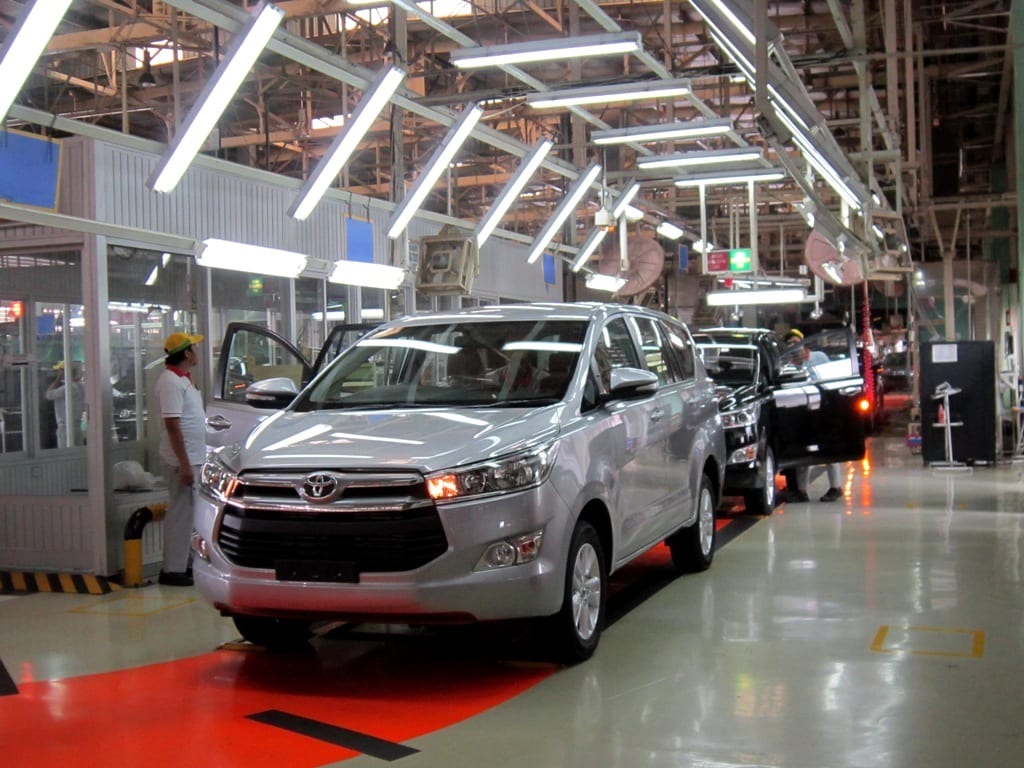
    Toyota Motor Manufacturing Indonesia has commenced production of engines at Karawang plant in West Java.

    Karawang plant has been built at a cost 2.3 trillion Indonesian Rupiah ($172m).

    The plant is expected to produce at least 216,000 engines per year by employing about 400 employees.

    The plant will produce 1.3 and 1.5 liter Toyota NR engines, which the company claims to be fuel efficient.

    According to the company, some of these engines are for export.

    Toyota already has four more plants in Indonesia, with two plants in Sunter and two more plants in Karawang. This is the third plant in Karawang.

    Speaking at the plant’s opening ceremony, Toyota’s senior managing officer Koei Saga said: “Toyota sees TMMIN as one of our core hubs for the production and supply of both vehicles and engines.”

    “Through our operations here, we hope to maintain and strengthen our position as part of the local community here in Indonesia.”

    The Japanese car manufacturer said that it wants to achieve a sustainable growth which is a significant shift from its previous strategy of high-volume production.

    It says that it wants to build plants which are safer and more environmentally friendly where innovative production techniques could be introduced.

    At this plant, Toyota is introducing two major production technologies including on-site melting, which it is deploying for the first time outside Japan.

    The company is introducing a smaller furnace which reduces the risks associated with transporting the molten alloy and improves safety.

    By using smaller furnaces, Toyota has also been able to keep the cost at minimum.

    Toyota is also introducing inorganic sand cores which will be placed inside casting molds to create cavities for final cast components.

    Earlier organic materials were being used which produce tar particles and strong odors. To remove these impurities, large dust collectors and deodorizers are required.

    By introducing inorganic materials, Toyota hopes to reduce the use of these dust collectors and deodorizers.

  • Toyota ready to invest Rp5.4 trillion in Indonesia

    Toyota ready to invest Rp5.4 trillion in Indonesia

    The Toyota Motor Corporation (TMC) group is ready to invest Rp5.4 trillion in Indonesia this year, according to Industry Minister Saleh Husin.

    Husin received the pledge during a meeting with TMC Executive Vice President Seiichi Sudo in Nagoya, Japan, on Thursday.

    “Toyota is serious about doing business in Indonesia. This year, it will invest Rp5.4 trillion, following the Rp5 trillion worth of investment that the company made in 2015,” he noted in a press statement received here, Friday.

    This reflects that global investors still trust Indonesias investment climate and see prospects in the nations automotive industry, he noted.

    The minister has lauded Toyota for its trust and continued investment in Indonesia, after selecting the nation as one of its investment destinations and a Toyota car production base so far.

    He called on Toyota and its partners in Japan to increase investment in the automotive sector, particularly for the manufacturing of materials and spare parts.

    The minister also invited the company to conduct research and development activities in Indonesia to strengthen the structure of Japans existing automotive industry in Indonesia.

    Husin also urged Toyota to increase the production of cars in Indonesia, which has a population of over 250 million, including 74 million belonging to the middle class.

    The Toyota brand dominates around 31-32 percent of Indonesias domestic market.

    Within five years, from 2015 to 2019, Toyota has planned to invest a total of Rp20 trillion.

    Until 2014, Toyota had invested Rp40 trillion in Indonesia.

    Currently, the Japanese company is constructing an engine plant in Karawang, West Java.

  • Ford pursues Philippines expansion after record January sales

    Ford pursues Philippines expansion after record January sales

    Automotive firm Ford Philippines is gearing for faster expansion this year to sustain its growth, which has gone to a record level during the month of January.

    A statement showed that the company was able to extend its positive performance up to month of January, recording an all-time high monthly performance after it sold 2,459 car units, a jump of 50 percent compared to the same period last year.

    As a result, Ford Philippines plans to continue the expansion of its nationwide dealer network to support its ongoing growth and fast-growing customer base.

    “Ford plans to continue enhancing its customer and ownership experience across the country this year. This includes the official inauguration of Ford Marilao in Bulacan later this month as it further expands its authorized dealer network to even more key locations across the Philippines,” the company said.

    Ford’s January performance in the Philippines was led by the all-new Everest, which delivered retail sales of 1,144 units, the second highest total ever for the nameplate.

    “It’s a fantastic start to 2016, and we’re extremely proud of how the Ford brand continues to connect with our fast-growing base of Filipino customers,” said Lance Mosley, managing director of Ford Philippines.

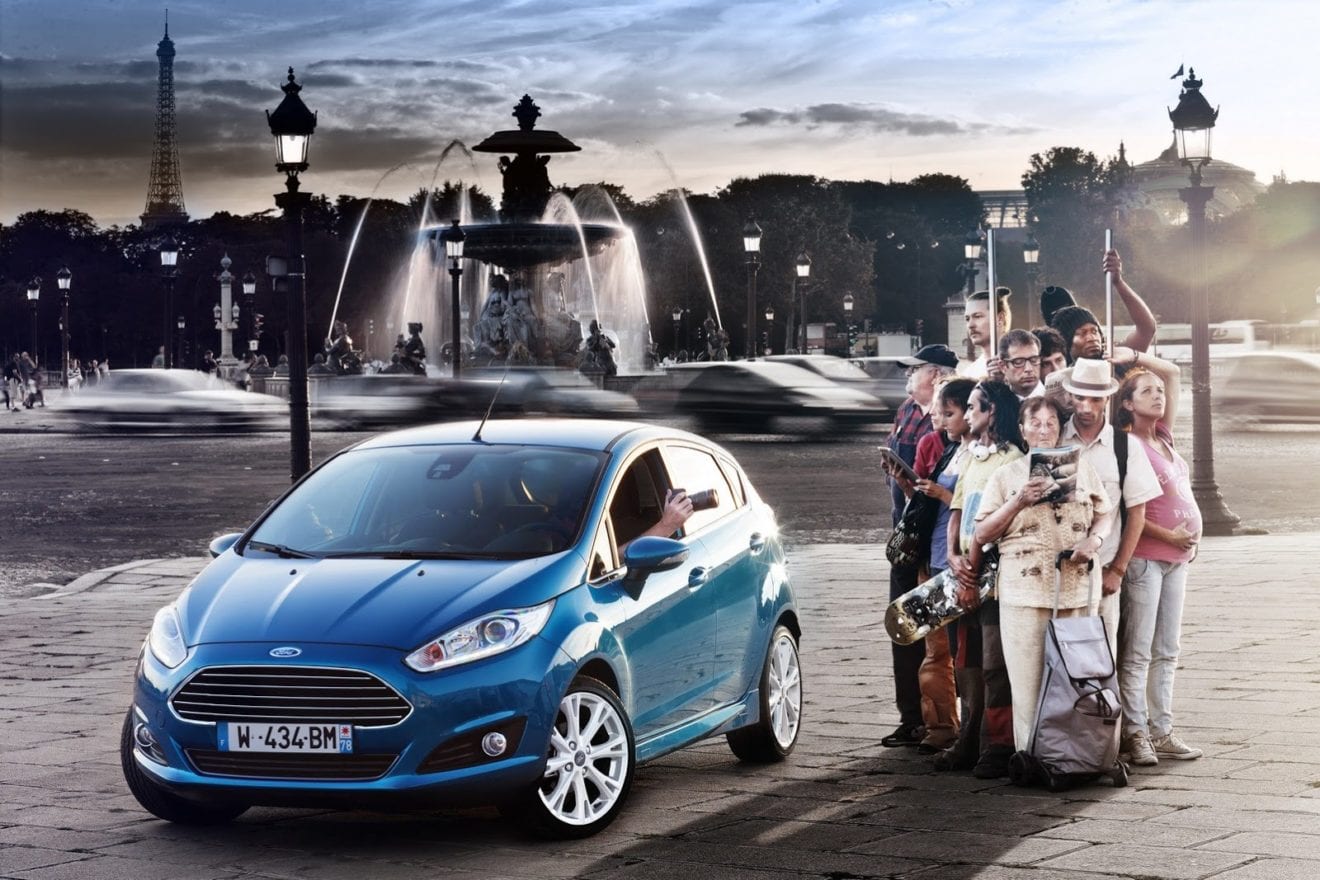
    The EcoSport compact SUV continued as one of Ford’s top-selling models in the Philippines with January sales of 551 units.  Built on Ford’s global B-segment platform, the EcoSport continues to delight customers with its combination of small-car practicality and agility of an SUV.

    Strong demand for the class-defining Ranger pickup, the second best-selling pickup truck in the Philippines last year, also helped the company achieve additional retail sales of 543 units.

    Ford Philippines’ lineup of North American SUVs available in the Philippines also contributed to the strong start to the year, including the premium Explorer which delivered sales of 95 units, while the sporty Ford Fiesta delivered sales of 71 units,

    The iconic Mustang, equipped with either a V8 5.0L or EcoBoost 2.3L variants engine, delivered January sales of 10 units.

    Ford Philippines is the local subsidiary of Ford Motor Company, a global automotive and mobility firm based in Dearborn, Michigan.

    With about 199,000 employees and 67 plants worldwide, the company’s core business includes designing, manufacturing, marketing, financing and servicing a full line of Ford cars, trucks, SUVs and electrified vehicles, as well as Lincoln luxury vehicles.

  • Deadly virus could force Tata to rebrand new car

    Deadly virus could force Tata to rebrand new car

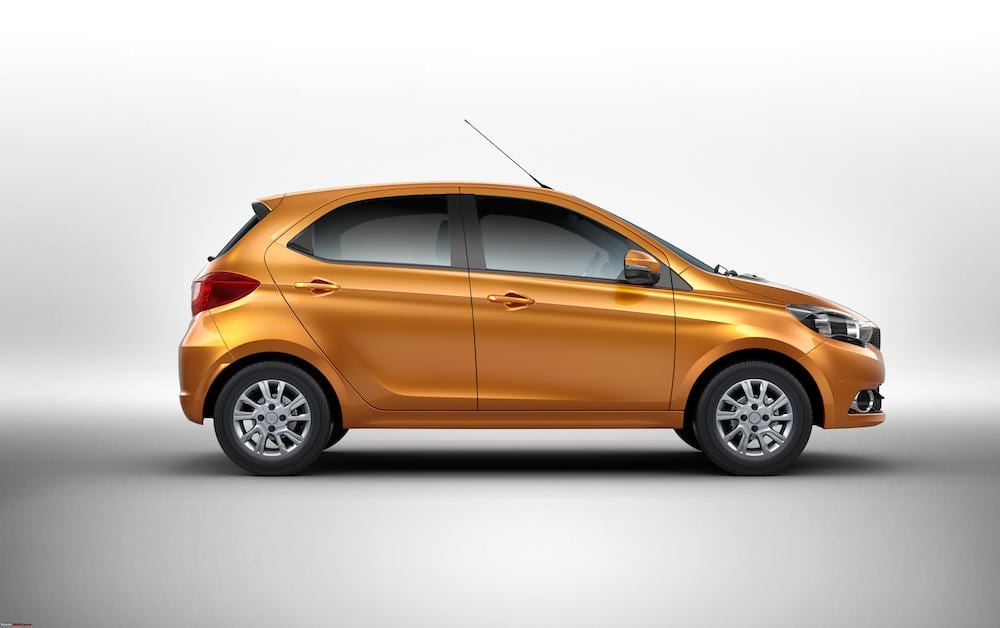
    It’s a bad time to be called Zica – even if it’s a car we are talking about and not the deadly virus that’s gone global. Zica is a new hatchback from Indian carmaker Tata’s stable, while the mosquito-borne virus that has gone global is called Zika. But who cares about spelling when they both sound the same?

    Such is the panic over the similarity that Tata is reviewing the name –  even though its origins are innocuous enough. Zica is short for “zippy car.” But no amount of shouting that from the rooftops can help now, it seems.

    “The decision to name our car happened many months back when we could not have foreseen any of the recent events. In view of the recent developments, we are now evaluating the situation,” Minari Shah, Tata’s head of corporate communications was quoted.

    Rebranding is often undertaken by corporates for better impact. For instance, Hutbitat, a big data real estate search engine for Australian properties, rebranded to Homekoala after realising that people had trouble understanding the original name and remembering it thereafter.

    Sometimes when a business expands into new markets or domains, a company’s original name may begin to feel ill-suited.

    Startups like Near and Inshorts were called AdNear and News in Shorts before they shed the first words in their names. Few may remember that real estate portal CommonFloor, which was recently acquired by online classifieds site Quikr, was once called Apna Ilaka (“Our Neighborhood” in Hindi). Rebranding obviously worked well in these cases and the new names stuck.

    But the Tata Zica seems to have been caught off guard by the virus.

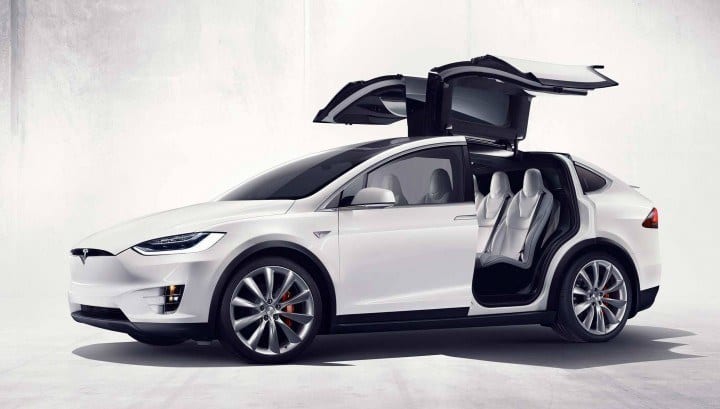
  • Tesla’s new Model X will cost you an arm and a leg in China

    Tesla’s new Model X will cost you an arm and a leg in China

    Fans of affordable electric vehicles, avert your eyes. Tesla has announced its mainland China pricing for high-end models of its upcoming SUV, the Model X, and the numbers are not pretty. The 90D model, which will cost around US$100,000 in most other markets, will run Chinese consumers a whopping US$146,000. Chinese Tesla fans who want the fancy P90D Signature Red limited edition model can expect to pay almost US$225,000 (the Signature P90D reportedly costs US$132,000 in the US).

    This news shouldn’t come as a huge surprise. Prices for other Tesla models in China, like the Model S 70D it announced last year, feature similar markups.

    It’s not clear exactly who Tesla fans should blame for the consistently high prices. China does charge high import duties on luxury cars, reportedly around 25 percent. But Chinese state media has accused foreign automakers of price-gouging in China, and a 25 percent tariff doesn’t explain how the P90D Signature model seems to double in price somewhere between Tesla’s US home and Beijing.

    On the other hand, Tesla claims that it charges the same prices for all of its cars after accounting for transportation costs and import duties. And Tesla’s prices are pretty reasonable compared to other imported luxury cars. Tesla’s China markup for the Model X 90D is 53.7 percent. That’s nothing compared to the whopping 188.4 percent markup Chinese consumers pay to buy the BMW M5, for example, which costs under US$100,000 in the US and nearly US$300,000 in China. The China markup on a luxury SUV, the Porsche Cayenne Turbo, is even worse (194 percent).

    Even with the high costs, the Model X could do well in China. A fan tally (which almost certainly doesn’t account for all reservations) suggests the company has over 2,600 Model X units reserved in China already. Moreover, the car features an air-filtering biodefense system that could be a boon to urban Chinese drivers who want to ensure they’re not breathing in Beijing’s toxic haze.

    Lower costs coming?

    It will be interesting to see how Tesla prices its lower-cost Model 3 when that hits the market next year (or later). Currently, its offerings are all luxury-tier, and although the China prices are inflated, China’s luxury car consumers can generally afford to pay them. China has more than a million millionaires, after all. But the Model 3 is intended to be accessible to the middle class, at least in Western markets. Will Tesla price it aggressively to go after that market in China too, or will it become a low-end luxury offering thanks to China price inflation?

  • Ford Philippines delivers record sales in 2015

    Ford Philippines delivers record sales in 2015

    Ford Philippines sales last year jumped a record 25 percent to 25,372 units, firmly establishing Ford as the number three-selling automotive brand in the country.

    EcoSport, Everest and Ranger each deliver record full-year sales in the Philippines.

    Record December sales soar 48 percent to 2,824 units, capping record quarterly performance with jumping 50 percent to 8,691 units.

    The record sales year and continuing momentum helped Ford jump one spot to become the number three-selling automotive brand in the Philippines in 2015.

    “It’s been a breakthrough year for Ford in the Philippines. We launched more global Ford vehicles that showcased the very best of Ford, and expanded our retail presence across the country to make the Ford brand closer to our customers through a strong dealer network,” said Lance Mosley, managing director, Ford Philippines. “We’re truly proud of how the Ford brand is being embraced by our Filipino customers.”

    The EcoSport compact urban SUV’s continuing impressive run made it Ford’s best-selling nameplate in the Philippines in 2015. December retail sales of EcoSport rose 49 percent to 799 units, helping drive full-year sales up 67 percent to 8,702 units – the highest full-year total for a single Ford nameplate.

    The highly capable and versatile Ranger finished 2015 as the second best-selling pickup truck in the Philippines with total retail sales that increased six percent year-over-year to 8,445 units.

    “We launched the new Ranger here in August, and it really helped to build on an already strong reputation as the most capable, powerful and smartest pickup in the market,” explained Mosley.

  • Several German companies interested to invest in automotive component industry

    Several German companies interested to invest in automotive component industry

    Several German companies have expressed interest to invest in automotive component manufacturing industry using aluminum as its raw materials, state enterprises minister Rini Soemarno said.

    “One of the companies is Rheinmetall Land System. We will discuss it further with them when I visit Germany later,” she said when asked for her confirmation about the news here on Sunday.

    She said Rheinmetall Land is currently building cooperation with PT Pindad to produce defense and security equipment.

    PT Pindad is cooperating with Rheinmetall Land System in overhauling, upgrading, servicing, maintenance and modification of a number of military combat vehicles.

    The cooperation covers several products such as MBT Leopard 2 RI, Leopard 2 A4, AIFV Marder aA3 RI, Gunnery/Driving Simulator and others.

    “But the big business that the company carries out also includes car components and many of them are exported across the world,” she said.

    She said she would follow up Rheinmetalls plan to invest in Indonesia especially in aluminum car components.

    “If they do decide to invest supply chain from upstream to downstream will be done by Indonesia,” she added.

  • Michelin to Open Rubber Plant in Indonesia

    Michelin to Open Rubber Plant in Indonesia

    Michelin will work with Barito Pacific and invest up to US$400 million (Rp5.1 trillion). The plant’s construction is scheduled to start in 2016, with the goal to have it begin operations by 2019.

    Both Michelin and Barito Pacific had also expressed their desire to develop rubber plantations in Jambi and West Kalimantan.

    Michelin plans to establish a joint venture with Barito Pacific’s subsidiary, PT Chandra Asri Petrochemical Tbk.

    Michelin’s plan is expected to help increase the absorption rate of rubber by Indonesian industries.

    Right now, about 20 percent of the national rubber production is consumed by the tire industry; far below Malaysia, China and India’s; each absorbing more than 40 percent of their production.

  • Car sales drive Singapore’s retail sales up by 6.1%

    Car sales drive Singapore’s retail sales up by 6.1%

    Ironically, petrol service station sales dropped the most.

    Motor vehicle sales almost single-handedly towed Singapore’s retail sales as it grew by 5% compared to last month. Excluding motor sales, retail sales would only grow by a measly 1.3% from last year.

    According to data from the Department of Statistics, car sales almost doubled (43.9%) since last year, illustrating the gravity of the pull.

    Meanwhile, total retail sales value is at an estimated $3.5b, higher than $3.3b from August 2014.

    The massive scale of motor sales growth picked up the slack for ailing sectors such as the petrol service station sales, optical goods and books, and food and beverages, whose retail sales fell by 20%, 11.8%, and 6.4% yoy respectively.

    Medical goods and services trailed car sales in growth, elevating by 10.9%, while watches and jewellery followed with an 8.7% growth.

  • Vietnam’s new luxury tax proposal may raise car prices by 30 pct

    Vietnam’s new luxury tax proposal may raise car prices by 30 pct

    Automobile manufacturers and importers in Vietnam have protested a new proposal from the Ministry of Finance which seeks to change how luxury tax on cars is calculated.
    Under the ministry’s plan, the special consumption tax on all vehicles with fewer than 24 seats will be based on their retail prices, with rates ranging from 15 to 60 percent. The proposal, set to take effect on January 1 next year, is aimed to create a level playing field for importers and producers since their cars will be treated the same, the ministry said.
    Currently, the luxury tax on imported cars is calculated on the Cost, Insurance Freight (CIF) price rather than the final retail price, a policy that manufacturers said could give importers an unfair advantage. They said local products could not compete with imported cars since local cars are taxed based on retail prices, which include a number of additional costs.
    Many automobile importers, after learning about the new proposal, said they are asking the government to keep the current policy unchanged so that the market and business environment is not disrupted. If sales go down, tax revenues will also fall, they said.
    It is “reasonable” and “accurate” to tax imported cars on their CIF prices because the prices already carry the taxes that foreign manufacturers have paid before shipping the cars to Vietnam, news website VnEconomy quoted VIVA, the association of car importers in Vietnam, as saying.
    Consumption
    Strangely, even local carmakers are not happy with the proposal. The new policy, with tax rates as high as 60 percent, it is not exactly what they want, which is to lower the luxury tax to spur consumption. The Vietnam Automobile Manufacturers’ Association has been urging the government to calculate the tax on delivery cost, before sale and post-sale costs are added. The Ministry of Finance, however, is leaning towards collecting more taxes from importers.
    Representatives of many importers and manufacturers in Ho Chi Minh City said the new tax scheme, if applied, will increase car prices by 20-30 percent. This will have an adverse impact on the market, they said “When taxes go up, we are forced to hike prices. In the end, no one other than consumers will be hurt,” a representative of a distributor who wished to stay unnamed said.
    Nguyen Minh Dong, an industry expert, also said increases in taxes will not help boost the economy, but may hamper its growth.
    In fact, “the biggest problem” with Vietnam’s auto industry is that here a car is subject to a wide range of taxes and fees, making it “extremely expensive” for the majority of consumers, he said.
    Looming threat
    The Japan Business Association in Vietnam has recently warned that if local policies for the auto industry continue to be ineffective, the industry will hardly survive when cars brought from other Southeast Asian countries are free of import duties in 2018 under a regional agreement. Increased imports will create trade deficit and in the end, hinder economic growth, VnEconomy quoted the association as saying at a recent meeting.
    Vietnam’s carmakers posted sales of 157,810 units last year, compared to 1.3 million in Indonesia, nearly 900,000 in Thailand, and 700,000 in Malaysia. Imports have been increasing considerably as the government has reduced import duties gradually in accordance with trade pacts that Vietnam have signed with other countries.
    Vietnam imported 72,000 complete-built-unit cars last year, twice the number of 2013, the association quoted official statistics as saying. A total of 45,000 cars, worth over $1.2 billion, were brought into the country in the first five months of this year.