Retail News CRM

Tag: car

  • Nissan seeks to boost South Korean output on post-Brexit yen surge

    Nissan seeks to boost South Korean output on post-Brexit yen surge

    Nissan Motor wants to increase the output of its Rogue model at Renault’s factory in South Korea this year, as a stronger yen makes exports from Japan less competitive, a Renault executive told Reuters.

    The yen has jumped 20 percent against the dollar this year in the wake of Britain’s decision to leave the European Union, pressuring Japanese exporters. The South Korean won rose 7.4 percent against the dollar this year.

    “We have got a request to boost Rogue production by 8,000 vehicles this year,” Renault Samsung Motor Chief Executive Officer Park Dong-hoon told Reuters, adding that the company was reviewing whether it would be able to meet the additional demand.

    He added that Nissan Motor previously targeted output of 125,000 Rogue vehicles in South Korea this year.

    Rogue is Nissan Motor’s top-selling sport utility vehicle in the United States, with sales jumping 14 percent to 182,181 from January to July this year from a year earlier.

    Nissan Motor currently produces Rogues in South Korea, Japan and the United States.

  • Ford plans self-driving car for ride share fleets in 2021

    Ford plans self-driving car for ride share fleets in 2021

    Ford Motor Co plans to offer a fully automated driverless vehicle for commercial ride-sharing in 2021, the automaker announced Tuesday, expanding its efforts in driverless cars and ride sharing – two areas where rivals have already made inroads.

    To help speed development of self-driving cars, Chief Executive Mark Fields said Ford is hiking investments in Silicon Valley technology firms, tripling its investment in semi-autonomous systems, and more than doubling the size of its Palo Alto research team while expanding its campus in Silicon Valley.

    “We’re not in a race to be first,” Fields said at the company’s Palo Alto research and development lab, adding he was not concerned that rival General Motors had made a high-stakes play in ride services with its $500 million investment in Lyft in January.

    Ford does not yet know whether it will partner with Uber, Lyft or others, with Fields saying “all options are open and on the table.” He said Ford may choose not to partner, and roll out such services on its own.

    Ford’s announcement leaves many crucial strategy details still undecided. Yet Ken Washington, Ford’s vice president of research, said it was important to signal that Ford intends to win in this space, even with key elements still unknown.

    “We’re saying to partners, we are the winning partner. It’s not a hollow promise, it’s a real intent,” Washington said.

    Ford Chief Technical Officer Raj Nair said the company likely will not offer a similar driverless car without steering wheel or pedals to consumers until 2025 or later. Launching a self-driving car first for ride-sharing is a better way to reach the mass market and make the cars more affordable, he said.

    In a philosophy shared by Alphabet’s Google, Ford does not intend to develop incremental autonomous systems that would occasionally require drivers to take the wheel, instead committing to a full self-driving car.

    “We abandoned the stepping-stone approach,” Fields said, saying there are too many risks involved in the safe “hand-over” of driving responsibility between car and driver.

    The death of a Tesla driver in May who was using the company’s “Autopilot” system but had his hands off the wheel has underscored the confusion over drivers’ responsibilities in a semi-autonomous car.

    Ford also said it had, along with Baidu Inc – China’s largest internet company – jointly invested $150 million in Velodyne, which makes laser-based sensors that are a major building block in self-driving cars. Nair said Ford’s investment was $75 million.

    Earlier this year, Ford invested in Silicon Valley firm, Civil Maps, for advanced mapping for self-driving vehicles.

    Ford rivals, including General Motors and Uber Technologies, are also developing self-driving vehicles for use in ride services.

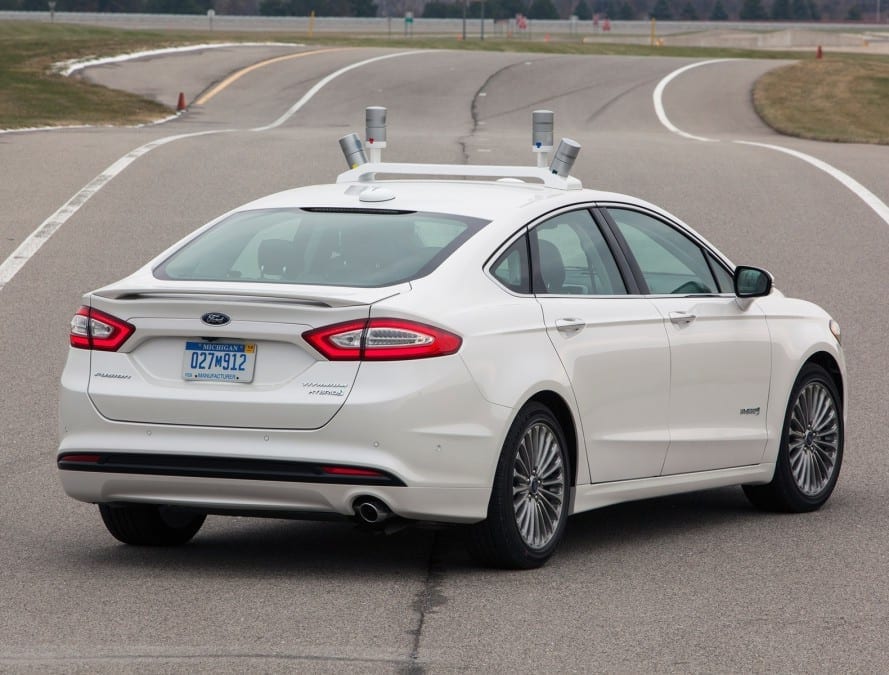
    Ford said it expects to deploy 30 self-driving Fusion Hybrid prototypes this year, and 90 next year.

    Nair said Ford, with its investments and its acquisition of SAIPS, an Israeli machine learning startup, now have the tools in place to develop a fully driverless vehicle, but said “there’s still a lot of engineering development” between now and 2021.

  • Skoda Auto to invest Rs 100 crore in India

    Skoda Auto to invest Rs 100 crore in India

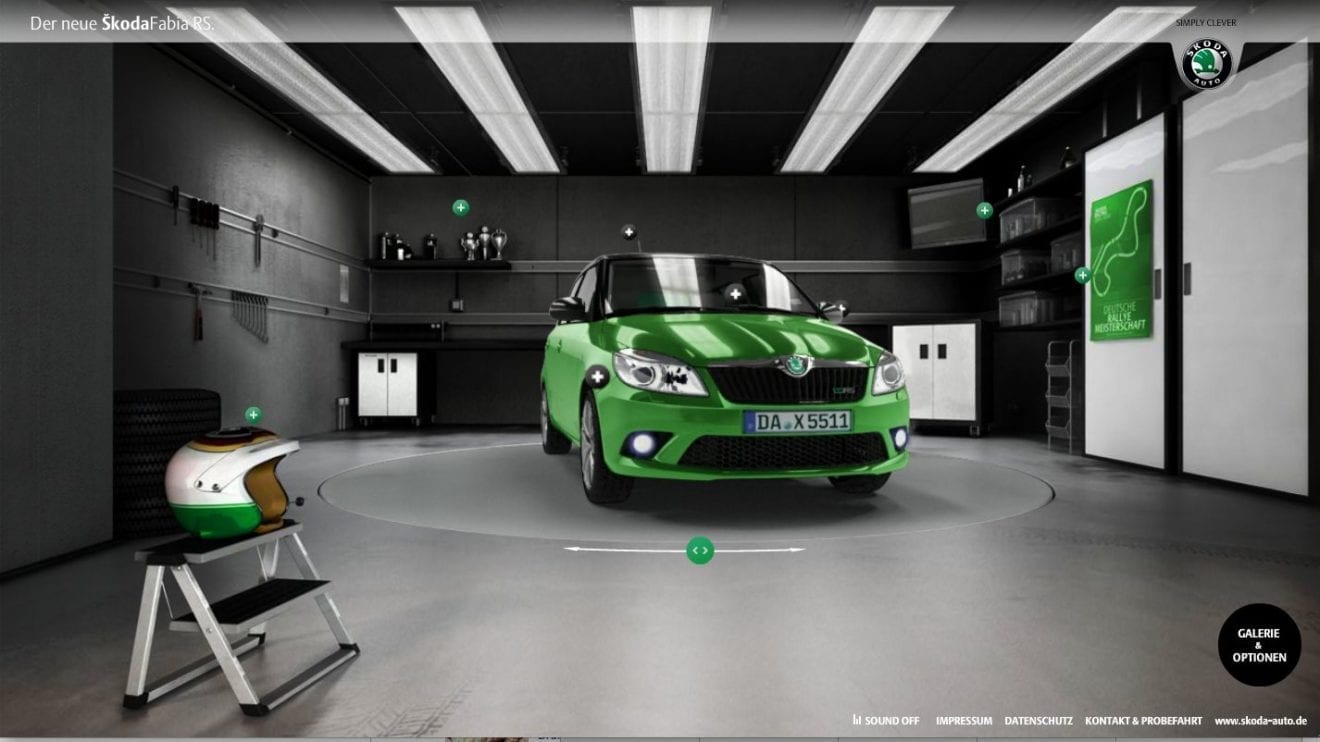
    Having consolidated operations in India in the last couple of years, Czech car maker, Skoda Auto is pursuing volumes from 2017.

    The company plans to invest Rs 100 crore in revamping the dealership network with new identity and introduce series of service initiatives to bring in transparency.

    The company is likely to end 2016 with 15,000 units in 2016 posting a flattish numbers, but with 4 new products planned for 2017, Skoda is eying 30% growth in volumes to over 20,000 units in 2017.

    According to people in the know, Skoda will be launching the face lifted Rapid, which has been significantly engineered locally, followed by premium SUV Kodiaq in the Toyota Fortuner category. The company is also likely to bring in a variant of Octavia in the coming 12-18 months.

    Sudhir Rao, MD of Skoda Auto said, the company is not going after the volumes game, but aims to position itself as a value luxury car maker positioned between volumes car maker and luxury car maker, with clear eye on segment leadership or be amongst the top three of segment the company participates in.

    “We are looking at higher volumes but not at the cost of profitability. We have gone a long way in improving our operational efficiency and ownership experience. We will aim for leadership in the segment we participate and we expect these segments to become main stream in near future,” added Rao.

    Skoda is also investing a lot on digitisation of the brand and the customer interface. The company will be launching the MySkoda app from 1st of September, which will increase the transparency with customers.

    The company will launch the industry first 4 year warranty of the car service.

    The company sells an average of 125 units of Superb in a month and has a segment share of 60% in premium saloon space and it sells about 200 units of Octavia per month with a segment share of 60%. Skoda sells another 1000 units of Rapid per month.

    The company expects the new models to bring in incremental volumes from 2017. With the existing portfolio, Skoda addresses just 20% of overall car market, but aims to grab more than half of Rs 10 lakh to Rs 40 lakh price bracket.

  • Toyota, Daihatsu jointly debut new ‘green’ cars in Indonesia

    Toyota, Daihatsu jointly debut new ‘green’ cars in Indonesia

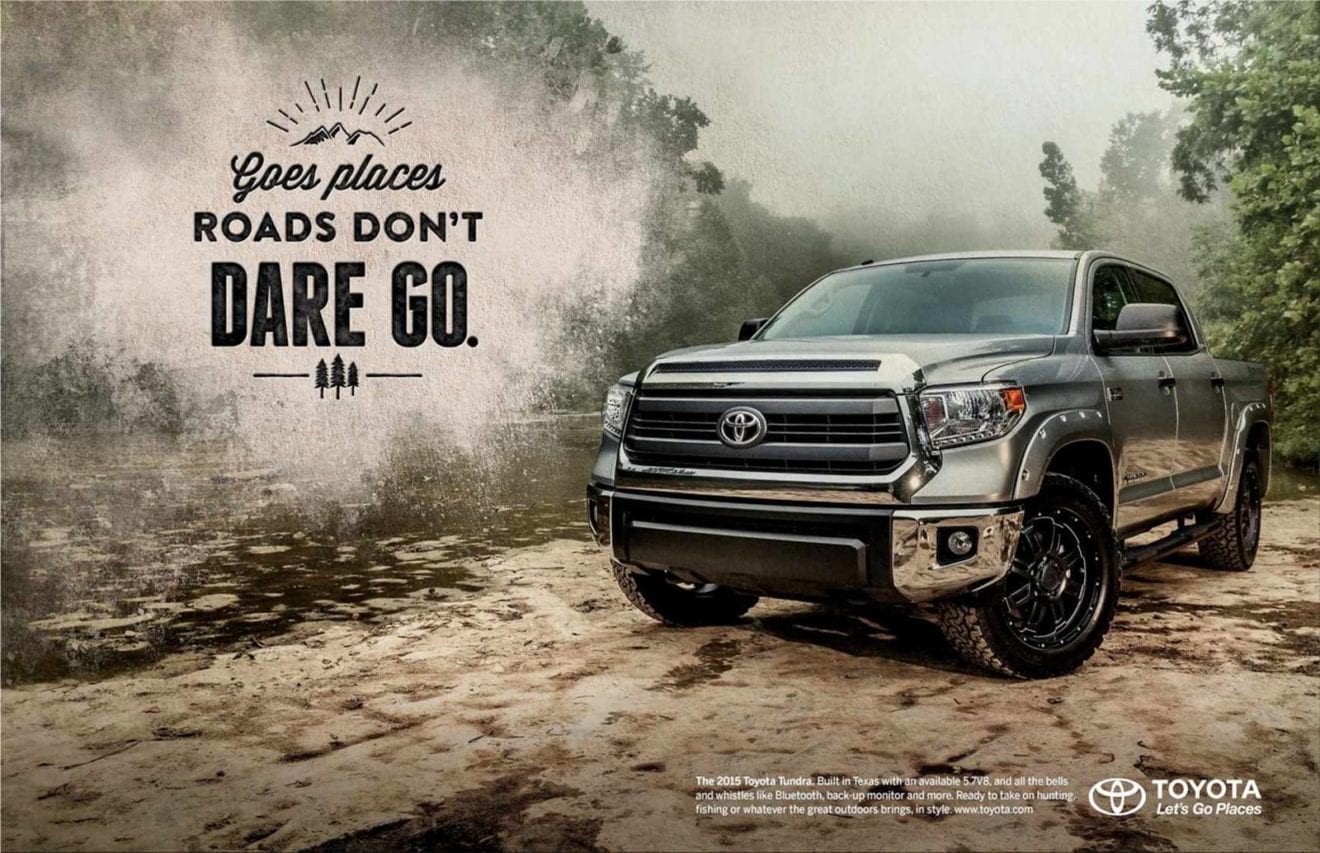
    Toyota Motor Corp. and Daihatsu Motor Co. jointly launched two different cars in Indonesia on Tuesday, a day after Toyota acquired all of Daihatsu’s shares.

    “It is a new relationship between Daihatsu and Toyota,” Daihatsu President Masanori Mitsui said during the launch in the industrial town of Karawang in West Java Province, where the cars are manufactured.

    Toyota launched the Calya, which means “perfect” in Sanskrit and will be sold at between $9,973 and $11,538, while Daihatsu launched the Sigra, which means “fast response” in the same language and will sell at between $8,153 and $11,461.

    The two companies earlier collaborated in producing the Avanza and Xenia in 2003, the Rush and Terios in 2006, and the Agya and Ayla in 2013.

    According to Mitsui, they have reached a huge achievement in production resulting from their cooperation.

    Toyota Managing Director Hiroyuki Fukui shared that view and said the collaboration will improve the companies’ performance amid tough global competition.

    The Calya and Sigra are multipurpose vehicles, which each can carry seven passengers. They are categorized into low-cost green car, a type of car highly encouraged by the Indonesian government.

    “Those kinds of cars in great demand, so we’re hoping for a positive response (from the market),” said Sudirman Maman Rusdi, president of PT Astra Daihatsu Motor, an Indonesian subsidiary of Toyota.

    According to him, his company has invested about 1.1 trillion rupiah (about $84.61 million) for the two cars’ production.

  • Toyota plans to cut 800 jobs in Thailand

    Toyota plans to cut 800 jobs in Thailand

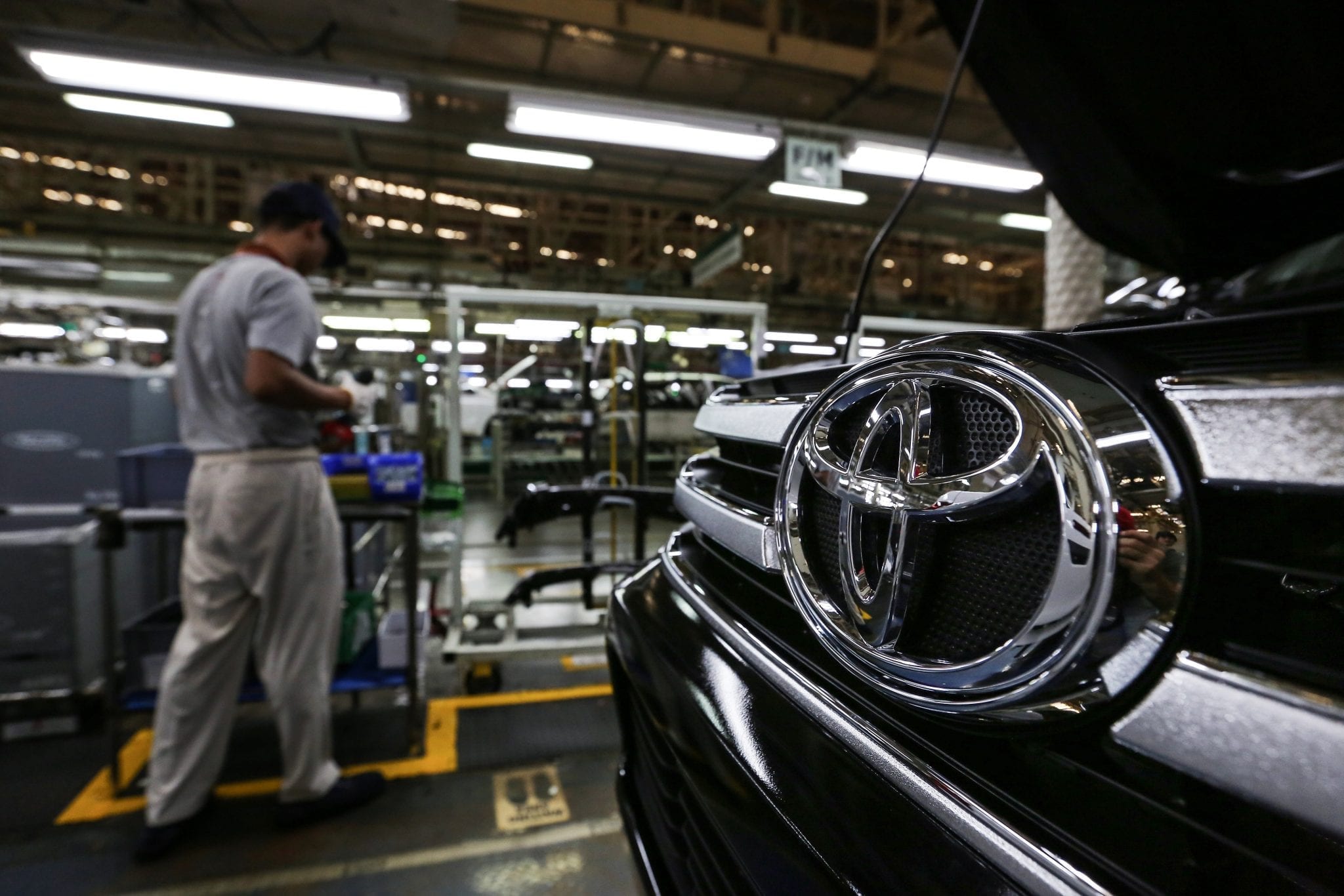
    Toyota Motor Corp’s Thai unit has launched a voluntary redundancy program aimed at cutting around 800 subcontractors in Thailand due to economic problems in the southeast Asian country and abroad.

    Thailand’s economic slowdown, along with uncertainty over the global economy, have affected both the domestic automotive industry and exports since the beginning of the year, it said in a statement.

    That has caused a reduction in production volume, overtime hours and monthly income offered to employees, it said.

    The company has offered the redundancy package to around 800 subcontractors but more workers have applied for the scheme, Phuphal Samata, the president of Toyota Thailand Worker’s Union, told Reuters.

    “There isn’t overtime payment anymore, so many subcontractors may want to find other work and take this compensation package,” he said.

    Toyota commands about a third of the local auto market and has 18,000 workers in Thailand, 40 percent of whom are subcontractors, he said.

    Thailand is a regional production and export hub for the world’s top carmakers. The sector accounts for around 10 percent of the country’s gross domestic product.

    Domestic auto sales have declined almost every month on a yearly basis since May 2013 following the ending of a government car subsidy scheme in 2012.

    In January, Toyota forecast Thailand’s total domestic car sales would fall 10 percent in 2016 from a year ago to 720,000 units. It sees its own annual auto sales falling 9.8 percent from last year.

    Job cuts at Toyota are unlikely to spread to other automakers as the firm has hired many workers since the car subsidy scheme, said Surapong Paisitpattanapong, spokesman for the Federation of Thai Industries’ Auto Industry.

    “I don’t think others will immediately follow suit because May’s auto production, exports and domestic auto sales are growing. There’s still hope,” he said.

  • Astra doubts car sales would increase

    Astra doubts car sales would increase

    The country’s largest car manufacturer, PT Astra Internasional, expresses doubt that sales of automotive products would increase in 2016.

    Car and motorcycle sales would not increase under the economic slowdown, Astra’s investor relation officer, Ira Ardianti, said here on Monday night.

    Sales of both two and four wheeled motor vehicles have been flat in the past five months, she cited. The people’s purchasing power is still weak and have no fund to spare for luxury, she said.

    Sales of motorcycles dropped in the regions mainly because of the commodity price fall such as palm oil and rubber prices, Ardianti said.

    In the first quarter of 2016, Astra’s car sales dropped to 127,000 units from 137,000 units in the same period last year. In April and May, Astra’s sales of cars totaled 31,000 units and 33,000 units respectively.

    Its sales of motorcycles also shrank to 1.1 million units in the first quarter of 2016. In April and May sales were recorded at 348,000 units and 338,000 units respectively.

    “We could not make prediction , but hopefully the economy would improve and the people’s purchasing power would be stronger,” she said.

    The Indonesian Automotive Industry Association (Gaikindo), however, said car sales in Indonesia (from factories to dealers) surged 11 percent to 87,919 units in May 2016, the second straight month of rising car sales year-on-year.

    Gaikindo chairman Jongkie Sugiarto attributed the increase mainly to delivery of new models ahead of Idul Fitri holiday.

    In April car sales in Indonesia grew 4.6 percent to 84,703 units from 81,000 units in the same month last year.

    This is encouraging after being on the decline for 16 straight months previously.

    Stakeholders in the automotive industry hope that this is the start of a rebound, in line with accelerating economic growth.

    In the first quarter of 2016 Indonesias economic growth accelerated to a growth pace of 4.92 percent yoy), higher than the 4.73 percent GDP growth pace in the same quarter last year.

  • Daimler to unveil long-distance electric car in October

    Daimler to unveil long-distance electric car in October

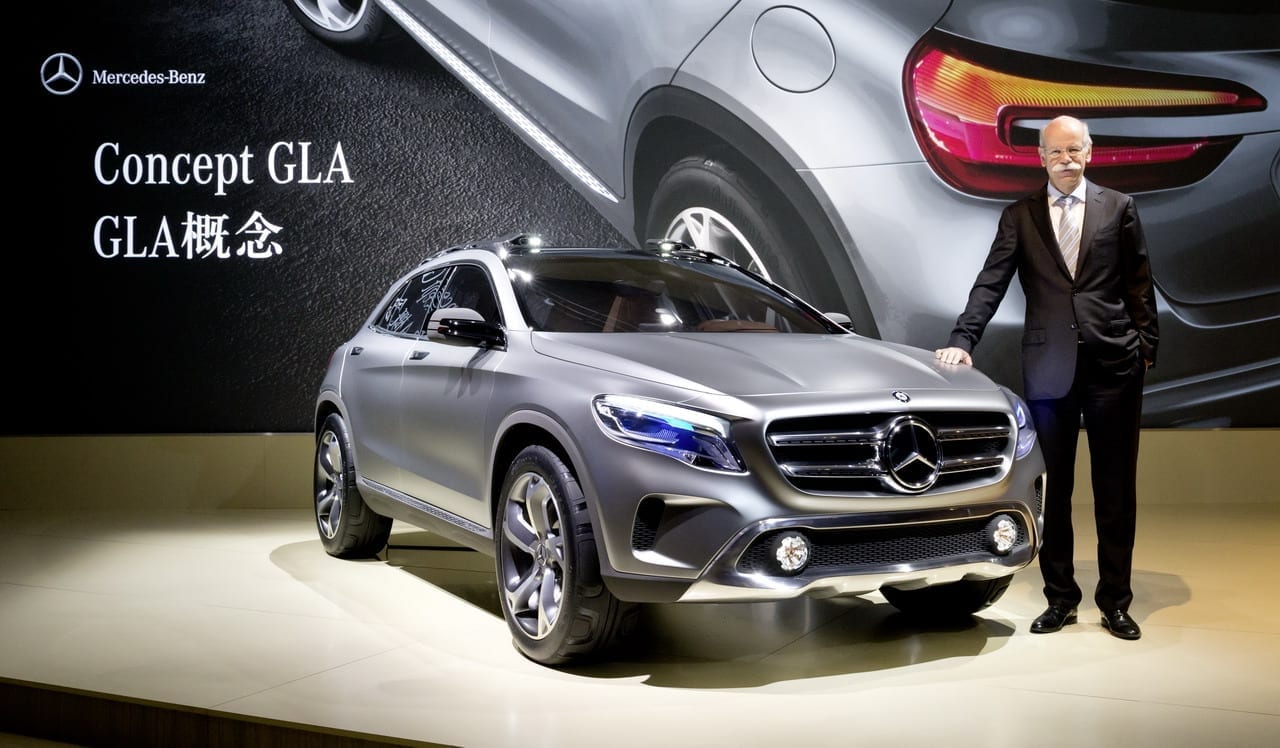
    Germany’s Daimler will lift the curtain on its much-anticipated long-distance electric car at the Paris Motor Show in October, as the automaker gears up to compete with Tesla Motors Inc’s Model X sport-utility vehicle (SUV).

    The company will display a prototype of an electric-powered Mercedes car with a 500-kilometre (310 miles) range, Chief Development Officer Thomas Weber said this week in Stuttgart at an event for journalists.

    “The structure is ready, the teams are working and the initial results from road tests are coming in quick succession,” he said.

    Weber did not specify how soon the car would hit the road but said it would be sometime this decade.

    Daimler and European rivals are stepping up investments in electric vehicles in order to meet new EU pollution targets and catch up with U.S. battery-car specialist Tesla. The German government has also announced subsidies for buyers of electric and other less polluting cars.

    German competitor Volkswagen’s subsidiaries Audi and Porsche have already unveiled long-distance electric prototypes, while BMW is working on one.

    Weber also said Daimler would launch its fourth-generation electric Smart car at the end of the year in both two and four-seater variants.

    Daimler currently offers two fully electric cars under its Smart and B-class models and a host of plug-in hybrids, powered by a combined battery and combustion engine. Further hybrid models are in the pipeline.

    The company is aiming to sell more than 100,000 electric cars a year by the end of the decade, Weber said. He declined to provide the sales figure for 2015.

    Daimler has also been working on fuel cell powered cars, which run on electricity generated by hydrogen. It initially planned to launch such a vehicle in 2014 but had to postpone, blaming pricing issues.

    The fuel cell operated SUV GLC, likely to compete with Toyota’s Mirai, is now expected to enter production next year.

  • Hyundai raids Bentley to turbo-charge Genesis luxury drive

    Hyundai raids Bentley to turbo-charge Genesis luxury drive

    After poaching Bentley’s design chief last year, Hyundai Motor said on Monday that it has also secured the services of the luxury marquee’s exterior designer.

    Hyundai issued a statement saying Sangyup Lee will start work next month as its head of design, after Reuters reported the hiring of the Korean designer by the South Korean auto giant.

    Lee is being brought in to work with Luc Donckerwolke, a Peruvian-born Belgian, to lead Hyundai’s development of its Genesis premium car brand – a project driven by Chung Euisun, heir-apparent to the Hyundai Group.

    “Lee will help…enhance the design competitiveness of both the Hyundai and Genesis brands with his abundant experience in designing high-end luxury vehicles,” Hyundai said in its statement.

    “His challenging and innovative design languages fit well with the DNA of Hyundai Motor.”

    Hyundai Motor, which sells some 8 million cars a year, sees limited growth unless it breaks into new markets, a person close to the automaker told Reuters. For the South Korean firm, that means premium cars and maybe pick-up trucks and parts of Southeast Asia.

    Lee said he has joined Hyundai Motor as a vice president in charge of Hyundai and Genesis design, reporting to Donckerwolke, who will head up Hyundai’s new Prestige Design Division, as well as being global head of Hyundai design – a reporting arrangement that Hyundai also confirmed on Monday.

    Bentley spokesman Andrew Roberts confirmed Lee “has resigned from Bentley to take a position at another brand.”

    Lee, 46, ran Bentley’s exterior design since 2012 having previously worked at Volkswagen group’s design center in California, and General Motors. He played a lead role in designing the Chevrolet Corvette, Stingray and Camaro – which featured in the “Transformers” movies – and Bentley’s Bentayga SUV.

    “CLEAN SHEET”

    Lee told Reuters the ex-Bentley design duo aim to make Genesis a recognized global premium brand as new disruptive technologies such as autonomous, connected cars and alternative propulsion systems alter the auto design landscape.

    “Because of these technologies, the car industry is about to hit a crossroads. The future is truly open,” he said. “It’s difficult to say if all the prestigious brands today will still be around in 10-20 years.”

    Lee, who says he was first approached by Hyundai two years ago, said he and Donckerwolke plan to design Genesis cars from a “clean sheet of paper”.

    “For decades, luxury brands such as Bentley, Aston Martin and Maserati have been about possession,” he said. “In the future, as disruptive technologies kick in, luxury is going to be about experience. People are going to look for a special experience rather than something special to own.”

    GLOBAL LEGACY

    As “mobility on demand” – the once futuristic concept of calling up a robot-car by smartphone – takes hold, Hyundai predicts many households in the United States, its biggest market, will no longer own two, or three cars, but spend more on one car, said the person close to the company.

    “That means upscale cars,” he said, adding “profitability-wise, the luxury segment is much better, too.”

    That fits with Chung’s aspiration to not just drive the Genesis brand but elevate the Hyundai name to an elite global corporate league alongside the likes of BMW, Boeing and Apple.

    “That’s his legacy. ES (Euisun) wants to make Hyundai a truly globally recognized and respected company,” the person said.

    Chung was involved with hiring both Donckerwolke and Lee, as well as Manfred Fitzgerald, former brand and design director at Lamborghini who was named earlier this year as head of Genesis, said another person with knowledge of the matter.
  • South Korea says Nissan manipulated emissions, plans fine and recall

    South Korea says Nissan manipulated emissions, plans fine and recall

    outh Korea said that Nissan Motor had manipulated emissions on a diesel sport utility vehicle and that it planned to fine the automaker as well as sue the head of its Korean operations.

    The government said the Japanese automaker had used a so-called defeat device that helps a vehicle’s emissions management system turn off during regular driving conditions.

    Nissan denied any wrongdoing.

    “Nissan Motor has never illegally manipulated any vehicles we have produced so far and used defeat devices in those cars,” the automaker’s Korea unit said in a statement.

    The South Korean environment ministry said it planned to fine Nissan 330 million won ($279,920) for manipulating emissions on its Qashqai SUV. It will also order a recall of the 814 Qashqai vehicles sold in the country so far.

    South Korea conducted tests on 20 diesel vehicles, after finding in November that Germany’s Volkswagen AG had falsified emissions tests.

  • Singapore probes Hyundai cars for sudden acceleration

    Singapore probes Hyundai cars for sudden acceleration

    Singapore’s Land Transport Authority said Tuesday it is investigating Hyundai vehicles following reports of accidents involving sudden acceleration while reversing.

    In a statement, the authority said it was looking into cases of Hyundai vehicles having “unintended acceleration in reverse gear.”

    “It is premature to draw any conclusions at this point in time,” it said.

    The statement gave no further details, but the local newspaper Straits Times cited recent incidents involving taxis from operator ComfortDelGro, which leases Hyundai Sonata cars, among other models. It is Singapore’s largest taxi operator with a fleet of 17,000 cabs.

    Hyundai Motor said it is looking into the matter.

    South Korean consumers have lodged complaints about accidents that they believed were caused by sudden unintended accelerations. But past government probes have found no evidence that this was linked to faulty vehicles.

    At a public demonstration in 2013, the government tried to reproduce conditions that were believed to cause cars to suddenly accelerate without intention but those attempts failed.

    The ministry concluded that it was “reasonable” to see the sudden unintended acceleration phenomenon does not exist.

  • Apple explores charging stations for electric vehicles

    Apple explores charging stations for electric vehicles

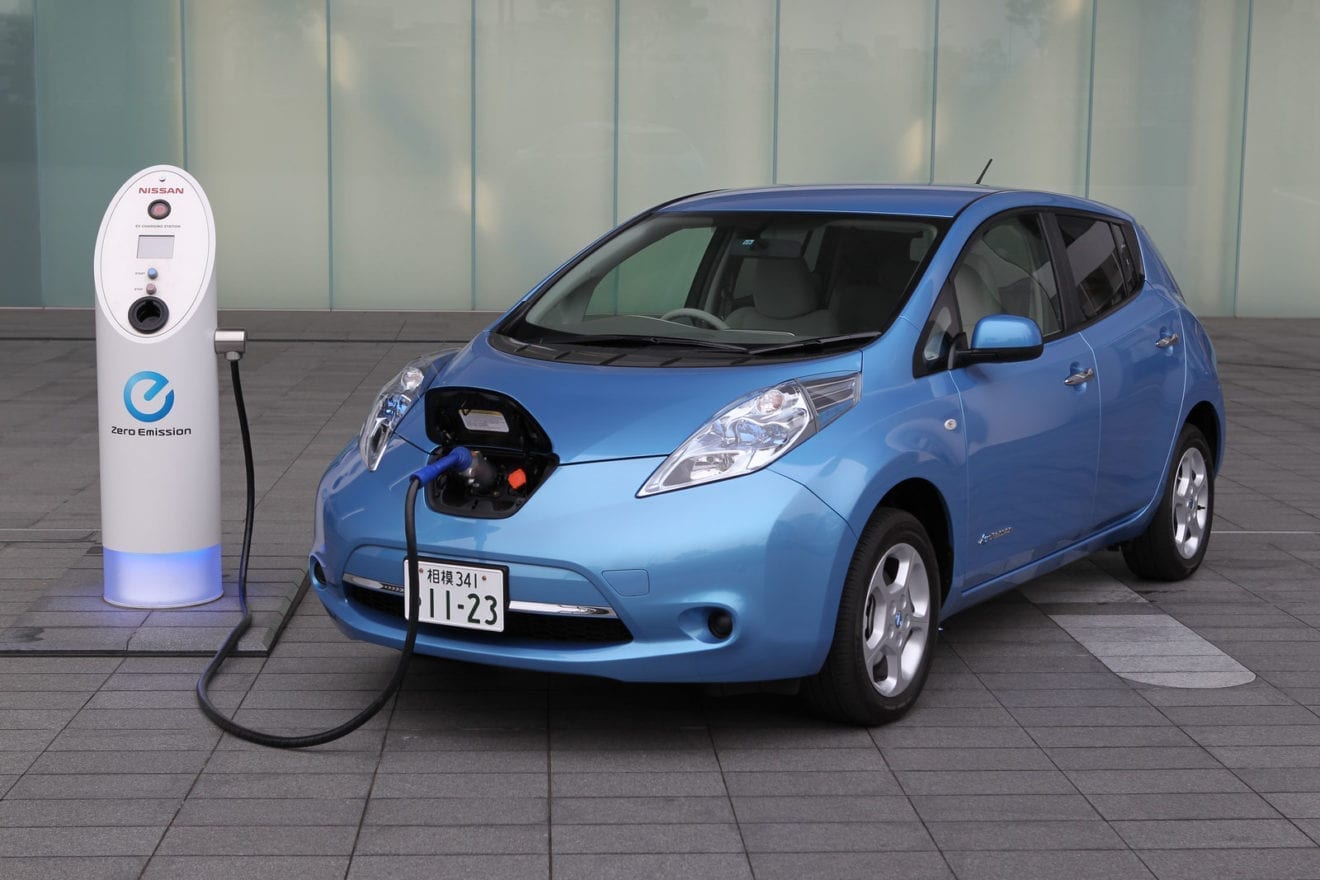
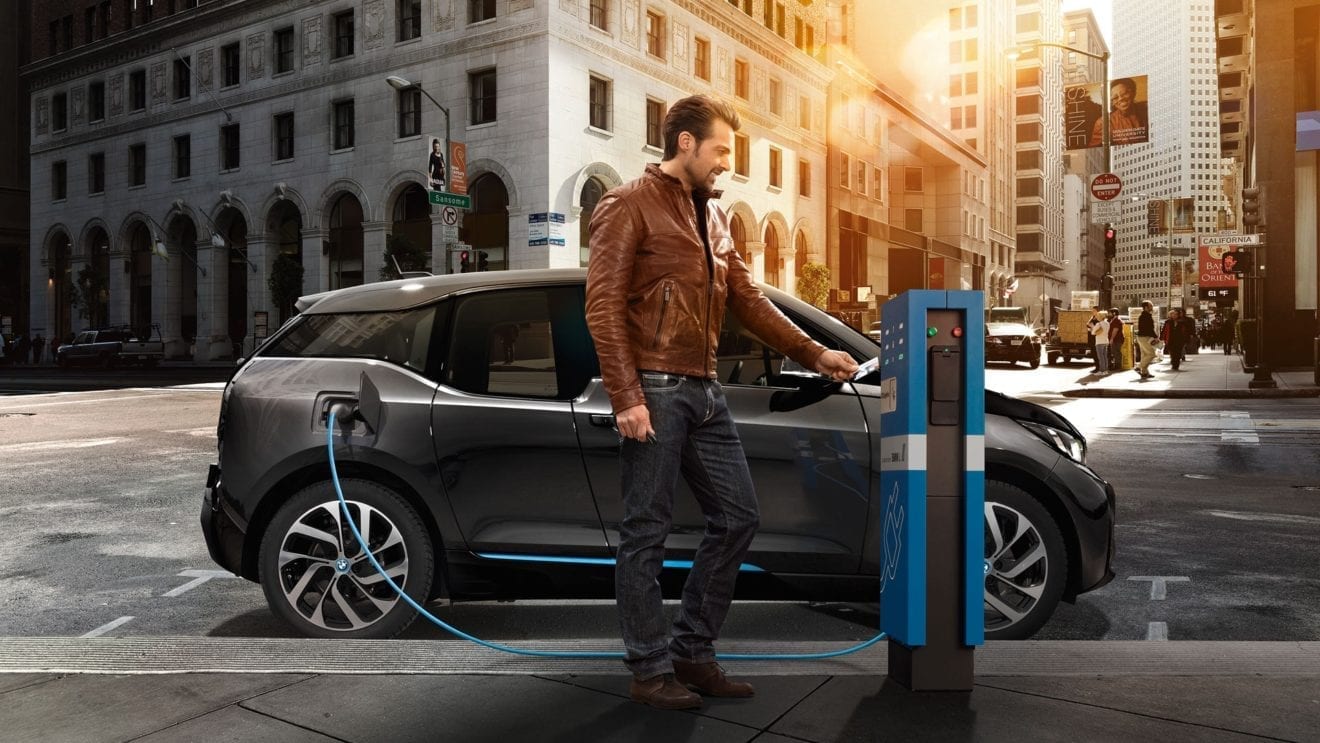
    Apple is investigating how to charge electric cars, talking to charging station companies and hiring engineers with expertise in the area, according to people familiar with the matter and a review of LinkedIn profiles.

    For more than a year, Silicon Valley has been buzzing about Apple’s plan to build an electric car. Now the company appears to be laying the groundwork for the infrastructure and related software crucial to powering such a product.
    The moves show Apple responding to a key shortcoming of electric vehicles: “filling up” the batteries. A shortage of public charging stations, and the hours wasted in charging a car, could be an opportunity for Apple, whose simple designs have transformed consumer electronics.

    Apple, which has never publicly acknowledged a car project, declined to comment for this story. Neither the LinkedIn profiles nor sources said specifically that Apple was building charging stations for electric cars.
    But automotive sources last year told Reuters that Apple was studying a self-driving electric vehicle (EV), as the Silicon Valley icon looks for new sources of revenue amid a maturing market for its iPhone.

    Apple is now asking charging station companies about their underlying technology, one person with knowledge of the matter said. The talks, which have not been reported, do not concern charging for electric cars of Apple employees, a service the company already provides. They indicate that Apple is focused on a car, the person added.

    Charging firms are treading carefully, the person added, wary of sharing too much with a company they view as a potential rival.
    It is unclear whether Apple would want its own proprietary technology, such as Tesla Motors’ Supercharger network, or would design a system compatible with offerings from other market players.

    Several charging station suppliers contacted by Reuters declined to comment about any dealings with Apple, which typically requires potential partners to sign non-disclosure agreements.

    Arun Banskota, president of NRG Energy electric vehicle charging business, EVgo, did not respond directly to questions about Apple, but said repeatedly that his company was “in discussions with every manufacturer of today and every potential manufacturer of tomorrow.”

    Apple has hired at least four electric vehicle charging specialists, including former BMW employee Rónán Ó Braonáin, who worked on integrating charging infrastructure into home energy systems as well as communication between EVs, BMW and utilities, according to a LinkedIn review.

    As recently as January Apple hired Nan Liu, an engineer who researched a form of wireless charging for electric vehicles, for instance. Quartz earlier this month reported that Apple had hired former Google charging expert Kurt Adelberger.
    Electric vehicle charging stations are manufactured, installed and operated under varying business models. Players in the space include Car Charging Group and privately held ChargePoint, SemaConnect and ClipperCreek, infrastructure companies such as Black & Veatch and AECOM as well as General Electric, Siemens and Delta Electronics.
    The three largest utilities in California also have plans to install charging stations.

    CHARGER SHORTFALL

    The electric car industry has faced a chicken-and-egg paradox with the installation of charging stations. Property owners have been reluctant to install the stations before EVs hit the road en masse, and drivers are wary of buying EVs until charging stations are widely available.

    Apple’s home state of California by 2020 will need about 13 to 25 times the roughly 8,000 work and public chargers it currently has, to support a projected 1 million zero-emission vehicles on the road, according to an estimate by the National Renewable Energy Laboratory.

    Tesla recently goosed electric vehicle demand, unveiling its more affordable Model 3 sedan, generating hundreds of thousands of reservations from potential buyers and leading many experts to calculate the number of EVs will soon outstrip the charging station supply.

    Tesla has led the way with a proprietary network for customers, who also can use public chargers. Tesla’s more than 600 “Supercharger” stations juice up a car in about 30 minutes, more than twice as fast as the standard “fast charger,” called Level 2.
    One global engineering and construction firm already has reached out to Apple to offer its services, a person at the firm said.
    “It would be natural to assume if Apple is going to have a full battery electric vehicle that creates a seamless consumer experience the way Apple does, the charging infrastructure and its availability would be of paramount importance,” the source said.

  • Porsche launches digital business division for premium segment

    Porsche launches digital business division for premium segment

    Porsche AG, the sportscar unit of Volkswagen, launched Porsche Digital GmbH, a division dedicated to developing digital services for the premium segment.

    Porsche Digital GmbH will become a competence centre and an incubator to help find ideas which can be turned into businesses and services, the company said on Friday.

    The division will be based in Ludwigsburg near Stuttgart, and have offices in Berlin, Silicon Valley and China.

    It will be headed by Thilo Koslowski, a former digital mobility analyst at consulting firm Gartner.

  • Mercedes puts up fight in China

    Mercedes puts up fight in China


    BMW and Mercedes — China’s No. 2 and No. 3 luxury brands — were virtually dead-even in that market last month, selling roughly 35,000 vehicles apiece.

    But Mercedes sales jumped 32 percent year on year, while BMW deliveries fell more than 7 percent. Audi, China’s top-selling luxury brand, boosted sales 9 percent to 49,576 vehicles.

    Mercedes has been on a tear in China since 2013, when it shook up management and consolidated its two warring distribution channels.

    BMW is feeling the heat. In April, the company replaced its China sales chief, and now it’s hustling to introduce new models. BMW is introducing a long-wheelbase X1 in China to compete with the Audi Q3 and Mercedes GLA.

    Those three models are battling for share in China’s red-hot market for compact crossovers.

    For the first four months, Audi remained on top, with sales of 189,611 vehicles, while BMW delivered 162,221 units. Mercedes is still No. 3, with sales of 142,266, but it is steadily closing the gap.

    We suspect BMW realizes that objects in its rearview mirror are closer than they appear.

  • Volkswagen considers setting up its own battery factory

    Volkswagen considers setting up its own battery factory

    Volkswagen is considering building a multi-billion-euro battery factory as part of a major expansion of its electric-car portfolio, company sources told the Handelsblatt, a leading German daily.

    The factory will allow Volkswagen to operate independently of Asian firms like Panasonic, LG and Samsung that have dominated the battery market to date, the newspaper added.

    The company’s executive board looks to be in favour of approving the plan, which is also supported in principle by the works council and the state of Lower Saxony, its major shareholder, before the firm’s annual meeting on June 22.
    The company hopes that focusing on battery technology and electric cars can help it make a fresh start and improve its negative image after the “Dieselgate” scandal, the paper said.

  • BMW expects China sales to rise by single digit percentage

    BMW expects China sales to rise by single digit percentage

    BMW expects its car sales in China to rise by a mid-single-digit percentage this year, in line with the overall growth of the world’s biggest passenger car market, board member Ian Robertson said on Monday.

    Last year, BMW sold 460,000 cars in China, marking a 1.7 percent rise, said Robertson, who is responsible for marketing and sales.

    Growth is expected to accelerate once the long wheelbase BMW X1 is launched, helping BMW to increase the number of locally manufactured vehicles to six, Robertson said.

    BMW expects its sales in the United States and across the globe to rise by a single digit percentage this year, Robertson said.