Tag: cargo

  • Two-hour on-demand delivery platform has Arrived in Australia

    Two-hour on-demand delivery platform has Arrived in Australia

    Think two-hour delivery is years away for Australian retailers? Wrong. It’s already on offer and customers are ready and willing to pay extra for the service.

    Despite some reports suggesting the service won’t be widely available for another decade, eDelivery just launched its on-demand two-hour delivery platform this year, using cutting-edge technology and Uber-style crowdsourcing.

    “The technology is a world-first. It’s super fast, it costs under $8 an order and from the moment the customer places the order online, it takes two hours to have it delivered to them with our 24/7 delivery service,” says eDelivery CEO Carl Popovic.

    Here’s how it works

    1. Customer makes an order online.
    2. The order is directed to the closest location to be picked, packed and labelled within 45 minutes.
    3. Once the order is ready for delivery, it’s directed to eDelivery for collection through its IT platform that is integrated with the retailer’s.
    4. The order is then directed to the private driver network, a crowdsourced network of self-employed drivers who are fully compliant and trained.
    5. The app technology selects the most suitable delivery vehicle of the order. Orders are batched for delivery every 15 or 30 minutes, depending on their size.
    6. A notification is issued to the closest driver. Driver accepts the order via the app and is directed to the store, where he/she scans each parcel and confirms delivery.
    7. With delivery underway, drivers are given the most direct and quickest path for multiple collections and deliveries.
    8. Customers are given a 10-minute advance SMS delivery notice.
    9. At each delivery point, the driver obtains proof of delivery signature, then goes onto the next delivery.

    What customers want

    Even in the past couple of years, consumer expectations have skyrocketed, particularly in terms of delivery, according to PwC’s 2018 Global Consumer Insights Survey. Nearly a quarter of respondents said they would be influenced to buy from a particular retailer if they offered fast or reliable delivery. More than 40 per cent of online shoppers said they would pay extra for same day delivery or for the option to receive their packages within a one or two-hour window of their choosing.

    “When retailers are up against the likes of Amazon who have excellent delivery services, it’s essential that they can compete with a similar offering,” Popovic says. “Customers don’t want to wait for their purchases for a week or two anymore. It’s just not good enough.”

    Two-hour delivery is particularly useful for retailers in the liquor, chemist, grocery, office supplies, hardware, telco or fast fashion categories. Shoppers who go online to fulfil a prescription don’t want to wait for antibiotics in two or three days’ time, neither do those planning to stock up on bubbly for a party they’re hosting tonight.

    At the moment, eDelivery is in talks with department stores, major electronics retailers and chemists to roll out the service.

    “In today’s world, it’s extremely important to be able to use a crowdsourced environment to complete the delivery process. It’s on-demand, it’s cost-effective, it’s efficient, it’s compliant – it basically ticks all the boxes in order for us to fulfil a two-hour delivery service,” says Popovic.

    “It’s time that Aussie retailers step up their game and give customers what they want.”

  • Most Affordable Bugatti Launched

    Most Affordable Bugatti Launched

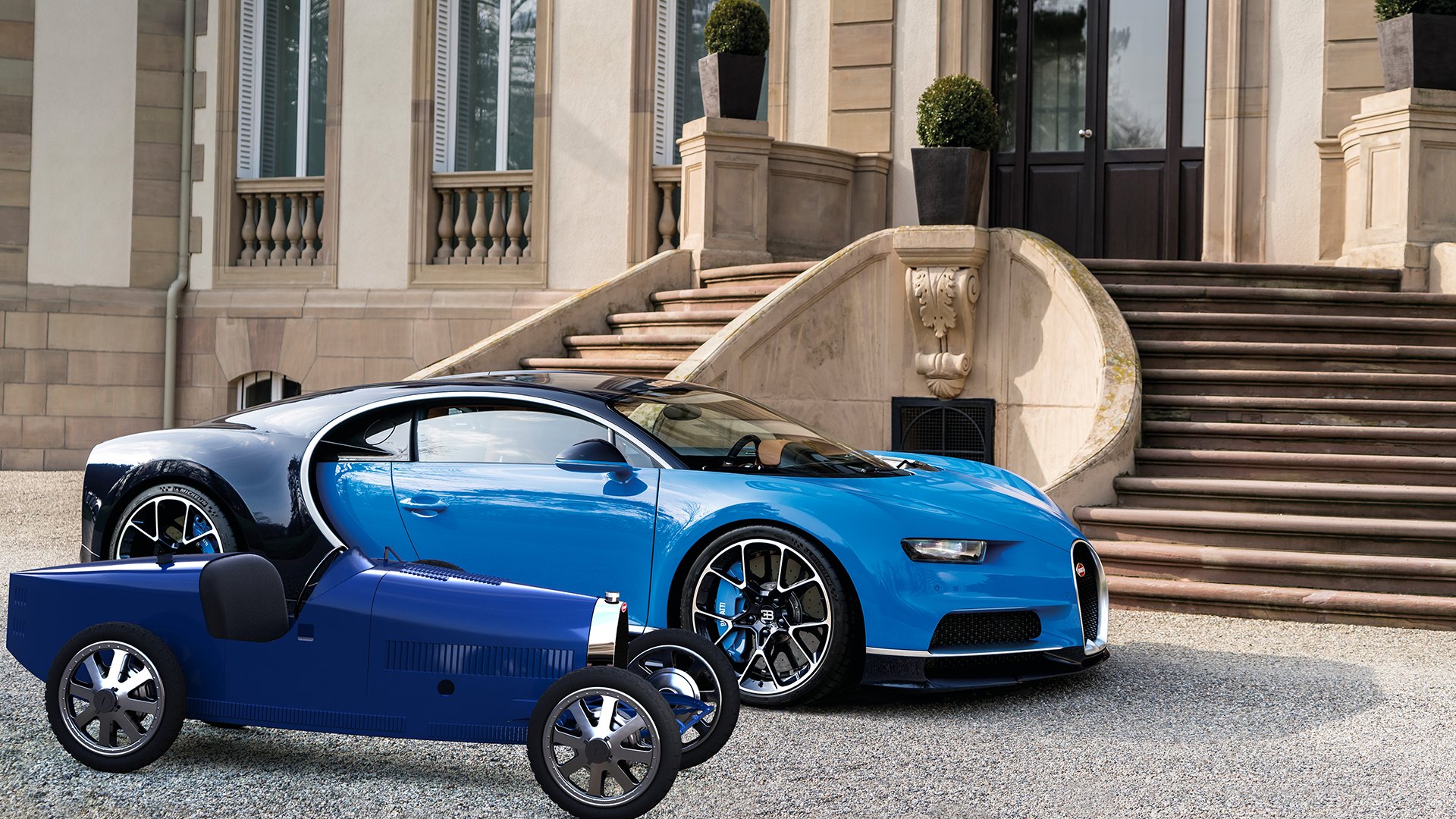
    If you thought this was a click-bait headline, we wouldn’t blame you for it. Bugatti and cheap or affordable rarely go together in a sentence and only even then, the figures resemble a small country’s GDP. This time, however, we actually mean it. Bugatti, the creator of hypercars like the Veyron and the Chiron, has launched its most affordable offering. This time though, it’s in the toy sector with its new Bugatti Baby II ride-on electric vehicle. Inspired from the Bugatti Baby I, the toy car can be driven by both kids and adults, and is priced at $34,000.

    The Bugatti Baby II is a modernised version of the half-scale Type 35 race car replica that the automaker’s founder Ettore Bugatti had built for his son nearly a century ago. While the original Baby I built between 1927 and 1936, was specifically for children, the Baby II is more accommodating and can be driven by adults too thanks to the larger proportions. The toy car gets an electric motor and with two power modes – child and adult. The child mode restricts the top speed to 20 kmph with power limited to 1.3 bhp, while the adult mode will let you top it out at 45 kmph. Much like the Chiron though, the Baby II also comes with a “speed key” that allows you to remove the limiter altogether unleashing all the 13 horses from the electric motor. The higher speed though, we reckon will come at the cost of battery life.

    The Bugatti standards of manufacturing apply to its most affordable offering as well. The cockpit is fitted with all plush materials including the aluminium dashboard, leather upholstered seat, an old-fashioned Type 35-style four-spoke steering wheel and a Bugatti instrument panel. You can also match the Baby II’s colour scheme with that of your Chiron, plus eight-spoke aluminum alloy wheels and fully functioning headlights can be added as optional extras. Definitely an upgrade over the toy cars sold at Hamleys.

    At $34,000, the Bugatti Baby II is not cheap. In fact, for those in the US, a couple of extra thousand dollars will get you a Tesla Model 3. But then again, this is for the ultra rich that may have a Veyron or a Chiron stacked up in a garage somewhere. The fact that only 500 of these will be made (just like the original), certainly makes them a lot more rare than we’d expect.

  • 2019 Ford Figo Facelift Launch Date Revealed

    2019 Ford Figo Facelift Launch Date Revealed

    The 2019 Ford Figo facelift is all set to go on sale in India on March 15, 2019. The car is set to receive an update over three years later and the facelifted Figo will come with a bunch of cosmetic changes, sharing most of its cues with the Aspire facelift, along with some new and updated features. In fact, a production-spec unit of the 2019 Ford Figo facelift has already been spotted testing in India. Furthermore, the updated Figo is also likely to come with powertrain options, which will also come from the updated Ford Aspire subcompact sedan.

    The revised engine options are likely to include the new 1.2-litre, three-cylinder petrol engine from the Dragon family that was first introduced with the Ford Freestyle. The motor is capable of producing 95 bhp and develops 120 Nm of peak torque while mated to a 5-speed manual gearbox. The 2019 Figo is also expected to get the bigger 1.5-litre three-cylinder unit that was introduced with the EcoSport facelift, which makes 123 bhp and 150 Nm of torque, with the new 6-speed torque converter.

    Of course, Ford will continue to offer the tried and tested 1.5-litre four-cylinder diesel engine, which continues to be the most popular choice among these models. The motor is tuned to churn out a maximum output of 99 bhp and 215 Nm of peak torque, and it comes paired with the same 5-speed manual gearbox as standard.

    Visually, the Figo facelift comes with a new honeycomb-pattern grille with chrome surrounds, the tweaked headlamps, with halogen units, and a new front bumper with the large end-to-end horns-like black element, with round foglamps and a wide airdam. The spy images also revealed that the car will come with new, sporty black alloy wheels, revised taillamps and similar black element as on the tailgate.

    The cabin design, on the other hand, is also likely to be identical to the new Aspire, but we do expect to see an all-black theme instead of the beige interior on the latter. Also, the car is likely to feature a new infotainment system, a floating unit that will support Ford’s in-car connectivity system SYNC3 in addition to Apple CarPlay and Android Auto. The car also comes with new air con vents along with illuminated USB sockets, auto climate control and a start-stop button.

  • Nike global warehouses goes carbon neutral

    Nike global warehouses goes carbon neutral

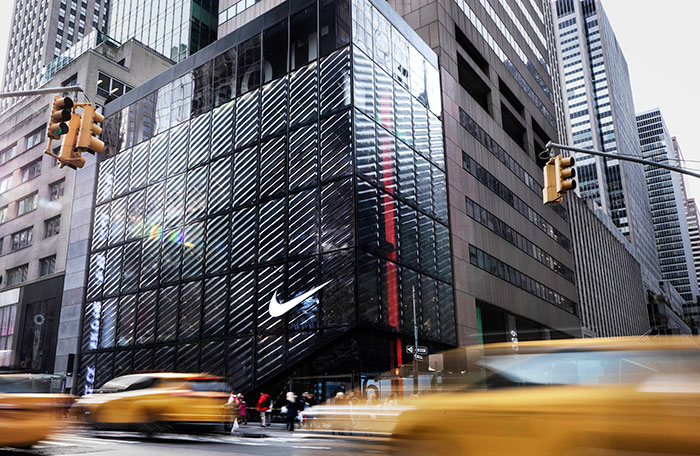
    A Nike warehouse in Melbourne’s Altona North suburb has become the first facility in Australia to receive a ‘whole-of-building’ carbon-neutral certification from the National Carbon Offset Standard.

    The certification is the latest recognition for the site, which has also received a Green Star Performance rating and was named the ‘Best Industrial Project’ at the National Energy Efficiency Awards in 2017.

    The 18,000sqm warehouse, which is owned by the Stockland property group and was custom-built for Nike by Toll, was designed with environmental efficiency in mind.

    Some of the site’s unique features include translucent roof sheeting to maximise daylight so warehouse lighting can be switched off when ambient light is sufficient, roof insulation to assist with temperature control and an optimised conveyor system, which was rewired and reprogrammed to operate in relation to product volumes, eliminating unnecessary movement.

    The retrofitting of 1300 light fixtures with high-efficiency LEDs also helped the site to halve its total electricity consumption, exceeding the greenhouse reductions required by NCOS.

    Toll and Nike offset the remaining greenhouse emissions generated by the building by investing in forest conservation projects in Tasmania as well as in an energy recovery waste water treatment plant in Thailand. These projects protect local biodiversity and native species support jobs in local communities and reduce greenhouse gas emissions, according to a statement from the comp

    Nike’s operations director Marie Varrasso said the success of the facility reflects its commitment to reducing its carbon footprint whilst delivering efficient solutions and savings which can be passed on to its customers directly.

    “Through this collaboration, continuous improvements have been introduced into the supply chain, which ultimately benefits Nike’s footwear, apparel and equipment customers. It’s a unique relationship, with innovation at the heart of everything we do,” she said.

    Stockland’s general manager of logistics and business parks Tony D’Addona said the project has has been a worthwhile education process for the property group’s warehousing and logistics business and helped to improve its management approach to sustainability.

  • Dubai now as important as Singapore for DHL

    Dubai now as important as Singapore for DHL

    Brexit, trade wars, an economic slowdown in China and humanitarian crises on the regional doorstep – despite these headwinds, Amadou Diallo, DHL Global Forwarding CEO for the Middle East & Africa, isn’t worried. The outlook for the logistics sector in the UAE for 2019 is upbeat, DHL’s recent Global Connectedness Index put the country at number five among the most connected countries in the world in terms of logistics, and Emirates NBD’s Dubai Economy Tracker Index shows that the wholesale and retail sectors (major drivers of demand for 3PL services) are at their strongest outlook since the post-2008 years.

    There is light on the horizon, then. But, despite this, the major players in the market are worried. At the World Government Summit in Dubai, DP World chairman and CEO Sultan Ahmed Bin Sulayem hit out at the UK government over its handling of the Brexit process.

    “Our problem is the indecisiveness of the government,” he said. “We don’t care as businessmen whether they have Brexit, or Brexit with an agreement, or Brexit with a good agreement, or Brexit with a bad agreement,” he said. “Once they decide, as businessmen, we are capable of running our business once all this basically indecisive environment disappears.”

    The statement was unprecedented from one of the most mild-mannered (and most powerful) figures in the Middle East logistics industry. But, he was venting a frustration expressed privately by many executives this magazine has interviewed during the last year. The world’s sixth-largest economy is at risk of crashing out of the world’s largest trading bloc without a contingency plan in place for trade and logistics.

    As the award-winning journalist James Ball wrote in a recent CNN piece, “The world needs to start panicking about Brexit”. The UK’s crisis was therefore a natural starting point for our wide-ranging interview with Amadou Diallo, DHL Global Forwarding CEO for the Middle East & Africa – but unlike many industry commentators, he insisted there was no need for concern in this region.

    Brexit is one of a handful of challenges we’re currently facing“Brexit is one of a handful of challenges we’re currently facing,” he says. “DHL’s Logistics Trends Radar has highlighted Brexit as a potential headwind, among evolving trade tensions between the US and China, and China’s own domestic economic slowdown, that will likely impact trade volumes transhipping through the Arabian Gulf.”

    “This is an evolving and dynamic market. It’s always changing.”

    According to Diallo, DHL’s history and sheer size (DHL Group is the largest courier in the world), gives it the stability and resources to mitigate these challenges. “DHL has been around for more than 24 years and we’ve seen our fair share of market shifts,” he says. “Because we’re present in more than 220 countries around the world, we’re sustainable and dynamic enough to find new solutions and opportunities amid these global dynamics.”

    For this reason, he doesn’t see DHL Global Forwarding’s regional operations being unduly hampered by Brexit, whether it be hard or soft. In fact, he suggested the process might have a positive effect on the Middle East and African markets.

    “The UK trades with many markets, our region covers anything that goes to or from Afghanistan, Turkey, the Middle East and Africa, and many countries in this region have a solid trading relationship with the United Kingdom,” he says. “So, any enterprises and people in the UK who find themselves suffering due to Brexit may look to their existing trade relationships in other parts of the world to find some measure of mitigation and stimulate these trade flows. If people are inward-oriented, trade flows are the first thing to suffer.”

    For DHL Global Forwarding itself, the uncertainty and shifting nature of supply chains will likely drive demand for its services, he added. “DHL Global Forwarding is a sizeable organisation in the United Kingdom and we’re market leaders worldwide when it comes to logistics. We do supply chain services, customs brokerage, and other services that are going to be in high demand from UK companies if a hard Brexit occurs,” he says.

    And while Brexit remains a question mark looming large over the industry, what Diallo feels is a certainty of support to the market is the EXPO 2020 Dubai, which the government is spending US $9-billion to host, as part of a wider series of infrastructure investments amounting to US $3.2-billion in 2019 alone for the UAE Vision 2021 and Vision 2030 initiatives to diversify the economy.

    Dubai EXPO 2020 is definitely an opportunity for us, for growth“Dubai EXPO 2020 is definitely an opportunity for us, for growth,” he says. For a company like DHL Global Forwarding, providing air and ocean freight forwarding services and major logistics projects under the brand name DHL Industrial Projects, the opportunity is two-fold. “We had this experience in Milan and in China and we shouldered the burden of getting all the goods into the country for the expo itself for countries wanting to come and promote their cultures and countries, but also for the immense infrastructure development that comes with events of this kind,” says Diallo.

    “And then once the EXPO is over, there’s a lot of material that needs to be shipped by air or sea back to the point of origin, or donated, which is often the case, to other countries,” he says. “These are operations that need to be completely flawless and it’s something that we have become very good at.”

    DHL Global Forwarding is working closely with key partners in the run-up to the event, such as Emirates SkyCargo. “Emirates SkyCargo is helping us ensure that we provide a seamless service to foreign and domestic clients ahead of EXPO 2020. They’re a key provider of air freight solutions for DHL Global Forwarding,” he said. “We operate in all the same markets as the airline and work very closely with Nabil Sultan, the head of cargo for Emirates.”

    Emirates SkyCargo, like Emirates itself and DP World’s Jebel Ali Port, has turned Dubai into a major global logistics hub, and because of this DHL is significantly expanding its operations in the city. The DHL Group at the beginning of February established its first Global Competence Centre for Humanitarian Logistics in Dubai.

    “The centre is a cross-business unit involving the entire DHL Group to help logistics companies and NGOs respond to the various disasters and humanitarian crises occurring in the region,” says Diallo.

    “The competence centre will support the work of the International Humanitarian City. We see that many NGOs and aid organisation have offices and DCs here, and so this is the ideal city to use as a logistics hub for humanitarian relief.”

    Dubai is one of three global humanitarian logistics hubs for DHL’s disaster relief teams, and this, along with the Competence Centre, underscores the city’s significance within the wider DHL network.

    “This is the largest hub we have in the Middle East and Africa region,” says Diallo. “It’s up there with Singapore, Shenzhen, Germany and the United States.”

    DHL Global Forwarding has around 300,000sqm of warehousing space in the Middle East, with 260,000sqm of that located in Dubai. It’s also in Dubai that it has the AOG competence centre for all the airlines carrying air cargo into and out of the region, and a dedicated team of 75 people working in Dubai on its infrastructure logistics solutions through DHL Industrial Projects. “With a lot of energy plants and oil & gas projects in the region, and immense infrastructure developments in Saudi Arabia and other GCC countries and in Africa, and Dubai’s global connectedness, it makes sense to concentrate a lot of these tools here in Dubai,” says Diallo.

    When it comes to infrastructure and development projects in Saudi Arabia, as part of the massive Saudi Vision 2030 plan, Diallo says this represents another major logistics opportunity. When asked whether initiatives such as the development of King Abdullah Port and King Abdullah Economic City could challenge the UAE’s logistics dominance via Jebel Ali Port, he’s more hesitant.

    “There is a long lag time between deciding on a goal and achieving it,” he says. And while the ultimate impact for the UAE may be so way away, he also doesn’t feel that the redevelopment of Saudi Arabia’s logistics industry is intended to challenge the UAE’s dominance.

    “We are actively participating in, and working on, the Logistics 2030 strategy of Saudi Arabia, which is part of the Vision 2030 initiative. I’m part of the advisory board in that effort, so we know the ambitions and goals that are being worked on,” he says.

    “The UAE has been a major driver of logistics development in Saudi Arabia organically, so many of its imports and exports still transit through Dubai and I don’t think that will change any time soon. And when it does, it won’t be a zero-sum game,” he adds.

    According to Diallo, it’s not dissimilar to the rise of Singapore and China as major economic and logistics powerhouses. “Singapore was the first major logistics hub in the region, before China was the economic giant it is now,” he explains. “China is a logistics leader now, but that doesn’t mean that Singapore has suffered or been displaced as a regional and global logistics hub. I think the same will apply here in the region.”

    In Saudi Arabia, the investments being made are aimed at supporting the domestic economy, and the Kingdom’s ability to diversify and grow. “These changes are related firstly to growing the economy to satisfy the needs of a growing population. Saudi Arabia is the largest economy in the GCC and there’s liberalisation, industrialisation, and diversification taking place,” he says.

    These changes require an evolution in the country’s supply chains and logistics networks. “It’s logistically more economically feasible to have cars assembled in Saudi Arabia than shipped via roro in a turn-key state from Japan, South Korea, and Mexico. The same goes for other consumer goods. This creates more job opportunities, and therefore more personal wealth, and therefore more demand for goods.”

    The goal then is to enable the economy to be more diverse, more self-sustaining and more stable. The changes taking place in Saudi Arabia’s logistics sector are going to boost the country’s ability to meet these targets, to become a larger, more diversified economy, says Diallo. “But it won’t take traffic or logistics capabilities away from Dubai.”

  • DHL renews partnership with Africa’s largest e-commerce event

    DHL renews partnership with Africa’s largest e-commerce event

    DHL Express in Sub-Saharan Africa (SSA) has announced that the company has once again signed on as lead sponsor for the 2019 DHL eCommerce Africa Conference and Exhibition, which will be held at the Cape Town International Convention Center on the 19thand 20thof March 2019.

    The eCommerce Africa Conference and Exhibition, delivered by DHL, is hosted by South African conferencing company, Kinetic, and is one of Africa’s biggest opportunities to bring stakeholders in the ecommerce sector together. Later in the year, Kinetic will also bring the conference to Kenya, with the eCommerce East Africa Edition, also delivered by DHL, set to take place in Nairobi on the 12thand 13th of June 2019.

    This year’s event offers participants an opportunity to learn from world-class thought leaders, both from Africa and the rest of the globe, on the innovative strategies that will unlock e-commerce opportunities over the years to come. Delegates from some of the continent’s biggest tech, retail, banking and legal firms will be in attendance to share their experience and engage with attendees to exchange knowledge.

    According to the McKinsey Global Institute’s report, Lions Go Digital, e-commerce and fintech represent two of Africa’s biggest growth opportunities, with the growth of the mobile technology market driving both of these sectors. “More than half of urban African consumers already have Internet-capable devices and this number is increasing. Online shopping in Africa could account for up to $75 billion in retail sales by 2025.”

    Steve Burd, Vice President Sales for DHL Express Sub-Saharan Africa, explains that the ongoing partnership between DHL and eCommerce Africa is a good fit. “As the market leaders in express logistics in Africa, we have extensive first-hand experience of the positive impact that ecommerce has on the continent. The massive growth in cross-border and international ecommerce in Africa sees DHL working with thousands more customers across the continent each year, helping them to expand their brand across borders.”

    He adds that the development of ecommerce in Africa continues to unlock major opportunities for growth. “E-commerce allows entrepreneurs and SMEs to connect with a large customer base and scale up rapidly, which accelerates the need for support services. E-commerce growth therefore has a ripple-effect on many other industries on the continent.”

    “DHL’s partnership with eCommerce Africa provides us with an additional platform to connect with organisations and help them to understand key logistics considerations, and learn how to plan for and overcome any logistical challenges,” adds Burd.

    Terry Southam, Kinetic Managing Director, says that the collection of thought leaders and the topics under discussion this year are aimed at creating an immediate impact for African ecommerce companies.

    “From marketing to fulfilment, the world’s best will be on stage sharing best practice and innovative hacks to drive online growth. It is quite remarkable to have all of these industry leaders on the same stage – not only willing to share but actively working to grow the industry and ensure African customers receive a world-class online shopping experience. This year’s theme for the conference is ‘Conquering Scale’ and we couldn’t be happier to have a market leader like DHL on board, to help us deliver 2 key e-commerce events on the continent this year,” he concludes.

  • DHL Expands For Temperature Sensitive Shipments

    DHL Expands For Temperature Sensitive Shipments

    The WMX service in Mexico will expand by early Q2 2019 into 17 new origin cities, including Zapopan, Toluca, Cuernavaca, Cuatla, Pachuca, Saltillo, Aguascalientes, Puebla, Celaya, San Luis Potosi, Torreon, Morelia, Leon, Guanajuato, Jalapa, Orizaba and Durango.

    The integrated transportation solution, which DHL launched in Mexico in July 2018, facilitates the delivery of Mexico-based patient samples to U.S. central labs in less than 24 hours. This reduces transit times for these urgent temperature sensitive shipments from primary cities (beyond Mexico City) by an additional day.

    “Sponsor pharmaceutical companies have told us that the enhanced transit times have delivered significant improvements during prospective sample analysis, and improved testing results – particularly for Biomarkers and Flow Cytometry Assays,” says Brian Bralynski, Director Life Sciences Healthcare for DHL Express Americas. “Those types of gains are highly impactful and a direct benefit to patients requiring such treatment or sample analysis.”

    DHL can provide improved transit times, in part, due to its asset-based air-network and ability to export from multiple gateways in Mexico. DHL operates direct daily flights from Mexico City, Guadalajara and Monterey, linking to its regional hub at Cincinnati/Northern Kentucky International Airport (CVG), and then connecting to most U.S. cities and central lab locations the next morning and in less than 24 hours from patient draw time.

    For Mexico origins, exporters of record (typically sponsors or Clinical Research Organisations / CRO’s) will administer a one-time administrative change process, in order to authorise DHL to export samples on their behalf from three export points.

    “DHL Medical Express continues to meet the needs of the pharmaceutical industry and clinical research sectors with forward-thinking, intelligent healthcare solutions, while also expanding our wide range of services in Mexico,” said Mike Parra, CEO of DHL Express Americas. “At DHL, we focus on connecting healthcare stakeholders, deeply caring about the ultimate link of the chain – the patients, and to do so, we ensure we strictly comply with every regulation – global or local, and innovate in every front. A combination of responsiveness, transparency and cost-effectiveness will enable this service to be advantageous to all clinical trial stakeholders and, most importantly, clinical trials’ patients.”

    Qualified customers for the service receive a choice of temperature options (ambient, chilled and frozen) through specialised thermal packaging. Pre-determined contingencies circumvent delays, and DHL quality control centres monitor the shipments 24/7. The service is suitable for transporting laboratory kits and medical devices, biological samples, research products, vaccines and drugs for commercial and non-commercial use.

  • DHL Express Opens €93 Million Hub in Spain

    DHL Express Opens €93 Million Hub in Spain

    DHL Express has opened a new hub at Barajas Adolfo Suarez Airport in Madrid, creating 200 new jobs and strengthening the position of Madrid as a hub for international commerce, particularly between Europe and Latin America.

    By investing in high-quality infrastructure and the newest technologies, DHL Express will quadruple its capacity in Madrid. The 14,500 m2 building, which includes offices, will facilitate the sorting of 24,500 packages per hour.

    John Pearson, CEO of DHL Express said:  “With this latest investment in our infrastructure, we are further expanding the capabilities of our European and global network, enabling continued growth supported by a platform of quality. Customers from our traditional sectors as well as e-commerce customers in both private b2c as well as businesses who are driving their own b2b growth agendas through e-commerce will benefit from the investment. With this new hub in Madrid, we are connecting sellers and consumers around the world with even greater speed and efficiency.”

    The new hub has a total of 176 loading docks enabling 160 road movements each day, as well as 10 daily flights operated by DHL’s own aircraft, and 30 daily commercial flights servicing 20 international destinations, mostly in Latin America.

    “We are investing in infrastructures to increase efficiency and to improve our delivery capability. This will allow us to provide an even better service to our customers,” adds Miguel Borrás, Managing Director, DHL Express Spain and Portugal. “This new hub is a critical nexus between Europe and the LatAm countries. Thanks to this, we could connect businesses from all industries and private consumers alike, and enable them to leverage from the increasingly growing e-commerce worldwide”.

    In accordance with DHL’s GoGreen Program the new hub will help to reduce the company’s carbon footprint thanks to the use of new and more efficient sorting technology, improved building insulation, and more efficient energy systems to manage the consumption of electricity, water and cooling systems.

  • Meet Scout, Amazon’s new delivery robot

    Meet Scout, Amazon’s new delivery robot

    Amazon is field testing a new delivery robot called Scout, which the company describes as a “fully-electric delivery system” designed to safely get packages to customers using autonomous delivery devices.

    Six robots are initially being tested in a Snohomish County neighbourhood in the U.S. state of Washington, where they’ll be delivering packages Monday through Friday during daylight hours. The devices will autonomously follow their delivery route but are initially being accompanied by an Amazon employee.

    Customers in Snohomish County order just as they normally would and their Amazon packages will be delivered either by one of Amazon’s partner carriers or by Amazon Scout.

    The robots, which are the size of a small cooler box, were created at Amazon’s research and development lab in Seattle. They’re designed to roll along sidewalks at a walking pace and safely navigate around pets, pedestrians and anything else in their path.

  • DHL Global Forwarding appoints Fabian Rybka to head Bangladesh and Sri Lanka

    DHL Global Forwarding appoints Fabian Rybka to head Bangladesh and Sri Lanka

    DHL Global Forwarding, the leading international provider of air, sea and road freight services, has appointed Fabian Rybka as Cluster Head for DHL Global Forwarding’s operations in Bangladesh and Sri Lanka, along with partner operations in Bhutan, Nepal and the Maldives.

    Rybka brings to the role more than 10 years of experience at DHL Global Forwarding in both Asia and Europe, serving most recently as Head of Business Strategy and Development for DHL Global Forwarding ASEAN and South Asia, where he spearheaded successful growth initiatives in Bangladesh and Sri Lanka amongst other markets. Previous roles saw him specialize in designing and executing growth plans for DHL Global Forwarding’s high-potential markets including Italy, India, Singapore, Bangladesh, Indonesia and the Philippines, as well as key operations in European markets.

    “Fabian has built up a formidable track record for turning even the most challenging business situations into environments of high growth and customer satisfaction,” said Thomas Tieber, CEO, DHL Global Forwarding ASEAN and South Asia. “He has already proven that ability in guiding our teams in Bangladesh and Sri Lanka to significant results while understanding the nuances of the local market operations. I can think of no better individual to lead these growth markets and further build on our strong market position.”

    In the new role, Rybka will apply his extensive business development expertise to further boost productivity and expand DHL Global Forwarding’s range of services in the markets under his leadership, focusing particularly on developing key products in ocean freight and value-added services like customs and integrated warehousing. He also continues to lend his business turnaround skills to projects throughout the broader South Asia and Asia Pacific regions.

    “I firmly believe Bangladesh, Sri Lanka and the surrounding markets of Bhutan, Maldives and Nepal hold opportunity for substantial growth. We have a role to play to connect these economies to the rest of the world, supporting foreign businesses to invest in these markets, and also encouraging exports from local businesses overseas,” Rybka said. “Bangladesh’s GDP is growing faster than almost anywhere else in Asia at 7.3% per annum, while Sri Lanka continues to see steady increases in both imports and exports[2] that point to its growing connectedness and market opportunity within the global economy. As business optimism grows, my goal is to ensure we make our world-class logistics services as accessible and reliable as possible to enterprises of all sizes throughout the cluster.”

    Rybka holds an MBA from the University of Cooperative Education in Stuttgart, Germany, as well as a Global DHL CEO Award for his work in CSR and sustainability. Formerly one of Germany’s top junior football coaches, he also organizes and hosts youth football competitions — including one of the world’s largest, in Switzerland — to support the community work of SOS Children’s Village, a DHL GoTeach partner organization with whom he has volunteered for more than 10 years.

    Read more at https://vietnamnews.vn/media-outreach/505358/dhl-global-forwarding-appoints-fabian-rybka-to-head-bangladesh-and-sri-lanka-operations.html#qzaaIQjDkqMUVr8X.99

  • Pierre Poignant succeeds Lucy Peng as Lazada Group CEO

    Pierre Poignant succeeds Lucy Peng as Lazada Group CEO

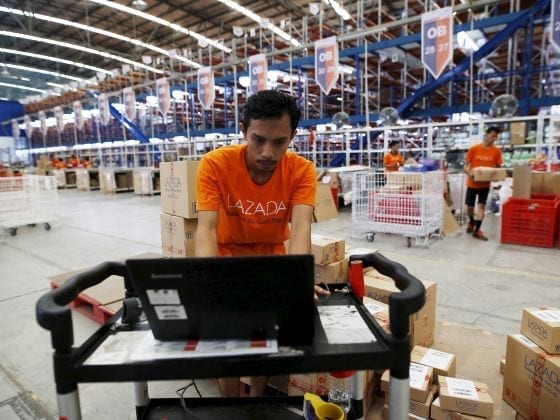
    Lazada Group has announced its new CEO this year, with group executive president Pierre Poignant taking the role immediately. The move is a leadership succession plan for both Lucy and Pierre where Lucy will remain as Executive Chairwoman and continue to be based in Singapore.

    In a media statement, Lazada described the change as “succession planning”.

    Poignant, who was appointed president in August, will lead the company’s strategic development into new growth pillars, while continuing to manage Lazada’s operations in Indonesia, Malaysia, the Philippines, Singapore, Thailand and Vietnam, working closely with country CEOs and regional functional team leaders.

    “Pierre is a well-respected Lazada co-founder, who has contributed tirelessly to the company for the past six years,” said Peng. “He and the team of other co-founders had the vision to build our logistics network from the ground up back in the days when no one in Southeast Asia believed in e-commerce – this valuable asset has now set us apart from the competition. Over the years, Pierre has consistently delivered beyond his call of duty and excelled in every role he has taken up.”

    Poignant said Lazada has benefitted from the Alibaba ecosystem, from the technological prowess to the logistics network.

    “This year is a turning point for Lazada. We have improved and evolved and now come out stronger, more efficient, and more agile than the start of the year. Our transformation has just begun and I am confident next year will be another watershed year,” said Poignant.

  • Completion of Heaviest and Tallest Cargo Transportation in the History of Uzbekistan

    Completion of Heaviest and Tallest Cargo Transportation in the History of Uzbekistan

    In 2017, Bolloré Logistics Japan was awarded the transportation of materials and equipment from Mitsubishi Corporation for a large-scale fertilizer plant in Navoiy, a city in the central region of Uzbekistan. By September 2018, our team had successfully transported 24 heavy-lift units by hydraulic conventional trailers, including 17 units over 100 MT each.

    Located in Central Asia, Uzbekistan is one of only two landlocked countries in the world surrounded by five countries, namely, Afghanistan, Kazakhstan, Kyrgyzstan, Tajikistan and Turkmenistan. This makes Uzbekistan one of the most difficult areas to transport cargoes. The port of discharge selected by Bolloré Logistics varied from one time to another as there was no standard transportation route. Depending on the port of loading & discharge, weight, dimensions, transit time, and cost efficiency, Bolloré Logistics Japan provided the best transportation route and mode for Mitsubishi Corporation.

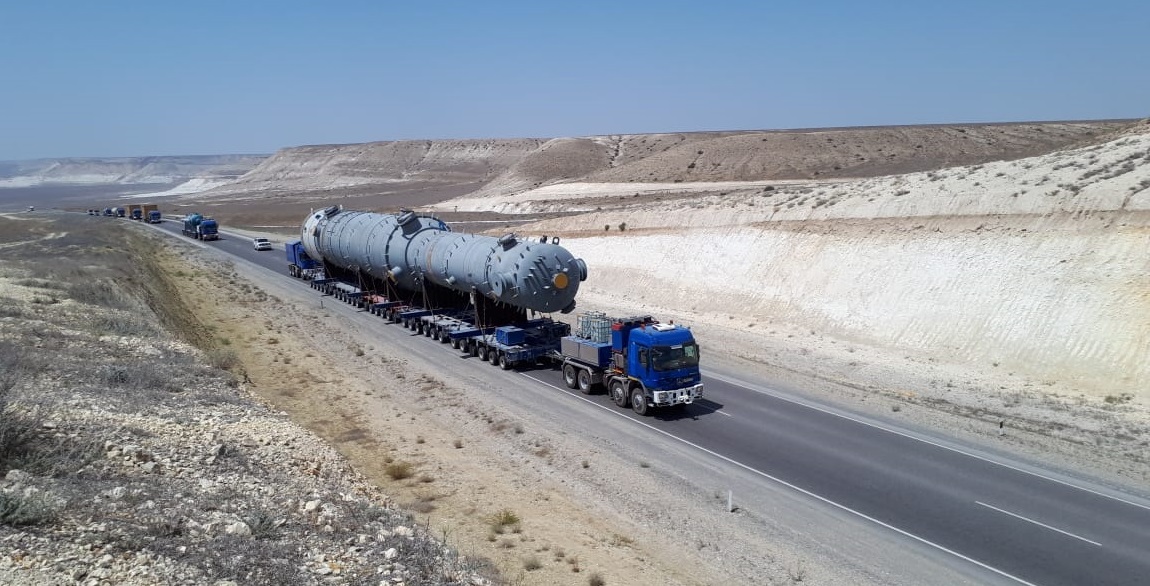
    The heaviest unit, an Ammonia Converter, registered at 422 tons and the widest and tallest unit, a Package Boiler, recorded at LWH (mm) 12,700 x 8,700 x 10,720 – making history as those were the heaviest and tallest cargoes handled in Uzbekistan.

    The scope of work included Free On Board (FOB) from various ports of loading to Navoiy’s site, together with import customs clearance formalities.

    Timely arrangement of breakbulk vessel, Volga-Don class sea river vessel or barge, road permits, conventional hydraulic trailers and more were requested from our team in order to meet the construction schedule’s deadline with all the requirements.

    As for the heaviest and most voluminous cargoes, Bolloré Logistics visited the vendor’s factories several times prior to the breakbulk shipments and physically checked the cargo figures, lifting points, lashing points, to successfully design the transportation plan accordingly.

    But the most challenging part remained the inland transportation from the Caspian Sea port to the job site.
    First of all, the distance from the Caspian Sea port to the job site is around 1,700 km. These days, most cases of heavy lifts are handled by self-propelled modular transporter (SPMT), just for short distances only, but in our case it was transported by conventional hydraulic trailers, for 1,700 km. As 1,700 km is a long journey, Bolloré Logistics Japan had to anticipate unexpected trouble on the way and prepare a backup plan, while respecting the construction schedule.

    Road surveys were carried out several times and we decided to adopt the safest transportation route. However, it was still not enough as infrastructures were limited and could not withstand transportation of such heavy and voluminous cargo; it therefore had to be improved.

    As a result, Bolloré Logistics improved 24 bridges (including the construction of a new bridge and installation of new piles on another bridge), constructed 15 bypass roads (including two long ones), expanded five corners, replaced electric poles at one place, and widened roads at four points.

    Yet, it was still not enough. During the transportation of heavy lifts cargo, Bolloré Logistics mobilized construction machinery teams such as dump trucks, road rollers, wheel loaders, etc., in order to improve unpaved road temporarily. We also mobilized an electrical team such as cherry pickers, mobile cranes to shut down / remove power cables and other overhead obstacles.

    Thanks to Mitsubishi Corporation’s full cooperation and Bolloré Logistics’ team effort; we were able to meet the cargo readiness in accordance with heavy lift transportation schedule and unloading heavy lifts on time at the site.

  • Korea’s manufacturing and mining shipments up 7 percent

    Korea’s manufacturing and mining shipments up 7 percent

    Korea’s manufacturing and mining industry shipments increased in 2017, mainly due to growth in the electronics, refined petroleum and machinery sectors, a government report showed on Tuesday. Combined shipments by companies in the sectors with more than 10 employees reached 1,516 trillion won ($1.34 trillion), up 7 percent, or 99.7 trillion won, from the year before.

    The increase is attributable to a 14.6 percent year-on-year rise in electronics shipments and a 26.6 percent gain in shipments from local refined petroleum businesses during the one-year period, the agency said. The machinery sector posted a 19 percent year-on-year rise last year.

    Such gains offset losses in the shipbuilding and automaking sectors, it said.

    The report also said that the average shipments for manufacturing companies stood at 21.7 billion won last year, up 6 percent from 2016.

    It said value-added product deliveries by mining and manufacturing companies rose 8.1 percent, or 41 trillion won, in 2017 to over 547.7 trillion won.

    As of the end of 2017, there were 69,790 mining and manufacturing companies in the country employing 2.96 million people. This represents a slight fall from the year before.

  • Christopher Ong Appointed As New Managing Director for Singapore

    Christopher Ong Appointed As New Managing Director for Singapore

    DHL Express, a leading international express services provider, on Nov 1 announced the appointment of Christopher Ong, to the role of managing director for DHL Express Singapore. Ong, a Singaporean, will report to Ken Lee, CEO, DHL Express, Asia Pacific, effective immediately. He will be responsible for charting the company’s overall business growth and success in Singapore.  Ong brings over two decades of professional experience across logistics and the business sectors. Most recently the managing director for Malaysia and Brunei at DHL Express, he spent four years driving business strategy for the organisation, managing over 1,200 employees and 27 facilities, including seven international gateways, across East and West Malaysia, and Brunei.

    On the appointment, Lee, said, “Chris joins DHL Express Singapore with a deep bench of experience, having served across a range of senior roles in DHL over the last 12 years. Not only was he instrumental in driving the B2C e-commerce and digitalisation agenda in Malaysia and Brunei, Chris has also demonstrated passion and unyielding commitment towards excellence in employee engagement and customer centricity.

    “His business acumen and broad experience at the regional and country levels will prove invaluable in his new role in Singapore, as we continue to realize the market’s growth potential.”

    Ong joined DHL Express in October 2006 as vice president for Business Development, and was responsible for mergers and acquisitions, partnerships and planning for the Asia Pacific region. In 2011, he assumed the role of country manager for Vietnam.

    Ong, said, “I am delighted to be given the opportunity to further DHL’s success in Singapore and continue raising the bar in delivering superior services and experiences to our customers. I look forward to continue engaging our talented employees and empowering them to make a difference. They are the foundation of our success and the lynchpin for delivering great service quality to earn the trust and loyalty of our customers. ”

    Prior to DHL Express, Ong spent 10 years with Temasek Holdings, the global investment company headquartered in Singapore, where he played a key role in managing the company’s international investments.

  • DHL Express ranked as one of the world’s best Employers

    DHL Express ranked as one of the world’s best Employers

    DHL Express, the world leader in logistics and express delivery, has been recognised as the sixth best place to work globally in a 2018 employer ranking from Great Place to Work and FORTUNE. Every year, Great Place to Work®, a global people analytics and consulting firm, assesses the work experience of employees through their certification program. In 2018, more than 7,000 organisations participated in the survey process, representing the voices of 12 million employees worldwide. From that pool of companies, the 25 World’s Best Workplaces have been selected. The assessment criteria are built around the core criterion of Trust, analysing the relationship of employees with management, other employees and to their jobs.

    “At DHL Express, we build our business strategy around our motivated people”, says Ken Allen, CEO, DHL Express. “We believe that employee motivation directly results in customer satisfaction and loyalty which brings business success. Our more than 100,000 employees are the biggest asset we have. This is why it is amazing to see that our investment in our people shows a sustainable impact.”

    “Our HR strategy is looking holistically across the entire employee journey”, says Regine Buettner, Executive Vice President HR, Global & Europe, DHL Express. “While establishing a customer-first mindset across the organisation, we make sure that we meet the needs of our employees so they have their best day at work every day. ‘Respect & Results’ is the principle guiding our actions and decisions, it reflects that while we create a trustful work environment, we sustain a high-performance mentality. A culture of engagement and recognition happens by design, not by default. While HR has a strategic, enabling and consulting role, it requires our leaders to actively shape the culture and our employees to live it on a daily business.”

    “Congratulations to the World’s Best workplaces. It is a big challenge to build a high-trust culture that is great for employees in many countries across the globe. These organisations have bold leaders who have risen to the challenge – they are the vanguard showing millions of organisations worldwide that is possible and desirable to create a great place to work for all,” says Great Place to Work’s CEO, Michael Bush.

    In Asia Pacific, DHL Express was also ranked second on the list of Asia’s Best Multinational Workplaces 2018, by Great Place to Work®. This accolade was presented in recognition of the company’s commitment to providing strong, caring and innovative culture.

    The Great Place to Work® ranking of the 25 World’s Best Workplaces can be found here. The ranking of Asia’s Best Multinational Workplaces 2018 can be found here.