Tag: carrefour

  • Carrefour China Sale not on the Agenda

    Carrefour China Sale not on the Agenda

    Carrefour has denied business media reports it is considering selling all or some of its Chinese retail business.

    According to an article, quoting “people familiar with the matter”, the French retail giant is mulling options for the future of the Carrefour China business where sales fell 10 percent last year to €3.6 billion.

    Carrefour “is working with an adviser and has begun reaching out to potential suitors”. Its sources asked not to be identified because the deliberations are private.

    However, a spokeswoman for Carrefour responded saying a sale of the business is “not on the agenda.”

    Analysts estimate the Carrefour China business could fetch about US$1 billion if it was sold in total, however, options being considered to include selling a share to a local partner – or do not sell any of it. No final decision has been made as yet.

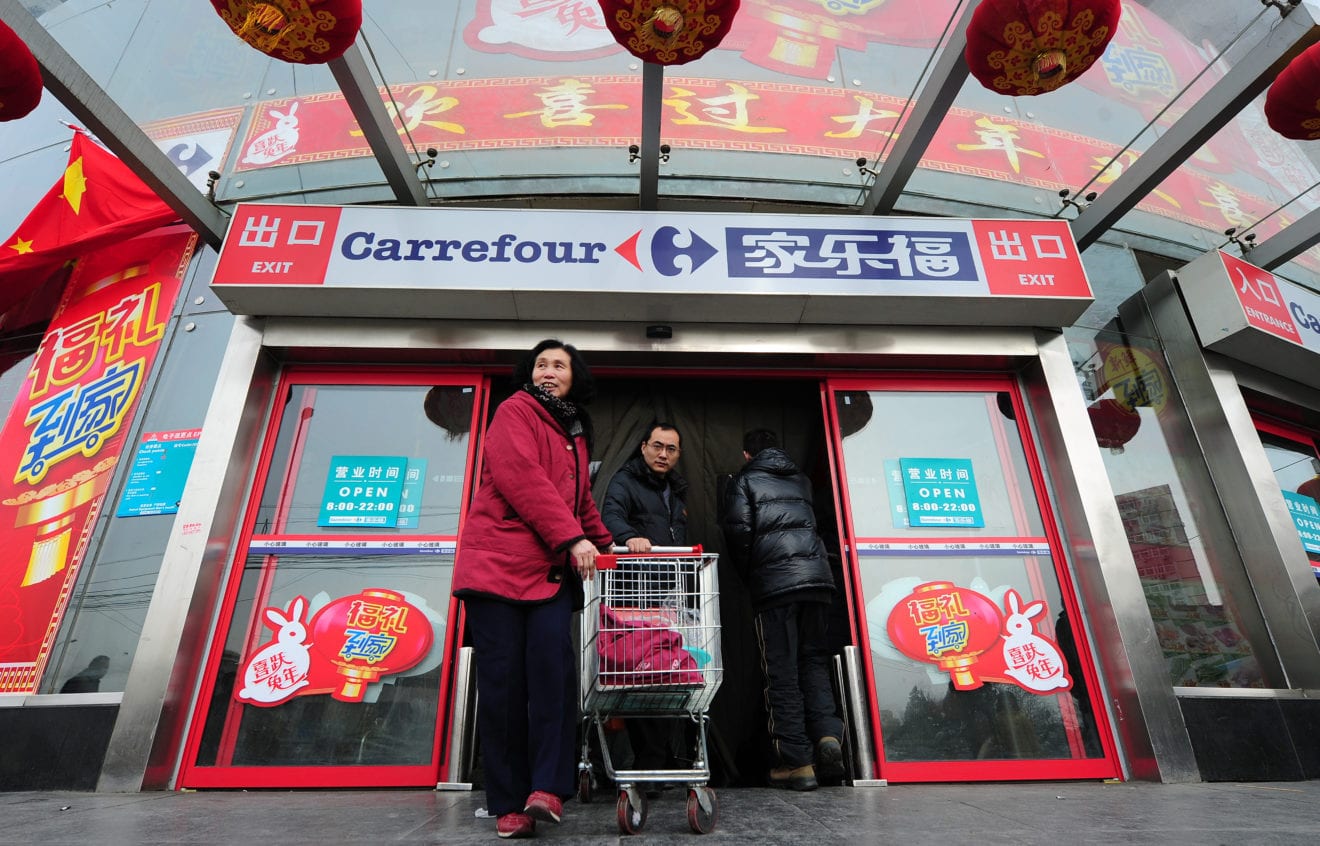
    The first Carrefour China supermarket was opened in 1995 when the French company was one of the first foreign retailers to enter the market. Since then it has opened about 245 stores, mostly large-format hypermarkets.

    In March, Carrefour reported its Chinese business had boosted profit 11-fold to €45 million.

    “China is a retailing laboratory for the world,” said Thierry Garnier, president and CEO of Carrefour China at the time. “For Carrefour, China is a specific market that has helped us to learn and to understand the future.”

    And last month the company said it was partnering with local electronics retail Gome to open stores-in-stores in Carrefour hypermarkets selling electrical goods after a successful trial in 11 stores.

  • Technology helps to boost Carrefour China profit

    Technology helps to boost Carrefour China profit

    Carrefour China has boosted its profit 11-fold according to documents filed in France, where its parent company is based. In China, Carrefour achieved €45 million operating income from its 245 outlets and online business, which it put down to investments in previous years in boosting its operations and profile there.

    The company said it has transformed the commercial model of its Le Marche hypermarket chain, and boosted sales online. An investment in technology allowing facial recognition and Scan & Go had particularly paid off.

    “China is a retailing laboratory for the world,” said Thierry Garnier, president and CEO of Carrefour China. “For Carrefour, China is a specific market that has helped us to learn and to understand the future.”

    At the end of last year, Carrefour opened a flagship on Tmall which is expected to further improve sales.

    Globally, Carrefour increased its sales by 1.4 per cent to reach €85 billion.

  • Macy’s, Tmall contract completely over

    Macy’s, Tmall contract completely over

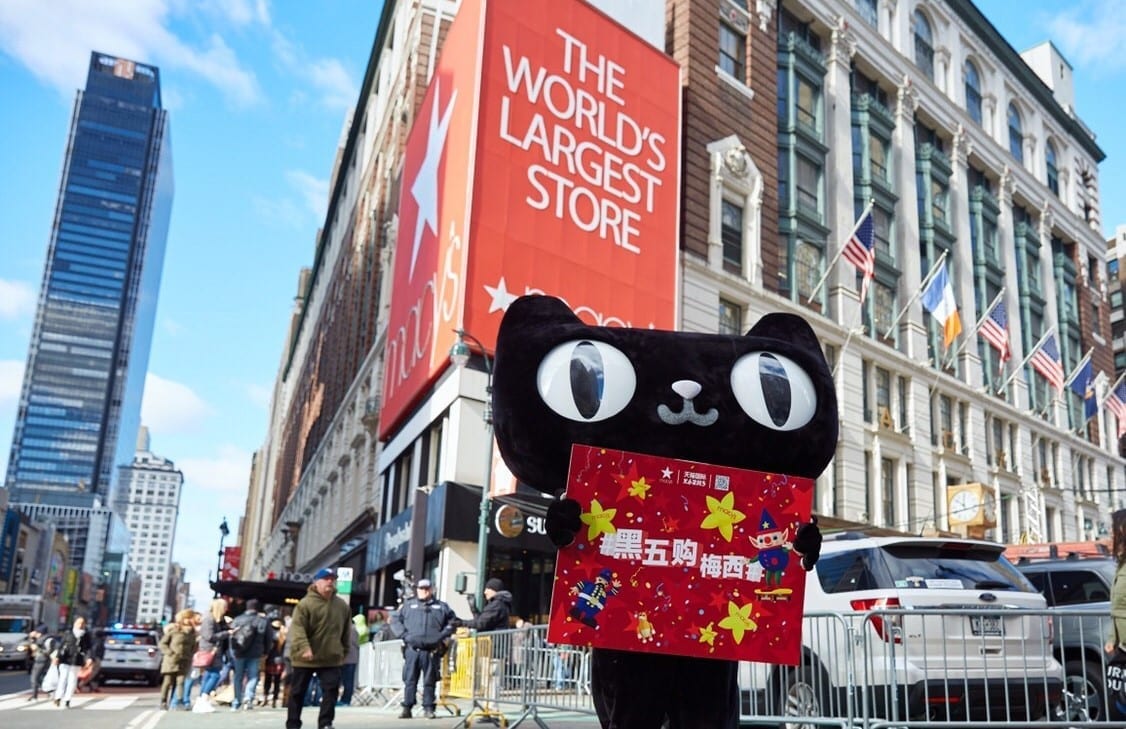
    Macy’s China stopped taking orders on Tmall this week and will close its operations by the end of the month. The US department store business said it chose not to renew the contract with Alibaba’s Tmall which ends on December 31. “We sincerely thank you for your support and love of Macy’s, and we will continue to provide services to you through the American website Macys.com,” the US retailer said in a statement.

    Just two years ago, in an interview, Macy’s China president Dustin Jones assured customers that the company would not leave China. “We will become [a] Chinese Macy’s,” he said.

    That comment followed the closure of the company’s brick-and-mortar stores in Mainland China. Macy’s subsequently closed its own China website last June.

    Since 2015, the Macy’s China business has been operated in partnership with Hong Kong-based Fung Retailing.

    Beijing-based retail analyst Liu Dingding said that Macy’s China failed because it could not keep up with the fast-changing and diversified demands of Chinese consumers.

    “The market in China is changing much faster than those in the US and Europe. These Western giants seem to react a bit slower than their Chinese counterparts,” said Liu.

    Securing a local partner was one way of ensuring success in the market – as WalMart and Carrefour’s partnerships with Tencent have shown, said Liu. That way they can localise their offer and learn from Chinese experience.

    “[Western retailers] have built up operating experience with years of success back home. But before applying this experience in their Chinese operations [they should] respect Chinese culture, hire more Chinese executives and try to adjust the way that they have operated for years back home.

    “That’s the first step to gaining a foothold in the Chinese market,” Liu said.

  • Dada-JD Daojia, Carrefour to collaborate online

    Dada-JD Daojia, Carrefour to collaborate online

    Chinese online grocery and delivery firm Dada-JD Daojia is partnering with French hypermarket chain Carrefour. The collaboration, which involves listing Carrefour China stores on the Dada-JD platform, has already resulted in a 720 per cent increase in the chain’s online sales compared with the month previous. Some 4000 Carrefour products are available to be traded on the platform.

    So far, 158 Carrefour stores are listed on Dada-JD, with plans being to have 200 listed by the end of the year.

    Dada-JD Daojia offers two distinct services, the “Dada” on-demand logistics platform (which covers 400 major Chinese cities) and the “JD Daojia” e-commerce platform that has more than 50 million users. It has collaborated with Walmart since 2016 as well as other chain supermarkets.

  • Carrefour to open 300 mini stores in Indonesia

    Carrefour to open 300 mini stores in Indonesia

    Carrefour Indonesia has sealed a deal with the nation’s Mosque Council (Dewan Masjid Indonesia, DMI) to open up to 300 mini supermarkets.

    The stores will be built in mosque districts by Carrefour’s local entity Trans Retail Indonesia and range in size between 10sqm and 250sqm.

    According to Salaam Gateway, the company is working with the national mosque body to select districts for stores in cities including Jakarta, Sukabumi, Bandung, Bekasi, and Depok, as well as in provincial centres such as Riau, Padang, Lombok, and Makassar.

    VP for corporate communications with Trans Retail, Satria Hamid, says a memorandum of understanding has been signed with DMI “and we agreed on three points: boost human capital skills in retail management, grow the number of entrepreneurs from mosque districts, and increase the purchasing power of this captive market.”

    Profits will be shared equally.

    The retail infrastructure and store operations will be overseen by DMI and Trans Retail will supply products as well as providing technical assistance, training, and support on merchandising, safety, hygiene and other operational factors.

    The new Carrefour Indonesia stores will compete with Alfamart convenience stores.

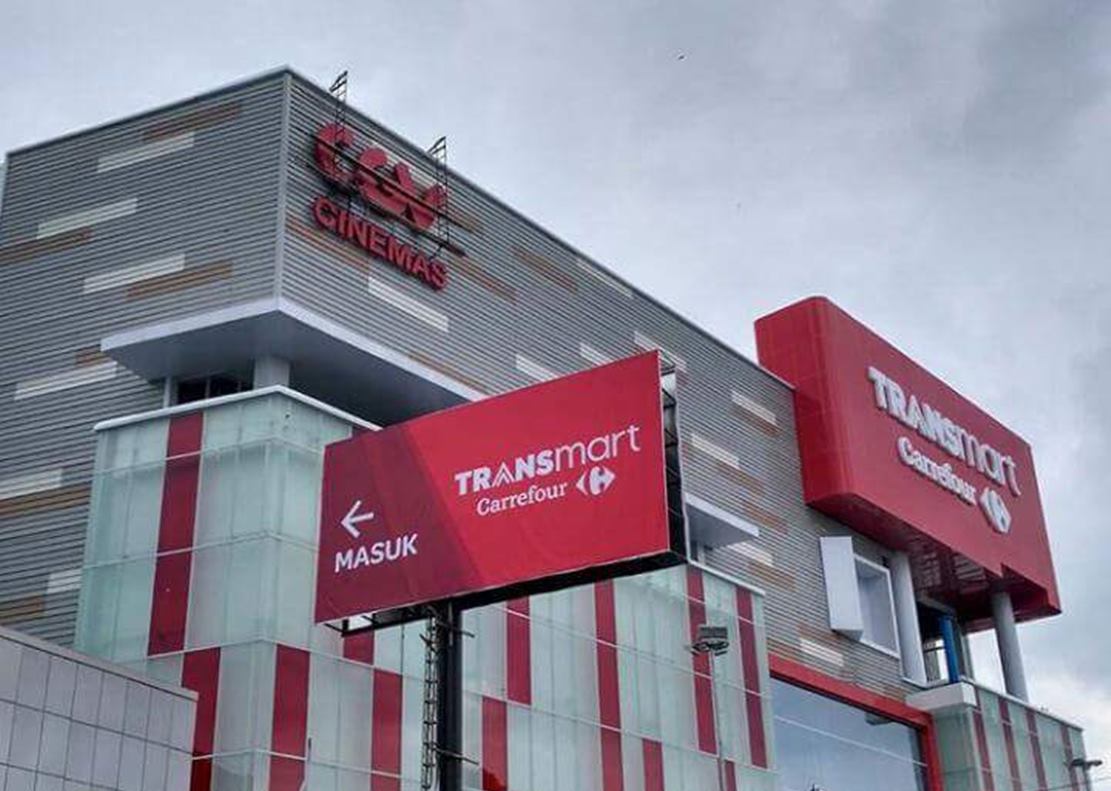
    Trans Retail operates 112 Carrefour hypermarkets and supermarkets across Indonesia under the umbrella of four brands: Carrefour, Transmart Carrefour, Transmart, and Groserindo Carrefour.

    Trans Retail’s parent CT Corp acquired 100 per cent of Carrefour Indonesia from Carrefour France in late 2012.

  • Supermarket chains Tesco, Carrefour form strategic alliance

    Supermarket chains Tesco, Carrefour form strategic alliance

    Britain’s largest grocery chain Tesco and French grocery giant Carrefour have joined forces on how they source and buy from suppliers in a bid to cut prices.

    The long-term deal, which was struck amid mounting competition from Amazon and other rivals, allows the supermarket giants to jointly source certain products to lower prices and offer a wide range of product offerings to customers.

    According to Tesco, the alliance will be governed by a three-year operational framework and will enable both companies to improve the quality and choice of products available to their customers at even lower prices.

    Both companies will continue to work with supplier partners at a local and national level.

    “By working together and making the most of our collective product expertise and sourcing capability, we will be able to serve our customers even better, further improving choice, quality and value,” said Dave Lewis, Tesco Group chief executive.

    Alexandre Bompard, chairman and CEO of Carrefour, said the strategic alliance between the two grocery giants is a major agreement that combines the purchasing expertise “of two world leaders, complementary in geographies with common strategies.”

    The alliance will be formally agreed within the next two months, Tesco said in a statement.

    The British retailer has trialled a few days ago a new “shop and go” technology that allows Tesco customers to pay for their groceries without visiting a till, just through a smartphone.

    The retailer has given 100 company employees smartphones and use them to shop at its headquarters to trial the service. They use the phones to scan barcodes and pay for their shopping.

    The experiment is similar to the technology Amazon has already adapted in its grocery store in Seattle.

  • Carrefour and Google to partner in online shopping initiative

    Carrefour and Google to partner in online shopping initiative

    Carrefour and Google have formed a strategic partnership to develop innovative online shopping solutions.

    The two companies say Google will contribute its technology and skills in AI, cloud computing and new consumer shopping interfaces like the Google Assistant, while Carrefour will bring its product expertise and know-how in logistics and sales.

    The partnership will focus on three initiatives: the availability of Carrefour on a new Google shopping website and Google Assistant in France, the creation of a Carrefour-Google innovation lab and the acceleration of Carrefour Group’s digitalisation.

    “The common objective of this partnership is to bring together the expertise of both companies to offer consumers new and innovative commerce experiences in France, whether that’s in a store, online, on smartphones, or with voice,” the two companies said in a statement.

    New buying experience

    The cooperation will see “a new buying experience from Carrefour across Google platforms” including Google Assistant, Google Home and a new Google Shopping website in France, expanding Carrefour’s footprint in the digital realm.

    “The common goal of both companies is to provide users with simplified and intuitive buying experiences. By early next year, users in France will be able to shop for groceries through a variety of channels including on Google Home, via the Google Assistant on their mobile phone, or on the web through the new Google shopping destination in France. Items can be delivered to their homes or made available for pick up in-store.”

    At the new innovation lab in Paris, Carrefour engineers will work side-by-side with Google Cloud AI experts to co-create new consumer experiences.

    Meanwhile, Carrefour will deploy Google Cloud’s G Suite productivity and collaboration solutions (including Gmail, calendar, drive, Hangouts, Docs) to more than 160,000 Carrefour employees.

    “This alliance makes Carrefour the first partner of Google on grocery e-commerce in Europe, creating a strong bond between the two companies,” said Alexandre Bompard, CEO of Carrefour.

    “It also marks an important step in the new story written by Carrefour since the announcement of the Carrefour 2022 plan. It allows us to accelerate our digital evolution and get a head start in deploying the omni-channel approach we want to offer our customers.”

    Sébastien Missoffe, VP and MD of Google France, said shoppers today are saddled with disconnected experiences through the online shopping journey, which often lead to abandoned shopping carts and low customer satisfaction and loyalty.

    “Customers want assistive, simple and personalised experiences that help them make decisions on what to buy, assist with easily building baskets across surfaces, and provide a seamless checkout. With Alexandre Bompard and his team, we wanted to explore new distribution models and e-commerce technologies to deliver simple, frictionless and deeply relevant experiences for shoppers in France.”

    Carrefour has a network of 12,300 stores across more than 30 countries.

  • Carrefour opens ‘smart store’ in Shanghai

    Carrefour opens ‘smart store’ in Shanghai

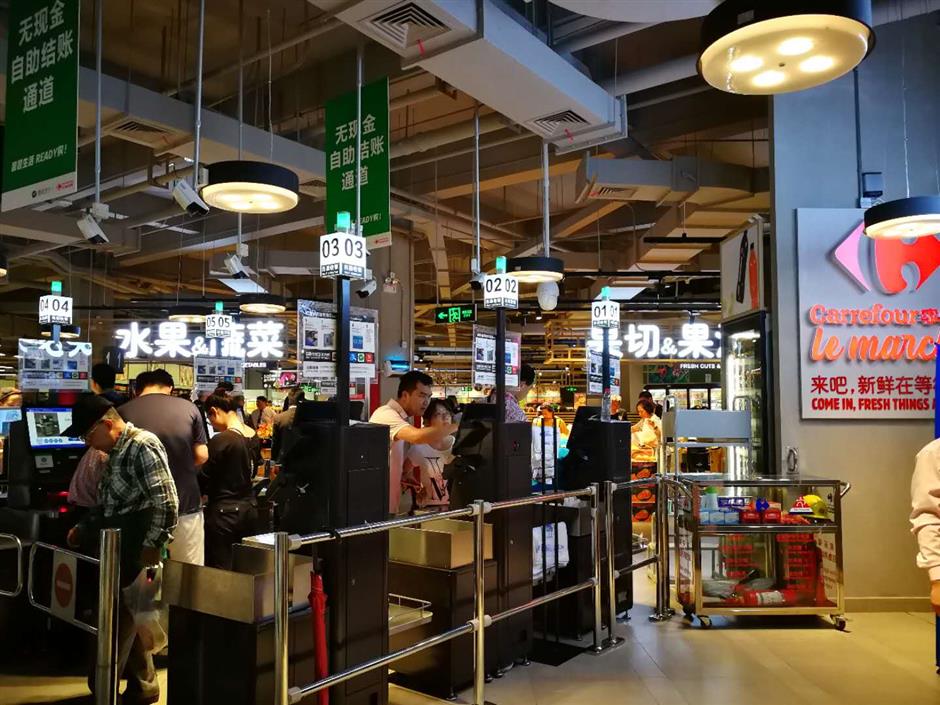
    Carrefour China has opened its first-ever ‘smart supermarket’ in Shanghai in partnership with Tencent, four months after the parent company of the WeChat app bought a stake in the French retailer.

    Covering 4000sqm over two levels in Changning district, the new Le Marche store is connected to the Beixinjing metro station. It offers more than 25,000 product types, mostly food, and customers can pay with their WeChat accounts by scanning a QR code and using facial-recognition technology.

    A feature of the supermarket is on-screen entertainment, including reality TV show Produce 101, owned by Tencent’s video arm.

  • Who’s who of retail CEOs at Consumer Goods Forum

    Who’s who of retail CEOs at Consumer Goods Forum

    Next month’s Consumer Goods Forum to be held at the Marina Bay Sands will feature a ‘who’s who’ of international retail leaders.

    This year marks the first time in a decade the event is being held in Asia. Running from June 12-15, it is themed Consumer Centricity in a Data-Driven World.

    Industry leaders including Alibaba CEO Daniel Zhang, Dairy Farm International CEO Ian McLeod, Coca-Cola Company CEO James Quincey, Majid Al Futtaim Holding CEO Alain Bejjani, Ahold Delhaize CEO Dick Boer, JD international president Winston Cheng, Central Retail CEO Nicolo Galante, Carrefour China president and CEO Thierry Garnier and Metro AG CEO and chairman Olaf Koch are all on the speaking roster.

    Former US Secretary of State Madeleine Albright will deliver a keynote address.

    Consumer Goods Forum MD Peter Freedman says the summit is often described as the most important leadership event on the consumer goods industry’s calendar.

    “The key focus of this year’s conference will be on how to ensure that we continue to keep consumers at the centre of the digital transformation in our industry. In that context we will also be discussing how we can accelerate our work on global positive change, which millennials and younger consumers are so concerned to see. We are delighted to be holding the event in Singapore, one of the world’s leading smart cities, with some of the most digitally sophisticated consumers, and geographically close to so many Asian digital innovations.”

    More than 1000 delegates, from more than 400 leading retailers and consumer goods companies will engage with this year’s theme through sessions focused on stories such as:

    • Investing in the age of disruption;
    • Evolving retail for the smart consumer;
    • The future of work: people & technology;
    • Positive change in action: driving a circular economy;
    • New Retail: creating new value for consumers;
    • Global millennials: the data-driven facts;
    • Executing a digital and omni-channel growth strategy; and
    • Transforming customer experiences through big data.
  • Carrefour Taiwan performs well in sagging Asia market

    Carrefour Taiwan performs well in sagging Asia market

    Carrefour Taiwan showed growth for the 13th consecutive quarter while in the rest of Asia first-quarter sales sagged for the French hypermarket operator.

    Taiwan’s like-for-like sales rose by 3.3 per cent.

    A strategic partnership formed with Tencent in China rapidly materialised, says the group, including the launch of a WeChat app.

    However, like-for-like sales in China fell by 6.6 per cent in a competitive environment especially in e-commerce, notably during the Chinese New Year celebrations.

    Sales for Asia overall were down by 4.5 per cent at constant exchange rates and 3.9 per cent like-for-like, in line with trends in previous quarters.

    Overall, Carrefour’s first-quarter sales reached €20.7 billion (US$25.5 billion), up 2.6 per cent at constant exchange rates. On a like-for-like basis, the rise was only 0.4 per cent, impacted by less dynamic markets in Europe, continued deflation in Brazil, strong competitive pressure in the group’s main markets, and business disruptions in Belgium and France.

  • Carrefour Asia comes back strong

    Carrefour Asia comes back strong

    French hypermarket retailer Carrefour is reaping the rewards of restructuring its Asian operations.

    The Carrefour Asia business has converted an operating loss of €58 million in 2016 to a return on investment of €4 million US$4.4 million) last year, according to the company’s annual results released overnight.

    “Carrefour is back on the offensive and investing to resume growth,” says chairman/CEO Alexandre Bompard.

    Carrefour says the group reaped the fruits of action plans implemented in China, in particular in cost reductions, in a market that remains highly competitive and marked by rapidly changing consumption habits.

    In Taiwan, sales growth remained strong and operating margin continued to improve.

    Globally, Carrefour experienced a slowdown in like-for-like sales at 1.6 per cent, but that is down from 3 per cent in 2016. Net sales totalled €78.8 billion.

    Group EBITDA stood at €3.6 billion, down 6.4 per cent at current exchange rates, with margin slipping to 4.6 per cent.

    This reflected strong competitive pressure, a rise in distribution costs in the group’s main markets, and an increase in depreciation after a period of significant investments.

    Gross margin stood at €18.2 billion, or 23.1 per cent of sales, down 38 points.

  • China’s e-commerce giants to buy Dalian Wanda malls

    China’s e-commerce giants to buy Dalian Wanda malls

    Three Chinese e-commerce giants led by Tencent are buying into shopping centres as part of an alliance that will help fund property magnate Wang Jianlin’s HK$30 billion (US$3.8 billion) plan to take his Dalian Wanda Group private.

    Jianlin describes it as the world’s biggest single alliance between the new economy and bricks-and-mortar businesses as he vows to turn his flagship commercial property unit into an online-to-offline service provider.

    After shedding properties in Australia, China and the UK to help reduce debt, he is now selling off nearly 14 per cent of Dalian Wanda Commercial Properties to some of the mainland’s biggest internet and retail players.

    An investor group led by Tencent, along with e-commerce heavyweight JD.com, electronics retailer Suning and Wanda partner Sunac China Holdings, the stake is being sold for RMB34 billion (US$4.36 billion).

    On its website, Wanda presents the share sale as part of a transformation of the company from a real-estate developer with nearly 240 shopping centres across China into a commercial management company focused on integrating online and offline consumption.

    As part of the deal, Dalian Wanda Commercial Properties will be renamed Wanda Commercial Management Group.

    However, the new partners may lead the financing of new malls, with the website statement noting “Tencent, Suning and other investors will use their financial prowess to continuously support Wanda Commercial to speed up its growth, helping the company to achieve its goal of 1000 Wanda Plazas in China as early as possible”.in

    Wanda says the partners are keen to relist the commercial real-estate unit, still privately held after a 2016 buyout led by Wang, “at the earliest opportunity”.

    Also, the new group will use the online resources of Tencent, Suning and JD.com as well as its own offline commercial assets to “carry out various collaborations, jointly building a new consumption model in China that will integrate both online and offline services”.

    Wanda Commercial’s total debt at the end of June was RMB279 billion, according to ratings agency S&P.

    Tencent’s investment of RMB10 billion gives it a 4.12 per cent stake, while Suning and Sunac’s twin outlays of RMB9.5 billion will them a 3.91 per cent stake each, and JD.com’s RMB5 billion yields a 2 per cent stake.

    Meanwhile, WeChat owner Tencent last week said it might buy into French retailer Carrefour’s China business, along with local retailer Yonghui Superstores. This follows Amazon’s acquisition of Whole Foods for US$13.7 billion.

  • Carrefour steps up e-commerce push, chases Tencent deal in China

    Carrefour steps up e-commerce push, chases Tencent deal in China

    Carrefour is to cut jobs, boost ecommerce investment and seek a partnership in China with Tencent in the face of competition from Amazon, sending its shares higher on Tuesday.

    Alexandre Bompard, who took over as CEO in July, is trying to overhaul Carrefour’s French hypermarket business as well as expand online retail. Amazon’s purchase of Whole Foods in the United States last year has prompted speculation that the tech company could be targeting food retail in Europe next.

    Bompard plans to invest 2.8 billion euros ($3.4 billion) in digital commerce by 2022, six times its current investment, as Carrefour plays catch-up in online food retail.

    “Carrefour has reached a turning point in its history. We have a huge ambition and I am well aware of the magnitude of this challenge,” Bompard told a news conference.

    Under pressure to increase profits, Bompard also announced cost savings of 2 billion euros by 2020, including a voluntary redundancy plan for 2,400 employees at its French head office and plans to sell or close 273 underperforming stores Carrefour bought from Spanish retailer Dia in 2014.

    Carrefour shares rose around 6 percent, their biggest one-day gain since October 2015.

    “Consumer trends are changing, and Carrefour is adapting accordingly,” said Benoit de Broissia, analyst at Paris-based investment firm Keren Finance, which owns Carrefour shares.

    The group, the world’s second largest retailer with more than 380,000 employees, is targeting 5 billion euros in sales in food e-commerce by 2022 – an amount that would be six times greater than at present, which would represent a 20 percent market share in France.

    Carrefour’s online sales accounted for just 1.7 percent of its total French food sales in 2016, while more digital-savvy rival Leclerc managed 8 percent, according to analysts at brokerage Bernstein.

    Carrefour has struggled for years to reduce its reliance on hypermarkets, particularly in France, where it makes 47 percent of its sales.

    Bompard, previously CEO of electronics retailer Fnac Darty, ruled out closing any of the 247 French hypermarkets, proposing instead to reduce selling space whenever it was relevant and to transfer five hypermarkets to lease management contracts.

    In China, Carrefour remains loss-making amid fierce competition from local players and a buoyant online market.

    A partnership between rival French retailer Auchan AUCH.UL and Alibaba has also increased the pressure on Carrefour’s China business.

    In response, Bompard announced a potential deal with Tencent and local retailer Yonghu to take a stake in Carrefour China. Carrefour would still be the largest shareholder.

    UNION ACTION

    Bompard’s plan to shed 2,400 jobs out of a total French HQ workforce of 10,500 could set the chief executive on a collision course with France’s trade unions, including Force Ouvriere, which has already called for a walkout on Feb. 8.

    Carrefour is the largest private sector employer in France, which accounts for 44 percent of its operating profits.

    Bompard also said if the Dia stores did not find buyers and had to be closed there could be more redundancies.

    “This is a plan destined to please shareholders. We remain vigilant and still fear as many as 4,500 jobs could go,” Dejan Terglav, secretary general at the Force Ouvriere (FO) trade union said.

    French Economy Minister Bruno Le Maire also said the government would be “very vigilant” on the staff cut plans.

    Other big European retailers are also cutting jobs. Britain’s supermarket group Tesco said on Monday it would cut a net 800 jobs from its UK business to simplify operations and cut costs.

    Bompard also outlined plans to accelerate growth in supermarkets and convenience stores globally, especially in Brazil in where it wants to open 20 new Atacadao cash and carry per year.

    His plans followed Carrefour’s warning last week that its 2017 operating profit could fall by 15 percent amid weak sales, marking its second profit warning in six months.
     

  • Cameroon to have its first Carrefour market

    Cameroon to have its first Carrefour market

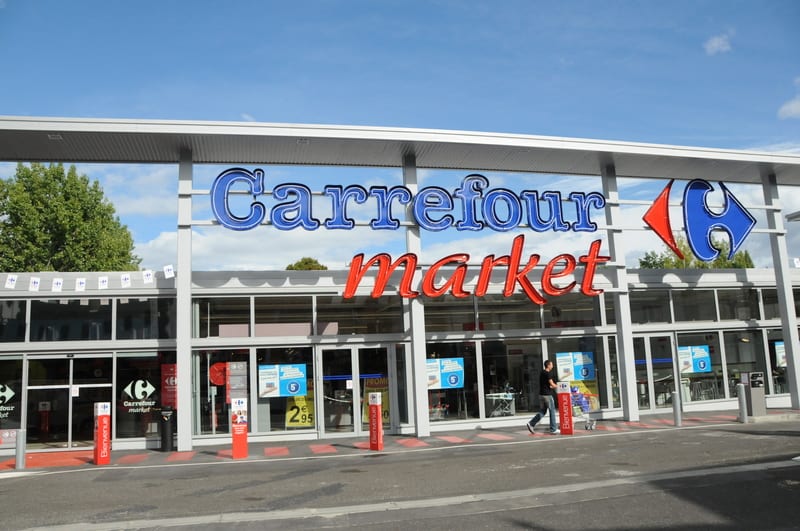
    French grocery giant Carrefour has opened its first store in Cameroon, expanding its African footprint.

    The Carrefour Market supermarket is located in the city of Douala and is operated by local partner CFAO Retail, which has stores in eight African countries. The 1430sqm Carrefour Market anchors a shopping centre which includes six other retail stores and two dining options, including CFAO Retail’s Brioche Doree. The total centre occupies 8250sqm, including carparking.

    Carrefour says the market’s unique selling proposition is high-quality fresh products, local products, exclusive Carrefour brand products, strict sourcing and cleanliness standards to ensure food safety, and merchant services that make customers’ lives easier and improve the shopping experience.

    “For our first site in Douala, we have assembled the ingredients that have driven the success of our offering in Africa over the past two years: strong local engagement and a significant economic footprint,” said Xavier Desjobert, CEO of CFAO Retail.

    “The Douala opening is the first step in the broader CFAO Retail roll-out in Cameroon. In 2019, Yaoundé will become home to a Playce shopping centre, a brand that is already very well known in sub-Saharan Africa. For the past two years in Côte d’Ivoire and now in Cameroon, we have been continuing to cement our long-term strategy for growth in Central and West Africa.”

    The Carrefour Market supermarket and Brioche Dorée restaurant employ 200 staff, with another 150 people working in the mall, shops and service providers.

    Carrefour Market and Brioche Dorée Douala have undertaken more than 7000 hours of training to their new hires.

    CFAO Retail has also developed synergy between the two countries taking part in the project. Managers from the Douala Carrefour Market and Brioche Dorée have received training in mass retail and convenience food at CFAO Retail sites in Abidjan, Côte d’Ivoire.

    Luc Demez, MD of CFAO Retail Cameroon, says the company has witnessed a rise of middle-class consumers in Douala – shoppers who are seeking access to modern products at the best possible prices.

    “Our customers have high standards and are loyal to the local economy. They want a wide range of high-quality options and purchases that have meaning. Carrefour Market will offer an exclusive range of Carrefour brand products, high-quality fresh products and more than 1500 products that are made in Cameroon.

    “It is important for us to contribute to the development of the Cameroonian economy,” he concluded.

  • Carrefour Taiwan adds four stores in one week

    Carrefour Taiwan adds four stores in one week

    Carrefour Taiwan has opened four more stores, three in Taipei and one in Tainan.

    The French hypermarket chain introduced the stores all in a space of a week, and all will be open 24/7.
    First up was Tainan Yu Nong at 650sqm, followed by Luzhou Guanghua (515sqm), Taipei Jinan (670sq) and Shi Lin Zhong Cheng.

    These stores follow the Carrefour formula of offering fresh and grocery items as well as basic bazaar, textile and small-appliance items. Shoppers are offered free Wi-Fi access, dining, coffee and ice cream.
    Carrefour has 64 hypermarket and 45 supermarket in Taiwan.