Tag: carrefour

  • Carrefour has opened its biggest store in Asia

    Carrefour has opened its biggest store in Asia

    Carrefour SA, a French retailer, as of late opened its biggest store in Asia in the Chinese capital, Beijing. The divulging comes as the firm plans to capitalize on the expanding interest for imported sustenance from medium-and top of the line customers.

    The two-story hypermarket is situated on the North Fourth Ring Road, adjoining the sprawling office of Swedish outfitting retailer Ikea. It houses more than 80 stores, including Uniqlo, Decathlon and the first-ever Baidu Concept Store.

    The Carrefour Beijing outlet, which is spread over a territory of 71,380 square meters, offers more than 40,000 items, 15 percent of which are foreign things.

    Serving as the French retailer’s twentieth store in the city, the hypermarket likewise has 800 free parking spots, 15 electric charging stations for transport transports, and five underground charging stations for electric autos.

    “We are concentrating on imported nourishment items as there has been an ocean change in the sustenance inclinations of Chinese purchaser,” Laurent Olszewski, local chief for the North-West China district at Carrefour, said. “It is very unique in relation to what I saw when I first came to China in 1995.”

    “Chinese buyers need to take a stab at everything,” he included, refering to imported French salt and Australian meat as samples. Olszewski additionally shared that Carrefour is growing its e-trade business in 2016. The firm will concentrate on its Web-based administrations by January one year from now in the wake of completing their work on their Tianjin-based logistics focus.

    As per specialists, this move of Carrefour is an approach to acquire shoppers fitting in with the high-pay class.
  • Carrefour online store + Carrefour easy store

    Carrefour online store + Carrefour easy store

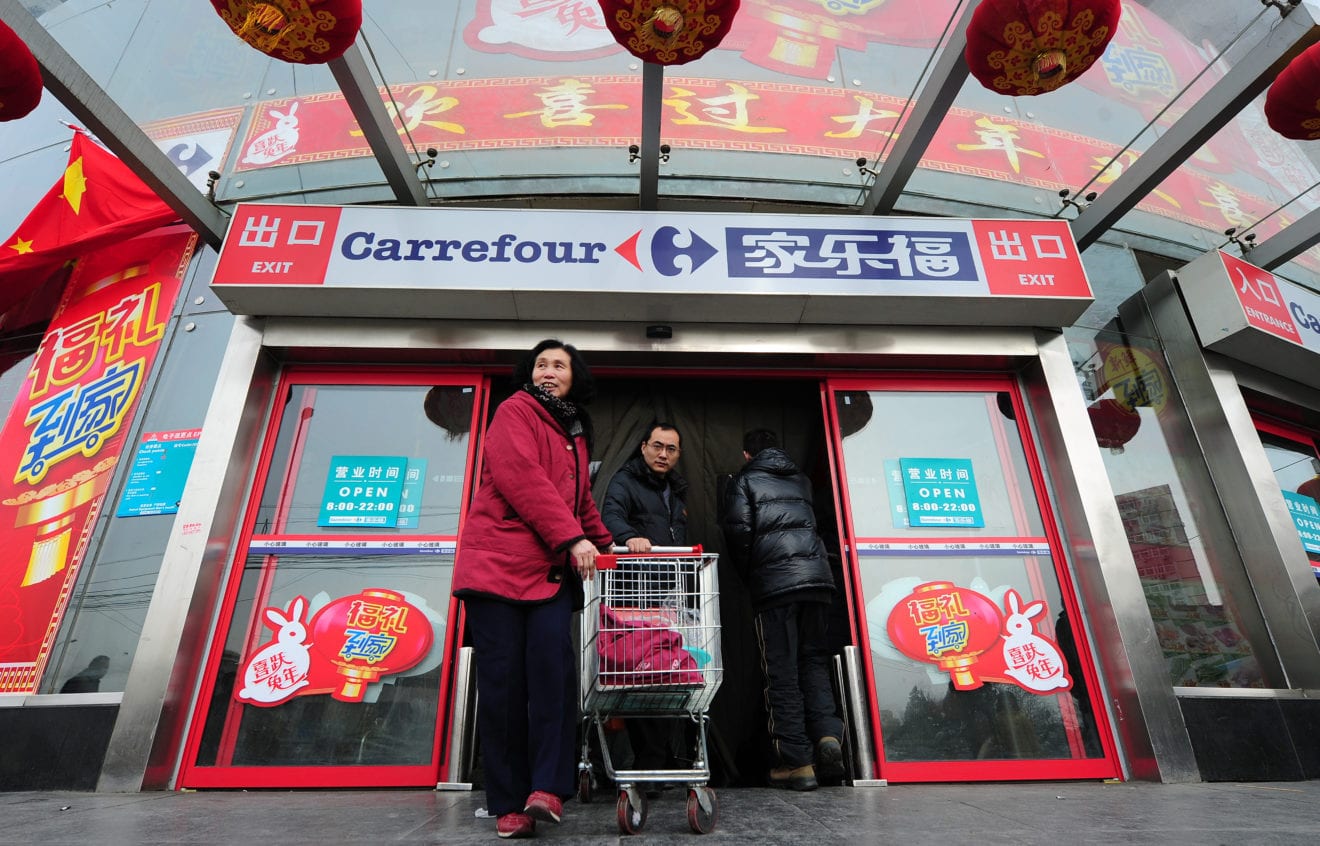
    French retailer Carrefour is embracing advanced technology to bring shoppers closer to its services in the fast-changing retail landscape.

    In June, the company launched its second Easy Carrefour store in Xuhui District. It’s a new initiative to cater to changing consumer habits and demand for neighborhood services in locations near residential or commercial areas.

    By the end of this year, Carrefour plans to open about 10 Easy Carrefour stores in Shanghai, Olivier Tollet, new format projects director of Carrefour China, told Shanghai Daily.

    “We have a much bigger plan but currently we’re still in the pilot phase,” he said.

    Regarding its e-commerce operations, Carrefour also launched its online shopping store www.carrefour.cn for its Shanghai customers in mid June and Tollet said he is pleased to see it working smoothly during the trial period.

    Shopping online

    “The basic idea of our website is to bring Carrefour products closer to consumers and all the products will be available for online shoppers,” he said.

    “Our intention is to duplicate the service wherever there’s a Carrefour presence in China, but we’ll go step by step for both formats,” he added.

    Easy Carrefour is offering products in three categories — immediate consumption, take-away, and groceries.

    By covering these categories, Easy Carrefour hopes consumers can find the right products and services when they need them.

    The Easy Carrefour store on Chaling Road N. also provides mobile top-up and credit card reimbursement in an effort to link consumers with online-to-offline services.

    Carrefour is looking for new locations for its Easy stores, and Tollet said they are targeting a combination of residential areas, transportation hubs and office areas.

    People living around or people passing by are basically the key customers Easy Carrefour aims to serve. Easy Carrefour is a new format adapted for people who value their time and convenience while shopping. It’s also adjusting the operations of the Easy Carrefour store step by step, with more services likely in the future.

    Commenting on Carrefour China’s e-commerce operations, Tollet said logistics is one of its key strengths as the chain can rely on its existing stores in more than 70 cities all over China.

    Merchandise ordered by consumers will be delivered from stores to their doorsteps, while packages ordered from e-commerce websites have to go through several dispatch hubs before delivery.

    Pick-up stations

    Currently, three out of Carrefour’s 29 outlets in Shanghai act as pick-up stops or stations for return of goods.

    Earlier this year, Carrefour China restructured its merchandise department and set up six territory merchandise centers to streamline supply chain management and leverage the advantages of a centralized procurement model.

    “The restructuring of the merchandise team is aimed at having new logistics capability to support the development of new formats such as our Easy stores and online shopping website,” Tollet added.

    Carrefour’s e-commerce operation is expected to launch in Beijing at the end of this year and eventually will be available all over the country.

  • Carrefour’s Six China Distribution Centers To Be Opened Within Two Years

    Carrefour’s Six China Distribution Centers To Be Opened Within Two Years

    The world’s leading supermarket retailer Carrefour announced that the company will enhance investments in logistics distribution centers in mainland China over the next two years.

    Carrefour’s new distribution center in Kunshan was completed in June 2014, serving the East China region; and its distribution center in Chengdu was completed in April 2015, serving the West China region. In 2015, the company plans to build two more distribution centers: one in Wuhan, Hubei province, and the other is responsible for the Beijing and Tianjin region. In 2016, Carrefour expects to have two more logistics distribution centers for Northeast region and South China region, respectively.

    By the end of 2016, Carrefour will have six modern distribution centers in the Chinese mainland which will lead the Chinese retail industry sector by construction scale and speed-to-market.

    Carrefour’s Kunshan logistics distribution center, which has already been completed, covers 60 hypermarkets in Jiangsu, Zhejiang, and Shanghai. It adopts the world’s most advanced voice picking system, which boasts a voice picking accuracy of 99.97%.

  • Migros to sell private label in Japan

    Migros to sell private label in Japan

    Swiss retailer Migros is to sell private label products into two Japanese retail chains.

    Switzerland’s largest grocer, and one of the world’s 40 largest supermarket chains, is to sell lines to Lawson’s Seijo Ishii stores and Seiyu, which is Walmart’s Japan business.

    According to the Nikkei Asian Review, Migros will start with 16 premium products including Swiss Delice biscuits and iced tea, which will go on sale in 400 supermarkets trading under the Seiyu and Seijo Ishii banners.

    By 2020, Migros hopes to expand the range to 300 items, including desserts, snacks, cosmetics and skincare products, projecting sales of US$16 million annually.

    Retail research house IGD describes the move as “particularly surprising” for Seiyu, whose range already includes private label lines from Walmart’s own network, including Asda’s Extra Special wines.

    IGD describes Japan as “the most sophisticated private label market in Asia,” with strong players including Seven & I, Aeon, FamilyMart and Lawson.

    “These retailers are exploring the higher margin opportunities that premium private label ranges offer, focusing development around high quality, special ingredients and unique products.”

    Those ranges include Seven Gold and FamilyMart’s Platinum Line.

    But IGD says European influenced products are likely to appeal to shoppers’ increasingly cosmopolitan tastes, and the early line-up includes items which are mutually popular in the Swiss and Japanese markets: ice cream and iced tea.

    “Migros follows in the footsteps of European retailers Waitrose and Carrefour, whose private label products are already available in Japan through partnerships with Aeon.”

  • Carrefour China sales slip

    Carrefour China sales slip

    French-headquartered retailer Carrefour says its Asian sales rose 13 per cent in the second quarter of this year.

    But Carrefour China struggled during the quarter, its sales down 11.4 per cent measured organically and 12.3 per cent on same store sales basis.

    The overall Asia figure benefited from a positive currency effect, with organic sales down 8.6 per cent.

    In Taiwan, sales grew for the second consecutive quarter, both same store and organic sales rose, by 2.1 per cent and 1.4 per cent respectively.

    The company said the China market was affected by slowing consumption nationwide.

    “We are continuing the roll-out of our action plan in the country,” the company said in its sales statement.

    That plan includes enhancing its logistics and distribution centers in Mainland China over the next two years. After opening new centers in Kunshan in June 2014 and Chengdu last April, Carrefour China plans two more in Wuhan, Hubei, and another in Beijing serving the capital and the Tianjin region this year.

    Two more will follow in 2016 serving the northeast and South China regions.

    Carrefour says when complete its six center distribution network will be the best in China’s retail industry, based on scale and speed to market. The centres will use advanced voice-picking technology.

  • Brutal retail market awaits buyer of Tesco South Korea business

    Brutal retail market awaits buyer of Tesco South Korea business

    Any buyer of Tesco’s $6 billion South Korea unit will need a strategy to boost returns in a lethargic and saturated market for traditional retailers, likely involving real estate sales and a greater focus on Internet shopping.

    Britain’s Tesco has hired HSBC to advise on a potential sale of its South Korean unit, Homeplus, Reuters reported this month, in what could be Asia-Pacific’s largest private equity deal and the No. 2 merger in the Asian consumer sector.

    Given the scarcity of big buyout targets in Asia, the sale is generating strong interest among buyout firms including KKR & Co and Carlyle Group CG.N, sources with knowledge of the sale process said. That’s despite difficulties posed by South Korea’s crowded retail sector, a sluggish and fast-aging economy, plus regulatory and labor challenges.

    “Anyone going with the view of closing unprofitable shops, cutting work force, will be in for a surprise,” a senior Hong Kong-based investment banker familiar with the process said, citing likely opposition from labor unions.

    “It’s a tough market but there are some low-hanging fruits in terms of stripping property assets,” said the banker, who declined to be identified as the discussions are confidential.

    Homeplus Co Ltd’s property holdings, consisting mainly of stores, had a book value of 3.09 trillion won ($2.77 billion) as of the end of February, according to a regulatory filing.

    With about 400 stores including 140 hypermarkets, 88 of which it owns, Homeplus has raised about 1.2 trillion won since 2012 by selling and leasing back eight of its biggest-selling stores, according to South Korean deal website Invest Chosun.

    Its prime real estate holdings include a hypermarket in densely populated Seoul suburb Euijeongbu, which frequently ranks among its top 5 stores by sales.

    But it’s a crowded field. South Korea has nearly 500 hypermarkets for a population of 50 million, or twice what the industry considers optimal. The difficulties prompted Carrefour and Wal-Mart to quit the country in 2006.

    In a nod to a fiercely competitive market, Homeplus earlier this year sacrificed an equivalent of about 100 billion won in annual profit, or almost half of last year’s earnings, by cutting prices on some 500 kinds of fresh produce.

    “Competing by undercutting price has become the norm and is expected to continue in future,” said Lee Kyoung-hee, principal researcher at Shinsegae Research Institute.

    ONLINE GROWTH

    As the population ages faster than in any other developed economy and households shrink, retail sales in South Korea grew just 1.4 percent in each of the past two years, lagging broader economic growth.

    E-commerce, however, jumped 17 percent last year to 45.2 trillion won, or 14 percent of total retail sales, and hypermarkets have been scrambling to build share in a fragmented online segment where most players lose money.

    Homeplus’ share of South Korea’s online retail market has risen steadily but was still just 645 billion won last year, according to Euromonitor data in a CLSA report, for market share of just 2 percent, in line with larger rival E-Mart.

    “Hypermarket chains like Homeplus have been bolstering online sales as a possible growth solution, among admittedly few options,” said Kim Tae-hong, analyst at Yuanta Securities Korea.

    Lower priced warehouses have been another bright spot for Korean retailers, but while both E-Mart and Lotte Shopping’s (023530.KS) third-placed Lotte Mart have warehouse brands, Homeplus does not.

    Meanwhile total revenues for existing hypermarket stores have declined since 2012 when new rules required them to close for two Sundays a month to protect traditional markets. Homeplus saw a drop in same-store sales for two straight years.

  • Carrefour Taiwan, China open shops

    Carrefour Taiwan, China open shops

    French hypermarket operator Carrefour has additional prolonged its footprint in Taiwan and China, with three new shops opening their doorways in current weeks.

    Carrefour Taiwan has opened its 73rd retailer – the Xi Ke retailer in Hsi Chih science park. The only degree retailer has a complete 6864 sqm gross sales space and stands above the Taiwan Railway Xi Ke station by means of which 70,000 commuters move day-after-day.

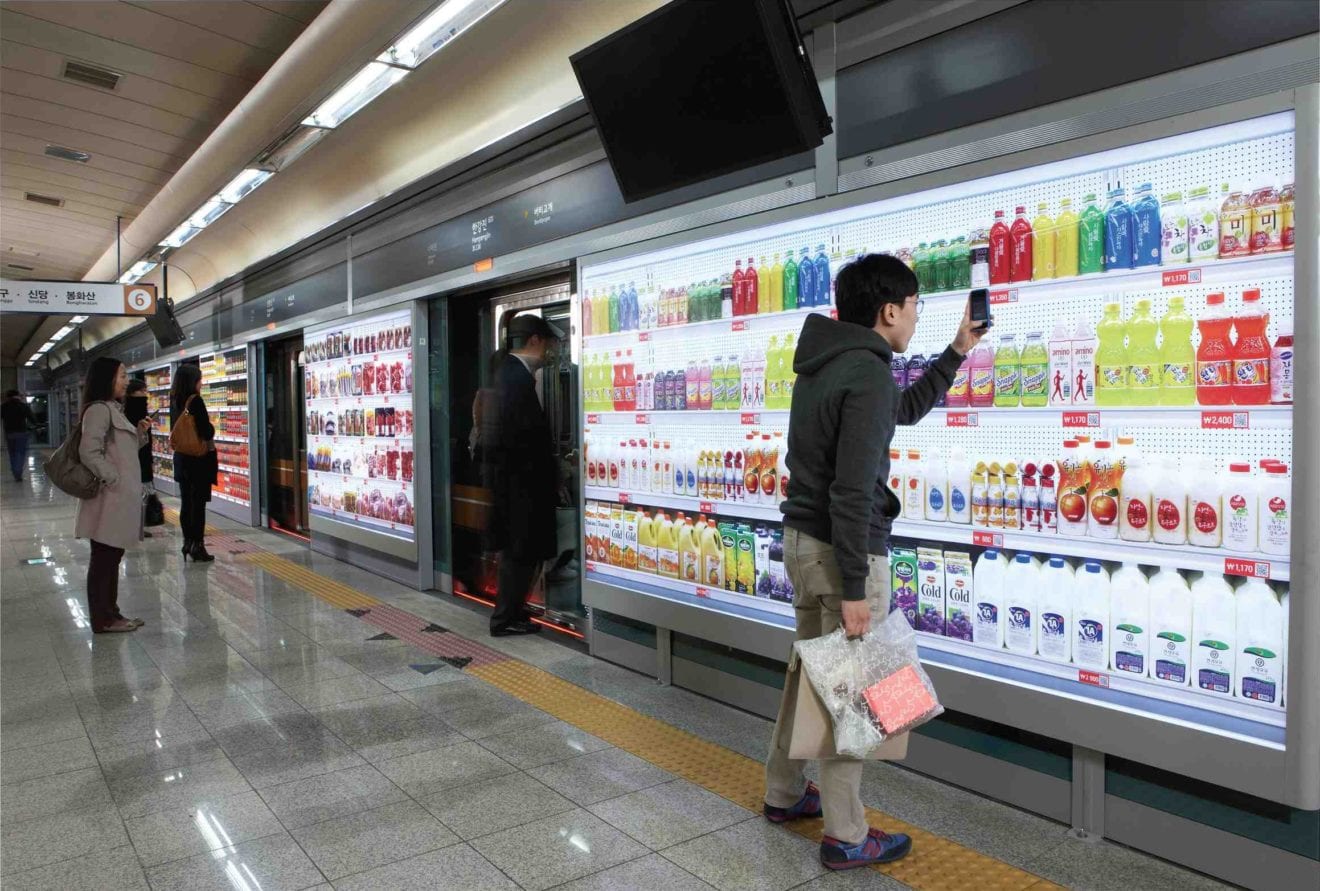
    Within the Xi Ke retailer, Carrefour makes use of digital units to supply product info and work together with clients. A video wall on the entrance attracts clients in from the exterior mall.

    Carrefour Taiwan additionally launched the primary ‘Pure and Healthful’ merchandising space in its grocery part to supply extra HOPE (Wholesome, Natural, Premium and Eco-Nature) merchandise whereas selling traceability, natural options and high quality recent strains.

    Different retailer options embrace  a sports activities space the place clients can truly shoot basketball hoops and check health or biking gear.

    Carrefour China lately opened two new hypermarkets.

    The primary retailer to be opened within the north-east of China. With a gross sales space of greater than 7000 sqm, it has 22 checkouts and parking for 750 automobiles. This hypermarket anchors a purchasing centre of 25 shops.

    The second retailer – Hefei Mingbang Retailer – has a 7761 sqm gross sales space, 22 check-outs and parking for 780 automobiles. It’s situated in a big buying centre made up of 48 shops.

  • Carrefour Taiwan opens mini-hyper retailer

    Carrefour Taiwan opens mini-hyper retailer

    Carrefour Taiwan has opened its 72nd retailer, a ‘mini-hyper retailer’ within the nation’s central area.

    The shop, within the metropolis of Hu Wei is the second Carrefour outlet in Yun-lin County.

    With a complete gross sales space of 1800 sqm and the Hu Wei retailer provides locals a ‘one cease buying’ answer with greater than 15,000 chosen gadgets together with wide selection of grocery gadgets and recent items, bazaar, textile and home equipment.

    Carrefour reviews the official opening drew “a whole lot” of native clients who queued to be first to buy the shop.

    The primary Carrefour retailer in Taiwan was opened in Kaohsiung on the finish of 1989. The enterprise operates in partnership with President Group.

  • Savills to tenant Carrefour China

    Savills to tenant Carrefour China

    Savills has signed an agreement with Carrefour to sign up tenants for its new Siyuan Plaza, Carrefour’s first shopping centre in China.

    Siyuan Plaza is located at Siyuan bridge in the Chaoyang district, in the core of Wangjing commercial region. With a total leasable area of 35,000 sqm, it includes one underground floor and three floors above ground. It will integrate about 80 lifestyle stores, one food court, 20 restaurants, an 11,600 sqm Carrefour supermarket and a 5000 sqm Decathlon sports retail outlet.

    Brands signed so far include C&A, Uniqlo, La Chapelle, Starbucks, Burger King, Baskin Robbins, Papa Johns, and Xiabu Xiabu.