Tag: cars

  • LG to utilize Azure for autonomous systems

    LG to utilize Azure for autonomous systems

    LG Electronics will be utilizing a Microsoft product in the development of autonomous vehicle systems, LG said Wednesday. Under the agreement between the two companies, LG has gained access to Microsoft’s Azure cloud-computing platform for its self-driving car systems. Apart from storing vast amounts of data, the Azure platform also offers immense computing power for data-based applications and services.

    The two companies met Monday to sign a memorandum of understanding at the Consumer Electronics Show (CES) in Las Vegas. LG will connect with Azure in developing driver-support systems, cameras and a virtual assistant that can answer vocal commands.

    “Developing software for self-driving car components – whether it’s for navigation or infotainment – requires an enormous amount of data processing,” explained an LG spokesperson.

    “The agreement with Microsoft Azure is basically aimed at helping our software save and utilize as much data as possible in the shortest amount of time.”

    LG plans to use Azure’s high-performance computing and graphics processing units. According to the company, these tools can slash the time required to learn roads and traffic patterns from more than a full day to a few minutes. Higher processing speeds will also help the software learn patterns gathered from cameras regarding the driver, pedestrians and other objects on the streets.

    Another tool offered on the Azure platform is a voice assistant. LG plans to incorporate this into its infotainment system so that the car’s software can answer questions and receive commands.

    It could, for example, check traffic conditions, search for a restaurant nearby or call up favorite songs.

    The large amounts of data LG collects from self-driving cars will be saved in the Azure system, including photos of roads, obstacles and road signs collected from all over the world. LG will be able to utilize the data collected for further development. In the past, before cloud services existed, international data had to be shipped to Korea in hard drives.

    LG Electronics has been supplying components to self-driving carmakers since late 2016. The field is considered a future growth engine for the company.

    “In the upcoming age of autonomous vehicles, LG Electronics will shift the definition of cars from a means of transportation to a mobile space, which can turn into a conference room, a theater or a shopping mall,” said the company’s chief technology officer, Park Il-pyung, during a pre-show keynote speech on Monday.
  • Hyundai Mobis shows off futuristic concept self-driving car

    Hyundai Mobis shows off futuristic concept self-driving car

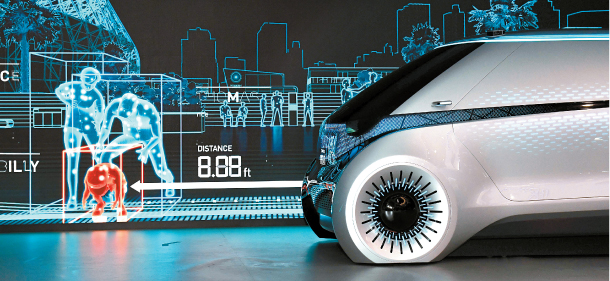
    Hyundai Mobis introduced its concept autonomous car equipped with 26 sensors and a special lighting system that enables cars to communicate with pedestrians at the Consumer Electronics Show (CES) in Las Vegas on Tuesday.

    The auto parts maker said it is the first time it has unveiled a concept car with at least Level 4 self-driving capability, which means cars can drive themselves without being actively monitored by the driver.

    The car comes with a modular self-driving kit comprised of various sensors – which function as eyes for the car – on the roof as well as lamps that can send messages to nearby pedestrians or cars. Mobis calls all of the technologies and parts used on the autonomous vehicle M.Vision.

    The kit on the roof – comprised of four lidar sensors, or laser-based radar, and five multifunctional camera sensors – are key strengths of M.Vision, according to Mobis.

    The modular kit can simply be mounted on the roof, so it can easily be used on different vehicles. The Korean company said it is best to put sensors on the car’s roof, considering that sensors can better detect the surrounding environment when they are placed higher above the car. To complement the kit on the roof, Mobis also installed five radar sensors and 12 ultrasonic sensors on the car’s lower body.

    The Korean company is on its way to make all sensors used in the kit with its own technology by 2020.

    The so-called communication lighting technology is a new innovation that Mobis thinks will greatly reduce fatal accidents involving autonomous cars and pedestrians.

    The company said it will use lighting to indicate to pedestrians and other drivers when the car is driving in self-drive mode. Autonomous cars will be able to detect a pedestrian from more than 450 feet away. Once someone is detected, car headlamps will project a red warning symbol to warn people it’s not safe to move around the vehicle.

    “Light has been used as a conduit for communication among vehicles and pedestrians for almost as long as the automobile has existed, so we are excited to lead the evolution of this technology to save lives and offer peace of mind to all that use the road,” said Mirco Goetz, director of lamp engineering at Hyundai Mobis.

    “Our primary focus on the safe progression to future mobility will enable our industry to continue the advancement of autonomous vehicle technology while helping to keep pedestrians and drivers out of harm’s way.”

  • Hyundai puts holograms on road to help with navigation

    Hyundai Motor Group unveiled a holographic AR navigation system, the first of its kind, in collaboration with start-up WayRay at the Consumer Electronics Show (CES) in Las Vegas on Tuesday. Hyundai partnered with the Switzerland-based start-up that specializes in AR technology and demonstrated the navigation system on the group’s luxury sedan, the Genesis G80.

    While conventional head-up displays (HUD) project a reflected image through a liquid-crystal display screen installed on the dashboard, the new holographic AR system displays what appear to be 3-D images on the road through the windshield and automatically adjusts the displayed information to the driver’s viewing angle.

    The AR navigation system, demonstrated at WayRay’s CES booth, also takes up considerably more real estate compared to existing HUDs, typically relegated to a small corner of the windshield, and displays a variety of driving information that includes navigational features and safety warnings.

    Information such as lane guidance, destination points and the current speed is shown along with advanced driver-assistance system features including lane departure warnings and forward collision warnings.

    Hyundai said an image size of 3.15 meters (10.33 feet) by 1.31 meters will be visible from the driver’s perspective, despite the actual projected image being just 310 millimeters (12.2 inches) by 130 millimeters. The company’s existing HUD was changed to incorporate WayRay’s system.

    Hyundai promised that the technology will bring changes to the conventional concept of a windshield.

    “Future mobility windshields will be more than just a piece of glass,” said Hwang Yun-seong, director of Hyundai Motor Group’s Open Innovation Business Group. “AR holographic powered glass will serve as a platform to provide new services and open up new in-vehicle experiences”

    Hyundai said that the two companies will continue to cooperate to expand the technology to display information that identifies objects on the road such as buses and crosswalks.

    The two companies also plan to incorporate real-time data such as traffic signals, surrounding vehicle information and road or weather conditions into the technology.

    Hyundai has worked on holographic technology since 2017 and invested in WayRay last September.

  • 2018 a record-breaking year for Mercedes Malaysia

    2018 a record-breaking year for Mercedes Malaysia

    Mercedes-Benz Malaysia (MBM), the distributor of Mercedes-Benz marque in Malaysia, posted a record-breaking performance in 2018 spurred by the consumption tax holiday and customer-centric strategy. President and CEO Dr Claus Weidner said vehicle sales grew 9% to 13,079 units from 12,045 units recorded in the previous year, lifting the company’s market share to 2.4% from 2.3%, previously.

    “Our efforts to invigorate the brand experience for our increasingly diverse fans have been fruitful and we are happy to retain our position as the number one premium brand in Malaysia,“ he said at the company’s briefing on the 2018 full-year performance and outlook for 2019.

    In June last year, the first month of the tax holiday period following the government’s move to abolish the goods and services tax, MBM posted the highest monthly sales in the company’s history at 1,750 units.

    Weidner said other areas of business also showed improvement with total vehicles serviced last year growing by 16% from the previous year to 148,800 units and in-house financing increasing by 23% year-on-year to RM2.7 billion.

    “Four out of every 10 cars sold were financed by our in-house financing,“ he said.

    Five out of every 10 cars sold, meanwhile, were insured by its in-house service.

    A total of 20 new and facelift models were launched last year to further complement the company’s extensive product line-up, he said.

    Going forward, Weidner said MBM was confident of surpassing last year’s performance driven by demand for compact and premium sport utility vehicles as well as the company’s holistic approach and customer-centric strategy.

    “We will also continue to rejuvenate our models portfolio to continue making it desirable to customers,“ he said.

    On the number of launches for this year, he said it would be around last year’s figure.

    Weidner disclosed that the company planned to restructure its plant in Pekan, Pahang to increase the localisation of components and upgrade the technology to improve efficiency and quality.

    However, he did not disclose the amount of investment for the plant restructuring.

  • Hyundai Cars to go online – and have legs

    Hyundai Cars to go online – and have legs

    By 2022, all cars made by Hyundai Motor will be connected to the internet, the automaker announced during a press briefing held Monday in Las Vegas ahead of the 2019 Consumer Electronics Show (CES). “We aim to have 10 million active users of our connected-car services globally and apply connected-car technology to all vehicle segments in the global market by early 2022,” said Suh Jung-sik, senior vice president of Hyundai Motor Group’s ICT division.

    At the CES, the company also introduced a vehicle in which the wheels are attached to robotic legs with a wide range of motion. Hyundai’s concept of a truly connected car is a car smarter than a computer that can share information not only with other vehicles on the road but also with homes, surrounding infrastructure and cities.

    Using connectivity, the cars can offer real-time traffic and parking lot information to drivers and also alert drivers remotely of theft. Remote adjustments of in-car settings, such as temperature, will also be possible.

    While Hyundai is already offering early versions of its connected cars in Korea, the United States, China, Canada and Europe, the automaker said it will establish additional big-data centers to offer similar services in countries like India, Brazil and Russia.

    To offer better connectivity worldwide, the carmaker is currently developing an operating system, a cloud platform and network technology for connected cars. The company also announced a plan to introduce an open platform on which third parties can develop new technologies using big data shared by Hyundai.

    Hyundai is not the only carmaker that came to CES with grand ambitions to take leadership in the connected car business.

    BMW will introduce the BMW Intelligent Personal Assistant, which can interact with drivers and allow for video meetings, shopping and other digital services inside cars. Audi is introducing a virtual-reality entertainment service for passengers in back seats. VR games or travel content will match the actual movements of the car. In the long run, the carmaker said the videos will reflect real-time traffic conditions so that if a car stops due to red light, the video will show an obstacle.

    Other participants, including Mercedes-Benz, Nissan, Bosch and Continental, all shared their focus on connectivity.

    “In the future, cars will be categorized as cars with hyper-connectivity and those without,” Suh of Hyundai Motor Group added.

    Apart from connectivity, Hyundai said it will develop personalized electric vehicles for everyone by giving customers the freedom to select software and hardware for their vehicles.

    To bolster open innovation, the carmaker has been setting up global open innovation centers to collaborate with foreign start-ups. Already there are three centers, established in Korea, the United States and Israel. Two more centers are set to be established, in Berlin, Germany and Beijing, China this year.

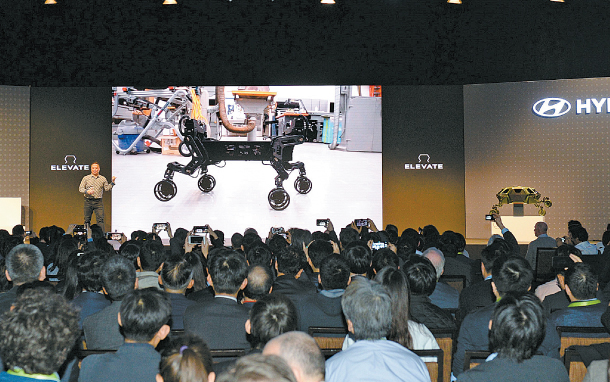
    Hyundai Motor and its innovation center in Silicon Valley, the Hyundai Cradle, introduced the “Elevate” concept vehicle at this year’s CES. It has four robotic legs specifically designed for rescue in challenging environments.

    U.S. design-consulting firm Sundberg-Ferar was involved in the development of Elevate, which Hyundai calls the ultimate mobility vehicle. It can swiftly move around places inaccessible to existing rescue transport.

    Hyundai said the Elevate’s body can be switched depending on the mission and that the robotic-leg architecture has five degrees of freedom. The company added that the vehicles can also aid people with physical impairments.

  • Hyundai Korea recalls diesel vehicles for emissions issue

    Hyundai Korea recalls diesel vehicles for emissions issue

    Hyundai Motor will recall about 79,000 diesel-powered vehicles to fix faulty emission-related components, the Environment Ministry said Tuesday.Korea’s biggest carmaker by sales is expected to recall 78,721 vehicles encompassing three different models due to problematic parts that emit excessive nitrogen oxide into the air. The recall will start Wednesday and be carried out for one and a half years, an official at the Ministry of Environment said.

    The three models are the 2.2-liter diesel-powered Grandeur sedan, the Megatruck and the Mighty truck.

    “The ministry recommended Hyundai to recall 30,945 units of the Grandeur diesel sedan due to a faulty emission part,” the official said over the phone.

    “As for the two truck models, however, the carmaker has voluntarily submitted its recall plan to the ministry, with an approval due to be made this week.”

    Hyundai’s recall plan is in line with the government’s push to reduce diesel-powered vehicles on roads and fine dust, which is harmful to your health.

  • Hyundai Motor starts its monthly car subscriptions

    Hyundai Motor starts its monthly car subscriptions

    Hyundai Motor on Monday introduced a car-subscription program with a monthly fee of 720,000 won ($646).  Under the program, dubbed Hyundai Selection, three models are available for users and subscribers can change models on a limited basis. The vehicles currently being offered are the Sonata sedan, the Tucson SUV and the Veloster hatchback.

    Users can use the Hyundai Selection app to apply and pay for the service. Cars will be delivered. The company is testing the subscription service business model as car sharing and rental are popular with younger customers who tend to avoid ownership and embrace more transactional business relationships.

    Hyundai said it is running the program on a 10-month pilot basis this year. As the program is still in test mode, only 50 drivers will be able to enroll. Car delivery will be limited to Seoul.

    The service was launched in collaboration with domestic rental-car companies and Deal Car, a Hyundai Capital enterprise.

    A Hyundai spokesperson said the subscription program greatly reduces the burden of car maintenance

  • Korean imported vehicle sales up 11.8 percent last year

    Korean imported vehicle sales up 11.8 percent last year

    Sales of imported vehicles in Korea continued to rise last year, aided by firm demand for foreign brands and the resumption of sales by Audi Volkswagen, industry data showed Friday. The number of newly registered foreign vehicles reached 260,705 last year, up 11.8 percent from a year earlier, the Korea Automobile Importers & Distributors Association said in a statement.

    The total number of imported cars sold in 2018 is an all-time record.

    The market share of foreign cars rose to a record high of 16.7 percent last year, shattering the previous all-time high of 15.5 percent in 2015, the data showed.

    The three best-selling models were the Mercedes-Benz E 300 (8,726 units sold) and E 300 4MATIC (9,141 units) and the Lexus ES300h (8,803 units).

    Mercedes-Benz became the first imported cars to sell more than 70,000 vehicles. It took the No. 1 spot among imported cars.

    BMW, despite controversy of its engine catching fire, kept its second spot by selling 50,524 vehicles.

    Toyota took third place with 16,774.

    Seven out of 10 imported vehicles sold in Korea last month were from Germany, the statement said.

    In December alone, however, the sales of foreign vehicles fell 8.7 percent on year to 20,450, it said.

    In 2017, imported vehicle sales reached 233,088 units, up from 225,279 a year earlier.

  • SsangYong Motor rehires 60% of its workers

    SsangYong Motor rehires 60% of its workers

    SsangYong Motor said Monday that it has rehired 60 percent of workers who were sacked amid the carmaker’s restructuring efforts over a decade ago. The maker of the Rexton and Tivoli SUVs has been mired in protracted disputes with those who left the company against their will in 2009 after it was placed under court receivership. At that time, 900 workers who carried out a strike at the company’s main Pyeongtaek plant in Gyeonggi were ordered to choose between unpaid leave or voluntary retirement.

    Those who decided not to pick either option were later fired.

    In 2013, the 454 workers who had chosen unpaid leave were all reinstated, but the 165 fired workers were not permitted to return to work.

    After a series of negotiations in 2015, the company and its union agreed to gradually reinstate the fired workers, although some were left out of the agreement.

    In September 2018, the company and its union reached an agreement to rehire the remaining 119 fired workers by this year.

  • GM Korea to cut prices after disappointing sales

    GM Korea to cut prices after disappointing sales

    GM Korea, the Korean unit of General Motors, said Tuesday it has cut the prices of mainstay models in an effort to revive lackluster sales. Starting Tuesday, GM Korea revised the prices of its major models — such as the Impala sedan, Trax, and Equinox sport-utility vehicles — by up to 3 million won ($2,700). The company expects its “customer-focused pricing approach” to strengthen the position of those key Chevrolet vehicles in the Korean market, Cesar Toledo, vice president in charge of sales, customer care and aftersales at GM Korea, said in a statement.

    “Winning more customers, growing market share and sustaining trust in our brand are all crucial ingredients in building a sustainable GM Korea for the long term,” he said.

    GM Korea struggled with weak sales in Korea due to a lack of new models and labor-management disputes over jobs last year.
    In the January-November period, GM Korea’s sales fell 12 percent to 420,447 vehicles from 479,058 a year earlier. Sales figures for December are set to be released today.

    To drive up sales, the carmaker plans to introduce 15 vehicles into the local market over the next five years. It has launched the U.S.-made Equinox and the upgraded Chevy Spark since June. The Traverse SUV will be the next model to be added to its lineup.

    GM holds a 77 percent stake in GM Korea, with the state-run Korea Development Bank and SAIC Motor controlling 17 percent and 6 percent, respectively.

  • Hyundai reveals a glimpse of the future

    Hyundai reveals a glimpse of the future

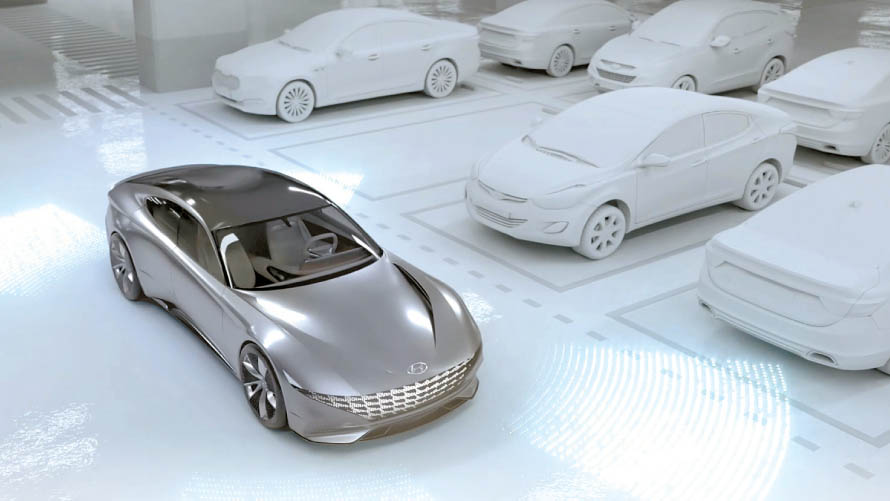
    Hyundai Motor Group offered a glimpse of its new concept autonomous car Friday in a short video. The concept car is electric. In the video, the electric car finds its way to a charging station inside a nearby parking lot on its own after the driver gets off at its destination. The station offers wireless charging. When charging is finished, the car then parks itself in an empty lot to make room for other vehicles to charge. When the driver calls the car back using their smartphone, the car drives itself to the requested meeting point.

    The Korean automaker described the feature as an “automated valet parking system.” The feature could take the burden off drivers struggling to park and also save time as they won’t need to find charging stations or empty lots.

    For this system to work, parking lots, cars and drivers need to continuously share information through a connected network, Hyundai said. For instance, parking lots need to send the location of charging stations and empty parking lots to cars, and wireless chargers need to notify drivers of cars’ battery status via text message or other means.

    “In the upcoming era where autonomous driving cars become prevalent, there will be growing demand for various driving control features using self-driving technology,” a spokesperson from Hyundai Motor Group said. “We will focus on developing services that enable drivers to make convenient and safe use of self-driving cars.”

    The company said it expects the wireless charging system and automated valet parking system to be applied to its autonomous driving cars scheduled for launch in 2025.

  • 6 months of recalls, but BMWs are still burning in Korea

    6 months of recalls, but BMWs are still burning in Korea

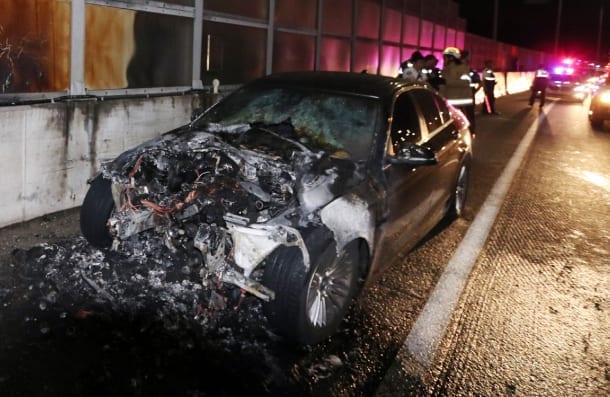
    Things aren’t looking good for beleaguered German automaker BMW, with yet another vehicle reported to have burst into flames on Christmas Day. A BMW 520 sedan caught fire at around 6 p.m. on Tuesday in Gongju, South Chungcheong.

    Earlier that day at 1 a.m., the driver of a BMW 5GT sedan saw black smoke coming out of the back of their vehicle while driving on a highway bound for Pohang, North Gyeongsang. The car, subject to recall, had already gone through safety checks.

    The driver said the car was moving at 110 kilometers per hour (68 miles per hour) on cruise mode, but it started slowing down even though it was moving downhill and then smoke came out the back. The car didn’t burst into flames as the driver immediately pulled over and called the police.

    There were no casualties caused by either incident, but the news stoked fears over the safety of BMW vehicles. Just one day earlier, on Dec. 24, a BMW 320d sedan caught fire in Gwangju.

    The burnt 320d was a 2009 model not included in the 65 models currently subject to recall.

    A public-private investigation team under the Ministry of Land, Infrastructure and Transport had already raised the need of an additional recall for defective designs in exhaust gas recirculation (EGR) system when it released its examination report on BMW fires on Monday.

    The team confirmed that the major cause of the fires was a leaky EGR module, the same conclusion that the German carmaker came to, but disputed BMW’s claims that changing the faulty hardware resolves the issue. The team said there may be a fundamental problem with the EGR design and a simple replacement may not completely resolve that.

    “We spotted coolant boiling within the EGR cooler, and we think the boiling is due to a faulty design of the EGR,” the joint investigation team said in a statement. “If boiling continues, this could lead to a crack in the EGR cooler, [making them leaky.]”

    “New EGR systems won’t lead to fires right away, but the team found that after several years of constant driving heating up the EGR cooler, a similar fire could reoccur as long as the design stays the same,” a spokesperson from the Land Ministry said in a phone call on Wednesday. “We demanded that BMW come up with an explanation regarding EGR design.”

    The joint team also said the intake manifold connected to the leaky EGR coolant should be recalled as well after check-ups if it has been polluted or weakened by a mixture of leaked coolants and engine oil sticking to pipes. The team has delivered its research findings to the carmaker, which has to consult with its German headquarters and come up with a recall plan.

    In the meantime, an increasing number of BMW car owners are signing up to file a suit against the company. Barun Law, which is currently preparing for a class action suit against the carmaker, has collected around 1,000 car owners who would like to take part in the suit as of Wednesday. The Korea Consumer Association is also preparing for a separate suit and has gathered roughly 2,000 participants.

  • SUVs are selling more in Korea

    SUVs are selling more in Korea

    Korea’s domestic car market moved in two different directions this year. The rising popularity of large sedans and sport utility vehicles (SUVs) stood in sharp contrast to weaker demand for smaller vehicles, industry data showed Sunday. In the January-November period, Hyundai Motor, Kia Motors, GM Korea, Renault Samsung Motors and SsangYong Motor sold a combined 698,326 units, up 0.3 percent from 696,403 cars sold a year earlier, the data showed.

    Demand for medium SUVs, such as Hyundai’s all new Santa Fe, reached 207,269 units, up a sharp 29.5 percent from the same 11 months in 2017.

    The total so far is expected to push medium-sized SUVs to become the country’s top-selling vehicle type on an annual basis in 2018. This will mark the first time such crossovers have taken the top spot in Asia’s fourth-largest economy, where car buyers generally tended to favor mid- to large-size sedans.

    In regard to larger crossovers, the popularity of SsangYong’s G4 Rexton caused sales of such cars to jump 12.9 percent on year to 46,734 units, further pushing up overall SUV numbers.

    Industry watchers said the release of Hyundai’s three-row Palisade and a longer version of SsangYong’s G4 will further fuel sales going into 2019, with numbers likely to get a further boost once Kia releases its own large SUV that is expected to get the Telluride name.

    Besides SUVs, sales of large sedans, centered on Kia’s K9 luxury sedan, caused total numbers to rise a respectable 5.7 percent to 52,945 units up till November despite drop in demand for Hyundai’s luxury Genesis EQ900 falling off compared to the year before.

    On the other hand, sales of midsize and smaller vehicles dipped 0.9 percent on year to 481,542 units, with demand for small city cars dropping 7.5 percent to 115,647 units.

    “Vehicles like the Sante Fe clearly bolstered demand this year, with this trend likely to continue with the release of the Palisade and new versions of the G90 and G80 to further contribute to sales growth for bigger cars going into 2019,” an industry source said.

  • BMW assembly on the anvil, says Vietnam auto conglomerate

    BMW assembly on the anvil, says Vietnam auto conglomerate

    THACO, a major player in the country’s commercial vehicle segment, plans to assemble German brand BMW cars in Vietnam. Tran Ba Duong, chairman of the Truong Hai Auto Corporation (THACO), said at a conference last week that BMW cars will be the next vehicle that THACO assembles in the country, following other brands like Peugeot, Kia and Mazda.

    He did not reveal further details about when this would happen and what models would be assembled.

    THACO became the sole authorized distributor of BMW in Vietnam starting January this year, after Ho Chi Minh City-based Euro Auto lost its license for smuggling 133 BMW cars in December 2016.

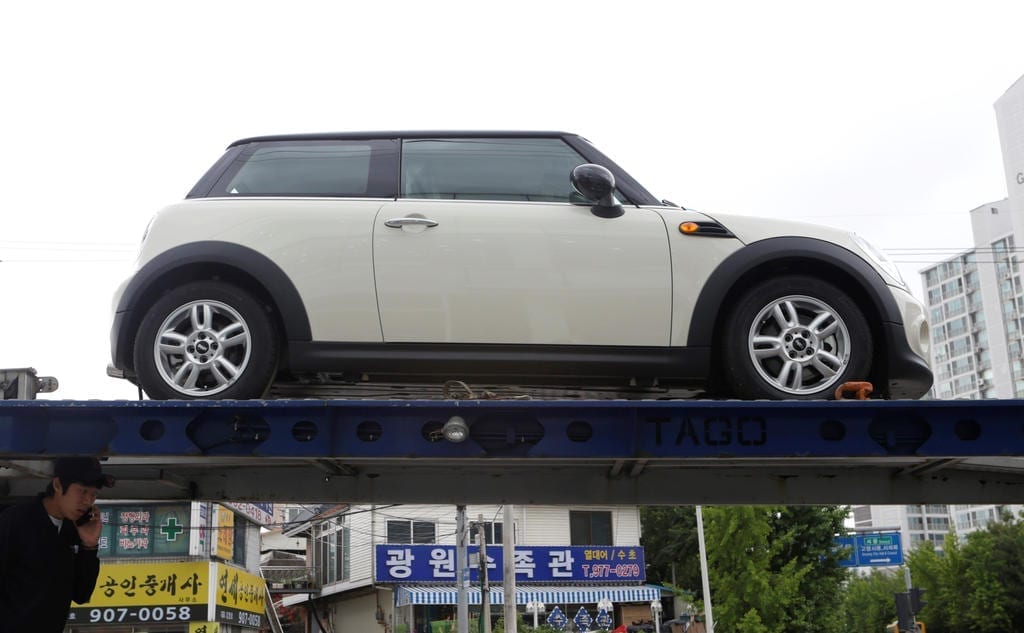
    Duong had said earlier that he plans to open 15 BMW and MINI (a car brand owned by BMW) showrooms by early next year. However, the company currently runs only one BMW showroom in Hanoi, another in HCMC and one MINI showroom, also in HCMC.

    THACO has not revealed its revenue from selling BMW cars this year, but a source told VnExpress that the company sold almost 400 vehicles in the first half of this year. Euro Auto, at its peak, sold 1,400 BMW and 400 MINI cars a year.

    BMW cars were first assembled in Vietnam in 1995 by the VMC company in Hanoi. However, low sales led to the factory’s shutdown in 2005, and VMC had to spend two years selling its inventory.

    Mercedes-Benz is currently the only luxury car brand that assembles its vehicles in Vietnam, and it tops domestic market sales in this segment. Industry insiders say that if BMW cars are assembled in the country again, they could emerge a strong competitor, especially in terms of price.

  • Korea’s car take top safety awards

    Korea’s car take top safety awards

    Vehicles from Hyundai Motor and Kia Motors were awarded three top safety prizes in the Ministry of Land, Infrastructure and Transport’s 2018 Korean New Car Assessment Program (Kncap) on Wednesday in a ceremony held at the InterContinental Seoul Coex in southern Seoul.

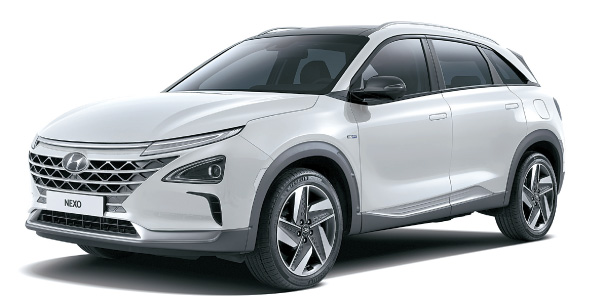
    Hyundai Motor’s hydrogen-powered sport-utility vehicle (SUV) Nexo, mid-sized sedan Genesis G70 and Kia Motors’ large-sized sedan, the K9, were awarded top Kncap prizes in their size segments.

    Vehicles were tested in three key areas – collision, pedestrian and accident prevention safety. The program assessed 11 vehicles this year, including four imported models.

    Hyundai’s eco-friendly vehicle, the Nexo, received perfect scores in front and side collision safety, pedestrian leg protection and advanced driver assistance system to not only win the top safety prize in its segment but also to win two other special awards: the top safety eco-friendly vehicle award and the top children’s safety award.

    Hyundai Motor said that the automaker conducted a variety of tests on the hydrogen-powered Nexo to ensure the safety of its high-pressure hydrogen tank such as shooting it with a bullet along with other fire-safety tests.

    Kia Motors’ flagship large-sized sedan, the K9, also scored top marks to receive a special award in top accident prevention on top of its top award for segment size.

    Meanwhile, the Genesis G70, awarded the top prize in the mid-sized sedan segment, ensures pedestrian safety with an active hood system that automatically lifts the hood of the vehicle if it collides with a pedestrian.